Introduction
Kawasaki disease is a self-limited vasculitis that is seen in children of all racial and ethnic groups, with the highest incidence in Japan. Reference Lin and Wu1,Reference Ae, Makino, Kosami, Kuwabara, Matsubara and Nakamura2 The cause of Kawasaki disease has not yet been determined, but recent studies have suggested that it may be triggered by an unidentified respiratory pathogen that may be acquired both inside and outside the home. Reference Ae, Shibata, Kosami, Nakamura and Hamada3,Reference Ae, Shibata, Furuno, Sasahara, Nakamura and Hamada4
Previous studies have reported the association between coronavirus disease 2019 mitigation measures and the reduction in Kawasaki disease incidence. Reference Son and Newburger5 In the initial phase of the coronavirus disease 2019 pandemic, Japan implemented robust infection prevention measures between March and May 2020, and the government closed all schools nationwide for 3 months and declared a state of emergency for all prefectures for 2 months. 6,7 During this period, the number of patients with Kawasaki disease declined markedly among children aged ≥24 months compared with children aged <24 months. Reference Ae, Makino and Kuwabara8 This finding indicates that the nationwide school closures reduced human contact, especially among children aged ≥24 months, in turn resulting in reduced contact with the unidentified pathogen of Kawasaki disease. Reference Ae, Makino and Kuwabara8 During this period, the government started to urge all Japanese people to adhere to social distancing, hand washing, and mask-wearing measures. 9 As opposed to the nationwide school closures, these measures were not mandated by the government and continued until the government policy changed in the first half of 2023. 10,11 The association between such infection prevention measures through individual efforts and the reduction in Kawasaki disease incidence has not been well assessed. To date, few studies have reported the incidence of Kawasaki disease from 2021 to 2022 in Japan, Reference Nakata, Matsubara and Hamahata12,Reference Nakamura, Yashiro and Yanagawa13 during which the rigorous infection prevention measures that were implemented in 2020 may have subsided. Following our previous study conducted during the acute phase of the coronavirus disease 2019 pandemic in 2020, which involved data covering almost all patients with Kawasaki disease in a single prefecture in Japan, Reference Hoshino, Shibata, Matsubayashi and Ae14 the present study was conducted to determine the epidemiologic features of Kawasaki disease from 2021 to 2022 (during the post-acute phase of the coronavirus disease 2019 pandemic) compared with those observed in the pre-pandemic and acute pandemic phases.
Methods
This epidemiologic study was conducted using data obtained from hospitalised patients with Kawasaki disease in Shiga Prefecture, Japan. The study period was from January 1, 2015, through December 31, 2022. To assess the impact of the coronavirus disease 2019 mitigation measures on the incidence of Kawasaki disease, we divided the study period into three phases: pre-pandemic phase (January 2015 to March 2020), acute pandemic phase (April 2020 to December 2020), and post-acute pandemic phase (January 2021 to December 2022). A previous study using data from the pre-pandemic and acute pandemic phases (from January 2015 to December 2020) has already been reported. Reference Hoshino, Shibata, Matsubayashi and Ae14 The study followed the STrengthening the Reporting of OBservational Studies in Epidemiology reporting guideline.
Study setting
Shiga Prefecture lies in the centre of Japan, covering an area of approximately 4,000 km2 and having a population of around 1.4 million. 15 The population of children aged 0–15 years averaged across 2015–2022 was 210,000, and the male-to-female sex ratio was 1.06. 15 Shiga Prefecture has seven administrative districts surrounding a large lake (Lake Biwa). Reference Hoshino, Shibata, Matsubayashi and Ae14 According to the regional definition reported in our previous study, Reference Hoshino, Shibata, Matsubayashi and Ae14 we divided the districts into six regions (regions A–F).
Data sources
Data on patients with Kawasaki disease were obtained from 14 hospitals in Shiga Prefecture during the study period. These hospitals included all hospitals in Shiga Prefecture where patients with Kawasaki disease were eventually admitted for treatment by paediatricians with expertise in Kawasaki disease. The collected data included sex, age (in months), date of Kawasaki disease onset, date of hospitalisation, and diagnosis (complete or incomplete Kawasaki disease). Only the first admission was recorded for patients who were readmitted within 1 week of discharge or transferred between two hospitals. Zip codes were also collected to identify the patients’ residing districts. Patients residing outside of Shiga Prefecture were excluded from the analysis.
The diagnosis of Kawasaki disease was based on the 6th edition of the Japanese guidelines. Reference Fukazawa, Kobayashi and Ayusawa16 Briefly, patients with at least five of the six principal signs or with only four of the six principal signs, but with coronary artery involvement, were diagnosed as having complete Kawasaki disease. The diagnosis of incomplete Kawasaki disease was defined in patients with prolonged unexplained fever, fewer than four of the principal signs, and compatible laboratory or echocardiographic findings.
Statistical analysis
First, the patients’ characteristics were compared among the three phases of the coronavirus disease 2019 pandemic. The incidence of Kawasaki disease per 100,000 person-years and its 95% confidence interval were calculated based on the population of children aged 0–15 years in Shiga Prefecture. 15 The incidence was compared among the three phases using the Poisson regression analysis (i.e., a significance test for the rate ratio, with a null hypothesis that the incidence rate ratio equals 1). The proportions for sex and diagnosis (complete or incomplete Kawasaki disease) were also compared among the three phases using Fisher’s exact test. Age (as a continuous variable) and age group (eight categories: 0, 1, 2, 3, 4, 5, 6–10, and 11–15 years) were compared using the Mann–Whitney U test and the chi-square test, respectively.
Second, the monthly incidence of Kawasaki disease during the three phases of the pandemic was examined. The incidence in each month was compared among the three phases by the Poisson regression analysis. The per cent changes were calculated to quantify the reduction in the incidence in each month with reference to the incidence observed in 2015 to 2019. The approximate 95% prediction interval was estimated based on the incidence from 2015 to 2019 using the method proposed by Simpson Reference Simpson17 for visualisation purposes. Reference Hoshino, Shibata, Matsubayashi and Ae14
Third, the age-specific incidence of Kawasaki disease during the three phases of the pandemic was compared. Specifically, the incidence observed in the pre-, acute, and post-acute pandemic phases was compared in each age group (six categories: 0, 1, 2, 3, 4, and 5–15 years) using the Poisson regression analysis. The per cent changes were also calculated to quantify the reduction in the incidence in each age group with reference to the incidence from 2015 to 2019. In this analysis, the data for January to March in all examined years were excluded because the acute pandemic phase was limited to April through December 2020. Reference Hoshino, Shibata, Matsubayashi and Ae14 Kawasaki disease incidence in the period January to March is high in Japan, Reference Ae, Makino, Kosami, Kuwabara, Matsubara and Nakamura2,Reference Ozeki, Yamada and Saito18–Reference Makino, Nakamura and Yashiro20 and the inclusion of this period might affect the comparison of Kawasaki disease incidence between the pre-pandemic and acute pandemic phases.
Finally, the association between the population density and the reduction in Kawasaki disease was assessed for six regions (regions A–F) in Shiga Prefecture. The per cent changes in the incidence of Kawasaki disease observed in the acute and post-acute phases of the pandemic were calculated in each region with reference to the incidence from 2015 to 2019. The data for January to March in all examined years were excluded for the same reason as in the analysis of the age-specific incidence of Kawasaki disease. The association between the population density and the reduction in Kawasaki disease incidence was examined by linear regression analysis, which included the per cent change in the incidence in each region as the dependent variable and the log-transformed population density as the independent variable.
Statistical analyses were performed using SAS 9.4 (SAS Institute Inc., Cary, NC, USA), and the significance level was set at P < .05.
Results
A total of 1,631 patients were diagnosed with Kawasaki disease and hospitalised in Shiga Prefecture from 2015 to 2022. After excluding 33 patients residing outside of Shiga Prefecture, 1,598 patients were included in the analysis.
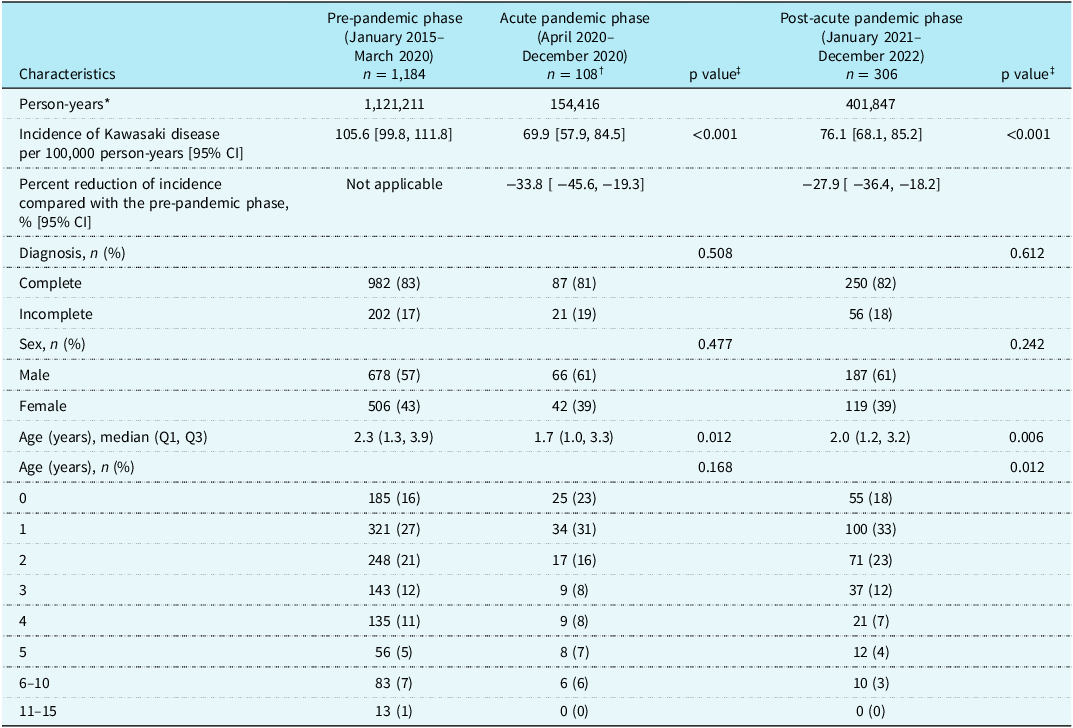
There were 1,184, 108, and 306 patients in the pre-, acute, and post-acute phase groups, respectively (Table 1). Of the 306 patients in the post-acute phase group, 166 and 140 were identified in 2021 and 2022, respectively. The incidence of Kawasaki disease per 100,000 person-years [95% confidence interval] was 105.6 [99.8, 111.8] in the pre-pandemic phase, followed by 69.9 [57.9, 84.5] and 76.1 [68.1, 85.2] in the acute and post-acute pandemic phases, respectively. A significant reduction in the incidence of Kawasaki disease was found in both the acute and post-acute pandemic phases compared with the pre-pandemic phase (−33.8% [95% confidence interval: −45.6%, −19.3%] in the acute pandemic phase, P < .001; −27.9% [−36.4%, −18.2%] in the post-acute pandemic phase, P < .001; Table 1). The proportion of males and patients with complete Kawasaki disease did not change throughout the study period. The patients were significantly younger during the acute phase (median age was 2.3 years during the pre-pandemic phase and 1.7 years during the acute pandemic phase; P = .012). This trend remained during the post-acute pandemic phase (the median age was 2.0 years; P = .006).
Characteristics of patients with Kawasaki disease from 2015 to 2022 in Shiga Prefecture, Japan

* Person-years were calculated using the population of children aged 0–15 years. †2 cases were added from Hoshino et al. (2022) because these patients had Kawasaki disease at the end of December 2020 and were admitted in January 2021. ‡Poisson regression was used to compare the incidence of Kawasaki disease during pre-pandemic phase with the incidence during the relevant period; Fisher’s exact test for diagnosis and sex; Mann–Whitney U test and chi-square test for age (as a continuous variable) and age group, respectively. Abbreviations: CI = confidence interval; Q1 = 1st quartile; Q3 = 3rd quartile.
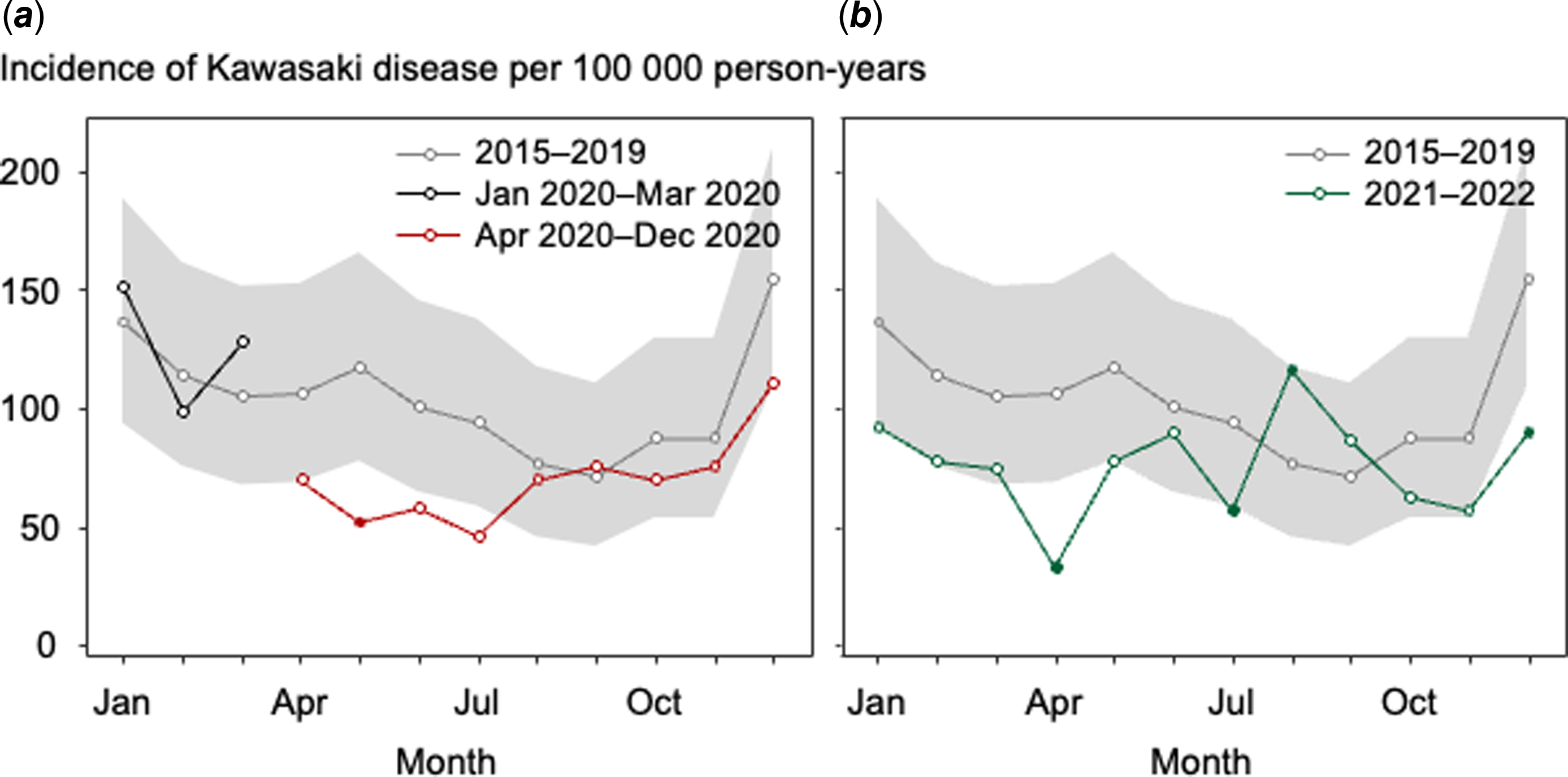
The monthly incidence of Kawasaki disease was highest in December and lowest in September during the reference period (2015–2019) (Figure 1, Supplementary Table 1). Compared with the reference period, the incidence decreased from April to July in the acute pandemic phase (Figure 1A), with a significant reduction in May (−55.5% [95% confidence interval: −77.5%, −12.0%], P = .020). The incidence gradually increased after August towards December during the acute pandemic phase (Figure 1A). The monthly incidence pattern of Kawasaki disease observed in the post-acute pandemic phase was different from that in the pre-pandemic phase (Figure 1B), with the lowest incidence in April (−69.2% [95% confidence interval: −83.5%, −42.5%], P < .001) and the highest incidence in August (+50.5% [95% confidence interval: +1.6%, +122.8%], P = .041).
Monthly trend in the incidence of Kawasaki disease during the acute phase of the coronavirus disease 2019 pandemic ( a ) and in the post-acute phase of the coronavirus disease 2019 pandemic ( b ) in Shiga Prefecture, Japan. The pre-pandemic phase was January 2015 to March 2020, the acute pandemic phase was April 2020 to December 2020, and the post-acute pandemic phase was January 2021 to December 2022. The shaded areas represent the approximate 95% prediction intervals estimated using the incidence from 2015 to 2019.

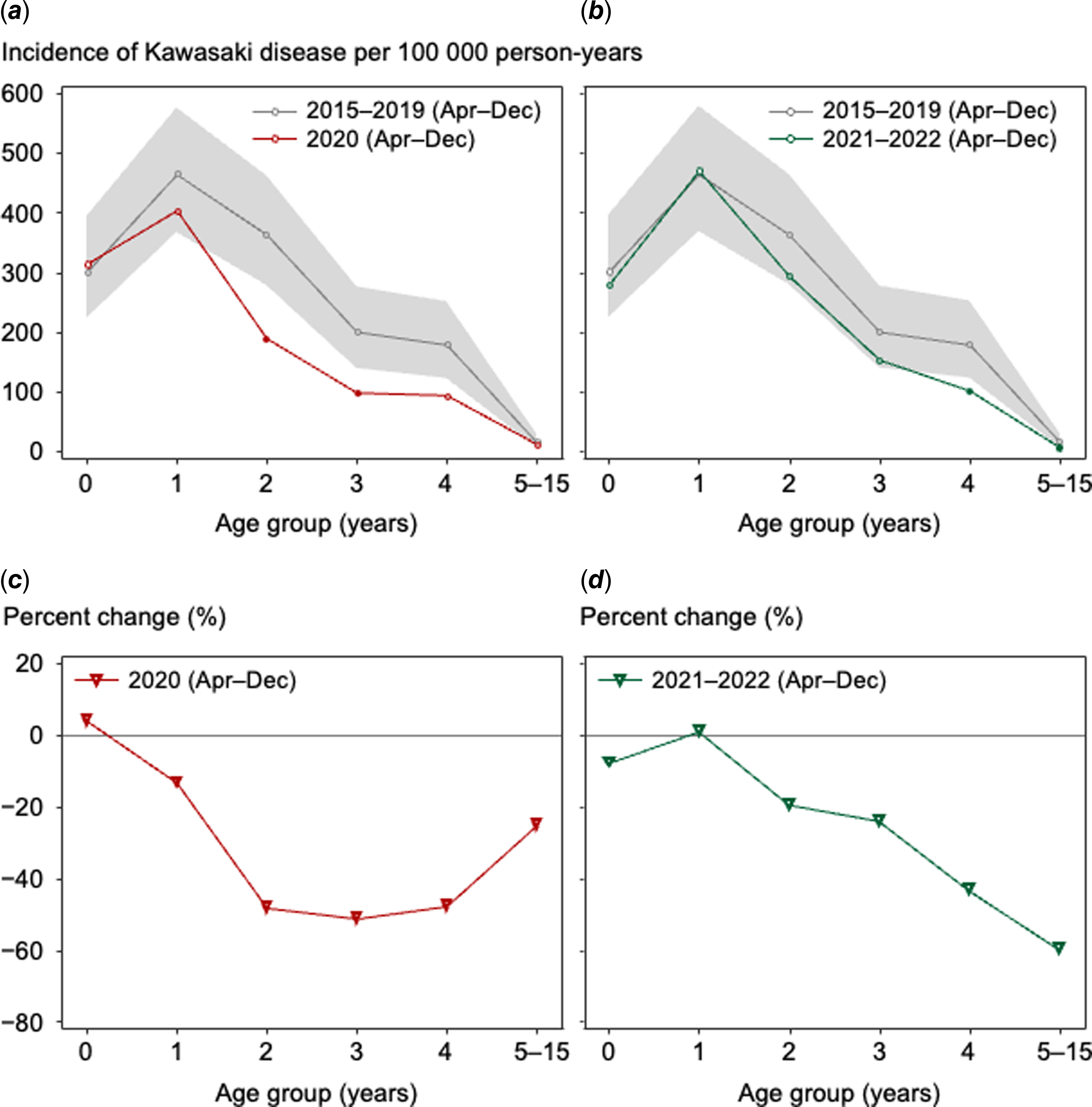
Different patterns were observed in the age-specific incidence of Kawasaki disease during the acute and post-acute pandemic phases compared with that observed in the corresponding period in 2015 to 2019 (reference period) (Figure 2, Supplementary Table 2). A significant reduction was observed in patients aged 2 and 3 years in the acute pandemic phase (−48.0% [95% confidence interval: −68.4%, −14.4%] in patients aged 2 years, P = .010; −51.0% [95% confidence interval: −75.2%, −3.0%] in patients aged 3 years, P = .041, respectively) (Figure 2A and C). Similar reductions were observed in patients aged 4 years but without significance (−47.6% [95% confidence interval: −73.6%, 4.1%], P = .065). In contrast, a significant reduction was observed in patients aged 4 and 5–15 years in the post-acute pandemic phase ( −43.2% [95% confidence interval: −65.8%, −5.6%] in patients aged 4 years, P = .029; −59.6% [−76.5%, −30.4%] in patients aged 5–15 years, P = .001, respectively) (Figure 2B and D). No significant reduction in patients aged 2 and 3 years was found in the post-acute pandemic phase, which was a different pattern from that observed in the acute phase.
Age-specific reduction in the incidence of Kawasaki disease during the acute and post-acute phases of the coronavirus disease 2019 pandemic in Shiga Prefecture, Japan. ( a ) Age-specific incidence during the acute pandemic phase. ( b ) Age-specific incidence during the post-acute pandemic phase. ( c ) Age-specific reduction during the acute pandemic phase. ( d ) Age-specific reduction during the post-acute pandemic phase. The pre-pandemic phase was January 2015 to March 2020, the acute pandemic phase was April 2020 to December 2020, and the post-acute pandemic phase was January 2021 to December 2022. The shaded areas represent the approximate 95% prediction intervals estimated using the incidence from 2015 to 2019. Data for January to March were excluded from the analysis.

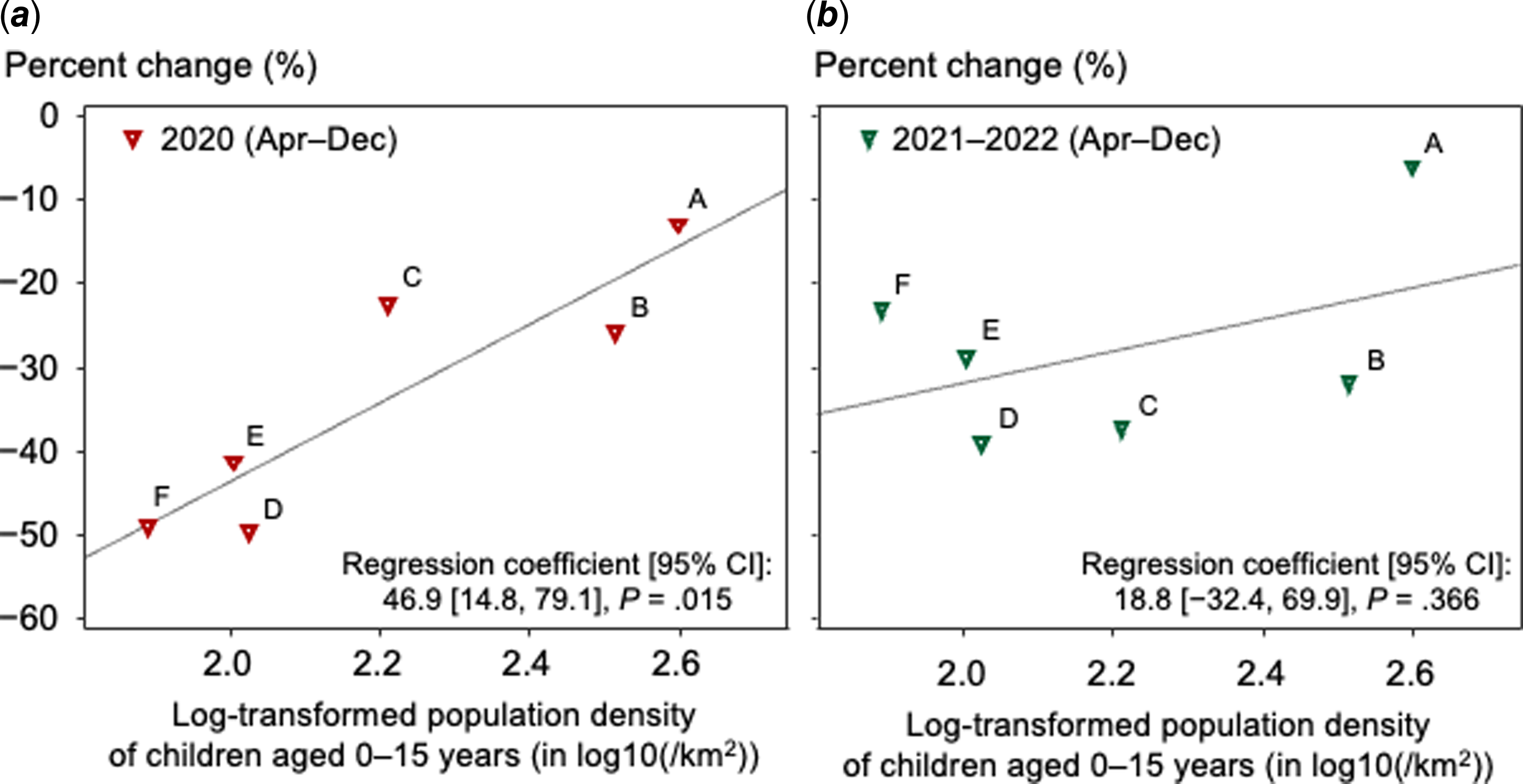
Figure 3 and Supplementary Table 3 show the association between the population density and the per cent changes in Kawasaki disease in the acute and post-acute pandemic phases. The linear regression analysis revealed the significant association in the acute pandemic phase (regression coefficient: 46.9 [95% confidence interval: 14.8, 79.1], P = .015), indicating a significantly greater reduction in Kawasaki disease in the regions with lower population densities. However, such an association was no longer significant in the post-acute pandemic phase (regression coefficient: 18.8 [95% confidence interval: −32.4, 69.9], P = .366).
The association between population density and the reduction in Kawasaki disease incidence during the acute phase ( a ) and post-acute phase ( b ) of the coronavirus disease 2019 pandemic in Shiga Prefecture, Japan. A–F indicate the regions. The line in the scatter plot represents the regression line. The pre-pandemic phase was January 2015 to March 2020, the acute pandemic phase was April 2020 to December 2020, and the post-acute pandemic phase was January 2021 to December 2022. Data for January to March were excluded from the analysis.

Discussion
In our initial study conducted during the acute phase of the coronavirus disease 2019 pandemic, Reference Hoshino, Shibata, Matsubayashi and Ae14 the incidence of Kawasaki disease was significantly reduced after the onset of the coronavirus disease 2019 pandemic in Shiga Prefecture, Japan. Following on from the previous study, the present study determined the incidence of Kawasaki disease during the subsequent period (post-acute phase), compared with that observed in the pre- and acute pandemic phases. The present study yielded four findings. First, the reduction in Kawasaki disease incidence in Shiga Prefecture remained from 2021 to 2022, during the post-acute coronavirus disease 2019 pandemic phase. Second, the seasonal variation in Kawasaki disease incidence during the post-acute pandemic phase was dramatically different from that observed in the pre- and acute pandemic phases, with the highest incidence in August and the lowest in April. This pattern greatly differs from the traditional seasonality reported in previous studies conducted before the coronavirus disease 2019 pandemic. Reference Ae, Makino, Kosami, Kuwabara, Matsubara and Nakamura2,Reference Ozeki, Yamada and Saito18–Reference Makino, Nakamura and Yashiro20 Third, the reduction in Kawasaki disease incidence was larger in patients ≥4 years old during the post-acute pandemic phase. Finally, the association between the population density and the reduction in Kawasaki disease was diminished during the post-acute pandemic phase compared with the acute pandemic phase.
The infectious disease surveillance programme in Shiga Prefecture reports the numbers of patients with 10 common paediatric infectious diseases and seasonal influenza. 21 The number of patients with respiratory syncytial virus infection, pharyngoconjunctival fever, infectious gastroenteritis, hand–foot–mouth disease, and herpangina was low in the acute coronavirus disease 2019 pandemic phase, but increased during the post-acute pandemic phase (Supplementary Figure). These findings indicate the relaxation of infection prevention measures in the post-acute pandemic phase, potentially resulting in an increase in the number of patients with common paediatric infectious diseases. However, our results showed that after the initiation of the coronavirus disease 2019 pandemic, the reduction in Kawasaki disease incidence was maintained (−33.8% in the acute phase and −27.9% in the post-acute phase), indicating that infection prevention measures depending on the efforts of individuals such as social distancing, hand washing, and mask wearing may be associated with the reduction in Kawasaki disease. Two other studies also reported that the Kawasaki disease incidence in Japan remained low in 2021–2022 compared to pre-pandemic levels. Reference Nakata, Matsubara and Hamahata12,Reference Nakamura, Yashiro and Yanagawa13 Moreover, our results showed that age-specific per cent reductions in Kawasaki disease were larger among patients ≥4 years old in the post-acute pandemic phase, although Kawasaki disease in patients aged 0 and 1 year was much less reduced. Infection prevention measures through individual efforts might reduce the development of Kawasaki disease among children ≥4 years old.
Traditionally, a seasonal variation has been observed in the incidence of Kawasaki disease in Japan, with a peak in January. Reference Ae, Makino, Kosami, Kuwabara, Matsubara and Nakamura2,Reference Ozeki, Yamada and Saito18–Reference Makino, Nakamura and Yashiro20 The seasonality of Kawasaki disease is thought to be associated with exposure to as yet unidentified infectious agents. In our study, the monthly pattern of Kawasaki disease incidence changed dramatically during the post-acute phase of the coronavirus disease 2019 pandemic, which is consistent with the results of other studies in Japan. Reference Nakata, Matsubara and Hamahata12,Reference Nakamura, Yashiro and Yanagawa13 Respiratory syncytial virus infection was most prevalent in July in 2021 and 2022, although it was most prevalent in December in 2015 to 2019 (Supplementary Figure), suggesting that the seasonality of respiratory syncytial virus infection during the post-acute pandemic phase differed from that observed in the pre-pandemic phase. The change in the seasonality of Kawasaki disease during the post-acute pandemic phase might be associated with the seasonal epidemic change in respiratory syncytial virus infection during the post-acute pandemic phase. This suggestion might support the hypothesis that Kawasaki disease may be triggered by an unidentified respiratory pathogen. Reference Ae, Shibata, Kosami, Nakamura and Hamada3,Reference Ae, Shibata, Furuno, Sasahara, Nakamura and Hamada4
In our previous study, Reference Hoshino, Shibata, Matsubayashi and Ae14 significantly greater reductions in the incidence of Kawasaki disease were found in regions with lower population densities. However, no such association was found in the United States during the acute phase of the coronavirus disease 2019 pandemic Reference Sakai-Bizmark, Estevez and Wu22 and in the present study during the post-acute pandemic phase. The simultaneous regional closing of school during the acute phase in Shiga Prefecture, which was not implemented during the post-acute phase, may have affected the association between population density and the reduction in Kawasaki disease. This epidemiologic change in Kawasaki disease should be further explored to test the hypothesis that human-to-human contact may be associated with Kawasaki disease development. Reference Hoshino, Shibata, Matsubayashi and Ae14
The present study has some limitations. First, the study assessed data obtained from a single prefecture with a small number of patients with Kawasaki disease. However, our previous study suggested that the study setting was valid and can be considered to represent the nation of Japan. Reference Hoshino, Shibata, Matsubayashi and Ae14 Second, the study did not quantify the specific infection prevention measures implemented during the post-acute phase in Shiga Prefecture, such as the proportion of the paediatric population that used masks, although the 85–90% of Japanese adults used masks in public places from April 2021 to September 2022. 23 Finally, the study did not assess the association between the incidence of Kawasaki disease and other infectious diseases or environmental factors.
In conclusion, the reduction in the incidence of Kawasaki disease in Shiga Prefecture remained in the post-acute phase of the coronavirus disease 2019 pandemic, although seasonal variation dramatically differed from the traditional pattern. Our data indicate that for the children ≥4 years old, infection prevention measures through individual efforts might reduce Kawasaki disease development.
Supplementary material
The supplementary material for this article can be found at https://doi.org/10.1017/S104795112510098X.
Acknowledgments
The authors thank all of the paediatricians in Shiga Prefecture who contributed to the study. The authors also thank Ryota Kobayashi, who provided the data from the infectious disease surveillance programme conducted by the Shiga Prefecture Infectious Disease Information Center. We thank Emily Woodhouse, PhD, from Edanz (https://jp.edanz.com/ac) for editing a draft of this manuscript.
Author contributions
All authors contributed to the study conception and design. Material preparation, data collection, and analysis were performed by Shinsuke Hoshino, Jun Matsubayashi, Yoshihide Shibata, Hiromichi Hamada, and Ryusuke Ae. The first draft of the manuscript was written by Shinsuke Hoshino and all authors commented on previous versions of the manuscript. All authors read and approved the final manuscript.
Financial support
The authors declare that no funds, grants, or other support were received during the preparation of this manuscript.
Competing interests
The authors have no relevant financial or non-financial interests to disclose.
Ethical standard
The Research Ethics Committee at Shiga University of Medical Science approved the study and waived the requirement for informed consent because of deidentified use only (approval number: R2020-139).
Preprint
A preprint of this manuscript has been made available online at SSRN: http://dx.doi.org/10.2139/ssrn.4796860.Reference Hoshino, Matsubayashi, Shibata, Hamada and Ae 24