Introduction
A Conceptual Framework is essential to understanding and describing the epidemiology of disasters. Its use also provides the structure needed to study disaster-related interventions. This Conceptual Framework describes and defines a stepwise progression from a hazard to a disaster and associated opportunities to increase a community’s ability to cope with an event.
The original Conceptual Framework described in Health Disaster Management: Guidelines for Research and Evaluation in the Utstein Style Reference Birnbaum, Daily, O’Rourke and Loretti 1 (hereafter referred to as “the Guidelines”) represented the thinking at the time it was published in 2003. However, in keeping with the knowledge that has been gained in the ensuing 12 years, and in order to bring the Conceptual Framework into concordance with the missions of Humanitarian Reform, 2 the United Nations (UN) International Strategy for Disaster Reduction (ISDR), 3 the Transformative Agenda of the UN Inter-Agency Standing Committee (IASC), 4 the Global Platform (2013), 5 and the Sendai Framework for Disaster Risk Reduction, 2015-2030, 6 the original Conceptual Framework has been deconstructed further and modified accordingly.
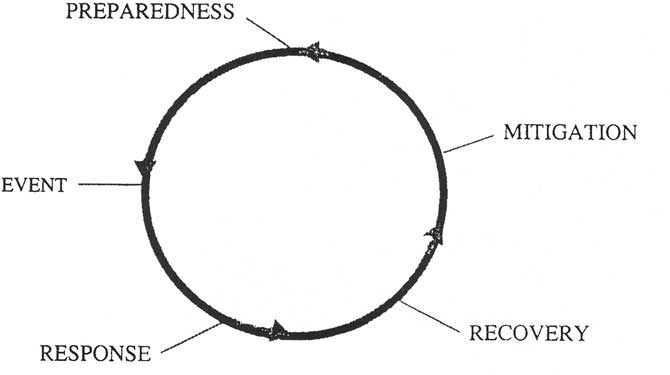
Although the Disaster Management Cycle 7 has been used to describe disasters for decades, its limited nature is inadequate for the research and evaluation required to build the science of Disaster Health. The Disaster Cycle (Figure II-1) does not include phases related to time, but rather stages that are sequential—one stage ends before the next stage begins. The stages include the occurrence of an event, which prompts responses to cope with the damages created by the event, and to alleviate suffering, reduce mortality, and minimize the damages created by the event.
The Classic Disaster Management Cycle. This cycle illustrates the progression from mitigation of the hazard, to preparedness to respond, to the occurrence of an event, to the response to the event, and recovery to the pre-event levels of function.

Given the current emphasis on disaster risk reduction and risk management, 2 - 6 the long-standing Disaster Cycle is an insufficient framework for describing, studying, and reporting on disasters. Some definitions have morphed and no longer fit into the initial model. For these reasons, it is necessary to deconstruct the Disaster Cycle Model into its subcomponents, and to redefine some of the terms used. This deconstruction led to a revisit of the initial Conceptual Framework as described in the Guidelines,Reference Birnbaum, Daily, O’Rourke and Loretti 1 and the development of a more comprehensive and discriminating Conceptual Framework. The use of the proposed enhanced Conceptual Framework should aid in obtaining a greater clarity of the epidemiology of disasters and for comparing events, emergencies, and disasters as well as the interventions implemented. It also may be applied to studying events that do/did not result in an Emergency or a Disaster.
Community, Society, and Culture
Disasters occur at the “community” level. 5 A community is a group of people living in the same locality and under the same government; the district or locality in which a group lives. 8 For the purposes of this work, a community is interpreted as an urban or rural population and environment acting as a whole that is served by a government that attempts to meet the needs of the population governed. Communities may be part of an over-riding society or may have several societies within a community. A society is the totality of social relationships among humans; a group of humans broadly distinguished from other groups by mutual interests, participation in characteristic relationships, and a common culture.Reference Pickett 9 Most societies have a specific culture. The culture of a society consists of the arts and other manifestations of human intellectual achievement regarded collectively; the customs, civilization, and achievements of a particular time or people;Reference Pickett 10 the totality of socially transmitted behavioral patterns, arts, beliefs, institutions, and all other products of human works and thoughts; the predominating attitudes and behavior that characterize a group or organization.Reference Pickett 11 Generally, a society consists of many communities or parts of communities. A community may be an amalgam of multiple cultures. A community may be an individual, neighborhood, town, village, city, county, province, state, country, and so on.
Communities exist to provide the common, essential functions required to meet the needs of the population served by the community. Failure to provide these functions results in needs. Thus, the levels of disfunction of a community or its components result in needs.
The structure of a community provides the goods and services that are transformed into societal functions. The transformation processes require access to the resources that are used in the transformation of goods and services into functions. The consequences of any event on a community are what happen to the functional status of the community or its components.
For research and evaluation purposes, communities have been deconstructed into 14 functional systems that mostly correspond to the departmental structures of communities (if they exist). As developed in the accompanying paper on Societal Systems,Reference Thompson 12 these Societal Systems are dependent upon one another for functions that are not part of the individual Societal System; each requires goods, services, and other resources in order to provide the functions for its operations. For example, the Medical Care System is dependent on the Energy Supply and Logistics and Transport Systems for fuel and electricity; compromise of the functions of these Systems will profoundly affect the ability of the Medical Care System to deliver medical services to the affected population. Each of the Societal Systems must have access to the goods, services, and other resources it requires to provide the required levels of function.
For the most part, the functions provided by a community (and each of its component Systems) are relatively constant over time—a community exists in a relative steady state. Communities normally are exposed to many hazards, but they are able to manage the hazards with only minor changes in their levels of functions—they work to maintain stability. Changes in the steady state of a community usually require relatively long periods to implement. Each community has a specific level of resilience to events related to their specific set of hazards. Each community is at-risk that the compromised functions that result from an event caused by a hazard will overwhelm its overall resilience, or that of any of its components. When the resilience of any component of the community to an event is overwhelmed, a Disaster has occurred for that community, or the part(s) of the community(ies) that is(are) affected. Disasters are the result of events that overwhelm the relative functional steady state of the community impacted by an event. The Conceptual Framework is a means for evaluating the processes that take a hazard to a disaster.
Conceptual Framework
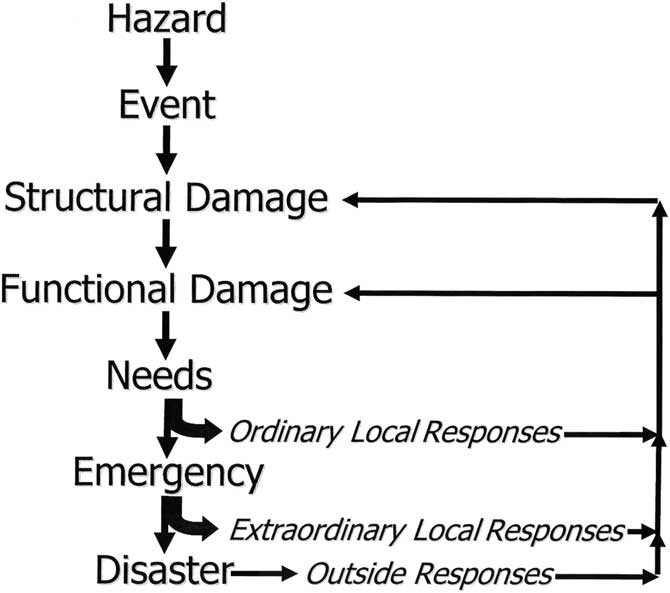
The deconstructed and redrafted Conceptual Framework (Figure II-2) describes and defines the process and elements that lead from a hazard to a disaster and provides the structure necessary to understand how a hazard evolves into a Disaster. It includes and expands all of the components in the Disaster Management Cycle model. 7
The Revised Conceptual Framework for a Hazard Evolving into a Disaster. Functional damage consists of compromised functions of the community caused by structural damage. Functional damages are transformed into needs. All responses address identified needs by providing the goods, services, and other resources required to meet the defined needs. Three levels of responses are included: (1) Ordinary; (2) Extra-ordinary; and (3) Outside. Responses are directed at relief or recovery and provide resources for repair or replacement of structures damaged by the event, or to temporarily supplement the gaps in levels of functions compromised by the structural damages.

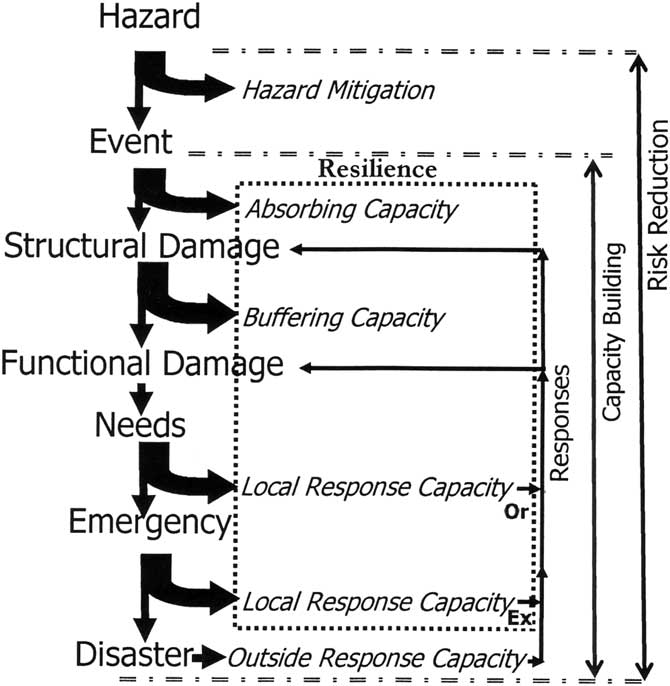
The Conceptual Framework with the Addition of Local and Outside Absorbing, Buffering, and Response Capacities. Responses that require the use the extra-ordinary (reserve) local response capacity comprise an “emergency” for the community. When responses must include the response capacities of other entities, the situation becomes a “disaster.” In addition, structural and functional damages that occur in other systems may result in needs within the system(s) being studied. Together, the absorbing, buffering, and response capacities comprise the resilience of the community to an event. Capacity building interventions are directed towards increasing the resilience to the event, and risk-reduction interventions include capacity building and hazard mitigation.Abbreviations: Ex, extraordinary; Or, ordinary.

Hazard(s)
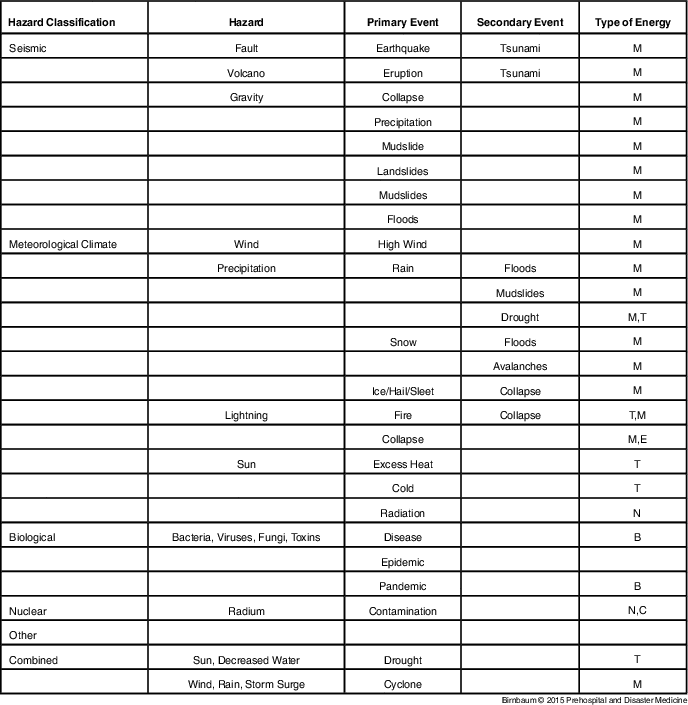
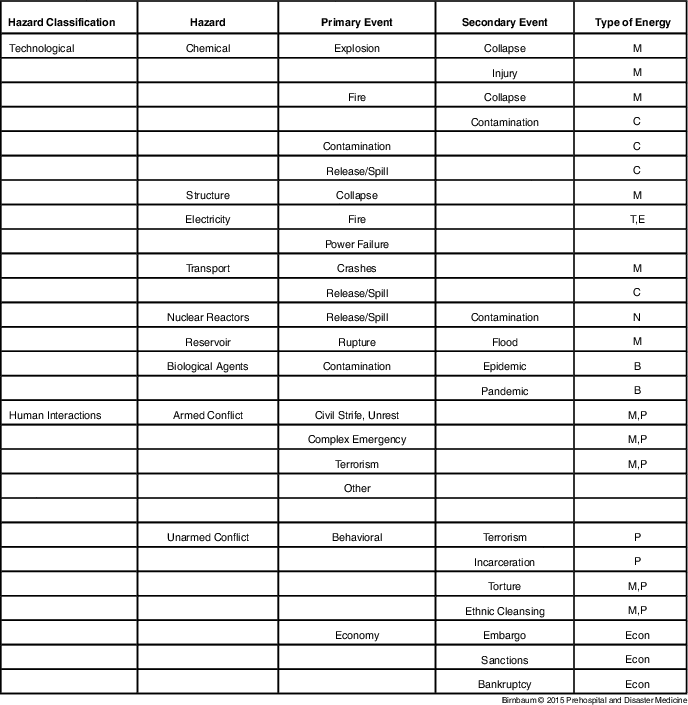
Every disaster is related to a specific hazard or combinations of hazards, whether the hazard is a natural phenomenon or result of human actions. A hazard is a dangerous phenomenon, substance, human activity, or condition that may cause loss of life, injury, or other health impacts, property damage, loss of livelihoods and services, social and economic disruption, and/or environmental damage.1(pp31-42) A hazard may be described as contained (potential) energy. The danger posed by a hazard relates to the potential energy it contains. All things that contain potential energy are hazards. Hazards are classified by type and as naturally occurring or human-made (anthropogenic; Table II-1 and Table II-2). Natural hazards are part of nature; they include seismic faults and volcanoes, the weather (meteorological or climatic), and biological (bacteria, viruses, fungi, and toxins). Human-made hazards are those that result from human actions, and may be classified either as technological or related to human behavior(s).
Classification of Natural Hazards, the Events that may be Produced, and the Types of Energy Released from the Hazard

Abbreviations: B, biological; C, chemical; E, electrical; M, mechanical; N, nuclear; T, thermal.
Classification of Human-made Hazards, the Events that may be Produced, and the Types of Energy Released from the Hazard

Abbreviations: B, biological; C, chemical; E, electrical; Econ, economic; M, mechanical; N, nuclear; P, behavioral/psychological; T, thermal.
Hazards contain potential energy. Energy is the capacity to do work.Reference Birnbaum, O’Rourke and Daily 13 Energy may be translated into motion, overcoming resistance, or by producing physical or psychological changes. The types of energy contained within a hazard are specific for a given hazard. Six types of physical energy are relevant to Disaster Health: (1) mechanical (M); (2) electrical (E); (3) thermal (T); (4) chemical (C); (5) nuclear (N); and (6) biological (B; Table II-1 and Table II-2). Mechanical energy manifests as physical forces. Electrical energy is related to the movement of free electrons and may be naturally occurring (ie, lightening) or generated by human technology, and may manifest by release of thermal energy (fire). Thermal energy relates to the speed of the movement of molecules and manifests as heat or cold. Chemical energy is released through chemical reactions. Nuclear energy is released by modification of nuclei (nuclear reactions). Biological energy relates to the metabolic capacities of organisms to change some combination of biomass, organic compounds, gases, and water that changes chemical bonds (eg, photosynthesis, adenosine triphosphate, cell reproduction, and cell damage). 14 Psychological energy has the capacity to change behaviors and includes inter-human relationships, including economics. Behavioral hazards may use physical forms of energy to create changes in behaviors.
Some of the energy contained in many hazards is harnessed for use by the community to benefit the population. Some forms of energy are used to produce goods and services used by the population. Some of the energy is converted by the community into other forms of energy. For example, the effects of gravity on water are used for the generation of electricity. Wind is converted into electrical energy or for pumping water. Thermal energy from the sun is used to heat water or to generate electricity. However, when such energy is used by a community, too much may become destructive, as can too little. Inadequate amounts of energy also may disrupt the normal balance and may impair the development of goods and services required to sustain the balance of the community. Precipitation is required to grow crops and for hydration of living beings. Too much precipitation may cause floods or mudslides, and too little results in the development of drought and its negative effects on agriculture and food production. Structures built by humans must be able to withstand the forces exerted by gravity. When possible, humans attempt to control the amounts of energy used. Failure to control the amount of energy produced often creates events that cause structural damage to the community. Thus, hazards generally are in balance with the needs of the community.
The specific hazards to which humans are exposed vary in space and time, and between different populations. A hazard that does not produce an event cannot cause a disaster. Without the occurrence of an event from a specific hazard, an existing hazard may not be recognized. Consequently, hazard identification is essential in the development of definitive preventive or mitigating measures.
Hazard Mitigation (Figure II-3)
Hazard Mitigation involves efforts (actions) to reduce the risk that the hazard will cause an event, or if an event occurs, mitigate the power of the event to create damage. While most natural hazards do not lend themselves to modifications or containment, some interventions can successfully mitigate the destructive energy of anthropogenic hazards. The magnitude of a future event may be mitigated by: (1) eliminating the hazard; (2) modifying the hazard; (3) containing the hazard; and/or (4) identifying an alternate source of the energy. These mitigation actions attempt to reduce the likelihood of the occurrence of an event or to reduce the magnitude of a potential event. Examples of mitigating a hazard through elimination of the hazard include: (1) removing landmines; and (2) achieving and sustaining peace between hostile parties. Examples of modifying a hazard include: (1) chemically or physically altering a hazard to decrease its power to cause damage; (2) controlling avalanches by the pre-emptive firing of canons; (3) augmenting the safety of motor vehicles and providing safe highways and byways; (4) cooling nuclear reactors with water; and/or (5) minimizing the numbers and quantities of hazardous materials. Examples of containment of a hazard include: (1) safely disposing hazardous wastes; (2) enforcing laws relative to the safe management and transport of hazardous materials; (3) encasing a nuclear source; (4) educating and training workers in hazardous areas; and (5) implementing safety measures to prevent leakage of oil from wells. All of these actions represent attempts to mitigate a hazard. In the case of insufficient energy to provide the needed goods and services, alternate sources of the energy required should be identified and appropriate arrangements made for acquisition, if needed.
It should be noted that most of the discussion that follows pertains to events in which there is an excess of energy that impacts a community.
Event
An event is an occurrence that has the potential to affect living beings and/or their environment. 15 An event consists of the change in the amounts of energy released by the hazard that results in perturbing the steady state of the community. An event disrupts the balance normally sustained by the community. It consists of either too much or too little kinetic energy. The transfer of the energy may impact living beings, the environment, and/or built structures. Most events are managed by the routine (ordinary), day-to-day activities of the community and do not result in an emergency or disaster.
Generally speaking, the events that lead to a disaster have not been characterized sufficiently to facilitate comparisons between specific events, and in turn, this limits the ability to understand the mechanisms involved and their respective consequences. However, in order to increase the understanding and facilitate comparisons, events should be described using consistent terminology. The following discussion provides event descriptors that are considered to be relevant and useful to the study and reporting of disasters.
Description of an Event
The characteristics of an event are numerous; some of the characteristics of an event have been described previously in the Guidelines.Reference Birnbaum, Daily, O’Rourke and Loretti 1 However, the inventory of characteristics has been expanded and is provided in Table II-2. Events are compared by their respective characteristics. Description of the characteristics of the event include the: (1) type of energy (mechanical (M), biological (B), thermal (T); chemical (C), electrical (E), nuclear (N); behavioral/psychological (P)); (2) mechanisms; (3) number of events; (4) onset; (5) amplitude; (6) duration; (7) intensity; (8) scope; (9) magnitude; (10) scale; (11) progression; and (12) propagation.
Type of Energy
The events caused by naturally occurring hazards include those related to: (1) seismic hazards (M), including earthquakes, volcanic eruptions, tsunamis, and gravity; (2) meteorological (climatic) hazards, including high winds (M), excess or lack of precipitation (M), fire from lightening (E), temperature extremes (T), erosion (M), drought (T), desertification (M), floods (M), avalanches (M), and mud/landslides (M); (3) disease caused by biological agents, including bacteria, viruses, fungi, and toxins (B); and (4) celestial phenomena (M,N,T). Human-caused hazards may produce technological events as a result of: (1) the release of chemical, biological, or nuclear substances; (2) transportation incidents, such as aircraft crashes or train derailments; (3) structural failures, such as collapses of buildings; (4) explosions; (5) fires; (6) environmental interference with nature; and (7) activation of other hazards (secondary events). Additional human-caused events include those related to behavioral/psychological activities: (1) terrorist acts; (2) wars (armed conflicts); (3) complex emergencies; (4) political actions; and (5) economics, such as market failures, embargos, and sanctions. Table II-1 and Table II-2 list examples of events associated with specific hazards. Some events may be the result of a combination of natural and human-made hazards (eg, drought related to the misuse/diversion of water; desertification due to weather and inappropriate grazing of livestock; floods related to excess precipitation and improper engineering of waterways; erosion due to poor management of shorelines; land/mudslides and avalanches related to a combination of precipitation and deforestation; and fires caused by human carelessness or poor safety practices). Some of these events have special features that may lead to secondary events.
Mechanism
The mechanism responsible for the release of the energy should be documented if it is relevant to the description of the event. A description of the mechanism responsible for the event not only contributes to the understanding of the epidemiology of the disaster, but also provides valuable information regarding potential mitigation efforts. Essentially, how and why did it happen?
Number of Events
Events may occur singly or in multiples. The earthquakes in Pakistan and in Christchurch, New Zealand in 2011 were single, isolated events. However, each was followed by a series of “aftershocks” that contributed to the damage. Similarly, multiple tsunami waves impacted Indonesia following the earthquake in the Indian Ocean in 2004. From a medical/public health perspective, an explosion of a bomb during a terrorist attack is a singular event, but if multiple bombs explode almost simultaneously (eg, the Madrid train attacks (2004), the Boston Marathon attacks (2013), and the London Subway bombings (2005)), each is considered to be an individual event.Reference Thompson 16 - 20 Multiple events may occur simultaneously (in parallel) or may be sequential. Tropical cyclones (hurricanes) consist of three events: (1) high winds; (2) heavy rain; and (3) a storm surge that occur almost simultaneously. Multiple events also may consist of primary, secondary, or tertiary events. A primary event is the initial event (eg, earthquake) that may initiate a secondary event (eg, tsunami), which, in turn, may initiate a tertiary event (eg, Fukushima nuclear reactor meltdown (Japan 2011)). Both the secondary and tertiary events occur only as a result of the primary event. Famine may be a secondary event as a result of three primary events: drought, desertification, and conflict.
Onset
An onset is the beginning of something; 21 in terms of an event, the onset begins at the time the event(s) is(are) recognized. Documentation of the characteristics of the onset is essential for comparisons of events and their respective consequences. The time of the day, the day of the month, and the month of the year of the onset must be documented as well as the existing local conditions (day, night, weather, holiday, weekend, and so on) at the time of the onset of the event are important features of the event. The geographical location and its characteristics may have important implications and also must be documented. The rate of energy change from onset includes sudden burst, crescendo, and decrescendo. Delayed onset refers to the ability to predict the onset of an event prior to its impact on an area (eg, a tropical cyclone approaching a coastal area). Such predictions facilitate the evacuation of the population prior to the onset of the event in order to decrease their exposure to the event. Did the earthquake happen during the night when the population was sleeping in their homes or during the day when they were on the streets, at sea, or in the fields?
For the purposes of comparison, a description of the event also should include the: (1) amplitude; (2) duration; (3) intensity; (4) scope; (5) magnitude; (6) scale; (7) progression; and (8) propagation.
Amplitude
The amplitude is the degree of departure from the point of equilibrium; the maximum displacement or distance moved by a point on a vibrating body or wave measured from its equilibrium position (ie, the pre-event state). 22 Generally, amplitude is considered to be the maximum change in the strength of the energy exerted (eg, the maximum deflection of a seismographic tracing, the height of a storm surge, the wave height, the maximum number of persons infected by a pathogen, or the departure of the temperature for the time of the year).
Duration
The duration is the length of time over which something continues. 23 While the total duration of an event encompasses the entire length of time over which the event occurs, it may be subdivided into time segments. In general terms, the duration of an event may be described as: (1) Brief (seconds to hours); (2) Short (hours to days); Intermediate (days to weeks); or (4) Prolonged (months to years).1(pp31-42) However, these basic descriptors are inadequate for use in comparison of events. When possible, the actual time interval over which the event occurred provides information required for comparisons (eg, the earth shook for 10 seconds or for three minutes). To date, the duration of earthquakes has been reported only rarely, although the differences in the structural damage produced by an earthquake that lasted three minutes likely would differ substantially from one of equal amplitude that lasted only 10 seconds.
Intensity
The intensity of an event is the integral of its amplitudes over a given period of time (Σamplitudes/time interval).Reference Thompson 24 For example, the intensity of an event may be reported as millimeters of rainfall/hour; inches of snow accumulation/hour; centimeters of floodwater level/day; or degrees of temperature change/week.
Scope
The scope of an event is the extent of the area of subject matter that something deals with or to which it is relevant; 25 the area covered by a given activity. 26 In terms of a disaster, scope refers to the area affected by an event. Examples include the geographical extent of the incident, or the number of persons affected by a specific infectious disease in a country; and/or the number of hectares within a specific location under water due to flooding.
Magnitude
The magnitude of an event is a measurement of the amount of an applied force; the amount of energy released;Reference Pickett 27 a mathematical quantity.Reference Pickett 28 Magnitude refers to the total energy encompassed by the event in the area being studied, and is the combination of the integral of the amplitudes, the area involved, and the total duration of the event. An example is the total rainfall accumulated over a specific area during the entire course of a storm.
Scale
In the context of disasters, scale includes the scope and magnitude of an event or damage sustained from an event. It seems that the term is used most frequently to describe the damage created by an event, but gets lost when describing the event as the disaster (“large-scale disaster”). Scale is used best in descriptions of the area and magnitude of the structural damage.
Progression
An event may occur in a continuous fashion (ie, stay at one level of energy release for its duration), it may be ascending (crescendo) or descending (decrescendo) in nature, or it may be nodal/pulsatile. A “steady” rain may have the same intensity throughout its entire duration, or the precipitation may wax or wane, with the intensity changing from light to heavy to moderate to light, and so on. The latter occurrence may be described as nodal or pulsatile. It is of value to report the duration of each of the nodes as well as the inter-nodal periods, such as the frequency of volcanic eruptions. A richer description of a tsunami includes the nodal nature of the energy of differing amplitudes and frequency. Additional useful information about an earthquake is the frequency of the pulsatile release of energy.
Propagation
To propagate is to disseminate; spread; to extend the operation of; transmit (a vibration, earthquake, or others).Reference Thompson 29 In the context of an event, “propagation” is used to describe the spread of energy from its source. For example, the energy of an earthquake spreads from the epicenter. The spread, transmission, and damping of the energy of an earthquake depend on the nature of the earth through which the energy travels. The spread and transmission of a disease varies, in part, according to the herd immunity of the population.
Consequences of an Event
A consequence is a result or effect of an action or condition.Reference Thompson 30 Each step in the progression of a hazard to a disaster has a consequence or set of consequences. Thus, Structural Damage is a consequence of an Event, and Functional Damage is a consequence of the Structural Damage. Needs are consequences of Functional Damage, and a Disaster is a consequence of Needs that exceed the local response capacity. Consequences can be considered as the effects of a process. It is essential to be able to compare the consequences of an event with the characteristics and setting of the event. The consequences associated with the progression of a hazard to a disaster include: (1) Structural Damage; (2) Functional Damage; (3) Needs; (4) Emergency; and (5) Disaster. Each of the consequences is detailed below.
Structural Damage (Figure II-2 and Figure II-3)
Damage is harm or injury that reduces the value or usefulness of something. 31 Structural Damage consists in disturbances in the structures that comprise the community—not just physical structures, but includes disruption of the balance of the community and in its ability to provide the goods, services, and other resources essential to maintain the functions of the community. Thus, Structural Damage impairs the availability of the goods, services, and resources necessary to provide the essential functions of the community—lack of essential goods, services, and resources results in decreases in the levels of function provided to the population by the community. An event may or may not produce structural damage.
Structural damage includes the physical disruption of structure(s) that results from the transfer of energy released during an event into the exposed structure(s). Structural damage occurs when the structural integrity of the structure exposed is disturbed (violated)—a building collapses due to its impaired ability to resist the forces exerted by gravity. Structural damage may occur to humans and/or other living beings, as well as to the natural and/or built environment (including equipment and supplies).1(pp56-68) Factors that determine the likelihood (vulnerability) that damage to the physical structure may occur from an increased kinetic energy from an event include: (1) exposure to the kinetic energy released; (2) the characteristics of the event(s); (3) the setting in which the event occurs; (4) the time of onset including the hour of the day, day of the week, and the season of the year; (5) the weather; and (6) other hazards that co-exist within the impacted area.Reference Thompson 32 , Reference Gallopin 33 The end result is failure of the community to provide the goods, services, and resources needed to maintain the conversion of the goods, services, and resources into functions.
Exposure
Exposure is the state or condition of being unprotected or open to damage, danger, or risk of suffering a loss.Reference Adger 34 A community/population/individual that is not exposed to a hazard will not sustain structural damage from an event caused by the hazard. In order to be damaged by an event, the community and/or its components must be exposed to the event. A community that is exposed to a specific hazard or multiple hazards is referred to as a “community-at-risk.” Exposure to some events may be eliminated by moving a population-at-risk prior to a delayed-onset event (evacuation), or by permanently moving a settlement out of an area-at-risk (relocation).
Characteristics of the Event
The characteristics of the event(s), as previously described, directly affect the likelihood (probability, risk) that an event will produce structural damage. The types and amounts of structural damage are related to the type of energy of the event. The damage produced by mechanical energy differs from the damages produced by biological energy or nuclear energy. Also, for a given structure, the amount of damage produced by an earthquake with a magnitude of 7.0 may differ substantially from the amount of structural damage produced by an event with a magnitude of 6.0. Additionally, the duration of an event is an important contributing factor as the structural damage sustained is a function of the amount of energy released from the hazard influenced by the duration of the exposure to the event. Eight minutes of shaking during an earthquake likely will create more structural damage than will an earthquake of equivalent magnitude that lasts only 10 seconds. In addition, the frequency of the shaking will impact heavily on the amount of damage sustained. This factor became evident in the analysis of the structural damage created by the earthquake and the tsunami in the Indian Ocean in 2004, 35 and following the earthquake and tsunami in Japan (2011). 36
Setting
The setting in which an event occurs affects the amount and types of structural damage that results. The setting includes the: (1) geographical location; (2) community/population-at-risk; (3) infrastructure; (4) time of onset; and (5) vulnerability.
Location
The location of the area impacted, including the area’s geography, topography, geology, and weather, plays an important role in the dynamics associated with the event. For example, the structural damages sustained from an earthquake may depend, in part, on the nature of the ground (rigid, pliable, or soft); the power of, and subsequent damage from, a storm surge may depend on the characteristics of the shoreline; floodwater levels may depend on the nature of the ground, as well as the drainage of an area prone to flooding. Human actions may change the natural resilience of a geographic area. Examples include the deforestation of hillsides and the overgrazing of livestock. Information on location also is essential in terms of access to the area impacted.
Community/Population-at-risk
The characteristics of the community/population-at-risk, including demographics, population density and distribution, culture, as well as the activities of the population before/during the event, contribute to the vulnerability of the community. The specific location of the population within the affected area impacts its vulnerability; injuries from an earthquake are related to whether the population is inside of a structure, on the streets, or in the field tending to agriculture. Human activities at the onset or during an event also impact upon the numbers of persons-at-risk for injury. While the fishermen at sea were not in harm’s way during the Southeast Asia tsunami of 2004, the women and children who gathered at the seashore to greet them, or to prepare the catch for market, were in grave danger. A terrorist attack in a densely populated space is likely to injure more people than if the attack is carried out in a rural area. The number of persons directly in harm’s way contributes to the numbers of persons injured/killed during an event. The demographics (eg, the average age of a population, immune status, and so on) also may contribute to the vulnerability of a population to an event.
Infrastructure
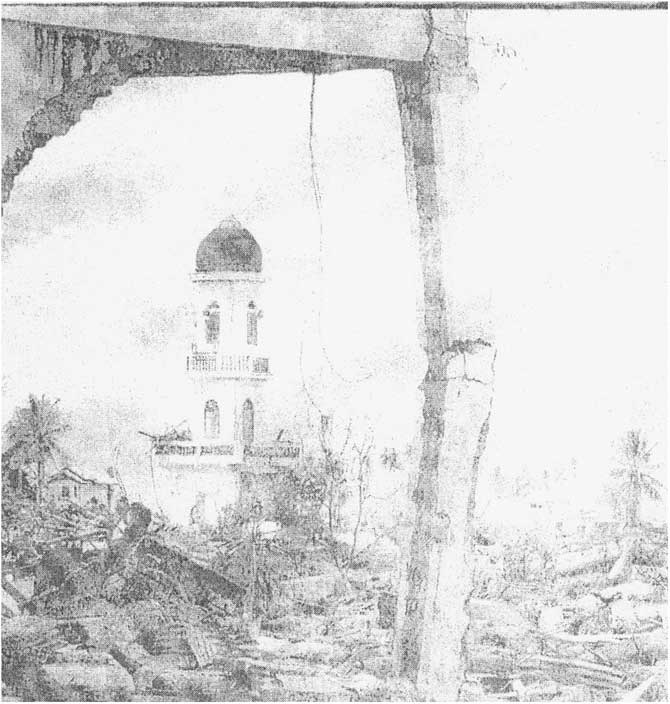
The constructions of the infrastructure, including types of residences, industries, governmental buildings, and/or medical facilities, are important indicators of vulnerability. As indicated in the photograph in Figure II-4, the vulnerability of the structures surrounding the mosque was much greater than was that of the mosque, which remained standing (able to withstand the forces of gravity). The absorbing capacity of built structures has a profound impact on the damage sustained.
Photograph of Structural Damages Resulting from the Tsunami of 2004. The tower that remains standing had a much greater absorbing capacity than did the surrounding structures.

Time of Onset
The time of onset, including the time of day, day of the week, and the season, have important implications for the relative vulnerability of the population. Often, these indicators inform about where the population may be during the event. Existing weather conditions also impact the amount of damage sustained; the damage to humans may be different between an arctic region and a tropical one. Weather also is related to the shelter and clothing worn by the population and to the activities of the population. 36 Population distributions often differ on the weekends and holidays compared to during the week. This also is true in terms of the time of day an event occurs; nocturnal events often impact the population inside their residences, while daytime events impact populations in their workplaces, in school, or on the streets. Persons in bed during a nocturnal earthquake have a higher likelihood of sustaining injuries from the collapse of buildings than do those out in the streets during the daytime.
Vulnerability
Vulnerability is a condition leading to higher risk for damage due to the combined effect(s) of susceptibility, exposure, and coping ability.1(p145), Reference Oskin 37 It includes the characteristics and circumstances of a community, system, or asset that make it susceptible to the damaging effects of an event. While vulnerability is related to the nature of the hazard responsible for the event, it is not related to the process of the hazard evolving into an event. The vulnerability of a society-at-risk corresponds to the Structural Damage, the subsequent Functional Damage (changes in function), and the ability of the community/population-at-risk to respond to the resultant needs. The vulnerability of the structures impacted can be modified by human actions.
In summary, the loss (Structural Damage) of available goods, services, and other resources sustained from an event relates to the characteristics of the hazard, characteristics of the event, the vulnerability/resilience of the structures and population impacted by the event for the energy transferred, and the setting in which the event occurs.
Absorbing Capacity
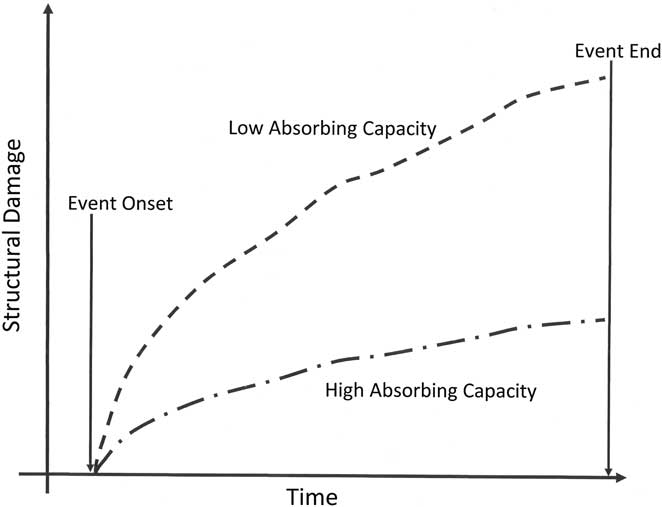
Absorbing capacity is the ability to absorb all or part of the changes in the availability of energy and/or resources of an event without sustaining a decrease in the availability of goods, services, and/or resources (Figure II-5).1(p145) The likelihood of sustaining structural damage from an event associated with excessive amounts of kinetic energy may be reduced by actions taken to augment the absorbing capacity of the structures-at-risk for the event. The greater the absorbing capacity of a structure for the energy contained in an event, the less the amount of Structural Damage sustained from a similar event (Figure II-5). If the absorbing capacity is sufficient to absorb all of the excess of kinetic energy to which it is exposed, without the energy disrupting the structural integrity of the structure, no Structural Damage to the structure will occur (eg, it will not collapse due to the forces of gravity). For example, a heavy rainfall on land able to absorb the water likely will not result in a flood. The event (heavy rainfall) was not prevented, but the absorbing capacity was able to minimize or reduce subsequent damage. Decreases in the absorbing capacity for a potential event may be the result of human actions, or may result from damage created by a previous event. For example, the absorbing capacity for a flood may be decreased by deforestation or as a result of previous mudslides. 38 Human actions that increase the absorbing capacity for an event are part of capacity building efforts and contribute to the state of resilience to cope with a future event (Figure II-3). It must be noted that direct injuries may be produced from the secondary events, such as collapse of buildings, from drowning or collisions against fixed structures, or from floating debris due to excessive force of the water during a tsunami.
Illustration of Hypothetical Relationships between the Amount of Damage from an Event and Different Levels of Absorbing Capacity. The higher the absorbing capacity, the less the amount of structural damage that will be sustained.

Every structure has a specific absorbing capacity for the characteristics of the energy released during an event or to resist a decrease in kinetic energy supply or available resources. Those structures with the lowest absorbing capacity will have the highest likelihood of sustaining damage from the kinetic energy of the event (ie, have the highest vulnerability; Figure II-4). The absorbing capacity of a building for mechanical energy (forces) may be increased by using building materials and methods that can withstand the shaking created by an earthquake of a particular magnitude. However, the absorbing capacity of any one structure contributes a very small amount to the total absorbing capacity of the community-at-risk for the earthquake. The total absorbing capacity of the structures (buildings and people) consists of the aggregate of the absorbing capacities of all of the living and non-living structures in the area-at-risk. The structures most vulnerable to damage will be those with the highest risk for Structural Damage. In the photograph in Figure II-4, the mosque had a much higher absorbing capacity for the forces of the earthquake and tsunami than did the surrounding residences. This does not mean that only those structures with the greatest vulnerability (ie, highest risk for damage) will be damaged structurally, as the amount and type of damage sustained also are determined by the type of energy of the event as well as other characteristics of the event.
It is important to note that each structure has a different absorbing capacity and its own specific relationship between the amount and type of damage and the amount and nature of the changes in the amount of kinetic energy released by the event. Differences in the absorbing capacities relate directly to differences in damage sustained from similar events. One community may be able to withstand an earthquake of a given magnitude without sustaining any Structural Damage, while an event of the same type and magnitude may produce profound destruction in another community in which the structures have a lower absorbing capacity. While the Seattle (Washington, USA; 2001) and Northridge (California, USA; 1994) earthquakes were of “equal” magnitudes, the Structural Damage sustained in the Seattle area was substantially less than that sustained from the Northridge earthquake. Although the magnitude of the shaking, as estimated using the Modified Mercali scale, was less in Northridge than in Seattle, the duration of both events was similar, and the characteristics of the events did not differ in terms of the magnitude of the energy released. Similarly, the amounts and severity of damage sustained following the 2010 earthquakes in Haiti and Chile differed substantially, although the magnitude of the earthquake in Chile was more than 500 fold greater than the earthquake in Haiti. 39 These differences likely were due to the different absorbing capacities for these similar events. Only through multi-factorial analyses can differences in the absorbing capacities be implicated.
Capacity-building efforts can be prioritized to increase the absorbing capacity of those structures that support the essential functions of the community (provision of adequate amounts of goods, services, and other resources). For example, efforts may be directed at enhancing the absorbing capacity of the health facilities in the community so that they will sustain little or no Structural Damage and be able to continue to function during or following an event. Building new hospitals and retrofitting existing hospitals with augmented absorbing capacity for events for which they are at-risk was a major goal of the “Safe Hospitals” initiatives of the Pan-American Health Organization (Washington, DC USA) and UN-ISDR (2009-2010). 40 In areas prone to flooding, capacity-building efforts may focus on flood prevention by re-forestation, building levees, and relocating dykes. Thus, when an event (rainfall) does occur, potential Structural Damage can be prevented or minimized.
Structural Damage may occur not only to the infrastructure, but also to the people, equipment, and supplies (goods, services, and resources) that are essential for the ongoing functions of the community. Thus, continuity of the functions of the affected community may be compromised not only by Structural Damage to the infrastructure, but also by damage to humans (ie, health care workers), equipment, and/or supplies.
Lastly, Structural Damage also may be indirect—not related to the energy of the event. Damage may be the result of injuries from other structures damaged from the energy of the event. For example, injuries may result from damaged structures, such as lacerations from debris during cleanup, or from other indirect causes, such as myocardial infarction, tetanus, and suicide attempts.
Structural Damage to Humans
Humans are highly vulnerable (ie, have low absorbing capacity) to transfers of kinetic energy released from a hazard during an event, regardless of the type of energy involved (mechanical (physical force), electrical, thermal, chemical, nuclear, or biological). Damage to humans is called injury. The nature of the injuries created by the transfer of the energy is dependent upon the type of energy and the location of the transfer. Mechanical energy manifests as forces that may disrupt the structure of the body area impacted (trauma). Generally, injuries (Structural Damages), per se, are not a direct cause of death: injuries result in death from losses of functions related to the Structural Damage sustained from the transfer of energy onto or into the body. Loss of vital functions due to the injuries results in death. Electrical energy may cause the heart to fibrillate, which results in rapid death due to failure of the heart to propel blood. Asphyxia due to loss of a patent airway required for ventilation or external compression of the thorax or abdomen (traumatic asphyxia) may result in sudden death. Basically, events do not cause deaths, losses of organ systems functions due to injuries cause death. Rather than reporting the numbers of deaths as damage, it is cogent to report the number, types, and severity of injuries sustained and the number and causes of deaths related to the injuries. It is important to know the number and proportion of injured who succumbed (ie, to determine which deaths potentially were preventable). Knowing only the numbers of deaths is of little value. 35 In order to identify preventable deaths, it is important to understand the mechanisms of injury and the causes of death. Thus, it is essential that the mechanisms of injury be documented.
However, humans can take actions to increase their protection from the kinetic energy of an event. During an earthquake, they can position themselves in doorways or underneath sturdy structures that, in turn, have a higher absorbing capacity than does their body. Thus, much of the energy that could create damage to their body is absorbed by another structure with less vulnerability to the kinetic energy of the event. Humans also can augment their protection through the use of accessories that have a higher absorbing capacity than does their body. The donning of bulletproof vests, flak jackets, helmets, and personal protective equipment, as well as the use of seat restraints and installation of deployable airbags in motor vehicles, are examples of augmenting personal absorbing capacity; all these accessories absorb and/or distribute the kinetic energy of the event before it transfers to the body. Immunizations represent another method of increasing humans’ absorbing capacity for a specific organism; they do not prevent the organisms from entry into the body, but they may prevent the Structural Damage (the disease) that can result from exposure to the organisms. Additional examples include donning fire-resistant or insulated clothing, shielding from radiation, using personal protective equipment, neutralization of chemicals, treatment with antibiotics, removal or containment of the hazard, and evacuation to prevent exposure.
It also must be noted that humans also are highly vulnerable to losses of goods, services, and resources upon which they are dependent. Inadequate supplies of potable water rapidly result in dehydration and lack of food results in starvation.
Assessments of Structural Damage
The amount and type of Structural Damage to the infrastructure and the environment generally is determined visually. However, on some occasions, and in some settings, Structural Damage may be detected from assessments of levels of function. For example, damage to water supply lines may be detected by the failure to obtain water from a tap; failure of electrical energy may be detected by losses of electrical lighting; damage to roads/bridges may be detected by the inability to receive essential medical supplies. All assessments of Structural Damage (infrastructure, environment, living beings, and losses of goods, services, and/or resources) must be documented. The study of events that do not result in a disaster may be as important as those focusing only on disasters. Why do two events of similar energy types and magnitudes cause a disaster in one setting and not in another?
Functional Damage (Loss of Function(s); Figure II-2 and Figure II-3)
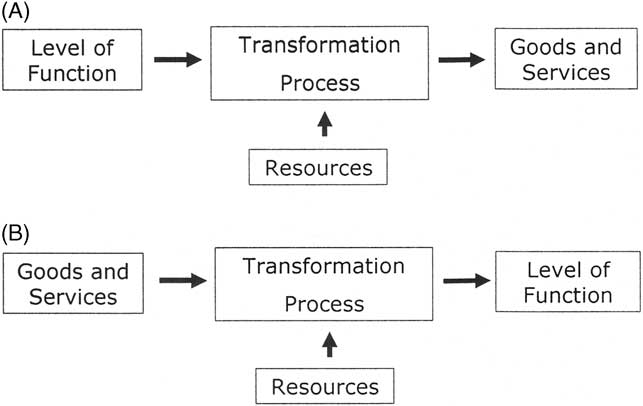
A community provides services (functions) to its population. A community operates by functions. A function is a mode of action or activity by which a thing fulfills its purpose; 41 the purpose for which something is designed or exists.Reference Thompson 42 Goods are not functions. A good is a desirable object. 43 The functions of all Systems depend on the functional integrity of the structure(s) that support them. For example, in a cell, the glucose and oxygen imported into the cell must be transformed into energy by processes within the cellular mitochondria. The energy produced then is used to fuel processes required for cellular functions. Similarly, available goods and services must be transformed into functions by the Systems that comprise a community (Figure II-6). All operational functions of a community are production functions (ie, transformation processes that convert goods and services (resources/costs) into the operational functions (outputs) that serve the community). The transformation process used is unique for every function. The transformation from goods and services into functions requires an accessible supply of goods and services and an intact production process; the production process consumes resources. The consumable resources consist of the available goods and the services and other costs (eg, opportunity and financial). The resources consumed by the transformation process are the costs of the process of producing the functions from the available goods and services.
Production Functions Illustrating the Relationships Between Levels of Function and Available Goods and Services. Following an event, changes in levels of function(s) must be transformed into goods and services needed to restore levels of function (A). As needs are met, goods and services must be transformed into functions (B).

This transformation process requires human input and an intact infrastructure. The production function requires an infrastructure and includes the physical space (infrastructure), supplies, equipment, and knowledgeable personnel: damage to the infrastructure (space and equipment) may impair the production of functions regardless of the expendable resources available. The essential functions that comprise a community are organized into systems that are called the Societal Systems.Reference Thompson 12
Compromised levels of function may result not only from decreases in available goods, services, and other resources, but to inadequate transformation due to loss of infrastructure (space and equipment) and/or personnel that have been injured or are unable to respond. Structural Damage(s) caused by an event may involve goods, services, and other resources, and/or the infrastructure utilized by the transformation process may result in inadequate supplies of the goods, services, and resources required by the transformation process. The supply of available resources may be compromised due to direct damage, and/or loss of goods and services, and/or by inaccessibility to the needed supplies of goods and services and/or to lack of financial resources. Compromised supplies of available resources caused by an event may or may not impair the operation of the Systems (ie, cause Functional Damage) of the community or persons impacted by the event.
Just as not all events necessarily result in Structural Damage, not all Structural Damage necessarily diminishes the levels of function of one or more of the Societal Systems; the levels of function of some functions may become compromised while others may not.1(pp51) In addition to direct damage to infrastructure or living beings, indirect damages may cause diminished/losses of levels of function from a loss of resources (supplies, personnel, and equipment) and/or failures in the transformation process. For example, damage to a water delivery pipe may result in loss of water (Functional Damage/loss of function delivery) to a specific site, but water may be obtained from other sources, thereby buffering the loss of function that resulted from the Structural Damage. Interrupted electrical transmission lines may result in diminished levels of functions of many functions that rely on electricity. However, some of these functions may be maintained through the use of alternate power (energy) sources such as electrical generators that transform fuel into electricity. Damage to an operating suite may impair the provision of surgical services even with adequate supplies of available goods and services. Relief interventions may be directed to providing the functions lost or overwhelmed due to Structural Damage. During a disaster, outside assistance is required to fill-in existing gaps in some essential functions.
Buffering Capacity
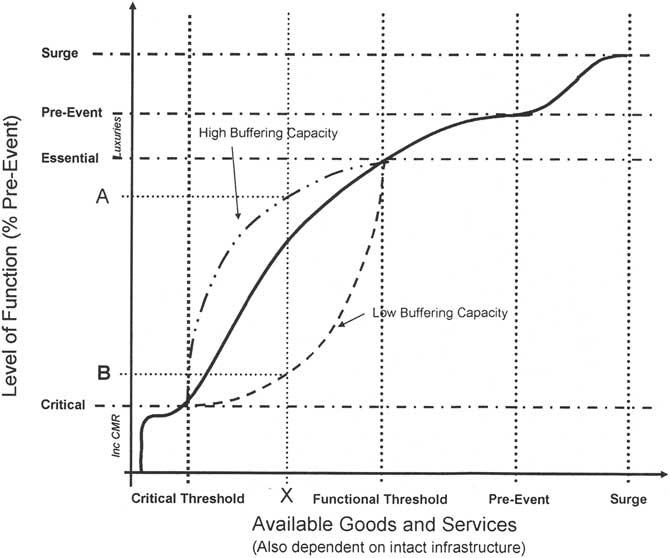
The buffering capacity is the ability of a community, or components of a community, to cope with the Structural Damage or Functional Damage sustained from an event without a decrease or loss of function of the System (ie, continue to function in spite of the Structural Damage; Figure II-3 and Figure II-7).1(pp82-86) The likelihood that the Structural Damage caused by an event will result in a change in the functional state of one or more Systems of a community is related to: (1) the structures damaged; (2) the extent of the damage; (3) the role of the damaged structures in the function(s) of the community; and (4) the buffering capacity of the component Systems of the community. The greater the buffering capacity of the community, the greater the likelihood that the community and its functional Systems will continue to perform despite the Structural Damages sustained.
Relationship between Supplies of Goods and Services and Levels of Function. As available goods and services decline, the functions of a System drop below its functional threshold. Further declines may cause functions to drop to its critical level of function. Abbreviation: CMR, crude mortality rate.

As with absorbing capacity, the buffering capacity can be altered (attenuated or augmented) by human actions, or by damage from a previous event. For example, damage to the electrical power system required to sustain the functions of a hospital can be buffered by the use of electrical generators powered by another source of fuel. Using backup generator electricity allows the continued operations (functions) of those services that are dependent upon electricity (eg, blood storage, mechanical ventilators, operating suite equipment, light, and heat). Similarly, establishing alternative care sites can allow a health care facility to continue to function despite damage sustained to a part of its structure. Increasing the buffering capacity can minimize or prevent Functional Damage (loss of function(s)) and thus, is part of capacity building and contributes to the overall resilience of the community for an event (Figure II-3).
Theoretically, if the buffering capacity of a community or a component of the community is adequate, no changes in the functions of that System will occur if Structural Damage is sustained. For example, damage to a bridge to an island may compromise the transportation of people and goods to the island. However, if transportation to the island can be provided using a ferry system, the function may be maintained: the ferry system provides the buffering capacity for the Logistics and Transportation System. Whenever the changed supplies of essential goods and/or services secondary to Structural Damage cannot support the essential functions of a Societal System, the level of functioning of that System will become compromised—the buffering capacity for that function has been exceeded (Figure II-7). As long as the supplies of essential goods and/or services remain at or above their functional threshold for the Societal System, levels of essential functions continue (Figure II-7). In some instances, luxury functions1(pp118-122) (if any exist) may be compromised, causing some discomfort/inconvenience for the affected society, but the essential functions will be preserved. In the example of the ferry, it may take longer and be less convenient to reach the island, but function is preserved. Likewise, damage to part of a hospital may require that non-essential cosmetic surgeries be discontinued in order that the operating units can be used for the treatment of the injured. In both examples, sustained damage did result in a limitation of some functions, but not in the provision of essential functions (Figure II-7). It is important to note that every System/Subsystem has different buffering capacity for the Structural and/or Functional Damages sustained.
Structural Damage may compromise the available supplies of goods and/or services and may result in the level of function of some of the components of the affected community to fall below the critical levels of function required to maintain its normative crude mortality rate (CMR)—the goods and/or services available are below their respective critical threshold and the CMR of the affected population increases. Depending on the amount and type of Structural Damage sustained, some functions of the System may be able to continue unabated, while the functioning level of other components may fall below their critical levels of function. For example, the injury/death of medical laboratory personnel may compromise the ability to obtain laboratory studies or to type and cross-match blood essential for the survival of some of the victims. This may result in the inability to successfully resuscitate victims with traumatic injuries, or to perform needed surgery, and thus, result in increases of the CMR. Damage to those components of a community that normally operate at just above their critical levels of function have little buffering capacity for any losses of goods and/or services required to sustain the function, and the CMR will increase due to loss(es) of their minimal critical infrastructure (Figure II-7).1(pp118-122)
Levels of Function
The level(s) of function(s) (functional status) of any Societal System prior to the onset of an event serves as the functional baseline for the System being considered (pre-event level of functions). Within each System, four levels of function have special relevance: (1) Essential; (2) Conditional; (3) Critical; and (4) Luxury. Essential levels of function for a System define the levels of function required to maintain the basic services to the community. Conditional functional levels are levels required due to increased demands for services related to increased burdens produced by the Structural Damage.1(p115) Critical levels of functions are the levels of functioning below which the CMR of the affected population increases. Not all Societal Systems or their component subfunctions have a critical level of function. Luxury levels of functions are those levels of function that are not needed for the community to provide essential services to the population.
A threshold is a boundary beyond which a radically different state of affairs (or function) exists.Reference Thompson 44 A functional threshold defines the minimum level of goods and services at which all the essential aspects of the System's functions are operational; it is the minimum level of available goods, services, and resources required to provide the essential services to the community (Figure II-7).1(p74) Either at or above the functional threshold of a System (or component of a System), the System can provide all of the essential functions of the community. Systems that are operating below their respective essential levels of function require prioritization of the essential functions that must be continued and those that can be suspended.
The relationships between the available goods and services to levels of function are illustrated in Figure II-7. With an intact infrastructure, adequate essential personnel, and an intact transformation process, levels of function are dependent upon the supplies of goods and services available. At the baseline (pre-event) levels of available goods and services, the level of functioning of a System are indicated by the dashed line (pre-event). As the quantities/qualities of resources become compromised, the level of function decreases. If the community enjoys luxury functions, the available levels of luxury functions decline. As the quantity of goods and services declines further, eventually the levels of function falls below that required to sustain the essential functions required by the community (functional threshold). If the amount of available goods and services declines to point X on the axis, the respective levels of functions fall further. The level of function of a System (or a component of the System) with a high buffering capacity (A) remains at a higher level than does the level of functioning of the System (or its component) with a low buffering capacity (B) for that function. If the System or any its components has a critical level of function below which the CMR increases, further compromise of available goods and services to supplies below the critical threshold results in an increase in the CMR. The shape and position of the curve describing the relationship between available goods and services and levels of functioning of a given System varies with the specific community.
In general, deficits in function (functional deficits) are corrected by restoring the functional integrity of the damaged structures or by providing a sufficient supply of goods and services. Thus, when possible, Structural Damage is repaired or the damaged structures are replaced, and deficits in accessible supplies are corrected using replacement supplies, gaining access to the “needed” supplies, and/or providing substitute or additional personnel.
The critical threshold is the minimum level of available goods and services required to maintain the normative CMR of the community. For example, if goods, services, and/or resources cannot support the essential functions of a Societal System, the level of functioning of that System will become compromised—the buffering capacity for that function has been exceeded (Figure II-7). As long as the supplies of essential goods and/or services remain at or above their functional threshold for the Societal System, levels of essential functions continue (Figure II-7) provided that the production process is intact. In some instances, luxury functions1(pp118-122) (if any exist) may be compromised, causing some discomfort/inconvenience for the affected community, but the essential functions will be preserved. In the example of backup generators, the generators may provide only enough power to keep the vital activities in a hospital operational. Other functions may be sacrificed due to a lack of sufficient electrical power. Likewise, damage to part of a hospital may require that non-essential cosmetic surgeries be discontinued in order that the surgical suites can be used for the treatment of the injured. In both examples, the damage sustained resulted in a limitation of some functions, but not in the provision of essential functions (Figure II-7). It is important to note that every System and its subsystems, and their functional units, have a different, unique buffering capacity for the Structural Damage sustained. It must be noted that compromises in the levels of function and/or goods and services and resources of other Systems may impair the levels of function of the System(s) being studied.
Compromise in the availability of supplies of goods and/or services and may result in a decline in the level of function of some of the components of the affected community to the critical levels of function required to maintain the normative CMR (ie, the quality/quantity of the goods and/or services available are below their respective critical threshold and the CMR of the affected population increases). Depending on the amount and type of Structural Damage sustained, some functions of the System may be able to continue unabated, while the functioning level of other components may fall below their respective critical levels of function. For example, the injury/death of medical laboratory personnel may compromise the ability to obtain laboratory tests or to type and cross-match blood essential for the survival of some of the victims. This may result in the inability to successfully resuscitate victims with traumatic injuries or perform needed surgery, and thus, result in increases of the CMR. Damage to those components of a community that normally operate at just above their critical levels of function have little buffering capacity for any losses of goods and/or services and/or infrastructure required to sustain the function, and the CMR will increase due to loss(es) of their minimal critical infrastructure (Figure II-7).1(pp118-122) Again, it is stressed that Functional Damages in Systems outside of the System being studied may produce needs in the System being studied.
Assessments of Function
Alterations in functional states are detected by assessments of the levels of functions. However, the compromise of function(s) of some Systems may be implied from observed Structural Damage. Conversely, the impact of damaged or inaccessible essential resources may be detected by a decline in the functional status of a particular System. For example, the inability of a hospital to provide health care services may be due to injured personnel, damaged equipment, or loss of electrical power.
The value of assessments of the functional status of a System are dependent upon the indicators of function being used.1(p51,82-86), 45 The same indicators of function must be used for defining the: (1) pre-event functional levels; (2) the disturbances of function that result from the Structural Damage; and (3) the changes in function related to interventions. Care must be exercised in selecting indicators of function so that they have the construct validity and that they repeatedly can be used to adequately assess changes in the levels of function.
The disturbances in the functions of a community/society as a whole, or in any of the Systems that comprise the affected community, always are judged against the functional status of the community or its Systems before the precipitating event began (pre-event status). This requires an inventory of functions provided by a community and/or its components. Preferably, this inventory will be linked to the structures that support the functions. This linkage will facilitate the prediction of Functional Damage associated with Structural Damage. In a hospital, it should be possible to predict what will happen to its functions if a particular area of the hospital is damaged or destroyed. This relationship is important for guiding risk-reduction as well as relief or recovery interventions.
Needs (Figure II-2 and Figure II-3)
When a System operates below its essential level of function, its compromised function creates needs. Decrements of levels of function (Functional Damage) are not deficits in available goods and/or services; rather, changes in function produce needs, and the needs are the goods and services required to prevent further deterioration of function (Relief Responses or damage control), fill the gaps in essential functions (Relief Responses), or restore function(s) to the pre-event level (Recovery Responses). Needs are determined through the synthesis of the data/information obtained from assessments and other sources. The determination of needs from the assessments involves transforming the assessed changes in functions into the goods and services required to repair the functional deficits. The process for converting Functional Damage into needs may incorporate several assumptions.Reference Bevington, Pyatt and Arleen Hill 46
Functional needs are the needs generated when the quantity/quality of available supplies of goods and services falls below their respective functional threshold, or the infrastructure and processes required for the conversion are damaged or rendered dysfunctional, and the functional state of a System (or any or all of its components) becomes compromised. The existing levels of function cannot meet all of the gaps in function of one or more Societal Systems.
Critical needs occur when the level of functioning falls below the critical levels of function and require prompt responses to prevent the CMR from increasing further. Conditional (situational) needs are needs created by increased demand for goods and services rather than diminished function.1(p51) The increased burdens caused by the surge of injured/ill persons as a result of an event, or by the needs for increased surveillance in order to detect and manage outbreaks of diseases, are examples of conditional needs.
Luxury functions are conveniences for the impacted community and are not required for the provision of essential services. Therefore, compromised luxury functions do not produce needs. Needs are different from the wants and demands of the affected population. The perceptions of needs by the affected population tend to differ from those of the responders. In general, the population perceives their needs to be greater than their real needs, while responders tend to perceive the affected population’s needs to be less than their actual needs.Reference Birnbaum, O’Rourke and Daily 47
Responses (Figure II-2 and Figure II-3)
Responses are interventions;Reference Rubin, Heuvelmans, Tomic-Cica and Birnbaum 48 , Reference Thompson 49 actions undertaken to meet the relief or recovery needs that resulted from an event. As noted above, needs are expressed as the goods and services and resources required to sustain the levels of function (relief) or to contribute to recovery. The objective of each response must be related to a specific identified need or set of needs (Figure II-2 and Figure II-3). Additionally, every response (intervention) must have a stated overarching goal as well as objectives that contribute to attaining that goal to which the response is contributing. Within the context of the defined goal, the most appropriate, and hopefully the most efficient intervention is selected, providers are identified, and the intervention is implemented according to an Operational Plan.Reference Bevington, Pyatt and Arleen Hill 46 , Reference Pickett 50 In general, responses are directed either to correcting the functional damage, supplementing levels of function, and/or repairing/replacing the damaged structure, which, in turn, will increase the level of function, and thus, decrease the needs, or increase the capacities of the community to cope with or respond to an event.
Responses to needs consist of three categories: (1) Ordinary; (2) Extra-ordinary; and (3) Outside. Ordinary responses comprise the routine, day-to-day responses to needs that do not require use of reserve goods, services, and other resources; examples include day-to-day interventions by Emergency Medical Services, emergency department services, elective and routine surgeries, routine law enforcement, clinic visits, and equipment maintenance. When the needs cannot be met by ordinary responses, extra-ordinary responses are recruited. Extraordinary responses include the addition of backup equipment, supplemental supplies and personnel, augmented services, and more, all of which normally are kept in reserve for special circumstances. When the needs cannot be met by ordinary responses and extra-ordinary responses are required, an “emergency” exists for the area affected. Both ordinary and extra-ordinary responses use local resources. Extra-ordinary responses utilize the community’s Local Response Capacity. No resources from outside of the area directly affected are required to meet the defined need(s). Responses to defined needs that cannot be met using ordinary and extra-ordinary resources require assistance from outside the area directly affected. When these needs cannot be met using local resources, assistance from outside of the affected area is required to help fill-in the gaps in essential functions; available outside assistance/responses are required until the local community can manage/restore the levels of functions of essential services without the outside help. When needs cannot be met by local resources, a disaster exists for that function.
Response Capacities
The response capacity is the ability to respond or intervene to meet needs and prevent further deterioration of function(s) of a community or components of a community impacted by an event (Figure II-3). Response capacity often is referred to as “preparedness.” Such responses require goods, services, and/or other resources that are contained in the Local Response Capacity; the Local Response Capacity is the ability of the systems within the impacted area to meet the needs of the impacted population. The Local Response Capacity has two components: (1) Ordinary; and (2) Extra-ordinary (reserve). Each community has a capacity to respond to day-to-day (ordinary) needs of the population without having to mobilize reserve goods and services. Needs that require resources that are in excess of those used for the provision of daily functions are extra-ordinary, and these reserves also are part of the Local Response Capacity. The Local Response Capacity includes Response Plans, competent individuals/organizations, available equipment, supplies, and other plans (often referred to as “contingency plans”) to support the responses/interventions selected to meet the needs. When reserve supplies are used, the situation is an “Emergency” for the components required. When the needs cannot be met by use of the local response capacity, outside response capacities are required.
Outside Response Capacity (Figure II-3) consists of the ability of system(s) outside of the area directly impacted by an event to respond or intervene to help meet the needs of an impacted population. Thus, response capacities and capabilities increase as one proceeds up the hierarchy of government: an individual’s response capacity is less than that of the neighborhood, which is less than that of the community, which is less than that of the state/province, which is less than that of the national government, which is less than the capacities of the international community. Thus, as responses move up the hierarchy, more and more resources can be brought to assist the affected community in meeting its needs. Any response capacity from higher in the hierarchical level than the community affected by the event is considered to be part of the Outside Response Capacity. Both the Local and Outside Response Capacities can be augmented by human actions.Reference Bevington, Pyatt and Arleen Hill 46 , Reference Birnbaum, O’Rourke, Daily and Loretti 51
Emergency (Figure II-2 and Figure II-3)
When the community (or its component Systems) use the reserve goods, services, and other resources within its Local Response Capacity to meet the needs that result from the changes in functions (Functional Damage) of one or more of its components, the situation is an “Emergency” for that community or the System; in other words, the Local Response Capacity is sufficient to meet the needs of the affected community or the part(s) of the community that is(are) compromised, and no outside assistance (use of the Outside Response Capacity) is required. For example, if the community’s Emergency Medical Services and medical facilities are able to provide all of the medical care required from an event that resulted in multiple casualties, no Outside Response Capacity for that component of the community is required, and the situation is an emergency for the Systems affected.
Disaster (Figure II-2 and Figure II-3)
A Disaster occurs when use of the Local Response Capacity of the community and/or its components is insufficient to meet the needs created by the losses of functions and/or the inability to meet the conditional needs. Therefore, in a disaster, outside assistance is required to meet at least part of its needs (including conditional/situational needs). The definition of disaster inherently includes scale; what constitutes a disaster for a province or state may not represent a disaster for a nation. Generally, as responses move up in the government hierarchy, the amount of available resources increases. In some small countries, the only entity above the community government may be that of the nation.
A disaster could occur in one Societal System of the affected community and not in another, depending on the respective Response Capacities of the Systems. For example, the terrorist attack in New York City (New York, USA) in 2001 resulted in a disaster for several components of the community, such as Security (fire department and police), but did not result in a disaster for the Medical Care System of the City. Therefore, the likelihood that an emergency will become a disaster depends upon the Local Response Capacity of the affected community or one or more of its Societal Systems; the greater the Response Capacity of the community, the lower is the likelihood (risk) that the emergency will evolve into a disaster for the community.
A disaster is over for the System or its components when the levels of essential functions of the System can be provided without requiring any outside assistance. However, recovery to the pre-event status (level of function) may continue using the local response capacity: the emergency may continue for the community or its systems after outside assistance no longer is required.
Resilience, Risk Reduction, and Capacity Building
Resilience is the ability to recover quickly from illness, change, or misfortune; the ability of a System, community, or society exposed to hazards to resist, absorb, accommodate to, and recover from the effects of a hazard in a timely and efficient manner.Reference Birnbaum, O’Rourke and Daily 52 In terms of a disaster, the resilience of a community is comprised of its absorbing, buffering, and response capacities (Figure II-3). Human actions (interventions) that augment the absorbing, buffering, and/or response capacities increase the resilience of a community-at-risk (capacity building).
Capacity building consists of interventions undertaken to provide a defined target group or organization with the knowledge, skills, mechanisms, resources (both human and financial), and/or technology needed to enable it to perform to its full potential. 53 Capacity building includes measures to: (1) increase absorbing capacity (eg, the building of levees); (2) increase buffering capacity (eg, installing generators); and/or (3) increase response capacity (eg, cross-training personnel). Capacity building does not include mitigation of a hazard; however, hazard mitigation is included in risk reduction.
Resilience may be specific for a given hazard or may encompass all of the hazards to which the community is at-risk. For example, it has been established that potable drinking water supplies have been compromised during or following any type of event. Thus, stockpiling of water results in increased resilience for the next event, regardless of the type of hazard responsible for the event and subsequent disaster. On the other hand, re-enforcing the physical structure of a hospital may be specific for earthquakes. All actions taken to augment the resilience are part of capacity building and vice-versa.
Summary
A disaster occurs only if a hazard manifests as an event, the event causes Structural Damage, the Structural Damage sustained causes Functional Damages that produce needs, and the local response capacity is insufficient to meet all of those needs. Modifying or eliminating an existing hazard (hazard mitigation) can prevent an event related to the hazard, and this can prevent a subsequent disaster from such an event. Increasing resilience through capacity building (absorbing, buffering, and/or response capacities) can prevent a disaster from occurring during or following an event. A disaster is, in fact, a failure of resilience for the event. The Conceptual Framework provides the structure required for analyzing the epidemiology of disasters and events that do not result in disasters, and for evaluating disaster-related interventions. Given the limitations inherent in emergencies and disasters, comparisons are essential for establishing evidence.