Contagious and fatal diseases have destroyed thousands of Indians, which, by the application of well known remedies, might have been checked on their first appearance, and their desolating effects prevented.
—Reverend Jedidiah Morse to Secretary of War John C. Calhoun, 1822Footnote 1Drunk, sober, or sick, we will move them along.
—Colonel J.J. Albert to George Gibson, 1832Footnote 21. Introduction
In 1832, Congress created a special vaccination program “to prevent … the spreading of … disease amongst the Indian tribes.”Footnote 3 One of the federal government's earliest efforts to assume responsibility for the public's health, the Indian Vaccination Act was also the first medical program intended to benefit the country's indigenous population. Targeting smallpox, “the most lethal disease that traveled from Eurasia to the Western Hemisphere,” members of Congress appropriated $17,000 to vaccinate Native peoples living on the edge of the frontier, a tract of territory stretching from the northernmost reaches of the Mississippi River, in what is now Minnesota and Wisconsin, to its southern delta.Footnote 4 Over the next decade, federal agents distributed vaccine matter across that territory, inoculating over 30,000 individuals by 1841.Footnote 5
For students of American political development, the Indian Vaccination Act presents an intriguing puzzle. At a time when governing elites were “marginaliz[ing] the ‘other’” and “articulat[ing] the political attributes of good citizenship,” lawmakers nevertheless saw fit to provide medical care to a nonwhite, disenfranchised population.Footnote 6 What motivated Congress to devote resources to vaccinating indigenous people a full century before their enfranchisement? How did the federal government muster sufficient administrative capacity to design and implement this early program for disease control?
The Indian Vaccination Act is not a stray or unrepresentative entry in the long and troubled history between the federal government and the “First American Citizens.”Footnote 7 As Stephen Rockwell reminds us, “since the early nineteenth century, the United States has obligated itself to provide health care, physicians, and medical supplies to Indians through treaties, laws, and the trust responsibility.”Footnote 8 Attending to the ways in which antebellum federal policymakers approached the problem of infectious disease reveals key linkages between public health, territorial expansion, and state development in the Jacksonian era—linkages that would have lasting consequences for the design and administration of subsequent efforts to regulate the health of indigenous communities. Indeed, as Paul Frymer rightly notes, “the United States’ engagement with Native American populations was far more long-standing and central to American political development—both state and racial formation—than is commonly recognized.”Footnote 9
As we will see in the empirical sections that follow, the federal government was deeply involved in regulating indigenous health from the very beginning, just as it intermittently policed and protected the health of white communities. In the new republic's first decades, medical supplies and the services of physicians were considered goods to be traded for title to territory. Indigenous communities, for their part, came to view the state's provision of healthcare as a right enumerated in treaty law and owed “as part of the … government's payment for Indian land.”Footnote 10 As westward expansion accelerated, federal policymakers—generally understood to have left health policy to the states—embraced a more vigorous conception of preventive medicine to simultaneously protect indigenous and white settler communities and reduce the escalating costs of Indian removal.Footnote 11 Thus, I argue, the provision of medical services to Native peoples—so often excluded from the bundle of constitutive functions of the federal government in the decades before the Civil War—was essential to the developmental arc of the antebellum War Department and frontier policymaking.Footnote 12
Despite the federal government's legal duty to safeguard the indigenous nations over whom it claimed jurisdiction, lawmakers were slow to devote significant resources or attention to fighting disease beyond what was required by treaty obligations. Only after repeated prodding by the War Department—at which point it was clear that epidemics were slowing the pace and inflating the costs of Indian removal and land expropriation—did lawmakers agree to intervene. Aligning the goals of abolitionist and missionary reformers with committed expansionists, the vaccination program reflected the same “inconsistent combination[]” of liberal, republican, and ascriptive ideas that Rogers Smith has argued characterizes American politics more broadly.Footnote 13 Put differently, the Indian Vaccination Act was a legislative “common carrier,” simultaneously satisfying those who sought to prevent disease-induced genocide and those who desired the orderly and efficient acquisition of tribal lands.Footnote 14
This common carrier logic persisted into the program's implementation phase, bringing together reformers within the War Department, who advocated vaccination as a means to improve the health of Native peoples, with expansionists, who saw it as a means to speed the expropriation of their territory. Unwilling to cede administrative authority to more proximate state governments, both the secretary and other officials within the War Department's Indian Office relied whenever possible on existing personnel to muster the necessary manpower and expertise to efficiently and effectively implement the program. Directing military surgeons to administer the bulk of vaccinations, the Indian Office preserved its regulatory power over indigenous health—a decision that would profoundly shape the design of subsequent Native health programs.
The War Department's pivotal role in petitioning for, and ultimately administering, the Indian vaccination program suggests that the agency had far more autonomy and administrative capacity than the average nineteenth-century bureaucracy. Most agencies may have been, as Daniel Carpenter argues, “partisan reflections of the presidential administration in power” and “captured creatures of local elites and economic interests.”Footnote 15 But the War Department was different. With “the volatility of the frontier” leaving “Congress and the courts lagging behind events and inexpert at addressing complicated circumstances,” the War Department was able to “push policy in its own direction” when it came to indigenous health.Footnote 16 Indian agents and military officials lobbied Congress to formulate a centralized program for disease control and, when lawmakers were slow to take action, worked independently to limit frontier contagion.
Subsequent efforts to regulate public health on the nation's periphery would preserve the link between territorial expansion and the provision of medical care to indigenous communities. By the late 1800s, the Indian Office was routing care exclusively through reservation-based clinics and hospitals. Delivering care in this way reinforced the reservation system, further controlled indigenous movement, and resulted in “overcrowding, poor ventilation, and unsanitary … facilities.”Footnote 17 Only in the late 1930s did the Indian Health Service permit Native people to be treated for tuberculosis, influenza, and other contagious diseases at state-run sanitariums, where health outcomes were markedly better.Footnote 18
2. Indian Vaccination and the Expansion of American Sovereignty
Despite a number of recent studies documenting the active and expanding role of the federal government in the early nineteenth century—a period long held to be “stateless”—scholars have tended to ignore the early republic's public health apparatus. In stark contrast to the wealth of scholarship exploring the development and retrenchment of public health and social insurance programs in the post–New Deal era, only a handful of studies have examined the country's early health laws in any detail. These statutes, passed by Congress in the decades after the nation's founding, established procedures for civilian and maritime quarantines, created a hospital system for injured sailors, provided relief funds for citizens stricken by famine or natural disaster, and improved the distribution of smallpox vaccine by permitting private practitioners to order it through the mail, free of charge.Footnote 19
The few studies that do chronicle antebellum health initiatives have tended to adopt a settler-oriented view of social goods provision, contending that Congress designed public health programs to reward citizens who contributed either politically or economically to the nation's founding and expansion. Distinguishing between soldiers and settlers, Anglo Americans and more recent immigrants, indentured servants and enslaved blacks, scholars suggest that lawmakers intended for the benefits of their public health interventions to accrue to those who labored in service of the national welfare or “were innocent victims of fate rather than irresponsible protagonists of their own misery.”Footnote 20 Indeed, as Gautham Rao describes the development of merchant marine hospitals in the early 1800s, the “federal government constructed and expanded … marine hospitals because maritime labor was … crucial [to] … the national economy.”Footnote 21 This narrative makes sense if we assume that “spending state resources on people outside the boundaries of the nation … provides no electoral benefits to members of Congress.”Footnote 22
But the case of Indian vaccination makes clear that by the 1830s, lawmakers did see value in providing medical care to indigenous people.Footnote 23 Rather than rely on petitions and requests stemming from treaty obligations, they did so in a systematic and centralized fashion, paralleling a broader shift in patterns of congressional appropriations for relief.Footnote 24
Understanding this shift reveals that the development of the antebellum state was spurred by the joining of two political logics: one emphasizing the humanity of indigenous people and the importance of providing for their welfare, the other prioritizing the state's interest in seizing their land, which required that its inhabitants be healthy enough to be expropriated—or, in the parlance of the time, “removed.”Footnote 25 Responding to appeals from missionaries and abolitionists, a small group of social reformers in Congress pressed on humanitarian grounds for policies to combat the devastation wrought by smallpox in indigenous communities. However, the majority of lawmakers supported vaccination because they understood that contagious diseases threatened the health of white settlers and risked slowing the pace and inflating the costs of Indian removal. By fusing humanitarian and expansionist interests, a broad relief program for disease control in Native communities proved to be a successful “common carrier,” a policy supported by opposing groups for very different reasons.Footnote 26
This dynamic broadly characterized other aspects of indigenous politics. For example, antebellum Christian missionaries introduced “cultural ideas and customs for the proposed benefit of both Indians and whites,” but they also collaborated with government agents to “reinforce[] the primacy of racial distinctions” that supposedly entitled white settlers to Indian territory.Footnote 27 In this sense, the Indian Vaccination Act is but one example of a less studied, but nevertheless critical, pattern in antebellum politics—one where “liberal egalitarians” did not “slow[]” the aims of “legislators and political entrepreneurs who favored a ‘white nation,’ manifest destiny,” or continental empire, but instead aligned with those same actors to pursue a shared policy objective.Footnote 28
The administration of the Indian Vaccination Act is no less important to understanding American state development. A growing body of scholarship has challenged the traditional view of a minimalist antebellum state, arguing instead that the early republic was far more capable and active in promoting a range of policies characteristic of a modern state than previously understood.Footnote 29 Examining the dynamics of land and economic policy, Brian Balogh, Frymer, and Laura Jensen each detail how Congress created a system of entitlements to property in the form of land warrants, territorial bounties, tariffs and other subsidies, and homesteading laws to extend American sovereignty, bolster white migration, and further entrench a slave economy.Footnote 30 Here, too, federal entitlements were “more a privilege than a right, a status earned through sacrifice of treasure or service to others.”Footnote 31
These more recent works have also argued that nineteenth-century policymakers frequently turned to private entities or actors to promote state development, rather than amass bureaucratic capacity themselves.Footnote 32 Indeed, as Balogh writes, although the federal government frequently “intervened in the lives of nineteenth-century Americans,” it did so through “subsidies, and the use of third parties (including state and local governments), while avoiding bureaucracy.”Footnote 33 This uniquely “American blueprint for … state formation” relied heavily on private and local actors to provide the manpower, financial resources, and institutional ingenuity to govern the “wilderness.”Footnote 34 The federal government's dependence on private parties can be attributed, in part, to the relative weakness of the nineteenth-century bureaucracy. As Carpenter argues, the “twin institutions” of local capture and party rotation constrained the development of federal agencies, molding them into highly partisan institutions responsive to Congress and the president but with little discretion to innovate or champion their own policies.Footnote 35
Here again, the Indian Vaccination Act presents a puzzle. At a time when the “state [was] equipped to perform little more than the delivery of mail, the routine taxing of imported goods, and the rote distribution of pensions and public lands,” the War Department nevertheless deemed the provision of medical care to indigenous communities an affirmative and central responsibility of the federal government.Footnote 36 Rejecting an implementation design whereby the vaccination effort would be administered at the federal government's behest by states, localities, or private parties, the War Department's Indian Office tasked military surgeons—directly employed by the department—with administering the bulk of vaccinations. Capitalizing on the proximity of military garrisons to Indian territory and surgeons’ preexisting relationships with many of the communities targeted for vaccination, entrepreneurial officials within the War Department accumulated the necessary capacity to combat contagion with limited aid from private actors. Ultimately, as Rockwell chronicles, the Indian Office would use this capacity to supervise the reservation system and the welfare of the indigenous people it “isolated … to further U.S. expansion and development goals.”Footnote 37
Even before the program's implementation, War Department officials exhibited far more independence and entrepreneurial spirit than was typical for nineteenth-century federal agencies. Decrying the brutality of smallpox and warning that contagion would overwhelm the state's capacity to govern frontier settlements, Indian agents and their superiors lobbied lawmakers to develop a centralized plan for disease control. Despite the opposition of southern expansionists, this dual appeal to humanity and interest persuaded a majority in Congress to intervene. In delegating considerable discretion to the secretary of war to plan, innovate, and implement the vaccination program, lawmakers deviated from their usual practice of “making virtually self-executing laws.”Footnote 38 Indeed, the administration of the Indian Vaccination Act offers strong evidence that the War Department and Office of Indian Affairs “functioned as an effective public bureaucracy,” cultivating expertise and exercising independent influence over policy.Footnote 39
Why was Congress so willing to confer such “broad grants of discretionary authority” on the War Department? Far from the problem they were trying to solve, lawmakers recognized that Indian agents and military officials possessed more—and better—information about conditions on the ground. As a result of these informational asymmetries, Rockwell argues, “the War Department and, within it, the Indian Office … quickly built a reputation for expertise, and became the leading institution for designing and administering expansion-related Indian policies.”Footnote 40 Against this backdrop, Congress's apparent willingness to delegate broad discretion to bureaucratic administrators is a long-standing feature of American governance, despite what some contemporary critics of the administrative state have suggested.
In turn, the War Department's reliance on military surgeons—rather than local civilian physicians—to carry out the bulk of vaccinations may be attributed to concerns of both economy and national security. Because military surgeons were often garrisoned near the communities targeted for vaccination, officials viewed them as a readily available solution to the challenges of implementation—a source of labor that was both cheap and reliable. Perhaps more importantly, the War Department viewed managing contagion on the frontier as essential to carrying out its core, state-building mission: establishing de facto control over territory nominally subject to federal sovereignty.Footnote 41 While military officials delegated less important responsibilities to local or private actors, they were unwilling to cede to those outside of direct federal control duties deemed central to the “organized coercion” of Native peoples and the “protection” of white settlers.Footnote 42
3. Medical Care as Currency
In the late 1700s and early 1800s, federal officials struggled to balance their desire for an orderly and defensible plan for frontier settlement with white settlers’ expansionist impulses. Although it would take several decades for legislators to embrace disease control as an affirmative state power, they were quick to recognize that providing even rudimentary medical care to indigenous communities contributed to both objectives.
The leaders of the new republic, moreover, were eager to monetize “the riches … and natural funds of the continent” to discharge the former colonies’ wartime debts.Footnote 43 With limited authority to raise taxes, the sale of British land cessions agreed to in the Treaty of Paris in 1783 represented the federal government's primary means of revenue.Footnote 44 Even before Britain's transfer of territory by treaty, delegates to the Continental Congress discussed the possibility of using “the western lands, if ceded to the United States … towards a fund for paying the debt of these states.”Footnote 45 But to convert the “immense tracts of land” into a “national fund,” the legislature would need to turn the territory, gained and then governed by British colonial and treaty law, into titled parcels suitable for private sale and settlement.Footnote 46
This would prove a formidable task, as lawmakers struggled to assert the federal government's preeminence over Indian territory and trade. In 1787, the Continental Congress issued an ordinance declaring that “the United States in Congress assembled … have the sole and exclusive right and power of regulating trade, and managing all affairs of the Indians.”Footnote 47 But citing the ordinance's proviso that “the legislative right of any state within its own limits [shall] not be infringed or violated,” many of the states holding claims under their colonial charters to portions of the western frontier continued the pre-revolutionary practice of negotiating directly with local tribes over territory and the boundaries of settlement.Footnote 48 As Rockwell recounts, state officials in Georgia, North Carolina, and New York sought to “treat[] directly with Indian tribes and assign[] lands independently.”Footnote 49 In some instances, state governments were aided by federal treaty commissioners, who argued that Britain's defeat rendered the Crown's indigenous allies “conquered nations” and their lands the spoils of war.Footnote 50 “Steeped in the ideas and practices of empire,” most state officials saw little reason to compensate Native communities for their ceded territory and few had the resources to do so.Footnote 51 Federal lawmakers, however, feared that abrogating British treaty agreements would “produce all the evils of a general Indian war on the frontiers,” a war the new republic could ill afford.Footnote 52
Administratively, federal lawmakers lacked sufficient authority or oversight capacity to ensure that local elected officials and settlers respected existing political borders and treaty agreements. Believing it impossible to forestall westward expansion, Congress instead sought to regulate it. “Government authorities turned to treaties and activities tied to treaties to establish their authority and deal with the Indian presence and their manifold proprietary rights.”Footnote 53 In the hopes of managing the pace, if not the fact, of white migration, legislators agreed to require treaty commissioners to purchase the “right of soil” to territory before it was opened to settlement.Footnote 54 Secretary of War Henry Knox advised Congress: “The Indians are greatly tenacious of their lands, and generally do not relinquish their right, excepting on the principle of a specific consideration, expressly given for their purchase of the same.… It cannot be violated but with difficulty, and at an expense greatly exceeding the value of the object.”Footnote 55
But how would the federal government secure the necessary funds to purchase title to Indian territory? Indeed, the Committee on Indian Affairs reported: “The public finances do not admit of any considerable expenditure to extinguish the Indian claims.”Footnote 56 Without sufficient revenue to pay for frontier lands outright, the committee recommended that settlement be slowed in the hopes that in time the government would accumulate the resources to obtain title lawfully.Footnote 57 In light of the administrative difficulty of restraining the pace of settlement, and the unpopularity of doing so, the War Department offered lawmakers another solution. Federal dollars would still be required to “procure a permanent peace with the Indian tribes … and to further extinguish[] by purchase Indian titles.” But when agents “found it necessary to engage any … additional sum,” they would offer “useful goods and services” that could be provided at less expense.Footnote 58 Thus, title could be acquired at lower cost, reassuring the “public creditors [who] have been led to believe … that those territories will be speedily improved into a fund towards the security and payment of the national debt.”Footnote 59
Promises to supply medical care quickly proved to be an important asset in negotiations with the representatives—or purported representatives—of indigenous communities. Indeed, changes in treaty language and more informal agreements suggest that Indian agents routinely offered up the services of physicians and the provision of medicines (often curatives for venereal diseases), together with instruction in animal husbandry and farming practice, in place of additional or more generous financial compensation.Footnote 60 Beginning in the late 1780s, government officials regularly made pledges to provide a “myriad” of domestic, agricultural, and medical “commodities … [and] services … which commonly took the place of cash” as payment for ceded territory.Footnote 61 Two decades later, a majority of treaty agreements included goods and services as partial payment for surrendered lands such that, by the end of the War of 1812, Native communities had “in effect, parleyed their claims to land into claims for services from the new American government.”Footnote 62 Many indigenous leaders expressed bewilderment that these goods and services were intended as compensation for ceding their “right of soil.” As the Sauk war chief Black Hawk later recalled: “I touched the goose quill to the treaty, not knowing, however, that by that act, I consented to give away my village … [for] my reason teaches me that land cannot be sold.”Footnote 63 But federal policymakers insisted that the receipt of compensation extinguished indigenous claims.
By the early nineteenth century, the federal government had secured title to millions of acres of former Indian country, assuming in return “obligations to provide health care, usually a physician and medications, to tribes.”Footnote 64 With competent private practitioners in short supply on the frontier, federal officials turned to the War Department's military surgeons, already posted at western garrisons, to satisfy the government's treaty commitments. In what would become common practice for the Office of Indian Affairs, Indian agents worked in tandem with army physicians to provide medical care directly to indigenous communities located within their zones of authority.
Relying on salaried military surgeons offered policymakers several advantages.Footnote 65 First, as nodes of economic development on the frontier, military garrisons served as important trading hubs for commerce between indigenous people and settlers, giving military physicians and surgeons ready access to the populations they endeavored to treat.Footnote 66 Indeed, War Department records suggest that military surgeons were already treating Native women for venereal diseases contracted from garrisoned troops.Footnote 67 Second, most military surgeons were experienced at treating common forms of contagion and administering vaccinations, given the prevailing professional standards of the time and the realities of frontier medical practice. Third, and perhaps most important for the government's fiscal health, they held salaried positions, which did not require federal lawmakers to appropriate additional funds to meet their treaty obligations.Footnote 68
Interestingly, in the early decades of frontier settlement, indigenous people regularly reciprocated the provision of medical care. Indian shamans, conjurors, and healers (often referred to in white settler and military records as “medicine men”) were routinely called upon for assistance when settlers lacked physicians of their own or suffered from illnesses and injuries familiar to indigenous healers.Footnote 69 Paul Starr suggests that indigenous healers were, in fact, far more knowledgeable about local pathogens and medicinal curatives than their white counterparts. “In early pioneer communities, Indian doctors … were held in quite as high repute as white doctors.” Even in more settled regions of the country, where formally trained physicians were in greater supply, indigenous medical expertise and “cures” were sometimes hailed by the medical establishment as “truly stupendous.”Footnote 70
But, when their methods failed to halt the spread of Old World contagions, settlers’ esteem for indigenous medical expertise declined. As the superintendent of Indian Affairs would later opine: “We have all heard a great deal about the skill of Indian doctors. No doubt some of them are acquainted with the virtues of many plants, and know how to cure flesh wounds.” “As a body,” though, “they are utterly ignorant of our Materia Medica.”Footnote 71 Confronted by smallpox, which many Native communities believed “the Great Spirit sent … to punish us for listening to the false promises of white men,” indigenous healers sought to relieve the virus's symptoms—fever, delirium, and rashes—but could do little to cure the disease or prevent it from spreading. Coupled with settlers’ growing distrust of indigenous medicine was the common view that, in the words of one missionary, “Indians are not less, rather more, subject to disease than Europeans, their rough manner of life and the hardships of travel and the chase being contributing causes.” “The disorders to which the Indians are most commonly subjected … all proceed[] probably from the kind of life they lead, the hardships they undergo.”Footnote 72
It would soon become clear to War Department officials that treaty-based care was fundamentally inadequate to combat the spread of infectious disease; where settlers pushed westward, communicable diseases traveled with them.Footnote 73 Trade and conflict brought indigenous communities on the periphery of the American empire into more frequent contact with white settlers (and in southern territories, their black slaves) exposing ever increasing numbers of indigenous people to new and devastating pathogens. Indeed, “whites confronted Native Americans” at the “easiest places … [to] build farms and cities and ports, and run railroads”—the very places Native peoples were already living.Footnote 74 The effects of exposure to foreign diseases were exacerbated by the pressures of white migration, which reduced the land available for indigenous methods of food production, contaminated drinking water, and eroded traditional governing and cultural institutions.Footnote 75 Military surgeons and Indian agents reported to their superiors that absent federal intervention “virgin soil epidemics” would rapidly outpace the state's capacity “to stay [the Indians’] downward course.”Footnote 76
4. Early Disease-Control Initiatives
Policymakers in Washington were slow to heed these warnings. Eager to survey and settle the territory secured by the Louisiana Purchase, and preoccupied by international affairs, lawmakers spared little attention for the plight of indigenous communities. Advances in hygiene and the increasing availability of vaccine matter made it possible for enterprising military physicians to suppress localized bacterial and viral outbreaks on an ad hoc basis, but they lacked the resources to provide more comprehensive care.Footnote 77 Then-Secretary of War John C. Calhoun was persuaded to press lawmakers for authority to intervene only after repeated reports from seasoned frontier physicians describing the devastation wrought by disease. But Calhoun's political rivals in Congress saw little reason to facilitate what they perceived to be a power grab. It would take another decade, two massive smallpox epidemics, and sustained pressure from the War Department and social reformers opposed to Indian removal to prompt congressional action.
The earliest sustained calls for action were made by mezzo-level bureaucrats within the War Department. From 1802 to 1824, Indian agents and military officials posted at frontier garrisons repeatedly wrote their superiors, urging the department to take steps to contain the spread of disease, especially smallpox, in Indian territory.Footnote 78 Their letters described scenes of abject horror and desolation—entire communities stricken by “the pox,” with hundreds of bodies left exposed for lack of survivors to care for them—and exhorted the department to send supplies for vaccination. According to one agent's account: “In 1802 … the small pox … when once communicated … raged with great violence, and of a large band, scarcely one of those then at the village, survived; and the unburied bones still remain, marking the situation they occupied.”Footnote 79 The agent concluded that smallpox “has been one of the greatest scourges that has overtaken [the Indians] since their first communication with the whites.”Footnote 80
Many settlers and local officials saw value in the rapid disease-induced depopulation of Native communities for the government's pursuit of land acquisition. For white settlers and local political elites in southern states in particular, epidemics were as much a boon as a risk to white interests. Disease reduced the size of indigenous communities, weakened their resolve to defend Native land rights, and undermined the authority of their leadership—circumstances white settlers exploited with the help of local authorities to obtain territory at lower expense.Footnote 81 Indian agents and army officers countered that repeated epidemics would destabilize frontier trade and the network of treaties undergirding it. Following another epidemic that raged across the southern Mississippi Valley, Colonel W. A. Trimble wrote Calhoun directly: “The small pox has made dreadful ravages among the Indians.… The Comanches compute the loss which they sustained in 1816, from this horrible disease, at four thousand souls.” With few resources on hand to stem the tide of contagion, Trimble urged the secretary of war to secure additional funds for vaccination. “The vaccine inoculation might be introduced among them at a trifling expense; such a course is dictated by humanity.”Footnote 82
The humanitarian needs of indigenous communities aside, Calhoun recognized the central role Native Nations played in the economies of the western territories. To determine “the actual state of the Indian tribes” and whether federal intervention was warranted, the secretary commissioned a “narrative tour” of Indian territory in 1820.Footnote 83 The commission, led by Reverend Jedidiah Morse, confirmed the reports of devastation from the field.Footnote 84 Finding that “the smallpox particularly, has frequently, and in many tribes, made awful havoc,” Morse advised Calhoun to “attach” a “skillful physician … to every … [tribal] family.” Medical care, he wrote the secretary, would further two aims of the federal government. First, it would preserve frontier trade, and second, it would—in Jefferson's words—“lead [the Indians] to … civilization.”Footnote 85 As Morse concluded in the commission's final report:
To secure success in civilizing the Indians, it is necessary, by all acts of kindness for their welfare, to gain their confidence and their affections.… One effectual way of doing this is to make them feel the benefits of our medical knowledge … It is very desirable, therefore, that vaccination, should be, by all means, introduced as extensively as possible among the Indians.Footnote 86
Sympathetic to the commission's findings, and eager to deepen his authority over the western frontier, Calhoun proposed that Congress create a new office within the War Department—separate from the Office of Indian Trade—to oversee Indian affairs and, more immediately, to stabilize the health of indigenous communities.Footnote 87
But Calhoun's request aroused the suspicion of rival factions, who believed the secretary intended to use the new office as a platform to run for president. As a result, Calhoun's many legislative rivals—including orthodox Jeffersonians, allies of Treasury Secretary William Crawford, and supporters of Speaker Henry Clay—refused to consider the proposal and instead embraced a policy of “radical retrenchment.”Footnote 88 A presidential hopeful himself, Clay denied Calhoun's request on the grounds that “private enterprise” was superior to “government involvement in Indian affairs.”Footnote 89 Undaunted, Calhoun dismissed his rivals’ intransigence as the “murmers [sic] of factions” and used his own authority to establish an Office of Indian Affairs under his own auspices in 1824.Footnote 90
The new office, however, lacked a separate budget appropriation that would provide sufficient resources to rationalize the administration of Indian affairs or initiate a durable plan for frontier disease control.Footnote 91 With only treaty-based measures to regulate Indian health, contagion remained a threat to both indigenous and white frontier communities. It also increased the costs of tribes’ “voluntary emigration” westward. As the superintendent of Indian Affairs, Thomas McKenney, would remind Calhoun's successor, Secretary of War James Barbour, four years later: “Starving Indians must be fed and naked ones clothed, and sick ones physicked and nursed.” “If it be the pleasure of the Congress to allow the Indians to go west of the Mississippi,” McKenney concluded, “substantial provision” would need to be made “to cover the cost.”Footnote 92 To be sure, the superintendent acknowledged, providing medical care to Indian communities would require additional resources, but, he argued, “this mode of conquering these people is merciful and it is cheap, in comparison to what a war with them would cost, to say nothing of the loss of human life.”Footnote 93 As westward expansion accelerated in the later of half the 1820s, lawmakers would come to share McKenney's view that a program of state preventive medicine was critical to the efficient and orderly acquisition of land.
In December 1829, President Andrew Jackson requested that Congress abrogate existing treaty agreements and empower the executive to remove individual Indian nations from their lands east of the Mississippi to reservations west of the river and to appropriate federal funds to carry out their resettlement. While Jackson's Democratic Party hailed Indian removal “as one of the great measures of national policy, which will distinguish the administration,” congressional Whigs condemned the proposal as a gross expansion of executive authority and repudiation of property rights.Footnote 94 After a long and divisive debate, Congress passed the Indian Removal Act of 1830 by a narrow margin, granting the president the authority to remove and resettle indigenous communities and to seize for private sale the territory they were forced to vacate.Footnote 95 The War Department would direct the removal program and manage Congress's half-a-million-dollar appropriation.Footnote 96
Within a year of the Indian Removal Act's passage, army commanders charged with overseeing the program reported to their superiors in Washington that contagious diseases—including cholera, dysentery, and smallpox—were slowing the pace and inflating the costs of their charges’ transport and resettlement. In a letter to the secretary of war, the superintendent responsible for the Choctaws’ emigration wrote: “What is worse, we learn that the small-pox is among the six-towns; if so, and the contagion spreads, it may, for a time, be an insurmountable difficulty [to removal].”Footnote 97 In another account he wrote: “No man but one who was present can form any idea of the difficulties that we have encountered…. It is true, we have been obliged to … browbeat the idea of the disease, although death was hourly among us, and the road lined with the sick. The extra wagons hired to haul the sick are about five to the 1,000.”Footnote 98 Six months after removal commenced, Lewis Cass—then the territorial governor of Michigan—estimated that disease-related delays and expenses were likely to increase the total cost of the removal program by “an enormous amount.”Footnote 99 As late as 1831, John Dougherty, Indian agent for the Missouri River basin, reported that nearly 4,000 Pawnees, Otoes, Omahas, and Poncas had died of smallpox and warned the “cruel and frightful” disease was moving north.Footnote 100
5. Vaccination as a “Coercive Instrument”
Facing growing pressure from War Department officials and social reformers lobbying to halt Indian removal on humanitarian grounds, Congress finally agreed to act.Footnote 101 As we will see, the Indian Vaccination Act of 1832 brought together a cross-sectional, bipartisan coalition of northern and western legislators supportive of state preventive medicine for humanitarian and instrumental reasons.Footnote 102 Although some members professed their hope that vaccination would help prevent indigenous “extinction,” most legislators who supported intervention did so because they understood that contagious disease posed a threat to white settlers and undermined popular support for Indian removal. Debate over the legislation exposed a familiar sectional fissure. While northern and western lawmakers sought to assert greater federal control over frontier settlement—albeit for different reasons—southern lawmakers vigorously opposed the expansion of federal jurisdiction over Indian affairs, preferring instead that states be permitted to negotiate, trade with, and ultimately evict Native Nations on their own terms.Footnote 103
Indian agents and military surgeons had been the first and strongest advocates for a program of state preventive medicine on the frontier, but they were soon joined by prominent abolitionists and missionaries who mobilized against removal and demanded that lawmakers address indigenous communities’ “suffering.” Offering support to “our aborigines,” newly formed benevolent societies and women's charitable organizations petitioned federal officials to “overcome that stern indifference which has too long been entertained towards the sons of the forest, by a nation which covered their glory.”Footnote 104 As settlers flooded the frontier, abolitionist and progressive religious periodicals circulated accounts of indigenous dispossession and extermination by disease, explicitly linking Indian land rights to the health of Native communities. Accusing Congress of prioritizing commercial gain over human life, Reverend George Barrell Cheever wrote: “How long shall it be that a Christian people … shall stand balancing the consideration of profit and loss on a national question of justice and benevolence?”Footnote 105
Framing their critiques in broader terms, William Lloyd Garrison, editor of the antislavery newspaper The Liberator, and Lydia Maria Child, editor of The National Anti-Slavery Standard, likened Congress's “total depravity” in its dealings with Native peoples to lawmakers’ often brutal treatment of and contempt for enslaved blacks.Footnote 106 Child, in particular, condemned northern pietism, writing: “To those who would assert the lenity of the northern settlers, and would compare the slow inroads of these [in Indian territory] … with the bloody acts and wanton cruelties of their precedents of southern America … they may boast for the former a record less black with iniquity; but their means … have still terminated in the same end.”Footnote 107
Public pressure to intervene intensified as news reached the eastern states of devastating smallpox epidemics in 1830 and 1832 that left tens of thousands of indigenous people dead. Petitioners from Indian nations slated for removal, missionary societies, and abolitionist organizations inundated Congress with letters and articles protesting removal and the government's callous regard for Indian life.Footnote 108 Indeed, the Journal of Commerce reported that “the tables of the members [of Congress] are covered with pamphlets devoted to the discussions of the Indian question,” concluding “there is a mighty movement in the land on this subject.”Footnote 109
In April 1832, Representative John Bell of Tennessee, chairman of the Committee on Indian Affairs, bowed to public outcry and lobbying from the War Department to report a bill “to prevent the spreading of the smallpox along the Indian frontiers” to the House floor in April 1832.Footnote 110 The proposed resolution authorized the secretary of war to appoint “as many special agents as he shall think proper” to “visit the Indian tribes on the Upper Missouri river and its branches and on the Upper Mississippi river, and between it and the [Great] [L]akes … to arrest the progress of small pox among the several tribes, by the application of vaccination.” Each agent would “be attended by one physician or surgeon, to be detached from the army, or not, as the Secretary of War shall find expedient.” Twelve thousand dollars would be appropriated to supply agents with “genuine vaccine matter” and to pay physicians a per diem for their services.Footnote 111 Citing the devastation wrought by “contagion” in Indian territory, Bell urged the House to “provide the means of extending the benefits of vaccination as a preventative of the smallpox, to the Indian tribes, and thereby, as far as possible, save them from the destructive ravages of that disease.”Footnote 112
Bell's support for vaccination represented a change in his approach to Indian affairs; only two years earlier, the congressman had championed Jackson's Indian removal bill.Footnote 113 Arguing that northern states’ “tenderness” toward indigenous communities slated for removal was hypocritical, as Native people in those states had long since been forced to abandon their “ancient lands,” Bell labored to overcome what he perceived to be “violent sectional” opposition to the president's legislation.Footnote 114 As a candidate for the House, the congressman had campaigned for Jackson and opposed the proliferation of federal programs “outside the pale of congressional authority.” But as a self-identified “frontiersman,” Bell was also familiar with the “chaotic conditions attending the removal of the Indians” and the realities of “contagion” in Indian territory.Footnote 115 As he explained to colleagues: “Motives of humanity, as well as of interest, influenced the committee to … enable [the Department of War] to apply the most speedy and effectual remedy the nature of the case would permit.”Footnote 116
Owing, perhaps, to these “feelings of humanity,” or simply to the shared belief that reducing “contagion” was critical for the financial and security interests of white settlers, House debate was limited. Citing moral justifications and appeals to frontier security, the majority of members who supported Bell's resolution were Whigs and Anti-Jacksonians from northern and western states. Representative Tristam Burges of Rhode Island, a strident opponent of Jackson's policy of Indian removal, applauded Bell's plan, but emphasized the need for administrative proficiency to assure security and stability on the frontier. Asking “whether it might not be advisable to double the number of surgeons and physicians, and give up the appointment of these special agents, who … could not be so well acquainted with the [tribes’] habits or haunts,” Burges favored an amendment that would require the War Department to rely on experienced agents in an effort to speed the dispersal of vaccine matter. While seconding Burges’ call for competent and efficient administration, Representative William Irvin of Ohio urged his colleagues to refrain from delaying “a bill which was solely of a benevolent character.”Footnote 117
Although opposition in the House was muted, southern congressmen—mostly staunch Jacksonians—voiced three concerns. First, opponents contended that the proposed appropriation was “too much.” Because “many of the tribes had the smallpox already,” distributing vaccine matter to survivors served little purpose but came at significant cost. Second, they argued the proposal created unnecessary redundancies. With “so many other persons stationed as agents amongst the Indian tribes, whose services could be called on,” there was no need for the “employment of ‘special agents.’” Finally, presaging a key concern of their Senate colleagues, they argued that “the Indians themselves would be the greatest obstacle to the disease being checked,” preferring their own medicines to those of the “white man.”Footnote 118 Despite these concerns, the congressmen uniformly acknowledged the moral and public health imperatives to “give every necessary aid to prevent the ravages that were apprehended from the spreading of the disease” on the frontier.Footnote 119 On April 10, 1832, the bill was passed by a voice vote.Footnote 120
In the Senate, the proposed vaccination program faced stronger sectional and partisan resistance. As in the House, the bill was sponsored by the chairman of the Committee on Indian Affairs, Senator Hugh White of Tennessee. Like Bell, White favored Jackson's removal program, justifying the resettlement of eastern Indian nations on both humanitarian and paternalistic grounds. Arguing that “the Indian population … residing where they now do, [await] certain misery and ruin,” the senator concluded that relocation was the only way to preserve tribal autonomy and culture. He would later write that by emigrating “beyond the Mississippi,” “they can, as freemen, have a government of their own choice, their interests can be promoted, and their rights protected, by the United States without collision with any State.”Footnote 121 At the same time, White was conscious that the War Department lacked sufficient funds to resettle indigenous communities efficiently and with reasonable care for human life. Shortly after the passage of the removal bill, McKenney wrote the senator that without “suitable benefits” and attention to their welfare, the Native Nations “shall be neglected and become wretched, and finally disappear,” disappointing “those who seek, by this mode [of removal], to save them.”Footnote 122 White reiterated this concern in his defense of the vaccination plan, appealing to the Senate's interest in “humanity and expediency” and describing “the miserable condition of the Indians … afflicted with the small pox, dying in such numbers that the dead lay unburied.”Footnote 123
Vehemently opposed to federal intervention and unpersuaded by White's appeal for swift action, Senator Alexander Buckner of Missouri devoted the better part of three days to protesting the vaccination plan. A committed Jacksonian and strident defender of states’ and slaveholders’ rights, the senator “expressed himself entirely averse to conferring benefits on those who had done so much injury to our own citizens.” Returning to the budgetary concerns raised by southern representatives, Buckner attacked the plan to use federal dollars to promote indigenous health when “a small appropriation was denied to his district to erect a hospital.” Disputing that vaccination would protect white settlers from communicable disease, the senator argued, despite his membership in the president's party, that it was a surreptitious attempt to create new opportunities for patronage in an agency with strong ties to the president. “Who would gain the benefits of the bill?”Footnote 124 Several anti-Jacksonian senators seconded this objection, arguing that the plan would “g[ive] to the President an unrestricted right to appoint agents, and to extend his patronage,” and that by granting too much discretion to bureaucratic actors “it opened the door to fraud on the Indians and on the Government.”Footnote 125 Buckner also took up the claim first raised in the House that “the superstitious notions of the Indian would prevent him from receiving [the vaccinations].”Footnote 126 Rejecting the notion that the vaccination program would hasten removal or further diplomatic ends, the senator encouraged his colleagues to withhold “benefits on those … who were our natural enemy … [and] who had committed the most wanton cruelties.”Footnote 127
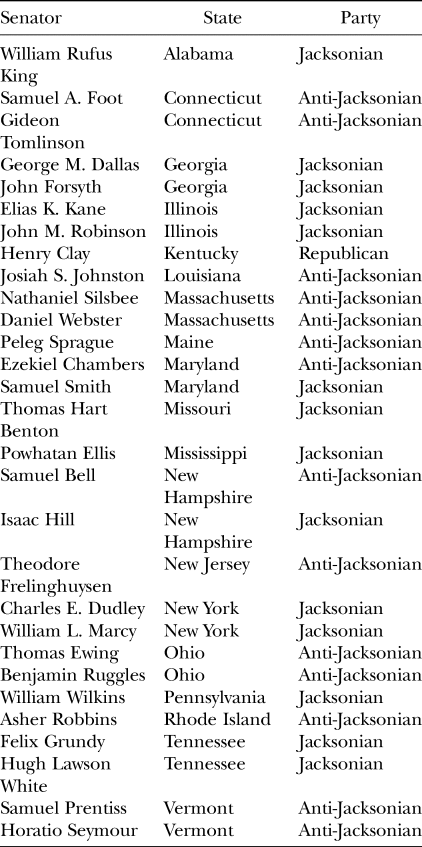
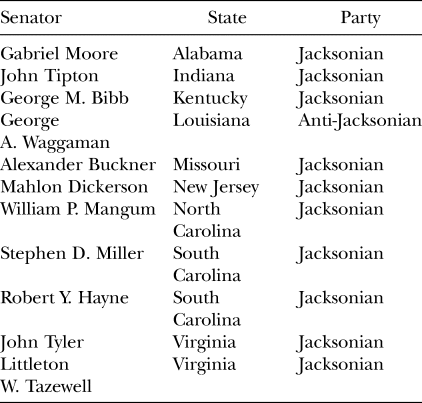
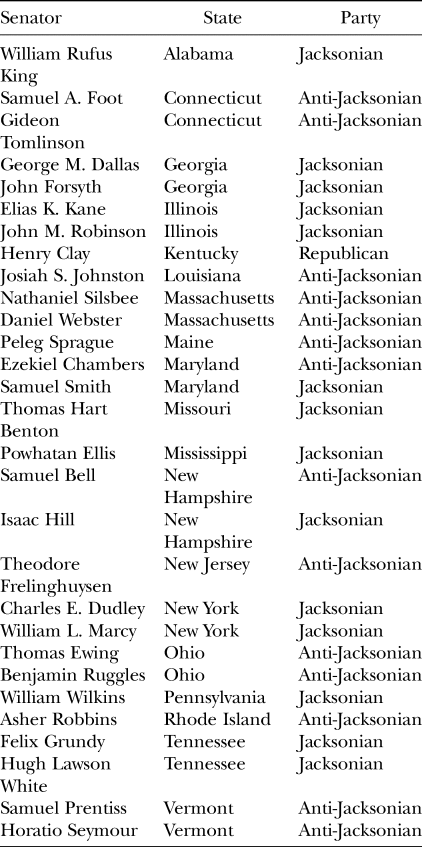
Despite Buckner's impassioned protest, on April 24, 1832, a bipartisan coalition of northern and western senators, together with several southerners, passed the bill, 30–11 (see Tables 1 and 2).Footnote 128 Merging humanitarian and expansionist goals, the Indian Vaccination Act succeeded precisely because it simultaneously satisfied multiple conflicting interests. Roused by the appeals of missionaries and abolitionists, reformers like Representatives Burges and Irvin and Senator Samuel Foot of Connecticut saw vaccination as a means to guard against the destruction of indigenous communities. But humanitarian principles alone were insufficient to rally majorities in either chamber. Most members who voted for the bill were motivated by the threat that smallpox posed to the republic's economic and geographic security. Both Bell and White cited these interests in their appeals to lawmakers who questioned the loyalty of Native communities and doubted that vaccination would redound to their constituents’ benefit. Preventing the spread of disease, they argued, would stabilize frontier trade, secure the health of white settlers, and speed Indian removal. Though their speeches failed to sway most southern senators, Bell and White did win over some staunch expansionists, like Buckner's Missouri colleague, Senator Thomas Hart Benton. While Benton had long preached against government intervention in Indian affairs, he did strongly support federal efforts to make the West a more egalitarian and stable society for white settlers.Footnote 129 Epidemics were as much a threat to civil society and economic stability as untoward government meddling in western land policies.
Senate Support for Indian Vaccination by State Delegation
Senate Opposition to Indian Vaccination by State Delegation
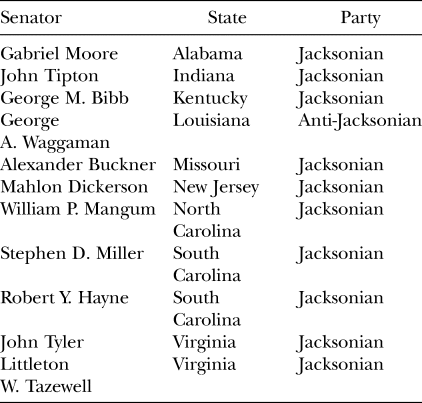
Source: “Indian Vaccination,” April 24, 1832,” 22nd Congress, 1st Sess., in Journal of the Senate, vol. 21 (Washington, DC: Library of Congress, 1832), 253.
The factors motivating southern opposition are more ambiguous. Given that the “South had, for generations, prevailed upon and relied upon extensive administrative capacity at the national level to manage land and trade relations with the Indians … and remove Indians forcibly from its midst,” it is not surprising that expansionists would see value in a program of frontier disease control.Footnote 130 Indeed, Jackson—a southerner, committed expansionist, and slaveholder—signed the act without comment; the bill also garnered the unanimous support of Georgia's and Tennessee's senators. There were also good policy reasons for southerners to support public health initiatives targeting Native peoples. For one, southerners regularly expressed concern that neighboring Indian nations, in collaboration with escaped slaves, would use infectious disease as an instrument of war or rebellion.Footnote 131 Unintentional contagion was also common. With sizable indigenous populations remaining in many southern states, white traders and government officials often “return[ed] from the [Indian] country, bringing pestilence along with [them].”Footnote 132 Southern officials were also well aware that disease slowed the progress of removal and posed serious risk to the soldiers tasked with enforcing indigenous peoples’ resettlement. This may help to explain why the senators from Georgia and Tennessee, hubs for removal, supported federal intervention when many of their fellow southerners did not. Perhaps most important, communicable disease imperiled the region's chief property interest: slave chattel.Footnote 133 Epidemics had the potential to roil a state's plantation economy, as slaveholders were compelled to pay the costs of medical treatment to protect their property or risk significant financial loss.Footnote 134 Consequently, when sectional divisions did emerge in debates over other aspects of Indian policy, the divide was often east-west rather than north-south. As was true for both removal and vaccination, one camp “centered in New England, the Middle Atlantic states, and the Upper South—areas with little or no Indian population,” while the other “came from the Lower South and Northwest, where whites were anxious to rid themselves of their Indian neighbors.”Footnote 135
However, the objections raised by southern opponents reveal a reluctance to expand federal authority over Indian affairs and a strategic interest in allowing epidemics to take their lethal toll. Indigenous settlements often provided refuge for runaway slaves, which “set what … southerners could only regard as a very bad example.” In the Deep South in particular, the Indian question was closely tied to the slavery question, as state and local politicians sought to police both indigenous and enslaved persons on their own terms, unbound by treaty strictures.Footnote 136 Likewise, territorial expansion threatened to subvert local southern economies based not on plantation-style agricultural production, but smaller-scale farming.Footnote 137 If vaccination and removal made obtaining arable land on the frontier cheaper for prospective migrants—a development Jacksonian preemption laws, which sought to liberalize public lands acquisition, actively encouraged—the value of southern yeoman farmers’ properties would decline.Footnote 138
The debate over Indian vaccination also took place in a climate of intensifying sectionalism. Southern unease deepened over fears that northern states sought to settle the West in order to erode southern influence and use federal power to the detriment of the South's economic and territorial interests.Footnote 139 These fears were confirmed by the tariff nullification crisis of 1832, just six months after the passage of the Indian Vaccination Act. When South Carolina refused to implement the 1828 and 1832 tariffs, believing they favored northern industry at the expense of southern agricultural production, Jackson—backed by Congress—threatened to send federal troops to the state to enforce protectionist policy.Footnote 140 Unfortunately, the archival record is such that we cannot discern whether these sectional interests were the reason a majority of southern senators and representatives opposed Indian vaccination, or why a minority supported it.
6. Innovation and Implementation
With Jackson's signature secured, implementing the vaccination law fell to the War Department and its Indian agents. In drafting the measure, Congress granted the agency considerable discretion, authorizing officials to press military surgeons into service or hire civilian physicians if they deemed it “expedient.”Footnote 141 The new secretary of war, Cass, chose the former, instructing federal agents to recruit army personnel “to vaccinate such Indians as may be willing to submit to the process,” rather than contract with civilian physicians to implement Congress's directive.Footnote 142 Believing disease control critical to removal, but unwilling to devote additional funds to hire civilian physicians, Cass leveraged existing relationships within the War Department to construct an expansive bureaucratic network that would oversee the health of Native peoples for much of the nineteenth century.
In many ways, Jackson's new secretary of war was well equipped to administer a program of frontier vaccination. As the longtime territorial governor of Michigan, Cass acquired considerable expertise in the field of Indian affairs: supervising trade, appointing Indian agents, and overseeing diplomatic missions. By the time he assumed leadership of the War Department, Cass had spent nearly two decades directing a dozen Indian agents and the movements of hundreds of troops, as well as managing the territory that nearly ten thousand Native people called home. Like many territorial governors, Cass took seriously the danger that infectious disease posed for military and settler populations. As a commander during the Indian wars of 1815, he witnessed “the terrible ravages” of contagion, where “troops died in such numbers that panic and disease seemed likely to do much greater damage than any human enemy.”Footnote 143 And, as was common for white migrants on the frontier, Cass had himself lost several children to outbreaks of smallpox and cholera.Footnote 144
Despite his attention to frontier health, Cass showed little sympathy for the welfare of indigenous communities during his tenure as governor. An early advocate for the prohibition of alcohol in Indian territory, he blamed “the general introduction of spirits into the Indian country” for “prostrating the mental and physical energies … of the Indians” and ultimately contributing to their “reduction in population.” In Cass's view, it was alcohol that drove “the circle of destruction” in indigenous communities, although he conceded “its operation has been aided … by the small pox whose ravages have been sometimes frightful.” As for indigenous land claims, Cass dismissed them as “pretended fictions … probably invented to satisfy the inquiries of the white man.”Footnote 145 Deeply committed to Jackson's removal policy, Cass devoted his tenure as governor to eliminating threats to settler expansion. Writing to his superiors in the War Department, he argued: “The natural progress of our settlements cannot be prevented, as no sound politician would seriously propose that the present Indian boundaries should be a barrier to our expanding population.”Footnote 146 However, he eventually concluded that communicable disease was just such a threat. After overseeing the removal of several indigenous communities from Michigan territory, Cass calculated that disease-related delays increased the cost of operations “two to three times the original estimate.”Footnote 147
As secretary of war, he would confront these costs on a larger scale. After the Indian Removal Act was passed, the War Department received dozens of reports from Indian agents expressing their charges’ desire for medical care. “The Indians have heard all about the prevalence of the small-pox west of the Mississippi, and they could not be induced to remove without guarding themselves against this terrible disease,” the agent supervising the emigration of Ohio tribes wrote his commanders. “We should all be highly gratified, and feel ourselves much more safe in the long and tedious journey before us, if you would grant us a physician to accompany the Ohio emigrants to the country of their destination.”Footnote 148 Determined to carry out their removal orders as scheduled, agents contracted with local physicians and purchased additional wagons and supplies to transport the sick and sustain them on the journey.Footnote 149
But, with expenses mounting, removal threatened to exceed the War Department's budget and risked jeopardizing the program's political support. As McKenney complained to Cass: “The States clamour to get rid of the Indians—agreed: but it is not possible, much as I should be gratified if it could be so, to pay the cost of all this out of the pittance, at the disposition of the Department for Contingencies.” To Superintendent Clark he wrote: “The policy seems to have been removal—but the ways and means are not provided.”Footnote 150 Even when removal succeeded, and tribes were settled on their designated reservations, Cass recognized that disease left them in a “wretched condition, their wants increasing, their feelings dispensing and their prospects dreary.”Footnote 151 “Under these circumstances,” he concluded, “the Indians have a moral right to expect assistance from us.”Footnote 152
Cass acknowledged that providing even rudimentary care to indigenous communities would not be easy. “We must convince them that we are laboring for their advantage before we can expect their confidence, and this conviction must be the result of a long course of experience.”Footnote 153 But to fulfill this duty—and to preserve the viability of removal—the federal government would need to establish a systematic program of disease control. As his own field agents implored: “could [they] not speedily … arrest this destroying plague [of smallpox] by vaccination? Men could be found who would penetrate the forests in search of every horde of these despairing sufferers.”Footnote 154 With the passage of the Indian Vaccination Act, the War Department was empowered to do exactly that.
Immediately following the act's passage, Cass issued two detailed directives to Indian Affairs officials. The secretary instructed the department's Indian agents to first “explain to the Indians the … nature and advantages of the process of vaccination” so that they might be “induced to submit to this preventative.” Then, he wrote, “no further measures will be necessary than to make an arrangement with the army surgeon stationed [nearby] … to vaccinate such Indians as may be willing to submit to the process.” Vaccine matter would be procured by the surgeon general and distributed to each agent and reservation superintendent. To track the program's progress, Cass ordered vaccinating surgeons to maintain careful records, “enter[ing] the names and ages of the Indians vaccinated, the tribes to which they belong, and the time when the duty was performed,” as well as “the state of the prevalent diseases, and their mode of treatment.”Footnote 155 In both directives and in private letters to individual Indian agents, War Department officials emphasized the need for economy, “the appropriation made by Congress being small.”Footnote 156 “It is desirable,” Cass wrote his agents, “that the expenditure should be kept as far within [the appropriation] as may be compatible with the object obtained.”Footnote 157
By and large, the vaccination program was implemented as the secretary instructed. Overseen by Superintendent of Indian Affairs Elbert Herring, Indian agents prepared communities in their jurisdictions for vaccination. Within months of the act's passage, vaccine matter—typically a thread or wisp of cotton contaminated by the nonfatal cowpox virus—was distributed by military courier to frontier garrisons. As Cass directed, army surgeons, already tasked with vaccinating soldiers under their care, administered vaccinations to Native recipients wherever possible by bringing the thread or cotton into contact with a cut made on the patient's arm using a needle or lancet.Footnote 158
Pressing military surgeons into service was both a cost-effective and efficient administrative strategy. As in past agency health initiatives, the surgeons would not be compensated for their additional labor beyond a modest increase in field rations and forage for their mounts.Footnote 159 Of added benefit, the majority of garrison surgeons were experienced at administering vaccinations; beginning in 1818, it was War Department policy for surgeons to vaccinate all soldiers in their care who were not immune to the virus. Army surgeons were also used to providing medical care to Native people who came to visit, trade, or seek shelter at garrisons.Footnote 160
Although many of the communities to be vaccinated were located near military outposts, in instances “where the Indians were sparsely settled, or scattered over a wide space,” Herring authorized his agents to employ “[civilian] physicians residing near the Indian country.”Footnote 161 “You will employ an army surgeon, if he can conveniently attend to it, and if not, then any other physician of good standing, to vaccinate the [Indians].”Footnote 162 But identifying private practitioners “of good standing” who were also willing to work for the War Department's modest wages—“six dollars for every one hundred persons vaccinated”—proved challenging. Having relied on “physicians residing near the Indian country” to vaccinate communities northwest of the Missouri River Agency, Herring urged the secretary to divert ancillary funds from the program's appropriation to employ additional civilian personnel to supplement the work of army surgeons.Footnote 163
Inundated by similar funding requests, Cass refused. Although Herring argued it was “impossible for the army surgeons to vaccinate any persons, except those who came to their respective posts,” the secretary reiterated his instruction to rely on existing relationships within the War Department to vaccinate the majority of tribes slated for removal. To further control costs, Cass directed Herring to concentrate his resources on those populations in closest proximity to garrisons, abandoning vaccination efforts in the uppermost Missouri River valley, which the superintendent had earlier complained required “physicians … to pass over an extensive and difficult region.”Footnote 164 Repeating his orders to Indian agents in the field, Cass wrote: “It is impossible for this department to give you specific instructions respecting the best and economical mode of affecting the object of the law … however, my general view [is that] … no effort will be made to send a Surgeon higher up the Missouri.”Footnote 165 Although acknowledging that this would put northern communities at greater risk of infection, the secretary argued that because these tribes were not yet slated for removal, the threat of contagion to soldiers or settlers would be minimal.Footnote 166 More cynically, Cass observed that, should an epidemic occur, any ensuing public outcry might enhance the War Department's reputation and lead Congress to appropriate additional funds for the management of Indian affairs. “While humanity shudders at the sight of more than three thousand human carcases [sic], cast upon the open field in the space of a few days … it pleads with energy, that the desperate survivors should be brought into the wardship of the United States.”Footnote 167
The War Department's preference to keep administrative authority in-house reflects two primary considerations. First, officials viewed military surgeons as a cheaper and more reliable alternative to local civilian physicians. Given the escalating costs of Indian removal and the vaccination program's relatively meager appropriation, the War Department could ill afford the expense of employing private parties when they had an available and experienced source of labor at hand. Indeed, in a “state whose shape and limits were marked by military garrisons,” there was an inherent logic to the War Department's reliance on military surgeons—already stationed on the frontier—to carry out the vaccination program.Footnote 168 Second, military officials understood disease control to be critical to effectively removing Native Nations west of the Mississippi and thus securing their lands for white settlement. Indeed, the secretary of war expressed reluctance on multiple occasions to delegate authority to those outside the federal government, preferring instead to maintain the military's monopoly over implementing this essential state-building task wherever possible.
Although the vaccination program could not stem the tide of indigenous depopulation, the Indian Vaccination Act provided for the vaccination of roughly a quarter of the Native people removed to lands west of the Mississippi between 1832 and 1841.Footnote 169 Once the program's appropriation was exhausted, Congress—increasingly determined to cut spending on Indian affairs—declined to earmark additional funds. With the majority of the eastern Indian nations resettled onto lands west of the Mississippi, lawmakers would gradually change how the federal government organized the provision of medical care to indigenous communities. By the 1850s, the War Department also revised its removal procedures, directly assigning military physicians and some civilian contractors to serve tribes slated for removal and tend to them en route and once they were relocated onto reservations.Footnote 170
7. Conclusion
This study began with two questions. What motivated lawmakers to devote resources to vaccinating indigenous people a full century before their enfranchisement, and how did the state muster sufficient administrative capacity to design and implement this program of frontier disease control? As we have seen, the Indian Vaccination Act was a legislative common carrier, bridging the interests of those who sought to prevent disease-induced genocide with those who desired the orderly and efficient acquisition of Native lands. While some in Congress were motivated by humanitarian considerations—moved by the entreaties of prominent social reformers and representatives of Native Nations themselves—many others came to appreciate that disease did not discriminate and that contagion spread faster than violence. For the federal government to control the land (and expropriate its original owners), it would need to contain epidemics.
In this way, the vaccination act reflects a less studied dynamic between “liberal egalitarians” and those who sought to promote white supremacy and empire building.Footnote 171 Whereas in Frymer's telling, liberal egalitarians tended to “slow[]” efforts to construct an exclusively “white nation,” the vaccination act suggests instead that the two groups could sometimes work together productively. Put differently, like other successfully enacted social programs, the vaccination act secured a legislative majority in no small part because it effectively blended liberal, republican, and ascriptive ideas.Footnote 172
The story of Indian vaccination also shows that antebellum legislators did not simply design public health programs to reward citizens who contributed politically or economically to the nation's founding and expansion. True, white settlers were surely among the intended beneficiaries of a program of frontier disease control. But absent widespread vaccination, smallpox and other contagious diseases would have likely assured the even more complete destruction of Native Nations east of the Mississippi. Rather than gloss over these complexities, Indian vaccination reminds us that we must grapple with the “tensions and contradictions in the American racial order” created by westward expansion.Footnote 173 By enacting the vaccination act, Congress responded to a bona fide public health emergency, even as it paved the way for a more efficient removal process.
Despite the pressing need to contain frontier epidemics, lawmakers were nevertheless slow to embrace vaccination. It was the War Department that first championed disease control, recognizing the risk contagion posed to the health and stability of frontier trade and civil society. Determined to maintain control of western territories, Indian agents and military officials pressed lawmakers to engage in a program of preventive medicine and, when Congress hesitated to take action, worked independently to curtail the spread of infectious disease. As we have seen, the War Department accumulated the necessary capacity to combat contagion with only limited aid from private parties, capitalizing instead on the proximity of military garrisons to Indian territory and military surgeons’ preexisting relationships with many of the communities targeted for vaccination.
While scholars of American political development do not often think of public health as a national security issue—at least in the antebellum period—the case of Indian vaccination makes clear that the provision of medical services to Native people was inextricably linked to the assertion of de facto control over the United States’ borderlands. This connection between territorial expansion and public health would have lasting consequences. For indigenous communities, the state's responsibility to provide medical care would forever be tied to the treaties settlers and local officials wantonly abrogated and the federal government's own ignominious history of territorial expansion and white supremacy. Indeed, in the decades after the vaccination act, many “Indians had little interest in receiving care” because they were deeply distrustful of the “white man's medicine” and justifiably suspicious of the federal government's intentions.Footnote 174 From a policy perspective, the vaccination act forged an early link between the provision of medical care to Native Nations and the loss of their historical lands.
That connection would strengthen over time, as the federal government centralized healthcare on reservations, further isolating indigenous communities, siloing their receipt of medical services, and insulating the newly established Indian Health Service from broader innovations and reforms in national health policy, including the creation and expansion of Medicare and Medicaid. Indeed, the Indian Vaccination Act is a prime example of policy locking in its own politics.Footnote 175 In combination with other “civilization” efforts, the vaccination program established a blueprint for the indigenous welfare state. Only with the passage of the Affordable Care Act did it become marginally easier for Native people to receive care at nonreservation hospitals and clinics and to benefit from the expansion of Medicaid. Still, significant disparities in indigenous health outcomes persist, a legacy explained in part by the stickiness of the antebellum institutions that were originally designed to protect and police America's settler state.