INTRODUCTION
Mortality and morbidity rates are high in psychiatric patients (Harris & Barraclough, Reference Harris and Barraclough1998; Black, Reference Black1998; Politi et al., Reference Politi, Picinelli and Klersy2002). The physical health of people with severe mental illness is frequently poor (Phelan et al., Reference Phelan, Stradind and Morrison2001) and patients with severe mental illness are said to lose 25 years or more of their life expectancy (Newcomer & Hennekens, Reference Newcomer and Hennekens2006). Mentally ill patients have a poor record of health seeking behaviour and poor contact with primary care for the treatment of physical health problems. The importance of medical history taking in psychiatry has been described before (Phelan & Blair, Reference Phelan and Blair2008).
Patients who are mentally disturbed may be unable to give a clear account of their symptoms, even in the presence of a life threatening disorder. There is an ever increasing need for mental health professionals to be aware of both the acute and long term physical health problems in the mentally ill to enable prompt diagnosis and treatment.
Psychiatrists seem to be losing their unique position as a physician who can deal with the ‘body and mind’. Past surveys reported that most psychiatrists did not adequately examine their patients on admission (Hughes, Reference Hughes1991). Diagnosis and treatment of a physical disorder may be overlooked in psychiatric services. Any assumption by psychiatrists that all physical care is the territory of the general practitioner would hinder treatment (Tarrant, Reference Tarrant2006). The need for psychiatrists to keep their medical skills updated needs further attention (Craddock et al., Reference Craddock, Antebi and Attenburrow2008).
Worryingly, there is no mention of physical health monitoring in the National Service Framework for mental health (Department of Health, 1999). Many mental health workers are unclear about whose role and responsibility it is for monitoring a psychiatric patient’s physical health. As a consequence both mental and physical health services can fall short of taking a holistic approach. On a positive note the new Care Programme Approach (Department of Health, 2008) has highlighted the need for physical healthcare of the mentally unwell.
Admissions to inpatient units provide us with a great opportunity for assessing a patient’s mental health as well as to screen and treat potentially serious medical problems that may otherwise go unnoticed. Not only is health seeking behaviour poor in psychiatric patients but, when acutely unwell, their mental state may affect their awareness of symptoms and their importance so that they may fail to report them and seek treatment. Psychiatric patients often have risk factors for development of physical illness such as a poor diet, obesity, smoking, alcohol excess and illicit drug use along with the adverse effects of long term medications. Early identification of physical problems will facilitate treatment and follow up thereby helping to avoid the development of more serious sequelae. Psychiatric symptoms can be secondary to a variety of physical health conditions or physical treatments and conversely psychiatric illness confers an increased risk of physical illness. Being aware of these issues will help the clinician to bridge the gap between physical and mental health services.
General principles for assessing and managing physical illness in psychiatric patients are described in Fig. 1.
A framework to evaluate physical health

CLINICAL PROBLEMS
In a psychiatric ward the following clinical problems can be encountered:
• Refusal to eat and drink
• Feeding after starvation
• Immobility
• Aggression and agitation
• Prescribed medication
• Substance abuse
• Self harm
• Disinhibition and vulnerability
• Drinking excessive amounts of water
• Other medical complications.
These are of concern as they can be associated with serious morbidity and mortality.
Refusal to eat and drink
Patients can refuse to eat or drink due to illnesses such as severe depression, psychosis, manic agitation, catatonia and stupor, deliberate protest, physical frailty, confusion or an eating disorder.
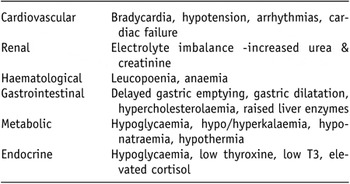
The consequence of starvation cannot be underestimated. It can progress from tiredness and dehydration to acute renal failure and from loss of weight to malnutrition and wasting. The medical complications of starvation are described in more detail in Table 1. Monitoring the patient’s physical state forms the cornerstone of effective management of both dehydration and starvation.
Medical complications of starvation

The human body’s adaptation to starvation is described by Campbell (2004). Within the first 24–48 hours liver and muscle glycogen stores are used through glycogenolysis. After that gluconeogenesis starts with amino acid stores utilised for production of glucose followed by ketogenesis where energy is produced from fatty acids instead of glucose. During this transition phase, the urinary nitrogen level increases and the body starts to loose significant amounts of lean body mass. The person feels extremely tired and there can be serious complications due to loss of mobility. There have been reports of pneumonia where fatigue of respiratory muscles results in an inability to cough.
The importance of food/fluid and intake/output charts is as much to focus the attention of nursing staff on the need to encourage the patient to increase their input as to help get accurate recording. However, these records are seldom completed accurately. The importance of monitoring and the need to alert clinicians when needed has to be emphasised. Staff observation levels have to be constantly reviewed. Physical examination should focus on signs of dehydration, renal failure, deep vein thrombosis, cardiac failure and pulmonary embolism. Monitoring of weight, renal functions and electrolytes is important to obtain an accurate picture.
It is necessary to establish the severity of dehydration, encourage the patient to take fluids, make efforts to explain the risks of not taking adequate food and fluid. Oral rehydration should be the first line treatment. Advice should be sought from a clinical nutritional unit and dietician. Early intense treatment of any underlying cause should be in the mainstay of management. Use of the Mental Health Act and the Mental Capacity Act should be considered for those who are unwilling or unable to consent to the necessary monitoring and treatment required. In severe affective disorder, ECT can be considered where rapid remission of affective (usually depressive) symptoms is needed. In such situations the anaesthetist should be consulted in advance and the electrolytes checked beforehand.
In severe cases transfer to a medical unit for intravenous fluids may be considered. However, it should be remembered that glucose overload, via intravenous infusions, may precipitate Wernickes encephalopathy in someone with chronic low nutritional levels and vitamin deficiency.
Feeding after starvation
A particular concern in the treatment of people with a long history of starvation is refeeding syndrome (Hearing, Reference Hearing2004). During starvation there is intracellular loss of electrolytes, in particular phosphate. Malnourished patients' intracellular phosphate stores can be depleted despite normal serum phosphate concentrations. When they start to feed again the secretion of insulin increases. This stimulates cellular uptake of phosphate, which can lead to profound hypophosphataemia. This phenomenon usually occurs within four days of starting to feed again. Serum phosphate concentrations of less than 0.50 mmol/l (normal range 0.85–1.40 mmol/l) can result in refeeding syndrome, which include muscle breakdown, leucocyte dysfunction, respiratory failure, cardiac failure, hypotension, arrhythmias, seizures, coma, and sudden death. Notably, the early clinical features of refeeding syndrome are non-specific and may go unrecognised. Management should involve clinical nutritional unit staff input at the earliest opportunity.
Immobility
Persistent physical immobility in psychiatric units may be due to catatonia and stupor. However, it is also common in those who are physically frail such as the elderly with cerebrovascular accidents or with a physical injury restricting their mobility. Good nursing care involving frequent moving of limbs, changing positions and skin care is essential to reduce the risk of peripheral oedema and pressure sores.
To illustrate this particular clinical problem in more detail, the following vignette is considered.
Vignette 1
A 53 year old lady was admitted with severe depression. She presented with mutism, rigidity, negativism, posturing and stupor. She was not taking her prescribed antidepressants and refused to eat or drink. All investigations and physical examination proved to be difficult as she was uncooperative. ECT was planned. Within a week she developed a swelling of her leg which turned out to be a large deep vein thrombosis (DVT). Other than her immobility, no other risk factors for a DVT were identified. ECT had to be postponed because of the risk of dislodging emboli and risk of producing pulmonary emboli.
In the Vignette described above, profound negativism, immobility, and refusal to take fluids predisposes the patient to malnutrition, dehydration, rhabdomyolysis, aspiration pneumonia, obstructive nephropathy, azotemia, deep vein thrombosis (DVT) and pulmonary embolism (PE).
Fatalities due to DVTs causing pulmonary emboli in patients with catatonia have been described (McCall et al., Reference McCall, Mann, Shelp and Caroff1995). Such deaths occurred after the second week of catatonia, often without warning. Virchow’s triad of venous stasis, endothelial damage, and hypercoagulabilty are the classic risk factors for DVT. The thrombosis can then dislodge and lead to an embolism. Catatonia that does not respond to oral medication in the first few days should be treated as an emergency situation. Rapid resolution may be achieved with ECT which can be a treatment for both depression and catatonia. In such cases there is a strong argument for the use of prophylactic anticoagulant treatment as used for immobile acutely ill medical and surgical patients (Ignatowski et al., Reference Ignatowski, Sidhu and Rueve2007).
Aggression and agitation
Physical injuries can occur in acute inpatient units and psychiatric intensive care units. Seclusion units continue to be used in general adult psychiatric wards in some settings despite the debate around their benefits (Mildred, Reference Mildred2002; Sailas & Fenton, Reference Sailas and Fenton2000).
Physical complications associated with aggression and agitation mostly arise from a combination of risk factors such as physical restraint, pre existing cardio-respiratory risk factors and medications including rapid tranquillisation. Clinical problems include injuries ranging from bruises, lacerations and bony injuries to asphyxiation, cardiac arrest, blunt trauma, choking, extra pyramidal side effects and drug overdose. High dose antipsychotics should be avoided where possible. All staff involved in dealing with acutely disturbed psychiatric patients should be trained in basic life support, de-escalation techniques and appropriate use of rapid tranquillisation techniques (National Institute for Health and Clinical Excellence, 2005). Some units have a dedicated member of the restraint team whose sole role is to monitor and safeguard the physical health of a patient being restrained (Metherall et al., Reference Metherall, Worthington and Keyte2006).
Prescribed medication
Some of the commonest acute physical complications that arise in psychiatric patients are due to the effect of prescribed medications (usually psychotropics) either as a direct effect or due to drug interactions.
Rapid tranquilisation
Care must be taken by the prescriber to check quickly for any past history of serious adverse effects as a consequence of previous rapid tranquilisation. Particular focus should be on past history of acute dystonia and neuroleptic malignant syndrome. If so a benzodiazepine may be preferred to an antipsychotic. Basic principles are helpful: avoid high doses; avoid unnecessary drug combinations such as use of multiple drugs from the same class; use the minimum dose possible; check vital signs frequently – more often if the patient seems to have been over sedated with loss of alertness or appears to be in deep sleep. Make sure that the unit has resuscitation equipment and available emergency medications such as flumazenil (benzodiazepine antagonist).
Acute dystonia and neuroleptic malignant syndrome (NMS)
Acute dystonic reactions are associated with typical anti-psychotic drugs. Whilst acute dystonias are unpleasant and do not promote longer term compliance with anti-psychotic drug treatment, they are only rarely life-threatening, e.g. laryngeal dystonia. Parenteral administration of anti-muscarinic drugs provides rapid relief of symptoms.
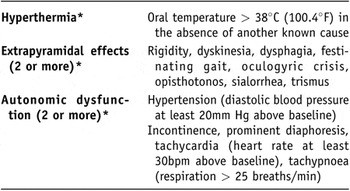
NMS is uncommon but life-threatening. Risk factors include high potency antipsychotics, recent or rapid increase or decrease in dose, abrupt withdrawal of anticholinergics, alcoholism, Parkinson’s disease, hyperthyroidism, mental retardation, agitation, dehydration and organic brain disease. Typical NMS symptoms (Levenson’s criteria) are described in Table 2.
Clinical criteria for diagnosing neuroleptic malignant syndrome

*The required number of signs/symptoms from each of the 3 categories must be present before a diagnosis of NMS can be made; if signs and symptoms from 1 of the 3 categories cannot be documented, then the required number from 2 of the categories must clearly be present, plus 1 of the following findings:
(1) Clouded consciousness (e.g. delirium, mutism, stupor, coma);
(2) Leukocytosis (leukocyte count > 15 × 103/mm3;
(3) Creatine kinase level > 1000 U/L.
(Levenson,1985; Pope, 1986)
Haematological
Serotonin specific re-uptake inhibitors (SSRIs) block platelet uptake and endothelial metabolism of serotonin. Use of these agents may result in bleeding and vasospastic complications (Skop & Brown, Reference Skop and Brown1996). The risk is particularly significant in patients who already carry high risk of bleeding such as those with platelet dysfunction or taking medications associated with bleeding problems e.g. non-steroidal anti-inflammatory drugs (NSAIDs), aspirin, oral steroids and anticoagulant therapy. Patients with hepatitis, cirrhosis and liver damage also carry a high risk. SSRIs have been found to carry an increased risk of causing bleeding tendencies with elevated rates of cerebrovasular events and stroke (Chen et al., Reference Chen, Guo, Li, Wulsin and Patel2008). Patients on SSRIs were noted to need more blood during orthopaedic surgery (Movig et al., Reference Movig, Janssen and Malefijt2003) and have excessive uterine bleeding (Mejier et al., 2004). Excessive gastro-intestinal (GI) bleeding has even led to consideration of prescribing gastro protective agents in people on SSRIs with high risk factors (Paton & Ferrier, Reference Paton and Ferrier2005).
Neutropenia and agranulocytosis are well known complications of treatment with clozapine. Risk factors include being Afro Caribbean, young age and a low baseline white cell count (Taylor et al., Reference Taylor, Paton and Kerwin2007).
Cardiovascular
Some of the common cardiovascular complications of psychotropic medications, such as hypotension (alpha 1 blockade) and bradycardia, can easily be missed in a busy acute psychiatric ward. Potentially these could result in further complications and injury due to falls. Patients on clozapine have to be intensively evaluated for the development of cardiac events such as myocarditis and cardiomyopathy. The initial symptoms and signs might be vague such as tachycardia, flu like symptoms, fatigue and dyspnoea but a thorough examination and investigations such as electrocardiogram (ECG), echocardiography (echo), chest X-ray and full blood count should be carried out if any suspicion arises. To further illustrate cardiac problems the following vignette is considered.
Vignette 2
A 19 year old male was started on clozapine for treatment of resistant schizophrenia. All the routine pre treatment checks were made. After about 6 days of starting on treatment he was noted to be extremely tired and ‘ clammy’ by the nursing staff. His pulse and blood pressure were on the low normal side. Later he presented with repeated episodes of collapse lasting for a few seconds. A further evaluation with ECG and echo revealed that he had ‘T wave inversion’ in leads V2-V6. Echo showed reduced ejection fraction. A cardiology opinion was sought and it proved to be clozapine induced cardiomyopathy.
Antipsychotics can also lead to potentially life threatening complications, but particular interest has centred on a ventricular arrhythmia, torsade de pointes (TdP). This can lead on to ventricular fibrillation and sudden death. An absolute QTc interval of >500 ms or an increase of 60 ms from baseline are considered to be hallmarks of increased risk of TdP. Arrhythmias are more likely to occur if drug-induced QTc prolongation coexists with other risk factors, such as: presence of congenital long QT syndromes, heart failure, bradycardia, electrolyte imbalance (hypomagnesaemia and hypocalcaemia), overdose of a QTc prolonging drug, female sex, physical restraint, old age, hepatic or renal impairment and slow metaboliser status (Haddad & Anderson, Reference Haddad and Anderson2002).
Though particular risk of developing cardiac arrhythmias has been reported with pimozide, thioridazine and ziprasidone, other more commonly used antipsychotics such as risperidone and clozapine in large doses (accidental or intentional) can result in cardiac arrhythmias. Antipsychotics and physical restraint should be used with caution in people with pre-existing cardiac and respiratory conditions.
Gastrointestinal
Constipation is a relatively common side effect of both typical and atypical antipsychotic medications. The anticholinergic properties of the antipsychotics along with the anticholinergic medications that may be co-prescribed for extra-pyramidal side effects are to blame. Constipation is one of the most common adverse effects of medications such as clozapine and combination antipsychotic drugs with reports of constipation rates of up to 60% (Dome et al., Reference Dome, Teleki and Kotanyi2007). There have been a number of case reports of deaths due to paralytic ileus and megacolon as a consequence of gastrointestinal motility disturbance in such patients (Levin & Mendelowitz, Reference Levin and Mendelowitz2002).
Serotonin syndrome
Simultaneous administration of two antidepressants can lead to serotonin syndrome. More commonly it occurs when an adequate crossover between antidepressants has not taken place or when the patient has taken an overdose. Serotonin syndrome symptoms include restlessness, sweating, tremor, shivering, myoclonus and confusion. These should alert the clinician to this possibility (Sternbach, Reference Sternbach1991).
Antidepressant withdrawal syndrome
This should be considered in patients who presents with ‘flu like’ symptoms such as chills, myalgia, excessive sweating, headache, nausea and insomnia. Well known risk factors include: stopping medication after 6–8 weeks of treatment, medications with short half lives (paroxetine, venlafaxine), a history of developing anxiety symptoms on initiation of therapy and concurrent prescriptions for medications such as antihypertensives, antihistamines and antipsychotics (Taylor et al., Reference Taylor, Paton and Kerwin2007).
Other medication withdrawal states
Sudden cessation of medications prescribed for physical health problems can sometimes cause problems. Abrupt cessation of antihypertensives can result in rebound hypertension. This should be considered in patients admitted to a psychiatric ward who are not in a position to give details of their usual treatment.
Substance abuse
It is often difficult to establish accurate details of a patient’s prior substance use early on in the admission and treatment process. Alcohol seems to be the culprit on most occasions with withdrawal symptoms and complications. An abrupt onset of seizures within the first 24 hours of admission is likely to be due to alcohol withdrawal. Delirium tremens sets in after the first 24–48 hours of the withdrawal state. It is almost an axiom that delirium occurs in malnourished individuals who also probably suffer from infections and dehydration. Checks for any physical injuries such as head injury, extradural haematoma, electrolyte imbalance (hypokalemia, hypomagnesaemia, hyponatraemia), and elevated liver enzymes should be carried out. Assessment for Wernickes encephalopathy (ataxia, opthalmoplegia and disorientation) should be made. The sudden onset of abdominal pain may be a sign of acute pancreatitis.
The occurrence of sudden chest pain in a patient misusing drugs should alert the clinician to consider conditions such as stimulant-related acute cardiac ischaemia, cocaine induced arrhythmias and beri beri due to malnutrition.
Other serious complications are infections of the injection site (abscess) and blood borne infections.
Managing patients who abuse substances can be complex. Sometimes such patients find it hard to be frank about their drug use. This can cause problems for those charged with their treatment, as exemplified by the Vignette that follows.
Vignette 3
A 42 year old lady with a history of intravenous drug use developed repeated abscesses and deep vein thromboses a few years ago for which she was treated. She has remained abstinent from drugs since then. She was prescribed low molecular weight heparin as a prophylactic which she took erratically without keeping up her appointments for regular anticoagulant monitoring. Unfortunately she relapsed back into intravenous drug misuse whilst on anticoagulant therapy but failed to disclose this information to the treating physician or the psychiatrist. She suffered severe bleeding from the injection site necessitating emergency admission.
Self harm
The management of self harm can become complex. It is common for patients who have self harmed by overdose, laceration or other ways to be seen and treated in the emergency department first and then transferred to a psychiatric unit. However some of the management of self harm and its physical health complications does not stop there and has to be followed up by the treating mental health clinicians. A typical example is a patient with a paracetamol overdose that could not be detected in blood sampling due to lapse of time. However, delayed adverse effects can be detected by doing blood investigations such as liver function tests (LFTs) and clotting profiles 48 hours after admission.
Likewise, patients with serious self harm involving damaged tendon or deep wounds may need regular follow up from a surgical team or wound nurse to advise on dressings and wound care, along with physiotherapy and rehabilitation input to regain some of the lost functions secondary to the injury.
Disinhibition and vulnerability
Reproductive health aspects of psychiatric patients are often overlooked. It is unfortunate that mentally ill patients are at risk of coercive or abusive sexual relationships, sexual assaults and unplanned pregnancy (Miller & Finnerty, Reference Miller and Finnerty1996; Coverdale et al., Reference Coverdale, Aruffo and Grunebaum1992). It is important for clinicians to suspect the possibility of any such events having happened in the acutely unwell patient. This can happen in patients who are intoxicated, hypomanic, severely depressed, or those with personality disorders, or learning difficulties. Where necessary, specialist gynaecology services should be consulted. The risk of pregnancy should be considered and emergency contraception offered. Capacity to make a decision and give a valid consent should be assessed and recorded. If the patient is pregnant and decides to continue with pregnancy, care should be taken with prescription of psychotropic medications due to risks of adverse effects on the foetus. Counselling regarding termination of pregnancy may be required. Where needed, a screen for sexually transmitted disease should also be considered after appropriate counselling. The possibilities of infections such as hepatitis C and HIV should be borne in mind in high risk groups of patients. The need to advise women of child bearing age of the importance of contraception if sexually active and the need to plan conception due to considerations of their mental health and the teratogenic effect of medication is often overlooked.
Most antipsychotic medications raise prolactin which in turn can affect menstrual functioning and galactorrhea. A sudden disturbance of menstrual functioning in a young female and breast engorgement in men can have serious implications physically and also adversely impact on mental well being by affecting self esteem. Baseline monitoring of serum prolactin before regular prescription of medications such as typical antipsychotics and risperidone can be helpful. Identifying certain high risk patients who are more likely to develop hyperprolactinemia such as women with a previous history of parity and lactation and carefully choosing medication is important (Thangavelu & Geethanjali, Reference Thangavelu and Geethanjali2006).
Drinking excessive amounts of water
Polydipsia and water intoxication is an often unrecognised physical complication in psychiatric patients. It can present in up to 20% of chronic psychiatric patients (De Leon et al., Reference De Leon, Verghese, Joseph, Josiassen and Simpson1994) and can manifest or be recognised for the first time in acute inpatient settings. It has been defined traditionally as consumption of 3 or more litres of water a day usually associated with polyuria. It can lead to water intoxication resulting in hyponatraemia (Siegel, Reference Siegel2008). Although the underlying pathophysiology of the syndrome is unclear, several factors have been implicated in producing polydipsia and symptomatic hyponatraemia. These include a possible hypothalamic defect, the syndrome of inappropriate secretion of anti-diuretic hormone (SIADH) and antipsychotic medication. Risk factors for development of this complication include a diagnosis of schizophrenia, smoking, chronicity of symptoms and male gender (Pomeroy et al., Reference Pomeroy, Mitchell, Pharm and Crow2002). The physical manifestations can be highly variable but are often characterised by restlessness, nausea, vomiting, diarrhoeas, tremor and ataxia progressing to altered consciousness, coma and death.
In establishing a diagnosis clinicians should focus on the history not only from the patient but also from their carers and ward staff as they may be more likely to report this than the patients themselves. Physical examination may reveal hypertonic reflexes, altered sensorium and a delirium like picture. Lab investigations should include urea and electrolytes, hormonal assay, serum and urine osmolality. However in most circumstances the best resource is a well maintained intake output chart. Medical management depends on an accurate diagnosis and the severity but primary steps should include water restriction and replacement with sodium. Several drug treatments have been suggested including lithium and demeclocycline (Vieweg et al., Reference Vieweg, Pandurangi, Levenson and Silverman1994).
Other medical complications
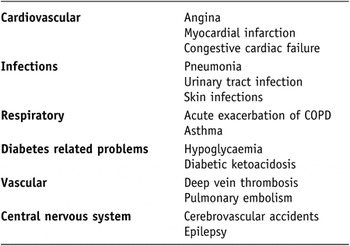
Common medical problems that affect the population as a whole will also affect those with psychiatric illness. It is now recognised that the burden of physical disease is higher in those with psychiatric illness than those without (Harris & Barraclough, Reference Harris and Barraclough1998; Black, Reference Black1998; Politi et al., Reference Politi, Picinelli and Klersy2002). Table 3 illustrates some of the common medical problems encountered in psychiatric units.
Common medical problems encountered in psychiatric units

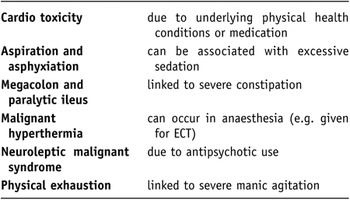
Some causes of sudden death in psychiatric patients

Sudden unexpected deaths can occur in psychiatric units. Some have been associated with use of restraint techniques. Psychiatric patients are at increased risk of death from a number of natural causes, including cardiovascular disease (Baxter, Reference Baxter1996; Harris & Barraclough, Reference Harris and Barraclough1998). However recent evidence and cases of sudden death in young patients suggests that factors other than coronary artery disease are contributory (Ruschena et al., Reference Ruschena, Mullen and Burgess1998; Appleby et al., Reference Appleby2006). Some causes of sudden death in psychiatric patients are described in Table 4.
DISCUSSION
Recognising acute physical illness will help towards reducing patient morbidity and mortality. If the lacunae in continuing medical training for psychiatrists and other mental health staff about physical health are rectified, these issues can be addressed. The curriculum for trainee doctors should facilitate the development and maintenance of medical and neurological skills. Measures should be put in place for psychiatrists to continue to refresh skills such as ECG interpretation, the physical examination and interpretation of laboratory findings. Experience of neuropsychiatry during training is important. Psychiatric nurses need to be supported in their role with regards to physical health monitoring. The involvement of general practitioners in a shared care approach (Lester, Reference Lester2005) should be encouraged. With the increasing move towards community care those not admitted to hospital should receive the same consideration of their physical health as those who are admitted.