Introduction
Bipolar disorder (BD) is a severe mental disorder characterized by acute episodes of hypo/mania and depression.Reference Xu, Huggon and Saunders1, Reference Ritter, Bermpohl and Gruber2 Replicated evidence demonstrates that cognitive impairment is a core feature of adults with BD.Reference Bortolato, Miskowiak, Köhler, Vieta and Carvalho3 Cognitive impairments are consistently observed during acute depressive, manic, and mixed states of BD.Reference Cherie and Marvel4 Cognitive deficits persist in a subset of remitted individuals, which suggests that some cognitive impairment in BD is trait-related and independent of mood symptoms. For example, it is reported that during remission, approximately 10% to 40% of adults with BD exhibit deficits across multiple domains of cognitive function, 29% to 40% display selective impairment in attention and psychomotor speed, and 30% to 50% remain cognitively intact, when compared to healthy controls.Reference Miskowiak, Burdick and Martinez-Aran5
For BD patients affected by cognitive impairment, cognitive deficits have been reported in domains including, but not limited to, executive function, verbal memory, and attention, with medium to large effect sizes.Reference Rosa, Reinares and Michalak6, Reference Bora, Yucel and Pantelis7 Cognitive impairment in BD is generally reported to be more severe than in major depressive disorder (MDD) but less severe than in schizophrenia.Reference MacQueen and Memedovich8, Reference Krabbendam, Arts, van Os and Aleman9
Evidence of cognitive impairment in the prodromal stages of BD and in first-degree relatives without a BD diagnosis suggests that cognitive impairment is an endophenotypic trait of BD.Reference Bora, Yucel and Pantelis7 Impairment may also reflect synergistic effects of psychiatric and medical comorbidities (e.g., thyroid dysfunction), in addition to the iatrogenic effects of certain mood stabilizers and antipsychotic treatments.Reference Vieta10, Reference Bora, McIntyre and Ozerdem11 In a subset of individuals with BD, cognitive dysfunction is progressive and correlates with the number of mood episodes and illness duration. The foregoing evidence suggests a link between cognitive dysfunction and neurodegenerative processes in BD.Reference Denicoff, Ali and Mirsky12, Reference Robinson, Thompson and Gallagher13
Cognitive dysfunction has been associated with psychosocial dysfunction and quality of life impairment in individuals with BD.Reference Tse, Chan, Ng and Yatham14, Reference Baune and Malhi15 In particular, cognitive dysfunction has been linked to occupational dysfunction. Meta-analytic evidence suggests that cognitive deficits, particularly in executive function and verbal memory, are stronger independent predictors of occupational outcomes than mood symptom severity.Reference Tse, Chan, Ng and Yatham14, Reference Depp, Mausbach and Harmell16 As a result, cognitive dysfunction in BD contributes to the substantial economic burden of the disorder.Reference Cloutier, Greene, Guerin, Touya and Wu17 Indeed, the indirect costs of BD (e.g., unemployment and decreased workplace productivity) pose a substantially greater economic and psychosocial burden on society compared to direct costs (e.g., treatment, inpatient, and outpatient care).Reference Miller, Dell’Osso and Ketter18
Pro-cognitive therapies are urgently needed to improve function and quality of life in persons affected by cognitive impairment in BD. Notwithstanding the unmet need and relevance to health outcomes in BD, no pro-cognitive intervention in adults with BD is well-established as efficacious nor U.S. Food and Drug Administration approved.Reference Miskowiak, Burdick and Martinez-Aran5 Preliminary evidence supports the possible pro-cognitive effects of a variety of mechanistically dissimilar agents and interventions.19-41 Several recent qualitative reviews have identified the primary methodological aspects relevant to the interpretation of studies that report on cognitive functions in adults with BD.42-44 A number of new studies have been published on this topic since these reviews were conducted. This systematic review aims to provide an update on the literature regarding pharmacological, neurostimulation, and psychological treatments targeting cognition in BD and to characterize the methodological quality of available randomized controlled trials (RCTs).
Methods
Search methods
The currentsystematic review was conducted according to the preferred reporting items of systematic reviews and meta-analyses (PRISMA) guidelines.Reference Moher, Liberati, Tetzlaff and Altman45 The PubMed, PsycInfo, Cochrane, clinicaltrials.gov, and Embase databases were searched from inception to December 1st, 2020, using the following search string: (bipolar disorder OR bipolar depression) AND (cognition OR cognitive function OR cognitive impairment OR cognitive dysfunction OR memory OR attention) AND (randomized control trial OR RCT OR double-blind OR placebo-controlled). The search was limited to English-language studies and excluded duplicates. The titles and abstracts of all identified publications were screened for inclusion by four independent reviewers (I.P.C., J.K.T., J.N.F., L.M.W.L.) according to the inclusion criteria described below. The search was supplemented by a manual review of reference lists of publications selected for inclusion. Where there was disagreement about article inclusion, a consensus was reached through discussion.
Eligibility criteria
Inclusion criteria:
-
1. Randomized, controlled clinical trial of a pharmacological, neurostimulation, or psychological intervention investigating its pro-cognitive effects;
-
2. Change in cognition as the primary outcome or secondary outcome, as assessed using validated and standardized cognition rating scales;
-
3. Participants were diagnosed with bipolar disorder as defined by the Diagnostic and Statistical Manual (DSM) or International Classification of Disease (ICD) criteria, with no restrictions on edition.
Exclusion criteria:
-
1. Conference abstracts, unpublished data, case reports, and observational studies;
-
2. Study samples limited to pediatric or geriatric populations;
-
3. Interventions investigating adverse cognitive effects.
Data extraction
Data were extracted using a standardized data extraction spreadsheet by four independent reviewers (I.P.C., J.K.T., J.N.F., L.M.W.L.) to record the following information: first author, year of publication, sample size, study design, demographic characteristics (i.e,. age, sex), clinical characteristics (i.e., diagnosis, current mood episode), intervention type and control, cognitive function scores, main cognitive findings, study limitations, and risk of bias. Where cohen’s d effect sizes were not reported and data were available, they were calculated by hand. Effect sizes were designated as small (d = 0.2), medium (d = 0.5), and large (d = 0.8) depending on the cohen’s d value.Reference Lakens46
Results
Search results and study characteristics
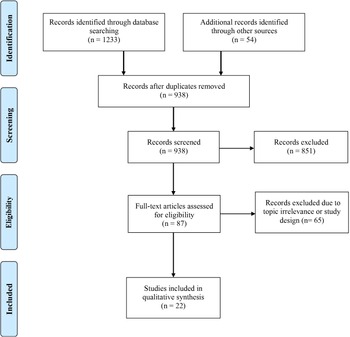
The database search yielded 1233 unique records. Manual screening of titles and abstracts identified 87 potentially eligible articles. There were no additional articles identified by reviewing the reference lists. After a full-text review, 22 studies were eligible for inclusion. The corresponding PRISMA diagram is presented in Figure 1. A total of 16 different pro-cognitive interventions were identified. The included studies examined the pro-cognitive efficacy of creatine monohydrate (n = 1), erythropoietin (n = 1), galantamine (n = 1), intranasal insulin (n = 1), lurasidone (n = 1), methylene blue (n = 1), mifepristone (n = 2), N-acetyl cysteine (n = 1), pramipexole (n = 1), tianeptine (n = 1), Withania somnifera (n = 1), cognitive remediation (n = 6), functional remediation and psychoeducation (n = 1), repetitive transcranial magnetic stimulation (rTMS) (n = 2), and transcranial direct current stimulation (tDCS) (n = 1).
PRISMA flow diagram presenting study identification and selection.

Of the pharmacological studies included, two were crossover studies,Reference Young, Gallagher, Watson, Del-Estal, Owen and Ferrier29, Reference Alda, McKinnon and Blagdon33 a single study was open-label,Reference Yatham, Mackala and Basivireddy32 and nine studies were double-blind RCTs.24-28, Reference Toniolo, de Fernandes, Silva, da Dias and Lafer31, 34-36 Of the non-pharmacological studies included, seven were single-blindedReference Gomes, Rocca and Belizario19, Reference Lin-Lin, Zhao and Kong20, Reference Demant, Vinberg, Kessing and Miskowiak30, Reference Torrent, del Bonnin and Martínez-Arán37 and three studies enforced a double-blind using a sham treatment.Reference Myczkowski, Fernandes and Moreno21, Reference Bersani, Minichino and Bernabei23, Reference Lewandowski, Sperry and Cohen47 The treatment period for pharmacological studies ranged from 1 week to 6 months, with a median of 8 weeks. For psychological interventions, treatment periods ranged from 12 to 24 weeks, with a median of 12 weeks. For neurostimulation interventions, treatment periods ranged from 10 days to 4 weeks, with a median of 3 weeks.
There were 18 studies that assessed cognition as the primary outcome. Of these studies, eight specified one or two specific cognitive tests as the primary outcome.25-27, Reference Young, Gallagher, Watson, Del-Estal, Owen and Ferrier29, Reference Demant, Vinberg, Kessing and Miskowiak30, Reference Yatham, Mackala and Basivireddy32 The remainder designated no priority between the assessments in the cognitive battery. A total of 46 different cognitive assessments were represented in the included studies, many of which included several sub-measures. Some studies utilized standardized cognitive batteries (e.g., the MATRICS Consensus Cognitive Battery (MCCB), Cambridge Neuropsychological Test Automated Battery (CANTAB), and International Society for Bipolar Disorders Battery for Assessment of Neurocognition (ISBD-BANC)).
The included studies were mostly preliminary and sample sizes were generally small. The mean sample size was 55 participants, ranging from 16 to 239 participants. The majority of studies included participants diagnosed with BD I/II as defined by the DSM-IV. Other studies included participants with BD I/II or BD-NOS,Reference Chengappa, Bowie, Schlicht, Fleet, Brar and Jindal24, Reference Kauer-Sant’Anna, Frey and Fijtman36 BD as defined by the ICD-10,Reference Miskowiak, Ehrenreich, Christensen, Kessing and Vinberg25, Reference Demant, Vinberg, Kessing and Miskowiak30 BD with psychosis,Reference Lewandowski, Sperry and Cohen47 or restricted participants to BD-I.Reference Yatham, Mackala and Basivireddy32 The mood state of participants in the included studies was highly variable. Studies enrolled BD patients in remission,Reference Gomes, Rocca and Belizario19, Reference Lin-Lin, Zhao and Kong20, Reference Miskowiak, Ehrenreich, Christensen, Kessing and Vinberg25, Reference Demant, Vinberg, Kessing and Miskowiak30, Reference Torrent, del Bonnin and Martínez-Arán37, Reference Ott, Vinberg, Kessing, Bowie, Forman and Miskowiak41 in a euthymic state,Reference Bersani, Minichino and Bernabei23, Reference Chengappa, Bowie, Schlicht, Fleet, Brar and Jindal24, Reference McIntyre, Soczynska and Woldeyohannes27, Reference Yatham, Mackala and Basivireddy32, Reference Bernabei, Bersani and Pompili39, Reference Strawbridge, Tsapekos and Hodsoll40 with minimal symptoms,Reference Lewandowski, Sperry and Cohen22, Reference Ghaemi, Gilmer and Dunn28, Reference Young, Gallagher, Watson, Del-Estal, Owen and Ferrier29, Reference Alda, McKinnon and Blagdon33, Reference Burdick, Braga, Nnadi, Shaya, Stearns and Malhotra35 with an acute depressive episode,Reference Myczkowski, Fernandes and Moreno21, Reference Watson, Gallagher and Porter26, Reference Toniolo, de Fernandes, Silva, da Dias and Lafer31, Reference Kauer-Sant’Anna, Frey and Fijtman36 or did not specify a specific mood state.Reference Dean, Bush and Copolov34 A summary of included studies and their results is displayed in Table 1.
Summary of Study Characteristics and Results

Abbreviations: AST, Attention Switching Task; BACS, Brief Assessment of Cognition in Schizophrenia; BVMT-R, Brief Visuospatial Memory Test—Revised; CANTAB, Cambridge Neuropsy-chological Test Automated Battery; CFQ, Cognitive Failures Questionnaire; COWAT, Controlled Oral Word Association Test; CPT, Continuous Performance Test; CVLT-II, California Verbal Learning Test—Second Edition; CVMT, Continuous Visual Memory Test; DKEFS, Delis–Kaplan Executive Functioning System; DMS, Delayed Matching to Sample; DSST, Digit Symbol Substitution Test; ETB, Emotional Test Battery; HVLT-R, Hopkins Verbal Learning Test—Revised; MCCB, MATRICS Consensus Cognitive Battery; MSCEIT, Mayer–Salovey–Caruso Emotional Intelligence Test; NAB, Neuropsychological Assessment Battery; NART-R, National Adult Reading Test-revised; NS, non-significant; OETB, Oxford Emotional Test Battery; OST, One Touch Stockings of Cambridge; PDT, Process Dissociation Task; RAVLT, Rey Auditory Verbal Learning Test; RBANS, Repeatable Battery for the Assessment of Neuropsychological Status; RCFT, Rey Complex Figure Test; ROCF, Rey-Osterrieth Complex Figure Test; RVP, Rapid Visual Processing; SILS, Shipley Institute of Living; STDT, Strategic Target Detection test; SWM, Spatial Working Memory; TAU, treatment as usual; TMT, Trail Making Test; VBM, Visual Backward Masking Test; WAIS-III, Wechsler Adult Intelligence Scale-III; WCST, Wisconsin Card Sorting Test; WMS, Wechsler Memory Scale.
Pharmacological interventions
Creatine monohydrate
Creatine monohydrate is an oral supplement that increases fat free mass and improves physical activity performance by increasing adenosine triphosphate regeneration.Reference Cooper, Naclerio, Allgrove and Jimenez48 Bioenergetic abnormality is a risk factor for BD. It was hypothesized that mitigating bioenergetic dysfunction using creatine monohydrate may be a potential therapeutic target to enhance cognition.Reference Shi, Kondo and Sung49 One study evaluated the pro-cognitive efficacy of creatine monohydrate (N = 18). Toniolo et al. performed a secondary analysis of a 6-week double-blind, placebo-controlled trial of creatine monohydrate with 35 BD I/II participants with a current depressive episode.Reference Toniolo, de Fernandes, Silva, da Dias and Lafer31 Eighteen participants who completed a neuropsychological battery in the trial were included in the secondary analysis.
Cognition was assessed using the Wisconsin Card Sorting Test, Digit Span subtest of the Wechsler Adult Intelligence Scale, Stroop Color-Word test, Rey-Osterrieth Complex Figure Test, and F-A-S Verbal Fluency Test. The creatine monohydrate group demonstrated an improvement in verbal fluency when compared to the placebo group (P = .030), with a large effect size (d = 1.252). The pro-cognitive effect in verbal fluency is promising. However, the small sample size limits the interpretation of results.
Erythropoietin
Erythropoietin has gained attention due to its neuroprotective and neurotrophic effects in a number of psychiatric and neurodegenerative diseases.Reference Sargin, Friedrichs, El-Kordi and Ehrenreich50 One study evaluated the pro-cognitive efficacy of erythropoietin (N = 43). In a trial by Miskowiak et al., remitted patients with BD were administered 40 000 IU erythropoietin (n = 23) or placebo (n = 20) weekly, for 8 weeks.Reference Miskowiak, Ehrenreich, Christensen, Kessing and Vinberg25 Verbal memory was examined as the primary outcome and was measured by the Rey Auditory Verbal Learning Test assessment. At the 9 week trial endpoint, the only Rey Auditory Verbal Learning subtest which demonstrated a significant treatment by time effect was the Recall Following Interference sub-test (F(1, 38) = 6.42, P = .02), with a large effect size for the EPO group (d = 0.78). This effect was lost at the 14 week follow-up assessment.
Significant treatment by time effects were also observed for secondary and tertiary measures of attention, executive function, and social cognition, but not psychomotor speed. Results were controlled for changes in mood symptoms; however, there was no correction for multiple comparisons given the prespecified priority of outcomes. After an exploratory correction for multiple comparisons, only the Rapid Visual Processing Time to Correct Response measure of sustained attention remained significant.
Galantamine
Galantamine is an acetylcholinesterase inhibitor that is approved by the FDA for the treatment of Alzheimer’s disease. One study evaluated the pro-cognitive efficacy of galantamine (N = 16). In a pilot study, Ghaemi et al. investigated the cognitive effects of galantamine (n = 6) compared to placebo (n = 10) among individuals with BD with subsyndromal mood symptoms.Reference Ghaemi, Gilmer and Dunn28 Galantamine was administered at a dose of 8 mg/day for the first 4 weeks. The dose was increased to 16 mg/day for the following 4 weeks and increased again to 24 mg/day for the final 4 weeks.
Verbal memory, processing speed, and verbal fluency were assessed using the Delis–Kaplan Executive Functioning System Trail Making and Verbal Fluency tests, the Wisconsin Card Sorting Test, and the California Verbal Learning Test at baseline, week 6, and week 12. In light of the absence of previous RCTs for galantamine for cognition in BD, no primary outcome measure was specified. At the study endpoint, the only significant group by time difference was observed in category fluency, wherein placebo was superior to galantamine (F(1, 14) = 12.43, P < .001, d = −0.37). Results must be interpreted with caution as only 16 of 30 participants completed the study.
Insulin
Associations between insulin dysregulation and poor cognitive performance provided the impetus to investigate the pro-cognitive effects of insulin.Reference Hamer, Testani, Mansur, Lee, Subramaniapillai and McIntyre51 One study evaluated the pro-cognitive efficacy of insulin (N = 62). In a study by McIntyre et al., euthymic participants with BD were administered 40 IU q.i.d. intranasal insulin (n = 34) or placebo (n = 28) four times a day for 8 weeks.Reference McIntyre, Soczynska and Woldeyohannes27 No time by treatment interactions were observed for primary outcome measures of memory, as assessed by the California Verbal Learning Test and the Process Dissociation Task. However, there was a significant time by treatment effect for a secondary measure of executive function, the Trail Making Test B (P < .05), with a modest effect size (d = −0.43).
McIntyre et al. hypothesized that intranasal insulin would demonstrate hippocampal-dependent improvements in neurocognitive function given the localization of insulin receptors in the hippocampus. The effect of intranasal insulin on executive function suggests that intranasal insulin has regional effects. One key limitation to this study was the differential use of anxiolytic/hypnotic agents between groups, wherein more individuals in the treatment group were receiving these treatments (79.4%) compared to individuals in the placebo-treatment group (35.7%). The potential impact of such treatment differences on cognition is unclear.Reference Macqueen and Young52
Lurasidone
Lurasidone is an atypical antipsychotic that is approved by the FDA and Health Canada as monotherapy or as adjunctive therapy with lithium or valproate for the treatment of BD-I depression.53, 54 Lurasidone has affinity for D2, 5-HT2A, 5-HT1A, and norepinephrine α2C receptors.Reference Ishibashi, Horisawa and Tokuda55 The 5-HT1A receptors have been implicated in cognitive functions and lurasidone has demonstrated some pro-cognitive efficacy in schizophrenia.Reference Harvey, Ogasa, Cucchiaro, Loebel and Keefe56, Reference Harvey, Siu, Hsu, Cucchiaro, Maruff and Loebel57 The foregoing evidence provides the impetus to investigate lurasidone as a pro-cognitive therapy for BD.
One study evaluated the pro-cognitive efficacy of lurasidone (N = 34). Yatham et al. conducted a randomized, open-label, pilot study of lurasidone in patients with BD-I.Reference Yatham, Mackala and Basivireddy32 Participants were randomized to 20 to 80 mg/day lurasidone (n = 17) or treatment as usual (TAU) (n = 17) for 6 weeks. The ISBD-BANC cognitive battery was administered at baseline and study endpoint. A cognitive composite score was also calculated. Significant time by treatment effects were observed for the global cognitive composite score (P = .032) and letter-number sequencing test (P = .035) with large effect sizes for the lurasidone group (d = 0.82 and d = 0.81, respectively). This pilot study provides very promising evidence of the pro-cognitive efficacy of lurasidone in BD-I and warrants further study.
Methylene blue
Methylene blue is a pharmacological agent with diverse pharmacologic mechanisms and clinical applications. As a modulator of mitochondrial function, non-selective inhibitor of nitric oxide synthase and guanylate cyclase, and inhibitor of monoamine oxidase A, methylene blue is of particular interest for the treatment of neuropsychiatric disorders.Reference Alda58 One study evaluated the pro-cognitive efficacy of methylene blue (N = 37). Alda et al. hypothesized that methylene blue in combination with the mood stabilizer lamotrigine would result in a large inhibitory effect on glutamate and thereby reduce residual symptoms of BD.Reference Alda, McKinnon and Blagdon33 Effect of methylene blue and lamotrigine on neurocognition was assessed as a secondary outcome.
In this double-blind crossover study, 37 participants were randomized to a subtherapeutic dose (5 mg) or a therapeutic dose (65 mg) of methylene blue capsules three times daily for 3 months. A dose of 5 mg methylene blue was used as a control instead of placebo as methylene blue discolors urine and would have served as an immediate indicator of the active group. Treatment crossover was conducted at week 13. Cognitive assessments including the California Verbal Learning Test, the Process Dissociation Task, the Trail Making Test B, and the Visual Backward Masking test were conducted at baseline, week 13 and week 26. No significant differences in cognition were observed between the subtherapeutic dose or the therapeutic methylene blue groups.
Mifepristone
Mifepristone is an antiprogestogen, antiandrogen, and antiglucocorticoid.59-61 Correlations between mood disorder severity and glucocorticoid levels provide the impetus to examine mifepristone for the treatment of cognitive dysfunction in BD.Reference Lombardo, Enache and Gianotti60 Two studies investigated the pro-cognitive efficacy of mifepristone (N = 80). In the pilot study by Young et al., 20 participants were provided 600 mg/day of mifepristone or placebo for 1 week.Reference Young, Gallagher, Watson, Del-Estal, Owen and Ferrier29 A treatment crossover was performed after 21 days. Only the Spatial Working Memory Between Search Errors assessment saw a significant main effect of treatment (F(1, 16) = 7.87, P = .013) and exhibited a small to medium effect size for mifepristone (d = 0.31). Secondary measures of verbal fluency and spatial recognition memory also demonstrated significant treatment main effects.
In a study by Watson et al., participants received 600 mg/day of mifepristone (n = 30) or placebo (n = 30) for 1 week.Reference Watson, Gallagher and Porter26 No assessments showed a significant interaction of treatment with time at the 2 week time point, and only the Spatial Working Memory Between Errors assessment saw a significant interaction at the 7 week time point (F(1, 44) = 6.1, P = .017) with a medium effect size (d = −0.56). Altogether, both Watson et al. and Young et al. found a significant interaction of time and treatment group in assessments of spatial working memory, with moderate effect sizes (d = 0.56 and d = 0.31, respectively). These findings suggest a positive impact of mifepristone on spatial working memory in BD populations.
N-acetyl cysteine
N-acetyl cysteine is reported to be an efficacious adjunctive treatment for schizophrenia and BD.Reference Dean, van den Buuse, Berk, Copolov, Mavros and Bush62 One study evaluated the pro-cognitive efficacy of n-acetyl cysteine (N = 29). Dean et al. performed a sub-analysis of a 6 month RCT of n-acetyl cysteine in BD patients.Reference Berk, Copolov and Dean63 Twenty-nine participants randomized to 2000 mg n-acetyl cysteine (n = 16) or placebo (n = 13) were included in the sub-analysis. N-acetyl cysteine was hypothesized to improve cognitive function by increasing levels of glutathione, decreasing levels of proinflammatory cytokines, and promoting neurogenesis.
Participants completed a series of tests targeting verbal working memory, recall and recognition, visual attention, task switching, and verbal functioning.Reference Dean, Bush and Copolov34 No significant improvements in cognition were observed between groups.
Pramipexole
Pramipexole is a D2/D3 agonist that has demonstrated pro-cognitive effects in preliminary trials.Reference Goldberg, Burdick and Endick64 One study evaluated the pro-cognitive efficacy of pramipexole (N = 50). Burdick et al. conducted an 8 week double-blind, placebo-controlled RCT with BD-I/II patients in affective remission, defined as a score of ≤8 on the Clinician-Administered Rating Scale for Mania and ≤ 12 on the Hamilton Depression Rating Scale.Reference Burdick, Braga, Nnadi, Shaya, Stearns and Malhotra35 Fifty outpatients were randomized to placebo (n = 26) or pramipexole (n = 24). Pramipexole was administered at a starting dose of 0.125 mg twice daily and increased weekly to a target dose of 1.5 mg/day.
A neurocognitive battery was assessed at baseline and week 8, yielding 11 primary outcome measures of cognition. The changes in cognitive measures from baseline and week 8 were not significant between the placebo and pramipexole groups for any of the cognitive tests. However, a post-hoc analysis of a subgroup of euthymic patients revealed significant improvements in processing speed and working memory, as measured by the Stroop Color Test (P < .003) and WAIS-III Digits Backward Test (P < .03), respectively. This suggests that pramipexole may be effective at improving cognition in a euthymic subgroup of BD patients.
Tianeptine
Tianeptine is an antidepressant agent that modulates glutamatergic synaptic neurotransmission.Reference Alamo, García-Garcia, Lopez-Muñoz and Zaragozá65 In MDD, tianeptine has been demonstrated to alter hippocampal neuron retraction, enhance neuroplasticity, and increasing neuroprotective factor release.66-68 One study evaluated the pro-cognitive efficacy of tianeptine (N = 69). Kauer-Sant’Anna et al. recruited participants with BD to examine the pro-cognitive effects of tianeptine.Reference Kauer-Sant’Anna, Frey and Fijtman36 Participants were randomly assigned to receive either adjunctive tianeptine at 12.5 mg/day (n = 36) or sham placebo (n = 33) for 24 weeks.
The California Verbal Learning Test and the Wechsler Adult Intelligence Scale were administered at baseline and after treatment completion. No difference between groups was observed for the California Verbal Learning Test. However, participants receiving tianeptine demonstrated improvements over placebo in the WAIS letter-number sequencing subtest (F = 6.338, P = .014), with a small effect size (d = 0.31). This preliminary evidence suggests that tianeptine has a pro-cognitive effect on working memory.
Withania somnifera
Withania somnifera contains neuroprotective steroidal lactones (i.e., glycowithanolides and sitoindosides) and Withaferin A, which support dendritic spine and axon regeneration.Reference Kulkarni and Dhir69, Reference Kuboyama, Tohda and Komatsu70 Evidence suggests that Withania somnifera mitigates cognitive impairment by improving spatial learning, working memory, and processing speed in individuals with BD.Reference Sehgal, Gupta and Valli71, Reference Konar, Shah and Singh72 One study evaluated the pro-cognitive efficacy of Withania somnifera (N = 60). Chengappa et al. investigated the pro-cognitive effects of WSE (Sensoril) (n = 30) compared to placebo (n = 30).Reference Chengappa, Bowie, Schlicht, Fleet, Brar and Jindal24 Participants in the treatment group were administered 250 mg/day of oral Withania somnifera in the first week, and then twice daily in the second week, and then 500 mg/day until week 8.
The Set Shifting Test, Strategic Target Detection Test, Flanker Test, Auditory Digit Span, Word List Memory, Finger Tapping Tests, and Penn Emotional Acuity Test were assessed at baseline, week 4 and week 8. The Withania somnifera group achieved a significant improvement compared to placebo in attention/working memory, as measured by the Flanker neutral mean response time (d = 0.62, P = .033) and Auditory Digit Span Backwards test (d = 0.51, P = .035), with medium effect sizes. Improvements in social cognitive response rating were also observed in the Penn Emotional Acuity Test response rating (d = 0.26, P = .045), with a small effect size. There was no correction for multiple comparisons given the preliminary nature of the study. Taken together, Chengappa et al. provide preliminary evidence for the pro-cognitive efficacy of Withania somnifera in BD.
Non-pharmacological interventions
Cognitive remediation
Cognitive remediation is a behavioral program that aims to improve cognitive function. It has some demonstrated efficacy in schizophrenia but has been less extensively researched in BD.Reference Wykes, Huddy, Cellard, McGurk and Czobor73 Six studies evaluated the pro-cognitive efficacy of cognitive remediation (N = 345).
Bernabei et al. randomized participants with BD in a euthymic state to receive an active or control cognitive remediation intervention.Reference Bernabei, Bersani and Pompili39 The 7-week intervention followed the Cognitive Remediation in Integrated Treatment program to target attention, memory, and executive functioning, in addition to psychoeducation and rehabilitation interventions. Participants were assessed at baseline and intervention completion for the primary outcome: the Rey Complex Figure Test Copy test. Other cognitive tests were included as secondary outcomes. Significant group by time improvements were observed for the primary outcome (F = 103.307, P < .001; partial η 2 = 0.665), in addition to several outcomes of attention, memory, and executive function.
Demant et al. randomized individuals with BD in partial or complete remission with persisting subjective cognitive complaints to a cognitive remediation program (n = 23) or TAU (n = 23).Reference Demant, Vinberg, Kessing and Miskowiak30 The 12-week cognitive remediation program consisted of weekly 2-hour sessions, with booster sessions provided 4 weeks after program completion. Each session included psychoeducation, practical strategies to manage cognitive impairment, and cognitive training using computer exercises. Participants completed a battery of cognitive tests at baseline, week 12 and week 26. At the end of the cognitive remediation program, no changes were observed for the primary outcome of changes in verbal memory, nor secondary outcomes of changes in sustained attention, executive function, and psychosocial function. However, there was an improvement in one tertiary measure of subjective cognitive function (F(1, 30) = 7.017, P = .013), with a very small effect size for the cognitive remediation group (d = 0.12).
Gomes et al. randomized participants to cognitive behavioral rehabilitation (n = 31) or TAU (n = 29) for 12 weeks.Reference Gomes, Rocca and Belizario19 The cognitive behavioral rehabilitation program consisted of modules focused on attention and memory, social cognition, and relapse prevention. Program activities included cognitive remediation, activities focused on managing thoughts and emotions, and problem-solving strategies. A cognitive battery was completed at baseline and week 12. The cognitive behavioral rehabilitation group demonstrated improvement over TAU in reaction time, visual memory, recognition of emotional expressions, and visual processing, as measured by the CANTAB assessments. Only improvements in reaction time and pattern recognition memory remained significant after an exploratory correction for multiple comparisons, with medium (d = 0.56) and very small (d = 0.03) effect sizes, respectively.
Lewandowski et al. randomized participants diagnosed with BD with psychosis to cognitive remediation (n = 39) or an active control group (n = 36).Reference Lewandowski, Sperry and Cohen47 The cognitive remediation program consisted of three weekly sessions for at least 24 weeks, resulting in a total of at least 70 hours of participation. Participants in the cognitive remediation group completed computerized training games designed to target cognitive function, while those in the active control group completed unstructured games that were not designed to improve cognition. Cognitive remediation was superior to control in a composite cognitive score (d = 0.92, P < .05) and visual learning (d = 0.8, P < .05), as measured by the Hopkins Verbal Learning Test, with large effect sizes. Improvements in cognition persisted at the 6-month follow-up in the cognitive remediation group, but not in the control group, suggesting durability in cognitive improvements. Notably, this study restricted their participants to BD with psychosis, a population that may be more responsive to cognitive remediation due to the greater risk of cognitive impairment present in this group.Reference Martinez-Aran, Torrent and Tabares-Seisdedos74
Ott et al. evaluated the pro-cognitive effects of action-based cognitive remediation in individuals with euthymic BD.Reference Ott, Vinberg, Kessing, Bowie, Forman and Miskowiak41 Participants were randomized to 10 weeks of action-based cognitive remediation (n = 26) or an active control (n = 26), with 2-hour sessions twice per week. The program consisted of cognitive training, cognitive strategies, and activities to improve the application of cognitive skills to daily life. A cognitive battery was assessed at baseline, 2-weeks, treatment completion, and 6-months after treatment completion. The primary outcome was a composite cognitive score. At treatment completion, there were no significant improvements in the composite score when compared to the control group. However, improvements in cognition at treatment completion were observed for the number of correct choices in the One Touch Stocking of Cambridge test (P = .04; d = 0.65) and a subjective score of cognitive impairment (P < .00; d = 0.8). After adjustment for multiple comparisons, only the improvement in subjective cognition remained significant.
Strawbridge et al assessed the pro-cognitive effects of a 12-week cognitive remediation program (27) vs TAU (31) for participants with BD.Reference Strawbridge, Tsapekos and Hodsoll40 The program consisted of tasks for cognitive training and cognitive strategies. At treatment endpoint, improvements in cognition were observed for several tests when compared to placebo, encompassing cognitive domains of processing speed, working memory, verbal learning, memory, IQ, verbal fluency, executive function, and global cognition. No improvements were observed in a measure of verbal learning when compared to placebo.
Functional remediation and psychoeducation
Functional remediation is a variant of cognitive remediation which places a greater emphasis on psychosocial functioning.Reference Martínez-Arán, Torrent and Solé75 Both cognitive remediation and functional remediation programs may integrate psychoeducation, which aims to educate patients about the management of BD and its associated cognitive impairment. One study evaluated the pro-cognitive efficacy of functional remediation and psychoeducation (N = 239). Torrent et al. conducted a 21-week program with BD participants in clinical remission for over 3 months with moderate to severe functional impairment, as assessed by Functioning Assessment Short Test scores.Reference Torrent, del Bonnin and Martínez-Arán37 Participants were randomized to functional remediation (n = 77) or psychoeducation (n = 82), or TAU (n = 80). The functional remediation group received training with exercises targeting memory, attention, problem-solving and reasoning, multitasking, and organization. The psychoeducation group received education on illness awareness, treatment adherence, symptoms of BD relapse, and lifestyle management.
Participants completed a neurocognitive battery at baseline and week 21. Neither the functional remediation nor psychoeducation group demonstrated significant improvement in neurocognition when compared to TAU. However, the functional remediation group demonstrated significant improvement in interpersonal and occupational domains of the Functioning Assessment Short Test, with a large effect size (d = 0.93), which suggests that functional remediation may lead to an improvement in functional outcomes, despite the absence of improvements in cognitive function.
Repetitive transcranial magnetic stimulation
rTMS has widespread applications in the field of psychiatry, having been enlisted for the treatment of schizophrenia,Reference Marques, Vieira, Marques and Cantilino76 depression, anxiety, and a wide range of other disorders. A coil in an rTMS wand generates a magnetic pulse that is capable of activating the superficial neural networks of the brain when placed against the skull of a patient.Reference Lefaucheur, André-Obadia and Antal77 Studies investigating the capacity of rTMS to treat depressive and manic symptoms in individuals with BD have become more frequent in recent years.78-83 Two studies evaluated the pro-cognitive efficacy of rTMS in BD (N = 95).
Participants in the Myczkowski et al.Reference Myczkowski, Fernandes and Moreno21 study received 20 sessions of left hemisphere dorsolateral prefrontal cortex (DLPFC) rTMS (n = 20) or an equivalent sham rTMS (n = 23). Of the six domains of cognition tested, only the language domain saw a significant interaction of time and group (χ 2 = 6.2, P = .045). All effect sizes for the language domain were small, with the exception of FAS verbal fluency. When comparing baseline to week eight scores, a small-to-medium effect size was found (d = 0.34).
Significant results were also found in a study conducted by Lin-Lin et alReference Lin-Lin, Zhao and Kong20 Participants were provided with 10 consecutive days of DLPFC rTMS (n = 25) or sham stimulation (n = 27). The Measurement and Treatment Research to Improve Cognition in Schizophrenia Consensus Cognitive Battery was performed prior to and immediately following this treatment. Of the 10 measures of cognition included in the cognitive battery, only two demonstrated a significant treatment by time effect. The Wechsler Memory Scale Spatial Span had a large treatment effect size (d = 0.80) and a significant interaction of treatment with time (F(1, 50) = 6.484, P = .014). Category fluency also had a large effect size (d = 0.82) and a significant interaction of treatment with time (F(1, 50) = 4.853, P = .032). The presence of improvements in category fluency in both studies, coupled with the known connection between left DLPFC hyperactivity and verbal fluency deficits in individuals with BD, indicates a need for further research into the potential application of left DLPFC rTMS in individuals with BD.
Transcranial direct current stimulation
tDCS is a non-pharmacological intervention for cognitive improvement and brain activity modulation.Reference Kenney-Jung, Blacker, Camsari, Lee and Lewis84 The methodology relies on delivering constant and low current intracerebrally using a positively charged electrode (cathode) and negatively charged electrode (anode) to either inhibit or excite the brain area of interest, respectively.Reference Kenney-Jung, Blacker, Camsari, Lee and Lewis84 One study evaluated the pro-cognitive effects of tDCS (N = 42). In an RCT conducted by Bersani et al., prefronto-cerebellar tDCS demonstrated beneficial cognitive outcomes in euthymic BD participants.Reference Bersani, Minichino and Bernabei23 Participants were randomly assigned to receive prefronto-cerebellar tDCS active (n = 21) or sham placebo (n = 21) for a total of 15 treatments over the course of 3 weeks.
The Trail Making Test part A and B, Rey-Osterrieth Complex Figure Test, and Wisconsin Card Sorting Test were administered at baseline and after treatment completion. Only the Trail Making Test Part B (F(1, 40) = 0.05, P = .02) and Rey-Osterrieth Complex Figure Test delayed recall measure (F(1, 40) = 4.866, P = .03) showed significant time by group interactions, with large (d = 0.98) and small-to-medium effect sizes (d = 0.35) in the tDCS group, respectively. Bersani et al. present preliminary evidence for the positive effects of tDCS on working and visuospatial memory in euthymic individuals with BD. Overall, accumulating evidence showed that tDCS can serve as a promising adjunctive treatment candidate for improving the visuospatial memory cognitive domain in BD.
Risk of bias
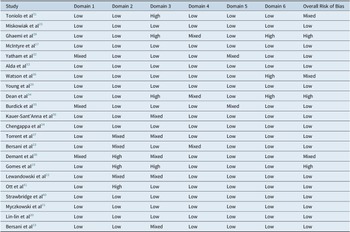
Twenty-two studies were included in this review. A summary of the risk of bias assessments is included in Table 2. Fourteen studies had a low risk of bias according to the Cochrane Risk of Bias tool.Reference Sterne, Savović and Page85 Five studies showed an overall mixed risk of bias.Reference Gomes, Rocca and Belizario19, Reference Watson, Gallagher and Porter26, Reference Ghaemi, Gilmer and Dunn28, Reference Demant, Vinberg, Kessing and Miskowiak30, Reference Toniolo, de Fernandes, Silva, da Dias and Lafer31 Nine studies showed a high risk of bias in specific domains: three in Domain 2 due to deviations from intended interventions,Reference Gomes, Rocca and Belizario19, Reference Demant, Vinberg, Kessing and Miskowiak30, Reference Ott, Vinberg, Kessing, Bowie, Forman and Miskowiak41 four in Domain 3 due to missing data often without corrective measures,Reference Gomes, Rocca and Belizario19, Reference Ghaemi, Gilmer and Dunn28, Reference Demant, Vinberg, Kessing and Miskowiak30, Reference Toniolo, de Fernandes, Silva, da Dias and Lafer31 and four in Domain 6 because of potential conflicts of interest.Reference Ghaemi, Gilmer and Dunn28, Reference Young, Gallagher, Watson, Del-Estal, Owen and Ferrier29 Overall, three studies were conclusively rated as having a high risk of bias.Reference Gomes, Rocca and Belizario19, Reference Ghaemi, Gilmer and Dunn28, Reference Demant, Vinberg, Kessing and Miskowiak30, Reference Dean, Bush and Copolov34
Risk of Bias for the Included Studies

Discussion
The current systematic review assessed 22 RCTs that investigated the effects of pharmacological, neurostimulation, and psychological interventions on cognitive impairment in BD. There were no cognitive benefits reported in studies assessing functional remediation, psychoeducation, pramipexole, n-acetyl cysteine, and methylene blue. Moreover, the study assessing galantamine reported greater cognitive benefits in the placebo group. Pro-cognitive effects were reported in studies assessing creatine monohydrate, erythropoietin, intranasal insulin, lurasidone, mifepristone, Withania somnifera, cognitive remediation, rTMS, and tDCS.
Among the studies which reported pro-cognitive effects, the majority reported a significant improvement in only one cognitive assessment within a cognitive battery.Reference Lin-Lin, Zhao and Kong20, Reference Myczkowski, Fernandes and Moreno21, 26-28, Reference Demant, Vinberg, Kessing and Miskowiak30, Reference Toniolo, de Fernandes, Silva, da Dias and Lafer31, Reference Kauer-Sant’Anna, Frey and Fijtman36 There were four studies which reported significant improvements in two cognitive assessments,Reference Lewandowski, Sperry and Cohen22, Reference Bersani, Minichino and Bernabei23, Reference Yatham, Mackala and Basivireddy32, Reference Ott, Vinberg, Kessing, Bowie, Forman and Miskowiak41 while six reported significant improvements in three or more cognitive assessments over placebo.Reference Gomes, Rocca and Belizario19, Reference Chengappa, Bowie, Schlicht, Fleet, Brar and Jindal24, Reference Miskowiak, Ehrenreich, Christensen, Kessing and Vinberg25, Reference Young, Gallagher, Watson, Del-Estal, Owen and Ferrier29, Reference Bernabei, Bersani and Pompili39, Reference Strawbridge, Tsapekos and Hodsoll40
Only 6 of the 15 studies which reported significant improvements in cognition completed statistical corrections for multiple comparisons.Reference Gomes, Rocca and Belizario19, Reference Bersani, Minichino and Bernabei23, Reference Miskowiak, Ehrenreich, Christensen, Kessing and Vinberg25, Reference McIntyre, Soczynska and Woldeyohannes27, Reference Toniolo, de Fernandes, Silva, da Dias and Lafer31, Reference Ott, Vinberg, Kessing, Bowie, Forman and Miskowiak41 Given how most of the studies reported a small number of statistically significant results, the risk of false-positive findings must be considered for a more conservative interpretation of the data. Taken together, given the preliminary nature of these studies, no single pro-cognitive intervention in BD is ready for implementation at this point in time.
Of the studies that detected no significant changes in cognition, those assessing pramipexole,Reference Burdick, Braga, Nnadi, Shaya, Stearns and Malhotra35 n-acetyl cysteine,Reference Dean, Bush and Copolov34 and methylene blueReference Alda, McKinnon and Blagdon33 had relatively small sample sizes (ie, 100, 46, and 37 participants, respectively) and therefore may have been underpowered to detect significant differences in cognitive scores compared to placebo. Furthermore, two of the foregoing studies assessed cognition either as a secondary outcome or a sub-analysis of an original study that did not have cognition as its primary outcome,Reference Alda, McKinnon and Blagdon33, Reference Dean, Bush and Copolov34 which may have further inhibited the ability to detect a clinically significant improvement in cognition. Nevertheless, none of these studies showed a trend towards significance in their study results. The study by Dean et al. observed statistical significance in a subgroup of euthymic participants, a finding which warrants further exploration.Reference Dean, Bush and Copolov34 Given the preliminary nature of these three studies, the absence of significant results does not discount their potential efficacy as a pro-cognitive intervention in BD.
The functional remediation and psychoeducation interventions assessed by Torrent et al. also demonstrated no significant improvements in cognition. However, this study had a large sample size of 239 participants and a long study duration (i.e., 21 weeks) and therefore presents relatively strong evidence of a lack of pro-cognitive efficacy.Reference Torrent, del Bonnin and Martínez-Arán37 Nevertheless, this result may be limited to the particular functional remediation and psychoeducation interventions in the specific study. In addition, functional remediation programs seek to improve functional abilities, not necessarily cognitive abilities, which the functional remediation program in the study did achieve. This suggests that functional improvements can be attained without improvements in cognition and warrants further exploration as a target to improve quality of life outcomes in BD.
The study by Ghaemi et al. was unique among the included studies as it observed a greater cognitive improvement in the placebo group when compared to the intervention group, wherein placebo was superior to galantamine in a measure of verbal fluency.Reference Ghaemi, Gilmer and Dunn28 This finding occurred despite the small sample size of 16 participants. A separate open-label study of galantamine in BD found significant improvements in subjective cognitive scores, attention, and verbal episodic memory.Reference Iosifescu, Moore and Deckersbach86 The superiority of placebo over galantamine in the study conducted by Ghaemi et al. may have been due to the absence of enrichment of participants with objective cognitive impairment, which may have reduced the ability to assess the pro-cognitive potential of galantamine. Alternatively, this finding may have been caused by the potential adverse effects of galantamine on cognition. Authors consider the potential effect of galantamine treatment on excessive cholinergic activity as a potential contributor to the reduced cognitive performance in the treatment group. At present, however, these findings are highly preliminary and further studies of galantamine are needed.
Methodological considerations
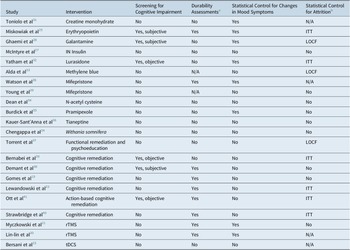
Methodological considerations for pro-cognitive trials in BD have been extensively discussed in the International Society for Bipolar Disorders (ISBD) Targeting Cognition Task Force’s report.Reference Miskowiak, Burdick and Martinez-Aran87 A summary of some of the key methodological characteristics of the studies included in the review herein are found in Table 3.
Summary of Key Study Methodological Characteristics

Abbreviations: ITT, intention to treat; LOCF, last observation carried forward.
a N/A if was a crossover study.
b N/A if no drop-outs were reported.
Screening for cognitive impairment
Objective cognitive impairment is defined as a performance on neurocognitive assessments that falls below the norm for a particular demographic.Reference Petersen, Porter and Miskowiak88 The ISBD Task Force recommends that objective cognitive impairment be defined as ≥ 0.5 SD below the normative mean on a neuropsychological screening test or ≥ 1 SD below the mean on two or more neuropsychological tests.Reference Miskowiak, Burdick and Martinez-Aran87 Subjective cognitive impairment is defined by self-report questionnaires, such as the Cognitive Complaints in Bipolar Disorder Rating Assessment or Cognitive Failures Questionnaire.Reference Petersen, Porter and Miskowiak88, Reference Hohman, Beason-Held, Lamar and Resnick89 The absence of objective cognitive impairment in participants can limit the ability of studies to detect the pro-cognitive effects of an intervention and increase the likelihood of type II errors.Reference Ott90
There were three studies which specified subjective cognitive impairment as a participant inclusion criterion,Reference Miskowiak, Ehrenreich, Christensen, Kessing and Vinberg25, Reference Ghaemi, Gilmer and Dunn28, Reference Demant, Vinberg, Kessing and Miskowiak30 three studies which specified objective cognitive impairment as a participant inclusion criterion,Reference Yatham, Mackala and Basivireddy32, Reference Bernabei, Bersani and Pompili39, Reference Ott, Vinberg, Kessing, Bowie, Forman and Miskowiak41 and one study evaluated functional impairment as an inclusion criterion.Reference Torrent, del Bonnin and Martínez-Arán37
Durability assessments
Follow-up assessments after pro-cognitive treatment interventions are recommended at 3 to 6 months.Reference Miskowiak, Burdick and Martinez-Aran87 The rationale for this suggestion is that neuroplasticity as a result of pro-cognitive interventions emerges approximately 4 to 6 weeks following treatment.Reference Aimone, Wiles and Gage91 Furthermore, follow-up assessments can help evaluate the long-term efficacy of a pro-cognitive intervention. Of the studies included in the review herein, there were nine that completed follow-up assessments of cognitive function after treatment completion.Reference Miskowiak, Burdick and Martinez-Aran5, 19-21, Reference Watson, Gallagher and Porter26, Reference Demant, Vinberg, Kessing and Miskowiak30, Reference Strawbridge, Tsapekos and Hodsoll40, Reference Ott, Vinberg, Kessing, Bowie, Forman and Miskowiak41, Reference Lewandowski, Sperry and Cohen47 The timing of the durability assessments ranged from 2 weeks to 26 weeks.
Addressing pseudospecificity
Pseudospecificity describes improvements in cognition which are caused by changes in mood symptoms and not the pro-cognitive intervention itself. Indeed, acute mood symptoms contribute to up to 30% of the variance in cognition within affective disorders.Reference Torrent, Martinez-Arán and del Mar Bonnin92, Reference Goldberg, Gold and Greenberg93 Pseudospecificity can be minimized by co-varying for changes in mood symptoms or conducting a path analysis.Reference Miskowiak, Burdick and Martinez-Aran5 Of the included studies, there were eight which covaried for changes in mood symptoms in their statistical analysis.Reference Lin-Lin, Zhao and Kong20, Reference Myczkowski, Fernandes and Moreno21, Reference Miskowiak, Ehrenreich, Christensen, Kessing and Vinberg25, Reference Watson, Gallagher and Porter26, Reference Ghaemi, Gilmer and Dunn28, Reference Toniolo, de Fernandes, Silva, da Dias and Lafer31, Reference Yatham, Mackala and Basivireddy32, Reference Burdick, Braga, Nnadi, Shaya, Stearns and Malhotra35 Of the nine studies with euthymic or remitted participants that did not control statistically for mood symptoms, five considered the re-emergence of affective symptoms to be a discontinuation criterion.Reference Chengappa, Bowie, Schlicht, Fleet, Brar and Jindal24, Reference McIntyre, Soczynska and Woldeyohannes27, Reference Torrent, del Bonnin and Martínez-Arán37, Reference Bernabei, Bersani and Pompili39, Reference Ott, Vinberg, Kessing, Bowie, Forman and Miskowiak41 There were no studies that conducted path analysis.
Cognitive assessments
There remains significant heterogeneity in the cognitive assessments employed in cognition studies in BD and an absence of a standardized approach to the assessment of cognition. Indeed, a total of 46 different cognitive assessments were represented in the studies included in the review herein, many of which included several sub-measures. At present, there is no consensual neuropsychological battery; however, attempts have been made to streamline cognitive tests through the creation of the CANTAB, MCCB, and ISBD-BANC neurocognitive batteries. Future studies may also choose to evaluate a cognitive composite score, which is capable of detecting the combination of small changes in cognition assessed by individual cognitive assessments.Reference Miskowiak, Burdick and Martinez-Aran87 Of the studies included herein, five studies included a global cognitive composite score.Reference Miskowiak, Ehrenreich, Christensen, Kessing and Vinberg25, Reference Yatham, Mackala and Basivireddy32, Reference Strawbridge, Tsapekos and Hodsoll40, Reference Ott, Vinberg, Kessing, Bowie, Forman and Miskowiak41, Reference Lewandowski, Sperry and Cohen47 It must be stated, however, that there is no cognitive measure that represents a gold standard in assessing cognitive function in BD and/or has proven to be a preferred outcome repeat measure in interventional studies targeting cognition. An additional cognitive measure that may be included is the THINC-it tool which has been validated as a screening tool in adults with MDD as well as a measure that demonstrates sensitivity to change with antidepressant treatment.94-96
Attrition and missing data
Controlling for participant drop-outs is important to minimize the introduction of bias into study results. Attrition rates in pharmacological studies ranged from 0% to 46%, with an average of 20%. Rates were much higher in psychological studies, ranging from 12% to 54%, with an average of 24%. In neurostimulation studies, attrition rates were rarely reported. Of the 18 studies with reported drop-outs, there were three which completed the last observation carried forward correctionReference Ghaemi, Gilmer and Dunn28, Reference Alda, McKinnon and Blagdon33, Reference Torrent, del Bonnin and Martínez-Arán37 and six which completed an intention to treat analysis.Reference Miskowiak, Ehrenreich, Christensen, Kessing and Vinberg25, Reference Yatham, Mackala and Basivireddy32, 39-41, Reference Lewandowski, Sperry and Cohen47
Future directions
Cognitive subgroups
Future interventions may choose to target treatments to those cognitive subgroups in BD which are most likely to respond to treatment.Reference Jensen, Knorr, Vinberg, Kessing and Miskowiak97 Available evidence suggests that patients with objective cognitive impairments experience the most benefit from pro-cognitive interventions and are the best candidates for pro-cognitive interventions.Reference Myczkowski, Fernandes and Moreno21 Studies may target this group by restricting inclusion to patients with BD-I as these patients typically demonstrate greater cognitive impairments than patients with BD-II.Reference McIntyre, Best and Bowie94 Nevertheless, cognitive screening is the only way to adequately assess cognitive impairments.Reference Dolberg, Dannon, Schreiber and Grunhaus83
Furthermore, subgroups with deficits in specific cognitive domains may be identified and targeted in interventions. This is particularly relevant to cognitive remediation interventions which have the scope to selectively target cognitive domains. For example, the functional remediation program in the study by Torrent et al. focused specifically on improving participants’ verbal memory.Reference Torrent, del Bonnin and Martínez-Arán37 The tailoring of pro-cognitive interventions to specific cognitive subgroups in this manner remains a largely unexplored avenue in BD. McIntyre et al. suggest that genotypic markers may also be used as indicators of responsiveness to pro-cognitive interventions.Reference McIntyre, Soczynska and Woldeyohannes27 Genotypic markers have already been evaluated as indicators of responsiveness to pro-cognitive interventions in patients with Alzheimer’s disease and mild cognitive impairment; however, they have yet to be explored in BD.Reference Reger and Watson98 Finally, the ISBD Task Force suggests that pro-cognitive interventions can be targeted to illness stages of BD, as there is some evidence that efficacy is associated with illness chronicity.Reference Robinson, Thompson and Gallagher13
Biomarkers for cognition
The use of neuroimaging and blood-based biomarkers within pro-cognitive intervention trials may be useful to elucidate the mechanisms of action of pro-cognitive interventions.Reference Wakhloo, Scharkowski and Curto99 For example, Watson et al. examined the role of the hypothalamic–pituitary–adrenal axis function as a potential mechanism for the effects of mifepristone on cognition.Reference Watson, Gallagher and Porter26 The existing literature on biomarkers of cognitive function in BD is scarce but presents potential avenues of further exploration. Cognitive dysfunction is hypothesized to be associated with white matter abnormalities in the frontal lobes and basal ganglia and may be associated with impairments in executive function, attention, and processing speed.Reference Bearden, Hoffman and Cannon100
Results from MRI studies suggest that individuals with BD with acute mania exhibit less activation of frontal lobe structures when completing cognitive assessments compared to healthy controls, which may explain cognitive deficits in executive function and processing speed.Reference Gupta, Goyal, Ranjan, Kumaran and Sagar101, Reference Gupta, Goyal, Ranjan, Kumaran and Sagar102 Studies assessing the association between brain-derived neurotrophic factor and cognitive function in BD have reported mixed results.Reference Chang, Wang and Lee103, Reference Dias, Brissos, Frey, Andreazza, Cardoso and Kapczinski104 Furthermore, some evidence suggests that TNF-αReference Chang, Wang and Lee103, Reference Doganavsargil-Baysal, Cinemre and Aksoy105 and inflammatory cytokines play a role in cognition in BD,Reference Lotrich, Butters, Aizenstein and Marron106 but not oxidative stress markers.Reference Aydemir, Çubukçuoğlu, Erdin, Taş, Onur and Berk107 Functional, peripheral, and genetic biomarkers for cognition warrant future study in BD populations.
Other pro-cognitive interventions in BD
A number of pro-cognitive interventions did not fall within the scope of this review but remain promising options for cognition in BD. These include lamotrigine, aerobic exercise,Reference Kucyi, Alsuwaidan, Liauw and McIntyre108 modafinil,Reference Goss, Kaser, Costafreda, Sahakian and Fu109 and stimulants.Reference Kucyi, Alsuwaidan, Liauw and McIntyre108, 110-112 There are several currently ongoing registered clinical trials aiming to assess the pro-cognitive effects of erythropoietin (NCT03315897, NCT03339596), rTMS (NCT03217110), tDCS (NCT04296604), and cognitive remediation (NCT04031560, NCT04447807) in BD populations.
Limitations
The present review must be considered in the context of the following limitations. First, this review examined a relatively small number of studies and thus a quantitative analysis of results was not feasible. Nevertheless, the small number of included studies is reflective of the limited literature concerning pro-cognitive interventions in BD. Second, the strength of the review herein is reflective of the risk of bias of the included studies. Many of the studies were exploratory, with small sample sizes, and high attrition rates. As such, no firm conclusions can be drawn about the pro-cognitive efficacy of the included interventions. Finally, the pro-cognitive interventions included in this study were determined a priori; studies were included if the methodology hypothesized a pro-cognitive effect in BD. As a result, this study may have excluded interventions for which positive cognitive effects were not expected.
Conclusion
Currently, no intervention has demonstrated robust, independent, pro-cognitive effects in adults with BD as evidenced by results from large, randomized, double-blinded, placebo-controlled studies. Methodological aspects including, but not limited to, enrichment of populations with pre-treatment cognitive impairment, as well as the inclusion of individuals who are in remission are encouraged. The field also needs to identify a cognitive measure that is comprehensive with a minimal practice effect and is sensitive to change as a dependent measure. Vortioxetine is the only drug that is FDA-approved in a mood disorder population (i.e., MDD) that has been given regulatory permission to be promoted as a pro-cognitive agent. The methodological approach that was adopted in the vortioxetine development program serves as a template for how pro-cognitive studies in BD should be conducted.113-116
Funding
This study received no funding.
Authorship contribution
J.K.T., I.P.C., L.M.W.L., and J.N.F. contributed to the overall design, article selection, data extraction, data analysis, and manuscript preparation. All other authors contributed to the editing and submission.
Disclosures
Author Roger S. McIntyre reports research grant support from Global Alliance for Chronic Diseases, Canadian Institutes of Health Research (CIHR) and National Natural Science Foundation of China’s Mental Health Team Grant; speaker/consultation fees from Lundbeck, Janssen, Purdue, Pfizer, Otsuka, Allergan, Takeda, Neurocrine, Sunovion, Minerva, Intra-Cellular, Abbvie, and Eisai outside the submitted work; and is a shareholder and CEO of Champignon. Author Joshua D. Rosenblat has received research grant support from the Canadian Cancer Society, Canadian Psychiatric Association, American Psychiatric Association, American Society of Psychopharmacology, University of Toronto, University Health Network Centre for Mental Health, Joseph M. West Family Memorial Fund and Timeposters Fellowship, and industry funding for speaker/consultation/research fees from Janssen, Allergan, Lundbeck, Sunovion and COMPASS. He is the medical director of a private clinic providing intravenous ketamine infusions and intranasal esketamine for depression. Author Yena Lee received salary support from the Global Alliance for Chronic Diseases/Canadian Institutes of Health Research (CIHR)/National Natural Science Foundation of China’s Mental Health Team Grant and the CIHR Frederick Banting and Charles Best Canada Graduate Scholarship; personal fees from Champignon. Author Danielle S. Cha has received honoraria from Lundbeck and receives royalties from Oxford University Press and Cambridge University Press. Authors Jocelyn K. Tamura, Isabelle P. Carvalho, Lui M.W. Leanna, Jia Nuo Feng, Rodrigo Mansur, Kayla Teopiz, Zara Ahmad, Flora Nasri, and Jiin Kim have nothing to disclose.