Introduction
Today over half of the world's population resides in urban areas, although the level of urbanisation varies in different countries (United Nations, Department of Economic and Social Affairs 2014). Throughout history, urbanisation has been associated with economic and social transformation, which has produced changes in the urban demography. An example of this demographic change in cities is population ageing (United Nations, Department of Economic and Social Affairs 2014). A low fertility rate, along with longer life expectancy, has resulted in a change to the population pyramids of many countries, creating an increasingly older age population (United Nations, Department of Economic and Social Affairs, Population Division 2015). Australia is one of the most urbanised countries with over 85 per cent of the population living in cities (Australian Bureau of Statistics (ABS) 2014). At the same time, the ageing population constitutes a significant proportion of the city dwellers in Australia (ABS 2013).
The ageing of the population poses challenges for the planning of inclusive cities, where the needs of all people, including the older age cohort, are equally accommodated (Australian Local Government Association 2006). An ageing population has significant implications for urban transport systems, since older people's travel behaviour and mobility is considerably different from that of younger age cohorts (Golob and Hensher Reference Golob and Hensher2007). In this context, it is important to note that while mobility refers to ‘the movement of people or goods’ (Litman Reference Litman2003: 29), accessibility refers to ‘the ability to reach desired goods, services, activities and destinations’ (Victoria Transport Policy Institute 2014). As people age, they are more likely to have limitations in walking and driving their own car and thus they are more reliant on public transport (see e.g. Collia, Sharp and Giesbrecht Reference Collia, Sharp and Giesbrecht2003; Schmöcker et al. Reference Schmöcker, Quddus, Noland and Bell2008; Schwanen, Dijst and Dieleman Reference Schwanen, Dijst and Dieleman2001). The retirement lifestyle also means that the everyday activity patterns of older people are different from and potentially limited compared to those of the average, generally younger and employed cohorts. In order for these older cohorts to maintain/strengthen and develop their social engagement networks, a suite of planning policies is required that address the changing travel behaviour and mobility of people as they age (Davey Reference Davey2007; Marottoli et al. Reference Marottoli, De Leon, Glass, Williams, Cooney and Berkman2000; Oxley and Fildes Reference Oxley and Fildes2000; World Health Organization (WHO) 2007). The policies need to focus on the places that older people go to and the ways through which they travel to socialise with others. The implementation of such planning policies would potentially minimise the chances of social isolation at older age which, in turn, promotes overall health and wellbeing of this age cohort (Brown Reference Brown2003; Cornwell and Waite Reference Cornwell and Waite2009).
The relations between older people and place have been researched under the umbrella of ‘geographical gerontology’. Geographical gerontology is a multidisciplinary field of enquiry, concerned with a variety of spatial scales, at both individual and population levels (Andrews et al. Reference Andrews, Cutchin, McCracken, Phillips and Wiles2007, Reference Andrews, Milligan, Phillips and Skinner2009). As Andrews et al. (Reference Andrews, Cutchin, McCracken, Phillips and Wiles2007) observed, central to the geographical gerontology research has always been older people's health and health-care concerns (see also Cagney, Browning and Wen Reference Cagney, Browning and Wen2005; Kobetz, Daniel and Earp Reference Kobetz, Daniel and Earp2003). However, as they acknowledged, some research in this field has extended the focus of the study beyond health to other aspects of social and cultural lives of older people (Andrews et al. Reference Andrews, Cutchin, McCracken, Phillips and Wiles2007; see also Andrews et al. Reference Andrews, Kearns, Kontos and Wilson2006; Harper and Laws Reference Harper and Laws1995). The initial contribution of geographers to ageing research started in the late 1970s (see Rowles Reference Rowles1978; Skinner, Cloutier and Andrews Reference Skinner, Cloutier and Andrews2015) and it continues to grow. This field of research has not yet reached its full potential and requires further investigations (Cutchin Reference Cutchin2009).
This paper contributes to geographical gerontology through investigating the role of third places (popular public places where many people go to socialise) and accessibility in the social lives of older people. This research is focused on different built-form patterns, including: Master Planned Community (MPC) developments and conventional suburbs. The main question underpinning this research is: ‘How do third places, and their perceived level of accessibility affect the social lives of older people living in MPC developments and conventional suburban neighbourhoods?’ A qualitative methodology was used to investigate how strong, weak and absent ties (Granovetter Reference Granovetter1973), as three types of social ties, are formed and maintained for older people living in different neighbourhood built-form patterns. The impact of the built neighbourhood on the social lives of older people is an important area of study. Building on existing literature, the findings of this research have the potential to inform future research and planning policies aimed at promoting the social lives, and thus the social health, of the older age cohort.
The first part of this paper reviews some of the literature on the importance of third places and accessibility to the social lives of older people. The case study areas are then introduced and the research methodology is outlined. The last part of the paper focuses on the research findings, highlighting some of the main characteristics of the third places frequented by older people, and the importance of accessibility in allowing older people the opportunities to engage in these places. The findings highlight opportunities for interventions, in particular in relation to planning for third places and accessible spaces that will potentially contribute to the social lives or sociability of older people, and therefore promote their overall health and wellbeing.
Social health, third places and older people
Social life or sociability is a main component of social health (Greenblatt Reference Greenblatt1976; Keyes Reference Keyes1998; Larson Reference Larson1993; Renne Reference Renne1974; Yu et al. Reference Yu, Mccammon, Ellison and Langa2016) which, in turn, can contribute to people's overall health and wellbeing (Cornwell and Waite Reference Cornwell and Waite2009; García et al. Reference García, Banegas, Perez-Regadera, Cabrera and Rodriguez-Artalejo2005; WHO 1948). Strong, weak and absent ties are three different types of social ties which can be used to measure the level of social life or sociability of individuals. Strong ties or friendships are the most intense types of social ties, concentrated within clusters of friends. Weak ties are not as strong as strong ties. These refer to the relationships with acquaintances. Weak ties are bridges between different clusters of strong ties (friends). Absent ties, on the other hand, are the frailest type of social ties between people. They imply a lack of any significant relation between people and refer to the acknowledgement type of relationship, e.g. the nodding relationship between people who live in the same neighbourhood and who are not acquainted (Granovetter Reference Granovetter1973).
Much of the literature in social networks has focused on the importance of strong ties, and there has been little attention to the role of weaker types of ties between people (Henning and Lieberg Reference Henning and Lieberg1996). Granovetter (Reference Granovetter1973, Reference Granovetter1983) stressed the significance of weak ties as bridging ties between different (strong) networks which enable people to access resources that otherwise they would be deprived of. In Henning and Lieberg's (Reference Henning and Lieberg1996) research, participants stated that weak ties meant a ‘feeling of home’, ‘security’ and ‘practical as well as social support’. Their research demonstrated the importance of the neighbourhood as a suitable area for weak ties, as proximity and continuity, which are the main factors in the development of these kinds of social ties, are encouraged to be established in the local vicinity (Henning and Lieberg Reference Henning and Lieberg1996). The research of Kavanaugh et al. (Reference Kavanaugh, Reese, Carroll and Rosson2005) also confirmed the importance of weak ties and demonstrated that people with weak (bridging) ties across groups tend to have higher levels of community involvement, civic interest and collective efficacy than those without bridging ties.
To ensure that older people have opportunities to remain socially active, meaning that they have the ability to establish new, and to maintain existing, strong, weak and absent ties, there is a need for a deeper understanding of the challenges affecting their travel behaviour and mobility. One way to address this concern is to investigate the characteristics of third places where older people socialise, and to understand the challenges that older people face in accessing different third places in different sub/urban neighbourhoods.
According to Oldenburg (Reference Oldenburg1989), a third place is not the first place (home) nor is it the second place (work/school). It is a place where people have opportunities to socialise with others and expand their social networks. Third places include a wide range of places from indoor areas (e.g. cafés, restaurants) to public open spaces (e.g. children's playgrounds, urban squares). They provide an accessible, socially level neutral ground to facilitate social interactions between regulars (Oldenburg Reference Oldenburg1989). Oldenburg (Reference Oldenburg1997) sees the third place serving functions in response to individualisation, which contribute to the social wellbeing and psychological health of people.
On the other hand, Soja (Reference Soja1996), in his research into ‘postmodern geographies’, referred to the term ‘Thirdspace’ as a socially produced space, a ‘socio-spatial dialectic’ where the social and historical dimensions are as significant as the spatial dimensions of our lives (our human geography). Building on Lefebvre's (Reference Lefebvre1991) book, The Production of Space, Soja (Reference Soja1996) divides space into First-, Second- and Thirdspaces. He defined Firstspace as the ‘real’ space, a material or materialised physical spatiality that can be mapped and seen. Secondspace was defined as the imagined geography which refers to how the space is conceived. His definition of Thirdspace then takes this thinking further and combines First- and Secondspaces to create a fully lived space, which is at the same time both real and imagined, actual and virtual. According to Soja (Reference Soja1996), a Thirdspace is more than the physical dimensions. There are also the knowledge of space, imaginings and social interactions that create the Thirdspace. At first, Soja's (Reference Soja1996) definition of Thirdspace might seem to be very dissimilar to Oldenburg's (Reference Oldenburg1989) definition of third place. Both definitions, however, imply that there is a critical dimension to geography that goes beyond physical to social, what transforms a space into a place.
This paper uses Oldenburg's (Reference Oldenburg1989) definition of third place and focuses on the physical characteristics of third places and their role in the social lives of older people. Reviewing the literature, a growing number of studies have focused on the social dimension of third places and demonstrated the significant role that third places play in creating opportunities for social interaction between people of all ages (Alidoust, Bosman and Holden Reference Alidoust, Bosman and Holden2015; Alidoust, Holden and Bosman Reference Alidoust, Holden and Bosman2014; Hickman Reference Hickman2013; Lawson Reference Lawson2004; Matthews, Limb and Taylor Reference Matthews, Limb, Taylor, Holloway and Valentine2000; Rosenbaum et al. Reference Rosenbaum, Ward, Walker and Ostrom2007). A limited number of studies also focused on the particular role of third places in the social life of older people. Some examples are Cheang's (Reference Cheang2002) and Rosenbaum's (Reference Rosenbaum2006) research which highlighted the role of restaurants as third places which facilitate social interaction between regular older age clients.
Third places are advocated as being important social spaces for older people, as they provide them with opportunities to keep in touch with others (Oldenburg Reference Oldenburg1997). Accessibility, perceived or otherwise, is essential if these places are to be utilised as places for social engagement (WHO 2007). The importance of accessible neighbourhood amenities and the positive impacts this has on the social lives of older people is supported in the literature (see e.g. Alidoust and Bosman Reference Alidoust and Bosman2015, Reference Alidoust and Bosman2016; Judd et al. Reference Judd, Olsberg, Quinn, Groenhart and Demirbilek2010; Levasseur et al. Reference Levasseur, Gauvin, Richard, Kestens, Daniel and Payette2011; Richard et al. Reference Richard, Gauvin, Gosselin and Laforest2009). Access to public transport and/or the ability to drive is an important indicator of accessibility, and enhances opportunities for older adults’ social engagement and community participation (Banister and Bowling Reference Banister and Bowling2004; Phillips et al. Reference Phillips, Siu, Yeh, Cheng, Andrews and Phillips2005). A review of the literature suggests a high level of car reliance among older people (Alsnih and Hensher Reference Alsnih and Hensher2003; Banister and Bowling Reference Banister and Bowling2004; Schmöcker et al. Reference Schmöcker, Quddus, Noland and Bell2008). For many older people, to some degree, driving contributes to their level of independence and affords them opportunities to engage in social life. Limitations in driving capability can restrict the social lives of older adults (Davey Reference Davey2007; Oxley and Fildes Reference Oxley and Fildes2000). This is particularly the case in the sprawling car-dependent suburbs, which are the dominant urban pattern in Australian cities (Hugo Reference Hugo2003). One alternative to private transport for retired drivers is public transport. An effective public transport service can play an influential role in the social lives of older people and can contribute to their social health. Policies are required to ensure the provision of accessible, affordable and reliable public transport services which accommodate the varying needs of the ageing population (WHO 2007).
Methodology
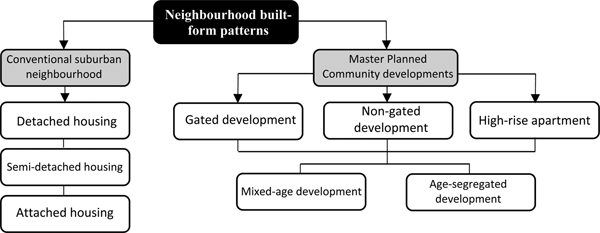
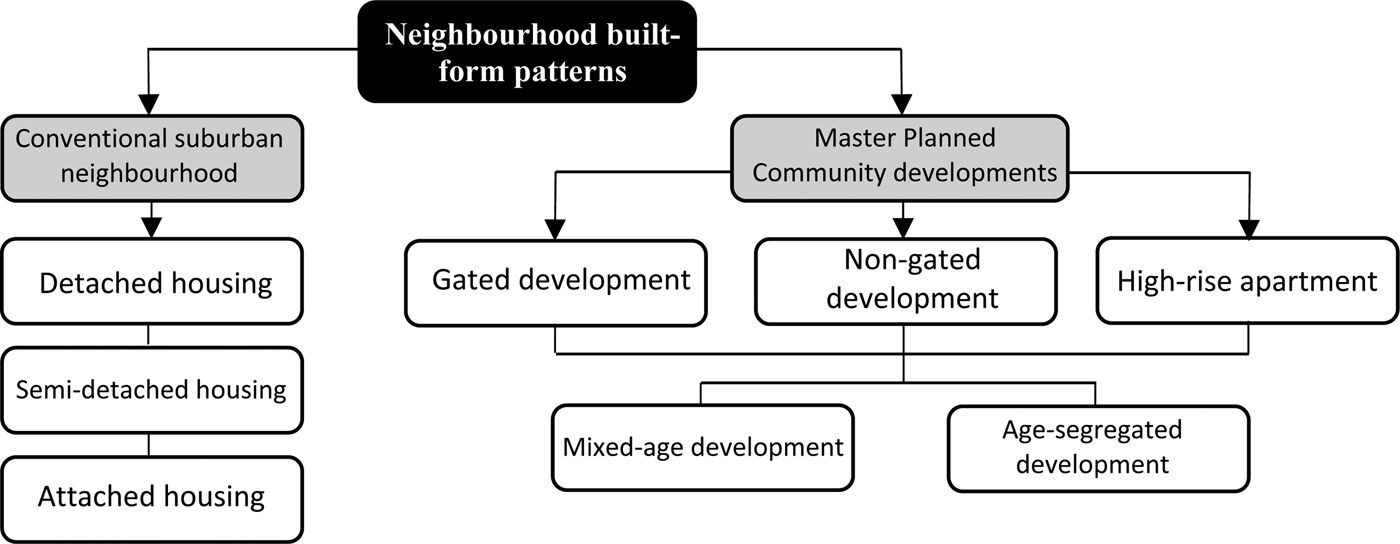
Qualitative methodology was employed to acquire in-depth information about the role and accessibility of third places for the social lives of older people living in different neighbourhood built-form patterns: (a) conventional suburban neighbourhoods and (b) MPC developments (see Figure 1). Conventional suburban neighbourhoods are comprised largely of detached, and in recent years (since around 2000) semi-detached, and attached housing. All types of street patterns (e.g. culs-de-sac and grid patterns) are included in this grouping. MPC developments, on the other hand, refer to a wide range of housing developments which are designed in line with a specific comprehensive master plan, and they generally have distinct physical boundaries and a uniform design aesthetic (Cheshire, Walters and Wickes Reference Cheshire, Walters and Wickes2010). MPCs include a wide range of developments from age-segregated to mixed-age, and from gated to non-gated. High-rise buildings, both age-segregated and mixed-age, are also included in this category.
Diagram illustrating neighbourhood built-form pattern categories that are discussed in this paper.
Study areas
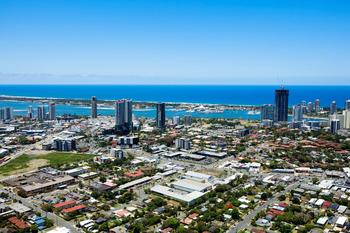
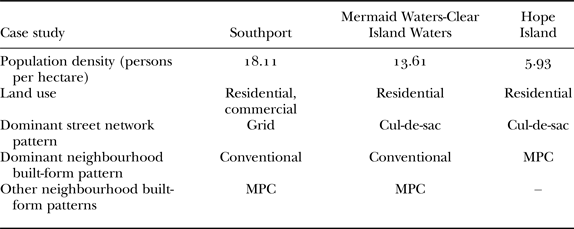
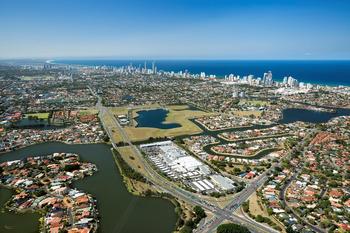
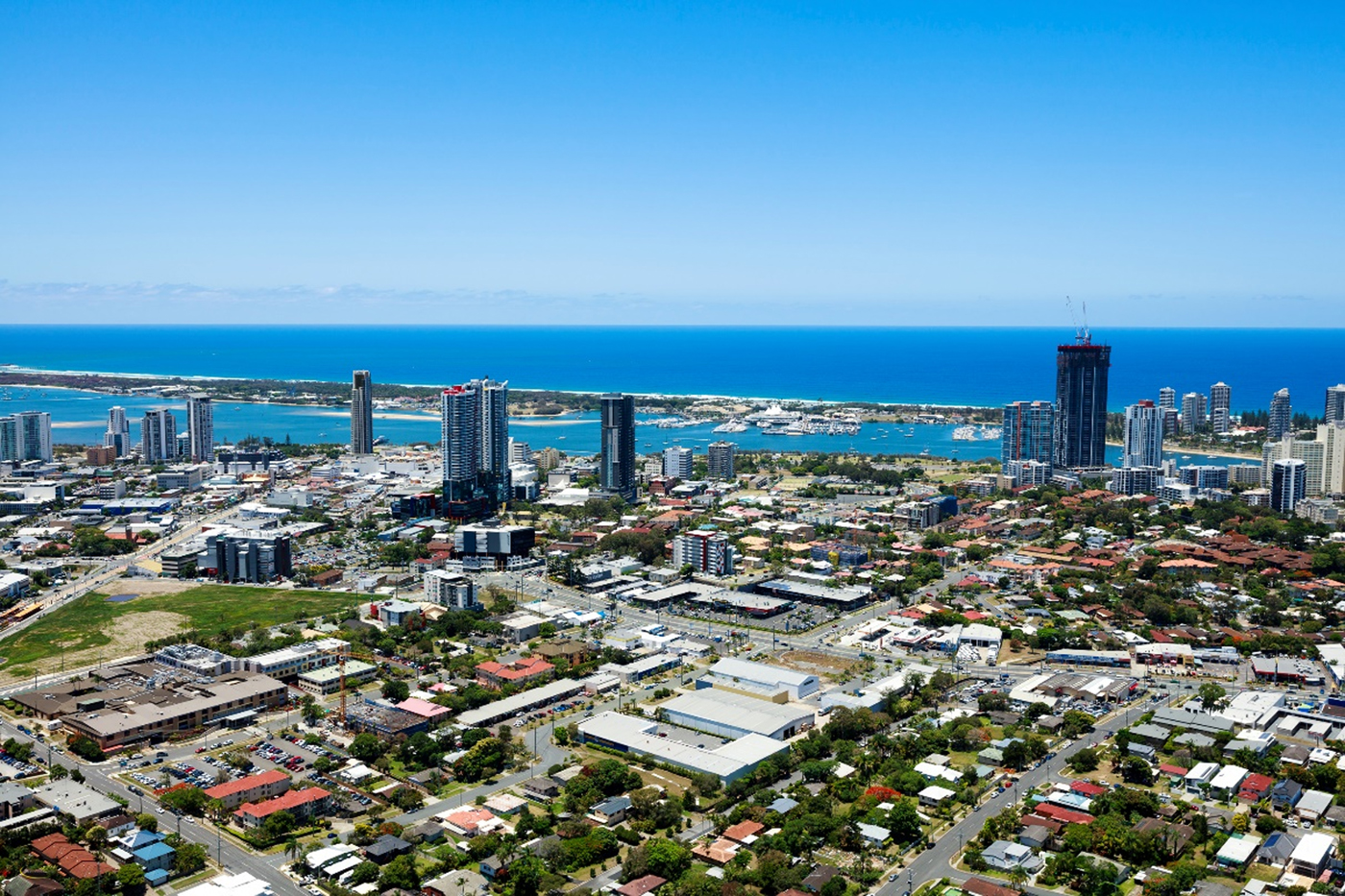
The research was based in the city of the Gold Coast, Queensland, Australia. The Gold Coast is located on the eastern coast of Australia, and has been known as an overgrown resort town which has now become the sixth largest city of the nation (Dedekorkut-Howes and Bosman Reference Dedekorkut-Howes and Bosman2015). The population of the Gold Coast is ageing and 15 per cent of its population was recorded as being aged 65 years or over in 2013 (ABS 2013). The proportion of older people is similarly high in all three case study areas selected for this research: Southport, Hope Island and Mermaid Waters-Clear Island Waters. In spite of this similarity, as illustrated in Table 1, the three case study areas vary significantly in terms of the population density and some main physical features, such as the land-use mixture, built-form pattern and public transport service. Southport is a mixed-use area with a high level of public transport provision, including bus and light rail, compared to much of the Gold Coast. Southport is a relatively densely populated area by Gold Coast standards, with 18.11 persons per hectare (ABS 2011). The built-form pattern in Southport is mainly conventional suburban neighbourhood in grid street patterns (see Figure 2).
An aerial photograph of Southport showing conventional suburban built-form pattern and grid streets in this case study area. Image courtesy of Skyepics Aerial Photography (2016). Used with permission from the copyright owner.
The main characteristics of the case study areas selected for this research

Note: MPC: Master Planned Community.
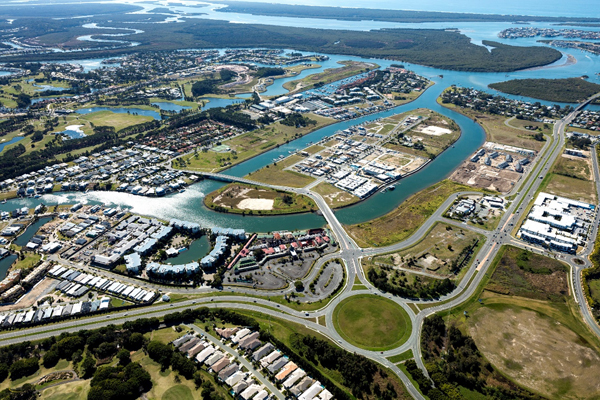
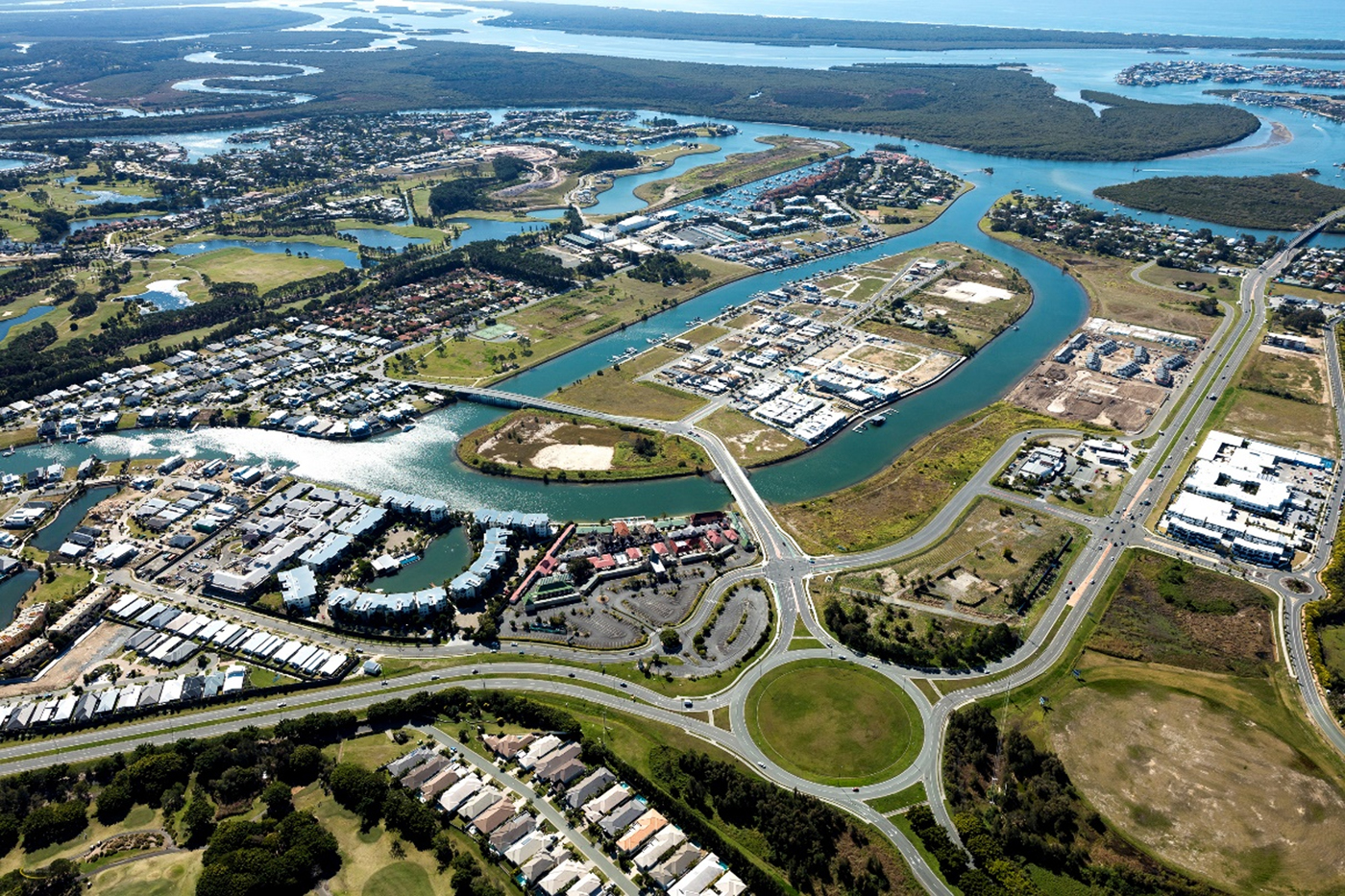
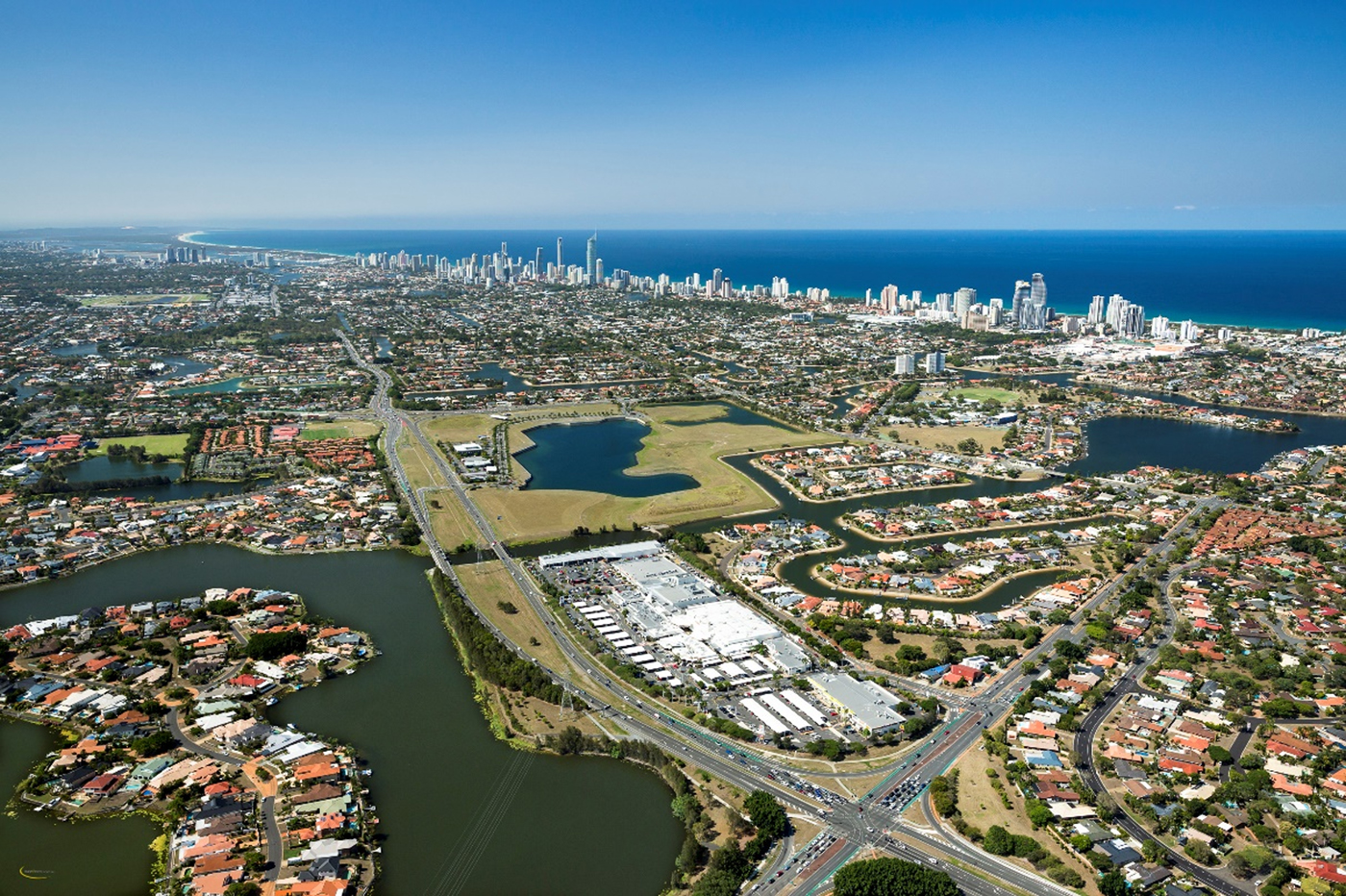
Hope Island is a residential suburb with a relatively low population density of 5.93 persons per hectare (ABS 2011). Given the pattern of gated MPC development and cul-de-sac streets in Hope Island, public transport is generally limited and is not easily accessed by people residing in this suburb (see Figure 3). Mermaid Waters-Clear Island Waters is similarly a residential suburb. It has a population density of 13.61 persons per hectare (ABS 2011). It is mainly comprised of conventional suburban neighbourhoods with cul-de-sac street network patterns. Public transport is limited to buses with frequent services to the main roads. Bus services are not easily accessed by many residents, particularly those living in culs-de-sac, as they are located a considerable distance from the main bus routes in this case study suburb (see Figure 4).
An aerial photograph of Hope Island showing the extensive canals, water bodies and culs-de-sac in a low-density suburban pattern. Image courtesy of Skyepics Aerial Photography (2016). Used with permission from the copyright owner.
The aerial photograph of Mermaid Waters-Clear Island Waters showing the conventional suburban built-form pattern in this case study area. Note the canals, water bodies and culs-de-sac which make the area difficult to navigate through. Image courtesy of Skyepics Aerial Photography (2016). Used with permission from the copyright owner.
Data collection
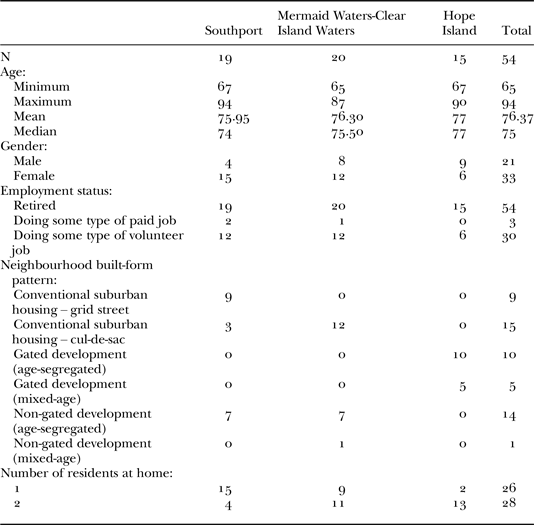
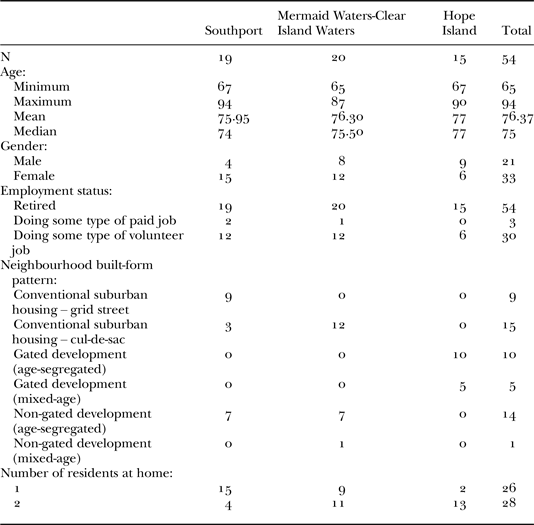
Data for this research were collected by conducting observations of older people participating in third places, as well as semi-structured interviews with 54 older people (aged 65 and over). Interviews were conducted with ethics approval from the Griffith University Human Research Ethics Committee (reference number ENV/42/14/HREC). Three sampling methods, including letterbox drops, convenience sampling and snowballing methods, were used simultaneously in order to recruit an adequate number of older men and women living in the case study areas. The participants included 19 people from Southport, 15 people from Hope Island and 20 people from Mermaid Waters-Clear Island Waters. The median and mean age of the participants were 75 and 76.37, respectively. Participants included 21 men and 33 women. All participants were retired; 30 were doing some sort of voluntary work. Twenty-four participants were living in some type of conventional suburban neighbourhoods while 40 were living in MPC developments. Each interview lasted on average 60 minutes. Interviews were digitally recorded and transcribed as soon as possible. Participants remained anonymous and were given pseudonyms to ensure confidentiality and to acknowledge them as people with individual life experiences. Interview questions about participants’ perceived health status and walking ability revealed that all but one had the ability to walk out of their home. Three other participants also had some degree of limitation in walking ability, meaning that they were not able to walk long distances (more than 15 minutes) because of health issues, and in some cases, they had to rely on walking aids such as canes and walkers (for a summary of participants’ profile, see Table 2).
Demographic information of the research participants
Among other questions, interviewees were asked about the third places they frequented during a typical week in their lives. They were also questioned about the role and importance of these places in their social lives and in particular about their strong, weak and absent ties. Participants were then asked to explain how they accessed different third places and the degree of importance they placed on being able to access them easily. Interview data were complemented by observing the social lives of older people in their neighbourhoods (not necessarily the interviewees). Field observations were conducted in each case study area, specifically in different third places. Attention was paid to, for example, the presence or absence of older people in different third places, and the characteristics of the third places that attracted older people. Field observations were conducted on different days of the week and at different times of the day, and notes were taken during the observation process.
Data analysis
Using NVivo 10 data management software, the interview data and observation notes were analysed applying both inductive and deductive approaches (Berg and Lune Reference Berg and Lune2004). Initial coding developed various themes which were informed by the primary research question: How can planning respond to the changing mobility of older people in order to support their social lives?, and two related sub-questions: (a) What is the role of third places in the formation and maintenance of the three different social ties (strong, weak and absent) of older people? and (b) To what degree is neighbourhood accessibility important in the social lives of older people? The themes were then clustered around four categories: third places; accessibility; different neighbourhood built-form patterns; and the three types of social ties (strong, weak and absent). These clusters were then reviewed and the themes in each cluster were revised. For instance, the themes under the ‘third place’ cluster included: mixed-use third places; local third places; clubs; and common areas and leisure centres in MPCs. Each theme was then analysed to form sets of sub-themes which were focused on investigating in-depth information about themes. The associations and relationships between different clusters, themes and sub-themes were also investigated and identified, suggesting the impacts of third places and their level of accessibility on the three types of social ties of older people.
Findings: the importance of third places in the social lives of older people
This research corroborates the important role of third places in the social lives of older people. The majority of research participants stated that when not at home, they spent much of their time in third places, specifically so that they could interact with other people. This research adds to the existing literature by revealing some of the main characteristics of the third places which play important roles in the social lives of older people living in different neighbourhood built-form patterns.
Mixed-use places as convenient third places
Mixed-use places, as referred to by participants, generally comprised shopping areas, civic places like banks and post offices, and also cafés and restaurants. Participants from both neighbourhood built-form patterns described these places as being important social spaces which were convenient and which offered efficiency, as they afforded them opportunities to undertake multiple activities in one place and minimised their need to travel. Minimisation of travel was seen as a significant advantage, in particular by those with mobility restrictions. Ruth (age 69) indicated:
We go to Southport Park [the local shopping centre]. We usually combine going shopping [and meeting each other], I take friends who don't have cars … so we'll go out and do the shopping and maybe have a cup of coffee together just as a little social bit in the middle of the shopping.
For participants, the mixed-use third places tended not to produce new strong ties, instead, participants were more likely to meet people with whom they already had strong ties, produced through other activities and other places. However, research suggested that the visitation frequency of these third places could lead to the formation of new weak and absent ties. For example, participants who regularly frequented the same local shopping centre were likely to form absent and/or weak ties with sales assistants and other regular shoppers.
Local third places
This research showed the significance of local third places in the social lives of the participants from both types of neighbourhood built-form patterns. Here the local third places refer to the public social spaces which were located outside the MPCs and were open to all people. Most of the participants, particularly those who still drove their own cars, did not tend to restrict themselves to the local cafés and restaurants. However, in the case of other third places, the majority tended to go to the local ones, especially third places such as churches, shopping centres, public libraries and clubs, which were shown to play an important role in forming and maintaining all three types of social ties. Particularly, the participants who have been living in their neighbourhood for longer tended to attend the local third places more regularly and had more social ties established through these local places. Bella (age 67) highlighted the importance of the local church to her social life:
We come together at church and that's where I would meet others … I guess that's the thing about church. We don't just go into church and go home. We come to church. We're there for the worship service and then afterwards we are talking to each other, having a drink of coffee and having friendship time after church. So that is why at church activities we do talk to each other, and it's more than just seeing somebody over the room and maybe saying hi and that's all.
Again, visitation frequency was considered to be a significant factor, contributing to forming new social ties for participants. A number of single men and women participants who regularly attended the same local restaurant, bar or café said they had a strong sense of belonging to that particular place, and that they had established many strong, weak and absent ties with other patrons. This is illustrated by Tony (age 67), a single man from Southport:
We have all drunk there [the local pub] for years and years and years … When they revamped the pub they demolished most of it and revamped it, I even worked on that … They're friends. As I said I've known most of them, some of them for 50, 60 years, some of them for 10, 15, 20 years. A lot of them I used to work with and they're now retired.
Clubs and a sense of belonging
The research also revealed the importance of club membership in the social lives of the participants, particularly single older men and women. Most participants who frequented these third places resided in conventional suburban neighbourhoods and they engaged in these activities as a means of interacting with new people and establishing new absent, weak and eventually, in a few cases, strong ties. For instance, Lyn indicated (age 74): ‘I belong to quite a few clubs because I don't have close family you see, so those clubs and those people are my family really.’ As the research revealed, the majority of the clubs favoured by the research participants were age-segregated, including the Returned and Services League, the University of the Third Age, singing clubs and bowls clubs. The participants who frequented these third places regularly had a high number of social ties, particularly absent and weak ties with other club members. These ties were acknowledged as being important social relations in the participants’ daily lives. In response to a question about the significance of weak and absent ties established in clubs, Shirley (age 74) pointed out:
They are [important], it is lovely to talk to them [people with whom you have weak and absent ties] while you are there [in the club] … That's why I go bowling … They are all important to me. Definitely I love people … It's nice to talk to them, here I am on my own, I've got to keep myself busy so that the time goes by, which I do.
The length of residence was also found to contribute to some older people's attachment to clubs as places for social interaction and communication. The participants who have been living in their current place for longer tended to have favourite local clubs where they attended regularly and through which they established social ties, mainly weak and absent ones.
Common areas and leisure centres in MPCs
Other third places favoured by participants were the third places located within the boundaries of the MPC developments which were exclusive to the residents of the MPC. All MPC developments had common areas and leisure centres, where the social interaction between residents was encouraged through various organised social activities and events in which all residents were invited to participate. The availability of some other communal facilities such as gym, swimming pool and green space, however, varied in different MPC developments, depending on their size and socio-economic status. Claire (age 86), a resident of an age-segregated MPC said:
…well I play cards here with a group one day a week, we have bingo in the hall one day a week, and every second Saturday we have games in the hall, I go to that, any function, I might attend all the functions. It's a nice atmosphere here, you can go, there will be a group sitting down, you can go and sit in the group and you are part of the group and it's not always the same group you sit with. You try to get around. Well I try to get around and talk to…
In a similar vein, Maggie (age 85) stated that:
There is so much going on at the village, believe me. You can do something, if you want to, every day. Almost every day … I love it. But you're only as busy as you want to be. You don't have to do anything. But it's always available if you want to.
These communal places created opportunities for MPC residents to meet new people and establish absent, weak and potentially strong ties. The level of social interaction (both number and strength of social ties) was of a higher degree among age-segregated MPC residents than that of mixed-age development residents, as there seemed to be more social programmes and events available in the age-segregated developments. A few participants from age-segregated MPCs even reported that they had weak or absent ties with all people living in the development. Paul (age 70) indicated:
With 227 houses [in the age-segregated MPC], there are always people that you see. So you can have a few chats with people from time to time. If you lived in a suburb, when we lived in Melbourne … in the same street there was probably two couples, or two houses with people that I would call friends.
Perhaps not unexpectedly, the research revealed that MPC participants, especially those living in age-segregated developments, when not at home generally spend most of their time in the physical environment of their development. For many of these people, the main reason for leaving the MPC development was to shop and access civic services such as post offices and banks, which are not available within the development. Otherwise, participants residing in MPCs agreed unanimously that there were sufficient opportunities within the developments to fulfil all of their social needs. Joan (age 75) lived in an age-segregated high-rise building and pointed out:
This building is my neighbourhood … this [building] is where I live, this is where I predominantly function, I go out to do something but I keep pretty much here.
Nevertheless, not all MPC residents choose to mix solely with others living within their neighbourhood, nor do all participate in the organised social activities on offer. This lack of social engagement by some residents was seen by some participants as being anti-social and contrary. Ruth (age 69) related:
There are still a lot of people here I don't know, because they don't come out of their houses. They truly don't. They don't socialise. They don't attend meetings, they just live in their little houses. Makes me wonder why they didn't just buy an ordinary little house outside, because they're paying a levy and then they're not using any of the facilities.
The level of engagement in MPC social activities was higher amongst those who had moved to the developments from another city or neighbourhood and had left behind their social networks. Participants who had moved to the MPC from a nearby area or had lived on the Gold Coast for a long time were found to still have strong ties with their old social networks and so did not always participate in the social activities on offer in the MPC.
What is the role of accessibility in the social lives of older people?
This research demonstrates that older people's degree of accessibility to third places is fundamental to their continued participation in these places. Many participants from both neighbourhood patterns preferred to visit local third places, e.g. shopping centres, and this illustrates a strong relationship between travel distance and use of these third places. Similarly, the popularity of communal places in MPCs is largely on account of their location and proximity.
The research revealed that, in addition to the travel distance, the mode of travel plays a very important role in participants’ perception of the accessibility of third places, which, in turn, impacts their use of third places. Although the majority of participants from all three case study areas perceived their area as being either ‘very accessible’ or ‘accessible’, notably most of them acknowledged that their perception of the level of accessibility of the environment was strongly associated with the use of their car as the main mode of transport. Leaving aside the common areas and leisure centres in MPCs, an accessible third place in the context of our case study areas was defined by the majority of participants as a place with easy access by car. Interestingly, driving participants’ perception of the accessibility of their environment was similar across all three case study areas in spite of differences in their physical characteristics and population density. For a few other participants who did not drive (13%), accessibility to a third place was defined as the availability of public transport to access it. Among the retired drivers, those who were living in Southport with more public transport and higher population density perceived the environment more accessible; whereas, the residents of Hope Island and Mermaid Waters-Clear Island Waters, particularly those who were living away from the main public transport routes, perceived the area less accessible. Bob (age 72) from Hope Island pointed out:
It [Hope Island] is somewhat inaccessible really, if you have not got a car … so … without having a car it is probably somehow inaccessible … With a car it is very accessible, everywhere is accessible, you can go anywhere.
The ability to drive was found to contribute to the level of social interaction and community engagement among participants. However, the process of ageing can often lead to physical and or mental challenges which can then restrict the abilities of some older people to drive their own cars. Our research revealed that participants, especially those aged 75 and over, were more likely to have difficulty in navigation, particularly in unfamiliar environments. Some participants reported that they did not feel confident driving in busy areas where there was a lot of traffic. Nor did they feel confident driving in unfamiliar parts of the region/city/neighbourhood. Some participants reported having an awareness of a gradual loss of their driving skills as they aged. Caryn (age 83) stated:
Usually, the ones who come to me they drive and I drive. We drive. Things could change. You know, I've determined when I am 85 I think my reactions won't be good enough so I will hand in my licence.
Almost all respondents reported that ceasing to drive their own car would negatively affect their social life. Our research, however, revealed that driving cessation does not have any negative impact on the social interactions that happen within the physical boundaries of the MPC developments. Driving cessation was, however, found to restrict the social lives of older people taking place in different third places spread throughout the case study areas. However, in the case of some age-segregated MPC developments, the residents were provided with shuttles available two to three times per week to the local shopping centres. The availability of these services could maintain the older people's connection to the third places outside the developments. However, for those living in mixed-age MPC developments, the service was not available. Many participants feared that when they stopped driving, they would face challenges in attending the majority of third places in the case study areas. Frank (age 81) from Mermaid Waters-Clear Island Waters said:
To be honest I haven't thought beyond owning a car … [Without a car] it would be difficult to get to some of our social events. My Probus [a social club for retired or semi-retired professionals] is held at the Turf Club for instance. I would have difficulty getting there without using the likes of a taxi. Mandy [his wife] has two or three organisations to which she goes which public transport would be inadequate.
The challenges that retired drivers face in frequenting different third places were heightened or mitigated by the availability of alternative modes of travel within the case study area. The challenges were found to be particularly difficult in Hope Island, which is a low-density urban area without accessible and reliable public transport access to civic facilities and amenities. In Mermaid Waters-Clear Island Waters, the participants who were living on or in proximity to the main roads found the thought of not driving less challenging than those who were residing in culs-de-sac, as more access to public transport was available on the main roads. Although participants from Southport found driving cessation challenging, most of them indicated that they would be able to use public transport as an alternative means of transport, which helps them to stay socially active. Sara (age 69), from Southport, indicated:
…it's more convenient for me to hop in my car and just go straight to a certain place and get there … [However,] I realise that in the future, that may change, I may have no choice, but that's why I choose to live where I am because the bus is just at the end of the street, so if I need to take a bus then that's available to me.
The research revealed that public transport is an alternative mode of travel, which helps retiring drivers maintain their social lives. The research, however, highlighted some significant barriers to older people's use of public transport. These barriers were emphasised the most by participants from Hope Island and the least by those from Southport. As the research demonstrated, the current timetabled public transport system, with its limited routes in the sprawled urban context of the case study areas, is not appropriate for many older people. Most participants refrained from using public transport because they perceived it to be inconvenient, indicating their dissatisfaction with the availability, the accessibility and also the inconvenience of services. The travel distance from the point of departure/arrival to the public transport stop influences the likelihood of older people using the service. Also, for some participants, the bus service was not reliable, nor did it run frequently enough.
The cost of public transport was another concern raised by some participants. The research revealed the success of some subsidised transport services such as the free council-funded bus service for seniors. These services, however, were not operational in all the case study areas. A taxi was the only available means of transport for many participants who were not capable of driving. However, this option was not affordable for the majority of participants, which negatively impacted their access to different third places and consequently their social lives. A few participants had access to subsidised taxies, i.e. community taxies or the city council taxi service, however, this was not the case for all. The need for the provision of affordable transportation services, buses, taxies, etc., and improving the awareness of older adults of such services was a significant finding from the data collected for this research.
Discussion
Among scholars in different fields of study, there has been a growing focus on planning for older people as a result of the ageing of the population. Accordingly, the aim of this paper was to understand the role and accessibility of third places in relation to older people living in different neighbourhood built-form patterns, and how these factors impact on their social lives. A qualitative methodology was used to explore three different types of social ties, strong, weak and absent ties, which are formed and maintained as a result of older adults’ engagement in different kinds of third places.
The findings demonstrated that a third place is more than a physical space. It goes beyond physical to social dimensions and creates a place for social interactions. Consistent with the literature (Cheang Reference Cheang2002; Hickman Reference Hickman2013; Lawson Reference Lawson2004; Matthews, Limb and Taylor Reference Matthews, Limb, Taylor, Holloway and Valentine2000; Rosenbaum Reference Rosenbaum2006; Rosenbaum et al. Reference Rosenbaum, Ward, Walker and Ostrom2007), the third places researched here were found to play a significant role in the social lives of older people. A great deal of the social lives of older people was found to happen in different types of third places which were perceived to be accessible. In line with Oldenburg's (Reference Oldenburg1989) definition of the third place, our research showed that different third places hosted the regular, voluntary social interactions of older people beyond their family and work. Third places were found to provide older people with opportunities to meet new people and establish absent, weak and in a few cases strong ties.
Third places provided older people with what Oldenburg (Reference Oldenburg1989: 55) termed ‘spiritual tonic’. Our participants enjoyed the third places, and said they felt better about themselves and their social lives. Although the majority of the social ties formed in third places were found to be of absent and weak ties, they were perceived as important to older people and, as Oldenburg (Reference Oldenburg1989: 20) explained, included dynamics that were older people's ‘own remedy for stress, loneliness, and alienation’. As a result, the third places can be seen as supportive of social health and wellbeing which is a main component of overall health and wellbeing (WHO 1948). The findings contribute to geographical gerontology through revealing the associations between spatial planning and social health at older age and highlighting the important role that spatial design and planning can play in enhancing the social health and thus improving the overall health and wellbeing of the ageing population.
In general, two characteristics of third places were found to be of importance for older people and their social lives, no matter what type of neighbourhood they reside in: (a) presenting multiple services at one place and (b) being located in close proximity to the housing. The research also revealed that much of the social lives of conventional suburban neighbourhood participants happens in different clubs, particularly the local ones and those which were exclusive to older age cohorts. Different clubs were found to contribute to the formation of new absent, weak and, in a few cases, strong ties among regulars. The importance of clubs exclusive to older people has also been highlighted in Stevens’ (Reference Stevens2001) and Jerrome's (Reference Jerrome1983) research as a means of battling loneliness.
On the other hand, the social lives of MPC participants were revealed as taking place mainly within the physical boundaries of the developments and particularly in the common areas and the leisure centres of the MPCs. The MPC participants, especially those living in age-segregated developments, were found to have a high number of social ties, in particular absent and weak ties, with other residents in the development. The majority of these social ties were formed in different social events and activities that were exclusive to the age-segregated MPC development residents and held in the common areas and leisure centres within the development.
In line with the literature (Judd et al. Reference Judd, Olsberg, Quinn, Groenhart and Demirbilek2010; Levasseur et al. Reference Levasseur, Gauvin, Richard, Kestens, Daniel and Payette2011; Richard et al. Reference Richard, Gauvin, Gosselin and Laforest2009; WHO 2007), the degree of accessibility of third spaces was found to be an important contributor to using the third places and achieving social health for many older people. The location of third places and the travel distance to reach them, as well as the available modes of travel, were all found by the research participants to be indicators of perceived accessibility. Participants’ preferences for attending local third places and those located within MPCs confirms the importance of the location and proximity of third places.
This research confirmed the existing literature (Alsnih and Hensher Reference Alsnih and Hensher2003; Banister and Bowling Reference Banister and Bowling2004; Schmöcker et al. Reference Schmöcker, Quddus, Noland and Bell2008) addressing the critical role that private cars play in older adults’ access to different third places. It revealed how restrictions on driving and eventually driving cessation can negatively affect the social lives of older people, particularly those living in areas with poor public transport services. The negative impact of driving cessation was also highlighted in previous research conducted by Davey (Reference Davey2007), Marottoli et al. (Reference Marottoli, De Leon, Glass, Williams, Cooney and Berkman2000) and Oxley and Fildes (Reference Oxley and Fildes2000). In addition, Marottoli et al. (Reference Marottoli, Mendes de Leon, Glass, Williams, Cooney, Berkman and Tinetti1997) found the potential role of driving cessation in increasing depressive symptoms. In research done by Chihuri et al. (Reference Chihuri, Mielenz, DiMaggio, Betz, DiGuiseppi, Jones and Li2016), driving cessation was also found to be associated with declines in general health as well as physical, social and cognitive function. Their research also found associations between driving cessation and higher risks of admission to long-term care facilities as well as mortality.
The findings of this research revealed the high level of sociability of MPC developments and their appropriateness for older people. The main reason for this is that much of the social lives of MPC residents takes place in the third places located within the developments, and thus driving restriction/cessation would not have any negative impact on it. However, the availability of shuttles for the residents and the location of MPCs in relation to retail centres and other third places favoured by older people play an important role in affording residents with constant access to the social life opportunities beyond the walls (actual or perceived) of the developments.
The research demonstrated that the characteristics of the larger urban context, including street network pattern, land-use mixture and public transport infrastructure, are important factors in increasing the level of accessibility of the urban environment and encouraging the constant engagement of older people at different third places outside the MPC developments. Comparing data from the three case study areas, Southport appeared to be the most successful in assuring access to third places outside the MPCs for retired drivers. Factors such as having a relatively dense, mixed-use urban pattern, with grid street network and frequent public transport services, were found to ease older peoples’ access to different third places spread throughout Southport. Not surprisingly, Mermaid Waters-Clear Island Waters and Hope Island ranked second and third in the provision of accessible urban environments for older people. The dominant cul-de-sac street network patterns in these case studies restrict public transport accessibility. In addition, the gated development pattern in Hope Island restricts access and discourages MPC residents from attending different third places outside the developments. The findings suggest developing MPCs in high-density, mixed-use urban environments with adequate public transport services to the urban amenities and services. This would assure the constant social engagement of older people in the third places located outside the developments.
The research also highlighted the need to develop alternative transport provisions for retiring drivers. This is particularly the case for those living in cul-de-sac streets without adequate access to the main public transport routes. It was revealed that seniors are seeking flexible modes of public transport and the current, timetabled public transport system with low frequency and limited routes does not suit the majority of older people living in Australia's sprawled urban patterns. New transport interventions are required to be supported by programmes which increase older people's awareness of the alternative modes of travel available to them. In this way older people will be able to access third spaces and more actively engage in society.
Research limitations and future research directions
A number of limitations need to be taken into account when interpreting the findings of this research. It is important to acknowledge that the MPC developments investigated are categorised on the basis of residents’ age profile (mixed-age or age-segregated), the type of enclosure of the developments (gated or non-gated) and their built-form (high-rise apartment buildings and others). There are other characteristics of the MPCs such as socio-economic status, lifestyle packages (e.g. golf and leisure) and the sizes of the developments which are not investigated in this research, and their potential impacts, if any, on the social lives of older people are not identified. A potential area for future research is to investigate broader types of MPC developments.
Another limitation of this research is the potential for bias in relation to the sampling methods. Applying convenience and snowball sampling methods, there was little control over the sampling process and thus there is no guarantee that the sample is a true representation of the ageing population. Snowball and convenience sampling methods are likely to select participants with similar ways of thinking and interests, which can lead to bias in the research results.
As this research applies qualitative methodologies, when interpreting the findings of the research it is critical to take the study's context into account. The findings of this research mainly reflect the characteristics of the case study areas based on the perceptions and experiences of the research participants. So there is limited potential for a generalisation of the findings.
In spite of all these limitations, the findings of this research provide invaluable in-depth information about the role of third places and their accessibility in the social lives of some older people living in different neighbourhood built-form patterns. Although the research findings cannot be generalised to all neighbourhoods and all older people, they still shed some light on the complex relationships between older people and place, and contribute to geographical gerontology by informing geographers and gerontologists about some older people who congregate in third places where they can fulfil some of their social needs. Future research can utilise both quantitative and qualitative methodologies to strengthen the findings (Creswell and Clark Reference Creswell and Clark2007; Punch Reference Punch2013) and to offer potential for stronger generalisation.
Conclusion
Using qualitative methodology, the research revealed the associations between third places and the social health of people at older age. The findings highlighted the importance of the perceived accessibility of third places to older people's attendance and use of these places. The majority of the social ties formed in the third places were of absent and weak ties with a few of them being of strong ones. Having studied the role of third places and their accessibility in two different neighbourhood built-form patterns – conventional suburban neighbourhoods and MPC developments – our research revealed the convenience of third places located within the MPC developments due to their accessibility and exclusive programmes and facilities for the residents, even those who were no longer able to drive their own cars. The low-density, sprawled urban pattern of the conventional suburbs tended to pose barriers to the retired drivers’ access to many third places and was likely to restrict their social lives. The findings highlight the importance of residing in higher-density urban environments with a flexible and accessible public transport system to maintain older adults’ access to third places and ensure they remain socially active even when they stop driving. Older people's access to and use of third places was found to contribute to their social health and thus improve their overall health and wellbeing.