






1. Introduction
Let  $a_1(n)$,
 $a_2(n)$ be two arithmetic functions. We define the shifted convolution sums (SCSs) as follows:
 \begin{equation*}
Z(N)=\sum_{N \lt n\leq 2N}a_1(n)a_2(n+h),
\end{equation*}
where  $h \gt 0$ is an integer. In modern analytic number theory, the asymptotic behaviour or non-trivial bounds of SCSs are crucial to numerous prominent problems. For example, when
 $a_1(n)=\Lambda(n)=a_2(n)$ and
 $h=2$, the sum is closely related to the famous twin prime conjecture. For
 $a_1(n)=d(n)=a_2(n)$, the sum corresponds to the well-known additive divisor problem, and its results are related to the fourth integral moment of the Riemann
 $\zeta$-function. By replacing
 $d(n)$ with
 $d_k(n)$, we obtain the divisor problem in the general case. When
 $a_1(n), a_2(n)$ are the Dirichlet coefficients of
 $L$-functions on
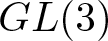
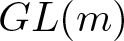 $GL(m)$, studying their SCS helps derive asymptotic formulas or non-trivial upper bounds for the integral moments of these
 $L$-functions; additionally, based on their SCS, one can obtain subconvexity bounds for the corresponding
 $L$-function. In particular, when
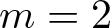 $m=2$, it can be viewed as the automorphic analogue of the divisor problem. When
 $a_1(n)=\mu(n)=a_2(n)$, the sum corresponds to the Chowla conjecture. In the following, we focus on the relationship between the divisor problem and higher integral moments of the Riemann
 $\zeta$-function. Let
 \begin{equation*}
Z(N,d_k,d_l)=\sum_{n\leq N}d_k(n)d_l(n+h),\quad h\neq 0,
\end{equation*}
where  $d_k(n)=\sum_{n_1\ldots n_k=n}1$,
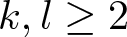 $k,l\geq2$. When
 $k=2$, this is the familiar divisor function. Let
 \begin{equation*}
M_{k}(T,\zeta)=\int_{0}^{T}\left\vert\zeta\left(\frac{1}{2}+it\right)\right\vert^{2k}\text{d}t.
\end{equation*}
Studying 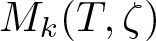 $M_{k}(T,\zeta)$, via the approximate functional equation of the Riemann
 $\zeta$-function, transform the problem into estimating
 $Z(N,d_k,d_k)$. For low-power moments such as
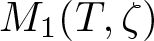 $M_1(T,\zeta)$ and
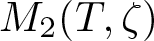 $M_2(T,\zeta)$, good upper bounds are available. In fact, we have the corresponding asymptotic formulas
 \begin{equation*}
M_1(T,\zeta)\asymp T\log T,
\end{equation*}
and
 \begin{equation*}
M_2(T,\zeta)\asymp T\log^4 T.
\end{equation*}
For these results, readers can refer to the papers of Atkinson [Reference Atkinson1] and Heath-Brown [Reference Heath-Brown5], respectively. In fact, it is conjectured that for any positive integer  $k$, there holds
 \begin{equation*}
M_k(T,\zeta)\asymp T\log^{k^2}T.
\end{equation*}
Unfortunately, even for  $k=3$, such a result remains unproven. For Riemman
 $\zeta$-function, using Heath-Brown’s [Reference Heath-Brown4] result
 \begin{equation*}
\int_{1}^{T}\vert\zeta(1/2+it)\vert^{12}\text{d}t\ll T^{2+\varepsilon}
\end{equation*}
and the upper bound of 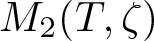 $M_2(T,\zeta)$, combined with Hölder inequality, yields
 $M_3(T,\zeta)\ll T^{5/4+\varepsilon}$. However, correspondingly, for the
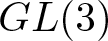 $GL(3)$
 $L$-functions, we lack techniques analogous to those for the
 $\zeta$-function to obtain the upper bound of its integral moments. In 2022, Pal [Reference Pal10] first obtained a non-trivial estimate for the second moment of the
 $L$-function associated with a cusp form
 $F$ for
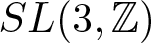 $SL(3,\mathbb{Z})$, namely
 \begin{equation*}
\int_{T}^{2T}\vert L(1/2+it,F)\vert^{2}\text{d}t\ll T^{3/2-3/32+\varepsilon}.
\end{equation*}
In 2024, Dasgupta–Leung–Young [Reference Dasgupta2] revisited this problem and improved Pal’s result:
 \begin{equation*}
\int_{T}^{2T}\vert L(1/2+it,F)\vert^{2}\text{d}t\ll T^{3/2-1/6+\varepsilon}.
\end{equation*}
Analyzing their methods shows that this problem relies on non-trivial estimates of the corresponding SCS, thereby yielding a non-trivial upper bound for the integral. Denote by 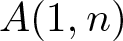 $A(1,n)$ the Fourier coefficients of
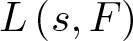 $L\left(s,F\right)$. In fact, in their paper [Reference Dasgupta2], they provided a result for the corresponding SCS:
 \begin{equation*}
\sum_{n,h}A(1,n)A(1,n+h)W\left(\frac{n}{N},\frac{h}{H}\right)\ll\frac{N^{4/3+\varepsilon}}{H^{1/3}}+\sqrt{H}N^{1+\varepsilon}, \qquad 1\leq H\leq N^{1/2-\varepsilon}.
\end{equation*}
This SCS is often referred to as the  $GL(3)\times GL(3)$ result. Generally, one can consider SCSs on arbitrary
 $GL(m)\times GL(n)$, where
 $m$ and
 $n$ are not necessarily equal. Many scholars have studied this series of problems and obtained non-trivial results. For example, let
 $\lambda_f(n)$ be the Fourier coefficients of a
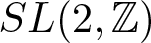 $SL(2,\mathbb{Z})$ Hecke–Maass or Hecke holomorphic cusp form
 $f$. Using the Jutila circle method, Munshi [Reference Munshi7] proved the following result
 \begin{equation*}
\sum_{n=1}^{\infty}A(1,n)\lambda_f(n+h)V\left(\frac{n}{N}\right)\ll N^{1-1/26+\varepsilon}.
\end{equation*}
Building on Munshi’s work [Reference Munshi7], Xi [Reference Xi13] considered this problem using a variant of the delta-method and further improved Munshi’s result:
 \begin{equation*}
\sum_{n=1}^{\infty}A(1,n)\lambda_f(n+h)V\left(\frac{n}{N}\right)\ll N^{1-1/22+\varepsilon}.
\end{equation*}
Later, inspired by a remark in Munshi [Reference Munshi7], Sun [Reference Sun11] studied a variant of the above problem. In fact, for  $r^{5/2}X^{1/4+7\delta/2}\leq H\leq X$,
 $\delta \gt 0$, Sun established the following result:
 \begin{equation*}
\frac{1}{H}\sum_{h=1}^{\infty}V\left(\frac{h}{H}\right)\sum_{n=1}^{\infty}\lambda(n)\lambda_f(rn+h)W\left(\frac{n}{X}\right)\ll X^{1-\delta+\varepsilon},
\end{equation*}
where 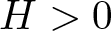 $H \gt 0$,
 $W,V$ are smooth compactly supported functions,
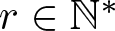 $r\in\mathbb{N}^{*}$ and
 $\lambda(n)$ denotes either
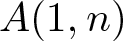 $A(1,n)$ or
 $d_3(n)$. There are numerous known results and open problems regarding SCSs on
 $GL(m)\times GL(n)$, which we will not enumerate here; interested readers can refer to the literature we have provided for further details. Inspired by the above results, we consider a special type of SCS on
 $GL(3)\times GL(3)$. Let
 $H_k^*$ be the set of all normalized primitive holomorphic cusp forms of even integral weight
 $k\geq2$ for the full modular group
 $\Gamma=SL(2,\mathbb{Z})$. Denote by
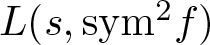
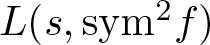 $L(s,\text{sym}^2f)$ the symmetric square
 $L$-function associated with
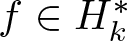 $f\in H_k^*$, and let
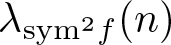
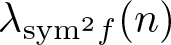 $\lambda_{\text{sym}^2f}(n)$ denote its
 $n$-th Fourier coefficient. We consider the following sum:
 \begin{equation*}
\sum_{h\leq H}\sum_{N \lt n\leq 2N}\lambda_{\textrm{sym}^{2}f}(n)\lambda_{\textrm{sym}^{2}f}(n+h).
\end{equation*}
Our research method differs from the circle method. Based on the work of Dasgupta–Leung–Young [Reference Dasgupta2], i.e., utilizing the second moment of the 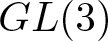 $GL(3)$
 $L$-function, we obtain the following result.
Theorem 1.1. For any  $\varepsilon \gt 0$,
 $1\leq H\leq N$, we have
 \begin{equation*}
\sum_{h\leq H}\sum_{N \lt n\leq 2N}\lambda_{\textrm{sym}^{2}f}(n)\lambda_{\textrm{sym}^{2}f}(n+h)\ll N^{\frac{8}{7}+\varepsilon}H^{\frac{3}{7}}.
\end{equation*}
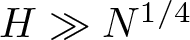
Remark 1. Our result is non-trivial when 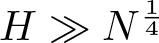 $H\gg N^{\frac{1}{4}}$. It is worth mentioning that our result covers the range
 $1\leq H\leq N$. Compared with the result of Dasgupta–Leung–Young, we supplement the result for
 $N^{1/2}\leq H\leq N$.
Notation. Throughout this paper, the letter  $\varepsilon$ represents a sufficiently small positive constant, not necessarily the same at each occurrence. The constants, both explicit and implicit, in Vinogradov symbols may depend on
 $f$ and
 $\varepsilon$.
2. Preliminary lemmas
In this section, we introduce some background on the analytic properties of automorphic  $L$-functions and give some useful lemmas which play important roles in the proof of the main result.
Let 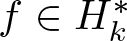 $f\in H_{k}^{*}$ be a Hecke eigenform of even integral weight
 $k$ for the full modular group
 $\Gamma=SL(2,\mathbb{Z})$, and let
 $\lambda_{f}(n)$ denote its
 $n$-th normalized Fourier coefficient. The Hecke
 $L$-function
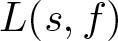 $L(s,f)$ associated to
 $f$ is defined as
 \begin{align*}
L(s,f)&=\sum_{n=1}^{\infty}\frac{\lambda_{f}(n)}{n^{s}}, \quad \Re(s) \gt 1,
\end{align*}
where the coefficients 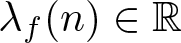 $\lambda_{f}(n)\in\mathbb{R}$ are eigenvalues of Hecke operators
 $T_n$ such that
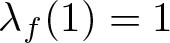 $\lambda_f(1)=1$. It is well known that
 $\lambda_f(n)$ is real and satisfies the multiplicative property
 \begin{equation*}
\lambda_{f}(m)\lambda_f(n)=\sum_{d\mid(m,n)}\lambda_f\left(\frac{mn}{d^2}\right),
\end{equation*}
where  $m, n$ are positive integers. For the holomorphic cusp form
 $f$, in 1974, Deligne [Reference Deligne3] proved the Ramanujan–Petersson conjecture
 \begin{equation*}
\vert\lambda_f(n)\vert\leq d(n).
\end{equation*}
And additionally, the above relation is equivalent to the fact that there exist 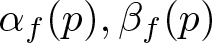 $\alpha_{f}(p),\beta_{f}(p)$ satisfying
 \begin{equation*}
\alpha(p)+\beta(p)=\lambda_f(p), \vert\alpha(p)\vert=\vert\beta(p)\vert=1=\alpha(p)\beta(p).
\end{equation*}
More generally, for all positive integers  $l\geq1$, one has
 \begin{equation*}
\lambda_f(p^l)=\alpha_f^l(p)+\alpha_f^{l-1}(p)\beta_f(p)+\cdots+\alpha_{f}(p)\beta_{f}^{l-1}(p)+\beta_{f}^{l}(p).
\end{equation*}
Then 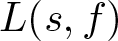 $L(s,f)$ can be written as Euler product
 \begin{equation*}
L(s,f)=\prod_{p}\left(1-\frac{\alpha_{f}(p)}{p^{s}}\right)^{-1}\left(1-\frac{\beta_{f}(p)}{p^{s}}\right)^{-1}.
\end{equation*}
Furthermore, we can represent it as
 \begin{equation*}
L(s,f)=\prod_{p}(1-\lambda_{f}(p)p^{-s}+p^{-2s})^{-1}.
\end{equation*}
The  $j$th symmetric power
 $L$-function associated with
 $f$ is defined as
 \begin{equation*}
L(s,\text{sym}^{j}f)=\prod_{p}\prod_{m=0}^{j}(1-\alpha_{f}^{j-m}(p)\beta_{f}^{m}(p)p^{-s})^{-1}, \Re(s) \gt 1.
\end{equation*}
We may expand it into a Dirichlet series
 \begin{align*}
L(s,\text{sym}^{j}f)&=\sum_{n=1}^{\infty}\frac{\lambda_{\text{sym}^{j}f}(n)}{n^{s}} \notag \\
&=\prod_{p}\left(1+\frac{\lambda_{\text{sym}^{j}f}(p)}{p^{s}}+\cdots+\frac{\lambda_{\text{sym}^{j}f}(p^{k})}{p^{ks}}+\cdots\right), \Re(s) \gt 1.
\end{align*}
Now we know that 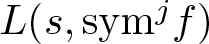 $L(s,\text{sym}^jf)$ is automorphic for all
 $j\geq1$ due to the recent works of Newton and Thorne [Reference Newton and Thorne8, Reference Newton and Thorne9]. Specifically, we focus on the symmetric square
 $L$-function, with
 $j=2$. And we have
 \begin{equation*}
L(s,\text{sym}^{2}f)=\zeta(2s)\sum_{n=1}^{\infty}\frac{\lambda_f(n^2)}{n^s}:=\sum_{n=1}^{\infty}\frac{\lambda_{\text{sym}^2f}(n)}{n^s},\qquad\Re s \gt 1,
\end{equation*}
where
 \begin{equation*}
\lambda_{\text{sym}^2f}(n)=\sum_{ml^2=n}\lambda_f(m^2).
\end{equation*}
Therefore, based on Deligne’s result, we also know that
 \begin{equation*}
\vert\lambda_{\text{sym}^2f}(n)\vert\ll d(n).
\end{equation*}
It is well-known that this  $L$-function extends to an entire function and satisfies a functional equation. Indeed, the completed
 $L$-function
 \begin{equation*}
\Lambda(s,\text{sym}^2f)=\gamma(s,\text{sym}^2f)L(s,\text{sym}^2f)
\end{equation*}
satisfies the functional equation
 \begin{equation*}
\Lambda(s,\text{sym}^2f)=\Lambda(1-s,\text{sym}^2f),
\end{equation*}
where 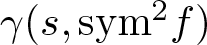 $\gamma(s,\text{sym}^2f)$ is given by
 \begin{equation*}
\gamma(s,\text{sym}^2f)=\pi^{-3s/2}\Gamma\left(\frac{s+1}{2}\right)\Gamma\left(\frac{s+k-1}{2}\right)\Gamma\left(\frac{s+k}{2}\right),
\end{equation*}
for 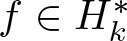 $f\in H_{k}^*$. Next, we give some useful lemmas.
Lemma 2.1. (Perron formula)
Let  $f(s)=\sum_{n=1}^{\infty}a_nn^{-s}$ be a Dirichlet series, and suppose that
 $\sum_{n=1}^{\infty}\vert a_nn^{-\sigma} \lt \infty$ for all
 $\sigma \gt 1$. Further assume that
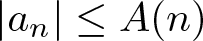 $\vert a_n\vert\leq A(n)$, where
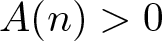 $A(n) \gt 0$ is a monotonically increasing function of
 $n$, and
 \begin{equation*}
\sum_{n=1}^{\infty}\vert a_n\vert n^{-\sigma}=O((\sigma-1)^{-\alpha})
\end{equation*}
as  $\sigma\to1+0$, where
 $\alpha$ is a positive constant. Then the following formula holds for any
 $b_0\geq b \gt 1$,
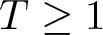 $T\geq1$,
 $x=N+1/2$:
 \begin{equation*}
\Phi(x)=\sum_{n\leq x}a_n=\frac{1}{2\pi i}\int_{b-iT}^{b+iT}f(s)\frac{x^s}{s}\text{d}s+O\left(\frac{x^b}{T(b-1)^{\alpha}}\right)+O\left(\frac{xA(2x)\log x}{T}\right),
\end{equation*}
where the constant in the big- $O$ depends only on
 $b_0$.
Proof. This result appears as Theorem 1 in Section 5 of the appendix of [Reference Karatsuba and Voronin12].
Lemma 2.2. Let  $F$ be a Hecke cusp form for
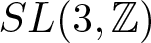 $SL(3,\mathbb{Z})$, and let
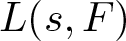 $L(s,F)$ denote the
 $L$-function associated to it. Let
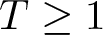 $T\geq 1$, then for any
 $\varepsilon \gt 0$,
 \begin{equation*}
\int_{-T}^{T}\vert L(\frac{1}{2}+it,F)\vert^{2}\textrm{d}t\ll T^{\frac{4}{3}+\varepsilon}.
\end{equation*}
Furthermore, let 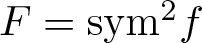 $F=\textrm{sym}^2f$, where
 $f$ is a fixed
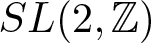 $SL(2,\mathbb{Z})$ Hecke cusp form. Then
 \begin{equation*}
L(\frac{1}{2}+it,F)\ll(1+\vert t\vert)^{\frac{4}{7}+\varepsilon}.
\end{equation*}
Proof. The first result is from Theorem 1.1 of [Reference Dasgupta2]. The second result above is obtained by applying the second moment of  $L\left(\frac{1}{2}+it,\text{sym}^2f\right)$ to the work of Lin, Nunes, and Qi [Reference Lin, Nunes and Qi6]. For more details on the second result, see Section 3.2 of Pal [Reference Pal10], the proof of Corollary 1.4 in Section 7 of [Reference Dasgupta2], and the work of Lin, Nunes, and Qi [Reference Lin, Nunes and Qi6].
3. Proof of Theorem 1.1
In this section, we prove Theorem 1.1 step by step. First, we separate the sum and write
 \begin{align}
&\sum_{h\leq H}\sum_{N \lt n\leq 2N}\lambda_{\text{sym}^{2}f}(n)\lambda_{\text{sym}^{2}f}(n+h)\cr
&=\sum_{N \lt n\leq 2N}\lambda_{\text{sym}^2f}(n)\sum_{h\leq H}\lambda_{\text{sym}^{2}f}(n+h)\cr
&=\sum_{N \lt n\leq 2N}\lambda_{\text{sym}^{2}f}(n)\left(\sum_{m\leq n+H}\lambda_{\text{sym}^{2}f}(m)-\sum_{m\leq n}\lambda_{\text{sym}^{2}f}(m)\right).
\end{align}
Next, we focus on
 \begin{equation*}
\sum_{h\leq H}\lambda_{\text{sym}^{2}f}(n+h)=\sum_{m\leq n+H}\lambda_{\text{sym}^{2}f}(m)-\sum_{m\leq n}\lambda_{\text{sym}^{2}f}(m).
\end{equation*}
Recall that  $\lambda_{\text{sym}^2f}(n)\ll d(n)\ll n^{\varepsilon}$ for any
 $\varepsilon \gt 0$, and then we can apply Perron formula to both sums appearing in the right-hand side above, we obtain
 \begin{align*}
\sum_{h\leq H}\lambda_{\text{sym}^{2}f}(n+h)=\frac{1}{2\pi i}\int_{1+\varepsilon-iT}^{1+\varepsilon+iT}L(s,\text{sym}^2f)\big((n+H)^s-n^s\big)\frac{\text{d}s}{s}+O\left(\frac{N^{1+\varepsilon}}{T}\right).
\end{align*}
Here  $2\leq T\leq N$ is a parameter to be chosen later. Shifting the integral contour to
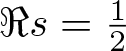 $\Re s=\frac{1}{2}$, and notice that there is no pole in the rectangle area, thus we apply the Cauchy residue theorem to get
 \begin{equation*}
\sum_{h\leq H}\lambda_{\text{sym}^{2}f}(n+h)=\frac{1}{2\pi i}\int_{\frac{1}{2}-iT}^{\frac{1}{2}+iT}L(s,\text{sym}^2f)\big((n+H)^s-n^s\big)\frac{\text{d}s}{s}+I_2+I_3+O\left(\frac{N^{1+\varepsilon}}{T}\right),
\end{equation*}
where
 \begin{equation*}
I_2=\int_{\frac{1}{2}+iT}^{1+\varepsilon+iT}L(s,\text{sym}^2f)\big((n+H)^s-n^s\big)\frac{\text{d}s}{s},
\end{equation*}
and
 \begin{equation*}
I_{3}=\int_{1+\varepsilon-iT}^{\frac{1}{2}-iT}L(s,\text{sym}^2f)\big((n+H)^s-n^s\big)\frac{\text{d}s}{s}
\end{equation*}
Then we based on the subconvexity bound for 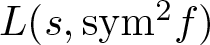 $L(s,\text{sym}^2f)$, namely the second result of Lemma 2.2, we have
 \begin{align*}
I_2+I_3\ll&\int_{1/2}^{1+\varepsilon}\vert L(\sigma+iT,\text{sym}^2f)\vert\frac{\vert(n+H)^{\sigma+iT}-n^{\sigma+iT}\vert}{\vert\sigma+iT\vert}\text{d}\sigma\\
\ll&\int_{1/2}^{1+\varepsilon}\vert L(\sigma+iT,\text{sym}^2f)\vert\frac{N^{\sigma}}{T}\text{d}\sigma\\
\ll&\max_{1/2\leq\sigma\leq1+\varepsilon}N^{\sigma}T^{\frac{8}{7}(1-\sigma)-1}\\
\ll&\frac{N^{1+\varepsilon}}{T}+N^{\frac{1}{2}}T^{-\frac{3}{7}}.
\end{align*}
If we let  $N^{\frac{1}{2}}T^{-\frac{3}{7}}\ll\frac{N^{1+\varepsilon}}{T}$, then
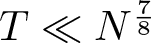 $T\ll N^{\frac{7}{8}}$. Therefore, we have
 \begin{equation*}
\sum_{h\leq H}\lambda_{\text{sym}^{2}f}(n+h)=\frac{1}{2\pi i}\int_{\frac{1}{2}-iT}^{\frac{1}{2}+iT}L(s,\text{sym}^2f)\big((n+H)^s-n^s\big)\frac{\text{d}s}{s}+O\left(\frac{N^{1+\varepsilon}}{T}\right).
\end{equation*}
Then we insert it into (3.1), we get
 \begin{align}
&\sum_{N \lt n\leq2N}\lambda_{\text{sym}^2f}(n)\sum_{1\leq h\leq H}\lambda_{\text{sym}^2f}(n+h)\cr
&=\frac{1}{2\pi i}\sum_{N \lt n\leq 2N}\lambda_{\text{sym}^2f}(n)\left(\int_{\frac{1}{2}-iT}^{\frac{1}{2}+iT}L(s,\text{sym}^2f)\big((n+H)^s-n^s\big)\frac{\text{d}s}{s}+O\left(\frac{N^{1+\varepsilon}}{T}\right)\right)\cr
&=\frac{1}{2\pi i}\int_{\frac{1}{2}-iT}^{\frac{1}{2}+iT}L(s,\text{sym}^2f)\frac{1}{s}\sum_{N \lt n\leq 2N}\lambda_{\text{sym}^2f}(n)n^{s}\Big(\left(1+\frac{H}{n}\right)^s-1\Big)\text{d}s\cr
& \quad +O\left(\frac{N^{2+\varepsilon}}{T}\right)
\end{align}
For the inner sum  $\sum_{N \lt n\leq 2N}\lambda_{\text{sym}^2f}(n)n^{s}\Big(\left(1+\frac{H}{n}\right)^s-1\Big)$, we can apply Abel’s partial summation formula providing
 \begin{align*}
&\sum_{N \lt n\leq 2N}\lambda_{\text{sym}^2f}(n)n^{s}\Big(\left(1+\frac{H}{n}\right)^s-1\Big)\\
&=\left(\left(1+\frac{H}{2N}\right)^s-1\right)\sum_{N \lt n\leq2N}\lambda_{\text{sym}^2f}(n)n^s\\
&\quad +sH\int_{N}^{2N}\sum_{N \lt n\leq x}\lambda_{\text{sym}^2f}(n)n^s\left(1+\frac{H}{x}\right)^{s-1}\frac{\text{d}x}{x^2}\\
&=\sum_{N \lt n\leq 2N}\lambda_{\text{sym}^2f}(n)n^{s}\frac{s}{2N}\int_{0}^{H}\left(1+\frac{u}{2N}\right)^{s-1}\text{d}u\\
&\quad sH\int_{N}^{2N}\sum_{N \lt n\leq x}\lambda_{\text{sym}^2f}(n)n^{s}\left(1+\frac{H}{x}\right)^{s-1}\frac{\text{d}x}{x^2}.
\end{align*}
Inserting into (3.2), we have
 \begin{align*}
\sum_{N \lt n\leq2N}&\lambda_{\text{sym}^2f}(n)\sum_{1\leq h\leq H}\lambda_{\text{sym}^2f}(n+h)\\
=&\frac{1}{2\pi i}\int_{\frac{1}{2}-iT}^{\frac{1}{2}+iT}L(s,\text{sym}^2f)\frac{1}{s}\Bigg(\sum_{N \lt n\leq 2N}\lambda_{\text{sym}^2f}(n)n^{s}\frac{s}{2N}\int_{0}^{H}\left(1+\frac{u}{2N}\right)^{s-1}\text{d}u\\
&+sH\int_{N}^{2N}\sum_{N \lt n\leq x}\lambda_{\text{sym}^2f}(n)n^{s}\left(1+\frac{H}{x}\right)^{s-1}\frac{\text{d}x}{x^2}\Bigg)\text{d}s+O\left(\frac{N^{2+\varepsilon}}{T}\right)
\end{align*}
 \begin{align*}
=&\frac{1}{4\pi iN}\int_{\frac{1}{2}-iT}^{\frac{1}{2}+iT}\int_{0}^{H}L(s,\text{sym}^2f)\left(1+\frac{u}{2N}\right)^{s-1}\left(\sum_{N \lt n\leq 2N}\lambda_{\text{sym}^2f}(n)n^{s}\right)\text{d}u\text{d}s\\
&+\frac{H}{2\pi i}\int_{\frac{1}{2}-iT}^{\frac{1}{2}+iT}\int_{N}^{2N}L(s,\text{sym}^2f)\left(1+\frac{H}{x}\right)^{s-1}\left(\sum_{N \lt n\leq 2N}\lambda_{\text{sym}^2f}(n)n^{s}\right)\frac{\text{d}x}{x^2}\text{d}s\\
&\quad +O\left(\frac{N^{2+\varepsilon}}{T}\right)
\end{align*}
Denote
 \begin{align*}
S_1=\frac{1}{4\pi iN}\int_{\frac{1}{2}-iT}^{\frac{1}{2}+iT}\int_{0}^{H}L(s,\text{sym}^2f)\left(1+\frac{u}{2N}\right)^{s-1}\left(\sum_{N \lt n\leq 2N}\lambda_{\text{sym}^2f}(n)n^{s}\right)\text{d}u\text{d}s,
\end{align*}
and
 \begin{equation*}
S_2=\frac{H}{2\pi i}\int_{\frac{1}{2}-iT}^{\frac{1}{2}+iT}\int_{N}^{2N}L(s,\text{sym}^2f)\left(1+\frac{H}{x}\right)^{s-1}\left(\sum_{N \lt n\leq 2N}\lambda_{\text{sym}^2f}(n)n^{s}\right)\frac{\text{d}x}{x^2}\text{d}s.
\end{equation*}
we now consider  $S_1$. For
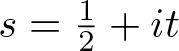 $s=\frac{1}{2}+it$, along with the follow trivial bound
 \begin{equation*}
\int_{0}^{H}\left(1+\frac{u}{2N}\right)^{s-1}\text{d}u\ll H,
\end{equation*}
then
 \begin{align*}
S_1&\ll\frac{H}{N}\int_{-T}^{T}\left\vert L(\frac{1}{2}+it,\text{sym}^2f)\sum_{N \lt n\leq 2N}\lambda_{\text{sym}^2f}(n)n^{\frac{1}{2}+it}\right\vert\text{d}t\\
&\ll\frac{H}{N}\sup_{N\leq x\leq 2N}\int_{-T}^{T}\left\vert L(\frac{1}{2}+it,\text{sym}^2f)\sum_{N \lt n\leq x}\lambda_{\text{sym}^2f}(n)n^{\frac{1}{2}+it}\right\vert\text{d}t
\end{align*}
Similarly, for  $S_2$, we have
 \begin{equation*}
S_2\ll \frac{H}{N}\sup_{N\leq x\leq 2N}\int_{-T}^{T}\left\vert L(\frac{1}{2}+it,\text{sym}^2f)\sum_{N \lt n\leq x}\lambda_{\text{sym}^2f}(n)n^{\frac{1}{2}+it}\right\vert\text{d}t.
\end{equation*}
Then it turns to estimate  $\sum_{N \lt n\leq x}\lambda_{\text{sym}^2f}(n)n^{\frac{1}{2}+it}$. Notice that
 $\lambda_{\text{sym}^2f}(n)n^{\frac{1}{2}+it}\ll n^{\frac{1}{2}+\varepsilon}$, by Perron formula, we obtain
 \begin{align*}
\sum_{N \lt n\leq x}\lambda_{\text{sym}^2f}(n)n^{\frac{1}{2}+it}&=\sum_{n\leq x}\lambda_{\text{sym}^2f}(n)n^{\frac{1}{2}+it}-\sum_{n\leq N}\lambda_{\text{sym}^2f}(n)n^{\frac{1}{2}+it}\\
&=\frac{1}{2\pi i}\int_{\frac{3}{2}+\varepsilon-iT_1}^{\frac{3}{2}+\varepsilon+iT_1}L(w-\frac{1}{2}-it,\text{sym}^2f)(x^w-N^w)\frac{\text{d}w}{w}\\
&\quad +O\left(\frac{N^{\frac{3}{2}+\varepsilon}}{T_1}\right),
\end{align*}
where  $2 \lt T_1\leq N$ is a parameter to be chosen later. Analogously, we shift the contour of integration to the line
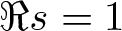 $\Re s=1$. In this region, the integrand has no poles, by the Cauchy residue theorem, then
 \begin{align*}
\sum_{N \lt n\leq x}\lambda_{\text{sym}^2f}(n)n^{\frac{1}{2}+it}&=\frac{1}{2\pi i}\int_{1-iT_1}^{1+iT_1}L(w-\frac{1}{2}-it,\text{sym}^2f)(x^w-N^w)\frac{\text{d}w}{w}+J_2\\
&\quad +J_3+O\left(\frac{N^{\frac{3}{2}+\varepsilon}}{T_1}\right).
\end{align*}
Here
 \begin{equation*}
J_2=\frac{1}{2\pi i}\int_{\frac{3}{2}+\varepsilon-iT_1}^{1-iT_1}L(w-\frac{1}{2}-it,\text{sym}^2f)(x^w-N^w)\frac{\text{d}w}{w},
\end{equation*}
and
 \begin{equation*}
J_3=\frac{1}{2\pi i}\int_{1+iT_1}^{\frac{3}{2}+\varepsilon+iT_1}L(w-\frac{1}{2}-it,\text{sym}^2f)(x^w-N^w)\frac{\text{d}w}{w}.
\end{equation*}
By Lemma 2.2, we have
 \begin{align*}
J_2+J_3&\ll \int_{1}^{\frac{3}{2}+\varepsilon}\Big\vert L(\sigma-\frac{1}{2}+i(T_1-t),\text{sym}^2f)\Big\vert N^{\sigma}T_1^{-1}\text{d}\sigma\\
&\ll\max_{1\leq\sigma\leq\frac{3}{2}+\varepsilon}(T_1+T)^{\frac{8}{7}(\frac{3}{2}-\sigma)}N^{\sigma}T_1^{-1}\\
&\ll N^{\frac{3}{2}}T_1^{-1}+NT_1^{-\frac{3}{7}}\left(1+\frac{T}{T_1}\right)^{\frac{4}{7}}.
\end{align*}
Let  $NT_1^{-\frac{3}{7}}\left(1+\frac{T}{T_1}\right)^{\frac{4}{7}}\ll N^{\frac{3}{2}}T_1^{-1}$, and recall that
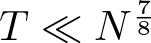 $T\ll N^{\frac{7}{8}}$, we can easily obtain
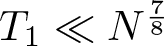 $T_1\ll N^{\frac{7}{8}}$. Without loss of generality, we may set
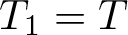 $T_1=T$ in accordance with the specified range of
 $T$. Hence we have
 \begin{equation*}
J_2+J_3\ll N^{\frac{3}{2}}T^{-1}.
\end{equation*}
Substituting this back into the above equation, namely
 \begin{align}\sum_{N \lt n\leq x}&\lambda_{\text{sym}^2f}(n)n^{\frac{1}{2}+it}\cr
&=\frac{1}{2\pi i}\int_{1-iT}^{1+iT}L(w-\frac{1}{2}-it,\text{sym}^2f)(x^w-N^w)\frac{\text{d}w}{w}+O\left(\frac{N^{\frac{3}{2}+\varepsilon}}{T}\right).\end{align}
Note that the bound of  $S_1$ and
 $S_2$, we have
 \begin{align}S_1+S_2\ll&\frac{H}{N}\sup_{N\leq x\leq 2N}\int_{-T}^{T}\Bigg\vert L(\frac{1}{2}+it,\text{sym}^2f)\Bigg\vert\cr
&\Bigg\vert\Bigg(\int_{1-iT}^{1+iT}L(w-\frac{1}{2}-it,\text{sym}^2f)(x^w-N^w)\frac{\text{d}w}{w}+O\left(\frac{N^{\frac{3}{2}+\varepsilon}}{T}\right)\Bigg)\Bigg\vert\text{d}t\cr
\ll&\frac{H}{N}\int_{-T}^{T}\int_{-T}^{T}\Bigg\vert L(\frac{1}{2}+it,\text{sym}^2f)L(\frac{1}{2}-it+iu,\text{sym}^{2}f)\Bigg\vert\frac{N}{T}\text{d}u\text{d}t\cr
&+O\left(\frac{HN^{\frac{1}{2}+\varepsilon}}{T}\int_{-T}^{T}\Bigg\vert L(\frac{1}{2}+it,\text{sym}^2f)\Bigg\vert\text{d}t\right).\end{align}
Denote
 \begin{equation*}
\mathcal{S}_1=\frac{H}{N}\int_{-T}^{T}\int_{-T}^{T}\Bigg\vert L(\frac{1}{2}+it,\text{sym}^2f)L(\frac{1}{2}-it+iu,\text{sym}^2f)\Bigg\vert\frac{N}{T}\text{d}u\text{d}t,
\end{equation*}
and
 \begin{equation*}
\mathcal{S}_2=O\left(\frac{HN^{\frac{1}{2}+\varepsilon}}{T}\int_{-T}^{T}\Bigg\vert L(\frac{1}{2}+it,\text{sym}^2f)\Bigg\vert\text{d}t\right).
\end{equation*}
We next consider  $\mathcal{S}_2$. By Cauchy inequality, along with the second moment of
 $L(\frac{1}{2}+it,\text{sym}^2f)$ in Lemma 2.2, we get
 \begin{align*}
\mathcal{S}_2&\ll\frac{HN^{\frac{1}{2}+\varepsilon}}{T}\Bigg(\int_{-T}^{T}\big\vert L(\frac{1}{2}+it,\text{sym}^{2}f)\big\vert^2\text{d}t\int_{-T}^{T}1^2\text{d}t\Bigg)^{1/2}\\
&\ll\frac{HN^{\frac{1}{2}+\varepsilon}}{T}T^{\frac{2}{3}+\frac{1}{2}}\\
&\ll HN^{\frac{1}{2}+\varepsilon}T^{\frac{1}{6}}.
\end{align*}
Similar to  $\mathcal{S}_2$, we have
 \begin{align*}
\mathcal{S}_1\ll&\frac{H}{T}\int_{-T}^{T}\Big(\int_{-T}^{T}\left\vert L\big(\frac{1}{2}+it,\text{sym}^{2}f\big)\right\vert^{2}\text{d}t\int_{-T}^{T}\left\vert L\big(\frac{1}{2}+iu-it,\text{sym}^2f\big)\right\vert^{2}\text{d}t\Big)^{\frac{1}{2}}\text{d}u\\
\ll&\frac{H}{T}\int_{-T}^{T}T^{\frac{4}{3}+\varepsilon}\text{d}u\\
\ll&HT^{\frac{4}{3}+\varepsilon}.
\end{align*}
Substituting into (3.4), we obtain
 \begin{align*}
S_1+S_2\ll HN^{\frac{1}{2}+\varepsilon}T^{\frac{1}{6}}+HT^{\frac{4}{3}+\varepsilon}.
\end{align*}
Combining with the upper bound of 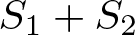 $S_1+S_2$, we know
 \begin{equation}
\sum_{N \lt n\leq2N}\lambda_{\text{sym}^2f}(n)\sum_{1\leq h\leq H}\lambda_{\text{sym}^2f}(n+h)\ll HN^{\frac{1}{2}+\varepsilon}T^{\frac{1}{6}}+HT^{\frac{4}{3}+\varepsilon}+\frac{N^{2+\varepsilon}}{T},
\end{equation}
where 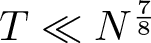 $T\ll N^{\frac{7}{8}}$. Notice that
 $HN^{\frac{1}{2}+\varepsilon}T^{\frac{1}{6}}\ll HT^{\frac{4}{3}+\varepsilon}$, providing by
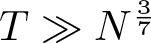 $T\gg N^{\frac{3}{7}}$. Then for
 $ N^{\frac{3}{7}}\ll T\ll N^{\frac{7}{8}}$,
 \begin{equation*}
\sum_{N \lt n\leq2N}\lambda_{\text{sym}^2f}(n)\sum_{1\leq h\leq H}\lambda_{\text{sym}^2f}(n+h)\ll HT^{\frac{4}{3}+\varepsilon}+\frac{N^{2+\varepsilon}}{T}.
\end{equation*}
Taking  $T=N^{\frac{6}{7}}H^{-\frac{3}{7}}$, such that
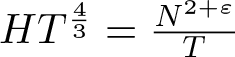 $HT^{\frac{4}{3}}=\frac{N^{2+\varepsilon}}{T}$, we have
 \begin{equation*}
\sum_{N \lt n\leq2N}\lambda_{\text{sym}^2f}(n)\sum_{1\leq h\leq H}\lambda_{\text{sym}^2f}(n+h)\ll N^{\frac{8}{7}+\varepsilon}H^{\frac{3}{7}}.
\end{equation*}
And notice the range of  $T$, namely
 $N^{\frac{3}{7}}\ll T=N^{\frac{6}{7}}H^{-\frac{3}{7}}\ll N^{\frac{7}{8}}$, we get
 $1\ll H\ll N$. This completes the proof.
Acknowledgements
The author would like to thank Prof. Hengcai Tang for his guidance and the referees for their comments and suggestions, which have strengthened the manuscript.
Funding
This research was supported by the Natural Science Foundation of Henan Youth Foundation No. 222300420034 and the National Natural Science Foundation of China No. 11871193.
Conflicts of interest
The author declares that there is no conflict of interest regarding the publication of this article.