INTRODUCTION
Protecting material culture in countries with rich historical backgrounds such as Greece is neither an abstract idea nor a far-fetched pursuit. Rather, it is a daily necessity, a constant task demanding both ample human and material resources and a reliable basis of cooperation between different agents of the public administration. Footnote 1 Such protection includes, among other incumbent activities of the state, Footnote 2 the “prevention of illegal excavations, theft, and illegal export,” an obligation that comes as no surprise since several international organizations have determined the illicit traffic of cultural goods to be the most dangerous risk against the effort to protect the cultural heritage of humanity. Furthermore, the illegal traffic of cultural goods is considered to be one of the most serious areas of crime on a transnational and international level. Footnote 3 Partly because of recent technological advances, Footnote 4 the problem has become even more intense because of the adoption of new and more sophisticated forms and activities. Footnote 5 This is the reason why both states and international organizations have been trying to confront it by establishing new instruments and adopting practical, preventive, and suppressive measures. Footnote 6
The Archaeological Service of the Hellenic Ministry of Culture and Sports, Footnote 7 which is mainly competent for the protection of Greek cultural heritage, is responsible for actively confronting the problems arising from the illicit traffic of cultural goods by following these three levels in its framework of actions:
-
• law enforcement on a basis of effective cooperation with the police and the judicial authorities;
-
• prevention through raising public awareness and establishing international cooperation networks; and
-
• strict monitoring of the legal antiquities trade (using detailed lists, export licenses, and so on). Footnote 8
LAW ENFORCEMENT
Clandestine Excavations
In 2009, the Department of Archaeological Service was upgraded to one of the General Directorates of the Ministry of Culture and Sports with the expectation that it would fulfill its obligations more successfully, including the registration of clandestine excavations and cases of vandalism on monuments and archaeological sites. Footnote 9 The standard procedure followed in cases of illicit excavations is for the regional services of the Hellenic Ministry of Culture and Sports (called Ephorates) to immediately report such cases (with the necessary documentation attached) to the General Directorate of Antiquities and Cultural Heritage (General Directorate). Simultaneously, the Ephorates should exercise criminal procedures through the Hellenic police against (any, even if yet unknown) criminals. Footnote 10 The General Directorate cooperates then with the competent law enforcement authorities, informing them on each reported case and requesting any further action, such as the provision of reinforcement for the supervision of the looted sites.
Two distinguishing characteristics in Greece should be taken into consideration regarding the protection of cultural heritage from looting: the long historical background of human presence and activity in the Greek territory and the numerous monuments and archaeological sites in the country, a number of which are located at isolated and hard to be guarded areas. Footnote 11 Indeed, the preservation of known archaeological sites in the country is difficult since it demands thousands of guards. Moreover, there are numerous archaeological sites that are yet to be excavated, and even some yet unknown by the authorities that cannot be guarded and could easily become the target of illicit excavation.
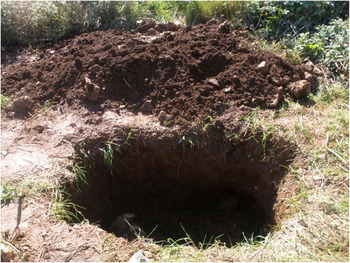
An economic recession that has been extremely severe during the last seven years, on the one hand, Footnote 12 and the ongoing demand throughout the art market for ancient artifacts, which still provide a secure investment and, at the same time, a feeling of prestige, on the other hand, Footnote 13 are the main reasons why looting and clandestine excavations are still taking place in Greece (Figure 1). After all, the illegal trade of antiquities is a criminal activity highly ranked in international terms, based on depredation and fraud at every level. Footnote 14 Of course, the idea that “demand will find its supply licit or not” cannot be accepted under any circumstance Footnote 15 since the collector’s needs lead to the damage of monuments and sites Footnote 16 and to the disturbance of archaeological remains, especially because of clandestine excavations. Footnote 17
Clandestine Excavation. ©Hellenic Ministry of Cultures and Sports.

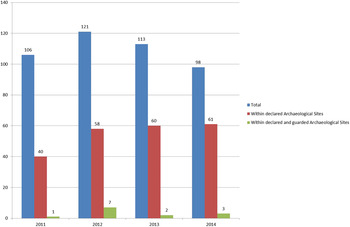
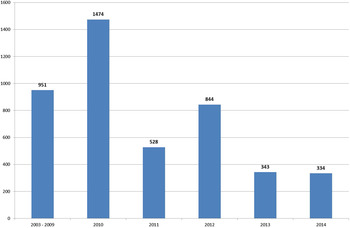
There has been a great deal of progress against the unethical and illicit traffic of cultural heritage, demonstrated by the fact that cases of looting, since being registered by the Hellenic Ministry of Culture and Sports, seem to have been reduced, and the total amount of damage by pillaging has also been reported to have declined leading up to 2014 (Figure 2). Fortunately, it also seems that many of the looting attempts are ending up unsuccessful, including those conducted by many Greek citizens, who, even before the economic crisis, have been trying to find lost treasure, supposed to have been stashed in the Greek soil by the Ottomans, the Nazis, or the partisans.
Recorded Illegal Excavations per Year, 2011–14.

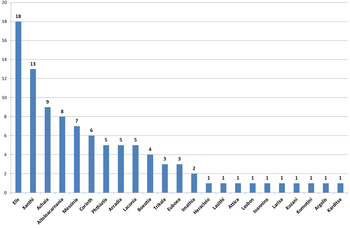
Another important factor is that the same geographical areas are being targeted more or less by the looters. Thus, the looters seem to be taking advantage of their thorough knowledge of the archaeological sites, the monuments and their surroundings, and the landscape of specific areas of the Greek territory. Xanthi, at Thrace (in northeastern Greece), Elis, and Aitoloakarnania in the western part of the country seem to be facing major looting problems, while Corinth and Achaia in the northwest Peloponnese and Phthiotis in the center of the Greek mainland are also suffering greatly from looting (Figure 3). It seems as though the words of a notorious antique dealer reflect the truth: “I cannot stop people digging the fields in Northern Greece.” Footnote 18
Recorded Illegal Excavations per Region, 2014.

Thefts
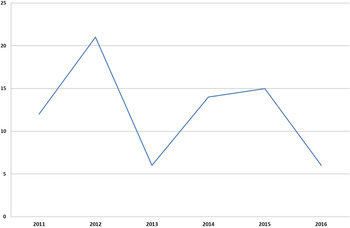
Since 2011, more than 70 cases of thefts of cultural objects have taken place in Greece. Footnote 19 This number increased in 2012, while in 2013 and 2016 there was an impressive decrease (Figure 4). A number of these incidents took place in orthodox churches, most of which are located in isolated areas of the Greek periphery, mainly in the region of Epirus. Others thefts occurred in private collections (both registered and unregistered). Unfortunately, three thefts took place in museums and storerooms. There was the theft of a storeroom in the archaeological site of Ancient Eleusis in 2011, the theft of the Museum for the History of the Olympic Games in Antiquity in Ancient Olympia in 2012, Footnote 20 and the theft of the National Art Gallery also in 2012. Happily though, the cultural goods removed in the cases of Ancient Olympia and Eleusis were very soon recovered by the Hellenic police (Figures 5–6 ).
Cases of Theft in Greece, 2011–16.

Recovered Objects from the Museum of Olympic Games in Antiquity at the Archaeological Site of Ancient Olympia, Peloponnese. ©Hellenic Ministry of Cultures and Sports.

Part of the Recovered Antiquities from the Theft at the Archaeological Site of Eleusis, Attica. ©Hellenic Ministry of Cultures and Sports.

In all of these cases, the competent General Directorate followed a specific procedure in order to inform all of the relevant authorities in Greece and abroad. Object-ID forms were completed and sent (both in Greek and English) to Interpol in order that the stolen objects and their photos were included in Interpol’s database of stolen cultural property. Footnote 21 The same information was distributed to the Hellenic police, the marine police, and customs and also to the United Nations Educational, Scientific and Cultural Organization (UNESCO), the International Council of Museums, and the 27 competent authorities, according to Council Directive (EEC) 93/7 on the Return of Cultural Objects Unlawfully Removed from the Territory of a Member State. Footnote 22 By implementing such a specific procedure, the possibility that any of these illegally removed cultural goods could appear in the international art market is greatly minimized.
Confiscations
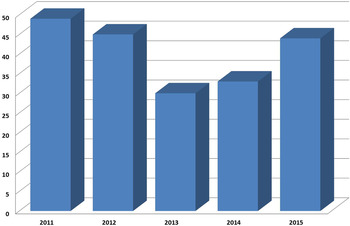
The General Directorate responsible for the fight against the illegal transfer of cultural heritage is, among others, competent for the organization of digital inventories and the management of databases recording all stolen, embezzled, and confiscated movable monuments as well as illegal excavations. In the period 2011–15, more than 200 cases of confiscated cultural goods were recorded within the Greek territory. These cases concern the illegal possession of ancient, byzantine, and post-byzantine artifacts. More specifically, 49 cases of confiscation were recorded in 2011, 45 in 2012, 30 in 2013, and 33 in 2014 (Figure 7). In 2014, the astonishing number of 35,340 cultural goods were recovered through the 33 confiscations, including 1,203 coins, 45 vessels, 7 figurines, 25 architectural fragments, and 6 religious icons. In 2015, there were 44 confiscations, comprising 1,720 items, including, 246 coins, 45 vessels, 11 figurines, 7 architectural fragments, 8 icons, and 8 books.
Confiscations of Cultural Items, 2011–15.

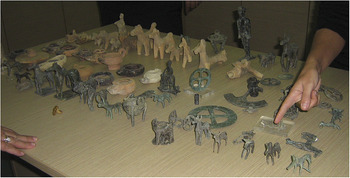
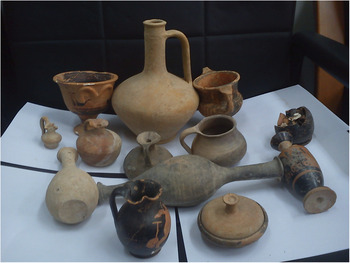
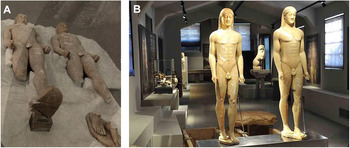
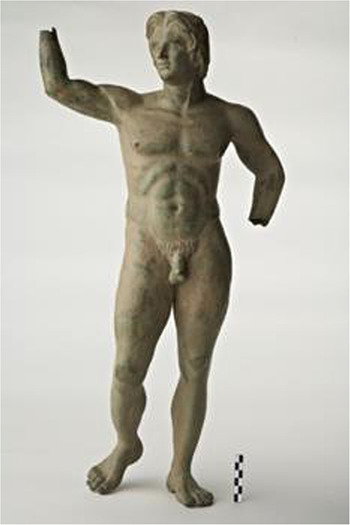
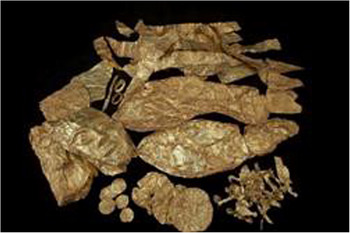
These confiscations were conducted by the Hellenic police with the aid of the services of the Hellenic Ministry of Culture and Sports. Footnote 23 The most characteristic cases included the confiscations of two statues of Kouroi (male sculptures of the archaic period), which originated from a cemetery near Corinth (Figure 8a and b); a bronze statue, probably depicting Alexander the Great, which was seized in Serres, Macedonia (Figure 9); and numerous antiquities from a cemetery that was looted in Macedonia (Figure 10). Footnote 24
Two Archaic Kouroi Confiscated after Their Illegal Excavation at the Area of Corinth, Peloponnese. ©Hellenic Ministry of Cultures and Sports.

Metal Statue, Probably of Alexander the Great, Copy of a Work of Lysippus, Confiscated in the Area of Central Macedonia. ©Hellenic Ministry of Cultures and Sports.

Golden Objects from Illicit Excavation of a Classical Cemetery (fourth–third century bc) Confiscated in the Area of Central Macedonia. ©Hellenic Ministry of Cultures and Sports.

LAW ENFORCEMENT AND ESTABLISHING AN INTERNATIONAL NETWORK FOR THE FIGHT AGAINST THE ILLICIT TRADE OF CULTURAL GOODS
National Legislation
Law 3028/2002 contains a whole chapter dedicated to “criminal law provisions,” including both imprisonment and fines for those who break the law. Footnote 25 Certain provisions have become stricter during the last 10 years, such as the regulations regarding possession and use of metal detectors with the amendment in 2012 of the Minister’s Decree of 2003. Footnote 26 According to the new provision, the inventory of the owners of metal detectors has been digitalized, and the license to use a metal detector can only be issued by the General Directorate (Figure 11). Footnote 27
Number of Metal Detectors Registered per Year.

Conforming to International Law
Greece is a signatory state to the 1970 UNESCO Convention. Footnote 28 The convention was ratified and incorporated in the national legal system by law. Footnote 29 It should be underlined that it was only in 2012 that the Meeting of the States Parties to the convention defined the arrangements for the election of the Subsidiary Committee, as a monitoring mechanism over the implementation of the convention. Footnote 30 Thus, the Subsidiary Committee, which is composed of the representatives of 18 member states who are elected for a four-year term, has a number of functions in order to monitor the implementation of the convention. Footnote 31 Greece was a strong supporter of establishing this monitoring body and was honored to be elected to the Subsidiary Committee by the votes of 95 member states. Greece’s purpose as a member of this committee has always been to build consensus based on a climate of cooperation and mutual understanding in order to achieve the interests, often conflicting, of all members of the convention, with respect for the international legal framework. In addition, Greece is also a signatory member state to the 1954 Hague Convention and its 1999 Second Protocol Footnote 32 and the 1995 UNIDROIT Convention. Footnote 33
The Role of the European Union
In light of the recent developments on the matter of the illicit traffic of cultural goods, the European Union (EU) has included the prevention of, and the fight against, the illicit traffic of cultural goods as a topic in Priority Area D of the Conclusions of the Council on the Work Plan for Culture 2011–14, Footnote 34 which proposes collaboration in the creation of a toolkit against the phenomenon. Footnote 35 Of course, the most important development on the matter is the re-examination of the effectiveness of the Council Directive (EEC) 93/7 “on the return of cultural objects unlawfully removed from the territory of a Member State.”
Indeed, during the Greek presidency of the European Council, the recast of Council Directive 93/7 Directive was achieved. According to Council Directive (EU) 2014/60, Footnote 36 the annex of Council Directive 93/7 was deleted, which has the result that every cultural object defined or classified by a member state as a national treasure will be eligible for return. Footnote 37 The Directive also provides for the extension of deadlines so that member states will have more time to certify that the object discovered in another member state is a national treasure and more time to initiate the return proceedings before the competent national court. A new system called the Internal Market Information System has been put into operation, according to the new Directive, in order to improve administrative cooperation and encourage information exchanges between the national authorities. The most important change of the recast directive though is the placement of the burden of proof on the possessor for compensation purposes, meaning that the possessor will need to prove that when acquiring a cultural object under dispute he or she can not have known that it has been illegally trafficked. Based on Article 4 of the UNIDROIT Convention, the Directive refers to non-exhaustive criteria to define due diligence in order to provide fair compensation, and it “can be viewed as a binding EU standard of due diligence for cultural property exchange.” Footnote 38
Participation in an International Network of Cooperation
The Greek state promotes the creation of a cooperation network with many countries in order to prevent the illicit trafficking of cultural goods. This cooperation includes action on two levels, including, on the one hand, the signing of agreements at the bilateral and international level and, on the other hand, through deepening of cooperation and joint actions within the framework of international organizations dealing with the matter. In accordance with the 1970 UNESCO Convention, Footnote 39 the Greek state has signed three very important bilateral agreements, which were ratified by the Greek Parliament in 2011, with Switzerland, Footnote 40 China, Footnote 41 and the United States. Footnote 42 Furthermore, in 2013, a bilateral agreement was signed with Turkey, Footnote 43 a neighboring country sharing similar problems with Greece concerning the protection of its cultural property.
In the same context, negotiations are ongoing to sign respective agreements with other states. Footnote 44 It should also be noted that efforts are always being made to integrate provisions on the prevention of trafficking in the educational and cultural agreements signed by Greece. This is the case with the educational and cultural agreements signed with Albania, Bulgaria, Iraq, Lebanon, Montenegro, Poland, Hungary, the Czech Republic, Hungary, and Tunisia. With the same view, workshops have been organized in order to share good practices and the exchange of information with countries facing similar problems with the prevention of the illicit trade of cultural goods, such as Iraq. Footnote 45
The Hellenic Ministry of Culture and Sports and the Hellenic Ministry of Foreign Affairs cooperate systematically in various international organizations in which Greece is a member (UNESCO, the International Institute for the Unification of Private Law, the Council of Europe, the UN Office on Drugs and Crime, the Organization of the Black Sea Economic Cooperation, and the European Crime Prevention Network). One of the important results of these efforts was the unanimous adoption in 2012 by the plenary of the UN General Assembly (UNGA) of a draft decision on the return or restitution of cultural property to their countries of origin. Footnote 46 It was the first time such a plan was so widely accepted, even by countries that had never done so in the past, such as Russia and Turkey.
Archaeologists under the General Directorate have actively been involved in bilateral or multilateral meetings organized on the prevention of the illicit trafficking of cultural goods. In 2010, Greek archaeologists participated in seminars held at the headquarters of Interpol in Lyon, France, at the headquarters of the Carabinieri in Italy, and at the headquarters of the competent Israeli authorities in Israel. In addition, Greek archaeologists have attended and participated in many conferences organized on the matter of preventing cultural goods from being illicitly trafficked. Footnote 47
Raising Public Awareness
The Ministry of Culture and Sports is always in constant collaboration with the Ministry of the Public Order and Protection of Citizens, the Hellenic police and the National Interpol Bureau, the Ministry of Finance and customs services, and the marine police. The General Directorate has organized working meetings and seminars with police officers, customs officers, marine police officers, and military officers to coordinate the actions between them and the Ministry of Culture and Sports in order to enhance cooperation and share information towards improving the methodology used for the prevention and combat of the illicit transfer of cultural goods.
Efforts are always being made to inform citizens whenever disasters occur in relation to antiquities and the historical memory, when a monument is looted, and when artifacts are violently separated from their context. A variety of actions are implemented in order to raise public awareness, such as:
-
• the design, planning, and implementation of an educational program, oriented towards schools at the primary and secondary level;
-
• participation in an educational program called “Witness the Past” (designed by the Technical Educational Institution of Athens); Footnote 48
-
• the organization of seminars for the training of archaeologists on matters regarding the fight against the illicit trade of cultural goods;
-
• the organization of the third International Conference of Experts on the Return of Cultural Property in Athens and Ancient Olympia in 2013. Footnote 49 Experts from all over the world and from various faculties (law enforcement, police, and custom authorities) gathered and exchanged opinions and experience while offering suggestions about the repatriation of antiquities and generally combat of illicit trade Footnote 50 (the first and second sessions of the Conference of Experts on the Return of Cultural Property were held in Seoul in 2011 and 2012; within the framework of the third conference in Greece, four countries (Greece, China, Turkey, and Korea) signed an agreement in order to arrange a follow up to the conference, through which the conference was established as a new institution whose fourth session was held in Dunhuang, China, in 2014; Footnote 51 the fifth session was held in Nevsehir, Turkey, in 2015; and the sixth session in Gyeongju, Korea, in 2016). Footnote 52 The need for the international community to take note of the declarations and recommendations of this international forum was expressed in the resolution adopted by the UNGA on 9 December 2015 on the return or restitution of cultural property to the countries of origin; Footnote 53
-
• the publication of the Proceedings of the Third International Conference of Experts on the Return of Cultural Property.
-
• the organization of temporary exhibitions, such as the exhibition “Illicit Antiquities No More,” which was initially designed by the Archaeological Museum of Thessaloniki Footnote 54 (the exhibition was also transformed into a portable version so that it could be presented all over Greece; Footnote 55 and
-
• the publication of the informational brochure “Protecting History,” which reviewed the achievements of the implemented actions against the illicit trade of antiquities and the return of cultural property. Footnote 56
Current Security Status of Sites, Museums, and Storage Facilities
All public museums that belong to, and are run by, the Hellenic Ministry of Culture and Sports have an alarm system and a system for fire detection as part of their standard equipment. All museum facilities are monitored by an internal television system of surveillance. The alarm system and the system for fire detection are also controlled by a central specialized department, which immediately informs the Hellenic police or the fire departments in case of emergency. The Ministry of Culture and Sports is always making efforts to increase the number of security personnel that are competent in safeguarding archaeological sites and recruiting permanent or temporary short-time staff.
RECENT REPATRIATION CASES
An essential obligation of the General Directorate is the monitoring and checking of art and antiquities auctions, a practice that has led to several acts of repatriation of Greek cultural goods. From 2009 until 2015, the Hellenic Ministry of Culture and Sports successfully accomplished 27 repatriations of cultural goods, which were proven to have been illegally exported out of Greece. Footnote 57 In 2014 and 2015, in particular, 16 cases involving the return of Greek cultural goods illegally located abroad were successfully completed, resulting in the repatriation of 10,095 and 2,617 cultural goods respectively. This number of cases includes seized cultural goods that had been illicitly exported from the Greek territory, voluntary returns of cultural goods both by institutions Footnote 58 and individuals, Footnote 59 as well as cases made possible after long and often exhaustive negotiations and procedures.
Although the General Directorate was in charge of the coordination of the above repatriations, they would not have been successful without the collaboration of Greek and foreign customs and consular services, judicial and law enforcement authorities, as well as intergovernmental organizations, such as Interpol. The repatriated antiquities, which belong to Greece’s cultural heritage, are important components of the essence of the history of the country, part of which is being destroyed, together with various scientific information about the antiquities, as a result of their violent removal from their archaeological context. The following catalogue of some of the recent repatriated objects is indicative of the importance of the scientific information that is lost because of such illegal excavation. Footnote 60 Such illegal activity forcibly destroys the true story behind these beautiful objects—the story that we would have known if these objects had been found by way of a legal, scientific excavation and had been studied by scholars in public museums.
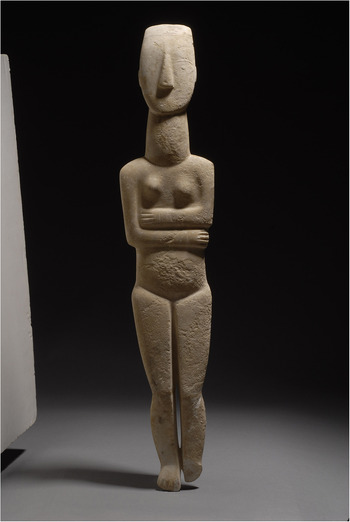
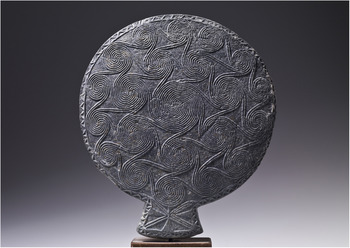
Figures 12 and 13 reveal a standing female figure with folded arms belonging to the “canonical” type of Early Cycladic figurines, Footnote 61 widely distributed in the Aegean as prestige objects, and a “frying pan” vessel with triangular handle and relief decoration of interconnected spirals, which was a very popular theme in the art of the Early Cycladic civilization. Footnote 62 These two types of antiquities are the most characteristic creations of the Early Cycladic civilization. They were looted, probably in the first decades after World War II Footnote 63 and were acquired in 1975 Footnote 64 by the Badisches Karlsruhe Museum, Footnote 65 from which they were returned. Footnote 66
Standing Female Early Cycladic Figurine Repatriated from Germany. ©Hellenic Ministry of Cultures and Sports.

“Frying Pan,” Early Cycladic Vessel Repatriated from Germany. ©Hellenic Ministry of Cultures and Sports.

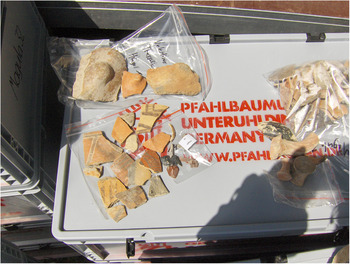
Figure 14 shows approximately 10,000 finds originating from excavations and surveys along Thessaly during the Nazi’s occupation of Greece in 1941. The finds are dated to the Neolithic Age and were stored at various sites in Germany, particularly at Pfahlbaumuseum—Unteruhldingen. Footnote 67
Boxes Containing 10,000 Finds from Excavations and Surveys along Thessaly, Repatriated from Germany. ©Hellenic Ministry of Cultures and Sports.

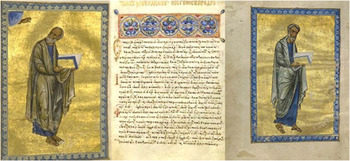
Figure 15 reveals a byzantine manuscript from St Dionysus Monastery at Mount Athos. Footnote 68 It was stolen in 1960 during the visit of a group of German pilgrims to the library of the monastery. It was acquired by the J. Paul Getty Museum in 1983, being previously part of the Oscar Meyer (in Los Angeles, United States) and the Ludwig (in Aachen, Germany) private collections. After intensive negotiations and in accordance with the Framework for Cultural Cooperation, which was signed by the Hellenic Republic and the J. Paul Getty Trust in 2011, the dispute was resolved in good faith, and the Getty Museum agreed to return the item voluntarily to Greece in September 2014.
Byzantine Manuscript from St Dionysus Monastery at Mount Athos, Repatriated from the United States. ©Hellenic Ministry of Cultures and Sports.

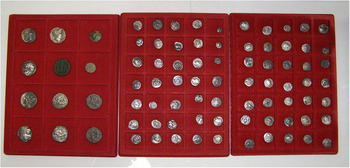
Two stone items—an ionic capital and a mortar—were offered by an American citizen. The ionic capital, according to the owner’s opinion, comes from the region of the Acropolis in Athens and the mortar originates from Crete. Five Mycenaean vessels were delivered to the Hellenic General Consulate in Chicago in 2011. In addition, Figure 16 shows over 100 ancient Greek coins confiscated by the Italian authorities and repatriated from Italy, Footnote 69 according to, and implementing, Council Directive 93/7.
Part of a Collection of Coins Confiscated and Repatriated from Italy. ©Hellenic Ministry of Cultures and Sports.

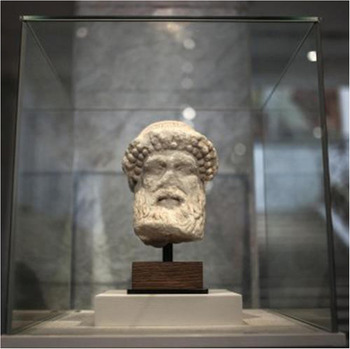
Figure 17 reveals an ancient marble head withdrawn from a Bonhams auction in 2014 and repatriated in 2015. It is a Roman copy of a major Classical-era Greek sculpture by Alkamenes, which was originally found in the south wing of the Acropolis Propylaea. Footnote 70 Mycenaean pottery from a cemetery in northwestern Peloponnese was repatriated in 2017 from Germany. Footnote 71
Head of Hermes, Repatriated from United Kingdom after Being Withdrawn from an Auction at Bonhams. ©Hellenic Ministry of Cultures and Sports.

The Impact of the Economic Crisis
The economic crisis, from which Greece has been suffering since 2010, has also negatively affected the sector of cultural heritage. A great number of the staff, who were working as guards in museums and archaeological sites, was retired, while no new recruits of guards working on a permanent basis has taken place due to the fiscal austerity policies. Footnote 72 Also, in 2014, the Directorate for the Documentation and Protection of Cultural Goods, which was responsible for combatting the illicit trafficking of cultural objects, was downgraded to a department under a general plan for the reduction and reorganizing of the public administration of the state’s directorates and departments. Footnote 73
Many Greeks invested in metal detectors, hoping to make money easily and quickly, in order to improve their living conditions. The Ministry of Culture and Sports was forced to tighten the relevant legal framework in order to stop, or at least to better monitor, this phenomenon. Footnote 74 At the beginning of the crisis, an increased number of cases of theft and smuggling was recorded. Gradually, as shown by recent statistics, the situation has normalized.
EPILOGUE
The world has become increasingly aware that theft and trafficking of cultural property is a major problem. Due to the nature of the problem—clandestine excavation, smuggling in transit, and either private sales or mixing contraband objects in the legitimate market—it is difficult to present reliable data on the size of the illicit market. Nevertheless, the following argument is clear and concrete. Looting and the illicit traffic of cultural heritage is not only unfair and unethical towards humanity, but they are crimes according to national legislative systems and international law, and they are scientific “crimes” that are wounding our past and, thus, inevitably, our future as well.
ACKNOWLEDGMENTS:
The article is based on the presentation at the International Conference on Kulturgut in Gefahr: Raubgrabungen und Illegaler Handel, which took place in Berlin on 11–12 December 2014 under the title “Fighting against the Illegal Trade of Cultural Property: The Case of Greece.”