Introduction
Large-scale disasters have frequently occurred in Japan since 1995 (after the Great Hanshin-Awaji Earthquake), and developing human resources and medical staff who can work in the disaster field is necessary. In particular, training nursing staff who possess knowledge of and skills in disaster nursing is extremely important.Reference Furukawa, Shinchii and Fukuyama1–Reference Matsunaga, Shinchi, Akinaga and Umezaki4 In the cases of large-scale disasters, while nurses helped in medically treating those injured after the disaster, there was a shortage of both medical manpower and resources such as medicine and supplies.Reference Furukawa, Shinchii and Fukuyama1, Reference Ishibashi, Fukuyama, Nonaka and Shinchi2 Since 2009, the Japanese Ministry of Education and Culture (Tokyo, Japan) has strongly recommended that all nursing colleges teach disaster nursing for about 15-30 hours per year, as per the nursing education rule for Japanese nursing education. However, detailed educational methods for practical disaster nursing education including risk management have not yet been established.Reference Akinaga, Shibayama and Takahashi5
The increased number of natural disasters makes it vital for nurses to be taught the principles of disaster medicine and nursing;Reference Evans and Baumberger-Henry6 such education is the most effective when conducted through simulations during nurses’ on-going education.Reference Foronda, Shubeck and Swoboda7 Japanese nursing colleges today provide disaster nursing education to their students. However, there are currently few studies that examine the most effective educational methods.Reference Akinaga, Takahashi, Sakamoto, Umezaki, Matsunaga and Shinchi8 The present study attempted to establish a model of disaster nursing education for practical disaster nursing and risk management. The findings have implications for future human resource development in disaster medical care.
Education in disaster nursing and risk management is important, and nurturing medical staff who participate in disaster response are also essential. Thus, this study aimed to propose a model of disaster medical education for practical risk management and disaster nursing.
Methods
Seventeen expert nurses with experience in practical international disaster response (IDR) participated in this study. They were recruited from among past members of IDR teams and provided their informed consent. They were also the nurses who participated in a previous study concerning IDR operations.Reference Ishibashi, Fukuyama, Nonaka and Shinchi2 All 17 nurses agreed to participate this study. The data were collected from June 2016 through December 2018. In the 17 subjects, the gender was six males and 11 females. The age was distributed from 30 to 59 years, and the average was 40.9 years old. Most of the subjects were in their 30s (10 nurses) or 40s (five nurses). Thirteen nurses belonged to Japan International Cooperation Agency (Tokyo, Japan), and four nurses belonged to non-governmental organizations. The years of experience in nursing distributed from five to 25 years, and the average was 16.1 years. They were asked the open-ended question: “What kind of nursing education is necessary for risk management and practical activities in disaster response?” by the mailing questionnaire. The responses were written in the questionnaire and their answers were analyzed qualitatively.Reference Downe-Wamboldt9 The answered phrases were coded for the analysis. Subsequently, an educational model was developed.
Ethical Considerations
The study was reviewed and approved by the Faculty of Medicine, Saga University (Saga, Japan; approval no. 28-14). Nurses’ personal information, such as their name or address, were not sought in the answer sheets. The purpose of the study was explained to the participants and they were assured that refusing to participate or discontinuing their participation in the study would have no adverse consequences. All respondents agreed to participate by submitting their answer sheet.
Results
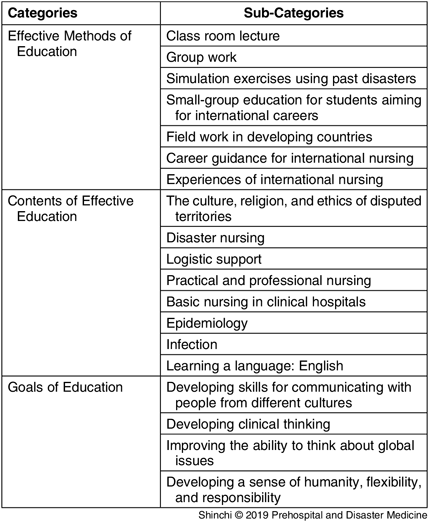
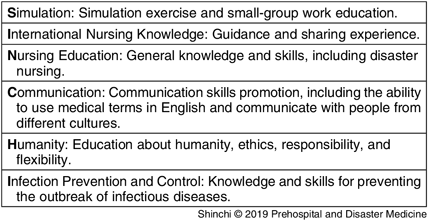
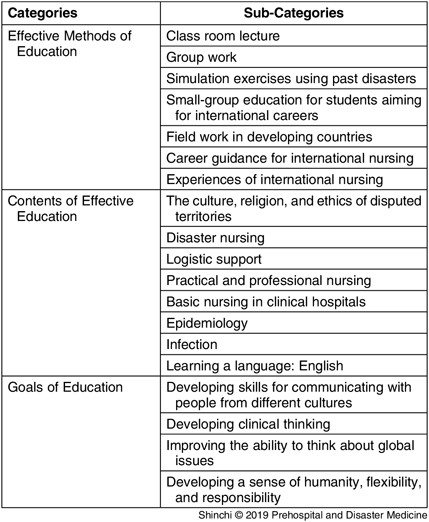
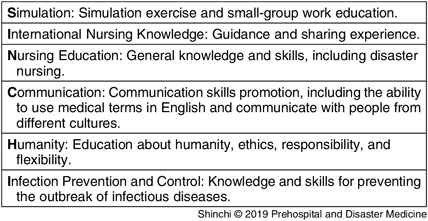
Sixty-five codes were obtained from the answers to the open-ended question, and were subsequently categorized into 19 sub-categories and three categories (Table 1). According to the results of the analysis, an education model comprising six elements derived from the essential sub-categories was proposed: (1) Simulation exercise and small-group work; (2) International nursing knowledge; (3) Nursing skills and knowledge, including disaster nursing; (4) Communication ability promotion; (5) Humanity, responsibility, and flexibility; and (6) Infection prevention and control.
International Nursing Education Considered Necessary for Basic Education by International Japanese Expert Nurses: Content Analysis
These six elements were considered especially important from the authors’ experience of IDR and 15 years of providing education in disaster medicine in nursing colleges.
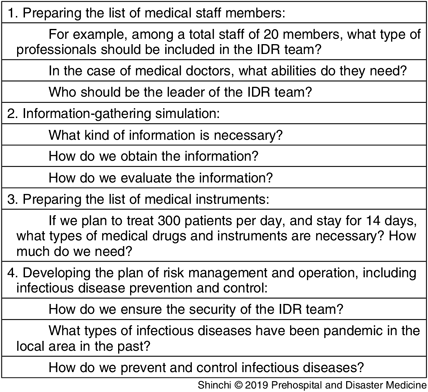
The model was named the SINCHI education model (Table 2). This name was derived from the first letters of the six elements. This name is easy to memorize and pronounce. A sample of this education exercise is the following: (1) preparing the list of medical staff members (2) information-gathering simulation (3) preparing the list of medical instruments, and (4) developing the plan of risk management and operation, including infection prevention and control (Table 3).
The Six Elements of the SINCHI Education Model for Disaster Nursing
A Sample Exercise Based on the SINCHI Education Model (Sample Lessons)
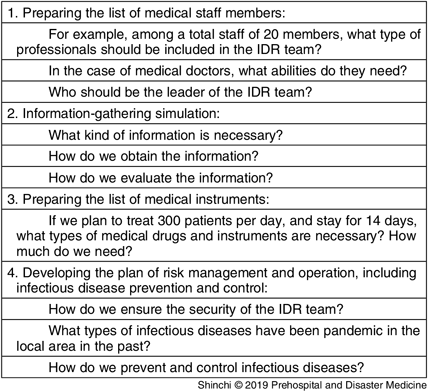
Abbreviation: IDR, international disaster response.
Discussion
The effectiveness of simulation in disaster nursing education has been reported in studies conducted in the United States of America and India.Reference Alusio, Daniel and Grock 10 , Reference Furuse, Taylor and Kim 11 Previous studies have also suggested the effectiveness of simulation education in disaster medical education and training.Reference Akinaga, Shibayama and Takahashi 5 , Reference Akinaga, Shibayama, Takahashi, Umesaki and Shinchi 12 The educational model developed in the current study includes a simulation game (disaster imaging game) involving past IDR operations. For example, the Honduras international disaster relief operation in 1988 is one of the sample models. The first author of the study participated in that operation as a chief triage officer of the Japan Self-Defense Medical Team.Reference Shinchi and Ashida 13 Such types of actual, large-scale disasters are good sample teaching models in simulation education. Faculty members who have experience in IDR should teach disaster nursing using this education model.
As shown in Table 2, the SINCHI education model comprises six elements. First, “International nursing knowledge” is of critical importance for IDR operations. Further, in most cases, IDR operations are undertaken in developing countries. Hence, listening to the experience of and seeking guidance from the dispatched nurses is necessary. What type of information is necessary? How can this information be gathered? How can it be evaluated? These questions are good educational tools in disaster nursing education.
General nursing education, including disaster nursing knowledge and skills, is also of basic importance.
Communication skills with regard to people from different cultures is also an important element, because without these skills, one cannot perform IDR operations. Education about humanity, responsibility, and flexibility is also indispensable for medical staff who participate in IDR, because IDR is a humanitarian aid operation and the staff must work with limited manpower and medical equipment in the disaster field.Reference Furukawa, Shinchii and Fukuyama 1 , Reference Ishibashi, Fukuyama, Nonaka and Shinchi 2 In IDR, negotiation and cooperation with related organizations and coordination is extremely important; the so-called integration ability is considered necessary for the nursing staff involved in IDR. Finally, “Infection prevention and control” is also essential for IDR operations, because in most developing countries, local infectious disease outbreak is an immense problem that impedes effective IDR operations. Knowledge of infection control and prevention is one of the most necessary elements among IDR medical staff.
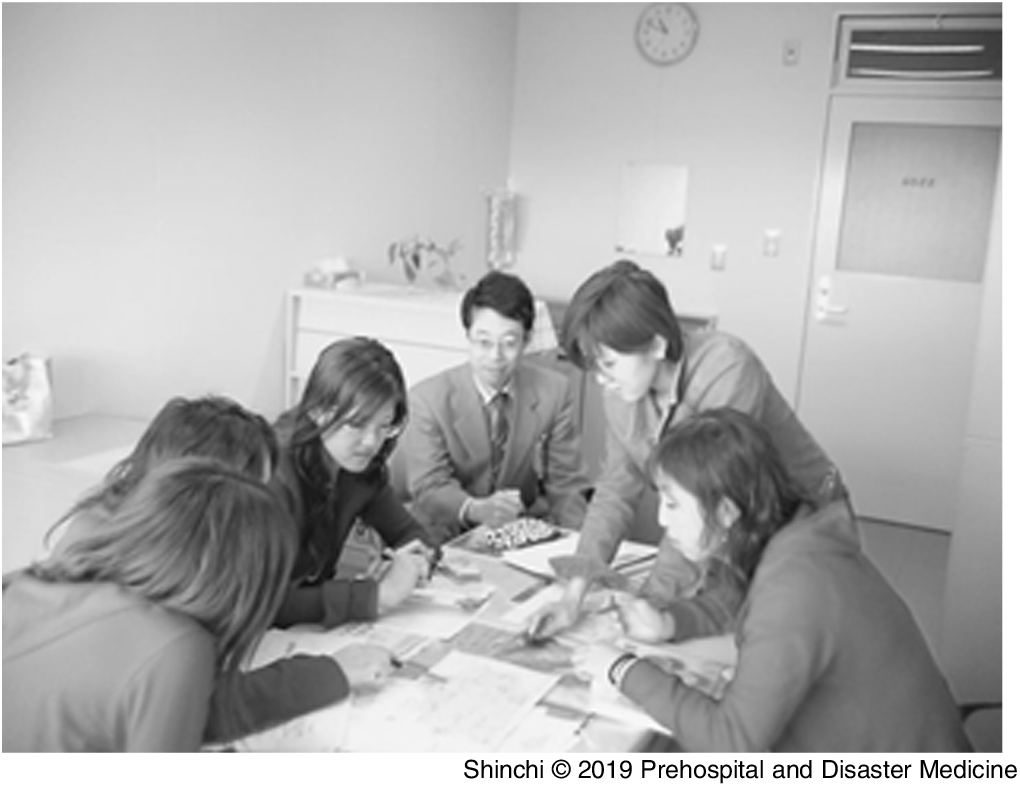
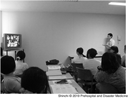
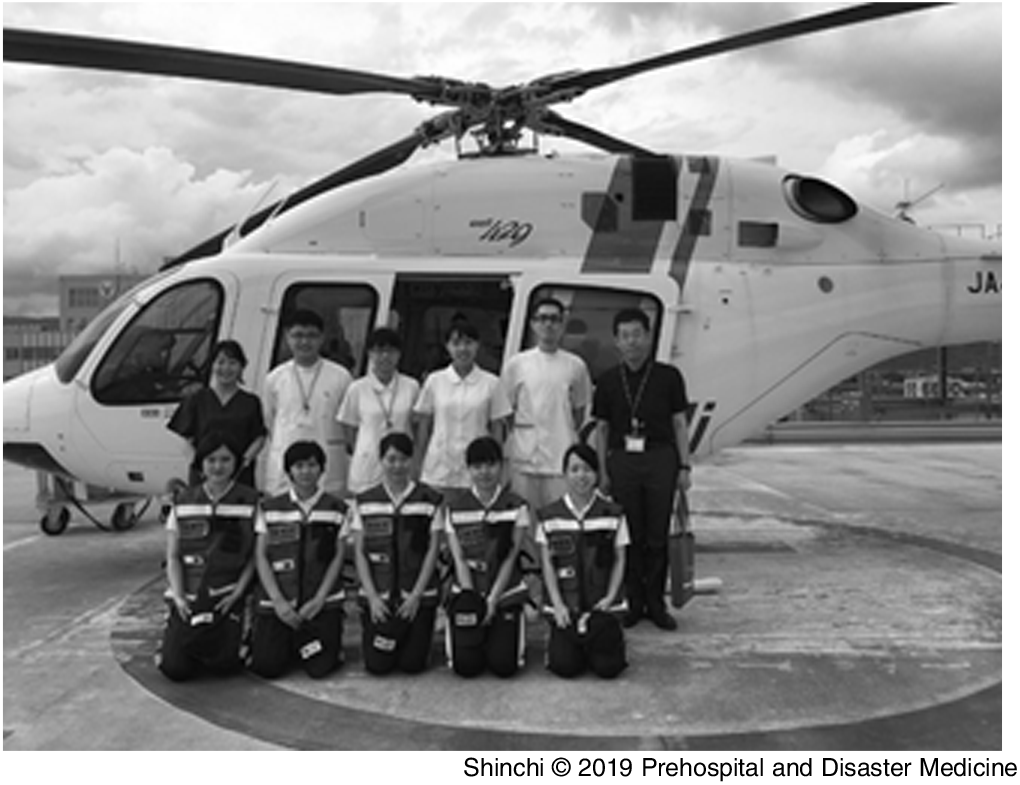
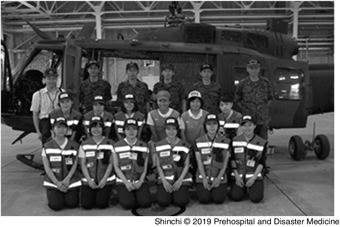
The six elements mentioned above were combined and a sample of the education model was developed (Table 3; Figures 1–4). In Japan, such a practical model of disaster nursing education has not been established yet. The usage of this education model could promote disaster nursing education, not only in Japan, but also other countries globally.
Simulation Exercise in Small-Group Work (Disaster Imaging Game).

Using Videos of Past International Disaster Relief Operations for Visualizing Real Disaster Situations.
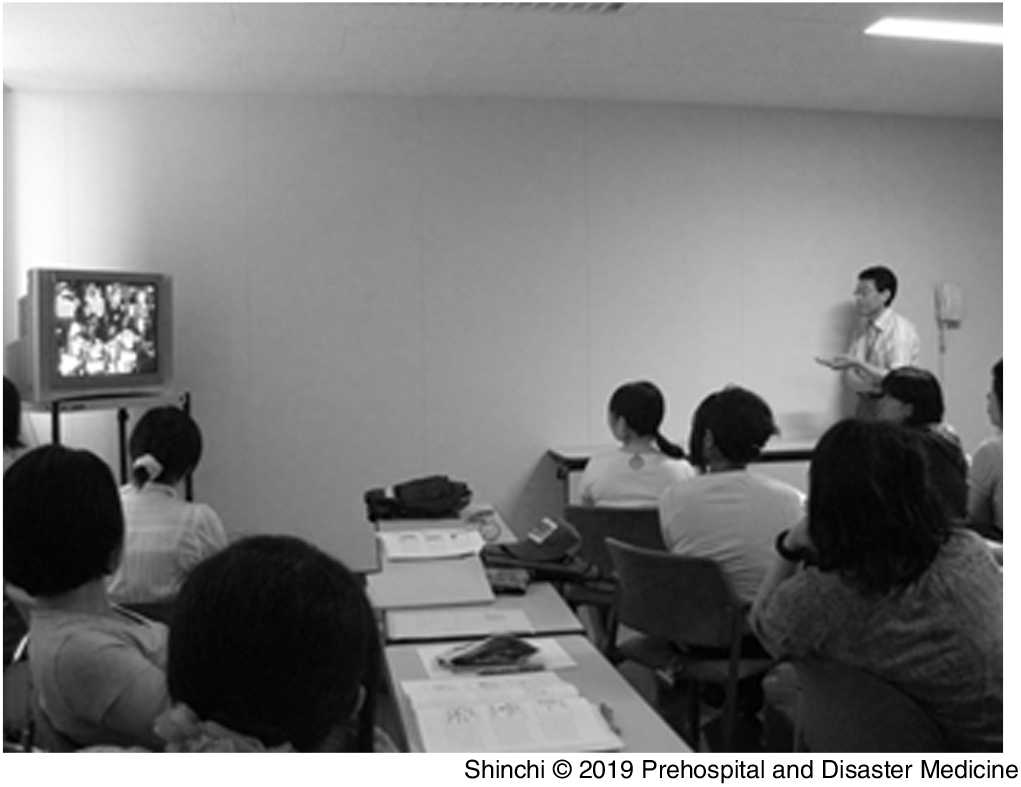
Exercise for Learning about the Doctor Helicopter in Saga University Hospital (Saga, Japan) and its Function.

Education about Cooperation with Military Medical Teams and Helicopter Staff.

Conclusion
The SINCHI education model was proposed for practical disaster nursing education. This education model, which includes simulation exercise, could be considered to be instructive and practical for training professionals in providing disaster nursing assistance globally.
Acknowledgements
The researchers would like to express their deepest gratitude to the nurses for their participation in this study. They also thank Ms. Sae Tanaka, Ms. Akina Ishibashi, and Ms. Kazue Nonaka for their cooperation as teaching assistants in disaster nursing education. The authors would like to thank Editage (Princeton, New Jersey USA) for English language editing.
Conflicts of interest/funding
This work was supported in part by a Grant-in-Aid for Scientific Research (No.16K11946) from the Ministry of Education, Culture, Sports, Science, and Technology of Japan (Tokyo, Japan). The authors declare no financial state of conflict.