Many older adults desire to remain in their own homes for as long as possible, an outcome also desired by governments although with cost savings as the rationale. Older adults who can maintain their health and continue to live in their own homes may use fewer more-expensive health services such as emergency departments, hospital stays, and long-term care. Community support services (CSSs) play an important role in helping older adults remain in their own homes. Many countries, including Canada, have developed a variety of CSSs to facilitate aging in place. CSSs are delivered in the home or community to help people maintain the highest possible level of functioning and quality of life. Examples of CSSs include meal services, transportation services, day programs, volunteer visiting, and caregiver support services. Use of such services results in positive impacts for older adults (e.g., improved life satisfaction and mood; increased engagement in activities) and their caregivers (e.g., reduced stress, burden and depression, improved mood, life satisfaction, and sense of community) (Winslow, Reference Winslow2003; Zarit, Gaugler, & Jarrott, Reference Zarit, Gaugler and Jarrott1999).
Despite the need for and availability of these services, research shows that many CSSs are underutilized by older adults and caregivers due to their lack of awareness (Strain & Blandford, Reference Strain and Blandford2002). Although older adults have identified both primary care physicians and their professional staff as their main sources of information about CSSs (Denton et al., Reference Denton, Ploeg, Tindale, Hutchison, Brazil, Akhtar-Danesh and Boos2008), there is a lack of knowledge as to what these professionals do to facilitate linkages. To address that lack, therefore, we conducted a study to understand how non-physician health care professionals (HCPs) (e.g., nurses, social workers, pharmacists) in primary care settings facilitate older persons’ access to CSSs. This understanding is vital to develop approaches for improving HCPs’ ability to facilitate older adults’ access to CSSs and potentially improve the adults’ quality of life, sustain their independence in the community, reduce inappropriate use of more costly services, and delay institutionalization.
Literature Review
Access to CSSs is challenging because of a number of factors, including the multiplicity of agencies and organizations that provide these services, the lack of a central access point, and the lack of awareness of such services (Strain & Blandford, Reference Strain and Blandford2002). This literature review begins with a summary of older adults’ awareness of CSSs and then moves to a discussion of this awareness by health care providers, who are identified by older adults as key sources of information about CSSs. Awareness in these studies includes awareness of the existence of the service and/or awareness of how to connect to the service. Research reflects wide variation in the proportion of older adults who were aware of various CSSs, ranging from 31 per cent to 78 per cent in some studies (Calsyn & Winter, Reference Calsyn and Winter1999b; Ward, Sherman, & LaGory, Reference Ward, Sherman and LaGory1984; Wister, Reference Wister1992). Literature indicates that knowledge or awareness of CSSs is associated with the actual use of these services and is thus a crucial factor (Calsyn & Roades, Reference Calsyn and Roades1993; Calsyn, Roades, & Klinkenberg, Reference Calsyn, Roades and Klinkenberg1998; Calsyn & Winter, Reference Calsyn and Winter2000). In addition, most of the available literature related to CSSs is outdated and combines CSSs with health services (Calsyn & Roades, Reference Calsyn and Roades1993; Calsyn et al., Reference Calsyn, Roades and Klinkenberg1998; Chapleski, Reference Chapleski1989; Krout, Reference Krout1985; Kushman & Freeman, Reference Kushman and Freeman1986; Salvage, Jones, & Vetter, Reference Salvage, Jones and Vetter1988).
Most of the aforementioned studies of older adults’ awareness of CSSs are limited by a type of response bias called “agency awareness overclaiming” or acquiescence bias (Calsyn & Winter, Reference Calsyn and Winter1999a, p. 399). “Acquiescence bias is defined as the tendency to respond to questions affirmatively, regardless of content” (Calsyn & Winter, Reference Calsyn and Winter1999a, p. 400). Study respondents reported being aware of fictitious agencies embedded in lists of real agencies (overclaiming) and reported being aware of more real agencies on agency listings (acquiescence) than other respondents (Calsyn & Winter, Reference Calsyn and Winter1999a). Some studies have used open-ended questions in an attempt to overcome these biases (Snider, Reference Snider1980a, Reference Snider1980b).
Researchers have used vignette methodology as a way to prevent acquiescence bias. Hughes and Huby (Reference Hughes and Huby2002) indicate that “vignettes consist of text, images or other forms of stimuli to which research participants are asked to respond. They can be presented to participants in a number of different forms, ranging from short written prompts to live events” (p. 382). The use of vignettes is an established research methodology used to closely approximate real-life decision-making situations through the use of hypothetical situations (Hughes & Huby, Reference Hughes and Huby2002; Schoenberg & Ravdal, Reference Schoenberg and Ravdal2000; Spalding & Phillips, Reference Spalding and Phillips2007). Research previously conducted by this team used vignettes to assess older adults’ awareness of CSSs (Denton et al., Reference Denton, Ploeg, Tindale, Hutchison, Brazil, Akhtar-Danesh and Boos2008, Reference Denton, Ploeg, Tindale, Hutchison, Brazil, Akhtar-Danesh and Plenderleith2010; Ploeg et al., Reference Ploeg, Denton, Tindale, Hutchison, Brazil, Akhtar-Danesh and Plenderleith2009). In telephone interviews, 1,152 older adults were read a series of four vignettes describing common situations where CSSs would be appropriate (Denton et al., Reference Denton, Ploeg, Tindale, Hutchison, Brazil, Akhtar-Danesh and Boos2008). Awareness of CSSs varied by the presented vignette, and ranged from 1 per cent to 41 per cent of respondents being able to identify a CSS, with an average of 21 per cent across vignettes.
Across the four vignettes, 43 per cent of respondents were unable to name even one CSS (Tindale et al., Reference Tindale, Denton, Ploeg, Lillie, Hitchison, Brazil and Plenderleith2011). Older adults were more likely to be aware of services to assist with caregiver burden, dementia services, and transportation services. However, there was very little awareness of CSSs related to managing chronic conditions, safety, financial abuse, and finding leisure activities. When asked where they would get information about CSSs, the most common response from older adults was their family physician or family physician’s office, with 26 per cent of respondents noting this source of information (Denton et al., Reference Denton, Ploeg, Tindale, Hutchison, Brazil, Akhtar-Danesh and Boos2008). Other less commonly reported sources of information about CSSs included the telephone book, word of mouth, and the Internet.
Little is known, however, about how family physicians and their office staff support older adults to make connections with CSSs or their knowledge and awareness of such services. Researchers found that many physicians have inadequate knowledge of and underutilize CSSs such as adult day care, housing options, and congregate meals (Barker, Mitteness, & Heller, Reference Barker, Mitteness and Heller1991; Damron-Rodriguez et al., Reference Damron-Rodriguez, Frank, Heck, Liu, Sragow, Cruise and Osterwell1998; Henninger, Henninger, Morse, & Zweigenhaft, Reference Henninger, Henninger, Morse and Zweigenhaft1987; Yeo & McGann, Reference Yeo and McGann1986). Research focused specifically on CSSs for older persons with dementia and their families suggests that physicians have limited awareness and referrals to relevant CSSs (Fortinsky, Reference Fortinsky1998; Fortinsky, Leighton, & Wasson, Reference Fortinsky, Leighton and Wasson1995; Yaffe, Orzeck, & Barylak, Reference Yaffe, Orzeck and Barylak2008). Limitations of this literature include the dated nature of most studies, the combination of both primary care and specialist physicians, and the lack of research approaches to address acquiescence bias.
The current study addressed in this article constitutes the second phase of a two-phase qualitative study on how primary HCPs link older adults to CSSs. The first phase of our study was a qualitative multiple case study of family physicians. In that phase, 23 family physicians from four different models of primary health care – Family Health Teams (FHTs), Community Health Centres (CHCs), Family Health Organizations (FHOs), and fee-for-service (FFS) – were asked how they facilitated the linkage of older patients to CSSs (Reference Ploeg, Denton, Hutchison, McAiney, Moore, Brazil, Tindale and LamPloeg et al., in press). Across all models of primary health care, physicians collaborated extensively with their interprofessional team members to make these linkages, often delegating activities to the team members. Physicians were asked to identify the interprofessional team members they collaborated with to make linkages to CSS and these team members, in turn, were invited to participate in the second phase of the study, as reported here. We could find no literature describing how primary care HCPs other than physicians link older persons to CSSs.
In summary, older adults have limited awareness of available CSSs and often turn to health care professionals in primary care settings to help them make these connections. Previous research shows that family physicians collaborate extensively with their interprofessional team members to facilitate patient linkages with CSSs. However, we know little about how non-physician HCPs working in primary care settings link older patients to CSSs. The aim of this study was, as mentioned, to understand how non-physician primary HCPs link older adults to CSSs. Study findings can be used to develop resources and approaches to better support primary HCPs to connect older adults with CSSs and ultimately to enhance their quality of life and improve their ability to live independently in their own communities.
Methods
Study Design and Setting
We used a qualitative descriptive approach as described by Sandelowski (Reference Sandelowski2000, Reference Sandelowski2010). This approach is based on naturalistic inquiry, an approach that studies events and persons in their natural state. It aims to provide a comprehensive description using everyday terms of specific events experienced by individuals or groups of individuals. This approach was well suited to the purpose of developing a description of the processes used by HCPs to link older adults with CSSs.
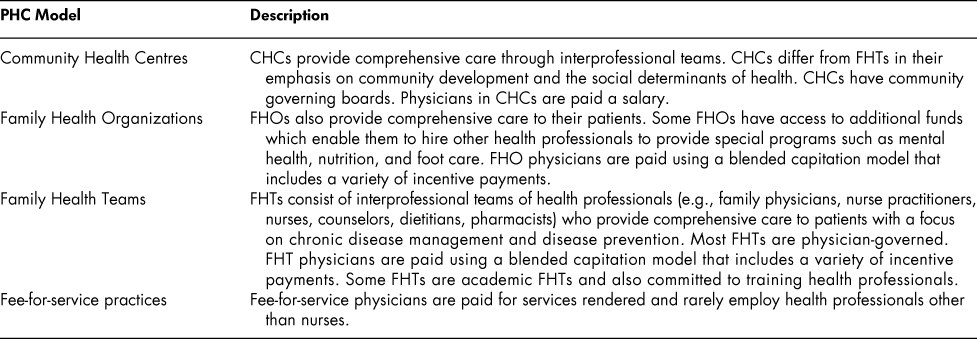
The study was conducted in Hamilton, Ontario, Canada. Several primary health care funding and delivery models co-exist in Ontario, most of which are represented in the city of Hamilton. Participants were recruited from four main primary health care models: FHTs, CHCs, FHOs, and FFS practices (Hutchison, Levesque, Strumpf, & Coyle, Reference Hutchison, Levesque, Strumpf and Coyle2011) (see Table 1). FHTs and CHCs consist of teams of interprofessional health professionals (often including but not limited to family physicians, nurse practitioners, nurses, social workers, mental health counsellors, dietitians, and pharmacists). These models facilitate interprofessional collaboration and sharing of knowledge and expertise in order to connect clients to CSSs. FHOs also provide comprehensive care to their patients, although they often have smaller interdisciplinary team compositions and may hire other professionals outside of their practice to provide services for clients. Fee-for-service practices are often composed of smaller teams, and solo practices may include only a physician and nurse. All primary health care models have access to home care case managers, but some FHTs have case managers specifically assigned to the team who meet regularly with team members.
Description of models of primary care

PHC = primary health care
Sampling and Recruitment
In Phase 1, physicians (n = 23) were purposively sampled from sampling frames of the family practices within each of the four primary care models. Where possible, we used maximum variation sampling to include solo, small, and large group practices. The largest proportion of physicians (48%) was from FHTs; there was a larger proportion from non-FHT models of care in Phase 1 (52%) than in Phase 2 (30%). Physicians were told that the purpose of this study was to understand how family physicians facilitate older patients’ access to CSSs and to identify variations in the approach to making linkages across different primary health care models. Primary care physicians (from Phase 1) and colleagues (from Phase 2) provided the names and contact information for potential study participants to the research coordinator who contacted them with information about the study and an invitation to participate.
Purposive sampling strategies were used in this study, including criterion sampling, maximum variation sampling, and snowball sampling (Patton, Reference Patton2002). Participants met the criterion of being non-physician professionals who worked in primary health care settings that included older adults as patients. Maximum variation sampling was used to recruit participants representing various disciplines (e.g., registered nurses, mental health counsellors, dietitians, social workers, pharmacists, and home care case managers) and different models of primary health care (FHT, FHO, CHC, FFS). Using snowball sampling, we asked participants to identify other HCPs that they would turn to for help when connecting older patients to CSSs.
Data Collection
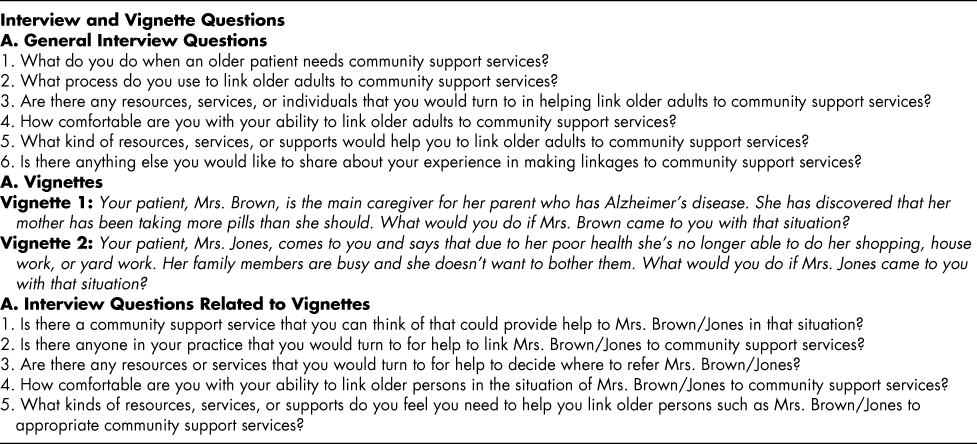
Data were collected using semi-structured face-to-face interviews conducted at participants’ workplaces. A semi-structured interview guide was developed based on the guide used in the first phase of this study and a review of the literature. Participants were asked to describe what they do when an older patient needs access to CSSs and what processes they use to link the person to CSSs. They were asked to describe any resources they turn to for help in deciding where to refer older patients, and the kinds of resources they feel would be valuable to assist the patients. Participants were also asked to respond to two short vignettes related to older adults who require access to CSSs (see Table 2). Demographic characteristics were collected on each participant and included gender, years of practice, and type of profession. Interviews were conducted by the study’s research coordinator between October 2009 and January 2011 and lasted an average of 30 minutes; each interview was audiotaped and transcribed verbatim. The research coordinator was experienced in conducting semi-structured interviews and the study leads were experienced in designing and conducting qualitative research studies.
Interview guide

Data Analysis
Transcriptions of interviews were checked against the audiotapes to ensure accuracy of the data. Transcripts were entered into QSR International’s NVivo 8 software to help with data management. The study leads and research coordinator jointly conducted the data analysis, and preliminary findings were discussed with the other investigators as the analytic process continued. Consistent with a qualitative descriptive design, we used qualitative content analysis strategies (Sandelowski, Reference Sandelowski2000, Reference Sandelowski2010), particularly conventional content analysis (Hsieh & Shannon, Reference Hsieh and Shannon2005). This approach is appropriate when existing research in the area is limited (Hsieh & Shannon, Reference Hsieh and Shannon2005). One of the advantages of this approach is that information is gained from participants without imposing a pre-existing theory or categories to the data. Consistent with this approach, transcriptions were repeatedly read and re-read to achieve immersion in the data. Line-by-line coding of the data was conducted to capture key concepts using both NVivo codes (arising from the data itself) and the interview questions. A coding scheme was developed and was applied by two team members on the first four transcripts, then revised and applied to the remaining transcripts. Data within codes were carefully reviewed, and codes were then sorted into categories based on how the codes were linked or related to each other (Hsieh & Shannon, Reference Hsieh and Shannon2005). Word tables were developed to display the processes used by each health care provider to link older patients to CSSs and these tables were analysed for similarities and differences.
Strategies to Ensure Rigor
We used a number of strategies to ensure the quality of this study (Lincoln & Guba, Reference Lincoln and Guba1985). Given the variability of models of primary health care in Canada and variability of disciplinary team members in such models, study transferability was enhanced through the inclusion of participants from four different models of primary health care, as well as participants from multiple disciplines within these models. Dependability and credibility were addressed through the use of investigator triangulation whereby multiple research team members reviewed and discussed data and findings over the study period. These team members, representing a variety of disciplines and backgrounds (e.g., family practice, nursing, psychiatry, sociology, aging), brought unique perspectives to data interpretation that helped to ensure data credibility. An audit trail of all study decisions (e.g., sampling, data collection, data interpretation) was maintained.
Ethics
The Hamilton Integrated Research Ethics Board granted ethics approval of the study (09-267). The research coordinator ensured informed consent, collection of signed consent forms, and protection of participant confidentiality. Participation was voluntary, and withdrawal from the study could occur at any time without consequence. No incentives were offered to physicians in Phase 1 or the non-physician health care providers in Phase 2 to participate in the study.
Results
Demographics
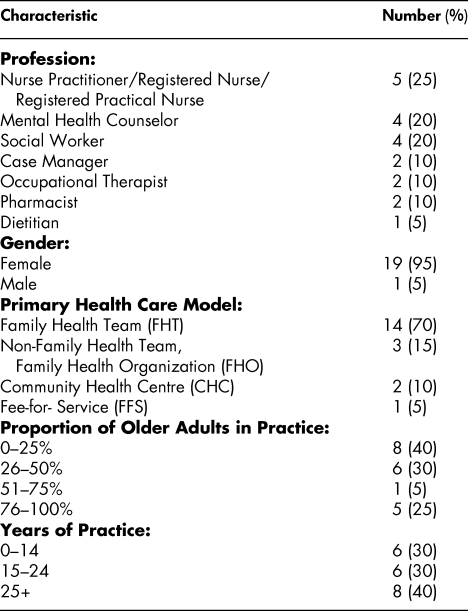
A total of 20 HCPs participated in this study. Participants included social workers, mental health counsellors, nurses, pharmacists, dietitians, and home care case managers (see Table 3). All but one of the participants were female. They worked in various primary health care models with most (70%) working in FHTs. The proportion of older adults in their practices ranged from as low as 0–25 per cent to as high as 75–100 per cent; 70 per cent of the HCPs had older adults making up less than 50 per cent of their practice. These HCPs also varied in their number of years of practice with similar proportions having 0–14, 15–24 and more than 25 years of experience.
Characteristics of health care providers (n = 20)

Categories
Four categories were identified reflecting the processes that HCPs used to link older patients to CSS: (a) collaborating with other interprofessional health care providers; (b) engaging patients and families in facilitating linkages to CSSs; (c) facilitating follow-up, and (d) using out-of-date resources and inefficient search strategies to identify CSSs. The categories were represented by professionals from all disciplines and across each of the primary care models, and were reflected in responses to both the general interview questions and the vignettes. In regard to the level of comfort in linking older adults with CSSs, 30 per cent of the HCPs reported that they felt very comfortable, 60 per cent felt fairly comfortable, and only 10 per cent stated that they were uncomfortable in facilitating linkages. Participants working in a team-based primary health care model explained that they felt comfortable because they were able to rely on others within the practice to help them if they needed to link older adults to CSSs.
HCPs were asked during the presentation of vignettes to list specific CSSs that they would use in the vignette scenarios. They listed 18 different CSSs across the two vignettes. In response to the first vignette, 85 per cent of participants identified the Alzheimer Society. In response to the second vignette, 60 per cent identified Meals on Wheels. Other frequently mentioned CSSs included friendly visiting services, seniors’ home help services, and meal/grocery services. This illustrates that in addition to acknowledging a relatively high level of comfort in facilitating linkages for their patients, HCPs demonstrated familiarity with a multitude of CSSs relevant to the vignettes. In the following description of categories, participant quotes are identified by participant number, primary health care model, and profession.
Collaborating with other Interprofessional Health Care Providers
The most common process described by participants to facilitate linkages of older patients to CSSs involved collaborating with other interprofessional HCPs. This collaboration involved communicating and consulting with others, both within and beyond their teams, to find resources that would best meet patient needs. HCPs recognized that different team members had diverse experiences and knowledge bases related to CSSs. Participants indicated that they most frequently consulted with nurses (registered nurses, registered practical nurses, nurse practitioners) as many had previous community work experience and knowledge related to CSSs.
I will talk to the other nurses on the team. There’s one other nurse on our team and she has a lot of experience linking with community services and using different services. She has a ton of experience within the family practice. (001 FHT Nurse)
One participant from a larger practice stated that they “have a team of seven nurses, so within seven of us everyone has a different aspect of knowledge” (011 FHO Nurse).
HCPs who worked within FHTs or other primary care models with larger interprofessional teams described consulting with a diversity of professionals who often worked in the same location:
There [are] two mental health counsellors here … or the nurse. Our nurse here is very knowledgeable. We work in a collaborative model here so I could talk to the family doc. I could talk to the nurse, the other mental health counsellor. I mean I have the whole Family Health Team at my disposal so I know where the resources are if I feel stuck in any way. (008 FHT Mental Health Counsellor)
HCPs who worked in smaller primary care practices spoke of the limited support from other team members in making linkages to CSSs: “Other groups have more access to like a social worker … There’s just the doctor, the nurse and the receptionist in our practice, so we don’t have a lot of support here” (017 FFS Nurse).
Most participants explained that they consulted with home care case managers to make linkages not only to home care services, but also to CSSs: “[I] rely ninety-nine per cent of the time on our home care case manager” (009 FHT Nurse). In some FHTs, specific home care case managers were assigned to the team, making collaboration easier:
I liaise very closely with the home care case manager that’s connected with our family health team. So, she provides me with updates or anything that’s new, and vice versa. Or I’ll keep her connected … she’s another good resource for me. (003 FHT Social Worker)
HCPs explained that they involve case managers in patient situations because they are knowledgeable about CSSs and able to provide individual home assessments, which in turn help to guide selection of CSSs to address patient needs.
We use [case managers] a lot. And they do an awful lot. They do the assessments … go to the home and check the home to see if they’ve got bars in the bathroom. They check the home for safety. They really do a very thorough test. (002 FHT Nurse)
Many HCPs consult with other professionals outside their practice settings to learn about different CSSs available for their patients. This was particularly important when they encountered complex or new situations that they did not have experience with.
I will call former colleagues who are still working in community programs. Some of them are in health programs. A lot of them work in day programs and are still linked with community services. So, I will contact them just on a personal level and say: “I have this case and what do you think? And I’m thinking about directing them here. Do you think that would work?”(001 FHT Nurse)
I have a friend who’s a discharge planner at the hospital. I pick her brain for a lot of scenarios that I haven’t come against before. (019 CHC Case Manager).
Overall, HCPs collaborated extensively with a range of interprofessional colleagues who had more experience or knowledge about CSSs in order to facilitate linkages of their older patients to appropriate CSSs.
Engaging Patients and Families in Facilitating Linkages to CSSs
HCPs described a number of processes they used to engage patients and families to help facilitate linkages to CSSs. The facilitating linkages term used in this article includes a variety of strategies that could result in use of CSSs such as providing information to older adults and caregivers on available CSSs, or contacting CSSs to obtain information about their services to share with patients and caregivers, or more actively actually making referrals. HCPs explained that they often begin by meeting with patients and families to assess the needs and wishes related to CSS, including their attitudes to accepting such services. HCPs often give information about available services including eligibility and costs. Further, they encourage participation of patients and families in setting priorities and making decisions related to CSSs. HCPs then determine, in consultation with patients and families, who will make contact with the agency. This decision is made by considering both the abilities of the patient and family and a desire on the part of HCPs to encourage independence.
Participants described teamwork as including older adults and families: “You gotta work together as a team with the elderly” (015 FHT Mental Health Counsellor). HCPs explained that they have “family meetings” (018 CHC Occupational Therapist) with patients and families to assess their preferences for support and determine which services would best meet their needs:
We’ll first talk to the senior, find out what they need, what sort of family backup they need. We have facilitated some meetings of family and senior to identify what the senior really needs help with. (011 FHO Nurse)
Generally, the process is to identify areas that they’re struggling with, to give them some idea what services are available, and see which ones would work for the patient – which ones they think would be acceptable. And we talk about the advantages and disadvantages of different programs and approaches. (001 FHT Nurse)
HCPs often provide patients and families with information about CSSs to help them make the needed connections. One participant described the importance of “[educating clients about] what’s out there … leaving clients with a list of what programs are offered, their descriptions, and contacts” (019 CHC Case Manager). In order to do this, HCPs often directly contacted CSSs to gather information regarding the service and referral process:
I’d talk to the people at the service and see what needs to be done in terms of referral or application or, is there some kind of means test or, what’s the catchment or … will this person be able to access that? I would, if needed, I’d assist the family or the senior with application or whatever they need. (016 FHT Social Worker)
Participants described involving families in making decisions about CSSs. Family members assisted with prioritizing goals for the older adult and helping to choose appropriate services that would maximise the quality of life for the older adult. HCPs will often “ask a family member to help come up with [decisions]” (003 FHT Social Worker).
HCPs described how they made decisions about actually contacting CSSs:
The idea certainly would always be to empower the clients [and their families] and encourage them to do it for him or herself. But if [they] would like help in doing it, I am happy to do it for them, to make the referral. (020 FHO Social Worker)
HCPs described “[passing] that responsibility [of contacting community agencies] onto the family to do … to get them to take ownership” (006 FHT Mental Health Counsellor). This was especially the case when a certain support or service required self-referral by the client or family member:
I would … give them some phone numbers and they may have to do some of that themselves. So, they could do the phoning, they could find out the cost and everything. So, basically what I would do for those that are self-referral I could give her some numbers to call and some agencies to call. I would probably do that rather than do it myself. (002 FHT Nurse)
Finally, HCPs recognized some of the barriers older patients and families face in obtaining or accepting CSSs such as the cost of services.
You have a population that is elderly, and doesn’t have a lot of money … we have clients that they’re not going to spend twenty dollars on a day program … It costs more money to get certain services. It’s a barrier for our clients (018 CHC Occupational Therapist).
HCPs used this understanding of barriers to guide strategies that facilitate use of CSSs, such as slowly and consecutively introducing new services: “seniors are easily overwhelmed particularly if they’ve been sort of more house-bound for any length of time. By introducing too many new services all at once I find they get overwhelmed and they’ll cancel everything” (001 FHT Nurse). HCPs recognized that the patient’s level of readiness, financial resources, and level of stress can affect the uptake and use of CSSs and talked about how they supported patients in making decisions related to CSSs.
I have to make sure that the client is in agreement. A lot of times the clients want to think about it … I’ll give them a basic explanation of the program, and then I explain to them who the person is that will contact them, and at that point, I let them know that they still have the option to refuse or to accept [the service] … A lot of them will accept, but a lot of them will also say, “No, I think I’ll wait.” I’ve had people call me back six months later and say, “You know, I’m ready now.” (019 CHC Case Manager)
Facilitating Follow-Up
HCPs recognized that the process of linking older patients to CSSs does not end with making the contact with the service, but extends to include a number of follow-up activities. Participants state that they “follow-up with [patients] to see if they’ve connected, how it’s working, and what else they might need” (007 FHT Dietitian). HCPs acknowledged the challenges older persons experience in making connections with CSSs and identified the important role they could play in facilitating follow-up.
[It is helpful to have] somebody who can link people to resources and do follow-ups on calls, because you can tell seniors about services, but you have to help them link. I know that sounds very paternalistic but they often find it very difficult to make that phone call. And they often appreciate if you call and the person from that agency contacts them … Even though we think that people should be proactive, it doesn’t work about fifty percent of the time. And these are not necessarily people that are not intelligent or have poor education. These are people that are struggling and feeling helpless and need someone to make an extra step to demonstrate that they’re interested in helping them. (001 FHT Nurse)
HCPs facilitate follow-up by creating an environment for ongoing, open communication and the development of a helping relationship with patients and families. HCPs describe making themselves available to patients and families by providing them with the HCP’s contact information and encouraging them to ask questions and contact them if they encounter issues.
And I offer again “if you have any questions between now and the next time we meet … you can feel free to call me.”… I might say “Do you mind if I do a telephone call? Can I check in with you in such and such amount of time?” (014 FHT Mental Health Counsellor)
HCPs ensure that family members are “kept in the loop” (013 FHT Nurse) with “what’s going on just in case [they] are not aware” (008 FHT Mental Health Counsellor). These collaborative encounters facilitate the development of a comprehensive approach to addressing patient and family needs and helps to determine which CSSs are most appropriate for the older person. When HCPs noted that there were issues in connecting with a CSS, they offered to act as mediators, to “[talk] to the people at the service or if they needed information [I could help] give them information [about the client]” (016 FHT Social Worker).
Using Out-of-Date Resources and Inefficient Search Strategies to Identify CSSs
Many HCPs referred to the use of out-of-date resources and inefficient search strategies to identify appropriate CSSs for older adults. Although they use a variety of different resources including books, Internet websites, pamphlets, and conferences, there is no efficient and systematic way to identify appropriate CSSs for older adults. Many described using a hard copy of The Red Book which was developed by a local community information service and last updated in 2007. However, participants acknowledged that “the community services little booklet [is] old” (008 FHT Mental Health Counsellor).
HCPs describe using the Internet as a “good resource” (002 FHT Nurse) for finding CSSs. They do keyword searches in search engines such as Google. While they acknowledge that “the Internet sometimes is the most up-to-date” (016 FHT Social Worker), they also recognize it may be an inefficient way to find CSSs. Some HCPs refer to specific Internet websites and databases to help them find information on CSSs. These websites include family health team sites and the Alzheimer Society. A few HCPs mentioned using the website version of The Red Book which contains 4,000 records of community and government services for all age groups: “Information Hamilton or something. It’s a website that a lot of the social workers use. And I use that website as well” (001 FHT Nurse). However, it is difficult to find CSSs specifically for older adults or specific care needs on the site.
HCPs also report using a variety of written resources related to CSSs. Some HCPs have created their own binder of CSSs that they use. One FHT has collated an information booklet on a broad range of community services that their employees can use.
The family health team has put together a couple of pages of information about all that the community has out there … [information on] How to Get Active – fitness clubs, mall walking, retail stores, healthy eating websites, different support groups … cooking classes … family health team kind of just collected it. (004 FHT Pharmacist)
Some HCPs prefer having their own individualized catalogue of resources because they are smaller, easier to navigate, and provide a way for participants to “look up [resources] real quick” (015 FHT Mental Health Counsellor).
Finally, HCPs report using information from brochures available in their workplaces or at conferences and workshops to link older adults with CSSs:
I have been to some of the workshops that are put on, have a lot of resources there. So, I take advantage of all that … display booth presentations … and make sure I grab all … the flyers and the brochures. And I talk to people at the booths. So, that’s really important. (003 FHT Social Worker)
Although HCPs describe using a variety of resources and methods when looking for CSSs for their older clients, there is no central point of access that provides a comprehensive, up-to-date list of current and easily searchable CSSs.
Recommendations
During the interviews, we asked participants to make suggestions for resources, services, or supports that would help them to facilitate linkages between older adults and CSSs. Their two recommendations were (a) the development of a central, easily searchable source of up-to-date information on CSSs; and (b) the provision of more information on available CSSs.
Participants described the need for a centralized location where all information about CSSs could be readily accessed:
if there were a one-stop place to go and look for what is available in our area … [including] eligibility criteria, cost and description of the program … that would be helpful [because] trying to keep myself stocked and aware of those things, it can be a barrier, time-wise. (007 FHT Dietitian)
Some participants indicated their preference for a hardcopy resource while others preferred an Internet resource. HCPs stated that they require “quick and easy brochures” (001 FHT Nurse) or “pamphlets to hand somebody” (006 FHT Mental Health Counsellor). Participants emphasized that these resources had to be kept up-to-date.
Some HCPs preferred Internet-based central repositories of CSSs: “If we had a place to look for links for services for senior citizens on the Internet, that would be as good as a booklet for referrals” (002 FHT Nurse). Participants further discussed having a search engine where, with specific patient details, they could match a CSS with an older adult: “[I would like it if] there was an Internet-based repository of all of the services … you could put [what your patient needs] into the search engine and have some things come back” (005 FHT Pharmacist).
Second, HCPs identified the need for more information on available CSSs as they felt they lacked awareness of these services. Participants wanted “to hear more from the support programs out there … [I] want to know more about them … about what’s new … has [their] referral form changed and has [their] admission criteria changed” (006 FHT Mental Health Counsellor). They also felt that it would be helpful to have educational sessions or workshops about available CSSs. In particular, they felt it “would be really helpful in terms of staying up to date if Hamilton could have a community services networking day where you could just connect with people in different organizations. Just to make sure that you’re up to date on what services they offer” (001 FHT Nurse).
Discussion
Study findings shed new light on how health care providers in primary care settings facilitate linkages to CSSs for older patients. First, HCPs reported that they collaborated extensively with other professionals both within and beyond their team in making these linkages. Participants described consulting and communicating with other disciplines to find services that were relevant to the needs of patients. Study findings paint a picture of HCPs who are doing a fairly good job of making linkages with CSSs and using available team resources to make these linkages. This is somewhat surprising, although encouraging, given the literature review that indicates important gaps in awareness of, and linkages with, CSSs for patients and families. It is possible that professionals who work in larger team models of primary health care, as the majority of these participants do, have a larger pool of experienced and connected colleagues to help them make appropriate connections with CSSs.
Given that many older adults seen in primary care settings have multiple chronic conditions and complex health and social needs (Fortin, Bravo, Hudon, Vanasse, & Lapointe, Reference Fortin, Bravo, Hudon, Vanasse and Lapointe2005), HCPs must work together to provide care that addresses these complex issues. An integrated team model promotes interprofessional collaboration, which helps to improve the health and functional abilities of older adults (Trivedi et al., Reference Trivedi, Goodman, Gage, Baron, Schiebl, Iliffe and Drennan2013). This, in turn, helps to reduce caregiver burden and promotes client satisfaction and quality of care (Trivedi et al., Reference Trivedi, Goodman, Gage, Baron, Schiebl, Iliffe and Drennan2013). Thus, primary health care models that have interprofessional teams may have greater potential to facilitate appropriate linkages to CSSs for older adults.
A second finding from our study is that HCPs described engaging patients and families in facilitating linkages to CSSs. This interaction was important to determine the needs of the older adult and their family members, including acceptability of CSSs. HCPs encouraged the participation of patients and families in the process of connecting with CSSs and fostered shared decision-making. Previous research confirms that patients in primary care settings express strong desires for a patient-centred approach that includes communication and partnership (Little et al., Reference Little, Everitt, Williamson, Warner, Moore, Gould and Payne2001). In our study, we found that HCPs encouraged participation and collaboration by holding family meetings and involving family members in the decision-making process. Not only did this reduce the burden on family members, but it also provided HCPs an opportunity to better understand the needs of the older patient. This was especially important when HCPs encountered vulnerable older adults who were unable to articulate their needs.
A third important study finding is that HCPs provided follow-up in the process of linking older adults to CSSs. This follow-up may be particularly important where clients and families are vulnerable due to cognitive or mental health issues and language barriers. For example, previous literature indicates that caregivers of persons with dementia are often reluctant to use CSSs such as adult day programs and home supports, and yet timely acceptance of such services may improve their ability to care for their loved one at home (Gaugler, Kane, Kane, & Newcomer, Reference Gaugler, Kane, Kane and Newcomer2005). In one study, having health professionals make the linkages with the Alzheimer Society on behalf of caregivers of persons with dementia resulted in more timely use of this service (McAiney, Hillier, Stolee, Harvey, & Michael, Reference McAiney, Hillier, Stolee, Harvey and Michael2012). Thus, follow-up by HCPs related to acceptance and use of CSSs may be an important strategy to improve uptake of such services. Most of the HCPs we interviewed (75%) indicated this as a common practice, and it was somewhat more common among HCPs in larger team practices such as FHTs (79%) compared to those in other models of primary care (67%). This category was not identified in Phase 1 interviews with family physicians.
Finally, study findings highlighted that HCPs often rely on out-of-date materials and inefficient search strategies to find information on available CSSs. Participants described using a wide variety of resources such as books, brochures, and other written materials as well as the Internet as sources. Participants frequently described using a number of Internet search engines to enter search terms to find nearby CSSs but this was often a time-consuming and non-productive approach. Thus, it is challenging for HCPs in primary care settings to effectively and efficiently identify CSSs and facilitate linkages for older patients with these services. This category is consistent with our Phase 1 research with family physicians (Reference Ploeg, Denton, Hutchison, McAiney, Moore, Brazil, Tindale and LamPloeg et al., in press).
Implications
Our study findings have a number of practice implications. First, it is vital that primary care settings create an environment that facilitates interprofessional collaboration. Research indicates that family health teams are undertaking a range of interprofessional education and practice initiatives to support interprofessional collaboration (Goldman, Meuser, Rogers, Lawrie, & Reeves, Reference Goldman, Meuser, Rogers, Lawrie and Reeves2010). These initiatives may have an impact on processes to link older adults to CSSs, but further research is needed in this area. Within Canada, the development of primary care reform initiatives has sparked the incorporation of team-based care into many provincial and territorial systems of care (Aggarwal & Hutchison, Reference Aggarwal and Hutchison2012).
Some FHTs have incorporated the role of community navigators within the interprofessional team. Traditionally, navigators worked within communities of underserved clients facing various health disparities related to the different social determinants of health (Dohan & Schrag, Reference Dohan and Schrag2005; Freeman, Reference Freeman2006; Natale-Pereira, Enard, Nevarez, & Jones, Reference Natale-Pereira, Enard, Nevarez and Jones2011). Although most of the research on patient navigators is based in cancer care, recent models of navigation have expanded to primary care and target older adults with multiple chronic conditions (Boyd et al., Reference Boyd, Boult, Shadmi, Leff, Brager and Dunbar2007; Boyd et al., Reference Boyd, Reider, Frey, Scharfstein, Leff, Wolff and Boult2009). In the guided care model, for example, a nurse in the primary care office works with physicians and other health care professionals to coordinate care of multimorbid older adults; as one aspect of their role, these nurses take on navigation responsibilities in facilitating access to community resources including CSSs (Boyd et al., Reference Boyd, Boult, Shadmi, Leff, Brager and Dunbar2007; Giddens, Tanner, Frey, Reider, & Boult, Reference Giddens, Tanner, Frey, Reider and Boult2009). Further research is needed to explore the impact of such roles in primary care on the use of CSSs, patient and family outcomes, and cost-effectiveness (Ferrante, Cohen, & Crosson, Reference Ferrante, Cohen and Crosson2010).
Many older adults and their families rely on their primary health care providers for information about CSSs (Felix & Eudy, Reference Felix and Eudy2010). These providers are uniquely positioned to have an impact on this aspect of the patient’s care because of their knowledge of the patient and their role in providing ongoing patient care. However, the barriers they face in enacting that role, as described in this study, must be addressed. While nurses are often the most common professional group working in primary care teams, it is vital that all team members (e.g., social workers, mental health counsellors) who interact with patients and families are familiar with CSSs and have the resources needed to make these links.
Finally, consistent with recent recommendations in a number of government reports, study findings point to the need for improved information about CSSs for patients, families, health care providers, and the general public (Health Canada, 2015). Many participants noted that they consulted with home care case managers to obtain information about CSSs. According to the Canadian Home Care Association (2006), formalized and structured partnerships between home care and primary care can result in better understanding of available community resources and more timely introduction of services. Electronic systems that provide easy-to-search, comprehensive, and up-to-date information on available CSSs should be developed and evaluated. Some recent innovations hold promise for increasing awareness of CSSs. For example, in Canada, 60 per cent of Canadians now have access to a telephone/Internet information service (www.211canada.ca) that provides information not only about CSSs, but also a host of other community services. In the European Union, the European Generating Engagement in Networks Involvement (EUGENIE, 2014) is an online service that creates maps of community support services based on an individual’s self-identified needs and interests. It is vital, however, that such listings of resources are updated on a regular basis. Future initiatives should focus on developing, expanding, and evaluating similar technological, online databases that provide comprehensive up-to-date information about CSSs. Our study findings revealed that HCPs are using a number of creative and team-oriented strategies to make linkages with CSSs. While centralized data sources may be important additions to the repertoire of supports available to help HCPs, their use of personal contacts and local knowledge are also recognized as valuable resources.
Strengths and Limitations
Although this study had representation of a variety of interprofessional health care providers from four different primary health care models, and yielded a number of rich insights, it was conducted in only one geographic area. The diversity in primary health care models in Hamilton, Ontario, may not reflect all models of primary health care in other settings and provinces within Canada. Thus, care is needed in applying findings to primary care practices more broadly. Study results may over-represent larger, interprofessional team models of primary health care as 70 per cent of participants came from FHTs, whereas the remaining 30 per cent came from the three other health care models. The use of vignettes was a strength in this study as it provided a hypothetical context that replicated real-life decision-making situations, providing an understanding of what HCPs would do in such situations. Although we did obtain some rich data in response to the vignettes, it is possible that longer versions of the vignettes may have generated more in-depth discussions.
Conclusion
Health care providers in primary care settings play key roles in helping older patients and their families link with CSSs that foster independent living and quality of life. Study findings reinforce the value of interprofessional collaboration in primary care settings. The study provides insight into the strategies used by HCPs to link older persons to CSSs and recommendations to improve their ability to make these linkages. This understanding can be used to develop resources and approaches to better support primary care health care providers in helping older adults use CSSs that support them to age in place.