Hand hygiene (HH) is a cornerstone of infection prevention, but nonadherence with HH recommendations among hospital-based healthcare providers (HCPs) is a universal problem.Reference Allegranzi and Pittet1–Reference Erasmus, Daha and Brug3 Accordingly, the World Health Organization (WHO) has recommended a comprehensive approach to improving HH adherence in healthcare settings, including ensuring that soap and alcohol-based hand rub (ABHR) dispensers are readily available and that HCPs receive training, motivational cues, reminders, and feedback regarding their performance.4 Although components of this approach have been implemented by US hospitals, the optimal combination of elements included in HH bundles is unclear, and there are no nationally adopted standards for HH measurement or improvement.Reference Schweitzer, Schacht Reisinger and Ohl5, Reference Ellingson, Haas and Aiello6 Recently, some hospitals have implemented electronic monitoring technology with the goal of improving surveillance, enhancing performance feedback, and driving improvements in HH adherence.Reference Srigley, Gardam, Fernie, Lightfoot, Lebovic and Muller7, Reference Edmisten, Hall and Kernizan8
Studies in a variety of settings have demonstrated that even subtle, passive cues of ‘being watched’ may inhibit selfish behaviors and increase cooperative behaviors.Reference Edmisten, Hall and Kernizan8–Reference Bateson, Nettle and Roberts10 For instance, the presence of an image of eyes nearly tripled monetary contributions paid to an honor box in a faculty lounge, per cup of tea.Reference Bateson, Nettle and Roberts10 Similarly, posting eye images in a university cafeteria decreased the proportion of students leaving trash on tables.Reference Ernest-Jones, Nettle and Bateson11 Although the presence of actual observers has been shown to positively impact HH adherence (ie, the Hawthorne effect), only a few studies have evaluated the effect of eye images on HH behavior in healthcare settings, with conflicting results.Reference Eckmanns, Bessert and Behnke12–Reference Gaube, Tsivrikos, Dollinger and Lermer16 Interpretation of these studies is hindered by methodological problems (eg, unreliable measures, lack of a control condition, and missing data), which preclude firm conclusions regarding the effectiveness of this intervention.
Behavioral economics research has also suggested that advertising social norms may increase healthy and socially desirable behaviors.Reference Gaube, Tsivrikos, Dollinger and Lermer16–Reference Ferraro and Price21 For example, displaying a message stating that “most people staying in this room reused their towels to save water” was more effective than the usual exhortations in encouraging hotel guests to reuse towels.Reference Goldstein, Cialdini and Griskevicius19 Social norms reminders have also been shown to have beneficial effects on residential energy and water usage.Reference Ayres, Raseman and Shih20, Reference Ferraro and Price21 Previous research has also targeted social norms to improve HH adherence in healthcare settings. For instance, setting team norms and role modeling,Reference Huis, Schoonhoven, Grol, Donders, Hulscher and van Achterberg22 publicly sharing real-time performance feedback,Reference Armellino, Hussain and Schilling23 and activating injunctive norms through emoticons have all been shown to increase HH adherence.Reference Gaube, Tsivrikos, Dollinger and Lermer16 However, such strategies are costly and labor intensive and, thus, may be difficult for hospitals to sustain.
We performed a prospective, quasi-experimental study to evaluate the effect of eye images and a social norms message on HH adherence in a cohort of hospital-based HCPs participating in an electronic monitoring and feedback program. We hypothesized that displaying these 2 visual cues near ABHR and soap dispensers in the hospital environment might serve as behavioral nudges to drive additional improvements in HCP HH adherence.
Methods
Setting
The study was conducted on 2 inpatient units at Denver Health Medical Center, a 525-bed, university-affiliated urban, safety-net hospital from October 11, 2016, to February 8, 2017. The study units included a medical-surgical unit (MSU) and a progressive care unit (PCU) that were geographically contiguous on a single floor but operated as separate units with distinct staff and characteristics.
Population
The study population included nurses and certified nursing assistants (CNAs) who worked on the study units and were participating in an electronic monitoring and feedback program as part of a broader institution-wide HH initiative. Other types of HCPs who were not participating in electronic monitoring and feedback were excluded from the study. At the time of our study, participants were aware that their HH adherence was being electronically monitored and they were receiving periodic feedback on their performance. Specifically, nursing leadership received weekly emails regarding the overall and individual HH adherence rates for unit staff to facilitate one-to-one coaching and discussion at informal group meetings. Additionally, infection prevention staff e-mailed HCPs regarding their performance and conducted coaching sessions on the study units, troubleshooting any issues in real time. However, participants were not informed about the existence or purpose of our study. The study protocol was approved by the Colorado Multiple Institutional Review Board.
Study design
Following a baseline period of monitoring, we performed 2 consecutive experiments to study the effect of our interventions on HH adherence. We utilized an interrupted time-series study design with repeated measures whereby we varied the experimental condition every 10 days. We chose 10-day intervals because we thought it was long enough for the novelty of the intervention to wear off (and thus be able to observe potential decay in the intervention) but short enough to be able to complete our study within a manageable period.
Experiment 1: Eye image interventions
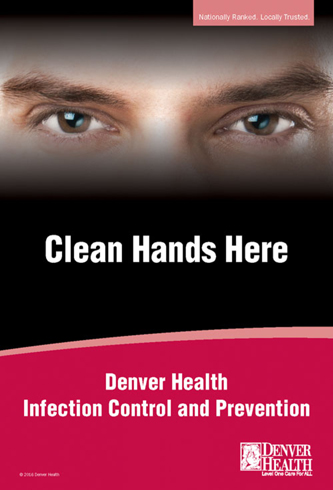
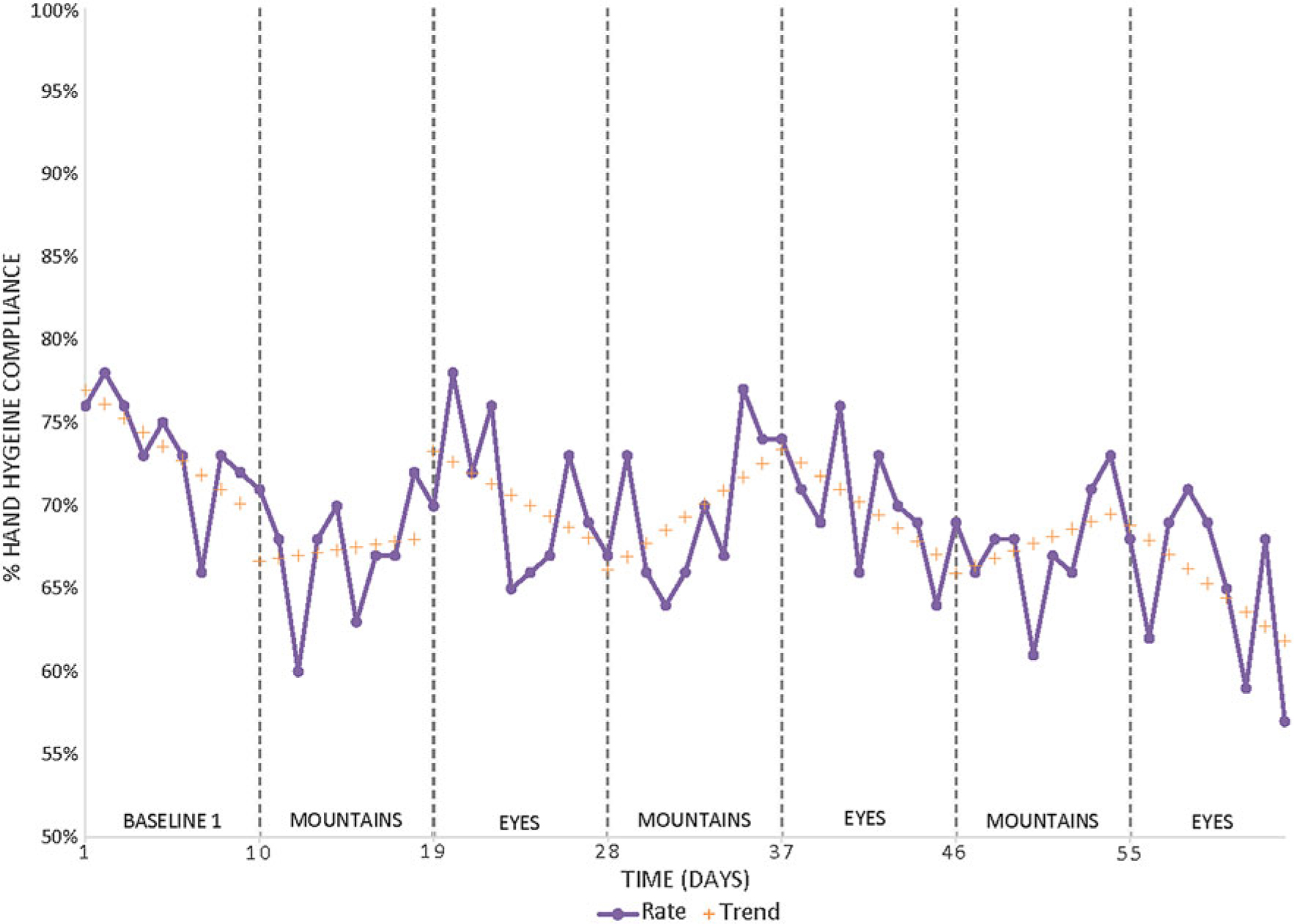
In the first experiment, placards depicting either the intervention (an image of human eyes; Fig. 1) or a control image (an image of mountains; Online Supplement 1) with an identical message reminding providers to “clean hands on entry and exit” were displayed above soap and ABHR dispensers on the exterior of patient rooms on the study units. We utilized realistic male eyes with a direct gaze because a previous study found a stronger effect was achieved with these characteristics.Reference Bateson, Nettle and Roberts10 However, we avoided using eyes that might have been perceived as too threatening or aggressive, and we did not post the images in the interior of patient rooms to minimize the risk of patients being intimidated and/or of staff removing the posters.Reference Beyfus, Drawson and Danner13 Placards were rotated every 10 days with 6 experimental periods (i.e., 3 intervention periods and 3 control periods).
Eye images intervention placard.

Experiment 2: Social norms message intervention
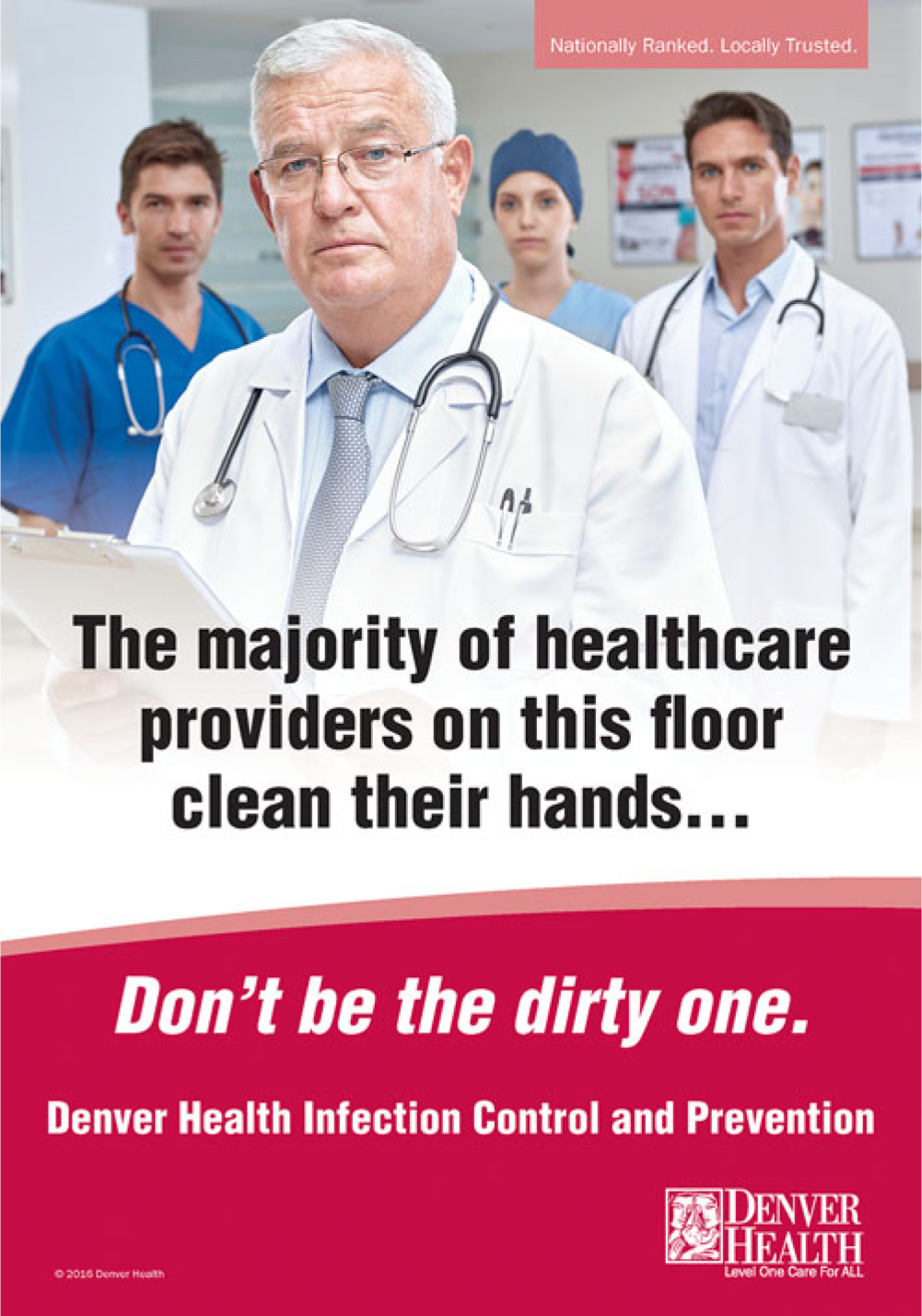
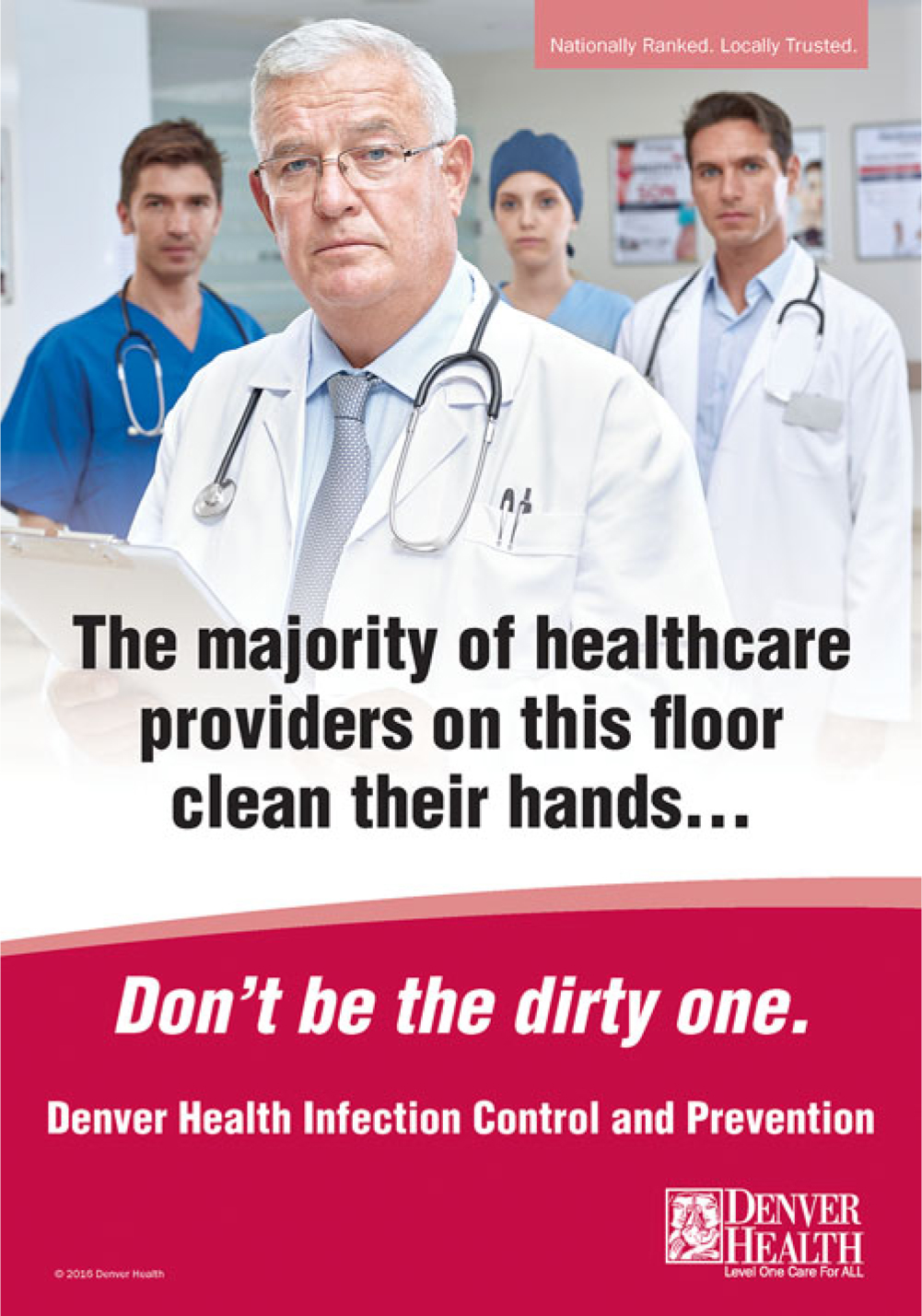
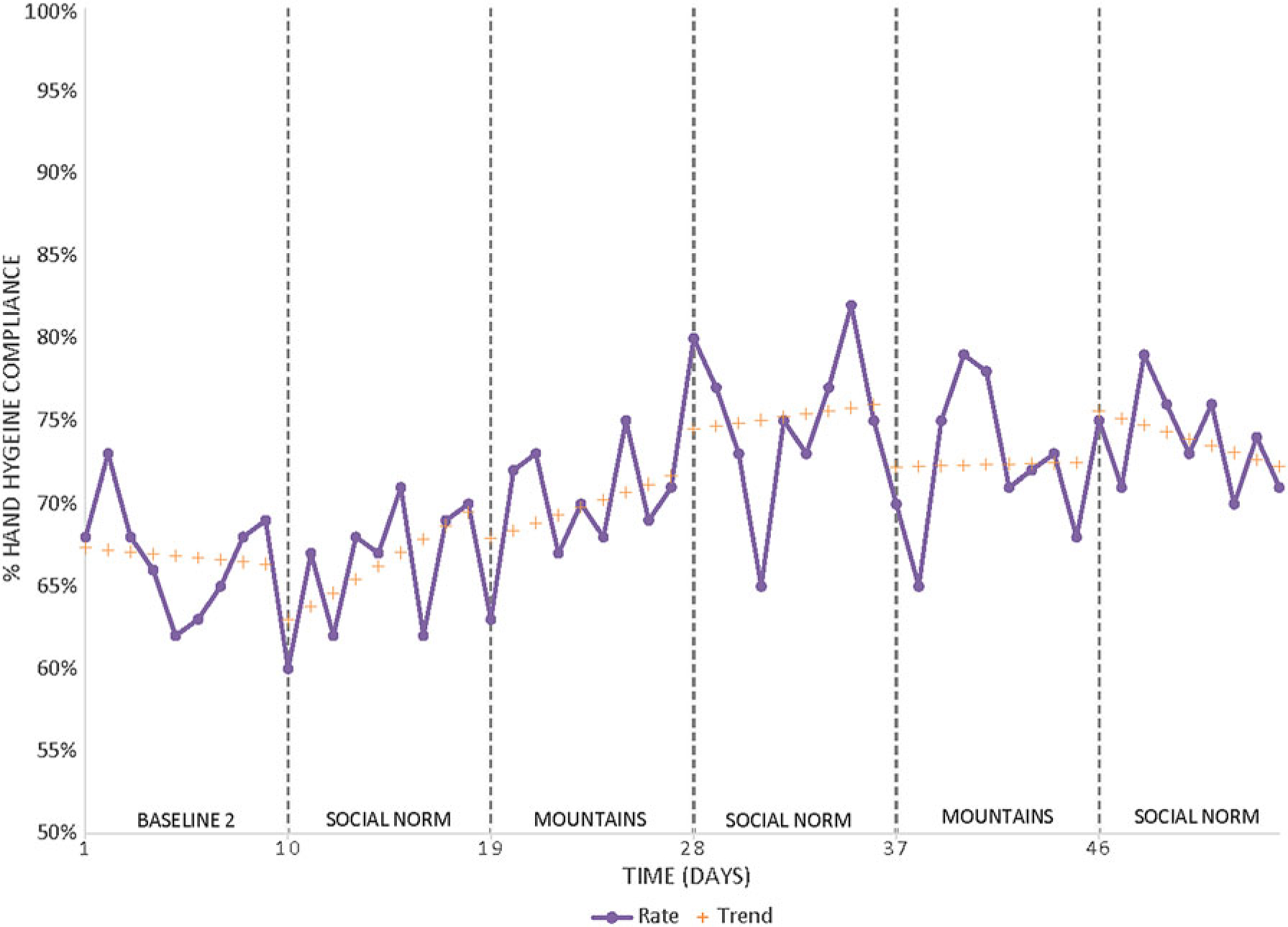
Following a 10-day washout period, placards depicting the second intervention (an image of several HCPs with a message encouraging compliance with social norms) (Fig. 2) were alternated every 10 days with the control placards (an image of mountains; Supplement 1 online) for a total of 6 experimental periods (ie, 3 intervention periods and 3 control periods). As with the first experiment, placards were placed above soap and ABHR dispensers on the exterior of patient rooms on the study units.
Social norms intervention placard.
Data collection
Denver Health promotes the WHO Five Moments of Hand Hygiene24 and tracks adherence via both direct observations and electronic monitoring. However, data were collected in this study exclusively through electronic monitoring via the CenTrak Hand Hygiene Compliance Solution already in use on 4 hospital units (including the study units). Electronic monitoring occurs 24 hours per day with an average of 4,930 opportunities per day on these units. This technology utilizes locator badges with radio frequency identification (RFID) technology to track nursing staff location on the unit.25 The RFID badges interact with sensors installed on all soap and ABHR dispensers throughout the units through proximity; the RFID badge must be within ~46 cm (18 inches) of the sensor for a HH observation to be recorded as successful. Utilizing this system, HCPs were expected to perform HH at any dispenser within 60 seconds of entering or exiting a patient room.
Statistical analysis
The effect of each intervention on HH adherence was assessed over time for each unit using interrupted time-series analysis. The time interval utilized was each day of the intervention. For each intervention time period, an overall, entrance, and exit HH time series models were calculated overall and for each unit. The preintervention trend, defined as the immediately preceding period where control placards were used, immediate effect when each particular set of intervention posters were placed, and the trend during each intervention was calculated. P < .01 was considered statistically significant. The maximum likelihood method was used for each time-series model. Autocorrelation was assessed using the Durbin-Watson statistic, and distancing was implemented for Durbin-Watson P values < .05. All analyses were performed using SAS version 9.3 software (SAS Institute, Cary, NC).
Results
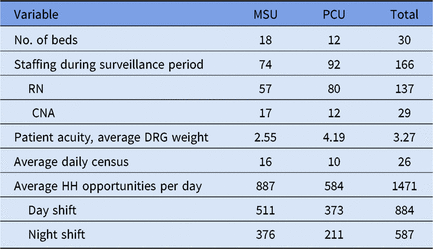
Characteristics of the study units are presented in Table 1. A total of 166 HCPs (74 on the MSU and 92 on the PCU) were monitored electronically over the study period. There were a total of 184,172 electronic observations collected (110,903 on the MSU, 73,269 on the PCU). The median daily number of observations for both units was 1,471 (interquartile range, 1,337–1,584). During the 19 days prior to our eye image intervention, the average HH adherence rate was 70%.
Baseline Characteristics of Study Units

Note. MSU, medical/surgical unit; PCU, progressive care unit; RN, registered nurse; CNA, certified nursing assistant; DRG, diagnostic-related group; HH, hand hygiene.
Eye image intervention
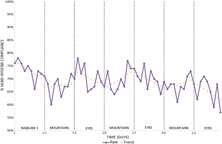
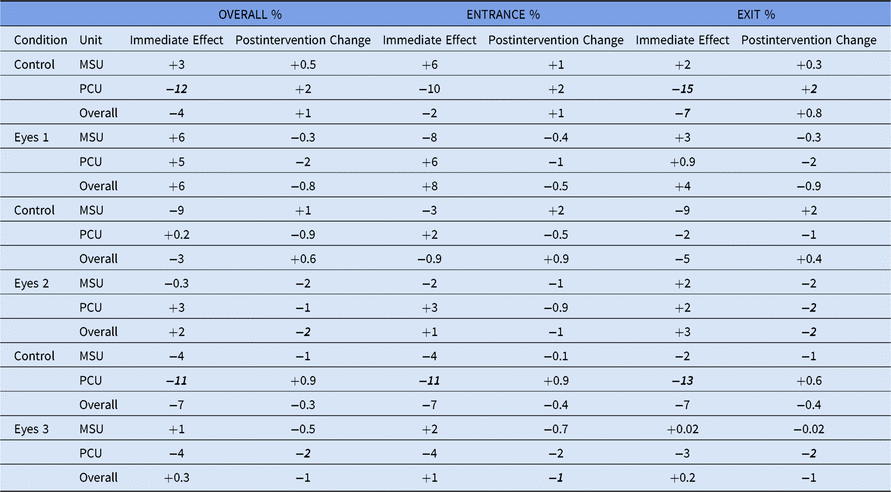
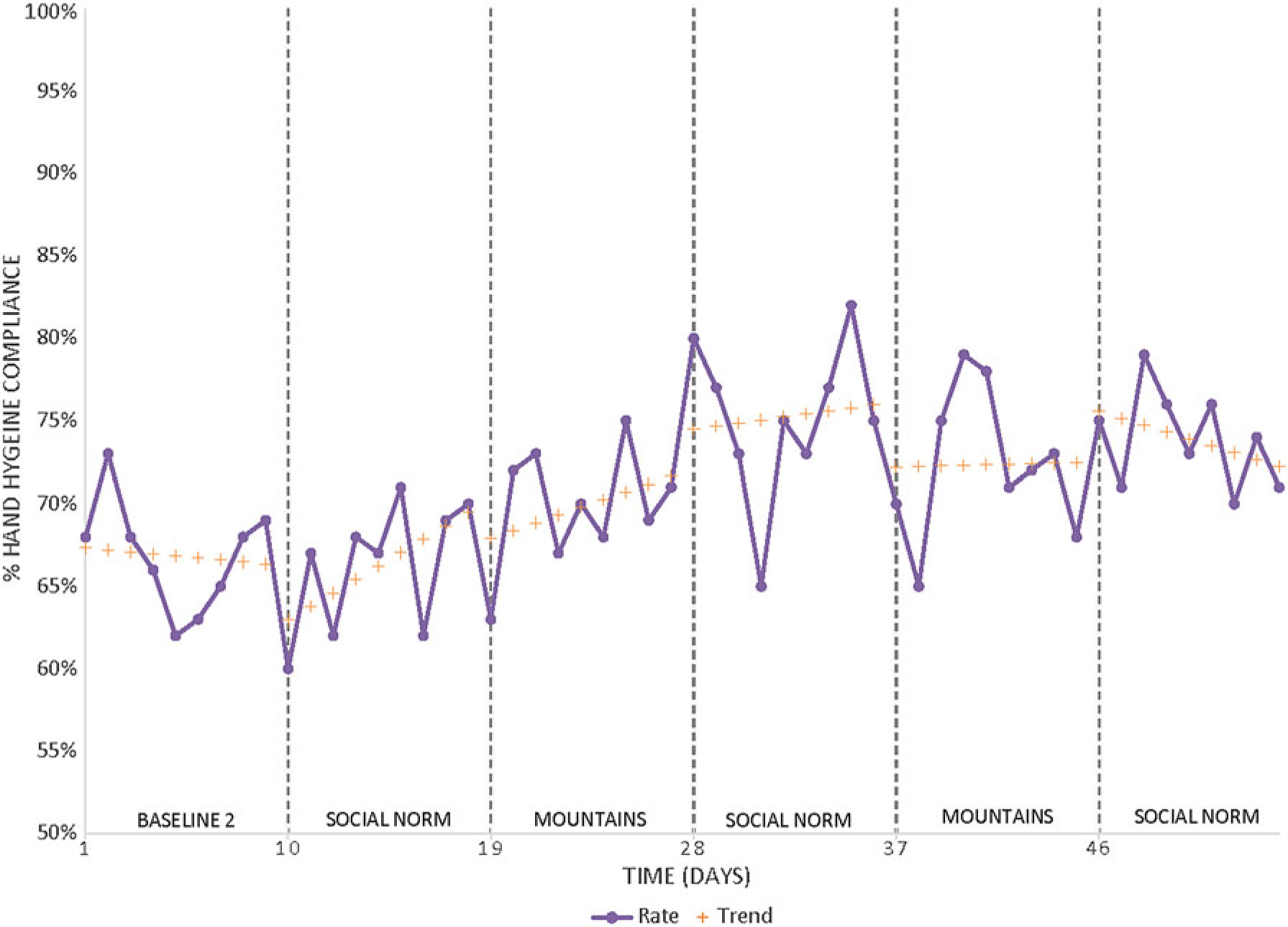
No statistically significant improvements in HH adherence were observed during any of the 3 intervention periods in which the eye images were displayed (Fig. 3). These results were consistent when analyzing data by unit, by day versus night shift, and for pre- and postentry rates (Table 2).
Interrupted time series: aggregate results of eye images intervention.
Interrupted Time-Series Results, Eye Images Intervention

Note: MSU, medical/surgical unit; PCU, progressive care unit. Significant effects (P < .01) are shown in bold.
Social norms messaging intervention
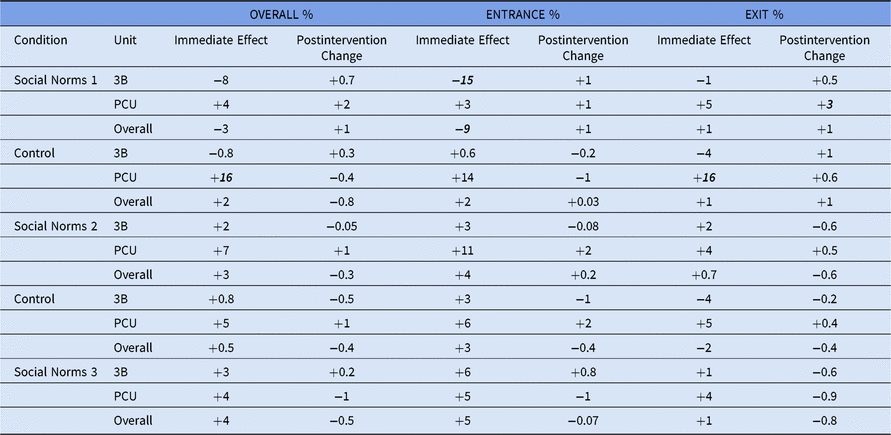
No statistically significant improvements in HH adherence were observed during any of the 3 intervention periods in which the social norms intervention was displayed (Fig. 4). Again, These results were consistent when analyzing data by unit, by shift, and pre- and postentry rates (Table 3).
Interrupted time series: aggregate results of social norms intervention.
Interrupted Time-Series Results, Social Norms Intervention

Note. MSU, medical/surgical unit; PCU, progressive care unit. Significant effects (P < .01) are shown in bold.
Discussion
Given their success in motivating behavioral change in other settings, we predicted that eye images and social norms messages might serve as additional, salient cues to drive further improvements in HH among HCPs participating in an electronic monitoring and feedback program. However, we found no incremental improvements in adherence as a result of either of these interventions. Nevertheless, this study is a valuable addition to the small number of well-designed studies evaluating interventions to improve HH adherence.Reference Schweitzer, Schacht Reisinger and Ohl5, Reference Gould, Moralejo, Drey and Chudleigh26
Only a few studies have examined the effect of eye images on HH adherence in healthcare settings, and the results of these studies are conflicting. Bolton et alReference Bolton, Rivas and Prachar14 assessed the effect of male eye images on HH adherence in 12 hospital wards and did not find improved adherence, but adherence (presumably assessed via direct observation) was already high (87%). Gaube et alReference Gaube, Tsivrikos, Dollinger and Lermer16 also did not find that displaying electronic eye images on a screen near ABHR dispensers in a surgical unit improved electronically assessed HH adherence. However, they utilized female eyes with an indirect gaze, which have been shown to have a weaker effect on outcomes.Reference Bateson, Nettle and Roberts10, Reference Gaube, Tsivrikos, Dollinger and Lermer16 Beyfus et alReference Beyfus, Drawson and Danner13 studied the effect of male eye images on HH adherence in a perioperative setting and concluded that it might improve HH adherence. However, they did not utilize a control and did not directly measure HH adherence, relying instead on the volume of ABHR dispensed. Lastly, on the basis of a small number of direct observations, King et alReference King, Vlaev and Everett-Thomas15 reported that male eye images significantly improved HH adherence among staff and visitors in an intensive care unit, whereas female eye images had no effect.
Two previous studies have examined the effect of social norms on HH adherence in hospitals. Armellino et alReference Armellino, Hussain and Schilling23 publicly displayed each shift’s adherence rate in the hallway outside a medical intensive care unit and e-mailed adherence rates to nursing supervisors. This intervention dramatically increased HH adherence, but with significant associated expense, and this intervention raises privacy concerns for HCPs.Reference Armellino, Hussain and Schilling23 Similarly, Gaube et alReference Gaube, Tsivrikos, Dollinger and Lermer16 found that a dynamic social norms cue (eg, a small screen with a sad face emoticon that changed to a smiley face) significantly increased HH adherence in a trauma surgery unit, but it did not discriminate between HCPs, patients, and visitors.
There are several possible reasons why HH adherence may have been unaffected by the interventions in our study. First, HH behavior is complex, and although eye images and social norms messages have been found to influence behaviors in other settings, it is possible that they do not meaningfully influence HH behavior. However, several factors inherent to our study may have made it more difficult to decipher the effect of these interventions on behavior. First, we studied these interventions in HCPs who were already aware that their adherence was being electronically monitored and who were receiving feedback on their performance. The baseline HH adherence rate in our study (70%) was higher than reported in previous studies,Reference Erasmus, Daha and Brug3 suggesting that participants were plausibly already impacted by the salient cues (ie, being ‘watched’ and under pressure to comply with social norms on the unit) that we studied. We had hoped that our interventions would serve as additive, salient cues by intensifying this feeling of ‘being watched,’ and by enhancing pressure to comply with social norms, but our results suggest a possible ceiling effect. It is possible that the interventions were reminders of what participants already perceived via an electronic Hawthorne effect and thus had no additional effect. Alternatively, there may be dose and exposure limits to the effectiveness of these behavioral interventions. For instance, we avoided using eyes that might have been perceived as too threatening or aggressive, and we utilized static images rather than animated images or real-time adherence rates, all of which might have had a stronger effect. Moreover, since participants were nursing staff who worked on the study units (as opposed to naïve subjects encountering the interventions) they were repetitively exposed to the interventions, and this may have diminished their effectiveness.
Our study has a number of strengths. First, we utilized a quasi-experimental design with a control condition and repeated measures. Moreover, the use of electronic monitoring technology allowed for the collection of thousands of unbiased ‘observations’ at all times of the day. As opposed to direct observation which is limited to line of sight, we were able to assess whether HH was performed at any dispenser on the unit. However, our study also has several important limitations. First, it was a single-center study at an academically affiliated safety-net hospital that had already implemented electronic monitoring technology. Second, we only studied registered nurses and CNAs; thus, we were not able to study the impact of the interventions on other types of HCPs, patients, or visitors. Lastly, we studied the interventions in a cohort of HCPs who were already being monitored and receiving feedback on their performance.
In conclusion, displaying eye images or a social norms message in the hospital environment did not result in measurable improvements in HH adherence among HCPs participating in an electronic monitoring and feedback program. Our study highlights how electronic monitoring technology can be utilized to strengthen research evidence, and illustrates the inherent challenges to studying interventions to improve HH, including finding feasible and effective interventions to promote and sustain behavioral change, and of isolating the their effects within the hospital milieu. Future research should focus on which bundled interventions are most effective, and better understanding the dose and boundary conditions affecting such interventions.
Supplementary material
To view supplementary material for this article, please visit https://doi.org/10.1017/ice.2019.103.
Author ORCIDs
Sarah A. Stella, 0000-0002-7071-8910
Financial support
No financial support was provided relevant to this article.
Conflicts of interest
All authors report no conflicts of interest relevant to this article.