Since 2012, China’s anti-corruption campaign, which features the strategies of “hunting tigers” (targeting senior officials, dahu 打虎) and “swatting flies” (addressing grassroots corruption, paiying 拍蝇), has significantly reshaped public perceptions of corruption.Footnote 1 While extensive scholarly attention has focused on the campaign’s institutional architecture and enforcement mechanisms,Footnote 2 little is known about how information about various types of anti-corruption efforts influences public perceptions of corruption at different administrative levels – specifically, how information about high-profile cases involving senior officials (“hunting tigers” information) versus information about grassroots corruption cases (“swatting flies” information) shapes public perceptions of corruption across different governmental tiers remains inadequately explored.
Coinciding with Xi Jinping’s 习近平 sustained anti-corruption campaign, data from the Asian Barometer Survey (ABS) collected between 2011 and 2019 indicate a notable reduction in the public’s perception of corruption among government officials in China.Footnote 3 During this period, perceptions of widespread corruption significantly decreased, reflecting an enhanced public confidence in governmental integrity. However, despite this improvement, it remains crucial to understand how perceptions of corruption across different levels of government vary, particularly as public reactions to anti-corruption information may differ depending on the administrative tier in question. Therefore, we investigate the following research question: while public perceptions of corruption in China have decreased since the last decade, how does information about different anti-corruption efforts shape public perceptions of corruption at different levels of government?
Previous research shows that information about high-level investigations, especially those involving senior officials, can strongly influence public perceptions of corruption.Footnote 4 However, these studies predominantly focus on the early phases of the anti-corruption campaign, leaving the long-term effects of information about different anti-corruption efforts largely unexplored. By the time of our study in 2021, China’s anti-corruption campaign had been ongoing for nearly a decade under Xi’s leadership, potentially contributing to more stable public attitudes and raising the possibility of “corruption scandal fatigue.”Footnote 5 A key question, then, is whether extended exposure to anti-corruption information influences public perceptions of corruption at different government levels, particularly when considering the relevance of such information to people’s everyday lives.
Moreover, the existing literature often treats information about anti-corruption efforts as homogeneous, overlooking how its effects may vary depending on which level of government it targets. This oversight is particularly significant given the documented tendency for individuals to associate organizational hierarchy with varying degrees of susceptibility to corruption.Footnote 6 Such limitations constrain our understanding of the effectiveness of anti-corruption policies and impede the development of targeted anti-corruption strategies.
To address these gaps, this study conducts a survey experiment to examine how exposure to information about different anti-corruption efforts – that is, information that focuses either on high-profile cases involving senior officials (“hunting tigers”) or on grassroots corruption cases (“swatting flies”) – affects public perceptions of corruption at different levels of government. Unlike prior correlational research, our experimental approach enables causal inference about the effect of specific anti-corruption information. We surveyed a random sample of 1,596 residents in H province to empirically examine how information about “hunting tigers” and “swatting flies” affects public perceptions during the mid-to-late stages of a high-intensity anti-corruption campaign.
In this study, we classify anti-corruption information into two categories: information about “tigers,” which refers to cases involving senior officials under provincial jurisdiction (including officials at the director-general and deputy director-general levels, as well as certain key county-level officials), and information about “flies,” which covers cases involving grassroots officials who are closely involved in the daily lives of the general public (officials at the county and departmental levels and below). Our experimental evidence from H province reveals the hierarchical effect of information on these two types of anti-corruption efforts on the public’s perceptions of corruption across different administrative levels.
We find that while information about the “hunting tigers” anti-corruption efforts led to a slight increase in public perceptions of corruption at the provincial level (although not statistically significant), it showed strong heterogeneous effects across the different corruption tolerance groups. Notably, this type of information had significant positive impacts in reducing perceived corruption among groups with lower corruption tolerance, particularly at the provincial and prefectural levels. In contrast, information regarding grassroots-focused “swatting flies” efforts demonstrated statistically significant reductions in perceived corruption at lower administrative levels (for example, township level: -4.06 per cent, p=0.039).
Our analysis yields several substantial contributions to the literature on perceptions of corruption. First, we expand the literature on corruption scandal fatigue by showing that such fatigue manifests differently across administrative levels. Previous studies have demonstrated the dual effects of anti-corruption information – potentially enhancing confidence in anti-corruption effortsFootnote 7 while risking public fatigue.Footnote 8 Our findings challenge the presumed negative correlation between exposure to anti-corruption information and perceptions of corruption, revealing that perceptions of corruption vary hierarchically, depending on the administrative level involved and the type of anti-corruption information presented.
Second, given the prolonged duration of China’s anti-corruption campaign, psychological distance and value congruence are crucial theoretical dimensions that may explain the varying effectiveness of anti-corruption information about different government levels. The public perceive corruption differently based on their psychological proximity to governance issues and their normative attitudes towards corruption. Therefore, examining these dimensions helps us to understand how hierarchical perceptions of corruption shape public responses to various anti-corruption strategies.
Third, our experimental evidence contributes to the ongoing debate about the effectiveness of information regarding high-profile versus grassroots-level anti-corruption cases. Our findings suggest that information about addressing corruption issues that are proximate to people’s daily lives may be more effective in influencing public opinion than information about high-profile cases involving senior officials. This insight has important policy implications, suggesting that improving public satisfaction with anti-corruption efforts may require a greater focus on communication about corruption issues that directly impact people's daily lives.
These findings carry significant implications for anti-corruption policy design and implementation. Our results suggest that while information about high-profile investigations into senior officials has diminishing effects on public perceptions of corruption, information about grassroots-focused anti-corruption efforts is more effective, particularly when it focuses on lower administrative levels. These level-specific effects underscore the importance of calibrating anti-corruption communication strategies within China’s multi-level governance system and highlight the value of developing targeted information approaches for different administrative tiers.
Literature and Hypotheses
The impact of “hunting tigers” information on perceptions of corruption
In China’s hierarchical political system, corrupt behaviour by senior officials can be conceptualized as a top-down erosion of organizational integrity, which can be seen as “setting a bad example from the top down.” It raises doubts about the integrity of the entire political system. Within China’s institutional environment, where high-ranking officials have significant power and visibility, the public form perceptions of the whole system by observing the actions of these officials and the consequences they face. Frequent exposure to corruption cases involving high-ranking officials may lead the public to believe that such behaviour is widespread among the upper echelons, and that those investigated are just the “tip of the iceberg.”Footnote 9
In cases of high-level corruption, the public may be inclined to attribute corruption to systemic issues rather than individual malfeasance. Studies have found that the frequent exposure of corruption cases involving senior officials increases the public’s tendency to attribute the issue to widespread problems within the government system.Footnote 10 This attribution pattern aligns with China’s political culture, where leadership behaviour is traditionally seen as reflecting systemic characteristics. Through the lens of signalling theory,Footnote 11 the actions of senior officials may be seen as representative signals of the entire political system. This signalling effect is particularly pronounced in China’s media environment, where high-profile corruption cases receive extensive coverage. Consequently, information about this type of anti-corruption effort is likely to have a more pronounced positive impact on perceptions of corruption at high levels of government, while its impact on grassroots government is relatively attenuated.Footnote 12 Information about anti-corruption initiatives targeting senior officials has a significantly greater impact on perceptions of central government corruption than on perceptions of local government corruption.Footnote 13
Existing studies suggest that prolonged exposure to information about high-profile corruption cases can lead to “corruption scandal fatigue.” However, it remains unclear whether the public believe that the different types of anti-corruption efforts continue to be as effective across various government levels, particularly in a context where overall perceptions of corruption have been diminishing.
Drawing on the theoretical insights above, the impact of information about “hunting tigers” anti-corruption efforts on public perceptions is multifaceted. Such information functions as a high-level political signal, potentially reinforcing rather than diminishing perceptions of systemic corruption. The disclosure of the corrupt activities of senior officials may lead the public to infer that corruption is pervasive at the top, thereby amplifying perceptions of high-level government corruption. Given this signalling effect, we hypothesize:
H1: Anti-corruption information that emphasizes the investigation and punishment of senior local officials (“hunting tigers”) will significantly increase public perceptions of government corruption, particularly at higher levels of government.
The impact of “swatting flies” information on perceptions of corruption
In China’s multi-level administrative system, information about the “swatting flies” anti-corruption efforts primarily focuses on grassroots officials, who engage with the public on a daily basis. This direct impact can be further explained by the Contact Hypothesis. Gordon Allport proposed that direct contact can change attitudes towards a specific group.Footnote 14 In the context of anti-corruption, the public’s daily interactions with grassroots officials make information about grassroots anti-corruption efforts more salient and easier to evaluate. Research shows grassroots anti-corruption information directly affects public attitudes due to its proximity and relevance to people’s everyday lives.Footnote 15
From the perspective of signalling theory, information about grassroots anti-corruption efforts sends a positive signal to the public about the government’s determination and capability in grassroots governance. Unlike information about the “hunting tigers” efforts, these signals are more readily discernible and interpretable by the public because they relate directly to everyday life.Footnote 16 Additionally, information about grassroots anti-corruption efforts may have a demonstrative effect. Research indicates that by observing cases where grassroots officials are punished, people may become more aware of the consequences of misconduct, thereby increasing their confidence in the government’s integrity.Footnote 17 This demonstrative effect may be amplified in the era of social media.
Information about the “swatting flies” anti-corruption efforts significantly impacts public perceptions of corruption primarily because it directly addresses the interests and concerns of ordinary people by focusing on issues closely related to their daily lives. This type of information highlights sustained anti-corruption initiatives at the grassroots level, yielding immediate effects while also creating long-term cumulative effects that enhance the public’s sense of gain.Footnote 18
First, information about “swatting flies” focuses on grassroots corruption, which often directly affects people’s daily lives. For example, exposing and addressing corruption in areas such as education, healthcare and social security allows the public to tangibly experience the effectiveness of anti-corruption measures. This responsiveness to their interests makes it easier for people to perceive improvements in government integrity.Footnote 19
Second, the cumulative effects of exposure to information about grassroots anti-corruption efforts may significantly enhance the public’s sense of gain, building on a positive evaluation of government integrity. This sense of gain primarily arises from gradual changes perceived in daily life, such as improvements in the quality of public services, administrative efficiency and the conduct of grassroots officials.Footnote 20 Thus, in the context of anti-corruption endeavours, sustained exposure to information about crackdowns on grassroots corruption may gradually shift public perceptions and evaluations of the government. Over time, the impact of information about the “swatting flies” initiatives may not only endure but may also become increasingly apparent. This cumulative effect may reflect people’s recognition of the government’s long-term commitment and their perception of continuous improvements in grassroots governance. Moreover, research indicates that information about long-term grassroots anti-corruption efforts not only improves evaluations of grassroots governments but also gradually enhances evaluations of higher-level governments.Footnote 21
In summary, the impact of “swatting flies” anticorruption information on public perceptions operates through both direct mechanisms (such as signalling and social influence) and indirect mechanisms (for example, demonstration effects and cumulative effects). These combined channels contribute to a more favourable public evaluation of the government’s integrity, particularly at the grassroots level. Given the proximity of grassroots corruption to citizens’ everyday experiences, this type of information is likely to exert a stronger influence on perceptions of local governance. Accordingly, we hypothesize:
H2: Anti-corruption information that emphasizes the investigation and punishment of grassroots officials (“swatting flies”) will significantly decrease public perceptions of government corruption, especially perceptions of grassroots government corruption.
Research Design
Experimental design
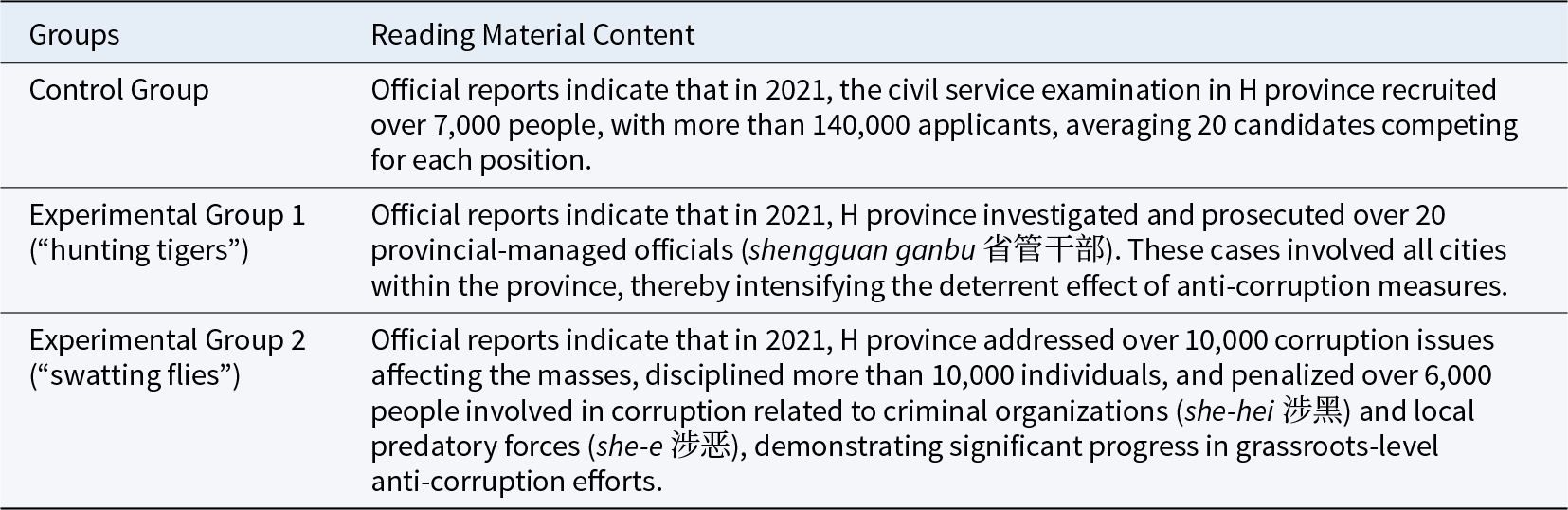
To examine how information about “hunting tigers” and “swatting flies” anti-corruption efforts differentially impacts public perceptions of corruption at different government levels, we conducted a randomized experiment embedded within a telephone survey in H province. As shown in Table 1, our experiment comprised three conditions: a control group, which was presented with neutral information about civil service examinations, and two experimental groups, which were presented with information emphasizing anti-corruption efforts targeting high-ranking officials (“hunting tigers” information) and grassroots officials (“swatting flies” information), respectively. After exposure to these materials, participants evaluated corruption levels across four administrative levels: provincial, prefecture, county and township.
Experimental Anti-corruption Information Material

Our experimental stimuli were intentionally concise and factual, reflecting the format of the official anti-corruption communications commonly encountered by the public and ensuring comparability across conditions. First, telephone survey methodology imposes practical constraints on stimulus length – respondents’ attention spans are limited in telephone interactions, necessitating the use of clear, digestible information chunks. Second, these brief, statistic-focused materials closely mirror the typical form of anti-corruption information that the Chinese public routinely encounter through official channels, enhancing ecological validity while maintaining experimental control. Rather than introducing complex narratives that might introduce multiple confounding variables, these standardized presentations focus respondents’ attention on the key differentiating elements among the different types of anti-corruption information.
We operationalized information about “hunting tigers” through cases involving provincial-level officials, while information about “swatting flies” was operationalized through grassroots officials who directly interact with the public. The numerical difference between “over 20 provincial-level officials” versus “over 10,000 corruption issues” reflects the inherent scale distinction between these approaches: high-profile investigations typically involve fewer cases with greater individual significance, while grassroots operations address more numerous, smaller-scale incidents. This contrast maintains ecological validity by approximating the proportions the public encounter in actual anti-corruption communications.
To address potential concerns about differential credibility across experimental conditions, we examined between-group differences in participants’ evaluations of the intensity of anti-corruption efforts and their satisfaction with government performance in our cross-sectional survey data. The absence of significant differences between experimental and control groups on these measures suggests minimal credibility distortion across our experimental materials (see the online Appendix Part I for detailed results). Furthermore, all materials were presented in the same official reporting style using comparable linguistic structures and attributions to “official reports,” enhancing their equivalence as information sources.
The inclusion of she-hei she-e fubai 涉黑涉恶腐败, which refers to involvement in organized crime, evil and corrupt activities, in Experimental Group 2 reflects the Central Commission for Discipline Inspection’s policy emphasis on combating collusion between grassroots officials and criminal networks, which has been a significant component of grassroots anti-corruption messaging since 2018.Footnote 22 According to a report in China Discipline Inspection and Supervision News, H province’s anti-corruption efforts specifically targeted the collusion between grassroots officials and criminal organizations that damages public welfare, ensuring policy coherence from central to local levels.Footnote 23 While not all grassroots corruption cases involve collusion with criminal organizations or predatory forces, empirical studies demonstrate that a significant subset of such cases – particularly those directly harming public welfare – are indeed linked to these networks.Footnote 24 By incorporating she-hei she-e elements, we aimed to test public responsiveness to forms of corruption that are prominently highlighted in policies and which disproportionately affect people’s lived experiences. Crucially, the experimental design does not assert that most grassroots corruption involves such groups; rather, it probes how exposure to information about high-salience cases influences hierarchical perceptions.
H province was selected for this experiment due to its representative characteristics. It exhibits typical anti-corruption outcomes, with investigations slightly exceeding the national average, and has seen inquiries into several high-ranking municipal officials. In addition, its geographic centrality synthesizes northern and southern cultural influences. Economically, H province offers a balanced representation of China’s development (ranking 9th in GDP and 14th in per capita GDP in 2020), making it an ideal location for studying how information about different types of anti-corruption initiatives affects perceptions of corruption across diverse contexts.
Measurement of corruption perceptions
To ensure the direct comparability of perceptions of corruption across China’s multi-level governance system, which is central to our research question, we measured public perceptions at all four administrative levels (province, prefecture, county, township) using identically worded items: “How corrupt do you think officials at the XX level are?” This approach provides a single, consistent metric, ensuring that any observed differences are attributable to the public’s varying perceptions of corruption at each government level, rather than to variations in the measurement instrument itself. This uniform measurement is essential for systematically testing how anti-corruption information has differential effects across the administrative hierarchy.
Several methodological considerations guided our measurement approach. The fixed top-down sequence mirrors China’s administrative hierarchy, which was familiar to respondents and reduced cognitive load during telephone interviews. To control for response-scale bias, the five-point scale direction (“highly corrupt” to “not corrupt at all”) was randomly assigned across respondents, addressing potential anchoring effects while maintaining response comparability across administrative levels.
Psychometric validation confirms measurement robustness: there is excellent internal consistency (Cronbach’s α = 0.915), strong data suitability for factor analysis (KMO = 0.823, Bartlett’s χ2 (6) = 4957.01, p < 0.001), and a robust unidimensional structure via principal-component factor analysis. The first factor explains 79.77 per cent of total variance (eigenvalue = 3.19) with substantial factor loadings (0.82–0.93), demonstrating that while these four measures capture a coherent underlying construct of corruption perception, each administrative level retains sufficient unique variance to justify separate analysis (see the online Appendix Part II for detailed psychometric diagnostics). This multi-level measurement approach aligns with established practices in corruption perception research and provides the methodological foundation for examining differential information effects across administrative tiers.
Data collection
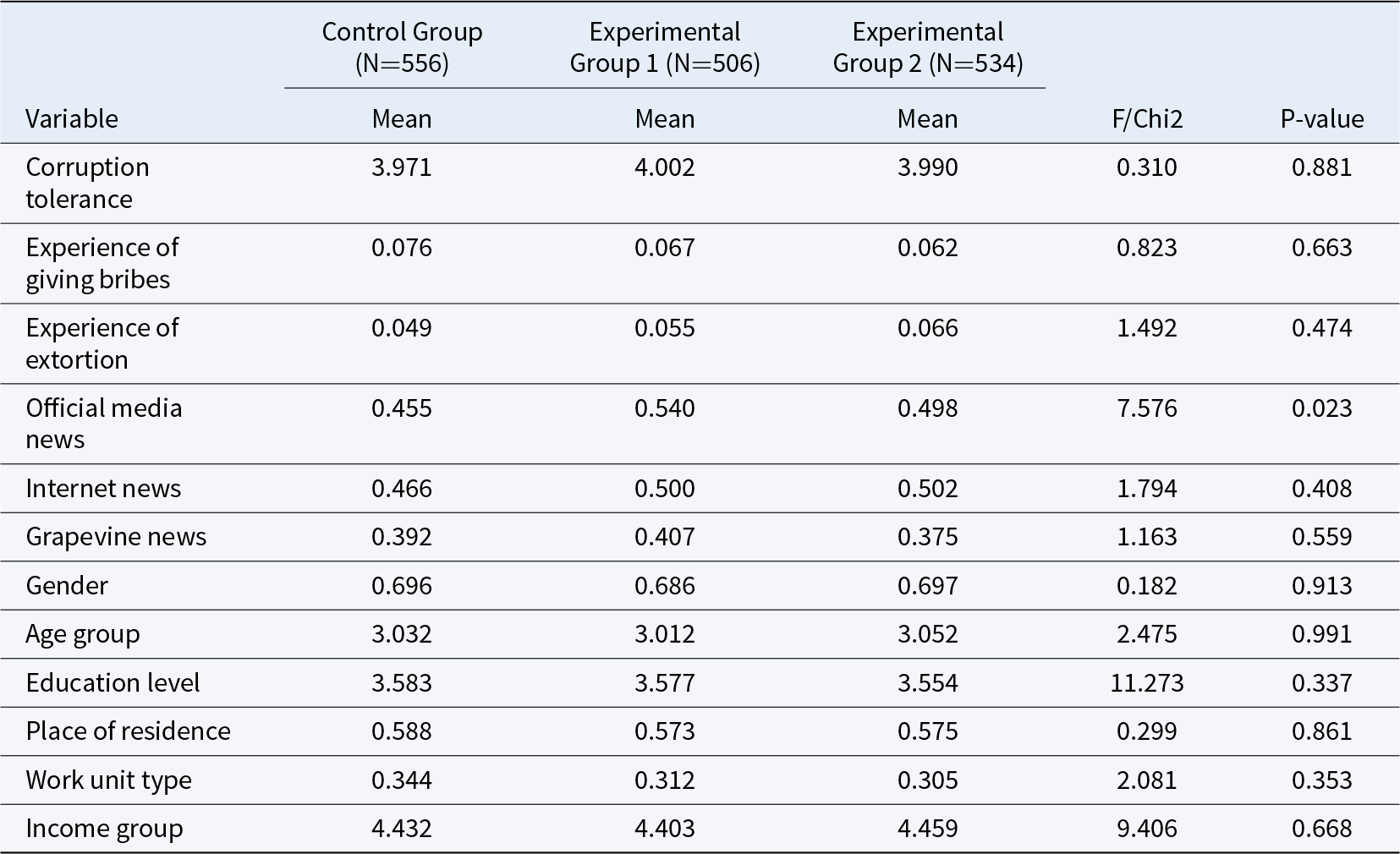
To systematically assess public perceptions of anti-corruption initiatives in H province, we conducted a stratified random sampling telephone survey across all 14 prefecture-level cities in December 2021. The survey, embedded within a broader Computer-Assisted Telephone Interviewing (CATI) study (N = 5,503; 2.58 per cent response rateFootnote 25 ), employed prefecture-level administrative regions as primary sampling units. The experimental subsample was derived through stratification, random assignment to experimental groups and rigorous data cleaning, resulting in a final analytical sample of 1,596 respondents. Detailed information about sample cleaning procedures and rejection rates is provided in the online Appendix Part III. Despite challenges common to politically sensitive surveys, balance tests confirmed covariate equilibrium across groups (p > 0.05 for all variables except official media news; see Table 3), ensuring methodological robustness.
This survey was conducted during the COVID-19 pandemic when health QR codes significantly boosted mobile phone penetration, enhancing sample representativeness. The telephone interview approach with CATI systems was selected for its standardization through real-time monitoring and quality checks, while enabling efficient data collection across diverse geographic regions. This methodology integrates rigorous sampling techniques with a randomized experimental design, facilitating both generalizability and causal inference, although pandemic-related factors might have influenced public perceptions and should be considered when interpreting results.
Variable description and summary statistics
Our dependent variables measure perceived corruption across four local government levels: province, prefecture, county and township. Responses ranged from “highly corrupt” (5) to “not corrupt at all” (1), with “refuse to answer” and “don’t know” treated as missing data. Given China’s “broad government” (guangyi zhengfu 广义政府) concept where the public often conflate Party and government organs,Footnote 26 we operationalize these measures as government corruption perceptions for analytical clarity.
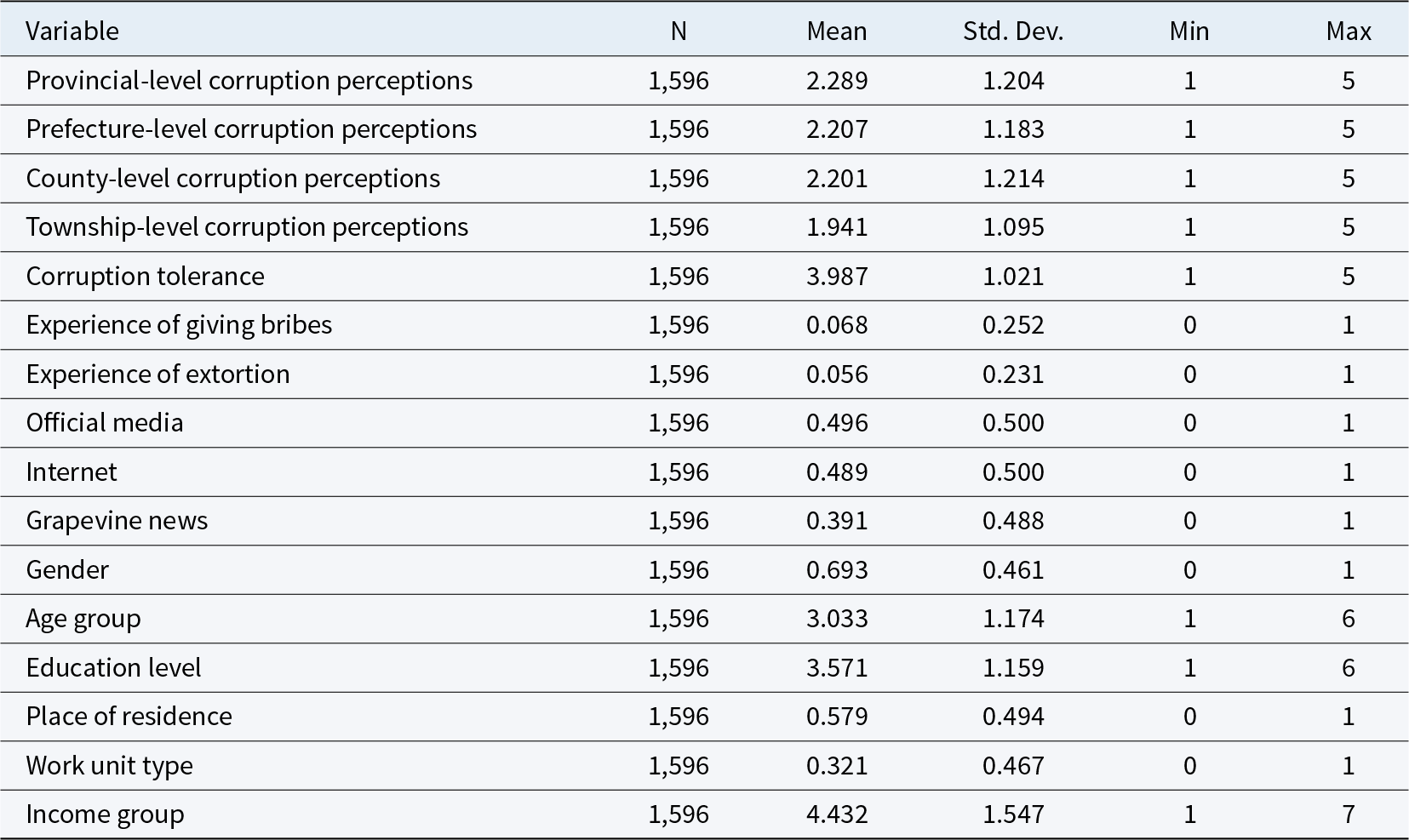
Table 2 shows mean corruption perception scores: province (2.289), prefecture (2.207), county (2.201) and township (1.941). These moderate scores reveal a hierarchical pattern, with lower perceived corruption at lower government levels. Control variables include demographic characteristics, corruption tolerance (measured using five scenario-based questions), personal corruption experiences (binary variables for bribe-giving and extortion) and information sources (official media, internet and grapevine news). Individual characteristics encompass gender, age, education, residence, work unit type and income. Government-affiliated organizations (tizhinei danwei 体制内单位) include Party and government organs, public institutions and state-owned enterprises, while non-government-affiliated organizations (fei tizhinei danwei 非体制内单位) serve as reference categories. This comprehensive variable set enables nuanced analysis of factors shaping perceptions of corruption across administrative levels in H province, combining individual and contextual elements to provide holistic insight into corruption perception determinants in the Chinese context.
Descriptive Statistics of Variables

Notes: Age group, education level, work unit type and income group are categorical variables.
Balance check
Standard balance tests confirm successful randomization across experimental groups. Using one-way ANOVA and chi-square tests, we examined balance across all control variables between experimental and control groups. Results (see Table 3) demonstrate comparable baseline characteristics (p>0.05) for all covariates except official media exposure (p=0.032). This single imbalance is unlikely to significantly affect our findings, given the overall balance achieved across the majority of demographic and attitudinal variables.Footnote 27 The robust equilibrium across groups strengthens the internal validity of our experimental design and supports the causal inferences drawn from our findings.
Balance Check between Experimental and Control Groups

Notes: One-way ANOVA was used for the corruption tolerance variable, while chi-square tests were employed for the remaining variables due to their binary or categorical nature.
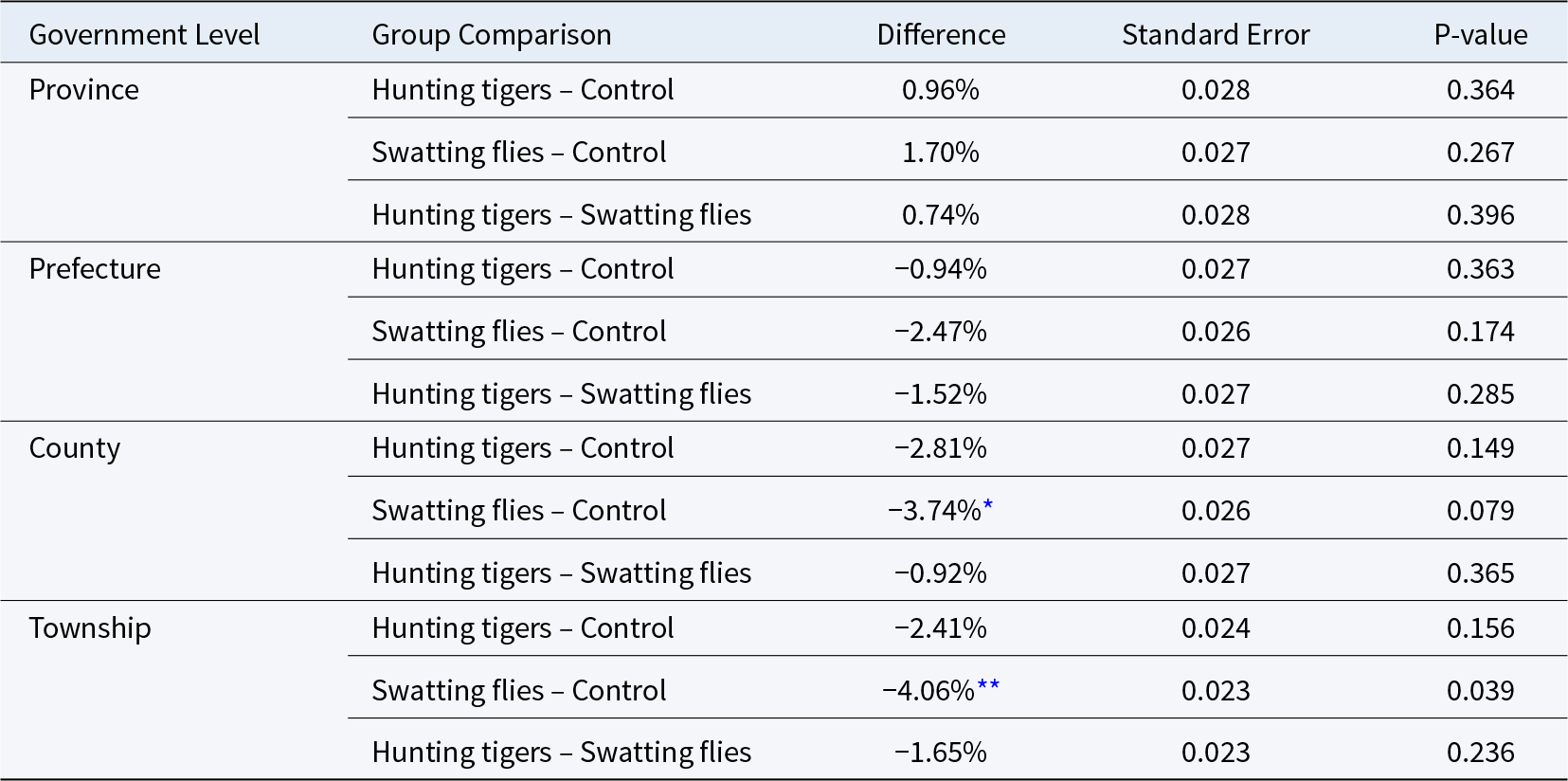
Proportion Test Results for Corruption Perceptions across Experimental Groups

Notes:
* p<0.1,
** p<0.05. The “Difference” denotes variations in the proportion of corruption perceptions between the experimental groups as demonstrated in Figure 2. Positive values indicate increased corruption perceptions (less favourable outcome), while negative values indicate decreased corruption perceptions (more favourable outcome).
Results
Baseline analysis
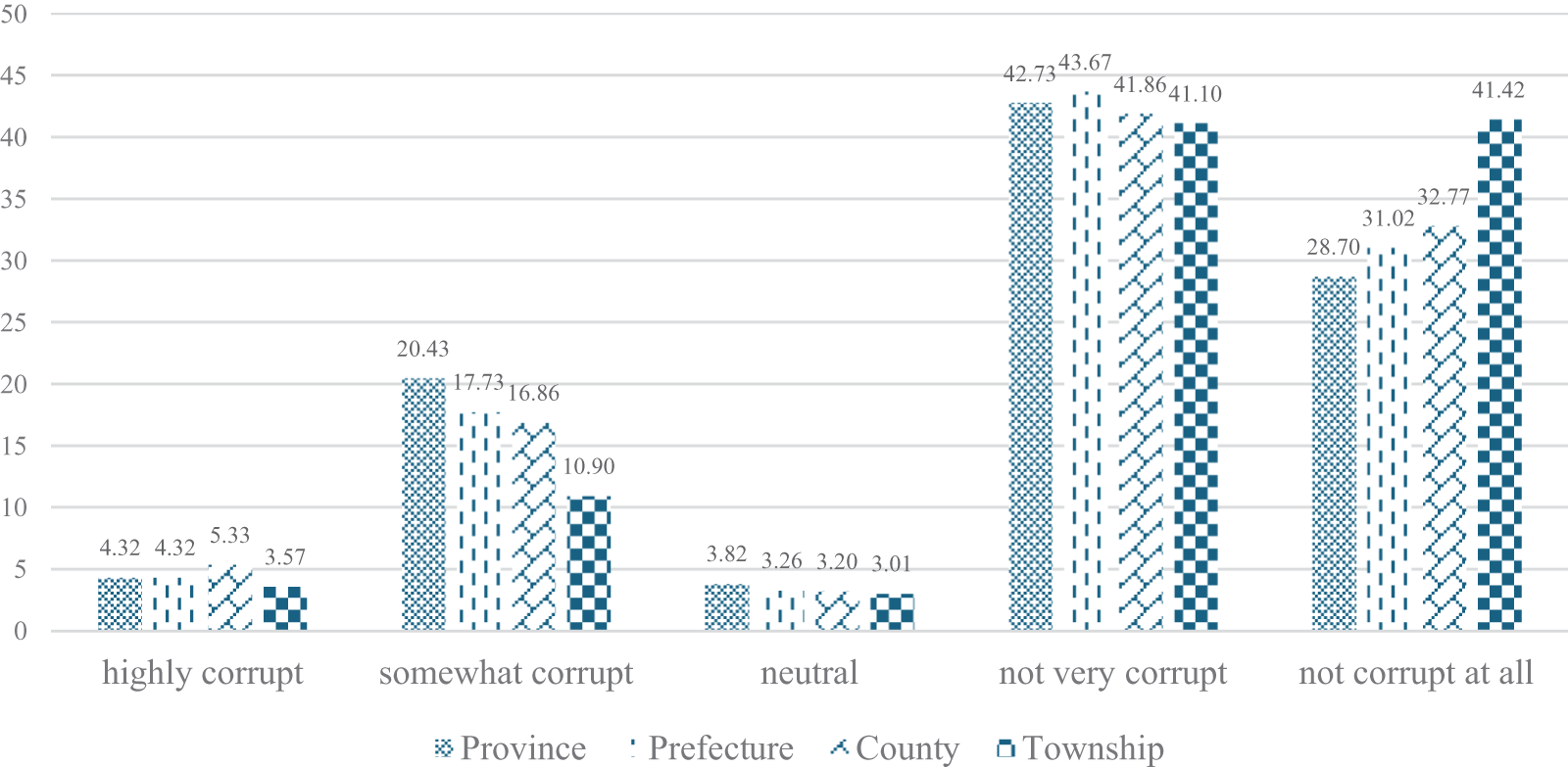
Our study uses five-point ordinal measures of corruption perception across government levels. Owing to the pronounced left-skewed distribution in Figure 1, treating these as continuous variables could introduce bias. Therefore, we transformed the five-point scale into a binary measure: responses indicating “highly corrupt,” “somewhat corrupt” and “neutral” were categorized as “corruption perceptions” (1), while “not very corrupt” and “not corrupt at all” were classified as “integrity perceptions” (0).
Comparison of Original Response Options for Corruption Perceptions across Government Levels (%)

This dichotomization aligns with established practices in public opinion research when handling skewed ordinal data and offers several methodological advantages in our context.Footnote 28 First, it addresses the non-normal distribution of our data, which violates assumptions for parametric tests. Second, it creates a more interpretable measure focused on the fundamental distinction between perception of corruption versus integrity. Third, it aligns with the theoretical focus on whether anti-corruption information pushes perceptions across the critical threshold from corruption to integrity, rather than gradual movements within corruption categories.
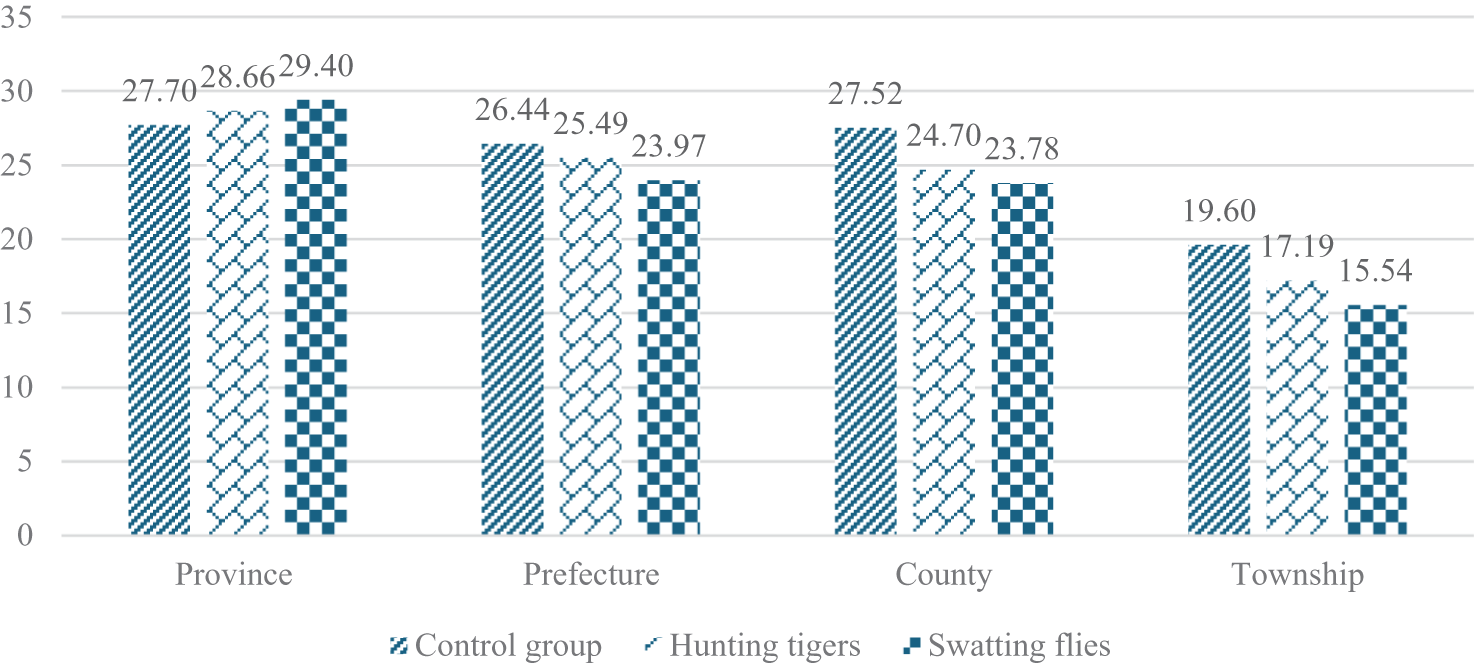
Figure 2 reveals that less than 30 per cent of respondents perceive governments as having corruption across all levels, with this perception weakening at lower government levels. Interestingly, our baseline data show a pattern where lower government levels are perceived as less corrupt than higher levels, with township governments having the lowest corruption perception levels. This pattern contrasts with previous research that typically found higher perceived corruption at lower government levels.Footnote 29 This reversal may reflect the cumulative effects of China’s sustained anti-corruption campaign, particularly its emphasis on grassroots “swatting flies” efforts in recent years. It potentially indicates a positive shift in public perceptions of local governance quality, although methodological differences between studies cannot be ruled out as contributing factors.
Comparison of Corruption Perceptions across Government Levels (%)

When examining experimental effects, we observe that at the provincial level, both experimental groups (“hunting tigers” information and “swatting flies” information) show slightly higher corruption proportions than the control group. In contrast, at the other three administrative levels, both experimental groups show lower corruption proportions compared to the control group. These findings suggest a complex relationship between different types of anti-corruption information and public perceptions across government hierarchies, indicating that information impacts may vary depending on the targeted government level,Footnote 30 potentially reflecting differences in public awareness or perceived strategy effectiveness at different administrative levels. This unexpected baseline pattern further underscores the importance of examining how different types of anti-corruption information might differentially affect perceptions across the administrative hierarchy.
Paired proportion tests: differential impacts across government levels
To rigorously evaluate how information about the different types of anti-corruption efforts affect public perceptions across government hierarchies, we conducted paired proportion tests examining statistical significance between experimental conditions. Our findings reveal a systematic variation in the effectiveness of anti-corruption information based on level of government and information type. Information about “swatting flies” anti-corruption efforts targeting grassroots officials demonstrates a clear hierarchical gradient: from slightly increasing perceptions of corruption at the provincial level (+1.70 per cent, p=0.267), to progressively greater reductions in perceived corruption at lower levels (-2.47 per cent at prefectural, marginally significant -3.74 per cent at county, p=0.079 and a statistically significant -4.06 per cent at township levels, p=0.039). In contrast, information about “hunting tigers” efforts showed smaller effects across all levels, with no statistically significant impacts.
These findings provide nuanced support for our hypotheses. H1 predicted that “hunting tigers” information would significantly increase perceptions of corruption, especially at higher government levels. While we observed a directional effect at the provincial level (+0.96 per cent), it was modest and not statistically significant, suggesting potential boundary conditions for the effectiveness of high-profile cases in mature campaign contexts. H2 predicted that “swatting flies” information would significantly decrease perceptions of corruption, especially at grassroots levels. This hypothesis received stronger support, with statistically significant effects at the township level and a consistent gradient of increasing effectiveness moving down the administrative hierarchy. This pattern suggests citizens find grassroots anti-corruption information increasingly relevant to the levels of government with which they have more direct interactions.
The observed moderate effect sizes (all under 5 per cent difference) should be interpreted within the context of China’s mature anti-corruption campaign. By 2021, the public had experienced nearly a decade of intensive anti-corruption messaging under Xi’s leadership, meaning our experimental treatments likely produced incremental adjustments to existing beliefs rather than wholesale opinion formation. That grassroots-focused information still produced significant effects at lower government levels indicates its enduring relevance, even in later campaign stages. These effects, while small, are meaningful as they represent genuine attitudinal shifts among a population with already well-established perceptions of corruption.
These findings align with the public’s experience-based perspectives on corruption. The stronger responsiveness to information about grassroots anti-corruption efforts at lower administrative levels likely reflects people’s more frequent interactions with local governments in their day-to-day lives. This proximity makes information about local anti-corruption efforts more personally relevant and interpretable, enhancing its impact on perception formation. Meanwhile, the more limited effects at higher government levels suggest that people may calibrate their responsiveness based on perceived relevance and efficacy, focusing attitudinal adjustments where they have more direct experiential reference points.
Robustness tests
Logistic regression analyses incorporating the full set of control variables from Table 3 confirm our main findings (see the online Appendix Table A5). With controls added, “swatting flies” information maintains marginal significance at the township level (OR=0.717, p=0.059), while treatment effects remain consistent across model specifications. The hierarchical pattern persists, with odds ratios decreasing systematically from provincial to township levels for both information types. Direct comparisons between information types showed no significant differences, although grassroots-focused information demonstrated consistently stronger point estimates at lower levels. These robust checks reinforce our central finding that the effectiveness of anti-corruption information varies systematically across government tiers, with grassroots-focused information particularly effective at lower levels where the public have more direct interactions.
Heterogeneity analysis and moderating effects
To examine how individual characteristics shape responses to information about anti-corruption efforts, we analysed two theoretically significant moderators: corruption tolerance and personal experiences of corruption.Footnote 31
Our analysis reveals that “hunting tigers” information demonstrates significantly stronger effects in reducing perceived corruption among those with lower corruption tolerance (i.e. those less accepting of corrupt practices), particularly at higher government levels. This interaction is statistically significant for provincial (OR=0.503, p<0.05) and prefectural governments (OR=0.566, p<0.1), with effects diminishing at lower administrative tiers (see the online Appendix Table A6). This suggests that information about high-level anti-corruption efforts resonates more strongly with those who already disapprove of corruption. In contrast, “swatting flies” information produces consistent effects across corruption tolerance groups, with no significant interaction at any government level, indicating that grassroots anti-corruption information has universal appeal regardless of prior corruption attitudes.
Personal experiences of corruption (bribe-giving or extortion) did not significantly moderate the effectiveness of either information type (see the online Appendix Table A7). While some substantial coefficient magnitudes appeared (notably the interaction between “hunting tigers” information and bribe-giving at the township level, OR=0.425), the absence of statistical significance challenges assumptions that direct encounters with corruption meaningfully shape responses to anti-corruption messaging.
These findings illuminate how individual characteristics condition the effectiveness of anti-corruption information: pre-existing normative positions on corruption significantly moderate reactions to high-level anti-corruption information, while grassroots-focused information demonstrates broader appeal across attitudinal divides.
Discussion: Hierarchical Perceptions and Strategic Efficacy in Anti-corruption Communications
Our experimental findings reveal sophisticated patterns in how information about different types of anti-corruption efforts influences public perceptions regarding China’s administrative hierarchy. Information about “swatting flies” efforts progressively reduced corruption perceptions down the governmental ladder, with the strongest effects at grassroots levels, while showing a slight increase provincially. Conversely, “hunting tigers” information showed limited overall effectiveness yet demonstrated significant impact among specific segments, particularly those with lower tolerance of corruption. These results advance our theoretical understanding of anti-corruption communications while offering practical insights for developing information strategies.
Campaign evolution and information saturation
Our findings should be interpreted in light of the evolving trajectory of China’s anti-corruption campaign. When launched in 2012, the “hunting tigers” approach dramatically expanded the anti-corruption efforts into previously insulated elite levels, initially generating substantial public attention.Footnote 32 By 2021, however, our data suggest there were “diminishing returns” for information about high-level corruption. After nearly a decade marked by stories of hundreds of “fallen tigers,” public perceptions regarding elite corruption had likely stabilized, making additional cases confirmatory rather than transformative.
This temporal dynamic helps to explain why our “hunting tigers” treatment yielded results consistent with H1 at the provincial level – a slight increase in the perception of corruption – but without the expected stronger effects. Our results showed only a modest, non-significant increase (+0.96 per cent, p=0.364), likely reflecting the campaign’s mature stage, where continued exposure to high-profile cases has reduced impact on public perceptions.
The limited effectiveness of “hunting tigers” information in 2021 presents a striking contrast to its documented impact during the campaign’s early phase (2012–2015).Footnote 33 Our findings reveal a “jaded” effect, which developed over the campaign’s near-decade evolution, fundamentally altering how the public process information about high-level corruption. This cognitive shift may have occurred through several interconnected mechanisms that collectively diminished public responsiveness to “tiger” cases.
First, the public’s mental frameworks evolved significantly. While early high-profile cases represented schema-disrupting revelations, by 2021 a cognitive framework had solidified wherein the public expected high-level corruption to exist systematically. This transformation meant that new cases merely confirmed existing beliefs rather than catalysed a change in attitudes, leading the public to interpret additional cases as evidence of persistent problems rather than effective governance. Second, media presentations of high-profile cases transitioned from exceptional events to routine reporting, triggering habituation effects where repeated exposure progressively weakens responses. The novelty that initially captured public attention dissipated, reducing each new case’s psychological impact despite its objective significance. Finally, the information environment became increasingly saturated, creating diminishing returns for additional exposures.Footnote 34 Each new case contributed marginally less informational value as the public had already incorporated elite corruption into their understanding of China’s political landscape, explaining why significant new cases might fail to shift established perceptions of corruption.
Rather than attributing the issue to simple “corruption scandal fatigue,”Footnote 35 we propose a nuanced information saturation mechanism that varies systematically by campaign stage and audience values, as demonstrated by our heterogeneity analysis. These findings suggest that even during mature campaign stages, certain segments of the population remain responsive to high-profile anti-corruption messaging. While our cross-sectional design cannot directly test temporal mechanisms, these findings suggest that these segments remain responsive to high-profile anti-corruption communication even during mature campaign stages.
Psychological distance and value congruence: multi-level determinants of the effectiveness of anti-corruption information
Our research reveals a complex mechanism whereby the effectiveness of anti-corruption information is shaped by interacting factors of psychological distance and value congruence, forming an integrated framework that explains differential responses across administrative levels and population segments. These factors operate not as independent mechanisms but as complementary dimensions that jointly determine how the public process and respond to information about different types of anti-corruption efforts.
Along the psychological distance dimension, we observed that “swatting flies” information exhibits a clear administrative gradient – from slight positive effects at the provincial level to increasingly negative effects moving down the hierarchy, with statistically significant impacts at the township level (-4.06 per cent, p=0.039). This gradient reveals how the public are likely to process corruption information through different mental representations: township-level corruption is processed through concrete representations tied to daily interactions, while provincial-level corruption operates through abstract representations more susceptible to information saturation effects. As the administrative levels descend, the psychological distance between officials and the public narrows, transforming anti-corruption information from an abstract concept into concrete evidence of tangible improvements in people’s lived experiences, thereby enhancing the effectiveness of the information.Footnote 36
Interwoven with psychological distance is the dimension of value congruence, which explains why identical information produces differential effects across individuals. Our heterogeneity analysis revealed that “hunting tigers” information demonstrated significant effects among people with a lower tolerance of corruption (provincial OR=0.503, p<0.05; prefectural OR=0.566, p<0.1), while “swatting flies” information showed consistent effects across tolerance groups. This pattern suggests a dual-pathway mechanism of information processing: for information about abstract, high-level corruption, value congruence becomes a critical mediating variable.Footnote 37 “Hunting tigers” information, lacking direct instrumental benefits, resonates through value alignment for individuals with pre-existing anti-corruption attitudes, creating normative reinforcement. For these individuals, information about high-level anti-corruption efforts remains effective even in mature campaign stages, indicating that value identification may counteract the “fatigue effects” of information saturation.
By contrast, “swatting flies” information activates both normative and instrumental pathways, explaining its universal effectiveness across corruption tolerance groups. Even those with a higher tolerance of corruption can appreciate grassroots anti-corruption efforts due to the instrumental benefits they perceive in their daily interactions with governance. These efforts elicit positive responses without requiring strong value identification. When anti-corruption efforts translate into improved service delivery or reduced administrative corruption that the public can directly experience, they foster more sustained positive evaluations of government integrity.
While our experimental design cannot directly test all these proposed mechanisms, the consistent patterns we observe across government levels and population segments provide strong support for this integrated framework. This framework, which incorporates psychological distance and value congruence, explains why targeted communication strategies become increasingly important in mature anti-corruption campaigns. Abstract high-level anti-corruption communication requires value activation to overcome psychological distance, while concrete grassroots-focused messaging should emphasize its relevance to people’s lived experiences to leverage the advantages of psychological proximity.Footnote 38 This framework further suggests that anti-corruption communications should be tailored to the characteristics of both the target audience and the administrative level. By ensuring that messages address both normative expectations and instrumental concerns, it is possible to maximize effectiveness across multi-level governance systems.
Hierarchical corruption perceptions as a theoretical framework
Our findings empirically substantiate the concept of “hierarchical corruption perception” – that is, the systematic variation in how the public perceive and respond to information about corruption at different government levels. This framework extends beyond existing research on layered corruption perceptions by demonstrating that perceptions differ across levels, respond variably to information about different types of anti-corruption efforts, and exhibit distinct patterns of heterogeneity based on individual characteristics.Footnote 39
The hierarchical framework enriches perspectives on organizational legitimacy by revealing how representational distance between the public and institutions influences how information is processed. Our work suggests that the public’s mental representations of government become increasingly abstract as administrative distance increases, affecting how people interpret corruption-related information.Footnote 40 This cognitive mechanism helps explain why identical anti-corruption information can produce divergent effects when linked to different levels of government.
Our empirical results provide nuanced support for this framework. While H1’s prediction about “hunting tigers” information showed only directional support at higher levels, H2’s prediction about “swatting flies” information demonstrated a clear administrative gradient – from significant effects at the township level to non-significant positive effects at the provincial level. This gradient confirms that the effectiveness of information systematically varies with administrative level.
The reversal in hierarchical corruption perception patterns compared to previous studies represents a particularly significant finding.Footnote 41 This shift likely reflects the temporal evolution of China’s anti-corruption campaign, tangible improvements in grassroots governance, increased media coverage of high-profile cases and psychological adaptation processes as people adjust their evaluative standards.
This hierarchical framework enriches the existing literature on public perceptions of corruption by integrating administrative levels, information types and individual characteristics into a cohesive explanatory model. Although developed in the Chinese context, these mechanisms are likely to be applicable in any multi-level governance system where the public experience governance at varying levels of abstraction and proximity.Footnote 42 However, specific moderating factors may vary based on political culture and institutional configurations.
Policy implications for hierarchical anti-corruption communication design
Our empirical findings suggest several practical implications for anti-corruption authorities. First, policymakers should develop level-specific communication strategies that recognize the hierarchical nature of corruption perceptions. For township and county levels, concrete messaging highlighting specific governance improvements proves most effective, while provincial communications should emphasize institutional reforms that tackle more abstract concerns related to corruption. This differentiated approach leverages the psychological distance mechanisms revealed in our study.
Second, anti-corruption messaging should evolve with campaign maturity. Our finding that “swatting flies” information maintains its effectiveness across population segments suggests its particular value in later campaign stages, when the emphasis should shift away from high-profile cases to grassroots-focused messaging that resonates with people’s daily experiences. This strategic rebalancing could help sustain public engagement as campaigns mature beyond their initial impact.
Third, our heterogeneity analysis suggests that targeting specific audience segments can maximize impact across different population groups. Particularly, emphasizing high-profile cases for those with a lower tolerance of corruption while focusing on grassroots improvements for broader audiences creates complementary communication channels that maintain effectiveness across diverse public groups. These tailored approaches recognize that perceptions of corruption vary systematically across both government levels and public characteristics.
Methodological limitations and future research directions
Several methodological considerations affect the interpretation of our findings and suggest future research pathways. Our single-exposure experimental design provides strong causal identification but likely underestimates the cumulative effects of sustained anti-corruption messaging. Social desirability bias may persist despite our between-subjects design, particularly given the politically sensitive nature of corruption perceptions. Future studies could employ indirect questioning techniques while implementing longitudinal designs to better capture how repeated exposure shapes perceptions over time.
The focus on a single province and the use of telephone survey methodology introduce potential sampling limitations. Multi-site replications across regions with varying economic development levels and corruption histories would strengthen external validity while testing whether hierarchical perception patterns operate consistently nationwide. Mixed-mode survey designs could address telephone accessibility biases that may have affected our sample composition.
Future research should reach beyond these limitations by simultaneously manipulating both information type and psychological distance to clarify the underlying cognitive mechanisms. Additionally, longitudinal designs would better capture how repeated exposure shapes perceptions over time and establish stronger causal relationships than those possible with our cross-sectional data. Cross-national comparative studies could test whether hierarchical perception patterns operate similarly in other multi-level governance systems. Moreover, while our study relies on a general measure of corruption perception to ensure comparability, we acknowledge that the nature of corruption may vary by governmental level (for example, policy capture versus petty bribery). Future research could employ more nuanced, multi-item scales to investigate these different forms, offering a more granular understanding of the mechanisms behind hierarchical perceptions. Research incorporating objective corruption measures alongside perceptual data would strengthen causal claims about information effects versus governance improvements. Finally, investigating how digital media and social networks influence perceptions of corruption would update our understanding of contemporary communication environments where official messaging competes with informal information channels.
Conclusion
This study demonstrates how information about various anti-corruption efforts impacts public perceptions of corruption at different administrative levels in China. Our findings reveal that information about “swatting flies” shows a clear administrative gradient, with increasing effectiveness at reducing perceptions of corruption at lower governmental levels, reflecting psychological distance principles where concrete, proximate corruption issues resonate more strongly with the public. Conversely, information about “hunting tigers” has limited overall effects but exerts a significant impact on members of the public with a lower tolerance of corruption, highlighting how value congruence shapes the processing of elite-level corruption information. Our findings emphasize the importance of psychological distance and value congruence as critical factors influencing hierarchical corruption perceptions, suggesting these dimensions should be strategically considered in the design of future anti-corruption communications.
These findings substantiate “hierarchical corruption perceptions” as a framework for understanding how anti-corruption information processing varies systematically for different governmental levels. They offer a more nuanced interpretation of “corruption scandal fatigue” by demonstrating its differential manifestation across government levels and audience characteristics, while advancing debates about information effectiveness in mature campaign stages. For policymakers, our research underscores the importance of developing level-specific, audience-tailored communication strategies that evolve with campaign maturity. By recognizing hierarchical corruption perceptions and audience heterogeneity, anti-corruption authorities can maintain public support through sophisticated approaches that target the appropriate administrative levels.
Supplementary material
The supplementary material for this article can be found at https://doi.org/10.1017/S0305741025101811.
Acknowledgements
Our gratitude goes to Baishun Yuan and the Institute of Anti-corruption at Hunan University for providing the essential data for this study. We also wish to extend our sincere thanks to the three anonymous reviewers and Professors Ting Gong and Xing Ni for their excellent comments, which greatly improved the manuscript. We commend the editorial team of The China Quarterly for an efficient review process. This article is part of a project that has received funding from the National Social Science Foundation of China (Grant No. 22CGL067).
Competing interests
None.
Jun ZHANG is an associate professor at the Institute of Anti-corruption and School of Marxism, Hunan University. His research focuses on anti-corruption performance evaluation, as well as digital technology and anti-corruption policy. His research has appeared in CASS Journal of Political Science (in Chinese) and Chinese Public Administration (in Chinese).
Sunny L. YANG is an assistant professor at Center for Chinese Public Administration Research and School of Government, Sun Yat-sen University. Her research focuses on corruption and anti-corruption reform, local innovations and civil service management. Her research has appeared in The China Review, Oxford Research Encyclopedia of Politics and Journal of Chinese Political Science.