Introduction
Despite the fact that palliative care services provide bereavement support, the uptake of that support by the bereaved appears to be variable (O'Connor et al., Reference O'Connor, Abbot and Payne2009). Using a “receptivity lens” shifts the approach of bereavement support from one of ascertaining “need” to considering the complex interplay of factors that influence an individual's receptivity to having their needs met (Blackburn et al., Reference Blackburn, McGrath and Bulsara2015).
Although the concept of receptivity has been explored in the philosophy, sociology, theology, psychology, political, and health discourses, it has been predominantly viewed from an intrapsychic or intrapersonal perspective (Blackburn et al., Reference Blackburn, McGrath and Bulsara2015). A person's judgment of whether an issue is of concern and what the level of concern is will influence a person's receptivity to support. Other factors that influence receptivity include choice, intention (the Will), judgment, avoidance, level of distress, and internal states of hope (Basen-Engquist et al., Reference Basen-Engquist, Carmack and Blalock2012; Erby et al., Reference Erby, Rushto and Geller2006; Hinchman, Reference Hinchman2009; Lewandowski et al., Reference Lewandowski, Ciarocco and Pattenato2012; Zimmer & Chappell, Reference Zimmer and Chappell1999). A sense of subjective self-efficacy has also been recognized as a significant factor for receptivity to support (Howell, et al., Reference Howell, Sinicrope and Brockman2013). An individual's “openness” is relational, based on an inter-dependence between people and their environment. The notion of “openness to” or “openness with” an “other” has been recognized as a key factor influencing receptivity (Hinchman, Reference Hinchman2009; Hooghe et al., Reference Hooghe, Neimeyer and Rober2011; Lewandowski et al., Reference Lewandowski, Ciarocco and Pattenato2012).
Although receptivity is mainly applied to internal intrapsychic processes, it is recognized that external forces influence an individual's internal state (Breitkopf et al., Reference Breitkopf, Asiedu and Egginton2014; Schoolman, Reference Schoolman2011). The environment in which individuals live influences receptivity. For example, rurality has been identified as a factor influencing receptivity to support. Social mores and norms of rural communities that emphasize rural values of self-reliance and independence are common factors that influence an individual's receptivity to support. Additionally, other factors such as lack of anonymity and confidentiality, geographical isolation, tyranny of distance; terrain of the roads, financial issues, and community bonds all affect receptivity to support in rural areas (Castleden et al., Reference Castleden, Crooks and Schuurman2010; Cheers et al., Reference Cheers, Darracott and Lonne2007).
Cherlin et al. (Reference Cherlin, Barry and Prigerson2007) identified receptivity to bereavement services as a critical factor for participation in bereavement support programs. Issues affecting receptivity include family dynamics and other responsibilities, financial status, gender, culturally appropriate services, geographical location, the availability of services, involvement with similar services in the past, lack of anonymity and confidentiality, and lack of sufficient financial and staff resources for bereavement programs by palliative care services (Breen et al., Reference Breen, Aoun and O'Connor2014; Breitkopf et al., Reference Breitkopf, Asiedu and Egginton2014; Castleden et al., Reference Castleden, Crooks and Schuurman2010; Cheers et al., Reference Cheers, Darracott and Lonne2007; Goodridge et al., Reference Goodridge, Quinlan and Venne2013; Remedios et al., Reference Remedios, Thomas and Hudson2011; Schoolman, Reference Schoolman2011; Stark et al., Reference Stark, Hollingsworth and Morgan2007). McGrath (Reference McGrath2013) highlights that receptivity comprises complex factors that influence an individuals’ ability or desire to meet their needs. In light of the complexity and multiple perspectives on receptivity, the guiding definition of receptivity used for this study is
“the range of factors (individual, social and geographical) that affect an individual's desire or ability to receive or engage with supportive care services designed to meet his or her needs” (McGrath, Reference McGrath2013, p. 36).
Objectives
The aim of this study was to explore factors that influence receptivity to bereavement support from palliative care services in rural, regional and remote Western Australia. Research questions were formed around the concepts of receptivity to bereavement services.
Methods
A qualitative descriptive (QD) research method within a postmodern paradigm was used to frame the research. QD is used when descriptions of a phenomenon are desired (Neergaard et al., Reference Neergaard, Olesen and Anderson2009; Sandelowski, Reference Sandelowski2000) and was the preferred method to explore subjective experiences of bereavement and to understand factors that influence receptivity. Underlying assumptions of postmodernism is that meaning is socially constructed and thus aims to “give voice to the multiple perspectives of a problem” (Gergen, Reference Gergen2001; Olsson, Reference Olsson2008). Postmodernism engendered within a QD research design enables the researcher to remain close to the richness and complexity of participants’ reflections and narratives (Agger, Reference Agger1991; Gergen, Reference Gergen2001; Tomso, Reference Tomso2009). Postmodernism recognizes the role of researcher in engaging in collaborative pedagogies with research participants and compels the researcher to engage in self-reflexivity (Finlay, Reference Finlay2002; Gergen, Reference Gergen2001; Parsons, Reference Parsons1995). Detailed reflexivity of the researchers’ own assumptions, values, and subjectivity within the research process required disciplined bracketing (Dwyer & Buckle, Reference Dwyer and Buckle2009). To ensure participant voices were represented honestly and accurately, the use of supervision, diarizing, and reflexivity reoriented the researcher to their own values and assumptions based on personal and professional experiences. The process of bracketing occurs when researchers consciously puts aside a priori knowledge and personal bias so they do not influence the description of phenomena from participants (Dwyer & Buckle, Reference Dwyer and Buckle2009; Sullivan, Reference Sullivan2002; Wojnar & Swanson, Reference Wojnar and Swanson2007).
Sample
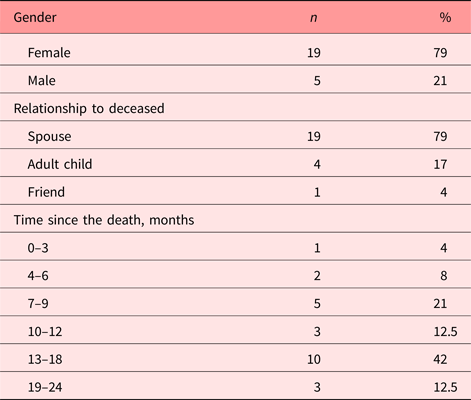
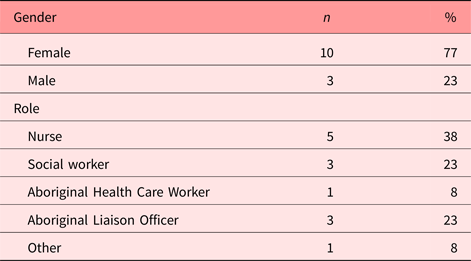
A nonprobability purposive sampling technique was used because it enabled the researcher to recruit participants who typify the issue to be studied and, within the context of QD research, they provide information-rich data for the purpose of the phenomenon under study (Alston & Bowles, Reference Alston and Bowles1998; Coyne, Reference Coyne1997; Henry, Reference Henry1990; Sandelowski, Reference Sandelowski2000). Palliative care services in country Western Australia were informed of the study. The services then notified their team members and existing and previous carers of deceased palliative care patients of the study. Participants who were interested in participating in the study contacted the researcher. Nine palliative care staff, four Aboriginal Health Professionals, and 24 bereaved participants participated in the study. Participant details are outlined in Tables 1 and 2. Aboriginal Health Professionals comprise Aboriginal Liaison Officers and Aboriginal Health Care Workers. Because of small numbers that could potentially identify Aboriginal Health Professional participants, quotes included will be categorized with an identification of “AHP.” There was only one bereaved participant who identified as Aboriginal and one who identified as non-Australian. Because of the small numbers and to ensure they could not be identified, they are not delineated.
Bereaved participant details

Palliative dare and Aboriginal Health Professionals participant details

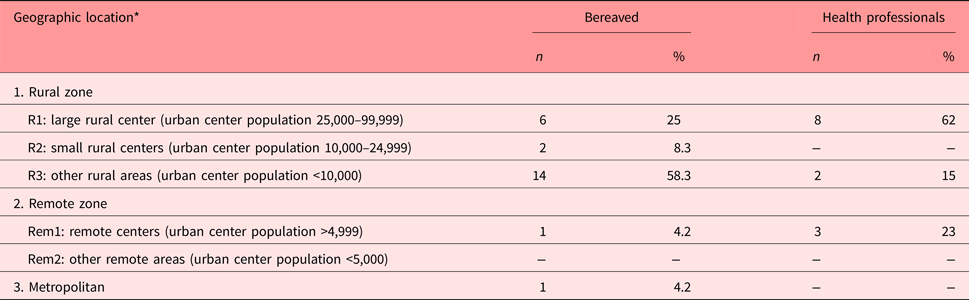
Participants were categorized based on the Rural, Remote, and Metropolitan Areas Classification system, which is based primarily on population numbers as an index of remoteness (Australian Institute of Health and Welfare, 2004, p. 5) and are outlined in Table 3.
Participant geographical zone Rural, Remote, and Metropolitan Areas classification

* Categorised according to the Rural, Remote and Metropolitan Areas (RRMA) Classification systems in which classifications are based primarily on population numbers as an index of remoteness (Australian Institute of Health and Welfare, 2004, p.5).
Data collection techniques
The interviews were conducted using an iterative approach, and questions were guided by the aims of the study. Interviews were conducted via face to face, telephone, or Skype. All interviews were digitally recorded and the duration of interviews ranged from 37 to 143 minutes. Interviews were transcribed verbatim and thematically analyzed. The study was approved by Griffith University Human Ethics Committee (GU Protocol Number HSV/38.13.HREC).
Data analysis
The researcher adopted a data-driven approach for thematic analysis because it compels the researcher to read and reread the data, identify key words, trends or themes, and helps provide an outline to inform analysis (Namey et al., Reference Namey, Guest, Thairu, Guest and MacQueen2008). Analysis is a recursive process that entails moving back and forth between the data as patterns emerge within the text. The researcher reads and rereads the transcripts as is required by thematic analysis. Subsequently participant statements were coded using an open coding process initially with data managed by QSR NVivo 10 software. The code titles reflected the words used by participants. To ensure integrity of the coding, the researcher used supervision to verify coding and codes were revised or confirmed based on consensus with the supervisor to ensure accurate representation of the data. Codes were subsequently thematically analyzed and grouped into categories of lower order “child nodes,” which were then categorized into higher order parent nodes that reflected “bigger picture” themes (Dicicco-Bloom & Crabtree, Reference Dicicco-Bloom and Crabtree2006; Kuper et al., Reference Kuper, Lingard and Levinson2008; Morse et al., Reference Morse, Barrett and Mayan2002; Polkinghorne, Reference Polkinghorne2005; Whittlemore et al., Reference Whittlemore, Chase and Mandle2001). The following findings reflect receptivity factors drawn from the data that emerged from participant narratives.
Results
The core factors from McGrath's (Reference McGrath2013) conceptual definition of receptivity provide the framework to discuss the findings from this research and are categorized into individual, social and geographical factors.
Individual factors
Psychological concepts influencing receptivity
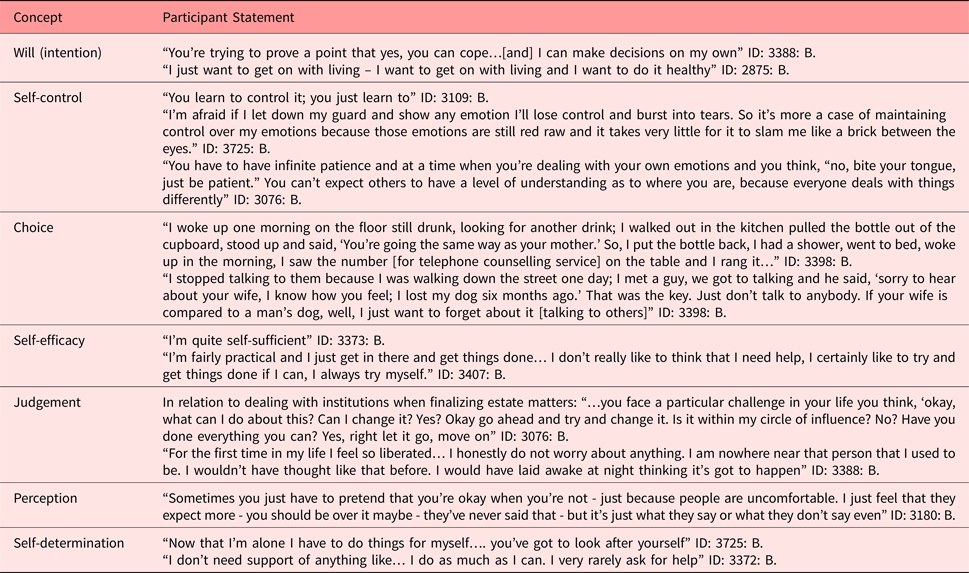
Much of the receptivity literature highlights the intrapsychic dynamics of motivation and self-determination that influence receptivity. These specific psychological concepts were evident in participant narratives in this study, specifically as they relate to bereavement. Psychological concepts of will, choice, self-control, self-efficacy, perception, judgment, and self-determination are demonstrated in Table 4 using participant quotes as examples of these themes. These psychological concepts can be impacted by an individuals’ physical and mental state.
Psychological concepts influencing receptivity

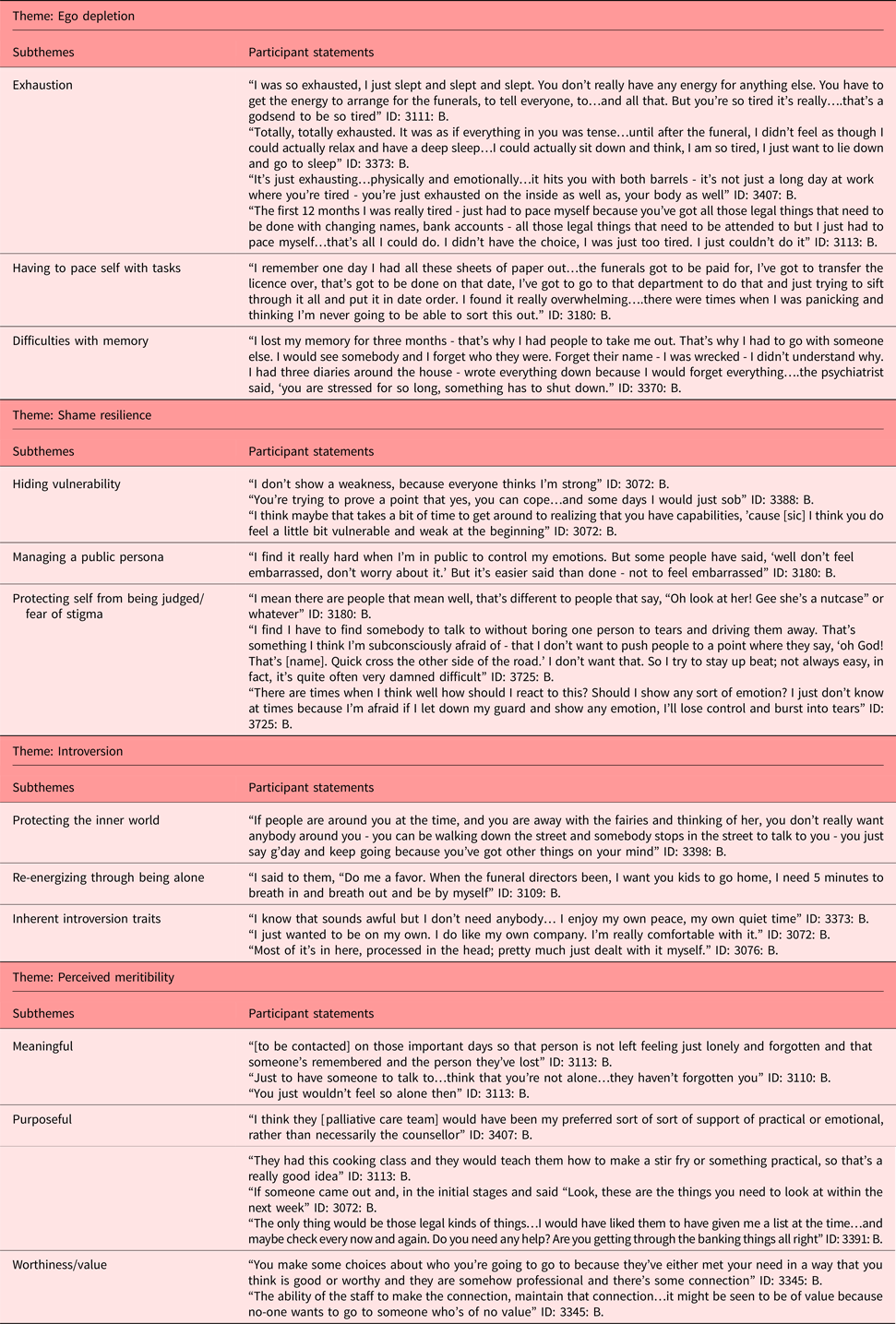
Other individual factors that influence receptivity to support include ego depletion, shame resilience, introversion, and perceived meritibility; examples of these themes are demonstrated in participant statements in Table 5. Specifically, ego depletion manifested as exhaustion, having to pace self with tasks and experiencing difficulty with memory; shame resilience included “hiding vulnerability,” managing a public persona, and protecting self from being judged. Introversion was revealed as protecting the inner world and re-energizing through being alone, which are inherent introversion traits. Finally, meritibility of support was based on having a sense of purpose, having worthiness and value alongside meaningfulness.
Individual receptivity factors

Social factors
Reciprocity: the therapeutic relationship and desired professional traits
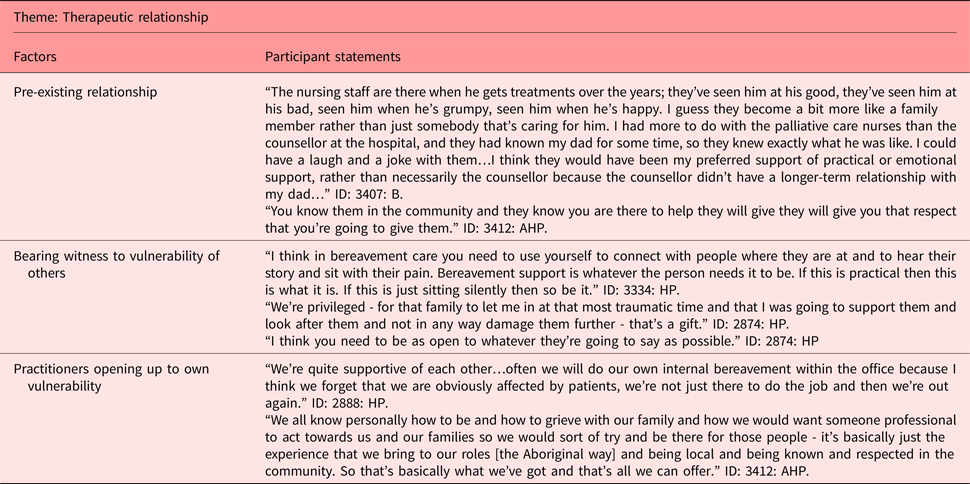
Reciprocity between bereaved individuals and health professionals was an important factor influencing receptivity to support. Being open to others and others being open, or receptive, to the bereaved person's experiences reflects the concept of reciprocity. Key factors that determined receptivity to support from professionals were the (1) presence of a pre-existing therapeutic relationship; (2) practitioner's willingness to engage in bearing witness to the vulnerability of others; and (3) practitioners opening themselves up to their own vulnerability. Table 6 provides examples of these factors.
Reciprocity: Therapeutic relationship factors

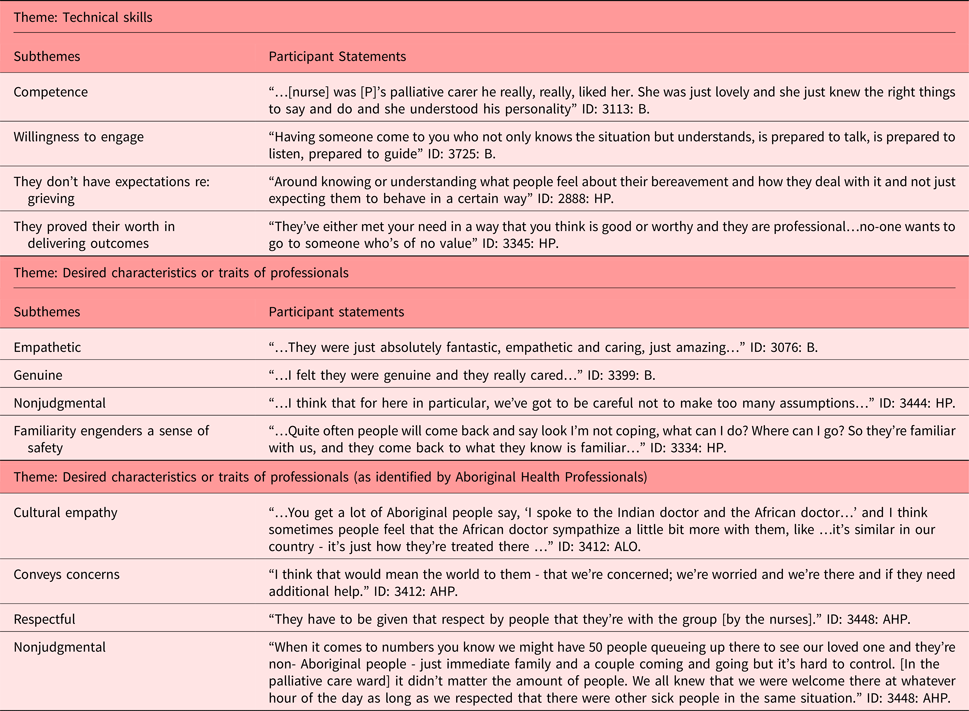
Preferred characteristics or traits of health professionals were identified as factors that would enhance receptivity to support by the bereaved and included “technical skills” and personality and behavioral “characteristics or traits”; examples of these themes are depicted in Table 7. There was a preference for health professionals who had the insight and competency skills to work with the bereaved without imposing expectations on their grieving. It was also important that health professionals had “proved their worth” in delivering outcomes alongside personal traits of empathy, and being nonjudgmental.
Technical skills and characteristics or traits of health professionals

When Aboriginal Health Professionals described traits and characteristics that would influence Aboriginal people's receptivity to support, they identified the following traits of “approachable,” “conveys concerns,” “respectful,” and “nonjudgmental.” A distinguishing feature in the Aboriginal Health Professional's narratives was of “cultural empathy,” in which the Aboriginal community felt an affinity with doctors from other countries who were non-Caucasian.
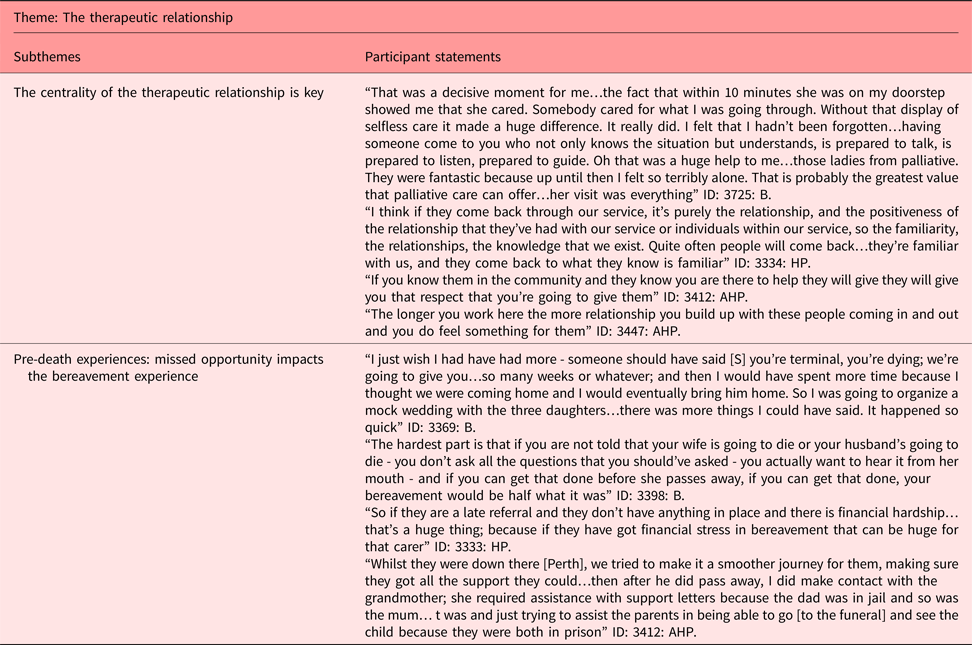
There were convergent findings across all three cohorts when discussing the therapeutic relationship. The centrality of the therapeutic relationship pre- and post-death had a significant impact on the palliative care and bereavement experience and is depicted in Table 8.
The therapeutic relationship as a social factor influencing receptivity

“Truth telling” is an important factor that influences receptivity as participants described the missed opportunities that lack of disclosure by health professionals about prognosis had on their bereavement. Truth telling also impacted receptivity to support as the bereaved felt their trust and faith in professionals was thereby diminished.
Reciprocity: professionals and shared trauma
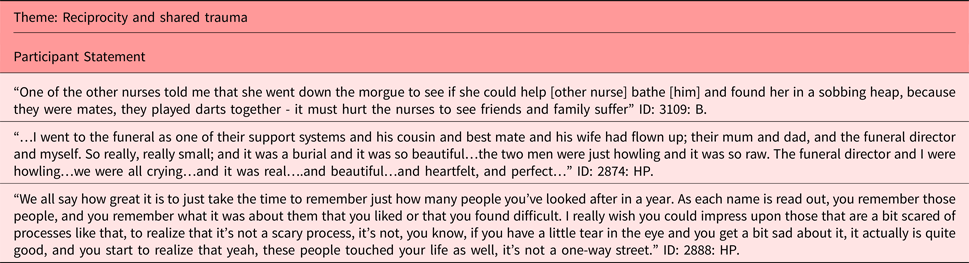
Health professionals described their experiences of shared trauma. One participant described their “trauma” from attending the funeral of a pediatric patient whose parents decided to go travelling together as a family during the time they had with their child; another participant described the traumatic impact the death of her spouse had on a nurse as they were friends in the local community. Health professionals also acknowledged the impact patient deaths had on their team. Table 9 provides examples of these experiences.
Reciprocity and shared trauma

Reciprocity: the role of non-family support
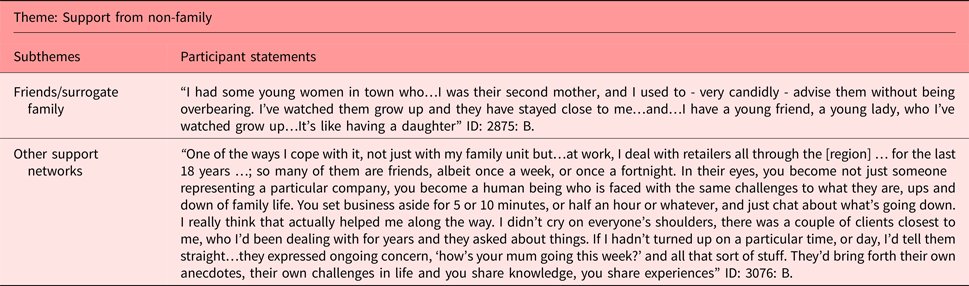
One bereaved participant, ID: 3111, stated that a close friend provided emotional support which was better than the support her children could provide. Participants in this research described the value in a broader spectrum of close or perceived intimate relationships with significant others that were not family members, or “legal family.” These relationships were founded on persons with whom they felt comfortable, to disclose their experiences and emotions, or who provided them with emotional, psychological and spiritual nourishment, along with practical support. This broader selected group, which includes pets, comprise a “socio-psychological family.” The notion of reciprocity is a central feature of these types of relationships. An example of how individuals surround themselves with friendships that create a “socio-psychological” family is portrayed in Table 10.
Reciprocity: The role of non-family support

Geographical factors
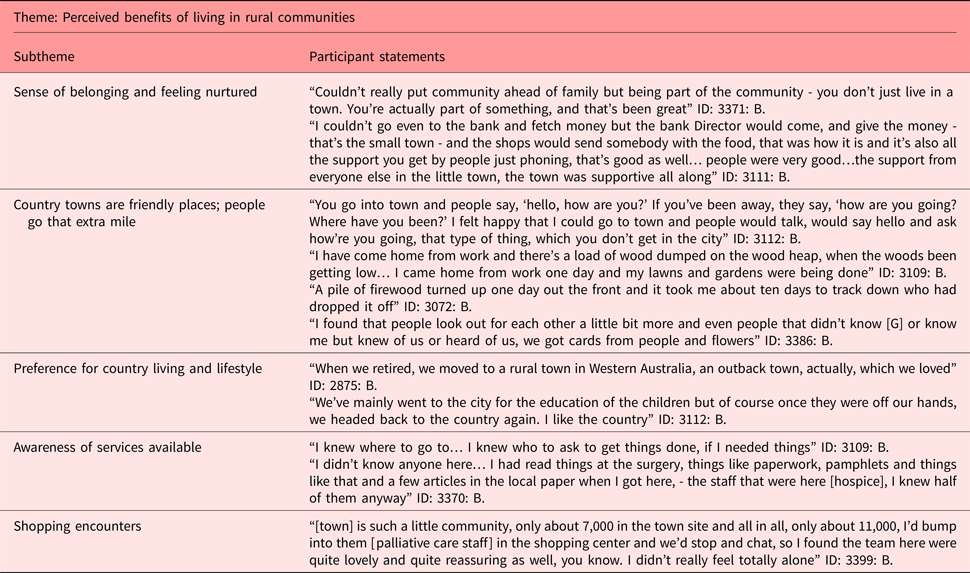
Participants described feeling a sense of belonging to their community and portrayed an openness to others and any support provided, such as emotional or practical support. The support and willingness to provide support was viewed by participants as one of the benefits of living in a rural community. Rurality has benefits and drawbacks. Table 11 includes subthemes such as feeling a “sense of belonging” and “feeling nurtured” by members in the community. Participants also described “country towns as friendly places” where people “go the extra mile” to help others and there is a “preference for country living”; there is an “awareness of services” so locals know where to go to receive help and “shopping encounters” diminished a sense of aloneness.
Perceived benefits of living in rural communities

Nonetheless, participants also perceived some downfalls to living in a country town; these are portrayed in Table 12. The experience of bereavement in rural areas and accessing professional support is challenging due to issues of lack of anonymity through “assumed familiarity of others” circumstances “not private,” and “shopping encounters.” Participants also described other challenges of “competition for opportunities,” “ever-changing resource landscape,” and “poignancy of feeling avoided.” These pose significant receptivity issues because many rural people may be reluctant to access support due to these factors.
Drawbacks of living in rural communities

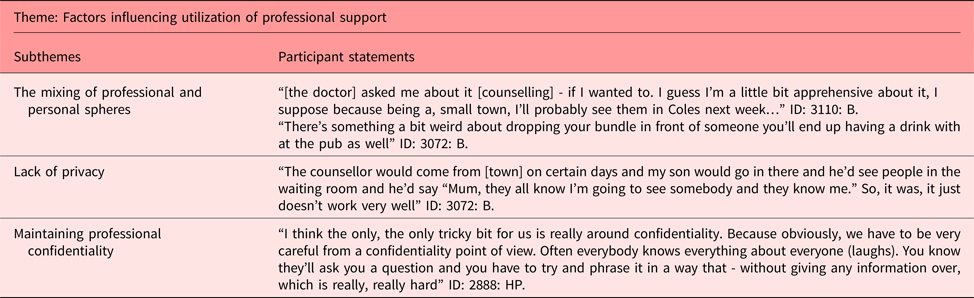
Participants described their reluctance to engage professional support due to the potential for seeing the professional, for example, a counsellor, in a social setting, as demonstrated in Table 13.
Participants described their reluctance to engage professional support because of the potential for seeing the professional, for example, a counsellor, in a social setting, as demonstrated in Table 13.
Factors influencing utilization of professional support

Discussion
Receptivity to bereavement support is contingent on a multitude of factors at individual, social, and geographical levels. The findings from this research indicate specific individual factors of ego depletion, shame resilience, introversion, and perceived merit of support are receptivity issues. Social factors such as reciprocity in the therapeutic alliance, professional traits, and characteristics along with the role of support from non-family were identified as receptivity issues. Nuances of living in rural communities highlight geographical factors that influence receptivity to support.
Individual factors
Psychological concepts
Key psychological aspects of will (intention), self-control, choice, self-efficacy, judgment, perception, and self-determination are referred to in the empirical literature as factors that influence receptivity (Erby et al., Reference Erby, Rushto and Geller2006; Hinchman, Reference Hinchman2009; Lewandowski et al., Reference Lewandowski, Ciarocco and Pattenato2012; McGrath et al., 2016; Zimmer & Chappell, Reference Zimmer and Chappell1999). These psychological concepts were reflected in participant accounts outlined in Table 4 and are related specifically to the context of bereavement. These psychological concepts are central influences of receptivity.
Ego depletion
Ego depletion reflects a resource model in which the physical and emotional demands of caregiving impact an individual's capacity for self-regulation, which works like “…a muscle becoming fatigued after strenuous activity…” (Lewandowski et al., Reference Lewandowski, Ciarocco and Pattenato2012, p. 1073). The ability for regulatory control is situational and likely to influence receptiveness (Lewandowski et al., Reference Lewandowski, Ciarocco and Pattenato2012). Many bereaved caregivers often experience depleted or impaired personal resources from an extended period of caregiving during which there has been significant demand on tasks and abilities to process information, make decisions and regulate emotions (Holtslander & Duggleby, Reference Holtslander and Duggleby2010; Hudson, Reference Hudson2006). Ego depletion can contribute insights on how bereavement can affect a person's capacity for self-regulation and influence executive function over feelings, impulses, thoughts, and behaviors (Lewandowski et al., Reference Lewandowski, Ciarocco and Pattenato2012). Thus, ego depletion reflects McGrath's (Reference McGrath2013) notion of an individual's desire and ability to use support.
Shame resilience
A person's help-seeking behaviors are influenced by the need to minimize experiences that reduce the risk of vulnerability and embarrassment (McGrath et al., Reference McGrath, Corcoran and O'Malia2000; Pascal et al., Reference Pascal, Johnson and Dickson-Swift2016). Individuals are often compelled to guard against revealing vulnerability in which they may feel exposed to being harmed mentally or emotionally. Shame occurs within the context of an audience (Leys, Reference Leys2009) and “…what is exposed in the moment of shame is something deeply personal, some particularly intimate sensitive and vulnerable aspect of the self…shame monitors our sense of self…” (Nathanson, 1989, cited in Leys, Reference Leys2009, p.131). The ability to transcend shame is through what Brown (Reference Brown2006, p. 45) describes as “shame resilience.” Learning to maintain control is a mechanism for developing shame resilience through developing emotional competence and “…recognizing and accepting personal vulnerability…” (Brown, Reference Brown2006, pp. 47–48). Vulnerability is at the core of Brown's (Reference Brown2006) work on shame resilience and receptivity to support may be contingent on an individual's capacity to manage the reactions of others, or repercussions from disclosing or publicly showing emotions or thoughts.
Introversion
Personality disposition has been cited as a likely predictor of grief severity; however, there has been little systematic research on the role of personality in bereavement (Bonanno, 1999, p. 41, cited in Gana & K'Delant, Reference Gana and K'Delant2011, p. 128). Introversion has been identified as a receptivity factor in research by McGrath (Reference McGrath2013). Introversion is characterized by inwardly directed psychic energy in which there is a stronger drive for cognitive engagement, solitude, and a reflective introspection as a way to cope (Davidson et al., Reference Davidson, Gillies and Pelletier2015; Kaufman, Reference Kaufman2014; Prosser-Dodds, Reference Prosser-Dodds2013). Many participant narratives in this study reflected coping strategies consistent with introverted traits as portrayed in Table 5. Introverts may be more reliant on their internal processes to solve problems independently of other people and they may be more speculative about the suitability or worth of seeking help from others, such as counselling (Kakhnovets, Reference Kakhnovets2011; Khalil, Reference Khalil2016), thus influencing receptivity to support.
Perceived “meritibility”
Receptivity is influenced by a person's perception of how much he or she views the issue as a problem and whether accessing services can alleviate the situation (Zimmer & Chappell, Reference Zimmer and Chappell1999). Convergent findings between the bereaved and health professionals in this study highlight that receptivity to support is contingent on whether the support is perceived to be of value by the bereaved. Receptivity to support needs to be meaningful, for example, reducing the sense of loneliness and aloneness through providing emotional support. Support also needs to be purposeful, such as through the provision of informational and instrumental, or practical, support that will empower and equip the bereaved to promote or maintain a sense of self-mastery. Health professionals expressed the importance of support being worthwhile and that receptivity is influenced through previous interactions with the healthcare team who have proven their value through past support.
Social factors
Reciprocity was a key feature that influences receptivity identified in this study. Reciprocity encompassed a broad range of contexts including the therapeutic relationship and shared trauma, the role of non-family support and central coordination.
Reciprocity: the therapeutic relationship and desired professional traits
The concept of reciprocity as a factor influencing receptivity is dependent on the inter-relationship between the individual and others (Pascal et al., Reference Pascal, Johnson and Dickson-Swift2016). The therapeutic relationship has been identified in the empirical literature as a key mediator in contributing to positive client outcomes in palliative care. A client's perception of a strong therapeutic alliance has been demonstrated to contribute to better social and mental wellbeing (Trevino et al., Reference Trevino, Maciejewski and Epstein2015). Authenticity, mutuality and synchrony, initiative, and responsibility have been identified as key mediators in developing and maintaining a positive therapeutic relationship between patients and health professionals (Mok & Chiu, Reference Mok and Chiu2004). Desired characteristics of palliative care professionals include honesty, good listening skills, connecting at a human level, being gentle, taking time, speaking in the patients’ language, and having technical expertise (Masel et al., Reference Masel, Kitta and Huber2016). Technical skills and desired professional traits were identified by the bereaved as factors in the therapeutic relationship that influence receptivity and are outlined in Table 4. These characteristics and skill set of professionals influenced the therapeutic alliance.
Aboriginal participants in this study identified that “cultural empathy” led to a feeling of being empathized with and understood. This concept of “cultural empathy” has been identified by African overseas trained doctors where they chose to work with an Aboriginal community because they felt a sense of affinity. Gilles et al. (Reference Gilles, Wakerman and Durey2008, p. 660) provide an example in which an African doctor states “…we knew they were black, we thought it would be a good place to work…being black….” This sense of affinity and reciprocity may be conducive to establishing a positive therapeutic alliance.
A detrimental impact on the therapeutic relationship was a lack of open and honest communication about prognosis or end-of-life issues and withholding information about disease and prognosis. These may have detrimental consequences on carers and family members in bereavement (Hancock, et al., Reference Hancock, Clayton and Parker2007). The palliative care literature on truth telling focuses on communication with the dying patient (Fallowfield et al., Reference Fallowfield, Jenkins and Beveridge2002; Hancock et al., Reference Hancock, Clayton and Parker2007; Holdsworth, Reference Holdsworth2015). There is little attention given to the impact on the bereaved when truth telling has not occurred. If a participant loses trust in the health profession for whatever reasons, this may influence their receptivity to support after death.
Reciprocity: professionals and shared trauma
Professionals in palliative care often experience the same traumatic reality that affects their patients and there is a mutual influence of personal experiences with professional responsibilities underscoring the reciprocal nature of the therapeutic exchange (Dekel, Reference Dekel2010; Tosone et al., Reference Tosone, Bauwens and Glassman2016). As an individual's receptiveness is contingent on an “others” openness to them (Hooghe et al., Reference Hooghe, Neimeyer and Rober2011; Robinson, Reference Robinson2006), when health professionals are “open to” placing themselves in positions where they are potentially vulnerable, this “symbiotic receptivity” can provide the foundation of a positive therapeutic alliance and thus has implications for receptivity to support.
Palliative care clinicians experience their own trauma and transformative growth in the therapeutic alliance (Mok & Chiu, Reference Mok and Chiu2004). The emotional intensity experienced by health professionals has been recognized as an inherent part of providing palliative care (Chang et al., Reference Chang, Bidewell and Hancock2012). However, the clinician is both witness and contributor to the distress, with mutual distress occurring within a dyadic therapeutic alliance. This is a shared traumatic reality, and has been referred to as “shared trauma” (Halpern, Reference Halpern2014; Tosone et al., Reference Tosone, Lee and Bialkin2003, Reference Tosone, Nuttman-Shwartz and Stephens2012). Although much of the literature refers to vicarious and secondary trauma, in the presence of a therapeutic alliance, clinician and patient along with the carer and family, share the experience. Palliative care clinicians engage inter-subjectively, holding the vulnerability of others whilst placing themselves in a position where they may feel vulnerable themselves. Thus the concept of shame resilience may not just be a factor influencing receptivity to support by the “receiver” (patient or family) but reflects the shame resilience of the “giver” (health professional). The notion of symbiotic receptivity, or shared trauma and its role in receptivity requires further exploration within this dyad.
Reciprocity: the role of non-family support
Friends have been identified as a primary source of support (Breen & O'Connor, Reference Breen and O'Connor2011; Riches & Dawson, Reference Riches and Dawson2000). Other sources of support identified by participants in this study were work colleagues or people encountered through their role in the workplace (Benkel et al., Reference Benkel, Wijk and Molander2009). Participants in this research described the broader spectrum of close or perceived intimate relationships with others that were not their legally recognized family. These relationships were founded on companionship with people and pets with which they felt comfortable to share their grief. The notion of reciprocity is a central feature of these relationships. Strong and positive informal support networks have been identified in the bereavement literature as a critical factor in how people cope in bereavement (Cherli et al., Reference Cherlin, Barry and Prigerson2007).
Geographical factors
Rurality has been identified as a predispositional factor that influences receptivity (Zimmer & Chappell, Reference Zimmer and Chappell1999) and has nuances that can differ from metropolitan contexts. Issues such as tyranny of distance, cost, and limited resources have been recognized as impacting on receptivity to support (McGrath, Reference McGrath2013). The experience of bereavement in rural areas and accessing professional support is challenging because of such issues as lack of anonymity, privacy, and confidentiality, and a blurring of personal-professional roles have been identified in the literature (Giljohann, et al., Reference Giljohann, Brabazon and Chittleborough2008; Gray et al., Reference Gray, Zide and Wilker2000; Gray & Wilker, Reference Gray and Wilker2008; Kosteniuk et al., Reference Kosteniuk, Morgan and Bracken2014).
When examining service utilization in rural areas, Anderson and Newman (Reference Anderson and Newman2005) argue that the norms of the community in which individuals live may influence the behavior of the individual to access external services. Because community norms of independence and self-reliance are predominant cultural norms of rural communities (Filmer, Reference Filmer2002; Gray & Wilker, Reference Gray and Wilker2008), service design and delivery may be more productive if it is focused on building the social capital of the local community. The concept of “social capital” (Falk & Kilpatrick, Reference Falk and Kilpatrick2000; Phillips, Reference Phillips2015) refers to a reciprocity between an individual and their community where the “community” is a resource to draw on. A death in the community has a “ripple effect” (Cheers et al., Reference Cheers, Darracott and Lonne2007) and services that empower and equip communities to support each other when a member or family are bereaved may be more beneficial. The other benefit identified by participants was that they had insight into what resources are available in the local community and where to go for support if required.
Implications for practice
Psychological concepts and introversion traits indicate that if an individual has a strong sense of self-efficacy, self-determination, and confidence in their judgment they may not feel a desire to seek support (McGrath et al., Reference McGrath, Corcoran and O'Malia2000). Factors increasing the likelihood of receptivity to support are perceived meritibility that support will improve coping or that support will improve emotional and psychological wellbeing (Zimmer & Chapple, Reference Zimmer and Chappell1999). In terms of providing support to Aboriginal families, receptivity is enhanced through a positive therapeutic relationship and a perception of working with others who convey “cultural empathy.” This highlights the essential role of Aboriginal Health Professionals in the healthcare system.
Reflective of much of the bereavement counselling discourse, implications for practitioners include being nonjudgmental and open, and being cued into the language and metaphors used by the bereaved (Goldberg & Stephenson, Reference Goldberg and Stephenson2016). This reorients focus to the centrality and importance of the therapeutic alliance. Social factors highlight that positive subjective experiences of the social ecosystem surrounding the bereaved may influence receptivity to support (Cheers et al., Reference Cheers, Darracott and Lonne2007). For example, when health professionals are “open to” placing themselves in positions where they are potentially vulnerable, this “symbiotic receptivity” can provide the foundation of a positive therapeutic alliance and thus has implications for receptivity to support. Rural factors such as lack of confidentiality or privacy and changing resources influence receptivity (Cheers et al., Reference Cheers, Darracott and Lonne2007). In light of confidentiality issues in rural areas, therapeutic support can be delivered through modalities such as videoconferencing or teleconferencing. Aboriginal family structure and kinship ties are central to Aboriginal identity and the experience of illness, death, and subsequent mourning practices (sorry business) is a community and communal experience (McGrath & Phillips, Reference McGrath and Phillips2008; O'Brien et al., Reference O'Brien, Bloomer and McGrath2013). Some behaviors of health professionals that diminish demean or disempower Aboriginal people, families, and community create culturally unsafe practices (McGrath & Phillips, Reference McGrath and Phillips2008). The attitudes and behaviors of health and other professionals thus influence receptivity to support.
Implications for research
Receptivity provides a paradigm shift in service design and delivery, with a move away from programs of bereavement support being “organizational process-driven” to bereaved “client experience-driven,” thus emphasizing the subjective perspective of the bereaved. The focus on client experience driven care reflect national and international trends (Australian Commission on Safety and Quality in Health Care, 2017). Placing receptivity on the research agenda can provide significant insights to inform the design of psychosocial support programs and services.
This is the first time receptivity has been applied to the palliative care arena that promotes a different perspective to looking at bereavement and bereavement support. Bereavement support in palliative care is permeated with the language of “needs” (Bergman & Haley, Reference Bergman and Haley2009; Dyregrov, Reference Dyregrov and Dyregrov2008; Milberg et al., Reference Milberg, Olsson, Jakobsson, Olsson and Friedrichsen2008; Patterson, Reference Patterson2009; Wilkinson et al., Reference Wilkinson, Croy and King2007), whereas “receptivity” to support provided by palliative care services has not been explored previously. In relation to the findings of health professionals working in palliative care, the nature of the work required clinicians to enter emotionally charged situations that leave them open to vulnerability and experiences of shared trauma (Tosone et al., Reference Tosone, Lee and Bialkin2003). Insights on the notion of shared trauma and the therapeutic alliance would help to inform education and practice strategies to enhance the resilience of healthcare practitioners in palliative care.
Limitations
A limitation of the study was the recruitment processes amongst different regions, which was beyond the control of the researcher. Participants self-selected for this study. Some regions adopted a targeted approach and invited participants they thought would be appropriate to participate in the study, whereas other regions adopted a universal approach and sent an invitation to all bereaved clients. Most bereaved participants were >45 years of age, with one-quarter of the cohort being males and 79% of bereaved participants had experienced spousal loss. The cohort was homogenous in their ethnicity except for one bereaved participant who identified as Aboriginal.
Although Aboriginal Health Care Workers and Aboriginal Liaison Officers were included in this study, this was in no way an in-depth exploration of their experiences. Because the Aboriginal people are such an important group in rural Western Australia, the inclusion of these participants was imperative and provided a building block on which to gain further insights into their experiences and receptivity to support.
Conclusion
There is currently a discord among practice, policy, and research in bereavement despite the evidence of the broad range of factors that influence the bereavement experience and utilization of support. Just as receptivity in the literature has a focus on the intrapersonal factors, bereavement support provided by palliative care services is often targeted at psychological and emotional support. The interdependence of internal and external factors shows the reciprocal relationships between the individual and the environment or systems in which the individual lives affect receptivity. In order for receptivity to support be enhanced, this ecological “person-in-situation” perspective needs to be considered in the development and design of bereavement support programs by palliative care services (McGrath, Reference McGrath2013; Blackburn, McGrath & Bulsara, Reference Blackburn, McGrath and Bulsara2015).
Acknowledgments
Thank you to Associate Professor Pam McGrath who was supervisor to this PhD research and to the people who gave up their time to participate in the interviews.
Conflicts of interest
The authors declare no potential conflicts of interest with respect to the research, authorship, and/or publication of this article.