

Bison jumping is a renowned large-scale, landscape-assisted, communal hunting method used by Native Americans in which herds were stampeded en masse over high cliffs (Brink Reference Brink2008; Frison Reference Frison2004; Kornfeld et al. Reference Kornfeld, Frison and Larson2016; Malouf and Conner Reference Malouf and Conner1962; Verbicky-Todd Reference Verbicky-Todd1984). Bison jumps have precipices that are suitably high (often 10–30 m) so that the fall would kill or incapacitate the animals (Frison Reference Frison2004; Polk Reference Polk1979). This lethal fall eliminates the need for a pen to trap bison as seen at other bison hunting facilities that use low precipices (Kornfeld et al. Reference Kornfeld, Frison and Larson2016; Miller and Scoggin Reference Kornfeld, Frison and Larson2017; Verbicky-Todd Reference Verbicky-Todd1984). Although there are sites throughout the world where large animals may have been coerced over cliffs by human hunters, no systematic use of a jump technique has been observed outside North America. Bison jumping is an iconic, uniquely North American hunting technique that yielded some of the most productive food-getting events in the history of human hunting (Brink Reference Brink2008).
Bison jumps are varied landscape-level facilities that often share similar conditions and subcomponents (Byerly et al. Reference Byerly, Cooper, Meltzer, Hill and LaBelle2005; Frison Reference Frison2004). Malouf and Conner (Reference Malouf and Conner1962) identified five common elements of a jump: (1) a grazing area or collection basin, (2) a drive lane that is commonly marked by alignments (drivelines) of stone cairns or some perishable material, (3) a jump-off point (cliff/precipice), (4) a subcliff bone bed or locus of the mass bison casualty event, and (5) a nearby processing and occupation area. Bison jumps differ from other mass bison hunting techniques because of the harvesting scale implied by their use. Conservative estimates suggest around 100 animals are necessary for a bison jump to function correctly, because the technique depends on manipulating the superorganism behaviors exhibited by large herds (Brink Reference Brink2008; Frison Reference Frison1970; Kilby et al. Reference Kilby, Farrell and Hamilton2021). The large-scale hunting demanded by the jump technique in turn requires large numbers of people working together to draw in and maneuver the herd, execute the stampede, maintain the lanes, dispatch injured bison, and process a huge carcass deposit prior to spoilage. The complexity of these choreographed hunts would have required large aggregations of people but also major coordination and likely some form of hierarchical organization (Brink Reference Brink2008; Kilby et al. Reference Kilby, Farrell and Hamilton2021; Zedeño et al. Reference Zedeño, Ballenger and Murray2014).
The term “communal hunting” is often used in the context of large-scale, mass bison hunting (particularly jumps) to emphasize the fact that a large group of people working collaboratively is required to execute the stratagem and deal with the resulting mass of carrion. Communal hunting implies that hunters operated in groups with a predetermined course of action and had specific roles (Driver Reference Driver, Davis and Reeves1990). The logistics of a well-anticipated bison jump demanded a group size greater than any single hunter-gatherer band. Consequently, these communal hunting events are associated with seasonal aggregations or other forms of cyclical nucleation in precontact societies (Kilby et al. Reference Kilby, Farrell and Hamilton2021). Such aggregations are of keen anthropological interest as important exchange, marriages, ceremonies, and other key social activities were undoubtedly associated with these rendezvous (Brink Reference Brink2008). Jump hunting facilities, especially long-lived ones, are also of interest as tethered defensible resources that often involved significant investments in hunting architecture like cairn drive lines (Lemke Reference Lemke2021), grazeland management via prescribed fires (Roos et al. Reference Roos, Nieves Zedeño, Hollenback and Erlick2018; Zedeño et al. Reference Zedeño, Ballenger and Murray2014), and kill-spot cleansing via fire (Brink Reference Brink2008:165; Kehoe Reference Kehoe1973:39). Questions of long-term custodianship at jump facilities and exclusivity in the resources they generated have important implications for sociopolitical complexity in hunter-gatherer groups (Lemke Reference Lemke2021; Zedeño et al. Reference Zedeño, Ballenger and Murray2014).
Jump sites are ubiquitous on the northern Plains, where hundreds are reported, yet only a fraction have been excavated and securely dated (Cooper Reference Cooper2008; Fawcett Reference Fawcett1987; Polk Reference Polk1979). The most prominent trend in the history of bison jumping is the proliferation of jumps in the northern Plains after approximately 2000–1500 years BP. These “classic” bison jumps are generally synonymous with the Late Prehistoric period, yet jumping continued into the contact period (Bamforth Reference Bamforth2011; Brink Reference Brink2008; Kornfeld et al. Reference Kornfeld, Frison and Larson2016; Verbicky-Todd Reference Verbicky-Todd1984; Walker Reference Walker, Cunfer and Waiser2016:126). Many jumps are directly related to modern tribes such as the Crow and Blackfeet Nations (Brink Reference Brink2008; Herrmann et al. Reference Herrmann, Nathan, Rowe and McCleary2017; Pelton et al. Reference Pelton, Shimek, Grund, Mackie and Surovell2019; Zedeño et al. Reference Zedeño, Ballenger and Murray2014). Classic jumps were intensively used by pedestrian hunters that employed archery and built substantial stone architecture (i.e., cairns) to create drivelines to funnel herds (Brink Reference Brink, Betts and van Pelt2021; Kornfeld et al. Reference Kornfeld, Frison and Larson2016; Verbicky-Todd Reference Verbicky-Todd1984; Zedeño et al. Reference Zedeño, Ballenger and Murray2014). Processing sites associated with classic jumps show intensive bison butchery and bone grease rendering (Bamforth Reference Bamforth2011; Brink Reference Brink2008). Classic jumps reflect a novel pattern of industrial-scale bison exploitation linked to the systematic overproduction of bison materials for large-scale export, mainly as pemmican (Bamforth Reference Bamforth2011; Brink Reference Brink, Betts and van Pelt2021:20; Kehoe Reference Kehoe1973, Reference Kehoe1978).
Prior to the Late Prehistoric, hardly any jumps are known, even though large-scale communal bison hunting using other tactics like arroyo traps and constructed corrals was widespread across the Great Plains (Kornfeld et al. Reference Kornfeld, Frison and Larson2016; Speth Reference Speth, Albarella, Rizzetto, Russ, Vickers and Viner-Daniels2017; Walker Reference Walker, Cunfer and Waiser2016). Few “preclassic” Archaic period or older bison jumps are well-known (Figure 1). The Kobold jump (Montana) has an undated Late Archaic (Yonkee) component (Frison Reference Frison1970), and Head-Smashed-In Buffalo Jump (HSIBJ, Alberta) includes both Middle (6500–5800 BP) and Late Archaic (<3000 BP) components, which many view as the oldest firm evidence of jump hunting on the continent (Brink Reference Brink and Woywitka2016a).
Bison jump distribution in North America. Note that Archaic or older “preclassic” bison jumps (labeled sites, triangles) are widespread, while there is an anomalous concentration of classic bison jumps in the northern Plains (spatial data after Byerly et al. Reference Byerly, Cooper, Meltzer, Hill and LaBelle2005; Fawcett Reference Fawcett1987; Polk Reference Polk1979). (Color online)

Figure 1 Long description
A map of North America highlighting classic bison jump areas after 2000 years BP. The map includes labeled sites such as Head Smashed In, Kobold, Burntwood Creek, Certain H, Nighthawk and Bonfire Shelter. The map uses a gradient to depict elevation changes, with higher elevations in the western regions and lower elevations towards the east. A scale bar at the bottom indicates distances in kilometers and a compass rose in the lower right corner shows orientation. The labeled sites are marked with triangles, indicating their locations across the map, primarily concentrated in the northern and central regions.
In contrast, the evidence for bison jumping in the southern Plains is slim (Buehler Reference Buehler1997a). The southern Plains had no equivalent to the industrial-scale bison exploitation heralded by the classic jumps of the northern Plains. Only Bonfire Shelter in Val Verde County, Texas, is well-known as a possible jump candidate (Dibble and Lorrain Reference Dibble and Lorrain1968; Kilby et al. Reference Kilby, Farrell and Hamilton2021). Bonfire includes both a Late Paleoindian (Folsom and Plainview) kill component (Bone Bed 2, roughly 11,500 cal BP) and a massive burnt Late Archaic kill component (Bone Bed 3, roughly 2600 cal BP). Bone Bed 2 at Bonfire is a long-standing candidate for the oldest bison jump in North America and is older than the next oldest jump at HSIBJ by nearly 6,000 years. Yet, as a geographic and temporal outlier, Bone Bed 2 at Bonfire has often been viewed with skepticism (Byerly et al. Reference Byerly, Cooper, Meltzer, Hill and LaBelle2005). Meanwhile, the overshadowed Late Archaic kill at Bonfire is rarely doubted as a jump (Bement Reference Bement2007; Byerly et al. Reference Byerly, Cooper, Meltzer, Hill and LaBelle2005; Prewitt Reference Prewitt2007) but is frequently overlooked in discussions about bison jumps (Speth Reference Speth, Albarella, Rizzetto, Russ, Vickers and Viner-Daniels2017; Walker Reference Walker, Cunfer and Waiser2016).
The Burntwood Creek site (14RW2) in northern Kansas is scarcely known as a jump candidate. This site includes multiple components, with over 31 bison (some burned) in direct association with Late Paleoindian Allen points (Hill et al. Reference Hill, Hofman and Martin1992; Hofman Reference Hofman, Hurst and Hofman2010). The bone bed is situated below the Ogallala caprock escarpment and would have presented a relatively short fall. Nonetheless this site may represent a key missing link in space and time filling the Early Holocene gap between Bonfire Shelter Bone Bed 2 and the Middle Archaic bison jumping at HSIBJ (Brink Reference Brink and Woywitka2016a:15).
Although lesser known, Area H of the L. E. Certain site (Washita Valley, Oklahoma) has also been identified as a jump kill (Bement and Buehler Reference Bement and Buehler1994, Reference Bement and Buehler1998, Reference Bement and Buehler2005). The Certain site is best known for its expansive arroyo trap kills, located in several short gullies along a 300 m stretch of a spring-fed tributary of Sandstone Creek (Bement and Buehler Reference Bement and Buehler1994; Buehler Reference Buehler1997a). Radiocarbon dating (n = 14) of bison remains using XAD purified collagen and feature charcoal have identified two main phases of bison hunting at Certain. The first is the purported jump in Area H, which occurred at 2300 cal BP when the vertical relief from the base of the gully and the upland surface was more than 20 m. This was followed by large-scale infilling of the gully network and a burst of bison hunting between 1800–1400 cal BP when the shallower arroyo system was subsequently used to trap bison (Bement and Buehler Reference Bement and Buehler2005; Tharalson Reference Tharalson2018).
The virtual nonexistence of jumps in the southern Plains has led many to assume that southern Plains people did not employ jumps in bison procurement (Buehler Reference Buehler1997a, Reference Buehler1997b). The cultural history of the Texas and Oklahoma Panhandle in the southern Plains is closely tied to patterns of bison exploitation (Supplementary Text 1). Large-scale communal bison hunting was common in the Texas and Oklahoma Panhandle regions in the Late Archaic. At least 17 mass bison kill sites are known, but nearly all are clear arroyo traps (Bement Reference Bement1999; Hughes Reference Hughes1977, Reference Hughes and Roper1989; Kraft Reference Kraft2005). Speth (Reference Speth, Albarella, Rizzetto, Russ, Vickers and Viner-Daniels2017:564) noted that no Archaic period jumps had yet been identified in the southern Plains but neglects Bone Bed 3 at Bonfire Shelter. By the Late Prehistoric, bison bones are abundant at Plains Village sites in the southern Plains, but communal kill sites are rare, and no jumps have been documented (Speth Reference Speth, Goldfus, Gruber, Yona and Fabian2019). Buehler (Reference Buehler1997a) suggested that the lack of jumps in the southern Plains is due to the lack of suitable cliffs. This may be true for parts of the Rolling Plains of western Oklahoma; however, the Caprock Escarpment of the Texas Panhandle is a sprawling scarpland that would have presented numerous opportunities for executing jumps. Unfortunately, the geology along the escarpment is susceptible to rapid rates of cliff back wearing from formidable erosive forces (Gustavson and Simpkins Reference Gustavson and Simpkins1989). If jump sites exist, one would expect them to be rare and poorly preserved.
In 2021, Texas Historical Commission (THC) steward Rick Day and partner Susan Day discovered bison remains in colluvium beneath a cliff near the eastern edge of the Caprock Escarpment on land owned by the Texas Parks and Wildlife Department (TPWD) near Quitaque, Texas (Figures 2 and 3). Named the Nighthawk site by the research team, the location was and continues to be heavily affected by erosion, making salvage efforts a high priority. The chance preservation and discovery of the site on public lands challenges the prevailing view that comparatively simple bison hunting practices were the norm in Texas and the broader southern Plains region. The site is a rare and exceptional example of communal bison hunting, which employed fatal falls from a cliff to slaughter large numbers of bison on at least seven separate occasions over 3,000 years from the Late Archaic to Protohistoric periods.
Top: Oblique southwest facing view of 41BI564. Bottom: Ground view of 41BI564 facing west. Arrows indicate bone bearing slope deposits. (Color online)

Bottom: North-facing view of slope deposit containing bison bone bed at 41BI564. Top: Close-up photo of bison bone bed exposed in the erosional side scarp.

Stages of Investigation
The Nighthawk site was discovered in November 2021, when bison bone was found eroding from multiple areas. A follow up visit, led by Chris Lintz, confirmed the nature of the site. During initial reconnaissance, the team identified a bison bone bed beneath a cliff and a separate area with bison bone deposits to the east (Lintz et al. Reference Lintz, Burcham and Day2022). They documented six bone concentrations, ranging from exposed skull and vertebral elements to dense bone layers on steep slopes and displaced material slumping into a gully, highlighting significant ongoing site loss. At the second area with bison remains, about 120 m east of the sub-cliff deposits, investigators recorded a pediment “island” surrounded by an eroded bedrock surface with scattered artifacts and fire-cracked rock. Side scarp exposures produced sparse but notable faunal remains and chipped stone tools, including dart points. Diagnostic artifacts suggested a Late Archaic occupation, and the area was interpreted as a campsite/processing area. Further reconnaissance east of the pediment island identified additional deflated hearths and chipped stone scatters, including a Scallorn arrow point indicating Late Prehistoric use. TPWD subsequently recorded the larger bison bone bed below the cliff as 41BI564 and the suspected campsite/processing locality farther from the modern cliff as 41BI565. Subsequent work showed this distinction to be an illusion, and two sites are actually one site heavily modified by erosion. The two trinomials represent spatially separated areas of one archaeological site, which we refer to as the Nighthawk bison jump complex or Nighthawk site. We refer to the trinomials when discussing specific areas of the site.
Concern over rapid erosion created urgency for more intensive work. In spring 2022, TPWD and Texas Tech University (TTU) began planning for field school investigations. A May 8, 2022, site visit brought together TPWD archaeologists, TTU personnel, and geoarchaeologists to evaluate site formation and fieldwork feasibility. TPWD collected bison teeth for radiocarbon dating, which returned Late Archaic ages as well as a Late Prehistoric date, suggesting multiple components. Additional planning visits in August and September 2022 included consultation with Leland Bement, establishment of permanent datums, and drone-based lidar mapping to produce a high-resolution terrain model.
TTU subsequently conducted test excavations under a permit issued by the THC from September 2022 through February 2023 and solicited August Costa to analyze the faunal material (Costa and Houk Reference Costa and Houk2023). As analysis progressed, Costa pursued funding for expanded work and partnered with Plains Archeological Research. A successful Summerlee Foundation grant award in September 2023 matched by TPWD enabled formal data recovery excavations authorized through a separate THC permit. Costa’s team completed major fieldwork between February and May 2024, followed by continued monitoring visits to assess ongoing erosion impacts.
Site Setting
The Nighthawk site complex is in Caprock Canyons State Park (CCSP), in Briscoe County, Texas. CCSP is home to the Texas Bison herd, a remnant of the historic southern Plains bison herd that roam freely within the park (Halbert et al. Reference Halbert, Raudsepp, Chowdhary and Derr2004). The park sits near the edge of the eastern Caprock Escarpment, a long, narrow rocky formation as high as 300 m, fronting the Southern High Plains (SHP) to the west. The escarpment marks the transition between the flat SHP and the lower Rolling Plains to the east, and the park is within the Caprock Canyonlands, a unique transitional environment that divides the two physiographic provinces (Boyd Reference Boyd1997; Flores Reference Flores2010).
Local watersheds drain into the Prairie Dog Town Fork of the Red River via the Little Red River. The main streams near Nighthawk are Holmes Creek to the south and the Little Red River (North and South Prongs) to the north. The Nighthawk site is situated on a drainage divide in an arid scarpland that is heavily dissected by dry washes (Figure 4). Regional drainage density in the area is among the highest reported in North America (Baumgardner Reference Baumgardner1987). Local bedrock is dominated by striking, heavily eroded, Permian-aged red beds of the Quartermaster Formation, which overlie the gypsiferous, valley-forming Whitehorse Group. The Quartermaster, like other Paleozoic sedimentary deposits of the Texas Panhandle, is horizontally bedded and heterolithic (Gustavson and Simpkins Reference Gustavson and Simpkins1989; Gustavson et al. Reference Gustavson, Presley, Handford, Finley, Dutton, Baumgardner, McGillis and Simpkins1980). Long-term weathering of these alternating tough and soft strata have resulted in sedimentary tablelands with more resistant beds forming flat topped plateaus surrounded by scarps.
Lidar-derived plan map of site complex showing key artifacts and bone deposits. Interpreted kill events are numbered (features noted by asterisk*) along with estimated jump off /cliff positions. (Color online)

Figure 4 Long description
The map displays two site complexes labeled 41B564 and 41B565, outlined in red. The legend identifies symbols: dart points as yellow stars, arrow points as blue stars, and burnt rock as red squares Bone deposits are indicated by white polygons. The map includes contour lines indicating elevation changes, with a compass rose in the bottom right corner for orientation.
Erosion is a dominant process in the Permian wastelands of CCSP. Much of the erosion is linked to salt diapirism and spring sapping processes (Gustavson and Simpkins Reference Gustavson and Simpkins1989). Several salt dissolution collapse features have been mapped by Collins (Reference Collins1984) in the Quartermaster terrain adjacent to the site. Formation of these structural basins has deformed and tilted local Quartermaster deposits and accelerated erosional processes in the vicinity. Salt dome dissolution along with ground water spring sapping has resulted in concentrated centripetal erosion which forms lowland embayments. In the uplands these processes result in a nonuniform crenulated scarp retreat pattern, where lowland embayments are paired with upland scarp spurs that jut out into the valley wastelands (Figure 5). This complex setting presents a novel landscape configuration for bison jumping, which typically occurs at locations of uniform scarp retreat in the northern Plains (Frison Reference Frison2004).
Oblique 3D view of site area facing west with key scarpland features identified. Bone deposits indicated by black polygons. Jump off positions 1 and 2 by yellow triangles (vertical exaggeration 1.5×). (Color online)

Figure 5 Long description
A 3D map showing a site area with key features labeled. The map includes a compass rose for orientation and a scale bar indicating distances in meters. Labeled features include ′Plateau/Drive Lane′ at the top, ′Embayments′ to the right, ′Amphitheatre′ in the center-right, ′Spur′ near the top center, ′Vestigial Spur′ to the left and ′Site Surface/Tableland′ at the bottom. Bone deposits are marked by black polygons in the central area. Two yellow triangles indicate ′Jump off positions 1 and 2′ near the bone beds. The map uses a color gradient to depict elevation changes, with higher areas in the top and lower areas towards the bottom. The map provides a detailed view of the terrain and its features.
The Nighthawk complex consists of Holocene colluvial deposits that rest on an elevated Permian bedrock tableland, which sits below a spur cliff that extends from a broad plateau that served as the drive lane. The Nighthawk complex consists of two concentrations designated 41BI564 and 41BI565 (see Figure 4). Area 41BI564 occupies approximately two acres of the tableland nearest to the modern spur cliff, while 41BI565 occupies six acres 120 m to the east. Area 41BI564 includes a large, dissected pediment as well as several distinct talus deposits containing abundant bison remains at the base of a 20 m high cliff. The adjacent 41BI565 area includes a pediment remnant with stratified bison remains on the northern margin of an eroded vestigial spur. Both areas occupy the same deflated surface sandwiched between two cliffs. This surface is 50 m above the valley floor to the east and 20 m below the cliff to the west. As such, bison could not reach the Nighthawk location (nor do the free range bison in the park today), except by falling from the cliff above 41BI564.
Mapped Holocene deposits consisting of fine-grained pediments and coarse talus accumulations comprise a little over three acres in the 13-acre tableland surface where cultural materials are found. The intact colluvium in the study area ranges from 1 to 250 cm in thickness. A large part of the original site has been lost to erosion. In the past, much of area would have been mantled by Holocene colluvium, yet today less than 25% of the tableland preserves deposits with archaeological potential. The two assigned site areas, 41BI564 and 41BI565, were once contiguous, but erosion has scoured the intervening area down to bedrock, and today the two are separated by a heavily eroded bedrock surface.
Methods
From 2021 to 2024 we conducted survey, testing and salvage excavations at Nighthawk (see Supplementary Text 2). Field investigations included 47 m2 of hand excavation through deposits varying from 5 to 200 cm. All bone and chipped stone tools were mapped and collected. Bone and charcoal samples were submitted to Beta Analytic and the Pennsylvania State University Radiocarbon lab (PSUAMS) for dating. Calibrations were done in OxCal 4.4 using the IntCal20 northern hemisphere curve (Reimer et al. Reference Reimer, William, Edouard, Alex, Paul G., Christopher Bronk and Martin2020). Clusters of conventional radiocarbon ages from bison remains were assessed for contemporaneity using a χ2 test following Ward and Wilson (Reference Ward and Wilson1978).
Results
The combined investigations recovered modest amounts of chipped stone tools and debitage, burned rock, and abundant bison bones. Based on context and dating, our excavations identified a minimum of seven distinct components, henceforth referred to as Kill 1 (oldest) through Kill 7 (most recent), which form the basis of the analytical units used in our analysis. Below we describe the results of our field investigations and laboratory analysis of the recovered samples and artifacts.
Artifacts
Pedestrian survey yielded a modest amount of surface finds. Artifacts and bison bones were observed eroding from natural side scarps cut into Holocene colluvium. Survey revealed spatially discrete burned rock features as well as projectile points, formal tools, and debitage (Table 1). Bison remains were identified in different deposits in 12 distinct locations. Six lithic artifacts were recovered from in situ deposits directly associated with bison bones. Two thermal features were identified that included burned tabular quartzite and charcoal.
Lithic Artifacts Recovered from Nighthawk.

Table 1 Long description
Counts of artifact types are listed for two proveniences, 41BI564 and 41BI565. For 41BI564, counts are Preform 1, Dart Point 3, Arrow Point 2, Biface 5, Flake tool 6, Flake 11, Flake fragment 2, Hammerstone 2, Core 4, and Total 36. For 41BI565, counts are Preform 1, Dart Point 8, Arrow Point 2, Biface 3, Flake tool 5, Flake 36, Flake fragment 0, Hammerstone 2, Core 11, Scraper 4, Burned Rock 11, and Total 83. Scraper and Burned Rock have blank entries under 41BI564 and values only under 41BI565. Flake is the largest category in both columns, with 11 at 41BI564 and 36 at 41BI565. Several categories match across columns, including Preform 1, Arrow Point 2, and Hammerstone 2.
Most of the chipped lithic assemblage consists of core fragments, and flakes of Tecovas chert. The burned rock (presumably cookstone) assemblage comprises of a variety of Ogallala Formation cobbles obtained nearby. Most of the chipped lithic sample is composed of locally available Tecovas chert and Ogallala quartzite. Alibates flint, from 130 km north/northwest, is represented in just a few tools. Two dart points and two arrow points along with a biface were made of Edwards chert from Central Texas, 500–600 km to the southeast. Aside from projectile points (41BI564, n = 5, and 41BI565, n = 10), there were relatively few formal tools represented in the assemblage. The dart point sample is typical of the variety of Late Archaic types commonly found associated with bison kills of the Texas and Oklahoma Panhandles (Figure 6). These include a range of Late Archaic shoulder-barbed, side- and corner-notched, expanding stem dart types such as Marshall, Marcos, Williams, and Lange. Late Prehistoric arrow points include two Washita points from 41BI564 and a Scallorn and Harrell point from 41BI565 (see Figure 6). One Washita point was found in situ with bison bone at 41BI564, while the other was found on the surface in direct association with the same excavation area. No other diagnostic points were directly associated (in situ) with the bison remains, however many dart points found on the deflated surface were found near (within 5–10 m) specific dated bone deposits. Those surface diagnostics closely associated with dated bison bone deposits are loosely attributed to those components.
Projectile points recovered from the Nighthawk complex. All items surface collected except those indicated as in situ. Surface collected points are grouped according to nearest identified kill deposit (i.e., Kill 1, Kill 3). Impact spalls indicated by dashed arrows. (Color online)

Radiocarbon Dating
The various phases of investigation produced two charcoal and 25 bone collagen radiocarbon dates (Table 2). All bone collagen measurements were made on samples with carbon to nitrogen ratios comparable to fresh collagen (i.e., C:N = 3.16–3.45; van Klinken Reference van Klinken1999). These data are roughly structured by context and age into seven (or more) components. All but one of these components is represented by directly dated bison remains; thus, these components are interpreted as discrete bison kill events or closely timed kill event clusters (Figure 7). These events range from approximately 3500 to 400 cal BP.
Oxcal plot showing seven distinct clusters of radiocarbon dates obtained at Nighthawk. Stars indicate charcoal (feature) rather than bone collagen radiocarbon dates.

Figure 7 Long description
The x-axis is labeled, Calibrated date (cal BP). The x-axis ranges from 3500 to 0, with labeled ticks at 3500, 3000, 2500, 2000, 1500, 1000, 500 and 0. The y-axis has no axis label. The y-axis lists sample identifiers as separate rows, each beginning with R_Date followed by a radiocarbon date lab code. Seven clusters are annotated in the plot area as Kill 1, Kill 2, Kill 3, Kill 4, Kill 5, Kill 6 and Kill 7. Kill 1 appears near the 3500 to 3000 range, with three horizontal uncertainty bars stacked closely. Kill 2 appears near the 3000 range, with three horizontal uncertainty bars stacked closely. One mark in this cluster is drawn as a star symbol indicating a charcoal date. Kill 3 appears near the 2000 to 1500 range, with many stacked horizontal uncertainty bars. Several point markers within this cluster are triangles. Kill 4 appears near the 1000 range, and includes a star indicating a charcoal date. Kill 5 appears near the 1000 to 500 range, indicated by an arrow pointing to a single horizontal uncertainty bar. Kill 6 appears near the 500 range, indicated by an arrow pointing to a small group of horizontal uncertainty bars. Kill 7 appears near the 500 to 0 range, indicated by an arrow pointing to a small group of horizontal uncertainty bars.
Radiocarbon Results.

Table 2 Long description
Rows are grouped by Component from Kill 1 through Kill 7 and list Lab Code, Description, 14C BP, sigma, 2 sigma Cal BP, mu plus or minus 1 sigma Cal BP, and C:N ratio. Kill 1 has three bone samples with 14C BP values 3330, 3285, and 3245; their 2 sigma calibrated ranges are 3625 to 3600 with 3590 to 3480 also listed for the first sample, 3565 to 3450, and 3490 to 3395, with C:N ratios 3.33, 3.28, and 3.29; a final row gives a chi squared test line and marks outliers. Kill 2 includes a bone sample at 2825 14C BP with 2 sigma Cal BP 2955 to 2845 and C:N ratio 3.22, plus a charcoal sample at 2790 14C BP with 2 sigma Cal BP 2995 to 2975 and 2970 to 2860; the last row for Kill 2 is a chi squared test line that also lists 14C BP 2800, sigma 18, 2 sigma Cal BP 2955 to 2850, and mu plus or minus 1 sigma Cal BP 2905 plus or minus 30, with the C:N ratio cell blank. Kill 3 lists fifteen samples with 14C BP from 1780 down to 1690, with multiple entries showing split 2 sigma calibrated ranges such as 1720 to 1685 and 1675 to 1610, and C:N ratios mostly between 3.16 and 3.43; one entry has C:N ratio listed as NA; the final row gives a chi squared test line and marks outliers. Kill 4 has one charcoal sample at 985 14C BP with 2 sigma Cal BP 930 to 900 and 870 to 795 and mu plus or minus 1 sigma Cal BP 880 plus or minus 40. Kill 5 has one bone sample at 880 14C BP with 2 sigma Cal BP 795 to 730, mu plus or minus 1 sigma Cal BP 770 plus or minus 30, and C:N ratio 3.27. Kill 6 has four samples from 565 to 500 14C BP with 2 sigma Cal BP ranges including 630 to 590 with 560 to 510 also listed for the first sample, 630 to 590 with 560 to 525 also listed for the second, and 545 to 510 for the last two; C:N ratios are 3.18, 3.20, 3.26, and 3.45; the final row is a chi squared test line that also lists 14C BP 520, sigma 15, 2 sigma Cal BP 550 to 510, and mu plus or minus 1 sigma Cal BP 530 plus or minus 10, with the C:N ratio cell blank. Kill 7 has one bone sample at 275 14C BP with 2 sigma Cal BP 430 to 375 and 325 to 285, mu plus or minus 1 sigma Cal BP 345 plus or minus 55, and C:N ratio 3.22.
Note: Last row for each kill grouping includes results of χ2 test, weighted calibrated mean and standard deviation.
Stratified bison bone in colluvium at 41BI565, farthest from the modern cliff face, represents the earliest identified events: Kills 1 and 2. The two components are associated with Late Archaic dart points (found eroded out within 10 m of the deposit) and span 3575–3400 cal BP and 2965–2855 cal BP, respectively, being separated by a hiatus of 500–300 years. Kill 1 may represent more than one event as the dates fail the χ2 test (T = 9.04, df = 2; T 0.05 = 5.99). The two dates from Kill 2 are statistically similar (T = 1.96, df = 1; T 0.05 = 3.84).
The third cluster, Kill 3, is represented by three spatially distinct deposits at 41BI564 and is the most abundant faunal sample. Fifteen radiocarbon measurements were obtained on bison for this component, 4 from Beta Analytic and 11 from PSUAMS, spanning 1740–1525 cal BP. A failed χ2 test (T = 26.700, df = 14; T 0.05 = 23.685) implies that Kill 3 is not a single event. Examining the date dispersion more closely, the spread is not owed to the two radiocarbon labs: removing the 4 Beta dates, for example, still indicates outliers within the remaining PSUAMS measurements (T = 22.012, df = 10; T 0.05 = 18.307). There are several (essentially arbitrary) ways to divide the 15 dates into two sets of data with no outliers that could be combined to give weighted average dates. For instance, separating out the latest four samples gives an earlier kill with a mean conventional age of 1755 ± 6 BP (1705–1605 cal BP; T = 6.059, df = 10; T 0.05 = 18.307) and a later kill at 1705 ± 10 BP (1690–1670 and 1610–1540 cal BP; T = 0. 593, df = 3; T 0.05 = 7.81). Pulling three samples from the earlier end of the range gives two statistically plausible groupings at 1775 ± 13 BP (1715–1690 and 1670–1620 cal BP; T = 0.023, df = 2; T 0.05 = 5.99) and 1730 ± 7 BP (1695–1660 and 1625–1570 cal BP; T = 17.175, df = 11; T 0.05 = 19.675). There was no patterned spatial relationship within the bone deposits related to age. The relatively fresh weathering states of the bones from Kill 3 are consistent with a single event followed by rapid burial.
The Kill 4 component (985 ± 15 BP; 930–900 and 870–795 cal BP) is represented by Feature 1 near the toeslope of 41BI564. This was a thermal feature filled with burned tabular quartzite, juniper charcoal, and thermally altered bone. No other discrete bison individuals have been identified elsewhere as belonging to this event. We interpret Feature 1 as indicative of a discrete kill event as no other prey animals are found in the site assemblage and no activity unrelated to bison jumping is indicated at the site. Kill 5 (880 ± 15 BP; 795–730 cal BP) is represented by a single bison located in a discrete talus deposit at 41BI564.
Kill 6 is a deposit inset within the gully slope at 41BI564 that extends up and over the Late Archaic Kill 3 bone deposits. Two Washita arrow points were found in this deposit associated with scattered and rodent-gnawed bison remains. Four radiocarbon dates on bison bone range from 630 to 510 cal BP. The χ2 test detects no outliers within the group, and the four dates could be combined to 520 ± 15 BP (550–515 cal BP; T = 7.73, df = 3; T 0.05 = 7.81). The final identified event, Kill 7 (275 ± 20 BP; 430–375, 325–285, and 165–155 cal BP), is represented by a single bison individual consisting of hind limbs and ribs found in a small talus cone deposit exposed in a gully south of 41BI564.
Site Formation Processes
Directly dated bison bone from slope deposits linked to cliff back-wearing allowed several aspects of the geomorphic history of the site to be reconstructed. Geoarchaeological analysis identified two kinds of colluvial landform deposits that buried the Nighthawk bison remains. These include soft and hard colluvial accumulations. Soft accumulations were observed actively accreting at and nearby Nighthawk and were the most important process for preserving bison remains. These sediments are liberated from the cliff face by groundwater seep processes that decompose and soften Permian sandstones in situ (Gustavson and Simpkins Reference Gustavson and Simpkins1989). The decomposed cliff rock is delivered to the slopes at episodic intervals when cliff face failure occurs due to undermining. Once delivered to the upper slopes, this soft colluvium breaks down rapidly forming a blanket that envelops items like bone scattered on the slopes. This process is enhanced in the many depositional sinks (chutes and recesses) eroded into the Permian bedrock along the slopes. The best preserved bison remains were recovered in such microbasins where they were buried rapidly by slump deposits of paralithic Permian bedrock. The soft colluvium formed extensive, well graded pediments across the underlying benched Permian bedrock.
From an erosional perspective the two key bone bearing deposits represent pediment flatirons. These are islands of formerly extensive colluvium that have detached from the retreating upland escarpment by the incision of rills running perpendicular to the general slope direction (Duszyński et al. Reference Duszyński, Migoń and Strzelecki2019; Schmidt Reference Schmidt, Parsons and Abrahams2009). At least three of the kill components (Kills 1 and 2, 41BI565, and Kill 3, 41BI564) at Nighthawk are found in such pediment features, which represent distinct phases of sub-cliff slope accretion and subsequent erosion. Although discontinuous, the two main pediments are triangular landform-deposits with their backwalls now isolated in profile as an erosional scarp. Importantly, these pediments and their underlying bedrock surfaces have also undergone significant lateral erosion perpendicular to the backwall (upslope face) producing longitudinal side scarps that have exposed (and destroyed) some of the major bison slope deposits (see Figure 3).
Pediment 1 (P1) at 41BI565 dips gently 14° to the northwest. The dissected backslope of P1 faces southeast where it is bounded by a flat (7°) deflated surface bound by a small butte. In the southeast corner of P1, it is connected via a narrow saddle with the relict spur-ridge that bisects the core of the site tableland between 41BI564 and 41BI565. Four radiocarbon dates on stratified bison remains from P1 indicate it was actively aggrading between 3600 and 2900 cal BP (Kill 1 and 2 times). The overall configuration of P1 suggests that it represents a low, distal segment of north-facing slope, which serviced an upland scarp that has been completely obliterated by erosion.
Sometime after 2900 cal BP the plateau spur became cut off from the main plateau, effectively shifting the jump off point for bison kills over 100 m to the west to 41BI564. Narrow plateau spurs analogous to this intermediate landform configuration exist today just a few hundred meters south of the Nighthawk complex. Over the past several thousand years this isolated spur-ridge has worn down and retreated westward to its current vestigial state. Relict north and south facing slope deposits along the length of this landform, including isolated bone and lithic materials along the southern edge of 41BI565, testify to the former extent and symmetry of this feature.
Pediment 2 (P2) is located close to the modern cliff at 41BI564. It is now detached from the cliff by 15 m. This back wearing has occurred in the last 1,660 years, as the oldest dated kill (Kill 3) at the base of the P2 deposit dates the earliest accretion of this landform. P2 is topographically complex, as it aggraded over a benched bedrock slope now bisected by a large gully. The Kill 3 bison bone beds are found on both sides of the gully where they are preserved in chutes developed in the bedrock.
After 1000 BP the processes responsible for soft pediment aggradation largely ceased and were replaced by less substantial hard colluvial accumulations. These deposits are limited in volume (both aerial extent and thickness) and are dominated by coarser debris than the older pediments. They attach to the cliff rampart at a high angle and tend to form narrow chute-like gravity debris flows consisting of poorly sorted, free-draining deposits, which do not deeply bury or protect bones. The primary mechanism for how these deposits form appears to be simple debris accumulation in low areas like chutes. These talus deposits occasionally buried and preserved small pieces of the Late Prehistoric period bison kill events (Kills 5 and 7).
The deposits in the southern part of 41BI564 reflect two contrasting colluvial facies. Facies A, the older (Kill 3) facies, is a silt loam derived from paralithic to saprolithic Permian bedrock (soft pediment). A chute formed in the bedrock channelized the bison remains from Kill 3. Facies B is younger coarse colluvium that overlays Facies A, has a limited vertical extent (<50 cm) and contains only scarce bison remains, which have been disturbed by prairie dogs. This facies is associated with the Late Prehistoric components identified at 41BI564. The level of integrity and resolution in these deposits is substantially lower than those of Facies A. The Facies B deposits are likely a coalesced sheet comprising multiple small talus aggradational events.
Faunal Assemblage
The bison faunal assemblage contains 2,143 specimens of which 1,473 were identified to element (Tables 3 and 4). Portions of 16 modern bison (Bison bison) skulls along with 25 relatively complete mandibles were recovered. The only non-bison remains were 20 prairie dog (Cynomys) elements and a cotton tail rabbit (Sylvilagus) bone. The prairie dogs were found at shallow depths (<30 cm) in direct association with gnawed bison bones attributed to Kill 6 (Facies B) at 41BI564. A single date on a prairie dog petrous (PSU-17009, 165 ± 15 BP) shows these animals recently occupied the site. Most bison remains came from Kill 3 (nearly 70%, n = 1,436). Other moderate subsets include Kill 1 (12%, n = 248) and Kill 6 (9%, n = 188). The remnants of most kill events were not buried or were only shallowly buried. As such many of the kill components are too small or too poorly preserved to provide detailed information. Most kills are represented by just one or a few preserved individuals. The minimum number of individuals (MNI) summed across all analytical units is 27 bison. A breakdown of key skeletal elements represented and MNI per analytical unit (kill event) is provided in Table 3.
Bison Elements Represented by Analytical Unit.

Table 3 Long description
Rows list bison element counts by site and analytical unit, with columns for median calibrated age, context, NISP, MNE, MNI, mandibles, and skull. Median calibrated age is blank for every analytical unit. Site 41BI565 includes Kill 1 in context, SU1,2,3 with NISP 248, MNE 214, MNI 4, mandibles 3, and skull 3, and Kill 2 in context, Western Side Scarp with NISP 13, MNE 14, MNI noted as greater than 1, mandibles 0, and skull 0. Site 41BI564 includes Kill 3 in context, Area A, B, and E with NISP 1436, MNE 1111, MNI 17, mandibles 20, and skull 12; Kill 4 in context, SU6 Feature 1 with NISP 217, MNE 0, MNI 1, mandibles 0, and skull 0; Kill 5 in context, SU2 with NISP 13, MNE 6, MNI 1, mandibles 0, and skull 0; Kill 6 in context, SU1, E5, E7, E10 with NISP 188, MNE 102, MNI 3, mandibles 2, and skull 1; and Kill 7 in context, SU7 with NISP 28, MNE 26, MNI 1, mandibles 0, and skull 0. The Total row reports NISP 2143, MNE 1473, MNI 27, mandibles 25, and skull 16.
Key Identified Skeletal Elements by Analytical Unit.

Table 4 Long description
Counts of identified skeletal elements are listed by kill unit, with columns for left, right, axial, and MNI for Kill 1, Kill 2, Kill 3, Kill 5, Kill 6, and Kill 7. Kill 1 includes cranium axial 3 with MNI 3, mandible left 3 with MNI 3, pelvis left 3 and right 2 with MNI 3, ribs axial 27, and scapula left 2 and right 1 with MNI 2. Kill 2 has fewer entries, including pelvis left 1, ulna left 1 and right 1 with MNI 1, metacarpal left 1 with MNI 1, and several axial counts such as T verts 2, L verts 1, sacrum 1 with MNI 1, ribs 1, radius 1, tibia 1, and astragalus 1. Kill 3 shows the largest values across many rows, including cranium axial 12 with MNI 12, mandible left 11 and right 9 with MNI 11, pelvis left 11 and right 5 with MNI 11, ribs axial 196, and caudal axial 26. Kill 3 also lists vertebrae axial counts of C verts 39, T verts 65, and L verts 15, plus sacrum axial 6 with MNI 6. For limb and girdle elements in Kill 3, scapula left 10, right 15, axial 4 with MNI 15; humerus left 10, right 14, axial 6 with MNI 14; radius left 14, right 8, axial 2 with MNI 14; ulna left 7, right 17, axial 1 with MNI 17; femur left 11, right 17, axial 8 with MNI 17; tibia left 8, right 10, axial 2 with MNI 10; astragalus left 10, right 7 with MNI 10; calcaneus left 8, right 6, axial 1 with MNI 8; metacarpal left 10, right 11, axial 1 with MNI 11; and metatarsal left 8, right 8 with MNI 8. Kill 5 has pelvis left 1 and right 1 with MNI 1, plus axial counts of L verts 1 with no MNI shown, sacrum 1 with MNI 1, and ribs 3. Kill 6 includes cranium axial 1 with MNI 1, mandible left 1 and right 1 with MNI 1, vertebrae axial counts of C verts 1, T verts 7, and L verts 4, ribs axial 43, and several left and right entries such as pelvis left 1 and right 1 with axial 1 and MNI 1, scapula axial 2, humerus axial 2, ulna axial 2, metacarpal axial 1, tibia left 1 with MNI 1, astragalus left 1 and right 3 with MNI 3, and metatarsal axial 2 with MNI 2. Kill 7 has fewer values, including ribs axial 7, scapula axial 2, humerus axial 2, tibia right 1, astragalus left 1 with axial 1 and MNI 1, calcaneus left 1 with axial 1, and metatarsal left 1 and right 1.
The seasonality and demographic composition of the Nighthawk kills cannot be established for all identified events, as most assemblage subsets do not preserve requisite samples. Mandibles with intact lower dentitions were only recovered from Kills 1 and 3. Analysis of the mandibular dentitions for eruption and wear attributes identified nine age cohorts (Figure 8). The age for all cohorts is n + 0.5–0.7. Kill 1 (41BI565) included mandibles from a yearling calf (1.5–1.7 year old) and an adult cow (8.5–8.7 years old). Kill 3 (41BI564) includes mandibles from eight age cohorts, including a yearling calf (1.5–1.7 year old), two 2.5–2.7 year olds, four 3.5–3.7 year olds, one 6.5–6.7 year old, four 7.5–7.7 year olds, a 9.5–9.7 year old, two 11.5–11.7 year olds, and one 12.5–12.7 year old. Assuming a calving season analogous to the Texas State Bison Herd in the park today (median of late March and ranging through April; see Buehler Reference Buehler1997a), Kills 1 and 3 likely occurred in the late fall-early winter season.
Mandibular dental groups for Kills 1 and 3. Kill 1 dentitions indicated by asterisk*.

The majority of adult remains observed in all components were consistent with female bison. Most of the bison herds represented at Nighthawk appear to reflect cow-calf groups, however bulls are present in the assemblage. Some of the latter are represented by skulls and other robust and sexually dimorphic postcranial remains. Thirteen metacarpals from the Kill 3 assemblage were measured and ratios plotted to assess sexual dimorphism following Duffield (Reference Duffield1973). Although there are more reliable approaches that address the issue of potentially undersized immature males (e.g., Lewis et al. Reference Lewis, Buchanan and Johnson2005), the traditional procedure was utilized here to expedite assessment. As can be seen in Figure 9, males plot in the cluster to the right, and the overall ratio of cows to bulls in the Kill 3 metapodial sample is 2:1.
Metacarpal sex data. Squares indicate presumed females, triangles males.

Taphonomy
The Nighthawk bone assemblage is moderately weathered. Few extremes in either fresh or heavily weathered bone are present. Bones were reorganized by gravity, water, and animals prior to and following burial. Long bone elements were oriented in accordance with slope substrate. Kill 3 bone was channelized in a narrow chute formed in the upper slope surface at 41BI564. Thirteen rodent gnawed bones were identified at 41BI564. Three specimens, two from Kill 3 and one from Kill 1, exhibited conical punctures consistent with carnivore tooth damage, likely representing a canid (Table 5).
Modified Bone.

Table 5 Long description
Counts of bone modification types are listed by kill number, with columns for cutmark, undiagnostic striae, fracture, rodent gnawed, carnivore tooth mark, burned, weathering stage mean, and fractured skull. Kill 1 reports cutmark 4, fracture 1, carnivore tooth mark 2, burned 3, weathering stage mean 1.81, and fractured skull 1, with undiagnostic striae and rodent gnawed blank. Kill 2 has blanks for all modification counts, with weathering stage mean 2.36 and fractured skull blank. Kill 4 has blanks for cutmark, undiagnostic striae, fracture, rodent gnawed, carnivore tooth mark, and burned, with weathering stage mean 114 and fractured skull blank. Kill 5 has blanks for all modification counts, with weathering stage mean 2.50 and fractured skull blank. Kill 6 reports cutmark 1, undiagnostic striae 1, fracture 4, rodent gnawed 10, with carnivore tooth mark and burned blank, weathering stage mean 2.15, and fractured skull blank. Kill 7 has blanks for all modification counts, with weathering stage mean 1.50 and fractured skull blank.
* Weathering stage after Todd (Reference Todd, Frison and Todd1987).
Bone modifications related to human agency or butchery were identified in Kills 1, 3, 4, and 6. Four cutmarks were observed on a cluster of articulated remains in Kill 1 (41BI565). One was on the anterior transverse ramus of a mandible. The location of these markings is consistent with tongue removal butchery practices. Three other cutmarks were located on bone elements from articulated limbs, one of which was also partly burned. The spatial density of these modified limbs suggests bison carrion may have been stacked in this location.
The Kill 3 component includes 37 butchery-related instances, most of which were identified in the northern toeslope at 41BI564. Identified cutmarks in the Kill 3 component were concentrated on axial elements including ribs and vertebrae. Examination of bone representation in the assemblage shows that these same elements are underrepresented in the Kill 3 subset. This, along with the cutmarked bone, implies that these portions of bison were intentionally targeted, butchered, and carried away from the site. Twenty-five bones from the Kill 3 sample are fragmented. Some of this is diagnostic of bone marrow extraction; however, fragmentation is heavily biased toward the high slope region where such evidence might be expected to possibly represent perimortem trauma on bison bone from ground impact or incidental fragmentation from talus impacts. Two elements identified from Kill 6 exhibit curious compressive fractures that appear consistent with perimortem trauma from the fall.
Discussion
For nearly 3,000 years, Native Americans repeatedly used Nighthawk as a bison jump. The site has been heavily modified by erosion and remarkable back wearing of the jump off surface. The movement of the cliff, and landscape attrition in general, has shaped a site that is today scattered, patchily preserved, and largely eroded away. Our investigations centered on bison bone beds in slope deposits reflecting two different cliff jump off configurations in time, before and after 2900 BP. Erosional modifications to the landscape have resulted in the two discrete site areas (41BI564 and 41BI565) found today. Most remains occur within two pediments, which reflect fossil slopes that were once connected to the free face of a cliff by a rampart. The cliff has back worn significantly since the first pediment was deposited (>2,900 years ago) at 41BI565, while it has receded only slightly since the second was deposited (<1,660 years ago) at 41BI564.
We can reject the possibility that Nighthawk represents some other method of mass bison killing, like an arroyo trap. The projectile point sample at Nighthawk is small relative to the number of bison. This is consistent with a jump as they employ a lethal fall rather than ranged weaponry to dispatch bison. Many jumps are characterized by low proportions of points to bison compared to trap kills (Hughes Reference Hughes1986; Kornfeld et al. Reference Kornfeld, Frison and Larson2016). The Nighthawk bison remains are found in colluvial deposits, and individual bones are oriented in a manner consistent with this slope environment. The slope deposits are widely distributed and contrast in character and age, and the bones within them occur dispersed in fan-like configurations. This is the opposite of what one finds in narrow basin arroyo trap deposits where bone is concentrated in discrete locations. Most compelling is that the only way bison can arrive at the site is by falling from above, as the site surface is sandwiched between two cliffs. The only way to access the landform supporting the site is to climb steep cliffs from below or descend a vertical cliff from above. Gentle slopes that could bridge scarps do not form in this environment today, nor would they have in the past. The style of erosional geomorphology operating on the heterolithic Caprock Canyonlands strata only yields complex scarped slopes that are impassible barriers to bison. Consequently, we can reject the hypothesis of a head cut (arroyo trap) bison drive originating in the lowlands.
The only gentle path to the plateau above the Nighthawk jump is the Holmes Creek corridor directly south of the site. This riparian corridor would have attracted animals, with its springs and its many archaeological sites including the Late Paleoindian Lake Theo (41BI70) bison kill (Harrison and Killen Reference Harrison and Killen1979; Johnson et al. Reference Johnson, Holliday and Neck1982) and Archaic bison processing site 41BI500 (Mercado-Allinger and Ralph Reference Mercado-Allinger and Ralph1982), testifying to its viability as a collection basin for Nighthawk. Strong prevailing southwesterly winds would have allowed hunters to remain downwind from animals located between Holmes Creek and the jump off.
We examined the plateau which served as the drive lane for Nighthawk. No hunting architecture (e.g., cairns, drive lines) has yet been located. The spur configuration of the jump off landform at Nighthawk is unique among known bison jumps. Most jumps occur at straight line escarpments where parallel cliff back wearing occurs (Frison Reference Frison2004; Verbicky-Todd Reference Verbicky-Todd1984). For most jumps, cliff back wearing is hardly a concern as most sites are located at relatively stable scarps in the northern Plains. These jumps operate by driving bison more or less perpendicular to the strike of the parallel scarp face (Frison Reference Frison2004). In contrast, the cliff spurs at Nighthawk jut out into the valley like peninsulas. In addition to the Nighthawk cliff spur, Late Prehistoric bison remains (PSUAMS-17079, 600 ± 15 RCYBP) have been identified at the base of an analogous spur branching off the drive lane plateau, at a separate site to the south. This evidence is suggestive of another distinct jump off location operating on similar principals, albeit very poorly preserved.
The novelty of this spur cliff configuration has important implications for the hunting methods employed by southern Plains people. Functionally the Nighthawk kill may be most like an inverted arroyo trap where, instead of gully walls, the animals were confined by cliff edges. Given the long-term reuse of this same location despite massive geomorphic changes to the cliff itself, it seems likely that the spurs were an integral part, leveraged in the execution of the jump. The morphology of the spur itself might replace the need for funnel-shaped drive lane cairns. Instead of a stampede toward a surprise fall, Nighthawk could have operated more like “walking the plank.” Bison led onto the spur could have been hemmed in by communal efforts of both armed individuals casting weaponry and by groups generating a false barrier, like a bison hide wall (Brink Reference Brink2008; Verbicky-Todd Reference Verbicky-Todd1984).
The lack of durable hunting architecture in the form of a rock driveline at Nighthawk might imply that brush or logs were used. Hunting architecture need not be fashioned of durable materials (Lemke Reference Lemke2021), and there is little evidence that southern Plains people built durable hunting architecture. Only the Tres Piedras complex of Late Prehistoric (720–670 cal BP) in western Oklahoma fits the expectation of stone cairn lines being used in communal bison hunting (Nadel et al. Reference Nadel, Bar-Oz, Malkinson and Bement2026). The overall lack of stone drivelines in the southern Plains is yet another example of how bison procurement was different from the north.
North versus South
The intensity of bison exploitation, massive bone beds, and extensive driveline architecture are elements of classic jumps that have high archaeological visibility in the northern Plains (Frison Reference Frison2004). We know that bison were an important element in the economy of Late Prehistoric to Protohistoric groups in the southern Plains. Bison remains are often found in southern Plains Village period sites where they are heavily fragmented, presumably for bone grease extraction as in the northern Plains, yet mass bison kills are scarcely known (Brooks and Flynn Reference Brooks and Flynn1988; Cooper Reference Cooper2008; Speth Reference Speth, Goldfus, Gruber, Yona and Fabian2019). Why would such highly visible “industrial” sites appear to be absent in the southern Plains?
Preservation biases and geomorphic filtering have long hindered the Holocene record of the southern Plains (Boyd Reference Boyd1997; Holliday Reference Holliday1989; Murphy et al. Reference Murphy, Hurst, Holliday and Johnson2014). Erosion is a dominate process in the Caprock Canyonlands, but estimated erosion rates vary widely. Historic geological observations suggest that the eastern Caprock Escarpment retreats from 60 to 190 m/1,000 years (Gustavson and Simpkins Reference Gustavson and Simpkins1989). Monitoring pins on slopes and stream head cuts in the area have yielded erosion rate estimates from 6 to 10 m/1,000 years (Gustavson and Simpkins Reference Gustavson and Simpkins1989). Buehler (Reference Buehler1997a, Reference Buehler1997b) suggested that the lack of jumps in the southern Plains is due to a lack of cliffs. We can reject this hypothesis. There are many suitable precipices for bison jumping around the Southern High Plains, and we now know that some were used. The problem, embodied by our observations at Nighthawk, is that these contexts are quickly destroyed by erosion.
Our intuitions about the visibility of jumps have also been wrong. Most reasonably assume that if jumps were common in the southern Plains we would be aware of them. Presumably it would not take a trained archaeological eye to recognize a bison bonebed (Brooks and Flynn Reference Brooks and Flynn1988; Cooper Reference Cooper2008:317). Yet our experiences at CCSP contradict this view. Since the 1970s much of CCSP has been surveyed by professional archaeologists in compliance with the Antiquities Code of Texas. Until the Nighthawk investigations occurred, little about bison jumping in the area was recognized. We have now identified eight jumps (including Nighthawk) in and around the park within an area of 15 km2. Some of these jumps were previously recognized but remained underreported, unstudied, and largely unacknowledged, while others were in survey areas where field archaeologists were not looking for the right clues.
In the spring of 2026, we identified bone beds in sub-cliff pediments analogous to Nighthawk on the northern edge of CCSP. The site, 41BI254, had already been documented as a lithic scatter during a survey by professional archaeologists (Etchieson et al. Reference Etchieson, Speer and Hughes1977) who apparently failed to look up at the steep dissected pediments full of bison bone. Bison from this deposit date to the same time (PSUAMS-20061, 875 ± 20 RCYBP) as Kill 5 at Nighthawk. Another CCSP jump site, 41BI209, is located on a high alluvial bench beneath a cliff forming the south bank of the entrenched portion of Holmes Creek. Little intact deposit remains at this location, but what is preserved includes both lithics and bison remains. A bone collagen date obtained for 41BI209 is surprisingly late (PSUAMS-20104, 190 ± 15 RCYBP). Four other jumps (sites 41BI280, 41BI281, 41BI279, and 41BI278) were also identified nearly 50 years ago on private lands 6 km northeast of Nighthawk (Etchieson et al. Reference Etchieson, Speer and Hughes1977). These sub-cliff bone-bearing pediments were identified during archaeological survey of land that TPWD had planned to acquire. The existence of these deposits and their setting, which like Nighthawk defy any explanation other than a jump, provide further evidence of a hitherto unappreciated jump hunting phenomenon in the Caprock Canyonlands region. Regrettably the archaeological community failed to investigate these discoveries, which were coming to light long ago. Ultimately and despite expectations, preservation and recognition are major influences on what we know about of bison jumping at CCSP and much of the southern Plains, which consist largely of inaccessible private ranchlands. We do not propose that differences in preservation and identification explain all the pattern, but they should temper our assessment of these differences.
Even allowing for bias in jump preservation and lack of recognition, there remains a substantial gap between the northern and southern Plains records (i.e., 10 jumps versus hundreds). Some scholars have suggested the north-south discrepancy is a matter of scale in bison procurement and that southern Plains people did not practice large-scale communal hunting. Instead, some suggest that a single or few bison were taken at any time (Cooper Reference Cooper2008:318) or that bison were relatively uncommon in the southern Plains (Brooks and Flynn Reference Brooks and Flynn1988:485).
The CCSP bison jumps show that large-scale communal hunting occurred and suggest that large numbers of bison were, at times, present on the landscape. The Vore model of bison procurement (based on the Late Prehistoric Vore bison jump in Wyoming) suggests there is a critical prey threshold for communal hunts like jumps (Reher and Frison Reference Reher and Frison1980). If bison densities are too low on the landscape, communal hunting is impractical. However, once herd sizes in the hunting grounds exceed a certain threshold (presumably >100 animals), the odds for a successful mass kill become very good (Reher and Frison Reference Reher and Frison1980). From this perspective, the Nighthawk record suggests that bison were plentiful enough that jumping was worthwhile in the area several times in the Late Holocene. Yet, by the same token, if communal kills are proxies for bison abundance, the high frequency of such sites in the north along with its extensive ethnohistoric record (e.g., Verbicky-Todd Reference Verbicky-Todd1984) relative to the south might imply that southern bison were significantly less abundant. The long acknowledged periodicity in bison presence and absence through the Holocene record of the southern Plains and Central Texas (Dillehay Reference Dillehay1974; Lohse et al. Reference Lohse, Culleton, Black and Kennett2014) supports the idea that southern bison were scarce enough that they were archaeologically invisible at times.
Another factor worth considering is north-south contrasts in seasonality and foodways. The classic bison jump core region of Montana-Alberta and the Texas Panhandle are separated by over 10° latitude (see Figure 1). Freezing conditions last nearly twice as long in the northern Plains as in the south. The seasonality pressures on southern Plains people were minor in comparison to the north. Most explanations for the classic bison jump pattern assume that it relates to overwintering in the north. Many jumps were performed in the fall, and pemmican (a mixture of pounded dried lean meat and rendered fat) was produced to trade and provision for winter (Bamforth Reference Bamforth2021; Cooper Reference Cooper2008; Ngapo et al. Reference Ngapo, Champagne, Chilian, Dugan, Gariépy, Vahmani and Bilodeau2021). The co-occurrence of hearths and boiling pits alongside copious amounts of crushed bone at the processing areas of many northern jump facilities supports the pemmican connection (Bamforth Reference Bamforth2021; Brink Reference Brink2008).
Not all communal bison hunts were timed to conform to this seasonal pattern, so it does not explain all such instances (Speth Reference Speth, Albarella, Rizzetto, Russ, Vickers and Viner-Daniels2017, Reference Speth, Goldfus, Gruber, Yona and Fabian2019). The limited available recurrence data on jumps suggests large-scale hunts were not annual events that occurred as part of a regular resource schedule (Speth Reference Speth, Goldfus, Gruber, Yona and Fabian2019). Accordingly, some large-scale communal hunting, including bison jumps could reflect decisions related to social or political ambitions on bison-rich landscapes (Speth et al. Reference Speth, Newlander, White, Lemke and Anderson2013). Regardless, most would agree the outcome and undoubtedly one of the important benefits of classic industrial-style bison jumping in the north is pemmican (Bamforth Reference Bamforth2021).
Pemmican is an excellent processed survival food for northern latitudes that can store for months to years (Ngapo et al. Reference Ngapo, Champagne, Chilian, Dugan, Gariépy, Vahmani and Bilodeau2021). Pemmican is compact, calorie-dense and easily transported. Yet pemmican shelf life is limited by the key ingredient; rendered bison fats that bind the dried meat powder. Regardless of which fat tissues are used, warm temperatures 90°F–100°F can exceed the melting point of the rendered fat, destabilizing pemmican and leading to spoilage as well as production challenges (Colpitts Reference Colpitts, Cunfer and Waiser2016). Although, putrid foods might have been common or even desirable among some peoples (Speth and Morin Reference Speth and Morin2022), warm weather may have hindered pemmican production and use in the southern Plains.
The geography of Plains climate is such that there are and would have been prime and non-prime fat storage zones as suggested by Colpitts (Reference Colpitts, Cunfer and Waiser2016). Historically, pemmican was most useful in Canada above the 49th parallel, and bison to the south were harvested for jerked meat rather than pemmican (Colpitts Reference Colpitts, Cunfer and Waiser2016). Strong southern Plains winds may have favored rapid jerky production while temperature volatility hindered long-term storage of heat-sensitive bison fats. Texas and neighboring regions are generally too warm to keep bison fat from going rancid for more than a few weeks (Jacobson Reference Jacobson, Dennison, Green and Upton2023).
Latitudinal variation in Plains climate likely controlled where pemmican was feasible. In the colder north pemmican was a useful commodity that could generate food security and wealth via exchange. However, in the south the climate is prone to unpredictable warm weather, and pemmican may not have been reliable food currency. If the emergence of classic bison jumps are closely tied to pemmican production, the scarcity of these installations in the southern Plains could be partly due to the warmer climate, which would have been invariably warmer throughout the Late Holocene.
Although there is ample evidence for bison bone grease extraction in Texas and elsewhere, these are nowhere directly associated with mass kill sites, and there is no conclusive evidence that fats were being used in pemmican production (Jacobson Reference Jacobson, Dennison, Green and Upton2023). The Rush site (41TG346) near San Angelo, Texas, was interpreted as a pemmican making camp near an unknown bison kill location (Quigg Reference Quigg1997). The Rush site could be an exceptional case, but we cannot say for sure how bone fats were being used. Pemmican could have been made and used in the south under some circumstances, but it seems unlikely that it was ever as prominent as in the north.
Overall differences in subsistence strategies between Late Prehistoric bison hunters in the north versus south are also important in explaining jump inequity. Southern Plains people were semisedentary villagers who farmed part-time and hunted part-time (Speth Reference Speth, Goldfus, Gruber, Yona and Fabian2019). These villager-hunters were not highly mobile and free to pursue bison year-round. In contrast, the northern Plains people who operated classic jumps did not farm. Consequently, there was good reason to generate surplus materials (like pemmican) to trade with Plains village farmers for carbohydrate-rich crops that would have buffered seasonal dietary deficiencies in the late winter and early spring (Speth and Spielmann Reference Speth and Spielmann1983). The village-based bison hunters on the southern Plains did not need to generate massive surpluses for trade as they had everything needed for survival. Only after the collapse of Plains village farmer-hunter lifeways and the introduction of the horse do we see dedicated bison hunters that relied on trade with Puebloan farmers to balance their dietary needs in the southern Plains (Lewandowska Reference Lewandowska2025). Late Prehistoric southern Plains bison hunters were self-sufficient and had little need to conduct large-scale bison kills. Yet, lacking these motives, the Nighthawk evidence suggests that Late Prehistoric southern Plains people occasionally did harvest large groups of bison. This points back to the notion that some jumps may reflect social or political ambitions on bison-rich landscapes (Speth et al. Reference Speth, Newlander, White, Lemke and Anderson2013).
Seasonality data from yearling mandibular dentitions in Kills 1 and 3 (Late Archaic) at Nighthawk are consistent with an overwintering model. The Late Prehistoric period kills at Nighthawk provided no clear seasonality data. The Late Archaic data, though limited, are consistent with the idea that hunts were scheduled for when females would be fattest, prior to winter (Brink Reference Brink, Cunfer and Waiser2016b). It remains unclear what food processing and preservation might have occurred at Nighthawk; the potential processing related debris is largely restricted to deflated clusters of burned rock on the tableland bedrock surface. The presence of large clusters of burned rock implies processing that we suspect is related to the Late Prehistoric events, however no paired hearth and boiling pits or crushed bone indicative of bone grease extraction and pemmican production have been located. The Late Prehistoric bone deposits themselves offer only limited evidence that bears on the question of processing as sample sizes are small and most appear to represent animals that were at the bottom of the pile and inaccessible to hunters. The processing intensity in the Late Archaic kills at Nighthawk appear consistent with a gourmet strategy as has been seen among arroyo trap kills in the southern Plains where immediate consumption rather than food preservation appears to be the chief concern (Hughes Reference Hughes1977, Reference Hughes and Roper1989; Tharalson Reference Tharalson2018). Several unexcavated anomalies detected from a magnetometer survey of the pediment at 41BI565 may yet yield intact features with good integrity that can shed light on the nature and intensity of processing during one or more periods of use.
Jump Chronology
An extensive direct bone radiocarbon dating program revealed that at least seven kill components are preserved at Nighthawk. Two discrete bone deposits that were excavated at 41BI564 remain undated. Given the known limitations of the preserved archaeological record of the site, the seven identified events likely underestimate the actual use of this hunting facility. χ2 tests of Kill 1 and Kill 3 indicate these may be aggregates of two closely-timed events, implying that nine or more kill events may be represented.
The recurrence interval for bison jump use at well-dated multicomponent sites like Nighthawk is useful to consider. If such events were annual as implied by the overwintering model and groups returned to the same hunting facility, one would expect very small or undetectable recurrence intervals at jumps. Unfortunately, there are few well-dated and published multicomponent bison jumps to examine recurrence intervals. A prominent exception is the Vore sinkhole jump in Wyoming (48CK302, AD 1500–1800) with 22 kill events in varve-like deposits (Reher and Frison Reference Reher and Frison1980). The recurrence interval at Vore is approximately 25 years suggesting that even in the classic phase of bison jumping, such events may have occurred just once or twice in a generation (Crago Reference Crago2003:61; Speth Reference Speth, Goldfus, Gruber, Yona and Fabian2019). The recurrence data from Nighthawk is coarser still, with an average of over 500 years between all events and over 150 years between Late Prehistoric events.
The simplest explanation for long-lived jump facilities is that these techniques were passed down over long time spans rather than revived again and again. One would expect that jumps or similar forms of communal bison hunting must have taken place once or more in a human lifetime so knowledge and experience could be passed on. Large recurrence intervals at single jump facilities do not exclude the possibility of mobile groups adjusting their rendezvous point to neighboring hunting grounds based on where a herd drifts. As a communal activity, one might expect multiple jump and non-jump communal hunting installations across a widely dispersed bison range that might take days or weeks to traverse. For example, the dispersed nature of the known CCSP jumps suggests that bison regularly assembled near the park, but not always in the Nighthawk collection basin. Excavations at the other jump sites in the park to define and date individual jumps would likely show a shorter recurrence interval for the CCSP than the Nighthawk data alone.
In all we know relatively little about the recurrence of bison jumping in space and time. The success rate of bison jumping is unclear, so if such activities occurred in the recorded gaps we would never know. Finally, recurrence data are still scarce and difficult to interpret. If annual events occurred, could we even identify them? One might predict short recurrence sites to have more evidence of burning if the thermal tidying hypothesis is correct (Brink Reference Brink2008). This of course would complicate efforts to resolve tight kill series. The geological processes that could bury and resolve annual or even decadal kill event deposits are not common at jump sites or other kinds of communal bison kills. Direct bone collagen radiocarbon dating is useful, but our ability to accurately date and differentiate events on a fine scale is limited. A better option for future dating of multicomponent kills like Nighthawk would employ better sample pre-treatment like XAD purified collagen to ensure these data are as accurate as possible.
The time depth (∼3,000 years) and frequency of use indicated by those dated remains preserved at Nighthawk are exceptional and rank among some of the most prominent jump sites. Nighthawk is among the few preclassic bison jumps that have multiple components (e.g., HSIBJ, Bonfire Shelter, Kobold). Although more recent, the duration and periodicity of jump use at Nighthawk parallels that of HSIBJ in Alberta, which was used from 5800 to 100 cal BP (Brink Reference Brink and Woywitka2016a). Notably, the record of bison jumping at HSIBJ is thought to exhibit a 2,000-year hiatus during the McKean phase between 5700 to 3300 cal BP (Bamforth Reference Bamforth2011; Brink Reference Brink and Woywitka2016a; Reeves Reference Reeves1978). Although Sawchuk (Reference Sawchuk2025) generated new unpublished data that fill this gap, the long-standing narrative is that bison jumping resumed at HSIBJ in the Late Holocene only after 3000 cal BP when Late Archaic Pelican Lake and Besant cultures arrived on scene. After about 2,000 years ago the HSIBJ jumping record is continuous to the historic period (Brink Reference Brink2008; Martindale et al. Reference Martindale, Morlan, Betts, Blake, Gajewski, Chaput, Mason and Vermeersch2016). Similarly aged early Late Holocene (Late Archaic) bison jumps are scarce in the Plains. Bison were being hunted by many of the Late Archaic Plains cultures prior to, but especially after, 2000–1500 years BP, but jump hunting does not appear to have been part of their repertoire apart from at HSIBJ.
Brink (Reference Brink and Woywitka2016a) emphasized the timing for the resumption of jumping at HSIBJ in the Late Holocene is earlier than the initial use of all other known jumps that are well dated. Interestingly, the timing of this resumption at HSIBJ corresponds closely to Kill 1 at Nighthawk (Figure 10). These data suggest that when bison jumping reemerged in the early Late Holocene, it seemingly returned at opposite ends of the Great Plains at roughly the same time. Although intriguing, this may say more about the lack of chronometric data than some widespread revolution in bison procurement. Most jump research occurred in the 1960s and 1970s prior to the advent of widespread direct bone collagen radiocarbon dating techniques. Future work at Nighthawk and similar sites employing direct dating with XAD purified bison collagen will help resolve important questions on the geography, timing, and frequency of jump kills.
Summed probability plot of available preclassic bison jumps based on directly dated bone.

Figure 10 Long description
The graph displays probability distributions of modeled dates for bison jump sites and complexes. The horizontal axis represents modeled date in years before present, with tick marks at 11000, 10000, 9000, 8000, 7000, 6000, 5000, 4000, 3000, 2000, 1000 and 0. The vertical axis represents relative probability density, though specific values are not labeled. Each site or complex has its own baseline with a curve above it. The sites and complexes include Bonfire Shelter Bonebed 2, Burntwood Creek, HSIBJ Mummy Cave complex, HSIBJ McKean Gap, HSIBJ Pelican Lake complex, Nighthawk Little Sunday complex, Bonfire Shelter Bonebed 3 and Certain Site Trench H. Notable peaks occur around 12000 BP for Bonfire Shelter Bonebed 2, 10000 BP for Burntwood Creek and between 3500 to 3000 BP for HSIBJ Pelican Lake complex. The Nighthawk Little Sunday complex shows multiple peaks labeled K0, K1 and K2. The Northern Plains Classic Jumps are noted around 5500 cal BP. The curves are visually similar, with no distinct color or line style differences. The graph highlights the timing and distribution of bison jump activities across different sites.
Conclusions
The Nighthawk bison jump sheds significant new light on bison hunting practices in the southern Plains region. Beyond just another outlier on a map, our investigations have shown that there are several jumps near Nighthawk that reflect a pattern. These finds establish unequivocal evidence that southern Plains people had the ability and know-how to execute jumps. The Nighthawk site demonstrates remarkable staying power as a jump installation on the landscape, being in use sporadically for nearly 3,000 years. Nighthawk was used both before and during the classic phase of northern Plains bison jumping. It represents the first example of Late Prehistoric bison jumping in southern Plains. This evidence suggests that knowledge of communal bison hunting was passed down from Late Archaic to Late Prehistoric times when new pottery and archery technologies were introduced to the area. Despite these technological changes and a multigenerational hiatus in the Palo Duro complex interval (Late Prehistoric 1), bison jumping continued into the Protohistoric period at Nighthawk. Kill 7, the final identified event at Nighthawk has an age probability distribution (AD 1520–1665) that overlaps Spanish colonial intrusion to the region. As such, the last bison jumping at Nighthawk occurred sometime around the Coronado Entrada (AD 1540–1542).
The addition of Nighthawk to the limited scope of known preclassic bison jumps suggests there is little difference in jump geography or practices across the Great Plains prior to about 2000 BP. After 2000 BP there are major differences. Developments in fat extraction, food storage (pemmican), and trade with Plains village farmers likely propelled bison reliant societies in the northern Plains toward industrialization. At present we have no evidence for equivalent industrialization in the south. Many of the contributing conditions surrounding classic bison jumping in the northern Plains did not apply to southern Plains villagers. This along with grim conditions for the preservation and identification of jumps in the eroded scarplands bordering the Southern High Plains helps explain the inequity of the bison jump record across North America.
Acknowledgments
We thank Rick and Susan Day who identified the site and contributed immensely. All staff at Caprock Canyons State Park including superintendent Donald Beard and assistant superintendent Le’Ann Pigg provided key support. We thank Michael Strutt and all staff at the Cultural Resources Program, Texas Parks and Wildlife Department. Additional thanks to Tamra Walter, Mark Willis, Jon Lohse, David Kilby, Doug Boyd, and David Samson. SWCA contributed staff to assist excavation. This work was facilitated by Plains Archeological Research (https://www.plainsarch.org/). These investigations were carried out under Texas Antiquities Permits 30842 and 31556 issued by the Texas Historical Commission. All photographs are courtesy of the authors.
Funding Statement
A cost-sharing field school at Texas Tech University and in-kind contributions from TPWD supported the testing phase investigations. The Summerlee Foundation and matching funds from TPWD (CA-0006276, State of Texas) supported the data recovery and analysis.
Data Availability Statement
Data are available upon request from the corresponding author. Bison bones and artifacts are curated with Texas Parks and Wildlife.
Competing Interests
The authors declare none.
Supplementary Material
The supplementary material for this article can be found at https://doi.org/10.1017/aaq.2026.10229.
Supplementary Text 1. Bison in southern Plains culture history.
Supplementary Text 2. Methods.


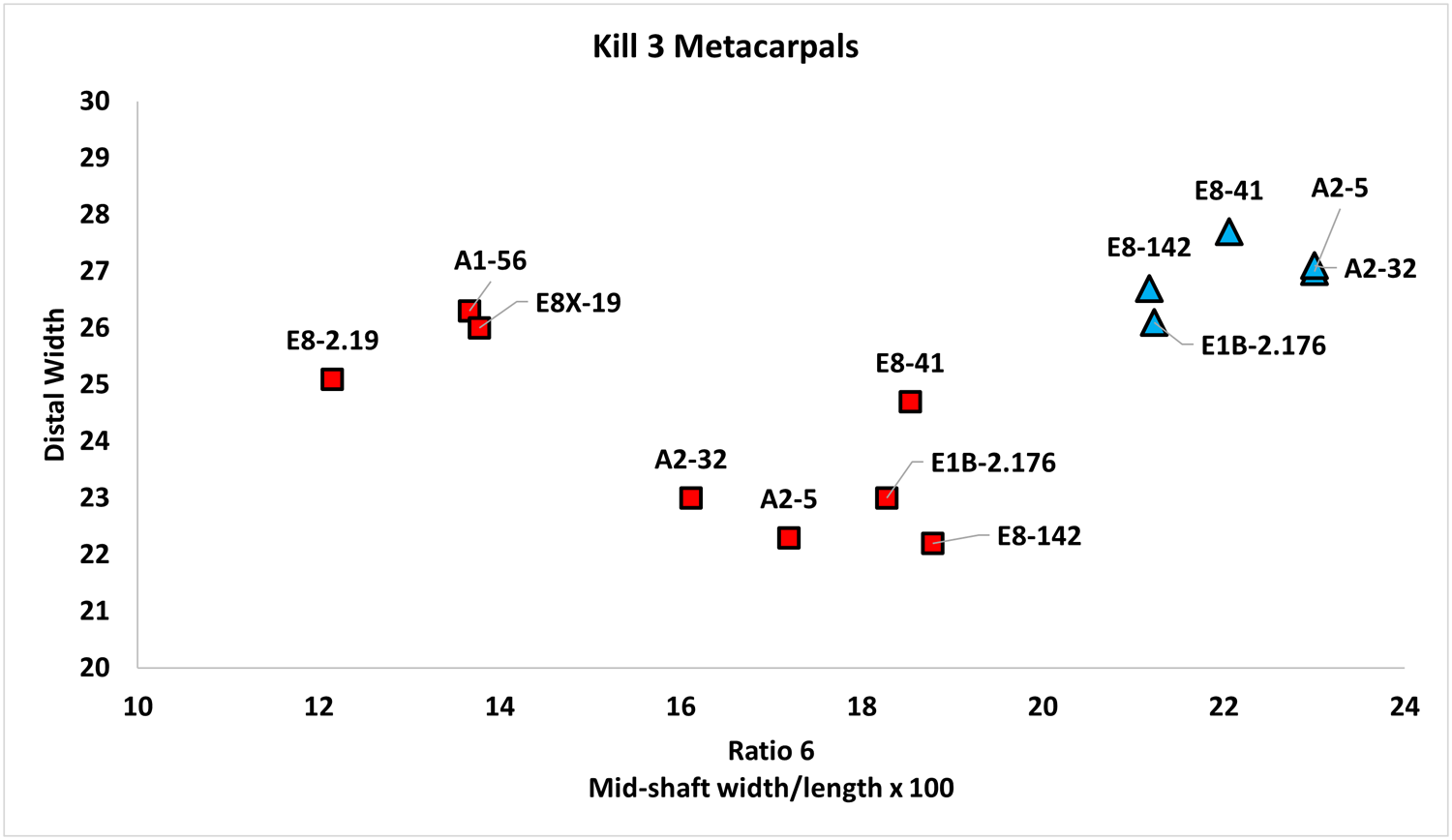


 Open access

