




No CrossRef data available.
Molecular tools for studies on the transmission biology of Echinococcus multilocularis
Published online by Cambridge University Press: 04 March 2004
Abstract
Two novel approaches for diagnosis of intestinal Echinococcus multilocularis infection, the detection of E. multilocularis-specific coproantigens in ELISA and of copro-DNA by PCR, have been successfully implemented. These methods have proven their value for the post mortem and the intra vitam diagnosis of E. multilocularis in definitive hosts. They have also made novel approaches possible to study the transmission biology of the parasite as they allow detection of the infection in faecal samples collected in the environment. Coproantigen detection is the diagnostic method of choice as it is sensitive, fast and cheap. Studies on faecal samples collected in the field revealed that coproantigen detection did reflect the different prevalences in fox populations as assessed from foxes at necropsy and also the effect of deworming efforts in foxes as achieved by long-term distribution of praziquantel-containing baits. The use of PCR for routine diagnostic or large-scale purposes is hampered by the fact that DNA extraction from faecal material is a very laborious task. Therefore, PCR is rationally used for confirmatory purposes of copro-antigen-positive samples. As taeniid eggs cannot further be differentiated morphologically, PCR is the method of choice to identify E. multilocularis infections in faecal or environmental samples containing taeniid eggs. In intermediate rodent hosts, PCR is routinely used in epidemiological studies for identifying E. multilocularis from liver lesions which are often very small, atypical or calcified.
Information
- Type
- Research Article
- Information
- Copyright
- © 2003 Cambridge University Press
INTRODUCTION
The life cycle of Echinococcus multilocularis is perpetuated by rodents as intermediate hosts and foxes as definitive hosts in a predominantly wildlife cycle. A semidomestic or synanthropic cycle with domestic carnivores (dogs) as the definitive host may occur and was documented to be of major importance in a few geographic areas (such as parts of Alaska and China). For studying the transmission biology of this helminth, different methods to detect it both in the definitive carnivore hosts and the rodent intermediate hosts can be applied. Hence, parasite transmission can be assessed by detecting egg contamination of faecal and environmental specimens or by diagnosing the infection in intermediate or aberrant hosts such as pigs (Deplazes & Eckert, 2001).
For diagnosing the intestinal infection in definitive hosts after necropsy, the sedimentation and counting technique (SCT) is the ‘gold standard’ (Eckert et al. 2001a). This polyspecific method also allows a quantitative analysis of all intestinal helminths and to determine their developmental stages (e.g. larval, preadult, gravid stages). For mass screening of foxes, the intestinal scraping technique (IST), a somewhat less laborious technique with a sensitivity of 78% as compared to the SCT (Hofer et al. 2000), has been widely used. The obvious disadvantages of both these parasitological methods are the high logistical requirements. For example, about 4–10% of all fox carcasses delivered by hunters are unsuitable for post mortem examination due to decomposition of the intestine (personal communication T. Romig). The methods are also time consuming and require special safety precautions due to the infection risk for the investigator. Furthermore, a drawback of these methods is the fact that they can be applied to dead animals only. This renders these methods unsuitable for diagnosis in pet animals. Data collection by these strategies is strongly influenced by hunting regulations, and an increased hunting pressure can influence the structure of wild animal populations.
Serological screening using crude parasite antigens or affinity-purified Em2 antigen has been considered unsuitable for reliable diagnosis of intestinal E. multilocularis infections because of a poor correlation between the presence of antibodies and worms (Deplazes & Eckert, 1996). However, serology might be of value under certain circumstances to detect exposure of animals to the parasite.
The microscopical detection of worm eggs in faecal samples by routine coprological methods suffers from a low methodology-related sensitivity and is limited by the variable intensity of egg shedding. Furthermore, eggs of E. multilocularis cannot be differentiated morphologically from those of other taeniid worms. As outlined below, the analysis of such eggs by the polymerase chain reaction (PCR) can overcome this limitation.
Two alternative approaches, the detection of E. multilocularis-specific coproantigens and copro-DNA, have been successfully developed and evaluated. These allow the reliable diagnosis of E. multilocularis using faecal material from both necropsied and living definitive hosts (Table 1). An important additional advantage of these alternative methods is that they can also be applied to samples from the environment. This facilitates new approaches to investigate parasite transmission dynamics without interacting with the populations of wild or domesticated definitive hosts. Of crucial importance in this approach is the correct identification of the origin of field faecal samples. The biochemical analysis of bile acids by thin-layer chromatography has allowed the identification of fox faeces (Major et al. 1980) but this is a rather laborious approach. Morphological analysis of hair in faeces should in principle determine the species of large carnivores, as for example fox hair is not present in dog faeces. However, such an approach has not yet been evaluated for this purpose. In recent field studies, fox faeces were identified by assessing physical parameters such as size, shape, typical fox smell and the presence of food remnants. The reliability of this latter strategy was demonstrated by the different parasite spectra of putative fox and dog faecal specimens in a study on urban transmission of E. multilocularis which required the discrimination of fox faeces from faeces of dog origin (Stieger et al. 2002).

Another possibility to identify fox faeces could be the genetic analysis of faecal samples by PCR. Such an approach has been developed, for example for the Iberian lynx (Palomares et al. 2002), and has proven to be a reliable technique that can be used in large-scale surveys. To the knowledge of the authors no such approach is available yet for the identification of fox faeces. Such a PCR could be combined with an E. multilocularis-specific PCR into a diagnosis system designed for investigating faecal samples from the environment.
MOLECULAR DIAGNOSIS OF E. MULTILOCULARIS IN DEFINITIVE HOSTS AND IN SPECIMENS FROM THE ENVIRONMENT
Detection of coproantigen
Several groups have independently developed coproantigen tests for diagnosis of intestinal Echinococcus infections (reviewed by Craig, Rogan & Allan, 1996; Deplazes & Eckert, 1996). Tests originally developed for the diagnosis of E. granulosus showed cross-reactivity with E. multilocularis but lacked sensitivity (Allan et al. 1992; Deplazes et al. 1992). ELISAs using antibodies produced against E. multilocularis antigens have subsequently been developed and evaluated (Table 1) (Kohno et al. 1995; Sakai et al. 1998; Deplazes et al. 1999). One test-kit for the detection of both E. multilocularis and E. granulosus coproantigen has been commercialised (Chekit® Echinotest; Dr. Bommeli AG, 3097 Bern, Switzerland). Extended evaluations of this test for detecting E. multilocularis are currently being carried out in independent laboratories.
Although cestode coproantigens have not fully been characterized, they have been shown to be heat resistant (Nonaka et al. 1996) and predominantly protein-, carbohydrate- and lipid-rich molecules (Craig et al. 1996). Further chemical analyses are under way in different laboratories.
Coproantigens are detectable during the prepatent and the patent periods in dogs, foxes and cats, and disappear within a few days after the elimination of the cestodes from the host (Sakai et al. 1998; Deplazes et al. 1999). In a study with experimentally infected dogs and cats, coproantigens were first detectable 6–17 days p.i. in samples of 8 dogs (worm burdens at necropsy: 6330–43200) and from 11 days p.i. onward in samples of 5 cats infected with 20–6833 worms (Deplazes et al. 1999). The sensitivity of this ELISA was 83·6% in 55 foxes infected with 4–60000 E. multilocularis, but reached 93·3% in the 45 foxes harbouring more than 20 worms. This test identified those animals harbouring approximately 99·6% of the total number of adult E. multilocularis in a fox population investigated. The specificity of the ELISA with regard to other non-Echinococcus helminths was 95·0%–99·6% as shown by the examination of faecal samples from 32 foxes, 658 dogs and 262 cats. The specificity was also surprisingly high (84%) with samples of 32 dogs naturally or experimentally infected with E. granulosus (Deplazes et al. 1999).
A prerequisite for the usefulness of the detection of coproantigens not only in fresh but also in weathered samples from the environment is their stability. Such a stability of helminth coproantigens has been documented in two experimental studies. T. hydatigena antigens were stable for at least 5 days at room temperature (Deplazes et al. 1990), and the detection of E. granulosus coproantigens was not influenced by exposing the faeces for six days and nights to sun-exposed places in the Australian Capital Territory (Jenkins et al. 2000). Field studies have confirmed coproantigen stability. No significant differences have been found in the percentage of E. multilocularis coproantigen-positive field faecal samples of different estimated ages and of different composition (Sakai et al. 1998; Raoul et al. 2001; Stieger et al. 2002).
A number of studies have confirmed the usefulness of coproantigen detection in faecal samples collected from the environment. Coproantigen detection was used with fox faeces collected for monitoring the infection pressure in Hokkaido (Japan) (Nonaka et al. 1998; Morishima et al. 1999; Tsukada et al. 2000). Stieger and colleagues (Stieger et al. 2002) evaluated with field faecal specimens an EM-ELISA which had been validated with intestinal contents of foxes (Deplazes et al. 1999). The cut-off value was calculated to be slightly higher than in the original evaluation, possibly due to environmental influences on these faeces. Sensitivity of the test for patent E. multilocularis infections, as determined by PCR on isolated eggs (see below), was 88%. They tested a further 604 fox faecal samples from all over the City of Zurich resulting in 156 (28·8%) positive ones with a distinct increase in the proportion of positive samples from the urban to the periurban zone. Furthermore, samples collected in the border zone had significantly more coproantigen-positive results during winter. Both findings are consistent with prevalence data obtained from foxes at necropsy in an earlier study from the same area (Hofer et al. 2000). In France, parasite detection at necropsy in foxes, originating from two areas with significantly different prevalences of E. multilocularis (14·7% and 65·3%), was compared with coproantigen detection in faecal samples collected in the field using two types of ELISAs (Kohno et al. 1995; Deplazes et al. 1999). The results of both coproantigen tests were in the range expected from the necropsy data, and it was concluded that this new strategy can be applied in epidemiological studies and fundamental research on transmission ecology (Raoul et al. 2001).
In two studies, coproantigen detection in field samples was used to assess the effect of long-term distribution of praziquantel-containing baits on the prevalence of E. multilocularis in foxes (Tsukada et al. 2002; Hegglin, Ward & Deplazes, 2003). Both studies recorded significant decreases in the percentage of coproantigen-positive specimens from baited areas compared to control areas. This was paralleled in both studies by a decrease in egg count in fox faeces and the prevalence in intermediate hosts in the baited areas toward the end of the baiting period of more than 1 year.
Detection of copro-DNA
No commercially available kits exist for copro-DNA detection. Methods for the isolation of DNA from faecal samples and PCR assays that have been evaluated are described in detail below.
Sample preparation.
Parasite DNA excreted with eggs, proglottids or parasite cells can be detected from faeces after amplification by PCR (virtually no cell-free DNA is present in faecal material due to the activity of the intestinal microflora). DNA isolation from faeces is either based on an alkaline lysis step (Bretagne et al. 1993; Dinkel et al. 1998) or on boiling the samples in 0·5% SDS and proteinase K digestion (van der Giessen et al. 1999). Due to the presence of substances that are inhibitory for DNA amplification, only a limited amount of material can be processed (0·5–4 g) with these methods, and extensive purification of the DNA is absolutely indispensable (phenol/chloroform extractions and use of DNA adsorbing matrices). Sensitivity of downstream PCR was reported to be 1 egg in 1500 μl of diluted fox faeces (Dinkel et al. 1998). However, several groups have reported that despite these high purification efforts some samples still exhibited very strong inhibitory effects on DNA amplification. For example, no conclusive PCR results could be obtained with 9 of 250 (3·6%) examined faecal samples due to inhibition (Dinkel et al. 1998). In another PCR-system, an increase in sensitivity from 24% to 82% was achieved (Monnier et al. 1996) after introduction of an additional DNA purification step to an already laborious protocol (Bretagne et al. 1993).
One approach to overcome the limitations of restricted specimen volume and PCR inhibition is to modify the original DNA isolation system (Bretagne et al. 1993) by including an initial step of concentrating helminth eggs by a combination of sequential sieving and an in-between step of flotation in zinc chloride solution (Mathis, Deplazes & Eckert, 1996). Hence, helminth eggs, which are highly resistant in the environment, can be concentrated from large sample volumes into a few μl of fluid and detected by means of an inverted microscope in a closed tube. As microscopic egg detection using this approach was shown to be very sensitive, only samples containing taeniid eggs need to be further investigated by PCR. DNA isolation from these eggs was achieved using a simplified protocol of the alkaline lysis method with no need for organosolvent extractions. No inhibition of the PCR was observed in 55 samples investigated as demonstrated by the amplification of a size-modified target in parallel reactions. The tests were undertaken with fresh faeces stored in 70% ethanol, but parasite detection was also possible after inactivation of eggs by deep-freezing (−80 °C) or by incubation of the faeces at +70 °C for 2 h. Obviously, this approach is suitable for the diagnosis of gravid infections only with eggs being present in the faeces.
PCR.
Two different genes have so far been targeted in diagnostic PCR for the detection of intestinal E. multilocularis infection in faecal samples of foxes, the U1 snRNA gene (Bretagne et al. 1993; Mathis et al. 1996; Monnier et al. 1996) and the mt 12S rRNA gene (Dinkel et al. 1998; van der Giessen et al. 1999) (Tables 1 and 2).

The specificity for E. multilocularis of the single primer pair targeting the U1 snRNA gene (Bretagne et al. 1993) was initially confirmed with other tapeworms (T. crassiceps, T. taeniaeformis, 2 isolates of T. saginata, 3 isolates of E. granulosus without identification of the strains). In other studies using these primers, no reaction products were found with Japanese isolates of T. pisiformis (1 isolate), T. hydatigena (2), T. taeniaeformis (3), T. crassiceps (1), one E. granulosus isolate originating from Uruguay (Yagi et al. 1996) and with 20 E. granulosus isolates of unknown origin (Monnier et al. 1996). However, in a recent investigation these primers were shown not to be strictly species-specific for E. multilocularis as a product of the expected size was also obtained with a horse strain of E. granulosus (van der Giessen et al. 1999).
When using these primers with DNA obtained from taeniid eggs which had been concentrated from faecal specimens of foxes, no false positive results were obtained (specificity 100%). In addition, 33 out of 35 samples from animals with proven infection (SCT) were also PCR positive (sensitivity 96%) (Mathis et al. 1996).
The original PCR protocol (Bretagne et al. 1993) was modified (Monnier et al. 1996) by introducing a second round of amplification with nested PCR using DNA isolated directly from faeces. Hence, application of this method resulted in an increase of sensitivity from 62% of the single primer pair PCR to 82% as determined with 17 proven positive samples. The specificity for E. multilocularis of the nested PCR amplifying part of the mt12S rRNA gene (Dinkel et al. 1998) was confirmed with E. granulosus (3 isolates, without strain identification), T. crassiceps (1), T. hydatigena (3), T. martis (2), T. mustela (1), T. ovis (1), T. pisiformis (1), T. polyacantha (2), T. serialis (1), T. taeniaformis (2), Mesocestoides leptothylacus (1) and several isolates of nematodes of fox origin (Toxocara sp., Uncinaria sp.). In this study, the specificity of the nested PCR for E. multilocularis was additionally confirmed by hybridisation of the PCR products from positive faecal samples with an internal probe. This test was extensively evaluated with total DNA extracted from rectal samples of 250 wild foxes. A specificity of 100% and an overall sensitivity of 89% as compared with the intestinal scraping technique (ICS) were obtained. Most interestingly, this test allowed the detection of prepatent infections with an overall sensitivity of 78% in 63 foxes. The sensitivity was dependent on the worm burden, reaching 100% with foxes harbouring more than 1000 immature worms and 70% with animals with less than 10 parasites.
However, coproantigen and copro-DNA detection do not seem to correlate during the prepatent infection. As shown in Fig. 1, specific coproantigens were not detected by ELISA during the first days of infection in experimentally infected cats but PCR was positive in 2 of 3 samples. During the second third of the prepatent period 5 of 6 samples were coproantigen positive whereas only one turned out to be positive by PCR. At the end of the prepatent period (day 20–27), 3 of 7 highly coproantigen-positive samples were negative by PCR. At the beginning of the infection PCR probably detected protoscolices which did not establish and were excreted. The failure of coproantigen detection in these samples can be explained with the low concentration of coproantigens in protoscolex extracts (Deplazes et al. 1999). During the fast growing phase of the worms during the prepatent period high metabolic activities might be responsible for the high concentrations of coproantigens, but it seems that only little cellular parasite tissue was excreted during this time resulting in negative PCR results. Towards the end of the prepatent period, PCR-positive results indicate the excretion of worms or single proglottids.

Fig. 1. Follow-up of coproantigen detection in ELISA (Deplazes et al. 1999) and amplification of copro-DNA by PCR (Dinkel et al. 1998) during experimental infections of 5 cats with Echinococcus multilocularis (Eckert et al. 2001b). Symbols represent individual faecal samples of the cats without animal identification; numbers identify individual samples of cats at necropsy. Worm burdens (mature, non-gravid worms) of the cats were: cat 1: 5720 worms; cat 2: 1475 worms; cat 3: 282 worms; cat 4: 6833 worms; cat 5: 20 worms. Open symbols represent PCR negative samples, solid symbols PCR positive samples (Deplazes and Dinkel, unpublished).
In E. multilocularis, the intrinsic additional value of diagnostic PCR, the downstream identification of strains or genotypes, cannot be exploited as only a very small range of genetic heterogeneity has been discovered within numerous isolates by analysing various loci (both coding and non-coding regions) (Bowles, Blair & McManus, 1992; Bowles & McManus, 1993; Gasser & Chilton, 1995; Bretagne et al. 1996; Haag et al. 1997; Rinder et al. 1997; von Nickisch-Rosenegk, Lucius & Loos-Frank, 1999; van Herwerden, Gasser & Blair, 2000). No biological differences have so far been attributed to a distinct genotype. Furthermore, results on the relation of genotypes and geographic distribution are conflicting. Whereas 11 isolates investigated could be grouped into the traditional subspecies E. multilocularis multilocularis and E. multilocularis sibiricensis according to their origin and genotype (two genotypes differing at one polymorphic site in 1·3 kb of the rDNA locus) (Rinder et al. 1997), the geographical distribution of genotypes A and B, as determined by sequencing several loci (Haag et al. 1997), did not follow the pattern of the conventionally accepted North American and European strains. Similarly, only one single polymorphic site in part of the mt 12S rRNA gene was identified amongst 22 isolates of E. multilocularis, which reflected neither the geographic origin nor the intermediate host species from which the metacestodes were isolated (von Nickisch-Rosenegk et al. 1999). For epidemiological and transmission studies, microsatellites might be valuable genetic markers. Bretagne and colleagues (Bretagne et al. 1996) have identified microsatellite polymorphisms in the region upstream of the highly repetitive U1 snRNA gene yielding three different patterns among parasite isolates, but E. multilocularis microsatellites of single-copy loci need to be known for practical studies.
PCR not only allows us to distinguish E. multilocularis eggs from the morphologically identical eggs of other taeniids, but it also offers the possibility to determine egg numbers. However, due to the intermittent shedding of eggs, such a quantitative PCR, which to our knowledge has yet to be established, is of limited use for investigating single faecal samples from few animals. However, such an approach might contribute to transmission/epidemiological studies when employed on a larger scale in populations of definitive hosts over a prolonged period of time.
Diagnostic strategy
For large-scale screenings of definitive hosts the choice of the diagnostic methods has to consider economics, methodology and logistics (e.g. storage of material, stability of material and transport). Screening tests should be highly sensitive, fast and cheap. The coproantigen detection by ELISA fulfils these requirements and has been shown to be useful for large-scale investigations. In animal populations with a low prevalence of E. multilocularis, such as dogs and cats, ELISA results have a very high negative predictive value but low positive predictive value. Therefore, positive ELISA results need further confirmation with the more laborious PCR. Such a PCR can be done with total DNA isolated from all coproantigen-positive samples (with the inherent risk of co-isolating PCR-inhibitory substances) or with DNA from only those samples from which taeniid eggs could be obtained after concentration by a sieving/flotation method (with the risk to obtain false-negative PCR results for prepatent infections). The latter strategy has been successfully applied in dog and cat populations (Deplazes et al. 1999; Gottstein et al. 2001). As an alternative to this ELISA-based approach, the microscopical detection of taeniid eggs concentrated by conventional methods or by using the sieving/flotation system (Mathis et al. 1996) could be used followed by investigating samples containing taeniid eggs by PCR. This strategy can also be applied for the investigation of environmental (dust, earth, sand, food and water) samples.
MOLECULAR DIAGNOSIS OF E. MULTILOCULARIS IN INTERMEDIATE HOSTS
Monitoring the prevalence in intermediate hosts has been performed in recent studies aimed at determining spatial and temporal transmission of the parasite (Stieger et al. 2002) or at studying the effects of long-term anthelmintic baiting of foxes with praziquantel (Tsukada et al. 2002; Hegglin et al. 2003). The diagnosis of E. multilocularis metacestode infections in necropsied rodents is based on pathognomonic macroscopic and histological (HE- and PAS-stain) findings. However, very small, atypical or calcified liver lesions are recalcitrant to these methods. Specific metacestode antigen (Em2G11) can be detected in such cases by visualisation of fragments of the laminated layer using the EmG11 monoclonal antibody on squashed metacestode material (Hofer et al. 2000) or by a sandwich-ELISA (Deplazes & Gottstein, 1991). The method of choice for identifying E. multilocularis from such lesions, however, is PCR using proteinase K digested lesion material. Gottstein and colleagues (Gottstein et al. 2001) used primers derived from a specific DNA probe (Gottstein & Mowatt, 1991) in their survey in intermediate hosts from an area with high prevalence. In other studies, a nested PCR (Dinkel et al. 1998) or a single PCR with the slightly modified inner primer pair EM-H15 and 17 (Table 2) were used. Stieger and colleagues (Stieger et al. 2002) investigated 161 unidentifiable liver lesions from Arvicola terrestris resulting in 55 E. multilocularis positive results in addition to the classically diagnosed 26 infected animals. PCR examination of DNA isolated from 373 unidentifiable liver lesions originating from several intermediate host species trapped in an area of low endemicity yielded 11% E. multilocularis positive results (Dinkel, 1998). A study carried out in an area of high endemicity examining 386 Arvicola terrestris resulted in 35 positive animals (9·1%), of which 27 showed immature or non-fertile lesions only diagnosable by PCR (Dinkel et al. 1996; Merli et al. 1996). In an experimental study on developmental aspects of E. multilocularis metacestodes in the common vole Microtus arvalis (Merli et al. 2001) it was shown that species diagnosis for lesions <2 weeks old could only be achieved by PCR.
The primers described by Bretagne and colleagues (Bretagne et al. 1993) for PCR-detection in faecal samples yielded non-specific products when used on rodent liver specimens.
References
REFERENCES
ALLAN, J. C.,
CRAIG, P. S.,
GARCIA, N. J.,
MENCOS, F.,
LIU, D.,
WANG, Y.,
WEN, H.,
ZHOU, P.,
STRINGER, R. & ROGAN, M.
(1992).
Coproantigen detection for immunodiagnosis of echinococcosis and taeniasis in dogs and humans.
Parasitology
104, 347–356.CrossRefGoogle Scholar
BOWLES, J.,
BLAIR, D. &
McMANUS, D. P.
(1992).
Genetic variants within the genus Echinococcus identified by mitochondrial DNA sequencing.
Molecular and Biochemical Parasitology
54, 165–173.CrossRefGoogle Scholar
BOWLES, J. &
McMANUS, D. P.
(1993).
Rapid discrimination of Echinococcus species and strains using a polymerase chain reaction-based RFLP method.
Molecular and Biochemical Parasitology
57, 231–239.CrossRefGoogle Scholar
BRETAGNE, S.,
ASSOULINE, B.,
VIDAUD, D.,
HOUIN, R. &
VIDAUD, M.
(1996).
Echinococcus multilocularis: microsatellite polymorphism in U1 snRNA genes.
Experimental Parasitology
82, 324–328.CrossRefGoogle Scholar
BRETAGNE, S.,
GUILLOU, J. P.,
MORAND, M. &
HOUIN, R.
(1993).
Detection of Echinococcus multilocularis DNA in fox faeces using DNA amplification.
Parasitology
106, 193–199.CrossRefGoogle Scholar
CHRISTOFI, G.,
DEPLAZES, P.,
CHRISTOFI, N.,
TANNER, I.,
ECONOMIDES, P. &
ECKERT, J.
(2002).
Screening of dogs for Echinococcus granulosus coproantigen in a low endemic situation in Cyprus.
Veterinary Parasitology
104, 299–306.CrossRefGoogle Scholar
CRAIG, P. S.,
ROGAN, M. T. &
ALLAN, J. C.
(1996).
Detection, screening and community epidemiology of taeniid cestode zoonoses: cystic echinococcosis, alveolar echinococcosis and neurocysticercosis.
Advances in Parasitology
38, 169–250.CrossRefGoogle Scholar
DEPLAZES, P.,
ALTHER, P.,
TANNER, I.,
THOMPSON, R. C. &
ECKERT, J.
(1999).
Echinococcus multilocularis coproantigen detection by enzyme-linked immunosorbent assay in fox, dog, and cat populations.
Journal of Parasitology
85, 115–121.CrossRefGoogle Scholar
DEPLAZES, P. &
ECKERT, J.
(1996).
Diagnosis of the Echinococcus multilocularis infection in final hosts.
Applied Parasitology
37, 245–252.Google Scholar
DEPLAZES, P. &
ECKERT, J.
(2001).
Veterinary aspects of alveolar echinococcosis – a zoonosis of public health significance.
Veterinary Parasitology
98, 65–87.CrossRefGoogle Scholar
DEPLAZES, P. & GOTTSTEIN, B. (1991). A monoclonal antibody against Echinococcus multilocularis Em2 antigen.
Parasitology
103, 41–49.CrossRefGoogle Scholar
DEPLAZES, P.,
GOTTSTEIN, B.,
ECKERT, J.,
JENKINS, D. J.,
EWALD, D. &
JIMENEZ-PALACIOS, S.
(1992).
Detection of Echinococcus coproantigens by enzyme-linked immunosorbent assay in dogs, dingoes and foxes. Parasitology Research
78, 303–308.CrossRefGoogle Scholar
DEPLAZES, P.,
GOTTSTEIN, B.,
STINGELIN, Y. &
ECKERT, J.
(1990).
Detection of Taenia hydatigena copro-antigens by ELISA in dogs.
Veterinary Parasitology
36, 91–103.CrossRefGoogle Scholar
DINKEL, A.
(1998).
Diagnostik von Echinococcus multilocularis im End- und Zwischenwirt mit Hilfe der PCR. Verlag Ulrich E. Grauer, Stuttgart, Germany.
DINKEL, A.,
VON NICKISCH-ROSENEGK, M.,
BILGER, B.,
MERLI, M.,
KÖDER, M.,
LOOS-FRANK, B.,
LUCIUS, R. &
ROMIG, T.
(1996).
Spezifischer Nachweis von Echinococcus multilocularis-DNA aus End- und Zwischenwirt mit Hilfe der PCR. 17th Congress of the German Society for Parasitology, München, Germany.
DINKEL, A.,
VON NICKISCH-ROSENEGK, M.,
BILGER, B.,
MERLI, M.,
LUCIUS, R. &
ROMIG, I.
(1998).
Detection of Echinococcus multilocularis in the definitive host: coprodiagnosis by PCR as an alternative to necropsy. Journal of Clinical Microbiology
36, 1871–1876.Google Scholar
ECKERT, J.,
GEMMELL, M. A.,
MESLIN, F.-X. &
PAWLOWSKI, J. (eds) (2001 a).
Echinococcosis in Humans and Animals: A Public Health Problem of Global Concern.
Manual of the World Health Organization, Geneva, and the Office International des Epizooties, Paris.
ECKERT, J.,
THOMPSON, R. C.,
BUCKLAR, H.,
BILGER, B. &
DEPLAZES, P.
(2001 b).
Efficacy evaluation of epsiprantel (Cestex) against Echinococcus multilocularis in dogs and cats.
Berliner und Munchener Tierarztliche Wochenschrift
114, 121–126.Google Scholar
GASSER, R. B. &
CHILTON, N. B.
(1995).
Characterisation of taeniid cestode species by PCR-RFLP of ITS2 ribosomal DNA.
Acta Tropica
59, 31–40.CrossRefGoogle Scholar
GOTTSTEIN, B. &
MOWATT, M. R.
(1991).
Sequencing and characterization of an Echinococcus multilocularis DNA probe and its use in the polymerase chain reaction.
Molecular and Biochemical Parasitology
44, 183–193.CrossRefGoogle Scholar
GOTTSTEIN, B.,
SAUCY, F.,
DEPLAZES, P.,
REICHEN, J.,
DEMIERRE, G.,
BUSATO, A.,
ZUERCHER, C. &
PUGIN, P.
(2001).
Is high prevalence of Echinococcus multilocularis in wild and domestic animals associated with disease incidence in humans?
Emerging Infectious Diseases
7, 408–412.Google Scholar
HAAG, K. L.,
ZAHA, A.,
ARAUJO, A. M. &
GOTTSTEIN, B.
(1997).
Reduced genetic variability within coding and non-coding regions of the Echinococcus multilocularis genome.
Parasitology
115, 521–529.CrossRefGoogle Scholar
HEGGLIN, D.,
WARD, P. &
DEPLAZES, P.
(2003).
Small-scale anthelmintic baiting of foxes reduces urban Echinococcus multilocularis egg contamination. Emerging Infectious Diseases (in press).CrossRefGoogle Scholar
HOFER, S.,
GLOOR, S.,
MULLER, U.,
MATHIS, A.,
HEGGLIN, D. &
DEPLAZES, P.
(2000).
High prevalence of Echinococcus multilocularis in urban red foxes (Vulpes vulpes) and voles (Arvicola terrestris) in the city of Zurich, Switzerland.
Parasitology
120, 135–142.CrossRefGoogle Scholar
JENKINS, D. J.,
FRASER, A.,
BRADSHAW, H. &
CRAIG, P. S.
(2000).
Detection of Echinococcus granulosus coproantigens in Australian canids with natural or experimental infection.
Journal of Parasitology
86, 140–145.CrossRefGoogle Scholar
KERN, P.,
FROSCH, P.,
HELBIG, M.,
WECHSLER, J. G.,
USADEL, S.,
BECKH, K.,
KUNZ, R.,
LUCIUS, R. &
FROSCH, M.
(1995).
Diagnosis of Echinococcus multilocularis infection by reverse-transcription polymerase chain reaction.
Gastroenterology
109, 596–600.CrossRefGoogle Scholar
KOHNO, H.,
SAKAI, H.,
OKAMOTO, M.,
ITO, M.,
OKU, Y. &
KAMIYA, M.
(1995).
Development and characterization of murine monoclonal antibodies to Echinococcus multilocularis adult worms and its use.
Japanese Journal of Parasitology
44, 404–412.Google Scholar
MAJOR, M.,
JOHNSON, M. K.,
DAVIS, W. S. &
KELLOGG, T. F.
(1980).
Identifying scats by recovery of bile acids.
Journal of Wildlife Management
44, 290–293.CrossRefGoogle Scholar
MATHIS, A.,
DEPLAZES, P. &
ECKERT, J.
(1996).
An improved test system for PCR-based specific detection of Echinococcus multilocularis eggs.
Journal of Helminthology
70, 219–222.CrossRefGoogle Scholar
MERLI, M.,
DINKEL, A.,
LOOS-FRANK, B.,
LUCIUS, R. &
ROMIG, T.
(1996).
Untersuchungen zum Vorkommen von Echinococcus multilocularis in Feld- und Schermäusen in Baden-Württemberg. 17th Congress of the German Society for Parasitology, München, Germany.
MERLI, M.,
ROMIG, T.,
DINKEL, A.,
BILGER, B. &
MACKENSTEDT, U.
(2001).
Developmental aspects of Echinococcus multilocularis metacestodes in the common vole (Microtus arvalis). XXth International Congress of Hydatidology, Kusadasi, Turkey.
MONNIER, P.,
CLIQUET, F.,
AUBERT, M. &
BRETAGNE, S.
(1996).
Improvement of a polymerase chain reaction assay for the detection of Echinococcus multilocularis DNA in faecal samples of foxes.
Veterinary Parasitology
67, 185–195.CrossRefGoogle Scholar
MORISHIMA, Y.,
TSUKADA, H.,
NONAKA, N.,
OKU, Y. &
KAMIYA, M.
(1999).
Coproantigen survey for Echinococcus multilocularis prevalence of red foxes in Hokkaido, Japan.
Parasitology International
48, 121–134.CrossRefGoogle Scholar
NONAKA, N.,
IIDA, M.,
YAGI, K.,
ITO, T.,
OOI, H. K.,
OKU, Y. &
KAMIYA, M.
(1996).
Time course of coproantigen excretion in Echinococcus multilocularis infections in foxes and an alternative definitive host, golden hamsters.
International Journal for Parasitology
26, 1271–1278.CrossRefGoogle Scholar
NONAKA, N.,
TSUKADA, H.,
ABE, N.,
OKU, Y. &
KAMIYA, M.
(1998).
Monitoring of Echinococcus multilocularis infection in red foxes in Shiretoko, Japan, by coproantigen detection.
Parasitology
117, 193–200.CrossRefGoogle Scholar
PALOMARES, F.,
GODOY, J. A.,
PIRIZ, A. &
O'BRIEN, S. J.
(2002).
Faecal genetic analysis to determine the presence and distribution of elusive carnivores: design and feasibility for the Iberian lynx.
Molecular Ecology
11, 2171–2182.CrossRefGoogle Scholar
RAOUL, F.,
DEPLAZES, P.,
NONAKA, N.,
PIARROUX, R.,
VUITTON, D. A. &
GIRAUDOUX, P.
(2001).
Assessment of the epidemiological status of Echinococcus multilocularis in foxes in France using ELISA coprotests on fox faeces collected in the field.
International Journal for Parasitology
31, 1579–1588.CrossRefGoogle Scholar
RINDER, H.,
RAUSCH, R. L.,
TAKAHASHI, K.,
KOPP, H.,
THOMSCHKE, A. &
LOSCHER, T.
(1997).
Limited range of genetic variation in Echinococcus multilocularis.
Journal of Parasitology
83, 1045–1050.CrossRefGoogle Scholar
SAKAI, H.,
NONAKA, N.,
YAGI, K.,
OKU, Y. &
KAMIYA, M.
(1998).
Coproantigen detection in a survey of Echinococcus multilocularis infection among red foxes, Vulpes vulpes schrencki, in Hokkaido, Japan.
Journal of Veterinary Medical Science
60, 639–641.CrossRefGoogle Scholar
STIEGER, C.,
HEGGLIN, D.,
SCHWARZENBACH, G.,
MATHIS, A. &
DEPLAZES, P.
(2002).
Spatial and temporal aspects of urban transmission of Echinococcus multilocularis.
Parasitology
124, 631–640.CrossRefGoogle Scholar
TSUKADA, H.,
HAMAZAKI, K.,
GANZORIG, S.,
IWAKI, T.,
KONNO, K.,
LAGAPA, J. T.,
MATSUO, K.,
ONO, A.,
SHIMIZU, M.,
SAKAI, H.,
MORISHIMA, Y.,
NONAKA, N.,
OKU, Y. &
KAMIYA, M.
(2002).
Potential remedy against Echinococcus multilocularis in wild red foxes using baits with anthelmintic distributed around fox breeding dens in Hokkaido, Japan.
Parasitology
125, 119–129.CrossRefGoogle Scholar
TSUKADA, H.,
MORISHIMA, Y.,
NONAKA, N.,
OKU, Y. &
KAMIYA, M.
(2000).
Preliminary study of the role of red foxes in Echinococcus multilocularis transmission in the urban area of Sapporo, Japan.
Parasitology
120, 423–428.CrossRefGoogle Scholar
VAN DER GIESSEN, J. W.,
ROMBOUT, Y. B.,
FRANCHIMONT, J. H.,
LIMPER, L. P. &
HOMAN, W. L.
(1999).
Detection of Echinococcus multilocularis in foxes in The Netherlands.
Veterinary Parasitology
82, 49–57.CrossRefGoogle Scholar
VAN HERWERDEN, L.,
GASSER, R. B. &
BLAIR, D.
(2000).
ITS-1 ribosomal DNA sequence variants are maintained in different species and strains of Echinococcus.
International Journal for Parasitology
30, 157–169.CrossRefGoogle Scholar
VON NICKISCH-ROSENEGK, M.,
LUCIUS, R. &
LOOS-FRANK, B.
(1999).
Contributions to the phylogeny of the Cyclophyllidea (Cestoda) inferred from mitochondrial 12S rDNA.
Journal of Molecular Evolution
48, 586–596.CrossRefGoogle Scholar
WORLD HEALTH ORGANIZATION/OFFICE INTERNATIONAL DES EPIZOOTIES (2001).
WHO/OIE Manual on Echinococcosis in Humans and Animals (
ed. J. Eckert, M. A. Gemmell, F.-X. Meslin & Z. Pawlowski
). Office International des Epizooties,
Paris.
YAGI, K.,
OHYAMA, T.,
OKAMOTO, M.,
KUROSAWA, T. &
KAMIYA, M.
(1996).
The application of PCR for the identification of Echinococcus multilocularis eggs in Hokkaido. In
Alveolar Echinococcosis. Strategy for the Eradication of Alveolar Echinococcosis in the Liver (
ed. J. Uchini & N. Sato
), pp. 165–170.
Fuji Shoin,
Sapporo, Japan.
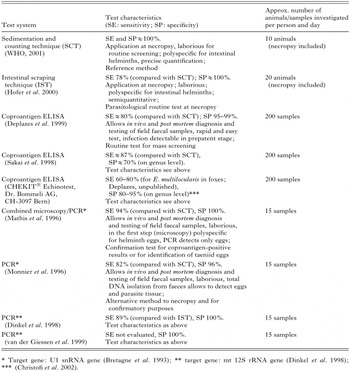
Table 1. Characteristics of test systems for diagnosis of E. multilocularis in definitive hosts
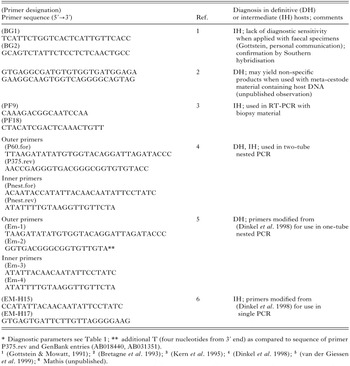
Table 2. Sequences of primers used for PCR-diagnosis of E. multilocularis*
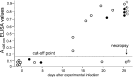
Fig. 1. Follow-up of coproantigen detection in ELISA (Deplazes et al. 1999) and amplification of copro-DNA by PCR (Dinkel et al. 1998) during experimental infections of 5 cats with Echinococcus multilocularis (Eckert et al. 2001b). Symbols represent individual faecal samples of the cats without animal identification; numbers identify individual samples of cats at necropsy. Worm burdens (mature, non-gravid worms) of the cats were: cat 1: 5720 worms; cat 2: 1475 worms; cat 3: 282 worms; cat 4: 6833 worms; cat 5: 20 worms. Open symbols represent PCR negative samples, solid symbols PCR positive samples (Deplazes and Dinkel, unpublished).
 You have
Access
- 53
- Cited by