INTRODUCTION
Carbon monoxide (CO) is an odorless, colorless, tasteless, and non-irritable gas that is highly toxic when inhaled (Prockop & Chichkova, Reference Prockop and Chichkova2007). Poisoning can occur either from brief exposures to high levels of CO or from longer-term exposure to lower levels (Weaver, Reference Weaver2014). The presence of CO often goes undetected, making it the leading cause of accidental poisoning worldwide (Ernst & Zibrak, Reference Ernst and Zibrak1998; Raub, Mathieu-Nolf, Hampson, & Thom, Reference Raub, Mathieu-Nolf, Hampson and Thom2000).
When inhaled, CO enters the bloodstream, where it binds with hemoglobin to form the tight, yet slowly reversible complex, carboxyhemoglobin (COHb; Caine & Watson, Reference Caine and Watson2000). This reaction decreases the oxygen carrying capacity of the blood, and in turn reduces the availability of oxygen (Gorman, Drewry, Huang, & Sames, Reference Gorman, Drewry, Huang and Sames2003). As a result, tissues and organs in the body become damaged through a variety of mechanisms including hypoxia, excitotoxicity, lipid peroxidation, and apoptosis, leading to the development of brain lesions and neuronal cell loss and atrophy (Caine & Watson, Reference Caine and Watson2000; Jasper, Hopkins, Duker, & Weaver, Reference Jasper, Hopkins, Duker and Weaver2005; Piantadosi, Zhang, Levin, Folz, & Schmechel, Reference Piantadosi, Zhang, Levin, Folz and Schmechel1997; Thom, Reference Thom1990).
The effects of CO poisoning are non-specific, making diagnosis difficult (Wu & Juurlink, Reference Wu and Juurlink2014). Initial symptoms include headache, confusion, fatigue, concentration difficulties, loss of consciousness, and coma (Jasper et al., Reference Jasper, Hopkins, Duker and Weaver2005). Cognitive sequelae may also be present following CO poisoning, with impairments in memory, executive functioning, processing speed, and intellectual abilities commonly reported in the literature (Gale & Hopkins, Reference Gale and Hopkins2004; Gale et al., Reference Gale, Hopkins, Weaver, Bigler, Booth and Blatter1999; Hopkins, Weaver, & Kesner, Reference Hopkins, Weaver and Kesner1993). These neuropsychological deficits can occur immediately after exposure and remain (persistent neurologic sequelae; PNS), or can be delayed (delayed neurologic sequelae; DNS), with most symptoms presenting within 20 days post-CO exposure (Pang et al., Reference Pang, Bian, Zang, Wu, Xu, Dong and Zhang2013; Weaver et al., Reference Weaver, Hopkins, Chan, Churchill, Elliott, Clemmer and Morris2002).
However, in the 25–50% of cases with loss of consciousness, or with COHb levels of greater than 25%, cognitive sequelae may persist for longer than 1 month (Gorman, Clayton, Gilligan, & Webb, Reference Gorman, Clayton, Gilligan and Webb1992; Weaver, Reference Weaver1999). Psychiatric changes including anxiety, depression, obsessive-compulsive behaviors, and delusions and hallucinations may also occur after CO poisoning (Dunham & Johnstone, Reference Dunham and Johnstone1999; Jasper et al., Reference Jasper, Hopkins, Duker and Weaver2005; Min, Reference Min1986).
Although the cognitive sequelae after initial CO exposure are relatively well documented in the literature, the impact of CO poisoning on neuropsychological functioning over time is less clear. The aim of this study was to perform two meta-analyses to: (1) examine differences in neuropsychological functioning in patients with CO poisoning and healthy controls, and (2) to determine the short- and long-term neuropsychological effects of CO poisoning.
METHODS
Literature Search
Papers were identified by searching the electronic databases Medline and PsycInfo, using a combination of the following search terms: “carbon monoxide”, “poisoning”, “treatment”, “cognitive impairment”, “neuropsychological”, “effects”, “sequelae”, “acute”, “moderate”, “severe”, and “chronic”. In addition, the reference lists of the articles identified were manually searched to locate any further papers. Two reviewers (S.W. and C.P.) assessed all abstracts and full-text articles against the inclusion criteria. If disagreement occurred, consensus was achieved through discussion between reviewers or consultation with the senior researcher (S.C.). Any human data included in this manuscript were obtained in compliance with the regulations of our institution.
Meta-Analysis 1: Inclusion Criteria
(1) Human studies with participants over the age of 16 (no upper limit) with CO poisoning (no limit of severity); (2) Human studies using healthy participants as controls (i.e., control participants did not have any neuropsychological disorders); (3) Studies performed between the years 1995 and 2016 and published in English; (4) Assessed cognition using standardized and validated neuropsychological measures that are widely used and referred to in Lezak, Howieson, Bigler, and Tranel (Reference Lezak, Howieson, Bigler and Tranel2012), or Strauss, Sherman, and Spreen (Reference Strauss, Sherman and Spreen2006); and (5) Data were provided to allow for calculation of effect size.
Meta-Analysis 1: Exclusion Criteria
(1) Unpublished data or conference abstracts; (2) Multiple reports from the same data set (e.g., only original study was included to prevent overweighting of one data set); and (3) Studies using participants with neuropsychological disorders as controls to compare CO participants with (i.e., instead of cognitively healthy participants); (4) Used unstandardized or non-validated neuropsychological measures to assess cognitive domains; (5) Used modified or adapted versions of standardized tests (including computerized versions when not part of the standardized administration of the test), or if insufficient detail was provided regarding the method of test administration.
Meta-Analysis 2: Inclusion Criteria
(1) Human studies with participants over the age of 16 (no upper limit) with CO poisoning (no limit of severity); (2) Studies performed between the years 1995 and 2016 and published in English; (3) Assessed cognition using standardized and validated neuropsychological measures that are widely used and referred to in Lezak and colleagues (Reference Lezak, Howieson, Bigler and Tranel2012), or Strauss and colleagues (Reference Strauss, Sherman and Spreen2006); and (4) Data were provided to allow for calculation of effect size.
Meta-Analysis 2: Exclusion Criteria
(1) Unpublished data or conference abstracts; (2) Multiple reports from the same data set (e.g., only original study was included to prevent overweighting of one data set); and (3) Studies using participants with neuropsychological disorders as controls to compare CO participants with (i.e., instead of cognitively healthy participants); (4) Used unstandardized or non-validated neuropsychological measures to assess cognitive domains; (5) Used modified or adapted versions of standardized tests (including computerized versions when not part of the standardized administration of the test), or if insufficient detail was provided regarding the method of test administration.
Data Extraction and Statistical Analysis
Two reviewers (S.W. and C.P.) assessed the full-text articles that passed screening procedures for eligibility of inclusion. Risk of bias and the statistical requirements for calculating effect sizes was also reviewed. If disagreement on inclusion occurred, consensus was achieved through discussion between reviewers or consultation with the senior researcher (S.C.).
Data were extracted using a standardized form, with one reviewer (S.W.) extracting data from the included studies, and a second reviewer (C.P.) independently reviewing and checking the extracted data. If the study contained two or more CO poisoning groups (i.e., acute or moderate poisoning), the groups were combined to enable the calculation of a single effect size. If the study only reported standard error, the standard deviation was calculated using the formula SD=SE×√N, where SD=standard deviation, SE=standard error, and N=sample size (Higgins & Green, Reference Higgins and Green2011), to allow for the calculation of the effect size.
Pooling of effect sizes and tests of heterogeneity were performed using the Comprehensive Meta-Analysis (CMA) software using a random-effects model. Effect sizes, using Cohen’s d, where 0.2=small, 0.5=medium, and 0.8=large (Cohen, Reference Cohen1988), were calculated using pooled standard mean difference in neuropsychological test performance between participants with CO poisoning and healthy controls, as well as in neuropsychological test performance by CO poisoning participants across time. Participants with CO poisoning were not sub-grouped by severity as insufficient number of studies specifying or quantifying the extent of poisoning were identified.
The results of the neuropsychological tests extracted from the included studies were pooled according to the cognitive domain being assessed (see Daffner et al., Reference Daffner, Gale, Barrett, Boeve, Chatterjee, Coslett and Kaufer2015; Strauss et al., Reference Strauss, Sherman and Spreen2006, for a review of neuropsychological tests and their assignment to cognitive domain). Results were only pooled for each cognitive domain if two or more studies that assessed the same domain were identified. When two or more tests examined the same cognitive domain in the one study, the reviewers selected one test based on the hierarchy method suggested by Tendal and colleagues (Reference Tendal, Higgins, Juni, Hrobartsson, Trelle, Nuesch and Gotzsche2009). A critical value of 0.05 was set for pooled effect sizes, with homogeneity of effect sizes being tested by the Q statistic for each cognitive domain and CO poisoning status. The I2 statistic was used to quantify heterogeneity, with 25%=small, 50%=moderate, and 75%=high heterogeneity (Higgins, Thompson, Deeks, & Altman, Reference Higgins, Thompson, Deeks and Altman2003).
Risk of Bias Assessment
All included studies were assessed for risk of bias using the Effective Practice and Organisation of Care (EPOC) Risk of Bias Tool (EPOC, 2016). As per the recommendations, bias was assessed based on the following nine domains: sequence generation, allocation concealment, similarity of outcome measurements, similarity of baseline characteristics, addressing of incomplete outcome data, knowledge of intervention allocation, protection against contamination, presence of selective outcome reporting, and other risks of bias. A study was deemed to have a high risk of bias if the described protocols were concerning for bias in a given domain or if the description of the domain was not included in the primary text, and if the primary authors could not provide clarification when contacted. A domain was allocated as “low risk” when protocol was adequately described.
Bias refers to a systematic error in results or conclusions that can be influenced by the aforementioned domains, which can lead to the over-estimation or underestimation of an effect (Cochrane, 2017). Biases can vary in magnitude with regards to the influence on outcomes, and can help explain variation in the results of studies (Cochrane, 2017). It is, therefore, important to assess risk of bias when considering the findings of previous research.
RESULTS
Search Results and Study Characteristics
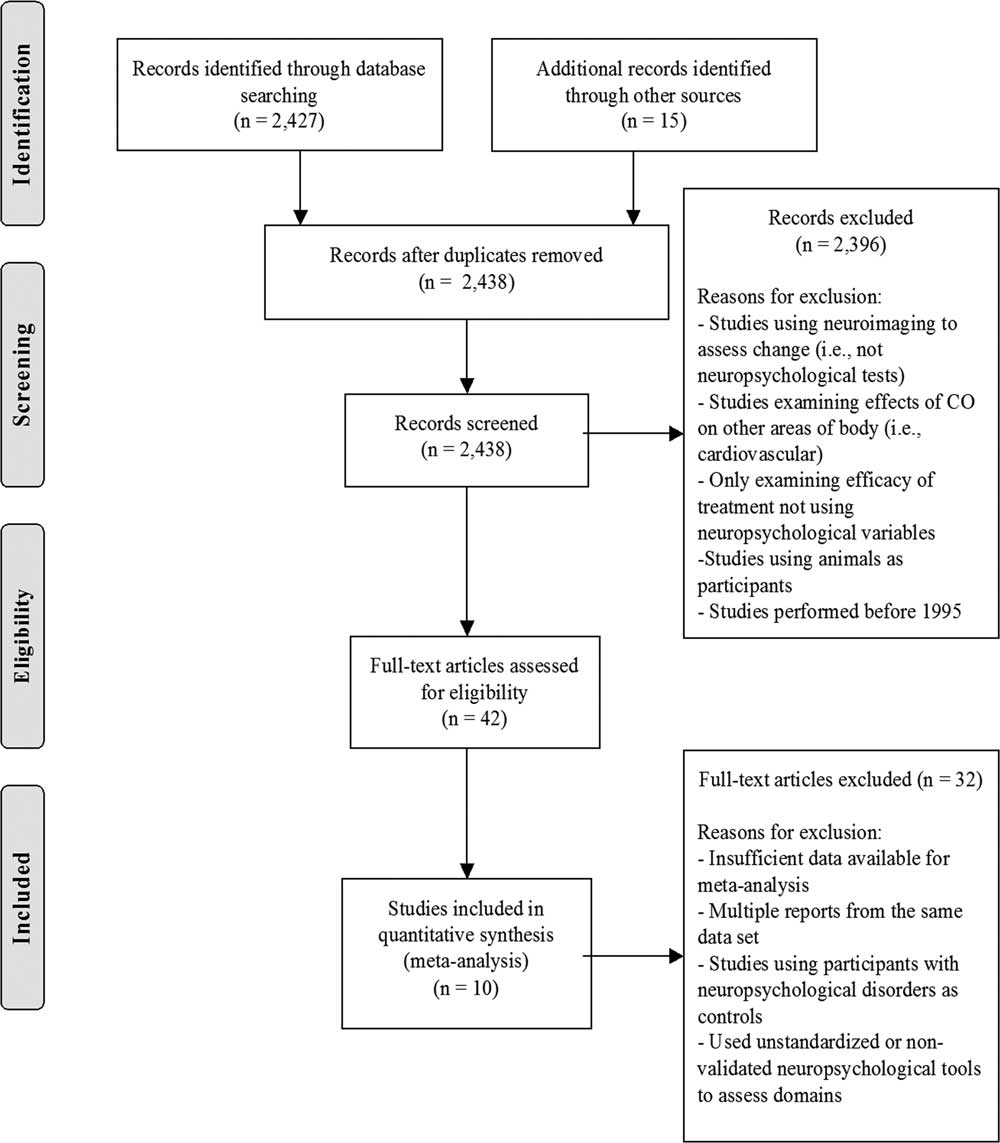
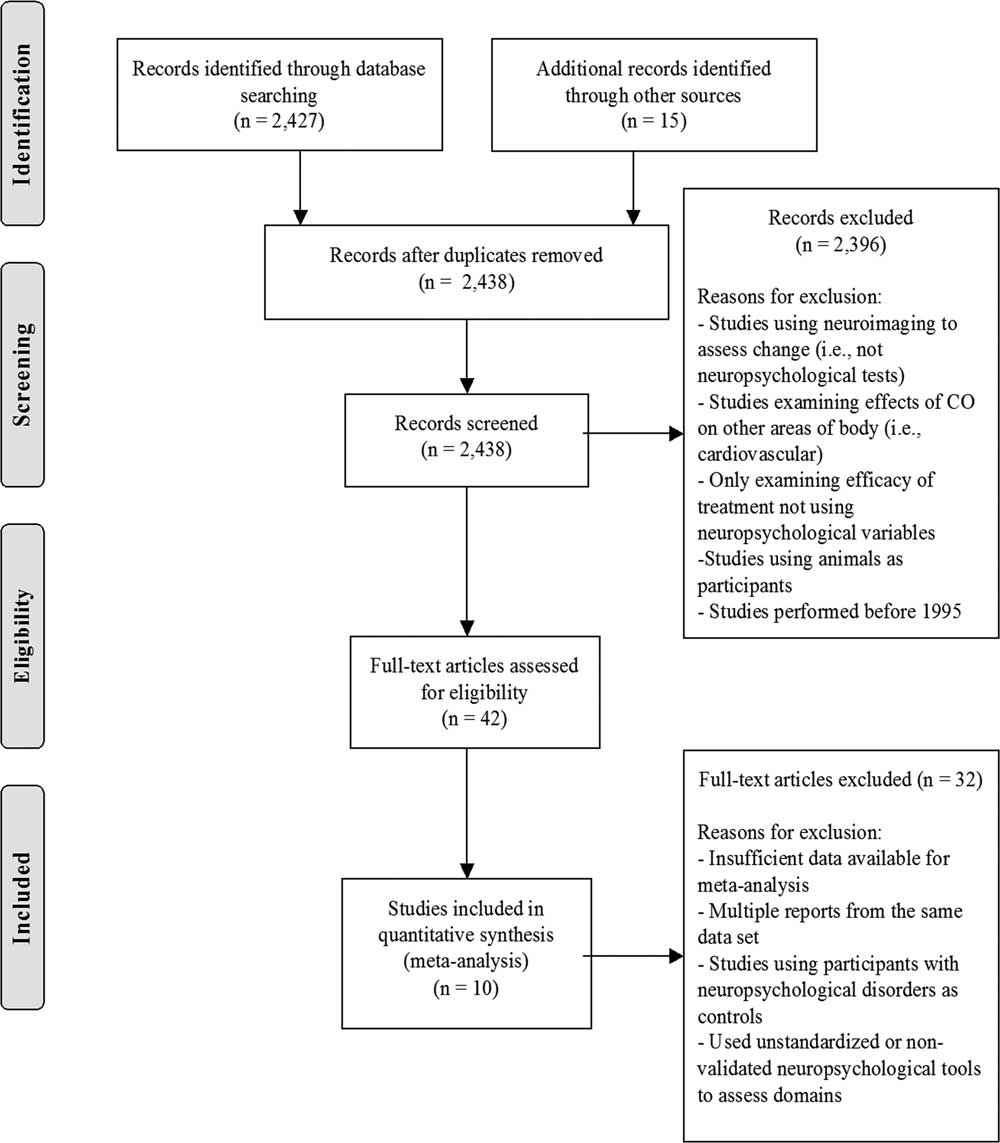
The combinations of the aforementioned search terms yielded 2442 papers. The investigators reviewed a total of 181 abstracts and 42 articles (see Figure 1) against the specified inclusion and exclusion criteria. Ten studies were finally included. Two separate meta-analyses were performed: (1) the examination of the neuropsychological effects of CO poisoning as compared to healthy controls, in which six studies were included, and (2) the examination of the cognitive effects of CO poisoning over time, in which six studies were included. Note: two of the studies were included in both meta-analyses.
Summary of evidence search and selection.
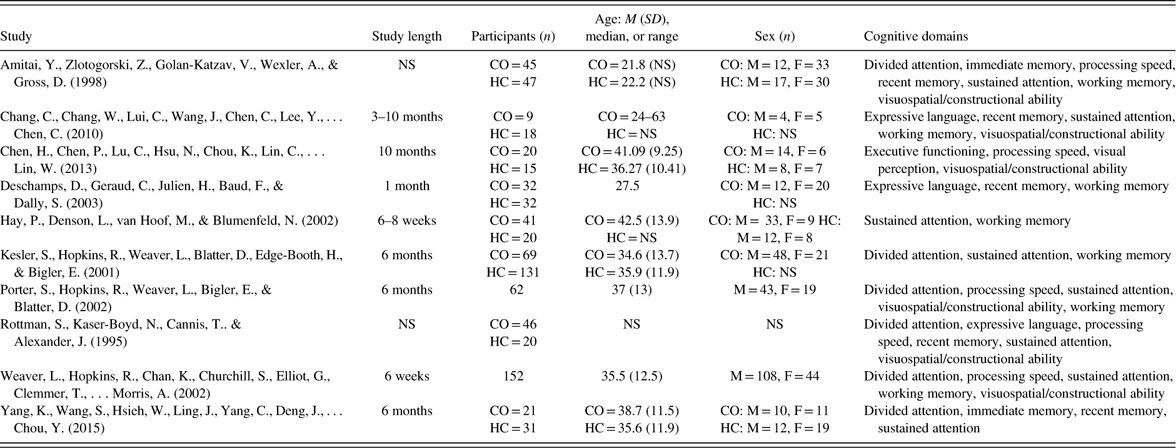
Demographic information, the cognitive domains studied, and the neuropsychological tests used to examine these domains in each included study are presented in Table 1.
Demographic information and study design of the included studies

Note. M=male; F=female; CO=participants with CO poisoning; HC=healthy controls; NS=not stated.
Domains of Cognition Evaluated
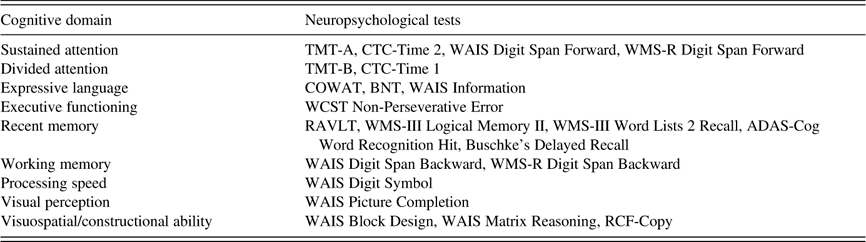
Table 2 summarizes the neuropsychological tests used and their corresponding assignment to the respective cognitive domains. Each neuropsychological test was allocated to one of the following cognitive domains: recent memory (i.e., free recall, cued recall, and recognition), expressive language (i.e., naming, word finding, fluency, grammar and syntax), sustained attention, divided attention, processing speed, visual perception, visuospatial/constructional ability, working memory, or executive functioning. These domains are based on the Diagnostic and Statistical Manual of Mental Disorders - Fifth Edition (DSM-5; American Psychiatric Association, 2013) neurocognitive domains. Neuropsychological tests were assigned to each domain based on the primary cognitive function it was developed to measure, or is most commonly used to measure, in neuropsychological practice. Furthermore, Strauss and colleagues (Reference Strauss, Sherman and Spreen2006) and Lezak and colleagues (Reference Lezak, Howieson, Bigler and Tranel2012) were used as guides, and test allocation decisions were reviewed by and agreed to by consensus of all authors.
Test allocation to cognitive domains
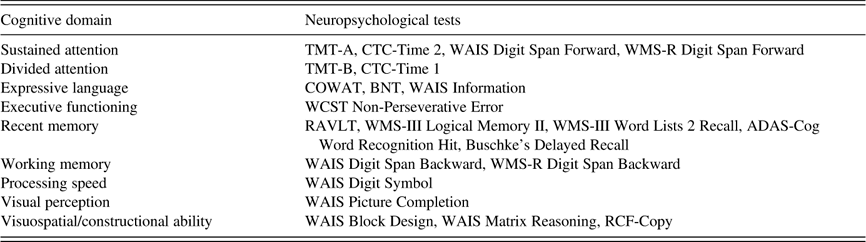
Note. TMT-A=Trails Making Test-A; TMT-B=Trails Making Test-B; CTC-Time 1=Colour Trails Test; WMS-III=Wechsler Memory Scale-Third Edition; WAIS=Wechsler Adult Intelligence Scale; BNT=Boston Naming Test; ADAS-Cog=Alzheimer’s Disease Assessment Scale – Cognitive; RCF=Rey-Osterrieth Complex Figure; WMS-R=Wechsler Memory Scale – Revised; COWAT=Controlled Oral Word Association Test; WCST=Wisconsin Card Sorting Test.
As previously stated, pooled effect sizes were only calculated when two or more studies assessed that particular domain. Thus, the domains that enabled the calculation of pooled effect sizes were sustained attention, divided attention, expressive language, recent memory, working memory, processing speed, and visuospatial/constructional ability.
Meta-analysis 1: Pooled Effect Sizes for CO Poisoning and Controls
Sustained attention
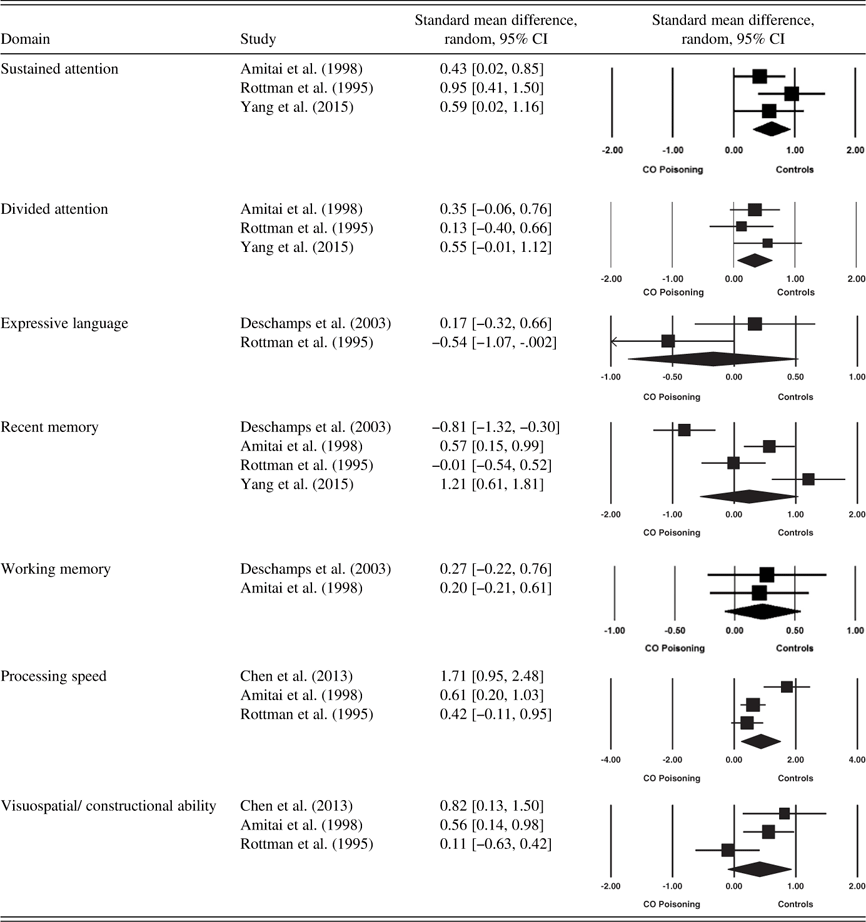
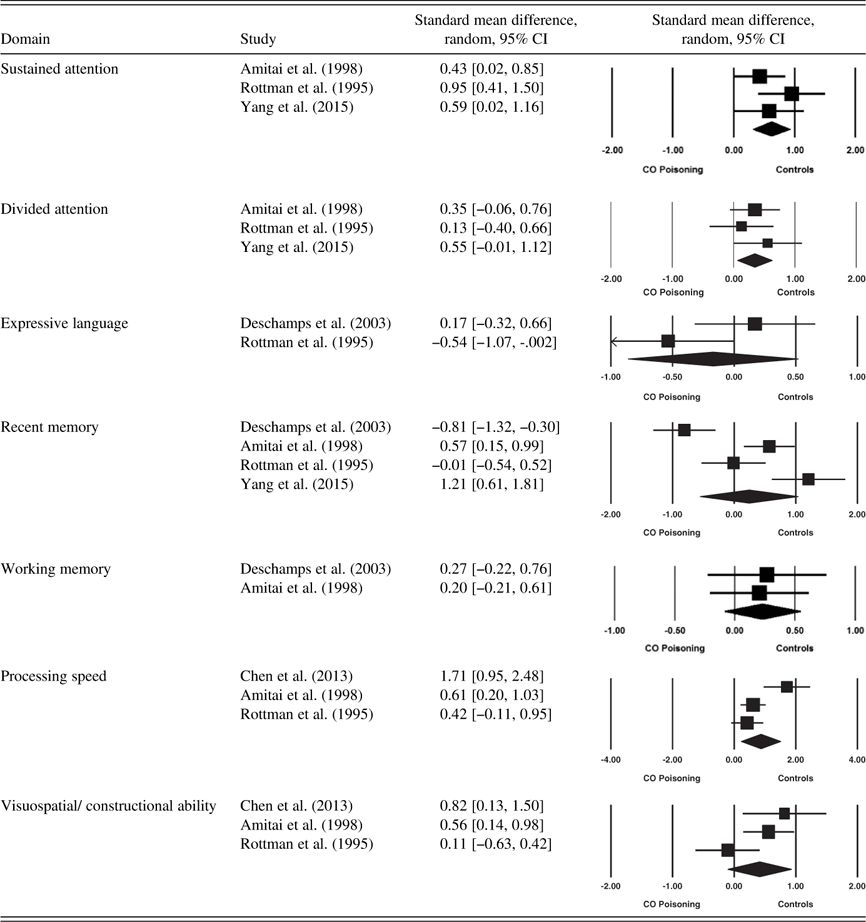
Three studies examined sustained attention in participants with CO poisoning and controls (Amitai, Zlotogorski, Golan-Katzav, Wexler, & Gross, Reference Amitai, Zlotogorski, Golan-Katzav, Wexler and Gross1998; Rottman, Kaser-Boyd, Cannis, & Alexander, Reference Rottman, Kaser-Boyd, Cannis and Alexander1995; Yang et al., Reference Yang, Wang, Hsieh, Lirng, Yang, Deng and Chou2015). Table 3 presents the pooled effect size of CO poisoning as compared to controls for sustained attention which was 0.62 (95% confidence interval [CI] [0.32, 0.92]; p<.001), with a medium, significant, positive effect, indicating that the controls performed significantly better than CO poisoning participants on tasks of sustained attention. Heterogeneity was small, with I2=9.57 (p>.05).
Cognitive domains assessed in meta-analysis 1
Divided attention
Three studies investigated divided attention (Amitai et al., Reference Amitai, Zlotogorski, Golan-Katzav, Wexler and Gross1998; Rottman et al., Reference Rottman, Kaser-Boyd, Cannis and Alexander1995; Yang et al., Reference Yang, Wang, Hsieh, Lirng, Yang, Deng and Chou2015). As can be seen in Table 3, the pooled effect size for divided attention was 0.34 (95% CI [0.06, 0.62]; p=.019), indicating a small, yet significant, positive effect. Heterogeneity was small, with I2=0.00 (p>.05).
Expressive language
Two studies evaluated expressive language ability in participants with CO poisoning and controls (Deschamps, geraud, Julien, Baud, & Dally, Reference Deschamps, Geraud, Julien, Baud and Dally2003; Rottman et al., Reference Rottman, Kaser-Boyd, Cannis and Alexander1995). As demonstrated in Table 3, the pooled effect size of CO poisoning participants versus controls for expressive language was −0.18 (95% CI [−0.87, 0.51]; p=.62), indicating a small, non-significant, negative effect. Heterogeneity was high, with I2=72.41% (p>.05).
Recent memory
Four studies examined recent memory ability in participants with CO poisoning and controls (Amitai et al., Reference Amitai, Zlotogorski, Golan-Katzav, Wexler and Gross1998; Deschamps et al., Reference Deschamps, Geraud, Julien, Baud and Dally2003; Rottman et al., Reference Rottman, Kaser-Boyd, Cannis and Alexander1995; Yang et al., Reference Yang, Wang, Hsieh, Lirng, Yang, Deng and Chou2015). As seen in Table 3, the pooled effect size of CO poisoning participants and controls for recent memory was 0.23 (95% CI [−0.56, 1.03]; p=.56), indicating a small, non-significant, positive effect. Heterogeneity was also high, with I2=89.81% (p<.001).
Working memory
Two studies investigated working memory (Amitai et al., Reference Amitai, Zlotogorski, Golan-Katzav, Wexler and Gross1998; Deschamps et al., Reference Deschamps, Geraud, Julien, Baud and Dally2003). Table 3 shows that the pooled effect size of CO poisoning compared to controls for working memory was 0.23 (95% CI [−0.08, 0.55]; p=.15), indicative of a small, non-significant, positive effect. Heterogeneity was also small, with I2=0.00 (p>.05).
Processing speed
Three studies examined processing speed (Amitai et al., Reference Amitai, Zlotogorski, Golan-Katzav, Wexler and Gross1998; Chen et al., Reference Chen, Chen, Lu, Hsu, Chou, Lin and Lin2013; Rottman et al., Reference Rottman, Kaser-Boyd, Cannis and Alexander1995). As indicated in Table 3, the pooled effect size of CO poisoning participants versus controls for processing speed was 0.85 (95% CI [0.21, 1.49]; p=.009), indicating a large, significant, positive effect, demonstrating that controls performed significantly better on tasks examining processing speed than did participants with CO poisoning. Heterogeneity was high, with I2=74.82% (p=.019).
Visuospatial/constructional ability
Three studies investigated visuospatial/constructional ability (Amitai et al., Reference Amitai, Zlotogorski, Golan-Katzav, Wexler and Gross1998; Chen et al., Reference Chen, Chen, Lu, Hsu, Chou, Lin and Lin2013; Rottman et al., Reference Rottman, Kaser-Boyd, Cannis and Alexander1995). As seen in Table 3, the pooled effect size of participants with CO poisoning versus controls on visuospatial/constructional ability was 0.40 (95% CI [−0.11, 0.92]; p=.12). Thus, demonstrating a small, non-significant, positive effect. Heterogeneity was moderate, with I2=64.09% (p=.06).
Meta-analysis 2: Pooled Effect Sizes for CO Poisoning Participants across Time
Sustained attention
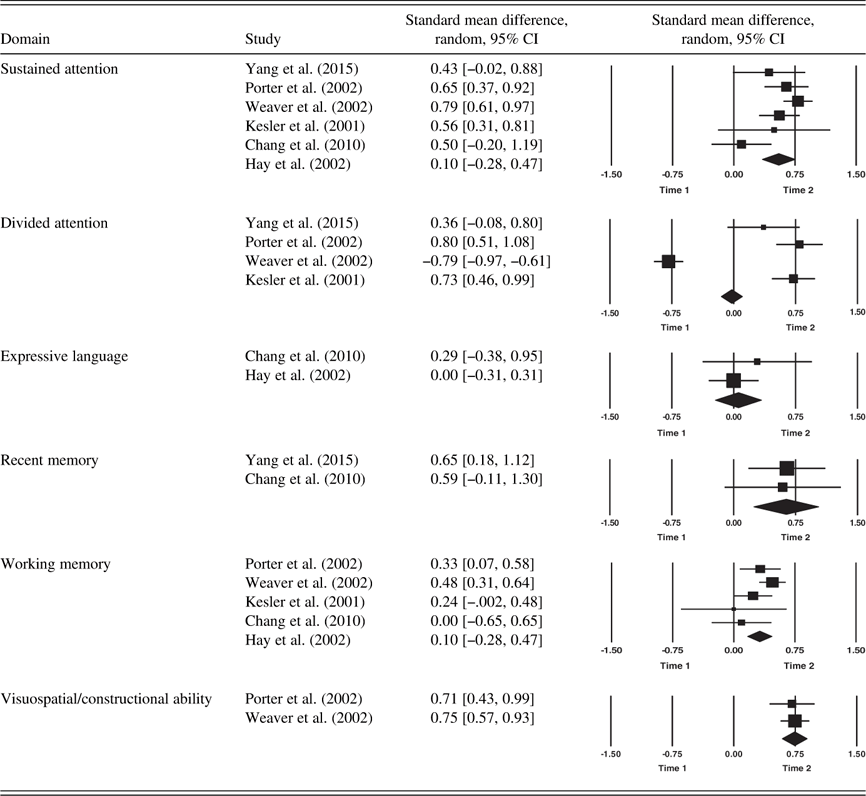
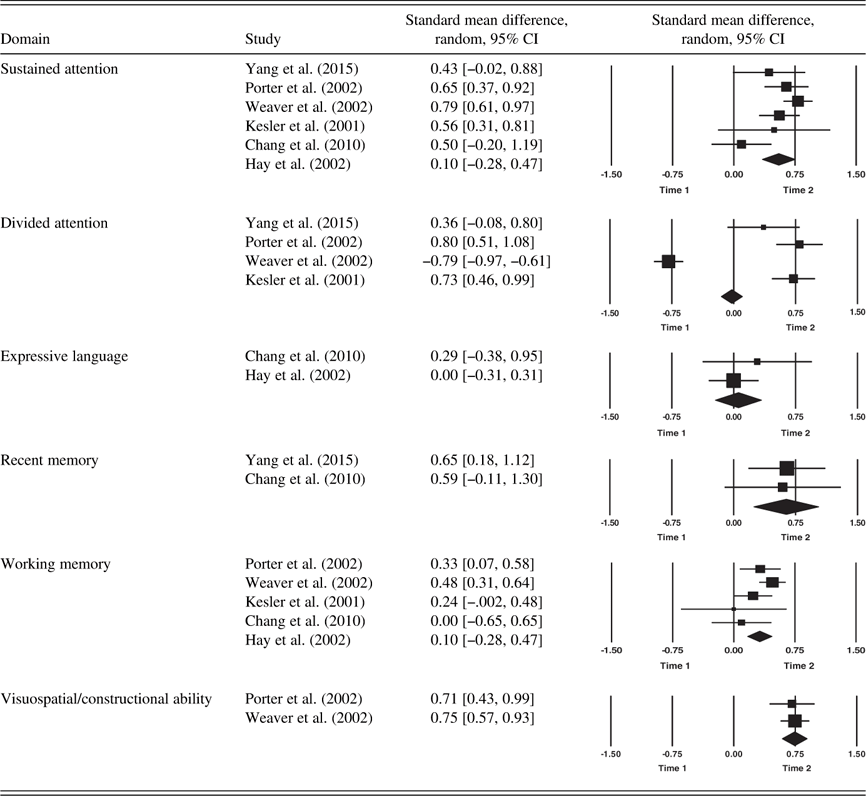
Six studies examined sustained attention in participants with CO poisoning across time (i.e., between 6 weeks and 10 months post-exposure) (Chang et al., Reference Chang, Chang, Lui, Wang, Chen, Lee and Chen2010; Hay, Denson, van Hoof, & Blumenfeld, Reference Hay, Denson, van Hoof and Blumenfeld2002; Kesler et al., Reference Kesler, Hopkins, Weaver, Blatter, Edge-Booth and Bigler2001; Porter, Hopkins, Weaver, Bigler, & Blatter, Reference Porter, Hopkins, Weaver, Bigler and Blatter2002; Weaver et al., Reference Weaver, Hopkins, Chan, Churchill, Elliott, Clemmer and Morris2002; Yang et al., Reference Yang, Wang, Hsieh, Lirng, Yang, Deng and Chou2015). As indicated in Table 4, the pooled effect size of participants with initial CO poisoning (Time 1) versus post-exposure (Time 2) performance on sustained attention was 0.54 (95% CI [0.34, 0.74]; p<.001), indicating a medium, significant, positive effect demonstrating that participants performed significantly better on tasks of sustained attention post-exposure as compared to initial CO poisoning. Heterogeneity was moderate, with I2=54.74% (p=.05).
Cognitive domains assessed in meta-analysis 2
Divided attention
Four studies investigated divided attention in CO poisoned participants across time (Kesler et al., Reference Kesler, Hopkins, Weaver, Blatter, Edge-Booth and Bigler2001; Porter et al., Reference Porter, Hopkins, Weaver, Bigler and Blatter2002; Weaver et al., Reference Weaver, Hopkins, Chan, Churchill, Elliott, Clemmer and Morris2002; Yang et al., Reference Yang, Wang, Hsieh, Lirng, Yang, Deng and Chou2015). Table 4 presents that the pooled effect size of CO poisoned participants’ divided attention at Time 1 as compared to Time 2 was -.030 (95% CI [−0.16, 0.10]; p>.05), indicative of a small, non-significant, negative effect. Heterogeneity was high, with I2=97.75% (p<.001).
Expressive language
Only two studies examined expressive language in patients with CO poisoning over time (Chang et al., Reference Chang, Chang, Lui, Wang, Chen, Lee and Chen2010; Hay et al., Reference Hay, Denson, van Hoof and Blumenfeld2002). As seen in Table 4, the pooled effect size at Time 1 versus Time 2 was 0.50 (95% CI [−0.23, 0.33]; p>.05), indicating a medium, non-significant, positive effect. Heterogeneity was low, with I2=0.00% (p>.05).
Recent memory
Only two studies examined recent memory in CO poisoned patients over time (Chang et al., Reference Chang, Chang, Lui, Wang, Chen, Lee and Chen2010; Yang et al., Reference Yang, Wang, Hsieh, Lirng, Yang, Deng and Chou2015). Table 4 shows that the pooled effect size for recent memory at Time 1 and Time 2 was 0.63 (95% CI [0.24, 1.02]; p=.002), indicating a medium, significant, positive effect. Thus, patients performed significantly better on tasks of recent memory at Time 2 compared to Time 1. Heterogeneity was low, with I2=0.00% (p>.05).
Working memory
Five studies examined working memory in participants with CO poisoning across time (Chang et al., Reference Chang, Chang, Lui, Wang, Chen, Lee and Chen2010; Hay et al., Reference Hay, Denson, van Hoof and Blumenfeld2002; Kesler et al., Reference Kesler, Hopkins, Weaver, Blatter, Edge-Booth and Bigler2001; Porter et al., Reference Porter, Hopkins, Weaver, Bigler and Blatter2002; Weaver et al., Reference Weaver, Hopkins, Chan, Churchill, Elliott, Clemmer and Morris2002). As presented in Table 4, the pooled effect size of participants with CO poisoning at Time 1 compared to Time 2 on working memory was 0.31 (95% CI [0.16, 0.46]; p<.001), indicating a small, significant, positive effect. Thus, participants with CO poisoning performed significantly better on working memory post-exposure compared to initial exposure. Heterogeneity was small, with I2=32.39% (p>.05).
Visuospatial/constructional ability
Only two studies evaluated visuospatial/constructional ability in CO poisoned participants over time (Porter et al., Reference Porter, Hopkins, Weaver, Bigler and Blatter2002; Weaver et al., Reference Weaver, Hopkins, Chan, Churchill, Elliott, Clemmer and Morris2002). Table 4 shows that the pooled effect size of participants’ visuospatial/constructional ability at Time 1 compared to Time 2 was 0.74 (95% CI [0.59, 0.89]; p<.001), indicating a medium, significant, positive effect. Thus, CO poisoned participants performed significantly better on visuospatial/constructional tasks at Time 2 compared to Time 1. Heterogeneity was small, with I2=0.00% (p>.05).
The authors attempted to examine the effect of moderators on both meta-analyses, including age, severity of exposure (i.e., acute vs. chronic CO poisoning), previous history of mental illness, and loss of consciousness to further explore the relationship between CO poisoning and neuropsychological functioning and to investigate the noted heterogeneity. However, this information was not consistently provided in the primary studies, thus no analyses of the potential moderator variables could be carried out for either meta-analysis.
Bias of Included Studies
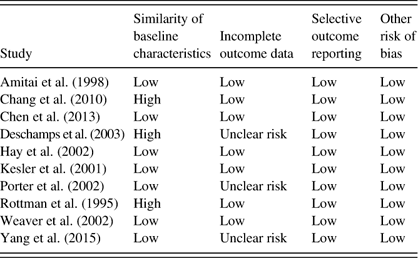
Assessment of bias was performed as previously described. Given that no randomized trials were included in the current meta-analyses, some categories from the EPOC (2016) risk of bias tool were not appropriate for assessing bias in the primary studies included. As such, the following categories were used to assess potential bias in the primary studies: similarity of baseline characteristics, incomplete outcome data, selective outcome reporting, and other risk of bias. Table 5 presents the outcome of the risk of bias analysis for all included studies.
Assessment of bias
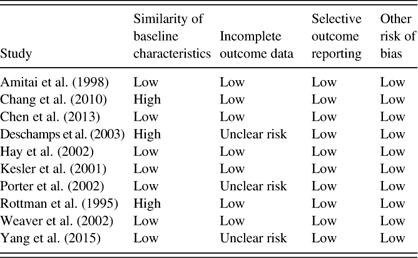
Risk of bias for similarity of baseline characteristics was low in all studies except for three (Chang et al., Reference Chang, Chang, Lui, Wang, Chen, Lee and Chen2010; Deschamps et al., Reference Deschamps, Geraud, Julien, Baud and Dally2003; Rottman et al., Reference Rottman, Kaser-Boyd, Cannis and Alexander1995), while risk of incomplete outcome data was low in all studies except for three (Deschamps et al., Reference Deschamps, Geraud, Julien, Baud and Dally2003; Porter et al., Reference Porter, Hopkins, Weaver, Bigler and Blatter2002; Yang et al., Reference Yang, Wang, Hsieh, Lirng, Yang, Deng and Chou2015), which had an “unclear risk” of bias. Risk of bias for selective outcome reporting and other risk of bias were low in all studies.
DISCUSSION
This meta-analysis identified ten studies which examined the neuropsychological effects of CO poisoning, with two meta-analyses being performed. Six studies were identified for meta-analysis 1, which examined the effects of CO poisoning as compared with healthy controls. Pooled effect sizes using standard mean difference demonstrated a small, significant positive effect favoring healthy controls for tasks assessing divided attention, a medium, significant positive effect for sustained attention, and a large, significant positive effect for processing speed. Although a positive direction was evident, no significant effects were found for recent memory, working memory, and visuospatial/constructional ability.
These findings are consistent with other studies examining the effects of anoxia on neuropsychological functioning (see Armengol, Reference Armengol2000; Turner, Barer-Collo, Connell, & Gant, Reference Turner, Barker-Collo, Connell and Gant2015). For example, the study by Turner and colleagues (Reference Turner, Barker-Collo, Connell and Gant2015), examining neuropsychological performance before and after exposure to moderate-to-severe hypoxia, demonstrated significant declines in processing speed and attention after exposure. Significant declines were also noted for verbal and visual memory, executive function, psychomotor speed, reaction times, and cognitive flexibility.
Of interest, in the present study, a negative effect was found for expressive language, indicating that participants with CO poisoning performed better than did controls, however, this effect was not significant. However, in both studies, the CO poisoned groups and control performed similarly on measures of expressive language, with a mean difference of 0.70 for Deschamps and colleagues’ (Reference Deschamps, Geraud, Julien, Baud and Dally2003) study, and 0.10 for Rottman and colleagues’ (Reference Rottman, Kaser-Boyd, Cannis and Alexander1995) study, possibly explaining this finding.
Six studies were identified for meta-analysis 2, which examined the neuropsychological effects of CO poisoning over time, with a minimum follow-up period of six weeks and a maximum follow-up of ten months. Pooled effect sizes using standard mean difference demonstrated medium, significant positive effect for sustained attention, recent memory, and visuospatial/constructional abilities, and a small, significant positive effect for working memory. This indicates that participants with CO poisoning performed significantly better on these domains after the initial exposure, and improved over time. A small, negative effect was evident for divided attention, indicating that CO poisoned participants’ performance was decreasing over time; however, this effect was not significant. A medium, positive effect was found for expressive language, however, this was also non-significant.
It is not surprising that the healthy controls performed better than CO poisoned participants on a range of neuropsychological domains due to the physiological changes that occur in the brain as a result of CO exposure. CO binds with hemoglobin and decreases the cells’ oxygen carrying capacity, thus causing damage to tissues and organs through hypoxia and by other mechanisms, leading to the development of brain lesions, neuronal cell loss, and atrophy. It is promising to note that the neuropsychological functioning of individuals with CO poisoning generally improves over time, indicating that some of the effects of CO poisoning are not permanent.
As the results of this study have shown that neuropsychological performance of CO poisoned participants generally improved over time, future studies should endeavor to perform follow-up studies with healthy controls alongside participants with CO poisoning. This would allow researchers to determine if neuropsychological functioning returns to a level equivalent to that of the general population over time, or if deficits still remain. It is also important to note that the CO poisoned participants in these studies either received oxygen by mask, hyperbaric oxygen therapy (HBO), or normobaric oxygen therapy (NBO) after the initial exposure. Unfortunately, the examination and efficacy of these respective treatment methods for CO poisoning is beyond the scope of this study (see Buckley, Juurlink, Isbister, Bennett, & Lavonas, Reference Buckley, Juurlink, Isbister, Bennett and Lavonas2011 for a meta-analysis comparing the efficacy of HBO and NBO for CO poisoning).
Limitations
Several limitations of this meta-analysis should be noted. These include the high level of heterogeneity in the neuropsychological testing and the small number of studies identified for pooling the neuropsychological effects of CO poisoning, as compared with controls, as well as over time. As a result, the meta-analysis could not thoroughly investigate the effect of CO poisoning across all cognitive domains, and was limited to the investigation of sustained attention, divided attention, expressive language, recent memory, immediate memory, processing speed, and visuospatial/constructional ability for the first meta-analysis and sustained attention, divided attention, expressive language, recent memory, working memory, and visuospatial/constructional ability being investigated in the second meta-analysis examining the neuropsychological effects of CO poisoning over time.
The limited information provided by the identified studies with regard to severity of CO poisoning, past history of neuropsychological disorders, symptoms upon admission (i.e., loss of consciousness), as well as the variability in the period of follow-up times after initial poisoning, constrained the ability to investigate possible moderating variables. Loss of consciousness may be particularly of interest, as cognitive sequelae may persist for longer than 1 month in 25–50% of individuals with CO poisoning that also experienced a loss of consciousness (Gorman, Clayton, Gilligan, & Webb. Reference Gorman, Clayton, Gilligan and Webb1992; Weaver. Reference Weaver1999). Some of the studies failed to provided demographic data, including the age and sex of participants. Thus further investigation of these demographic variables as possible moderators was not possible. Future studies should include this information, which would enable a more detailed investigation of the effects of demographic issues on the neuropsychological effects of CO poisoning.
Furthermore, the variability in follow-up times may have affected the validity and reliability of this study’s findings. For example, Weaver and colleagues (2002) re-examined CO poisoned patients’ neuropsychological functioning 6 weeks post-initial exposure, whereas Chang and colleagues (2010) used a follow-up period of 10 months. Although both studies assessed sustained attention, working memory, and visuospatial/constructional ability, the neuropsychological functioning of individuals 6 weeks after CO poisoning may not necessarily reflect that of individuals after 10 months affecting the generalizability of results. Finally, this meta-analysis only included studies that were published in English, which may have resulted in a selection bias.
CONCLUSION
The effects of CO poisoning are non-specific, with possible short-term and long-term impairments noted in a range of neuropsychological domains. This study found that patients with CO poisoning performed significantly worse acutely on measures of divided attention, immediate memory, and processing speed as compared to healthy controls. Performance by participants with CO poisoning for the domains of sustained attention, recent memory, visuospatial/constructional abilities, and working memory significantly improved over time after initial exposure, demonstrating some restoration in neuropsychological functioning. It is recommended that future research explore the impact of other variables, including age, severity of exposure, loss of consciousness, and follow-up time when examining the impacts of CO poisoning on neuropsychological functioning. No financial or other relationships that could be interpreted as a conflict of interest affecting this manuscript apply. No funding was received for this project.