




No CrossRef data available.
A European perspective on the management of hypoplastic left heart syndrome
Published online by Cambridge University Press: 21 September 2005
Extract
Recently, the well-known American political commentator, Robert Kagan, reapplied an existing populist statement in describing Americans as being from Mars, and Europeans from Venus.1 He said “they agree on little and understand one another less and less”. In general, it would be churlish to say that this applied to the medical fraternity, but it has great resonance with intercontinental differences in the management of hypoplastic left heart syndrome. In this review, I offer a personal view of those differences, potential explanations for them, and consider how the situation may change in coming years.
Information
- Type
- Norwood Procedure and Staged Palliation
- Information
- Copyright
- © 2004 Cambridge University Press
Background
Anyone working in the management of congenital cardiac malformations in the current era is aware of the pioneering role the United States of America have played in the evolution of the treatment of hypoplastic left heart syndrome. The energy, scientific curiosity, commitment, resources, and sheer belief in the value of life drove Norwood,2–7 Bove8–11 and Spray12 sequentially to evolve the three stage procedures we have come to know as the Norwood sequence, and Bailey13–21 to work out the bases of cardiac transplantation in children. Whilst there was work on hypoplastic left heart syndrome being done in Europe during this era, it was both small in quantity, and limited in impact. The cultural will was simply not there, and scepticism about the value of treating these patients has remained in many quarters. Figure 1 show the results of a literature search through Medline, searching for all abstracts containing “hypoplastic left heart syndrome”, relating management of hypoplastic left heart syndrome to the continental origin of work in the field. More than twice the number of papers has emanated from North America as opposed to Europe, and hardly any of the really pioneering work in management of the syndrome has emerged from outside North America. If Mars represents aggression, and Venus passivity, then America is clearly Martian with regard to hypoplasia of the left heart, dominating both the basic research and the clinical experience.

Figure 1. The incidence of 980 references mentioning “hypoplastic left heart” in the abstract. Medline referenced articles containing “hypoplastic left heart” in the abstract (sorted by author address field)(Medline search via PubMed). Distribution by continent.
Why should this be? Does it mean, for example, that Europeans do not care about children with hypoplastic left heart syndrome, or that Americans will treat anything, no matter what the future holds for the child? It is, of course, more complex than that. There could be differences in incidence, although this is unlikely, differences in the resources available, which certainly is the case, or differences in the attitude of medical teams, the public, and the media, both privately held and politically expressed. The cultural and religious milieus are undoubtedly different on the two continents, as any observer of recent political events will have perceived. We need to consider differences in attitudes to termination of pregnancy, to values in assessment of quality and quantity of life, to neonatal transplantation, and in the systems of delivery and financing of health care. Of course, medical attitudes do reflect cultural conditions, but European cardiologists have held cautious views based on dissatisfaction with the Fontan circulation when supported by the morphologically right ventricle, non-acceptance of poor neurological outcomes, unwillingness to divert scarce resources to new techniques, and concern with regard to the “learning curve”.22
In the presentation on which I based this review, I described my personal perceptions of the differences. I characterised the American view as being more associated with the concept of “Life at any Cost”, and the European approach reflecting more the contention that “Quality is more important than Quantity”. In the United States of America, there is a prominent religious lobby. The “right to life” is, in general, seen as more important than the right to abortion. One only has to review the profusion of pro-life web sites to appreciate this fact (http://www.prolifeinfo.org/). In addition, a free market exists in health care that influences the mode by which new treatments become established. Europe, on the other hand, is becoming, particularly in the United Kingdom, an increasingly secular society. The mother's right to terminate a pregnancy is seen as at least equally important as the right of the fetus to live, and our systems of health care are largely socialised. This has the effect that treatments may undergo detailed governmental assessment becoming introduced in widespread fashion. An example of how this works in Europe can be seen at www.nice.org.uk.
Attitudes to termination
Kagan's perceptive observation1 is well represented by attitudes to termination of pregnancy. A recent survey published on June 2, 2002, on the BBC website (www.bbc.co.uk/1/hi/world/europe/1820538.stm) reviews the regulations of European countries with regard to termination, and lists the national rates of abortion. This rate ranges from a low of 8 abortions for each 1000 pregnancies in Ireland, to 62 abortions for each 1000 pregnancies in Romania, where it is still used as a form of contraception. The United Kingdom is in the mid-table, with rates around 20 abortions for each 1000 pregnancies. These data hide dramatic variations within countries. For example, as reported recently, January 2003, in the Daily Express published in London, United Kingdom, termination rates of up to 32.5% have been observed in large conurbations such as London. If this is the incidence of termination of normal pregnancies, what can we expect the population to do when faced with a severely abnormal fetus?
In the United States of America, rates of termination are reputedly much lower.23 Correspondingly, rates of termination for abnormal fetuses are also lower. Rates of termination even in the United States of America vary considerably with socio-economic class, and reflect persisting problems worldwide with equity of access to modern health care, and the use of termination as a mode of contraception, as for example in Romania.
There is a significant incidence, between 3 and 5%, of spontaneous intrauterine death in fetuses with hypoplastic left heart syndrome.24, 25 In addition to that, a number of European studies reveal a relatively high elective rate of termination after fetal diagnosis of hypoplastic left heart syndrome. For example, Brackley et al.,26 from Birmingham, an active centre in the treatment of hypoplastic left heart syndrome in the United Kingdom, reported a termination rate of 44% after such a diagnosis. After 6 months of postnatal life, the survival in their series was only 14% after a prenatal diagnosis. One unit in London has recently reported an elective rate of termination for hypoplastic left heart syndrome of 63%.24 France has been extremely cautious about the introduction of surgical management of hypoplastic left heart syndrome, and this is reflected in the experience from Marseille,27 also active in surgical management, which reveals a 71% termination rate after prenatal diagnosis. Compare this with a report from Columbia University, New York, which reveals28 only a 13% termination rate after prenatal diagnosis, and 50% survival at six months.
Life at any cost
If a baby is born with hypoplastic left heart syndrome, then there are at least three options for treatment: allowing the child to die peacefully and without suffering in an appropriate environment, a staged Norwood strategy, and palliation to transplantation. The first option is not much mentioned in the North American literature,29 but is frequently offered and chosen in Europe. Yet some in the North America have drawn attention to the role of such “comfort care”.
We do not yet know the long-term outcome of treatment for hypoplastic left heart syndrome. An agreement to be treated for this lesion is thus an agreement to live with uncertainty, and uncertainty is one of the hardest emotional states with which to live. Dr. William Silverman (formerly Professor of Pediatrics at Columbia NY), commenting earlier this year (March of Dimes Congress, Long Beach, California, January 2003) on the choices facing parents of preterm infants said; “In the old days, parents used to say, ‘Don't try too hard, Doc. We're young, we can always have another one’. We do not let them do that these days, but perhaps we should.”
In Europe it is still relatively common, especially in certain countries, for families to opt for palliative care in the hope of a peaceful death, rather than active surgical intervention. For example, in a recent paper from Holland,30 looking at the outcome of a group of 117 patients diagnosed post-natally as having hypoplastic left heart syndrome, half of the families opted to receive no treatment.
The characteristics of mothers who opt for comfort care have been reviewed by the group in Oslo, Norway31, 32 They interviewed 20 mothers of children born with hypoplastic left heart syndrome. Of the mothers, 10 had children who had survived chosen surgery, and 10 were mothers of children who had died after choosing the option of comfort care. The motives for these choices were
- for surgery, that it was perceived as the only acceptable choice; and
- for comfort care, that it was chosen “to prevent the child from suffering”.
The comparison of the two groups was interesting, with the mothers choosing comfort care having spent more years in education (p = 0.03), and having themselves had a better childhood environment (p = 0.05). They were also more likely to have worked in health care. Could this mean that, the more you now, especially about medicine, the less likely you are to accept treatment? Or perhaps that we treat patients differently from the way we would ourselves like to be treated? These are important questions, and the Norwegian study should certainly stimulate the speciality to address the issues in other centres. Vandvick and Forde31, 32 also point out that lack of knowledge about long-term outcomes, a state of shock related to hearing the diagnosis, and the short time available for making decisions, limit the autonomy to make those decisions. These findings apply to so much of our work, and challenge us to find ways to deal with them, by education, support, and involvement of the patients or their families.
Concern about the quality of life is not limited to Europe. Doroshow, from Los Angeles, pointed out when describing life as an adolescent with congenital heart defect,33 “even when well and asymptomatic, they are likely to find obstacles to attaining education, social development, health and life insurance and employment. Most of these obstacles are attributable to the stresses on the patients and their families, and to the prejudices of a society that knows little about congenital heart disease.” This paper is not arguing in favour of a non-interventionalist approach, but does emphasise the role of the wider society in the way in that treatments and their consequences are perceived. There is no doubt, just taking my own observations, that there remains a widespread belief in certain parts of Europe that the late quality of life after staged palliation for hypoplasia of the left heart may just not be worth the effort.
Quality of life is always difficult to discuss in the context of paediatrics. There are so many aspects to consider, not least the questions of whose quality of life one should report. We put the child first1
The motto of The Great Ormond Street Hospital for Children is “The Child First and Always”.
Religion is rarely mentioned in medical papers, but it can be an important influence on family decision-making. A child is seen as a gift from God by most religions, and by many sects the prolongation of life is seen as a duty of care, irrespective of the quality of that life. As servants of the family, the medical profession will, almost always, act in accordance with their wishes and preserve life, despite, for example, the certainty of death within weeks without artificial ventilation. Yet doctors do take stronger action on behalf of a child if they feel that its life may be in danger from the decision-making of the parents. A good example of this is the taking out of a Court Order to permit blood transfusion to the child of Jehovah's Witnesses, against the wishes of the parents. It would be interesting to know what the attitude of American physicians is to the relatively widespread European practice of allowing the parents to make a choice. Would any of the American centres consider making a child with hypoplastic left heart syndrome a Ward of Court to permit a Norwood strategy to proceed against the wishes of the family? Such a strategy would certainly be Martian, but the Venutian approach may itself be wrong.
Insurance companies certainly require convincing that it is worth it. In the Western world, access to many of the trappings of a successful life, such as a house, mortgage, health insurance, and so on, requires one to have life insurance. Yet as several authors have pointed out,34–36 insurance can be very difficult to obtain for a patient with anything other than successfully treated simple congenital heart defect. Hypoplastic left heart syndrome, even well treated, will almost certainly reduce the ability to obtain insurance, and thus reduce access to some of life's pleasures.
Current experience
In addition to the papers and centres referenced at the end of this paper, I have surveyed the members of the European Congenital Heart Surgeons Association (Table 1) to provide a snapshot of current practice. Each member was sent a simple questionnaire asking the following questions
Table 1. Membership of the European Congenital Heart Surgeons Foundation.

- How many hypoplastic left heart syndrome cases do you see each year?
- What percentage of the national cases seen in hospital does this represent?
- How many first stage Norwood procedures did you perform in the period 2001 to 2002?
- What was the in-hospital mortality in these cases?
- What method of repair did you use?
- Did you use cerebral perfusion or circulatory arrest?
- Who in your centre gives advice at the time of prenatal counselling?
- Does your centre offer comfort care to those families presenting post-natally?
The results of this survey are shown in Tables 2 and 3. Clearly both the overall exposure to the diagnosis, and the numbers of cases treated in each centre, are considerably lower than equivalent centres in the United States of America, reflecting both the observations and assertions made earlier in my review. Europe overall clearly refers less patients to surgery, and has a selective approach to management. Fewer patients with hypoplastic left heart syndrome get treated in Europe. It is impossible to know from the data available whether this is due to family or institutional preferences. It is interesting to note, nonetheless, that even in the United Kingdom, where treatment for hypoplastic left heart syndrome is easily available in 4 centres, only 47 first stage procedures were performed in the whole country, and around 20% of those cases were from overseas (data from The Central Cardiac Audit Database in the United Kingdom (http://www.ccad.org.uk)). This is way below the expected incidence for a population of 55 million, and thus significant “selection” must exist before referral for surgery. In the United Kingdom in 2002, there were 596,122 live births (http://www.statistics.gov.uk/cci/nugget.asp?id = 369). The expected incidence of congenital cardiac malformations is approximately 0.8% of live births, and of those 8% should have hypoplastic left heart syndrome.37 Thus, in the United Kingdom, we should have seen 382 cases of hypoplastic left heart syndrome in that year. We did not.
Table 2. Data obtained from a questionnaire survey of the members of the European Congenital Heart Surgeons Association.

Table 3. Results of a survey of members of the European Congenital Heart Surgeons Association.

I am grateful to Bohdan Marusweski and Zdislaw Tobota from Warsaw, Poland, for providing me with a review of the data concerning hypoplastic left heart syndrome in the European Congenital Heart Defects database. This database is a voluntary database containing partially validated data obtained from large populations treated in, amongst others, 41 centres reporting neonatal surgery. The dataset is viewable at www.pediatric-ecsur.org, and more contact details can be obtained from the same site. Between 1999 and 2002, 2432 neonatal operations were reported. Of these, only 172 (7.07%) were the first stage in the Norwood sequence. There was a 42.4% mortality, specifically 73 cases, compared, for example, with an 8.9% mortality for the 382 arterial switches reported in the same era. These data will exclude some of the major centres performing the Norwood operation, but despite that, the data do suggest that the overall incidence of such surgery is low in Europe. It certainly reflects the relative unpopularity of the procedure.
Is this state of affairs due to lack of ability of teams to perform the operation, lack of belief in the value of the outcomes, lack of resources to support the management of these patients, or because the families are advised or conclude that the future is not appropriate? We have no data to answer these questions, but it would be interesting, and perhaps important, to find out. Knowledge of how, and why, procedures change from being experimental to accepted, and from accepted to becoming a right, could have a great influence on health planners and physicians. After all, whatever our health system, we remain servants of our communities.
The future
The pattern of care in Europe is changing. Surgery for hypoplastic left heart syndrome is now offered in most European cultures, and good results are now being obtained in many centres. Whilst Europe may have been a late adopter of such treatment, it has been an early adopter of the Sano modification.38 This approach was immediately attractive to units limited by their resources, as it was predicted that the conduit placed from the right ventricle to the pulmonary arteries would reduce the stay required on the Intensive Care Unit, and thus the opportunity of lowering the cost for treating hypoplastic left heart syndrome. This seems to have been the consequence, and most European units have also seen a recent fall in mortality. Obviously, we need more time to determine whether this is a sustained effect.
Yet, despite this, the numbers treated remain relatively low. Since many countries have well-developed services for prenatal diagnosis, this low rate of operations can only be explained by missed diagnoses, negative counselling, or the wishes of the families of the patients. Missed diagnoses does not seem very likely, thus we return to Kagan's observation1 that our cultures are different. Perhaps he will be proved right.
References
Kagan R. Of paradise and power. New York, Knopf, 2003.
Norwood WI Jr, Jacobs ML, Murphy JD. Fontan procedure for hypoplastic left heart syndrome. Ann Thorac Surg 1992; 54: 1025–1029; discussion 1029–1030.Google Scholar
Norwood WI, Kirklin JK, Sanders SP. Hypoplastic left heart syndrome: experience with palliative surgery. Am J Cardiol 1980; 45: 87–91.Google Scholar
Norwood WI, Lang P, Casteneda AR, Campbell DN. Experience with operations for hypoplastic left heart syndrome. J Thorac Cardiovasc Surg 1981; 82: 511–519.Google Scholar
Norwood WI, Lang P, Hansen DD. Physiologic repair of aortic atresia-hypoplastic left heart syndrome. N Engl J Med 1983; 308: 23–26.Google Scholar
Norwood WI, Pigott JD. Recent advances in cardiac surgery. Pediatr Clin North Am 1985; 32: 1117–1124.Google Scholar
Bove EL. Surgical treatment for hypoplastic left heart syndrome. Jpn J Thorac Cardiovasc Surg 1999; 47: 47–56.Google Scholar
Bove EL. Current status of staged reconstruction for hypoplastic left heart syndrome. Pediatr Cardiol 1998; 19: 308–315.Google Scholar
Bove EL. Transplantation after first-stage reconstruction for hypoplastic left heart syndrome. Ann Thorac Surg 1991; 52: 701–704; discussion 704–707.Google Scholar
Bove EL, Lloyd TR. Staged reconstruction for hypoplastic left heart syndrome. Contemporary results. Ann Surg 1996; 224: 387–394; discussion 394–395.Google Scholar
Gaynor JW, Mahle WT, Cohen MI, Ittenbach RF, DeCampli WM, Steven JM, Nicholson SC, Spray TL. Risk factors for mortality after the Norwood procedure. Eur J Cardiothorac Surg 2002; 22: 82–89.Google Scholar
Bailey L, Concepcion W, Shattuck H, Huang L. Method of heart transplantation for treatment of hypoplastic left heart syndrome. J Thorac Cardiovasc Surg 1986; 92: 1–5.Google Scholar
Bailey LL. Role of cardiac replacement in the neonate. J Heart Transplant 1985; 4: 506–509.Google Scholar
Bailey LL, Gundry SR. Hypoplastic left heart syndrome. Pediatr Clin North Am 1990; 37: 137–150.Google Scholar
Bailey LL, Gundry SR, Razzouk AJ, Wang N, Sciolaro CM, Chiavarelli M. Bless the babies: one hundred fifteen late survivors of heart transplantation during the first year of life. The Loma Linda University Pediatric Heart Transplant Group. J Thorac Cardiovasc Surg 1993; 105: 805–814; discussion 814–815.Google Scholar
Bailey LL, Nehlsen-Cannarella SL, Concepcion W, Jolley WB. Baboon-to-human cardiac xenotransplantation in a neonate. Jama 1985; 254: 3321–3329.Google Scholar
Bailey LL, Nehlsen-Cannarella SL, Doroshow RW, Jacobson JG, Martin RD, Allard MW, et al. Cardiac allotransplantation in newborns as therapy for hypoplastic left heart syndrome. N Engl J Med 1986; 315: 949–951.Google Scholar
Boucek MM, Kanakriyeh MS, Mathis CM, Trimm RF 3rd, Bailey LL. Cardiac transplantation in infancy: donors and recipients. Loma Linda University Pediatric Heart Transplant Group. J Pediatr 1990; 116: 171–176.Google Scholar
Burton PB, Hauck A, Nehlsen-Cannarella SL, Gusewitch GA, Sorensen CM, Gundry SR, et al. Hypoplastic left heart syndrome: some clues to its aetiology. Lancet 1991; 338: 1148.Google Scholar
Chiavarelli M, Gundry SR, Razzouk AJ, Bailey LL. Cardiac transplantation for infants with hypoplastic left-heart syndrome. Jama 1993; 270: 2944–2947.Google Scholar
Bull C, Yates R, Sarkar D, Deanfield J, de Leval M. Scientific, ethical, and logistical considerations in introducing a new operation: a retrospective cohort study from paediatric cardiac surgery. BMJ 2000; 320: 1168–1173.Google Scholar
Ventura SJTS, Mosher WD, Wilson JB, Henshaw S. Trends in pregnancies and pregnancy rates:estimates for the United States, 1980–1992. Monthly Vital Statistics report for NCHS 1995; 43 (11(S)): 1–22.Google Scholar
Sharland G, Rollings S, Simpson J, Anderson D. Hypoplastic left-heart syndrome. Lancet 2001; 357: 722.Google Scholar
Allan LD. Fetal diagnosis of fatal congenital heart disease. J Heart Lung Transplant 1993; 12 (6 Pt2): S159–160.Google Scholar
Brackley KJ, Kilby MD, Wright JG, Brawn WJ, Sethia B, Stumper O, et al. Outcome after prenatal diagnosis of hypoplastic left-heart syndrome: a case series. Lancet 2000; 356: 1143–1147.Google Scholar
Fraisse A, Nassi C, Sigaudy S, Liprandi A, Piercecchi-Marti MD, Ligi I, et al. (Outcome of infants with hypoplastic left heart syndrome diagnosed in utero). Arch Mal Coeur Vaiss 2002; 95: 473–477.Google Scholar
Allan LD, Apfel HD, Printz BF. Outcome after prenatal diagnosis of the hypoplastic left heart syndrome. Heart 1998; 79: 371–373.Google Scholar
Chang R-KR, Chen AY, Klitzner TS. Clinical Management of Infants with Hypoplastic Left Heart Syndrome in the United States, 1988–1997. Pediatrics 2002; 110: 292–298.Google Scholar
Plantinga RF, Frohn-Mulder IM, Takkenberg HJ, Bennink GB, Meijboom EJ, Bogers AJ. Surgical treatment of hypoplastic left heart syndrome: limited success. Ned Tijdschr Geneeskd 2001; 145: 85–90.Google Scholar
Forde R, Vandvik IH. Ethical dilemmas associated with hypoplastic left-heart syndrome. Tidsskr Nor Laegeforen 1998; 118: 2649–2652.Google Scholar
Vandvik IH, Forde R. Ethical issues in parental decision-making. An interview study of mothers of children with hypoplastic left heart syndrome. Acta Paediatr 2000; 89: 1129–1133.Google Scholar
Doroshow RW. The adolescent with simple or corrected congenital heart disease. Adolesc Med 2001; 12: 1–22.Google Scholar
Celermajer DS, Deanfield JE. Employment and insurance for young adults with congenital heart disease. Br Heart J 1993; 69: 539–543.Google Scholar
Vonder Muhll I, Cumming G, Gatzoulis MA. Risky business: insuring adults with congenital heart disease. Eur Heart J 2003; 24: 1595–1600.Google Scholar
Hellstedt LF. Insurability issues facing the adolescent and adult with congenital heart disease. Nurs Clin North Am 1994; 29: 331–343.Google Scholar
Iannettoni MD, Bove EL, Mosca RS, Lupinetti FM, Dorostkar PC, Ludomirsky A, et al. Improving results with first-stage palliation for hypoplastic left heart syndrome. J Thorac Cardiovasc Surg 1994; 107: 934–940.Google Scholar
Sano S, Ishino K, Kawada M, Arai S, Kasahara S, Asai T, et al. Right ventricle-pulmonary artery shunt in first-stage palliation of hypoplastic left heart syndrome. J Thorac Cardiovasc Surg 2003; 126: 504–510.Google Scholar

The incidence of 980 references mentioning “hypoplastic left heart” in the abstract. Medline referenced articles containing “hypoplastic left heart” in the abstract (sorted by author address field)(Medline search via PubMed). Distribution by continent.
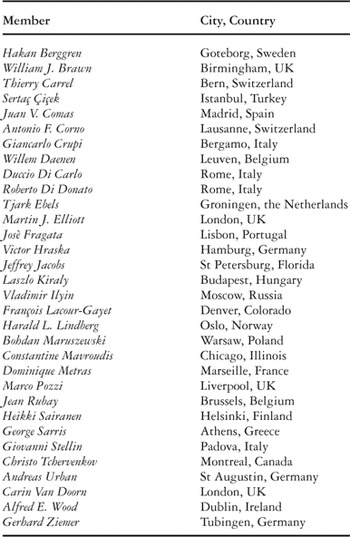
Table 1.
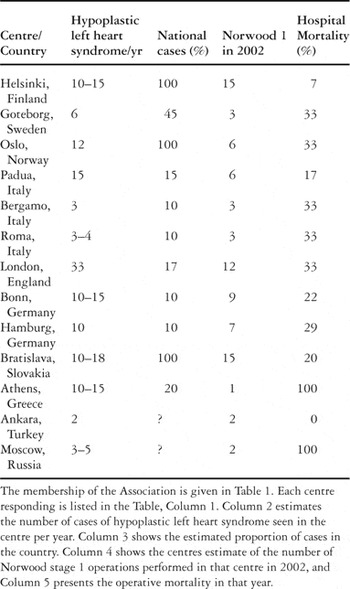
Table 2.
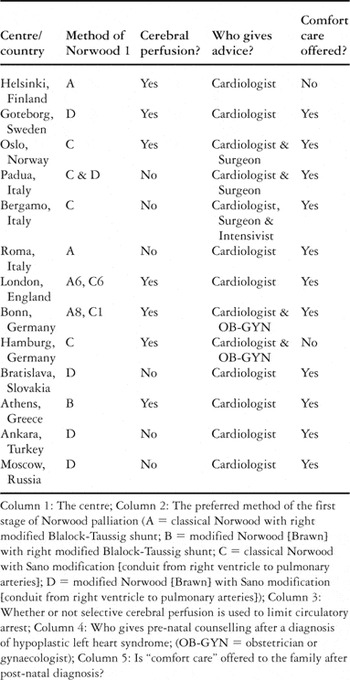
Table 3.
 You have Access
- 11
- Cited by