Fontan procedure was described in 1971 by Fontan and Baudet, who initially performed this procedure on patients with tricuspid atresia without pulmonary hypertension to avoid mixing oxygenated and deoxygenated blood. Reference Fontan and Baudet1 It consisted of an anastomosis between the superior caval vein and the right pulmonary artery and other anastomoses between the right atrium and the left pulmonary artery with the interposition of a homograft, Reference Jones2 , Reference Cazzaniga, Pineda and Villagrá3 Subsequently, Kreutzer et al described their techniques of modified atriopulmonary connection, and Bridges et al suggested performing the surgery in two stages: first, a bidirectional cavopulmonary anastomosis (bidirectional Glenn) followed by a total cavopulmonary anastomosis. Reference Bridges, Jonas, Mayer, Flanagan, Keane and Castaneda4 The use of an intracardiac tunnel proposed by Puga et al Reference Humes, Feldt, Porter, Julsrud, Puga and Danielson5 was also implemented, and in 1990, Marcelleti et al suggested the interposition of an extracardiac conduit. Reference Marcelletti, Como, Giannico and Marino6 These modifications have significantly impacted other cardiac malformations with univentricular physiology accepted and maintained today. Finally, in 1989 Brigde et al proposed performing a fenestration to maintain cardiac output and reduce the pressure of the Fontan circuit, improving cardiac output at the expense of a slight desaturation. Reference Bridges, Lock and Castaneda7
The survival of patients undergoing Fontan procedure in the early years of its creation was not the most desired since many of these did not manage to reach adolescence and even less so to adulthood. Reference Gargiulo, Bassareo, Careddu, Egidy-Assenza, Angeli and Calcaterra8 However, over time, survival has improved notably due to changes in the surgical technique, as is the case in the study by Nakano et al, Reference Nakano, Kado and Tatewaki9 where the survival rate was 96.2% at 10 years and 92.8% at 15 years. Likewise, survival rates of 87.5% at 15 years of life have been reported, Reference Schwartz, McCracken, Petit and Sachdeva10 and in an Australian study, 83% at 25 years. Reference d’Udekem, Iyengar and Galati11 However, morbidity is decisive in quality of life and survival since multiple complications have been reported after surgery that can progressively deteriorate these patients. These include heart failure, protein-losing enteropathy, plastic bronchitis, liver dysfunction, arrhythmias, and thrombosis. Reference Kay, Moe and Suter12
In Latin America and especially in Colombia, few related studies observe the complications and outcomes of a patient undergoing Fontan procedure over time. Bolio-Cerdán et al Reference Bolio, Ruiz, Romero, Hernández and Villasís13 reported in a study of 53 patients a survival of 14.5 years and mortality close to 12%, while a study carried out in Medellin, Colombia, documented the main post-surgical complications in 25 patients undergoing Fontan procedure. Reference Vargas, Vargas, Castilla, Rodríguez and Martínez14 Calderón-Colmenero et al, Reference Calderón, Ramírez and Viesca15 in Mexico, with 81 patients undergoing Fontan procedure, found a 2.8-fold higher risk of dying without fenestration and a 3.6-fold higher risk of dying 72 hours after surgery if left atrial pressure was greater than 10 mmHg or if the mean pressure of the pulmonary artery was greater than or equal to 20 mmHg, with operative mortality (less than 30 days) of 13% for tricuspid atresia and 25% in other CHDs.
Our study aims to describe the clinical outcomes of children undergoing the Fontan procedure observed in a 20-year-old cohort in a tertiary referral hospital care centre in southwestern Colombia.
Materials and methods
At our tertiary referral hospital care centre, the paediatric cardiology service treats 2000 patients per year.
A descriptive observational study was performed. Children with CHD operated with the Fontan technique from January 2000 to December 2020 were included. Patients in whom the procedure was discarded at the time of surgery were excluded. A convenience sample size was taken, taking all the patients who met the previously postulated criteria during the study period.
The patients’ demographic, diagnostic, and congenital heart variables were collected. Regarding the Fontan procedure, haemodynamic variables obtained from the catheterisation before surgery, age and anthropometric values at the time of surgery, type of Fontan performed, and duration time were taken. Post-operative complication variables were collected for clinical outcomes, days of stay in the ICUFootnote 1 and hospital, days of oxygen therapy and thoracotomy, mortality in the first month, and mortality at the last follow-up. The information was obtained from the physical and digital medical records available at the institution.
In 2011, fenestration was added to all patients undergoing the Fontan procedure to reduce early mortality. Fenestration consists of connecting the intra or extracardiac tube with the atrium.
Statistical analysis
The dichotomous variables were reported as percentages. According to their distribution, continuous variables were presented as medians and interquartile ranges or means and standard deviations. The estimation of the normality of the variables was carried out with Shapiro–Wilk test. The study was carried out with the statistical package Stata 14.0 (StataCorp, Texas, United States of America).
Results
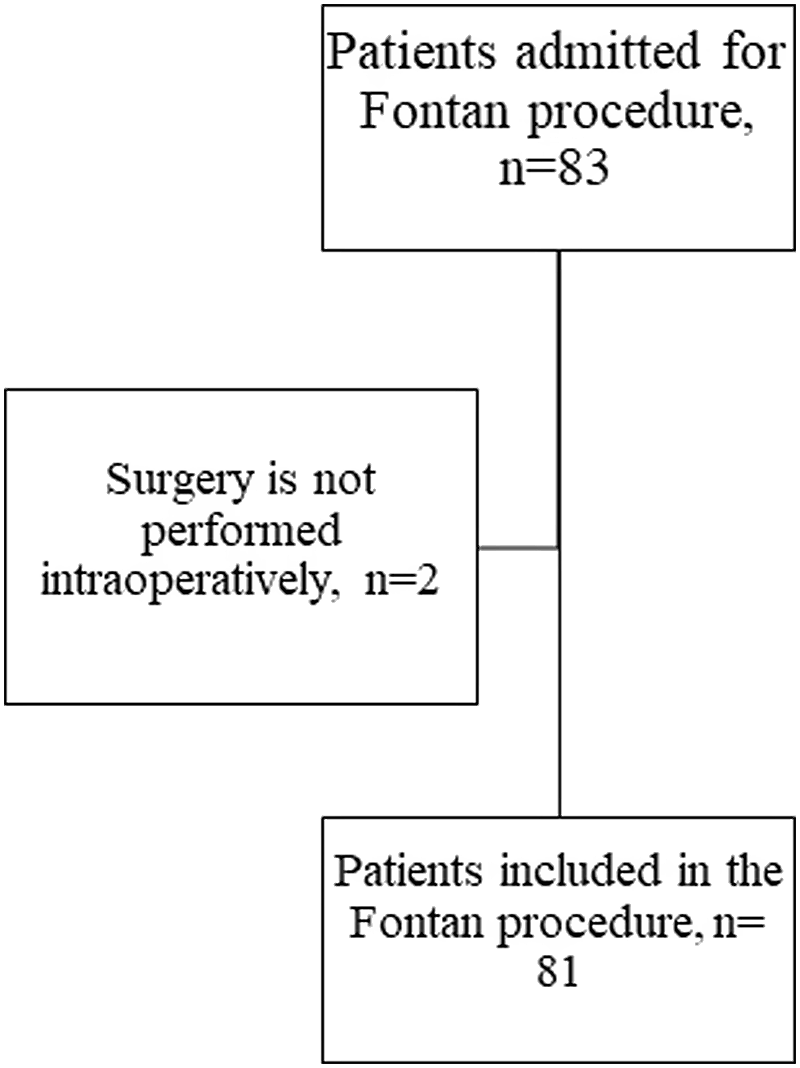
Between January 2000 and December 2020, 83 children were found eligible for the Fontan procedure. Figure 1 describes the patient selection process for the study. In two patients, the procedure was aborted: the first, the Fontan was performed; however, when leaving extracorporeal circulation, pulmonary hypertension was diagnosed, so it was dismantled at the same surgical time; the second showed structural alterations due to hypoplasia of the left pulmonary artery (patient with dextrocardia) and the inferior caval vein.
Patient selection flowchart.

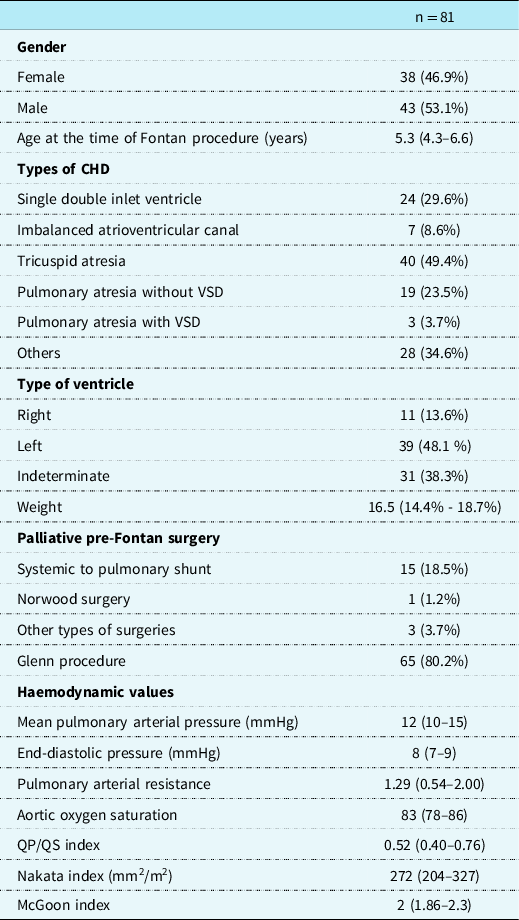
Table 1 describes the sociodemographic data and clinical characteristics of the Fontan procedure patients. Of these patients, the median age of the procedure was 5.3 years (interquartile range 4.3–6.6). The most frequent diagnosis was tricuspid atresia in 40 (49.4%) cases, followed by single ventricle in 28 (36.6%) cases. According to the ventricular morphology of these patients, 39 (48.1%) were of the left type, 11 (13.6%) right, and 31 (38.3%) indeterminate. Sixty-five (80.2%) patients underwent Glenn procedure, as well as 15 (18.5%) patients were taken to surgery where they underwent a systemic to pulmonary shunt, 1 (1.2%) patient with Norwood surgery, and 3 (3.7%) patients another type of surgery before Fontan procedure.
Sociodemographic and clinical features

VSD = ventricular septal defect.
The patients in this study underwent cardiac catheterisation before the Fontan procedure, obtaining the following haemodynamic profile: mean pulmonary arterial pressure 12 mmHg (interquartile range 10–15), end-diastolic pressure 8 mmHg (interquartile range 7–9), pulmonary arterial resistance 1.29 uW (interquartile range 0.54–2.00), aortic oxygen saturation 83% (interquartile range 78–86), Nakata index 272 mm2/m2 (interquartile range 204–327), McGoon index 2 (interquartile range 1.86–2.3), and Qp/Qs 0.52 (interquartile range 0.40–0.76).
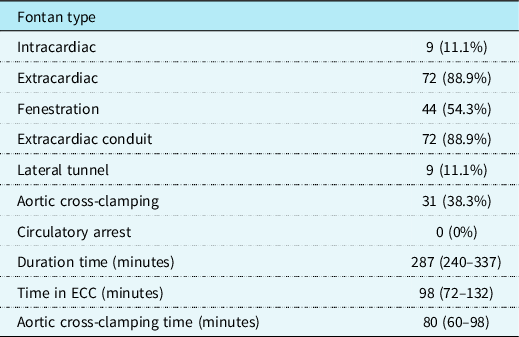
With the catheterisation results, the type of Fontan that would be performed on each patient was defined, of whom 72 (88.9%) underwent extracardiac Fontan and 9 (11.1%) intracardiac Fontan. Likewise, 44 (54.3%) patients underwent fenestration, 36 patients with extracardiac conduit, and 8 with a lateral tunnel. Aortic clamping was performed in 31 (54.3%), and no circulatory arrest was conducted. The median duration of surgery was 287 minutes, time in extracorporeal circulation was 98 minutes, and aortic cross-clamping was 80 minutes (Table 2).
Surgical and post-operative features

ECC = extracorporeal circulation.
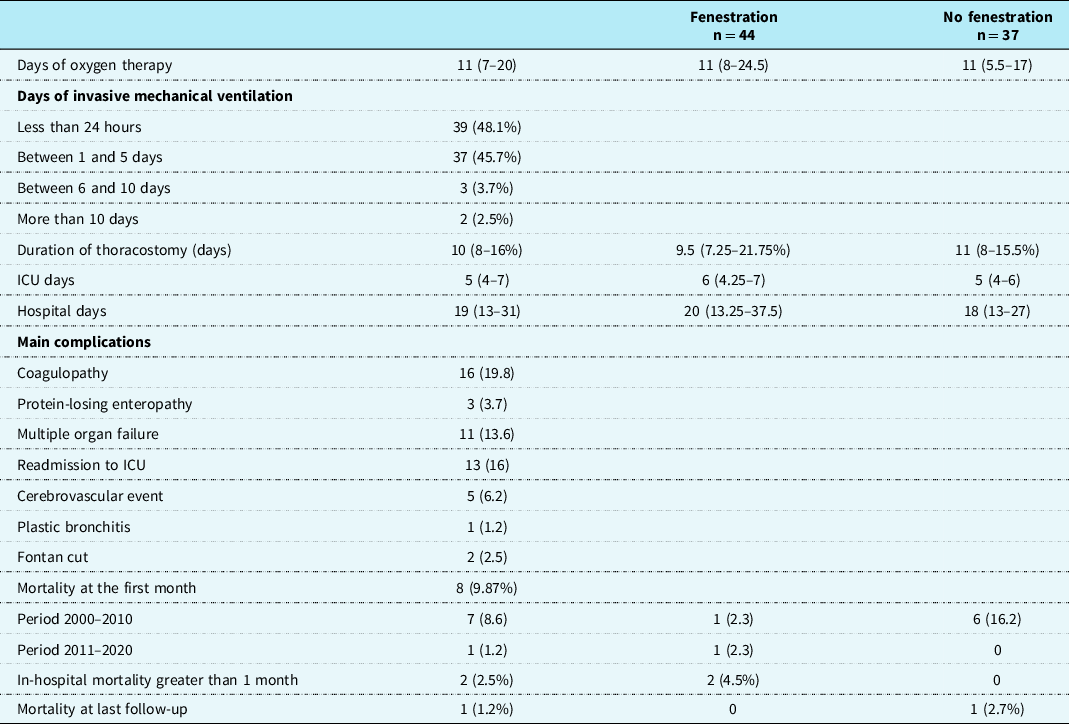
The post-operative evolution of the patients taken to Fontan (Table 3) was evaluated on days of oxygen therapy 11 (7–20), the time required for invasive mechanical ventilation being less than 24 hours 11 (48.1%), between one and five days 37 (45.7%), between six and ten days 3 (3.7%), and more than ten days 2 (2.5).
Post-operative features, complications, and mortality

The main complications (Table 3) presented were coagulopathy (19.8%) defined by prolonged prothrombin time in the post-operative period, followed by readmission to the ICU (16%), multiple organ failure (13.6%), cerebrovascular event (6.2%), protein-losing enteropathy (3.7%), Fontan clearing (2.5%), and plastic bronchitis (1.2%). It should be noted that the two patients who underwent Fontan disassembly were in the post-operative period and not during surgery, as those who were excluded from the study and had the appropriate pre-surgical criteria for performing it.
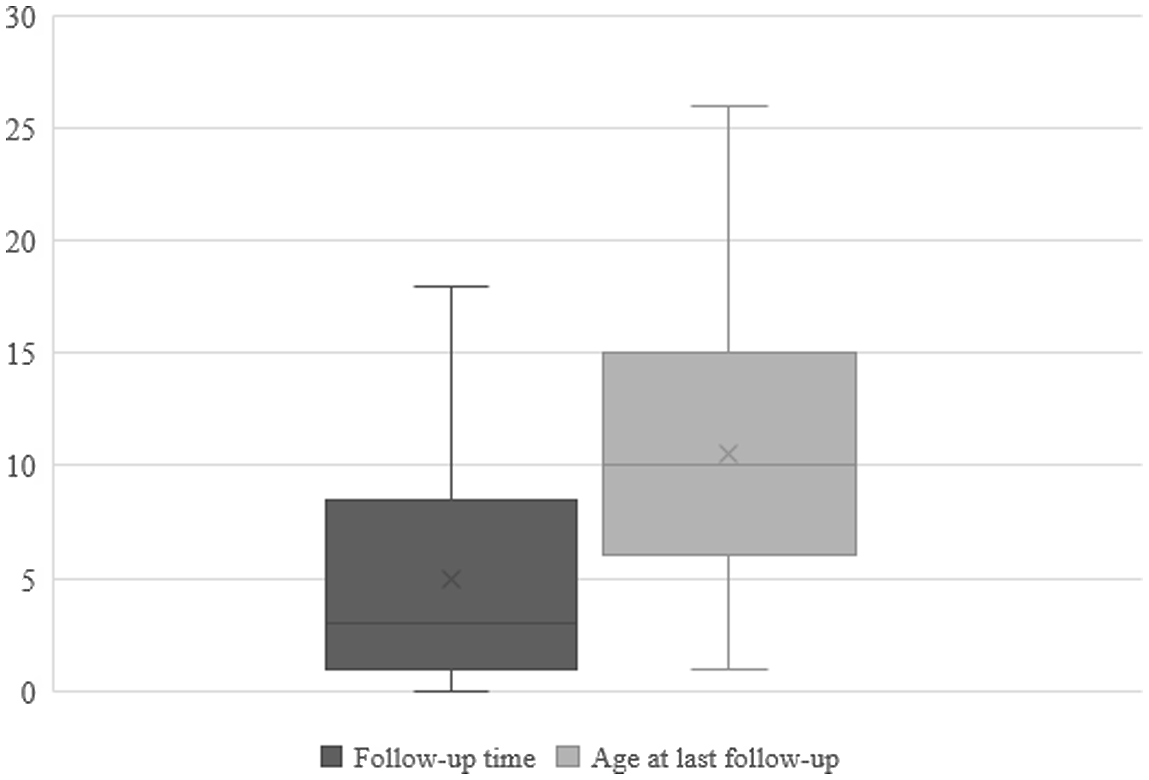
Early mortality was defined in this study as the patient’s death in the first post-operative month. Likewise, this was divided into two periods, before and after 2010, due to the implementation of fenestration. Mortality between 2000 and 2010 was 8.6%, and from 2011 to 2020, it was 1.2%; it should be noted that all patients were hospitalised. In-hospital mortality greater than 1 month was 2.5%; 5-year-old patient died 58 days after the Fontan procedure; the next 3-year-old patient died at 112 days in the same hospitalisation of the surgery. Mortality at last follow-up was a 5-year-old patient died 489 days after surgery. After surgery, the median follow-up of patients was 3 years (interquartile range 1–8.75) and the median age was 10 years (interquartile range 6–15) (Fig 2).
Follow-up time and age of the patients at the last follow-up.

Discussion
Among the different modifications that Fontan procedure has undergone over time, the incorporation of fenestration is one of them, which creates a connection between the Fontan conduit (extracardiac or lateral tunnel) and the right atrium Reference Jones2 that has managed to reduce the incidence of acute post-operative pleural effusions and low cardiac output. However, this benefit comes at the cost of reduced long-term systemic oxygen saturations and a theoretical increased risk of stroke due to the iatrogenically created right-to-left shunt. Reference Gentles, Mayer and Gauvreau16 We found a decrease in thoracostomy days in fenestrated Fontan patients (median 9.5 days), lower than in non-fenestrated patients (median 11 days).
Bridges et al Reference Bridges, Mayer and Lock17 carried out a retrospective study with 147 patients. They evaluated the effect of fenestration on the evolution of patients with modified Fontan procedure, finding that the duration of the pleural effusion was 10.7 days, and in those not fenestrated, 23.8 days. Although pleural effusion was not characterised in our study, the thoracostomy variable was obtained, indirectly speaking of its duration. Regarding the hospitalisation time, it was 13.3 days in patients with a fenestrated Fontan and 21.4 days for those who did not undergo fenestration. Our study found no marked difference in hospitalisation time, days in the ICU, and oxygen therapy between fenestrated and non-fenestrated patients.
In this study, the following complications developed in our population were included without considering the moment of appearance: coagulopathy, multi-organ failure, cerebrovascular event, protein-losing enteropathy, Fontan dismount, and plastic bronchitis. In contrast, to the study by Mendoza, Reference Mendoza, Albert and Ruiz18 the main complications were infection (59%), arrhythmias (25%), neurological complications such as ischaemic stroke (9%), and reinterventions (19%). Similarly, in the study by Calderón, Reference Calderón, Ramírez and Viesca15 cardiac conduction disorders (38%), ascites (22%), chylothorax (16%), pericardial effusion (7%), Fontan dismount (6.17%), and cerebrovascular event (2.4%) were the complications studied. In the meta-analysis carried out by Kverneland et al, Reference Kverneland, Kramer and Ovroutski19 which included 31 studies evaluating the morbidity and mortality of Fontan procedure in the last 50 years, they found that the most common complications were arrhythmias (3–41%), thromboembolic events (0.6–10.2%), and protein-losing enteropathy (0.9–10.2%). With the above information, it is not possible to make a comparison of the results, considering that the studies evaluated different complications even though the study population in Calderón Reference Calderón, Ramírez and Viesca15 evaluates the same number of patients as our study, and the data could be comparable since it is a Latin American country.
Since 1989, fenestration has been implemented to reduce the pressure on the Fontan system, thus reducing the morbidity and mortality of patients. Reference Bridges, Lock and Castaneda7 It was only until 2010 that a consensus was reached in our institution between the cardiovascular surgery and paediatric cardiology groups to routinely implement fenestration in Fontan procedure in all patients and individualise the characteristics of each patient. This resulted in a decrease in mortality in the first month from 8.6 to 1.2% before and after the change in the surgical technique mentioned. In the study developed by Gentles et al, Reference Gentles, Mayer and Gauvreau16 92.8% of the patients who underwent fenestrated Fontan procedure survived. Likewise, in Valeske, Reference Song, Klaus, Hakan and Dietmar20 the result is statistically significant in favour of fenestration even though mortality was low.
On the contrary, in a review and meta-analysis in 2020, no significant difference was found in in-hospital mortality between the fenestrated and non-fenestrated groups. Reference Bouhout, Ben-Ali, Khalaf, Raboisson and Poirier21 Regardless of the performance of fenestration, early mortality has been studied over time and has been declining from the first studies, with percentages reaching 20.1%, to the most recent, with values of up to 0.4%. Reference Kverneland, Kramer and Ovroutski19 In our study, early mortality or mortality in the first month after surgery overall in the last 20 years was 9.8%, a result that, in our opinion, is high. However, according to what was previously mentioned with the modifications in the technique, this percentage could decrease, considering the behaviour of the data over the last 10 years.
Late mortality was divided into in-hospital mortality greater than 1 month after the procedure and mortality at last follow-up. Overall late mortality was 3.7%, in contrast to the mortality registered in the Bezuska study Reference Bezuska, Lebetkevicius, Sudikiene, Liekiene and Tarutis22 with a population of 80 patients, which was 12%.
This study has several limitations, and its results must be interpreted under these conditions. First, this study was conducted at a single medical centre. Second, the digital medical record system was implemented in 2011, so the data obtained before this year come from physical medical records, which increases the probability of information bias.
However, this study has strengths. The first is the description of a cohort of patients collected over 20 years, which allows us to see the clinical outcomes over time, especially the change in mortality in patients after the implementation of fenestration. This study sets a precedent for the clinical outcomes in Fontan so that they can serve as a basis for future studies focused on the heart disease population that requires this type of intervention.
Conclusions
Fontan procedure is a palliative surgical procedure for children with heart disease, physiology, and univentricular anatomy. However, to perform this, patients must be chosen appropriately, considering age, comorbidities, and the type of haemodynamic physiology that can adapt to the Fontan circulation. The modifications made in the surgical technique, such as fenestration, have reduced the mortality associated with it, so it is crucial to continuously update knowledge and skills to impact our patients’ evolution positively.
Acknowledgements
We thank the Centro de investigaciones clinicas of Fundación Valle del Lili for the strong support given during the entire research process.
Financial support
This research received no specific grant from any funding agency, commercial, or not-for-profit sectors.
Conflicts of interest
None.
Ethical standards
This study was in accordance with the Declaration of Helsinki and the Fundación Valle del Lili ethics board committee approved this study (#1163) and waived the informed consent.