INTRODUCTION
The Morocco dentex, Dentex maroccanus Valenciennes, 1830 is distributed in the eastern Atlantic, from the Bay of Biscay to the Gulf of Guinea, and the southern Mediterranean (Bauchot & Hureau, Reference Bauchot and Hureau1986). This species is present in Algeria (Dieuzeide et al., Reference Dieuzeide, Novella and Roland1955; Maurin, Reference Maurin1962; Derbal & Kara, Reference Derbal and Kara2001), but only in the East (Hemida & Ghazli, Reference Hemida and Ghazli1998). It inhabits various types of bottom in depths of 200 m (Maurin, Reference Maurin1962; Bauchot & Hureau, Reference Bauchot and Hureau1986), and can go down to 400 m (Tortonese, Reference Tortonese1975). It lives on varied bottoms, especially fine sand, in depths of 40–200 m for individuals sized 12–22 cm (Hemida & Ghazli, Reference Hemida and Ghazli1998). Maravelias et al. (Reference Maravelias, Tsitsika and Papaconstantinou2007) found this species at 50–70 m deep in the Aegean Sea.
Global production of Dentex sp. in the Mediterranean Sea was estimated at 5000 t in 2011 (FishStatJ: http://www.fao.org/fishery/statistics/software/fishstatj/en). Morocco dentex represents an important demersal commercial sparid in the eastern coasts of Algeria. However, its production is confused with that of Pagellus erythrinus in the fishing statistics (Ministry of Fishing and Halieutic Resources of Algeria, personal communication) which indicates that these two species are the most abundant demersal fish after Mullus sp. Their annual mean production was 945 t between 2005 and 2011. According to the results of our investigations made in three ports of eastern Algeria (El Kala, Annaba, Jijel), the production of Dentex maroccanus is estimated at 30% (mean = 336 t in 2011 and 259 t in 2012) of that of the two species.
The biology of Dentex maroccanus was mainly studied in the Atlantic by Loc & Wojciechowski (Reference Loc and Wojciechowski1972) in the north-west of Africa, and by Darif (Reference Darif1984), Lamrini & Bouymajjane (Reference Lamrini and Bouymajjane2002) in Moroccan coasts. In the Mediterranean, published information on this species is scarce and it is considered as data deficient in the IUCN Red List of marine fishes of the Mediterranean (Abdul Malak et al., Reference Abdul Malak, Livingstone, Pollard, Polidoro, Cuttelod, Bariche, Bilecenoglu, Carpenter, Collette, Francour, Goren, Kara, Massuti, Papaconstantinou and Tunesi2011). Only Chemmam-Abdelkader et al. (Reference Chemmam-Abdelkader, Kraiem and El Abed2002, Reference Chemmam-Abdelkader, Kraiem and El Abed2004) studied its age, growth and reproduction in Tunisian coasts. In a previous work, we identified a morphological sexual dimorphism of this species in eastern Algeria (Mohdeb & Kara, Reference Mohdeb and Kara2013).
Part of a broader research programme devoted to coastal sparids from Algeria (Chaoui et al., Reference Chaoui, Derbal, Kara and Quignard2005, Reference Chaoui, Kara, Faure and Quignard2006, Reference Chaoui, Kara, Quignard, Faure and Bonhomme2009, Reference Chaoui, Gagnaire, Guinand, Quignard, Tsigenopoulos, Kara and Bonhomme2012; Derbal & Kara, Reference Derbal and Kara2006, Reference Derbal and Kara2008; Derbal et al., Reference Derbal, Nouacer and Kara2007; Benchalel & Kara, Reference Benchalel and Kara2010; Benchalel et al., Reference Benchalel, Derbal and Kara2010), this study aims to identify several key parameters of Dentex maroccanus needed for stock assessment (sex ratio, spawning cycle, size at first maturity, age distribution and growth) in the eastern coast of Algeria while comparing the data with those from studies in other areas of the Mediterranean Sea.
MATERIALS AND METHODS
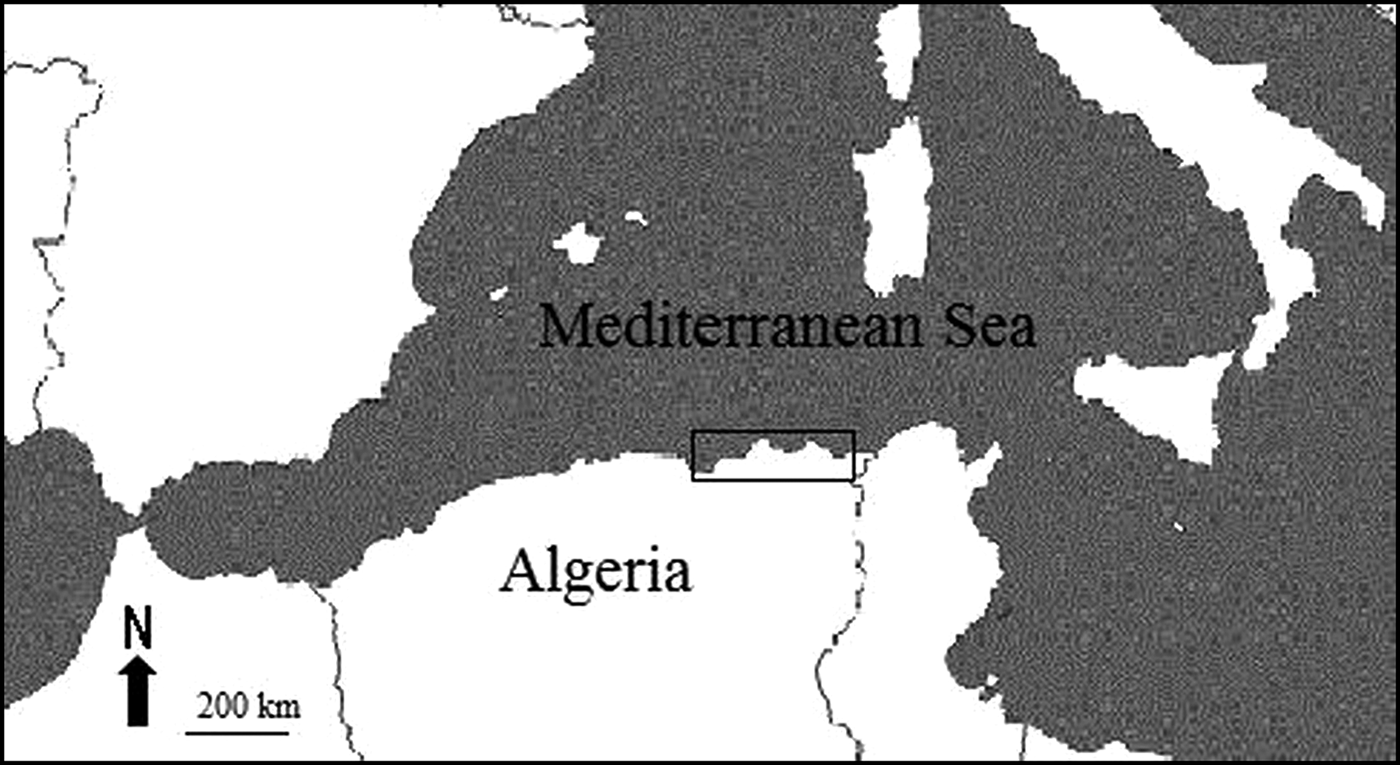
A total of 1725 individuals (10.4 cm ≤Lt ≤26.8 cm, 16.05 g ≤ Pt ≤ 332.47 g) of Morocco dentex were collected monthly from June 2011 to May 2012 along the Algerian Eastern coasts (Figure 1), via wholesalers and fishmongers, after ensuring that it came from fisheries of the same area. Captured by trawls and hand lines, fish were sampled randomly. Total length (TL) was measured to the nearest mm, total weight (TW) and eviscerated weight (We) were recorded to the nearest g. Sex and maturity stages were determined macroscopically. Gonad weight (GW) and liver weight (LW) were recorded to the nearest g.
Map showing sampling site of Dentex maroccanus in eastern Algerian coasts.

Several treatments were tested on otoliths (colouring, immersing in oils, burning, polishing, acid etching and cutting) for age determination, but they were not effective. Therefore, we opted for scalimetry. Five to seven scales were removed from under the left pectoral fin, cleaned and preserved in water for later analysis. Age was estimated by interpreting growth rings on 642 scales from 301 females (10.5 cm ≤ TL ≤ 26.7 cm, 16.05 g ≤ TW ≤ 278.45 g), 326 males (11.5 cm ≤ TL ≤ 26.1 cm, 22.73 g ≤ TW ≤ 300.80 g) and 15 immature individuals (10.4 ≤ TL ≤ 16.1 cm, 18.88 g ≤ TW ≤ 64.31 g). Scales were read using TNPC5 (Numerical treatment of calcified pieces) software (Fablet & Ogor, Reference Fablet and Ogor2005). Readings were made by three independent investigations; the scales were used in subsequent analyses only when all three readings were in agreement. Marginal increment analysis was used to validate annual growth increment formation. The monthly mean of marginal increment (MI) was calculated using: MI = (R − R n)/(R n − R n−1). R, R n and R n−1 are, respectively, the radius, the radius of the last and the next-to-last growth rings. Existence of a linear relationship was first tested between the radius of the scale and the total length. Next, the age-length relationship was back-calculated using Lee's (Reference Lee1920) method. Growth parameters of the Von Bertalanffy (Reference Von Bertalanffy1938) growth equation were estimated: TL = L ∞(1 − e−k(t−t0), where L ∞ is the ultimate length that an average fish would achieve if it continued to live and grow, k is the growth coefficient which determines how fast the fish approaches L ∞, and t 0 is the hypothetical age for TL = 0. Fishparm software (Prager et al., Reference Prager, Saila and Recksiek1989) was used to estimate growth parameters and length-weight relationship which was calculated applying the exponential regression equation: We = a.TLb, where We is the eviscerated weight in grams, TL the total length in centimetres, a and b are the parameters to be estimated, with b being the coefficient of allometry based on the test given by Pauly (Reference Pauly1984). The growth performance index Φ = Log (K) + 2Log (L ∞) (Pauly & Munro, Reference Pauly and Munro1984) was estimated in order to compare growth parameter values obtained in the present paper with those reported for Dentex maroccanus in other areas.
The numeric proportions of sexes were expressed as male to female ratio. The sexual maturity stage of each Morocco dentex was determined using the macroscopic maturity scale shown in Table 1. Maturity stages were identified on the basis of the degree of opacity, appearance, colouration and vascularization of the gonads, and on the ease of seeing sperm and individual oocytes. The spawning season was determined by analysing the temporal evolution in the relative frequency of maturity stages and the gonado-somatic index GSI = (GW/We) × 100. The hepatosomatic index was also calculated monthly: HSI = (LW/We) × 100. Length at maturity was calculated by determining the proportion of reproductively mature fish sampled during the reproduction period. Length at first maturity was estimated as the length at which 50% of the fish had become mature (TL50) (Rikhter & Efanov, Reference Rikhter and Efanov1976).
Stages of sexual maturity of Dentex maroccanus.
Comparison of MI, GSI, HSI values between months and age-length pairs was carried out by analysis of variance (ANOVA). An analysis of co-variance (ANCOVA) was performed to test significance differences in weight–length relationships, GSI and HSI values, and age-length pairs between the sexes. The overall sex ratio was tested monthly using Chi square test (Dagnélie, Reference Dagnélie1975). Statistical analyses were performed with SPSS 21 software package and a significant level of 0.05 was accepted.
RESULTS
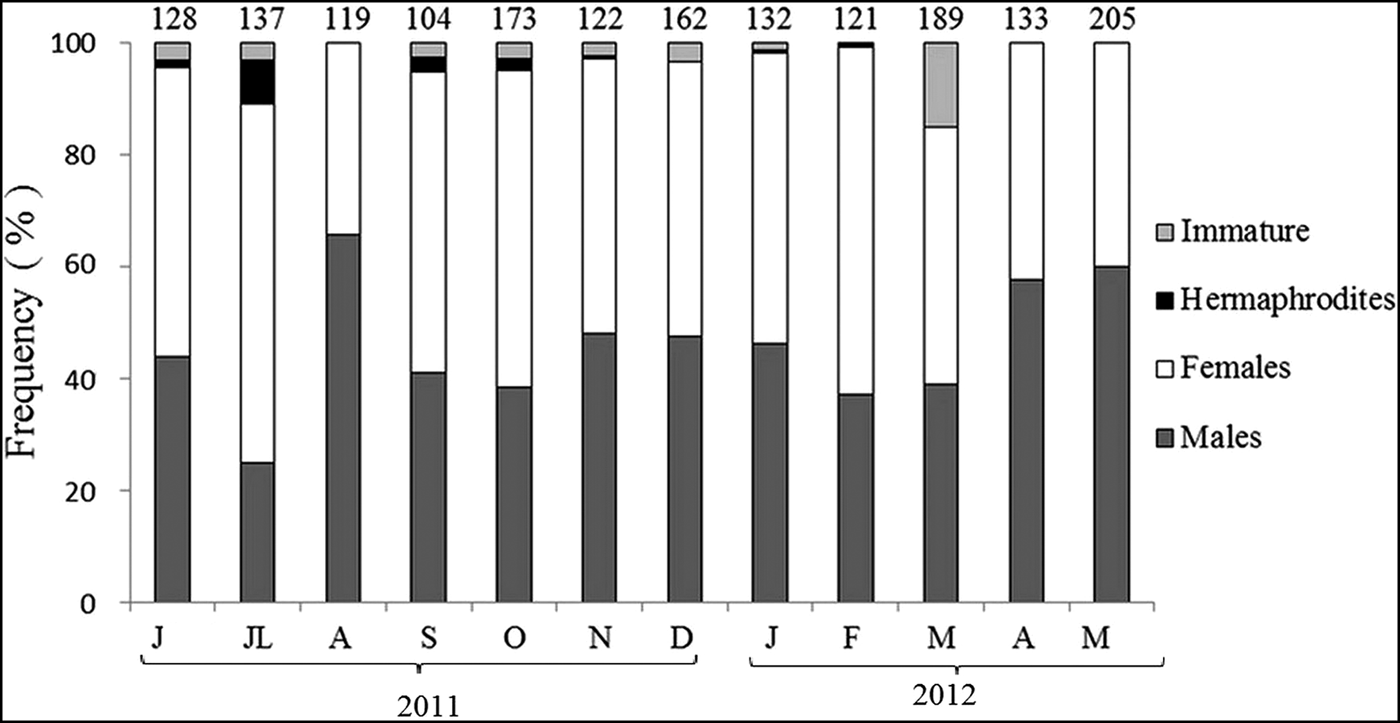
On a total of 1725 examined fish, 858 (49.74%) were females (10.5 cm ≤ TL ≤ 26.8 cm, 16.05 g ≤ TW ≤ 332.47 g) 802 (46.49%) were males (11.1 cm ≤ TL ≤ 26.1 cm, 19.7 g ≤ TW ≤ 300.80 g) and 44 (2.55%) were immature (10.4 cm ≤ TL ≤ 16.1 cm, 17.3 g ≤ TW ≤ 64.31 g). Twenty-one individuals (1.22%) were hermaphrodites (14 cm ≤ TL ≤ 20.6 cm, 44.64 g ≤ TW ≤ 147.72 g) (Figure 2). The overall sex ratio was 1: 0.9 (females:males), and χ2 analysis showed significant differences from the ratio 1:1 (χ2: 60.18, P < 0.05).
Seasonal variation in sex ratio of Dentex maroccanus in the eastern coast of Algeria: the numbers indicate monthly sampling sizes.
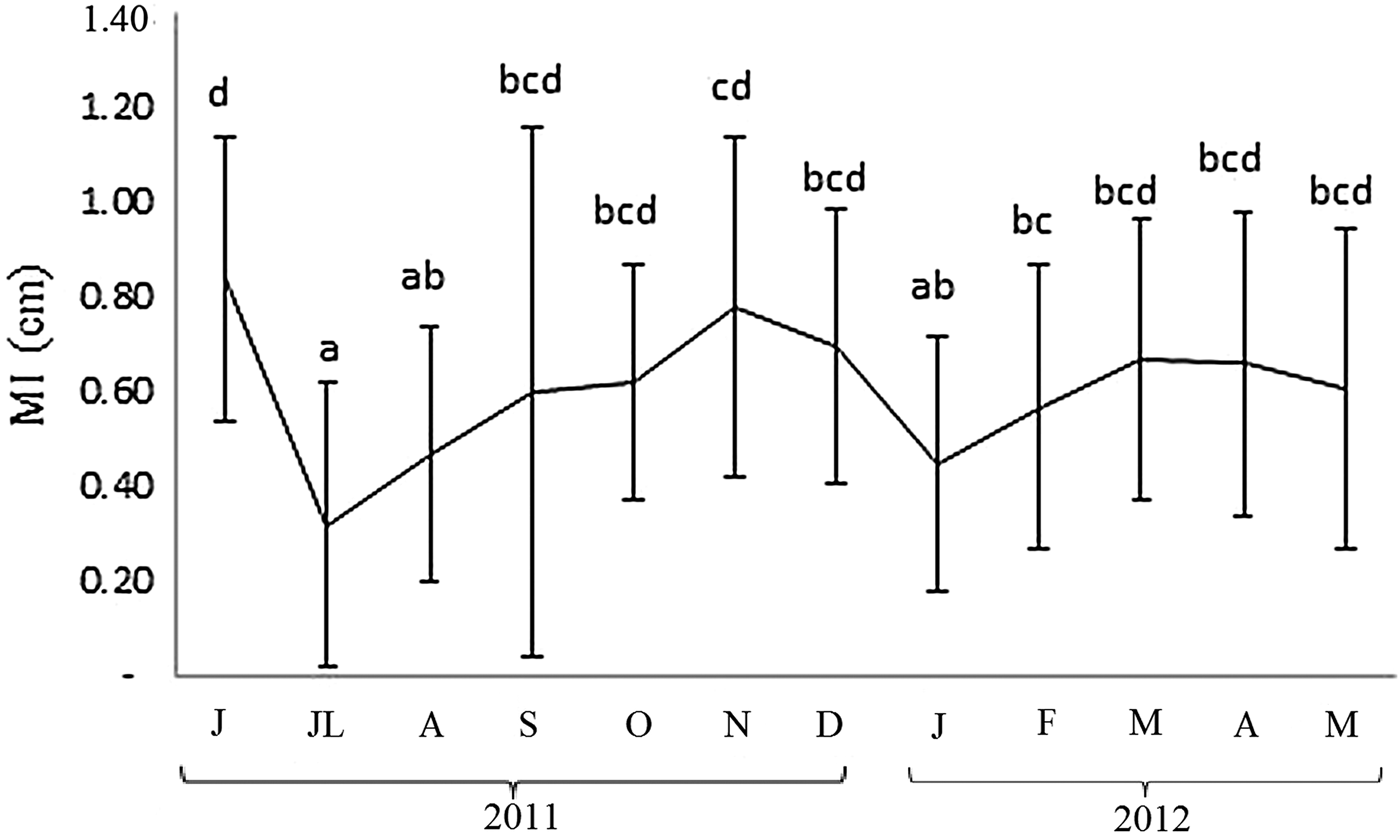
Dentex maroccanus has thick otoliths, especially in the centre, and ctenoid scales, having a toothed posterior edge, with ctenii that give them a rough texture. The equation expressing the linear relationship between TL and the scale radius (Rt) is: TL = 30.09 Rt + 4.20 (r = 0.76; P ≤ 0.001). The ordinate to the origin of this equation (4.2 mm) corresponds to the theoretical size of the fish at the time of formation of the first scale. Comparing successive monthly mean marginal increment values of scales using one-way ANOVA (F = 5.43, P < 0.05) showed a significant difference between only two consecutive months: June and July (Figure 3).
Monthly evolution of scales marginal increment of Dentex maroccanus: the different letters indicate significant differences between groups of months; error bars, standard deviations.
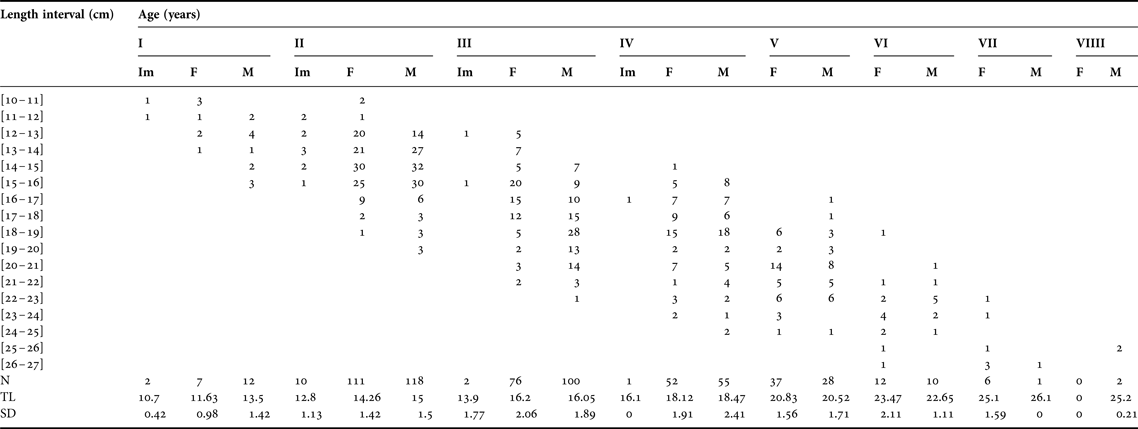
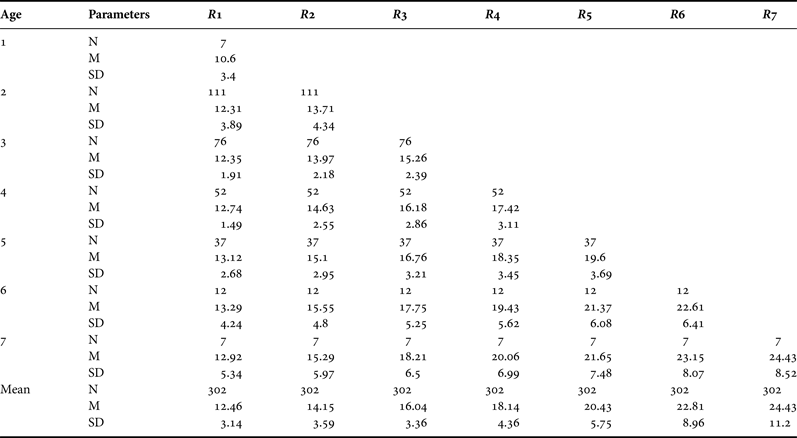
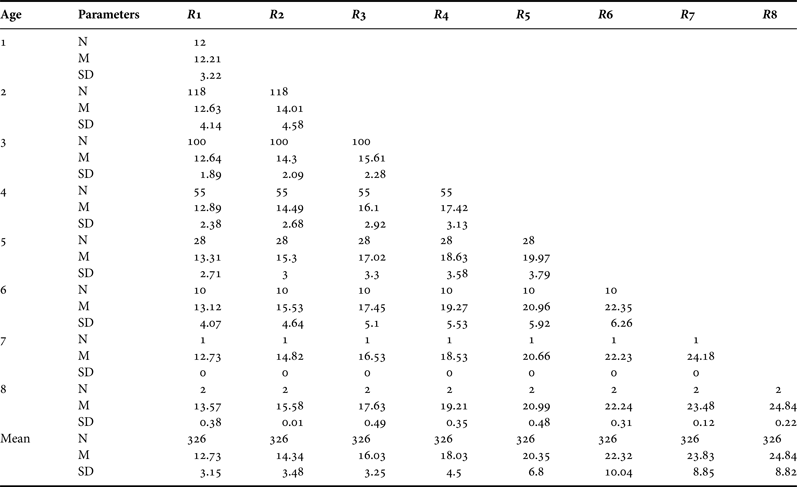
Age range of the sampled fish was 1–8 years, with a predominance of age classes of 2–4 years in the catch (82%). The oldest female was estimated at 7 years and the oldest male reached 8 years (Table 2). Back-calculated lengths are given in Table 3 for females and Table 4 for males. There were significant differences from the comparison between age groups for each sex (ANOVA, F females = 81.73, F males = 54.70, P < 0.05), but no significant differences between males and female age-length pairs (ANCOVA, F = 1.53, P < 0.05). The estimated parameters of the Von Bertalanffy model and the growth performance index Φ are slightly different between females and males: L ∞ = 36.64 cm, K = 0.20, to = 0.50, Φ = 2.36 for females and L ∞ = 37.26 cm, K = 0.20, to = 0.50, Φ = 2.45 for males, L ∞ = 37.26 cm, K = 0.20, to = 0.50, Φ = 2.45 for sexes combined. Length-weight relationship was estimated as We = 0.012 TL3.046 (r = 0.97) for females, We = 0.011 TL3.067 (r = 0.98) for males and We = 0.016 L 3.060 (r = 0.98) for both sexes. Significant differences were obtained from the comparison between males and females (ANCOVA, F = 10.62, P < 0.05). The b-values of the relationships imply that the body shape of both sexes displays positive allometric form (t-test, t male = 38.45, t female = 38.01, P < 0.05).
Age-length key of Dentex maroccanus in eastern Algeria.
Im, immature; F, females; M, males; N, number of fish; TL, mean length by age class; SD, standard deviation.
Mean back-calculated lengths (cm) for age of Dentex maroccanus females, eastern coast of Algeria sampling campaign, June 2011–May 2012.
N, number of fish; M, mean length by age class; SD, standard deviation.
Mean back-calculated lengths (cm) for age of Dentex maroccanus males, eastern coast of Algeria sampling campaign, June 2011–May 2012.
N, number of fish; M, mean length by age class; SD, standard deviation.
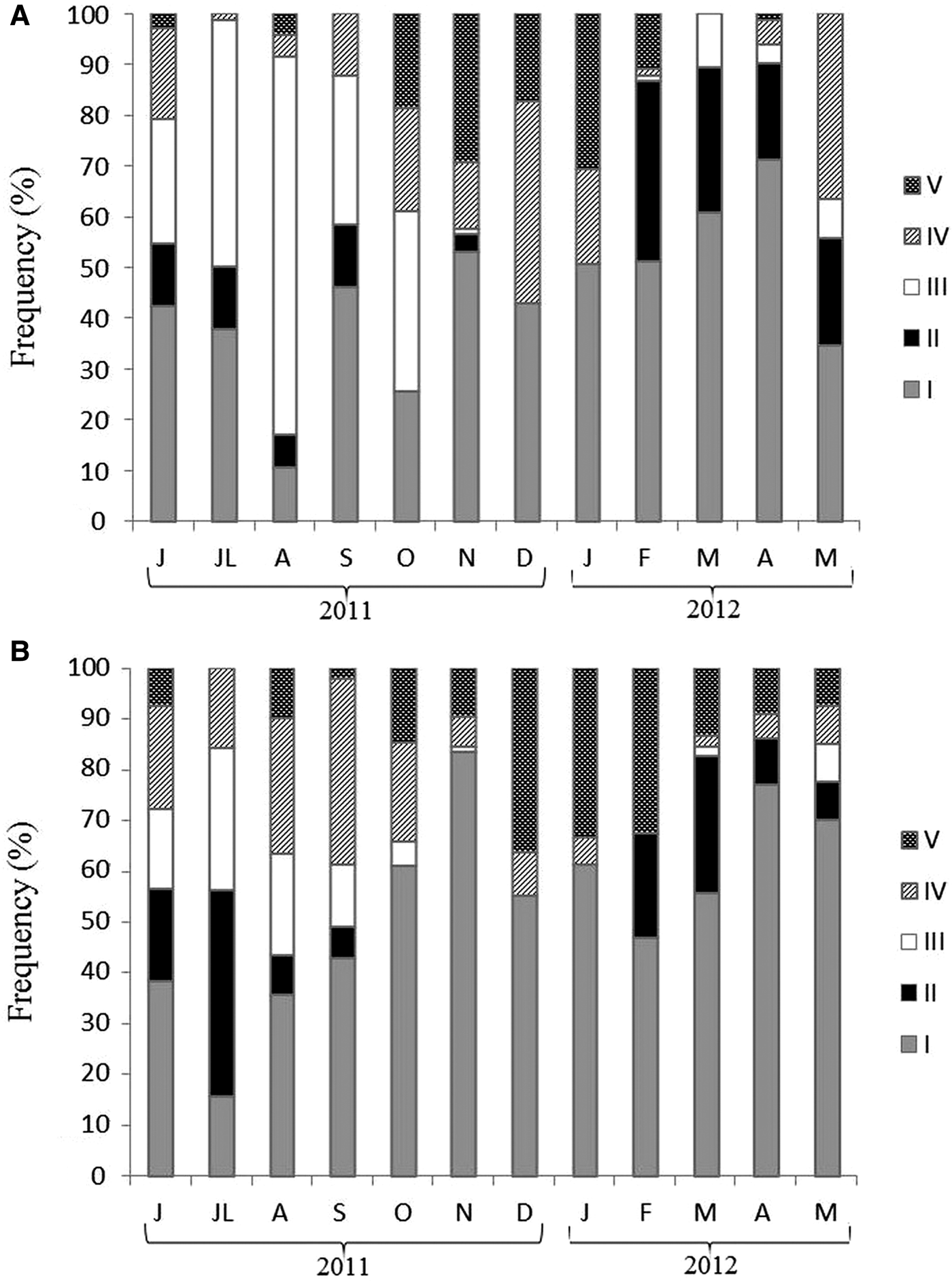
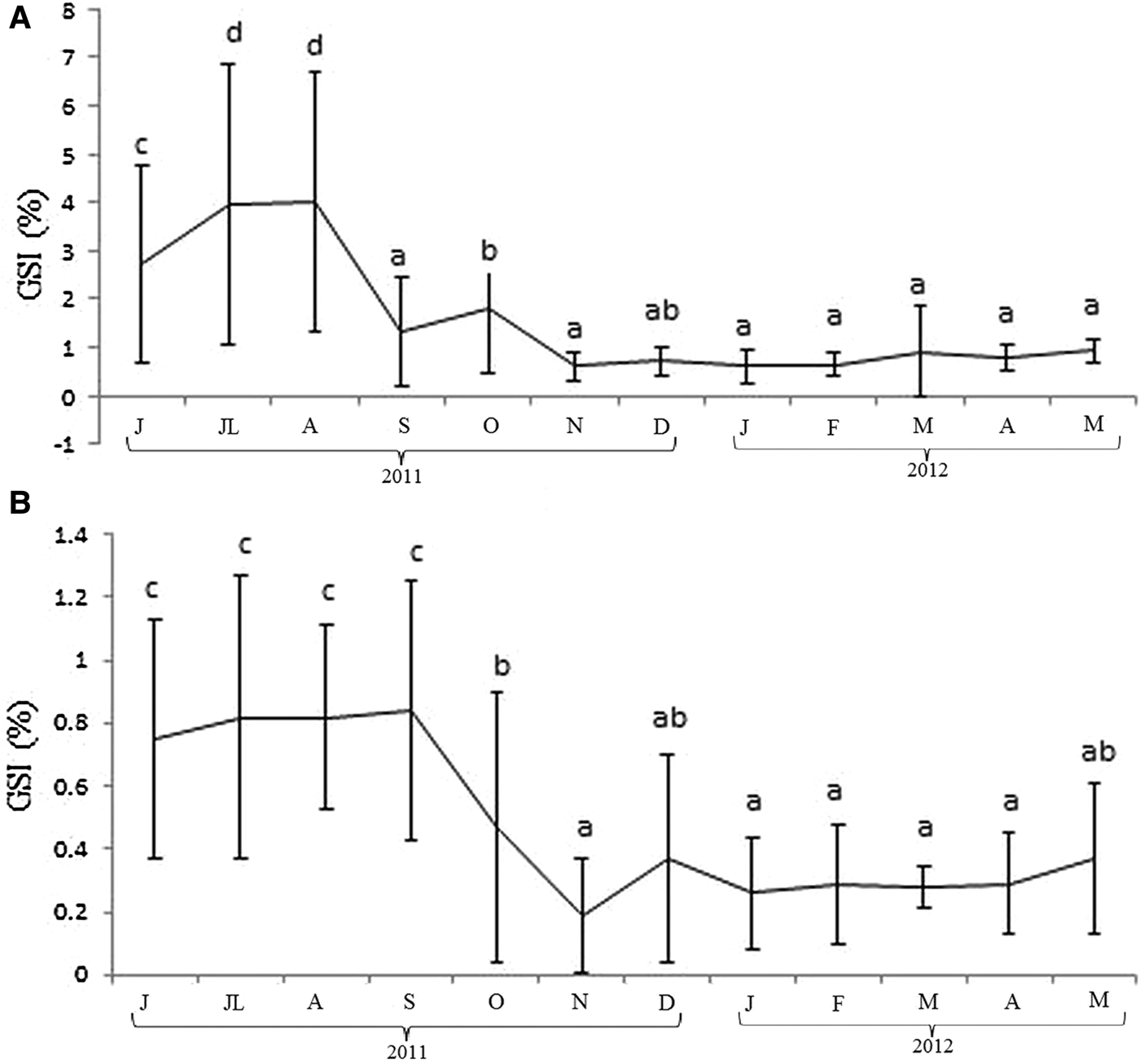
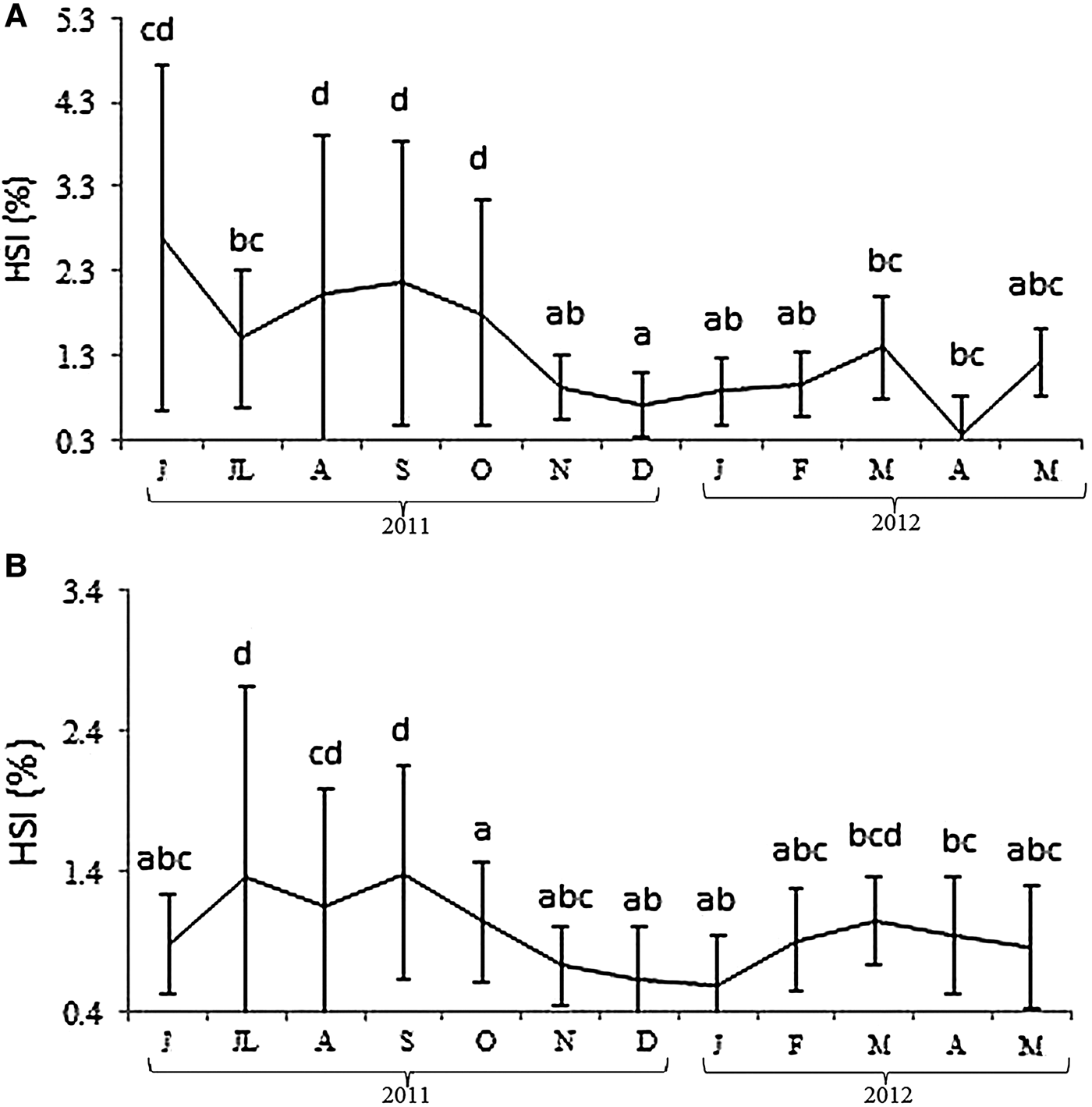
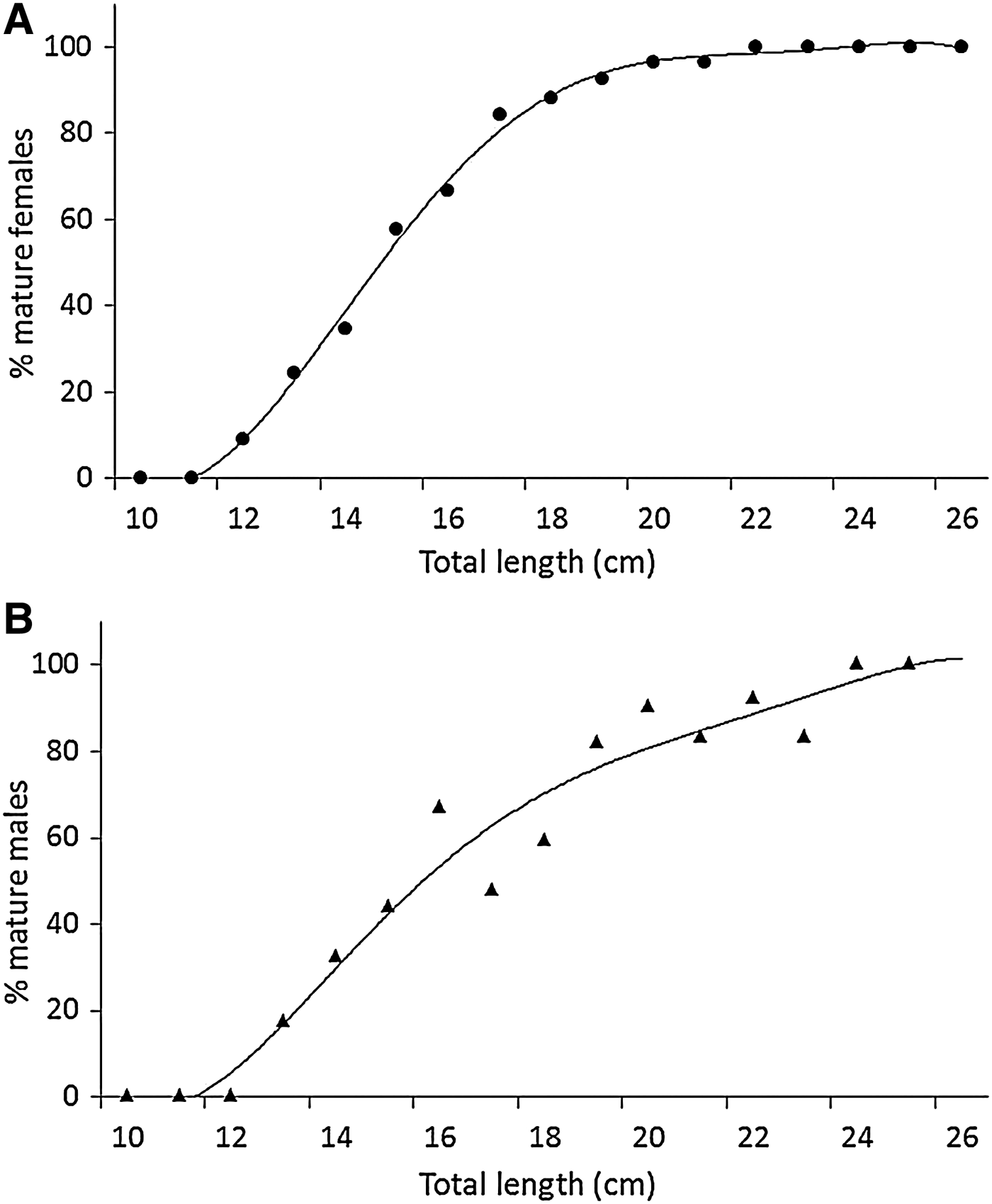
Males and females with developed gonads (stage II) appeared between February and September; males and females with ripe gonads (stage III) were recorded between March and November, being dominant between June and October; spent males and females (stage IV) were recorded along the year especially between October and January. Set males and females (stage V) were dominant between October and February (Figure 4). The curves of the GSI monthly values showed that D. maroccanus reproduced only once a year (Figure 5). This is confirmed by one-way ANOVA analysis applied to mean values of GSI (F females = 35.97, F males = 25.76, P < 0.05). Significant differences were also obtained from the statistical comparison between males and females (ANCOVA, F = 162.44, P < 0.05). Females mature between May and July and spawn during August and September. Males are mature from June to October. The maximum GSI values are 4.01% (August) and 0.84 (September) in females and males respectively. In the case of HSI, significant differences were obtained from the comparison of HSI values between males and females (ANCOVA, F = 63.03, P < 0.05). The most important variations are between June and October, both in females and males (ANOVA, F females = 12.86, F males = 6.77, P < 0.05) (Figure 6). The highest values are reached between August and October in females (mean = 2%) and between July and September in males (mean = 1.30%). Size at first maturity (TL50) was estimated as 14.4 cm for females and 15.1 cm for males (Figure 7). According to the scales reading of the concerned length classes, these sizes correspond to an age of 2 years.
Maturity stages of Dentex maroccanus, as a function of months: (A), females; (B), males; (I), immature; (II), developed; (III), ripe; (IV), post-spawning; (V), resting.
Monthly variation in Dentex maroccanus, gonadosomatic index (GSI): (A), in females; (B), in males, in the eastern coast of Algeria. Error bars, standard deviations.
Monthly variation of hepatosomatic index (HSI): (A), in females; (B), in males, of Dentex maroccanus, in the eastern coast of Algeria. Error bars, standard deviations.
Proportions of mature individuals by total length of Dentex maroccanus: (A), in females; (B), in males, in eastern coast of Algeria.
DISCUSSION
Age
Despite the various treatments tested on otoliths, age reading was always difficult. The complexity of their reading is related to their opacity and to the presence of many discontinued rings, which appear not to be annual.
The monthly variations of scales marginal increment values suggested that only one growth ring was formed per year, during June. The value of the MI is at its maximum when the ring is forming (June) and its minimum just after this (July). A second low value after that of July, was recorded during January, but it is not significantly different from that of December and February (ANOVA, F = 5.43, P < 0.05). Chemmam et al. (Reference Chemmam-Abdelkader, Kraiem and El Abed2002) in the Mediterranean Sea and Lamrini & Bouymajjane (Reference Lamrini and Bouymajjane2002) in the Atlantic supported our assumption, but the ring is formed between May and June in Tunisia and in January in the Moroccan Atlantic. Growth ring formation in the beginning of summer in our case could be related to physiological stress during gonad maturation in June and July. However, the low temperatures in winter caused a decrease in MI values during January. In the Atlantic, the sharp decrease of temperature during January may have a more important influence on growth rhythm than gametogenesis.
The majority of the specimens were between 2 and 4 years old as in the north-west African coasts (2–3 years) (Loc & Wojciechowski, Reference Loc and Wojciechowski1972). In the same area, Lamrini & Bouymajjane (Reference Lamrini and Bouymajjane2002) indicate 4–6 years. The low proportion of specimens aged 5–8 years suggests that few individuals survive to a maximum age, as is typical of most fishes (Matthews, Reference Matthews1998). The highest age estimated in this study was 7 years for females and 8 years for males. In all the studied areas, females have the same longevity (7 years). This longevity is generally higher than that of males: 6 years in Tunisia (Chemmam et al., Reference Chemmam-Abdelkader, Kraiem and El Abed2002) and 5 years in the Safi region in the Moroccan Atlantic. In north-west Africa, D. maroccanus lives until 10 years in both sexes (Loc & Wojciechowski, Reference Loc and Wojciechowski1972).
Growth rate
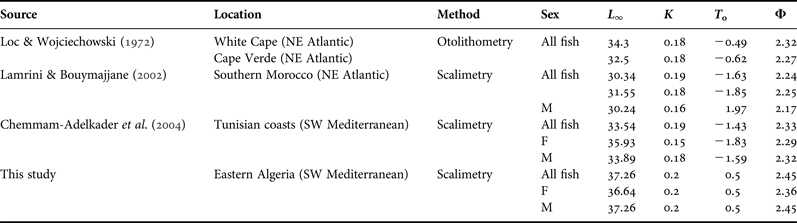
Fitting the Von Bertalanffy growth function to back-calculated lengths resulted in the estimation of higher values of maximum theoretical length than the maximum observed total lengths. The L ∞ value of males was calculated to be slightly higher than that of females, but not significantly, comparing their age-length pairs (ANCOVA, F = 1.35, P < 0.05). The equal coefficient (K) for females and males shows that they have the same rate of growth, and they approach their asymptotic length (L ∞) together in the lifespan. Comparison of K and L ∞ from different populations of Morocco dentex shows that the growth patterns vary slightly in the estimated parameters (Table 5). These differences may be regarded as a biological feature of Morocco dentex in different habitats. The allometry coefficient of the length-weight relationship for females (b = 3.046, r = 0.97), for males (b = 3.067, r = 0.98) and for both sexes (b = 3.060, r = 0.98) indicates positive allometric growth. The same conclusion (b = 3.089 for females, b = 0.023 for males, b = 3.023 for both sexes) was reached by Chemmam et al. (Reference Chemmam-Abdelkader, Kraiem and El Abed2004) in Tunisian coasts and by Lamrini & Bouymajjane (Reference Lamrini and Bouymajjane2002) in Moroccan coasts (b = 3.30 for females, b = 3.15 for males, b = 3.23 for both sexes). However, variations may occur through the influence of fishing gear and sample size. The growth performance index (Φ) is considered a useful tool for comparing the growth curves of different populations of the same species and/or of different species belonging to the same family (Sparre & Venema, Reference Sparre and Venema1998). By calculation from published data of k and L ∞ in different populations of the Morocco dentex (Table 5), the Φ value ranges from 2.17–2.45. The highest one is recorded for eastern coasts of Algeria.
Comparison of von Bertalanffy growth parameters and growth performance indexes (Φ) of Dentex maroccanus species in different areas.
L ∞, asymptotic length; K, growth rate; t 0, theoretical age at length zero; Φ, growth performance index.
Reproduction
Contrary to previous studies done on the Tunisian and Moroccan coasts, hermaphrodites were found here with 1.22% of the total sample. Most individuals mature as only one sex, indicating the species is primarily gonochoristic. According to Sadovy & Colin (Reference Sadovy and Colin1995), the rare individuals found have undergone sex change or remained as intersexes until maturity. This behaviour may be due to environmental factors.
The reproductive season of the Morocco dentex in the eastern coasts of Algeria extends from May to September with gonad maturation during May–July and a spawning in August–September. It takes place in the same period in the Atlantic Moroccan coast (Lamrini & Bouymajjane, Reference Lamrini and Bouymajjane2002) and in Tunisia (Chemmam et al., Reference Chemmam-Abdelkader, Kraiem and El Abed2002). Superficial temperature measured by Frehi et al. (Reference Frehi, Couté, Mascarell, Perrette-Gallet, Ayada and Kara2007) is between 20 and 25.8°C during maturation and is 25.3°C in the spawning season. GSI values for females are relatively low (max = 4.01% in August) and for males are even lower (max = 0.84% in September). The GSI values found by Chemmam et al. (Reference Chemmam-Abdelkader, Kraiem and El Abed2002) exceed 4.8% for females and 1.7% for males. In comparison with other fish species inhabiting the eastern coasts of Algeria (Chaoui et al., Reference Chaoui, Kara, Faure and Quignard2006; Benchalel & Kara, Reference Benchalel and Kara2013), D. maroccanus has an extended spawning season (5 months). This seems to be a feature of the biology of this species and may be interpreted as an increase of reproductive effort.
The liver has an important role in production of gametes. Monthly evolution of HSI in our case is similar to that of Tunisian coasts (Chemmam et al., Reference Chemmam-Abdelkader, Kraiem and El Abed2002). The first maximal HSI value precedes that of GSI, which indicates a metabolite transfer to the gonads from the liver. Females are mature at a smaller size, but same age (14.4, 2 years) than males (15.1, 2 years). Thus, 44.27% of fish sampled did not reach the first maturity length. The estimated size at maturity for both sexes is 14.8 cm. The size at first maturity was reported as 14.8 cm TL (2 years) in the Tunisian coasts (Chemmam et al., Reference Chemmam-Abdelkader, Kraiem and El Abed2002) and 15.6 cm FL (2 years) in the Moroccan Atlantic (Lamrini & Bouymajjane, Reference Lamrini and Bouymajjane2002). The highest size at maturity recorded in the Atlantic might be related to the latitude of sampling areas. In general, a fish grows faster and matures earlier in tropical waters (low latitudes), but grows slower and matures late in temperate waters (high latitudes) (Lombardi-Carlson et al., Reference Lombardi-Carlson, Cortès, Parsons and Mainire2003).
This study gives the first data on the biology and population dynamics of Dentex maroccanus in eastern Algeria. This work should be complemented by other researches on the diet, ecology and genetics of this species. All these data will be useful for a better understanding of the fishery for its sustainable exploitation.
FINANCIAL SUPPORT
The authors thank the Algerian Ministry for Higher Education and Scientific Research (General directorate for scientific research and technology development, DGRSDT) which financially supported this study, within the framework of the National Funds of Research (NFR).