Introduction
The Linguistic Survey of India (1903–1928), completed and published by George Abraham Grierson (1851–1941), has long been recognised as a landmark in linguistics and anthropology, and its assemblage constitutes a key episode in the history of British orientalist scholarship. Remarkably, we lacked a comprehensive history of it until very recently, but this has now been provided in a two-volume study by Javed Majeed.Footnote 1 The scale of Grierson’s achievement is staggering and, from the start of activities in 1894 to the publication of the final volume in 1928, the project took more than three decades to complete. Grierson, however, knew that his was only the latest in a series of attempts to survey the languages of South Asia.
An obvious inspiration was the collection of language specimens published by Sir George Campbell (1824–1892) in 1874, which Grierson used as a template.Footnote 2 Another was the work of Robert Needham Cust (1821–1909), author of A Sketch of the Modern Languages of the Indies (1878), whom Grierson consulted for his opinion about the survey’s prospects. Responding to a similar query, Friedrich Max Müller (1823–1900) approved of Grierson’s project and alerted him to the work of Arthur Coke Burnell (1840–1882), who had published a number of ‘specimens’ of the Dravidian languages of southern India in the early 1870s.Footnote 3 Almost 60 years earlier, in 1828, Müller’s compatriot Wilhelm von Humboldt (1767–1835) wrote to the vice-president of the Royal Asiatic Society, Alexander Johnston (1775–1849), praising the intentions of an earlier would-be linguistic surveyor, Sir James Mackintosh (1765–1832), who had in 1806 published his Plan of a Comparative Vocabulary of Indian Languages in Bombay. This article recovers the efforts made by Mackintosh and his circle to survey all the languages of India. While the survey has been fleetingly mentioned in various histories of British colonialism, this is the first sustained examination of Mackintosh’s aims, efforts, and results (such as they were).Footnote 4
For a variety of reasons examined below, Mackintosh’s project never came to fruition, but it was one that interested many of the leading British orientalists of the early nineteenth century. In this article, I first outline James Mackintosh’s vision for a comparative vocabulary of South Asian languages before I trace the efforts made towards it by Francis Irvine (1786–1855), Henry Thomas Colebrooke (1765–1837), John Leyden (1775–1811), Francis Buchanan-Hamilton (1762–1829), and Alexander Johnston, among several others. Apart from Mackintosh, all of the scholars involved in the endeavour had linguistic interests prior to the surveying work they undertook, and both Irvine and Leyden, and to some extent Buchanan, joined the East India Company in order to pursue orientalist careers. Colebrooke and Johnston aside, the rest of these men were educated at the University of Edinburgh, and Mackintosh, Leyden, and Buchanan all had medical training. We therefore have a collection of young Scots on the make, with a mix of commercial, professional, and scholarly ambitions, and seeing no contradiction in any of this. These mixed motivations also characterise the existence of the survey as a whole, which was conceived of as both a project of imperial consolidation and a contribution to the international community of scholarship.
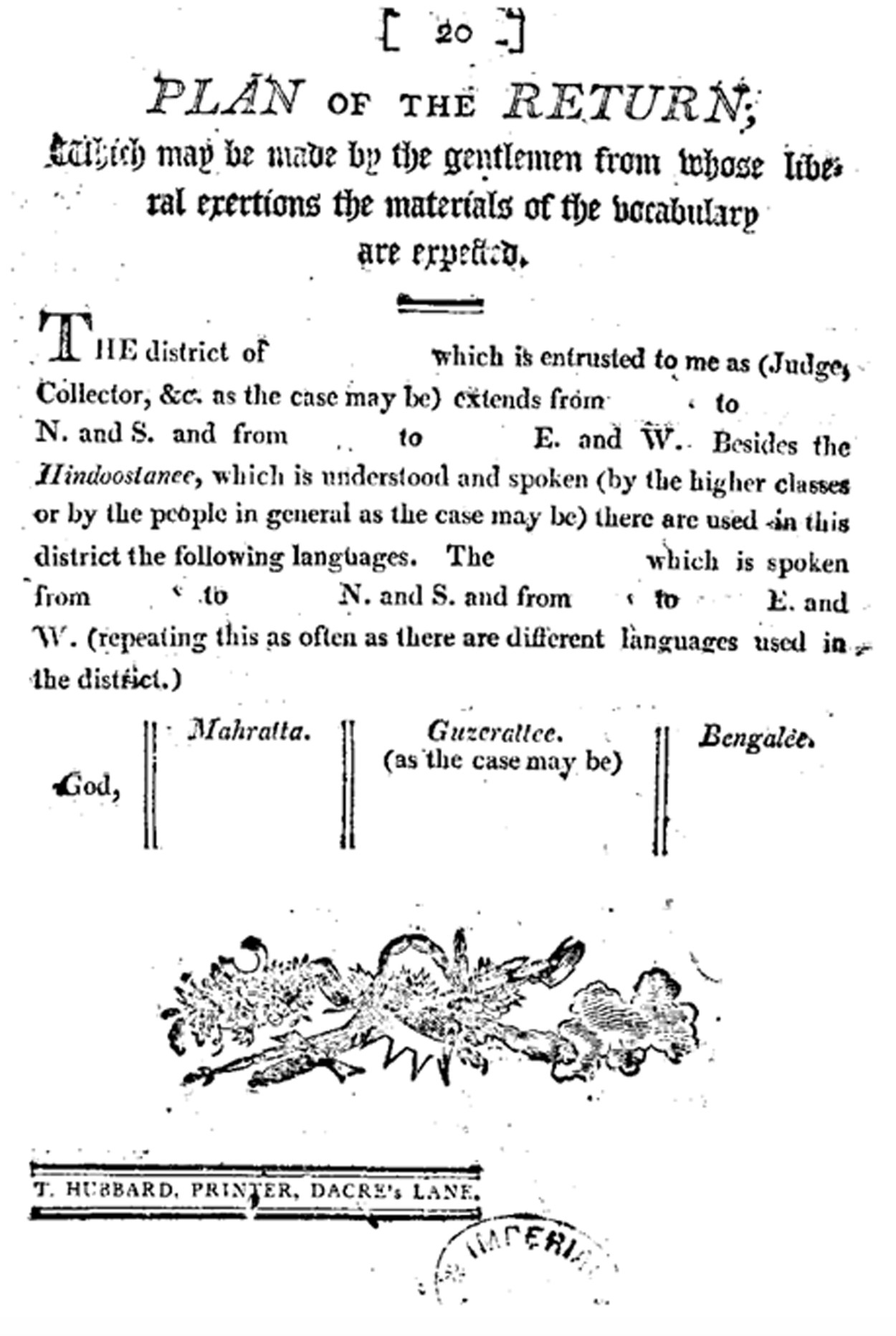
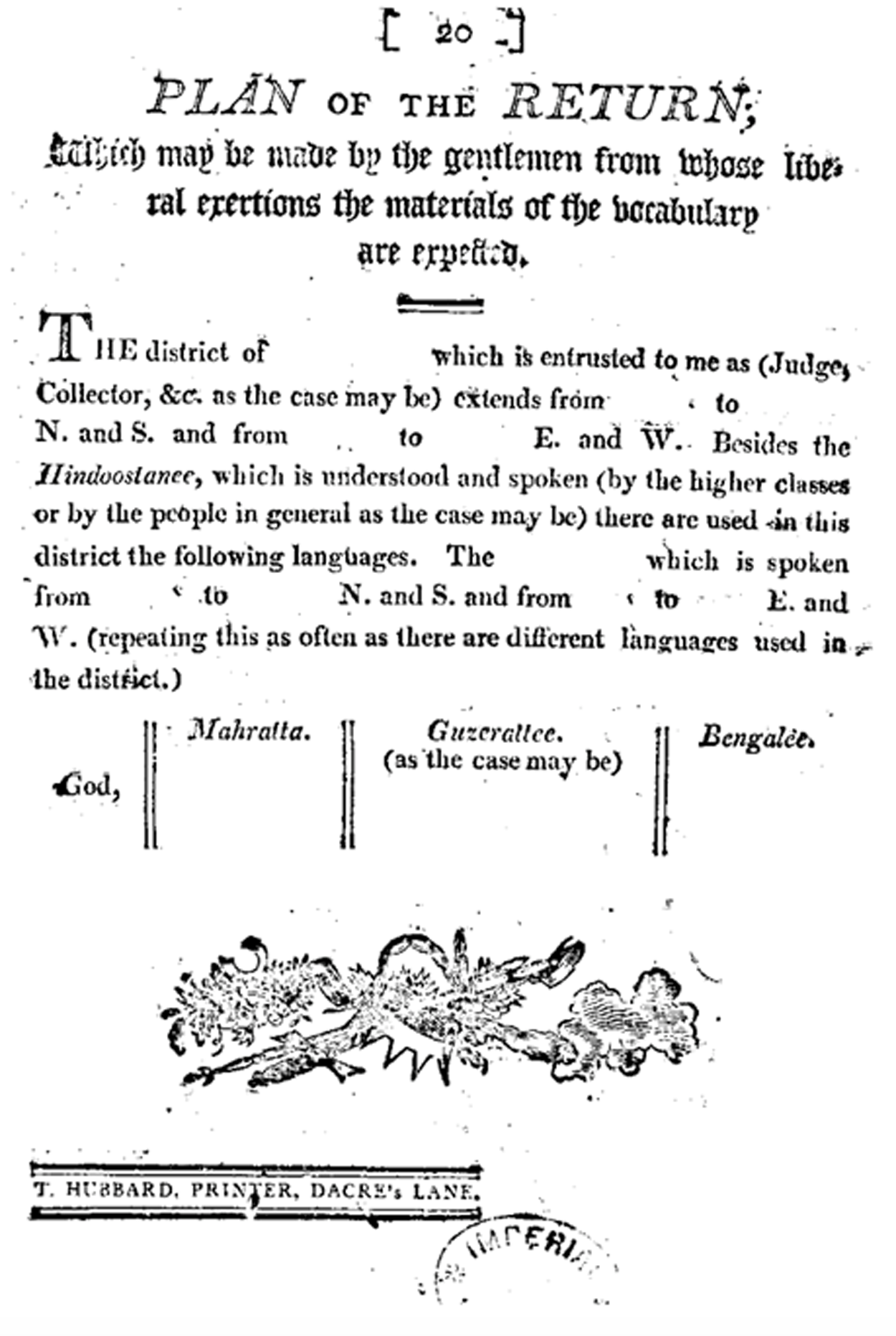
Languages were obviously essential tools for the governance of a rapidly expanding empire, in which knowledge was prized for its own sake as well as for political purposes. With the development of the history of knowledge as a field over the last couple of decades, we are getting beyond the Foucauldian theory of knowledge as a mere function of power, which blended well with the Saidian thesis that orientalist knowledge production was simply a vehicle for imperial control.Footnote 5 Recovering Mackintosh’s linguistic survey provides us with a clearer picture of the practical uses of comparative philology in imperial knowledge-making and governance. Most attention in this respect has fallen on Sir William Jones (1746–1794) and the Asiatick Society of Calcutta; more recently, Thomas Trautmann has also excavated the Madras context and the proof that the Dravidian family formed a separate linguistic unit.Footnote 6 While it is recognised that these comparative philological efforts formed a part of the imperial project, they are nevertheless still rather esoteric examples undertaken by lone scholars or worked towards by a group of like-minded linguists. The linguistic survey devised by Mackintosh in Bombay—illuminated here for the first time—was much more terrestrial. As discussed below and shown clearly in Figure 1, it was envisioned that the completed survey would draw a linguistic and human geography of India, though it was also hoped that it might reveal something about the relationship of Sanskrit to Indian vernaculars. Mackintosh’s linguistic survey must be considered as part of the larger surveying efforts being undertaken at the time in that it was intended to draw on the collective efforts of the East India Company officials who need not necessarily have had any great linguistic acumen.
James Mackintosh, Plan of a Comparative Vocabulary of Indian Languages: Read at the Literary Society of Bombay, on the 26th May, 1806 (Reprint, Calcutta, 1808), p. 20, https://archive.org/details/dli.ministry.05230/page/n19/mode/2up (accessed 10 January 2024).
Yet, at the same time, its proponents considered that the results would be a major contribution to scholarship. In the era before comparative philology had developed as a formal discipline taught in universities—from the late 1810s onwards—one of the major obstacles to such scholarship was the lack of adequate linguistic evidence from around the world. While the theoretical breakthrough of Indo-European kinship—that, oversimplifying, came with William Jones (1746–1794) in 1786 and was built upon by Friedrich Schlegel (1772–1829) in 1808 and Franz Bopp (1791–1867) in 1816—was heralded by linguists of prior generations as the eureka moment that required only genius to be grasped, more recently, historians have highlighted the lengths scholars had to go to in order to acquire adequate and ample material with which to work.Footnote 7 The 1780s had witnessed the initial publication of a major project designed to surmount this problem by surveying as many languages from around the world as possible. It was devised by Catherine the Great (1729–1796), who wanted to collect and compare samples from all of the languages of the world to determine their kinship.Footnote 8 Catherine sent out requests for materials across the world in order to complete her collection. George Washington (1732–1799), for example, received one such request from the Marquis de Lafayette and returned it with dictionaries of the Shawnee and Delaware languages.Footnote 9 The naturalist Peter Simon Pallas (1741–1811) undertook the work of publication for Catherine, compiling and producing two volumes of European and Asian languages before abandoning the venture, which was picked up by Theodor Jankowitsch de Miriewo (1741–1814), who added many African and American languages.Footnote 10 Still incomplete, the project nevertheless remained alive as an idea in the republic of letters. The philosophe Volney (1757–1820), for example, praised Catherine’s intentions in 1805 and recommended that the Académie celtique (an antiquarian society with nominal state patronage) should undertake this kind of project, it being necessary to have an army of scholars in order to collect the linguistic data required.Footnote 11 Mackintosh thought he had those resources in the form of the East India Company employees. He therefore modelled his survey on Catherine’s and considered that its eventual results would be a contribution to hers.Footnote 12
The main contributors to this project were mostly Scots who were educated at the University of Edinburgh. This article therefore contributes an Indian dimension to a growing body of work illustrating the diffusion of knowledge from Enlightenment Scotland through the British imperial world. Linda Andersson Burnett and Bruce Buchan have shown that many Scots, often educated at Edinburgh and particularly in the Medical School, fanned out across the imperial world and applied their training in the ‘Science of Man’ to the study of the peoples and places they visited.Footnote 13 They aimed to collect data about different cultures around the world, at all stages of social development, in order to supplement the picture of the history of human society that was being drawn at Edinburgh and other Scottish universities by lecturers including, among others, Adam Ferguson (1723–1816) and Dugald Stewart (1753–1828).Footnote 14 This is particularly evident in the cases of Mackintosh, Irvine, and Leyden. Ideas on language were evolving at the time, but, broadly speaking, it was thought that the development of a language would mirror the progress of human society up the civilisational scale, becoming lexically more copious and grammatically more refined as society became more complex and polished. Collecting linguistic samples from those supposedly further down the civilisational scale would therefore contribute to revealing the intellectual character of the population over which the East India Company was extending its rule. Although we are not quite yet in the era of James Mill (1773–1836) and his blanket condemnation of India and its cultures as ‘barbarous’, it is nevertheless still possible to see in the material that follows the same intellectual scaffolding that owed its genesis to Scottish patterns of thought.Footnote 15
Kapil Raj has been at the forefront of a re-evaluation of colonial knowledge production, focusing on the kinds of ‘intercultural encounter’ that are evident in some of the exchanges that produced the linguistic specimens discussed in this article.Footnote 16 The many efforts behind Mackintosh’s linguistic survey relied—like the knowledge-making surveyed in Raj’s book—on an intercultural combination of local knowledge and the ‘bureaucratic practices’ of colonial governance, yet it was also envisaged as a contribution to the universal linguistic project of Catherine the Great.Footnote 17 Unfortunately, as is often the case in the historical records of such projects, the local intermediaries who provided the European collectors with their linguistic specimens are nameless in the sources; worse still, they are occasionally blamed, for example by Francis Irvine, for the failure to procure the desired linguistic information.
The place of information gathering and knowledge production in the history of imperialism has long been recognised by scholars but has been a subject of concentrated interest in recent histories of the East India Company.Footnote 18 In his important study, The East India Company and the Politics of Knowledge (2023), Joshua Ehrlich stresses the role that knowledge-making of the kind discussed here played in the East India Company’s ideology during this period.Footnote 19 Knowledge was sought both for its own sake and for the purposes of governance but also as a powerful strategy to ‘conciliate’ elite British and Indian opinion towards the company and its activities. Illuminating the surveying efforts of many of those discussed in this article, Ehrlich has also posed answers to two important questions: why did the linguistic surveying efforts emerge in such volume at this time, and why did they fail? In the 1790s, the East India Company won victories over long-standing enemies and dramatically increased the extent of its dominions as a result, thereby creating new knowledge-making arenas for scholar-officials.Footnote 20 The linguistic efforts examined below were carried out as part of a range of different activities, from diplomatic missions to more comprehensive geographical and statistical surveys of the country. They were, however, undertaken by individuals with varying motivations—usually scholarly aspirations and/or a desire for recognition in the world of letters—and were not patronised by the company. In fact, the directors back in London actively opposed some of them.Footnote 21 The scholar-officials surveying the languages of South Asia therefore faced considerable obstacles, the comprehension of which helps us to better appreciate the intentions and achievements of those examined below.
Sir James Mackintosh and the Literary Society of Bombay
James Mackintosh is not usually remembered for his orientalist endeavours, and he himself averred that he had no interest in the East other than that of a philosopher.Footnote 22 But he had a clear, simple, and systematic plan to survey the entirety of India’s languages. Arriving in India as the recorder (chief judge) of the Bombay Court in 1804, Mackintosh quickly set up the Bombay Literary Society. It was to this body that he announced his Plan of a Comparative Vocabulary of Indian Languages on 26 May 1806.Footnote 23 Mackintosh opened by describing the great linguistic project of Catherine the Great, who aimed to collect and compare all of the world’s languages ‘and to furnish certain means of determining their affinity and filiation’.Footnote 24 She had tasked Peter Simon Pallas with the project, who published two volumes on the languages of Europe and part of Asia. Mackintosh believed that his former Edinburgh classmate, the Philadelphian physician Benjamin Smith Barton (1766–1815), who had published a collection of Native American vocabularies in 1797, would provide further material for Native American languages, and he thought it was the duty of the British in India to provide as many samples as they could of hitherto unknown Asian languages.Footnote 25 However, although he praised the intentions behind Catherine’s project, Mackintosh found problems with it: copies of the existing volumes were scarce, the vocabulary lists were written in the Cyrillic instead of the Latin alphabet (thus limiting its use), and the world’s linguistic material was far too large and diverse for one person or society to undertake such a comprehensive project. Still, Mackintosh thought it eminently worthwhile and that the British could make a useful contribution concerning the languages of India.
There were two reasons for this. The first was simply that the British, as de facto rulers of much of India, were in a position to do so, and even had a duty to undertake such a study. The second was that the territory they governed was seemingly connected by one family of languages:
from similarity of idiom and from local convenience, the languages of India become the proper province of the British nation. By Indian languages are meant, those spoken by that race of men, of which the great majority professes the Braminical religion, and which inhabits the country extending from the Indus to the Burrampooter, and from the northern mountains to Cape Comorin.Footnote 26
European scholars, obviously including Mackintosh here, were at this point unaware that ‘language’ and ‘race’ in India were not congruent and that the Dravidian family of southern India was separate from the Indo-Aryan group of languages that had descended from Sanskrit.Footnote 27 However, Mackintosh indicated that he was far from certain on this point and that more information was needed about the relationship between Sanskrit and the vernacular languages of India:
All the Indian languages hitherto explored have a large mixture of Sanscrit; but in what relation they stand to that ancient and celebrated tongue, is a matter which has not yet been determined, and which indeed cannot be determined, without a more exact comparison than has yet been laid before the public.Footnote 28
Was there a vulgar Sanskrit that had developed into the vernacular languages over time (akin to vulgar Latin and the Romance languages)? Or had Sanskrit been the language of a conquering people who swept into the South Asian peninsula and forced their religion and laws—and therefore portions of their language—onto the conquered by force? Or was it some combination of these possibilities? William Jones had written that, in some of the Indian languages, Sanskrit was mixed with an ‘unknown basis’, but Mackintosh complained that Jones had not explained his reasoning or cited his authorities. His research findings were therefore of limited use to successors, who had to ‘repeat and verify them before they [could] make any conclusions from them’.Footnote 29
One of the overriding purposes of Mackintosh’s Plan was, accordingly, to figure out this relationship between Sanskrit and the vernacular languages. It was ‘by the aid of the British Government in this country, to exhibit a vocabulary, consisting of [Pallas’s] words, and of a certain number of others, in every language, dialect and jargon of India’.Footnote 30 They were to be written and transliterated, as far as possible, by using the scheme that the Scot John Gilchrist (1759–1841) had devised and printed in his Dictionary, English and Hindoostanee (1786). To the 127 words that he took from the vocabulary of Catherine the Great, Mackintosh added 204 more terms, including numbers, some basic infinitive verbs, as well as expressions for measurements, weights, time, days of the week, months, and religious and political concepts.Footnote 31 He would transmit the vocabulary list, together with a formulaic circular to be returned (Figure 1), to ‘Judges, Collectors, Commercial Residents and Magistrates’.Footnote 32 If possible, residents at ‘the Courts of friendly and allied States’ were also to be consulted, with the results sent back to Mackintosh, who was ‘ready to superintend the publication of the whole vocabulary’.Footnote 33
Mackintosh sent the plan out to friends across India, to the governor general of Bengal at the time, Sir George Barlow (1763–1846), and to the company governments at Madras and Ceylon.Footnote 34 A year later, Mackintosh had heard nothing from the company officials whom he had contacted but had nevertheless received ‘some most valuable reports from some private friends’.Footnote 35 These included a ‘most admirable [report] from a young Gentleman of distinguished talents & character The Hon Mounstuart Elphinstone [1779–1859]’.Footnote 36 I have been unable to locate Elphinstone’s contribution, but BL Add Ms 26605 contains a collection of vocabularies that are most likely the other ‘valuable reports’ to which Mackintosh refers. The first samples came in August 1806 from Lieutenant Edward S. Frissell (?–1807)—an epistolary friend of Mackintosh who had arrived in India in 1797 and acquired ‘a complete knowledge’ of Hindustani and some Persian as well.Footnote 37 He had written to Mackintosh of the difficulty in finding ‘two expressions perfectly synonymous in any two languages’—a problem magnified in relation to the oriental languages compared with those of ‘the West’, but shortly thereafter sent him an alphabet and vocabulary of Mahratta.Footnote 38 Thomas Marshall (?–1821)—a surgeon and the future ‘Statistical Reporter’ for Bombay—sent in a complete vocabulary of Sindhi, together with the requested sections on ‘lengths’, weights, time, days of the week, and months, and a description of their writing system.Footnote 39 Though written with the ‘Arabo-Persian’ letters if need be, Sindhi was a vernacular, while Persian and Gujarati were the languages of administration.Footnote 40 The missionary and professor of Hindu languages at Fort William College, Calcutta, William Carey (1761–1834), a sometime correspondent of Mackintosh, sent him a Bengali vocabulary of numbers, money, measurements, weights, and time.Footnote 41 While these contributions were surely welcome, they were one-offs from knowledgeable people whom Mackintosh already knew. The next 60 folios, however, are occupied by a dozen-and-a-half vocabulary samples sent by one correspondent who was hitherto unknown to Mackintosh.
Francis Irvine and the languages of the north-west frontier
Francis Irvine was a lieutenant in the 11th Bengal Native Infantry. Stationed far from Bombay in Mathura, northern India, Irvine wrote to Mackintosh on 10 August 1807 that he had recently come across his Plan and wished to contribute, including in his letter an essay of his ‘[o]n the similitude between the Gipsy & Hindoostanee language’.Footnote 42 Thus began Irvine’s main scholarly commitment for the next three years, during which he would attempt to carry out Mackintosh’s vision. Of the different figures and their efforts surveyed in this article, Irvine and his linguistic labours are the least well known, and so I will examine them at some length here.
Francis Irvine was the fifth child and youngest son of Alexander Irvine (1754–1844), 18th Earl of Drum and chief of Clan Irvine. Born in 1786 at Drum Castle, Aberdeenshire, Francis attended Stirling grammar school while David Doig (1718/19–1800)—a minor figure of the Scottish Enlightenment who attacked Lord Kames’s theories on the savage state—was headmaster.Footnote 43 Irvine studied at the University of Edinburgh between 1802 and 1804, where, in the winter of 1802–1803, he took Stewart’s course on political economy.Footnote 44 Educated by figures such as Doig and Stewart, and very well read in contemporary social theory, Irvine was—along with most other thinkers associated with the Scottish Enlightenment—intensely interested in the social dynamics of savagery, barbarism, and civilisation, and would devote great attention to them in India. Stewart played an important role in getting him there.
In the 1790s and 1800s, there was a small network of Scots—almost all of whom passed through Stewart’s classroom—who were interested in oriental scholarship and several of them joined the East India Company to pursue scholarly careers.Footnote 45 Sometime probably in late 1803, Irvine decided that this too was his vocation and sought Stewart’s advice. On 4 January 1804, he wrote to his father that he had had
a conversation of considerable length with Dugald Stewart. He approved highly of my intentions to prosecute literary enquiries in India. I having explained to him my projects, & the path which I purposed to tread, he told me that he thought I had made a far preferable choice to many other oriental scholars who had wasted extraordinary powers in vain & upon unprofitable researches, & that I would find few rivals in this pursuit. He had no time to write letters, but bid me mention my name to his son Lieutenant Stewart should I go to Woolwich, & in case I was appointed on the Bombay establishment, he desires me to introduce myself in the same manner to his friend Sir James Macintosh who is at present recorder there.Footnote 46
His orientalist potential vouched for by Stewart, Irvine was able to draw upon his family’s Aberdeenshire connections to procure a cadetship in the infantry. The Aberdeenshire native General Alexander Mackenzie Fraser (1758–1809), who had spent 1797–1800 in India, set this up for him, but, more importantly for our purposes, Fraser was also ‘acquainted with Mr [John] Gilchrist famous for his knowledge of the Hindoostanee & the vulgar dialects of India, & is to introduce me to him, as he knows my desire in procuring literary acquaintances’.Footnote 47 John Gilchrist was another Edinburgh alumnus and a surgeon who had spent over 20 years in India, from 1782 to 1804, and was the British authority on Hindustani.Footnote 48 In addition to teaching him the rudiments of the language, Irvine anticipated that taking lessons from Gilchrist could also give him ‘introductions to his learned friends at Calcutta’.Footnote 49 Another Aberdeen connection, James Bentley (1771–1846), the professor of oriental languages at King’s College, put him in touch with Charles Wilkins (1749–1836), the famous Sanskritist and librarian of the East India Company:
[Wilkins] advised me not to study under any of the Persian masters in town, as they mislead the learner & teach him a vicious pronunciation. He thought I was now able to proceed by my own efforts & advised me to learn by the eye not by the ear, as I could not fail to catch a wrong pronunciation. Afterwards I might learn the true mode of reading in India. As I am desirous of acquiring several other branches of knowledge, I will follow this advice, & not apply to any Persian masters.Footnote 50
Irvine probably did not need much convincing. Interestingly, he always seems to have been drawn more to the vernacular languages of South Asia, even before starting to learn them.Footnote 51 In the same letter to his father, Irvine declared his belief that ‘the Hindoostanee [was] more useful than even the Persian’, which, given that Persian was nominally the official language of the company, is probably indicative of where Irvine’s interests truly lay. Strikingly, although he did teach himself to read some Persian, Irvine rejected the suggestion that he should learn related languages:
Arabic is a very difficult tongue, & a knowledge of a few rules in it illustrating the Persian shall content me. Mr Bentley has at different times recommended Hebrew & Sanskrit, but tho’ I should gladly know these tongues could a wish put me in possession of them, I see the folly of directing my time to pursuits comparatively unprofitable. Unless I should fall into some very peculiar disquisitions to which I have at present no inclination, I see not the necessity of reading much Greek, but I keep all Homer’s works by me, as I can read them readily & with pleasure, & they are (especially the Odyssey) instructive as to manners.Footnote 52
By rejecting tuition in Sanskrit, Hebrew, and Arabic, and being unconcerned with Greek beyond its entertainment value and illustration of ancient manners, Irvine revealed that his motivation was not comparative philology. However, all of this is not to say that Irvine was totally unaware of its utility in many respects. He had read the works of William Jones, who had inspired Irvine’s other Scottish orientalist contemporaries,Footnote 53 and he would soon make his own determinations on linguistic kinship. However, it was Irvine’s interest in vernacular languages—probably as a feature of the characters and manners of different peoples—that would lead him to work on Mackintosh’s survey. In any case, Gilchrist arrived back in London in late 1804 and Irvine was able to take lessons from him in February and March 1805 before embarking for India at the end of April.
On his voyage, Irvine met a young recruit named John Lee (life dates unknown), ‘who had spent some part of his life amongst the Gipsies, and knew their language’.Footnote 54 Aware of the theories that the ‘Gipsy’ language was a dialect of ‘Hindostanee’, the language that he had learned with Gilchrist, Irvine thought it was a good time to test both his own knowledge and the theories about the connection between the languages. He recorded only about 140 samples, comparing the ‘Gipsy’ and ‘Hindostanee’ words—which he transliterated according to John Gilchrist’s scheme—and giving English equivalents. Irvine came to the, by now, common conclusion that they were related and both had descended from an older form of Hindustani; however, whereas that spoken in India developed in situ, the ‘Gipsy’ language had gradually been ‘obliterated’ as its speakers fanned out and developed different dialects by blending local tongues with their own language. In this way, ‘comparative philology’ could be fruitfully applied to ‘historical disquisitions’.Footnote 55
Reviewing his findings and probably anticipating the first publication in the orientalist career that he had imagined for himself in India, Irvine wrote up the essay in October 1806 and submitted it to the Asiatic Society in Calcutta.Footnote 56 They swiftly rejected it because it was felt that Irvine had not improved upon the work of Heinrich Grellman (1756–1804) or William Marsden (1754–1836), neither of which Irvine had been able to see (it is true that his work contains no real new conclusions).Footnote 57 After encountering the Plan, Irvine immediately saw an opportunity for the redemption of his essay and sent it along with a long letter to Mackintosh. Always preferring a paragraph where a sentence would do, Irvine flattered Mackintosh and praised his intentions, while offering his services to the enterprise.
Irvine had already started to collect some specimens of other languages in line with Mackintosh’s Plan but effectively apologised for not having sent them or his essay sooner. This was, he explained, due to the difficulties in gathering vocabulary samples from native speakers:
In truth the difficulties are more, than he who has not tried, is aware of. Some of the words you have set down have properly no corresponding ones in the languages of this country idiomatically spoken. Some times, the stupidity of the informant defeats the most pertinacious enquiry, & some times his pedantry […]. There is often much difficulty in assigning the exact equivalent to the weights measures & coins of a country at some distance. The pedantry and affectation of the natives are a bar to the ascertaining with precision the local names of the God. All the gods say they, have each got a thousand names, which even the most learned can scarcely repeat. For obvious reasons they are indignant at the supposition of their religion being in any view various in various districts, & refer you to the Shasturs when you ask the local names of the God, saying all Hindoos have the same religion.Footnote 58
These difficulties meant that Irvine had not advanced as far in his collecting efforts as he had hoped and, after beginning several vocabularies, he had abandoned them because ‘little information fit to be depended on was to be had of my informants’. However, he persevered with two vocabularies:
the Kushmeeree & the vulgar dialect of the Jats who rendered themselves so famous this last war. No other person having undertaken the task in this district, I shall take the liberty of transmitting you them, after some further verification. The utility of your project is great and manifest, and I should rejoice at having been instrumental to its completion.Footnote 59
A full specimen vocabulary of Kashmiri was either included in the letter or arrived shortly thereafter. Irvine wrote that little was known of the ‘extent and geographical limits of the vale of Kushmeer’, but that Persian and Hindoostanee were the languages spoken by some of ‘the more learned’ or ‘travelled inhabitants’ and that there was a common vernacular. ‘Of this is subjoined a specimen given in the authority of a learned native’, wrote Irvine, who had the vocabulary transliterated according to Gilchrist’s scheme.Footnote 60 Including Kashmiri was a shrewd move because Mackintosh had singled out ‘[m]ixed and frontier dialects’ as meriting ‘great attention’, including those of ‘Cashmire’.Footnote 61 About to be selected to accompany Mountstuart Elphinstone on his embassy to the Kingdom of Kabul, Irvine was soon in an ideal position to collect specimens of these languages.Footnote 62
Mountstuart Elphinstone’s diplomatic mission is now a famous episode in the history of British colonial expansion in South Asia.Footnote 63 Its official aim was to forge an alliance with Shah Shuja (1785–1842) in order to resist a feared joint Franco–Russian invasion of South Asia.Footnote 64 But it was also a chance to gather information on a largely unknown (to the British) swathe of territory and the peoples and politics that prevailed there. Irvine, recovering from an illness, wrote excitedly to his father about
my projected trip to the King of Kaboul’s dominions. I am a subaltern in Mr Elphinstone’s Escort. I promise myself much pleasure & instruction, when I shall be strong enough to make enquiries & remarks in the country […]. This costs me a good deal of money but I do not regret it.Footnote 65
Elphinstone’s retinue set out from Delhi on 13 October 1808. They crossed the Indus early in 1809 and, in late February, reached Peshawar, where they met Shah Shuja on 5 March. After news of the Shah’s defeat in the summer, Elphinstone’s group turned back and returned to India across Punjab in the late summer.
Once the Elphinstone mission had arrived back in Delhi, Irvine, on 2 October 1809, wrote to Mackintosh’s secretary (and son-in-law), fellow Edinburgh alumnus and Scottish orientalist William Erskine (1773–1852), a long letter that laid out the linguistic specimens he had been able to collect. Some of them were ‘nearly complete, some exceedingly imperfect’, but he wanted to send everything along anyway because it would probably be some time before further collecting efforts in that area could be made.Footnote 66 They could expect vocabularies of
1. Pashtoo as spoken by the northern Afghans. 2d The Torkee of Bokhara. 3d The Torkee of Persia & Khorasan. 4. A fragment of the Torkee of Yarqund. 5. The Lughmanee language. 6. The Kobee or Chitralee language. 7. The Rind language spoken in the E hills[?] of Bulochistan. 8. The Koorgalee spoken in the W. among the hills. 9. The language of Shikarpoor. 10. The Kafiree language spoken by the Kafirs in 35° and 36°. 11. A fragment of the Tibbatee of Ludakh &c 12. A fragment of the Shōoghnee language in Budukhstan. 13. Chinese numerals used in Yarqund. To these I hope to add 14. The Kushmeeree corrected. 15. The vulgar language of Muthra & the Jats. 16 a fragment of Beekhaneree. 17. The Peshawaree. 18. Perhaps the Punjabee of Wugerabad, Ummutsur &c. I send the characters of Beckamer, Shikarpoor, & the Grunthee the only ones I have or expect to have. Weights measures &c. I can only in a very few cases assign.Footnote 67
The list is long and impressive, covering many of the languages found in what are today western India, Pakistan, and eastern Afghanistan. Included are languages from the Turkic family and the Indo-Aryan branch of the Indo-European family, though Irvine does not seem to have gotten very far in determining the relations of most of these languages to one another.
Following this first list of vocabularies that he intended, Irvine gave another, longer list. It began with some observations in which he was essentially trying to distinguish between languages and dialects, and to identify their geographical extents. Of interest here was speculation on the ‘quite distinct […] language of the higher mountains which is I presume a species of Tibbatee’.Footnote 68 He then moved onto linguistic desiderata, mostly around Punjab, before laying out a long sub-list of languages, dialects, and tribes in what is today north-western Pakistan and north-eastern Afghanistan on which Irvine wanted more information. This area was important as the historical location of ancient Bactria, and Irvine hoped that it might be possible to ‘detect traces of Greek language and dominion’ here, if any had survived. This sub-list would also help to enter into the question of the ‘race & origin of the Kafirs [Nuristanis]’.Footnote 69 Irvine closed with the suggestion that a future minister at Kabul could ascertain information about the languages stretching farther north into Asia, ‘thus would our vocabulary be brought in contact with Pallas’s’, revealing again that the survey was intended to be a larger contribution to scholarship.Footnote 70 The letter is imposing and must have underscored to anyone who read it just how little the British knew about Asia.
When the Elphinstone embassy returned to Delhi, its members continued to work on their reports for another year. It was not until January 1810 that Irvine sent another letter to Erskine, apologising for how long it was taking to send linguistic specimens and blaming the delay on his responsibilities to Elphinstone.Footnote 71 He did include one vocabulary of the ‘Tubree’, which Irvine had not mentioned in his previous letter and had only just learned about. After sending a Pashtoo vocabulary at the end of February,Footnote 72 Irvine wrote again to Erskine in May and Mackintosh in June 1810, apologising for how long it was taking to send specimens.
In the late summer of 1810, as he wrote to his father, Irvine was still working on his vocabularies of ‘[a]bout 18 languages or fragments of languages, according to Sir James Macintosh’s vocabulary—but he may publish them before me as I am bound by my promise to transmit them him’.Footnote 73 However, he had moved on from his linguistic interests and was contemplating much larger works within the realm of the ‘Science of Man’, featuring ethnographical and political observations on the societies that he had encountered in his travels. Irvine was clearly anxious to be rid of the linguistic commitment and repeatedly apologised to Mackintosh for the delays. In August, he passed his works on to John Leyden—at Erskine’s direction—and, from 1812, devoted all of his efforts to a work of political economy patronised by Minto that he toiled on for several years but never finished.Footnote 74
The responses of Sir George Barlow and Lord Minto
Irvine’s efforts and anguish over honouring his commitments are somewhat ironic given the nonchalance with which higher company officials had met Mackintosh’s proposal in 1806–1807. After a year of waiting, Mackintosh had received some responses from private correspondents such as Irvine, but nothing from any of his letters to company officials. On 31 July 1807, the very day that Lord Minto superseded Barlow, Mackintosh wrote to the new governor general regarding his Plan, noting that he had sent it ‘to the Governor-General & to the Governments of Madras & Ceylon. From both the last I received very polite answers informing me that orders had been issued for collecting the information & transmitting it to me. It has not yet however been in fact transmitted.’Footnote 75 Neither had he received a response from Barlow.
However, this was not because of a lack of support on Barlow’s part, or at least that of his Supreme Council. On 8 July 1806, the governor of Bombay, Jonathan Duncan (1756–1811), had written to Barlow asking him to circulate the survey to officials in his territories.Footnote 76 On 7 August, the council resolved that copies of the Plan would be sent to the Political Department, the Military Department, and the Revenue and Judicial Departments for forwarding to those competent to carry out the task.Footnote 77 Only one response survives in the Minto Papers—a copy from Charles Boddam (1762–1811), judge and magistrate in the Saran district of Bihar—but without the accompanying vocabulary.Footnote 78 The Supreme Council also sent a copy to Captain Francis Wilford (1761–1822) as well as to the Council of the College of Fort William.Footnote 79 However, a year later, Mackintosh wrote to Minto, hoping for his patronage, having heard nothing of these proceedings.
Henry Thomas Colebrooke and John Leyden
It seems that it was the Council of Fort William that held up the Bengal government’s response to Mackintosh. On 7 August 1806, the day on which the Supreme Council granted its assent to Mackintosh’s project, Thomas Brown wrote to David Brown (1763–1812), chaplain at Fort William, requesting their help to carry out the project and submit the required information.Footnote 80 The Council of Fort William took longer than a year to respond.
When William Hunter (1755–1812) finally wrote back on 24 December 1807, the message was mixed. On the one hand, the council had resolved to print the vocabularies and recommended that Mackintosh’s list be circulated throughout the company’s territories as well as ‘to the Residents at the foreign Courts’.Footnote 81 But, on the other, Henry Thomas Colebrooke (1765–1837), president of the council and the leading British orientalist in India, included a long minute praising Mackintosh’s intentions while pointing out the many shortcomings of his Plan. Footnote 82
That the comparison Mackintosh recommended ‘would be curious, instructive and practically useful, is so evident and the reasons set forth by him are so convincing, that it is unnecessary to offer further arguments in favour of the design’, wrote Colebrooke. However, the short vocabularies, being ‘only a specimen’, did ‘not appear to go far enough for practical utility’;Footnote 83 privately, Colebrooke wrote to his father that Mackintosh’s scheme would ‘only serve to gratify curiosity’.Footnote 84 Colebrooke thought that something much more extensive was necessary, but noted that he had not proposed anything further because he was under the impression that ‘a Gentleman of the Madras Medical Establishment’ was undertaking just such ‘an extensive plan for the compilation of grammars and government’.Footnote 85 Colebrooke was referring to John Leyden—a gifted linguist who had studied at Edinburgh and then completed a medical degree at St Andrews in order to gain a posting to India.Footnote 86 Upon arriving, Leyden had developed the extensive range of plans for collecting and publishing grammars and dictionaries to which Colebrooke referred. Having spent several months in Penang at the end of 1805, Leyden was in Calcutta when Mackintosh’s Plan arrived. He wrote back to his friends Stamford Raffles (1781–1826) and his wife Olivia (1771–1814), on Prince of Wales Island (now Penang Island), hoping that ‘[Stamford Raffles] has wrote Sir James Mackintosh’s desiderata in all the 19 languages of Penang. I have mentioned him and & read extracts of his letters to my friend H.T. Colebrooke here Prest of the Asiatic Society’.Footnote 87 Leyden seems not to have considered Mackintosh’s project a rival to his own, which he continued to pursue over the next several years. He was, however, wildly overconfident and, apart from a long essay on the ‘Indo-Chinese’ languages of Southeast Asia, none of his more scholarly works of compilation was ever published.Footnote 88 Many versions of his plans survive in the British Library and voluminous notes towards them are located there and in the National Library of Scotland.
Colebrooke had, however, sensed these designs to be overly ambitious and therefore proposed that the College take up something narrower than the plans of Leyden but broader than those of Mackintosh. He wrote that a practical comparative vocabulary would be more than six times longer than the one drawn up by Mackintosh, with about 2,500 ‘words of indispensable use’, and proposed the Persian–English vocabulary of Francis Gladwin (1744/1745–1812) as a model.Footnote 89
There would be two versions: one printed in Persian and Hindi, and the other in Sanskrit and Bengali, each with blank spaces for the words in the language being collected. These would be ‘put into the hands of natives conversant with particular languages of which vocabularies are required’, who would receive ‘a moderate remuneration’ for the work.Footnote 90 It was expected that each would fill 100 quarto pages.
Having himself ‘made the experiment of employing Pundits of different Countries in preparing vocabularies of their vernacular languages corresponding to a Sanskrit original’, Colebrooke assured the College Council that the scheme was ‘easy in practice’ and of moderate expense. The College Council resolved to support their president’s proposal. To his father, Colebrooke described this ‘very grand undertaking, which, if executed (and the means are in our power), will reflect credit on the nation’.Footnote 91 As it turned out, however, Colebrooke’s sanguinity was misplaced.
Francis Buchanan and the languages of Bengal and Bihar
The linguistic activities of the individuals examined so far occurred amidst wider and more comprehensive surveying efforts undertaken during this period by figures such as Colin Mackenzie (1753–1821) and Francis Buchanan, the subject of this section.Footnote 92 In his Minute of 15 August 1807, Colebrooke stated that it was a propitious time to put forward his idea because of an impending survey of Bengal and Bihar:
A few Copies [of Colebrooke’s comparative vocabularies] may be furnished to Dr. Fr. Buchanan, who will cheerfully undertake to collect information on the languages of the provinces through which he will travel in course of the statistical survey on which he is now proceeding; as well as information on the languages of the mountaineer tribes bordering on the Company’s territories.Footnote 93
Buchanan, who later took his mother’s surname Hamilton when he inherited her family estate in 1818, was a polymathic doctor who spent most of the period from 1794 to 1815 in South Asia. Best known as a naturalist, he published accounts of expeditions to Burma and Nepal but also undertook huge surveys of Mysore and Bengal.Footnote 94 In addition to his naturalistic work, Buchanan collected data on the peoples and cultures he encountered, including their languages.
Born in 1762, Buchanan attended the University of Glasgow and then the Medical School of the University of Edinburgh, graduating in 1783. He studied some Persian before he set off on his first voyage east in March 1785, serving as a surgeon on various private ships to India and China and back to Britain over most of the following decade. In 1794, he took up a post in Calcutta as an assistant surgeon in the company’s medical service. Not long afterwards, in 1795, Buchanan joined Michael Symes’s (1761–1809) embassy to the Kingdom of Ava in Burma. In addition to the botanical specimens he collected, Buchanan also assembled several comparative vocabularies of Burmese dialects, which he published in a 1799 article in the Asiatick Researches.Footnote 95
With regard to the ‘inhabitants of the east of Asia’, the larger question that most intrigued Buchanan was how there could be such a diversity of languages spoken by what he perceived to be one homogeneous physical race. Linguistic comparisons were understood to be the best means of determining national kinship and so it was in the hope of contributing to such enquiries that he collected a vocabulary of Burmese:
Language, of all adventitious circumstances, is the surest guide in tracing the migrations and connections of nations; and how in a nation, which bears such strong marks of being one, radically the same, languages, totally different should prevail, I cannot, at present, pretend to conjecture; but, in order to assist, in accounting for the circumstance, having, during my stay in the Burma Empire, been at some pains to collect a comparative vocabulary of such of the languages spoken in it as opportunity offered.Footnote 96
Buchanan was therefore interested in comparative vocabulary and its ethnographical uses well before Mackintosh drew new attention to the collection of language specimens and their utility halfway through the next decade. From March to May 1798, Buchanan undertook a journey on his own to Chittagong (Chattogram) and Tipperah in order to produce a report on spice cultivation for the Company. Short vocabularies of about 50 words are interspersed throughout his journal, recorded with the intention of figuring out the relationships of the various tribes he encountered to one another.Footnote 97
Buchanan became known for his surveying abilities and the rigour of his work, and, in 1800, the governor general, the Marquess of Wellesley (1760–1842), appointed him to survey the newly conquered territory of Mysore. Again, the three published volumes of the project show Buchanan’s attention to language for ethnographical purposes.Footnote 98 After returning to Britain with Wellesley in 1805, Buchanan then came back to India in 1807, expecting to take up a promised appointment as the superintendent of the Calcutta Botanic Garden. However, his ambition was stymied by the incumbent’s refusal to step down, which made him somewhat bitter (and therefore made Colebrooke’s comment that he would undertake the linguistic surveying ‘cheerfully’ ironic). Instead, Buchanan was appointed to undertake what turned out to be a monumental survey of Bengal and Bihar in 1807, which he carried out until 1814.
It was as a part of this project that Buchanan undertook linguistic collecting efforts at an unprecedented depth, following Colebrooke’s design. Whereas Mackintosh’s Plan listed just over 300 entries, Buchanan’s vocabularies for Puraniya (Purnia in Bihar) contained about 1,500 entries, while his ‘Ronggopur’ (Rangpur in Bangladesh) vocabularies dwarfed even this, at around 3,000 entries.Footnote 99 The manuscripts are huge and each features many languages. To take one example, BL MSS EUR G16 contains around 1,500 entries spread across English (the headword), Hindi, Mithila, Khas or Parbatiya, Kirat, Eyakhthumba, Magar, Mirami, and Sikkim Bhutia (‘Sīkīmbhūtīyā’). There are large gaps in the manuscripts because some of the languages did not have words for the English headword. Ultimately, however, the results—along with much of the rest of the survey—went unpublished. Buchanan returned to Britain in 1815, his ambition to run the Botanic Garden (natural history being the real area of his interest) only fulfilled in 1814, by which time he had decided to leave.
Sir Alexander Johnston and Wilhelm von Humboldt
The final thread of this collecting project that I have been able to trace leads to Sir Alexander Johnston. Yet another Scot, he was born in Dumfriesshire but moved to Madras with his family in 1781, and apparently grew up speaking Tamil, Telugu, and Hindustani. Johnston returned to Europe in 1792, where he studied at Göttingen and Lincoln’s Inn. While at the latter, he would have overlapped with James Mackintosh and may very well have heard the lectures on the law of nature and nations that he delivered there in 1799. After a time on the legal circuit, he returned to the East as advocate general of Ceylon—now a Crown rather than a Company possession—taking over the chief justiceship in 1805. In a file at the Royal Asiatic Society, which he helped to cofound in 1823, there is a large collection of linguistic material made by Johnston, including various alphabets, vocabularies, and some translations.Footnote 100 Among them is one of Mackintosh’s pamphlets for the Plan that was printed in Bombay in 1806, along with several complete vocabularies of languages that Johnston had encountered on Ceylon (today Sri Lanka). The Plan is surely the one that Mackintosh sent to the island in the summer of 1806.
There are several copies of a ‘Vocabulary English and Cingalese’—or the Sinhalese language spoken on Sri Lanka—as well as several copies of a ‘Pavli’ or Pali vocabulary. The most complete sample Johnston assembled was an English–Sinhalese–Pali–Sanskrit vocabulary, with special attention on the local variety of Sanskrit. Concerned with the same problem as were Jones, Mackintosh, and Leyden—namely, the relationship of Sanskrit to the local language and alphabets—Johnston left an interesting note: ‘The Sanscrit of Ceylon having been so long separated from the Continent, been written in the Singalese Character, and known almost entirely by the Priests, has probably undergone a considerable Change, some of the words have evidently singalese Terminations.’Footnote 101 Contained in the same file is a full vocabulary of Tamil.Footnote 102 All of the vocabularies were donated on 17 November 1827, while the Plan was presented on 12 July 1828. What is absolutely clear is that Johnston’s vocabularies were collected exactly according to Mackintosh’s template, and were probably drawn up by Johnston himself (there are none of the uncertainties and incompleteness such as those found in the vocabularies of Irvine and others, who relied on native consultants). Without any accompanying notes, it would be impossible to know for sure, but the English–Sinhalese–Pali–Sanskrit vocabulary is on paper watermarked as 1808, while the Tamil vocabulary’s paper is watermarked as 1802. It seems likely, therefore, that Johnston received Mackintosh’s pamphlet shortly after it was printed and sent to Ceylon in 1806. He probably drew up these vocabularies based on his own knowledge but, for whatever reason, never submitted them to Mackintosh or anyone else.
In the late 1820s, Johnston seems to have become interested in the subject again. It appears likely that the copy of Mackintosh’s Plan is the very one that Wilhelm von Humboldt (1767–1835) referred to when he wrote his important ‘Essay on the Best Means of Ascertaining the Affinities of Oriental Languages’ (1828). Johnston had solicited Humboldt’s opinion on the Plan and the response addressed to Johnston was then read out to the Royal Asiatic Society on 14 June 1828.Footnote 103 Humboldt praised Mackintosh’s intentions, especially in light of the fact that he had devised the Plan when ‘philosophical notions on the study and nature of languages were rarer and more novel than they are at present’.Footnote 104 This is an important point that we should take note of in assessing the historical significance of Mackintosh’s Plan. Although William Jones had delivered his celebrated ‘philologer passage’ in 1786, which was subsequently recognised as the locus classicus for the development of comparative philology, Jones had not published proof of the linguistic relationships that he had pointed out, which only began to be systematically examined and proved in the late 1800s and 1810s, primarily by Germans. Mackintosh had complained that Jones disdained to include illustrative proof for his assertions, and it was in part for this reason that he thought the linguistic survey of India could be joined to that of Catherine the Great and Pallas in order to reveal the relationships of the world’s languages. However, in light of the advances in knowledge that had been made since that point, Humboldt wrote that Mackintosh’s short vocabulary lists were too limited from which to form accurate conclusions. The chief deficiency with Mackintosh’s Plan, however, was not that the vocabulary lists were too slight—as Colebrooke had asserted—but that they took no account of grammatical relations, morphology, or phonology, which had been proved by scholars such as Jacob Grimm (1785–1863), Franz Bopp (1791–1867), and himself to be more certain means of proving linguistic kinship.Footnote 105 Humboldt had been studying Sanskrit with the aid of Bopp and A. W. Schlegel (1767–1845) since his retirement from state service in 1819 and was in the midst of constructing his own system of linguistic comparison and classification through a typology of grammatical forms.Footnote 106 In order for this kind of work to be done, scholars needed much more copious grammars, above all, and vocabularies. Humboldt called on the British to undertake something along the lines of Leyden’s vision but in much greater detail. With their exclusive access to India and already unrivalled manuscript collections, they should compose grammars and compile dictionaries of the desired languages, and, as the sovereigns of the country, should direct new surveying efforts to this effect in India.Footnote 107
Humboldt’s essay was really, in effect, a short explanation for an anglophone audience of how comparative philological research should be carried out. Johnston effusively praised Humboldt for this:
Your letter upon the subject of language is universally admired in every part of Great Britain. While I was in Scotland I was solicited <for> & distributed a great many copies of it amongst many of the literary characters of that literary & I may say philosophical country—& I have no doubt that the perspicuity & ability with which you have given to the public your ideas upon the mode in which the affinities & analogies of languages ought to be studied & investigated, will bring the whole subject so much into fashion in this country & in India us to <that it will> enable us to desire more important informations from many persons in different quarters of the Globe, who I presume would never have turned their minds to the question.Footnote 108
Johnston’s optimism was not matched by new linguistic surveying efforts. While there was no shortage of linguistic interest in Britain and in British India, the kind of project that Mackintosh had proposed and that Humboldt endorsed at a much more comprehensive level would not be undertaken for another 60 years.
Conclusion
Even if Mackintosh’s Plan had been carried out and all of the desired vocabularies had been collected, it may not have led to much in the linguistic sphere. In ways unknown to Mackintosh—who was uninterested in language for its own sake—the project was in some ways misconceived from the beginning. At the same time as the survey was unfolding in India, scholars in Europe were reformulating comparative linguistic studies to focus on grammatical rather than lexical similarities, which better eliminated the variable of borrowing.Footnote 109 As Humboldt later pointed out, it was comparative grammar rather than comparative vocabulary that really mattered in inquiries of this nature. However, this fact was largely unknown at the time and was only beginning to be realised by those who devoted great attention to linguistic questions.
Still, although it was too slight by the standards of later comparative philology, had Mackintosh’s survey been completed, it would surely have helped lead to realisations about dialectical differences in South Asia, and perhaps even to differences in larger language families. Thomas Trautmann has shown how word lists of the kind collected here did lead to important realisations at the time, such as the recognition of the Malayo–Polynesian linguistic family by William Marsden.Footnote 110 Irvine, for example, collected languages that we can now recognise to have been from at least three of the major linguistic families: the Indo-European, Turkic, and Sino-Tibetan families. Though he noticed that the Tibetan dialects he had encountered were ‘quite distinct’ from the other languages that he had encountered on his travels to Afghanistan, the mass of languages and the lack of knowledge about them made the task extremely difficult.
Methodological questions aside, Mackintosh’s Plan met with a disappointing end, for several reasons. There are the structural reasons pointed out by Ehrlich: the project was not patronised by the directors back in London and was not given adequate funding, despite nominal support, by the company officials in India. It was to be completed by individuals, largely, but not solely, voluntarily. This weakness, however, might not have been insurmountable with time and effort, despite Colebrooke’s footnote in 1828 suggesting that his expanded version of Mackintosh’s project was ignored: ‘Very few answers, however, were received: indeed scarcely any, except from Dr. Buchanan Hamilton.’Footnote 111 Colebrooke must, however, bear some of the responsibility because, with his expanded project explained in the minute of 1807, he diluted the energy for the two projects already under way by Mackintosh and Leyden. When Grierson started his survey nearly a century later, he was able to benefit from a stronger state and much more rapid transportation networks. Still, he kept the British authorities at arm’s length and completed much of the project back home in England. It was his singular obsession with the project that perhaps provided the key ingredient to its success. Mackintosh lacked this preoccupation and his was only one of many grand projects undertaken during this period that never got far off the ground. Nevertheless, we can see how it provided a much more practical application for comparative philology to be used as a tool of knowledge production in step with the other more successful projects undertaken during this formative period.
Acknowledgements
I would like to thank Joshua Ehrlich, Jessica Patterson, and Floris Solleveld for reading an early version of this article, which also benefited from presentation at the History of the Language Sciences seminar of the Consortium for the History of Science, Technology, and Medicine.
Conflicts of interest
None.