





Impact statement
Drylands cover more than 40% of the Earth’s land surface and are increasingly exposed to warming, changing rainfall regimes and land degradation. Nearly two decades of research at the Aranjuez Experimental Station (AES), one of the few long-term ecological research sites worldwide focusing on biocrusts, highlights why sustained field research is essential for understanding and managing dryland ecosystems. Long-term observations and experiments at the AES have revealed ecological responses, feedbacks and delayed effects that would be difficult or impossible to detect in short-term studies. A key lesson from research at the AES is that biocrusts and perennial plants are not simply components of dryland biodiversity: they act as natural infrastructure regulating soil fertility, water dynamics, carbon cycling and greenhouse gas fluxes. Research at the AES also shows that although biocrusts can be highly vulnerable to warming, well-developed biocrust communities can buffer some of the impacts of climate change on ecosystem functioning. Work carried out at the AES has been instrumental in demonstrating that biocrusts are key to maintaining the functioning of gypsum and Mediterranean drylands through their central roles in regulating fundamental ecosystem processes. The AES has also provided an important platform for training and mentoring students, technicians and postdoctoral researchers, helping build capacity in long-term ecological monitoring, field experimentation and dryland science. More broadly, the AES illustrates how long-term experimental stations can simultaneously advance scientific understanding, train new generations of researchers and provide the evidence needed to anticipate and manage the consequences of climate change for dryland ecosystems.
Introduction
In the end, we will conserve only what we love; we will love only what we understand; and we will understand only what we are taught.
Baba Dioum.Long-term ecological research (LTER) and the experimental stations that support it play an essential role in advancing our understanding of ecosystem structure and functioning and how ecosystems are responding to ongoing global environmental change (Vanderbilt et al., Reference Vanderbilt, Lin, Lu, Kassim, He, Guo, Gil, Blankman and Porter2015; Le et al., Reference Le, Collins and Vargas2025). Observations and experimental manipulations sustained across multiple years or decades provide unique insights into slow ecological processes, lagged responses and cumulative effects that short-term experiments often fail to capture (Le et al., Reference Le, Collins and Vargas2025).
Although they occupy more than 40% of the Earth’s terrestrial surface and host 38% of the global population (Prăvălie, Reference Prăvălie2016), drylands remain comparatively underrepresented within LTER networks (Vanderbilt and Gaiser, Reference Vanderbilt and Gaiser2017; Mirtl et al., Reference Mirtl, Borer, Djukic, Forsius, Haubold, Hugo, Jourdan, Lindenmayer, McDowell, Muraoka, Orenstein, Pauw, Peterseil, Shibata, Wohner, Yu and Haase2018). This gap is especially pronounced for LTER sites and experiments focused on biological soil crusts (biocrusts), which “result from an intimate association between soil particles and differing proportions of photoautotrophic (e.g., cyanobacteria, algae, lichens, bryophytes) and heterotrophic (e.g., bacteria, fungi, archaea) organisms living within, or immediately on top of, the uppermost millimeters of soil” (Weber et al., Reference Weber, Belnap, Büdel, Antoninka, Barger, Chaudhary, Darrouzet-Nardi, Eldridge, Faist, Ferrenberg, Havrilla, Huber-Sannwald, Malam Issa, Maestre, Reed, Rodriguez-Caballero, Tucker, Young, Zhang, Zhao, Zhou and Bowker2022). Biocrusts are key drivers of nutrient cycling, soil stability, hydrology and ecosystem service delivery in drylands worldwide (Eldridge and Greene, Reference Eldridge and Greene1994; Castillo-Monroy and Maestre, Reference Castillo-Monroy and Maestre2011; Maestre et al., Reference Maestre, Bowker, Cantón, Castillo-Monroy, Cortina, Escolar, Escudero, Lázaro and Martínez2011; Ferrenberg et al., Reference Ferrenberg, Tucker and Reed2017; Li et al., Reference Li, Hui, Tan, Zhao, Liu and Song2021a). Despite their central role in regulating ecosystem functioning in drylands, most field studies on biocrusts still span only a few years rather than decades. Notable longer term efforts include manipulative experiments in the western United States (Ferrenberg et al., Reference Ferrenberg, Reed and Belnap2015; Phillips et al., Reference Phillips, McNellis, Howell, Lauria, Belnap and Reed2022), southeastern Spain (Maestre et al., Reference Maestre, Escolar, Bardgett, Dungait, Gozalo and Ochoa2015; Guan et al., Reference Guan, Zhao, Dacal, Gozalo, Ochoa, Asensio, Corrochano-Monsalve, Chen, Biancari and Maestre2025), China (Li et al., Reference Li, Hui, Zhang and Song2021b) and Australia (O’Bryan et al., Reference O’Bryan, Prober, Lunt and Eldridge2009; Williams et al., Reference Williams, Schmidt, Zaady, Alchin, Myint Swe, Williams, Dooley, Penfold, O’Reagain, Bushell, Cowley, Driscoll and Robinson2022). Longer term perspectives on biocrust dynamics and functioning are also provided by grazing exclusion research in the Monte Desert of Argentina (Gómez et al., Reference Gómez, Aranibar, Tabeni, Villagra, Garibotti and Atencio2012) and long-running site-based research programs in the Succulent Karoo of South Africa (Weber et al., Reference Weber, Tamm, Maier and Rodríguez-Caballero2018) and the Nizzana dunes of the Negev Desert (Breckle et al., Reference Breckle, Yair and Veste2008).
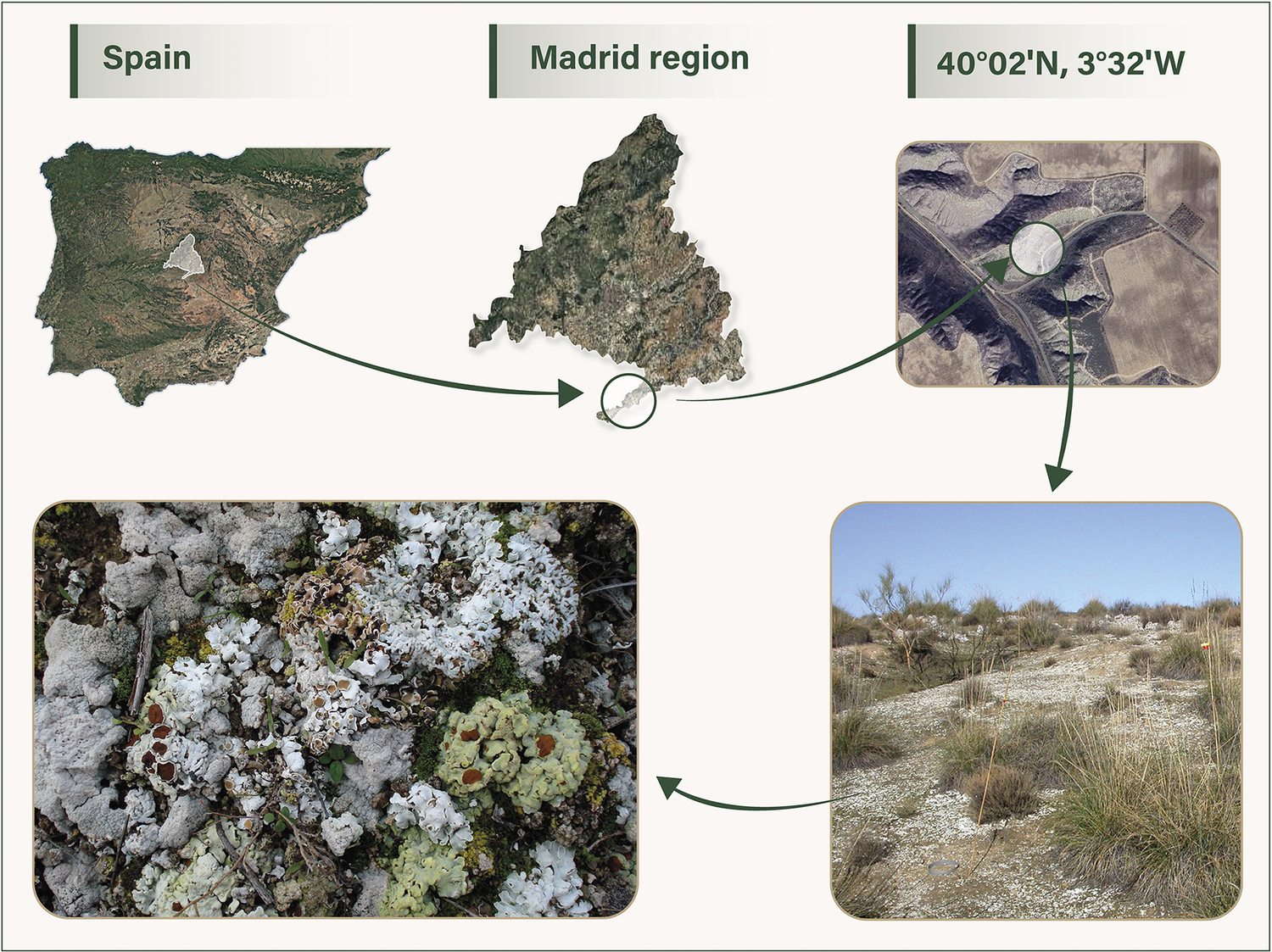
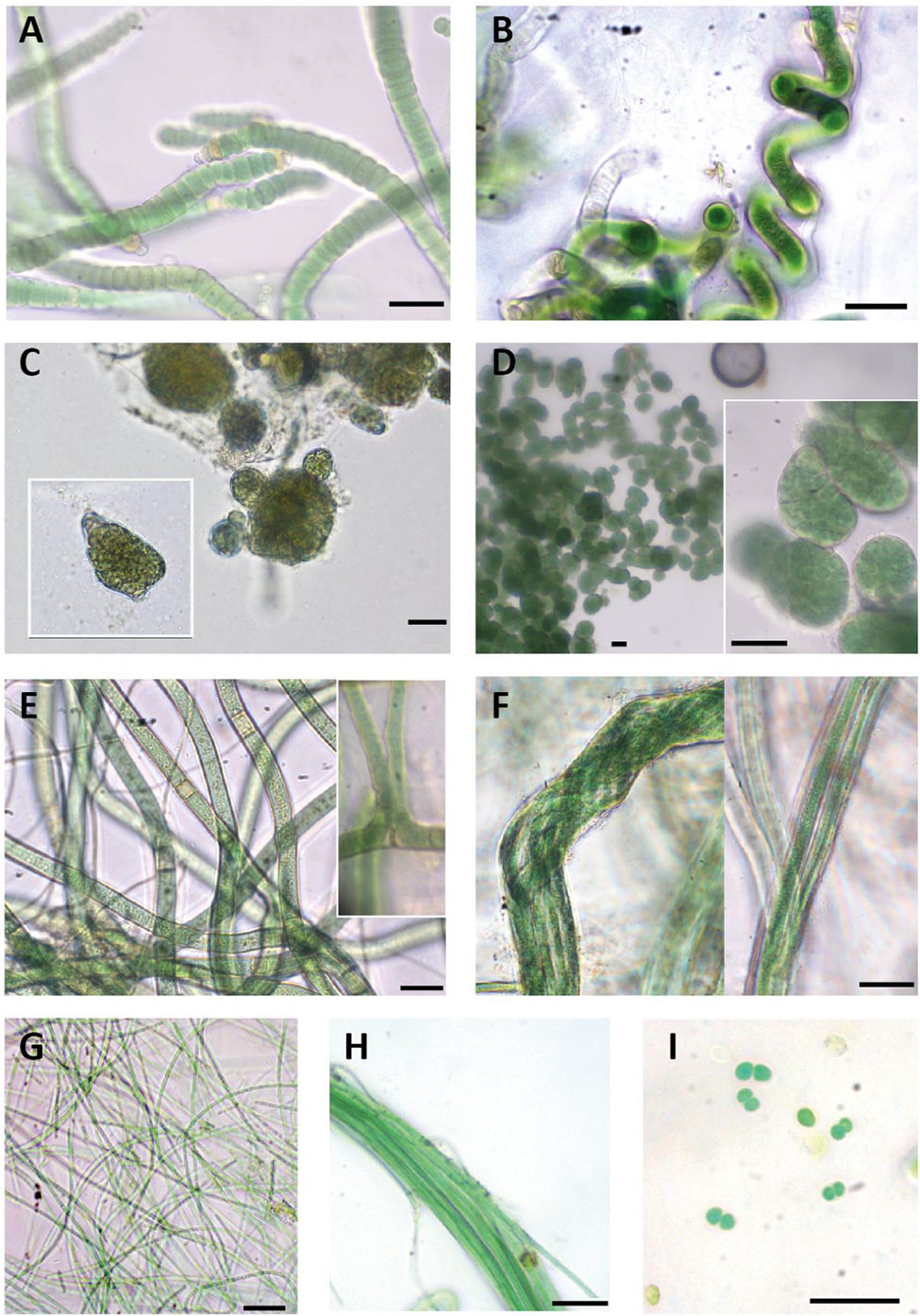
The Aranjuez Experimental Station (AES), located in central Spain (40°02′N, 3°32′W; 590 m a.s.l., Figure 1), represents one of the most comprehensive and long-running field laboratories for the study of dryland and biocrust ecology in Europe. The station lies on gypsum-derived soils (Gypsiric Leptosol, IUSS Working Group WRB, 2022). The climate is Mediterranean semiarid, with a mean annual temperature of 14.6 °C and mean annual precipitation of ~367 mm for the 1991–2020 reference period (data for the city of Aranjuez, NASA POWER Project, 2026). Vegetation is sparse and discontinuous, dominated by the tussock grass Stipa tenacissima and the nitrogen (N)-fixing shrub Retama sphaerocarpa, together with the subshrubs Helianthemum squamatum and Lepidium subulatum, with perennial cover below 40% (Castillo-Monroy et al., Reference Castillo-Monroy, Maestre, Delgado-Baquerizo and Gallardo2010). Between plant patches, open soil interspaces are extensively colonized by biocrusts with visible photoautotrophic components dominated by lichens (e.g., Diploschistes diacapsis, Squamarina lentigera and Fulgensia subbracteata, Figure 1), mosses (Pleurochaete squarrosa and Didymodon spp.) and cyanobacteria (including Roholtiella edaphica, Spirirestris sp., Nostoc sp., Mojavia sp., Scytonema sp., Microcoleus sp., Leptolyngbya sp., Trichocoleus sp. and Chroococcus sp.; Figure 2) (Castillo-Monroy et al., Reference Castillo-Monroy, Maestre, Delgado-Baquerizo and Gallardo2010; Cano-Díaz et al., Reference Cano-Díaz, Mateo, Muñoz-Martín and Maestre2018).
Location and general view of the Aranjuez Experimental Station. The upper panels show the location of the study site. The lower right panel shows a representative landscape view, and the lower left panel shows a close-up of the lichen-dominated biocrust. The vegetation is dominated by isolated patches of Stipa tenacissima, Lepidium subulatum, Helianthemum squamatum and Retama sphaerocarpa, embedded within a well-developed biocrust matrix. This biocrust, visible as whitish patches in the interspaces between vascular plants, is mainly composed of lichens such as Diploschistes diacapsis, Fulgensia subbracteata, Squamarina lentigera and Psora decipiens. Photographs: Andrea del Pilar Castillo-Monroy (left) and Fernando T. Maestre (right).

Figure 1. Long description
The display consists of five panels connected by arrows to show increasing levels of detail.
Top-left: A satellite map of Spain with the Madrid region highlighted in white. An arrow points from this highlight to the next panel.
Top-center: A detailed satellite map of the Madrid region. A circle at the southern tip of the region marks the study site, with an arrow pointing to the next panel.
Top-right: A high-resolution aerial photo of the specific study site at 40 degrees 02 minutes North, 3 degrees 32 minutes West. A circular highlight shows a light-colored patch of land, with an arrow pointing down to the landscape view.
Bottom-right: A photo by Fernando T. Maestre showing a representative landscape. The terrain is arid with sparse, isolated green shrubs and grasses. The ground between plants is covered in a dense, whitish crust. An arrow points left to the final panel.
Bottom-left: A close-up photo by Andrea del Pilar Castillo-Monroy showing the biocrust matrix. The surface is a complex texture of lichens in shades of white, light green, and grey, with small brown circular structures scattered throughout.
Representative cyanobacterial morphotypes found in the Aranjuez Experimental Station. (A) Roholtiella edaphica AR2; (B) Spirirestris sp.; (C) Nostoc sp. AR12; (D) Mojavia sp. AR1; (E) Scytonema sp.; (F) Microcoleus sp. AR10; (G) Leptolyngbya sp. AR11; (H) Trichocoleus sp.; (I) Chroococcus sp. Scale bars equal 20 μm. Figure from Cano-Díaz et al. (Reference Cano-Díaz, Mateo, Muñoz-Martín and Maestre2018).

Figure 2. Long description
A collection of nine micrographs labeled A through I, each with a black scale bar representing 20 micrometers.
Panel A shows Roholtiella edaphica A R 2 as long, green, unbranched filaments composed of disc-shaped cells.
Panel B shows Spirirestris species featuring a prominent, tightly coiled spiral filament alongside thinner, straight filaments.
Panel C shows Nostoc species A R 12 as dark green, dense spherical colonies of varying sizes, with an inset showing a single pear-shaped colony.
Panel D shows Mojavia species A R 1 as a cluster of small, oval green cells, with a magnified inset showing the individual cell structure.
Panel E shows Scytonema species as a dense network of thick green filaments, with an inset highlighting a false branching point.
Panel F shows Microcoleus species A R 10 featuring multiple trichomes bundled together within a common sheath, appearing as thick, wavy green cords.
Panel G shows Leptolyngbya species A R 11 as a chaotic mass of very thin, long, overlapping green filaments.
Panel H shows Trichocoleus species as a bundle of parallel, fine green filaments enclosed in a transparent sheath.
Panel I shows Chroococcus species as small, bright green spherical cells appearing individually or in pairs.
Established in 2006, the AES has been instrumental in advancing our understanding of how plants, soils and biocrusts interact to sustain ecosystem functioning in gypsum and Mediterranean dryland environments and how biocrusts, their associated organisms and the ecosystem functions they support are responding to ongoing climate change. The AES was designed to study these interactions under both natural and experimentally manipulated conditions. Over the past two decades, research carried out at the AES has resulted in 40 peer-reviewed studies covering three interrelated research themes (Supplementary Table S1): i) plant ecology and litter decomposition; ii) biocrust ecology and the biotic regulation of soil processes; and iii) climate change impacts on biocrusts, plants and ecosystem functioning. In addition, the AES has supported the training of nine PhD students, multiple BSc/MSc students, technicians and postdoctoral researchers, and it has served as a platform for science communication on the impacts of climate change (e.g., see https://www.rtve.es/play/videos/informe-semanal/informe-semanal-acciones-contra-cambio-climatico/5168500/). By providing a long-term experimental platform devoted to understanding how plants, soils and biocrusts interact to regulate Mediterranean gypsum drylands, the AES fills an important gap among existing LTER stations, particularly in Europe.
Here, I synthesize the main contributions of research conducted at the AES within the same three research themes mentioned above (plant ecology and litter decomposition, biocrust ecology and biotic regulation of soil processes and climate change impacts on biocrusts, plants and ecosystem functioning). I conclude by identifying some lessons learned and future research needs that could further expand the research legacy of this LTER site and enhance its value for informing the conservation and management of Mediterranean drylands under global change.
Plant ecology and litter decomposition
Plant communities in drylands are structured by strong environmental stress gradients, which largely drive the complex balance between facilitative and competitive plant–plant interactions (Berdugo et al., Reference Berdugo, Maestre, Kéfi, Gross, Le Bagousse-Pinguet and Soliveres2019). Research at the AES has provided multiple tests of how these interactions vary through space, time and ontogeny.
Observations and experiments involving the dominant nurse grass S. tenacissima showed that its interaction with L. subulatum shifted between facilitation and competition depending on environmental context (Soliveres et al., Reference Soliveres, DeSoto, Maestre and Olano2010). Spatiotemporal and ontogenetic analyses suggested an overall facilitative association, particularly during germination. However, this positive interaction shifted toward competition shortly after establishment, resulting in reduced growth of L. subulatum. Competitive effects gradually weakened with shrub age, suggesting increasing niche differentiation over time, and were also reduced under low rainfall conditions on south-facing slopes. Similar temporal shifts have been documented in other global drylands (e.g., Miriti, Reference Miriti2006), confirming that ontogenetic changes in plant interactions are central to community assembly in stressful ecosystems.
Complementary manipulative experiments carried out at the AES examined how the interaction between S. tenacissima and R. sphaerocarpa is modulated by water variability and rabbit (Oryctolagus cuniculus) herbivory (Soliveres et al., Reference Soliveres, García-Palacios, Castillo-Monroy, Maestre, Escudero and Valladares2011, Reference Soliveres, García-Palacios, Maestre, Escudero and Valladares2013). In a field experiment manipulating herbivory, S. tenacissima partially protected R. sphaerocarpa seedlings from rabbit browsing during wetter periods, but this associational resistance disappeared during summer drought, when rabbit pressure increased as alternative food resources became scarce. A subsequent rainfall- and grazing-manipulation experiment showed that S. tenacissima reduced R. sphaerocarpa seedling survival across 3 years, mainly through shading and competition for light rather than for water. However, shade by S. tenacissima helped improve the recovery of seedlings after browsing, partly offsetting its negative effects. Changes in the amount or frequency of watering did not reverse these competitive effects, although larger or more frequent water pulses sometimes reduced the negative effects of neighbors on photochemical efficiency. Together, these studies show that grass–shrub interactions at the AES are dominated by competition during early R. sphaerocarpa establishment, especially because this shrub is shade intolerant, and that facilitative effects are conditional, transient and strongly dependent on the temporal dynamics of water availability and herbivore pressure.
Studies conducted at the AES have also contributed to understanding annual plant community assembly in semiarid ecosystems. Luzuriaga et al. (Reference Luzuriaga, Sánchez, Maestre and Escudero2012) monitored annual plant richness and cover over three climatically contrasting years in equal-sized plots located beneath mature S. tenacissima tussocks and in open areas at least 1 m from the nearest tussock, thereby evaluating how the tussock microenvironment influenced the assembly of annual plant communities. They found that rainfall operates as the dominant abiotic filter, determining the pool of species able to establish. Perennial vegetation and biocrusts then act as secondary, microsite-scale filters that further shape community structure. In wetter years, S. tenacissima tussocks increased annual plant richness in the vicinity of its canopy by providing favorable establishment microsites, whereas in dry years, this effect became negative likely because of intensified competition for scarce water. Biocrusts also had context-dependent effects: they facilitated annual establishment under drought, probably by enhancing surface moisture retention, but reduced annual cover under wetter conditions, possibly through physical or chemical inhibition. More recently, Ortiz et al. (Reference Ortiz, Luzuriaga, Götzenberger and Ferrandis2026) manipulated seed availability in open areas, biocrusts and S. tenacissima tussocks and quantified realized species richness, abundance and functional trait structure. Across four unusually wet spring assembly events, seed and microsite treatments produced weak and inconsistent trait filtering, with little evidence of persistent compositional selection. These results suggest that stochastic processes can become especially important when strong water limitation is relaxed. They also illustrate how abiotic and biotic filters interact across temporal scales to regulate annual plant diversity, complementing broader evidence for multiscale environmental filtering in drylands (Gross et al., Reference Gross, Börger, Soriano-Morales, Le Bagousse-Pinguet, Quero, García-Gómez, Valencia-Gómez and Maestre2013; Berdugo et al., Reference Berdugo, Maestre, Kéfi, Gross, Le Bagousse-Pinguet and Soliveres2019).
Research at the AES has also examined how plant traits and environmental conditions interact to regulate litter decomposition. In a manipulative field experiment, Almagro et al. (Reference Almagro, Martínez-López, Maestre and Rey2017) evaluated the effects of ultraviolet (UV) radiation, litter quality, litter position and microclimate on litter decomposition. UV exposure was manipulated with UV-transmitting and UV-blocking materials, litter was placed either standing or on the soil surface and litter quality was represented by a contrast between N-rich, relatively labile R. sphaerocarpa litter and more recalcitrant S. tenacissima litter; it was not a within-species litter-quality gradient. Photodegradation contributed substantially to mass loss, but its magnitude and even direction depended on site humidity, litter identity and position. These results show that solar radiation cannot be considered independently from moisture and substrate quality when representing decomposition and carbon turnover in Mediterranean drylands, emphasizing the need to integrate these interactions into decomposition and carbon balance models. Other plant–soil feedbacks investigated at the AES, particularly the effects of vascular plants and biocrusts on soil water and nutrient dynamics, are synthesized in the following section.
Biocrust ecology and biotic regulation of soil processes
Biocrusts at the AES are described according to their dominant visible photoautotrophic component (lichens, mosses or cyanobacteria) while also harboring diverse heterotrophic bacteria, archaea, fungi and microfauna. The open interspaces contain a particularly well-developed lichen community together with mosses (see Maestre et al., Reference Maestre, Escolar, de Guevara, Quero, Lázaro, Delgado-Baquerizo, Ochoa, Berdugo, Gozalo and Gallardo2013 for a species checklist) and at least nine cyanobacterial morphotypes, including filamentous pioneer taxa and N-fixing genera (Cano-Díaz et al., Reference Cano-Díaz, Mateo, Muñoz-Martín and Maestre2018). Biocrust cover varies substantially among microsites, from incipient communities to nearly continuous late-successional crusts (Castillo-Monroy et al., Reference Castillo-Monroy, Maestre, Delgado-Baquerizo and Gallardo2010, Reference Castillo-Monroy, Maestre, Rey, Soliveres and García-Palacios2011). This variation in biocrust composition and diversity makes the AES a valuable setting for developing approaches using advanced remote sensing technologies to characterize and monitor biocrusts across spatial scales.
Using hyperspectral imagery collected from AES samples under laboratory conditions, Blanco-Sacristán et al. (Reference Blanco-Sacristán, Panigada, Tagliabue, Gentili, Colombo, Ladrón de Guevara, Maestre and Rossini2019) found that variation in the chlorophyll-related absorption feature centered at 680 nm, quantified as the standard deviation of continuum-removed reflectance, was most strongly related to the diversity and evenness of biocrust-forming lichens. A follow-up study used Unmanned Aerial Vehicle (UAV)-borne RGB, multispectral and thermal infrared imagery to map biocrust distribution in the field and to identify the terrain and microclimatic factors controlling their spatial patterns (Blanco-Sacristán et al., Reference Blanco-Sacristán, Panigada, Gentili, Tagliabue, Garzonio, Martín, de Guevara, Colombo, Dowling and Rossini2021). Lichen-dominated biocrusts were generally associated with higher, steeper and more irradiated terrain, lower apparent thermal inertia (indicating drier soils), less vascular plant cover, higher concentrations of soluble salts and lower nutrient contents. By contrast, moss-dominated biocrusts occurred mainly in lower, gentler and more shaded areas with greater soil moisture and vegetation cover and more nutrient-rich soils. These associations indicate that the topographic redistribution of water and nutrients helps organize biocrust composition at fine spatial scales. Because lichen- and moss-dominated biocrusts differ in their effects on carbon fixation, nutrient cycling, soil stability and hydrological processes, this compositional mosaic may generate corresponding spatial heterogeneity in ecosystem functioning; mapping it may therefore improve the spatially explicit modeling of infiltration and erosion. Together, these studies illustrate the potential of integrating laboratory spectroscopy and UAV observations to provide rapid, repeatable and spatially explicit assessments of biocrust composition and its environmental controls, supporting earlier detection of ecological change and better-informed dryland management.
The spatial heterogeneity in the distribution and composition of plant and biocrust communities at the AES provides a natural framework for evaluating how these organisms regulate nutrient cycling, carbon exchange and hydrological processes. This heterogeneity is particularly apparent in the spatial and temporal distribution of soil N forms and availability. Seasonal measurements showed that nitrate availability was highest beneath R. sphaerocarpa canopies (Castillo-Monroy et al., Reference Castillo-Monroy, Maestre, Delgado-Baquerizo and Gallardo2010). Within open areas, nitrate availability was lower in microsites with low, medium or high biocrust cover than in bare soil, whereas ammonium availability did not differ significantly among microsites. However, potential nitrification rates measured in laboratory incubations did not differ significantly between bare soil and biocrust microsites. A companion analysis showed that increasing biocrust cover altered the relative dominance of soil N forms, shifting from nitrate dominance in bare soil and low cover biocrust microsites to dissolved organic N dominance under high biocrust cover (Delgado-Baquerizo et al., Reference Delgado-Baquerizo, Castillo-Monroy, Maestre and Gallardo2010). Although this pattern was interpreted as possible evidence that biocrusts inhibit nitrification, nitrification rates were not measured directly in that study. Taken together, the available evidence indicates that biocrust-dominated soils at the AES have lower nitrate availability and greater dissolved organic N dominance than bare soils but does not demonstrate a significant effect of biocrust cover on potential nitrification rates.
Geostatistical analyses confirmed that biocrusts decrease cm-scale heterogeneity of nitrate and ammonium, generating a more homogeneous nutrient distribution compared with vegetation patches (Delgado-Baquerizo et al., Reference Delgado-Baquerizo, Covelo, Maestre and Gallardo2013a). Experimental incubations by Delgado-Baquerizo et al. (Reference Delgado-Baquerizo, Maestre and Gallardo2013b) assessed the resistance of microbial biomass N, DON, amino acids, ammonium, nitrate, total inorganic N and N transformation rates to changes in temperature or soil water content, with resistance defined as the extent to which these variables remained close to control values (Orwin and Wardle, Reference Orwin and Wardle2004). These analyses showed that temperature had stronger effects than soil moisture on the N pools evaluated and that biocrust soils were generally more resistant to temperature changes than bare soils. Under high soil moisture, the dominant N-transformation pathway in biocrust soils shifted from net nitrification to net ammonification, irrespective of temperature, further highlighting the context-dependent effects of biocrusts on soil N cycling. A complementary incubation study with carbon, N and phosphorus (P) additions (Delgado-Baquerizo et al., Reference Delgado-Baquerizo, Morillas, Maestre and Gallardo2013d) showed that biocrusts buffered the effects of nutrient imbalances on N cycling and microbial functional diversity, particularly by promoting greater dissolved organic N dominance and microbial functional diversity when carbon or P was added and by generally increasing the resilience of N cycling to nutrient additions. Comparable effects of biocrusts on the spatial organization and redistribution of nitrogen cycling have been reported in other drylands, including the Kalahari and North American deserts (Dougill and Thomas, Reference Dougill and Thomas2004; Strauss et al., Reference Strauss, Day and Garcia-Pichel2012). Together, research conducted at the AES shows that biocrusts not only redistribute and transform N at fine spatial scales but also enhance the resistance and resilience of soil N cycling to climatic variability and anthropogenic nutrient inputs. These findings reinforce the role of biocrusts as key regulators of nutrient dynamics and as hotspots of N transformation in drylands.
Soil respiration has been monitored over multiple years at the AES. Using 3.5 years of measurements collected during 2006–2010, Castillo-Monroy et al. (Reference Castillo-Monroy, Maestre, Rey, Soliveres and García-Palacios2011) estimated annual ecosystem-level soil CO2 effluxes of 240–323 g C m−2 yr−1. These estimates were obtained by weighting measurements from the dominant microsites according to their proportional surface cover, including soil beneath S. tenacissima and R. sphaerocarpa canopies, bare soil and biocrust-dominated interspaces. These interspaces accounted for approximately 43% of the estimated soil CO2 efflux while occupying 32% of the surface. Soil respiration was primarily related to temperature when the soil was sufficiently moist and to soil moisture during drier periods. Because these estimates included autotrophic and heterotrophic soil respiration but excluded aboveground plant gas exchange, they should not be interpreted as net ecosystem carbon exchange. Measurements of net CO2 exchange from biocrust-dominated microsites provided further insight into their photosynthetic activity (Ladrón de Guevara et al., Reference de Guevara, Lázaro, Quero, Ochoa, Gozalo, Berdugo, Uclés, Escolar and Maestre2014). Positive net photosynthesis occurred mainly during late autumn and winter. At the AES, limited antecedent rainfall restricted net uptake to brief periods around dawn and dusk, whereas spring measurements indicated net CO2 release. Small dew or fog inputs could therefore support short windows of net uptake, but respiration prevailed when hydration was insufficient. Well-developed, lichen-dominated biocrusts generally showed greater carbon fixation than poorly developed, early-successional biocrusts under favorable conditions. Thus, the short-term net CO2 balance of biocrust-dominated soils depends on the timing and magnitude of water inputs, season, temperature and stage of biocrust development.
In drylands, non-rainfall water inputs (NRWI) such as dew, fog and water vapor adsorption can significantly influence microbial activity and carbon cycling (McHugh et al., Reference McHugh, Morrissey, Reed, Hungate and Schwartz2015). Laboratory simulations using AES soils revealed that dew pulses increased microbial respiration, dissolved organic carbon and available N in biocrust-dominated soils but had little effect on bare soils (Delgado-Baquerizo et al., Reference Delgado-Baquerizo, Maestre, Rodríguez and Gallardo2013c). Such responses demonstrate that biocrusts capitalize on NRWI events, allowing pulses of microbial activity and carbon exchange during dry spells, a mechanism increasingly recognized in arid regions worldwide (Ouyang and Hu, Reference Ouyang and Hu2017).
Disk permeameter measurements at the AES revealed that infiltration is jointly regulated by S. tenacissima tussocks, biocrusts and rabbit disturbance through their effects on surface structure and soil macroporosity (Eldridge et al., Reference Eldridge, Bowker, Maestre, Alonso, Mau, Papadopoulos and Escudero2010). Under ponded conditions (i.e., when both matrix pores and macropores conduct water), sorptivity and steady-state infiltration adjacent to S. tenacissima tussocks were two to threefold higher than in intact or rabbit-disturbed biocrust microsites. Structural equation models indicated positive effects of both S. tenacissima and biocrust cover on ponded infiltration, whereas rabbit disturbance acted indirectly by reducing biocrust cover and potentially disrupting macropore connectivity. Under tension (i.e., when flow is restricted mainly to matrix pores), S. tenacissima had a negative effect on infiltration, whereas biocrust cover was relatively unimportant. Biocrust composition also mattered, with lichens generally showing negative and mosses positive associations with ponded infiltration. These findings illustrate how interactions among biocrusts, vegetation, animals and soil structure regulate water flow at the AES and are consistent with global evidence that the hydrological effects of biocrusts vary with crust type, soil texture, climate and spatial scale (Eldridge et al., Reference Eldridge, Reed, Travers, Bowker, Maestre, Ding, Havrilla, Rodriguez-Caballero, Barger, Weber, Antoninka, Belnap, Chaudhary, Faist, Ferrenberg, Huber-Sannwald, Malam Issa and Zhao2020).
Fourteen years (2006–2020) of soil moisture monitoring at the AES revealed clear microsite-specific patterns: biocrust-covered areas retained moisture near the soil surface longer after rainfall, whereas soils beneath vascular plants showed deeper infiltration and slower drying (Moreno et al., Reference Moreno, Asensio, Berdugo, Gozalo, Ochoa, Pescador, Benito and Maestre2022). Complementing these observations, an analysis of 8 years of continuous soil moisture and rainfall records from the AES climate change experiment, described in the next section, showed that greater biocrust cover enhanced rainfall-induced gains in soil moisture but accelerated subsequent drying (Lafuente et al., Reference Lafuente, Berdugo, de Guevara, Gozalo and Maestre2018). Together, these results emphasize that biocrust effects depend on the phase of the wetting–drying cycle, soil depth and microsite considered: biocrusts strongly influence near-surface storage and event-scale drying, whereas vascular plants promote water transfer to deeper soil layers, where it persists longer. These patterns may reflect the combined influence of surface roughness and temporary water storage, runoff redistribution, albedo and evaporation. Warming and rainfall exclusion reduced rainfall-induced gains in soil moisture and altered drying dynamics, but their effects changed over time, partly because warming progressively reduced biocrust cover and diversity. Because many studies of biocrust hydrology are short term (Eldridge et al., Reference Eldridge, Reed, Travers, Bowker, Maestre, Ding, Havrilla, Rodriguez-Caballero, Barger, Weber, Antoninka, Belnap, Chaudhary, Faist, Ferrenberg, Huber-Sannwald, Malam Issa and Zhao2020), the AES findings are particularly valuable in showing that some climate change effects on soil moisture dynamics become evident only after several years of manipulation. They are also consistent with spatially explicit ecohydrological models showing that heterogeneity in biocrust and vegetation cover regulates soil water redistribution and plant available water (Baldauf et al., Reference Baldauf, Cantón and Tietjen2023). Collectively, these studies demonstrate that climate change can alter dryland hydrology both directly, by modifying rainfall inputs and evaporation, and indirectly, through changes in biocrust communities that regulate soil water redistribution.
Climate change impacts on biocrusts, plants and ecosystem functioning
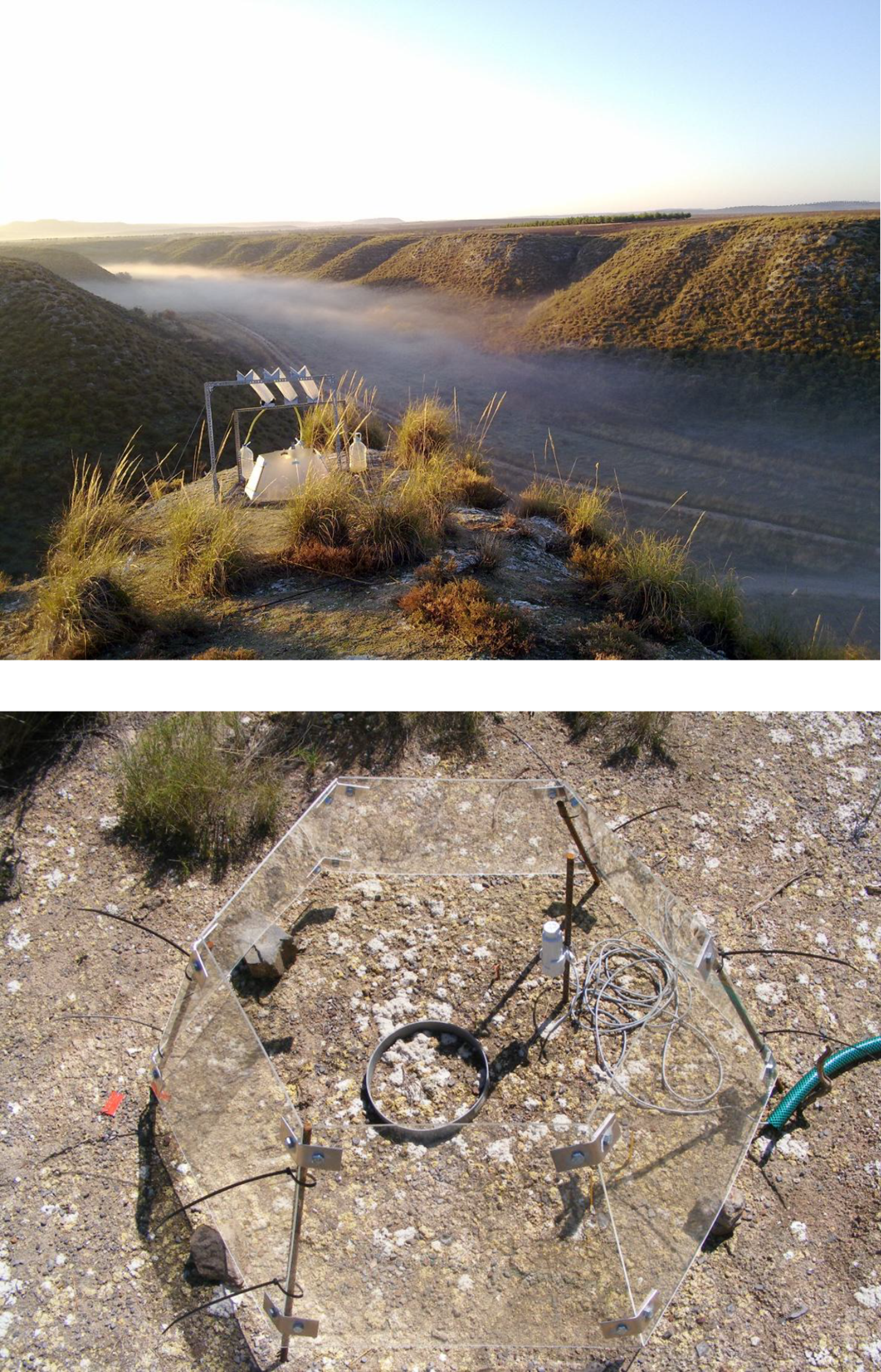
Understanding how biocrusts respond to warming and altered rainfall is essential for predicting the future functioning of drylands under climate change; yet, long-term manipulative experiments addressing biocrust responses remain rare in the literature. The AES has provided one of the few long-term field experiments designed to assess the effects of climate change on lichen-dominated biocrusts and the soil processes they regulate (Figure 3). Established in 2008, the AES climate change experiment was the first experiment of its kind in Europe and, together with comparable long-term experiments in the United States (Ferrenberg et al., Reference Ferrenberg, Reed and Belnap2015; Phillips et al., Reference Phillips, McNellis, Howell, Lauria, Belnap and Reed2022) and China (Li et al., Reference Li, Hui, Zhang and Song2021b), represents one of the longest-running manipulative climate change experiments focused on biocrusts to date. This experiment used a factorial combination of warming (~2.5°C via open-top chambers) and rainfall reduction (~30%), applied to plots with initially high (>50%) or low (<20%) biocrust cover (see Escolar et al., Reference Escolar, Martínez, Bowker and Maestre2012; Maestre et al., Reference Maestre, Escolar, de Guevara, Quero, Lázaro, Delgado-Baquerizo, Ochoa, Berdugo, Gozalo and Gallardo2013 for details and treatment rationale; Figure 3). With 10 replicates per combination of treatments (80 plots in total), this setup enabled disentangling the effects of temperature, water and initial community state on biocrust and soil functioning. Unfortunately, the experiment was strongly disrupted in August 2025 by a wildfire that affected most of the AES (https://youtu.be/xzzNfOYEun8?si=42xdbejq1m0-D97j) and was therefore discontinued.
Experimental infrastructure used in the climate change experiment at the Aranjuez Experimental Station. The upper photograph shows a rainfall exclusion shelter, which intercepted approximately 30% of incoming rainfall, and a hexagonal open-top chamber used for passive warming; fog is visible in the background. The lower photograph shows an open-top chamber and the permanent circular ring used for repeated measurements of biocrusts and greenhouse gas fluxes. The shelters were not specifically designed to exclude fog, and no subsurface barriers were installed; lateral and subsurface water flow was therefore not experimentally manipulated. See Escolar et al. (Reference Escolar, Martínez, Bowker and Maestre2012) and Maestre et al. (Reference Maestre, Escolar, de Guevara, Quero, Lázaro, Delgado-Baquerizo, Ochoa, Berdugo, Gozalo and Gallardo2013) for further details of the experimental design and treatment effects on environmental variables. Photographs: Beatriz Gozalo (top) and Fernando T. Maestre (bottom).

Figure 3. Long description
The two-panel photo displays field equipment in a semi-arid landscape.
Top panel by Beatriz Gozalo. A wide-angle view from a ridge overlooking a valley filled with low-lying fog. In the foreground, a rainfall exclusion shelter consists of a metal frame supporting three angled, V-shaped troughs designed to intercept precipitation. Below the troughs sits a small, white hexagonal open-top chamber nestled among dry grasses and shrubs.
Bottom panel by Fernando T. Maestre. A high-angle close-up of a hexagonal open-top chamber made of clear acrylic panels. The chamber is anchored to the rocky, biocrust-covered ground with metal stakes. Inside the chamber’s perimeter, a permanent black circular ring is embedded in the soil for measuring greenhouse gas fluxes. Various sensors, coiled grey cables, and a green hose are visible near the equipment, connected to the monitoring system.
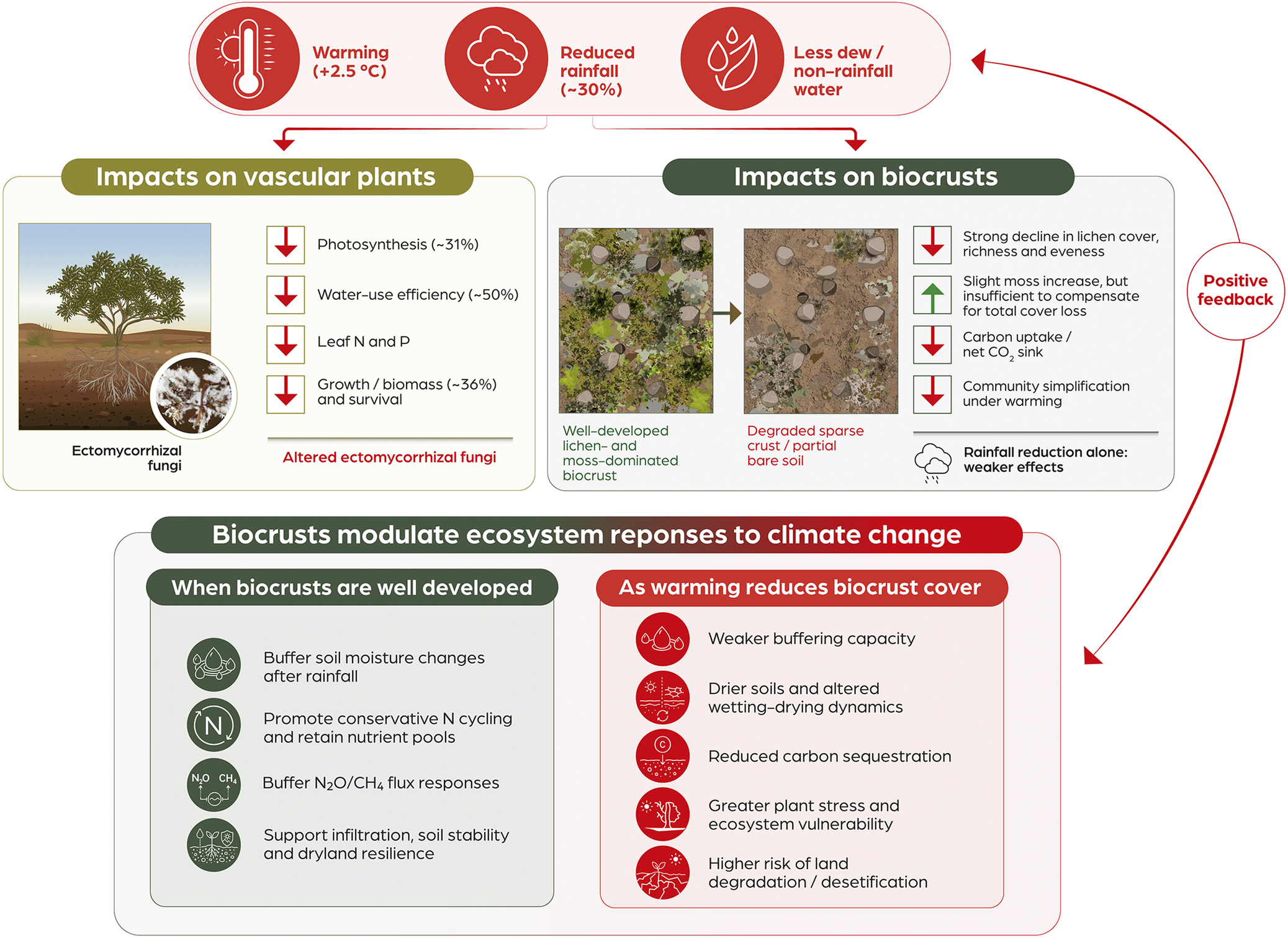
Conceptual synthesis of major climate change impacts on vascular plants, biocrusts and ecosystem functioning observed at the Aranjuez Experimental Station. Figure drawn by Isabel Sáez Moreno based on a concept developed by Fernando T. Maestre.

Figure 4. Long description
At the top, three red circular icons represent climate drivers: Warming (+2.5 degrees Celsius), Reduced rainfall (~30%), and Less dew / non-rainfall water.
Below this, the middle section is split into two panels:
* The left panel, titled Impacts on vascular plants, shows a tree with an inset of Ectomycorrhizal fungi. Red downward arrows indicate declines in Photosynthesis (~31%), Water-use efficiency (~50%), Leaf N and P, and Growth / biomass (~36%) and survival. A caption notes Altered ectomycorrhizal fungi.
* The right panel, titled Impacts on biocrusts, shows a transition from a well-developed lichen- and moss-dominated biocrust to a degraded sparse crust / partial bare soil. Red downward arrows indicate a strong decline in lichen cover, richness and evenness; carbon uptake / net C O sub 2 sink; and community simplification. A green upward arrow indicates a slight moss increase, though insufficient to compensate for total cover loss. A cloud icon notes that rainfall reduction alone has weaker effects.
The bottom section, titled Biocrusts modulate ecosystem responses to climate change, compares two states:
* When biocrusts are well developed: Icons indicate they buffer soil moisture changes, promote conservative N cycling, buffer N sub 2 O / C H sub 4 flux responses, and support infiltration and soil stability.
* As warming reduces biocrust cover: Red icons indicate weaker buffering capacity, drier soils, reduced carbon sequestration, greater plant stress, and higher risk of land degradation / desertification.
A red arrow on the far right labeled Positive feedback connects the bottom section back to the top climate drivers.
The AES climate change experiment has provided some of the clearest experimental evidence that Mediterranean lichen-dominated biocrusts are highly vulnerable to climate warming. In the first 3 years of the experiment, warming of c. 2.4°C reduced the cover (~40%), richness and diversity of well-developed biocrust communities, mainly through declines in lichen cover, whereas rainfall exclusion alone had comparatively weak effects (Escolar et al., Reference Escolar, Martínez, Bowker and Maestre2012). These changes were accompanied by a modest increase in moss cover, suggesting an incipient shift in community composition rather than a simple loss of all biocrust components. Extending the monitoring to 8 years confirmed and strengthened this pattern: warming reduced biocrust cover by 82 ± 5%, richness by 35 ± 6% and diversity by 25 ± 8% in plots initially dominated by well-developed biocrusts (Ladrón de Guevara et al., Reference de Guevara, Gozalo, Raggio, Lafuente, Prieto and Maestre2018). Mosses increased in presence and abundance under warming, but their growth was far too slow to compensate for lichen mortality, resulting in a major net loss of biocrust cover. Warming also strongly constrained the colonization of initially low cover plots by lichens, indicating that it can impair both the persistence and recovery of late-successional biocrust communities. These results mirror those from a long-term experiment in the United States, showing how altered rainfall regimes and warming can rapidly simplify well-developed biocrust communities (Ferrenberg et al., Reference Ferrenberg, Reed and Belnap2015). Overall, the AES climate change experiment provided early and sustained evidence that moderate warming can trigger rapid compositional shifts and long-lasting losses of lichen-dominated biocrusts, with likely consequences for the ecosystem functions biocrusts support.
Non-rainfall water inputs help explain why warming had stronger effects than rainfall reduction. Dew and fog, which are often neglected in global change experiments (Feng et al., Reference Feng, Zhang, Chen, Ma, Wang, Shangguan, Wang and He2021), hydrate lichens during the night and early morning, creating short windows of photosynthetic activity after sunrise. Open-top chambers reduced relative humidity, intercepted some fog and accelerated thallus desiccation at the AES, thereby shortening hydration periods even when rainfall was unchanged (Ladrón de Guevara et al., Reference de Guevara, Lázaro, Quero, Ochoa, Gozalo, Berdugo, Uclés, Escolar and Maestre2014). As a result, warming reduced the capacity of biocrust-dominated microsites to fix atmospheric carbon, particularly when hydration depended on small non-rainfall water inputs rather than substantial rainfall events. This helps explain why rainfall exclusion alone often produced weaker effects than warming: rainout shelters reduced rainfall but did not directly suppress dew and fog, which can be critical for early-morning carbon gain. Comparable responses have been reported in other drylands. Experimental warming in the South African Succulent Karoo reduced fog and dew inputs and decreased lichen photosynthetic efficiency (Maphangwa et al., Reference Maphangwa, Musil, Raitt and Zedda2012), while studies from the Namib and Negev deserts showed that nocturnal hydration initially activates respiration and can subsequently support a brief period of positive net photosynthesis after sunrise (Lange et al., Reference Lange, Kidron, Büdel, Meyer, Kilian and Abeliovich1992, Reference Lange, Allan Green, Melzer, Meyer and Zellner2006; Wilske et al., Reference Wilske, Burgheimer, Karnieli, Zaady, Andreae, Yakir and Kesselmeier2008). Thus, physiological activation by NRWI does not necessarily result in net carbon gain: small or short-lived events may stimulate respiratory losses without sustaining photosynthesis long enough to offset them, whereas longer hydration periods, particularly when accompanied by moist soil, can support positive net assimilation. Although de Guevara et al. (Reference de Guevara, Lázaro, Quero, Ochoa, Gozalo, Berdugo, Uclés, Escolar and Maestre2014) measured net CO2 exchange and dark respiration of the soil–biocrust system, measurements were not continuous across complete hydration events and therefore cannot provide event-scale or annual estimates of biocrust carbon balance.
Further support for the role of relative humidity and NRWI comes from the process-based modeling of D. diacapsis, which showed that reductions in relative humidity and associated NRWI, rather than higher temperature per se or lower rainfall alone, were the main drivers of reduced lichen activity and cover under climate change (Baldauf et al., Reference Baldauf, Porada, Raggio, Maestre and Tietjen2021). The model reproduced the field pattern observed at the AES: rainfall reduction alone had little effect on lichen performance, whereas warming reduced cover through its indirect effects on relative humidity and hydration time. This modeling study is also notable because mechanistic, process-based models have only rarely been applied to biocrusts and other non-vascular vegetation (e.g., Porada et al., Reference Porada, Weber, Elbert, Pöschl and Kleidon2013; Baldauf et al., Reference Baldauf, Cantón and Tietjen2023), and applications at the level of individual biocrust-forming species remain especially scarce. Together, these studies identify NRWI as a key, often overlooked control of biocrust carbon balance and provide a mechanistic explanation for lichen decline at the AES despite the weak effects of rainfall reduction. However, because net ecosystem CO2 exchange has not been quantified at the AES, the consequences of lichen decline for ecosystem carbon balance cannot yet be determined. Quantifying these consequences remains an important priority for future research.
The physiological constraints and warming-induced loss of lichen cover described above also altered soil CO2 exchange and soil carbon pools. The first results from the experiment showed that plots with well-developed biocrusts had higher soil CO2 efflux than low biocrust cover plots and, critically, that experimental warming increased efflux only in the former (Maestre et al., Reference Maestre, Bowker, Escolar, Puche, Soliveres, Maltez-Mouro, García-Palacios, Castillo-Monroy, Martínez and Escudero2010). This short-term response was primarily controlled by total biocrust cover rather than by biocrust species richness, evenness or inferred biotic interactions. Although preliminary, these findings provided the first evidence from the AES that the response of soil carbon cycling to warming depends strongly on the amount of biocrust cover present. During the first 4 years of the experiment, warming significantly increased soil CO2 efflux and reduced net soil CO2 uptake in biocrust-dominated microsites (Maestre et al., Reference Maestre, Escolar, de Guevara, Quero, Lázaro, Delgado-Baquerizo, Ochoa, Berdugo, Gozalo and Gallardo2013). After 46 months, warming also increased soil organic carbon, phenols, aromatic compounds and the phenols-to-hexoses ratio in soils that initially supported well-developed biocrusts, indicating a shift toward a more recalcitrant soil carbon pool. These changes were associated with warming-induced declines in biocrust cover and a shift toward greater fungal dominance. The short-term increase in SOC may have partly reflected carbon transferred from recently dead biocrust-forming lichens into the underlying soil. This finite input could temporarily increase SOC and its relatively recalcitrant fractions before being progressively depleted through decomposition. Overall, Maestre et al. (Reference Maestre, Escolar, de Guevara, Quero, Lázaro, Delgado-Baquerizo, Ochoa, Berdugo, Gozalo and Gallardo2013) provided one of the first experimental demonstrations that climate change effects on dryland carbon cycling are mediated by changes in biocrust cover, with potential consequences for the magnitude and persistence of soil carbon storage. Subsequent work showed that these biocrust-mediated carbon cycle responses varied strongly between dry and wet years, with the effects of warming on soil respiration and its temperature sensitivity being most evident in biocrust-dominated microsites during the wet year (Escolar et al., Reference Escolar, Maestre and Rey2015).
A complementary experiment established in 2013 examined the decomposition of experimentally killed thalli from two biocrust-forming lichens, D. diacapsis and Cladonia convoluta, under warming, rainfall exclusion and UV manipulation (Berdugo et al., Reference Berdugo, Mendoza-Aguilar, Rey, Ochoa, Gozalo, García-Huss and Maestre2021). The authors found that lichen litter decomposed at rates comparable to those of local vascular plants (k ≈ 0.3 yr−1) and that warming increased decomposition by about 28%, mainly by enhancing microbial activity and photodegradation. The effects of UV exposure differed between species, accelerating decay in D. diacapsis but slowing it in C. convoluta, likely due to contrasting tissue chemistry. Despite the prevalence and ecological importance of biocrust organisms, their litter decomposition has seldom been studied in drylands. One possible reason is that defining litter is particularly challenging for lichens, as desiccated thalli may remain dormant and resume physiological activity following rewetting (Kranner et al., Reference Kranner, Beckett, Hochman and Nash2008). To obtain standardized, non-viable material, Berdugo et al. (Reference Berdugo, Mendoza-Aguilar, Rey, Ochoa, Gozalo, García-Huss and Maestre2021) used freezing and heating treatments. However, these treatments may not reproduce the range of natural mortality pathways and could potentially alter tissue susceptibility to microbial decomposition or photodegradation. Consequently, the reported rates are best interpreted as the decomposition of experimentally killed thalli, although comparisons among species and experimental treatments remain informative. Nevertheless, this experiment revealed a previously overlooked pathway through which biocrusts contribute to carbon turnover and nutrient cycling. Future studies comparing experimentally killed material with naturally senesced thalli whose loss of viability has been confirmed would help determine how litter preparation influences decomposition estimates.
Longer term observations of the original climate change experiment showed, however, that the initial increase in soil respiration was not sustained. Combining a decade of soil respiration measurements with laboratory incubations, Dacal et al. (Reference Dacal, García-Palacios, Asensio, Cano-Díaz, Gozalo, Ochoa and Maestre2020) attributed the short-term increase in soil respiration primarily to higher soil temperatures, whereas its disappearance after a decade was explained by microbial thermal acclimation and strong reductions in biocrust cover under warming. Díaz-Martínez et al. (Reference Díaz-Martínez, Panettieri, García-Palacios, Moreno, Plaza and Maestre2023) showed that biocrust cover also modulated the responses of soil organic carbon (SOC) pools to 9 years of warming and rainfall exclusion. In plots with low initial biocrust cover, warming and its combination with rainfall exclusion not only increased SOC, particularly particulate organic carbon (POC), but also mineral-associated organic carbon (MAOC), and increased the contribution of carbohydrates relative to aromatic compounds in the particulate fraction, suggesting that this apparent carbon accumulation may be transient. By contrast, climate change treatments did not affect SOC, POC or MAOC in plots with high initial biocrust cover, indicating that well-developed biocrusts buffered climate change effects on soil carbon pools. Together, these findings show that short-term responses may overestimate warming-induced carbon losses from dryland soils if longer term adjustments of biocrusts and microbial communities are not considered. One unresolved component of these longer term dynamics is whether the modest increase in moss cover observed under warming affects the quantity or persistence of SOC; this possibility has not yet been tested at the AES. More broadly, these findings emphasize the need to incorporate biocrust community dynamics and microbial acclimation into models predicting soil carbon–climate feedbacks in drylands.
Climate change effects extended beyond CO2 exchange and SOC to other greenhouse gas fluxes and nutrient pools. Lafuente et al. (Reference Lafuente, Durán, Delgado-Baquerizo, Recio, Gallardo, Singh and Maestre2020) found that soils from areas with well-developed biocrusts had lower N2O emissions, higher CH4 uptake and greater abundance of functional microbial genes involved in gas cycling than those from low biocrust cover plots. Moreover, biocrusts altered how these fluxes responded to warming and drought: rainfall exclusion sharply reduced N2O emissions and increased CH4 uptake only where biocrusts were abundant. Plots with well-developed biocrusts were also found to maintain more stable soil nitrogen levels under warming and rainfall exclusion, indicating buffering capacity (Delgado-Baquerizo et al., Reference Delgado-Baquerizo, Maestre, Escolar, Gallardo, Ochoa, Gozalo and Prado-Comesaña2014). In contrast, plots with low biocrust cover exhibited sharp increases in soil nitrate and mineral N, reflecting accelerated mineralization and loss of microbial control. Subsequent studies showed that biocrusts also stabilized P pools, preventing excessive accumulation of labile P under warming (García-Velázquez et al., Reference García-Velázquez, Gallardo, Ochoa, Gozalo, Lázaro and Maestre2022).
Beyond these biogeochemical responses, the warming treatment also altered the potential pathogenic component of the soil fungal community. Nine years after the experiment was set up, warming almost tripled the relative abundance of soil-borne potential fungal plant pathogens and markedly increased the relative abundance of dominant genera such as Alternaria and Fusarium (Delgado-Baquerizo et al. Reference Delgado-Baquerizo, Guerra, Cano-Díaz, Egidi, Wang, Eisenhauer, Singh and Maestre2020). Complementing the findings of the global survey included in that study, the AES climate change experiment provided experimental support for the idea that warming may increase soil reservoirs of potential plant pathogens, although their abundance should not be equated with actual disease incidence.
A parallel experiment established in 2011 extended climate change research at the AES to vascular plants and their mycorrhizal associations. León-Sánchez et al. (Reference León-Sánchez, Nicolás, Goberna, Prieto, Maestre and Querejeta2018) evaluated how warming, rainfall reduction and their combination affected the physiology, growth and mycorrhizal associations of H. squamatum. During the first 4 years after experimental setup, warming reduced net photosynthesis by ~31%, water use efficiency by ~50%, leaf N and P contents, shoot biomass production by ~36% and survival during a dry year, while rainfall reduction alone caused more moderate declines in photosynthesis, stomatal conductance and growth. The study also showed that climate manipulations altered the relative abundance of ectomycorrhizal fungi (EMF) sequences, suggesting a detrimental plant–soil feedback whereby climate change impacts on mycorrhizas may amplify reductions in shrub performance and nutrient status in this semiarid shrubland.
Finally, measurements from the AES have also contributed to broader syntheses of soil respiration responses to altered precipitation. Using data from 58 rainfall manipulation experiments worldwide, including the biocrust climate change experiment at the AES, Vicca et al. (Reference Vicca, Bahn, Estiarte, van Loon, Vargas, Alberti, Ambus, Arain, Beier, Bentley, Borken, Buchmann, Collins, de Dato, Dukes, Escolar, Fay, Guidolotti, Hanson, Kahmen, Kröel-Dulay, Ladreiter-Knauss, Larsen, Lellei-Kovacs, Lebrija-Trejos, Maestre, Marhan, Marshall, Meir, Miao, Muhr, Niklaus, Ogaya, Peñuelas, Poll, Rustad, Savage, Schindlbacher, Schmidt, Smith, Sotta, Suseela, Tietema, van Gestel, van Straaten, Wan, Weber and Janssens2014) evaluated whether current relationships between soil CO2 efflux, soil temperature and soil moisture could reliably predict soil respiration under altered rainfall regimes. Across experiments, extrapolations based on relationships observed in control plots were more likely to fail when high-frequency soil respiration measurements were available, suggesting that infrequent sampling may overlook rapid responses and legacy effects associated with drying and rewetting. The study therefore highlighted the need to combine high-frequency soil CO2 efflux measurements with accurate characterization of soil water availability when evaluating carbon-cycle responses to changing precipitation. The inclusion of data from the AES in this synthesis illustrates how long-term experimental measurements from this site have contributed not only to local understanding of dryland carbon cycling but also to broader global assessments of ecosystem responses to climate change.
Concluding remarks
Research conducted at the Aranjuez Experimental Station has established this research site as a reference for understanding the ecology and functioning of Mediterranean drylands. By combining long-term observations, manipulative field experiments and mechanistic approaches, studies at the AES have shown that dryland functioning cannot be understood by considering vascular plants, soils or biocrusts in isolation. Instead, these components interact to regulate plant community assembly, soil water dynamics, nutrient cycling, carbon exchange and greenhouse gas fluxes. The studies synthesized here highlight three broad lessons. First, plant interactions in drylands are highly context dependent: facilitation and competition shift with microclimate, water availability, ontogeny and consumer pressure. Second, biocrusts are ecosystem engineers that regulate nutrient cycling, CO2 exchange, soil stability, water retention and wetting–drying dynamics, although their effects on processes such as infiltration depend on crust composition, soil texture, antecedent conditions and rainfall properties. Biocrusts also increased the resistance and resilience of soil N pools to changes in temperature, moisture and nutrient inputs and buffered, but did not prevent, warming-induced increases in nitrate and mineral N. Third, biocrusts are both vulnerable to and modulators of climate change: warming and reduced water availability can simplify lichen-dominated communities and reduce their cover, yet well-developed biocrusts can buffer changes in nutrient pools, greenhouse gas fluxes and soil water dynamics. However, the drastic declines in lichen-dominated biocrust cover observed under warming indicate that this protective role may be jeopardized as climate change progresses.
Future research and development at the AES would benefit from four complementary advances. First, the existing pre-fire time series should be used to quantify long-term trajectories in the unmanipulated control plots and compare them with the responses predicted or observed during the early years of the warming and rainfall exclusion treatments. Such a retrospective analysis would test whether the experimental treatments anticipated changes that subsequently emerged under ambient climatic variability. Continued post-disturbance monitoring is also needed to evaluate the legacy of the 2025 fire, quantify recovery trajectories and identify thresholds beyond which biocrust structure and functioning do not recover. Second, future work should integrate climate manipulations with realistic disturbance regimes, including grazing and changes in NRWI such as dew and fog, and include controlled experiments testing whether observed increases in SOC represent relatively stable carbon accumulation or transient responses vulnerable to subsequent rewetting. Third, the scaling-up of plot-level knowledge should be strengthened by combining remote sensing, automated microclimatic monitoring and process-based models. Fourth, stakeholder participation and societal engagement should become explicit components of the AES research strategy through the co-design of research priorities with land managers, restoration practitioners, public administrations and other relevant stakeholders, together with participatory monitoring, demonstration activities and sustained knowledge exchange. Such integration would increase the relevance of AES research for biocrust conservation, ecological restoration, grazing management and climate change adaptation while allowing its findings to inform regional and global predictions of dryland responses.
Overall, the research program conducted at the AES demonstrates the value of sustained, field-based research for revealing slow ecological processes, delayed responses and ecosystem feedbacks that short-term studies often overlook while also highlighting the invaluable role of LTER sites as platforms for training, capacity building and knowledge exchange. Over the last two decades, research at the AES has generated a rich body of data, models and mechanistic insights, together with an essential baseline for tracking how organisms, communities and ecosystem functions are responding to accelerating climate change. At the same time, the AES has provided hands-on training to numerous students, technicians and postdoctoral researchers, helping build capacity in long-term ecological monitoring, field experimentation and dryland science. Together, these scientific and educational legacies provide a strong foundation for understanding and conserving plant and biocrust communities in Mediterranean gypsum ecosystems. Furthermore, the AES illustrates how experimental stations can move beyond documenting ecological change to anticipating its consequences for dryland ecosystems. As climate change progresses, conserving the biological components that sustain soil fertility, hydrological regulation and carbon storage in drylands will become increasingly important. Research at the AES therefore supports viewing biocrusts and nurse plants as “natural infrastructure” for dryland resilience and incorporating their protection into restoration, grazing management and desertification control strategies.
Open peer review
For open peer review materials, please visit https://doi.org/10.1017/dry.2026.10050.
Supplementary material
The supplementary material for this article can be found at http://doi.org/10.1017/dry.2026.10050.
Data availability statement
No new data were generated or analyzed for this article.
Acknowledgments
I am deeply grateful to the many students, postdoctoral researchers, technicians, collaborators and lab visitors who have contributed to the work conducted at the Aranjuez Experimental Station (AES) over the years (See Appendix S1 for a list). Their dedication to fieldwork, experimental maintenance, data collection, laboratory analyses, logistics and scientific discussions has been essential for building the long-term research program synthesized here. I also thank the Instituto Madrileño de Investigación y Desarrollo Rural, Agrario y Alimentario (IMIDRA) of Comunidad de Madrid for facilitating access to the study area and for its support of long-term ecological research at the AES. Finally, I thank Miguel Berdugo for taking over the AES and for developing its future research program. This very special site is certainly in good hands with him!
Author contribution
F.T.M. conceived the idea and wrote the manuscript.
Funding statement
The work of F.T.M. is supported by King Abdullah University of Science and Technology (KAUST). The body of work summarized in this article would not have been possible without the sustained support of multiple funding agencies and institutions over the years, including the British Ecological Society (Early Career Project Grant ECPG 231/607 and Studentship 231/1975), the European Research Council (Grant agreements no. 242658 [BIOCOM] and 647038 [BIODESERT]), the Spanish Ministry of Science and Innovation and its successor ministries (grants CGL2008-00986-E/BOS, CGL2010-21381, CGL2013-44661-R, AGL2015-64582-C3-3-R and PID2020-116578RB-I00), Comunidad de Madrid (S-0505/AMB/0335), Fundación BBVA (INTERCAMBIO project, BIOCON06/105), Universidad Rey Juan Carlos (URJC-RNT-063-2) and Generalitat Valenciana (CIDEGENT/2018/041).
Declaration of interests
The author declares none.
AI statement
The author acknowledges the use of ChatGPT with GPT-5.5 in Thinking mode (https://chat.openai.com/) to generate an initial draft of Figure 4, to find suitable references, to extract information from published papers and to polish the language of this manuscript. All AI outputs were reviewed, verified and edited by the author, who takes full responsibility for the content of this work.


 Open access


Comments
Thuwal, 12 May 2026
Dear Professors Eldridge and Sala,
Please find enclosed the manuscript entitled “The Aranjuez Experimental Station: Lessons from two decades of dryland ecology research”, which I am submitting for consideration as a Case Study in Cambridge Prisms: Drylands.
Drylands are highly vulnerable to climate change, yet long-term experimental platforms devoted to understanding their structure, functioning and resilience remain scarce. This manuscript synthesizes nearly two decades of research conducted at the Aranjuez Experimental Station, a semiarid gypsum steppe in central Spain with well-developed lichen- and moss-dominated biocrust communities. Since its establishment in 2006, this field platform has supported observational studies, manipulative experiments and long-term monitoring programs addressing how plant–plant interactions, soil processes and biocrust communities regulate dryland functioning and modulate ecosystem responses to climate change.
I believe that the manuscript is well suited to Cambridge Prisms: Drylands because it provides an integrative and synthetic account of long-term dryland research with broad relevance for dryland ecology, biocrust science, climate-change biology and ecosystem management. The paper highlights how biocrusts regulate key ecosystem processes, including nitrogen, phosphorus and carbon cycling, soil respiration, infiltration and soil-water dynamics. It also shows that lichen-dominated biocrusts are highly sensitive to warming, while well-developed biocrusts can buffer some warming effects on nutrient pools, greenhouse-gas fluxes and soil moisture. These findings illustrate the value of long-term, field-based experimental research for understanding the vulnerability and resilience of dryland ecosystems.
I confirm that this manuscript is original, has not been published previously and is not under consideration elsewhere. I have no conflicts of interest to declare. Please note that as an Editorial Board Member I expect not to pay APCs for this article if accepted. Please confirm this is the case as I do not have funds to cover APCs right now.
Thank you very much for considering this manuscript for publication in Cambridge Prisms: Drylands. I look forward to hearing from you.
Best wishes, and have a nice day
Fernando T. Maestre
Professor of Environmental Science and Engineering
Biological and Environmental Science and Engineering Division
King Abdullah University of Science and Technology, Thuwal, 23955-6900, Kingdom of Saudi Arabia
fernando.maestregil@kaust.edu.sa
https://www.kaust.edu.sa/en/study/faculty/fernando-t-maestre