Background
The time between live birth and the start of the second pregnancy is referred to as the birth-to-pregnancy interval. World Health Organization (WHO) recommends that this period be at least 24 months to minimize the risk of adverse maternal, perinatal and child outcomes (WHO, 2005). When the average gestation period, which is on average nine months, is added to it, it becomes what is known as the birth-to-birth interval or birth interval (Exavery et al., Reference Exavery2012). Thus, the optimum birth intervals should be 33 months long. Any birth interval shorter than this is therefore considered a ‘short’ birth interval. Short birth interval (SBI) has been linked to a high risk of several adverse outcomes such as preterm birth, labour dystocia, small gestational age, intrauterine growth retardation, low birth weight, folate deficiency, hormonal dysfunction in the postpartum phase, lactation stress, maternal and child morbidity and mortality (Gubhaju, Reference Gubhaju1986; Zhu, Reference Zhu2005; Bhalotra, van Soest and Soest, Reference Bhalotra, van Soest and Soest2008; Williams et al., Reference Williams2008; Grisaru-Granovsky et al., Reference Grisaru-Granovsky2009; Dejonge et al., Reference Dejonge2014; Ewemade, Akinyemi and Dewet, Reference Ewemade, Akinyemi and Dewet2019).
Over the past decades, the Government of India has implemented several policies and programs, such as Safe Motherhood, Reproductive and Child Health (RCH), and National Health Mission (NHM), to improve the health of mothers and children in the country, but maternal and infant mortality is still significantly high in India (Vora et al., Reference Vora2009; Singh et al., Reference Singh, Singh and Narendra2011; Kumar and Singh, Reference Kumar and Singh2016; Paul and Chouhan, Reference Paul and Chouhan2020).
The maternal mortality rate is 130 deaths per 100,000 live births, considerably higher than many sub-Saharan African countries (Registrar General of India, 2020). Neonatal mortality, too, is a cause of concern. Globally, millions of neonates die every year. In 2019, globally, an estimated 2.4 million children died in their first month, roughly a third of all neonatal mortality occurring during the first day of life and almost three-quarters occurring within the first week (UNICEF, 2020b). The situation is worse in India’s rural areas (36 deaths per 1000 live births in rural areas versus 23 in urban areas) (Office of the Registrar General & Census Commissioner, 2020; UNICEF, 2020a). The length of the birth interval is one of the most important factors that explain this high mortality (Zhu, Reference Zhu2005; Ramarao, Townsend and Askew, Reference Ramarao, Townsend and Askew2006; Conde-Agudelo, Rosas-Bermúdez and Kafury-Goeta, Reference Conde-Agudelo, Rosas-Bermúdez and Kafury-Goeta2007; Bhalotra, van Soest and Soest, Reference Bhalotra, van Soest and Soest2008; Williams et al., Reference Williams2008; Grisaru-Granovsky et al., Reference Grisaru-Granovsky2009; Singh et al., Reference Singh2012; Shahjada et al., Reference Shahjada2014; Schwandt et al., Reference Schwandt2017). It is therefore important to study birth intervals as it may provide an opportunity to reveal possible situations leading to the inappropriate birth interval, which may have a beneficial effect on pregnancy, child, and maternal health (Dewey and Cohen, Reference Dewey and Cohen2007).
Several previous studies have examined SBI and identified various risk factors that explain the variation in the length of birth intervals. Previous research in many developing countries has shown that birth intervals of 3 to 5 years are better for both mother and child than birth intervals shorter than two years. (Ronsmans, Reference Ronsmans1996; Exavery et al., Reference Exavery2012; Schwandt et al., Reference Schwandt2017; Yadav and Pandey, Reference Yadav and Pandey2018). Many studies have reported a positive association between the breastfeeding period and the birth interval length (Ginneken, Reference Ginneken1974; Miller et al., Reference Miller1992; Gray, Reference Gray1994; Yohannes et al., Reference Yohannes2011; Singh et al., Reference Singh2012). The sex of the index child has also been considered a determinant of birth intervals. Some studies have noted that mothers with a prior birth of a female child generally have a shorter birth interval (Nath, Reference Nath1994; Gray and Evans, Reference Gray and Evans2005; Singh, Singh and Narendra, Reference Singh, Singh and Narendra2011; Singh et al., Reference Singh2012). The short length of the birth interval has also been found to be associated with the mortality of the previous infant (Ronsmans, Reference Ronsmans1996; Williams et al., Reference Williams2008; Kumar, Reference Kumar2009; Singh, Singh and Narendra, Reference Singh, Singh and Narendra2011). Several studies have highlighted the effect of place of residence (e.g., rural versus urban) on the birth interval length (Nath, Reference Nath1994; Exavery et al., Reference Exavery2012; Das and Roy, Reference Das and Roy2021).
Data from the National Family Health Survey (NFHS-4) suggests that the prevalence of SBI is higher among mothers from rural India, where about 69% of the total population lives (Office of the Registrar General & Census Commissioner, 2011; International Institute for Population Sciences (IIPS) and ICF, 2017). However, none of the previous Indian studies on this issue has focused exclusively on the rural population. Previous studies are mostly small-scale studies with a limited number of variables (Singh, Singh and Narendra, Reference Singh, Singh and Narendra2011; Singh et al., Reference Singh2012). Though small-scale studies provide important insights into people’s health behaviour, their findings are not generalisable to a larger population because of their inadequate geographic coverage and small sample constricting their power. The review of previous literature also reveals that geographical disparities in the prevalence of SBI at the district level in India have not been explored, possibly due to the unavailability of district-level data until recently. This study, therefore, aims to examine the prevalence and correlates of SBI in rural India using data from the latest round of NFHS.
Data and methods
Data source
This study uses survey data from the NFHS-4, conducted during 2015-16 (International Institute for Population Sciences (IIPS) and ICF, 2017). NFHS is a nationally representative cross-sectional survey offering evidence on various demographic, socioeconomic, maternal and child welfare, reproductive health, and family planning outcomes. The dataset used in this study is anonymous and available for public use at https://dhsprogram.com. More information about this survey is available in the NFHS-4 national report (International Institute for Population Sciences (IIPS) and ICF, 2017).
Sampling design and sample size
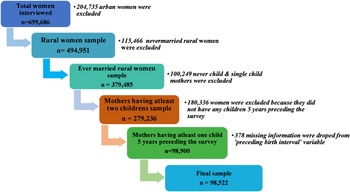
In the NFHS-4, 699,686 mothers aged 15-49 were interviewed using a two-stage stratified sampling. The response rate of NFHS-4 was 97%. Urban, unmarried, single child mothers and mothers with no children were excluded from the sample. Figure 1 describes the process of selection of the study sample. For this study, the birth intervals start with the most recent births that fall within the last five years preceding the survey, and the prior births could occur either within these five years or at any time before it. Mothers whose most recent births did not fall within the past five years preceding the survey were excluded from the study. The reason behind this exclusion of these mothers was that the information on many variables to be included in our multivariable analysis was unavailable in the dataset.
Flow chart showing the process of selection of mothers from the NFHS-4 dataset.

Dependent Variable
The dependent variable for this study is short birth interval or SBI. The SBI in this study is defined based on the WHO’s Technical Consultation on Birth Interval recommendations. The WHO recommends 24 months as a healthy ‘birth-to-pregnancy’ interval (WHO, 2005). The gestational period on average takes nine months. Therefore, the ‘birth-to-birth’ interval would be of 33 months (24 months of ‘birth-to-pregnancy interval and nine months of gestational period). This 33-month long birth-to-birth interval is considered the optimum birth interval.
In this study, a mother with a birth-to-birth interval of fewer than 33 months is considered to have experienced a short birth interval. The rest of the mothers (with a birth-to-birth interval of 33 months or more) are considered to have experienced an optimum or adequate birth interval. The variable SBI had two categories – those with SBI were coded 1 (Yes), and the rest of the mothers were coded 0 (No).
Independent Variables
Based on an extensive review of the previous literature on this issue, we tried to incorporate in the analysis a wide range of socioeconomic, bio-demographic, geographic, and family planning-related factors (Zhenzhen, Reference Zhenzhen2000; Razzaque et al., 2005; Ramarao, Townsend and Askew, Reference Ramarao, Townsend and Askew2006; Williams et al., Reference Williams2008; Singh, Singh and Narendra, Reference Singh, Singh and Narendra2011; Yohannes et al., Reference Yohannes2011; Saha and van Soest, Reference Saha and van Soest2013; Jatrana and Pasupuleti, Reference Jatrana and Pasupuleti2015; Barclay and Kolk, Reference Barclay and Kolk2017; Yadav and Pandey, Reference Yadav and Pandey2018; Chowdhury, Singh, Kasemi and Chakrabarty, Reference Chowdhury, Singh, Kasemi and Chakrabarty2022). Wealth Index served as a proxy measure of the household’s economic status, whereas membership of a social group (based on caste or tribe of a person) served as a proxy for the social status of a household.
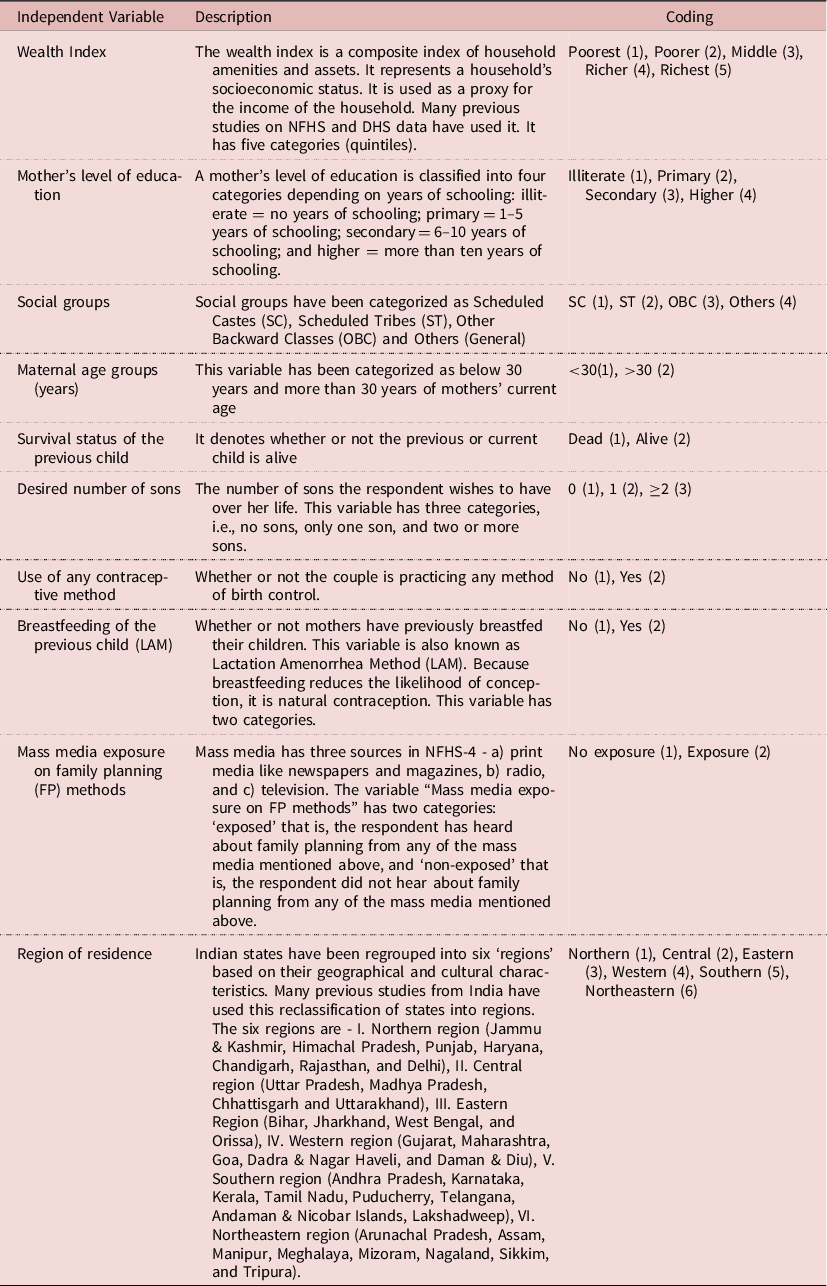
Mother’s education level, age, ever use of contraceptives, breastfeeding status (ever breastfed), the desired number of sons, and survival status of the previous child were some other variables that were included in the analysis as these have been found to affect the outcome of interest. Region of residence as a variable was included in the analysis to capture geographical heterogeneity in the dependent variable. These variables have also been used in previous studies (Singh, Singh and Narendra, Reference Singh, Singh and Narendra2011; Exavery et al., Reference Exavery2012; Jatrana and Pasupuleti, Reference Jatrana and Pasupuleti2015; Chowdhury, Singh, Kasemi, Chakrabarty, et al., Reference Chowdhury, Singh, Kasemi and Chakrabarty2022). Detailed information and coding of these independent variables have been given in Table 1.
Description of independent variables

Statistical analysis
At the outset, we provide a glimpse into the distribution of sampled mothers from rural India. The prevalence of SBI by background characteristics of mothers is calculated then. After that, we identify the correlates of SBI among rural mothers in India. For this purpose, we employ binary logistic regression because the dependent variable is dichotomous (i.e., binary) in nature (Wright, Reference Wright1995). Before running the regression model with all independent variables, the one-to-one relationship between the dependent variable and each independent variable is checked by running a logistic regression with only one predictor variable at a time. The odds ratios thus obtained are labeled as ‘unadjusted’ odds ratios. This is done to eliminate any variables that do not have a statistically significant one-to-one relationship with the dependent variable. All those variables found to have a significant one-to-one relationship are put in the final model together. The odds ratios thus obtained are labeled as ‘adjusted’ odds ratios. These odds ratios have been used to conclude the effect of the independent variables on the dependent variable.
The possibility of multicollinearity affecting our regression results is checked using the variance inflation factor (VIF), which measures how much the variance of a regression coefficient is inflated due to multicollinearity in the model (Miles, Reference Miles2014). The general rule of thumb is that VIFs exceeding four warrant further investigation, while VIFs exceeding 10 are signs of serious multicollinearity requiring correction. A low overall VIF (1.62) for our regression model suggests that multicollinearity was not a problem. The logistic regression model results have been presented as odds ratios with p-values and 95% confidence intervals (CI). The data analysis was conducted in Stata16 statistical software (StataCorp, 2019).
Since ‘region of residence’ turns out to be a statistically significant predictor of SBI in the regression analysis, we have extended our analysis to examine spatial variation in the prevalence of SBI at the district level. For this, the prevalence of SBI for each district is computed separately by dividing the total number of mothers with SBI in the district by the total number of mothers in that district. This district-level prevalence is then mapped to detect spatial patterns/clustering in the outcome variable.
Although we can discern clustered districts from non-clustered districts just by simply looking at a prevalence map, it not always easy to tell the difference. Also, a qualitative description may not always be sufficient for a scientific study. It is therefore suggested to statistically test whether districts of similar (or dissimilar) values are clustered and if they are clustered, what their location is on the map. To test the existence of clustering, we use a popular spatial autocorrelation test, the Moran’s I test. The term “spatial autocorrelation” refers to the study of how well things in a given spatial area correlate with each other. Positive autocorrelation occurs when many similar values are located near each other, while negative correlation is common where very different results are found near each other. Moran’s I statistic is the correlation coefficient for the relationship between a variable (like SBI) in a spatial unit (district) and its value in the surrounding districts (Anselin, Syabri and Kho, Reference Anselin, Syabri and Kho2009).
We use ‘Global Moran’s I’ to examine the presence of clustering in SBI across the districts of India. Global Moran’s I is called ‘Global’ because it does not pinpoint specific locations on a map where the measured autocorrelation is strongest. It simply tells us that the map data are spatially autocorrelated (clustered) but does not tell us where are those areas (clusters) on the map. To determine the location and magnitude of local spatial autocorrelation, we calculate another statistic called ‘Local Moran I’ (Anselin, Reference Anselin1995). It identifies spatial clusters of features with high or low values. The Appendix of this paper provides a detailed description of these indicators, their calculation, and interpretation. This spatial analysis has been carried out in ArcGIS 10.8 software package (ESRI, 2020).
Results
The analysis revealed that 50,606 out of 98,522 rural mothers aged 15–49 years in India between 2010 and 2015 experienced SBI, equivalent to 51% of the total sample. About 26% of rural mothers had ‘very short’ birth intervals (less than 24 months), and about 25% had ‘short’ birth intervals (24-32 months). About 35% of rural mothers had birth intervals between 33 and 59 months, and 13% of rural mothers had birth intervals of more than 60 months.
Sample characteristics
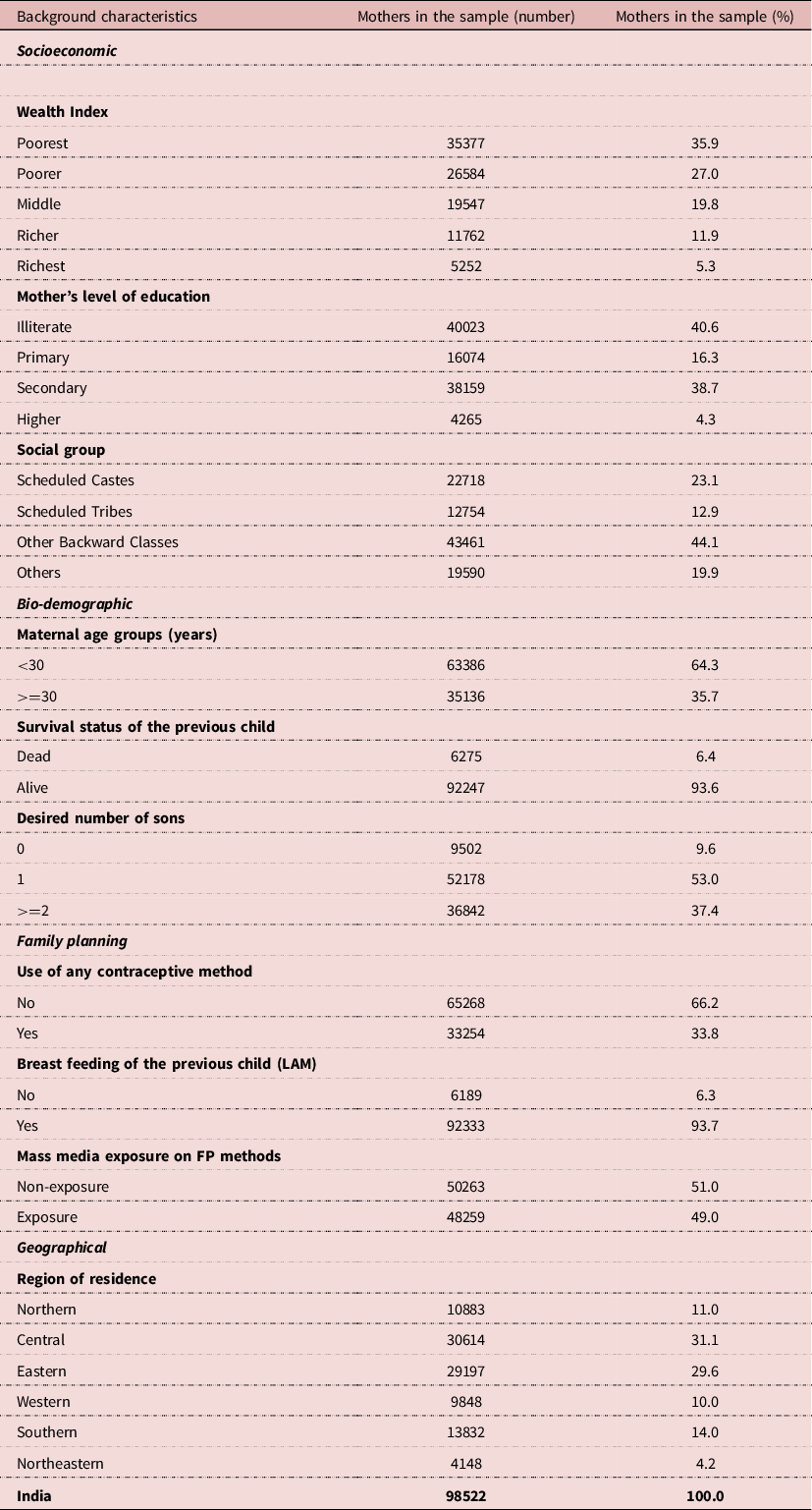
Table 2 presents the sample distribution of rural mothers across all variables. About two-thirds of rural mothers were in the bottom two quintiles suggesting poverty was pervasive. Over two-fifths of mothers in the sample were illiterate. Around a third were using contraceptives at the time of the survey. Nearly half of the sampled mothers reported that they were exposed to FP messages through mass media.
Distribution of mothers by background characteristics, rural India, NFHS-4 (2015-16)

Notes: All percentages have been calculated using women’s national weight provided in NFHS-4 (variable V005),
LAM: Lactation Amenorrhea Method, FP: Family Planning
Prevalence of short birth interval by background characteristics
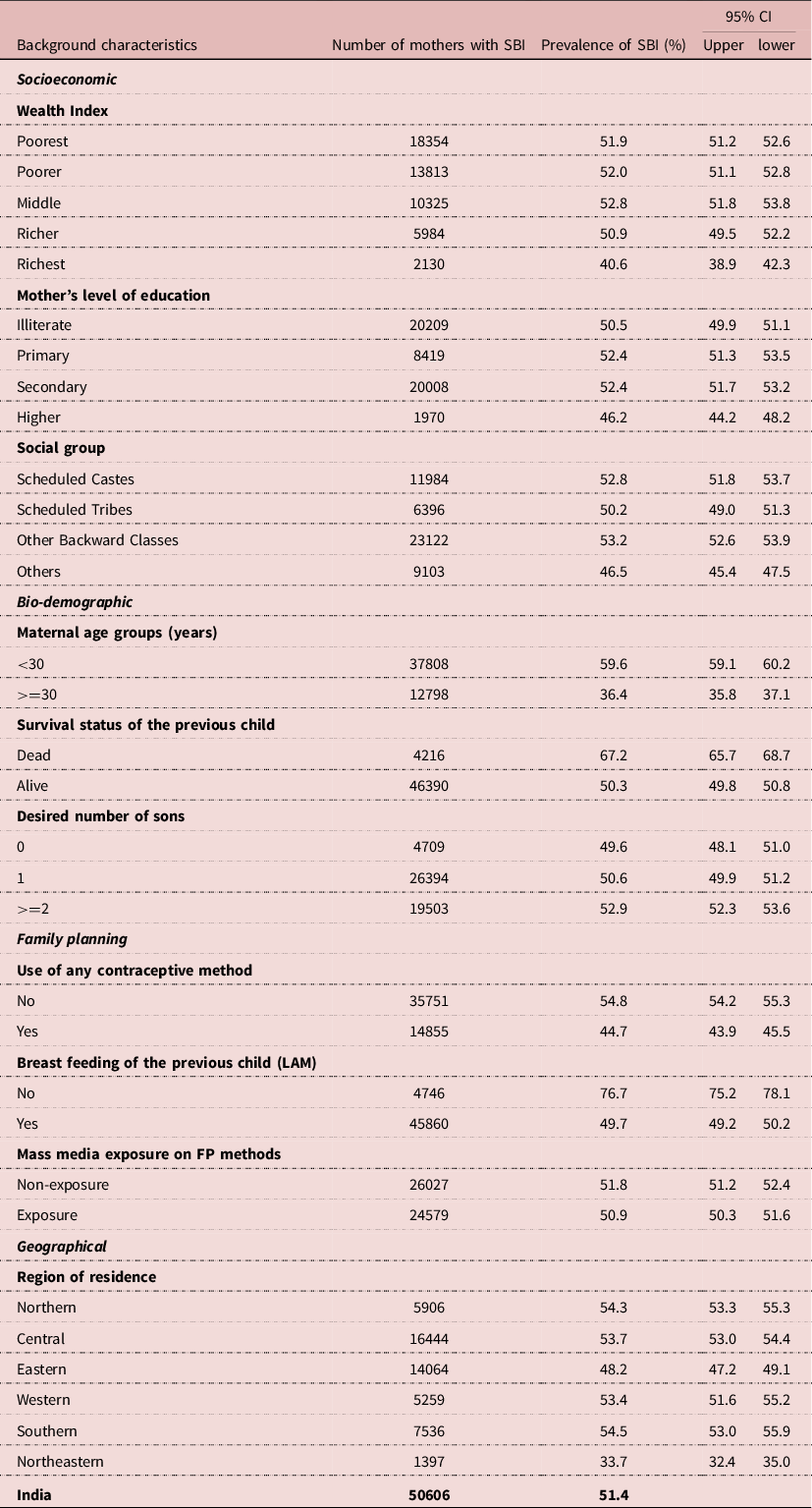
Table 3 presents the prevalence of SBI by background characteristics of mothers. SBI varied only slightly across various socioeconomic variables such as wealth index, education of the mother, and social group. The prevalence of SBI among mothers aged less than 30 years was about twice higher than among those over 30 years of age. SBI was higher among those mothers whose previous child was dead. SBI was less prevalent among those mothers who breastfed their previous child than those who did not. The occurrence of SBI was less common among contraceptive users than non-users. As compared with any other region of India, the prevalence of SBI was significantly lower in the northeast region.
Prevalence of short birth interval across the background characteristics, rural India, NFHS-4 (2015-2016),

Notes: All percentages have been calculated using women’s national weight provided in NFHS-4 (variable V005); LAM: Lactation Amenorrhea Method, FP: Family Planning, CI: Confidence Interval
Correlates of short birth interval
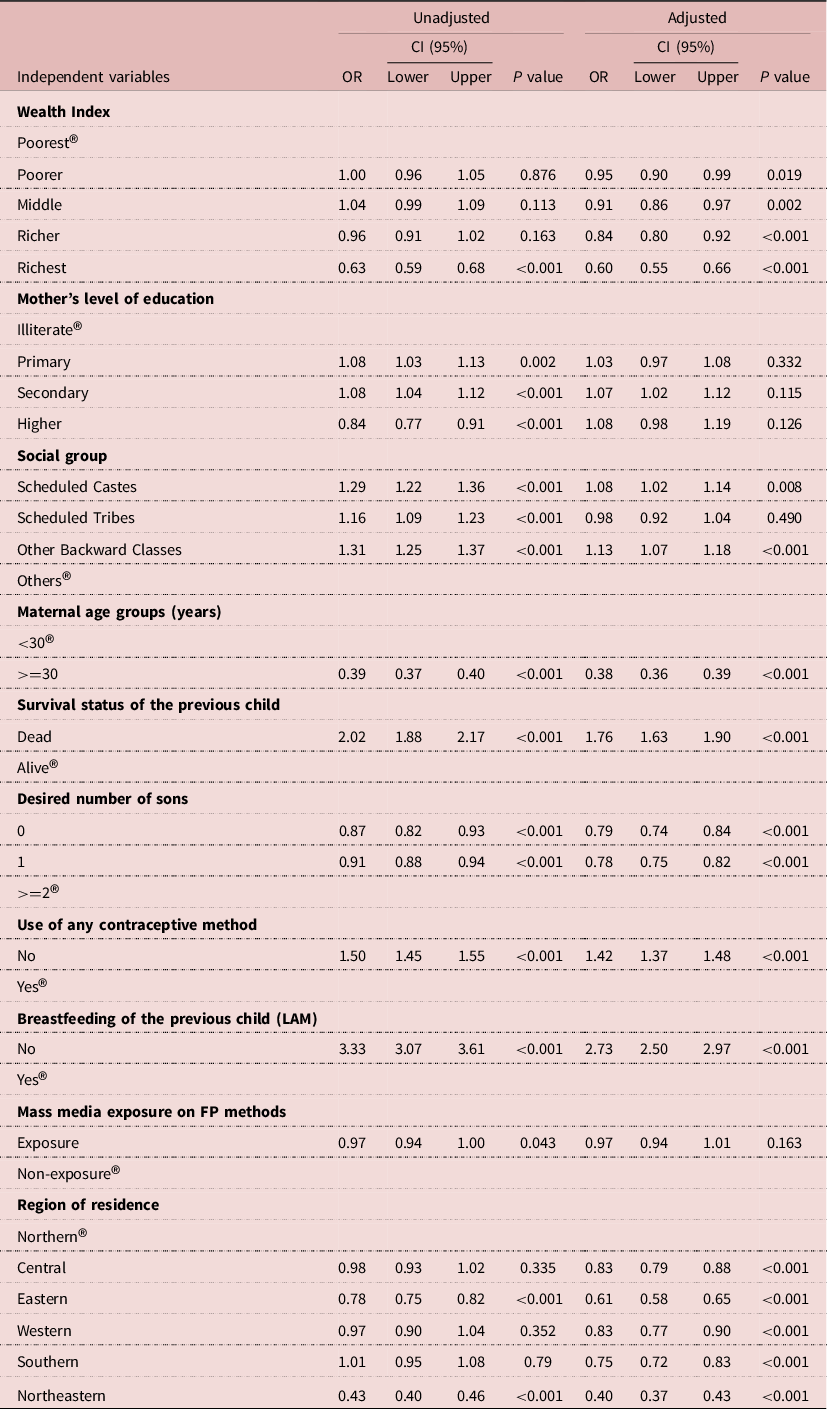
A multivariable logistic regression model was applied to assess the independent effect of variables affecting SBI, and its results were presented in the form of odds ratios (see Table 4). The results of one-to-one regression revealed that all variables (except some categories of some variables) were statistically significantly associated with the dependent variable. Therefore, all of these variables were put together in one logistic regression model, and the ‘adjusted’ odds ratios were obtained. The adjusted odds ratios suggested that wealth index, social group, maternal age, survival status of the previous child, the desired number of sons, contraceptive use, breastfeeding of the previous child, and region of residence were associated with the likelihood of SBI among rural women in India.
Unadjusted and adjusted odds ratios (with 95% confidence interval) of short birth interval, rural India, NFHS-4 (2015-16)

Notes: ® = reference category, OR = odds ratio, CI = confidence interval, LAM: Lactation Amenorrhea Method FP: Family Planning
The odds ratios of the SBI gradually decreased as one moved from the poorest wealth quintile to the richest. Mothers from the richer and richest quintiles were less likely (OR = 0.84, 95 % CI = 0.80–0.92; OR = 0.60, 95 % CI = 0.55–0.66) to have SBI as compared to the mothers of the poorest quintile. Mothers belonging to Scheduled Castes and Other Backward Classes were slightly more likely to experience SBI (OR = 1.08, 95 % CI = 1.02–1.14; OR = 1.13, 95 % CI = 1.07–1.18) than those belonging to ‘Others’ or general category.
The odds of having SBI among mothers aged 30 years and above were about 0.38 times (OR = 0.38, 95% CI = 0.36–0.39) that of those under 30. The death of the previous child turned out to be a significant predictor of SBI. Mothers whose previous child was dead were 76% more likely (OR = 1.76, 95% CI = 1.63–1.90) to experience SBI than mothers with a previous alive child. The odds of SBI among mothers with no desired number of sons were about 0.80 times less likely (OR = 0.79, 95% CI = 0.74–0.84) than those mothers who desired to have two or more sons. Mothers not using contraception were around one-and-a-half times more likely (OR = 1.42, 95 % CI = 1.37–1.48) to experience SBI than those using contraception. The odds of SBI were thrice higher among mothers who did not breastfeed their previous child (OR = 2.73, 95% CI = 2.50–2.97) than among those who did.
Region of residence also turned out to be a significant predictor of SBI. Mothers from northeastern region were about 60% less likely to (OR = 0.40, 95% CI = 0.37–0.43) to experience SBI than mothers from mother of north region. The odds were also significantly lower in eastern region (OR = 0.61, 95% CI = 0.58–0.65), southern region (OR = 0.75, 95% CI = 0.72–0.83), western region and central region of India (OR = 0.83, 95% CI = 0.77–0.90; OR = 0.83, 95% CI = 0.79–0.88).
Spatial patterns of short birth interval
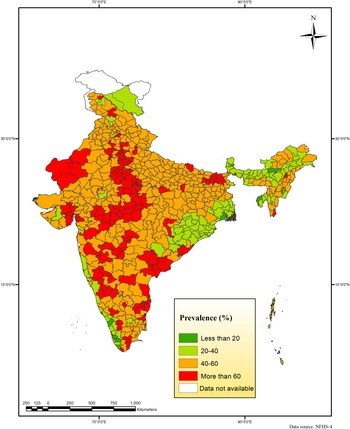
A spatial analysis was conducted to assess the spatial pattern of SBI in rural India. Figure 2 shows variation in the prevalence of SBI across the districts of rural India. The prevalence of SBI was over 60% in almost all the districts of Madhya Pradesh, western districts of Rajasthan, some eastern districts of Bihar, the northern district of Andhra Pradesh, and a few central districts of Karnataka. On the other hand, almost all the districts of Kerala, Odisha, Sikkim, Assam, Tripura and southern districts of West Bengal had a relatively lower prevalence (<40%) of SBI.
Spatial distribution of prevalence of short birth interval, rural India, 2015-2016.

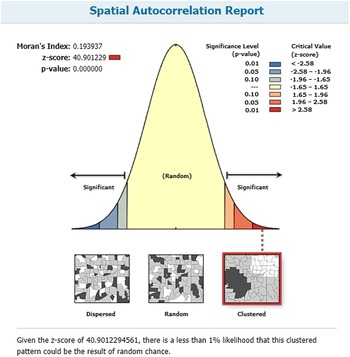
A simple look at the map of SBI does not reveal whether SBI is clustered, randomly distributed or dispersed across the districts of India. Therefore, we calculated Global Moran’s I in which the districts of India were feature locations and the prevalence of SBI attribute values (Figure 3). The spatial autocorrelation (Global Moran’s I) revealed that the spatial distribution of SBI in the study area had a clustering pattern, with a Moran’s index of 0.19 (the respective p-value was <0.001). The matching Z-score was 40.90, meaning there was less than a 1% probability that the clustered pattern we see in the SBI prevalence map was caused by random chance.
Spatial Autocorrelation Report.

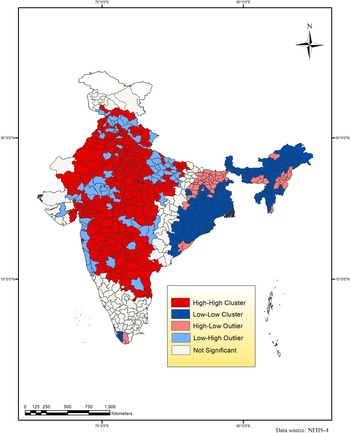
Figure 4 shows the cluster and outlier map of the SBI. The cluster and outlier analysis identifies areas with significant Local Moran I, which are categorized according to the type of spatial autocorrelation (Anselin, Reference Anselin1995). Dark red denotes a high-high association, dark blue denotes a low-low association, light red denotes a high-low association, and light blue denotes a low-high association. For example, a high-high cluster indicates that districts with above-average SBI prevalence share borders with districts with the same prevalence. High-low, on the other hand, indicates that districts with above-average prevalence are surrounded by districts with below-average prevalence. High-high clusters are known as hot spots, and low-low clusters are known as cold spots. It is seen that districts in the central, northern, western, and southern zones of India had high-high clusters (hot spots) of the SBI, whereas districts in the eastern and northeastern zones had low-low clusters (cold spots). High-low outliers existed in the eastern part of the country and included districts from northern Bihar, Meghalaya, Nagaland, and northern Manipur.
Cluster and outlier map of short birth interval, rural India, 2015-2016.

Discussion
Findings of this study indicate that during two consecutive live births, more than half of the birth intervals in rural India were shortly spaced (less than 33 months). This corresponds to more than two out of every five mothers (results not shown) that did not comply with the optimum birth interval, meaning that a large proportion of mothers in rural India could be at risk of adverse maternal and newborn health effects due to SBI.
A range of factors associated with the SBI was identified in the study. Mothers of the richest wealth quintile were less likely to have SBI than mothers of the poorest wealth quintile. Prosperous mothers have enough money to pay for healthcare expenses, including postnatal consultations where counseling for healthy timing and spacing of pregnancy, as well as advice on proper family planning techniques for keeping adequate birth interval, are given. On the other hand, the poorer mothers are typically less educated and unemployed and struggle to pay for their children’s healthcare. Their incomes are also quite low, and after investing in the necessities of life, they are often left with insufficient funds for healthcare (Singh, Kumar and Pranjali, Reference Singh, Kumar and Pranjali2014). The previous literature corroborates this finding on this issue (Williams et al., Reference Williams2008; Singh, Singh and Narendra, Reference Singh, Singh and Narendra2011; Yadav and Pandey, Reference Yadav and Pandey2018).
Caste turned out to be a statistically significant predictor of SBI. SC mothers were more likely to experience SBI. In this regard, it is important to note that SC as a category consists predominantly of those castes who have historically been treated as untouchables. Mothers from these social groups are generally poor, less educated, and unaware of their reproductive health and healthy timing of birth interval (Kumar and Singh, Reference Kumar and Singh2016). Therefore, it is not surprising that SBI rates is higher among these mothers.
It was also noted in this study that older mothers were more likely to delay subsequent births as compared with younger mothers. It may be because older women are relatively less fertile, a condition that decreases their chance of pregnancy, thereby leading to a longer birth interval. The fecundity of women decreases gradually but significantly beginning approximately at age 32 years and decreases more rapidly after age 37 years. A healthy fertile 30-year-old mother has a 20% risk of getting pregnant each month she tries. That ensures 20 will be effective for every 100 fertile 30-year-old mothers in one cycle, and the other 80 will have to try again. By 40, the chances of becoming a mother are fewer than 5% per cycle, implying that less than 5 out of every 100 women will be successful each month (American Society for Reproductive Medicine, 2012). The average menopause age in India is about 46 years, but at some point, in their 40s, most Indian mothers become unlikely to have a healthy pregnancy. The age-related loss of female fertility occurs when the consistency and volume of eggs decrease over time (Ahuja, Reference Ahuja2016). This finding is consistent with several previous studies that have similarly shown that older mothers tend to have longer birth intervals (Conde-Agudelo, Rosas-Bermúdez and Kafury-Goeta, Reference Conde-Agudelo, Rosas-Bermúdez and Kafury-Goeta2006; Exavery et al., Reference Exavery2012).
The survival status of the previous child was also important in determining birth interval patterns. There could be several social and biological reasons behind it. The societal explanation is that couples who have lost a child during infancy postpone contraception to have another child. The biological explanation is that the loss of a baby ends breastfeeding, which causes an early return to ovulation and increases the probability of subsequent early conception (Singh, Singh and Narendra, Reference Singh, Singh and Narendra2011).
This study also found that increasing the desired number of sons decreased the length of birth intervals. It could be because sons are traditionally valued highly by Indian parents as an economic asset and assurance of old age, as well as the bearer of the family name. These parents are less likely to consider contraception or other fertility control measures before having the desired number of sons. Some prior researches confirm this finding (Chakraborty, Sharmin and Islam, Reference Chakraborty, Sharmin and Islam1996; Gray and Evans, Reference Gray and Evans2005; Singh, Singh and Narendra, Reference Singh, Singh and Narendra2011).
The use of contraception was another important determinant of SBI. The prevalence of SBI increased due to a lack of contraception. Lack of discussion between couples, partner opposition, lack of awareness, and affordability of modern family planning methods could be reasons for lower contraceptive use (Saha and van Soest, Reference Saha and van Soest2013; Yadav and Pandey, Reference Yadav and Pandey2018). Couple-focused family planning should receive special attention, with husbands encouraged to participate in family planning and contraception adoption discussions to reduce the occurrence of SBI,
This study finds breastfeeding is an important predictor of SBI in rural India. It is well-known that prolonged lactation primarily protects against conception by delaying the return of ovulation and menstruation. This finding is in tune with many previous studies (Miller et al., Reference Miller1992; Singh et al., Reference Singh2012; Dim, Ugwu and Iloghalu, Reference Dim, Ugwu and Iloghalu2013). Prolonged breastfeeding should be encouraged if SBI is to be reduced. Accredited Social Health Activists (ASHA) can play an important role in accomplishing this goal (Yadav and Pandey, Reference Yadav and Pandey2018).
There are glaring geographical disparities in the prevalence of SBI in rural India. SBI was more common in rural mothers in the northern, central, western, and southern regions. It should be noted that most states in the northern, central, and western regions have one thing in common: a skewed child sex ratio. The child sex ratios in these states are significantly lower than the national average, with 919 girls for every 1000 boys (Office of the Registrar General & Census Commissioner, 2011). The skewed sex ratio is a natural expression of son preference, which may have significant implications for the number of children and birth interval length.
The high-high cluster of SBI mainly consists of those states that have contraceptive prevalence lower than the national average (54%), such as Madhya Pradesh (51%), Gujarat (47%), and Uttar Pradesh (40%). Similarly, the contraceptive prevalence in districts from high-low outliers was below the national average. The majority of these districts come from Bihar (24%), Meghalaya (24 %), and Manipur (24 %) (International Institute for Population Sciences (IIPS) and ICF, 2017). A large proportion of the population in the northeastern region consists of numerous tribal groups with a significant migrant population from the neighboring countries in some states. Contraceptive prevalence among these people is considerably low due to several reasons discussed in the literature (Dey and Goswami, Reference Dey and Goswami2009; Spoorenberg and Dommaraju, Reference Spoorenberg and Dommaraju2012). The child sex ratio in this region is also high as compared to the northern, central, and western regions (Office of the Registrar General & Census Commissioner, 2011). A higher child sex ratio may be a reflection of a lower desired number of sons (Dubuc and Sivia, Reference Dubuc and Sivia2018). These factors might have a role in forming hot and cold spots. Future research could explore in more detail the influencing factors that could have led to the formation of these hot spots.
The Government of India has recently launched ‘Mission Parivaar Vikas’ to expand the availability of contraception and family planning in selected 146 high fertility districts located in the states of Uttar Pradesh, Bihar, Rajasthan, Madhya Pradesh, Chhattisgarh, Jharkhand, and Assam, which together account for 44% of the population of the country (Muttreja and Singh, Reference Muttreja and Singh2018). Except for those in Assam and Jharkhand, most of these districts have a high prevalence of SBI. However, a higher prevalence of SBI is also noticeable in many districts from the states like Maharashtra, Karnataka, Telangana, and Tamil Nadu, which are not the focus of Mission Parivar Vikas. This higher prevalence suggests the need to expand this mission to many other districts with a higher prevalence of SBI to improve maternal and child health even further in these states.
The strength of this study is that our analysis not only examined the correlates of SBI but also mapped the clusters of occurrences of SBI. Determining a hot spot is important because it helps identify and pinpoint areas requiring more preventive measures. There are a few limitations. It was unable to incorporate the gestational period since the NFHS-4 does not contain any information about the gestational period of pregnancy; therefore, we considered the average gestational period of nine months, which was used in prior studies. It should also be noted that abortions and miscarriages may extend birth intervals, but for lack of data, this could not be considered in this research. We have considered only the most recent birth interval in this study due to the lack of data on many independent variables to be used in the regression analysis. We mapped hot spots of SBI but did not examine the contributing factors. Future research could explore in detail the influencing factors that could have led to the formation of these hot spots.
Conclusion
The analysis of birth intervals in rural India reveals that about half of mothers included in the sample experienced SBI, which indicates that SBI remains an issue that deserves urgent attention in rural India. There are wide geographic variations in SBI. Central, northern, western, and southern regions of rural India had high-high clusters (hot spots) of the SBI. Mothers from disadvantaged backgrounds (poor and illiterate) are more likely to experience SBI and suffer consequences. The desired number of sons, contraceptive use, and breastfeeding were significant predictors of SBI. These factors can be modified in the short term by introducing appropriate interventions and programs and may help reduce the prevalence of SBI in rural India.
Acknowledgment
The authors are grateful to the Demographic and Health Surveys (DHS) for providing the dataset for this study.
Author contributions
SC analyzed the raw data, prepared the map, wrote the draft, and reviewed and edited the manuscript. AS conceived and designed the study, wrote and edited the manuscript. NK reviewed and edited the manuscript. MC & SS read and edited the manuscript.
List of abbreviations
SBI: Short Birth Interval; WHO: World Health Organization; NFHS: National Family Health Survey; ASHA: Accredited Social Health Activists; LAM: Lactation Amenorrhea Method; CI: Confidence Interval; OR: Odds Ratio.
Declarations
Funding
The authors did not receive financial assistance from any funding agency.
Ethics approval and consent to participate
The present study used secondary data available in the public domain. The dataset had no identifiable information about the survey participants. Therefore, no ethical approval was required for conducting this study.
Consent for publication
Not applicable.
Availability of data and materials
The dataset used in the current study is available in the Demographic and Health Surveys (DHS) repository available online at https://dhsprogram.com
Competing interests
The authors declare no competing interests.
Appendix
Spatial Autocorrelation
When a set of numbers has a pattern that allows values in the series to be predicted based on previous values, the set of numbers is said to have ‘autocorrelation.’ Serial correlation and serial dependence are other terms for the same thing. The ‘auto’ part of autocorrelation comes from the Greek word for ‘self,’ and autocorrelation refers to data that is correlated with itself rather than data that is correlated with something else.
According to the first law of geography given by geographer Waldo Tobler, near things are more related to each other than distant things. We refer to this as ‘spatial dependency.’ The degree of spatial dependency between the value of an observation of a spatial entity (area/district) and the values of observations of the same variable in the surrounding areas or districts is referred to as spatial autocorrelation. Simply put, spatial autocorrelation determines how closely the value of a variable in one location relates to the values of the same variable in locations surrounding it.
As per Tobler’s Law of Geography, the geographic phenomenon is often distributed non-randomly, and closer things are often more related to near things than distant things. In other words, the phenomenon is clustered or dispersed in some locations over the space. This nonrandom geographical distribution of the values of a variable under study may significantly affect the accuracy of classical statistics. In conventional statistics, the observations in a sample are assumed to be independent of each other. However, in the presence of spatial autocorrelation or clustering, this assumption is violated as observations with similar values are spatially located nearby each other. This typically means that classical statistical tools cannot be directly employed while analyzing geographic data, as this would result in biased results. Hence, spatial autocorrelation analysis must be performed before conducting any conventional statistical analysis. Spatial autocorrelation analysis also reveals the location of high and low-value clusters helping the policymakers decide which areas to focus on and which to ignore in policy and program implementation.
A variety of diagnostic methods can be used to detect spatial autocorrelation. These measures are generally of two types depending on what they measure: Global or Local. ‘Global’ spatial autocorrelation measures estimate spatial autocorrelation using a single value to describe the pattern of the entire map (study area). Among the most widely used of these measures is the Global Moran’s I statistic, the correlation coefficient for the relationship between a variable and its surrounding values. ‘Local’ spatial autocorrelation helps us detect and identify high and low values clusters. It is measured by Local Moran’s I.
Moran’s I index formula is as follows:
 $$I = \frac{n}{{\sum\nolimits_i^n {} \sum\nolimits_j^n {{w_{ij}}} }}\;\frac{{\sum\nolimits_i^n {} \sum\nolimits_j^n {{w_{ij}}} \;\left( {{x_i} - \;\bar x} \right)\;\left( {{x_j} - \;\bar x} \right)}}{{\sum\nolimits_i^n {{{\left( {{x_i} - \;\bar x} \right)}^2}}}}$$
Where,
n is the number of the spatial features
x i is the attribute value of feature i (in spatial analysis, the terms ‘variable’ and ‘attribute’ refer to the same thing)
x j is the attribute value of feature j
x is the mean of this attribute
w ij is the spatial weight between feature i and j
 $\sum\nolimits_i^n {\sum\nolimits_j^n {{w_{ij}}}}$
is the aggregation of all spatial weights
Moran’s I is a statistical inference technique. It is statistically evaluated using a p-value and a z-score. It is interpreted based on the expected value calculated under the null hypothesis of no spatial autocorrelation (complete spatial randomness). For a random pattern, the expected value is
 $$E(I) = \frac{{ - 1}}{{n - 1}}$$
Where n denotes the number of spatial entities, clustering and positive spatial autocorrelation are shown by positive Moran’s I index values (observed) that are significantly larger than the expected value E(I). Negative Moran’s I index values (observed) significantly less than E(I) imply negative spatial autocorrelation or no autocorrelation. The results are not statistically significant if the p-value is large (usually p > 0.05), and we cannot reject the null hypothesis. We can reject the null hypothesis of complete spatial randomness and accept that spatial autocorrelation exists if the p-value is low (usually <0.05).