Introduction
Fast population ageing, especially in developing countries, will lead to increasing numbers of older adults living with dementia (D Ding et al., Reference Ding, Zhao, Guo, Meng, Wang, Luo, Mortimer, Borenstein and Hong2015). In China, it is estimated that people with dementia increased from 3.68 million in 1990 to 9.19 million in 2010 (Chan et al., Reference Chan, Wang, Wu, Liu, Theodoratou, Car, Middleton, Russ, Deary, Campbell, Wang and Rudan2013). Particularly, the prevalence of dementia is notably higher in rural China than in urban China (6.05% versus 4.40%) (Jia et al., Reference Jia, Wang, Wei, Zhou, Jia, Li, Tang, Chu, Zhou, Zhou, Cui, Wang, Wang, Yin, Hu, Zuo, Song, Qin, Wu, Li, Jia, Song, Han, Xing, Yang, Li, Qiao, Tang, Lv and Dong2014). Identifying ways to delay cognitive decline among older adults has become a key public health priority for ageing societies (Fancourt and Steptoe, Reference Fancourt and Steptoe2018), as cognitive impairment is associated with worse quality of life (Pan et al., Reference Pan, Wang, Ma, Sun, Xu and Wang2015) and increased functional limitation (Zheng et al., Reference Zheng, Liu and An2016). Leisure activities, constituting a primary part of daily life in later life, are usually considered to have beneficial effects on cognitive function (Wang et al., Reference Wang, Jin, Hendrie, Liang, Yang, Cheng, Unverzagt, Ma, Hall, Murrell, Bian, Pei, Gao and Kritchevsky2013). The association between leisure activities and cognitive function has attracted growing interest in recent decades (Fratiglioni et al., Reference Fratiglioni, Paillard-Borg and Winblad2004; Leung et al., Reference Leung, Fung, Tam, Lui, Chiu, Chan and Lam2010; Iwasa et al., Reference Iwasa, Yoshida, Kai, Suzuki, Kim and Yoshida2012).
To date, evidence on the effect of different types of leisure activities on cognitive function using longitudinal data is limited. Many studies examining the association between a specific type of leisure activity failed to consider other types of activities simultaneously. The independent effects of different types of leisure activities on cognitive function may be not equally beneficial. For example, cognitively stimulating activities were found to be more protective against cognitive decline among older adults compared to physical activities (AT Lee et al., Reference Lee, Richards, Chan, Chiu, Lee and Lam2018). Therefore, identifying the type of leisure activities that have the strongest effect on cognitive function would be helpful in developing target interventions to promote cognitive function.
Moreover, previous studies based on general social surveys lack a consistent definition and operationalisation of leisure activities (Leung et al., Reference Leung, Fung, Tam, Lui, Chiu, Chan and Lam2010). A daily diary time-use study for leisure activities which is considered more precise and accurate than general social surveys may provide a better understanding for the benefits of leisure activities in the course of a single day (Ver Ploeg et al., Reference Ver Ploeg, Altonji, Bradburn, DaVanzo, Nordhaus and Samaniego2000). Further, the gender differences in the association between leisure activities and cognitive function are scarce (Bielak, Reference Bielak2010; Wang et al., Reference Wang, Jin, Hendrie, Liang, Yang, Cheng, Unverzagt, Ma, Hall, Murrell, Bian, Pei, Gao and Kritchevsky2013; Hassing, Reference Hassing2020). The gendered pattern of leisure activities may have significant differences in the association between leisure activities and cognitive function.
To fill these gaps, the study aims to examine the effect of different types of leisure activities on cognitive function among older adults in rural China. We also explore gender differences in these associations.
Background
Theoretical framework
Guided by the ‘use it or lose it’ hypothesis of cognitive ageing (Salthouse, Reference Salthouse1991) and the environmental complexity hypothesis (Schooler, Reference Schooler, Schooler and Schaie1987), we speculate that cognitive activities, physical activities, social connecting and social activities are positively associated with cognitive function, while sedentary sitting is negatively associated with cognitive function. In addition, there may be gender differences in the associations between different types of leisure activities and cognitive function. The ‘use it or lose it’ hypothesis of cognitive ageing emphasises that engagement in cognitive, physical and social activities in later life facilitates the maintenance or improvement of general cognitive abilities by ‘exercising’ them through the application in an individual's environment (Salthouse, Reference Salthouse1991). On the contrary, spending time idling or doing nothing, such as sedentary sitting, may be negatively associated with cognitive function. This hypothesis provides us with the guidance for assessing the association between different types of leisure activities and cognitive function.
Furthermore, according to the environmental complexity hypothesis, people who participate in activities that require significant cognitive demands will have better cognitive function than those who are in less-complex environments with fewer cognitive demands. The gendered leisure activities may make older women participate in activities that require more minimal cognitive demands. Therefore, there may be gender differences in the association between different types of leisure activities and cognitive function.
Different types of leisure activities and cognitive function
In some studies, a high frequency of specific cognitive activities (e.g. reading, watching television (TV) were identified as risky factors for cognitive decline due to sedentariness (Rundek and Bennett, Reference Rundek and Bennett2006; Hamer and Stamatakis, Reference Hamer and Stamatakis2014). However, strong evidence in China shows that a higher frequency of cognitive activities including watching TV, listening to the radio, or reading books or newspapers is associated with less cognitive decline and a lower risk of cognitive impairment and dementia (Zhu et al., Reference Zhu, Qiu, Zeng and Li2017; AT Lee et al., Reference Lee, Richards, Chan, Chiu, Lee and Lam2018; Mao et al., Reference Mao, Li, Lv, Gao, Kraus and Zhou2020). Given the fewer leisure opportunities and the relatively low level of education among rural Chinese older adults, even the sedentary cognitively stimulating activities may protect their cognitive function.
Sufficient physical activities have consistently been proven to promote cognitive performance or reduce the risk of incidence of dementia (Etgen et al., Reference Etgen, Sander, Huntgeburth, Poppert, Förstl and Bickel2010; Buchman et al., Reference Buchman, Boyle, Yu, Shah, Wilson and Bennett2012; Willey et al., Reference Willey, Gardener, Caunca, Moon, Dong, Cheung, Sacco, Mitchell and Wright2016; Livingston et al., Reference Livingston, Sommerlad, Orgeta, Costafreda, Huntley, Ames, Ballard, Banerjee, Burns, Cohen-Mansfield, Cooper, Fox, Gitlin, Howard, Kales, Larson, Ritchie, Rockwood, Sampson, Samus, Schneider, Selbæk, Teri and Mukadam2017). A systematic review also suggests that high physical activity benefits cognitive function among older Chinese adults (Lü et al., Reference Lü, Fu and Liu2016). Social connecting and participation in social activities benefits cognitive function among older adults as well (Zunzunegui et al., Reference Zunzunegui, Alvarado, Del Ser and Otero2003; Choi et al., Reference Choi, Park, Cho, Chun and Park2016; Fu et al., Reference Fu, Li and Mao2018; Tomioka et al., Reference Tomioka, Kurumatani and Hosoi2018).
Moreover, one earlier study exhibited gender differences in the association between leisure activities and different domains of cognitive function. Higher levels of self-improvement, including physical activities and study, are associated with higher levels of cognitive function, whereas cognitive activities and social activities are only associated with better verbal ability and memory among older women (Hassing, Reference Hassing2020). In addition, the negative impact of sedentariness on cognition in older age is stronger for females (Fagot et al., Reference Fagot, Chicherio, Albinet, André and Audiffren2019). Given the gendered pattern of leisure activities in rural China, there may also be gender differences in the associations between different types of leisure activities and cognitive function.
Leisure activities of older adults in rural China
Compared with urban older adults, rural older adults are less active in both mental and physical activities (Su et al., Reference Su, Shen and Wei2006). For example, rural older adults were twice as likely as their urban counterparts to spend time idling or doing nothing (Su et al., Reference Su, Shen and Wei2006). The rural Chinese older adult is the vulnerable group as a result of unequal leisure opportunities in the Chinese context. Low education and life-long poverty among rural older adults may affect their leisure involvement (Cao et al., Reference Cao, Qian and Yang2020). Particularly, due to China's traditional dichotomous system, relative economic disadvantage makes rural residences have a disadvantaged position in the distribution of basic social resources, such as having cultural, wellness and recreational facilities (e.g. senior activity centres, chess rooms), when compared with residences in urban areas (C Ding et al., Reference Ding, Song, Yuan, Zhang, Feng, Chen and Liu2018) which, in turn, may further constrain residences’ leisure participation.
In Chinese families, men spent more time on leisure activities than women, as women are still doing the majority of domestic work (Luo and Chui, Reference Luo and Chui2018). The gender differences in socio-economic status, social roles, family responsibilities and health status, along with the deficient supplying of public leisure resources, may lead to gendered patterns of leisure activity participation among older adults in rural China (W Zhang et al., Reference Zhang, Feng, Lacanienta and Zhen2017; Chen and Tsai, Reference Chen and Tsai2020). Under Chinese patriarchal society, older women have fewer economic resources, and assume more care-giving roles and family responsibilities (Li et al., Reference Li, Song and Feldman2009; Chen and Tsai, Reference Chen and Tsai2020). Moreover, older women are predominantly affected by debilitating illnesses and functional limitations (Agahi and Parker, Reference Agahi and Parker2008). Therefore, it is important to analyse older women and older men separately when examining the relationship between participation in leisure activities and cognitive function.
In addition to cognitive activities, physical activities and social activities that are included in numerous studies, we also include social connecting and spending time idling or doing nothing (i.e. sedentary sitting) to capture the participation in leisure activities among older adults in rural China. By distinguishing the difference between social engagement and solitary activity, between active leisure and sedentary leisure (Lennartsson and Silverstein, Reference Lennartsson and Silverstein2001; Simone and Haas, Reference Simone and Haas2013; Wang et al., Reference Wang, Jin, Hendrie, Liang, Yang, Cheng, Unverzagt, Ma, Hall, Murrell, Bian, Pei, Gao and Kritchevsky2013; Y Lee et al., Reference Lee, Chi and Palinkas2019), leisure activities in rural China include five categories: sedentary sitting, cognitive activity (including watching TV, reading books/newspapers, listening to the radio, surfing the internet), physical activity (e.g. sports, walking, dancing), social connection (including making phone calls, chatting, playing chess) and social activities (e.g. community affairs, volunteering, religious activities).
The present study
Though multi-disciplinary studies have confirmed the health benefits of active, socially engaged leisure activities in later life, it remains uncertain which types and what level of engagement are required for potential benefits to accrue in rural China. Especially, we know little about gendered patterns of leisure activities and whether the impact of leisure activities on cognitive capacity is gender-specific. In the present study, the aim is to examine the independent associations between different types of leisure activities and cognitive function. More specifically, the focus will be on the following questions:
(1) What are the relationships between different types of leisure activities and cognitive function?
(2) Are the associations between leisure activities and cognition gender-specific?
Methods
Data collection
The present study used data from the longitudinal survey ‘Well-being of Elderly Survey in Anhui Province (WESAP)’, which has been conducted every three years between 2001 and 2018 in rural townships in Chaohu, Anhui Province. Anhui Province is located in the eastern-central region of China, where more than half (57.9%) of the population lived in rural areas in 2009, which is a little higher than the national average of 53.4 per cent, and its economic development is about national average (National Bureau of Statistics of China, 2010). This region was chosen specifically for its relatively high density of older adults and high levels of out-migration of working-age adults (Cong and Silverstein, Reference Cong and Silverstein2011). Using a stratified multi-stage sampling design, a questionnaire survey was administered to the randomly chosen residents aged 60 and older from 72 randomly selected villages within six rural townships. For the first-wave household interview in 2001, 1,800 older adults were identified as eligible respondents and 1,715 of them completed the baseline survey. All of the follow-up surveys include re-interviews with surviving respondents. This study used data from the 2015–2018 surveys as the time-use diary data were collected for the first time in 2015. Among the 1,243 participants interviewed in 2015, 128 had died by the 2018 survey and 95 were lost to follow-up across the two-wave surveys. Two cases with missing values in daily time-use were also deleted. ||Finally, 1,018 older adults were included in the subsequent analyses.
Measures
Dependent variables: cognitive function
The dependent variable was cognitive function measured in 2018. This measure was adapted from the Short Portable Mental Status Questionnaire (SPMSQ) (Pfeiffer, Reference Pfeiffer1975). The SPMSQ has been widely used to screen for cognitive dysfunction, which captures four dimensions of an older adult's cognition dysfunction: orientation to time and place, current event information, memory and calculation (Welch and West, Reference Welch and West1999; Malhotra et al., Reference Malhotra, Chan, Matchar, Seow, Chuo and Do2013). The noteworthy feature of the SPMSQ is that it takes into consideration individuals’ educational attainment, which could influence test performance (Pfeiffer, Reference Pfeiffer1975). The sample questions are ‘When were you born?’, ‘How old are you?’ and ‘What is the name of the district/county/town where you live?’ To acquire better understanding and acceptability among Chinese older adults, some items were modified according to the Chinese context. For example, the participants were asked ‘Who is the national chairman of China?’ and ‘Who was the national chairman of China before him?’ The validity of the SPMSQ has been established in older Taiwanese adults (Tsai and Chang, Reference Tsai and Chang2019). Previous studies suggest that respondents tend to be unable to answer particularly difficult tasks when they have cognitive limitations (Xu et al., Reference Xu, Dupre, Gu and Wu2017). Following recommendations in the previous literature, we counted responses of ‘unable to answer’ as incorrect answers (Herzog and Wallace, Reference Herzog and Wallace1997; Z Zhang et al., Reference Zhang, Gu and Hayward2008; Xu et al., Reference Xu, Dupre, Gu and Wu2017). Each item of the SPMSQ was coded as 1 if the participant responded correctly to the item, otherwise it was coded as 0. The alpha for this scale was 0.80. Total correct responses ranged from 0 to 10, with a higher score indicating better cognitive function.
Key independent variables: leisure-time activities
A comprehensive 24-hour recall measure was developed for participants’ time used during the day prior to the date of survey completion, which has been widely used in previous surveys (e.g. the American Time Use Survey) or studies as a general time-use data collection instrument (Sabbath et al., Reference Sabbath, Matz-Costa, Rowe, Leclerc, Zins, Goldberg and Berkman2016; Pepin et al., Reference Pepin, Sayer and Casper2018). Daily diary time-use surveys, which can provide a detailed view of all activities in which older people engage over the course of a single day (Lam and García-Román, Reference Lam and García-Román2020), are considered more precise and accurate than general social surveys or so-called stylised questions (asking the number of hours in the past week or month that a participant engaged in a given activity) (Ver Ploeg et al., Reference Ver Ploeg, Altonji, Bradburn, DaVanzo, Nordhaus and Samaniego2000).
Investigators applied this time-use instrument to calculate the amount of time spent daily on activities such as housekeeping, care-giving, working at home, working away from home, leisure time and sleep. Because the time-use and allocation of leisure time is more likely to reflect older adults’ own preferences, in this study we will focus on how older people spent their leisure time to explore the impact of active life engagement on the cognitive function of older adults. Leisure activities among older adults in rural China have been classified into five categories: sedentary sitting, cognitive activities, physical activities, social connecting activities and social activities.
The amount of time spent on the activities of each category was calculated in minutes. Because there is tremendous variation and skewness in the distribution of these leisure-time activities, we recoded these continuous variables of the daily time-use in each of the five categories into three levels of intensity: none, low intensity (average and less than average) and high intensity (more than average). Leisure activities are context-specific even within a similar socio-cultural society; diversity may also be observed due to subcultural variations (Ip, Reference Ip2009). Therefore, we divided the intensity of each leisure activity based on its own practice or popularity in local areas. Overall means were used as reference in defining the cut-off points in this study. The intensity of participation in different types of leisure activities was measured in 2015.
Control variables
The socio-demographic variables of age, gender, marital status, education and family income, which had been identified as important factors of health and time-use of older people, were measured in 2015 and controlled in the data analysis. Age was assessed as a continuous variable. Gender was measured as female versus male (male = 1). Marital status was categorised as ‘married’ and ‘single’, with the latter including unmarried, divorced or widowed. Education was measured as the highest level of education achieved and divided into two categories: illiterate and primary school or above. Family income was assessed by the total amount of earnings of the individual and his or her spouse in the previous 12 months, including pensions, part-time income and earnings from self-employed activities. It was transformed using ln + 1 in the regression models.
Time spent on economic and household work, living arrangement and previous health condition, including presence of chronic disease and activities of daily living (ADLs), in 2015 were also included as potential confounders. The amounts of time spent on economic and household work were calculated in minutes, respectively, which were also obtained from the comprehensive 24-hour recall measure. Living arrangement was coded as a dichotomous variable: others = 0, living alone = 1. Incidence of chronic disease was assessed by three dichotomous variables of diabetes (having diabetes = 1), hypertension (having hypertension = 1) and cardiovascular disease (having heart disease or stroke = 1). ADLs reflect an individual's capability to perform a set of personal actions of daily living, activities requiring physical strength, mobility and flexibility, and instrumental activities of daily living. For each activity, the results are scored as 3 if the respondent was able to perform that activity ‘independently’, 2 if he or she ‘needed help’ and 1 if he or she was ‘dependent’. The summed variable ranges from 15 to 45, with a higher score indicating better capability of performing these activities.
Since our analysis examined changes in cognitive function, we controlled for 2015 cognitive function, which was measured by the same scale as in 2018. Using this approach could minimise the risk of endogeneity in our specification in the event that cognitive function influences the participation in leisure activities.
Data analysis
We first ran descriptive statistics to summarise sample characteristics in 2015. Independent sample t-tests or one-way analyses of variance were conducted to examine the gender difference in the sample characteristics and core variables, including leisure activity and cognitive function. We used ordinary least-squares (OLS) multiple regression to examine the lagged and dynamic effect of leisure activities on older people's cognitive function at the second wave of measurement. We estimated a basic model of the associations between leisure-time activities in 2015 and cognitive function in 2018 (Model 1). Model 2 examined the above associations after controlling the socio-demographic characteristics of respondents in 2015. Incidence of chronic disease and ADLs in 2015 were added to Model 3 and cognitive function in 2015 were also controlled in Model 4. By doing so, we can examine how the magnitude of the effect changes by adding these covariates. Analyses were conducted on the total sample, and then stratified by gender. All analyses were conducted using Stata 15 software. p < 0.05 was considered as being significant based on two-tailed tests.
Results
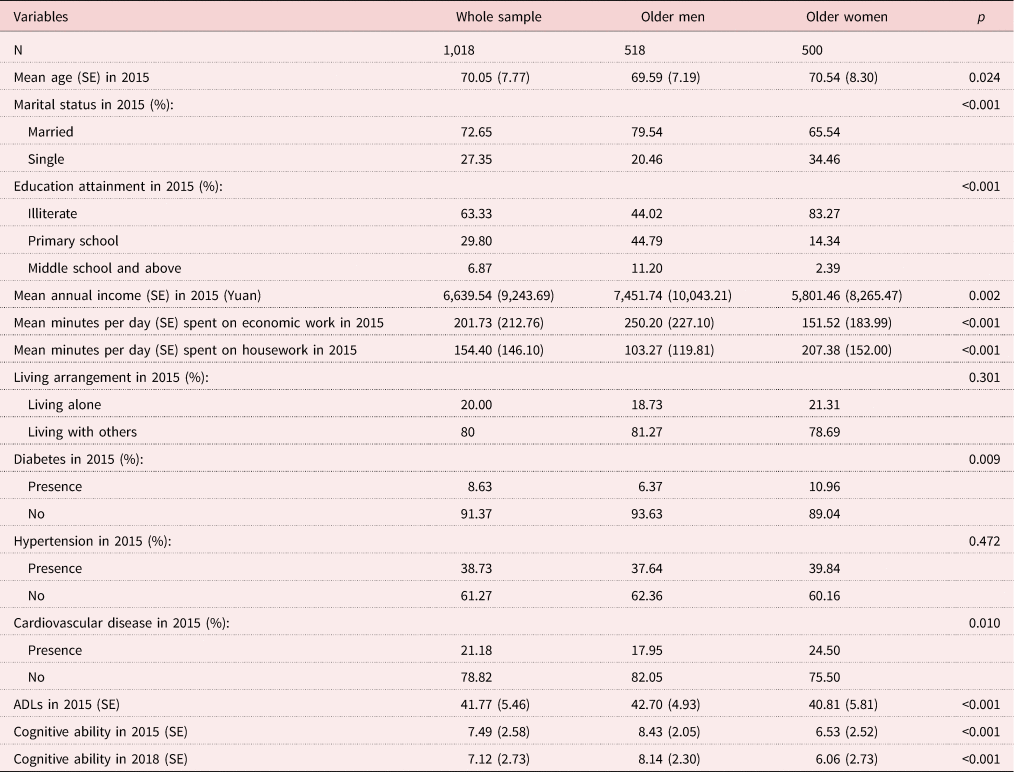
Table 1 shows the characteristics of the sample in 2015. Of the 1,018 participants in the study, 518 (50.88%) were men. The average age was 70 years old (ranging between 60 and 98), with over 70 per cent married; 63.33 per cent of the participants were illiterate. On average, the annual income of the participants was about 6,640 Yuan (Chinese currency, equal to US $980) and the daily time spent on economic and household work was about 3.36 and 2.57 hours. Twenty per cent of the participants lived alone, and the percentages of participants having diabetes, hypertension and cardiovascular disease accounted for 8.63, 38.73 and 21.18 per cent, respectively. In terms of gender differences among participants, only living arrangements and presence of hypertension did not exhibit significant difference. Compared with older women, older men were younger, more likely to be married, more educated and with better health conditions, spent less time on household work rather than economic work and were less likely to live alone. The cognitive functioning in 2015 and 2018 are also shown in Table 1. There was a little decline of the participants’ cognitive function on average, and older men reported higher levels of cognitive function than older women.
Characteristics of the sample and gender difference

Notes: SE: standard error. ADLs: activities of daily living.
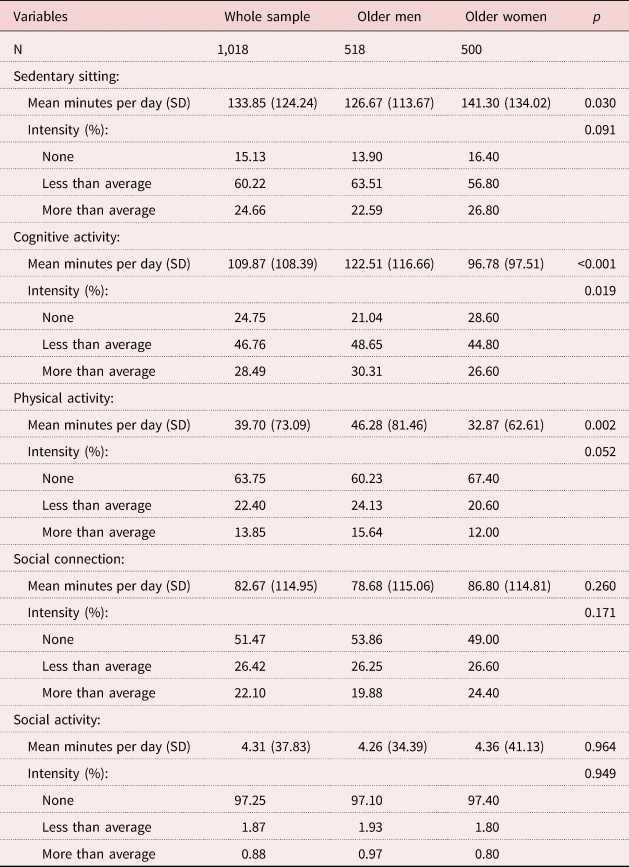
Table 2 shows the leisure time-use patterns and its gender difference among older adults in rural China. In this sample, the time spent on sedentary sitting was about 134 minutes per day on average, and only 15.43 per cent of participants reported that they did not spend time on sedentary sitting. On average, older adults spent about 110 minutes on cognitively stimulating activities, 40 minutes on physical activities, 83 minutes on social connections and 5 minutes on social activities. Less than 25 per cent of the participants did not spend time on cognitive activity, but over 60 per cent of the participants did not spend time on physical activity. In terms of social engagement, almost half the participants reported they spent no time on social connections, while over 97 per cent of the participants did not spend time on any social activity. The personal time-use shows gender patterns. Older women were less likely to spend time on cognitive activities than older men. Older men spent more time on cognitive or physical exercise while older women spent more time on sedentary sitting. There was no significant gender difference in time allocation to social engagement.
Descriptive statistics of leisure-time activities in 2015 and gender difference

Note: SD: standard deviation.
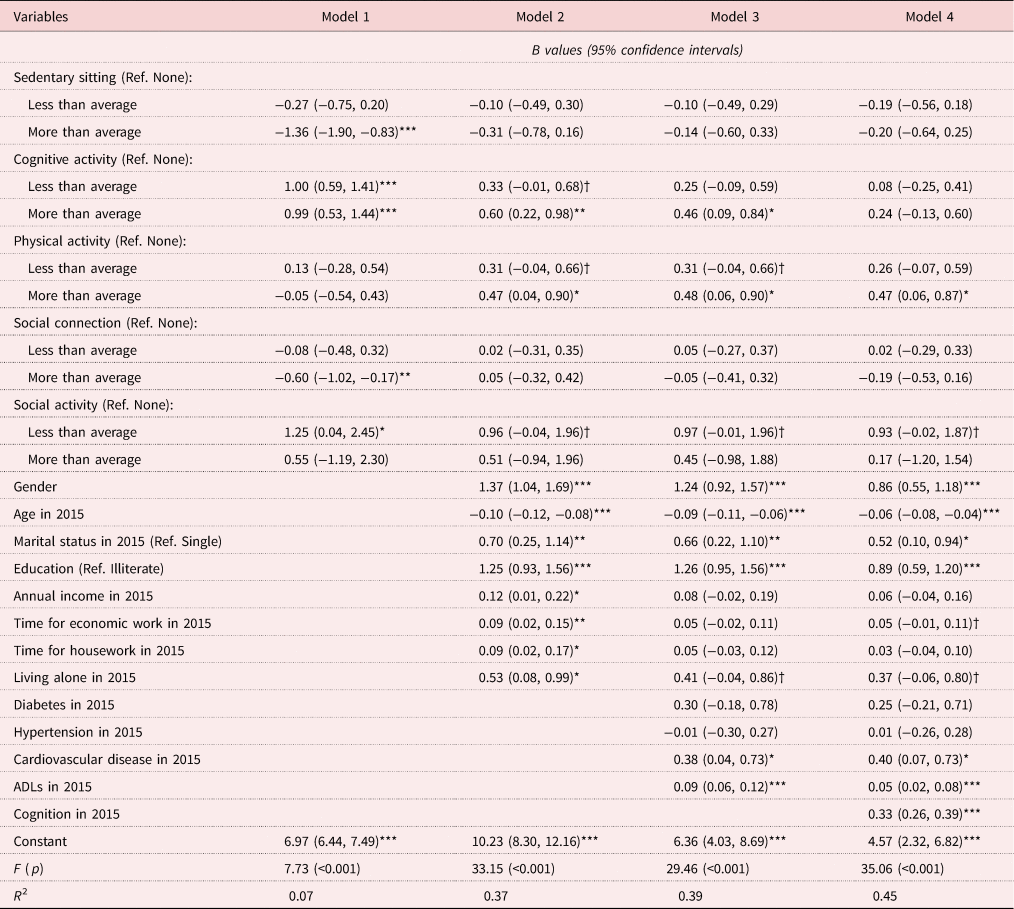
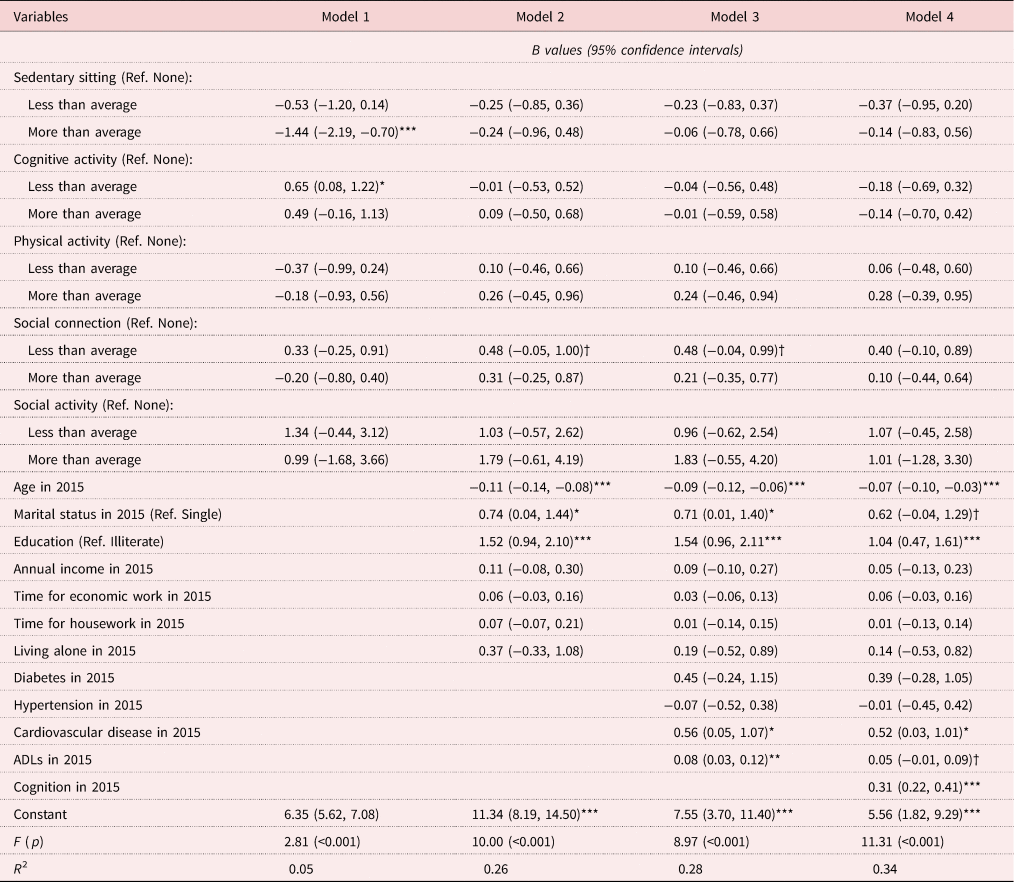
The associations between leisure activities in 2015 and cognitive function in 2018 were examined with an OLS regression (shown in Table 3). In Model 1, sedentary sitting, cognitive activities, social connection and social activities were significantly associated with subsequent cognitive function. However, in Model 4, when we controlled socio-demographic characteristics, health conditions and the baseline cognitive function, the impacts of sedentary sitting, cognitive activity and social connection on cognitive function were no longer statistically significant, while high intensity of physical activities became significantly associated with cognitive function and the association between social activity and cognitive function was only significant at the marginal level. Therefore, comparing with the older adults who spent no time on physical activity, those participants who engaged in physical activity with high intensity (more than average) maintained better cognitive function. Model 4 explained 45 per cent of the total variance of cognitive function and about 0.61 per cent was explained by physical activity effect.
Ordinary least-squares regression results for cognitive function in 2018 among the whole sample

Notes: N = 1,018. Ref.: reference category. ADLs: activities of daily living.
Significance levels: † p < 0.10, * p < 0.05, ** p < 0.01, *** p < 0.001.
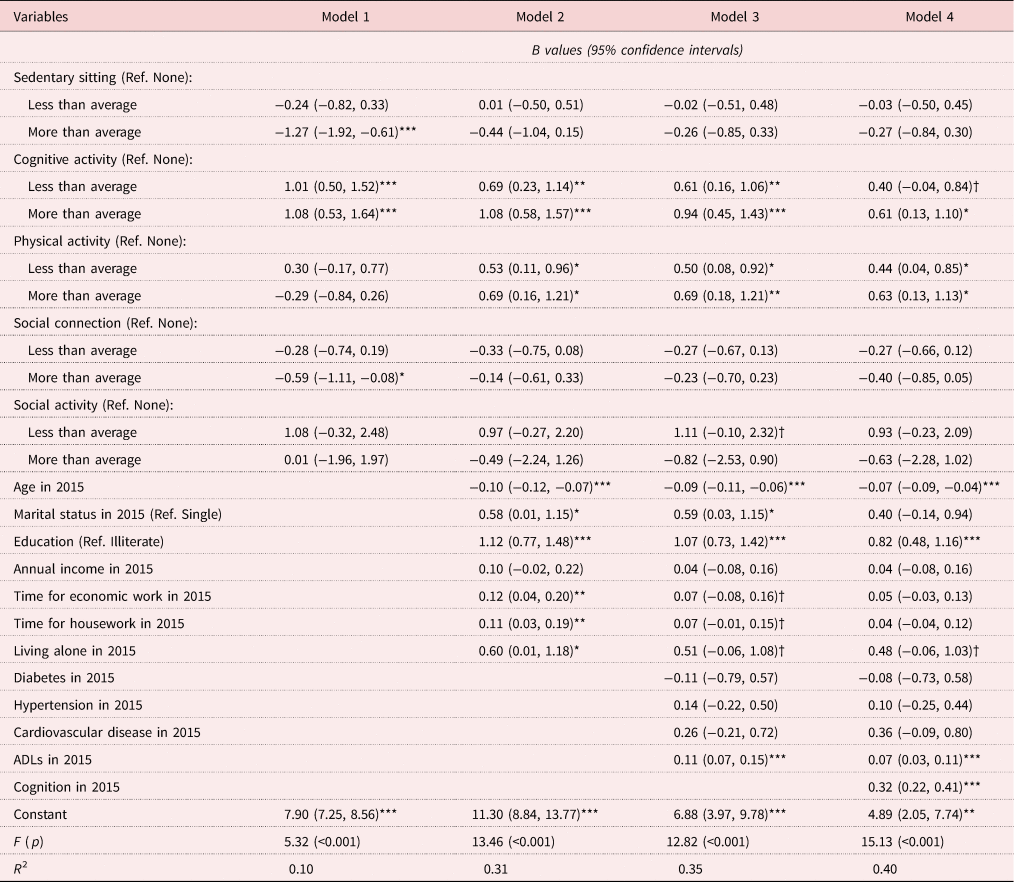
Table 4 shows the association between different types of leisure activities and subsequent cognitive function among older men. In Model 1, higher intensity of sedentary sitting and social connecting was negatively associated with worse cognitive function, whereas even lower intensity of cognitive activities has a protective effect on cognitive function. However, in Model 2, the negative impacts of sedentary sitting and social connection were no longer significant after controlling socio-demographic characteristics. The positive impact of cognitive activity on cognitive function maintained significance and physical activity became significantly associated with cognitive function. In Models 3 and 4, cognitive activities and physical activities were still positively associated with subsequent cognitive function, suggesting that engaging in cognitive activities and physical activities, especially with high intensity, reduced the risk of cognitive decline among older men. Model 4 explained 40 per cent of the total variance of older men's cognitive function and about 1.26 and 1.68 per cent were explained by cognitive activities and physical activities, respectively.
Ordinary least-squares regression results for cognitive function in 2018 among older men

Notes: N = 518. Ref.: reference category. ADLs: activities of daily living.
Significance levels: † p < 0.10, * p < 0.05, ** p < 0.01, *** p < 0.001.
Table 5 shows the associations between leisure activities in 2015 and cognitive function in 2018 among older women. In Model 1, only sedentary sitting and cognitive activity were significantly associated with subsequent cognitive function. However, in Models 2 and 3, after controlling socio-demographic characteristics of participants and health conditions step by step, only social connecting (lower than average) was significantly associated with cognitive function at the marginal level. In Model 4, when adding baseline cognitive function, none of the leisure activities were significantly associated with cognitive function, indicating that leisure activities had no direct impact on older women's cognitive function in rural China. Thirty-four per cent of the total variance of older women's cognitive function was explained by Model 4.
Ordinary least-squares regression results for cognitive function in 2018 among older women

Notes: N = 500. Ref.: reference category. ADLs: activities of daily living.
Significance levels: † p < 0.10, * p < 0.05, ** p < 0.01, *** p < 0.001.
A gender difference test for the associations between leisure-time activities and cognitive function after controlling confounders and cognitive function at baseline were conducted (detailed results are not provided here but can be provided upon request). Results confirmed that there are significant gender differences in the effects of cognitive activities (t 1 =1.82, p = 0.07; t 2 = 2.06, p = 0.04) and low intensity of social connecting activities (t 1 = −2.15, p = 0.03) on cognitive function.
Discussion
Based on data from two waves of a longitudinal survey in rural China, this study examined the impacts of different kinds of leisure activities on cognitive function three years later among older adults aged 60 and older. To our knowledge, this was one of only a few studies that divided leisure activities based on both social (or solitary) and active (or sedentary) dimensions, and compared their independent effects on cognitive function in China. Our study showed that active cognitive and physical activity was associated with better cognitive function after the adjustment of socio-economic status and health condition at baseline and mutual adjustment of leisure activities, however, these associations were more pronounced among older men. Our findings extended beyond previous knowledge that the benefits of leisure activities on the health of older adults varies by types and social context; it especially extends beyond previous understanding that even activities like watching TV, which lack social or physical components, can still benefit older adults’ functionality by improving their psycho-social function (O'Neill and Dogra, Reference O'Neill and Dogra2016).
In our study, the positive effect of engaging in cognitive activities was significant among older men, which partly supports the findings from a previous study showing that cognitive activities, such as watching TV, listening to the radio, or reading books or newspapers, was associated with lower risk of cognitive impairment among Chinese older adults in later life (Mao et al., Reference Mao, Li, Lv, Gao, Kraus and Zhou2020). In our sample, the majority of participants have a very low level of education, which may limit their ability to participate in other cognitive activities, such as reading books or newspapers. Previous studies also suggest that Chinese older adults spent the greatest amount of time watching TV in their leisure time (Su et al., Reference Su, Shen and Wei2006). Our finding provides further evidence that watching TV may serve as a major cognitively stimulative activity for Chinese older adults (Mao et al., Reference Mao, Li, Lv, Gao, Kraus and Zhou2020). One possible reason is that watching TV in rural China is a major source of information acquisition. Watching TV was found to be a risk factor for cognitive impairment or dementia in Western countries (Akbaraly et al., Reference Akbaraly, Portet, Fustinoni, Dartigues, Artero, Rouaud, Touchon, Ritchie and Berr2009; Hamer and Stamatakis, Reference Hamer and Stamatakis2014). These discrepancies in findings may be partially explained by the differences in sample characteristics and level of socio-economic development in the region. Our finding suggests that future studies on classification of leisure activities need to take the local context into consideration.
The present study found that engaging in physical activity, especially with high intensity (above average), was significantly associated with better cognitive function in follow-up after adjustment of socio-economic status and health condition at baseline and mutual adjustment of leisure activities. Our results were fairly consistent with those of previous studies which found that high physical activity provides a protective effect against cognitive impairment by promoting healthy brain ageing and reducing neurodegenerative disease risk (Etgen et al., Reference Etgen, Sander, Huntgeburth, Poppert, Förstl and Bickel2010; Buchman et al., Reference Buchman, Boyle, Yu, Shah, Wilson and Bennett2012; Livingston et al., Reference Livingston, Sommerlad, Orgeta, Costafreda, Huntley, Ames, Ballard, Banerjee, Burns, Cohen-Mansfield, Cooper, Fox, Gitlin, Howard, Kales, Larson, Ritchie, Rockwood, Sampson, Samus, Schneider, Selbæk, Teri and Mukadam2017). However, different from previous findings that physical activity was not associated with cognitive decline when participation in cognitively stimulating activities were taken into account (Verghese et al., Reference Verghese, Lipton, Katz, Hall, Derby and Kuslansky2003; Sturman et al., Reference Sturman, Morris, de Leon, Bienias, Wilson and Evans2005), our result confirmed that the beneficial effect of physical activity on cognition was independent of other leisure activities, including cognitively stimulating activity, in rural China. Our findings suggest that high physical activity was more protective against cognitive decline than other leisure activities among older adults in rural China.
Our study also extends understanding of the gender difference in leisure activities and the gender-specific effects of leisure activities on cognitive function. In this study, the time allocation in leisure activities showed a gender-specific pattern. Older women spent more time on sedentary sitting, while older men spent more time on physical and cognitive activities. There was no gender difference for the time-use in social connection and social activities. These results confirmed previous findings that men are more physically active than women in leisure time (Burton and Turrell, Reference Burton and Turrell2000; Schnohr et al., Reference Schnohr, Scharling and Jensen2003; Azevedo et al., Reference Azevedo, Araújo, Reichert, Siqueira, da Silva and Hallal2007). Moreover, there were gender differences in the association between leisure activities and cognitive function. High cognitive activity was only significantly associated with older men's cognitive capacity rather than that of older women. According to the complex environmental hypothesis, gendered patterns of leisure activities may contribute to gender difference in the association between leisure activities and cognitive function. Old women spent more time on household chores, leading to limited variations in leisure activities and fewer cognitive demands in daily activities in general, and less time to participate in cognitive activities, which in this study was found to have a protect effect among older men (Hassing, Reference Hassing2020). Therefore, our findings confirmed that the gendered pattern of time-use contributed to the gender differences in the association between cognitive activities and cognitive function.
Limitations
Several limitations of this study should be noted. Primarily, data for daily diary time-use were available only in the most recent two waves. Inclusion of more waves of observation will allow more diversified analysis into cognitive decline trajectories and their causal relationships with leisure activities. It has been suggested that leisure activities and functionality have reciprocal effects (Schooler and Mulatu, Reference Schooler and Mulatu2001; Aartsen et al., Reference Aartsen, Smits, Van Tilburg, Knipscheer and Deeg2002). Although we included three incidences of chronic diseases, ADLs and cognition in the model for the purpose of controlling for physical health at the initial stage, the possible reverse causation could not be fully ruled out. A second limitation stems from the fact that our data come from a well-defined area of central China, which is thought to typify the social and cultural conditions of poor rural areas. The rural older people had lower levels of literacy and worse health conditions than those in urban areas of China, which may limit the generalisability of the results to other populations. A third possible limitation is related to the self-reported leisure activities. Though a comprehensive 24-hour recall measure allowed us to collect more precise and accurate information of daily activities, the self-reported diary still cannot exclude the potential for over- or under-estimation of time allocation of different leisure activities. Overall means were used as reference in defining the cut-off points for the intensity of leisure activities in this study which may also restrict comparison with other studies. Finally, because we only collected the time-use for a single day per participant, it is not possible to examine the within-person variation in time over the course of a week or season. Future studies should devote more efforts to collecting week-long diaries to overcome the single-day limitation.
Conclusion
In conclusion, as the population is ageing and life expectancy is increasing, to identify how cognitive decline may be delayed or reduced has important implications for ageing well. Our study confirmed that older people's cognitive function can benefit mostly from high physical activity in rural China; and the beneficial effect of cognitive activity on cognitive function is only significant among older men. These findings have important theoretical and public health implications. When using the ‘use it or lose it’ hypothesis of cognitive ageing to explain the relationship between leisure activities and cognitive function, it is important to consider individual characteristics and social context. Moreover, our study highlights the need to consider gender differences in the relationship between leisure activities and cognitive function. It is important to consider gender-specific intervention in leisure activities to maintain cognitive function among older adults. In addition, there is a great need to develop more community-based activities and programmes tailored to the needs of the ageing population in rural China.
Acknowledgements
We would like to thank Drs Merril Silverstein, Iris Chi, Shuzhuo Li and Dongmei Zuo for their invaluable contributions to this project.
Author contributions
All authors participated in (a) the study conception and design, or the analysis and interpretation of data, (b) the drafting of the article or its critical revision for important intellectual content, and/or (c) approval of the version to be published.
Financial support
This work was partly supported by the National Natural Science Foundation of China (grant numbers 71573207, 72074177).
Conflict of interest
The authors declare no conflicts of interest.
Ethical standards
Ethical approval was obtained from the Ethical Review Committee of Xi'an Jiaotong University.