Major Depressive Disorder (MDD) and Social Anxiety Disorder (SAD) are highly prevalent in the population. It is estimated that MDD and SAD lifetime prevalence is around 16.6% and 12%, respectively (Kessler et al., Reference Kessler, Berglund, Demler, Jin, Merikangas and Walters2005; Stein & Stein, Reference Stein and Stein2008). Additionally, comorbidity rates between these disorders oscillate between 17% and 19% (Ohayon & Schatzberg, Reference Ohayon and Schatzberg2010; Stein, McQuaid, Laffaye, & McCahill, Reference Stein, McQuiad, Laffaye and McCahill1999). It is well established that these psychological disorders have a significant impact on many life domains such as educational, occupational, financial, family functioning, and are related to a heightened risk for experiencing other mental and physical problems (see Graham, Higuera, & Lora, Reference Graham, Higuera and Lora2011; Kessler, Reference Kessler2012; and Fehm, Beesdo, Jacobi, & Fiedler, Reference Fehm, Beesdo, Jacobi and Fiedler2008 for a review). Further, these disorders are not only related to higher levels of distress but also to a decrease of positive outcomes such as quality of life, happiness, and life satisfaction (Bergsma, Veenhoven, Have, & Graaf, Reference Bergsma, Veenhoven, Have and Graaf2011; Vazquez, Rahona, Gómez, Caballero, & Hervas, Reference Vazquez, Rahona, Gomez, Caballero and Hervás2015).
In addition to the symptoms that are central features of MDD and SAD (e.g., sadness, emptiness, fear, avoidance, etc.), these disorders are also characterized by abnormalities in cognitive processes such as negative cognitive biases, increases in negative cognition, and difficulties in emotion regulation (Aldao, Nolen-Hoeksema, & Schweizer, Reference Aldao, Nolen-Hoeksema and Schweizer2010; Beck, Reference Beck1967; Duque, Lopez-Gomez, Blanco, & Vazquez, Reference Duque, López-Gómez, Blanco and Vázquez2015; Joormann & Vanderlind, Reference Joormann and Vanderlind2014). With regard to negative cognitions, low levels of self-esteem and high levels of pessimism are common in both disorders (Barlow, Reference Barlow2004; Beck, Reference Beck1967, Reference Beck1976; Ingram, Miranda, & Segal, Reference Ingram, Miranda and Segal1998; Watson, Suls, & Haig, Reference Watson, Suls and Haig2002). Indeed, research has found that MDD patients report lower levels of explicit self-esteem than, for instance, healthy controls and paranoid patients as well (Valiente et al., Reference Valiente, Cantero, Vázquez, Sanchez, Provencio and Espinosa2011). There is also a negative association between explicit self-esteem and SAD which is comparable to the correlation between explicit self-esteem and depression symptoms (see de Jong, Sportel, de Hullu, & Nauta, 2012). The same pattern has been found regarding pessimism. MacLeod, Tata, Kentish, Carroll, and Hunter (Reference MacLeod, Tata, Kentish, Carroll and Hunter1997) reported that depressed and anxious patients significantly overestimated the likelihood of the occurrence of negative events and underestimated the likelihood of the occurrence of positive events. Thus, pessimism is not only related to a negative view of the future, but also to a decrease in the expectation of positive events (MacLeod et al., Reference MacLeod, Tata, Kentish, Carroll and Hunter1997). Previous research has also shown that the presence of negative cognition might have a significant effect on emotion regulation. For instance, in a diary study, Heimpel, Wood, Marshall, and Brown (2002 – Study 1), found that, after an academic, personal or interpersonal failure, participants with low self-esteem used less strategies to repair their mood than their high self-esteem counterparts. Additionally, these authors also found that, after a negative mood induction, low self-esteem participants selected to a lesser extent to watch a positive video than those participants with high self-esteem (Heimpel et al., Reference Heimpel, Wood, Marshall and Brown2002 – Study 3). This same pattern has also emerged regarding the regulation of positive emotions. Wood, Heimpel, and Michela (2003 – Study 1) found that, after a positive event, people low in self-esteem used strategies to dampen the impact of this positive affect. Further, the dampening of positive emotions was related to enhanced negative affect and reduction of positive affect (Wood et al., Reference Wood, Heimpel and Michela2003 – Study 2).
Given the high presence of these negative cognitions in both disorders (e.g., “I am not able to do that”; “I do not expect nothing good of my future”), it is likely that MDD and SAD patients will have more difficulties to use adaptive strategies to regulate their mood.
MDD and SAD patients also exhibit a significant decrease in positive emotions (Watson & Naragon-Gainey, Reference Watson and Naragon-Gainey2010). Traditionally, diminished positive emotions have been specifically linked to emotional disorders such as MDD (APA, 2000, 2013). However, recent research has shown that this decrease is a common factor across disorders including SAD (Carl, Soskin, Kerns, & Barlow, Reference Carl, Soskin, Kerns and Barlow2013). In a study analyzing different samples, Watson and Naragon-Gainey (Reference Watson and Naragon-Gainey2010) found that both MDD and SAD patients systematically report low levels of positive emotions, even when the comorbidity between these disorders was controlled. Nonetheless, the correlation between MDD symptoms and diminished positive affect was consistently stronger than the correlation between SAD symptoms and reduced positive affect, supporting an MDD-specific effect (Watson & Naragon-Gainey, Reference Watson and Naragon-Gainey2010). Still, this absence of positive emotions is notable in both disorders and may adversely affect people’s ability to regulate affect.
Indeed, Fredrickson’s broaden and build theory (1998, 2003) posits that the presence of positive emotions enhances or broadens the scope of cognitions and behaviors, which results in building additional intellectual, physical and social resources. Additionally, broadened cognitive and behavior repertories, and new resources built, will allow individuals to a better adapt (Fredrickson, Reference Fredrickson1998, Reference Fredrickson2003). Fredrickson, Mancuso, Branigan, and Tugade (Reference Fredrickson, Mancuso, Branigan and Tugade2000) found that, after a speech-stress task which increased participants’ cardiovascular reactivity, those participants who watched a video-clip which elicited contentment or amusement significantly reduced their cardiovascular reactivity compared to their counterparts who watched a sad or a neutral video-clip. This result not only provides evidence of how positive emotions encourage down regulation of negative emotions, but also provides related evidence to the benefits that positive emotions might have on physical well-being. Indeed, feeling positive emotions has been associated with positive health outcomes such as longevity, physical health, reduced inflammation, reduced likelihood of cardiovascular disease, etc., (see Howell, Kern, & Lyubomirsky, Reference Howell, Kern and Lyubomirsky2007; and Chida & Steptoe, Reference Chida and Steptoe2008 for a meta-analytic evidence). Positive emotions have an undoing effect on the impact of negative emotions (Fredrickson et al., Reference Fredrickson, Mancuso, Branigan and Tugade2000). In an eye-tracking study, Sanchez, Vazquez, Gomez, and Joormann (Reference Sanchez, Vazquez, Gomez and Joormann2014) found that, after a sad induction, those participants who attended more to happy faces showed a faster mood recovery compared to those participants who did not show this attentional pattern (Sanchez et al., Reference Sanchez, Vazquez, Gomez and Joormann2014). These results suggest that feeling positive emotions or attentional deployment towards positive information may represent an important emotion regulation strategy. Studies further suggest that both MDD and SAD are associated with deficits in responses to positive emotions. In a broad review of the existence literature, Carl et al. (Reference Carl, Soskin, Kerns and Barlow2013) argue that MDD and SAD patients are characterized by the use of emotion regulation strategies that reduce the intensity of positive emotions through, for instance, dampening.
Taken together the presence of negative cognitions and the absence of positive emotions could be related to differential use of ERs in MDD and SAD participants. Following Joormann and Siemer (Reference Joormann, Siemer and Gross2014), when a stressful event occurs, individuals experience negative emotions that they try to regulate through the implementation of explicit or implicit emotion regulation strategies (ERs). Some individuals use adaptive ERs which allow them to downregulate the effect of the stressful event, while others do not regulate successfully, or even boost or upregulate their negative affect due to the use of maladaptive ERs. This differential use of adaptive and maladaptive ERs could operate as a maintenance factor of negative emotions (Gross & Jazaieri, Reference Gross and Jazaieri2014; Joormann & Siemer, Reference Joormann, Siemer and Gross2014). Indeed, studies have indicated that MDD and SAD are characterized by a less frequent use of adaptive strategies such as reappraisal, distraction or social control and a more frequent use of maladaptive strategies such as rumination, worry or punishment (Aldao et al., Reference Aldao, Nolen-Hoeksema and Schweizer2010; Wells & Davies, Reference Wells and Davies1994). Indeed, the more frequent use of adaptive ERs is negatively related to distress and anxiety symptoms, whereas the more frequent use of maladaptive ones is strongly associated with higher levels of depression, anxiety symptoms and sustained negative affect (Barlow, Reference Barlow2004; Nolen-Hoeksema, Wisco, & Lyubomirsky, Reference Nolen-Hoeksema, Wisco and Lyubomirsky2008). So, if positive emotions help downregulate distress (Fredrickson et al., Reference Fredrickson, Mancuso, Branigan and Tugade2000), the absence of positive emotions might be associated with less use of adaptive ERs and more frequent use of maladaptive ones. The same pattern is expected in the presence of high levels of negative cognition. If negative cognitions are associated with a worse recovery from negative affect (Heimpel et al., Reference Heimpel, Wood, Marshall and Brown2002), they might be associated with less use of adaptive ERs and more use of maladaptive ones. However, this issue has not been addressed yet. A better understanding of these processes is needed to disentangle the impact of the absence of positive emotions and the presence of negative cognitions in these highly prevalent disorders.
The aim of the present study is to analyze the relation among lack of positivity, the presence of negative cognitions, and the use of emotion regulation strategies in patients with MDD, SAD and comorbid MDD/SAD. Given the worse prognosis related to the presence of more than one disorder (Dalrymple & Zimmerman, Reference Dalrymple and Zimmerman2007) and the specificity effect (Watson & Naragon-Gainey, Reference Watson and Naragon-Gainey2010) we hypothesize that both MDD and the Comorbid group will report higher levels of lack of positivity compared to the SAD group. We further hypothesize that the Comorbid group will report higher levels of negative cognitions, less use of adaptive ERs and more use of maladaptive ones. Additionally, the relations among lack of positivity, presence of negative cognitions, and the use of adaptive and maladaptive ERs will be examined. To our knowledge, this is the first study which attempts to analyze these relations in a clinical sample. We hypothesize that lack of positivity and presence of negative cognitions will be negatively related to use of adaptive ERs and positively related to use of maladaptive ERs, and that these relations will vary across the disorders.
Method
Participants
A total of 189 patients (74 men; 115 women) with a mean age of 37.08 years (SD = 12.67) were interviewed using the Structured Clinical Interview-I for DSM-IV (SCID-I; First, Spitzer, Gibbon, & Williams, Reference First, Spitzer, Gibbon and Williams1996). 64 participants were diagnosed with Major Depressive Disorder (MDD) whereas 55 participants had a main diagnosis of Social Anxiety Disorder (SAD). 70 participants were assigned to the comorbid group due to the presence of both diagnoses. Groups did not differ in gender ratio χ2(2, n = 189) = .027, p = .987, but MDD participants were older than SAD participants F(2, 186) = 6.87, p = .001.
Psychological Measures
The Beck Depression Inventory-II (BDI-II; Beck, Epstein, Brown, & Steer, Reference Beck, Steer and Brown1996) was used to assess participants’ depressive symptoms. It is composed of 21 self-report items that indicate the severity of depression symptoms by choicing between 4 statements (ranging from 0 to 3). Following Dunn et al. (Reference Dunn, Kimbrell, Ketter, Frye, Willis, Luckenbaugh and Post2002) the BDI-II was also used to assess lack of positivity by conducting a Principal Component Analysis (PCA). In the current study, the reliability of the BDI-II was very good (α = .91).
The Ruminative Responses Scale (RRS; Nolen-Hoeksema & Morrow, Reference Nolen-Hoeksema and Morrow1991) is a 22 self-report item scale that was used to evaluate participants’ rumination cognitive style using a four points Likert scale ranging from 1 (“almost never”) to 4 (“almost always”). The scale is composed of a brooding and a reflection subscale. The reliability of the scale in the present study was very good (α = .92). Subscales’ reliability in the present study were: Brooding (α = .77) and Reflection (α = .61).
The Thought Control Questionnaire (TCQ; Wells & Davies, Reference Wells and Davies1994) is a 30 self-report item questionnaire that was used to assess frequency of strategies used by participants for controlling unpleasant thoughts on a four points Likert scale ranging from 1 (“never”) to 4 (“almost always”). The TCQ is composed of five factors that correspond to different emotion regulation and thought control strategies (i.e., distraction, social control, reappraisal, worry, and punishment). The reliability of the scale in the present study was good (α = .77).
The Liebowitz Social Anxiety Scale (LSAS; Heimberg et al., Reference Heimberg, Horner, Juster, Safren, Brown, Schneier and Liebowitz1999) is a 24 item self-report scale composed of two subscales which evaluate the main components of social anxiety (i.e., fear and avoidance). Each subscale is composed of 12 self-report items ranging from 0 (“none”) to 4 (“severe”) for the Fear subscale, and from 0 (“Never”) to 4 (“Usually”) for the Avoidance subscale. LSAS was used to evaluate participants’ fear and avoidance anxiety components with a very good reliability in the present study (α = .96).
Procedure
After signing the informed consent, participants were interviewed using the SCID-I (First et al., Reference First, Spitzer, Gibbon and Williams1996) by an experienced clinician. Then, participants filled out the psychological measures.
Results
BDI-II Principal Components Analysis (PCA)
Following Dunn et al. (Reference Dunn, Kimbrell, Ketter, Frye, Willis, Luckenbaugh and Post2002) a PCA was carried out to assess the principal components of the BDI-II (Beck et al., Reference Beck, Steer and Brown1996) in our sample. Bartlett’s Test of Sphericity showed sufficient overlap among BDI-II items to conduct a PCA, χ2(210, n = 189) = 1721.74, p > .001. Additionally, the adequacy of our sample size was quantified by a Kaiser-Meyer-Olkin (KMO) = .906.
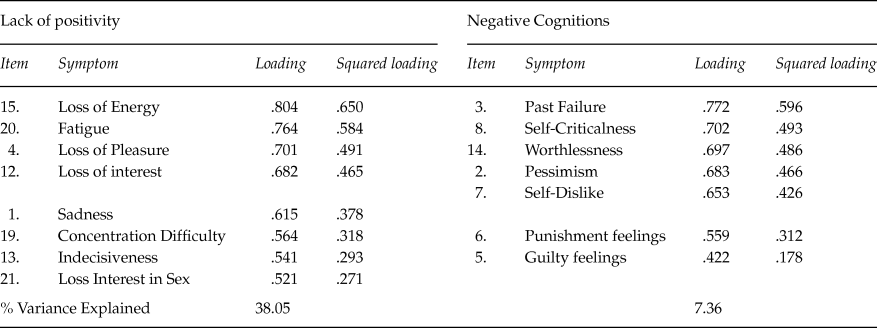
The PCA was conducted using a varimax rotation with Kaiser normalization in which those components with an eigenvalue >1 were selected. A four-component model explaining 57.14% of the total variance of the BDI-II emerged in our sample. Following Stevens (Reference Stevens2002) the significance of the factor loadings were calculated to select items. By squaring the items loading, those variables with a square loading greater than 0.4 were added to each component (Stevens, Reference Stevens2002). The first and the second components explained 38.05 and 7.36% of the BDI-II variance respectively. The first component was composed of items 4, 12, 15 and 20 (i.e. loss of pleasure, loss of interest, loss of energy and fatigue) whereas the second component was composed of items 2, 3, 7, 8, 14 (i.e. pessimism, past failure, self-dislike, self-criticalness and worthlessness). These components were conceptualized as lack of positivity and presence of negative cognitions, respectively. The correlation among these components were high (r = .585, p < .0001). The third and the fourth components were not considered for the aim of the present study. Finally, Lack of Positivity and Negative Cognitions sub-scores were computed using item loadings as weights (see Table 1).
Principal Component Analysis of Beck Depression Inventory-II

Differences among groups
A series of One-way ANCOVAs were conducted, using age as a covariate, to test differences among groups in lack of positivity, negative cognition scores, and the use of ERs. Bonferroni post-hoc comparisons were carried out.
Lack of positivity and presence of negative cognitions
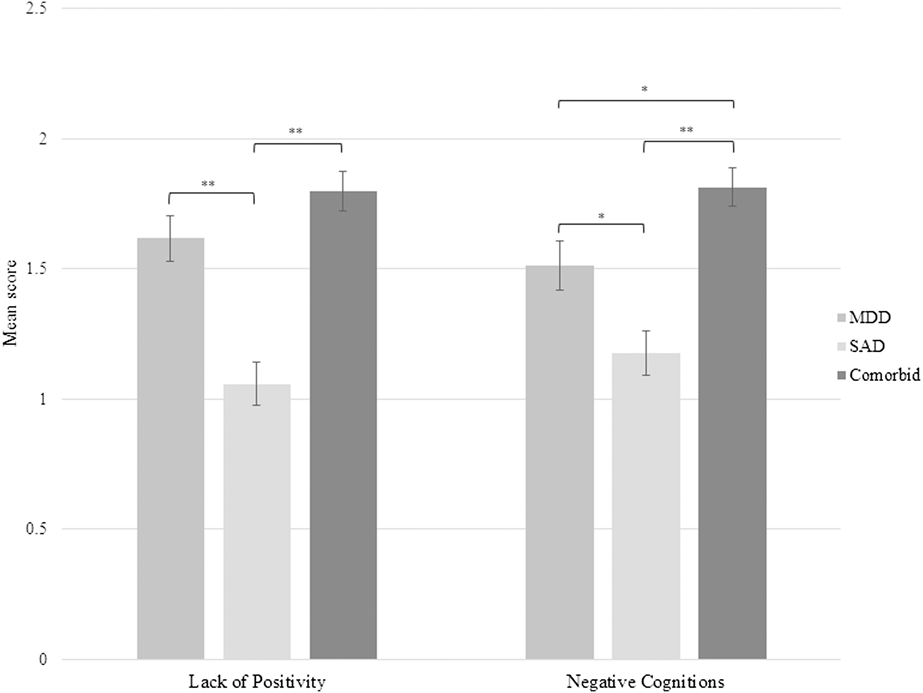
The analysis showed significant group differences in Lack of positivity, F(2, 185) = 18.92, p = .0001, η2 = .17; and Presence of Negative Cognitions F(2, 185) = 13.97, p = .0001, η2 = .13. Regarding lack of positivity, post-hoc comparisons revealed that MDD and Comorbid participants reported higher levels of lack of positivity than SAD participants, whereas there were no differences between MDD and Comorbid groups. Regarding Negative Cognitions, participants in the SAD group showed significantly lower scores than MDD and Comorbid groups. Furthermore, the MDD group also reported significantly lower scores than the Comorbid group (See Figure 1).
Differences among groups in lack of positivity and negative cognitions.

Emotion and thought regulation strategies
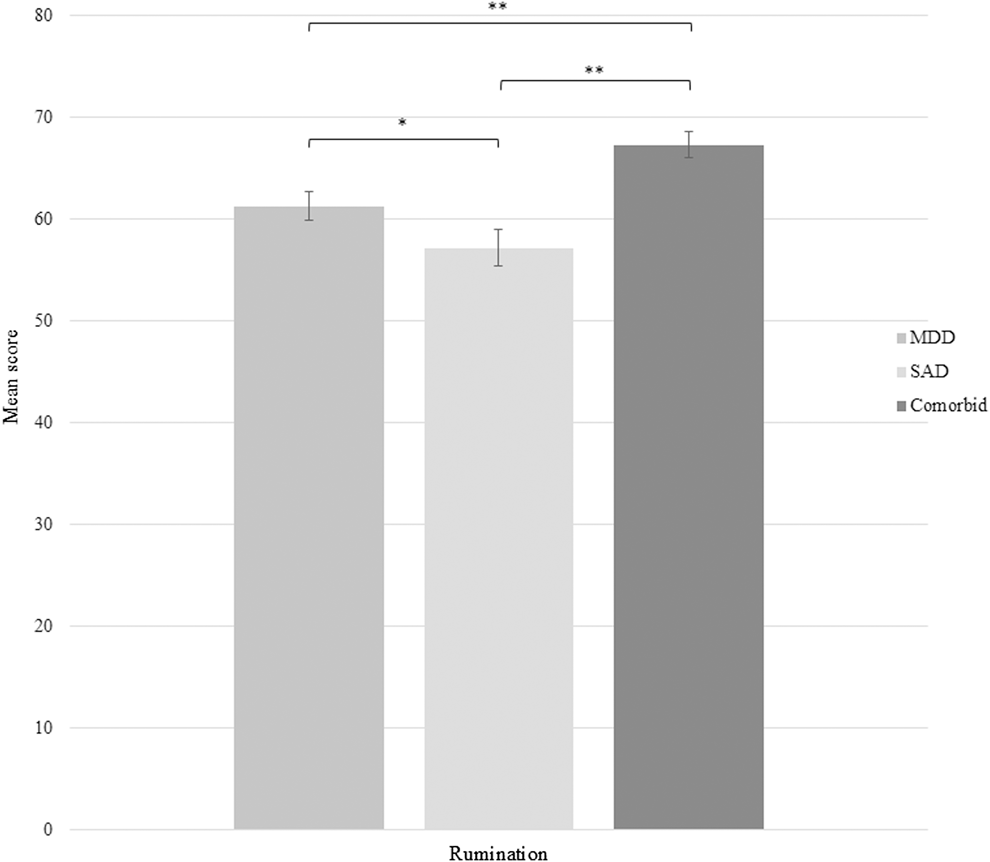
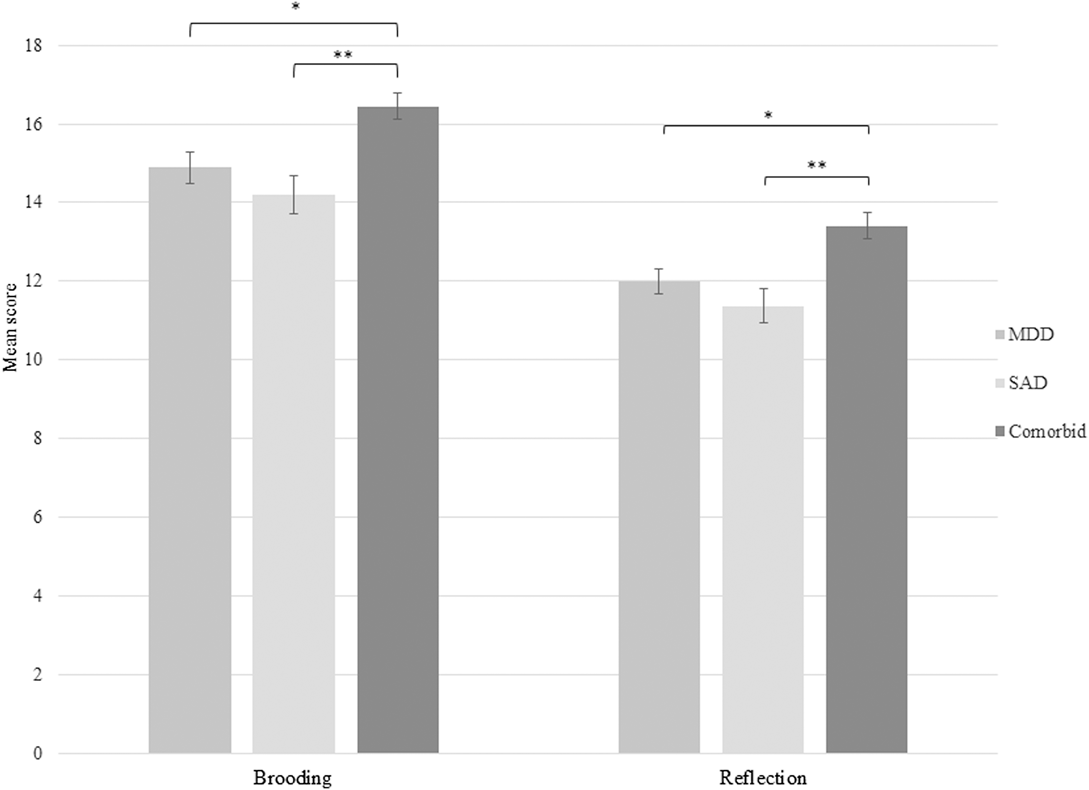
The analysis revealed significant differences among groups in total rumination scores F(2, 185) = 14.63, p = .0001, η2 = .14; as well as in brooding F(2, 185) = 10.27, p = .0001, η2 = .10; and reflection F(2, 185) = 11.14, p = .0001, η2 = .11. Post-hoc test showed that rumination scores were significantly higher in Comorbid participants comparing to MDD and SAD participants. Additionally, MDD group showed higher levels of rumination than the SAD group (See Figure 2). With regard to brooding and reflective rumination, the same significant differences emerged in post-hoc analysis. Participants in the Comorbid group reported significantly higher levels of brooding and reflective rumination than MDD and SAD participants (See Figure 3).
Differences among groups in rumination.

Differences among groups in brooding and reflective rumination.

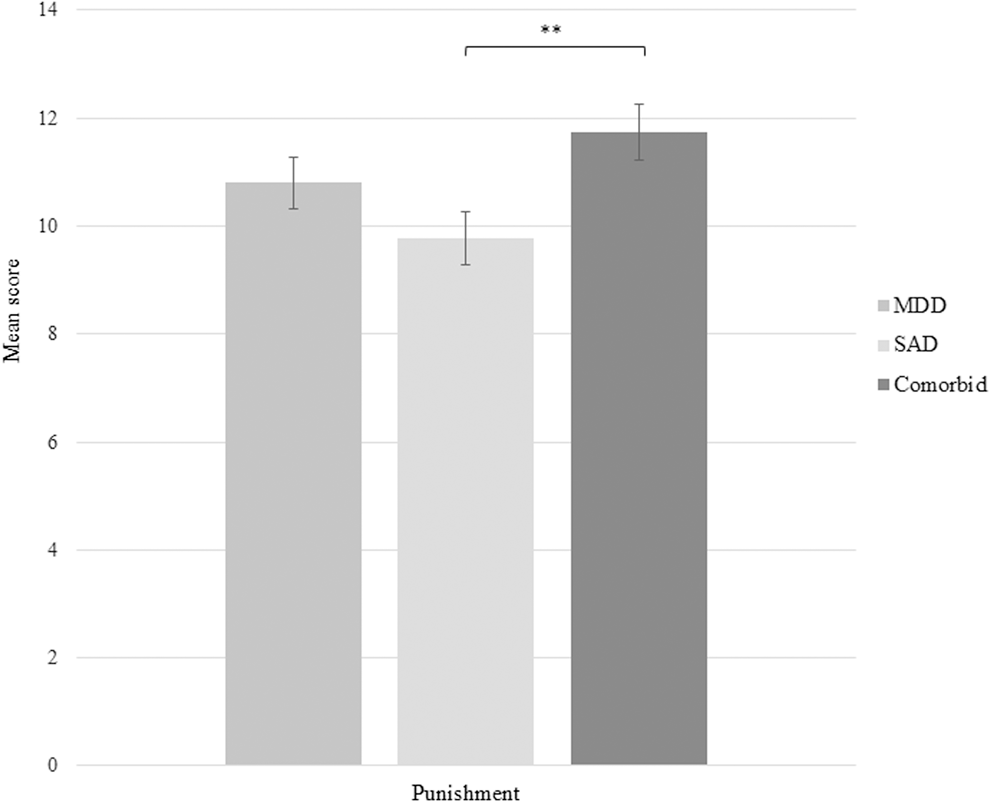
Analyses also revealed significant differences in the use of punishment strategies F(2, 181) = 7.64, p = .001, η2 = .08. Post-hoc analysis showed that SAD participants used significantly less punishment than Comorbid participants (See Figure 4).
Differences among groups in the use of punishment emotion regulation strategy.

Relations between lack of positivity and negative cognitions with social anxiety symptoms and ERs
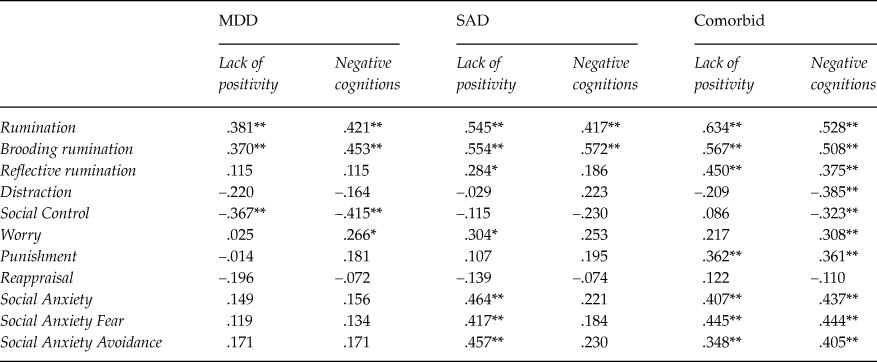
A series of Pearson correlation were conducted to assess whether the lack of positivity and the presence of negative cognitions were related to social anxiety symptoms and ERs within each group (Correlations are summarized in Table 2). Given the high correlation among lack of positivity and negative cognitions, a series of regression analyses were conducted to examine specificity.
Correlations between lack of positivity, negative cognitions, emotional regulation strategies and anxiety symptoms on each sample

Note: MDD = Major Depression Disorder; SAD: Social Anxiety Disorder. *p < .05. **p < .01.
Relations in the MDD group
Correlation analysis showed that higher levels of lack of positivity were related with higher levels of negative cognitions (r = .461, p = .0001). With regard to maladaptive ERs, those patients with higher levels of lack of positivity and negative cognitions had higher levels of rumination (r = .381, and r = .421, respectively, both p < .002) and, specifically, in the brooding rumination component (r = .370, and r = .453, respectively, both p < .003). However, regression analysis showed that negative cognitions was the only significant predictor of rumination (β = .311, p = .017), explaining 20% of its variance (adjusting R 2), and brooding rumination (β = .359, p = .006), explaining 21% of its variance (adjusting R 2). Additionally, MDD participants with higher levels of negative cognitions reported more use of worry (r = .266, p = .04). With regard to the use of adaptive ERs, those patients with higher levels of lack of positivity and negative cognitions reported less use of social support to regulate their thoughts and emotions (r = –.367, and r = –.415, respectively, both p < .004). Again, negative cognitions emerged as the only significant predictor (β = –.318, p = .016) of less use of social support explaining 22% of variance (adjusting R 2).
There were no significant correlations between lack of positivity and negative cognitions with anxiety symptoms in the MDD group.
Relations in the SAD group
Again, a high correlation between lack of positivity and negative cognitions (r = .480, p = .0001) was found in the SAD group. Regarding maladaptive ERs, the presence of higher levels of lack of positivity and negative cognitions were related with higher levels of rumination (r = .545, and r = .417, respectively, both p < .002), and also with higher levels of brooding rumination (r = .554, and r = .572, respectively, both p = .0001). Regression analyses showed that, with regard to rumination, lack of positivity emerged as a significant predictor (β = .448, p = .001) explaining 33% of the variance (adjusting R 2). Regarding brooding, both lack of positivity and negative cognitions emerged as significant predictors (β = .397, p = .002, and β = .364, p = .004, respectively) explaining 43% of the variance (adjusting R 2). Additionally, lack of positivity was also related to the reflective rumination component (r = .284, p = .036) and to more use of worry (r = .304, p = .016) in the SAD group.
Finally, lack of positivity was related to higher levels of social anxiety (r = .464, p = .001) as well as to the main core components of it, fear and avoidance (r = .417, and r = .457, respectively, both p < .002).
Relations in the Comorbid group
Analyses revealed that the presence of lack of positivity was strongly related to the presence of negative cognitions (r = .611, p = .0001). With regard to maladaptive ERs, higher levels of lack of positivity and negative cognitions were strongly related with rumination (r = .634, and r = .528, respectively; both p = .0001) and with both components of rumination, brooding (r = .567, and r = .508, respectively; both p = .0001) and reflection (r = .450, and r = .375, respectively; both p < .001). Regression analyses controlling for the overlap between lack of positivity and negative cognitions showed that, with regard to rumination, only lack of positivity was a significant predictor (β = .497, p = .0001) explaining 42% of variance (adjusting R 2). For the main components of rumination, brooding and reflection, regression analyses showed that both lack of positivity and negative cognitions (β = .410, p = .001; β = .257, p = .04, respectively) accounted for 34% of brooding component variance (adjusting R 2), whereas only lack of positivity emerged as a significant predictor (β = .352, p = .012) of the reflective component, accounting for 19% of its variance (adjusting R 2). Additionally, higher levels of negative cognitions were related to higher levels of worry (r = .308, p < .009).
Lack of positivity and negative cognitions were also related to more use of punishment (r = .362, and r = .361, respectively; both p < .002). However, regression analyses controlling for the overlap among lack of positivity and negative cognitions did not yield any significant predictors (both p > .05). Regarding the use of adaptive ERs, those patients with higher levels of negative cognitions showed less use of social support (r = –.323, p = .006) and distraction (r = –.385, p = .001) to regulate their thoughts and emotions.
Finally, lack of positivity and negative cognitions were associated with higher levels of social anxiety (r = .407, and r = .437, respectively; both p < .001) as well as with the core components of it, fear (r = .445, and r = .444, respectively; both p = .0001) and avoidance (r = .348, and r = .405, respectively; both p < .005). Regression analyses showed that, with regard to social anxiety levels, only negative cognitions emerged as a significant predictor (β = .300, p = .046) accounting for 22% of its variance (adjusting R 2). Regarding the fear component, neither lack of positivity nor negative cognitions emerged as a significant predictor after controlling for the overlap between them (both p > .05). Finally, with regard to the avoidance component, only negative cognitions emerged as a significant predictor (β = .308, p = .045) accounting for 15% of its variance (adjusting R 2). Footnote 1
Discussion
The first aim of the present study was to assess the differences among lack of positivity, presence of negative cognitions, and use of adaptive and maladaptive ERs in clinical depression, social anxiety, and a comorbid sample. Results generally supported our hypotheses. First, the depression and comorbid groups showed significantly higher scores on lack of positivity compared to the socially anxious patients. This result suggests that, although social anxiety patients show reduced levels of positive emotions, there is a specificity effect of lack of positivity in depression (Watson & Naragon-Gainey, Reference Watson and Naragon-Gainey2010) which is enhanced if both disorders are comorbid. Indeed, comorbidity seems to be associated with increased lack of positivity which, in turn, might also increase its negative consequences (Fredrickson et al., Reference Fredrickson, Mancuso, Branigan and Tugade2000).
Second, depressed compared to socially anxious patients also reported higher levels of negative cognitions. Previous research has found that the presence of negative cognitions (i.e., self-esteem and pessimism) is comparable in both depression and anxiety disorders (De Jong et al., 2012; MacLeod et al., Reference MacLeod, Tata, Kentish, Carroll and Hunter1997). In contrast, our results suggest that negative cognitions are more specifically elevated in depression compared to social anxiety disorder. Again, comorbid participants reported higher levels of negative cognitions such as negative thoughts about themselves and the future, and use more negative repetitive thinking compared to both non-comorbid groups. The comorbid group also showed more use of punishment strategies to regulate their mood than SAD participants. Again, the presence of both disorders seems to increase the impact of the disorders on both cognitive and emotion regulation outcomes. This increase in negative cognition and lack of positive affect in the comorbid group, may have significant deleterious effects and play an important role in explaining the worse prognosis and treatment response commonly associated with comorbidity (Dalrymple & Zimmerman, Reference Dalrymple and Zimmerman2007). Clearly, more research is needed to disentangle the impact that these factors have on the prognosis and treatment response of comorbid patients. Further, in terms of ERs, and although feeling guilty has been proposed as a typical feature of MDD patients (Beck, Reference Beck1976), our results suggest that there are no differences between MDD and SAD patients in the frequency of use of self-punishment as a thought or emotion regulation strategy.
In sum, and as expected, our results show that comorbid patients present, in general, greater impairments than depressed and socially anxious patients. Additionally, there is a depression specificity effect on lack of positivity and negative cognitions compared to social anxiety (Watson & Naragon-Gainey, Reference Watson and Naragon-Gainey2010).
The second aim of the study was to evaluate the relations of lack of positivity and negative cognitions with adaptive and maladaptive ERs. As hypothesized, our results showed that there are differential patterns in the associations among them, although there were no differences in the strength of the correlations among groups.
Regarding adaptive ERs, it seems that the presence of negative cognitions is related to a reduction in the ability to seek social support, but only in depressed and comorbid patients. This results suggests that negative thoughts or beliefs such as “I do not deserve anything good” or “I am not a worthy person” might lead to less seeking of social support, a common feature associated with depression (Andrews, Issakidis, & Carter, Reference Andrews, Issakidis and Carter2001; Kupferberg, Bicks, & Hasler, Reference Kupferberg, Bicks and Hasler2016). Additionally, negative cognitions are also associated with less use of distraction in the comorbid sample. Surprisingly, the use of reappraisal strategies is not associated with either lack of positivity or presence of negative cognitions.
Regarding maladaptive ERs, only the presence of negative cognitions was related to rumination and its brooding component in the MDD group. In contrast, lack of positivity emerged as a predictor of rumination in socially anxious and comorbid patients. Additionally, brooding was explained by both lack of positivity and negative cognitions in socially anxious and comorbid patients even after controlling for the overlap among them. With regard to the reflective component of rumination, lack of positivity was positively related to higher levels of reflection in the social anxiety group, whereas it emerged as a main predictor of reflection in the comorbid patients. It is possible that the presence of negative thoughts about themselves and the future is associated with a ruminative thinking style in depression, whereas the absence of positive emotions plays a more important role in triggering rumination in socially anxious and comorbid patients. The exploratory nature of the present study does not allow us to identify the causal role that lack of positivity and negative cognition may have on this dysfunctional thinking style. Given the significant role that rumination plays in the maintenance of negative affect and distress (Aldao et al., Reference Aldao, Nolen-Hoeksema and Schweizer2010), more research is needed to disentangle the effect that those variables might play.
Interestingly, fear, avoidance, and worry, all main features of anxiety disorders (APA, 2000, 2013) were positively associated with lack of positivity but not with negative cognitions in the social anxiety group. Following Fredrickson’ theory (Fredrickson, Reference Fredrickson1998, Reference Fredrickson2003) it could be hypothesizing that lack of positivity in social anxiety patients might impair the building process of new resources to deal with future concerns, leading to an increase in fear and the use of more dysfunctional problem-solving strategies such as avoidance. Again, the correlational nature of our study does not allow us to clarify the role that lack of positivity plays in the etiology and maintenance of social anxiety disorder. In any case, our results suggest that the absence of positive emotions such as interest and pleasure may have more weight in explaining fear, avoidance and worry processes in social anxiety patients than cognitive variables such as pessimism or self-esteem. In contrast, in the depression and comorbid group, the use of worry was associated with higher levels of negative cognitions. Additionally, negative cognitions were also a significant predictor of the avoidance component of anxiety in the comorbid patients.
Finally, it is worth noting the study’s strengths and limitations. This study attempts to analyze differences in lack of positivity, negative cognitions and ERs, and the relations among them, in three clinical samples. The comparison among a depression, social anxiety, and a comorbid group provides information of how the diagnosis of both disorders can enhance the presence of such symptoms and processes. Even so, the exploratory nature of the study does not allow us to assess causal directions between lack of positivity and negative cognitions and the use of ERs. Experimental research is needed to disentangle the role that lack of positivity plays in emotion regulation and in the onset and maintenance of the disorders. For instance, a controlled study where high/low trait-positive emotions’ patients are instructed to use adaptive ERs to regulate their mood after a negative mood induction will provide clearer information on how this positivity trait enhances or reduces the effect of adaptive ERs. Furthermore, and although it has been used in a previous study to assess lack of positivity and negative cognitions (see Dunn et al., Reference Dunn, Kimbrell, Ketter, Frye, Willis, Luckenbaugh and Post2002), PCA analysis with BDI scores might not be the best measure of lack of positivity. The use of specific positive measures will provide more reliable information (Watson & Naragon-Gainey, Reference Watson and Naragon-Gainey2010) about the role that specific positive emotions are playing in these disorders. In any case, this study presents a first attempt to analyze the relations of these dysfunctional processes in a clinical sample and sheds some light on the significance that positive emotions and negative cognitions have on emotion regulation process in psychological disorders.