Introduction
Precise amino acid (AA) nutrition of poultry links the physiological requirements of AAs to their nutritionally available concentration in feedstuffs. This approach however requires information on the animal's fundamental requirement and factors that regulate it. The most fundamental of AA requirements is captured in the measurement of inevitable losses, which is measured at the distal ileum as inevitable endogenous flow (Akinde et al., Reference AKINDE, KLUTH and RODEHUTSCORD2011). Some reports (Fernandez-Figares et al., Reference FERNANDEZ-FIGARES, NIETO, PRIETO and AGUILERA2002) have termed these physiological losses as endogenous losses, however this is an over simplification as not all endogenous losses are obligatory in nature (Stein et al., Reference STEIN, SÈVE, FULLER, MOUGHAN and DE LANGE2007).
Generally the flow of AAs at the terminal ileum is compartmentalised into two broad classes: exogenous and endogenous flow. The endogenous portion originates from the animal basal metabolism detached from the AA quality of feedstuffs- the so called inevitable endogenous ileal flow (IEIF); and from direct stimulation by intrinsic feed ingredient attributes otherwise called specific endogenous ileal flow (SEIF) (Stein et al., Reference STEIN, SÈVE, FULLER, MOUGHAN and DE LANGE2007).
Both IEIF and SEIF are composed of endogenous N materials (residues of saliva, enzymes, spent mucosa cells, abraded gut wall materials as well as de novo synthesised microbial proteins, Nyachoti et al., Reference NYACHOTI, DE LANGE, MCBRIDE and SCHULZE1997). However while SEIF relates to a fed state, IEIF refers to the condition of zero AA/N intake and is an aspect of gut obligatory losses alongside urinary inevitable losses (the minimum AA/N catabolism due to inefficiency in basal body protein turnover, Moughan and Fuller (Reference MOUGHAN and FULLER2003)). In terms of crude protein (CP), these obligatory losses aggregate into the total gut inevitable losses (GIL, the CP recovered from the excreta under basal conditions or the net maintenance protein requirement in poultry (Akinde et al. (Reference AKINDE, KLUTH and RODEHUTSCORD2010)). Net AA maintenance requirement is determined however using whole body retention assay (Edwards et al., Reference EDWARDS, FERNANDEZ and BAKER1999) for reasons that include postileal microbial putrefaction.
As a physiological flow, IEIF has scientific and practical significances that need to be studied and quantified. Estimates of IEIF find application in conventional standardised ileal digestibility (cSID) feed evaluation scheme as support costs associated with feed ingestion, to enable the computation of AA requirements on standardised digestible basis (Lemme et al., Reference LEMME, RAVINDRAN and BRYDEN2004). However the relevance of IEIF transcends the measurements of digestibility, because it is firstly a component of maintenance metabolism. In this connection, it is integrated in factorial computation of dietary AA requirements which seeks to partition the physiological needs into an inevitable fraction and those for production levels (Owens and Pettigrew, Reference OWENS and PETTIGREW1989; Moughan and Fuller, Reference MOUGHAN and FULLER2003).
While the need for further scientific advances in what constitutes IEIF and how it is regulated are generally recognised, progress is limited by validity/precision issues in available assays (Adedokun et al., Reference ADEDOKUN, ADEOLA, PARSONS, LILBURN and APPLEGATE2011). Approaches currently in use include homoarginine, enzyme hydrolysed casein (EHC), radioisotope, fasting, linear regression and protein free diet (PFD) (Nyachoti et al., Reference NYACHOTI, DE LANGE, MCBRIDE and SCHULZE1997) - all differing in strengths and limitations. Among these methods the linear regression approach (LRA) represents a unique and objective mathematical path to circumvent some of the severe challenges (see merits of LRA) obstructing valid conclusions on IEIF. Fortuitously the LRA further furnishes information on ileal digestibility uncoupled from IEIF while accounting for SEIF. This capability to conclude on ileal digestibility is based on the interpretation of the slope of regression as representing the AA/CP digestibility in the assay feedstuff (Bielorai et al., Reference BIELORAI, IOSIF and NEUMARK1985).
This ‘slope’ digestibility, referred to in this submission as ‘ileal digestibility by regression’ (IDR), has key advantages over other common indices of digestibility, viz, cSID as defined/measured presently, apparent ileal digestibility (AID) and true digestibility (TD) systems. While cSID deducts IEIF and allows for SEIF effect in the computed digestibility (Lemme et al., Reference LEMME, RAVINDRAN and BRYDEN2004), IDR systematically excludes the interference of IEIF to capture only the influence of SEIF. Consequently IDR circumvents methodological burdens connected with valid estimation of IEIF (latter discussed). The sophistication of IDR supersedes TD (Stein et al., Reference STEIN, SÈVE, FULLER, MOUGHAN and DE LANGE2007) in that TD corrects for all endogenous flows (IEIF+SEIF). Thus TD is not useful to discriminate the AA value among ingredients based on SEIF. On its part AID lacks merit because it makes no distinction between unabsorbed exogenous AA and those of IEIF and SEIF. This review describes the LRA, its merits and demerits as well as key preconditions that must be fulfilled when used to estimate IEIF/digestibility. This paper further identifies weaknesses in the cSID system especially regarding the measurement and usage of IEIF to correct AID and how LRA/IDR may help improve this system.
Linear regression approach to estimate inevitable flow and ileal digestibility
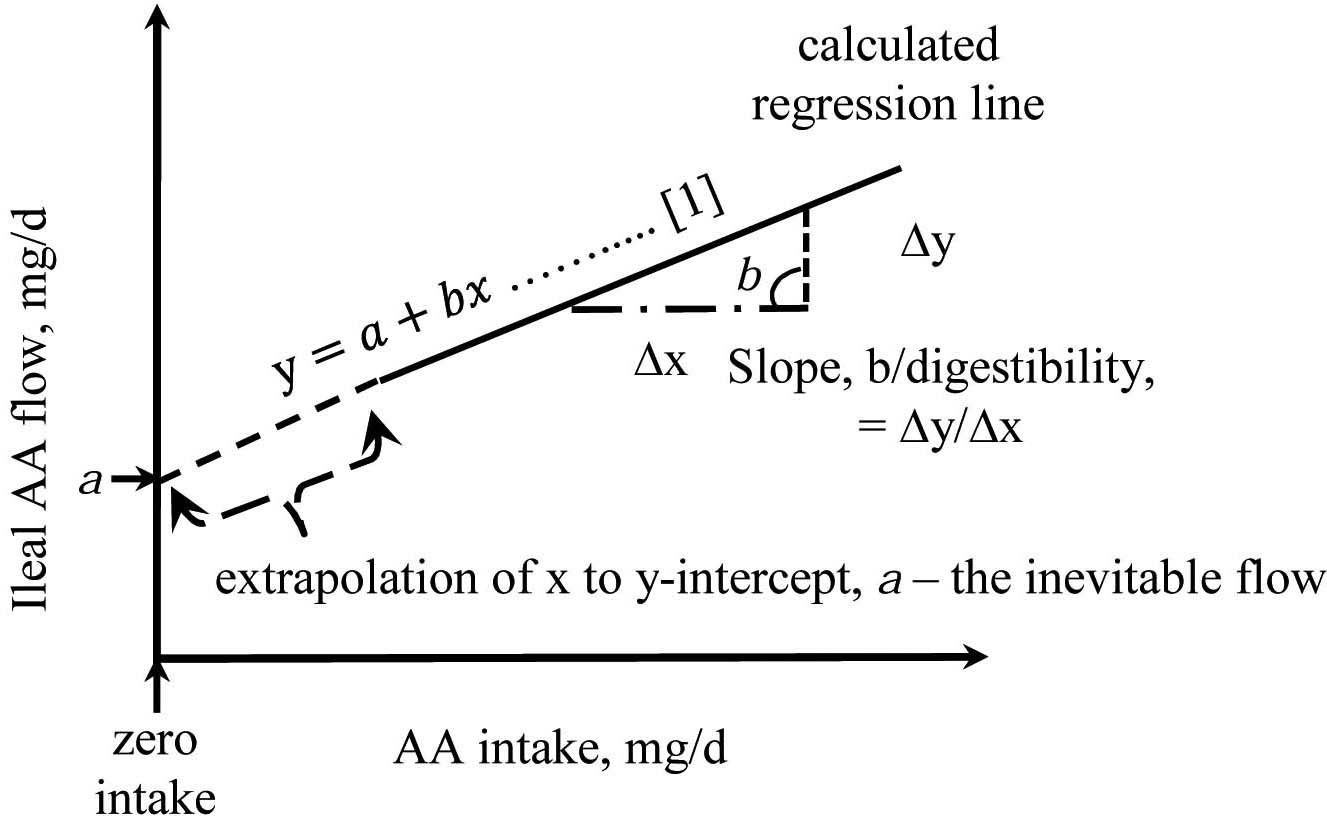
The LRA is based on fitting a linear curve (Figure 1) to quantitative data relating AA/CP intake to flow at the terminal ileum. The calculated line is subsequently extrapolated to zero intake condition to compute the best-fit value of the y-intercept (IEIF). The first derivative b (∆y/∆x) (slope) of the curve designated as digestibility (IDR) may as well be computed. The basic data used for these computations is generated in dose-ileal response studies implemented by feeding graded levels of a test protein while all other dietary variables are held constant.
Schematic representation of regression approach to study inevitable ileal endogenous flow and standardised ileal digestibility by regression.

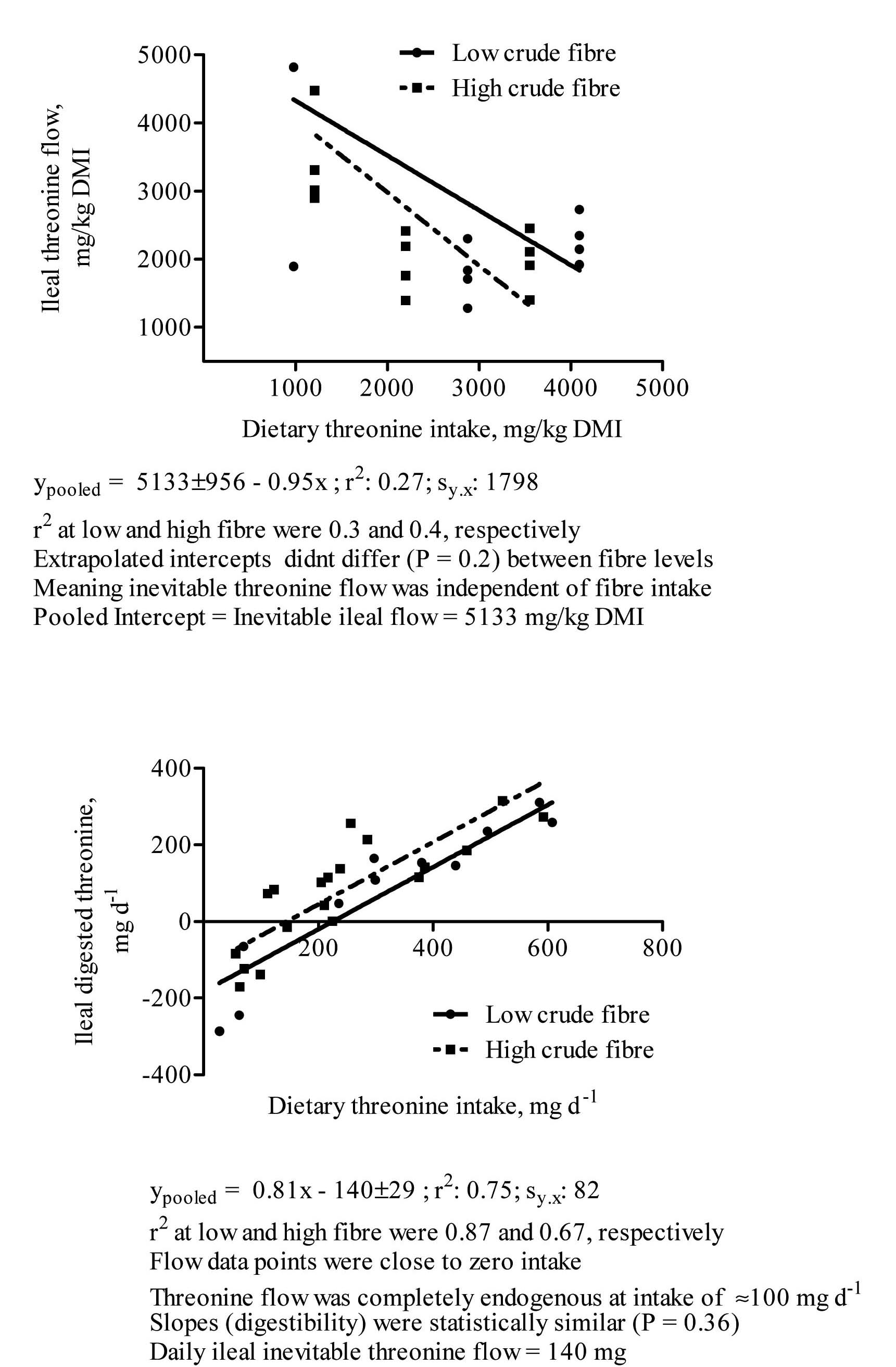
Akinde et al. (Reference AKINDE, KLUTH and RODEHUTSCORD2011) used this approach to fit threonine flow (Figure 2, upper fit) in Pekin ducks to subsequently estimate its IEIF. Alternatively flow data may be expressed on digested AA/CP basis and regressed on intake. In this case the extrapolated y-intercept will be on the negative axis of the ordinate, as shown on Figure 2 (lower plot) with the same threonine data recalculated on mg/d basis.
The regression of ileal flow (upper panel) or digested amount (lower panel) of threonine in dependence on daily dietary threonine intake (based on Akinde et al., Reference AKINDE, KLUTH and RODEHUTSCORD2011).
Furthermore digested AA/CP may be regressed against the dietary mass of the test feedstuff (Short et al., 1999). The common linear function (Figure 1, equation 1) which models the LRA can be re-expressed as:
ileal AA flow=inevitable AA flow + slope × dietary AA intake% [2]
ileal digested AA=AA digestibility (IDR) × dietary AA intake − inevitable AA flow [3]
In equation [2] unlike [3] the slope cannot equate IDR since it measures unabsorbed AAs. Therefore in this case, IDR=1 – slope [4]
The simple linear regression analysis described until now refers to an experimental design in which all dietary AAs or their rates of change accrued solely to a test protein (Rodehutscord et al., Reference RODEHUTSCORD, KAPOCIUS, TIMMLER and DIECKMANN2004). But this has to give way to multiple linear regression analysis when the test protein is added incrementally to a basal diet which also contributes to the total AA pool in the test rations (Rezvani et al., Reference REZVANI, KLUTH, BULANG and RODEHUTSCORD2012). The basic model can be described as:
y= basal Xbasal test Xtest + ε [5]
where y=digested AA mg/d; α=intercept term; βbasal=coefficient of AA digestibility in basal diet; Xbasal=AA intake in basal diet, mg/d; βtest=coefficient of AA digestibility in test protein; Xtest=AA intake from test protein, mg/d; and ε=error term (Rezvani et al., Reference REZVANI, KLUTH, BULANG and RODEHUTSCORD2012). This statistical modification helps to accommodate potential variations in the contribution of the basal diet to the total AA intake in the likely event of changes in effective intake of the test protein. Essentially this adjustment applies to the difference as opposed to using the direct method of calculating AID (Lemme et al., Reference LEMME, RAVINDRAN and BRYDEN2004). Bielorai and Iosif (Reference BIELORAI and IOSIF1987) and Fan et al. (Reference FAN, SAUER and MCBURNEY1995) implemented the LRA with quantitative data on ileal digested AA generated via the direct method. It should be noted thus that IDR is a partial digestibility since it is derived using AIDs of individual set of complete assay diets containing the test ingredient. Nevertheless it defines the AA value of the ingredient because the measured changes in AA intake/AIDs accrued solely to the test ingredient (Rodehutscord et al., Reference RODEHUTSCORD, KAPOCIUS, TIMMLER and DIECKMANN2004).
Kong and Adeola (Reference KONG and ADEOLA2013b) expressed an opinion that, to have adequate linearity (thus slope validity), the initial CP level in the basal diet must necessarily be at supra maintenance level. This scepticism fundamentally questions the linear slope methodology and merits investigation. The principle, however, is that the slope/digestibility is asymptotically stable at all values of AA/CP intake, at least mathematically. On the other hand concerns about the basal CP level in flow/digestibility assays relate to the so called ‘plateau effect’ (due to curvilinear relationship between IEIF and ileal AAs/N flow, latter addressed) which interferes with computation of AID for cSID determination (Fan et al., Reference FAN, SAUER, HARDIN and LIEN1994; Lemme et al., Reference LEMME, RAVINDRAN and BRYDEN2004). A related problem detected in the difference method is that if the basal CP/diet supplies AAs below the physiological requirement, feed intake is adversely affected and consequently the calculated AID/rate of AA flow (Ganzer et al., Reference GANZER, KLUTH and RODEHUTSCORD2006).
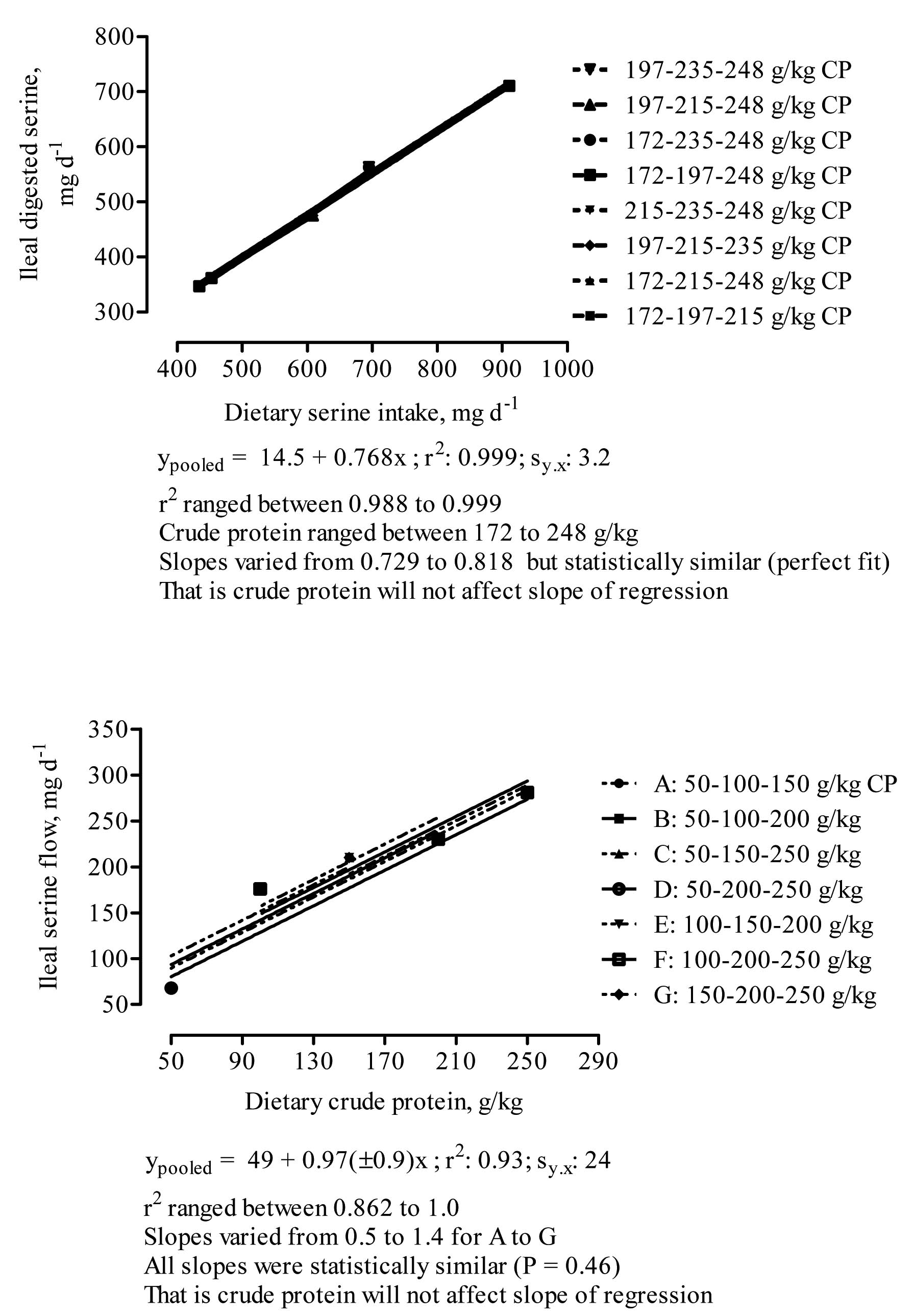
The argument that dietary CP is neutral to IDR was evaluated by computing slopes based on quantitative ileal flow data in broilers published by Siriwan et al. (1993). The data of Siriwan et al. (Reference SIRIWAN, BRYDEN, MOLLAH and ANNISON1993) is particularly suitable because it affords the chance to elucidate the slope at both physiologically deficient and adequate zones of AA supply. Therefore seven regressions were generated using serine as test AA, by selecting three CP levels (involving limiting and adequate levels) out of the five levels (500, 1000, 1500, 2000 and 2500 mg/kg CP) reported by Siriwan et al. (Reference SIRIWAN, BRYDEN, MOLLAH and ANNISON1993). These computations were carried out with GraphPad Prism 5.0 (GraphPad Software Inc., San Diego, CA). Results confirmed that linearity was neither altered by initial level nor test CP range in broilers (Figure 3, upper fit).
Dietary crude protein level or range neither affected the linear relationship between ileal flow and intake of serine plus associated slope (upper panel) nor the computation of inevitable endogenous serine flow (recalculated from data reported by Siriwan et al., 1993).
In each case all fitted regressions were in almost perfect symmetry, and their slopes were statistically similar (P>0.05). In other investigations with 20, 60 and 100 g/kg CP in Pekin ducks, linear regressions were calculated with coefficient of determinations as high as 99% for individual AAs in substantiation of the linear model (Akinde, Reference AKINDE2007, unpublished data; Akinde et al., Reference AKINDE, KLUTH and RODEHUTSCORD2011). That is, IDR is a physiological constant property of a feedstuff/protein imposed by its physiochemical properties, irrespective of where assay data points begin or end on the cartesian plane.
Therefore it is concluded that dietary AA/CP intake is not a methodological precondition in the LRA, and thus the level used in linear regression will not confound IDR estimates. Given this asymptotic stability, IDR should also be categorised as a standardised digestibility. Therefore the term ‘standardised digestibility by regression’ (SIDR) is proposed as an alternative term for IDR, consistent with conventional definition of standardised digestibility (Lemme et al., Reference LEMME, RAVINDRAN and BRYDEN2004). These conclusions have economic implications regarding the cost of generating standardised digestibility databases.
Assumptions, facts and preconditions in the regression approach
Key assumptions and preconditions undergirding valid application of the LRA are:
1. Linear relationship between ileal AA/CP flow and dietary AA intake/concentration has to be established or assumed. This assumption has been confirmed, severally in poultry. Linearity suggests that the AA flow or absorption rate at the terminal ileum is independent of the dietary supply level. This contrasts the quadratic segmented plateau and other curvilinear approaches describing N intake and ileal digestibility (Fan et al., Reference FAN, SAUER, HARDIN and LIEN1994) or total gut N excretion (Akinde et al., Reference AKINDE, KLUTH and RODEHUTSCORD2010).
2. The y-intercept defines IEIF. If the ileal flow is proportional to intake (as proven by the regression line, Figure 1), then it is a mathematical fact that when the intake is zero, the y-intercept must represent the inevitable AA flow.
3. The slope as first derivative of the linear function relates to digestibility because it captures the proportion of ingested AA that either escaped (Figure 2 upper panel) or is recovered within the ileum (Figure 2 lower panel).
4. To study IEIF a highly deficient AA level close to the origin of the x-coordinate plane must necessarily be the first level in the experimental design. This is because basal N metabolism can only be quantified in near complete N inanition (Moughan and Fuller, Reference MOUGHAN and FULLER2003) and ensures statistical validity since the farther the data points from the origin the bigger the error of intercept estimation (Fan et al., Reference FAN, SAUER and MCBURNEY1995). Therefore the first dietary treatment used by Akinde et al. (Reference AKINDE, KLUTH and RODEHUTSCORD2011) to determine IEIFs of AAs/N in adult ducks contained 20 g/kg CP. But such CP dilution could be lethal to young animals. Therefore Akinde et al. (Reference AKINDE, KLUTH and RODEHUTSCORD2010) doubled the first dietary CP dose to 50 g/kg in a related study with 14 day old ducklings. This is not necessary however if digestibility is the sole interest.
5. Assumption of a static or constant flow in IEIF at all levels of N intake. This assumption is implicit in the linear curve because if AA flow and intake are proportionally related then it must mean that the inevitable flow (intercept) is a static AA requirement at all level of intake. Whereas Ravindran and Bryden (Reference RAVINDRAN and BRYDEN1999) argued that this is not necessarily true, Fan et al. (Reference FAN, SAUER and MCBURNEY1995) attempted to elucidate this question in swine by calculating regressions between 40 and 240 g/kg CP of diet. The authors observed large differences among extrapolated intercepts across different ranges of dietary CP concentration. Nevertheless they also noted that some CP ranges generated intercepts with huge error of determination (SE); so that the observed differences in the inevitable flows could be mere statistical deviations unrelated to the animal biology (Fan et al., Reference FAN, SAUER and MCBURNEY1995).
Because there does not appear to be any published study of this nature in poultry, this assumption was further tested in this paper with the same serine data used earlier on. Seven (A, B, C, D, E, F and G) regressions were fitted always initiated from data points closest to zero, and their y-intercepts statistically compared (GraphPad Prism 5.0, GraphPad Software Inc., San Diego, CA). Parameter estimates (data not shown) were similar for all tested CP ranges except that the y-intercepts were highly heterogenous, ranging between 9 and 105 mg/d with SE spanning 2 to 53 (Figure 3, lower panel). Regardless, intercepts did not differ statistically (P>0.05). Therefore there was no evidence that intercept will depend on the N ingestion level. This conclusion differs to Fan et al. (Reference FAN, SAUER and MCBURNEY1995).
The dilemma here apparently is that the farther the tests travel on the regression line, the farther will be the range of CP from the x-origin, and consequently the farther the distance of extrapolation to the state of N inanition. The effect of these in the present evaluation is that at some points the statistical operations were conflicting with the physiological definition of IEIF. The closest data points to the x-origin in the present exercise came from CP ranges that contained 50, 100 or 150 g/kg (Figure 3, lower panel) while the minimal levels used by Fan et al. (Reference FAN, SAUER and MCBURNEY1995) were 40, 80, 120, 120 or 160 g/kg CP for the individual intercepts calculated.
A key finding in the present exercise as shown in Figure 3 (lower panel) is that by having data points from both the limiting and super adequate N supply regions, the SE of the intercept is benefited. This has never being reported until now. Further comprehensive studies are recommended on this topic, to test more gentle gradations and wider AA treatments so as to facilitate more robust statistical evaluation of intercepts/IEIFs across the regression line. It should be acknowledged at any rate that the assumption of a static inevitable flow at all points on the regression line is theoretically consistent in so far IEIF is a maintenance cost.
Another layer to this concept is the possibility of the linear trajectory being bent into a curvilinear if increasing inclusion a protein containing high antinutrients causes disproportional changes in endogenous secretions on the response path (Fan et al., Reference FAN, SAUER and MCBURNEY1995). Such theorised perturbations may then become a weakness of the LRA when ingredients containing high fibre, phytates etc. are to be studied. But this effect has never being observed, since test ingredients are supplemented typically in equal gradations (Akinde et al., Reference AKINDE, KLUTH and RODEHUTSCORD2011). Kluth et al. (Reference KLUTH, MANTEI, ELWERT and RODEHUTSCORD2005) used the LRA to study four pea cultivars having native trypsin inhibitor activity and total phenols ranging between of 2.18 to 3.4 and 1.8 to 2.47 g/kg DM respectively. Each cultivar was fed at 0, 150 and 300 g/kg to growing broilers between 14 and 21 d of age. Although it was observed that energy digestion was significantly depressed at the highest pea inclusion (relative to the pea free basal diet), the linear course nevertheless was not altered in all cultivars regardless of the antinutrients constitution (Kluth et al., Reference KLUTH, MANTEI, ELWERT and RODEHUTSCORD2005).
Estimates of inevitable AA flow in poultry via linear regression
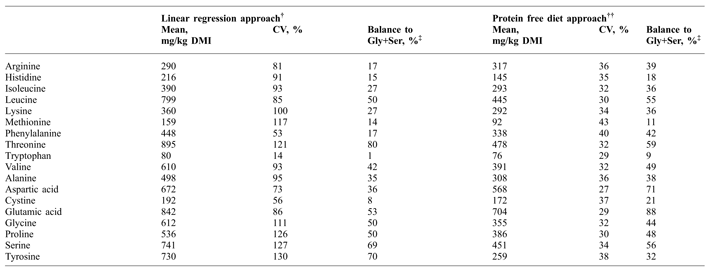
Estimates of IEIF based on LRA are not as widespread in literature, unlike the PFD method, obviously because the latter is simpler (Nyachoti et al., Reference NYACHOTI, DE LANGE, MCBRIDE and SCHULZE1997). A comparative review of five or nine studies which respectively implemented the LRA or PFD in broilers is presented in Table 1.
Comparative variability in ileal inevitable endogenous amino acid flow and inevitable protein composition estimated by linear regression or protein free diet approach in growing broilers• .
• Birds were respectively between 15 - 35 d and 15 - 42 d in linear regression and protein free diet studies.
†Based on the data reported by Bielorai and Iosif (Reference BIELORAI and IOSIF1987), Siriwan et al. (Reference SIRIWAN, BRYDEN, MOLLAH and ANNISON1993), Lemme et al. (Reference LEMME, RAVINDRAN and BRYDEN2004), Adedokun et al. (Reference ADEDOKUN, LILBURN, PARSONS, ADEOLA and APPLEGATE2007a) and Golian et al. (Reference GOLIAN, GUENTER, HOEHLER, JAHANIAN and NYACHOTI2008).
††Based on studies undertaken by Kadim et al. (Reference KADIM, MOUGHAN and RAVINDRAN2002), Ravindran et al. (Reference RAVINDRAN, HEW, RAVINDRAN and BRYDEN2004), Adedokun et al. (Reference ADEDOKUN, LILBURN, PARSONS, ADEOLA and APPLEGATE2007a), Golian et al. (Reference GOLIAN, GUENTER, HOEHLER, JAHANIAN and NYACHOTI2008), Szczurek (Reference SZCZUREK2009),
Soleimani et al. (Reference SOLEIMANI, KASIM, ALIMON, MEIMANDIPOUR and ZULKIFLI2010), Adedokun et al. (2014), Kong and Adeola (Reference KONG and ADEOLA2013b) and Kong and Adeola (Reference KONG and ADEOLA2013c).
‡Amino acid balance denominated by the sum of the inevitable flow of glycine and serine.
Average of studies within method showed that threonine, glutamic acid, leucine, serine and tyrosine exhibited the highest inevitable flow rates in LRA, while glutamic and aspartic acids, threonine, serine and leucine were the top five overall picked by the PFD approach. Nevertheless in both techniques, quantitative rankings of AAs across individual studies in review were inconsistent (data not shown). It was also clear that IEIFs from LRA were between 105% (tryptophan) to 282% (Tyrosine) higher than PFD studies (except arginine), indicating that LRA estimates are generally higher than those from PFD. Variability characterised by coefficient of variation (CV%) indicated all AAs (except tryptophan) strongly differed among studies (56–130%), suggesting low reproducibility of IEIF in the LRA method. High variability in the LRA data set reflects differences in age of birds and type of protein used. For example while Bielorai and Iosif (Reference BIELORAI and IOSIF1987) used only soybean meal (SBM), Siriwan et al. (Reference SIRIWAN, BRYDEN, MOLLAH and ANNISON1993) supplied protein by combining wheat, sorgum, SBM, meat meal and casein. Therefore methodological standardisation is strongly recommended for the LRA. In the PFD dataset, a much lower and more evenly distributed level of variation was calculated across individual AAs (27 to 43%). Variation in the PFD approach is attributable inter alia to differences in the relative content of corn starch to dextrose in the assay diets across studies reviewed (Kong and Adeola, Reference KONG and ADEOLA2013a).
Some investigators (Adedokun et al., Reference ADEDOKUN, LILBURN, PARSONS, ADEOLA and APPLEGATE2007a; Reference ADEDOKUN, PARSONS, LILBURN, ADEOLA and APPLEGATE2007b; Golian et al., Reference GOLIAN, GUENTER, HOEHLER, JAHANIAN and NYACHOTI2008) observed agreements between PFD and LRA implemented with EHC or casein. The latter findings should be cautiously interpreted since the protein making up the inevitable flow may differ between purified casein/EHC and assay proteins sourced from practical ingredients or when PFD assay is used (Siriwan et al., Reference SIRIWAN, BRYDEN, MOLLAH and ANNISON1993). Bielorai and Iosif (Reference BIELORAI and IOSIF1987) observed poor correlation between AA pattern of IEIF based on extrapolated intercept using SBM as assay protein and those determined via PFD.
In the calculation of the composition of ileal inevitable protein losses, it is more pragmatic to use AAs having high inevitable flow rates as reference, as opposed to the use of lysine akin to ideal ratio computations (Mack et al., Reference MACK, BERCOVICI, DE GROOTE, LECLERCQ, LIPPENS, PACK, SCHUTTE and VAN CAUWENBERGHE1999). Lysine is not suitable here because its ranking fluctuates between studies, but the dominance of glutamic acid or glycine+serine is typically observed (Akinde, Reference AKINDE2014b). Basing it on per 100g CP (Jansman et al., Reference JANSMAN, SMINK, VAN LEEUWEN and RADEMACHER2002) is not recommended as well as such qualitative metrics are not well suited to hint on the underlining physiological processes contributing to endogenous flow composition. At any rate the inevitable CP flow is a variable entity and AAs are the primary interest in standardised AA requirement systems, not CP (Lemme et al., Reference LEMME, RAVINDRAN and BRYDEN2004). Glycine plus serine (normally considered together in nutrition) seem more appropriate due to their unrivalled significance in enteral AA fluxes, dominating not only mucins but also bile and pancreatic secretions (Cowieson et al., Reference COWIESON, BEDFORD, SELLE and RAVINDRAN2009; Akinde, Reference AKINDE2014a; Reference AKINDE2014b), including spent enzymes and hormones such as pancreatic proglucagon (Patzelt and Schiltz, Reference PATZELT and SCHILTZ1984). Therefore in Table 1, glycine+serine were used to compare the AA composition of basal ileal protein flow obtained via LRA and PFD technique. Results showed numerical differences between the LRA and PFD methods, especially in the proportion of tyrosine, glutamic and aspartic acids, threonine, phenylalanine and arginine.
Apart from broilers, data on IEIF produced using LRA is scarce in other poultry. Adedokun et al. (Reference ADEDOKUN, LILBURN, PARSONS, ADEOLA and APPLEGATE2007a) and Akinde et al. (Reference AKINDE, KLUTH and RODEHUTSCORD2011) reported some work for turkey poults and Pekin ducks, respectively. In conclusion IEIF is neither constant in its amount nor in its composition. This has unfavourable consequences for the standardisation of AID using IEIF that are not mutually determined within the same study and similar raw materials.
Merits of the regression approach
Importantly, the digestibility and IEIF associated with a feed ingredient can be established pari pasu, based on a mathematical model which allows biologically meaningful interpretation of ileal AA flow. Regression approach is versatile - workable with both purified and practical diets unlike the PFD and EHC methods (Nyachoti et al., Reference NYACHOTI, DE LANGE, MCBRIDE and SCHULZE1997). Akinde et al. (Reference AKINDE, KLUTH and RODEHUTSCORD2011) used this approach to elucidate the influence of changing crude fibre levels on IEIF in Pekin ducks.
Unlike LRA the homoarginine and radioisotope dilution methods are not able to quantify IEIF but only the total endogenous flow (Stein et al., Reference STEIN, SÈVE, FULLER, MOUGHAN and DE LANGE2007). The PFD is burdened by serious validity issues. For one the PFD result in abnormal physiological conditions and may yield low estimates (Adedokun et al., Reference ADEDOKUN, ADEOLA, PARSONS, LILBURN and APPLEGATE2011). Nevertheless while studying metabolic faecal N in albino rats, Mitchell and Bert (Reference MITCHELL and BERT1954) showed that the one point PFD may suffer less random error if the LRA does not implement a spread of N intake close to zero.
The digestibility that LRA measures is a type of standardised digestibility, needing no additional treatments to determine IEIF or total endogenous flows unlike in the cSID or TD system. As earlier noted the LRA holds down the cost of digestibility assays since the use of an AA supplemented/high protein basal diet needed to obtain valid AID (via the difference method) in the cSID system is unnecessary; nor is it limited when low CP ingredients are to be assayed via the direct method (latter addressed).
Demerits of the regression approach
There are several drawbacks to using the regression approach. These include:
1. number of treatments which cost time and animals. This was obvious in early studies where regression was computed with several levels of AAs (Fan et al., Reference FAN, SAUER and MCBURNEY1995). But this can be minimised to three levels (Figure 3). Other studies fed five AA levels to starting ducks, or have opted to use only three levels in adult ducks (Akinde, Reference AKINDE2007).
2. IEIF may be high relative to other methods (Lemme et al., Reference LEMME, RAVINDRAN and BRYDEN2004). Table 1 also substantiated this pattern. This probably relates to the evidence that the presence of dietary protein in the gut up regulates IEIF (Adedokun et al., Reference ADEDOKUN, ADEOLA, PARSONS, LILBURN and APPLEGATE2011). Feeding N close to the origin should mitigate this issue. Assay protein quality might be responsible too. Fernandez-Figares et al. (Reference FERNANDEZ-FIGARES, NIETO, PRIETO and AGUILERA2002) observed that whole gut endogenous AA losses was halved when SBM as the sole assay protein was supplemented with DL-Methionine in growing broilers. Akinde et al. (Reference AKINDE, KLUTH and RODEHUTSCORD2011) extrapolated the intercept using a summit protein blend of native proteins and-free AAs incorporated at increasing rates into the final diets. This was to achieve identical AA balance at all levels of AA intake. Nevertheless, there is no information in the literature on what constitutes the right AA balance to study basal AA flow, even though the pattern for the total physiological requirements is well documented (Mack et al., Reference MACK, BERCOVICI, DE GROOTE, LECLERCQ, LIPPENS, PACK, SCHUTTE and VAN CAUWENBERGHE1999). Therefore our summit protein as detailed by Akinde et al. (Reference AKINDE, KLUTH and RODEHUTSCORD2010) was based on a theoretic ideal AA balanced in line with published AA requirements for ducks. Going forward laboratories working in this area need to investigate if balancing the test protein/blend of proteins using a species specific ideal maintenance AA ratio (Dorigam et al., Reference DORIGAM, SAKOMURA, LIMA, SARCINELLI and SUZUKI2015) or the ideal ratio for the total physiological requirement (Mack et al., Reference MACK, BERCOVICI, DE GROOTE, LECLERCQ, LIPPENS, PACK, SCHUTTE and VAN CAUWENBERGHE1999) has any effect on the inevitable endogenous flow. Such studies will enhance standardisation of the LRA.
Weaknesses in the current standardised ileal digestibility system
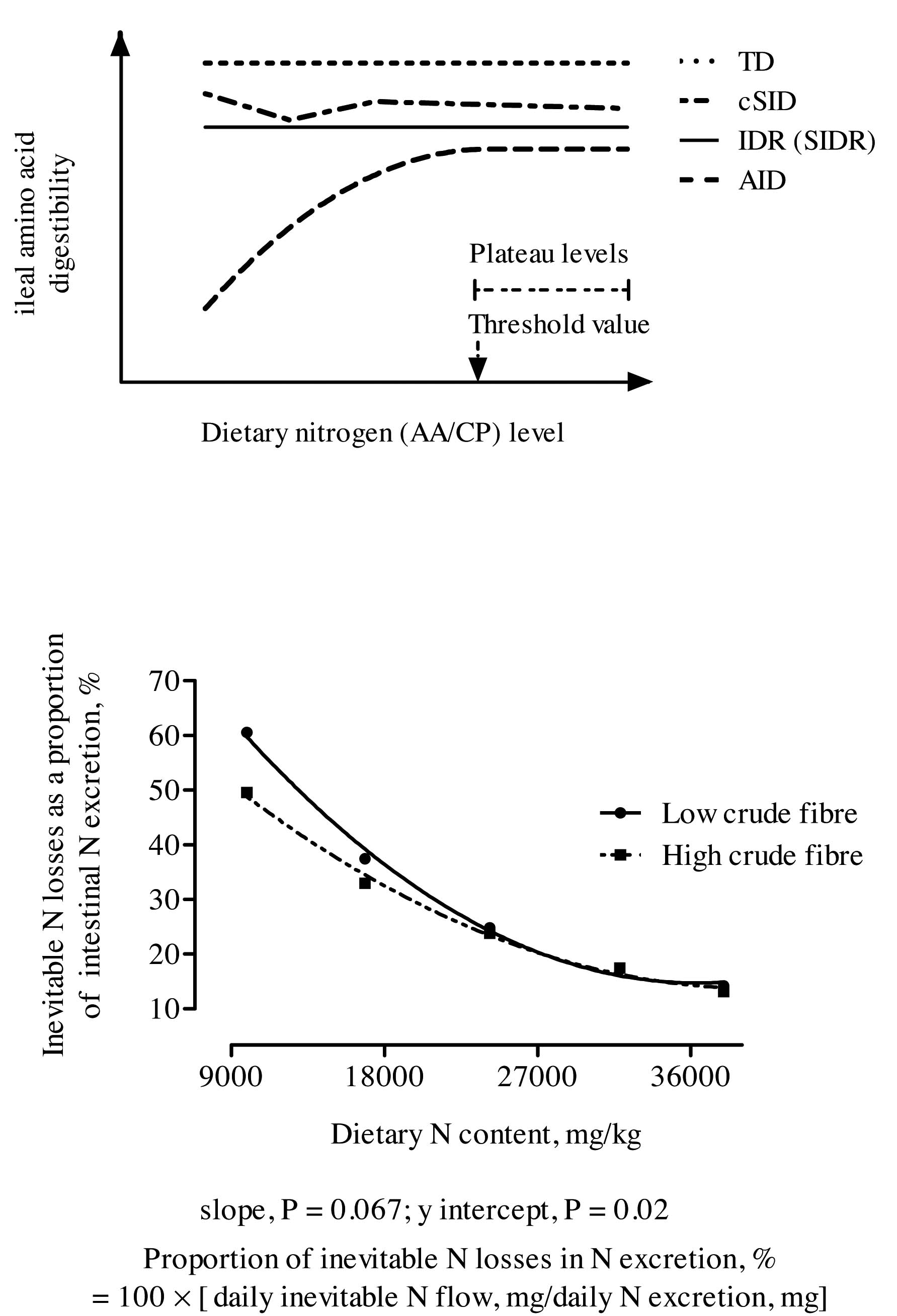
There is growing consensus to standardise AA digestibility as opposed to AID or TID (Lemme et al., Reference LEMME, RAVINDRAN and BRYDEN2004). As illustrated on Figure 4 (upper panel) the cSID system improves on deficiencies in the AID and TID systems namely that its values are constant regardless of dietary CP inclusion (at least in theory) and that it should rank ingredients based on their respective ability to induce SEIF (contrary to TID) (Lemme et al., Reference LEMME, RAVINDRAN and BRYDEN2004). All these advantages are also shared by IDR (Figure 4 upper panel), so that the above proposed alternative term ‘SIDR’ is not inadmissible. On the other hand the standardisation offered in the cSID system may suffer certain encumbrances which are not relevant to SIDR. These aspects are enumerated below.
Variable nature of IEIF may result in unstable cSID estimates
In previous sections it was shown that IEIF as computed via LRA or PFD is characterised by variability. Earlier Rutherfurd et al. (Reference RUTHERFURD, CHUNG, MOREL and MOUGHAN2004) highlighted inter- and intra-laboratory variations in ileal basal AA flow determined even with the EHC method. Variation in IEIF is deleterious to the precision of cSID databases, especially when causative factors are poorly identified nor compensated for (Bielorai et al., Reference BIELORAI, IOSIF and NEUMARK1985; Bielorai and Iosif, Reference BIELORAI and IOSIF1987).
Theoretically, when IEIF is overestimated, cSID will be overestimated. For instance Bielorai et al. (Reference BIELORAI, IOSIF and NEUMARK1985) observed that the PFD approach overestimated IEIF relative to those obtained with the LRA leading to artificially high cSID values of SBM in broilers. In ingredients that produce high SEIF such error will diminish the impact of SEIF (on cSID estimate), weakening thereby the precision of the cSID system to properly rank feedstuffs based on their intrinsic qualities. This speculation may explain why cSID are somewhat higher than SIDR in common ingredients (Adedokun et al., Reference ADEDOKUN, ADEOLA, PARSONS, LILBURN and APPLEGATE2011; Kong and Adeola, Reference KONG and ADEOLA2013b). When IEIF is underestimated (Siriwan et al., Reference SIRIWAN, BRYDEN, MOLLAH and ANNISON1993) the penalty is for cSID to be underestimated, particularly in low CP ingredients (see discussion below). These dichotomous impacts of IEIF on cSID will result in unstable cSID databases. These potential pitfalls are avoided in the LRA because the IEIF/SIDR of any ingredient are directly determined. It is interesting to note that SIDR of SBM reported by Bielorai and Iosif (Reference BIELORAI and IOSIF1987) compares to that produced by Kong and Adeola (Reference KONG and ADEOLA2013b) with just two point difference (data not shown) despite appreciable differences in age of birds and rate of test protein inclusion between these studies. This suggests the LRA is likely to produce more stable standardised digestibility databases.
Relationship between dietary nitrogen concentration and indices of nitrogen digestibility (upper panel) or contribution of inevitable losses of nitrogen to total intestinal excretion of nitrogen at two level of total crude fibre intake (lower panel, based on Akinde et al., Reference AKINDE, KLUTH and RODEHUTSCORD2010).
Problems with low protein ingredients
Variability in IEIF is particularly detrimental to cSID when low CP ingredients are to be evaluated. This was recently studied in barley (Spindler et al., Reference SPINDLER, MOSENTHIN and EKLUND2014) who calculated cSID and SIDR of AAs using extensive data on AID and CP content of barley samples reported in 26 peer reviewed observations in swine. Their results showed that the cSID approach underestimated standardised digestibility by about 19 points for most AAs. Based on a meta-regression analysis the authors found this problem to be highly correlated to variations in IEIF of CP/AAs within the data set surveyed (Spindler et al., Reference SPINDLER, MOSENTHIN and EKLUND2014).
The fundamentals underlying this problem are represented on Figure 4 (lower panel) based on studies done in Pekin ducks (Akinde et al., Reference AKINDE, KLUTH and RODEHUTSCORD2010). This data demonstrated that intestinal inevitable losses of N in percent of total N excretion are curvilinearly related to dietary N concentration. It was evident that the gradient of this response was dramatically steep within the zone of low N supply, after which it tended to plateau where N supply became abundant. Similar relationship has been determined for IEIF as a proportion of dietary AA supply in pigs (Fan et al., Reference FAN, SAUER and MCBURNEY1995). Both findings suggest three things. Firstly, that GIL or IEIF and dietary CP intake are anticorrelated. Secondly, that GIL and IEIF have stronger bearing on digestibility (total tract or AID) at marginal CP relative to surplus dietary AA levels, and thirdly, digestibility AIDs data can only be valid at AA supply level where the influence of IEIF is at minimum. Indeed the AA intake at this minimum impact point of inevitable losses has been shown to correspond to maximum response in AID of AAs, the so called ‘Plateau effect’ (simulated in Figure 4, lower panel) (Fan et al., Reference FAN, SAUER, HARDIN and LIEN1994). Fan et al. (Reference FAN, SAUER and MCBURNEY1995) referred to the intake level where the effect of inevitable losses on total ileal flow/AID begins to level out as ‘threshold value’ to determine their AIDs (simulated in Figure 4, upper panel).
Thus, published cSID of AAs for grains and other raw materials containing substantially low CP need to be scrutinised. With such ingredients, an asymptote will be difficult to define or be even impracticable, depending on how low their CP content is and how their proteins and antinutrients are interacting with the gut ecosystem. Unstable patterns in cSID of AAs are already a recognised fact in swine databases for low CP ingredients like barley (Spindler et al., Reference SPINDLER, MOSENTHIN and EKLUND2014). The Gfe (2002) addressed this issue by setting minimum values for individual AAs in assay diets. This measure regrettably represents a limitation for the cSID approach, as plateau assay values will have to be defined for all AAs in all low CP ingredients. Nevertheless low CP ingredients make a significant contribution to protein nutrition because of their enormous inclusion rate in feed recipes as basal energy sources. They are crucial to the application of the concept of low CP diets which boosts AA efficiency and protect the environment (Akinde, Reference AKINDE2014a).
In broilers, Adedokun et al. (Reference ADEDOKUN, PARSONS, LILBURN, ADEOLA and APPLEGATE2007b) assumed threshold values between 170 to 210 g/kg dietary CP level for different samples of meat and bone meal based on the direct method. Szczurek (Reference SZCZUREK2009) used between 74 and 113 g/kg CP for corn, wheat and barley, and 135 to 182 g/kg for protein meals including faba beans, RSM and SBM to measure cSID of AAs in 30-day-old broilers. In turkeys Kozłowski et al. (Reference KOZŁOWSKI, HELMBRECHT, LEMME, JANKOWSKI and JEROCH2011) measured AIDs of AAs for six individual oil seed meals fed between 180 to 250 g/kg CP of diet. Thus there was a need to ‘standardise’ the inclusion level of the assay feedstuff if cSID method is chosen. Again setting a plateau AID/minimum AA level in assay diet is not obligatory in the LRA. Here the LRA can be used to validate results for ingredients like corn, wheat etc. reminiscent of the protocols employed by Short et al. (1999) or Rodehutscord et al. (Reference RODEHUTSCORD, KAPOCIUS, TIMMLER and DIECKMANN2004).
Figure 4 (lower panel) further hinted that the significance of inevitable losses per unit N excretion at changing N intake may be further modulated, if the low CP ingredient contains high level of crude fibre (CF) as a feed intrinsic factor. The evidence rather convincingly showed that the predicted quadratic polynomial of the two CF alternatives differed significantly (P=0.032, overall) especially at the intercepts (100 low CF vs. 76 high CF, P=0.04) and slopes (P=0.067), compelling a rejection of the null hypothesis. Indeed while the modelled trajectories showed a general tendency of high CF to step down the contribution of inevitable losses, this CF effect was rather amplified within physiologically deficient zone of N supply (Figure 4 lower panel). These results are not entirely unexpected since we had measured lowered daily N retention at high CF intake, relative to low CF (Akinde et al., Reference AKINDE, KLUTH and RODEHUTSCORD2010). In other words, CF related increase in N excretion (indigestibility) was diluting the contribution of N related to inevitable losses. Additionally high CF suppressed the N intake (‘threshold’) level needed to minimise the contribution of inevitable losses by about 10% (represented by of the functions, computation not shown). The conclusion here therefore is that variation in CF density among low CP feedstuffs/samples may further complicate the ‘plateau value’.
SID may not always equate SIDR in high protein by-products
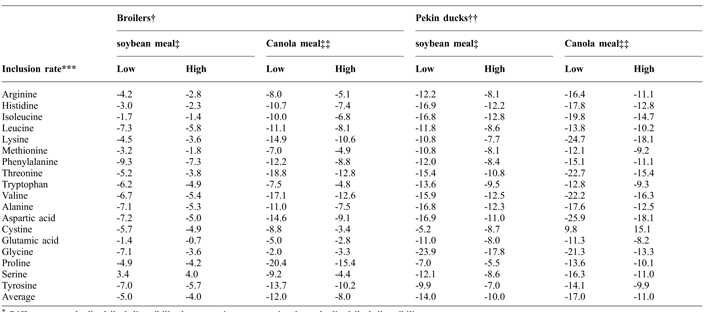
Similar to the situation with low CP ingredients, the proposition that cSID is equal to SIDR cannot be assumed just because a feedstuff is rich in protein. This was indicated in a study where both indices were used to evaluate SBM and canola meal (CM) in both broilers and Pekin ducks (Kong and Adeola, Reference KONG and ADEOLA2013b). Based on this report the relative difference between SIDR and cSID was calculated on Table 2.
Difference in standardised amino acid digestibility determined through linear regression and conventional standardised ileal digestibility in soybean meal or canola meal (recalculated from Kong and Adeola, Reference KONG and ADEOLA2013b)***.
* Difference=standardised ileal digestibility by regression - conventional standardised ileal digestibility
** Ileal flow sampling was done on day 19 post hatch in both species using identical diets
*** Low or high represented crude protein inclusion rate of 71.2 or 142.4 g/kg for soybean meal, and 81.9 or 163.8 g/kg for canola meal, respectively.
†Standardised digestibility by regression of crude protein/amino acids in broilers ranged between 75.5 - 92.5 soybean meal and 72.8 – 88.6 canola meal, respectively.
††Standardised digestibility by regression of crude protein/amino acids in ducks ranged between 78.2 - 100.6 in soybean meal and 75.8 – 113.6 in canola meal, respectively.
‡Conventional Standardised ileal digestibility of crude protein/amino acids of soybean meal ranged between 79.8% to 109.4% across species.
‡‡Conventional Standardised ileal digestibility of crude protein/amino acids of canola meal ranged between 79.2% to 102.5% across species.
Except for serine (broilers SBM study) and cystine (ducks CM study) cSID numerically overestimated digestibility by 0.7 to 26% (Table 2, negative values indicated that SIDR was less than cSID). On average scale cSID overshot AA/CP digestibility in broilers by 5% and 4% in SBM or 12% and 8% in CM, at low and high CP inclusions, respectively. Corresponding cSID figures for ducks were 14% versus 10% (SBM), and 17% versus 11% (CM) higher than the SIDR values. These suggest that assay CP level did not seem to impact the precision of cSID in SBM but undermined that of CM (12% low vs. 8% high) in broilers. The picture for SBM in ducks is quite interesting, because the difference in averages between the two CP levels (4 points: 14 vs. 10) is appreciably higher than 1 (4 vs. 5) calculated in broilers for SBM. It may be speculated that higher production of IEIF in ducks relative to broilers was a causative factor. In ducks Kong and Adeola (Reference KONG and ADEOLA2013b) estimated IEIF for total AAs to be 350% greater than in broilers. Such vast quantitative difference may inflate standardised digestibility when approached via the cSID path. High inevitable flow rate in the duck species may further proliferate discordance among studies both in terms of estimates of IEIF and cSID. Indeed while cSID for total AA was 91.3 and 90.2% at low and high CP in SBM for broilers, corresponding values were as high as 99.5 and 96.1% in ducks. Meanwhile SIDR tempered the difference for SBM in both species to almost zero: 87.1 (average for broilers) vs. 86.7% (average for ducks) (Kong and Adeola, Reference KONG and ADEOLA2013b).
Canola meal (also known as rapeseed meal - RSM) is an unconventional ingredient whose critical levels of phytic acid, glucosinolates, sinapine, sinapic acid and non-starch polysaccharides render it of less nutritive value relative to SBM in poultry nutrition (Khajali and Slominski, 2012). This assortment of anti-nutrients in its matrix is expected to produce higher SEIF and thus lower digestibility relative to SBM protein. However while average cSID of AAs in broilers at low SBM inclusion was 90.5, corresponding value for CM was 89.9%- a difference of just 0.6 (Kong and Adeola, Reference KONG and ADEOLA2013b). Difference between average SIDR for all AAs in SBM and CM was a more appreciable value of 5.4%. In terms of total AA SIDR more clearly differentiate SBM and CM, differing by 6.1 and 5.4 in broilers and ducks, respectively (data not shown, Kong and Adeola, Reference KONG and ADEOLA2013b). It is hypothesised that because SIDR focused mainly on the effect of SEIF, it was more sensitive to differences between SBM and CM. Alternatively by using IEIF as a correction factor, cSID diluted the effect of SEIF in CM, especially considering the high inevitable flow rate observed in ducks. More studies are needed to deconstruct these issues.
Adedokun et al. (Reference ADEDOKUN, ADEOLA, PARSONS, LILBURN and APPLEGATE2011) compared published SIDR reported by Rodehutscord et al. (Reference RODEHUTSCORD, KAPOCIUS, TIMMLER and DIECKMANN2004) for CM to their cSIDs which they standardised from AIDs reported in the original study. The outcome showed that cSID was higher than SIDR of AAs by 3.4 points on average. In terms of cysteine cSID overestimated digestibility by 7.3% while an overestimation of 3.2% was calculated for each of lysine and methionine, relative to SIDR (Adedokun et al., Reference ADEDOKUN, ADEOLA, PARSONS, LILBURN and APPLEGATE2011). It should be acknowledged that the SIDR of AAs/CP in CM obtained by Kong and Adeola (Reference KONG and ADEOLA2013b) for broilers mirrored previous determinations by Rodehutscord et al. (Reference RODEHUTSCORD, KAPOCIUS, TIMMLER and DIECKMANN2004).
Overall these patterns suggest that the cSID approach diluted important differences between SBM and CM in both poultry classes and that the system was less capable in handling the effect of CP on standardised digestibility in CM. It can be concluded therefore that the cSID system may not be as sensitive as the SIDR in defining the standardised digestibility of ingredients that provoke high release of SEIF. Obviously these imprecisions have economic ramifications and signal potential for AA imbalance in real time feed formulation. Studies in which diets were formulated on cSID basis sometimes fail to compensate for effect of by-products even when net energy is adjusted for (Jha et al., Reference JHA, HTOO, YOUNG, BELTRANENA and ZIJLSTRA2013). Thus for ingredients sensitive to cSID imprecisions there is necessity to re-evaluate cSID estimates using SIDR bioassay. There is merit for comparative work on the effect of formulating with cSID or SIDR values on animal performance.
Conclusions
The use of linear regression is a validated and reliable approach to study the inevitable endogenous flow and digestibility of protein at the terminal ileum. However it is not as commonly used compared to other routine methods, whilst its estimates of inevitable flow vary widely in the literature. Thus more information is needed on the application of this approach, especially in the aspects of methodological standardisation for better data comparability. Research is needed on how this approach may address equivocal information that sometimes occurs when ileal digestibility is standardised on the basis of inevitable endogenous flow. Such efforts should improve precision of digestibility estimates particularly for feedstuffs low in crude protein or eliciting high specific endogenous amino acid flow. Based on fundamental similarities between the conventional standardised digestibility and regression slope digestibility approaches, it is proposed that the latter be termed ‘standardised ileal digestibility by regression’. This nomenclature is consistent with global interest for uniformity in the terminology and methodology of digestibility, in addition to advancing the precision of digestibility databases.