The effects on children of political violence are matters of international concern. However, the mechanisms by which political community violence relate to children's well-being are little understood (Barber, Reference Barber2004; Feerick & Prinz, Reference Feerick and Prinz2003). Approaches are needed that advance the understanding of the multiple ecological and psychological processes that may underlie children's adjustment in these contexts. Conceptual models are required to guide tests of pathways of influence on child outcomes (Cairns, Reference Cairns1996; Feerick & Prinz, Reference Feerick and Prinz2003). The present study tests a social ecological framework for understanding the relations between political violence and child adjustment in Northern Ireland.
The limited research available implicates family and community contexts and dynamic psychological processes within the child as potential influences contributing to pathways between political violence and child adjustment (Joshi & O'Donnell, Reference Joshi and O'Donnell2003; Shaw, Reference Shaw2003). For example, Gibson (Reference Gibson1989) identified the family as a mediator of stress for children in contexts of political violence, including a supportive and harmonious family environment. Elbedour, ten-Bensel, and Bastien (Reference Elbedour, ten-Bensel and Bastien1993) reported that the impact on children of war involves the breakdown of community, the disruption of family, and the psychological consequences for children. Punamäki (Reference Punamäki2001) found that positive mental health outcomes and social competencies in children during political violence in Chile were predicted by low conflict and high cohesion in families. Finally, Bat-Zion and Levy-Shiff (Reference Bat-Zion, Levy-Shiff, Levitt and Fox1993) found that parents' emotional manifestations and children's emotional arousal were central factors mediating children's stress responses to war-related experiences and stimuli. However, few conceptually driven tests on the role of the social ecology in affecting child adjustment have been undertaken (Trickett, Duran, & Horn, Reference Trickett, Duran and Horn2003), and consequently there are no templates for how future research should proceed.
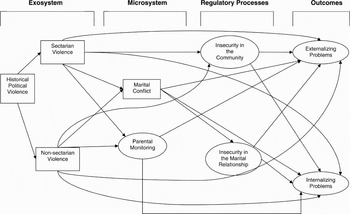
A framework for multiple levels of social influences potentially underlying pathways between political violence and child development is presented in Figure 1. Notably, Bronfenbrenner (Reference Bronfenbrenner1979; Cicchetti & Lynch, Reference Cicchetti and Lynch1993) proposed an ecological–transactional framework for the effects of complex social environments on children. From this perspective, social ecological contexts are seen as consisting of several nested environments of differing degrees of proximity to children's functioning, including the exosystem, the microsystem, regulatory processes, and child outcomes. Based on this approach, the conceptual model in Figure 1 includes specific elements for variables in each level of the model for pathways surrounding political violence and child adjustment in Northern Ireland (Cairns, Reference Cairns1996). The factors, processes, and pathways in the model to be tested are necessarily selective and limited to variables judged most pertinent to the present context, informed by past research and theory as described below, including studies of children and families in Northern Ireland (e.g., Cairns, Reference Cairns1987; Cairns & Mercer, Reference Cairns and Mercer1984; Fay, Morrissey, Smyth, & Wong, Reference Fay, Morrissey, Smyth and Wong1999; Jarman & O'Halloran, Reference Jarman and O'Halloran2000; Muldoon, Reference Muldoon2004; Niens, Cairns, & Hewstone, Reference Niens, Cairns, Hewstone, Hargie and Dickson2003; Smyth & Scott, Reference Smyth and Scott2000).
A conceptual model for the social ecology of the effects of community violence on children.

Other frameworks have been advanced to explain relations between multiple social ecological factors and child adjustment. For example, Patterson, DeBaryshe, and Ramsey (Reference Patterson, DeBaryshe and Ramsey1989) outlined a developmental model of antisocial behavior, including consideration of how family stressors, including marital conflict, divorce, and unemployment, influence child adjustment by disrupting parenting and family management practices. Focusing on a model for the effects of economic deprivation, Elder, Nguyen, and Caspi (Reference Elder, Nguyen and Caspi1985) reported pathways between economic hardship and children's psychosocial maladjustment mediated by the quality of family relationships. Finally, reflecting another direction toward accounting for the effects of the social ecology on children, Conger et al. (Reference Conger, Conger, Elder, Lorenz, Simons and Whitbeck1992) has advanced support for a family process model from economic stress to adolescent adjustment problems through pathways involving parental depressed affect, marital conflict, and parenting problems (see also Conger et al. Reference Conger, Ebert-Wallace, Sun, Simons, McLoyd and Brody2002; Conger, Ge, Elder, Lorenz, & Simons, Reference Conger, Ge, Elder, Lorenz and Simons1994).
Furthering the study of these pathways, our social ecological model includes influences at these levels of analysis and also incorporates consideration of community and political processes toward accounting for relations between political violence and child adjustment (Figure 1). In this model, the exosystem includes the influences of community antisocial behavior and violence, which is likely to be a chief pathway for the influence of contexts of political violence on children. Community violence has been related to children's psychological maladjustment (Garbarino, Dubrow, Kostelney, & Pardo, Reference Garbarino, Dubrow, Kostelney and Pardo1992; Mabanglo, Reference Mabanglo2002; Stein, Jaycox, Kataoka, Rhodes, & Vestal, Reference Stein, Jaycox, Kataoka, Rhodes and Vestal2003), including externalizing disorders (Attar & Guerra, Reference Attar and Guerra1994), especially aggressiveness (Cooley, Turner, & Beidel, Reference Cooley, Turner and Beidel1995; Jenkins & Bell, Reference Jenkins, Bell and Friedman1994; O'Keefe, Reference O'Keefe1997). Emotional, cognitive, and behavioral problems have been identified in association with community violence (Kuther, Reference Kuther1999; Singer, Anglin, Song, & Lunghofer, Reference Singer, Anglin, Song and Lunghofer1995), including internalizing disorders (Berton & Stabb, Reference Berton and Stabb1996; Gorman-Smith & Tolan, Reference Gorman-Smith and Tolan1998).
Violence and conflict in the community and home may be interrelated in affecting children (Cooley et al., Reference Cooley, Turner and Beidel1995; Margolin & Gordis, Reference Margolin and Gordis2000), with poor parental monitoring identified in some studies as contributing to children's violence in these contexts (Singer et al., Reference Singer, Anglin, Song and Lunghofer1995). Experiences with violence may also vary substantially in communities, including Northern Ireland (Guterman, Cameron, & Staller, Reference Guterman, Cameron and Staller2000; Jarman & O'Halloran, Reference Jarman and O'Halloran2000; Smyth & Scott, Reference Smyth and Scott2000). Given this fact, a promising approach is to base assessments of community violence on the reports of individuals living in the communities (Coulton, Korbin, & Su, Reference Coulton, Korbin and Su1996).
In Northern Ireland community influences can be conceptualized as consisting of historical levels of political violence, and current levels of sectarian antisocial behavior (SAB) and nonsectarian antisocial behavior (NAB). Ethnic conflicts can have long histories, with memories, recollections, and other residues of sectarian violence contributing to hostilities long after the events have occurred. These responses may be further fueled by everyday reminders of past problems. For example, in Belfast murals, street markings and other symbols memorialize deaths and atrocities, and signify sectarian identities. As reflected in Figure 1, historical levels of political violence are expected to be related to heightened nonsectarian and sectarian community violence, respectively. For example, NAB may be impacted by disruptions in community functioning, including the availability of resources and supports. SAB may be fueled by the background level of provocation and trauma for commission of antisocial behavior by one community toward the other.
Based on focus groups and initial studies in Belfast and Derry/Londonderry, Northern Ireland, conceptually and psychometrically supported instruments making distinctions between SAB and NAB have been advanced (Goeke-Morey et al., in press). In terms of definitions and distinctions between elements of community antisocial behavior, SAB is conceptualized in terms of conflict and violence expressed at the community level between ethnic, religious, or cultural groups, in this instance, Catholics and Protestants. SAB thus reflects local levels of expression of conflict and violence because of political strife. Notably, despite the signing of peace accords, substantial incidences of sectarian violence and conflict continue to be reported in many communities in Belfast (e.g., Police Service of Northern Ireland, 2007), reflecting continuing sectarian tensions and conflicts between highly segregated Catholic and Protestant communities (MacGinty, Reference MacGinty2006; MacGinty, Muldoon, & Ferguson, Reference MacGinty, Muldoon and Ferguson2007; Shirlow & Murtagh, Reference Shirlow and Murtagh2006). By contrast, NAB is conceptualized as “ordinary crime” and/or antisocial behavior, which can be found in any community, regardless of political context, not specifically indicated between ethnic, religious, or cultural groups.
SAB and NAB in communities are each likely to have negative implications for the functioning of the microsystem, including marital and parent–child relationships (Figure 1). At the same time, the meaning of SAB and NAB for families and children may be different in significant respects. Specifically, SAB may be more closely linked with insecurity in the sense of being associated with the individual's identity, that is, sectarian violence directed at people like oneself. In addition, the continued struggle with sectarianism and ethnic conflict in this area has had significant impact on these communities; thus, SAB is a constant reminder that this form of conflict persists. Moreover, sectarian violence can be posited to pose a potentially greater threat to intercommunity relations, and may pose more serious challenges to the integrity of the political system and social order related to the emotional security of both adults and children (MacGinty et al., Reference MacGinty, Muldoon and Ferguson2007). At the same time, NAB surely also poses a significant threat to the safety and security of families and children in these communities (Shirlow & Murtagh, Reference Shirlow and Murtagh2006).
In the absence of empirical investigation comparing the effects of the two forms of community violence, predictions regarding the relative significance of SAB and NAB to families and children cannot be made with confidence. That is, prior research has failed to make these distinctions so the relative effects of these forms of community antisocial behavior are unknown Thus, the tentative prediction is that both types of community violence will serve to undermine family functioning and children's emotional security about community.
Thus, both SAB and NAB may be expected to be related to the next level of the child's social ecology in contexts of political violence, that is, the microsystem, as shown in Figure 1, reflecting marital conflict and parental monitoring. Although relations between violence in the community and family functioning have been repeatedly reported (Kaslow, Reference Kaslow2001; Proctor, Reference Proctor2006; Shamai, Kimhi, & Enosh, Reference Shamai, Kimhi and Enosh2007), empirical evidence demonstrating the relative effects of sectarian and nonsectarian community violence on different dimensions of family functioning is missing. Violence in the community, either sectarian or nonsectarian, might be expected to increase conflict and violence in the marital relationship by increasing the challenges, stresses, and threats that marital partners must cope with every day and through the contagion of negative affect and hostility. In turn, relations have been repeatedly documented between marital conflict, children's emotional security about marital relations, and child adjustment, including internalizing and externalizing problems (e.g., Cummings, Schermerhorn, Davies, Goeke-Morey, & Cummings, Reference Cummings, Schermerhorn, Davies, Goeke-Morey and Cummings2006). For example, Lynch and Cicchetti (Reference Lynch and Cicchetti1998) reported that child maltreatment and exposure to intracommunity violence were each related to children's psychological functioning. Linares et al. (Reference Linares, Heeren, Bronfman, Zuckerman, Augustyn and Tronick2001) found that community violence and family aggression each predicted behavior problems.
Among parenting dimensions, this study focuses on parental monitoring as a family process that may be related to child adjustment in contexts of political violence. In contexts of political violence, or social deprivation (Dishion & McMahon, Reference Dishion and McMahon1998), parents may face particular challenges for monitoring the behavior and activities of children to avoid risk for adjustment problems, including involvement in antisocial behavior (Mazefsky & Farrell, Reference Mazefsky and Farrell2005). For example, parental monitoring has been identified as a critical element of parenting related to adolescent's adjustment problems, especially antisocial and delinquent behavior (Dishion, Nelson, & Kavanagh, Reference Dishion, Nelson and Kavanagh2003). Moreover, social stressors or parental substance use, which are elevated in socially deprived, high conflict areas of Belfast (Smyth & Scott, Reference Smyth and Scott2000), may disrupt monitoring (Dishion & McMahon, Reference Dishion and McMahon1998). However, little is known about the role of parental monitoring as a pathway associated with community violence (Proctor, Reference Proctor2006), including child development in contexts of intergroup (SAB) community violence in Northern Ireland (Muldoon, Trew, & Kilpatrick, Reference Muldoon, Trew and Kilpatrick2000; Trew, Reference Trew2004).
Children's regulatory processes are the most proximal level of the social ecological model to child adjustment (see Figure 1). Children's emotional security was selected as a regulatory system theoretically relevant to the impact of multiple levels of the social ecology on child adjustment (Waters & Cummings, Reference Waters and Cummings2000). Emotional security theory (EST) posits that children's protection, safety, and security are core concerns in their regulatory functioning (Cummings & Davies, Reference Cummings and Davies1996). Accordingly, emotional security is defined as a goal around which their functioning is regulated, with emotional (e.g., fear, anger), behavioral (e.g., mediation, intervention), and cognitive (e.g., threat perceptions) responses in the service of regaining or maintaining a desired level of emotional security in the face of threats to that goal (Davies, Harold, Goeke-Morey, & Cummings, Reference Davies, Harold, Goeke-Morey and Cummings2002).
With regard to age, children in the preadolescent and adolescent period (10–15 years of age) were selected for study. Children in this developmental period are moving from being bystanders and witnesses of sectarian violence to being at an increased risk for becoming engaged as victims and/or perpetrators. Given these factors and the stresses associated with developmental stages of transition from preadolescence to adolescence, relations between sectarian violence, emotional security, and child adjustment are salient and timely concerns for study.
Extending past work demonstrating the significance to children's functioning of emotional security about family relationships (Waters & Cummings, Reference Waters and Cummings2000), a new direction advanced in this study is the examination of the role of children's emotional security about community in their functioning. Richters and Martinez (Reference Richters, Martinez, Leavitt and Fox1993) reported intracommunity violence was related to children's adaptational failure when such adversities reduced the quality of children's perceptions of the stability and safety of their homes (Gorman-Smith & Tolan, Reference Gorman-Smith and Tolan1998; Lynch & Cicchetti, Reference Lynch and Cicchetti2002). Lovell and Cummings (Reference Lovell and Cummings2001) extended this notion theoretically to include community conflict and violence, hypothesizing that these ecological contexts also influenced children's sense of emotional security, directly as emotional security about community because of exposure to community antisocial behavior, and indirectly as a result of influences on family functioning (e.g., marital conflict and violence, parenting). However, the significance of emotional security about community to child adjustment in these contexts has not been empirically tested.
This report thus tests a social ecological model for relations between political violence and child adjustment in Northern Ireland. As outlined in Figure 1, emotional insecurity about marital or community relations was expected to contribute to elevations of both internalizing and externalizing problems (Cummings et al., Reference Cummings, Schermerhorn, Davies, Goeke-Morey and Cummings2006). Emotional insecurity may foster internalizing problems by increasing emotional negativity, including fear and anxiety (Davies et al., Reference Davies, Forman, Rasi and Stevens2002), and enmeshment in conflict (e.g., Peris, Goeke-Morey, Cummings, & Emery, Reference Peris, Goeke-Morey, Cummings and Emery2008). Heightening dispositions toward behavioral and emotional dysregulation associated with emotional insecurity have been hypothesized to elevate the risk for externalizing problems (Cummings et al., Reference Cummings, Schermerhorn, Davies, Goeke-Morey and Cummings2006), although relations between marital conflict and externalizing problems mediated by children's psychological regulatory processes are less consistently reported than for internalizing problems (Grych, Harold, & Miles, Reference Grych, Harold and Miles2003). Consistent with the extensive support for relations between monitoring and adjustment problems (Dishion & McMahon, Reference Dishion and McMahon1998), diminished parental monitoring was expected to also further contribute to the risk for externalizing problems associated with community antisocial behavior. At the same time, given limited past study of complex interrelations between factors and processes in contexts of political violence, the exploration of specific interrelations between historical political violence, sectarian and non-SAB, family functioning, emotional security, and children's adjustment should be regarded as exploratory.
Method
Participants and procedures
Mother–child dyads from Belfast, Northern Ireland, participated. Given the focus on processes relating to marital conflict, the present analyses were limited to the 300 two-parent (married or cohabiting) families from the larger study of 696 single- and two-parent families. The average age of the children was 12.34 years (SD = 1.78), and there were 147 boys and 153 girls. Mothers' mean age was 38.21 years (SD = 6.05). An independent samples t test showed that married mothers were 3.64 years older than cohabiting mothers, t (296) = 5.00, p < .001.
A demographer, expert with regard to this region, selected neighborhoods to survey with the goal of limiting differences in socioeconomic status. Families were selected using stratified random sampling across 18 socially deprived areas of Belfast. This process was designed to ensure proportional sampling of families within Protestant and Catholic areas similar in terms of socioeconomic status and at risk for sectarian violence because of proximity to the opposing community. Sampling of ethnic groups was representative of the population distribution in the region (Darby, Reference Darby2001), with 57% (n = 170) of mothers having grown up in Protestant communities and 42% (n = 126) having grown up in Catholic communities. The Belfast communities in this study were all highly segregated by ethnicity, so that growing up in a Catholic or Protestant neighborhood was tantamount to being Catholic or Protestant, respectively. Because of the sensitive nature of ethnicity in Northern Ireland, questions about identity are customarily explored in this way to reduce the sensitive nature of the question. A chi-square test indicated no relation between marital status and ethnicity, χ2 (1) = 1.16, p > .05. Reflecting the demographics of Northern Ireland, all participants were White. There is a consensus that the most appropriate way to describe these groups is in terms of ethnic rather than racial or religious groups (Shirlow & Murtagh, Reference Shirlow and Murtagh2006).
Another goal was to sample areas to ensure variability experience with political violence within these working class neighborhoods. Communities were initially selected by the demographer based on police records regarding sectarian violence over the past 5 years and other objective sources of historical information, including the volume and spatial distribution of politically motivated deaths within the city. In selecting these areas, the demographer also considered the spatial location of interface “peace” walls, as families living in communities adjoining an interface are likely to experience higher levels of violence compared to families in communities separated by buffer zones. All of the study areas were interfaced (i.e., had at least one boundary between it and a community of the other ethnicity). All of the study areas were highly segregated, with populations over 90% Protestant or Catholic.
Home interviews were conducted by an established market research firm in Northern Ireland. Interviewers surveyed addresses in the designated communities and selected families with a child in the age range of 7–17 years. The study was conducted under the approval and direction of the institutional review board at all participating universities; participants provided consent and assent, respectively, before participating. When families had two or more children within the designated age range, the youngest child was selected to participate. All questionnaires were administered as interviews lasting approximately 45 to 60 min. Families received £20 for their participation.
Measures
Historical political violence
The number of politically motivated deaths recorded in these neighborhoods in Belfast was used as an objective measure of political violence, based on a database compiled by one of the authors. This database was compiled via official police sources, community lists regarding politically motivated deaths, and interviews with combatant groups. The material compiled on victims was recorded at postcode level and included the victim's home address and incident address. The age, community background, gender, and status as either a civilian or combatant (by type such as state and paramilitary) were also recorded.
Moreover, the database includes politically motivated deaths in Belfast from 1969 to 2007. All deaths that occurred in these areas between 1969 and 2007 that were known to be politically motivated (referring to deaths that were conflict related or tied to ethnosectarian attacks) were included in the frequency variable. In terms of scoring, individuals living in a neighborhood received the deaths frequency score for their neighborhood. Politically motivated deaths included those committed by armed combatants groups (state army and police and paramilitary organizations) and those deaths where the assailant was a civilian and their motivation had been proven to be sectarian. Despite some debate over groups responsible and disagreements over combatant group membership the database used was founded upon extensive record keeping by local community organizations and the main paramilitary groups. The precise nature of the data collected permitted a highly reliable relationship to be established between sites of violence and also the location of victims' homes, and this was important in terms of not only measuring sites of violence (many of which were not residential) but also places that endured the death of local residents (residential). Histories of politically motivated deaths in neighborhoods are hypothesized to reflect the potentially lasting influence of past political violence on current community relations in Belfast (Cairns & Roe, Reference Cairns and Roe2003; McEvoy, Reference McEvoy2000; Shirlow & Murtagh, Reference Shirlow and Murtagh2006).
SAB and NAB in communities
Questionnaires assessing SAB and NAB were developed for the context of Northern Ireland, specifically for the purpose of developing a culturally sensitive measure of community violence that differentiated sectarian and nonsectarian forms of violence. Given the lack of community violence measures distinguishing sectarian and nonsectarian behaviors, and the specific gap in the cultural context of Northern Ireland, this approach addressed multiple gaps in the available measurement in this area. The measures were designed in three steps to ensure cultural appropriateness of the measures as well as to test the psychometric properties of the measures with a two-wave pilot study.
The first step utilized focus group discussions with mothers in multiple Catholic and Protestant communities in Belfast (Campbell et al., Reference Campbell, Merrilees, Cummings, Goeke-Morey, Schermerhorn and Cairns2008). The choice to interview only mothers in the two-wave pilot study was pragmatic, based on the greater availability of mothers, and the limited time and resources for this phase of the study. The goal of the focus groups was to identify salient aspects of the community for families living in interfaced areas of Belfast, with a focus on the positive and negative elements of their immediate community. An experienced moderator conducted discussions with small groups of mothers in community centers about matters pertaining to threat and safety in the communities. All discussions were audio taped and transcribed. Research team members individually read the transcripts and specifically focused on identifying themes that differentiated sectarian and nonsectarian acts of violence. Using these transcripts and existing measures of community violence for themes of nonsectarian violence, items were created and refined by the research group.
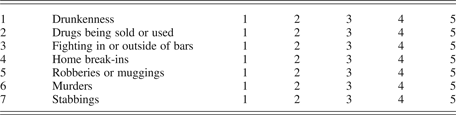
This process resulted in the development of two scales, measuring SAB and NAB. The final version based on a 12-item SAB Scale and a 7-item NAB Scale was tested in a study conducted in Derry/Londonderry, Northern Ireland (Goeke-Morey et al., in press), designed to establish the psychometric properties of these new instruments in Northern Ireland. Derry/Londonderry also has a history of intense sectarian conflict between Catholics and Protestants. The final versions of the SAB and NAB scales are provided in Appendix A.
The Derry/Londonderry study provided multiple forms of psychometric support (i.e., internal consistency; predictive and construct validity) for the distinctions between these measures, that is, that the SAB Scale measured SAB and the NAB Scale assessed NAB. Moreover, factor analyses supported a multifactor solution with all sectarian items loading onto a single SAB factor and the remaining items loading onto separate NAB factors. The internal consistency in this initial study was 0.94 for the SAB scale and 0.68 for the NAB scale. The Cronbach alpha values for the present study for these scales were 0.93 (mother report) and 0.86 (child report) for the SAB, and 0.75 (mother report) and 0.71 (child report) for the NAB. For all model tests, mothers' and children's scores were summed for each scale to create one score for SAB and one score for NAB. The data were combined to capitalize on the multi-informant data, reducing possible inflation of values because of common monoreporter variance between the pathways examined. Using multiple reporters was preferable in terms of measurement in this regard and also parsimony in model testing to analyses based on separate reporters. The correlations between mom and child report were moderate in size for both the SAB (r = .46, p < .001) and the NAB (r = .62, p < .001). Creating latent variables with the two indicators resulted in highly correlated factors, which created problems with multicollinearity; thus, the scores were combined to create one manifest variable for SAB and one for NAB.
Marital conflict
Mothers completed the O'Leary Porter Scale (OPS; Porter & O'Leary, Reference Porter and O'Leary1980), which is a 10-item scale assessing frequency of children's exposure to overt marital conflict over the previous year. In this instance and several others (i.e., Security in the Community [SIC]; Security in the Marital Subsystem—Parent Report [SIMS-PR]; Davies, Forman, Rasi, & Stevens, Reference Davies, Forman, Rasi and Stevens2002), the reasons for relying on only one reporter (i.e., mother or child) was pragmatic, based on a decision about the most reliable or appropriate reporter for a particular construct, and the limited availability of resources (time and money) to collect additional data. Sample items of the OPS include “How often do you/your spouse display verbal hostility in front of your child?” and “How often does your spouse complain about your personal habits in front of your child?” Mothers reported on overt forms of marital conflict over the last year using a 5-point scale ranging from 1 (never) to 5 (very often). The OPS has demonstrated excellent reliability and validity. The α value for the current sample was 0.77.
Parental monitoring
Both mothers and children reported on parent–child relationship variables that contribute to mothers' knowledge about their children's whereabouts and activities outside of the home, that is, parental monitoring. Questions were adapted from the child disclosure scale and the behavioral control scales used by Stattin and Kerr (Reference Stattin and Kerr2000). Stattin and Kerr have argued that child disclosure, as opposed to parental attempts at controlling behavior, explain more variance in reducing adolescent delinquency and misconduct, with multiple indicators of monitoring (e.g., parental behavioral control, child disclosure) being optimal. Five questions directly addressed rules and restrictions mothers place on their children. Questions included “Must your child have your permission before she goes somewhere without you?” and “Must your child ask you before she can make plans with friends?” The child disclosure scale included five questions assessing the child's voluntary sharing of information about their activities. Example questions were “How often does your child usually want to tell you about school?” and “Does your child like to tell you about what she did and where she went when she has not been with you?” Mothers and children responded to questions using a 7-point Likert-type scale ranging from 1 (never) to 7 (always). Neither the behavioral control nor disclosure question specified a time frame. The alpha coefficients for mother and child report of child disclosure were 0.73 and 0.70, respectively, and for behavioral control were 0.70 for mother and 0.71 for child report.
SIC
The Derry/Londonderry study also advanced the development of a psychometrically sound measure of children's SIC. Specifically, a four-item SIC scale was developed for the context of Northern Ireland, informed by the focus groups and refined during the study in Derry/Londonderry. The SIC assesses the child's sense of safety and threat about the community, sensitive to the cultural context of Northern Ireland. The measure was not designed to differentiate between feelings of insecurity because of sectarian versus nonsectarian issues, but rather reflect children's more general feelings of insecurity about the community. The four items included “My child feels threatened by people approaching from the other community,” “My child at times has been unable to sleep because of the violence in the area,” “My child stays in because of the threat posed by the other community,” and “Sometimes my child feels that something very bad is going to happen in our community.” No time frame was specified for the SIC questions. Mothers responded to statements using a 5-point Likert-type scale ranging from 1 (not at all like my child) to 5 (a whole lot like my child). The α for the current sample was 0.81.
Security in the marital subsystem
Mothers reported children's emotional security in the interparental relationship using the SIMS-PR (Davies et al., Reference Davies, Forman, Rasi and Stevens2002) scale. Mother's report of children's emotional security in the marital subsystem is found to be especially informative (e.g., Cummings et al., Reference Cummings, Schermerhorn, Davies, Goeke-Morey and Cummings2006). Mothers were asked to think about their children's reactions to witnessing arguments between herself and her partner over the previous year. Three subscales (emotional reactivity, involvement, and behavioral dysregulation) were included, representing indicators of children's SIM. Emotional reactivity assesses children's outward emotional reactions to conflict (e.g., “My child appears upset,” “My child can't seem to calm down after we argue”). Involvement measures the child's involvement in arguments (e.g., “My child tells us to stop arguing,” “My child tries to help us solve the problem”). Behavioral dysregulation assesses negative behavioral reactions (e.g., “My child causes trouble,” “My child yells at family members”). Mothers responded to statements using a 5-point Likert-type scale ranging from 1 (not at all like my child) to 5 (a whole lot like my child). The psychometric properties are acceptable (Davies et al., Reference Davies, Forman, Rasi and Stevens2002). The alphas for the emotional reactivity, involvement and behavioral dysregulation subscales for the present sample were 0.88, 0.88, and 0.77, respectively.
The SIC and SIMS-PR are comparable in focusing on children's emotional security in social contexts potentially threatening to children's goal of emotional security (community threats and marital conflict, respectively). Although multiple regulatory systems may serve as indicators of emotional insecurity (e.g., the SIMS-PR), the higher order meaning of responding in terms of the goal of emotional security is most significant, and can be reflected by any one or more of the regulatory response systems in the service of emotional security. Moreover, SIC items also reflected regulatory response systems in the service of emotional security, that is, emotional reactivity (i.e., feeling threatened, feeling something bad is going to happen) and behavioral dysregulation (i.e., sleep problems, staying in; Cummings & Davies, Reference Cummings and Davies1996; Goeke-Morey, Cummings, Harold, & Shelton, Reference Goeke-Morey, Cummings, Harold and Shelton2003).
Child adjustment (Strengths and Difficulties Questionnaire [SDQ])
Child psychological adjustment was assessed with the SDQ completed by both mothers and children (Goodman, Reference Goodman1997). Psychometric properties are well established in UK samples and shown to be preferable to the Child Behavior Checklist (CBCL; Achenbach, Reference Achenbach1991) for use with community samples (Goodman & Scott, Reference Goodman and Scott1999). Both mothers and children responded to statements about children's behavior over the previous 6 months (e.g., “My child worries a lot,” “I am restless, I cannot sit still for long”) with a 3-point scale (not true, somewhat true, certainly true). The alphas for mother and child report of the emotion problems subscale were 0.68 and 0.52, respectively; 0.71 and 0.60 for the Hyperactivity Scale; and 0.57 and 0.61 for the Conduct Problems Scale. Although relatively low internal consistencies for the subscales of the SDQ are reported (Palmieri & Smith, Reference Palmieri and Smith2007), the aim in scale construction was choosing items to maximize clinical significance as well as statistical consistency. Consistent with these goals, Goodman and Scott (Reference Goodman and Scott1999) report the SDQ subscales correlated more highly with interview-based ratings of clinical symptoms compared to the CBCL, and discriminated between high risk and low risk samples, further supporting criterion validity. For this study, the emotional problems subscale was used to index internalizing problems and the hyperactivity and conduct problems subscales for externalizing problems.
Results
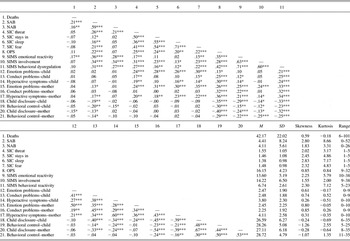
Means and standard deviations are reported in Table 1. Boys had higher ratings than girls for hyperactive symptoms: mother report, t (297) = 4.08, p < .001; child report, t (298) = 5.18, p < .001, and conduct problem symptoms: mother report: t (297) = 2.00, p = .047; child report: t (298) = 2.89, p = .004. Girls also reported more disclosure, t (297) = –2.54, p = .012, compared to boys. Correlations among study variables are also shown. All indicators of the planned latent variables were significantly correlated. According to children's reports, 46% of children reported that they were aware of at least one incident of NAB and 42% were aware of at least one incident of SAB in the previous 3 months. Mothers reported that 52% of children were aware of NAB and 32% were aware of SAB.
Means, standard deviations, and intercorrelations for all study variables

Note: SAB, sectarian antisocial behavior; NAB, nonsectarian antisocial behavior; SIC, Security in the Community; OPS, O'Leary Porter Scale; SIMS, Security in the Marital Subsystem.
*p < .05. **p < .01. ***p < .001.
Hypotheses were tested within a structural equation modeling (SEM) framework using AMOS 4.0 (Arbuckle & Wothke, Reference Arbuckle and Wothke1999). Several indices of model fit are reported: the relative χ2 index (χ2/df), the root mean square error of approximation (Browne & Cudeck, Reference Browne, Cudeck, Bollen and Long1993), and the normative fit index and the comparative fit index (Bentler, Reference Bentler1990). Acceptable model fit is suggested by scores below 3 on the χ2/df index (Bollen, Reference Bollen1989), values above 0.90 for the comparative fit index and normative fit index (Hu & Bentler, Reference Hu and Bentler1999), and root mean square error of approximation values below 0.08. Bootstrapping was employed to estimate the confidence intervals (CIs) of the indirect effects (Shrout & Bolger, Reference Shrout and Bolger2002). Less than 2% of each variable in the SEM model was missing. For all missing data the mean of that variable was imputed to utilize the bootstrapping function. Significant indirect effects are present when the confidence limit does not include zero. Child age and gender were included as predictors of all endogenous variables. All variables at the same level of the social ecological model were allowed to correlate; however, for the sake of space these paths were removed from the figure. Error terms for the child outcome variables as well as the monitoring indicators were allowed to correlate within reporter to control for reporter method variance for these variables.
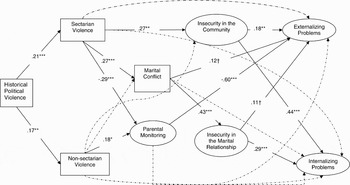
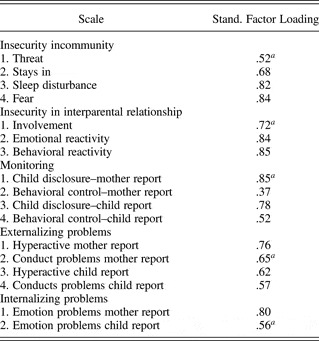
The model shown in Figure 2 adequately fit the data. All indicators and factor loadings for the latent constructs were removed from the figure for the sake of space with the factor loadings presented in Table 2. All of the pathways tested are indicated, with solid lines reflecting significant pathways and dashed lines indicating nonsignificant results. Examining the correlations between variables within the same level of the social ecological model suggests significant relations between the pairs of variables. SAB was positively correlated with NAB (r = .57, p < .001). Marital conflict and parental monitoring were negatively correlated (r = −.42, p < .001). Although not a pathway specifically of interest for this conceptual model (see Figure 1), this relation between marital conflict and less effective parenting replicates a finding often reported (Cummings & Davies, in press). Child internalizing and externalizing variables were also positively correlated (r = .66, p < .001); however, the two security measures were not significantly correlated (r = .08, p > .05).
Examining a social ecological model of relations between political violence and child outcomes. Standardized path coefficients are reported. Indicators and error variances are omitted from the model. Residuals from mother and child reports across questionnaire are allowed to correlate (Strengths and Difficulties Questionnaire, monitoring). *p < .05. **p < .01. ***p < .001. Model fit for structural equation modeling: χ2 (186) = 498.04, χ2/df = 2.68, normative fit index = 0.97, comparative fit index = 0.98, root mean square error of approximation = 0.075, confidence interval = 0.067–0.083.

Factor loadings for indicators of all latent variables

Note: All factor loadings are significant at the .001 level.
aFixed path.
Testing predictions of the social ecological model (see Figure 1), the objective measure of histories of political violence was related to both SAB (β = 0.21, p = .001) and NAB (β = 0.17, p = .003). SAB was directly related to children's increased emotional insecurity in the community (β = 0.27, p = .001), and also greater marital conflict (β = 0.27, p < .001). Marital conflict, in turn, was associated with greater insecurity in the interparental relationship (β = 0.43, p < .001). Internalizing problems were most proximally predicted by children's emotional insecurity, both with regard to the community (β = 0.44, p < .001) and the marital relationship (β = 0.29, p < .001; see Figure 2).
With regard to the prediction of externalizing problems (see Figure 2), indirect links were identified between SAB and child externalizing problems through parental monitoring and security in the community. SAB was associated with marital conflict and marital conflict was linked with externalizing problems, but only at the trend level (β = 0.12, p = .07). Child insecurity in the marital relationship was also related to increased externalizing problems at the trend level (β = 0.11, p = .09). Although trends should be interpreted with caution, these pathways in these directions were predicted in the conceptual model (see Figure 1). SAB was also associated with reduced parental monitoring (β = −.29, p <.001), whereas higher parental monitoring was linked to fewer externalizing problems in children (β = −0.60, p < .001). Child insecurity in the community was also linked with externalizing problems (β = 0.18, p = .004). An unexpected finding was that NAB was related to increased monitoring (β = 0.18, p = .02).
Further supporting the significance of the indirect effects, the 90% CI based on 500 bootstrapped samples indicated the indirect effect from sectarian violence to internalizing problems was significant, as the CI did not contain zero (90% CI = 0.01–0.04). For externalizing problems, the indirect effect from SAB was also significant as indicated by the 90% CI (0.02–0.06).
Discussion
Little is known about the social ecological bases for relations between political violence and children's adjustment. Much past research has focused on simply documenting the many negative effects of political violence on the children, including heightened aggression and violence, anxiety, depression, posttraumatic stress, somatic complaints, poor school performance, and engagement in political violence (e.g., Quota, Punamäki, & Sarraj, Reference Quota, Punamäki and Sarraj2008; Sagi-Schwartz, Seginer, & Abdeen, Reference Sagi-Schwartz, Seginer and Abdeen2008). The present results move beyond documenting associations between political violence and child adjustment toward articulating the social contexts and psychological processes that may contribute to understanding how and why these relations occur.
Social ecological explanations for associations between political violence and child development were supported. Histories of political violence in communities were related to elevated levels of SAB and NAB. Thus, the total amount of antisocial behavior perceived by adults and children in communities currently was related to historical levels of political violence in the communities. These results suggest that histories of political violence generally elevate community violence in socially deprived neighborhoods. Political violence may impact the availability of and disruptions in community resources and supports, with implications for general elevations in community conflicts and problems.
However, consistent with predictions that SAB apparently poses greater threat than NAB, SAB was linked with disruptions of family relations and children's emotional security about community and family. Specifically, pathways between sectarian community antisocial behavior and child adjustment involving family functioning and children's emotional security were identified. As expected, emotional security about community and marital conflict were related to the effects of SAB and marital conflict, respectively, on children's internalizing problems.
Pathways between marital conflict, children's emotional insecurity and threat and internalizing problems are well established (Cummings et al., Reference Cummings, Schermerhorn, Davies, Goeke-Morey and Cummings2006; Grych et al., Reference Grych, Harold and Miles2003). Children's perceptions and feelings of the safety, stability, and security of their families are undermined by marital conflict, with well-known implications for children's emotional adjustment (Davies, Harold, et al., 2002). These results are consistent with recent research emphasizing the role of emotional security and perceived threat in children's internalizing problems (Cummings et al., Reference Cummings, Schermerhorn, Davies, Goeke-Morey and Cummings2006; Grych et al., Reference Grych, Harold and Miles2003).
This study extends the study of the role of emotional security in child adjustment to include emotional security about the community (Waters & Cummings, Reference Waters and Cummings2000). Both emotional security about marital conflict and community violence contributed to the prediction of internalizing problems in children, even when both variables were included in the same model. The present research supports the notion that sectarian conflict independently undermines children's emotional security about their communities, also contributing to their risk for adjustment problems. Moving beyond simply documenting bivariate relations between political violence and child adjustment problems, these findings support process-oriented pathways consistent with EST whereby contexts of political violence and sectarian strife serve to undermine children's emotional well-being and adjustment in terms of risk for depression, anxiety and other internalizing problems (see Muldoon et al., Reference Muldoon, Trew and Kilpatrick2000; Smyth & Scott, Reference Smyth and Scott2000). This work thus extends the application of EST as an explanatory construct beyond the family to community contexts.
Parental monitoring was differentially predicted by SAB and NAB, which is interesting. Parental monitoring is a critical class of parenting behaviors toward diminishing delinquency or misbehavior among preadolescents and adolescents (Smetana, Reference Smetana2008). Consistent with the hypothesis of certain social stressors limiting the parents' capacity for effective monitoring of children's delinquency and other externalizing behavior (Dishion & McMahon, Reference Dishion and McMahon1998), SAB was associated with reduced parental monitoring. One interpretation is that sectarian tensions undermine the parent's capacities for monitoring by threatening and distracting parents from attending adequately to their children's whereabouts and activities, fostering elevated delinquency and aggression in social contexts (i.e., Northern Ireland) in which these behaviors are potentially salient among youth. Another possibility is that in areas in which there is more sectarian violence, there is also more social connectedness in the in-group. That is, parents may be more confident that others are looking out for their children as well and thus do not feel they need to monitor as closely.
By contrast, NAB was linked with heightened parental monitoring of the children's behavior. Thus, in this context NAB may serve to increase the vigilance of parents in terms of monitoring, thereby acting to decrease children's risk for externalizing problems. This unexpected finding may reflect that parents in socially deprived neighborhoods characterized by heightened NAB are more aware and concerned about the possibilities for delinquency and misbehavior by youth. Accordingly, they may be motivated to keep better track of their children's behavior, engaging in higher levels of monitoring. Given that NAB does not hold the potential threats of SAB for threats to intercommunity relations and the social order, these events may not be as immediately stressful for the parents in terms of their concerns about the safety and security of the social order, leaving them with relatively more, and perhaps even elevated, resources to devote to their children's well-being (i.e., monitoring). In the absence of prior research differentiating forms of community violence comparisons with past research cannot be made. Further study of the relative relations between sectarian and nonsectarian community violence and parental monitoring in contexts of political violence is warranted.
As predicted in the conceptual model, relations were identified between children's externalizing problems and marital conflict, and emotional security about marital conflict, respectively. Although these findings should be interpreted with caution given the pathways were trends, the fact that the pathways were predicted in the conceptual model gives greater weight to their interpretation as meaningful, for example, these tests can be viewed as significant if evaluated as one-tailed tests. Prediction of externalizing problems as a function of emotional insecurity about marital conflict is less consistent than for internalizing (e.g., Cummings et al., Reference Cummings, Schermerhorn, Davies, Goeke-Morey and Cummings2006; Grych et al., Reference Grych, Harold and Miles2003). One interpretation is that only children already prone to aggression tend to exhibit externalizing problems in response to marital conflict (e.g., Cummings, Iannotti, & Zahn-Waxler, Reference Cummings, Iannotti and Zahn-Waxler1985). Accordingly, in neighborhoods with sectarian violence, marital processes may only exacerbate aggressive tendencies in children already with these predispositions.
It is interesting that children's emotional security about community was significantly associated with their risk for externalizing problems. These results suggest that children's emotional security about community violence poses similar, or even greater risk, for their development of externalizing problems than emotional security about marital conflict. These findings highlight the possible importance of children's emotional security about community relations as possibly contributing to tensions between ethnic groups and proneness to conflict and violence.
Taken together with the links found with historical political violence, and consistent with themes in research on the ethnic conflict in Northern Ireland regarding children (Cairns & Roe, Reference Cairns and Roe2003; Fay et al., Reference Fay, Morrissey, Smyth and Wong1999; Jarman & O'Halloran, Reference Jarman and O'Halloran2000; McEvoy, Reference McEvoy2000; Shirlow & Murtagh, Reference Shirlow and Murtagh2006), this study serves to delineate specific pathways between political violence, community antisocial behavior, and child adjustment. As hypothesized, support was found for multiple family systems (marital conflict and parental monitoring) as more proximal explanatory processes for relations between sectarian community violence and child adjustment.
With regard to the implications for family functioning and child psychological processes, these results are consistent with evidence supporting a social ecological approach in research on community violence in US communities (Proctor, Reference Proctor2006). The findings are also consistent with themes in mainstream child development research, including the literature reporting indirect relations between marital conflict, parenting, and child adjustment (Cummings & Davies, Reference Cummings and Davies2002), and studies indicating the pertinence of both marital conflict and parental monitoring for children's externalizing problems in adolescence (Emery, Reference Emery1982; Grych & Fincham, Reference Grych and Fincham1990; Stattin & Kerr, Reference Stattin and Kerr2000). Extending past models focusing on relations between multiple social ecological factors and child adjustment (Conger et al., Reference Conger, Conger, Elder, Lorenz, Simons and Whitbeck1992; Elder et al., Reference Elder, Nguyen and Caspi1985; Patterson et al., Reference Patterson, DeBaryshe and Ramsey1989), the present study suggests the pertinence of social ecological models including sectarian strife and psychological processes of emotional security for explaining child adjustment problems in regions characterized by political violence.
In addition to supporting past research directions, this study breaks new ground in advancing empirically based distinctions between sectarian and nonsectarian violence and the investigation of the implications of these forms of community violence for families and children. With regard to past studies of political violence and children, this study provides a more differentiated and rigorous test of interrelations between multiple forms of community violence in contexts of political violence, multiple family and child psychological processes, and different forms of child adjustment. The findings suggest that the meaning of politically motivated violence may be different from nonpolitically motivated violence. Several possible alternative explanations merit investigation in future research, including (a) sectarian community antisocial behavior may be more closely linked to the individual's identity, and therefore poses a greater threat to both parents and children, (b) SAB is a potentially greater threat to intercommunity relations and challenges to the integrity of the political system and social order, which is potentially related to the emotional security of both adults and children.
A social ecological perspective as conceptualized in this report was little supported for the effects of nonsectarian community antisocial behavior on families and children. Notably, items on the NAB Scale were similar to items on short versions of community violence measures used in the United States (Richters & Martinez, Reference Richters and Martinez1990). One possible explanation is that other processes related to the social ecological context, for example, other dimensions of parenting or child psychological processes (e.g., modeling, drug use), may be more important for incidences of NAB than interparental conflict or security-related processes in the child. In particular, monitoring is but one aspect of effective parenting. Other aspects of behavioral parenting that were not measured (e.g., effective discipline, problem solving, positive reinforcement) are also potentially explanatory factors. Another hypothesis that merits further study is that nonsectarian community antisocial behavior is sufficiently less salient as a source of stress or threat when sectarian issues are considered in contexts of political violence to no longer serve as a significant predictor of problems when sectarianism is controlled. Moreover, these variables may be more predictive in areas with higher base rates of NABs than in Northern Ireland.
Certain limitations should be acknowledged. Although model tests followed hypotheses derived from the propositions of our social ecological model, the cross-sectional research design limits conclusions about causal relationships or directions of effect. Most children ranged between 10 and 15 years of age, reflecting the interest in studying age groups at risk for becoming participants as well as observers of sectarian conflict. Nonetheless, given the relatively wide age range, age was controlled in SEM analyses. Future research should further examine age as a factor in contexts of sectarian violence, potentially as a moderator of relations. The time frames for assessing study constructs varied from several months to 1 year. Although one may presume time frames were primarily heuristics for obtaining responses on current levels of functioning, there is a possibility that variations in time frames across measures affected the results. The inclusion of multiple reporters (i.e., mothers, children) is a methodological strength in relation to other studies of political violence and children. However, additional sources of information about key constructs, for example, additional sources of objective information beyond family member's perceptions, would strengthen the tests. It was also not always possible to include multiple reporters, mainly in this instance for budget reasons and concerns about possibly overtaxing children. Nonetheless, the approach can serve as a template for how researchers in communities in the United States or other parts of the world can advance ecologically sound assessments of these constructs in the future. At the same time, culturally distinct forms of SAB may vary widely across societal contexts, so that the generalizability of these assessments to other cultures is expected to be illustrative but to some extent qualified. That is, in each culture it will be important to develop culturally appropriate measures, given that expressions of political and sectarian community violence may often be highly cultural-specific.
Nonetheless, the implications for understanding social ecologies of sectarian conflict and political violence merit consideration. Agreements between political leaders are only a start toward sustained peace processes, and it may be critical to understand and address the effects of political strife on communities, families, and children for any high likelihood of sustained peace. In many parts of the world history shows that sectarian conflict and violence may continue for many years after accords are signed and may later reescalate (Darby, Reference Darby2006). If peace processes backslide, the younger generation, who may have especially negative perspectives on the other group, is likely to contribute to heightened hostilities (Shirlow & Murtagh, Reference Shirlow and Murtagh2006). Children are not only observers or recipients of political violence but may be at the forefront of political change (Leavitt & Fox, Reference Leavitt and Fox1993). More also needs to be understood about bidirectional relations between political violence and children's functioning, including the associations between children's attitudes and behaviors in these contexts and family, community, and political conflict and violence. The study of conflict process at multiple levels of analysis in Northern Ireland can provide the bases for better understanding of intergroup conflict and underlying processes, with possible generalization to sectarian and ethnic conflict in other regions of the world. Given the many gaps in understanding the social ecology of political violence from the children's perspective, future research on these questions is needed in the many parts of the world with high levels of ongoing sectarian conflict and violence.
Appendix A: Scales Assessing SAB and NAB
SAB
This last set of questions is about your community. For these next questions, your community refers to the (insert denominational community participant identified earlier) community and the other community refers to the (insert other) community. These next questions are about things that might happen in your community. Please report only events that actually occurred in the community, not incidents from movies or fictional television.
In your community in the last 3 months, how frequently have the following occurred (response scale: 1 = not in the last 3 months, 2 = once in the past 3 months, 3 = every month, 4 = every week, and 5 = every day)?

NAB
These next few questions are still about your community, but now we want to know about things that might happen that are not necessarily anything to do with Catholics and Protestants. These are things that can happen within all communities that do not have anything to do with the troubles.
Within your own community in the last 3 months, how frequently have the following occurred (response scale: 1 = not in the last 3 months, 2 = once in the past 3 months, 3 = every month, 4 = every week, and 5 = every day)?