Introduction
Several scholars have attempted to disentangle the historical relationships between eugenics and genetics in a range of simultaneous studies of eugenics in various national contexts, including comparative ones (e.g., Ekberg Reference Ekberg2007; Lindee et al. Reference Lindee2003; Paul Reference Paul1998a; Petersen Reference Petersen2007; Resta Reference Resta1998; Rose Reference Rose2007; Schwartz Cowan Reference Schwartz Cowan2008; Stern Reference Stern2012; Wertz Reference Wertz1998). With more studies of eugenics in general, it has become clearer that eugenic ideas and practices varied greatly depending on the types of eugenic ideas and their application, and depending on a range of geographical, demographical, political, religious, social, and cultural variables (see, e.g., Bashford and Levine Reference Bashford and Levine2010). This, of course, also includes the numerous relationships between eugenics and genetics, although these are not yet as well-examined as is eugenics per se.
However, in recent decades, the development of molecular genetics has created a strong legitimizing need among geneticists to define the boundaries between new molecular genetic methods and “old” eugenics, just as medical geneticists did after World War II in the process of distancing genetic practices from German “racial hygiene.” How this distinction is made depends, as scholars have pointed out, on how one defines eugenics and genetics (Koch Reference Koch2004). Historical studies have demonstrated that it is often not even possible to strictly separate eugenics and genetics, as they often prove to be deeply and continuously interwoven via a detailed network of practitioners, social relationships, and institutional contexts (Paul Reference Paul1998a and Reference Paul1998b; Björkman Reference Björkman2011; Comfort Reference Comfort2012). Eugenics, the endeavor to biologically improve humankind, had a scientific driving force in mendelism, the application, or imagined applications, of Mendel's heredity principles. When it comes to the Swedish case, the first scientists to apply mendelian principles in plant botany, such as, for example, geneticist Herman Nilsson-Ehle, were also advocates of eugenics and claimed it would principally be a waste to refine and breed plants and animals, but not humans (Nilsson-Ehle Reference Nilsson-Ehle1919, 11–13). The geneticists were not the only ones who took part in launching Swedish eugenics; several different groups did, but they had a significant role in legitimizing a biological deterministic perspective on population issues, as well as using eugenics as a way of legitimizing genetics as a practical and applicable discipline (Tunlid Reference Tunlid2010).Footnote 1 As Sweden was converted into a welfare state, eugenics became an element of social policy. One of the eugenic elements of Swedish social policy was sterilization, but it is important to keep in mind that eugenic sterilization was only a small part of the Swedish social policy agenda. Other endeavors, such as the expansion of maternal and child health programs, and general pension systems, held far greater importance than eugenic sterilization. Having said that, eugenics was present in social policy discussions on many levels: on abortion, mother care, preventive health issues, family planning, and sexual politics as well as educational issues. This was accomplished in part by a eugenic network lobbying group that cooperated with different organizations and institutions to spread the eugenic message in various ways during the first decades of the twentieth century (Björkman Reference Björkman2011, chap. 4).
In the present paper, “eugenics” is related to sterilization activities undertaken by the Swedish state-governed Medical Board (Medicinalstyrelsen) in implementing the 1941 Sterilization Act, which had a clear eugenic application. However, the Swedish Sterilization Act and its applications together constituted a multi-faceted enterprise used in many different ways, some of which contradicted some of the law's original intentions. A wide range of officials was involved in implementing the law, and practices both changed over time and varied contemporaneously depending on the interpretations of officials and institutions (Tydén Reference Tydén2002, chaps. 15 and 16).Footnote 2 Certainly, the law was used for eugenic purposes to improve population quality, not least by the professor and heredity expert of the 1950s Swedish Medical Board, Nils von Hofsten (1881–1967), as we will see below.
“Genetics,” in Sweden on the other hand, from the first professorship in 1917 and during the following decades, developed from an applied science with important contributions to Swedish economy in the form of new seed varieties to a discipline where basic research was increasingly emphasized. Already in the 1930s a shift away from extreme biologist determinism was visible in the younger generation of geneticists, and this shift only grew more important after WWII. In the 1950s, the discipline of medical genetics emerged and was separated from genetics (Tunlid Reference Tunlid2010). Thus, in this article, genetics is regarded as equivalent to the emergent discipline of medical genetics, which developed in Sweden at Uppsala University and whose major representative, Professor Jan Arvid Böök (1915–1995), rejected eugenics in the sense of state influence on individual reproduction. Böök was involved in the professionalization of medical genetics, which, in addition to introducing new equipment to study genetics in the laboratory and employing physicians and medical students to perform chromosome analysis, also involved repudiating von Hofsten's understanding of the population benefits of sterilizing target groups such as the “feeble-minded.” Instead, he emphasized the individual gains accruing from medical genetics and the importance of genetic counseling.
When it comes to understanding how new genetic developments affect individuals and their actions, both today and historically, the influential sociologists Nikolas Rose and Carlos Novas, as representatives of a contemporary biopolitical perspective, have stated that recent life science developments in the context of neoliberal societies are creating “biological citizens” influenced by information and education, not only about health and illness but also about predispositions and susceptibilities. This knowledge engenders norms of individual responsibility to which individuals adjust, creating a “responsible personhood” (Novas and Rose Reference Novas and Rose2000, 488; see also Rose and Novas in Ong and Collier Reference Rose, Novas, Ong and Collier2005). This responsibility is also, according to Rose and Novas, often widened to include decisions on reproduction and marriage. They state that new genetic knowledge “creates an obligation to act in the present in relation to the potential futures that now come into view” (Novas and Rose 2000, 486). Empirical and analytical examples illustrate how the new genetics has influenced identity work and family dynamics (e.g., Atkinson et al. Reference Atkinson2007; Featherstone et al. Reference Featherstone2006; Gibbon Reference Gibbon2006 and Reference Gibbon2009). Several studies have also pointed out that practices of identity work in relation to genetic issues are dependent on local, historical, cultural, and political contexts as well as being embedded in existing hierarchies (Felt and Müller Reference Felt and Müller2011; Kampriani Reference Kampriani, Gibbon and White2009; zur Nieden Reference zur Nieden and Heil2007; Gibbon and Novas Reference Gibbon and Novas2008; Raman and Tutton Reference Raman and Tutton2010). Such perspectives are also useful when it comes to analyzing historical material, as we shall see, in societies that were far from neoliberal, but instead were heavily influenced by collectivist solutions to societal problems, as Sweden was at the time (see, e.g., Broberg and Roll-Hansen Reference Broberg and Roll-Hansen2005; Berg Reference Berg2009; Björk Reference Björk2011; Bommenel Reference Bommenel2006).
Applying a biopolitical perspective to historical material, as in this Swedish example, is important because the eugenic knowledge and practical applications of the time, disseminated throughout the population in several ways, raised awareness of the importance of being individually responsible for the hereditary aspects of one's reproduction. This was expressed, among other ways, in the phenomenon of “heredophobia” (ärftlighetsskräck) – the fear of and anxiety at passing on hereditary disease to one's children – which could affect both women and men. Heredophobia was a condition that sometimes afflicted women, men, or couples who feared bringing children into the world because they were convinced that they would pass on hereditary illnesses or defects to their children, even when there were no medical grounds to believe so. The first mention of this phenomenon, “unfounded fear of invalid offspring,” can be noted in a government commission report from 1936, written by von Hofsten and others, when the first Sterilization Act of 1935 was revised (SOU 1936, 46, 75). This fear at times impelled the affected to apply for sterilization or abortion, which the heredity expert, Professor von Hofsten at the Swedish Medical Board noted with discomfort. In his view, individuals struck by heredophobia often belonged to the segment of good parental material that should be encouraged to reproduce, which motivated him to start working on strategies to prevent it (von Hofsten Reference Hofsten1963, 50). He wrote about those strategies several years later, in an overview over the sterilization law and the implementation of it. But these strategies were not a mere afterthought. They can actually be studied through archival material from the Medical Board, as we shall see below. These strategies were often voiced in his counseling directed to the woman, man, or couple, and documented in reports.
The example from the Swedish history of eugenics and genetics shows how an early and rudimentary form of genetic counseling actually emerged within eugenic practices in response to an increasing demand for genetic risk information and risk calculations. In the same decade, in the 1950s, genetic counseling had also been launched outside eugenic practices, but with institutional and personal relationships as well as historical ties to older eugenic practices. In this narrative, two main characters are involved, representing two different Swedish eugenic and genetic networks, generations, and partly different sets of ideals, namely, professors Nils von Hofsten and Jan Arvid Böök. They also belonged to different institutional settings in the 1950s and had partly different goals for their activities.
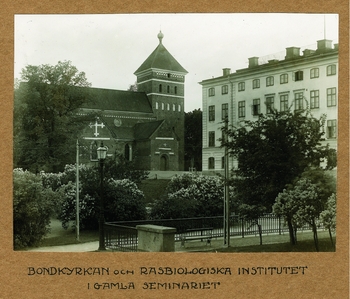
Von Hofsten was a zoologist who introduced genetics to a Swedish audience (outside plant geneticists and botanists) in the 1910s; he also wrote several standard textbooks on the subject at the time and later (von Hofsten Reference Hofsten1919, Reference Hofsten1927, Reference Hofsten1931). He took part in early lobbying to establish eugenics research in the form of a eugenics institute in Sweden. When this goal was achieved, he became a board member of the state-financed Institute of Race Biology (Rasbiologiska institutet), founded in 1922 (see fig. 1). He also served on a parliamentary commission on population issues between 1935 and 1938, when he revised and expanded the Swedish Sterilization Act of 1934. As a scientific expert on the Swedish Medical Board, he was involved in reviewing applications for eugenic sterilizations and abortions between 1935 and 1953. He drafted regulations governing how the Sterilization Act should be applied, and was also tasked with assessing the effects of the 1941 Act.
The Institute of Race Biology, Uppsala. Source: Uppsala University Library.

Several of these influential positions can be traced to the eugenic network von Hofsten belonged to, and these institutional positions made him an “obligatory passage point” – i.e., a person through which most individual or institutional sterilization issues had to pass – until at least 1953 (Björkman Reference Björkman2011, chap. 3). Though von Hofsten belonged to what has been characterized as “mainline eugenics” (Kevles Reference Kevles1995, chap. 11), he co-existed mostly peacefully with representatives of Swedish “reform eugenics,” such as the statistician Gunnar Dahlberg (Björkman Reference Björkman2011, 136–138). Dahlberg, who was the director of the Institute of Race Biology between 1936 and 1956, was a social democrat and an opponent of Nazism. Intellectually, he belonged to the left-wing tradition of geneticists such as Lionel Penrose and J. B. S. Haldane, and criticized the mainline phalange of eugenicists, especially for their scientific racism and biological determinism.
When it came to improvement of humankind, Dahlberg emphasized the social conditions above the biological (Björkman Reference Björkman2011, 136–141). This can be illustrated by the fact that he signed the 1939 Nature-published manifesto “Social Biology and Population Improvement,” in which social conditions and changes in human attitudes were described as crucial for the genetic improvement of humankind (Crew et al. 1939). This approach strongly opposed the Nazi racial policy, and thus the manifesto can be read as a clear stand against Nazism. Dahlberg also continued this line of thought in a book where he emphasized social conditions rather than biology, and clearly rejected the Nazi understanding of race (Dahlberg Reference Dahlberg1940). This book was later translated into English with the significant title Race, Reason, and Rubbish (Dahlberg and Hogben Reference Dahlberg and Hogben1942). Over the years, Dahlberg frequently challenged for example von Hofsten's views on the positive population effects of a large number of sterilizations. He did not, however, challenge the idea of the importance of sterilizing mentally disabled individuals to prevent them from becoming parents (Björkman Reference Björkman2011, 140).
The geneticist Jan Arvid Böök started his genetic career holding traditional mainline eugenic views, for example, emphasizing the need and opportunities to improve the Swedish population using sterilizations. Under the auspices of the National Association for Public Health, together with von Hofsten he lectured on this subject in 1941. The Association was founded the same year as a protest against left-wing eugenicists such as Gunnar Dahlberg and others, who argued that sterilizations would not improve the population as a whole, although they could be useful for individuals (Björkman Reference Björkman2011, 147; see also Tunlid Reference Tunlid2004, 231–234). Böök's own research was aligned with the established tradition of conducting large heredity studies of isolates with the help of pedigrees; in Böök's case, his main interest was schizophrenia. However, in the 1950s, Böök started to emphasize the need for investigations into more broadly distributed genetic diseases using modern methods such as chromosomal analysis, even though he never used the new technologies himself. He succeeded Gunnar Dahlberg as head of the Institute of Race Biology in 1956. In 1958, he changed its name to the Department of Medical Genetics and transformed it from a state institute to a department of the University of Uppsala. In this new institutional setting, equipped after 1956 with a modern laboratory for chromosome analysis provided by the Rockefeller Foundation, Böök provided genetic counseling, both to patients referred to him from hospitals around the country and to “walk-ins.” He made clear, in both his counseling and writing that he no longer agreed with the idea of a partly state-controlled heredity selection. In line with these attitudes, his counseling style emphasized individual choice, as we will see below (see fig. 2).
Department of Medical Genetics, Uppsala. Source: Uppsala University Library.

Even though he changed his mind towards individual choice, Böök continued to support a more old-fashioned and mainline style of research. This is evident for example from his role as an expert for the Swedish Medical Research Council, where he wrote peer evaluation reports of research applications. Regularly throughout the 1950s and 1960s he advocated support for geneticist and mainline eugenicist Torsten Sjögren, who continued a strand of research initiated in the 1920s with studies of hereditary diseases in Northern Sweden isolates (Uppsala University Archive, Department of Medical Genetics, F6 22, Böök Report to National Medical Research Council, August 11, 1962). Sjögren was a strong advocate for eugenic sterilization and through his positions as director of the Lillhagen psychiatric hospital, and later for a psychiatric ward in Sahlgrenska hospital in Gothenburg in the 1930s and 1940s, he was able to initiate sterilizations in this part of the country (Björkman Reference Björkman2011, 132). As president of the International Federation of Eugenics Association in the 1930s, he became an indirect and important support for the Nazi regime (Kühl Reference Kühl2013, 109).
The Swedish case clearly illustrates several ways in which eugenics and genetics were intertwined in the 1950s. Early Swedish genetics, like Böök’s, was influenced by eugenic thinking and used similar anthropological research methods, such as long field trips to isolated areas, mapping families, and compiling pedigrees to trace hereditary diseases and conditions. In the 1940s, both Böök and von Hofsten believed in a state-controlled heredity program involving the sterilization of certain groups to improve population quality. They also shared an institutional affiliation, though not concurrently: by the time Böök entered the Institute for Race Biology (Institutet för rasbiologi) von Hofsten had retired from his work on its board. Von Hofsten never abandoned his firm opinion that a central institution (e.g., the Swedish Medical Board) should intervene in individual reproductive matters to improve the population by sterilizing the “inferior,” although he lowered his expectations of such effects over the years (Björkman Reference Björkman2011, 166). Böök, however supportive of mainline eugenic research, in line with several younger geneticists came to believe that such sterilizations would not affect the quality of the population, and that marriage and reproduction were areas in which the individual would and should decide – with the help of genetic information provided by experts such as himself. Their different views of these issues led to a conflict on a state committee, operating between 1956 and 1960 to revise the 1915 Marriage Code, on which both von Hofsten and Böök served as scientific experts, a conflict that von Hofsten lost (Björkman Reference Björkman2011, 188–194).
Eugenics and Sterilization
In the Swedish history of eugenics, the 1950s are usually described as a time when individuals slowly gained more influence over their own reproduction, compared with the 1930s and 1940s, when state expertise exerted greater influence on individual reproductive choices. For example, in the 1950s, physicians started to use the eugenic provision of the 1941 Sterilization Act to help “worn-out mothers” obtain abortions and/or sterilizations to avoid pregnancies. Sterilization at times came to be used as contraception, which was indeed not the original intention of the Act. The changes in the implementation of the Act in the 1950s were partly due to changes in societal perceptions of the rights of individuals. Still, however, the Act could in certain cases be used in ways today deemed coercive (Tydén Reference Tydén2002, chaps. 15 and 16).
The Swedish Sterilization Act allowed both voluntary and coercive sterilization. Mentally disabled individuals who were declared legally incompetent, and thus unable to understand the meaning of the intervention, could be coercively sterilized on eugenic grounds. However, no physical force was allowed when performing the operation. Many sterilizations, however, were conducted voluntarily and required that individuals take responsibility for their reproduction in that they sought sterilization because they were at high risk of transmitting disease to their children (Koch Reference Koch2004; Tydén Reference Tydén2002; Björkman Reference Björkman2011).
To implement a model in which individuals acted responsibly to improve society in terms of heredity, eugenicists had already started educating the public and campaigning early in the twentieth century, while still lobbying for sterilization legislation. The educational measures taken were motivated by the conviction that much of the supposed ongoing degeneration of the population had occurred due to lack of public knowledge of heredity and eugenics. During the first decades of the twentieth century it became possible to learn about eugenics and sterilization from exhibitions, newspapers, weekly journals, and popular books on eugenics, women's health, and childcare, as well as in calendars, school books, encyclopaedias, and even women's magazines. In popular form, eugenic measures were described and healthy individuals were encouraged to reproduce; while at the same time individual responsibility for not spreading hereditary diseases was stressed. These lobbying efforts were carried out by the eugenicists belonging to the mainline generation, i.e. von Hofsten and his like-minded colleagues (Björkman and Widmalm Reference Björkman and Widmalm2010, 383). Others, like Dahlberg and Böök, entered the stage later: Dahlberg (born 1893, see below) in the 1920s, and Böök (born 1915) in the 1940s. The first Swedish Sterilization Act was implemented in 1935, after several decades of intense lobbying by scientists interested in genetics, such as von Hofsten, and by social workers, physicians, and politicians. Likely, all these awareness-raising activities, together with frequent sterilization activity in years to come, cumulatively affected some individuals who identified as people who should not reproduce. As we will see later, these activities also had some unintended consequences, such as heredophobia (Björkman Reference Björkman2011, 167–170, 179–187). First, I will briefly review the follow-up of the 1935 Sterilization Act, which led to a new, revised law, passed in 1941.
The Swedish Sterilization Act of 1941
The revised 1941 Sterilization Act expanded the categories of people eligible for sterilization. The previous law was only to be used on individuals suffering from “insanity, mental deficiency or other disorder of the mind” and only allowed sterilization on individuals who were legally incapable, i.e. did not understand the societal or individual consequences of sterilization. It was carried out without consent. The indications were two: eugenic and medical. The eugenic indication was adopted to prevent the transfer of the hereditary condition to their offspring. The social indication was used when the individual was considered inappropriate as a parent. In the new law, also legally capable individuals were included, and a new indication was added: the social indication. The 1941 Act introduced voluntary sterilization, but persuasion and indirect coercion were widely practiced. The eugenic indication was still used when a person was considered to have a hereditary condition that could be passed on to his or her children. The medical indication applied only to women, when being pregnant or delivering a child was considered likely to threaten their life or health. The social indication, like before, applied to individuals considered “bad parental material” and therefore deemed unable to take care of children. In practice, several of the indications could be used simultaneously when deciding on sterilization (Björkman Reference Björkman2011, chap. 7).
The 1941 Act paved the way for a sterilization offensive, especially aimed at the “feeble minded.” Nils von Hofsten, who was responsible for a large part of the revision process, had quite extensive visions of how a sufficient number of sterilizations would reduce the proportion of mentally deficient within the Swedish population (Björkman Reference Björkman2011, 165). The Sterilization Act and the Abortion Act were connected, which meant that when a woman applied and was allowed a eugenic abortion, the abortion should be conditional on sterilization, to stop additional pregnancies that would otherwise also have to be terminated. After 1946, it was also possible to have an abortion due to “weakness” (Tydén Reference Tydén2002, 234). This new aspect of the Abortion Act meant that it was possible to recommend an abortion not only when a pregnancy or delivery was considered likely to threaten a woman's life or health, but also when it was considered that the later upbringing of the child would seriously impair her health. By adding this consideration, the long-term health effects that another child might cause the woman in terms of the overall weakening of her strength and ability to care for a family were also taken into consideration (Björkman Reference Björkman2011, 181).
A wide range of officials and civil servants could initiate an investigation into whether or not a person should be encouraged to apply for sterilization. This opportunity was widely exploited when, for example, a woman exhibited what was seen as a problematic motherhood. During the investigation, the woman's intelligence, ability to take care of a home and family, overall behavior, and, not least, reputation were considered (Runcis Reference Runcis1998, 120–132). It was also possible to ask a physician to initiate a sterilization or abortion application. In fact, all publicly employed physicians were, according to the law, obliged to initiate a sterilization investigation when deemed appropriate. A common practice was also to set sterilization as a condition of discharge from various juvenile correctional and penal institutions, which forced individuals to reluctantly accept sterilizations they otherwise would have been unlikely to have agreed on. Another practice was to apply for a sterilization on behalf of an ”obstinate” person, and after permission from the Medical Board had been granted, even the most obstinate usually accepted the official documentation and the surgical intervention (Björkman Reference Björkman2011, 171–172).
Sterilization and abortion applications were thus submitted to the state Medical Board, which had a special office, the Phorensic Psychiatric Committee, later renamed the Social Psychiatric Committee, with a handful of members to consider all sterilization applications. During Committee meetings, as many as 70 applications could routinely be decided on. Every application contained a report from a physician as well as the result of at least one intelligence test. The application often included general reviews of the applicant from relatives, teachers, employers, or other people considered relevant. If the physician was deemed to have provided sufficient information and the case called for sterilization and/or abortion, the intervention was allowed by the board members and a standard permission was sent by mail. In certain complicated cases concerning heredity issues, however, the permission could not be granted routinely. In such cases, the board called for a special investigation by the heredity expert of the committee, from 1935 to 1953, Professor von Hofsten. When conducting the investigation, he consulted the genetic literature and made genetic risk calculations based on information from the literature and from the application. The investigation led to a report in which he either endorsed or objected to the application. When these reports were presented, von Hofsten was not in the position to determine the cases by himself, but the Board members almost always followed his recommendations, which made his influence decisive (Tydén Reference Tydén2002, 301–303; Runcis Reference Runcis1998, 219–232; Björkman Reference Björkman2011, 163–164).
Genetic Counseling and Heredophobia
In the 1940s and 1950s, individual demand for genetic counseling increased and was noted by the Medical Board. One underlying reason for this demand was the phenomenon retrospectively called “heredophobia” (von Hofsten Reference Hofsten1963, 50). To explore heredophobia and the ensuing increased demand for genetic counseling, I used archival reports from von Hofsten to the members of the special office of the Medical Board from the 1940s to 1953. In these reports, he described difficult cases that had required his special investigation. Some of these difficult cases concerned heredophobia. In these reports, he presented his genetic risk calculations and advised the Board what action to take in each case. Von Hofsten often also used the reports to personally advise the affected individuals in order to calm and console them. These reports also contain the views of the affected individuals, albeit filtered via the physician's report and von Hofsten's interpretations. In total, there are circa 130 reports from special cases in the archive, which covers only a fraction of all the thousands of desicions made by the board. And of these 130 reports, there are only another fraction, around 30, that includes depictions of heredohobia. Thus, heredophobia was not representative of all those sterilized, but it still deserves our attention as a phenomenon partly caused by eugenic communication and interventions from the experts to the public.
The primary component of heredophobia was fear on the part of the woman, man, or couple that they would pass on a presumed hereditary disease to their child. Because of this fear, some applied for sterilization even before getting pregnant, as they did not want to reproduce at all. Often a certain condition in the family had aroused this fear, such as epilepsy, retinal degeneration, deafness, cleft palate, and muscular dystrophy. One woman applied for both abortion and sterilization for fear that her child would have the same large birth mark that she and her other children suffered from, which was considered heredophobic by von Hofsten, as it in no way was judged as a serious problem (National Archive, Medical Board, Sinnessjukvårdsbyrån, avd. för rättspsykiatri, Korrespondens i abort- och steriliseringsärenden. 1935, EIX, vol. 1. Protocol 7 May, 1952). Mental conditions were also a reason for concern: one woman applied for both abortion and sterilization due to several cases of feeble-mindedness in her family, and another for abortion because her mother, aunt, and cousin all suffered from “insanity” and because she was struck by “constant nervous anxiety” that this insanity might appear in her child. This fear, too, was considered unfounded (NA, MB Sinnessjukvårdsbyrån, avd. för rättspsykiatri, Korrespondens i abort- och steriliseringsärenden; 1935, EIX, vol. 1. Protocol 13 Sept. 1944).
Other women had given birth to disabled children, some of whom had died in early childhood. One woman who sought an abortion had previously given birth to two children with “mongoloid idiocy” while a third child was “retarded” and had died at age three. Her fear was considered unfounded, but nevertheless she was granted the abortion (NA, MB, Rättspsykiatriska nämnden, Protocol 26 August, 1942).
Another woman had given birth to one healthy child and then to a girl with “idiocy”; she later applied for an abortion out of fear that the child she was then expecting would also be affected. This, von Hofsten found, was also a mainly unfounded fear, yet he approved of an abortion. Yet another woman had given birth to a child with severe physical deformities and did not want to risk giving birth to another such child, a fear assessed as unfounded (NA, MB, Sinnessjukvårdsbyrån, avd. för rättspsykiatri, Korrespondens i abort- och steriliseringsärenden. 1935, EIX, vol. 1. Protocol 8 August, 1950).
At the time, neither abortions nor sterilizations could be used as contraceptives. One may therefore wonder whether professing a strong fear of a hereditary disease might have been a strategy used by individuals and couples to obtain abortions or sterilizations at a time when other reliable contraceptives were scarce. The material reveals no signs of such a strategy, either in the cited statements of the individual applicants or in any records from physicians or Medical Board experts. There are, however, examples of how heredophobia caused both individuals and couples to act in ways that had substantial consequences for their personal future.
For example, one woman applied for a eugenic abortion due to insanity in her family, and from the doctor's report it appears that the woman and her fiancé had broken their engagement due to their fear of passing on this condition to any future children. Their fear was considered groundless, and the report stated that marriage could definitively be entered into (NA, MB, Sinnessjukvårdsbyrån, avd. för rättspsykiatri, Korrespondens i abort- och steriliseringsärenden. 1935, EIX, vol. 1. Protocol 5 November, 1947). In another case, a couple applied for an abortion and for the sterilization of the man, due to his hereditary epilepsy, a disease that also ran in her family. From the report, it appears that this couple longed for and wanted children, but had concluded that abortion and sterilization would probably be safest. At the same time, they asked for clear information on the hereditary risks, preferably given in “percentages.” Their fear was regarded unfounded (NA, MB, Sinnessjukvårdsbyrån, avd. för rättspsykiatri, Korrespondens i abort- och steriliseringsärenden. 1935, EIX, vol. 1, Protocol 12 March, 1953). Some men also applied for sterilization out of heredophobia. When this happened, the man himself was often affected by a disease, for example, muscular dystrophy, which at times was not considered to be a reason for a well-founded fear (NA, MB, Sinnessjukvårdsbyrån, avd. för rättspsykiatri, Korrespondens i abort- och steriliseringsärenden. 1935, EIX, vol. Protocol, RP/47, no 2093).
When individuals applied for interventions out of fear of severe existing inheritable diseases, they were usually granted permissions for abortions and/or sterilizations. In other cases, such as heredophobia cases, the hereditary expert von Hofsten found that the fear was completely unjustified from a hereditary perspective. Sometimes he found, however, that the individual's fear had reached such proportions that it in itself posed a serious medical risk to the person. This could justify intervention, in his opinion. These were the cases mentioned above, when he accepted or even recommended an intervention even though the fear in itself was considered to be unfounded. Even then, he often recommended that the applicant seriously consider whether or not to use the permission granted.
One case from 1948 illustrates this. A woman with psoriasis applied for sterilization out of fear that she would pass it on to her children (NA, MB Sinnessjukvårdsbyrån, avd. för rättspsykiatri, Korrespondens i abort- och steriliseringsärenden. 1935, EIX, vol. 1. Protocol 19 May, 1948). She reportedly constantly checked her children to see whether they were developing any signs of the disease. According to the doctor's report, she was obviously in a distressed mental state due to her worries. When performing his genetic risk calculations, von Hofsten found that the woman's children had a 12 per cent risk of being affected by psoriasis. Though he considered this risk minor, he nevertheless felt obliged to recommend sterilization, as her state of health was poor because of her intense fear. The reason for this recommendation was not the medical risk of passing on the psoriasis, but her mental health that was seriously affecting her quality of life. With sterilization, he hoped she would become free of her worries. Von Hofsten wrote the following in his report:
It is understandable that Mrs. X, in her belief that her children are endangered, has started to observe them, looking for rashes, but after the information now provided she should of course not do so; by doing that she is damaging both her own and her children's nerves. Since she, through the sterilization, has eliminated her fear of pregnancy, she should, as the capable and decent person she evidently is, attain a better mental balance and start to hope for the best for her children.
This is one case in which von Hofsten favored sterilizing a woman with heredophobia. Here he seems to consider it an indisputable cure for her fear, and a preventive measure to protect the mental health of her children. In another case, from 1942, when a woman applied for an abortion, he did not focus so much on the current mental state of the woman, but instead on her mental health after possibly giving birth to another child. This was the woman who had given birth to two children with “mongoloid idiocy,” and also had a third, “retarded” child who had died at age three. Von Hofsten recommended an abortion, condition sterilization, and stated: “For a woman who has given birth to three feeble-minded children and no others, the fear of another defective child would be a terrible psychological distress, and giving birth to such a child could result in serious injury.” Both an abortion and a sterilization were justified in this case, he concluded, to spare the woman the suffering of giving birth to another possibly defective child. And in this case, he focused primarily on her mental health instead of the factual risks of having a disabled child.
In other cases, he presented abortion or sterilization as a thinkable cure for heredophobia, but only at the same time as he also stated that giving birth to a healthy child would be an even better cure, suggesting that the woman thoroughly think through her decision before she used the permission granted. One example that illustrates this is that of a woman who already had two children, one healthy and one daughter with “idiocy” (NA, MB, Sinnessjukvårdsbyrån, avd. för rättspsykiatri, Korrespondens i abort- och steriliseringsärenden. 1935, EIX, vol. 1. Protocol 6 February, 1952). When expecting her third child, the woman was nervous and worried that this child might also be affected. After performing risk calculations, von Hofsten concluded that the daughter's disease was probably not hereditary, but that the woman's strong anxiety could provide a sufficiently strong medical indication for recommending an abortion. However, when recommending the abortion, he encouraged the woman to seriously consider whether or not she should use the permission granted: “When one has been in such trouble as she has been, after having a healthy child to give birth to a deeply abnormal child, it would undoubtedly be an encouragement and a psychological help to give birth to another healthy child.”
In both the above cases, it is clear that giving birth to a disabled child had been socially stigmatizing, and that repeated births of disabled children could even cause serious mental injuries to the mother. Depending on how von Hofsten defined the mother's prognosis, it was reasonable for him to suggest either an abortion or sterilization, or both, as a solution to her problems – alternatively, that she should give birth to a healthy child. In both cases, the woman was given the choice, in the former case accompanied by a recommendation in line with her fear, in the latter with a reservation in the form of advice to think through whether or not to use the permission.
In most cases, however, von Hofsten estimated that the heredophobia was not serious enough to justify abortion or sterilization. In these cases, his strategy was to present the good hereditary prognosis and, in addition, to “calm and comfort” the woman by including personal comments in the report. The report was in such cases to serve as a kind of therapeutic document to help the woman overcome her fear. In two cases, he later recalled, he had gone further in his attempts to “calm and comfort” the applicants, and had even paid these women personal visits or telephoned them (von Hofsten Reference Hofsten1963, 50).
One case in which the report was meant to serve as a therapeutic tool is from 1950. A woman was applying for an abortion because she had previously given birth to a child with severe physical deformities, as mentioned above, and feared that this condition could affect the expected child as well. In performing his risk calculations, von Hofsten found that neither the hereditary risks nor the fear of them was sufficient to justify an abortion:
One can also ask Mrs. X to try to realize that worrying about the defects of her last child does not help anything get better, quite the opposite. It might be a poor consolation to know it could have been worse, but she should anyway consider the many mothers who have children with more severe defects, especially those of a psychological nature.
In this case, the assumed therapeutic function of the report is even clearer, as it is apparent that the woman's physician helped her apply for the abortion because he believed that a report from the Medical Board would calm her. This information indicates that the abortion application procedure could, at times, be used primarily to calm worried women, in a sort of alliance between the physician and the Medical Board representatives. The example also indicates that von Hofsten regarded physical disability in the child as less potentially harmful to the mother than mental disability. His strategy in this case, in which he agreed with the physician, was to discourage abortion and instead try to help the woman to see reason.
Another strategy used by the Social Psychiatric Committee to prevent heredophobia can be noted in von Hofsten's own comment in a review of sterilizations and abortions from the Board's perspective, published in 1963. This strategy for preventing heredophobia was introduced in 1946, when the paragraph on weakness was added to the abortion law. As mentioned earlier, this paragraph stated that a woman could be granted an abortion in consideration of “weakness,” not only when a pregnancy or delivery medically threatened her life but also when it was considered that raising the child would seriously impair her health. This paragraph came to be used frequently when women who might already have several children applied for abortion, especially if they experienced problematic domestic situations with alcoholic spouses, for example. It could also be used in another way. Von Hofsten wrote that when a woman applied for an abortion, it was sometimes granted primarily because the Board had noticed hereditary risks from the father of the child. Instead of mentioning this to the applicant, however, von Hofsten stated that the committee had at times “doctored” their written statement and specified the indication for the abortion to be the woman's “weakness” instead of the hereditary risks from the father. This was done explicitly to prevent the woman from worrying about the children she already had with the same man. When the real justification for permitting the abortion was withheld from the applicant, in what can be viewed as a kind of paternalistic empathy, she could be spared heredophobia, von Hofsten stated (von Hofsten Reference Hofsten1963, 513–527).
The most common way to deal with fear of possible hereditary defects, however, seems to have been to try to calm and comfort the applicant after presenting the hereditary risk calculations. Von Hofsten often inserted a standard formulation, like this: “When she learns that there is no need to harbour any concerns about the expected child, she should be able to look forward to its birth calmly.”
In these calming and comforting comments, von Hofsten at times also indicated that a woman, despite her heredophobia and despite having applied for abortion or sterilization, should give birth not only to the expected child but also to even more children:
If Mrs X. knows that her child does not run substantially greater risk than is average for the population, but has a hundred times greater chance of being healthy, she should feel calmed, and greet both this child as well as future children with happiness. (NA, MB, Sinnessjukvårdsbyrån, avd. för rättspsykiatri, Korrespondens i abort- och steriliseringsärenden. 1935, EIX, vol. 1. Protocol 13 September, 1949)
The cases of heredophobia are interesting because they contributed to the increased demand for genetic counseling. They did so because, in the eyes of the medical board and von Hofsten, responsible individuals like those affected by heredophobia were essentially good parental material, and should therefore be encouraged to reproduce to enhance the quality of the population. Meanwhile, it is difficult to avoid the thought that the eugenic messages spread over the years, stressing reproductive responsibility, also contributed to creating not only responsible behaviour but also heredophobia.
Genetic Counseling in Medical Genetics
Around the same time, genetic counseling was also given in another context, in the emerging discipline of medical genetics. Medical genetics in Sweden became established in a simultaneous process of liberation from the eugenics institute. The transformation from the Swedish state-funded Institute for Race Biology to a university department with a focus on medical genetics was a complex process of many steps that will not be described in detail (see Broberg Reference Broberg2002). In any case, it is clear that when Böök, who organized an important moment of change, took office, there was a strong need to distance the department from past eugenic activities, as his predecessor, Professor Gunnar Dahlberg, had done in the 1930s. Böök's repudiation is evidenced by, for example, an article about medical genetics and genetic counseling he was asked to write in 1955. The article was ordered by the American Eugenics Society and the journal was Eugenics Quarterly. The article, wrote the managing editor, Mrs. Helen G. Hammons, was justified by increased European interest in the journal. The article was to be placed in the journal's “hereditary counseling” section. The American Eugenics Society promoted
continuing research and educational activity directed toward increasing of the proportion of children born with better than average potential for intelligence and character and toward diminishing the burden of hereditary disabilities. (Quotation from letterhead, Hammons to Böök, 19 January 1955, IMG F6–25, UUA; see also Böök Reference Böök1955.)
Böök responded favorably to the request. However, in the article, he emphasized that
Genetic counseling, in a wide sense, consequently has its individual as well as medico-social aspects. The latter are concerned with the genetic risks for larger groups of people and how these risks can be met with by public information, legislature, changes of the environment and other procedures. This field of activity, which could be called the epidemiologic control of genetic disorders, has hardly been touched upon yet insofar as public health organization and planning are concerned, I should like to make it perfectly clear that such undertakings have practically nothing in common with previous so-called eugenic movements, the most outstanding effect of which has been to discredit medical genetics. (Böök, 1955, article manuscript “Medical Genetics and Counselling Practices,” p. 6, IMG F6–25, UUA; see also Böök 1955.)
Interestingly, in the article manuscript, Böök emphasized the importance of “epidemiologic control of genetic disorders,” which could just as well serve to describe, for example, von Hofsten's objectives of eugenics.
The Department of Medical Genetics (Institutionen för medicinsk genetik) was one of a few institutions in the country that had a specialist competence in medical genetic research at the time. In February 1956, the department was awarded a USD 50,000 grant from the Rockefeller Foundation, which was used until 1958 to build a modern, fully-equipped laboratory designed for research into genetic disorders via cell metabolism studies of in vitro cultures (Correspondence between Böök and Rockefeller Foundation, 1956–1958, IMG F6–9, UUA). At the end of 1959, i.e., the same year as the first constitutional chromosome aberration (trisomy 21 in Down syndrome) was discovered by Lejeune, Gauthier, and Turpin in Paris, chromosome analyses were performed by Jan Arvid Böök, Marco Fraccaro, and Jan Lindsten at the Department of Medical Genetics in Uppsala (interview with Jan Lindsten on 26 February 2014). Most of this shift to cytological studies had not yet started at the time of the genetic counseling examples cited below.
Böök provided genetic counseling for various individuals and couples in the 1950s. Some were referred to Böök as patients from hospitals or surgeries, while others independently contacted him via mail. The referred patients could be carriers of various conditions or diseases, such as Huntington's disease, haemophilia, or Basedow's disease, or have had children with skeletal deformities. Individuals contacting Böök on their own initiative often asked for accurate information on heredity patterns, such as a Russian-Jewish couple who wrote from the USA in 1955. They had lost a daughter of 18 months to Tay-Sachs disease and wondered whether the disease was always single recessive or whether it also could be dominant. Others asked for advice on the possible treatment of adult children born with mental disabilities, or had specific questions or concerns about issues such as radiation or the hereditary effects of cousin marriages. Bööks was also contacted by adoption counselors when the child considered for adoption had an inherited predisposition for a specific disease.
In the archived material from the Institution of Medical Genetics, it is clear that Böök often stressed a counseling style that involved emphasizing individual choice when it came to marriage and reproduction. However, he could at times adopt a manner similar to Nils von Hofsten's when trying to calm worried individuals. This is obvious in comments to both physicians and individual inquirers. For example, in 1958, Böök corresponded with a young individual who expressed deep concern about radiation, in the form of both radioactivity and x-rays, in relation to future marriage. This individual displayed considerable fear, although Böök never used the term heredophobia. Böök stressed in a letter to the affected individual that there was no need for personal anxiety. When it came to the question of marriage, he wrote that one could not lay down
any eugenic obstacles to marriage. That is something that society should not interfere with. The question of whether or not to have children should be resolved in a voluntary way through education as well as access to specialist consultations. (Letter from Böök, 20 October 1958, IMG F6 11, UUA)
The following example is interesting because it demonstrates so clearly how Böök, although stressing individual autonomy, at the same time gave quite direct advice when it came to how the individual should perceive genetic and other risks in life.
In 1956, Böök was contacted by an individual inquirer about cousin marriage. As he often received questions about cousin marriages, Böök reported that he had written a “standard answer” for these inquiries. In his response, he wrote that the risk of inheriting certain diseases was indeed higher in relationships between cousins than between unrelated spouses, but also that several diseases that could be passed on were medically treatable, and that such treatable diseases consequently need not be viewed as “disastrous.” His answer continued:
In principle, I do not believe that one should give any definite advice. Attitudes to risks are very diverse. It is, however, important to have a rough understanding of the state of things. Then you should not worry in advance. It is, after all, most likely that everything will go well. If you do have a defective child after all, then it is a new situation. Then a proper investigation should be conducted. It will then be possible to assess the risks for any following children with greater accuracy. Of course, I believe that you should marry the one you hold dear, and not enter into marriage on the basis of a scientific investigation. One should not focus blindly on just a specific kind of risk. One constantly takes various risks in life without constantly worrying about them.
Here Böök admits that attitudes to risks vary greatly, and that it is not for anyone to give definitive advice or to recommend or dissuade specific marriages. He states that there is no need to worry in advance, and that the proper time to worry is only when one already has a diseased child. In addition, by referring to the various risks one constantly takes in life, Böök is encouraging the recipient to stop worrying and adopt the geneticist's view of the matter.
In a letter to a physician in 1958, Böök wrote in a similar manner, combining an attitude supporting individual autonomy, on one hand, with direct advice, on the other. The physician had asked Böök about the risks of malformations in the future children of a couple who already had two children with cardiac malformations. Böök first stated that the couple had three choices: avoid having another child, adopting a child, or undergoing “artificial insemination.” He somewhat contradictorily concluded: “In principal, my opinion is that one should not advise or try to influence individuals in a situation like this” (Letter from Böök to physician, 17 March 1958, IMG F6 11, UUA).
The material from Böök's counseling activities also contains records of parents seeking to act responsibly towards grown-up children. On several occasions, individuals or couples consulted Böök to obtain his estimates of the risk that their adult children might pass on hereditary diseases to their future children. In one case from 1952, a couple, referred by a psychiatric outpatient clinic for a eugenic consultation with Böök, were concerned about their daughter who was to get married. The daughter suffered from “cerebral seizures,” which Böök suggested might be inherited from her mother's family. A maternal uncle of the daughter suffered from “epileptoid psychosis” and the daughter's father displayed “ixoid personality traits” in the form of a “quick temper” as well as a “reduced tolerance for alcohol.” The father's side of the family likely had a hereditary predisposition for schizophrenia. Böök estimated the daughter's risk of developing schizophrenia at seven per cent. However, the daughter was to marry a man with a hereditary risk of schizophrenia too, and as the daughter also was a carrier according to Böök (of the recessive gene considered to cause schizophrenia), this meant that the risk of their future children developing schizophrenia was two to three per cent. If the fiancé, however, developed schizophrenia, the risk facing the future children would increase to about 15 per cent. Böök suggested that this scenario might strain the daughter, who already had a handicap. When Böök commented on the possible scenario that the proposed husband was at 15 per cent risk of developing schizophrenic psychosis, and that their children would run a seven or eight per cent risk of developing either a schizophrenic or seizure disorder, he felt these were grounds for hesitation, but concluded that “people have very different personal approaches to such risks.” He suggested that the parents of the woman should undergo EEG examinations, to determine whether either of them displayed signs similar to those their daughter displayed. If so, this would prove a genetic cause of her seizure condition (Letter from Böök to physician, 25 June 1952, IMG F6 11).
Another example of parental worries about an adult is a case from 1956, when Böök was contacted by a district medical officer. The father of a son with skeletal deformities had sought advice in conjunction with his son's upcoming marriage. The father wondered whether the deformities could be passed on to his son's future children. After discussing the hereditary pattern, which Böök found unclear, he estimated the risk facing any future children to be about five per cent, which he considered low (Letter from Böök, 12 April 1956, IMG F6 11, UUA).
In the 1950s and 1960s, clinical genetic counseling in Sweden was provided only by individual physicians and scientists with an interest in and knowledge of genetics. The first outpatient clinic for genetic counseling was established in 1970 at the Karolinska Hospital in Stockholm by Jan Lindsten. Other similar clinics were opened at various university hospitals in Sweden in the 1970s. By this time, chromosome analyses and prenatal diagnosis had become routine, which created a need for more systematized genetic counseling (Lindsten, interview).
Discussion
As we have seen, the two examples of genetic counseling in 1950s Sweden display both differences and similarities. The differences are obvious: von Hofsten's genetic counseling took place within the context of the Sterilization Act, which had clear eugenic features. Böök's counseling in one way stood in opposition to eugenics, in how it stressed individual autonomy and choice, but was still carried out in an institutional setting that had immediate ties to older eugenic activities. Although Böök stressed individual autonomy in questions of reproduction in relation to marriage, Böök's definition of the genetic research planned for his department – “epidemiologic control of genetic disorders” – and the action agenda that he formulated to go with it display significant similarities to older eugenic practices. Another similarity is in the types of expertise that von Hofsten and Böök advocated, von Hofsten promoting eugenic or hereditary expertise and Böök medical genetic expertise. In stressing this expert knowledge in their fields, they also contributed to the increased demand for genetic counseling. When individuals upheld the eugenic message, which strongly emphasized reproductive responsibility, the heredity expert was necessary, offering scientific knowledge and advice – and in von Hofsten's case, even the approval or disapproval of abortion and sterilization applications. Their counseling styles were also somewhat similar. Both used counseling in an educative manner, giving clear alternatives and suggestions for how individuals should react to risks and to their advice. This was common at the time, the phenomenon of “non-directive counseling” not yet being practiced (Paul Reference Paul1998a; Fraser Reference Fraser1974).
Examples from von Hofsten's and Böök's counseling activities indicate that individuals acted responsibly in various ways. When it comes to the individuals affected by heredophobia, their actions clearly evidenced responsibility and a willingness to “act in the present” – in Novas’ and Rose's words – to avoid future illness in their families (Rose and Novas 2000). Not only did their counseling at times bring forth dramatic decisions about not reproducing, it also affected certain planned marriages and family formations, and sometimes broke them. By asking for as precise information as possible, as the couple did who asked about risk in “percentages,” individuals took responsibility for requesting genetic knowledge in order to make well-informed decisions about their reproduction. Equipped with probabilities of giving birth to hereditarily afflicted children, individuals and couples made sure that they had support from both scientific and state expertise to support their reproductive decisions, just as von Hofsten, Böök, and other proponents of eugenic and genetic expertise wanted. In the heredophobia cases, it is also clear that these probability calculations could be demanded by physicians in order to calm affected women
Similar developments have been noticed outside the Scandinavian context as well. Historian of medicine Marion Schmidt reports that the German-born American psychiatrist Franz Kallmann in the 1940s had observed both individuals who displayed a fear concerning heredity that he judged to be irrational as well as misunderstandings that circulated around the heredity of deafness. Kallmann went as far as considering genetic counseling a sort of psycho-therapy, aiming to reduce the level of individual anxiety (Schmidt, forthcoming).
Though heredophobia might have been considered irrational by experts, its effects could certainly be substantial. In some Swedish cases, it affected individual health so drastically in terms of mental distress that it could lead to both sterilizations and abortions. Von Hofsten retrospectively claimed to have averted at least 64 sterilizations sought due to heredophobia (von Hofsten Reference Hofsten1963, 50). He did not, however, mention in how many cases the fear had been considered sufficient grounds for abortion or sterilization.
According to Novas and Rose, it is only in recent decades, with the emergence of the latest genetic knowledge and in the context of neoliberal societies, that individuals have gone far in internalizing biological norms of individual responsibility, and acted accordingly. Others, such as Sahra Gibbon (Reference Gibbon2009), have instead pointed out that a “biologized” citizenship can indeed emerge from within collectivist societies, such as that of contemporary Cuba. Whether or not it would be appropriate to call the heredophobic Swedish individuals something like “eugenic citizens” remains for further studies to consider. Given the examples of the Swedish case, it is however possible to assume that a form of biological citizenship actually emerged already in the 1940s and 1950s due to a wider dissemination of eugenic discourse as well as eugenic practices earlier.
From the Swedish historical examples presented above, we can also see that the substantial individual responsibility that emerged in 1940s and 1950s Sweden, due to the eugenic norms of reproductive behavior and social responsibility of the time, increased the demands for genetic counseling. This was from the 1950s onward increasingly carried out by physicians and geneticists who were trained in the new discipline of medical genetics. Thus, eugenic practices bequeathed a legacy that medical genetics had to deal with.
In conclusion, this study suggests that historically informed examinations of how new medical ideas and technologies have affected both individuals and societies are of great importance, not least because they provide important perspectives on the rapid development of for example personalized genetics in our own time, be it in neoliberal or other societies.
Acknowledgments
I am grateful for the comments of the two anonymous reviewers, as well all the individuals in the following seminar groups whose comments and suggestions have helped this work to go forward: Technology, Practice, Identity at Department for Technology and Social Change at Linköping University; the Higher Seminar at the Department for History of Science and Ideas at Uppsala University; the Higher Seminar at the Department for History of Medicine at Johns Hopkins University, Baltimore; and Emily Martin's and Rayna Rapp's seminar group at the Department of Anthropology, New York University. I am also grateful for valuable comments by Simone Bateman, Paris Descartes University.
1. Other groups who stressed the importance of eugenics were, for example, physicians propagating sexual education, influential debators of forensic psychiatry, parts of the temperance movement, and the Liberal Women's Federation.
2. Scholarly work on Swedish eugenics can be found in Tydén (Reference Tydén2002), Runcis (Reference Runcis1998), Broberg and Tydén (Reference Broberg and Tydén1991), SOU (2000:2), Broberg (Reference Broberg2000), Lejon (Reference Lejon1999), Lynöe (Reference Lynöe2000), Palmblad (Reference Palmblad2000), Björkman and Widmalm (Reference Björkman and Widmalm2010), and Björkman (Reference Björkman2011); on Norwegian eugenics in Haave (Reference Haave2000); on Danish eugenics in Koch (Reference Koch1996, Reference Koch2000); and on Finnish eugenics in Mattila (Reference Mattila1999) and Hemminki (Reference Hemminki1997). For a comparative view of Scandinavian eugenics, see Broberg and Roll-Hansen (Reference Broberg and Roll-Hansen2005) and the Scandinavian Journal of History, Special Issue on Scandinavian Eugenics, 1999, vol. 24, no. 2.