Substance use is one of the leading causes of preventable morbidity and mortality in the United States and worldwide (Mokdad, Marks, Stroup, & Gerberding, Reference Mokdad, Marks, Stroup and Gerberding2004; World Health Organization, 2008, 2011a). Alcohol alone is responsible for 9% of all deaths among 15- to 24-year-olds, over 320,000 worldwide deaths per year (World Health Organization, 2011b). Substance use typically onsets and escalates during adolescence (Johnston, O'Malley, Bachman, & Schulenberg, Reference Johnston, O'Malley, Bachman and Schulenberg2013). Initiating substance use early in adolescence, before age 14, is one of the strongest predictors of developing a substance use disorder as an adult (DeWit, Adlaf, Offord, & Ogborne, Reference DeWit, Adlaf, Offord and Ogborne2000; Grant & Dawson, Reference Grant and Dawson1997; Wagner & Anthony, Reference Wagner and Anthony2002). Nonetheless, early initiation is common; in 2010, 36% of American 8th graders reported that they had used alcohol in their life time, 20% had used cigarettes, and 17% had used marijuana. Excessive substance use is also relatively common among 8th graders, with nearly half of the life-time alcohol users reporting being drunk at least once and nearly half of the lifetime marijuana users reporting use in the past 30 days (Johnston et al., Reference Johnston, O'Malley, Bachman and Schulenberg2013).
The serious health effects of substance use across the life span necessitate an understanding of its early predictors in order to formulate strategies for delaying its onset and reducing the risk of future morbidity and mortality. To that end, the current paper aims to build on existing knowledge regarding the relation between externalizing and internalizing difficulties and substance use during adolescence by adding critical information regarding the effect of the interaction of these two symptom types. Namely, we quantify the individual and interactive associations of externalizing difficulties in the form of conduct problems (CP) and internalizing difficulties in the form of depressive symptoms (DS), with the use of cigarettes, alcohol (including binge drinking), and marijuana among a national sample of adolescents. We integrate principles of epidemiology and developmental psychopathology to provide both breadth and depth in our investigation. CP and DS have been previously studied as predictors of substance use, but no known study has quantified their association with the use of cigarettes, alcohol (including binge drinking), and marijuana in a national nonclinical sample; most studies use community-based, clinical, or convenience samples, and many focus on a single substance. This study examined a national sample of adolescents in order to provide a broad epidemiological perspective on the relations of CP and DS to several forms of substance use.
This study also incorporates several core principles of developmental psychopathology, including the importance of understanding comorbidity and attending to subgroup differences, including age and sex differences, that are essential to understanding the etiology of psychopathology (Cicchetti & Rogosch, Reference Cicchetti and Rogosch1999; Sroufe, Reference Sroufe1997). Despite evidence that CP and DS together are more strongly associated with substance use than either one alone (Lansford et al., Reference Lansford, Erath, Yu, Pettit, Dodge and Bates2008; Marmorstein & Iacono, Reference Marmorstein and Iacono2001), most studies consider only their main effects. Studying each symptom individually is not sufficient for understanding its relation to substance use, because co-occurring mental health symptoms are known to potentiate each other in relation to a range of poor developmental outcomes (Capaldi, Reference Capaldi1991, Reference Capaldi1992; Ingoldsby, Kohl, McMahon, & Lengua, Reference Ingoldsby, Kohl, McMahon and Lengua2006). As Sroufe (Reference Sroufe1997, p. 257) has written, with respect to manifestation of psychopathology, “Comorbidity is the rule, not the exception.” Describing the role of the interaction of CP and DS is therefore an essential task for achieving a more complete understanding of the relations between mental health symptoms and substance use in adolescence.
CP and DS Predicting Substance Use
For the purposes of the current study, continuous measures of CP and DS, rather than measures of clinical diagnoses, are employed in order to capture relations between mental health symptoms and substance use as they vary at all levels of severity within a national sample of adolescents. CP refer to behaviors that violate social or legal norms, such as theft, property destruction, and aggression (Hinshaw, Reference Hinshaw1987). The links between CP and substance use are robust, with adolescent CP consistently found to have a strong, positive relation with alcohol, cigarette, and marijuana use during adolescence (Brook, Zhang, & Brook, Reference Brook, Zhang and Brook2011; Ellickson, Tucker, Klein, & McGuigan, Reference Ellickson, Tucker, Klein and McGuigan2001; Maslowsky, Schulenberg, O'Malley, & Kloska, Reference Maslowsky, Schulenberg, O'Malley and Kloska2013; McMahon, Reference McMahon1999; Pardini, White, & Stouthamer-Loeber, Reference Pardini, White and Stouthamer-Loeber2007; Reboussin, Hubbard, & Ialongo, Reference Reboussin, Hubbard and Ialongo2007).
DS refers to feelings of sadness, hopelessness, and loss of pleasure in normal activities. Unlike CP, empirical evidence regarding the relation of DS to substance use by adolescents is inconsistent; studies have found negative, positive, and null relations between DS and substance use (Dodge et al., Reference Dodge, Malone, Lansford, Miller, Pettit and Bates2009; Fite, Colder, & O'Connor, Reference Fite, Colder and O'Connor2006; Goodman & Capitman, Reference Goodman and Capitman2000; McCaffery, Papandonatos, Stanton, Lloyd-Richardson, & Niaura, Reference McCaffery, Papandonatos, Stanton, Lloyd-Richardson and Niaura2008). When it is detected, the relation of DS to substance use is generally small. There are a number of possible reasons for this. It may be that the main effect of DS on substance use is small, and some studies are underpowered to detect it. Alternatively, DS may relate to substance use only among certain subgroups, implying moderation by sociodemographic or risk profile characteristics. Finally, DS may relate differentially to specific substances during adolescence or to heavy versus occasional substance use. For example, there is some evidence that DS are more strongly associated with problem drinking than with occasional alcohol use (Bonin, McCreary, & Sadava, Reference Bonin, McCreary and Sadava2000; Graham, Massak, Demers, & Rehm, Reference Graham, Massak, Demers and Rehm2007). However, this association has been reported more commonly among adults than adolescents. The current paper tests the relation of DS to use of alcohol (including binge drinking), marijuana, and cigarettes among a national sample of adolescents and within age and sex subgroups. In doing so, it tests whether DS was related to substance use and whether this relation is universal or present only in relation to certain substances, levels of use, or particular subgroups.
Moderation by Age and Sex
The prevalence of substance use, CP, and DS varies by age and sex during adolescence. The prevalence of each increases with age across adolescence (Cohen, Cohen, Kasen, & Velez, Reference Cohen, Cohen, Kasen and Velez1993; Johnston et al., Reference Johnston, O'Malley, Bachman and Schulenberg2013; Zoccolillo, Reference Zoccolillo1992). Substance use is generally more common among males than females during adolescence, although in recent years these sex gaps have begun to close or even reverse (Johnston et al., Reference Johnston, O'Malley, Bachman and Schulenberg2013). Rates of CP are higher among males than females (Keenan, Wroblewski, Hipwell, Loeber, & Stouthamer-Loeber, Reference Keenan, Wroblewski, Hipwell, Loeber and Stouthamer-Loeber2010), while DS are generally more common among females (Rushton, Forcier, & Schectman, Reference Rushton, Forcier and Schectman2002).
It is well known that CP and DS that emerge earlier in adolescence are more severe and more strongly associated with other developmental difficulties, such as substance use, than later-emerging symptoms (Fleisher & Katz, Reference Fleisher and Katz2001; Moffitt, Reference Moffitt1993; Weissman et al., Reference Weissman, Wolk, Wickramaratne, Goldstein, Adams and Greenwald1999). While no known study has tested age as a moderator of the relation of CP and DS to substance use, several previous studies have noted age differences in the associations of mental health symptoms with substance use. Sung, Erkanli, Angold, and Costello (Reference Sung, Erkanli, Angold and Costello2004) found that CPs were a risk factor for substance use only until age 15, after which it no longer predicted substance use. In a review of 22 studies of the effects of psychiatric comorbidity on substance use, Armstrong and Costello (Reference Armstrong and Costello2002), found that early psychopathology tended to be associated with more frequent and severe substance use. Based on the known severity of earlier mental health problems and the existing literature documenting stronger associations among mental health and substance use, we expected that DS, CP, and their interaction would be more strongly associated with substance use among younger adolescents in the current study.
Previous research has produced little evidence for sex differences in the associations of CP and DS with substance use, although the known mean-level sex differences in CP and DS have led to a conventional wisdom that DS are more associated with substance use among girls and CP are more associated with substance use among boys. Marmorstein (Reference Marmorstein2010) found no sex differences in the relation of adolescent depression to young adult substance use disorders among participants in the national Add Health study. Similarly, among youth in the Great Smoky Mountains study, Costello, Erklani, Federman, and Angold (Reference Costello, Erkanli, Federman and Angold1999) concluded that boys and girls are more similar than different with respect to the associations of mental health symptoms to substance use. In their review, Armstrong and Costello (Reference Armstrong and Costello2002) reported that half of previous studies found no sex differences, and half of the studies yielded mixed results regarding sex differences. They conclude that there is not consistent empirical evidence to support sex differences in the associations of mental health problems and substance use, although they note that many previous studies have lacked sufficient statistical power to detect these differences. Using a large national sample, the current study provides a needed opportunity to test for sex differences with sufficient power to detect them if present even though, based on previous research, we did not expect to find them.
Interaction of CP and DS
CP and DS are two of the most commonly co-occurring symptoms of mental health problems in adolescence (Chen & Simons-Morton, Reference Chen and Simons-Morton2009; Kovacs, Paulauskas, Gatsonis, & Richards, Reference Kovacs, Paulauskas, Gatsonis and Richards1988; Wolff & Ollendick, Reference Wolff and Ollendick2006; Zoccolillo, Reference Zoccolillo1992). Although reasons for their high rates of co-occurrence are not entirely clear, a substantial portion of the correlation between CP and DS is explained by their common risk factors, such as family stress, parental marital conflict, child's IQ, stressful life events, and early behavioral problems (Fergusson, Lynskey, & Horwood, Reference Fergusson, Lynskey and Horwood1996). Co-occurring symptoms of multiple mental health problems, compared to a single problem, are related to more severe negative developmental outcomes. Negative outcomes result because symptoms tend to be more severe in adolescents who have multiple sets of mental health problems and because the impairment incurred by these symptoms tends to span more domains of functioning in comparison to a single type of mental health symptom (Angold, Costello, & Erklani, Reference Angold, Costello and Erkanli1999; Aseltine, Gore, & Colten, Reference Aseltine, Gore and Colten1998). Co-occurring CP and DS, compared to either symptom on its own, predict higher levels of educational failure, adult psychiatric morbidity, and, in the studies that have examined them together, adolescent substance use (Lansford et al., Reference Lansford, Erath, Yu, Pettit, Dodge and Bates2008; Marmorstein & Iacono, Reference Marmorstein and Iacono2001, Reference Marmorstein and Iacono2003; Pardini et al., Reference Pardini, White and Stouthamer-Loeber2007).
Despite the common co-occurrence of CP and DS during adolescence and the known risk for negative developmental outcomes, few studies have examined the relation of their interaction to substance use. Most studies examining the interaction of CP × DS have found a significant effect, such that having high levels of both CP and DS is related to higher levels of substance use than either CP or DS individually (Marmorstein & Iacono, Reference Marmorstein and Iacono2001; Miller-Johnson, Lochman, Coie, Terry, & Hyman, Reference Miller-Johnson, Lochman, Coie, Terry and Hyman1998; Pardini et al., Reference Pardini, White and Stouthamer-Loeber2007). However, not all studies examining this interaction have reported the same direction of effect. One study found an interaction such that adolescents with low CP and high DS had the highest rates of substance use (Mason, Hitchings, & Spoth, Reference Mason, Hitchings and Spoth2008); another found no significant association of CP × DS with substance use (Capaldi & Stoolmiller, Reference Capaldi and Stoolmiller1999). The current study sought to clarify the role of CP × DS in predicting substance use by testing the interaction in a large national sample.
Because clusters of mental health symptoms are best represented by latent variables and because our research question involved an interaction between CP and DS, we chose to use the latent moderated structural equations (LMS) method (Klein & Moosbrugger, Reference Klein and Moosbrugger2000) to model the latent interaction between CP and DS. In addition to addressing the question of the association of the CP × DS interaction with substance use, this paper provides a substantive demonstration of the application of the LMS method to studying interactions among multiple sets of mental health symptoms.
Aims
Using nationally representative samples of adolescent respondents to Monitoring the Future (MTF) surveys, this study had four aims: to quantify the association of the CP × DS interaction with use of alcohol (including binge drinking), cigarettes, and marijuana; to clarify the main effect association of DS with binge drinking and alcohol, marijuana, and cigarette use during adolescence; to examine whether these relations differ by age or sex; and to demonstrate the application of latent variable interactions to the study of co-occurring mental health problems. Accomplishing these aims will allow for the identification of specific patterns of risk incurred by mental health symptoms for individual substances moderated by age and sex. Three hypotheses were tested: CP × DS would significantly predict use of each substance, such that those adolescents with high levels of both CP and DS would have the highest rates of substance use; DS would have a small, positive main effect association with substance use; and the associations of CP, DS, and CP × DS to substance use would be strongest in 8th-grade versus 10th- and 12th-grade adolescents.
Method
Participants were from annual cross-sectional MTF national samples (Johnston et al., Reference Johnston, O'Malley, Bachman and Schulenberg2013). MTF tracks changes in behaviors and attitudes of American youth, with a primary focus on substance use and its predictors. Each year nationally representative samples of 8th-, 10th-, and 12th-grade students from 400 public and private schools are surveyed.Footnote 1 The survey is administered at school during normal class periods (Bachman, Johnston, O'Malley, & Schulenberg, Reference Bachman, Johnston, O'Malley and Schulenberg2011). Each student is randomly assigned to complete one of six survey forms, with item composition varying somewhat by form.
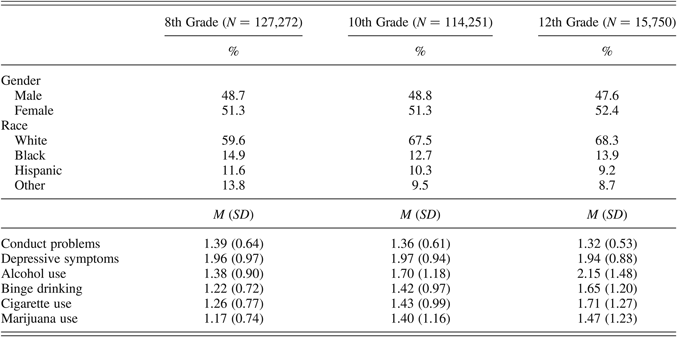
Approximately 16,000 students per grade are sampled each year. Data for 8th- and 10th-grade students were from 1991 to 2009; data for 12th-grade students were from 1991 to 1996 owing to item availability.Footnote 2 The current study included data from students in these cohorts who completed items regarding both their mental health symptoms and their substance use. Due to item availability on randomly distributed questionnaire forms, this included a random one third of 8th and 10th graders who were surveyed from 1991 to 2009 and a random one sixth of 12th graders who were surveyed from 1991 to 1996. The total number of 8th, 10th, and 12th graders included in the study was N = 257,273. The characteristics of the sample are described in Table 1.
Sample characteristics

In order to ensure that inclusion of only 6 years of data from 12th-grade participants did not bias the analyses, we tested for potential cohort differences in the relationships among CP, DS, CP × DS, and the substance use outcomes across the multiple years of data collection. Multiple group models were estimated in the 8th- and 10th-grade samples in which the sample was divided into three cohorts based on the year of data collection (1991–1996, 1997–2002, 2003–2009). These relationships did not vary systematically by cohort in either 8th or 10th grade. In addition, correlations of the mental health and substance use variables in 12th grade on those survey forms on which any combinations of those variables co-occurred did not differ systematically by cohort. Together, these analyses provided reasonable assurance that including only 6 years of data from 12th-grade participants did not bias the subsequent analyses.
All models controlled for secular trends in mean rates of substance use across the years in which the data were collected, linear decreases in alcohol use, binge drinking and cigarette use, and a quadratic trend in marijuana use (Johnston et al., Reference Johnston, O'Malley, Bachman and Schulenberg2013). A linear term reflecting year of data collection was included in the alcohol, binge drinking, and cigarette use models, and a quadratic term was included in the marijuana use models. Although secular trends have varied somewhat by sex, with girls' substance use decreasing at a slower rate than boys', preliminary analyses indicated that the linear and quadratic controls used here fit the models well for both boys and girls, and therefore a single linear or quadratic control variable was adequate for the entire sample.
Measures
CP were measured via the mean of seven items on a scale of 1 = never to 5 = 5 or more times (α = 0.76). Each item began with the stem, “In the past 12 months, how often have you . . .” The seven items were: “taken something not belonging to you worth under $50?” “taken something not belonging to you worth over $50?” “gone into some house or building when you weren't supposed to be there?” “damaged school property on purpose?” “gotten into a serious fight in school or at work?” “taken part in a fight where a group of your friends were against another group” and “hurt someone badly enough to need bandages or a doctor?”
DS were measured via the mean of four items on a scale of 1 = disagree to 5 = agree (α = 0.72). Participants were asked, “How much do you agree or disagree with each of the following statements?” The four items were “Life often seems meaningless,” “The future often seems hopeless,” “It feels good to be alive,” and “I enjoy life as much as anyone.” The latter two items were reverse coded. This scale, although a brief assessment of DS, is valid for our purposes here. The items are similar to those on the Center for Epidemiologic Studies Depression Scale (Radloff, Reference Radloff1977). In addition, it has been used in other MTF analyses (Merline, Jager, & Schulenberg, Reference Merline, Jager and Schulenberg2008; Schulenberg & Zarrett, Reference Schulenberg, Zarrett, Arnett and Tanner2006).
Alcohol use was measured via a single standard item (“On how many occasions have you drank alcohol, more than just a few sips, in the past 30 days?”) on a scale of 1 = 0 to 7 = 40+. MTF substance use items have been well validated (Johnston et al., Reference Johnston, O'Malley, Bachman and Schulenberg2013).
Binge drinking was measured via a single standard item (“Think back over the last 2 weeks. How many times have you had five or more drinks in a row?”) on a scale of 1 = none to 6 = 10 or more times.
Marijuana use was measured via a single standard item (“On how many occasions have you used marijuana in the past 30 days?”) using the same scale as alcohol use.
Cigarette use was measured via a single standard item (“How frequently have you smoked cigarettes during the past 30 days?”) on a scale of 1 = not at all to 7 = 2 packs or more per day.
Analytic strategy
Mental health symptoms, like many constructs of interest in psychological research, are best represented by latent variables. Likewise, many psychological research questions involve interactions among the independent variables. Methods to test the effects of interactions among latent variables have recently become available. The LMS approach by Klein and Moosbrugger (Reference Klein and Moosbrugger2000) allows latent interactions to be estimated and tested as predictors within a structural equation modeling (SEM) framework. Although other methods for estimating latent interactions have been proposed (e.g., Kenny & Judd, Reference Kenny and Judd1984; Marsh et al., Reference Marsh, Wen, Hau, Little, Bovaird and Widaman2007), LMS is the most rigorous and efficient approach to date (Mooijaart & Bentler, Reference Mooijaart and Bentler2010).
Along with many advantages, the estimation of LMS models presents two challenges. First, traditional SEM fit indices such as the root mean square error of approximation (RMSEA), comparative fit index (CFI), and the Tucker–Lewis index (TLI) have not yet been developed for these models. Second, these models produce only unstandardized regression coefficients, whose effect sizes are not easily interpretable, particularly in the case of interaction terms. As described in further detail below, the current study overcomes these challenges by incorporating standardization procedures not yet implemented in desktop software to standardize the effects and assess the relative contribution of the latent interaction term in explaining variance in the dependent variable.
All analyses were performed via SEM implemented in Mplus version 6.1 (Muthén & Muthén, Reference Muthén and Muthén1998–2010). LMS models were estimated using full information maximum likelihood with robust standard errors. Stratum and cluster variables accounted for the nested structure of the data collection (students within schools within sampling area); sampling weights were adjusted for differential sampling probability. Because of the large sample size, significance was tested using α = 0.001 to be conservative regarding significant findings. Moderation by age and sex was tested using the multiple group option.
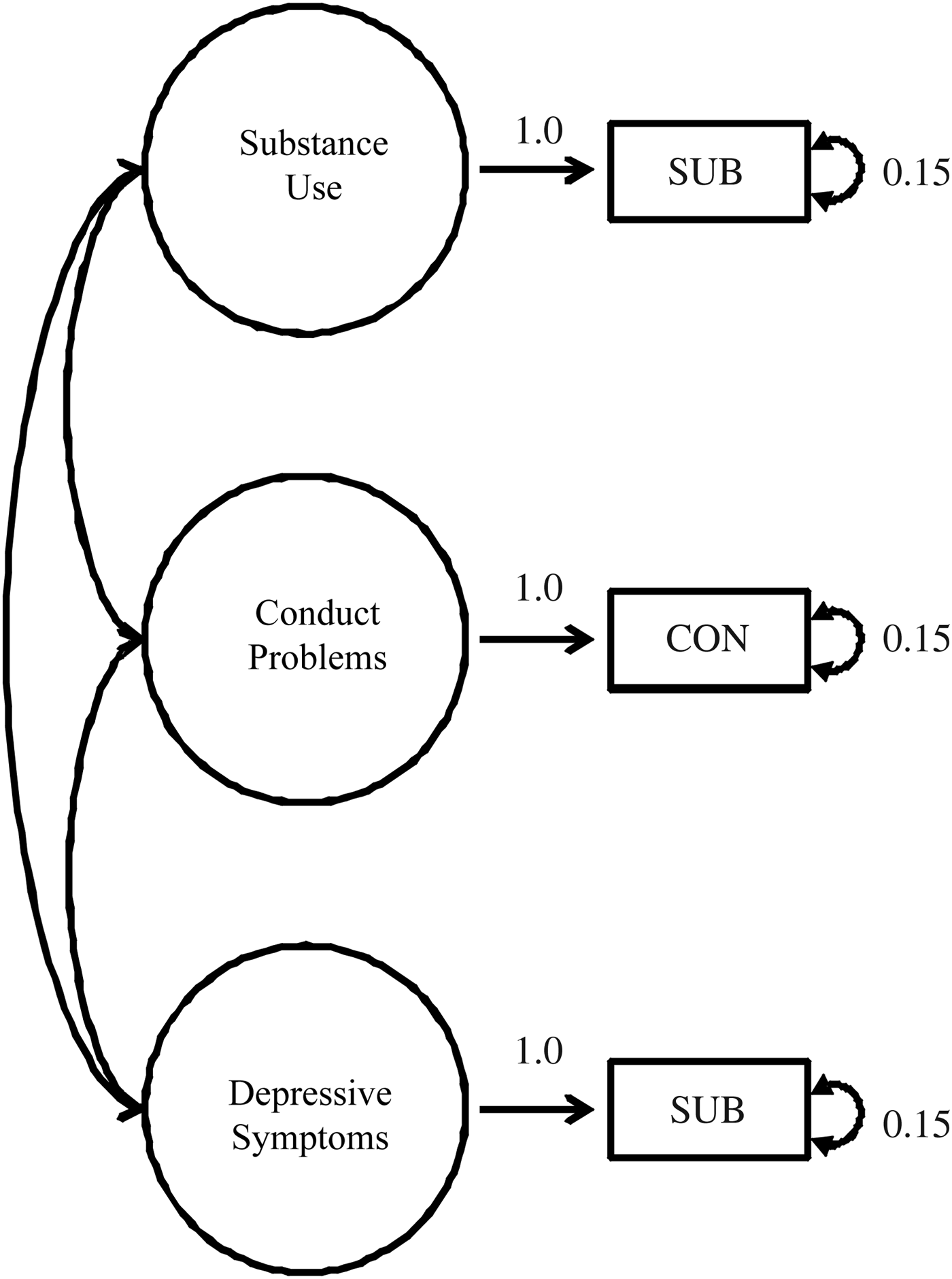
CP, DS, and each of the substance use outcomes were represented as latent variables, each created using a single indicator variable. For CP and DS, this indicator was the mean of the items on that scale; for substance use, it was the single item measure of use of each substance. Indicators were corrected for reliability by specifying 15% measurement error in each construct (Figure 1). Single indicators, although not ideal, were necessary because the model including the latent interaction of CP × DS could not converge with multiple indicators for the mental health constructs, a not uncommon occurrence when modeling latent interactions in very large samples (L. Muthén, personal communication, September 5, 2010). The amount of measurement error to be specified was determined using sensitivity analysis (Kline, Reference Kline2004; Schulenberg, Bachman, O'Malley, & Johnston, Reference Schulenberg, Bachman, O'Malley and Johnston1994). The models were estimated specifying 10%, 15%, and 20% measurement error on each construct. Fifteen percent measurement error was selected for two reasons: (a) it led to the best rates of model convergence, and (b) it represents a conservative estimate of the amount of error in the measures and avoids false inflation of the estimated relations between the variables that can result from specifying too much measurement error (Schulenberg et al., Reference Schulenberg, Bachman, O'Malley and Johnston1994).
The measurement model. Each latent variable was created using a single indicator of that construct. Single, rather than multiple, indicators were necessary in order for models to converge. Unique variance for each single indicator was fixed at 15%. A separate measurement model was estimated for each substance: alcohol, binge drinking, cigarettes, and marijuana.
Results
Model estimation
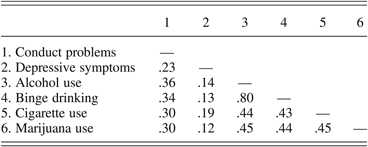
Zero-order correlations of the study variables are contained in Table 2. The structural equation models were estimated in the following sequence: measurement model, structural model not including the latent interaction term, and structural model including the latent interaction term. Each of the four types of substance use was modeled separately as a dependent variable. This sequence was performed first in the models containing the total sample and then in the multiple group models testing for moderation by age and sex.
Zero-order correlations of study variables
Note: All correlations are significant at p < .001.
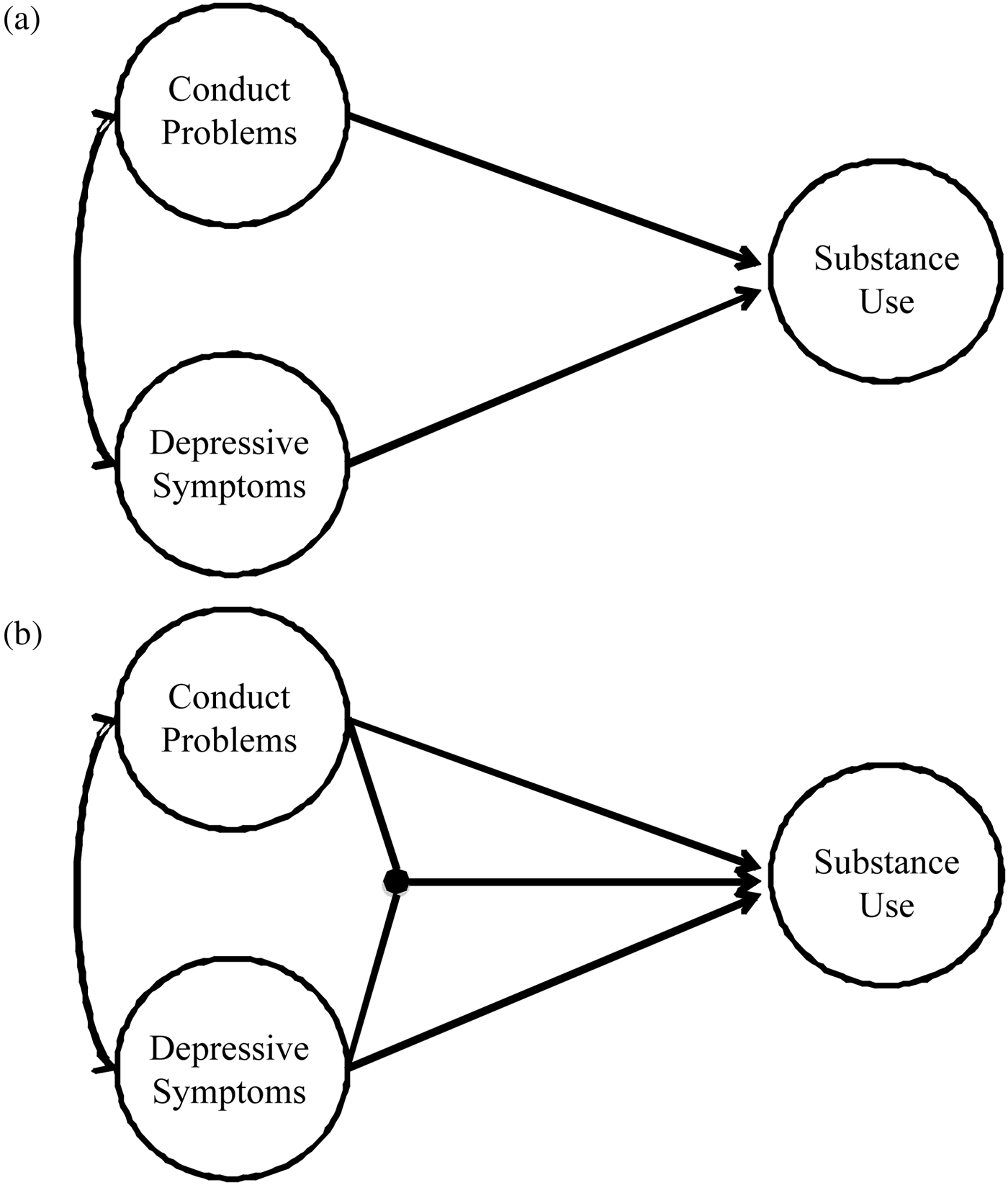
First, the measurement model (Figure 1) was estimated to ensure its fit. Model fit was assessed using Hu & Bentler's (Reference Hu and Bentler1999) guidelines, which specify that CFI and TLI values greater than 0.95 and RMSEA values below 0.05 constitute an excellent fit. A separate measurement model was fit for each substance, and each had an excellent fit. Second, the structural model was estimated, omitting the latent interaction term, which we refer to as Model 1 (Figure 2a). Third, the structural model with the latent interaction was fit, which we refer to as Model 2 (Figure 2b).
(a) Model 1 with main effects of conduct problems (CP) and depressive symptoms (DS) predicting substance use. Each substance (alcohol, binge drinking, cigarettes, and marijuana) was modeled separately as the dependent variable. (b) Model 2, including the latent interaction of CP × DS, depicted as a filled circle per Mplus standard notation. A third model was included in multiple group comparisons. In this model, the effect of the latent interaction was allowed to vary freely across groups, whereas it was constrained to be equal across groups in Model 2.
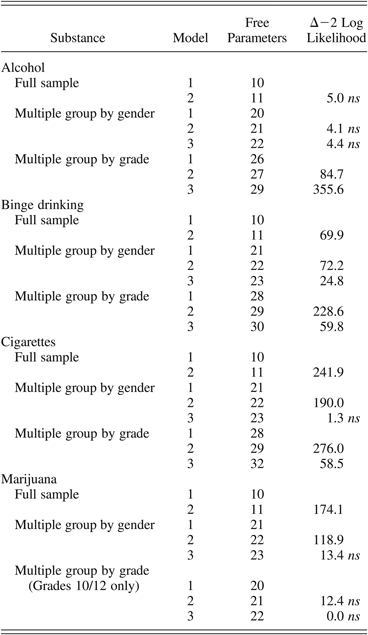
Log likelihood comparison was used to determine whether the addition of the latent interaction term significantly improved the fit of Model 2 in comparison to Model 1 (Satorra & Bentler, Reference Satorra and Bentler2010). A significant difference in –2 log likelihood values between two nested models indicated an improvement in model fit versus the previous model. Significant interaction terms were probed by graphing (Aiken & West, Reference Aiken and West1991). This sequence was repeated for each of the four substance use outcomes in the total sample. Table 3 depicts the results of the nested model comparisons.
Nested model comparisons
Note: The number of free parameters refers to the number of parameters estimated in the model. This number varies across the substances, depending on whether factor means, factor variances, and path coefficients differed significantly across the groups and were therefore estimated as separate parameters, rather than as a single, fixed parameter across groups. All Δ−2 log likelihood values are significant at p < .001, unless otherwise indicated by ns.
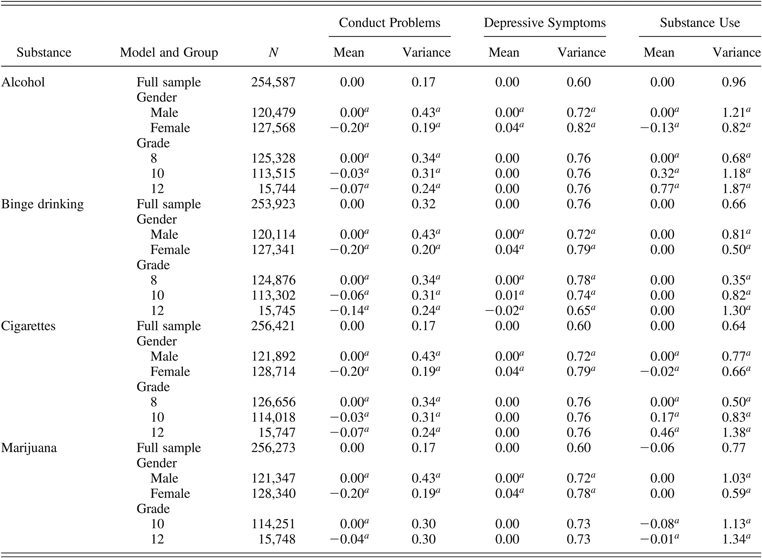
The same analytic sequence was repeated in multiple group models for each substance by sex (male and female) and age (Grades 8, 10, and 12). The measurement model was estimated, and its fit was assessed in the same manner as in the total sample. Because each construct was created with a single indicator, the measurement model was invariant across groups by default. In Models 1 and 2, equivalence of structural parameters (factor means and variances, regression coefficients, and correlations of residual variances) across groups was tested by comparing nested models with these parameters fixed versus freed. Equivalence of structural parameters across groups was tested using the robust χ2 comparison (Satorra & Bentler, Reference Satorra and Bentler2010). Log likelihood comparisons tested whether allowing the relation of the interaction term to the outcome to vary across groups in multiple group comparisons improved the fit of the model. Table 4 summarizes the estimates of latent variable means and variances; Table 5 summarizes regression coefficients and factor correlations.
Estimates and equivalence of latent variable means and variances in single and multiple group structural equation models
Note: Estimates of means and variances are from Model 1, the model without interaction.
aEstimates were significantly different across groups (p < .001).
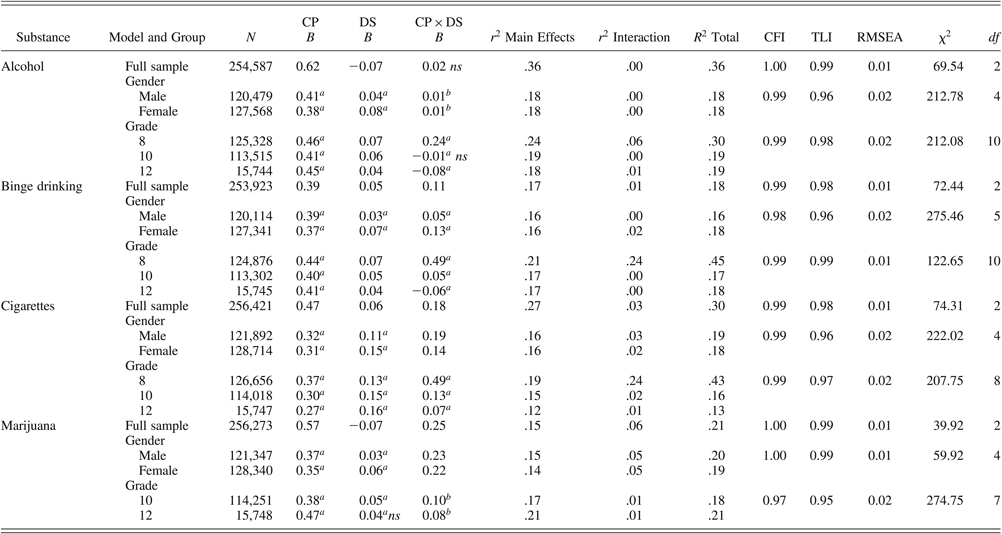
Results of single and multiple group structural equation models of mental health symptoms predicting substance use
Note: All estimates are significant at p < .001, unless otherwise indicated by ns. CP, conduct problems; DS, depressive symptoms; CFI, comparative fit index; TLI, Tucker–Lewis index; RMSEA, root mean square error of approximation.
aEstimates were significantly different across groups (p < .001).
bAdding interaction did not improve the fit of model versus the main effects only model.
Model fit indices such as CFI, TLI, RMSEA, and χ2 have not yet been developed for LMS models. Therefore, the overall fit of each model was assessed in two steps. First, CFI, TLI, RMSEA, and χ2 values were obtained from Model 1, which produced these fit indices because it was estimated using maximum likelihood without numeric integration. Second, the log likelihood ratios of Model 1 and Model 2 were compared. Although the absolute fit of Model 2 could not be determined, its relative fit versus Model 1 was indicated by the results of this log likelihood ratio test.
Standardized regression coefficients are not provided by Mplus for LMS models. The standardized beta coefficients presented here were obtained via a two-step process. The standardized estimates of main effects of DS and CP were obtained from Mplus output for Model 1. The effect of the interaction was obtained by standardizing the unstandardized estimate from Model 2 (Mooijaart & Satorra, Reference Mooijaart and Satorra2009).Footnote 3 It is important to note that main effects and interactions are independent in LMS models (Klein & Moosbrugger, Reference Klein and Moosbrugger2000), allowing their estimates to be obtained from separate models. The total percentage of variance explained was computed by summing the percentage of variance explained by the main effects of CP and DS in Model 1 and the percentage of variance explained by the interaction term in Model 2.
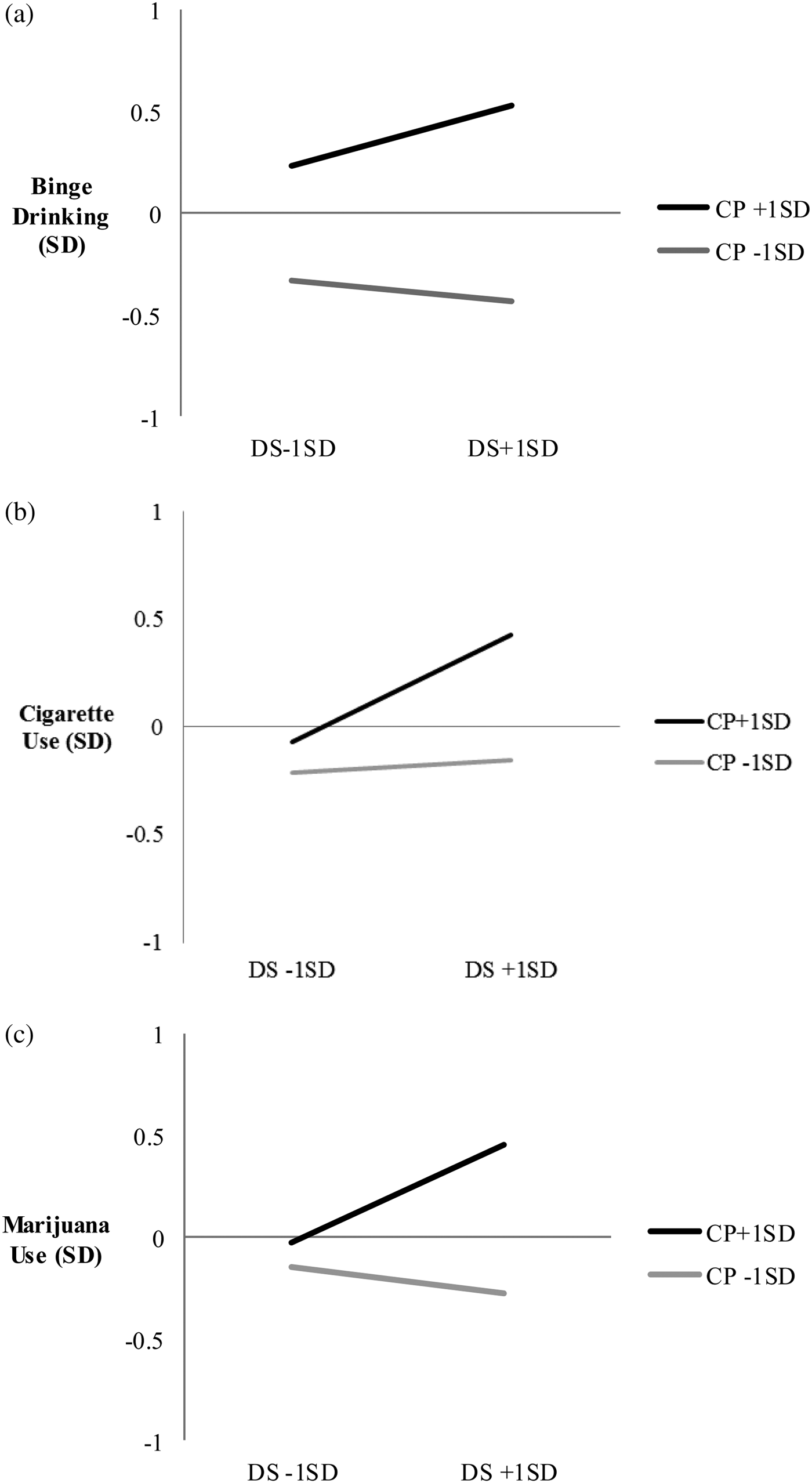
Results of the main analyses are summarized in Table 5. The first set of analyses pertained to the total sample of 8th-, 10th-, and 12th-grade students combined. Analyses were conducted separately for use of alcohol, binge drinking, cigarettes, and marijuana. As predicted, CP were a strong positive predictor of each type of substance use (i.e., higher CP predicted higher use). DS were a small, positive predictor of all types of substance use, except alcohol use, where it was a weak negative predictor (i.e., higher DS predicted lower alcohol use). For all types of substance use, except alcohol use, CP × DS was a significant positive predictor, such that those who had high levels of both CP and DS had the highest levels of marijuana use, cigarette use, and binge drinking (Figure 3). Of particular interest in these three significant CP × DS interactions, those high on DS and low on CP had the lowest levels of binge drinking and marijuana use.
The interaction of conduct problems (CP) and depressive symptoms (DS) predicting (a) binge drinking (B = 0.11, p < .001), (b) cigarette use (B = 0.18, p < .001), and (c) marijuana (B = 0.25, p < .001) during the past 30 days in the full sample of 8th, 10th, and 12th grade students combined. The association of the interaction with alcohol use was not significant.
Moderation by age
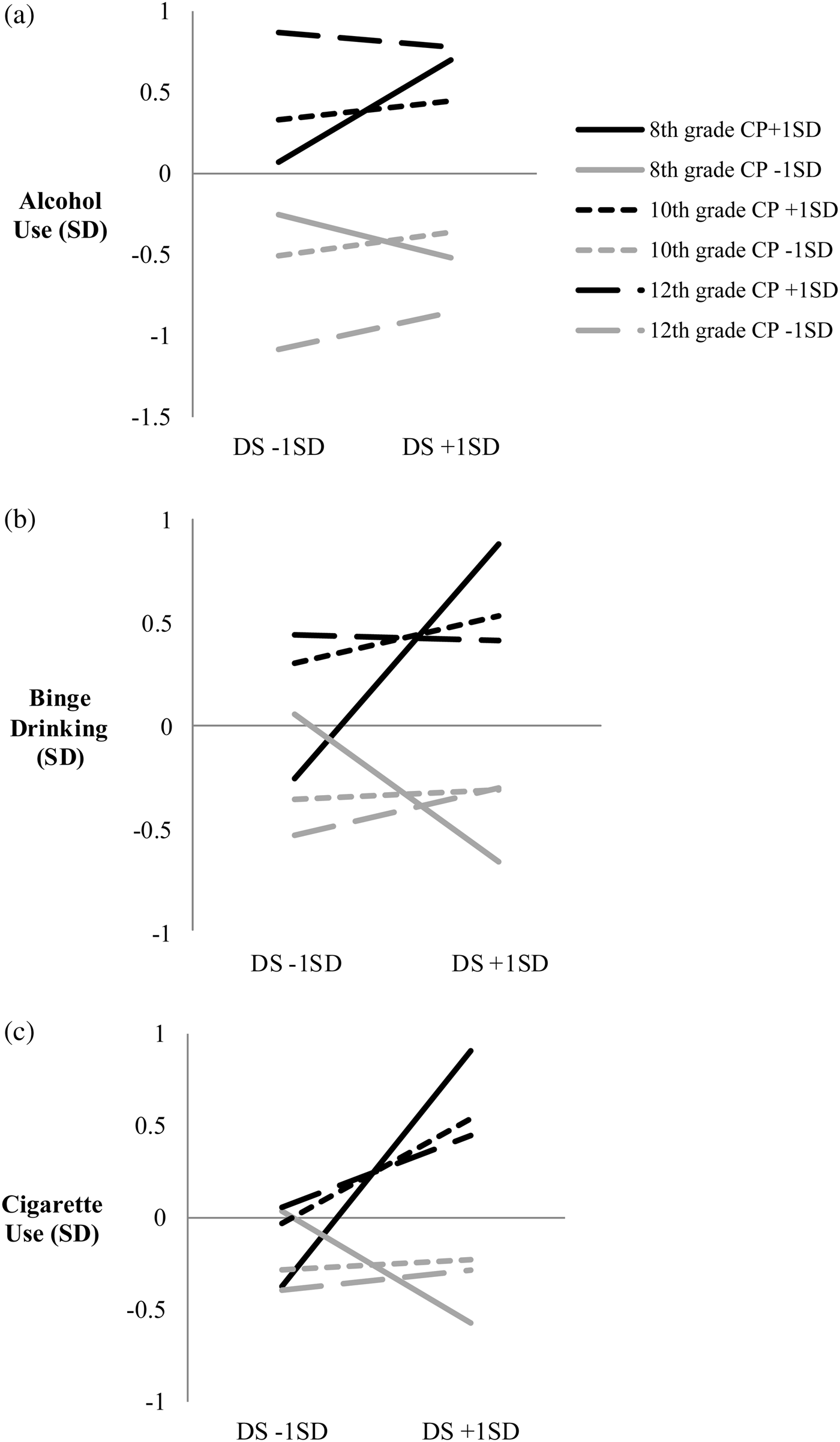
Three group (8th, 10th, and 12th grade) multiple group models were estimated to test for differences by age group in the relations of CP, DS, and CP × DS to each of the substances. A similar pattern of effects was observed in alcohol use and binge drinking. The relation of CP to alcohol use and binge drinking was comparable among the three grades, though it was smaller among 10th graders than 8th and 12th graders. The relation of DS to alcohol use and binge drinking did not vary significantly by grade. CP × DS showed a large age difference in its association with both alcohol use and binge drinking (Figure 4a, b). Among 8th graders, this effect was positive. Among 10th graders, the effect was not significant. Among 12th graders, the effect was negative, though smaller in magnitude than the positive effect among 8th graders. That is, among 8th graders, those highest on both CP and DS had the highest levels of alcohol use and binge drinking, whereas for 12th graders, those highest on CP and lowest on DS had the highest levels of alcohol use and binge drinking. Note that this interaction is in the context of the consistent positive main effects of DS across the age groups.
The interaction of conduct problems (CP) and depressive symptoms (DS) by grade. The models predicted (a) alcohol (8th grade: B = 0.24, p < .001; 10th grade: B = –0.01, ns; 12th grade: B = –0.08, p < .001), (b) binge drinking (8th grade: B = 0.49, p < .001; 10th grade: B = 0.05, p < .001; 12th grade: B = –0.06, p < .001), and (c) cigarette use (8th grade: B = 0.43, p < .001; 10th grade: B = 0.16, p < .001; 12th grade: B = 0.13, p < .001) during the past 30 days in multiple group models by grade. The effect of the interaction in relation to marijuana use did not differ significantly by grade.
In regard to cigarette use, CP had the strongest associations among 8th graders and smaller associations among 10th and 12th graders. DS had a fairly consistent positive association across Grades 8–12, though its association was slightly stronger in higher grades. CP × DS had its strongest associations among 8th graders, where the positive interaction translated to levels of cigarette use that were 1.5 SD higher among those adolescents who had high levels of both CP and DS versus those with high levels of CP and low levels of DS (Figure 4c). Among 12th graders, the effect was smaller, but it still translated to a 0.5 SD difference in use between those with high CP and DS versus those with high CP and low DS.
For marijuana use, the multiple group model was estimated only for 10th- and 12th-grade students. The model was unable to converge in the 8th-grade sample owing to low variance in 30-day marijuana use among this age group. DS were a stronger predictor of marijuana use among 10th than 12th graders. CP were a stronger predictor for 12th versus 10th graders. CP × DS did not differ in its relation to marijuana use among 10th versus 12th grade students, though it was a positive predictor in each grade; that is, those highest on both CP and DS had the highest levels of marijuana use.
In summary, although the relations of CP, DS, and CP × DS clearly differ by age, these results suggest that the age differences are both substance specific and symptom specific. The effects of CP and DS were fairly consistent across the three grades. The largest age differences were seen with regard to the interaction, whose effects were strongest among 8th graders, with particularly large age differences observed in the case of cigarette use and binge drinking. Of particular interest for alcohol use and binge drinking, the CP × DS interaction changed between 8th and 12th grades: for 8th graders, the highest levels were found for those highest on both CP and DS, whereas for 12th graders, the highest levels were found for those highest on CP and lowest on DS.
Moderation by sex
Two group (male and female) multiple group models were estimated to test for sex differences in the relations of CP, DS, and CP × DS to each of the substances. For all four types of substance use, CP were a significantly larger predictor of substance use for males than for females, and DS were a significantly larger predictor for females than for males, but the magnitude of the sex differences was small. The association of CP × DS with alcohol, marijuana, and cigarette use did not vary by sex. CP × DS was a slightly larger predictor of binge drinking for females than males. Thus, although there was some evidence of moderation by sex, the number and size of the sex differences were small.
Discussion
This study examined the relations of CP, DS, and their interaction (CP × DS) to alcohol use, binge drinking, and cigarette and marijuana use among national samples of 8th-, 10th-, and 12th-grade American adolescents over the past two decades. It had four aims: to test the interaction of CP × DS in relation to substance use; to clarify the role of DS, for which there are contradictory findings in previous research; to examine differences in the relations of CP, DS, and CP × DS to substance use by age and sex; and to demonstrate the application of leading-edge latent variable interaction analyses to the study of co-occurring mental health difficulties during adolescence.
Interaction of CP and DS
The primary aim of this paper was to test the relation of the interaction of CP × DS to substance use. As hypothesized, this interaction was significant in most models, such that those adolescents who had high levels of both CP and DS had the highest levels of substance use. As we also hypothesized, the largest associations of the interaction with substance use were seen among 8th-grade students. For example, 8th-grade students who had high levels of both CP and DS had levels of cigarette use 1.5 SD higher than those who had equivalent levels of CP but low levels of DS (Figure 4b). Both cigarette and marijuana use become more normative with age. In 8th grade, when use is less normative, high use is thus a more extreme behavior that is more associated with emotional and behavioral difficulties. In contrast, use among 10th and especially 12th graders is more normative and thus less associated with internalizing and externalizing difficulties (Schulenberg & Zarrett, Reference Schulenberg, Zarrett, Arnett and Tanner2006; Sung et al., Reference Sung, Erkanli, Angold and Costello2004).
With regard to alcohol use, the interaction also had its largest effect in 8th graders, where it explained 6% of the variance in alcohol use. In 12th-grade students, the interaction was negative and the effect was smaller, explaining just 1% of the variance. Among those with high levels of CP, those who had higher DS used less alcohol than those with low DS, but among those with low CP, those with high DS used more alcohol. This same pattern was observed in the models predicting binge drinking. The shifting direction of the effect of CP × DS from positive in 8th grade, to nonsignificant in 10th grade, to negative in 12th grade, underscores the sometimes paradoxical nature of alcohol use during late adolescence (and early adulthood) whereby it gains some prosocial associations (Maggs & Schulenberg, Reference Maggs, Schulenberg and Galanter2005; Patrick & Schulenberg, Reference Patrick and Schulenberg2011) and is thus less a function of low mood and more a function of social integration than is the case during early adolescence (Crosnoe, Reference Crosnoe2011). Thus, as drinking becomes more of a social behavior and a group activity in late adolescence, DS may relate to less socializing and therefore less drinking.
Overall, these results are consistent with the few other studies that have examined the interaction of CP and DS as a predictor of substance use, and they also speak to some gaps not yet addressed by previous studies. Using data from the Pittsburgh Youth Study, Pardini et al. (Reference Pardini, White and Stouthamer-Loeber2007) found that high levels of both CP and DS related to the highest levels of alcohol use among this all-male adolescent sample. Miller-Johnson et al. (Reference Miller-Johnson, Lochman, Coie, Terry and Hyman1998) found a significant CP × DS interaction in a sample of African American adolescents: adolescents with heightened CP and DS in 6th grade had higher levels of alcohol and marijuana use in 8th grade than those with high levels of just one symptom in 6th grade. Mason et al. (Reference Mason, Hitchings and Spoth2008) also noted a significant CP × DS interaction in a sample of rural adolescents, though the interaction was negative, such that adolescents with high CP and low DS used the most substances (a combined measure of alcohol, cigarette, and marijuana use).
The current study builds on this previous work examining the relation of CP × DS to substance use in community and fairly homogeneous samples by testing the interaction in a large national sample, allowing for population-level generalization of the results. It also individually characterizes the relation of CP × DS to alcohol, cigarette, and marijuana use and binge drinking. These substance-specific analyses revealed that the effect of CP × DS is particularly strong for marijuana and cigarette use, though it also has a strong relation to alcohol use among 8th-grade students. Furthermore, for alcohol use and binge drinking, we find that for 12th graders, it is the combination of high CP and low DS (i.e., negative CP × DS interaction) that is associated with higher use, showing the developmental and substance-specific limits of the positive CP × DS interaction.
Role of DS in substance use
A second aim of this study was to clarify the relation of DS to substance use among adolescents. Whereas CP have consistently been shown to be associated with substance use in past research, and by the current study as well, previous studies have produced conflicting results regarding whether DS relates to substance use and, if so, whether the association is negative or positive. The results suggest that DS generally have a small but positive relation to substance use. However, when examining the total sample, DS had a small negative relation to alcohol and marijuana use, an oddity likely because the total sample model did not account for age and gender differences but controlled for other predictors including the interaction term (note that in bivariate correlations in the total sample, all such relations were positive). In multiple group comparisons, the effect of DS was stronger for female than for male adolescents for use of all three substances, though the effect was small in both sexes and the sex differences were also small. DS related most strongly to cigarette use, and it showed increasingly strong associations with cigarette use in older adolescents. We did not observe stronger associations of DS with binge drinking than with occasional alcohol use, which have been noted in some adult samples, among our adolescent sample (Bonin et al., Reference Bonin, McCreary and Sadava2000, Graham et al., Reference Graham, Massak, Demers and Rehm2007). Based on these results and the extant literature, it appears that the stronger association of DS with problem drinking emerges in early adulthood, but it is not a strong association in adolescence.
Although these results indicate that DS alone are not a strong risk factor for contemporaneous substance use, the role of DS in adolescents' substance use should not be disregarded. A risk factor should not be discounted owing to its small individual-level effect, because its net effect at the population level may be significant, if the risk factor is common in the population, as is DS among adolescents (Mason, Reference Mason2003). In addition, as seen in Figures 3 and 4, DS potentiate the relation of CP to substance use. With the exception of alcohol use and binge drinking in 12th grade, high levels of DS in addition to high levels of CP were associated with significantly higher rates of substance use than high rates of CP alone. This result provides some insight into some previous studies' conclusions that DS are not related to substance use during adolescence. Such studies tested the main effect of DS, which we have shown to be small, but may have overlooked the significant interactive effect it has with CP. Together, the current results, which reveal both a main and an interactive effect of DS on substance use indicate that DS do play a significant role in adolescent substance use and warrants attention in future research and applied efforts.
Moderation by age and sex
As hypothesized, age was a significant moderator of the associations of CP, DS, and CP × DS with substance use. Mental health symptoms were consistently more strongly associated with substance use among younger versus older adolescents. The two clearest examples of this moderation were seen with regard to the association of CP × DS with cigarette smoking and binge drinking. Among 8th graders, CP × DS explained 24% of the variance in each of these behaviors, whereas the association was much smaller among 10th and 12th graders. Age therefore appears to be an important moderator of the association of mental health and substance use.
In contrast to the large age differences in the associations of CP, DS, and CP × DS with substance use, the observed sex differences were quite small. Although CP were generally more strongly associated with substance use for boys than for girls, and DS were more strongly associated for girls than for boys, the statistically significant sex differences were small and likely do not have much practical significance. The association of CP × DS with substance use did not differ by sex with regard to alcohol, cigarette, or marijuana use. The interaction had a slightly larger association with binge drinking among girls than boys. In general, however, the magnitude and direction of the associations were comparable across sex, and the differences between them were small, on the order of the second decimal place in the regression coefficients. This finding is consistent with Armstrong and Costello's (Reference Armstrong and Costello2002) review of previous studies of sex differences in the associations of mental health problems and substance use, though they allowed for the possibility that low statistical power in previous studies could account for the few sex differences observed. In the current study, with considerable statistical power, we find that the sex differences are small. Therefore, it appears that the association of CP, DS, CP × DS, and substance use should be considered to be similar in boys and girls.
Modeling co-occurring mental health symptoms as latent variable interactions
The use of LMS models to estimate the latent variable interaction of CP and DS was an important element of this study, in which we aimed to demonstrate the utility of these models in testing research questions involving interactions between latent variables, specifically mental health variables. Only one previous study has examined the latent interaction of multiple mental health symptom types as a predictor of substance use (Mason et al., Reference Mason, Hitchings and Spoth2008), though others have examined latent variable interactions among personality, self-esteem, and self-control in predicting substance use (Larsen, Overbeek, Vermulst, Granic, & Engels, Reference Larsen, Overbeek, Vermulst, Granic and Engels2010; Mackie, Castellanos-Ryan, & Conrod, Reference Mackie, Castellanos-Ryan and Conrod2011). The current study provides a substantive demonstration of latent interaction methodology applied to co-occurring mental health symptoms in a national adolescent sample. Symptoms of mental health problems are complex constructs best represented as latent variables, and testing the interaction effect of two sets of symptoms thus requires estimation of a latent variable interaction. Although computationally intensive, LMS models are well suited for this task. The two primary limitations of LMS models, lack of fit indices and lack of standardized coefficients, can be overcome using the methods described here. Namely, relative fit of the LMS model can be judged by comparing to a well-fitting nested model estimated without the latent interaction term, and standardized regression coefficients can be computed by hand using the method described by Mooijaart and Satorra (Reference Mooijaart and Satorra2009). With the addition of these two steps in the analytic process, LMS models are a useful and accessible method for investigating research questions that imply interactions among latent variables.
Strengths and limitations
Important strengths of this study include the use of nationally representative data of 8th-, 10th-, and 12th-grade adolescents from cohorts spanning the past two decades (providing strong basis for generalizability of the results), the substantively important emphasis on how CP and DS interact to predict different forms of substance use, and the methodologically important emphasis of how to model co-occurring mental health symptoms as a latent interaction.
Of course, there are limitations. The data are cross-sectional, meaning that apparent age differences must be interpreted with caution because the sample compositions vary by grade. In addition, due to the cross-sectional nature of the data, causal direction between mental health symptoms and substance use could not be assessed. We used grade level differences (8th, 10th, and 12th) to represent age differences; thus our findings pertain more to age ranges (modal ages of 13 to 14, 15 to 16, and 17 to 18, for the three grade levels, respectively) than to specific age points. The data are self-reported and may be subject to method covariance because both the mental health symptoms and the substance use were reported by the participant. The measures of mental health are brief (four items for DS, seven for CP) and represent symptoms not clinical disorders. However, the aim of the study was not to capture clinical disorders but rather to measure symptom-level variation in the general population and model their relation to substance use. Therefore, the study's aims were not unduly impeded by brief measurement. Further, limitations of the brief measures of mental health are mitigated by the strengths of the large national sample, particularly its diversity and the generalizability of conclusions that it affords. Finally, testing moderating effects of race/ethnicity and socioeconomic status on the relation of CP, DS, and CP × DS was beyond the scope of the current study. These important questions will be addressed in future studies.
Conclusions
Despite some limitations, this study produced several new insights into the relations between mental health and substance use in adolescents, offering both methodological and substantive contributions. Methodologically, it demonstrated the use of latent variable interactions to model co-occurring mental health problems. Substantively, it builds upon work in the area of mental health and substance use epidemiology by moving beyond establishing national prevalence of individual behaviors to quantifying the relations that exist between them during adolescence on a population level and within age and sex subgroups.
Latent variable interactions are a promising methodological tool for studying many questions in psychology in which it is hypothesized that two latent constructs have synergistic effects on an outcome. One specific area in which this could prove useful in future studies is in the area of psychiatric comorbidity, as demonstrated here in the examinations of the interaction of CP × DS. Comorbidity is the rule rather than the exception with regard to child and adolescent psychopathology and problem behavior (Angold et al., Reference Angold, Costello and Erkanli1999; Sroufe, Reference Sroufe1997). Here we reviewed the challenges of estimating latent variable interactions (lack of fit indices and standardized effects) and demonstrated a method for overcoming these and other limitations. This method of studying the effects of comorbid symptoms or disorders offers all of the advantages of SEM, including the ability to account for measurement error and use of empirical model testing to identify the best-fitting model and compare effects across subgroups of interest. The method demonstrated here can be applied to study any combination of comorbid disorders.
Substantively, for the first time in a national sample, this study quantified the association of the interaction of CP × DS to alcohol use (including binge drinking) and marijuana and cigarette use, revealing that the interaction contributes significantly to the prediction of substance use. It also addresses questions fundamental to developmental psychopathologists, including age and sex differences and the interactive effects of co-occurring mental health symptoms. In particular, it demonstrates that the effect of the interaction is strongest among younger adolescents and that it does not vary much by sex, supporting early identification and intervention into co-occurring mental health problems in both male and female adolescents as a strategy for preventing substance use. Furthermore, it demonstrates that the interaction shifts direction for 12th graders regarding alcohol use and binge drinking, highlighting the paradoxical prosocial aspects of alcohol use during late adolescence.
It is of the most importance that the results of this study reveal that DS, despite their small main effect relation with substance use, play an important role in predicting substance use through its interactive relation with CP. CP are often thought to be a primary driving factor of adolescent substance use, but the current study suggests that this relation is dependent upon concurrent levels of DS. Thus, the role of DS in adolescent substance use should not be overlooked. DS remain important predictors to be measured in studies of adolescent substance use. Consequently, future studies focused on the development of substance use among adolescents should include DS and CP × DS as predictors.
The results of this study indicate that preventive interventions should be specifically tailored to those youth who evidence multiple, co-occurring mental health problems in early adolescence. Interventions that delay onset of substance use in adolescence have been shown to reduce rates of problematic substance use in young adulthood (Spoth, Trudeau, Guyll, Shin, & Redmond, Reference Spoth, Trudeau, Guyll, Shin and Redmond2009). Some have argued that implementing universal interventions addressing mental health problems in order to prevent substance use is not a feasible approach. Cicchetti and Rogosch (Reference Cicchetti and Rogosch1999) suggest that preventing mental health problems to prevent substance use is unlikely to be an effective universal strategy, largely because universal prevention efforts for mental health problems alone have proved difficult to design, implement, and evaluate. However, mental health information may be an important tool for identifying the highest-risk groups most in need of targeted interventions (Glantz et al., 2008).
The current study's results highlight the potential value of targeted preventive interventions during adolescence, particularly those focused on youth who are experiencing high levels of one or more mental health problems around 8th grade, or approximately ages 13 to 14. One example of such a program is TeenScreen (www.teenscreen.org), which partners with local mental health agencies to provide mental health screenings in schools and link those adolescents in need with mental health services. As the results of this study have shown, presence of multiple mental health problems is a strong risk factor for substance use. Linking youth who experience multiple mental health problems to treatment may help to stop or delay the progression to substance use among those youth who are on track to become the most severe substance users. Wise investment in prevention of substance use can yield drastic reductions in morbidity and mortality and improvements in health across the life span. This work suggests that the contributions of mental health to substance use during adolescence must be integrated into such efforts.