The loss of Tom Dishion is still felt among his colleagues, friends, and family. Yet, his contributions to developmental, family, and intervention science will continue to shape our work for generations to come. Tom's influence is unique because of his depth and breadth, spanning several areas of research. Ever programmatic, Tom's work constantly cycled through theory development, construct definition and measurement, model building, and intervention trials (Dishion & Patterson, Reference Dishion and Patterson1999). Today, as much of his work is deeply embedded in the theories and interventions currently in widespread use, there is good reason to believe that his place in the annals of our scholarship is secure (Shaw, Forgatch, Fishbein, & Sandler, Reference Shaw, Forgatch, Fishbein and Sandler2018).
Of his many contributions, we focus on Tom's family scholarship. Coming out of his early training and continued collaboration with colleagues at the Oregon Social Learning Center, he made important contributions to coercion theory (Dishion & Snyder, Reference Dishion, Snyder, Dishion and Snyder2015) and he shaped our field's definitions and understanding of parental monitoring (Dishion & McMahon, Reference Dishion and McMahon1998) and of family management in general (Dishion, Burraston, & Li, Reference Dishion, Burraston, Li, Sloboda and Bukoski2003). This work underscores the importance of promoting family management skills in the service of reducing coercive interactions in families and fostering positive parenting practices, and promoting healthy family relationships (Dishion, Stormshak, & Kavanagh, Reference Dishion, Stormshak and Kavanagh2012; Dishion & Stormshak, Reference Dishion and Stormshak2007). Within a broader ecological model, family management skills are viewed as central proximal factors that are amenable to change. By working with families to promote family management skills, it is possible to mitigate the contextual risks conferred from socioeconomic disadvantage, parental depression, neighborhood risk, and minority stress on child and adolescent risk for engaging in deviant peer contexts or developing behavioral or emotional problems (Dishion & Stormshak, Reference Dishion and Stormshak2007). This emphasis on family management training is a central feature in the library of Oregon-based family interventions and is echoed in most evidence-based parenting interventions in practice today (Dishion, Forgatch, & Chamberlain, Reference Dishion, Forgatch and Chamberlain2016).
As these interventions expanded from clinical applications into prevention programming, it was critical to recognize the developmental trajectories of family management to identify vulnerability that emerges during the adolescent transition. Toward this end, premature adolescent autonomy was a model of adolescent disengagement from the family and adolescent involvement with a deviant peer group, the combination of which foreshadows risk for antisocial behavior, substance use, and risky sexual behavior (Dishion, Nelson, & Bullock, Reference Dishion, Nelson and Bullock2004; Dishion, Poulin, & Skaggs, Reference Dishion, Poulin, Skaggs, Kerns, Contreras and Neal-Barnett2000). The premature autonomy model was innovative in its dynamic conceptualization of family management as a developmental phenomenon. Guided by this dynamic conceptualization of the family, we evaluated whether capturing variability in daily family management may help contribute to this already rich theoretical model. By zooming in to daily fluctuations in parents’ use of positive parenting practices, this study seeks to bridge a gap between day-to-day parenting and long-term developmental risk processes outlined in the premature autonomy model. However, before we focus on daily family process, we first reflect on the foundational work developing and advancing the premature autonomy model.
Premature Adolescent Autonomy
In the landmark study, Dishion, Nelson, and Bullock (Reference Dishion, Nelson and Bullock2004) tested key postulates of premature autonomy, in the Oregon Youth Study sample of 206 boys. This study used observations of family management (comprised of parental monitoring, parent–adolescent relationship quality, and positive parenting practices) and of deviant peer process; the study spanned nearly 10 years of developmental time. Several noteworthy findings emerged in support of the premature autonomy model. First, there were meaningful developmental declines (“degradation”) in family management practices from late childhood to middle adolescence, the rate of which varied across families. Second, the rate of family management degradation was associated with higher levels of observed deviant peer process in late adolescence. Other work has conceptually replicated this finding, confirming this risk process (Fosco & LoBraico, Reference Fosco, LoBraico, Feise, Celano, Deater-Deckard, Jouriles and Whisman2018; Laird, Pettit, Bates, & Dodge, Reference Laird, Pettit, Bates and Dodge2003; Lippold, Fosco, Ram, & Feinberg, Reference Lippold, Fosco, Ram and Feinberg2016). Importantly, these findings call for greater understanding of the processes that drive family management degradation over adolescence. Third, both parents and adolescents contribute to family management degradation. Of course, changes in parents’ use of effective family management strategies is implicit in this model. However, adolescent behavior also contributes to risk for family management degradation. In families that had boys who exhibited early and persistent antisocial behavior or who engaged with deviant peers, steeper declines in family management were observed. Again, replication in other work supports the role of adolescent delinquent behavior as a disruptive factor in family management practices over time (Lippold, Fosco, Hussong, & Ram, Reference Lippold, Fosco, Hussong and Ram2019). Indeed, as was foretold, it seems that change in family management reflects a transactional process in the family ecology (Dishion et al., Reference Dishion, Poulin, Skaggs, Kerns, Contreras and Neal-Barnett2000). Fourth—and ultimately—the combination of pronounced degradation in family management and adolescent engagement with deviant peers was the highest risk group for antisocial behavior and substance use outcomes at ages 18 to 19. Experimental support for premature autonomy is found in studies evaluating mechanisms of change in the Family Check-Up (FCU). The degree to which the FCU intervention supported maintenance of parental monitoring and positive family relationships in the early adolescent years accounted for intervention effects on adolescent substance use, risky sexual behavior, and even health behavior (Caruthers, Van Ryzin, & Dishion, Reference Caruthers, Van Ryzin and Dishion2014; Dishion, Nelson, & Kavanagh, Reference Dishion, Nelson and Kavanagh2003; Van Ryzin & Nowicka, Reference Van Ryzin and Nowicka2013).
In revisiting premature autonomy, we considered daily variation in parenting practices and in adolescents’ feelings of connectedness with caregivers as a potential window into the processes underlying the developmental changes identified in the premature autonomy model. Adopting the central perspective that risk is a process in which adolescents disengage from the family context and engage in a deviant peer context, this study drilled down into several key premises. Effective family management plays a key protective role in reducing adolescents’ risk for disengaging from the family and for engaging in a deviant peer context; the degree to which these are mitigated reduces risk for problem behavior and substance use. Adolescent factors, particularly those that prove challenging to parents, help account for degradation in family management practices. To gain greater specificity, we drew on work pointing to parent–adolescent relationship quality as distinct from family management practices (Dishion, Burraston, et al., Reference Dishion, Burraston, Li, Sloboda and Bukoski2003) and work identifying adolescents’ close, connected relationships with caregivers as an important protective factor against deviant peer involvement, antisocial behavior, and substance use, even when accounting for the effects of family management in the statistical model (Bronte-Tinkew, Moore, & Carrano, Reference Bronte-Tinkew, Moore and Carrano2006; Fosco, Stormshak, Dishion, & Winter, Reference Fosco, Stormshak, Dishion and Winter2012). Thus, consideration of family management and parent–adolescent relationship quality may help guide conceptualization of disengagement in this premature autonomy model as we seek to understand its underpinnings to better illuminate risk for problematic outcomes.
Mapping Daily Parenting to Developmental Changes
As it was originally formulated, the premature autonomy model focused on developmental phenomenon in which family management and relationship quality were observed to change together across the early to middle adolescent years, propagating risk for adolescent problem behavior. If we zoom in to conceptualize premature autonomy on a daily timescale, we can gain new insights into the developmental processes observed by Dishion, Nelson, and Bullock (Reference Dishion, Nelson and Bullock2004), offering new guidance for interventionists who work with families in their daily lives to reduce risk for adolescent problem outcomes. We propose that it is important to consider how family management practices and relationship quality might fluctuate on a day-to-day basis to shed light on daily family processes and how they influence long-term developmental change. In doing so, we then can explore factors that affect daily processes that may guide interventions.
We focus on positive behavior support (PBS) as a key family management skill that may foster stronger relationship bonds between parents and adolescents. PBS refers to a set of parenting practices that include complimenting one's child and using praise or rewards to encourage desirable behavior (Dishion et al., Reference Dishion, Stormshak and Kavanagh2012; Dishion, Burraston, et al., Reference Dishion, Burraston, Li, Sloboda and Bukoski2003). In an intervention context, PBS is a foundational set of skills—often the first skills taught in family management training programs—on which other family management skills rely, such as effective limit setting and parental monitoring. Parental use of PBS with children and adolescents promotes competence, scaffolds self-regulation, fosters positive engagement in the family, and also reduces problem behavior (Ackerman, Kashy, Donnellan, & Conger, Reference Ackerman, Kashy, Donnellan and Conger2011; Dishion et al., Reference Dishion, Shaw, Connell, Gardner, Weaver and Wilson2008; Lunkenheimer et al., Reference Lunkenheimer, Dishion, Shaw, Connell, Gardner, Wilson and Skuban2008). It is not surprising that PBS in families helps explain long-term maintenance of intervention benefits for reducing delinquent behavior (Patterson, Forgatch, & DeGarmo, Reference Patterson, Forgatch and DeGarmo2010).
To capture adolescents’ engagement in the family on a daily timescale, we focus on their subjective feelings of connectedness with their caregivers. Connectedness with caregivers refers to adolescents’ subjective sense of the relationship in which they feel emotionally close and bonded to their caregivers (note: we use caregivers and parents interchangeably, preferring caregivers as a more inclusive term). Past work using multitrait-multimethod factor analysis demonstrates that caregiver–adolescent relationship quality is conceptually and empirically distinct from PBS (Dishion, Burraston, et al., Reference Dishion, Burraston, Li, Sloboda and Bukoski2003). Of particular relevance to premature autonomy, when adolescents feel connected to their caregivers, they spend more time at home and they seek and accept more parental advice and guidance. However, when adolescents feel less connected with their parents, they often seek guidance and acceptance from their peers, increasing their vulnerability toward substance use (Ackard, Neumark-Sztainer, Story, & Perry, Reference Ackard, Neumark-Sztainer, Story and Perry2006). In the current study, adolescents’ subjective sense of connectedness with their caregivers is conceptualized as an indicator of their engagement with the family.
A daily diary approach offers several methodological strengths and unique insights that would contribute to our developmental understanding of premature autonomy. By assessing life experiences on a daily basis, daily diary methods are more sensitive to small changes in family life that would get lost in global assessments that typically encapsulate weeks or even months of lived experience (Laurenceau & Bolger, Reference Laurenceau and Bolger2005; Shiffman, Stone, & Hufford, Reference Shiffman, Stone and Hufford2008). Indeed, some parents may vary from day to day in their use of praise and rewards to support desirable behavior; this variation may be related to adolescent engagement in the family. In addition, daily diary methods make it possible to disentangle within-family and between-family effects of PBS and connectedness. Effectively, within-family analyses avoid third-variable concerns that plague between-family analyses by using each family as its own comparison across days, rather than comparing families with one another (Bolger & Laurenceau, Reference Bolger and Laurenceau2013). By conceptualizing family process on a daily timescale, it is possible to gain information that directly applies to family intervention work. Much as micro-timescale work on coercion helps to illuminate the verbal exchanges that characterize pathogenic family process (Lunkenheimer, Lichtwarck-Aschoff, Hollenstein, Kemp, & Granic, Reference Lunkenheimer, Lichtwarck-Aschoff, Hollenstein, Kemp and Granic2016; Patterson, Reid, & Dishion, Reference Patterson, Reid and Dishion1992), daily-timescale work can help guide interventionist feedback about parents’ goal-setting for skill use at home (e.g., increasing PBS use each day).
The Current Study
Central to this study is our goal to map short (i.e., daily) timescale family process onto adolescent developmental timescale risk processes. This very concept was a salient theme during a Chautauqua meeting, organized by Tom in 2010. We proceeded through several steps to address the following research questions:
1. Are daily variations in caregivers’ use of PBS reflected in adolescents’ connectedness with caregivers?
2. Do these within-family linkages identified at a daily timescale inform long-term developmental risk?
3. What factors account for individual differences in PBS responsiveness?
4. What factors predict caregivers’ daily use of PBS?
Across analyses, we incorporate adolescent sex as a covariate to account for possible differences in males’ and females’ levels of substance use and problem behavior. Moreover, guided by prior work postulating that girls may be more sensitive to relationship dynamics with caregivers than boys (Keijsers, Branje, Frijns, Finkenauer, & Meeus, Reference Keijsers, Branje, Frijns, Finkenauer and Meeus2010; Leaper, Reference Leaper and Bornstein2002), we tested whether adolescent sex may account for individual differences in PBS responsiveness in question 3.
Question 1: Are daily variations in caregivers’ use of PBS reflected in adolescents’ connectedness with caregivers?
Consistent with the view that effective behavior management is a cornerstone of family management practices (Dishion & McMahon, Reference Dishion and McMahon1998), we expected that caregivers’ use of PBS would be positively correlated with adolescent connectedness with caregivers. Beyond this between-family correlation, we hypothesized that there would also be a positive within-family association in which daily variation in caregivers’ use of PBS would be associated with increases in adolescents’ feelings of connectedness to caregivers. Relative to usual levels, on days when caregivers use more PBS, adolescents should feel closer and more connected to their caregivers. We conceptualized this within-family association as PBS responsiveness. We expected to find meaningful variation in PBS responsiveness in our sample, reflecting individual differences in the magnitude of observed PBS responsiveness across daily reports. Effectively, we hypothesized that some adolescents may experience a greater “boost” from caregivers’ use of PBS than others.
Question 2: Does PBS responsiveness help predict developmental changes in risk?
To contextualize the findings in the first research question, we then evaluated whether and how differences in PBS responsiveness were prognostic of adolescents’ long-term outcomes. Consistent with the premature autonomy model, we sought to determine whether PBS responsiveness provides insights into an adolescents’ propensity to disengage from the family, thereby elevating their risk for engaging in a deviant peer group, problem behavior, and substance use at the 1-year follow-up assessment. To understand the implications of PBS responsiveness for long-term problem outcomes, we drew on theory and research on evolutionary psychology and daily affective dynamics, resulting in two competing hypotheses.
A vantage sensitivity hypothesis
One perspective suggests that individuals differ in the degree to which they are responsive to environmental factors, such as positive parenting. Inspired by Tom's later explorations into the evolutionary underpinnings of risky behavior (Dishion, Reference Dishion, Dishion and Snyder2015; Ellis et al., Reference Ellis, Giudice, Dishion, Gray, Hawley, Jacobs and Wilson2012), we turned to work delineating differential susceptibility (Belsky & Pluess, Reference Belsky and Pluess2009) and biological sensitivity to the environment (Boyce & Ellis, Reference Boyce and Ellis2005). Specifically, we considered whether vantage sensitivity may explain how adolescents’ PBS responsiveness is related to long-term outcomes. Vantage sensitivity was termed to provide language to reflect individual differences in the degree to which individuals benefit (or experience advantage) from positive environmental factors (Pluess, Reference Pluess2015; Pluess & Belsky, Reference Pluess and Belsky2013; Sweitzer et al., Reference Sweitzer, Halder, Flory, Craig, Gianaros, Ferrell and Manuck2013). Pluess and Belsky (Reference Pluess and Belsky2013) described vantage sensitivity as evident in individuals who are “more sensitive and positively responsive to environmental advantages to which they are exposed” (p. 903). Accordingly, higher degrees of PBS responsiveness—individuals experiencing a larger increase in connectedness on days when they experience more PBS—would indicate a greater degree of benefit from positive family management. Thus, the vantage sensitivity hypothesis predicted that higher PBS responsiveness would be negatively associated with long-term deviant peer involvement, problem behavior, and substance use.
A fragile connectedness hypothesis
Another perspective, typically focusing on affect dynamics, characterizes individuals’ responsiveness to external events in terms of reactivity (Almeida, Reference Almeida2005). Individuals who experience greater increases in negative affect on stressful days are at long-term risk for health problems and maladjustment a decade later (Charles, Piazza, Mogle, Sliwinski, & Almeida, Reference Charles, Piazza, Mogle, Sliwinski and Almeida2013; Piazza, Charles, Sliwinski, Mogle, & Almeida, Reference Piazza, Charles, Sliwinski, Mogle and Almeida2013). Similarly, the degree to which one's positive affect is affected by daily (positive or negative) experiences may be indicative of risk for long-term development. This process, part of the broader notion of fragile positive affect, or “fragility” (Ong & Ram, Reference Ong and Ram2017), is thought to reflect instability in one's positive mood through higher levels of responsiveness to one's environment. Thus, individuals with lower levels of positive affective responsiveness to daily experiences would exhibit better long-term outcomes, because of their enduring positive affect, regardless of day-to-day experiences. Further, Ong and Ram (Reference Ong and Ram2017) point out that the implications of instability of positive affect are qualified by the general levels. That is, for individuals with high general levels of positive affect, variability would confer risk for mental health outcomes; however, for individuals who are generally low in positive affect, this variability would not be a risk factor (relative to individuals who experience generally low, stable positive affect).
From a fragility perspective, within-family covariation in PBS and connectedness might represent instability in adolescents’ engagement with the family. PBS responsiveness would reflect a sense of connectedness with caregivers that is reliant on daily PBS. Thus, a fragile connectedness hypothesis would characterize PBS responsiveness as a risk factor, and responsiveness would be positively correlated with engaging in a deviant peer context, problem behavior, and substance use. However, this risk would be qualified by general levels of connectedness and would only be a risk factor for adolescents with generally high levels of connectedness with caregivers across days. Past work documenting high levels of connectedness with caregivers, parental monitoring, and adolescent disclosure as protective factors often overlook dynamic features of these factors or why they tend to decline over adolescence. Adolescents for whom the protective benefits of connectedness with caregivers are tentative (evidenced by high variability in response to parents’ PBS) may be at risk for disengagement from the family (whereas youth with stable high connectedness would be at particularly low risk, consistent with extant literature). However, for youth who have generally low connectedness with caregivers, we would not expect PBS responsiveness to be a risk factor; it would likely be uncorrelated with outcomes, or it may even be a protective factor (in comparison with adolescents with low connectedness and low PBS responsiveness). Thus to test a fragile connectedness hypothesis, we evaluated interactions between PBS responsiveness and adolescents’ average connectedness with caregivers across daily diary assessment occasions.
Question 3: What factors account for individual differences in PBS responsiveness?
Building on knowledge gained about how PBS responsiveness predicts later adolescent problem outcomes, we turned our attention to identifying factors that may help explain individual differences in PBS responsiveness. The premature autonomy model posits that engaging with deviant peers or early-onset antisocial behavior may contribute to degradations in family management over time (Dishion et al., Reference Dishion, Nelson and Bullock2004; Dishion et al., Reference Dishion, Poulin, Skaggs, Kerns, Contreras and Neal-Barnett2000). Building on this proposition, we evaluated whether adolescents’ deviant peer involvement or antisocial behavior predicted individual differences in their PBS responsiveness. Other work points to attentional processes as a possible underlying factor in environmental sensitivity (Pluess & Belsky, Reference Pluess and Belsky2013). We evaluate whether individual differences in PBS responsiveness can be explained in part by adolescents’ effortful control, a temperamentally-rooted indicator of one's self-regulatory ability including inhibitory control, maintaining attention, and attention shifting (Eisenberg et al., Reference Eisenberg, Valiente, Spinrad, Liew, Zhou, Losoya and Cumberland2009; Nigg, Reference Nigg2017; Posner & Rothbart, Reference Posner and Rothbart2000). From a vantage sensitivity perspective, allocating and sustaining attention to positive environmental experiences may enhance adolescents’ ability to experience benefits from PBS. Alternatively, from a fragile connectedness perspective, effortful control may reflect adaptive self-regulation that facilitates adolescents’ attentional deployment to regulate their reactivity to environmental changes, indicated by less PBS responsiveness. Thus, we evaluated between-person differences in adolescents’ baseline levels of deviant peer involvement, antisocial behavior, and effortful control as cross-level moderators of adolescent PBS responsiveness.
Question 4: What factors predict caregivers’ daily use of PBS?
Finally, we examined day-to-day family experiences that might shape caregivers’ use of PBS. Specifically, we posited that on days when adolescents were angrier, caregivers may use less PBS. Likewise, we expected that on days when caregiver-adolescent conflicts occurred, caregivers would use less PBS. Building on the third question, we also examined whether these within-family linkages were qualified by baseline deviant peer involvement and adolescent antisocial behavior. We expected that caregivers’ use of PBS might be more contingent on daily adolescent anger or conflict in the context of pre-existing problems with deviant peer involvement or antisocial behavior.
Method
Sample
Participants were 151 families of 9th and 10th grade adolescents who participated in part of the larger Penn State Family Life Optimizing Well-being (FLOW) study, which was approved by the University Institutional Review Board. Families were recruited through high schools and family referrals to take part in a longitudinal study that included a daily diary assessment. This study was originally designed to capture family dynamics in two-parent households (e.g., Fosco & Lydon-Staley, Reference Fosco and Lydon-Staley2019), and it relied on web-based surveys completed nightly in homes by parents and adolescents requiring in-home Internet access, literacy, and English language fluency. Thus, eligibility criteria included: adolescents lived in one, two-caregiver household continuously, Internet access and means to complete the daily surveys at home, English fluency, the participating adolescent was in 9th or 10th grade, and both parent and adolescent agreed to participate (via consent and assent). The adolescents (61.5% female) were between the ages of 13 and 16 years old (M = 14.60, SD = 0.83) and the majority were White (83.4%). Caregivers (95.6% female) were on average 43.4 years of age (Range 30–61), mostly White (90.1%), and mostly married (88.7%), having a median income of $70,000 to $79,999, and at least a high school degree (96.6%). In this specific study, families who participated completed baseline assessments, and then they completed daily assessments for 21 days and a follow-up 12 months later. Daily questionnaires took approximately 5 minutes to complete and were sent out nightly at 7 p.m., and access to links was available until 9 a.m. the following morning.
Attrition
Of the 151 families, 10 youth did not complete the 12-month assessment. Comparisons of demographic (e.g., sex, age, family income), baseline family factors (e.g., parent–child relationship), and baseline adolescent factors (e.g., substance use, ASB) revealed only two predictors of attrition: younger parents, t (141) = −1.98, p = .05, and low child anxiety, t (32.40) = −7.16, p < .001, were slightly more likely to drop out of the study. Analyses related to Question B (1-year follow-up) were conducted on a sample of 141 adolescents and their parents.
Measures
Daily measures
Daily surveys were collected from adolescents and their participating caregiver. All items were rated on a 10-point sliding scale (with 0.1 increments). All daily measures were evaluated to determine whether they exhibited reliable within-person variability (R C; Bolger & Laurenceau, Reference Bolger and Laurenceau2013) and between-person reliability, accounting for repeated measures (R 1F; Cranford et al., Reference Cranford, Shrout, Iida, Rafaeli, Yip and Bolger2006). Parents rated three items assessing positive behavior support. A sample item is “I praised or complimented my child for good behavior.” This scale exhibited reliable within-person variability and good between-person reliability across diary days (R 1F = .81, R C = .58). Adolescents rated four items assessing parent–adolescent connectedness on a daily basis. A sample item is “How close and connected did you feel to your [caregiver]?” This scale exhibited reliable within-person variability and good between-person reliability across diary days (R 1F = .95, R C = .89). Adolescents rated two items that measured adolescent anger. A sample item is “How much of the time today did you feel angry?” This scale exhibited reliable within-person variability and good between-person reliability across diary days (R 1F = .78, R C = .72). Adolescents rated two items that measured parent–adolescent conflict. A sample item is “How angry or mad was your [parent] with you?” This scale exhibited reliable within-person variability and good between-person reliability across diary days (R 1F = .78, R C = .77).
Baseline moderators and long-term adolescent outcomes
All outcomes measures were assessed by adolescent report at baseline and 12-month follow-up. Antisocial behavior was assessed using the 10-item Antisocial Behavior Scale (Dishion & Kavanagh, Reference Dishion, Nelson and Kavanagh2003). Adolescents rated past-month frequency of behaviors such as “intentionally hit or threatened to hit someone” as Never (1), Once or Twice (2), 3–5 Times (3), 6–10 Times (4), 11–20 Times (5), or More Than 20 Times (6). This scale had good reliability at baseline and follow-up (α = .87 and .95, respectively). Conduct problems were assessed using the five-item conducts problem scale from the Strengths and Difficulties Questionnaire (Goodman, Reference Goodman1997). Adolescents rated statements such as “I get very angry and often lose my temper” as Not True (1), Somewhat True (2), or Certainly True (3). This scale had acceptable reliability at baseline and follow-up (α = .67 and .65, respectively). Deviant peer affiliation was assessed using the five-item Deviant Peer Affiliation Scale (Dishion & Kavanagh, Reference Dishion, Nelson and Kavanagh2003). Adolescents rated last month frequency of their friends’ behaviors such as “get in trouble a lot” as Never (1), Once (2), Twice (3), 3 Times (4), 4 or 5 Times (5), 5 or 6 Times (6), 6 or 7 Times (7), or More than 7 Times (8). This scale had good reliability at baseline and follow-up (α = .80 and .81, respectively). Comparisons of the ASB and deviant peer scores to those of previous studies indicate slightly lower estimates than observed in a recent, randomized trial of the Family Check-Up 9th grade youth, which targeted schools in at-risk communities (Fosco, Frank, Stormshak, & Dishion, Reference Fosco, Frank, Stormshak and Dishion2013; Klostermann, Connell, & Stormshak, Reference Klostermann, Connell and Stormshak2016). The FLOW (at 12-month assessment) sample was slightly lower in ASB (1.16 vs. 1.32) and slightly higher in deviant peer affiliation (1.62 vs. 1.45) compared with 9th grade rates in the Family Check-Up samples, using the same measures. Substance use was assessed as past-month frequency of being drunk and smoking marijuana, using a single item for each: “How many times did you [get drunk/smoke cigarettes/smoke marijuana] in the past month?” Relative to the Monitoring the Future (Johnston et al., Reference Johnston, Miech, O'Malley, Bachman, Schulenberg and Patrick2018) 2017 population estimates, our sample fell below national estimates for drunkenness in 10th grade (MTF 8.9% vs. FLOW 5.8%), cigarette use (MTF 5% vs. FLOW 3.7%), and marijuana use (15.7% vs. 4.8%) at 12-month follow-up assessments. This suggests our sample was relatively low-risk. Adolescent effortful control, a baseline moderator, was assessed using a shortened 16-item version of the Early Adolescent Temperament Questionnaire (Capaldi & Rothbart, Reference Capaldi and Rothbart1992; Ellis & Rothbart, Reference Ellis and Rothbart1999). Adolescents rated statements such as “I can stick with my plans and goals” as Almost Always Untrue (1), Usually Untrue (2), Sometimes True, Sometimes Untrue (3), Usually True (4), or Almost Always True (5). This scale had good reliability at baseline (α = .87).
Results
Analyses progressed over the four research questions. We first subjected the daily data to multilevel models to capture within- and between-family variation in PBS in relation to adolescents’ connectedness with caregivers. Germane to our hypotheses, a statistically significant within-family effect would support the idea that adolescents are responsive to caregivers’ use of PBS from day to day. Given statistically significant findings for PBS responsiveness, we then exported responsiveness scores for each adolescent to evaluate whether individual differences in PBS responsiveness were predictive of long-term outcomes, guided by vantage sensitivity and fragile connectedness hypotheses. Upon determining the manner in which PBS responsiveness predicted long-term outcomes, in the third step, we evaluated individual and family moderators of the within-family coefficient (i.e., PBS responsiveness) to identify between-family factors that would account for individual differences in PBS responsiveness. Finally, in the fourth step, we identified factors that predict parents’ use of PBS, evaluating both situational (daily) and contextual (global) level predictors.
Question 1: Are daily variations in caregivers’ use of PBS reflected in adolescents’ daily reports of connectedness with caregivers?
As a first step, we built a multilevel model to evaluate the within- and between-family effects of parents’ use of PBS on adolescents’ feelings of closeness and connection to their parents. Equations 1 and 2 describe the models tested.
At level 1 (day-level variables) the equation was constructed as follows:

where Connected it reflects adolescent's feelings of connectedness with their caregiver for person i on day t; β 0i indicates the expected level of connectedness in the middle of the study (time was centered at day 10.5) for an individual experiencing an average level of positive behavior support for that person; β 1i indicates the association between (same) day's positive behavior support and adolescents’ feelings of connectedness to caregivers; β 2i indicates the effect of time in study on depressed mood in order to account for time as a third variable (see Bolger & Laurenceau, Reference Bolger and Laurenceau2013). Finally, e it are day-specific residuals that were allowed to autocorrelate (AR1).
Person-specific intercepts and associations from the Level 1 model were specified at Level 2 (family-level variables) using the following equations:



where the γ′s are sample-level parameters and the u ′s are residual between-person differences that may be correlated, but are uncorrelated with e it. As shown in equation 2a, usual levels of positive behavior support captures between-person associations with the outcome (indicated by γ 01). The association between adolescent sex and connectedness is indicated by γ 02. Of note, equation 2b captures average PBS responsiveness in the sample (γ 10), and the individual differences in the magnitude of PBS responsiveness (u 1i).
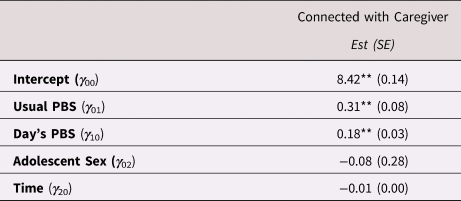
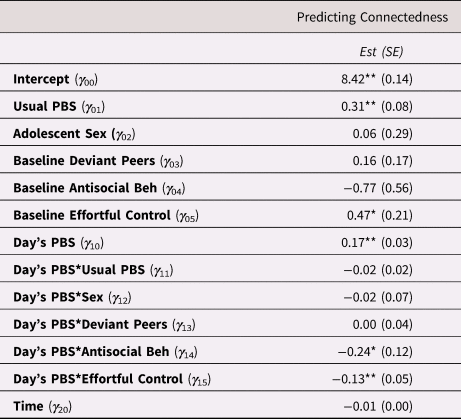
Findings from the multilevel model are reported in Table 1. As expected, in families where parents used more PBS on average, adolescents reported higher average connectedness over the 21 days (γ 01= 0.31, p < .01). There were no differences in average levels of connectedness for boys and girls, nor was there an effect of time on the daily level of connectedness.
Multilevel model examining parents’ daily use of positive behavior support and adolescent connectedness with caregivers
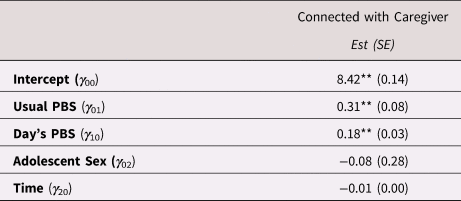
Note: Est = estimate; SE = standard error; PBS = Positive Behavior Support. N = 2811 days nested in 151 participants.
**p < .01.
Within-family effects were consistent with the hypothesis that adolescents would exhibit PBS responsiveness. On days when parents used more PBS than usual, adolescents felt more connected to their caregivers (γ 10= 0.18, p < .01). Estimates of the random effects for the prototypical within-family association all were different from zero, and the 95% confidence interval ranged between 0.22 and 0.33. Thus, we proceeded to research question 2, evaluating whether individual differences in PBS responsiveness were indicative of long-term risk.
Question 2: Does PBS responsiveness predict developmental changes in risk?
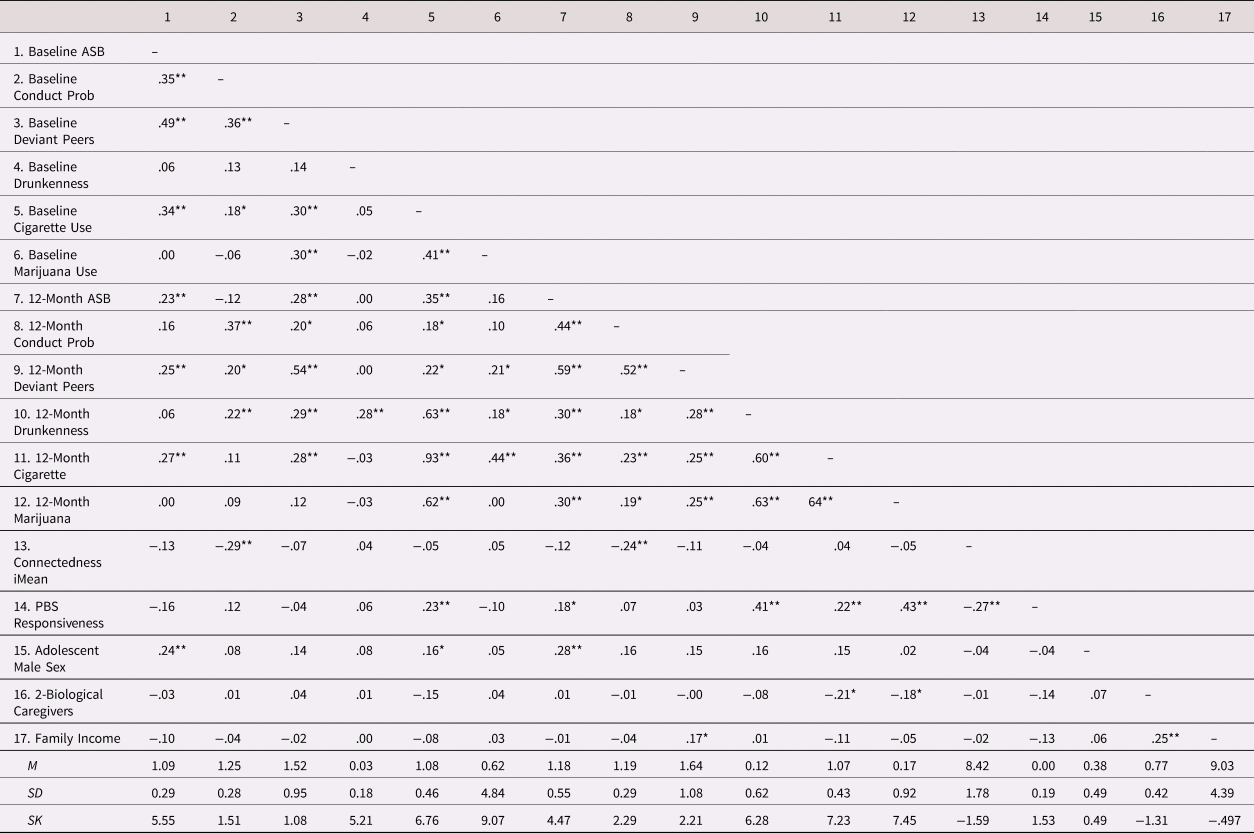
We then evaluated whether individual differences in PBS responsiveness were associated with adolescent deviant peer involvement, antisocial behavior, conduct problems, and drunkenness, cigarette use, and marijuana use frequency one year later. We first exported individual values for PBS responsiveness (random effects from the model presented above) and individual mean scores for adolescents’ connectedness with caregivers across the 21 measurement occasions. Correlations are presented in Table 2.
Bivariate Correlations, Means, Standard Deviations, and Skewness
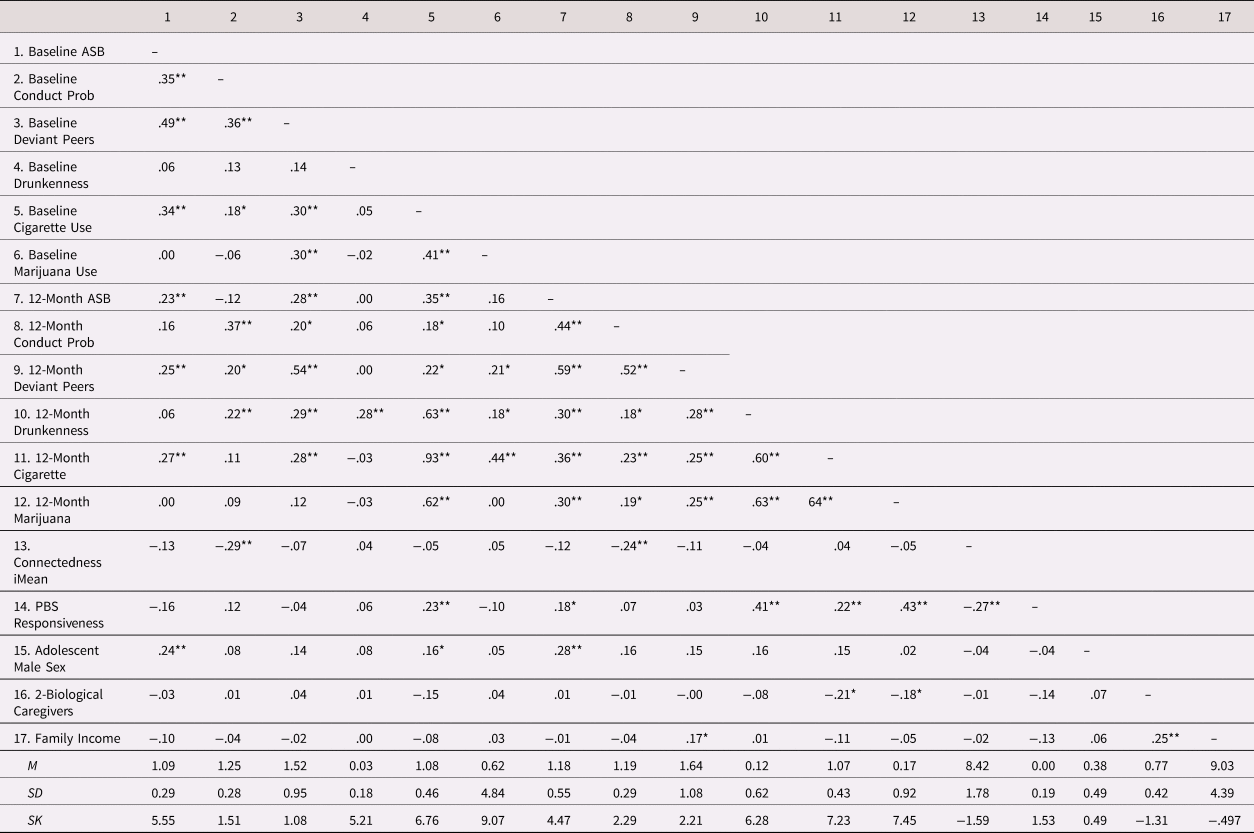
Note: ASB = Antisocial Behavior, Connect = Parent–adolescent Connectedness, PBS = Positive Behavior Support, M = Mean, F = Frequency, SD = Standard Deviation, SK = Skewness. Family income was discretized, Median income was $70,000–79,000.
*p < .05. **, p < .01.
Of note, PBS responsiveness and connectedness negatively correlated with each other (r = −.27). PBS responsiveness was also positively correlated with outcomes at the longitudinal (12-month) follow-up, including antisocial behavior and all three substance use frequency variables (r’s = .18–.43). Connectedness was negatively correlated with conduct problems one year later (r = −.24).
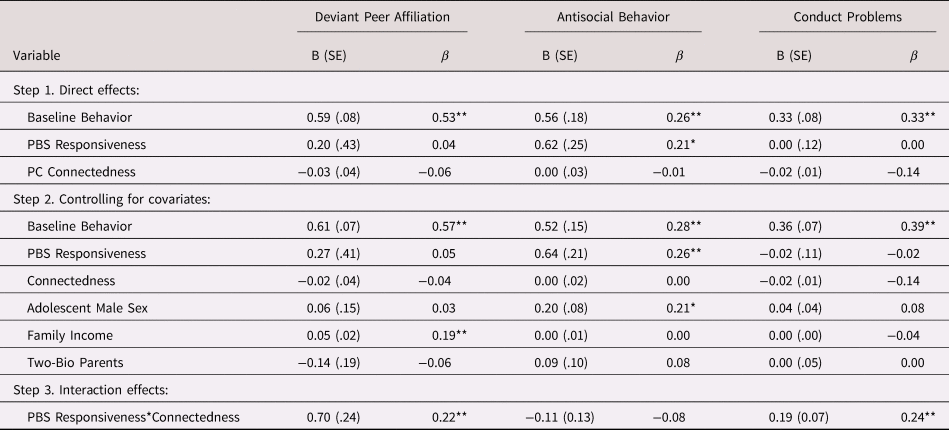
We then estimated two sets of longitudinal regression models to evaluate whether PBS responsiveness is a predictor of adolescent problem behavior (deviant peer involvement, antisocial behavior, and conduct problems) and substance use (past month drunkenness, cigarette use, and marijuana use) one year later. Regression models were built over three steps. In the first step, we regressed 12-month outcomes on baseline levels of the outcome, PBS responsiveness, and adolescents’ individual mean connectedness with caregivers. In the second step, we added youth sex, family income, and living with two biological parents to the model. In the third step, we tested the interaction between PBS responsiveness and adolescent individual mean connectedness. Connectedness values were mean-centered so that zero represents the mean across adolescents. Both standardized and unstandardized coefficients were estimated and are reported below.
The first set of analyses, focusing on problem behavior outcomes, are reported in Table 3.
Hierarchical regressions predicting deviant peer affiliation, antisocial behavior, and conduct problems
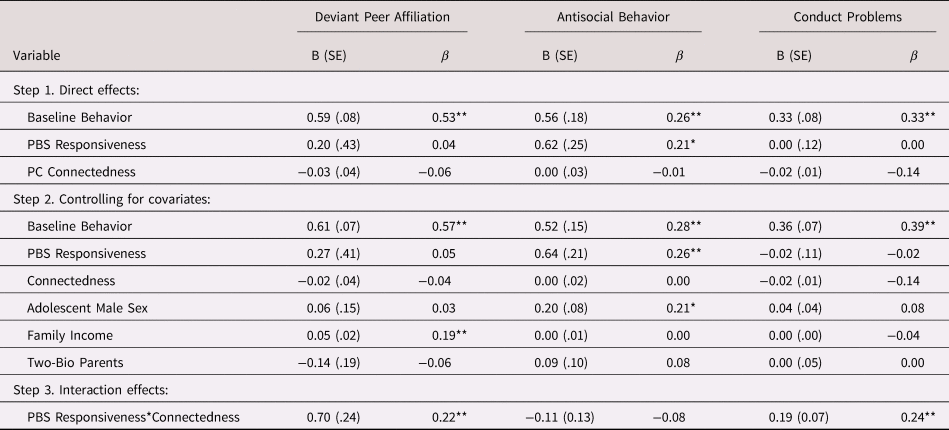
Note: Baseline Behavior is the control variable included for corresponding substance use outcomes in each model.
*p < .05. **, p < .01.
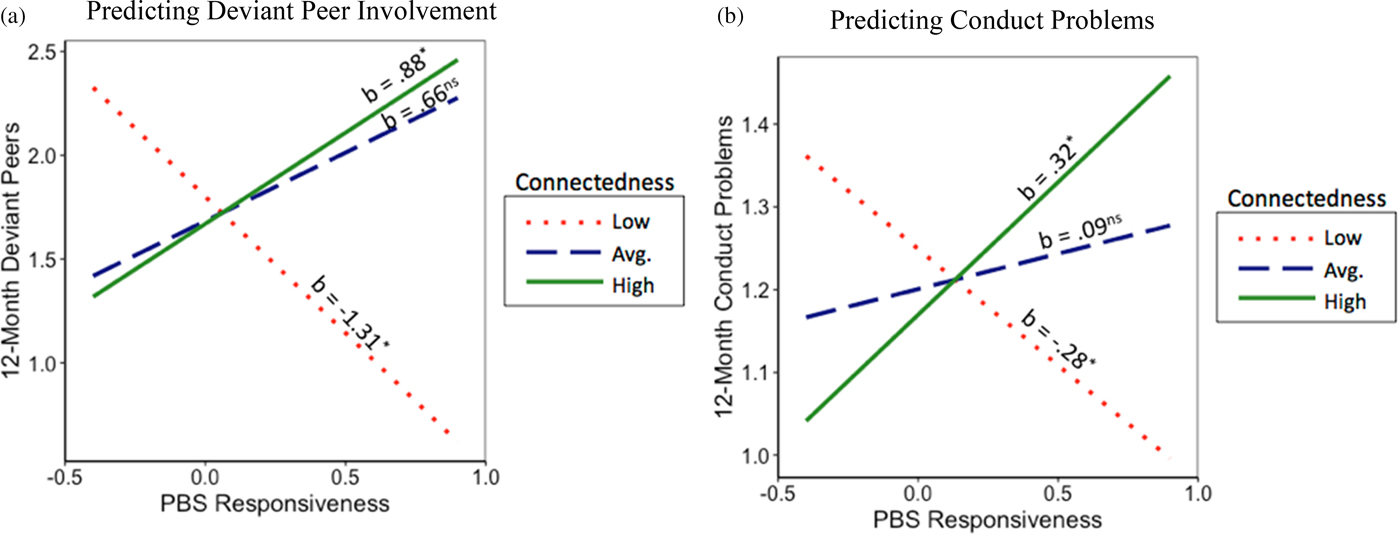
Across the three outcomes, PBS responsiveness was only associated with antisocial behavior one year later. Specifically adolescents with higher levels of PBS responsiveness indicated greater increases in antisocial behavior one year later (β = .21, p < .05). However the interaction term for PBS responsiveness × Average Connectedness was statistically significant when predicting deviant peer involvement (β = .22, p < .01) and conduct problems (β = .24, p < 01) at the 12-month follow-up. Region of significance analysis revealed that PBS responsiveness had a statistically significant association with deviant peer affiliation when average connectedness was 0.31 (i.e., + 0.17 SD) or higher, and when connectedness was -2.80 (i.e., − 1.60 SD) or lower, but the association was not significant for values in between. When connectedness was above average (0.31), PBS responsiveness was positively associated with increases in deviant peer involvement (b = .88, p < .05). However, for adolescents in families with extremely low levels of connectedness (−2.80), PBS responsiveness was negatively associated with deviant peer involvement (b = −1.31, p < .05). This interaction is plotted in Figure 1a.
Interactions predicting problem behavior.
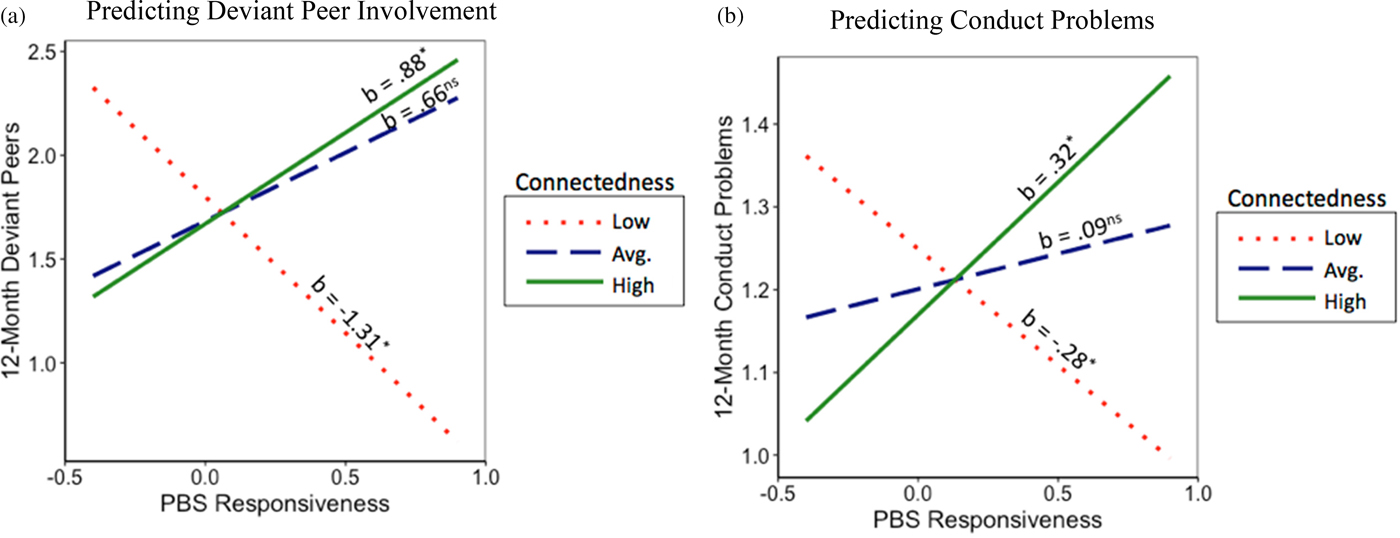
Region of significance analyses revealed a similar pattern of results for conduct problems at the 12-month follow-up. PBS responsiveness was associated with conduct problems when connectedness was either at or above 1.22 (+ 0.69 SD), and at or below -1.90 (- 1.07 SD), but the relationship was not significant for values in between. When connectedness was higher than average (1.22), PBS responsiveness was positively associated with conduct problems (b = .32, p < .05). However, for adolescents in families with low levels of connectedness (-1.90), PBS responsiveness was negatively associated with conduct problems (b = −.28, p < .05). This interaction is plotted in Figure 1b.
Taken together, the analyses focusing on deviant peers and problem behavior point to PBS responsiveness as a risk factor, as suggested by a fragile connectedness hypothesis. Findings were strongest at high levels of connectedness; however, in the context of low connectedness with caregivers, PBS responsiveness was negatively associated with risk outcomes, suggesting that PBS responsiveness was protective relative to adolescents with stable low connectedness.
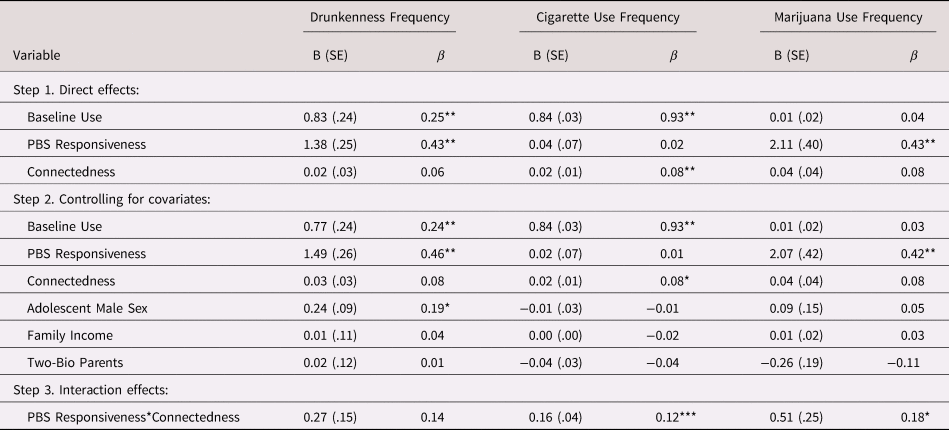
The second set of regression models were computed by regressing substance use outcomes on key predictors. Three separate regression models were computed predicting past-month drunkenness, cigarette use, and marijuana use frequency at the 12-month follow-up (see Table 4). In the first step, and again in the second step of the regression model building, PBS responsiveness was positively associated with increases in drunkenness (β = .43, p < .001) and marijuana use (β = .43, p < .001), but not cigarette use, at the 1-year follow-up. Thus for two of these analyses, PBS responsiveness was a risk factor for substance use. Contrary to expectation, connectedness also had a small-magnitude, positive association with cigarette use (β = .08, p < .01). However, when the PBS Responsiveness × Connectedness interaction term was added in step 3, the main effects of PBS responsiveness and connectedness on cigarette use and marijuana use were qualified by the moderator.
Hierarchical regressions predicting substance use outcomes
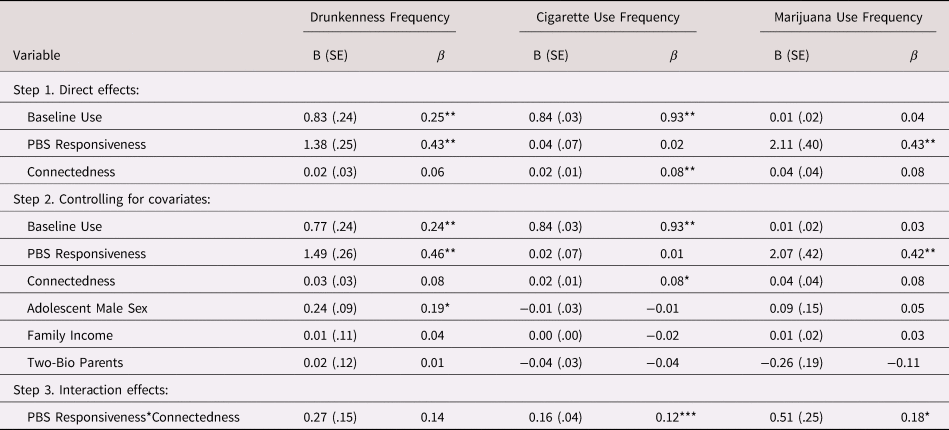
Note: Baseline Use is the control variable included for corresponding substance use outcomes in each model.
* p < .05, ** p < .01.
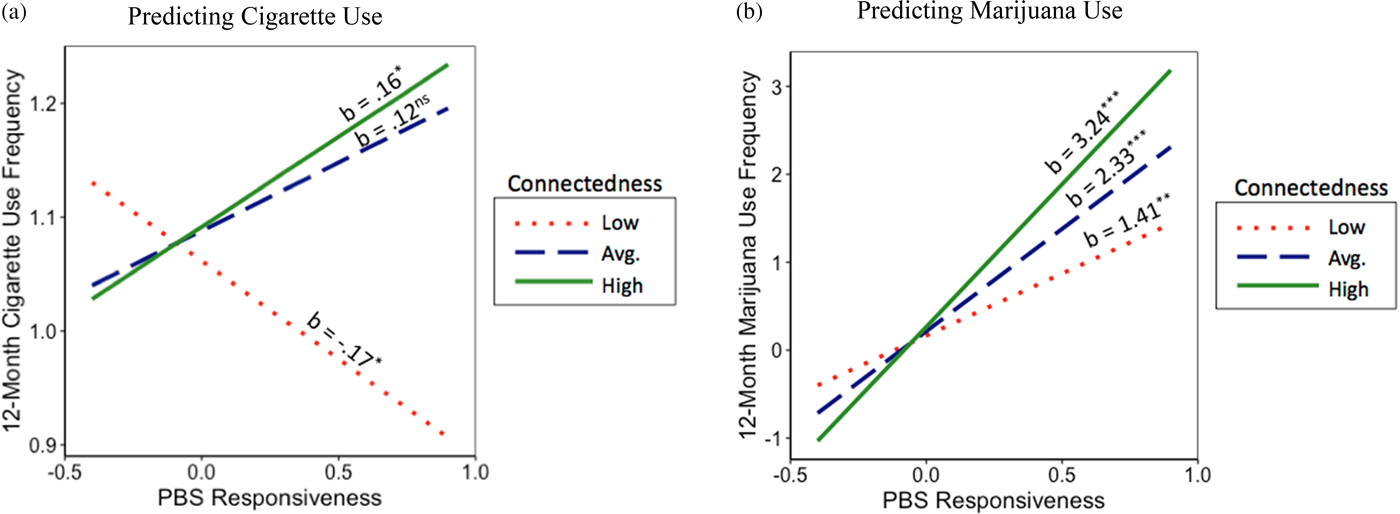
To probe these interactions, we examined the regions of significance. PBS responsiveness was associated with cigarette use when connectedness was either at or above .24 (+ .13 SD), and at or below −1.82 (− .98 SD), but the association was not significant for values in between (Figure 2a). For adolescents in families with high levels of connectedness (.24), PBS responsiveness was positively associated with cigarette use (b = .16, p < .05). However, for adolescents in families with low levels of connectedness (−1.82), PBS responsiveness was negatively associated with deviant peer involvement (b = −.17, p < .05).
Interactions predicting substance use.
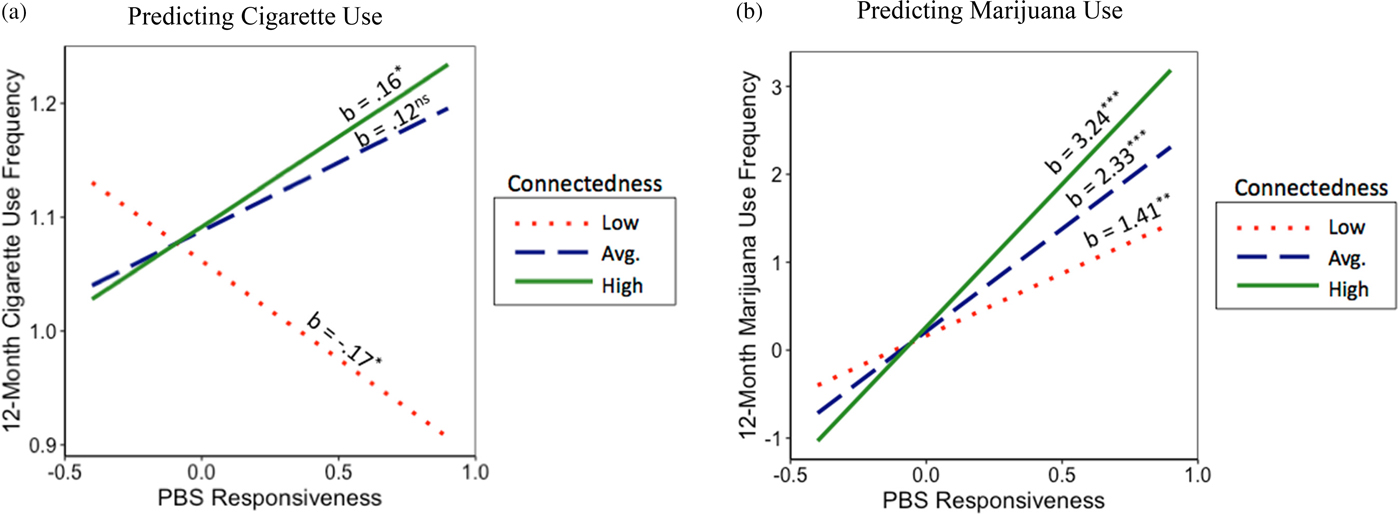
The association between PBS responsiveness and marijuana use was statistically significant when caregiver–adolescent connectedness was at -2.2 (−1.24 SD) or higher, but lower bounds extended well beyond observed values. Because of this finding, we plotted PBS responsiveness at traditional cut-off levels (−1 SD, average, and +1 SD). As shown in Figure 2b, the degree to which PBS responsiveness was associated with marijuana use increased as a function of levels of connectedness. Again, just as was found for problem behavior outcomes, findings for substance use supported the fragile connectedness hypothesis.
Question 3: What factors account for individual differences in PBS responsiveness?
Next, we returned to the multilevel model to explore level-2 moderators that might account for individual differences in adolescents’ fragile connectedness (PBS responsiveness). We built a model to simultaneously test whether average levels of PBS in the home, adolescent sex, and baseline adolescent factors—deviant peer involvement, antisocial behavior, and effortful control—account for differences in the magnitude of within-family associations of PBS and connectedness with caregivers (i.e., PBS responsiveness), effectively computing concurrent associations between the baseline assessment (moderators) and daily, within-family processes. The multilevel model was expanded to include these five cross-level interactions.
The level 1 (day-level variables) equation was not changed:

However, the equations for person-specific intercepts and associations from the Level 1 model were expanded at Level 2 as presented in equations 4a–c below:



Equation 4a portrays the expansions to Equation 2a to include baseline deviant peer involvement (γ 03), baseline ASB (γ 04), and baseline effortful control (γ 05) as predictors of differences in adolescents’ average feelings of connectedness with caregivers over the 21 days. Equation 4b reflects expansion of Equation 2b through the inclusion of cross-level interactions with PBS responsiveness by individual differences in usual PBS (γ 11), adolescent sex (γ 12), baseline deviant peer involvement (γ 13), baseline ASB (γ 14), and baseline effortful control (γ 15).
Model results are summarized in Table 5. Of interest to this question, of the five cross-level interactions of interest, two were statistically significant. Specifically, PBS responsiveness was moderated by adolescents’ levels of ASB (γ 14 = −0.24, p < .05) and effortful control (γ 15 = −0.13, p < .01) at baseline. Thus, we probed these moderating effects.
Multilevel model evaluating ecological factors in adolescent PBS responsiveness
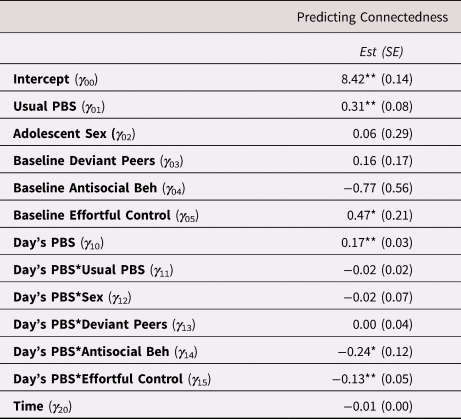
*p < .05; **p < .01.
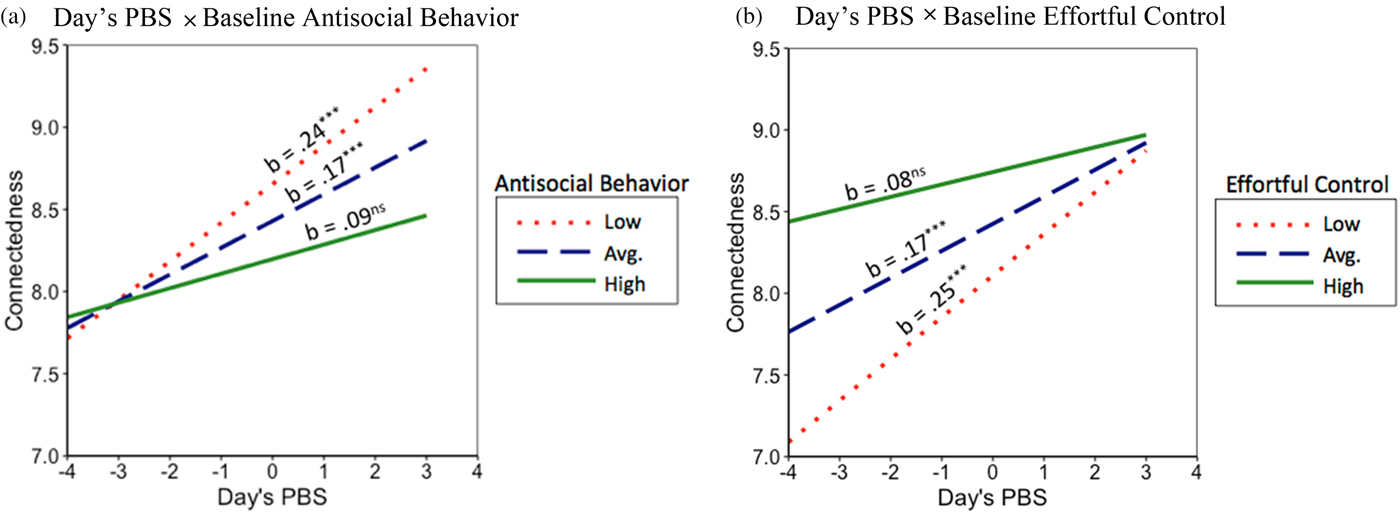
PBS responsiveness exhibited a graded association with ASB. The region of significance revealed that day's PBS was associated with adolescent connectedness with caregivers when ASB was 1.004 or lower. Adolescents who exhibited extremely high baseline levels of ASB (more than 1 SD) did not exhibit PBS responsiveness. However, at levels below that threshold, adolescents exhibited increasing rates of PBS responsiveness. This is illustrated in Figure 3a, in which adolescents with baseline ASB exceeding 1 SD did not exhibit PBS responsiveness; yet those below this threshold exhibited increasing PBS responsiveness as levels of ASB decreased.
Cross-Level interactions for baseline adolescent factors and PBS responsiveness.
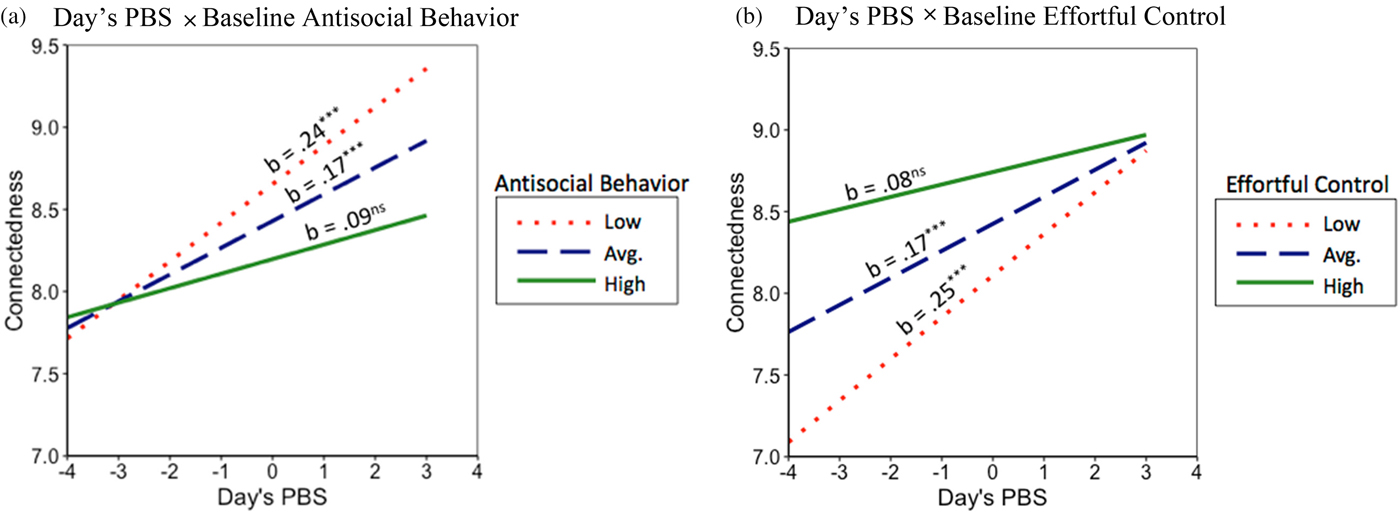
When probing effortful control as a moderator of the within-family association, results indicated a region of significance in which adolescents who reported effortful control at 0.85 SD above the mean or higher did not exhibit PBS responsiveness. However, below this value, adolescents exhibited increasing levels of PBS responsiveness as effortful control decreased. Figure 3b illustrates this at high (+1 SD), average, and low (−1 SD) levels of effortful control.
Question 4: What factors predict caregivers’ daily use of PBS?
To answer this final question, multilevel models were built to predict parents’ use of PBS, hypothesizing that there may be situational, same-day factors (i.e., parent–adolescent conflict episodes or adolescents’ daily angry mood), or general, contextual factors (21-day averages of parent–adolescent conflict or adolescent angry mood; between-person differences in baseline deviant peer involvement and baseline ASB). We followed the same procedures outlined above for multilevel models, except in these analyses, we were predicting daily variation in parents’ PBS in relation to within-family variation in adolescent anger and parent–adolescent conflict.
The level 1 (day-level variables) equation was as follows:

where PBS it reflects Positive Behavior Support by parent i on day t; β 0i indicates the expected level of PBS in the middle of the study and at average levels of adolescent anger and parent–child conflict; β 1i indicates the association between day's adolescent angry mood and parents’ PBS; β 2i indicates the association between day's parent–child conflict on parents’ PBS; and β 3i indicates the effect of time in study on PBS. As before, e it are day-specific residuals that were allowed to autocorrelate (AR1).
The level-2 process is presented in equations 6a–d below:





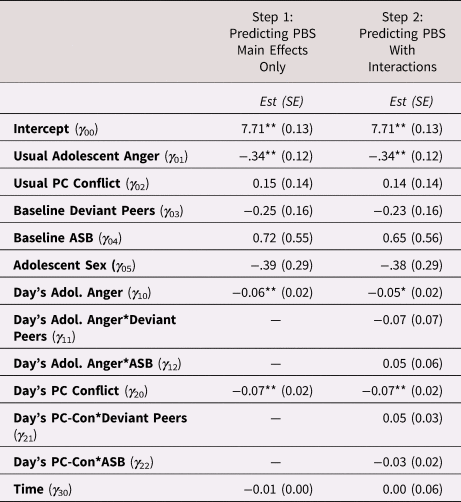
Analyses were conducted in a two-step analysis process. The first step is presented in 6a, 6b.1, 6c.1, and 6d. Depicted in 6a, between-person associations between the outcome and usual adolescent anger (γ 01), usual parent–adolescent conflict (γ 02), baseline levels of deviant peers (γ 03) and ASB (γ 04) were estimated; in addition, 6b.1 and 6c.1 accounted for within-person associations for adolescent anger (γ 10) and parent–child conflict (γ 20), respectively. In the second step, 6b.2 and 6c.2 included cross-level interactions to evaluate whether baseline deviant peer involvement (γ 11, γ 12) and ASB (γ 21, γ 22) qualified day's adolescent anger and day's parent–child conflict, respectively.
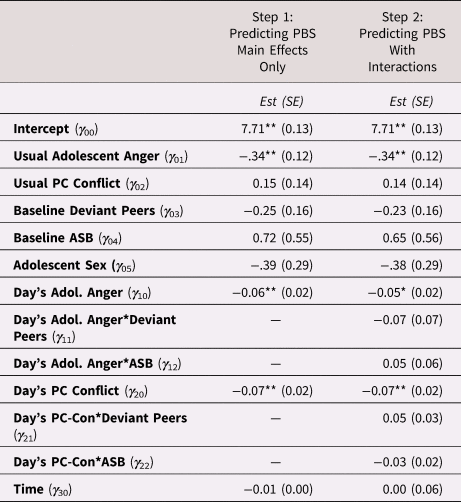
The results are presented in Table 6. In the first step, several findings emerged. First, parents in families with higher average levels of adolescent anger used less PBS, overall (γ 01 = −.34, p < .01), but average parent–child conflict, baseline deviant peer involvement, and baseline ASB were not associated with parents’ general use of PBS. In addition, within-family findings emerged such that, on days when adolescents had higher anger than usual, parents used less PBS (γ 10 = −0.06, p < .01), and on days when parent–child conflict was higher than usual, parents used less PBS (γ 20 = −0.07, p < .01).
Within-day predictors of parents’ use of PBS
*p < .05; **p < .01.
In the second step, cross-level interactions were added. None of the cross-level interactions were statistically significant. Specifically, baseline deviant peer involvement and baseline ASB did not qualify the within-family association between day's adolescent anger and PBS or between day's parent–child conflict and PBS.
Discussion
In this paper, we revisit and elaborate on Tom Dishion and colleagues’ (Reference Dishion, Nelson and Bullock2004) developmental theory of premature adolescent autonomy by zooming in on the day-to-day processes that underlie developmental change. We built on key premises that adolescent engagement with the family is a dynamic process, that family management practices and adolescent behavior both contribute to disengagement, and that the rate of disengagement is important for understanding risk. Ultimately, premature autonomy processes—particularly when adolescents engage in a deviant peer context—confer developmental risk for antisocial behavior and substance use. This study was designed to consider how examination of family management and adolescent connectedness with caregivers on a daily timescale may inform our understanding of the premature autonomy model's propositions of developmental risk.
Daily Use of Positive Behavior Support is Associated with Increased Connectedness
Our initial analyses evaluated whether parents’ daily use of PBS family management practices would be associated with adolescents’ connectedness with caregivers. Drawing on the benefits of a daily diary design, we disentangled within-family and between-family processes to reveal that, on days when parents used more praise and support for good behavior than usual, adolescents felt closer and more connected to their caregivers. There are several noteworthy aspects to these findings. First, as is commonly known by parents and practitioners alike, parents fluctuate in their use of PBS from day to day; parents have “good days” and “bad days” so to speak. However, by capturing this within-family variability, these findings suggest that parents’ use of PBS is a malleable family management practice, even during the middle adolescent years. Second, these analyses capitalize on within-family analytic methods, effectively comparing families with themselves, rather than with other families. Not only does this approach minimize third variable concerns (Bolger & Laurenceau, Reference Bolger and Laurenceau2013), the findings suggest that changes in parent PBS on a daily timescale explain day-to-day changes in their adolescent's sense of connectedness with their caregivers. This within-family finding was not qualified by the average level of PBS use (i.e., no differences in within-family effects for families that use PBS frequently or infrequently), and it was not different in families with boys or girls. Indeed, these findings offer helpful guidance to interventionists who may seek to strengthen parent–adolescent bonds; coaching parents to use more PBS is a promising strategy for bolstering adolescent's sense of connectedness to caregivers with reasonably immediate effects.
Fragile Connectedness—Reflected in High Levels of PBS Responsiveness—Predicts Adolescent Risk
We then evaluated the long-term implications of our observed within-family findings for daily PBS and adolescent connectedness with caregivers. To understand the implications of PBS responsiveness for long-term developmental risk, we evaluated two competing hypotheses. The first hypothesis, drawing on theory and research regarding vantage sensitivity (Pluess & Belsky, Reference Pluess and Belsky2013; Sweitzer et al., Reference Sweitzer, Halder, Flory, Craig, Gianaros, Ferrell and Manuck2013), conceptualized PBS responsiveness as an indicator of the degree to which adolescents benefit from their parents’ positive parenting practices. Thus, the vantage sensitivity hypothesis proposed that higher PBS responsiveness would be associated with lower levels of problem outcomes. The second, fragile connectedness hypothesis, was informed by studies of change in positive affect in response to daily experiences (Ong & Ram, Reference Ong and Ram2017). Applied to the current study, PBS responsiveness may indicate fragility in adolescents’ sense of connectedness to caregivers. Accordingly, higher PBS responsiveness may indicate risk for disengaging from the family, and engaging in a context of deviant peer affiliation, problem behavior, and substance use. Support for the fragile connectedness hypothesis would have been found had PBS responsiveness been most strongly associated with problem outcomes for adolescents who had higher general connectedness with their caregivers.
Across all six analyses, our findings provided consistent support for the fragile connectedness hypothesis. Adolescents who exhibited more pronounced changes in connectedness with caregivers in relation to variability in daily PBS were at elevated risk for all six outcomes. Consistent with the premature autonomy perspective, adolescents who exhibited more fragile connectedness were at elevated risk for engaging in a deviant peer context and in increased antisocial behavior, conduct problems, and substance use (drunkenness, cigarette use, and marijuana use). Also consistent with a fragile connectedness perspective, four of the six were qualified by the adolescent's usual level of connectedness with caregivers. Specifically, in families where adolescents reported generally high levels of connectedness with caregivers, PBS responsiveness was predictive of adolescents’ increased involvement with deviant peers, increasing problem behaviors, and increasing cigarette and marijuana use. However, in families with generally low levels of connectedness, PBS responsiveness did not predict changes in deviant peer involvement, or in conduct problems, and PBS responsiveness was a less potent predictor of cigarette and marijuana use.
The findings support a fragile connectedness perspective and offer new insights into premature autonomy by describing one reason that adolescents may disengage from the family. Fragile connectedness may be indicative of adolescent reliance on parental support and praise to feel close and connected to them, which is consistent with the premature autonomy model's proposition that adolescents who need others’ approval and acceptance (i.e., poor sense of autonomy) may seek out peers who will express acceptance and be more susceptible to deviant peer influence (Dishion & Tipsord, Reference Dishion and Tipsord2011; Dishion et al., Reference Dishion, Poulin, Skaggs, Kerns, Contreras and Neal-Barnett2000). The findings in the current study shed light on a day-to-day fragility process that has long-term implications for adolescent premature autonomy, pointing to the importance of promoting strong and stable parent–adolescent bonds to prevent adolescent engagement in problem contexts.
Adolescent Factors Account for Individual Differences in PBS Responsiveness
Given the longitudinal implications of fragile connectedness, we revisited our daily diary multilevel models to gain insight into factors that might explain individual differences in this risk (i.e., PBS responsiveness). We considered five potential factors that might predict PBS responsiveness: adolescent sex, usual levels of PBS, deviant peer involvement, antisocial behavior, and effortful control. Interestingly, results were mixed. Turning first to nonsignificant interactions, our findings suggested that there were no differences for boys and girls in terms of their PBS responsiveness. Additionally, PBS responsiveness was not different in families with high or low usual levels of PBS. This suggests that parents’ frequent use of praise and support during middle adolescence was not associated with the degree of responsiveness to PBS. However, between-family results indicated that adolescents of parents who used more PBS on average felt more connectedness with their caregivers.
Interestingly, there were divergent findings for baseline deviant peer involvement and antisocial behavior. Contrary to expectations, involvement with deviant peers at baseline did not correspond to adolescents’ PBS responsiveness. However, there was an inverse association between adolescent antisocial behavior at baseline and their PBS responsiveness. Adolescents with higher levels of antisocial behavior at baseline were more likely to have stable and low connectedness with caregivers, reflective of a high-risk group. These findings are consistent with a view that, by disengaging from the family, adolescents would be less responsive to their parents’ use of PBS. It may be that for these youth, who already exhibit problem behaviors, it is critical to focus on other family management strategies, such as reducing coercive family interactions, increasing parental monitoring, and enforcing clear limits on behavior (Dishion & Stormshak, Reference Dishion and Stormshak2007; Patterson et al., Reference Patterson, Forgatch and DeGarmo2010). In addition to these family management strategies, it may be important to rebuild positive, connected relationships with caregivers.
As expected, our findings supported the role of effortful control as a protective factor against risks related to daily fluctuations in parenting. Adolescents who were higher in effortful control reported more connectedness with their caregivers on average. In addition, effortful control explained individual differences in PBS responsiveness, suggesting that those who were higher in effortful control exhibited less fragile connectedness. Thus, it seems that adolescents who were higher in self-regulation and more adept at effective allocation of attention were less flappable in response to fluctuations in PBS. This finding may be indicative of adolescents who were less reactive to short-term experiences and better able to consider the broader gestalt of the relationship as they interpret and respond to day-to-day experiences of praise and support. An alternative interpretation may be that adolescents who are higher in effortful control experience fewer mental health problems, experience more success in social and academic domains, and are therefore simply easier to parent (Eisenberg et al., Reference Eisenberg, Valiente, Spinrad, Liew, Zhou, Losoya and Cumberland2009; Liew, Reference Liew2012). Regardless of the underlying process, effortful control is a promising adolescent target that is amenable to interventions, such as the Family Check-Up (Fosco, Frank, Stormshak, & Dishion, Reference Fosco, Frank, Stormshak and Dishion2013; Stormshak, Fosco, & Dishion, Reference Stormshak, Fosco and Dishion2010; Stormshak, DeGarmo, Chronister, & Caruthers, Reference Stormshak, DeGarmo, Chronister and Caruthers2018).
Situational (Daily) Adolescent Behaviors Predict Parents’ Use of PBS
Building on the importance of PBS as a family management practice, we evaluated hypotheses advanced by the premature autonomy model, which states that challenges in the family—angry, oppositional adolescent behavior or parent–adolescent conflicts—may explain parents’ use of PBS family management practices. Interestingly, at a between-family level, adolescent anger (but not parent–adolescent conflict) was associated with lower average levels of PBS over the 21 days. In terms of day-to-day process, within-family effects indicated that on days when adolescents were angrier than usual and on days when parent–adolescent conflict was higher than usual, parents’ use of PBS decreased. Contrary to expectations, these within-family findings were not qualified by whether adolescents were already involved with deviant peers or engaging in antisocial behavior. Instead, these findings suggest that variability in parents’ use of PBS may be better understood as sensitivity to day-to-day family management challenges, rather than as a response to pre-existing problems. These findings converge with social-interactional learning models that underscore the importance of preserving PBS practices, even in the face of adolescent anger and conflict.
Although the current study did not identify adolescent risk as an explanatory factor for parents’ tendency to decrease PBS in conjunction with adolescent anger or conflict, other ecological factors may be important. It is possible that parent depression, stress, or socioeconomic strain may help explain individual differences in the degree to which PBS covaries with these day-to-day challenges. Future work should explore broader ecological factors that contribute to family vulnerability for using ineffective family management practices (Dishion & Stormshak, Reference Dishion and Stormshak2007).
Implications for Interventions
Guided by the premature autonomy model, the present investigation has several intervention implications. These findings support the view that effective family management practices are fundamental to risk reduction for adolescent problem behavior. Drilling down into a daily timescale, this study disentangles parenting behavior (i.e., positive behavior support) and parent–adolescent relationship quality to better understand how the two processes function in concert with each other as a prelude to developmental risk for adolescent problem behavior and substance use. The current findings offer new insights and questions about how to best address adolescent risk in these families.
Integrating across our findings, we identify some important take-home messages for families and interventionists. First, our findings indicate that the use of praise and positive reinforcement remains important into the adolescent years. Interventionists should encourage parents to use PBS strategies as consistently and frequently as possible. Second, our findings provide nuance to advice around using PBS. Our findings indicate that some adolescents, who we characterized as experiencing a fragile connectedness with caregivers, may remain at risk despite parents’ use of PBS. This calls for intervention efforts that also promote adolescents’ feelings of closeness to their caregiver beyond praise and reinforcement. Relationship activities, fostering communication, acceptance, love, and connection may be of particular importance for adolescents with fragile connectedness. Third, these relationship-strengthening activities might be enhanced by promoting an adolescent's self-regulation as well. Other work showcases the value of including youth in family-based interventions for bolstering effect sizes (Van Ryzin, Roseth, Fosco, Lee, & Chen, Reference Van Ryzin, Roseth, Fosco, Lee and Chen2016) as well as the benefits of enhancing self-regulation in the service of reducing problem behavior outcomes (Fosco et al., Reference Fosco, Frank, Stormshak and Dishion2013; LoBraico et al., Reference LoBraico, Fosco, Crowley, Redmond, Spoth and Feinberg2019).
Methodologically, this study also underscores the value of capturing within-family process for advancing family intervention science. It was only through the use of intensive longitudinal methods focused on within-family process that it was possible to identify fragile connectedness. Daily diary methods provide an opportunity for enhancing family risk assessments (Fosco, Mak, Ramos, LoBraico, & Lippold, Reference Fosco, Mak, Ramos, LoBraico and Lippold2019) and have potential for advancing assessment-driven interventions, a gold standard of practice (Josephson & AACAP Work Group on Quality Issues, Reference Josephson2007). Moreover, daily diary methods can be extended to identify family-specific strengths and weaknesses that could be leveraged to guide adaptive and tailored interventions, such as the Family Check-Up model (Dishion & Stormshak, Reference Dishion and Stormshak2007).
Limitations and Future Directions
This study offers a first look into the relatively untapped potential of daily diary methods for informing long-term developmental models of risk. However, there are several limitations to the current study that should be addressed in future research. First, this sample was relatively low-risk, and it was also homogeneously White and middle-class. When considering this limitation, it is impressive that these findings emerged so robustly in this sample. Nonetheless, important work applying these models to a more diverse sample in terms of risk, socioeconomic status, and cultural factors is needed. Second, many of the daily findings rely on same-day within-family associations and the direction of effects cannot be inferred. These findings are consistent with theory, but disentangling the temporal associations through multiple assessments each day would allow for explicit tests of the directional of effects. Third, additional attention is needed into the developmental processes underlying fragile connectedness. Our study focused on the middle adolescent period, leaving unclear what these processes might look like during earlier developmental periods. For example, in early childhood, PBS responsiveness may be a protective factor, consistent with a vantage sensitivity perspective. Further work spanning different developmental periods, or better yet, applying a “measurement burst design” that uses intermittent (e.g., annual) daily diary assessment bursts, would be informative. Finally, this study focused narrowly on PBS family management strategies. Further work is needed examining daily limit setting, monitoring, and family problem-solving practices.
Conclusion
In revisiting the premature autonomy model, our findings support the original premises set forth by Tom Dishion and his colleagues (Dishion et al., Reference Dishion, Nelson and Bullock2004; Dishion et al., Reference Dishion, Poulin, Skaggs, Kerns, Contreras and Neal-Barnett2000). We identified and evaluated fragile connectedness—the degree to which adolescents’ connectedness with caregivers is reliant on day-to-day praise and support—as a vulnerability factor for deviant peer involvement, antisocial behavior, and substance use. Fragile connectedness is most strongly associated with risk outcomes in families with generally high levels of parent–adolescent connectedness. Individual risk and protective factors for fragile connectedness were identified, as were day-to-day predictors of parent's use of PBS. Taken together, these findings elaborate on premature autonomy, and begin to draw connections between daily family process and developmental risk during adolescence.
Financial Support
This study was supported by the Karl R. and Diane Wendle Fink Early Career Professorship for the Penn State Social Science Research Institute. Emily LoBraico was supported by The National Institute on Drug Abuse (T32 DA017629; PI: L.M. Collins). The content is solely the responsibility of the authors and does not necessarily represent the official views of the funding agencies.