Introduction
The body temperature of the adult fowl is in the range of 41-42°C. Heat stress means difficulty in achieving balance between body heat production and heat loss. Interaction of air temperature, humidity, radiant heat and air speed play a major role in creation of heat stress. In the case of poultry, the thermo-neutral zone is 18-21°C. When environmental temperature exceeds 35°C bird is likely to experience heat stress (Charles, Reference CHARLES2002).
Stress response is mainly associated with the activation of hypothalamo-pituitary -adrenal (HPA) axis and sympathetic-adrenal medullar (SAM) axis through which immune response can be altered. This further aggravates the detrimental effects of high body temperature. The expression of heat stress in poultry production can be described as ‘acute’ or ‘chronic’. The chicks hyper ventilate and increase their respiratory rate when the temperature reaches beyond the comfortable zone, as they initially attempt to dissipate the heat through radiation, convection and conductance (Yahav et al., Reference YAHAV, SHINDER, TANNY and COHEN2005). Later they follow respiratory-evaporative mechanisms (Richards, Reference RICHARDS2007). The evaporative heat loss via panting is associated with loss of body water content, as well as through extensive cutaneous evaporation. Partial surface wetting has proven to be a useful for the bird (Yanagi et al., Reference YANAGI, XIN and GATES2002; Mutaf et al., Reference MUTAF, KAHRAMAN and FIRAT2008), particularly when relative humidity is low.
To minimise production losses as well maintaining welfare there is a need to look for amelioration means to counter heat stress in birds. This review focuses on the scientific evidence available on the importance and impact of heat stress and measures to counter stress on birds.
Internal body changes during heat stress in birds
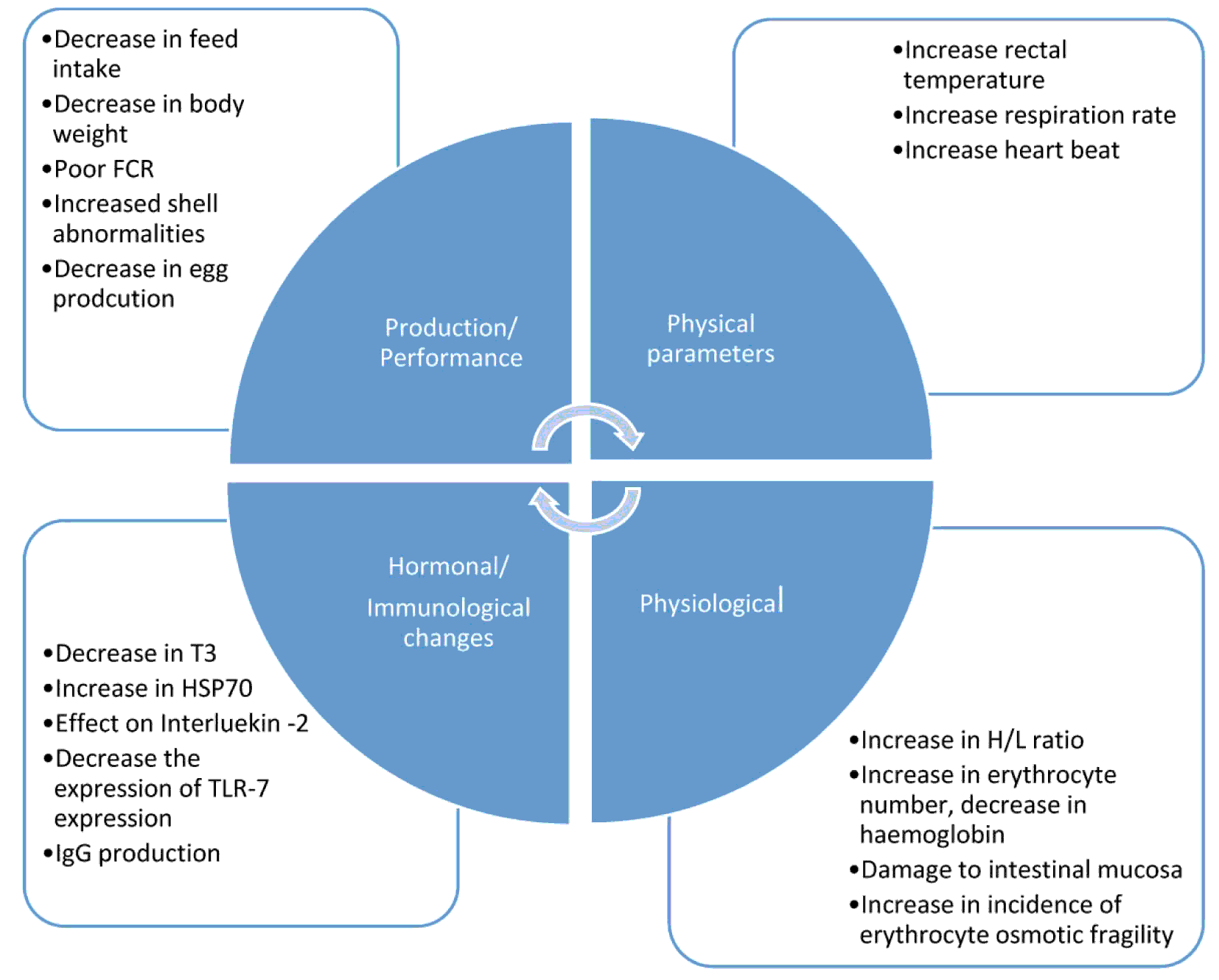
Physiological mechanisms for stress regulation occur when the threshold level of stress is crossed, and this results in distress to the birds. At this point, birds show stress symptoms ( Figure 1 ), which can be described in three stages.
Response of the birds to the increasing temperatures.

stage-I: stage of alarm reaction: neurogenic (sympatho-adrenal) system (short-term regulation of stress)
This stage is characterised by an increased rate of secretion of catecholamine from the adrenal medulla, which prepare the bird for a ‘fight or flight’ reaction and command a rapid release of glucose into the blood, deplete liver glycogen, increase peripheral vasomotor activity, alter ventilation rate and increase neural sensitivity (Siegel and Kampen, 1984).
stage-II: endocrine system (long-term regulation of stress)
The second stage involves adrenal cortical hypertrophy and increased synthesis and release of adrenal glucocorticoids, known as corticosterone in birds (Siegel and Kampen, 1984). Continuous stimulation to the adrenal cortex leads to chronically high levels of corticosteroid hormone. This hormone is responsible for the formation of glucose from body reserves of carbohydrates, lipid and proteins.
stage-III: stage of exhaustion
Finally, if the bird does not recover from the stressor and the availability of body reserves and hormones from the adrenal gland are inadequate, a third ‘exhaustion’ phase sets in. This stage leads to fatigue of the homeostatic mechanisms and finally death (Brake et al., Reference BRAKE, BALNAVE and DIBNER1998). Except for panting, chicken can improve their thermal resistance and adaptability by enhancing chemical regulation, such as altering the levels of plasma hormones (Tankson et al., Reference TANKSON, VIZZIER-THAXTON, THAXTON, MAY and CAMERON2001), increasing serum cortisol levels (Wang et al., Reference WANG, LIN and YANG2007). Increasing metabolic rate during heat stress is due to the involvement of T4 and T3 which limits the rate of glucose oxidation and increases the amount of metabolic heat production (Tao et al., Reference TAO, ZHANG, DONG, ZHANG and XIN2006). These changes in cortisol and T3 after heat stress are helpful to chickens in coping up with the disadvantages of high temperature.
Effect of chronic heat stress in birds
In tropical countries like India an economical way of rearing birds is in open sided houses. In such situations, birds are exposed to continuous temperatures, and are subject to chronic heat stress. Broilers subjected to chronic heat stress have significantly reduced feed intake (-16.4%), lower body weight gain (-32.6%), and poorer feed conversion ratio (+25.6%) at 42 days of age (Sohail et al., Reference SOHAIL, IJAZ, YOUSAF, ASHRAF, ZANEB, ALEEM and REHMAN2012; Ghazi et al., Reference GHAZI, HABIBIAN, MOEINI and ABDOLMOHAMMADI2012; Imik et al., Reference IMIK, OZLU, GUMUS, ATASEVER, URGAR and ATASEVER2012).
Fat deposition and meat quality in broilers exposed to chronic heat is affected in a breed-dependent manner (Lu et al., Reference LU, WEN and ZHANG2007). Recent studies demonstrated that heat stress is associated with depression of meat composition and quality in broilers (Dai et al., Reference DAI, GAO, XU, ZHANG, SONG and ZHOU2012; Imik et al., Reference IMIK, OZLU, GUMUS, ATASEVER, URGAR and ATASEVER2012). It causes a decrease in proportion of breast muscle, higher levels of thigh muscle, lower protein content and more fat deposition in broilers (Zhang et al., Reference ZHANG, JIA, ZUO, ZHANG, LEI, REN and FENG2012).
A significant reduction is seen in feed conversion (31.6%), egg production (36.4%), and egg weight (3.41%) for laying hens subjected to heat stress (Star et al., Reference STAR, DECUYPERE, PARMENTIER and KEMP2008), along with reduced eggshell thickness and increased breakages (Lin et al., Reference LIN, MERTENS, KEMPS, GOVAERTS, DE KETELAERE, DE BAERDEMAEKER, DECUYPERE and BUYSE2004). Significant reduction of egg weight (-3.24%), egg shell thickness (-1.2%), eggshell weight (-9.93%), and eggshell percent (-0.66%) (Ebeid et al., Reference EBEID, SUZUKI and SUGIYAMA2012, Mack et al., Reference MACK, FELVER-GANT, DENNIS and CHENG2013) were observed when birds exposed to severe heat.
Effect of acute heat stress in layers and broilers
As environmental temperature raises beyond normal limits, birds exhibit decreased feed consumption, growth rate, feeding efficiency, egg shell quality, and survivability (Mashaly et al., Reference MASHALY, HENDRICKS, KALAMA, GEHAD, ABBAS and PATTERSON2004). Pale, soft, exudative-like changes in meat quality have been observed in broilers exposed to acute or short-term heat stress immediately after slaughter (Northcutt et al., Reference NORTHCUTT, FOEGEDING and EDENS1994; Sandercock et al., Reference SANDERCOCK, HUNTER, NUTE, MITCHELL and HOCKING2001).
Environment temperature and energy balance
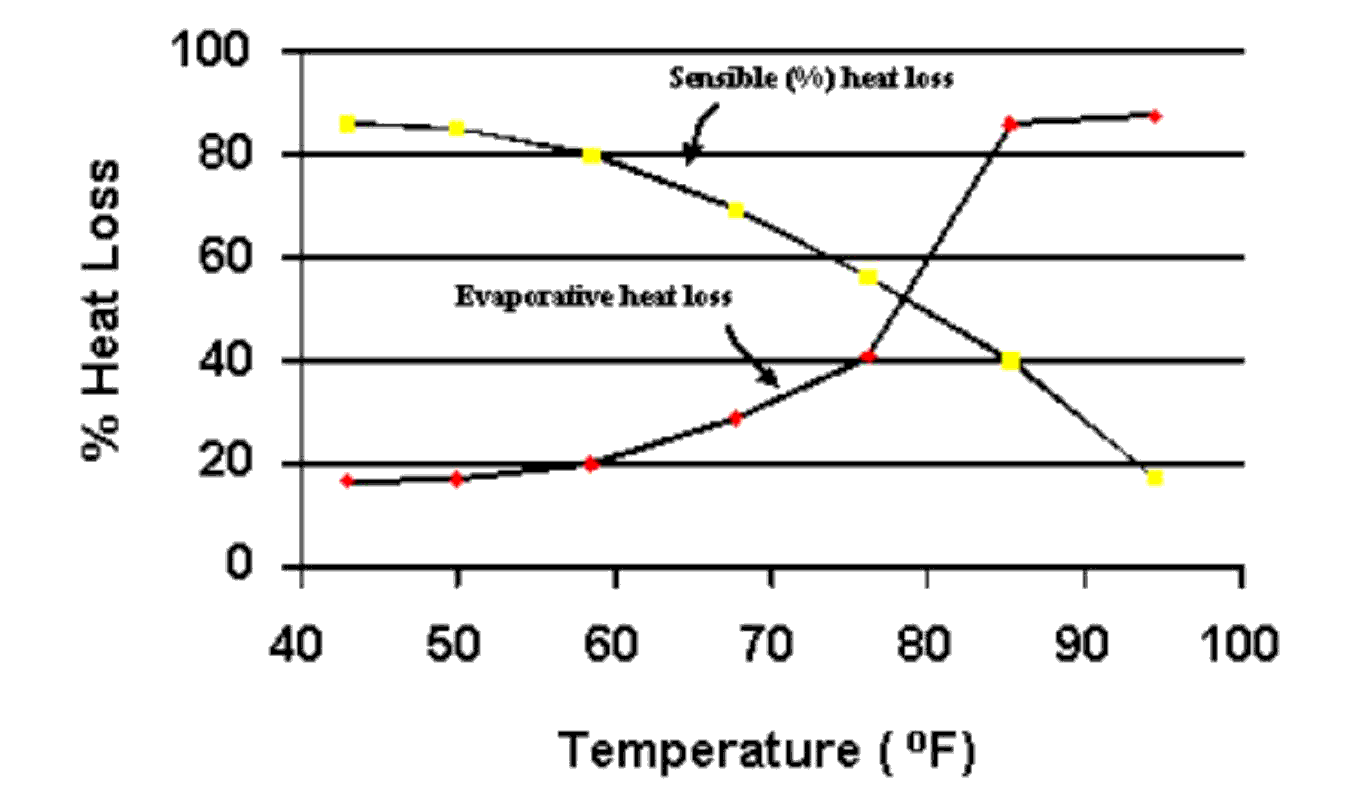
The physiological and cellular responses to acute heat stress reduces the deleterious consequences of heat stress for a short period ( Figure 2 ). Elevated temperatures inevitably reduce performance both in broilers and laying hens, particularly when accompanied by high relative humidity (Chen et al., Reference CHEN, GOURICHON, HUANG, LEE, BORDAS and TIXIER-BOICHARD2009).
Method of heat loss from birds as temperature changes (Source www.energy-seal.com).

Body weight as well as relative weights of immune organs (spleen, thymus and bursa of Fabricius) decreases as demonstrated (Puvadolpirod and Thaxton, Reference PUVADOLPIROD and THAXTON2000) in broilers by injecting ACTH at 8 IU/kg body weight/day for a period of seven days with the help of mini-osmotic pumps. Acid-base balance varies under excessive heat, which is integral to physiological stress (Olanrewaju et al., Reference OLANREWAJU, WONGPICHET, THAXTON, DOZIER III and BRANTON2006; Ahmad and Sarwar, Reference AHMAD and SARWAR2006; Lin et al., Reference LIN, JIAO, BUYSE and DECUYPERE2006).
Measurement of severity of heat stress in poultry
Parameters like hormones (T3), HSPs, onset of panting/minute, mortality rate (%), survival time (minute), heat tolerance (RITr °C/hr) and estimation of oxidative compounds (ROS) are useful to gauge the severity of heat stress in birds. Thermogenesis is regulated by the thyroid hormones and neuronal sympathetic system (Silva, Reference SILVA2006). Metabolic rate is associated with the secretion of the hormone thyroxin (T4), secreted by the thyroid gland, which is de-iodinated to tri-iodo thyronine (T3) in all tissues. The hormones T4 and T3 are involved in increasing metabolism by decreasing the rate of glucose oxidation and increasing the amount of metabolic heat produced, and quantifying the levels of T3 heat stress can be used as an assessment tool.
The cellular response to heat stress via heat-stress proteins (HSPs) can be divided into two phases. The first phase protects the cells in the short term, for approximately up to 1 hour, and can be characterised by activation of pathways that involve the adenosine receptor, mitochondrial k ATP-dependent channels and various kinases (Hausenloy and Yellon, Reference HAUSENLOY and YELLON2006). The second phase is delayed, with a long-lasting response that involves the expression of the heat shock genes and their encoded HSPs (Parsell and Lindquist, Reference PARSELL and LINDQUIST1994).
The highly conserved HSPs are rapidly synthesised at higher temperatures (Baqchi et al., Reference BAQCHI, IRELAND, KATAR and MAISEL2001; Ogura et al., Reference OGURA, NAITO, TSURUKAWA, ICHINOSEKI-SEKINE, SAGA, SUGIURA and KATAMOTO2007; Park et al., Reference PARK, AHN and LEE2007) to play an important role in protein assembly and disassembly (Bukau et al., Reference BUKAU, DEUERLING, PFUND and CRAIG2000; Hartl and Hayer-Hartl, Reference HARTL and HAYER-HARTL2002), folding and unfolding (Hartl, Reference HARTL1996; Mayer and Bukau, Reference MAYER and BUKAU2004; Zietkiewicz et al., Reference ZIETKIEWICZ, KRZEWSKA and LIBEREK2004), translocation (Ryan and Pfanner, Reference RYAN and PFANNER2001), and the refolding of damaged proteins (Maloyan et al., Reference MALOYAN, PALMON and HORWITZ1999). HSPs with a molecular weight of approximately 70 kDa appear to be most closely associated with heat tolerance (King et al., Reference KING, LIN, LIN and LEE2002). Significant elevations in HSP70 protein occurred after two, three and five hours of exposure, indicating that the stress-induced responses vary among different tissues (Yu and Bao, 2008). So, by measuring the levels of HSP 70, heat stress status can be assessed. In addition, HSP70 is capable of protecting the intestinal mucosa from heat-stress injury by improving antioxidant capacity of broilers and inhibiting the lipid peroxidation (Gu et al., Reference GU, HAO and WANG2012). In fact, higher concentrations of HSP70 were found in broilers and laying hens exposed to heat stress (Felver-Gant et al., Reference FELVER-GANT, MACK, DENNIS, EICHER and CHENG2012; Gu et al., Reference GU, HAO and WANG2012).
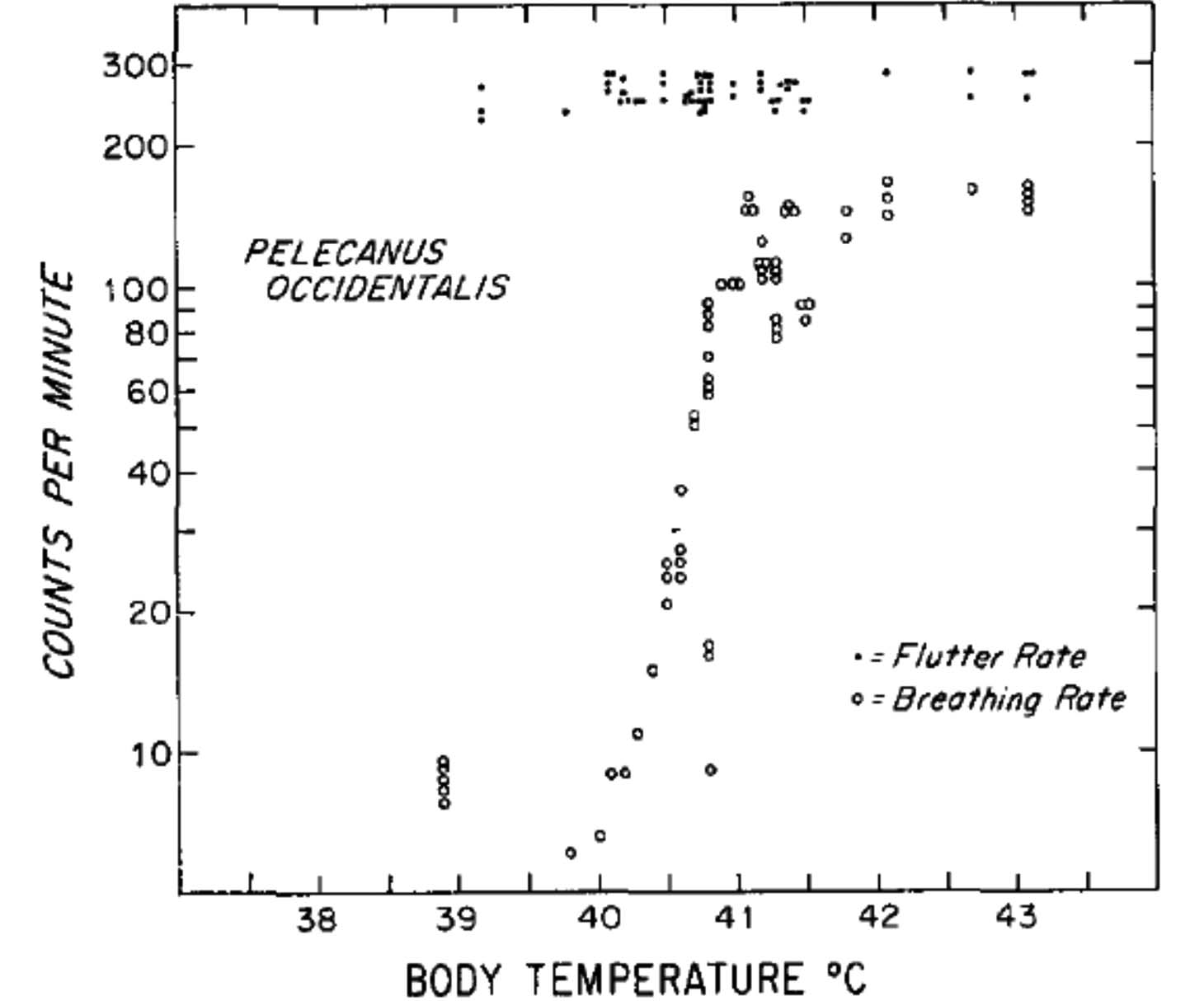
Most birds pant when subjected to heat stress, but heat transmission is achieved by evaporative cooling mechanisms from the respiratory tract by fluttering the gular area ( Figure 3 ). Cormorants, pelicans, owls and doves employ both panting and gular flutter to enhance evaporative cooling and the rates of flutter are relatively independent on heat load (George et al., Reference GEORGE, BARTHOLOME, ROBERT, LASIEWSKI EUGENE and CRAWFORD1968).
The relation of rates of gular flutter and breathing to body (Cloaca) temperature in a brown Pelican weighing 3.13 kg (collected from George et al., Reference GEORGE, BARTHOLOME, ROBERT, LASIEWSKI EUGENE and CRAWFORD1968).

Increased mortality rates in temperatures beyond 25°C especially in broilers have been observed (AI-Fataftah and Abu-Dieyeh, Reference AI-FATAFTAH and ABU-DIEYEH2007). High mortality might be due to inefficient evaporative cooling mechanisms which leads to accumulation of heat inside the body. The birds reared at high ambient temperatures were more heat tolerant than birds reared at low ambient temperatures (AI-Fataftah and Abu-Dieyeh, Reference AI-FATAFTAH and ABU-DIEYEH2007). The index of tolerance is the difference in the rectal temperature from the start and after an hour of exposure (2°C/h high temperature) or more reflects rapidly rising body temperature. Values of ≤ 0.5°C/h indicates effective heat tolerance (Sykes and Alfataftah, Reference SYKES and ALFATAFTAH1986). Superoxide anion production in the skeletal muscle mitochondria of meat-type chickens is another indicator of acute heat stress (Mujahid et al., Reference MUJAHID, YOSHIKI, AKIBA and TOYOMIZU2005). Heat stress increases oxygen radicals, possibly by the disruption of the electron transport assemblies of the membrane (Ando et al., Reference ANDO, KATAGIRI, YAMAMOTO, WAKAMATSU, KAWAHARA, ASANUMA, USUDA and SASAKI1997). Among all these estimations HSP and peroxides (ROS) will give better indication for determination of severity of stress.
Different approaches for alleviating thermal stress
Genetic approaches aid in reducing or altering the extent of plumage cover by taking advantages of a number of genes, such as late feathering (Galal and Younis, Reference GALAL and YOUNIS2006), frizzled (Mahrous et al., Reference MAHROUS, GALAL, FATHI and ZEIN EL-DEIN2003, Mahrous et al., Reference MAHROUS, GALAL, FATHI and ZEIN EL-DEIN2008; Nwachukwu et al., Reference NWACHUKWU, IBE and EJEKWU2006), scale-less (Somes and Johnson, Reference SOMES and JOHNSON1982) and naked neck (Mahrous et al., Reference MAHROUS, GALAL, FATHI and ZEIN EL-DEIN2003, Mahrous, Reference MAHROUS2008). The effect of heat stress is more pronounced in commercial broiler stocks and in breeds with high growth potential compared to slower-growing chickens (Cahaner and Leenstra, Reference CAHANER and LEENSTRA1992; Cahaner et al., Reference CAHANER, PINCHASOV and NIR1995; Yunis and Cahaner, Reference YUNIS and CAHANER1999). The genetic potential for rapid growth is not achieved under high temperature in fast-growing strains as they show lower heat tolerance, which causes a pronounced decrease in feed consumption (Deeb and Cahaner, Reference DEEB and CAHANER2002). There is a negative correlation between heat tolerance and growth rate in birds (Washburn et al., Reference WASHBURN, PEAVEY and RENWICK1980). Heat adaptation in broilers can be improved by applying selection under hot conditions (Mathur and Horst, Reference MATHUR and HORST1994).
Female breeders from various strains with similar growth performance and body weights, showed different thermal responses when exposed to a hot environment (30ºC and 70% RH) for 2 h (Gonet et al., Reference GONET, SANDERCOCK and MITCHELL2000). This influences the heat tolerance of their offspring. Heterophil/lymphocyte (H/L) ratio as an indicator of stress (Puvadolpirod and Thaxton, Reference PUVADOLPIROD and THAXTON2000). The pullets with H/L ratio of less than 0.59 at 16 weeks of age after exposure to 35ºC for six days were considered as resistant (R) to heat stress, whereas those over 0.60 were classed as sensitive (S) (Al-Murrani et al., Reference AL-MURRANI, KASSAB, Al-SAM and AL-ATHARI1997). The R pullets show significantly higher laying performance than that of S birds during heat exposure in the laying period (Al-Murrani et al., Reference AL-MURRANI, KASSAB, Al-SAM and AL-ATHARI1997). Hence, H/L ratio could be considered as a selection criterion for heat tolerance in laying hens.
Use of major genes
In broiler chickens the naked neck gene results in a relatively higher growth rate and meat yield than their fully feathered counterparts under normal temperature, and the effect is more pronounced at high temperature (Cahaner et al., Reference CAHANER, DEEB and GUTMAN1993). Naked neck chickens (Na/Na or Na/na), when compared to fully feathered broiler chickens (na/na), have higher body weight and feed efficiency, but lower body temperature (Patra et al., Reference PATRA, BAIS, PRASAD and SINGH2002). Birds selected for rapid growth have higher body temperature (Low heat tolerance) compared to slow growing birds, which have a greater tolerance to high temperature (Cahaner and Leenstra, Reference CAHANER and LEENSTRA1992). A reduction in 20% feather coverage around the neck allows the Na/Na or Na/na birds to dissipate a higher rate of heat through irradiation (Yahav et al.,1998) and reduced body temperature when ambient temperature was elevated from 24 to 32°C (Deeb and Cahaner,1999). Naked neck birds exhibited higher adaptability and heat tolerance to high ambient temperature (35°C) than other birds (Afnan and Gerken, Reference AFNAN and GERKEN2009).
For strains based on the frizzle (F) gene, the rachis of feather is curved due to presence of dominant frizzle gene (F) which allows more heat dissipation. The dwarf (dw) gene results in a reduction of 30-40% of adult body size and leads to speculation about the inherent heat tolerance of dw broiler breeders.
Naked neck and frizzle genes have pleiotropic effects on several important quantitative productive traits (Mahrous, Reference MAHROUS2008). Utilisation of naked neck and frizzle genes in high ambient temperatures plays an important role in maintaining production from layer lines (Thiruvenkadan et al., Reference THIRUVENKADAN, PANNEERSELVAM and PRABAKARAN2010; Rajkumar et al., Reference RAJKUMAR, REDDY, RAMA RAO, RADHIKA and SHANMUGAM2011; Mahrous and El-Dlebshany, Reference MAHROUS and EL-DLEBSHANY2011).
Nutritional interventions
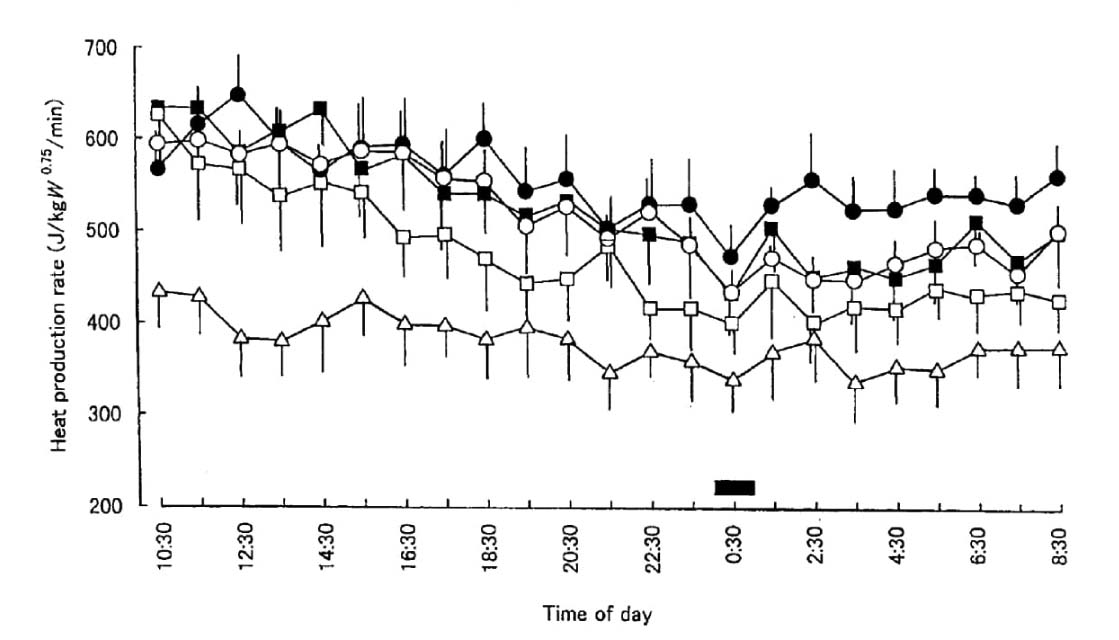
Nutritional strategies can be used to ameliorate heat stress. High temperatures lowers feed intake especially alongside increases in water intake to regulate the body temperature, hence meeting energy requirements with less feed intake is important ( Figure 4 ). Feed intake will be reduced by 1.2% for every 1°C rise in the temperature range of 22-32°C and 5% for 1°C rise in the temperature range of 32-38°C. Energy levels from reduced feed intake can be improved by supplementation with 5% fat.
Pattern of circadian variation in HP rates of growing broilers given access to feed (•),75% of ad lib intake (0) , 50% or intake(•), 25% of ad lib intake (o) and no feed at all 0%(6). The black horizontal bar represents the dark period and vertical bars are SEM of 5 birds (Koh and MacLeod, Reference KOH and MACLEOD1999, ©British Poultry Science Ltd, reprinted by permission of Taylor & Francis Ltd on behalf of British Poultry Science Ltd).

Changes in feed management, such as adding water to the feed, are well known for their positive effects on performance of birds. Wet feeding improves feed intake, weight gain and feed conversion ratio, as well as weight of the gastro intestinal tract (GIT) compared to dry feed in normal temperature (Moritz et al., Reference MORITZ, BEYER, WILSON and CRAMER2001; Shariatmadari and Forbes, Reference SHARIATMADARI and FORBES2005; Khoa, Reference KHOA2007). Adding fat at levels of 5% to the diet for birds kept at 31°C improved feed intake in laying hens by about 17%, whereas at 10-18°C it improved feed intake by only 4.5% (Daghir, Reference DAGHIR2008). Compared to either protein or carbohydrates, there is a lower heat increment during fat metabolism (Musharaf and Latshaw, Reference MUSHARAF and LATSHAW1999). Better feed efficiency was observed in male growers housed at ambient temperatures ranging from 21.1-35°C and fed diets containing either 12.7 or 13.4 MJ ME/kg with five different levels of CP and amino acids (Cheng et al., Reference CHENG, HAMRE and COON1997). High level energy densities fed under hot conditions can reduce the heat load (Balnave and Brake, Reference BALNAVE and BRAKE2005). High fat diets (5%) reduced the detrimental effect of heat stress in broilers raised under conditions of 29-36°C (Ghazalah et al., Reference GHAZALAH, ABD-ELSAMEE and ALI2008).
Higher protein level with unbalanced amino acids produce more incremental heat in the body. Arg: Lys ratio, Met sources and time of exposure to heat stress might alter the protein utilisation in hyperthermic birds (Gonzalez-Esquerra and Leeson, 2006). Feeding low protein diets to broilers partially ameliorates the negative effects of high temperature (Cheng et al., Reference CHENG, HAMRE and COON1997). Decrease in protein sysnthesis and increased breakdown was observed under heat stress conditions (Lin et al., Reference LIN, JIAO, BUYSE and DECUYPERE2006), however length of exposure to heat stress may affect the response of birds to dietary protein (Gonzalez-Esquerra and Leeson, 2005).
Other nutritional management strategies, such as dietary supplementation of glutamine at 0·5g/kg and gamma-aminobutyric acid at 100mg/kg in broiler diets helped in preventing problems with raw breast meat colour, pH, composition and water-holding capacity, chemical composition and quality (Dai et al., Reference DAI, GAO, XU, ZHANG, SONG and ZHOU2012) in broilers. Supplementation of either mono oligosaccharides (0.5%) or lactobacillus-based probiotics (0.1%) alone or in combination may also be helpful (Sohail et al., Reference SOHAIL, IJAZ, YOUSAF, ASHRAF, ZANEB, ALEEM and REHMAN2012). Dietary supplementation with vitamin C at 250 mg/kg feed and in combination with α-lipoic acid at 250 mg/kg feed had no influence on blood gas exchange parameters and acid-base equilibrium but partly corrected metabolic responses (Imik et al., Reference IMIK, KAYNAR, OZKANLAR, GUMUS, POLAT and OZKANLAR2013). Supplementation of 250 mg of vitamin E was observed useful as a protective measure in heat stress conditions (Sahin et al., Reference SAHIN, SAHIN, ONDERCT, YARALIOGLU and KUCUK2001).
Ammonium chloride, potassium chloride and /or sodium bicarbonate included in the diet improved the performance of the birds by improving the water and feed intake (Ahmad and Sarwar, Reference AHMAD and SARWAR2006) and to alleviate alkalosis, with a dietary electrolyte balance (DEB) of 250 mEq/kg recommonded (Ahmad and Sarwar, Reference AHMAD and SARWAR2006) for good performance in layers under heat stress conditions. Finisher broilers requires addition of sodium (0.20-0.25%) and chloride (0.30%) in the diet when temperatures range from 32-40°C for optimum perfomance (Mushtaq et al., Reference MUSHTAQ, MIRZA, ATHAR, HOOGE, AHMAD, AHAMD, MUSHTAQ and NOREEN2007). Fortification of diets with vitamin A (1.2 to 1.5 times), vitamin E, Zn, vitamin D (1.2 to 1.5 times) vitamin C (200 to 600kmg/Kg diet) may decreases stress levels in birds.
Shelter design
The building site, orientation, insulation, roof overhang, and equipment design all influence the temperature inside the poultry house. Air movement is particularly important in houses that are ventilated by natural air currents. Particularly curtain-sided houses, should be positioned so that the roof line runs from east to west. Poultry house ventilation systems have a number of components. These include curtains, fans, fogging nozzles, evaporative cooling pads, timers, static pressure controllers, and thermostats.
Curtain-sided houses relay extensively on natural air movement. Circulation fans should be spaced and positioned to maintain air movement between fans and to direct their flow in a way that will increase the turbulent air movement around the birds. Spacing of the fans depends on their size, but they are generally spaced about 25 to 30 feet apart in curtain layer houses and 40 to 50 feet apart in broiler houses.
Foggers reduces the air temperature in the house on hot days especially during midday when humidity levels are lowest and temperature is highest. The injected water from the foggers is vaporised by observing the heat from the air and lowers the temperature. The appropriate water flow rate and timer settings depend on the method of ventilation, fan rate, bird size, and outdoor conditions. Fogging systems in naturally ventilated house are typically designed for a water flow rate of 50-100 gallons/hour.
Environmentally controlled houses used forced ventilation systems and all air movement is produced by fans in the building walls. Power ventilation houses can provide good, uniform airflow patterns under hot summer conditions. Tunnel ventilation involves moving air along the building axis from inlets to exhaust fans, providing high airflow velocities. This rapid air movement increases convective heat loss, reducing the effective temperature experienced by the birds. Most of the benefits of tunnel ventilation occur at an air velocity of 350 feet/minute.
Evaporative cooling with power ventilation uses heat from the air to vaporise water, increasing humidity but lowering air temperatures. Evaporative cooling pads operate on the same cooling principle as foggers, except that the air is cooled when it passes through the wet pads as it enters the house. This method avoids the problem of wet litter sometimes encountered with foggers, allowing evaporative cooling pads to be used on a continuous basis. On a hot, dry day these pads evaporate water at a rate up to 100 gallons per minute per hundred square feet of pad surface area. Using tunnel ventilation, they can evaporate up to 200 gallons per minute per hundred square feet of pad on a hot, dry day.
Other environmental strategies
Intermittent light has a favourable effect that is related to lower heat production during both the light and dark period. Broiler chickens under a 1L:3D light schedule produce less heat during early and later growing phases, except for the compensatory growth period around 35 days of age (Buyse et al., Reference BUYSE, DECUYPERE and MICHELS1994). Relative humidity of the surrounding environment influences the evaporative cooling mechanism in birds, as evaporative heat loss increases with temperature and decreases with increasing humidity. The effect of humidity on thermal regulation responses depends on age and air temperature (Lin et al., Reference LIN, ZHANG, JIAO, ZHAO, SUI, GU, ZHANG, BUYSE and DECUPERE2005a;b) with humidity above 60% impairing heat transmission from the body core to periphery at 35°C, but facilitating this at 30°C in broiler chickens at four weeks of age (Lin et al., Reference LIN, ZHANG, DU, GU, ZHANG, BUYSE and DECUPERE2005b).
Other interventions
Early heat conditioning (EHC) by exposing the birds to high temperature (36°C) for 24 h at 3-5 days of age can enhance heat resistance, even at later growth stage prior to marketing (Zhou et al., Reference ZHOU, FUJITA, ITO and YAMAMOTO1997). EHC chicken have a lower body temperature under normal or high ambient conditions (De Basilio et al., Reference DE BASILIO, VILARINO, YAHAV and PICARD2001; Reference DE BASILIO, REQUENA, LEON, VILARINO and PICARD2003), suggesting changed metabolic status. The suppressed expression of uncoupled protein (UCP) in skeletal muscles may be an important role in the acquisition of heat tolerance of EHC chickens (Taouis et al., Reference TAOUIS, DE BASILIO, MIGNON-GRASTEAU, CROCHET, BOUCHOT, BIGOT, COLLIN and PICARD2006).
Conclusions
The effect of heat stress on poultry depends upon the species, sex, age and degree of stress. The change in acid-base balance depends on the effects of stressors on the condition and rate of metabolism, respiration, and the mechanism of H+ equivalent ion exchange. Designing the poultry houses, including ventilation, sprinkling, shading, is important in reducing the effects of heat stress. Developing heat tolerance breeds suitable for certain regions is important. Nutritional manipulation i.e. formulation according to the metabolic condition of the birds as well as inclusion of feed additives, like antioxidants, vitamins, minerals and probiotics, prebiotics, essential oils, organic acids and water supplementation with electrolytes is essential for health and performance. More research is needed into controlling heat stress, especially in developing countries where house design is limited. Least cost environmentally controlled house design and elucidating basic mechanisms associated to the negative effects of heat stress in poultry are needed. Optimising energy and protein needed for meat-type chickens (both native and exotic birds) under hot conditions has not been studied in great detail, and requires more attention.