An early weaning strategy has been commonly adopted by pig farmers to improve the productivity of sows in the modern pig industry(Reference Bach Knudsen, Nørskov and Bolvig1). However, this practice imposes significant physiological stress on piglets, marked by abrupt dietary transitions and maternal separation. Such stressors frequently trigger intestinal dysfunction, manifesting as diarrhoea (30–50 % incidence), growth retardation and elevated morbidity (15–20 % mortality), resulting in substantial economic losses(Reference Zhou, Liang and Xiong2–Reference Tang, Lan and Zhou4).
Post-weaning diarrhoea is a multifactorial gastrointestinal disease that is mainly attributed to intestinal barrier dysfunction(Reference Wang, Zeng and Tan5,Reference Ma, Zhang and Xu6) . The intestinal barrier generally consists of the mechanical, mucosal, immune and microbial barriers, which effectively maintain intestinal homeostasis by cooperating with each other(Reference Gieryńska, Szulc-Dąbrowska and Struzik7). Notably, the microbial barrier (intestinal microbiota) exerts protective effects through nutrient competition, pathogen exclusion and antimicrobial metabolite production, while simultaneously modulating immune responses(Reference Iacob, Iacob and Luminos8). Weaning-induced gut microbiota dysbiosis in piglets disrupts this protective mechanism, predisposing to intestinal infections and diarrheal pathogenesis, a phenomenon paralleled in human inflammatory bowel disorders(Reference Wang, Zeng and Tan5,Reference Ma, Zhang and Xu6,Reference Carding, Verbeke and Vipond9) . This mechanistic understanding has driven intensive investigation into nutritional interventions targeting microbial improvement in weaned piglets, with dietary fibre emerging as a research priority for diarrhoea mitigation. Dietary fibre has been recognised as the main energy source for intestinal microbial fermentation(Reference Holscher10), thus affecting the intestinal bacterial composition and microbial metabolic activity. Adding dietary fibre to the diet has been shown to benefit the intestinal morphology and intestinal barrier integrity, leading to reduced incidence of diarrhoea in weaning piglets(Reference Chen, Chen and Tian11,Reference Sun, Cui and Su12) . SCFA are the main metabolites produced by microbial fermentation of dietary fibre, which is the main way for dietary fibre to offer benefits to the host’s intestinal health(Reference Ye, Shah and Li13). Accumulating evidence supports the contention that dietary fibre alleviates intestinal disorders by producing SCFA, which are involved in the activation of epithelial cell proliferation and differentiation, the maintenance of mucosal integrity and the attenuation of inflammation(Reference Ma, Piao and Mahfuz14).
Notably, different dietary fibres showed different effects on microbial composition and diversity, and thus, the therapeutic effect on intestinal diseases depends on the specific type of dietary fibres(Reference Holscher10). Arabinoxylans (AX) are one of the most abundant hemicelluloses found in the cell walls of cereal plants. Due to their diverse biological activities, such as prebiotic and immunomodulatory properties, antioxidant functions and potential therapeutic applications in intestinal diseases, AX have become a focal point in scientific research(Reference Cui, Li and Que15). The colonic metabolism of AX is mediated through microbiota-derived enzymatic activity, primarily involving xylanase and α-L-arabinofuranosidase, which catalyse AX hydrolysis to generate xylooligosaccharides. These intermediates are subsequently metabolised by gut microbiota into bioactive compounds, including SCFA and ferulic acid(Reference Neyrinck, Possemiers and Druart16,Reference Adebowale, Yao and Oso17) . Accumulating evidence substantiates that dietary AX enhance intestinal barrier integrity by modulating gut microbial composition and upregulating the mRNA expression of tight junction–related proteins, such as claudin-1 and occludin(Reference Li, Sun and Hu18). The experimental study further demonstrated that AX can reduce inflammatory mediators (TNF-α, IL-1β and IL-6) and oxidative stress levels (malondialdehyde) and regulate the intestinal microbiota in the mouse colitis model, thereby alleviating the occurrence of colonic inflammation and diarrhoea(Reference Chudan, Ishibashi and Nishikawa19,Reference Huang, Yu and Zhu20) . Given these mechanistic insights, recent investigations have systematically characterised AX’ therapeutic potential against post-weaning diarrhoea in piglets, revealing significant improvements in intestinal morphology, digestive and absorptive functions, barrier function and the composition of the microbiota(Reference Salden, Troost and Wilms21–Reference Zhang, Yang and Zhao23).
Therefore, this review summarises the effects of AX on piglets’ gut health and microbiome and elucidates the mechanisms by which AX regulate gut health in piglets, which aims to offer insights into the potential application of AX as a dietary intervention measure for improving gut health in piglets.
Literature search strategy
The search was mainly conducted through Google Scholar and secondarily through searches in databases such as PubMed, Web of Science and Scopus for publications from 2015 to 2025. The search terms included combinations of ‘arabinoxylan’ or ‘AX’ or ‘arabinoxylan-oligosaccharide’ or ‘AXOS’ and ‘gut health’ or ‘intestinal barrier function’ or ‘Intestinal immune’ or ‘gut microbiota’ or ‘fermentation’ or ‘short-chain fatty acids’ or ‘SCFA’ and ‘pig’ or ‘piglets’ or ‘young pigs’, as well as related terms regarding the sources and structure of AX (such as ‘sources’, ‘Structure’, ‘barley’, ‘sorghum’, ‘bagasse’, ‘fermented mash’, ‘Degree of branching’, ‘viscosity’). Additional articles were retrieved from the reference lists of selected papers and relevant reviews. Only peer-reviewed articles published in English were included. The selection basis of the research was its correlation with AX and the intestinal health of piglets.
Chemical composition and structural diversity of arabinoxylans
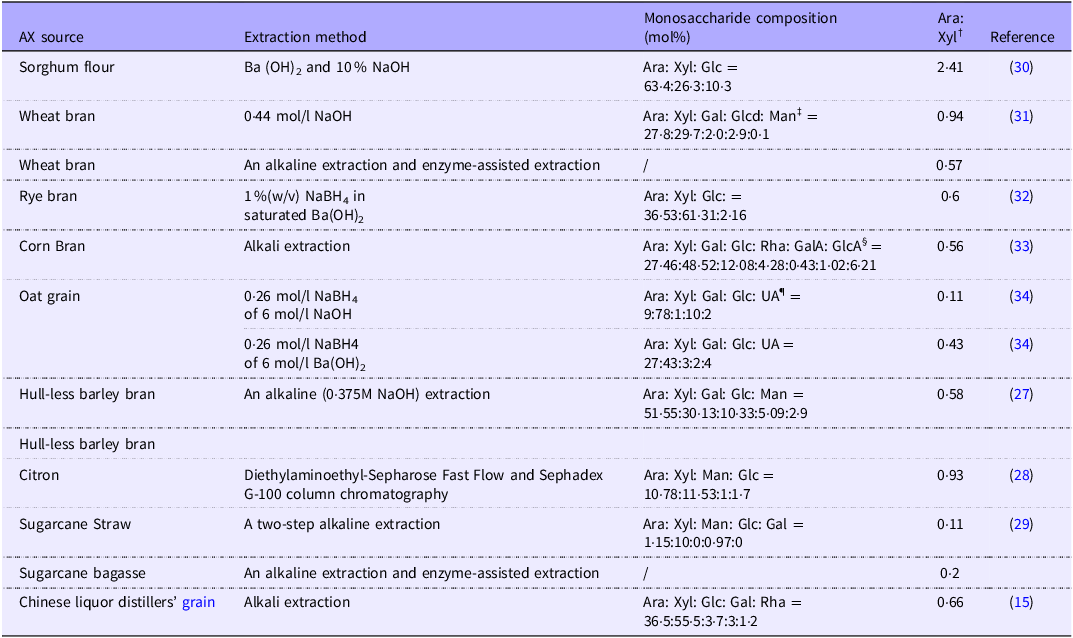
The main cereals, including wheat, rye, oats, maize, barley and sorghum, are the traditional raw ingredient sources for the extraction of AX(Reference Comino, Collins and Lahnstein24). Among all the grain-derived AX, the wheat AX and maize AX are the most predominant types used in the food and feed industry(Reference Chen, Mense and Brewer25,Reference Boukid26) . In recent years, novel raw ingredients such as hull-less barley bran, sugarcane straw, citron and distillers’ grains have become sustainable and promising sources for extracting AX(Reference Cui, Li and Que15,Reference Guo, Xu and Wu27–Reference Costa, Pereira and Pedrosa29) (Table 1).
Chemical composition of arabinoxylans from various sources

† Ara:Xyl, the molar ratio of arabinose:xylose.
‡ Ara is arabinose; Xyl is xylose; Gal is galactose; Glc is glucose; Man is mannose.
§ Rha is rhamnose; GalA is galacturonic acid; GlcA is glucuronide.
¶ UA is glyoxylate.
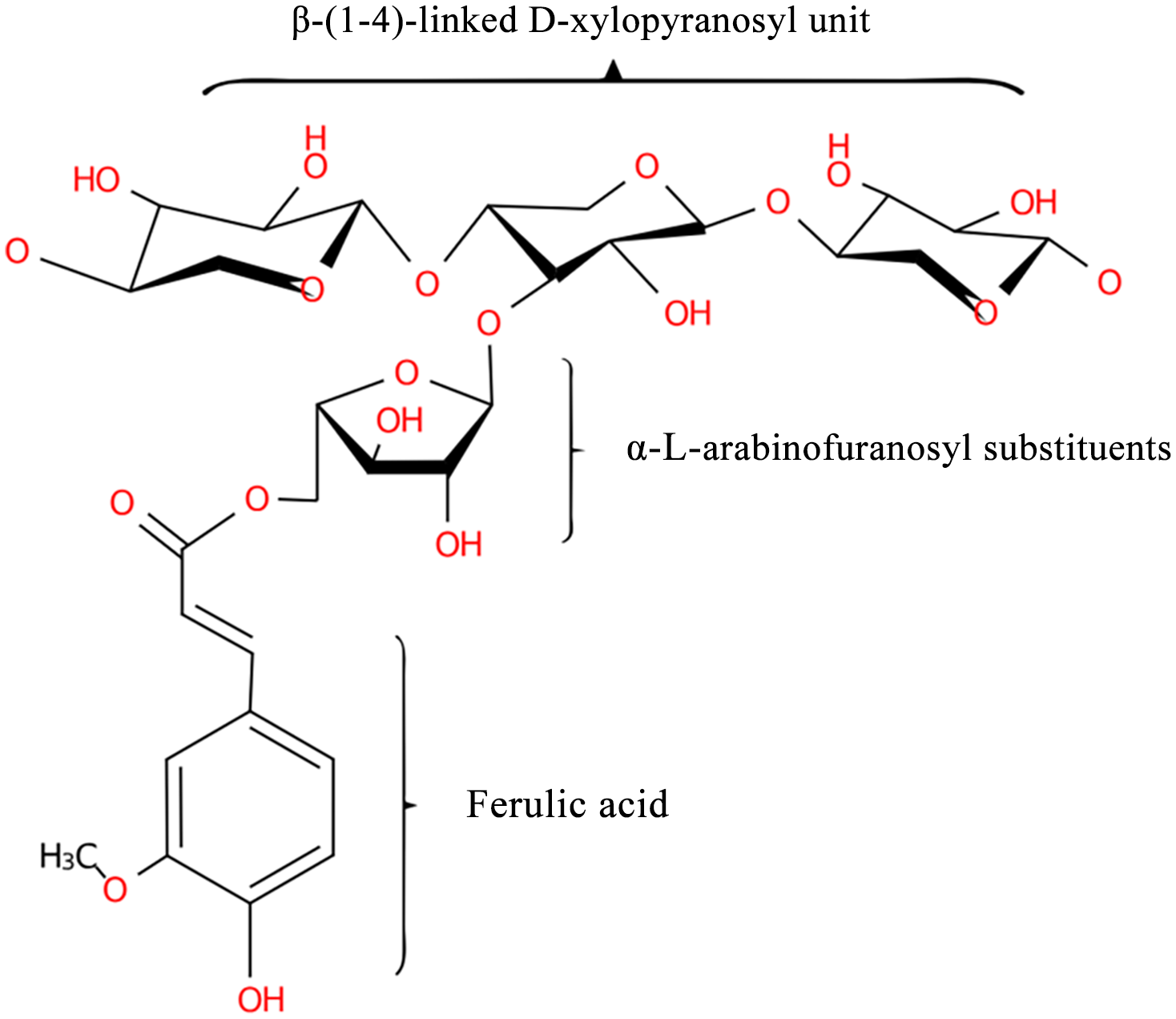
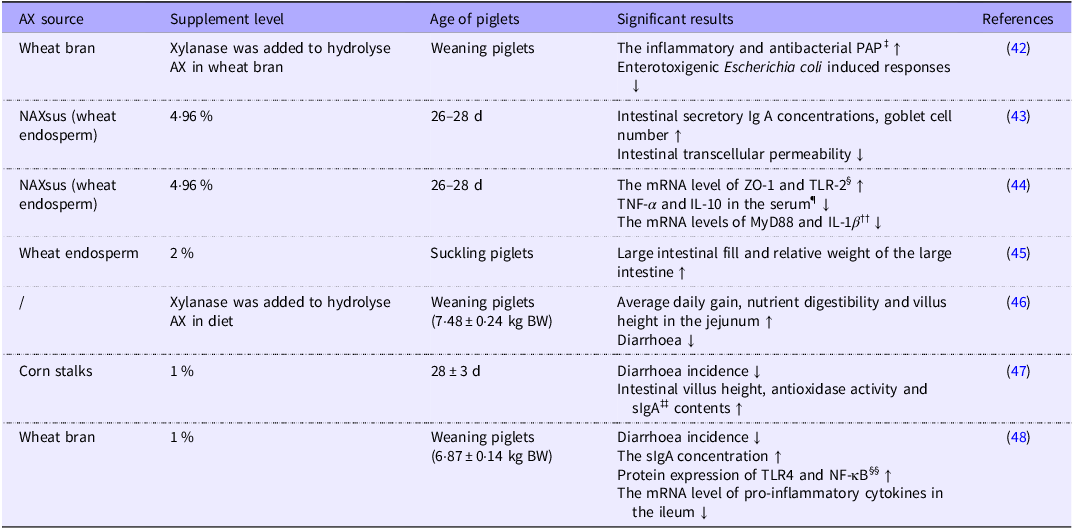
The AX present in most plant-derived ingredients consist of arabinose, xylose, glucose and galactose, among which xylose accounts for the largest proportion of AX, followed by arabinose, with galactose and glucose accounting for a relatively small proportion. AX’ main structure contains a chain of linear (1,4)-β-D-xylopyranoside units, which can be substituted with α-L-arabinofuranosyl units through α-(1,2) and/or α-(1,3) glycosidic linkages(Reference Wang, Bai and Fan35) (Fig. 1). Consequently, four different substitution patterns of xylopyranosyl, including unsubstituted, monosubstituted at O-2, monosubstituted at O-3 or disubstituted at O-2 and O-3 exist in the natural AX sources(Reference Chen, Li and Fu36). It is reported that AX extracted from different raw ingredient sources exhibit distinct substitution patterns of the xylopyranosyl backbone, which decide the ratio of arabinose:xylose (Ara:Xyl) in individual AX molecule(Reference Nandini and Salimath30). The pattern and extent of substitution patterns on the xylopyranosyl backbone of AX varied by plant origin and plant tissue location, with Ara:Xyl ranging from 0·11 to 2·41 (Table 1). As shown in Table 1, the Ara:Xyl of shell-less barley (Ara:Xyl: 0·11) is the lowest, that of sorghum is the highest (Ara:Xyl: 2·41) and the next is wheat bran (Ara:Xyl: 0·94). Similarly, bagasse has been reported to contain an AX content comparable with that of wheat bran, but with markedly lower arabinose substitution on the xylan backbone (the Ara:Xyl is around 0·2, compared with 0·6 for wheat bran)(Reference Campbell, Mustač and Alyassin37). A lower Ara:Xyl ratio indicates reduced AX branching, which, according to Kale et al., also influences AX viscosity(Reference Kale, Pai and Hamaker38). Higher viscosity can negatively affect nutrient digestibility in piglets(Reference Lund, Gee and Brown39), whereas a lower Ara:Xyl ratio facilitates microbial degradation(Reference Demuth, Edwards and Bircher40,Reference Wu, Zhou and Chen41) . To date, no studies have investigated the application of AX from these alternative sources in piglets, with existing experimental work focusing predominantly on wheat bran-derived AX (Table 2). Given these structural and functional differences, exploring AX from underutilised sources such as hull-less barley or bagasse may offer novel opportunities to enhance fermentability, modulate gut microbiota and improve gut health in piglets.
The main structure of arabinoxylans.

Regulation of AX† on intestinal health of piglets

† AX, arabinoxylans.
‡ PAP, pancreatitis-associated protein.
§ ZO-1, zonula occludens-1; TLR-2, toll-like receptor 2.
¶ TNF-α, tumour necrosis factor-α; IL-10, interleukin 10.
†† MyD88, myeloid differentiation factor 88; IL-1β, interleukin 1β.
‡‡ sIgA, secretory Ig A.
§§ TLR4, toll-like receptor 4; NF-κB, nuclear factor kappa B.
Regulation of arabinoxylans on intestinal health of piglets
AX are dietary bioactive polysaccharides with immunomodulatory, anti-inflammatory, prebiotic and metabolic regulatory functions, particularly in glucose homeostasis, lipid metabolism and microbial metabolism(Reference Gunness, Williams and Gerrits49–Reference Zhang, He and Zhou53). Their dual role in energy metabolism positions them as promising functional food components for livestock nutrition, with potential applications. As piglets undergo the stress of weaning, their gastrointestinal systems are highly susceptible to disturbances, leading to issues such as diarrhoea, reduced appetite and impaired nutrient absorption(Reference Gresse, Chaucheyras-Durand and Fleury54). As shown in Table 2, AX improve intestinal morphology, enhance barrier integrity and modulate immune responses, thereby supporting gut health and promoting overall performance(Reference Salden, Troost and Wilms21–Reference Zhang, Yang and Zhao23). This section summarised recent studies on how AX influence intestinal morphology, barrier function and immunity in weaned piglets, ultimately promoting better overall health and performance.
Effect of arabinoxylans on intestinal morphology and digestion of piglets
The integrity of the intestinal structure is essential for effective nutrient digestion and absorption in piglets, primarily reflected in the morphology of the intestinal epithelium, including villus height, crypt depth and their ratio(Reference Tang and Xiong55). A reduced villus height:crypt depth ratio typically indicates impaired mucosal function, which can hinder nutrient digestion and absorption. In contrast, an increased ratio is associated with improved mucosal function and enhanced nutrient absorption(Reference Qin, Ji and Wang56,Reference Tang, Xiong and Fang57) . Recent studies have shown that adding 1 % AX to the diet of weaned piglets increases ileal villus height and improves the digestibility of neutral detergent fiber(Reference Sun, Li and Sun47). Additionally, wheat bran rich in AX (64–69 %) significantly enhanced villus height and villus:crypt depth ratio in piglets compared with maize and pea fibres, boosting the activity of digestive enzymes like trypsin and lipase(Reference Chen, Mao and Yin58). However, a study confirmed that the presence of AX reduced the digestibility of nutrients in pig diets and that the addition of xylanase and arabinofuranosidase improved the degradation of AX and the overall digestibility of nutrients(Reference Sun, Cozannet and Ma59). Similarly, the viscosity of wheat AX exerted an anti-nutritional effect by reducing protein digestibility in pigs, increasing the quality of chyme and enhancing water-holding capacity(Reference Zhang, Williams and Mikkelsen60). Reduced digestibility can occur from impeded digestion or absorption or from increased endogenous losses. Through its viscous nature, AX may decrease nutrient digestibility by reducing diffusion of digestive enzymes and nutrients and reducing the rate of diffusion of nutrients from the digesta to the absorptive membrane(Reference Lund, Gee and Brown39). The evidence has indicated that while viscosity is certainly a factor in AX’ anti-nutritional effects (like reduced nutrient absorption), it’s not the only mechanism(Reference Izydorczyk and Dexter61,Reference Shelat, Vilaplana and Nicholson62) . By adding enzymes (such as xylanase), the digestibility of nutrients in the digestive tract can be improved. When xylanase was added to hydrolyse AX in the piglet diet, the villus height and nutrient digestibility in the jejunum were both improved compared with the control group (basic diet without xylanase), and daily gain increased by 12 %(Reference Boontiam, Phaenghairee and Van Hoeck46). Previous studies have shown that the partial hydrolysis of AX by xylanase could produce oligosaccharides (e.g. AX-oligosaccharides and xylooligosaccharides) that are more readily fermented by beneficial bacteria, suggesting that the enzymatically degradation of AX would enhance their prebiotic effect in the hindgut(Reference Pedersen, Dalsgaard and Arent63–Reference Rudjito, Jimenez-Quero and Munoz65). Low Ara:Xyl ratios facilitate bacterial enzymatic access, accelerating fermentation and SCFA production(Reference Demuth, Edwards and Bircher40,Reference Wu, Zhou and Chen41) . Enzymes can enhance fermentation and increase the production of SCFA by reducing molecular weight(Reference Bhattacharya, Ruthes and Vilaplana64,Reference Petry, Patience and Huntley66) . There are even studies reporting that the combination of endo-xylanase, arabinofuranosidase and feruloyl esterase had a superior efficacy relative to endo-xylanase alone in improving the application of cereal bran in piglet diets(Reference Wang, Zheng and Zhang67). Enzymatic modification of AX has been shown to promote the growth and bioavailability of beneficial gut microbiota(Reference Chudan, Ishibashi and Nishikawa19,Reference Njoku, Mottawea and Hassan68) . Therefore, xylanase does not eliminate its prebiotic effect. But over-hydrolysis degrades AX-oligosaccharides into non-prebiotic xylose; optimal enzyme dosage is critical.
Overall, AX could improve intestinal morphology by increasing the villus:crypt depth ratio, which expands the intestinal absorption surface area. AX have a potential positive effect on the intestinal structure and nutrient absorption in piglets, but the complex impact on digestibility should also be considered. The use of xylanase and arabinofuranosidase can improve the degradation of AX and enhance nutrient digestibility, without affecting their prebiotic effect.
Effect of arabinoxylans on intestinal barrier of piglets
The intestine is not only an important organ responsible for digestion, absorption and metabolism of dietary nutrients but also acts as a defense barrier against pathogens from the external environment(Reference Gao, Yu and Yu69). The gastrointestinal barrier is a complex system that encompasses the mucosal layer, the epithelial cells interconnected by tight junction proteins and the non-epithelial mucosal cells(Reference Salden, Troost and Wilms21). Tight junction proteins, such as zonula occludens-1, claudin and occludin, are the components that maintain the integrity of the mechanical barrier, playing a critical role in regulating intestinal permeability(Reference Tang, Xiong and Fang57,Reference Tang, Liu and Yang70,Reference Fasano71) . Disruption of this barrier can lead to increased intestinal permeability, which allows harmful substances to enter the bloodstream(Reference Tang, Xiong and Fang57). Studies have shown that 2·55 % AX consumption could reduce intestinal permeability of weaned piglets, indicated by reduced serum diamine oxidase level and lower horseradish peroxidase flux in both the small intestine and colon, which might be attributed to enhanced mRNA expression of zonula occludens-1 and chloride channel-related proteins in the small intestine(Reference Chen, Wang and Degroote43,Reference Chen, Chen and Qin44) . Moreover, the physical barrier is further protected by the mucus layer, which is secreted by goblet cells(Reference Gustafsson and Johansson72). Studies have reported that 2·55 % AX supplementation increases the number of goblet cells per crypt in the mid-colon of weaned piglets compared with the control group, highlighting its role in enhancing mucosal barrier protection(Reference Chen, Wang and Degroote43,Reference Weiss and Hennet73) . As an oligosaccharide after AX hydrolysis, 0·05 % xylooligosaccharides have been found to increase goblet cell number and density in weaned piglets, which also increases mucin secretion and protein barrier factors(Reference Chen, Xie and Zhong74,Reference Tang, Chen and Deng75) . Similarly, AX hydrolysates alleviated Caco-2 cell barrier damage by upregulating the transepithelial electrical resistance and increasing the protein expression of claudin-1.(Reference Li, Jia and Liu76). Accordingly, AX increase the number of goblet cells and enhance the function of the mucus secretion, thereby avoiding the exposure of epithelial cells to various hazards. In summary, AX enhance the expression of tight junction proteins such as zonula occludens-1 and claudin, as well as mucus secretion, which helps prevent the penetration of harmful substances (such as pathogens, toxins and xenobiotics) and promotes the overall intestinal health of piglets.
Effect of arabinoxylans on intestinal immunity of piglets
This section reviews the impact of AX on the immune system, inflammatory markers and gut health, highlighting their potential to reduce diarrhoea and support recovery during the critical post-weaning period. AX exhibit broad immunomodulatory activity across different species. In tumour-bearing mice, AX significantly inhibited transplanted tumour growth by enhancing the phagocytic activity of natural killer cells and macrophages and increasing IL-2 production(Reference Cao, Liu and Qian77). Transcriptomic analysis by Zhang et al. (Reference Zhang, He and Zhou53) revealed that AX upregulated immune-related genes such as IL-1β and IL-6. Additionally, studies in immunosuppressed mice demonstrated improvements in thymus and spleen indices, alleviation of spleen damage and overall enhancement of immune function(Reference Zhang, He and He78). These findings consistently highlight that AX promote the activation and proliferation of immune cells and regulate cytokine secretion, thereby strengthening host defences and maintaining immune balance. Building on these results in mice, studies in piglets have shown that AX exert similar but more context-specific effects during the critical post-weaning period, when stress commonly induces immune dysregulation, intestinal inflammation and diarrhoea.
Previous studies have indicated that the incorporation of 1 % AX into the diet significantly decreased ileal and colonic IL-6 levels while markedly increasing colonic secretory Ig A (sIgA) and IL-10 concentrations in weaned piglets(Reference Sun, Li and Sun47). Similarly, dietary supplementation of 1 % AX has been shown to decrease concentrations of pro-inflammatory cytokines IL-6 and IL-12, while increasing contents of sIgA and anti-inflammatory cytokine IL-10 in the ileal mucosa of piglets(Reference Huang, Sun and Zhang48). Furthermore, 1 % AX also independently enhance immune responses, particularly by upregulating pancreatic-associated protein in weaned piglets, a marker for inflammation and antibacterial activity(Reference Niewold, Schroyen and Geens42). Dietary supplementation with 2·55 % AX significantly downregulated the expression of pro-inflammatory factors (TNF-α, IL-1β, IL-6) and genes associated with the TLR/MyD88/NF-κB signalling pathway (the myeloid differentiation factor 88 (MyD88) and the toll-like receptor (TLR)-2)(Reference Chen, Chen and Qin44). The NF-κB signalling pathway is generally considered a key target for coordinating the expression of pro-inflammatory cytokines and is involved in regulating both innate and adaptive immune responses(Reference Hinz and Scheidereit79). These findings suggest that AX can effectively enhance immune function and reduce inflammation in piglets, potentially improving their overall health during the post-weaning period. The most recent studies have shown that dietary supplementation with 1 % AX effectively increased weight gain and reduced diarrhoea rates in piglets(Reference Sun, Li and Sun47,Reference Huang, Sun and Zhang48) , as demonstrated by improved intestinal morphology and immune barrier function. Therefore, AX can effectively reduce diarrhoea rates of piglets during the post-weaning period by improving intestinal morphology, enhancing barrier function and regulating immune responses.
Effect of arabinoxylans on gut microbiota and metabolites of piglets
As fermentable substrates in the colonic ecosystem, dietary fibres selectively promote the proliferation of beneficial microbiota while inducing structural remodelling of microbial communities and stimulating SCFA production(Reference Requena, Martínez-Cuesta and Peláez80,Reference Broekaert, Courtin and Verbeke81) . As shown in Fig. 2, there are a large number of microorganisms between the ileum and cecum, but only specific bacterial strains possess the enzymatic machinery required for AX degradation, including endo-1,4-β-xylanase, which cleaves β-1,4 glycosidic bonds in the xylan backbone to produce xylooligosaccharides, followed by α-L-arabinofuranosidases and β-xylosidase, which further break down the structure(Reference Bai, Zhou and Li82–Reference Whistler and Masak86). These enzymes hydrolyse α-1,2 and α-1,3 bonds to release arabinose residues, while esterases such as feruloyl esterases release ferulic acid, enhancing the degradation process (Fig. 2)(Reference Kormelink and Voragen87). For example, Bifidobacterium adolescentis expresses arabinofuranosidases (AbfA and AbfB) that specifically remove arabinose from mono- and disubstituted xylose residues(Reference Lagaert, Pollet and Delcour88). Similarly, Bacteroides species utilise extracellular endoxylanases to degrade xylan, supported by a diverse glycoside hydrolase repertoire(Reference Zhang, Chekan and Dodd89,Reference Ejby, Fredslund and Vujicic-Zagar90) . These coordinated enzymatic activities enable AX to shape microbial communities and generate metabolites like SCFA and ferulic acid, collectively supporting gut health. Extensive preclinical studies utilising rodent models have consistently demonstrated that AX supplementation significantly enhances the proliferation of beneficial microbial taxa, including Bifidobacterium spp. and Lactobacillus spp., concomitant with elevated SCFA concentrations in the gastrointestinal tract(Reference Chudan, Ishibashi and Nishikawa19,Reference Nielsen, Lærke and Theil91,Reference Nguyen, Deehan and Zhang92) . The underlying mechanisms of AX-mediated SCFA production have been elucidated through studies of microbial cross-feeding dynamics, which involve complex metabolic interactions and nutrient exchange between diverse microbial species or strains(Reference Germerodt, Bohl and Lück93).
Degradation of arabinoxylans by bacteria. Ara, arabinose; Xyl, xylose; FA, ferulic acid.

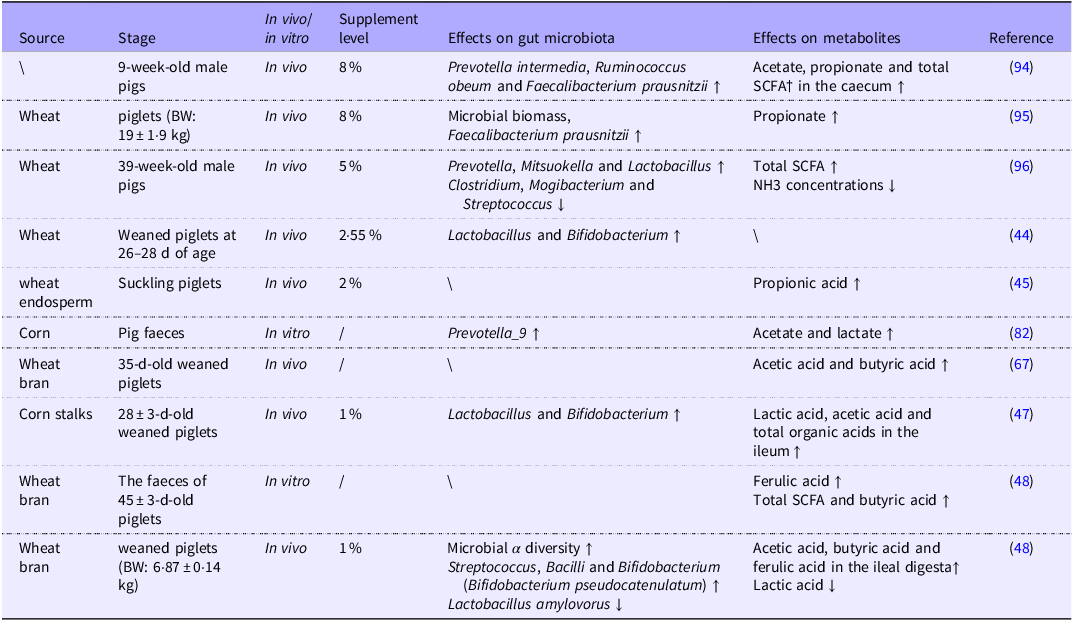
As shown in Table 3, emerging evidence suggests that dietary supplementation with AX can modulate gut microbial ecology and enhance the production of microbial metabolites such as SCFA in piglets. During the weaning stage of piglets, the stage induces pathophysiological alterations in intestinal structure and barrier function, coupled with significant dysbiosis of the gut microbiota, ultimately precipitating post-weaning diarrhoea(Reference Gresse, Chaucheyras-Durand and Fleury54,Reference Pluske97) . Gorham et al. reported that adding 5 % AX to piglet diets resulted in an increase in the abundances of certain genera such as Prevotella, Mitsuokella and Lactobacillus, while decreasing the abundances of genera such as Clostridium, Mogibacterium and Streptococcus (Reference Gorham, Kang and Williams96). Additionally, 1 % and 2·55 % AX consumption has been shown to enrich the colonisation of probiotics (Lactobacillus and Bifidobacterium) in the cecum of piglets(Reference Chen, Chen and Qin44,Reference Sun, Li and Sun47) , which could inhibit the growth of pathogenic bacteria and improve gut health in weaning piglets(Reference Pang, Liu and Kang98,Reference Valeriano, Parungao-Balolong and Kang99) . Early studies have demonstrated that 8 % AX were highly fermentable in the pig cecum, as indicated by increased concentrations of SCFA (particularly propionate) and decreased abundances of protein fermentation end products(Reference Williams, Zhang and Lisle95). The most recent in vitro study showed that the fermentation of 1 % AX by pig manure microbiota exhibited higher production of butyric acid and ferulic acid(Reference Huang, Sun and Zhang48). These findings are corroborated by multiple studies indicating that AX supplementation promotes beneficial bacterial growth while modulating SCFA profiles and reducing intestinal pH in piglets(Reference Huang, Sun and Zhang48,Reference Wang, Zheng and Zhang67,Reference Belobrajdic, Bird and Conlon94) . As products of bacterial fermentation, SCFA could decrease intestinal pH (conducive to the growth of many beneficial microorganisms), increase the bioavailability of calcium and magnesium, inhibit the growth of potentially harmful bacteria(Reference Van Craeyveld, Swennen and Dornez100) and play a crucial role in maintaining intestinal barrier integrity. Moreover, the biological activity, fermentation behaviour and gut microbiota modulation of AX have been influenced by their structural characteristics, with lower molecular weight AX reported to exert greater prebiotic effects(Reference Van Craeyveld, Swennen and Dornez100). Low-branched AX have fewer arabinose substitutions on the xylan backbone, making them more accessible to microbial enzymes like Bifidobacterium’s arabinofuranosidases and xylanases(Reference Martínez-López, Carvajal-Millan and Micard101). Highly branched AX resist degradation due to steric hindrance from dense arabinose side chains(Reference Martínez-López, Carvajal-Millan and Micard101). Most Bifidobacterium species preferentially grow on AX-derived oligosaccharides(Reference Rivière, Gagnon and Weckx102), and cross-feeding interactions have been proposed whereby Bacteroides and Bacilli depolymerise long-chain AX into smaller oligomers subsequently fermented by Bifidobacterium (Reference Liu, Ding and Yang103). Consequently, low-branched AX function as more effective prebiotics for Bifidobacterium owing to their structural simplicity and compatibility with bacterial enzymatic systems, whereas highly branched forms require cooperative microbial degradation and display slower fermentation kinetics.
Effects of AX† on large intestinal microbiota and metabolites of piglets

SCFA, short-chain fatty acid.
† AX, arabinoxylans.
In summary, AX act as fermentable substrates that selectively promote beneficial microbiota and SCFA production, with fermentability largely determined by molecular weight and branching degree. Low-branched AX are readily degraded by Bifidobacterium, whereas highly branched forms require cooperative microbial breakdown. Evidence from both in vitro and in vivo studies, including rodent and piglet models, consistently demonstrates that AX supplementation modulates gut microbial composition, enhances SCFA yield (notably butyrate, propionate and ferulic acid), reduces intestinal pH and supports intestinal barrier integrity, thereby contributing to overall gut health. These collective effects underscore the potential of AX as a dietary intervention strategy for improving gut health in young animals.
The mechanisms underlying the regulation of intestinal health of piglets by arabinoxylans
The interaction among the intestinal microbiota, intestinal epithelial cells and the host immune system maintained the balance between tolerance and immunity to pathogenic or non-pathogenic microbes(Reference Mendis, Leclerc and Simsek104). AX have been shown to modulate the TLR/MyD88/NF-κB signalling pathway, resulting in reduced expression of pro-inflammatory genes and chloride channel-related proteins, thus alleviating intestinal inflammation(Reference Chen, Chen and Qin44). In vitro studies using Caco-2 cell models have revealed that AX treated with endo-1,4-β-xylanase could attenuate intestinal barrier damage by inhibiting the TLR/MyD88/NF-κB pathway and activating the TLR/PKC pathway. Therefore, MyD88 appears to be a key point in the signalling pathways regulated by AX(Reference Li, Jia and Liu76). Similarly, Huang et al. reported that AX, fermented by gut microbiota, produce ferulic acid and butyric acid, which improve host immunity by promoting the relative abundance of Bifidobacterium pseudocatenulatum and suppressing the activation of TLR4/NF-κB signalling(Reference Huang, Sun and Zhang48). AX also significantly increased the abundance of Lactobacillus and Bifidobacterium in the colon of piglets(Reference Chen, Chen and Qin44,Reference Sun, Li and Sun47) . Studies have shown that Bifidobacterium suppressed NF-κB activation and pro-inflammatory cytokines and thus inhibited Cl excessive secretion(Reference Heuvelin, Lebreton and Bichara105,Reference Kim, Kim and Yang106) . The genus Lactobacillus has been reported to inhibit pro-inflammatory cytokine expression and TLR-4-linked NF-κB activation in experimental colitis(Reference Lee, Lee and Lee107). Lactobacillus and Bifidobacterium produce acetate and lactate through fermentation, and these acetates can then be utilised by butyrate-producing bacteria in the gut to generate butyrate(Reference Rios-Covian, Gueimonde and Duncan108).
As the main metabolites produced by AX fermentation, SCFA interact with specific receptors on the surface of intestinal cells, activating diverse signalling pathways that modulate host intestinal homeostasis, cell proliferation and metabolic functions(Reference Parada Venegas, De la Fuente and Landskron109,Reference Salvi and Cowles110) . Propionate and butyrate have been found to be potent activators of the activator protein-1 (AP-1) pathway, with butyrate being the more potent of the two, regulating the release of inflammatory cytokines, thereby enhancing the host’s intestinal immune function(Reference Tan, McKenzie and Potamitis111–Reference Nepelska, Cultrone and Beguet-Crespel113). The AP-1 pathway is one of the most important for cell proliferation and for intestinal epithelial differentiation(Reference Hess, Angel and Schorpp-Kistner114). Additionally, during T-cell activation, the AP-1 plays a crucial role in mediating chromatin remodelling(Reference Yukawa, Jagannathan and Vallabh115). However, it remains unproven whether AX exert anti-inflammatory effects via AP-1 activation. In summary, AX in particular altered the microbial composition (Bifidobacterium and Lactobacillus) of the distal small intestine and colon, increasing the concentration of ferulic acid and SCFA, thereby reducing the production of pro-inflammatory cytokines by inhibiting the TLR/MyD88/NF-κB signalling pathway activation (Fig. 3). While AX-mediated anti-inflammatory effects in piglets are primarily attributed to TLR/MyD88/NF-κB suppression and microbial modulation, the potential involvement of AP-1 signalling remains speculative. Moreover, further validation is needed for the specific metabolic pathways of AX from various sources within the piglet intestine, given that diet formulations must account for the selection of AX raw material sources.
The mechanisms underlying the regulation of intestinal health of piglets by AX. AX, arabinoxylans; TLR4, toll-like receptor 4; MyD88, myeloid differentiation factor 88; LPS, lipopolysaccharide.

Conclusion and future directions
AX consumption enhances SCFA and ferulic acid production by promoting the colonisation of beneficial bacteria such as Bifidobacterium and Lactobacillus in the piglet, thereby fostering a healthier intestinal microenvironment and reducing dysbiosis-associated disease risks. AX also strengthen intestinal barrier function, modulate immune responses and mitigate inflammation, collectively supporting their role as a microbiota-targeted nutritional intervention to alleviate post-weaning syndrome in commercial piglet production. However, most studies focus on single-source AX such as wheat or maize, with limited exploration of novel sources (novel raw ingredients such as hull-less barley bran, sugarcane straw, citron and distiller’s grains) or comparative effects of source combinations. Future research should systematically investigate the molecular mechanisms of AX action, provide data-driven guidance for selecting AX sources in feed formulations and establish optimal inclusion levels in practical feeding regimens. Much less is known about the effects of AX molecular weight on regulating mucus layer thickness or tight junction protein expression compared with other bioactive properties. The relationship between the structure of AX and intestinal health still requires further investigation. Such efforts will further solidify the precision nutrition potential of AX in promoting sustainable and healthy growth in piglets.
While the present review focused on piglets, the underlying mechanisms by which AX modulate gut microbiota composition, stimulate SCFA production and reinforce intestinal barrier function are of direct relevance to human nutrition. Owing to the close physiological and microbial parallels between pigs and humans, evidence derived from porcine models offers meaningful translational insights. Furthermore, AX from different sources have considerable potential as functional food ingredients to support the health benefits mediated by microorganisms in humans.
Acknowledgements
The authors gratefully acknowledge funding provided by the National Key R&D Program of China (project no. 2022YFD1301300) and the Sichuan Science and Technology Program (project no. 2024ZYD0104) for this literature review.
All authors contributed to the literature search, analysis of the data published, manuscript writing and revisions of the article.
The authors declare no conflicts of interest arising from the conclusions of this work.