INTRODUCTION
Trypanosoma cruzi, the aetiological agent of Chagas disease, includes 2 main phylogenetic groups: T. cruzi I (TCI) that has been linked to the sylvatic transmission cycle, and T. cruzi II (TCII), which predominates in human cases from the Southern Cone countries as well as free ranging tamarins of the Atlantic Rainforest (Fernandes et al. 1998; Lisboa et al. 2004). In the wild, both parasite genotypes can occur in sympatry, in independent transmission cycles (Jansen et al. 1999).
The origin of genotypes TCI and TCII is still a matter of debate. One possibility is an indigenous origin of TCI in South America and an introduction of TCII into this region through North American placental mammals, after the connection of the Americas in the Pliocene (5 Myr ago) (Briones et al. 1999). A more recent study proposed the origin of TCII in armadillos in the terrestrial ecotope and TCI in Didelphis, considered by these authors as an arboreal animal (Yeo et al. 2005).
The putative association of TCII to primates was based on the observation of free ranging Leontopithecus rosalia naturally infected by this genotype, in the Poço das Antas Biological Reserve, Rio de Janeiro, where an active transmission cycle and high prevalence of infection persists (Lisboa et al. 2004). Trypanosoma cruzi II was also described infecting free ranging Macaca silenus and Lemur catta from St Catherines Island, Georgia (USA), reinforcing this hypothesis. Moreover this genotype was also found in Marsupial (Philander opossum from Atlantic forest and Dildelphis albiventris from Caatinga) and Rodentia (Trichomys apereoides from Caatinga) in Brazil, showing that the association of the two T. cruzi lineages with a given host is far from clear (Pung et al. 1998; Jansen et al. 1999; Herrera et al. 2005).
The enzootic transmission cycle of T. cruzi in the Amazon and the Atlantic Rainforest includes marsupials, edentates, rodents, carnivores, bats and primates. In the Amazon, genotype TCI predominates and is the main cause of Chagas disease (Coura et al. 2002). The recent epizootic outbreaks described in the Brazilian Amazon appear to be related to deforestation, decrease of biodiversity and rapid human colonization of vectors in natural ecotopes. Consequently, the infection is receiving more attention in the last decade in this region (Teixera et al. 2001). In the Atlantic rainforest, a biome not considered endemic for Chagas disease, both genotype TCI and TCII can occur and active transmission among wild mammals in several localities has been described (Jansen et al. 1999; Pinho et al. 2000; Lisboa et al. 2004).
Our interest in primates from both biomes aimed at clarifying the supposed association of genotype T. cruzi II to primates. In this study, we examined T. cruzi infection in endemic primates from distinct forest fragments in Manaus (Amazon forest), São Paulo and Rio de Janeiro (Atlantic forest) independent of management schedule. The biological, biochemical and molecular analyses of T. cruzi isolates from primates were performed.
MATERIALS AND METHODS
Examined primates
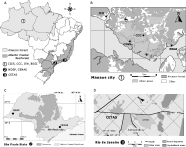
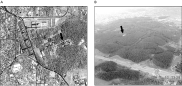
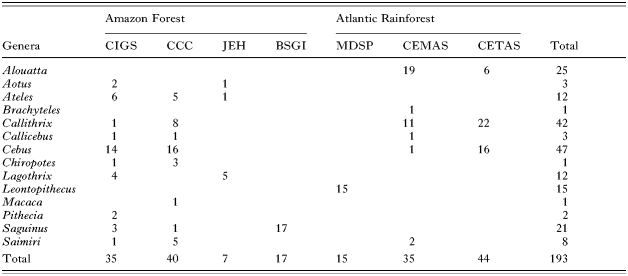
A total of 193 primates of 14 genera, independent of management schedule (free ranging, semi-captivity or captivity) from biomes, Amazon and Atlantic forest, were examined between 2000 and 2003 (Fig. 1A–D). A large part of these areas are still covered with endemic forests (Fig. 2A and B). The primates were non-injuriously captured with a special net and anaesthetized with 20 mg/kg body weight ketamine (Ketalar® – Parke – Davis, New Jersey, USA) for blood collections. In order to check infection stability 15 tagged primates (10 in the Amazon and 5 in the Atlantic forests) were re-captured and re-examined by the same methods 12 months later. The number of examined genera of primates is listed in Table 1.

Fig. 1. (A) Map of Brazil showing the two biomes, the Amazon forest and the Atlantic Rainforest. (B) Map of Manaus city with the location of 4 study areas (JHE, CCC, CIGS and BSGI). (C) Map of São Paulo state with the location of CEMAS and MDSP. (D) Map of Rio de Janeiro with the location of CETAS in Seropédica, municipal district of Rio de Janeiro city.

Fig. 2. (A) Aerial photo of Zoological Garden of the Center for War Instruction in the Jungle, located on the large urban forest fragment in Manaus city, Amazon. (B) Aerial photo of Wild Animals Screening Center (CETAS) located in Seropédica city, a district of Rio de Janeiro state.

Study areas
Amazon forest
(i) CIGS – Zoological Garden of the Center for War Instruction in the Jungle. This institution, located on the large urban forest fragment in Manaus city, Amazon state, and maintained by the Brazilian Army, occupies an area of 30000 m2 including facilities specially designed to shelter regional animals of endemic Amazon fauna. Some primates are maintained in captivity, in cages built of concrete, brick and galvanized wire. Others are maintained in semi-captivity, on small islands located inside the area of the zoo (Fig. 2A). Animals maintained in CIGS are either born in captivity, donated by private owners and apprehended by the Brazilian Institute of Environment and Natural Resources (IBAMA), obtained from non-authorized owners or from wild-life smugglers. (ii) CCC – Conservationist Breeding Cariuá. This centre is located in the urban perimeter in Manaus city (Fig. 1B). It is a private zoo maintained by the Brazilian Program of Conservation and IBAMA. These animals are housed in different sectors and the enclosures are built of concrete, brick and galvanized wire. The colonies are composed of 200 animals, which include previously free-ranging primates, apprehended by IBAMA from non-authorized owners, as well as primates that were born in captivity, already in Cariuá. (iii) JEH – Jungle Ecopark Hotel. The Amazon Ecopark is a touristic, scientific and educational property created to protect endemic fauna, located at the Tarumã river bank, a tributary of Black River, in the middle of the Amazon forest (Fig. 1B). Only free ranging primates were maintained in this area of the rainforest. (iv) BSGI – Brazil Soka Gakai International. This centre is located on the large urban forest fragment in Manaus city, as part of the Conservation Program of Pied Tamarins (Fig. 1B). Only free ranging pied tamarins were maintained in this area of the rainforest.
Atlantic coastal rainforest
(i) MDSP – Morro do Diabo State Park: This Park is the last remnant of Atlantic forest in São Paulo and harbours the rich and endemic biodiversity of the region and many of its endangered species, as part of the Conservation Program of Lion Tamarins, Leontopithecus chrysopygus (Fig. 1C). From this fragment 15 exemplars were examined. (ii) CEMAS – Center for Study and Management of Sylvatic Animals. This centre is located in the urban forest fragment of São Paulo city (Fig. 1C). The colonies are composed of previously free ranging animals, apprehended by IBAMA from non-authorized owners. In this area primates are housed in cages built of concrete, brick and galvanized wire. (iii) CETAS – Wild Animals Screening Center. This centre is located in an urban forest fragment in Rio de Janeiro (Fig. 1D). The colonies are composed of previously free ranging animals, apprehended by IBAMA from non-authorized owners. Primates are maintained in captivity, in cages divided into sectors.
Parasitological survey
Two blood smears from each animal were Giemsa-stained and examined for patent parasitaemia.
Approximately 0·3 ml of whole blood obtained by puncture of the femoral vein was placed on axenic medium tubes containing NNN medium (Novy, McNeal and Nicolle), covered with an overlay of LIT (Liver Infusion Tryptose) containing 10% fetal calf serum and 140 mg/ml of gentamycin sulfate. The haemoculture tubes were examined every 14 days for 2 months in cases where serological results were negative and for longer periods (up to 5 months) in cases where they were positive.
Serological diagnosis
Indirect immunofluorescence assay
IFA was performed with an anti-monkey immunoglobulin conjugate (IgG–Whole Molecule/FITC-Conjugate/Lot 86H4853, Sigma, St Louis, MS, USA). Antigen was prepared using the F strain of T. cruzi. Epimastigotes from 8-day cultures in LIT liquid medium were washed 3 times and suspended in phosphate-buffered saline (PBS). This final suspension, adjusted so that about 40 flagellates could be counted per dry high-power field, was distributed on the appropriate slides and air-dried at room temperature. No fixative was used and the slides were stored in cans with silica gel at −20 °C for no longer than 1 month.
Characterization of Trypanosoma cruzi
Biological characterization
Seven out of 8 isolates of T. cruzi obtained from primates from the Amazon were submitted to experimental infection in Swiss mice. Groups of 6 outbred Swiss mice, weighing 18 g each, were intraperitoneally inoculated with metacyclic forms, cultured in LIT medium (1×10⁵ parasites). The parasitaemia was followed every other day in fresh blood smears and counting was performed in a Neubauer chamber.
Biochemical characterization
The isolates submitted to biological characterization were further typed by isoenzymatic electrophoreses profile analysis (MLEE), which was performed according to Momen and Salles (1985). The enzymes that were tested were glucose phosphate isomerase (GPI), (EC 5.3.1.9), malic enzyme (ME), (EC 1.1.1.40), isocitrate dehydrogenase (IDH), (EC 1.1.1.42), glucose-6-phosphate dehydrogenase, (G6PDH), (EC 1.1.1.49) and malate dehydrogenase (MDH), (EC 1.1.1.37). Each electrophoresis included preparations from isolates Y (T. cruzi II) and F (T. cruzi I) as reference strains.
Molecular characterization
Epimastigote forms collected from cultures at the end of the log phase were centrifuged at 4000 g. Parasites were washed 3 times with PBS buffer, resuspended in 1 ml of TE (10 mM Tris-HCl, pH 8·0, 10 mM EDTA, pH 8·0) and incubated at 56 °C for 2 h with 100 μg/ml of proteinase K and 0·5% SDS (sodium dodecyl sulfate). The DNA of the lysed cells was extracted with phenol: chloroform (1[ratio ]1) and precipitated after the addition of sodium acetate and ethanol (Sambrook et al. 1989). Differential amplification of part of the non-transcribed spacer of the mini-exon gene could be achieved using a pool of 5 oligonucleotides for the PCR. Three oligonucleotides derived from a hypervariable spot of the min-exon repeat: TCI: 5′ACACTTTCTGTGGCGCTGATCG3′; TCII: 5′TTGCTCGCACACTCGGCTGCAT3′ and Z3: 5′CCGCGWACAACCCCTMATAAAAATG3′ and an oligonucleotide from a specific region of the T. rangeli non-transcribed spacer (TR: 5′CCTATTGTGATCCCCATCTTCG 3′) were used as upstream primers. A common downstream oligonucleotide, corresponding to sequences present in the most conserved region of the mini-exon gene (ME: 5′TACCAATATAGTACAGAAACTG 3′) was used as the opposing primer in the multiplex reaction. The PCR conditions used in this study were described elsewhere (Fernandes et al. 2001). The amplification products were analysed by 2% agarose gel electrophoresis, followed by ethidium bromide staining and UV visualization. Four reference strains were used as controls: F (T. cruzi I), Y (T. cruzi II), Rb III isolated from Rhodnius brethesi (T. cruzi isolate in the Amazon region typed as Z3) and San Augustin (T. rangeli).
RESULTS
Trypanosoma cruzi infection in Neotropical primates
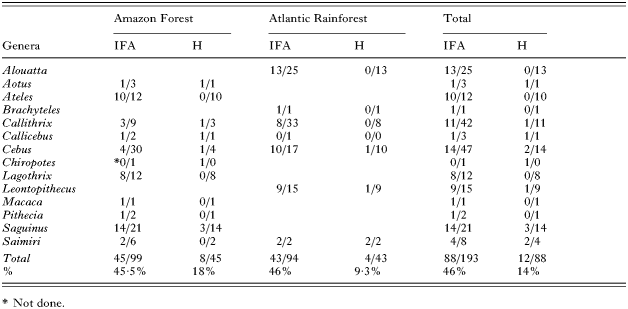
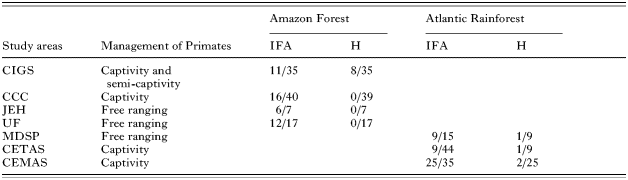
T. cruzi infection as assessed by IFA was observed in 46% of the examined primates included in 14 genera from the both biomes. The prevalence of infection was similar in the Amazon and Atlantic forests (45·5% and 46%, respectively). Different infection patterns were found among the animals considering positivity of haemoculture versus serological results (Table 2).

In the Amazon, the prevalence of T. cruzi infection was higher in the genera Ateles (83%), Lagothrix (66%) and Saguinus (66%). In the Atlantic forest, the infection was more prevalent in free ranging Leontopithecus (60%) and captive Alouatta (52%) (Table 2). The animals that composed the largest subsample were from the genus Cebus presenting 30% of seropositivity (14/47).
Positive serological titres were detected in primates independent of the management schedule (captivity, semi-captivity and free ranging). In the Amazon forest the prevalence was higher in free ranging primates (70·5 and 86%) in comparison to captive primates (31·4 and 40%). In the Atlantic forest the prevalence was high in both free ranging (60%) and captive primates (20·5 and 71%) (Table 3). The serological titres varied from 1[ratio ]10 to 1[ratio ]160 and the average was 1[ratio ]40. The parasites were isolated by haemoculture from primates with positive serology independent of the titres.

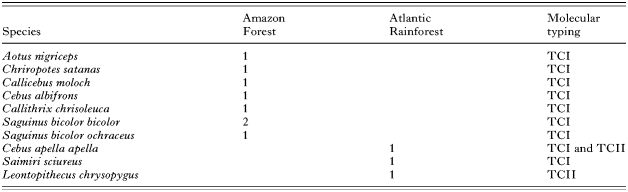
Higher parasitaemia as expressed by positive haemoculture was observed in 14% of the primates (8 from the Amazon and 4 from the Atlantic forest). In the Amazon forest, only animals maintained in captivity (CIGS) displayed positive haemoculture (n=8). In the Atlantic forest, T. cruzi was isolated from both free ranging (n=1) and captivity primates (n=3) (Table 3). The species infected by T. cruzi in the two biomes are presented in Table 4.

None of the sampled primates displayed patent parasitaemia as assayed by fresh blood smear examination.
Trypanosoma cruzi characterization
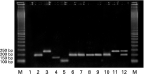
The biological characterization of T. cruzi isolates derived from Amazon primates indicated that all isolates caused subpatent infection, but 2 resulted in mortality and 5 resulted in no mortality in experimentally infected Swiss mice. Electrophoresis analyses of the products of amplified mini-exon genes showed that the 7 T. cruzi isolates derived from the Amazon forest correspond to genotype TCI. The electrophoresis analysis by MLEE confirmed this result (zymodeme 1). In the Atlantic forest both TCI and TCII were observed. One mixed infection was indicated (Table 4, Fig. 3). Re-captured and re-examined primates 1 year later in both biomes showed that primates maintained stable infection by both genotypes of T. cruzi.

Fig. 3. Agarose electrophoresis of the amplified PCR products corresponding to a hypervariable region of the mini-exon gene non-transcribed spacer of Trypanosoma cruzi isolates from different species of neotropical primates from distinct biomes of Brazil, that are characterized as T. cruzi I (200 bp), T. cruzi II (250 bp), ZIII (150 bp) and T. rangeli (100 bp). Molecular weight markers (M) correspond to ϕ X DNA digested with Hae III. Lane 1, control negative; lane 2, Dm28 (TCI); lane 3, CLBrener (TCII); lane 4, Rb3 (Rhodnius brethesi – Barcelos, Amazonas) (Z3); lane 5, San Agustin (T. rangeli); lane 6, Aotus nigriceps (CIGS – Manaus, Amazon forest); lane 7, Chiropotes satanas (CIGS – Manaus, Amazon forest); lane 8, Cebus albifrons (CIGS – Manaus, Amazon forest); lane 9, Saguinus bicolor ochraceus (CIGS – Manaus, Amazon forest); lane 10, Saimiri sciureus (CEMAS – São Paulo, Atlantic forest); lane 11, Leontopithecus chrysopygus (MDSP – São Paulo, Atlantic forest); lane 12, Cebus apella apella, (CETAS – Rio de Janeiro, Atlantic forest).
DISCUSSION
Trypanosoma cruzi is primarily an enzootic parasite that infects a large number of wild mammals in complex sylvatic transmission cycles that may not be connected. Since the first observation of T. cruzi infection in squirrell monkeys, Saimiri sciureus, described by Chagas (1924), primates were often observed to be infected by T. cruzi in different types of ecosystems in Brazil. Our data confirmed that free ranging primates are highly exposed to T. cruzi infection as observed by the high serum prevalence noticed among tamarins, marmosets and monkeys. Consequently they probably contribute significantly to the maintenance of enzootic transmission cycles of T. cruzi in the Amazon and the Atlantic Rainforest. To fulfill this parameter, high parasitaemia must be present in the putative reservoir. This aspect was confirmed in this study in distinct primate species widespread in several niches of the two biomes, independent of being maintained captive or free ranging.
In the Amazon biome, haemocultures were positive solely in the animals kept in CIGS. This fact may be explained by stress due to non-proper management schedules. Indeed, high parasitaemia, as a consequence of repetitive stress, has been described in Wistar rats infected with T. cruzi (Y strain) (Santos et al. 2005). In contrast, the primates maintained in CCC where better conditions overall were available (higher quality food, more area and better cages), no positive haemoculture could be obtained.
The descriptions of monkeys infected with T. cruzi in primate breeding centres are explained by (i) the acquisition of the infection during the time spent elsewhere before transport to captivity and/or (ii) visiting of the cages by infected vectors attracted by the light.
In the case of CIGS, some adult triatomine vectors, Panstrongylus megistus (data not shown) were observed in the cages of captive primates. The hypothesis of visiting insects is supported (i) by the sole presence of adult insects and no nymphs, (ii) by the absence of bug faeces, indicating that no colonization of the cages by triatomines occurred and (iii) by the finding of infection in captive-born animals.
Independent of the route by which primates acquire the infection during time spend in breeding or conservation units, the question to be considered is the risk for the environment, since these centres are used for translocation or reintroduction of primates in other areas besides promoting the interchange. This aspect emphasizes the necessity of parasitological and serological examination of all primates during quarantine, before introduction of the animals into captivity. No infected animal should be reintroduced or translocated in the natural environment or in centres for wild animals without complete monitoring and thorough health status surveillance. It is worth mentioning that in the last three decades an alarming number of high-profile outbreaks of dispersion of pathogens, many of them emerging from wildlife, have been observed (Cunnigham, 1996; Pozio et al. 2001; De Thoisy et al. 2001). This is a picture that may occur also with T. cruzi, a multihost and broadly dispersed parasite that still displays unknown epidemiological features.
Trypanosoma cruzi infection was prevalent in several species of both primate families: Cebidae and Callitrichidae that are known to occupy all the distinct strata of the forest and to have diverse nutritional habits including predation behaviour (insects and small mammals) and vegetarian habits. These features show that T. cruzi infection in primates in the wild is acquired by distinct transmission strategies.
The oral route is an efficient mechanism of transmission of T. cruzi among sylvatic mammals and humans. This may be specially true for primates, since these animals usually include in their diets, fruits and leaves of different species of palm trees which is known as a very complex microhabitat for several species of triatomine vectors and mammals (marsupials and rodents) (Valente et al. 1999; Texeira et al. 2001). Palm trees are widespread in fragmented habitats and adapt easily to disturbed forests near the urban perimeter. Consequently, this type of occupation increases the number of available niches for triatomines and mammalian hosts.
Focal microepidemics in humans may also be explained by this route, which is becoming more frequent. Episodes involving humans and ingestion of fruit juices, transmission of T. cruzi by the oral route and the presence of Triatomines in palm trees surrounding houses have been observed in Catolé do Rocha (PB; Northeast Brazil), Nova Teutônia and Navegantes (SC, South Brazil), Belém (PA, North Brazil) (Umezawa et al. 1996; Nery-Guimarães et al. 1968; Coura et al. 2002; http://www.istm.org/geosentinel/advisory.html). The risk for Chagas disease outbreaks in Brazil appears to be related to (i) deforestation, (ii) decrease of biodiversity, (iii) increase of density of competent reservoirs, (iv) presence of competent vectors and (v) human invasion of the wild transmission cycle.
No association between T. cruzi genotype and infection of primates was observed. Indeed, our data prove that primates can be infected by any T. cruzi genotype circulating in its environment. It is worth mentioning that also experimental marmosets and tamarins maintain stable infections with TCI and TCII (Mangia et al. 2001).
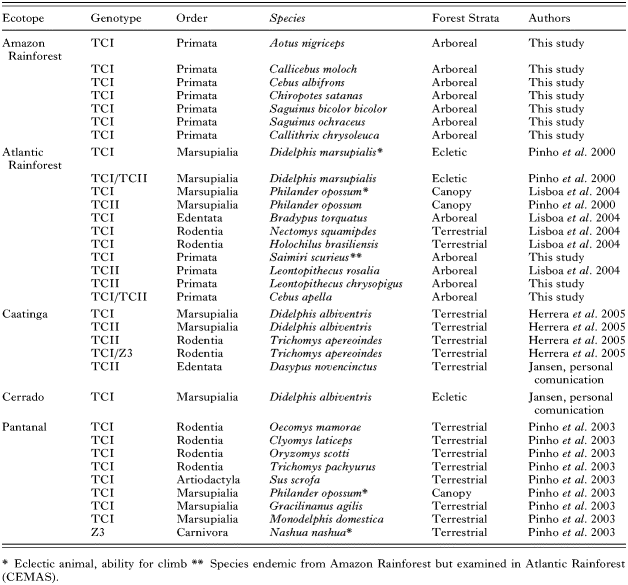
The T. cruzi philogeography is far from being clear. Moreover, any inference should always consider representative sampling of the fundamental triplet: parasite, host and environment. The data presented herein suggest that TCI has a broader host range and geographical distribution in comparison to TCII (Table 5). This does not exclude the widespread distribution of TCII that infects several hosts in at least two important biomes of Brazil. Nevertheless, its transmission cycle seems to be nidal, exactly as described by Pavlovsky (1966) for several other parasitic infections.

We wish to thank the Government Institution for the Environment and Natural Resources – IBAMA, FIOCRUZ – RJ and FIOCRUZ – AM for the facilitation of this study. We wish to show gratitude to Paulo Martuscelli and Renata Vieira Gaspar for providing the primates for T. cruzi investigation in CEMAS – Horto Florestal, SP. The Financial support has been provided at various times by PAPES-FIOCRUZ, FAPERJ and CNPq (post doctoral grants). We would like to express our sincere gratitude to Dr Vera Bongertz for her critical reading and revision of the manuscript and Rodrigo Mexas for providing the photographic plates.