Introduction
This article is about a word central to Chinese modernity, fendou (奋斗, or ‘struggle’, as it is most often translated in English). In traditional China it was a word of hardly any significance, but it rose to prominence in the very early years of the twentieth century, and eventually became one of the most persistent shibboleths of the Chinese Communist Party (CCP), which never ceased to use it, leader after leader, up to the present. ‘Happiness only comes as the result of struggle’ (xingfu dou shi fendou chulai de 幸福都是奋斗出来的) warned Xi Jinping on 31 December 2017, in his New Year's message of greeting (Xi Reference Xi2017). The dictum immediately sounded so good that it quickly became the title of several instant publications of Party doctrine or self-help inspirational content. But Xi Jinping had shown himself to be a fond user of the word much earlier than that. The first speech he gave on Youth Day (4 May) in 2013, for example, was heavily focused on the theme of ‘struggle’, so much so that the word fendou recurred as many as 13 times. ‘All people of China must struggle to achieve the Chinese Dream,’ he reminded an audience of ‘excellent’ students hailing from the best universities in the country (Xi Reference Xi2013). But this struggle, he underlined, first of all fell on the shoulders of the youth. ‘The Chinese Dream is ours,’ he said, his words reminiscent of those of Chairman Mao, ‘but even more it belongs to the youth. The great rejuvenation of the Chinese nation will finally become reality, thanks to the uninterrupted struggle of the youth at large.’Footnote 1 Hence he stressed the urgent need to mobilize all the nation's youth to join in the struggle, and in the course of his speech he gave a list of the specific qualities they would need to fulfil this purpose: to possess ideals, refine their ‘quality’ (suzhi 素质) and capacities, be daring in creating and innovating, strengthen themselves with firm resolve, and fortify their moral temper, never forgetting their concrete historical responsibilities and always loving their motherland and its people. He concluded his address with the promise of a future reward:
Young friends, youth comes in life only once. Today, it is to be used to struggle; tomorrow it will be used to remember […] In short, only a youth spent in a passionate struggle, an unwavering striving, in offering one's contribution to the people, will leave behind a full, warm, lasting and regretless memory of itself (ibid.).
Indeed, today fendou appears as a core ideological keyword of the Party. As such, its function is distinctively pragmatic, inasmuch as it is a word that is supposed to produce effects, to bring about changes in those who are touched by its messages and affected by its calls. Fendou, we could say (borrowing the well-known Althusserian notion), is the word with which the state interpellates the subjects of its ideological rule, with a special emphasis on the youth. ‘Hey, you, fendou!,’ an agent of a State Ideological Apparatus will call at some point, and the moment you turn around, the moment you answer to that voice—we could say, adapting Althusser to our context—you have already become a subject of the Chinese state ideology. Concretely, the function of fendou, as our account of Xi Jinping's own statements shows, is to mobilize the ‘people’ as productive forces, encouraging them to participate in the effort to achieve the national goals set in a specific historical period by the Party. In this sense, Xi Jinping's call to struggle in the name of the Chinese Dream is nothing new at all: in the beginning, it was Mao Zedong who repeated that the Chinese had to fendou to accomplish the revolution and build a communist society. Then came Deng Xiaoping who insisted that the Chinese had to fendou to achieve the Four Modernizations. Later, it was Jiang Zemin who said that the Chinese had to fendou to realize an ‘all-round well-off society’, and so on, until the task to fendou to achieve the two ‘centenary’ goals was enshrined in the latest constitution of the Party in 2018. Every era has its specific ‘struggling goals’ (fendou mubiao 奋斗目标), as the Party calls them, and every struggling goal has its specific pattern of struggle. Fendou, for this reason, means much more than simply exhorting the people to strive to reach certain targets. In order to fendou, at each stage in history, the individual is supposed to introject a specific ideological world view, a distinct complex of attitudes, a particular frame of behaviour, so as to become fit to carry out the specific type of struggle envisioned by the state in that particular time. There is a strong educational significance attached to the word fendou, whose purpose is not just to persuade the individual to accept the necessity of struggle, but, more importantly, to inspire and to shape the intimate motivations and aspirations of one's struggle in order to align them with the collective struggling goals set by the state. Hence, by observing the functioning of the word fendou in the shifting ideological discourses in which it has been variously embedded by the modern Chinese state, not only can we shed some light on the specific patterns of struggle that were promoted by the latter in the specific stages of its history, we can also learn a lot about the different modes and particular purposes with which the modern Chinese state has repeatedly tried, up until today, to form the subjectivity of Chinese individuals in order to ensure their conformity to the demands of the national projects.
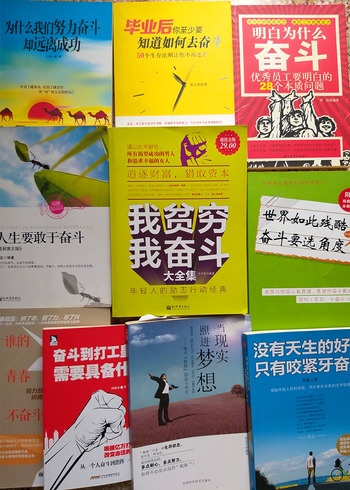
Yet one could also object that fendou, in the official use the Party makes of the word today, would have a hard time to interpellate the Chinese people, especially the Chinese youth. It is a word that, in the terms of the Party, speaks of top-down state sermonizing, of socialist duties and patriotic responsibilities, and even evokes sacrifice and collectivist self-sublation. How can it speak to the heart of the Chinese youth, how can it motivate their intentions and actions, in an age that, since the advent of the ‘socialist market’, has been marked, as many have noticed, by rampant political cynicism and materialistic individualism? But then, on the other hand, we should also note that since 2007, fendou has been used repeatedly as the title of a multitude of popular novels, even TV series: all of them pieces of fiction that, far from looking like dull official catechism, proved instead to have a very strong appeal with the Chinese youth, typically talking about their struggles to find a good job as well as a positive meaning of life in the ruthless Chinese market.Footnote 2 Even more strikingly, at the same time, fendou also began to recur in the titles of dozens of volumes belonging to the popular genre known in China as chenggongxue 成功学 (science of success or ‘successology’), that is, the type of self-help books that specialize in giving advice about how to attain success in one's personal undertakings, typically with the purpose of teaching their readers how to improve themselves in order to get better marks at school and better positions in the job market (see Figure 1). This is not to mention the hundreds—perhaps thousands—of web pages offering public collections of ‘famous words about struggle’ (fendou mingyan 奋斗名言). These long lists of sentences penned by illustrious men of the past, both Chinese and Western, are all focused on spurring on their readers to muster up their willpower and strengthen their talents in order to forge themselves into capable and outstanding people. All this is proof of the vibrant popularity of the word fendou, its capacity to touch the soul of the young, to stimulate and even guide their struggles towards fulfilling their goals. However, the popular use of the word appears to be very different from that which is administered by the official ideology of the Party. In all of the above examples, the struggle signified by fendou is one that appears to be conducted exclusively for the advantage of the self, its inner motivation to actualize one's personal potential, and its naked goal to achieve personal success. This is also why this type of struggle is often qualified as an ‘individual’ struggle—geren fendou 个人奋斗—one that is conducted by the individual for the individual. The state, as the ultimate arbiter of one's struggle, has disappeared. This raises the question: what is the relationship between these two types of struggle—the ‘struggle for the nation’ sanctioned by the official ideology of the Party and the ‘struggle for oneself’ that has surfaced in the realm of popular culture? Did the latter emerge spontaneously or as a reaction to the former? Does the popular form of struggle represent a subversive appropriation or is it more or less continuous, even subservient, in meaning and purpose to the official one? These questions will be addressed in the course of this article.
A sample of chenggongxue books featuring the word fendou on the cover, all published between 2011 and 2014. Source: Photo by the author.

The main purpose of this article is to explore the ideological significations articulated by the word fendou in contemporary China, observing the ramifications in the uses of the word during the reform era and, especially, in what I call the ‘age of the socialist market’.Footnote 3 To this end, I will first sketch out a brief history of the visions of struggle associated with the word since its emergence at the dawn of the modern era, in order to better define the configuration of meanings assumed by the word in the course of its historical trajectory. Fendou emerged in the ideological discourse of Chinese modernity in the early twentieth century, after the first Chinese modernizers began to reject indigenous traditional views that privileged the pursuit of harmony as the highest social ideal and celebrated the value of struggle as a means to transform China and its people—which they perceived as weak and backward—into a strong and modern nation. Since then the call to struggle has become a leitmotif of modern Chinese history, a constant feature of the distinctive Chinese effort to achieve modernization, especially since China was turned into a mobilizational state after the foundation of the People's Republic in 1949. But this effort, in the meandering course of Chinese history, was embedded in ever-shifting ideological paradigms, which enclosed different philosophies of struggle and, accordingly, different pedagogies of struggle. If the early twentieth-century struggle was chiefly imagined, according to a Social Darwinist framework, as a collective competition with other nations to win the right to survive and prosper in the modern world, when Marxist ideology took over, the struggle mainly meant overcoming certain groups of ‘oppressors’—who were blocking the rejuvenation of Chinese society with their hated ‘feudal’ despotism and ‘capitalist’ selfishness—to accomplish the collectivist rebuilding of the nation. Then in the Reform period, as the economic development of the country became the primary goal and the establishment of the ‘socialist market’ the high road to achieve it, the struggle again meant engaging in competition, one configured by this time as individualized economic initiative and neoliberal self-improvement in a capitalist mode of production. These paradigms produced different vocabularies of struggle, but they all had at least one word in common: fendou. Fendou, we could say, is the joint that hinged together all these different vocabularies, giving them a common perspective; at the same time, it was these different vocabularies, with their specific ideological underpinnings, that gave fendou its specific historical meanings and practical functions. Fendou is thus a keyword in the sense indicated by Raymond Williams: a historically significant term, closely related to the formation and transformation of some particularly crucial social views and values, which has a lot to say about the continuities and discontinuities of the cultural processes of a modern society.
In the introduction of Words and their Stories, a collection of essays aimed at rethinking the history of the Chinese communist revolution and which examines the trajectories of some of its most distinctive words and phrases, the editor Ban Wang declares that the purpose of the book is
to follow Raymond Williams’ advice and try to ‘show that some important social and historical process occur within language, in ways which indicate how integral the problems of meanings and of relationships are. New kinds of relationship, but also new ways of seeing existing relationships, appear in language in a variety of ways: in the invention of new terms (capitalism); in the adaptation and alteration (indeed at times reversal) of older terms (society or individual). […] But also, as these examples should remind us, such changes are not always either simple or final. Earlier and later senses co-exist, or become actual alternatives in which problems of contemporary belief and affiliation are contested (Wang Reference Wang2011, 9).
Similar to the above, this article will also endeavour to trace the shifting meanings of fendou in relation to the varying discursive contexts in which they have been historically articulated. To this end, the best heuristic procedure would be to survey the occurrences of fendou and its related idioms of struggle, both synchronically and diachronically, in a large variety of texts from different ideological backgrounds, in order to grasp the dynamics of divergence, contention, and rupture between the multiple visions of struggle produced at different times in the course of Chinese history. However, given the limited space of this article, my brief genealogical account will only try to provide, to borrow Ban Wang's words, a ‘conceptual clarification’ of the word, ‘identifying the relatively stable core’ of its ‘meaning and motivation’ in its historical formation (Reference Wang2011, 9). This will allow more room, in the latter part of the article, for the task of mapping out the intersections between the official and popular use of fendou in the ideological order of the ‘socialist market’. Where my article differs from the abovementioned study is in that, while the aspiration of the former is to ‘recover' some old words and phrases of the discarded revolutionary heritage to appreciate whether they may still bring some positive meaning or emancipatory potential in today’s capitalist-dominated China, my purpose here is quite the opposite: to show how a word successfully traversed its revolutionary past, became the object of an all-round semantic restyling, and, thanks to this, came to enjoy a thriving ‘second’ life which is all but revolutionary, thus proving once more the adaptability of the Party's ideology and its chameleon-like capacity to create continuity through change. Moreover, rather than contention and rupture, my discussion will try to emphasize continuity and interpenetration in the current articulations of fendou. The meaning of the word in contemporary popular culture, I assume, in spite of some ostensible divergences from its official counterpart, is far from antagonistic and, in fact, largely overlaps with and complements the latter. This offers some valuable insight into how ideology works concretely in today's China. Often, when Western scholars discuss the workings of ideology in contemporary China, they tend to narrow their view to the official political statements and practices of the CCP, mostly in order to observe how ideology serves the purpose of legitimizing the authoritarian power of the Party over the state and society. But ideology is much more than that. Borrowing the words of Slavoj Žižek, we can consider ideology as a ‘a fantasy-construction which serves as a support for our “reality” itself: an “illusion” which structures our effective, real social relations and therefore masks some insupportable, real, impossible kernel’ (Reference Žižek2008, 45). Ideology, in other words, is the very fabric that governs our perception of the relation between our self and society, significantly including the ways in which we see (or do not see) our position in society, form our social goals, imagine social hierarchies, and perceive social inequalities. According to Žižek, ideology typically operates on three interrelated levels: the level of doctrine, or as a complex of explicit and normative ideas; the level of ritual, corresponding to the material operations of the ideological state apparatuses; and the level of belief, consisting of the spontaneous internalization of certain attitudes and their concrete embodiment through certain behaviours (Žižek Reference Žižek1994, 9–14). Taking the cue from Žižek, we could thus define the Party's official ideology as doctrine, which aims to formally elucidate the official principles of the Party-state as well as the explicit responsibilities of the citizens towards the country. To be effective, however, the official ideological system needs to branch out and spread through a host of material institutions, where it becomes pulverized and diversified in many different discourses supporting different practices, in a continuum that stretches from the official education system to the media and other outlets of popular culture. It is in the latter domain, eventually, that ideology finds a privileged site through which it becomes internalized and naturalized as spontaneous belief by the subjects of ideological interpellation, as the Party has always known very well throughout its history. Since the beginning of the reform era, and especially following the ‘marketization’ (shichanghua 市场化) of the means of cultural production since the establishment of the ‘socialist market’, the cultural sphere in China has certainly undergone a process of autonomization and pluralization that freed cultural producers from the obligation to act as mouthpieces of the Party (Kong Reference Kong2004). At the same time, it must be remembered that throughout this period the Party never ceased to exert steady control over the organs of cultural production, continuously recommending that cultural producers use their work to ‘exert an imperceptible educational influence’ (qianyi mohua 潜移默化, as the Party leaders often say) over the public. Besides, as I have already argued, in the age of the ‘socialist market’, the most important task of the national educational apparatuses has been less to transmit the official ‘socialist’ doctrine of the Party than to shape the right form of subjectivity fit for the development of the productive forces within the mode of the ‘socialist market’. In this period the task has been typically performed by many products of popular culture. A very representative case is that of chenggongxue, which I will discuss in the latter part of this article. As a form of market-produced popular culture, which does not claim any affiliation with the official propaganda of the state, and is popular precisely because it engages with and leverages the genuine aspirations and desires of its readers, chenggongxue in general is not perceived as ideology. And yet, precisely because of this, it is probably more effective than the official education of the Party in bringing its readers to do what the Party wishes them to do, that is, mould themselves into competitive productive forces functional to the economic development of the country. In this article I will not be able to provide an extensive account of chenggongxue as a cultural phenomenon and will limit myself to highlighting some interconnections between the goals of the university education system and the contents of this genre. I will try to evince the ideological effects that these books, with their rhetoric of struggle (epitomized by the word fendou), aim to produce. Quite interestingly, one salient feature of a large number of chenggongxue books written between the first and second decades of the twenty-first century is that their views about struggle tend to be explicitly framed within a Social Darwinist world view centred on the ‘survival of the fittest’—and the ‘elimination of the unfit’. These views, in fact, are intrinsic constituents of the ideology of economic development promoted in the same period by the state, in which they tend, however, to be hidden or minimized. With their disclosure of this Social Darwinist dimension, then, chenggongxue books help to reveal another significant layer of meaning in the vision of struggle signified by the word fendou. This layer is normally displaced by official ideological discourse, which is nevertheless a basic component of the word's ideological function. While, explicitly, fendou is meant to have the positive function of encouraging the individual to improve themselves with the promise of a reward if they accomplish something valuable through their struggle (‘happiness’, in the case of Xi Jinping; ‘success’, in the case of chenggongxue books), the word also has, implicitly, the negative function of warning the individual that reward is only for those who make good in their struggle. Therefore it is right for others to be left behind if their struggle is not good or effective. In this way, this fendou-centric rhetoric of struggle also helps to naturalize the order of a hierarchically divided society based on the notion of the survival of the fittest—and the elimination of the unfit.
Social Darwinism
Even though fendou began to appear with a certain frequency in the writings of modern Chinese intellectuals as early as the first decade of the twentieth century, it is probably Chen Duxiu's essay Call to Youth, published in the first issue of New Youth (Xin Qingnian) in 1915, that is the best point of departure for our description of the modern trajectory of the word. First, this is because the article is itself a call to struggle, or precisely to ‘fendou’, as Chen Duxiu himself says in the introduction: ‘[I] place my plea before the young and vital youth, in the hope that they will achieve self-awareness, and begin to struggle’ (you yi zijue er fendou er 有以自觉而奋斗耳) (Chen Reference Chen, Teng and Fairbank1915a, 240). Second, it is because this article contains what, in all likelihood, is the first fully fledged modern definition of the word or, if not, certainly the most influential: ‘What is the struggle?’ (fendou zhe he 奋斗者何), asks Chen Duxiu rhetorically, a few lines after his plea; immediately he replies: ‘It is to exert one's intellect, discard resolutely the old and the rotten, regard them as enemies and as the flood or savage beasts, keep away from their neighbourhood and refuse to be contaminated by their poisonous germs’ (Chen Reference Chen, Teng and Fairbank1915a).
Of course, what this article is mostly well-known for is its role in paving the way for the New Culture Movement, with its Enlightenment values of freedom, autonomy, rationality, and equality, as well as for inspiring the patriotic passions of the educated youth that would eventually break out in the May Fourth Movement. However, the reason I mention this essay here is to highlight how the notion of fendou in Chen Duxiu's thinking—as in that of many other early twentieth-century Chinese intellectuals—is rooted in a Social Darwinist world view and philosophy of history. ‘Considered in the light of the evolution of human affairs,’ writes Chen Duxiu, ‘it is plain that those races that cling to the antiquated ways are declining, or disappearing, day by day, and the peoples who seek progress and advancement are just beginning to ascend in power and strength. It is possible to predict which will survive and which will not’ (Reference Chen, Teng and Fairbank1915a, 242). Or: ‘The progress of the world is like that of a fleet horse, galloping and galloping onward. Whatever cannot skilfully change itself and progress along with the world will find itself eliminated by natural selection because of failure to adapt to the environment’ (Chen Reference Chen, Teng and Fairbank1915a). As can be seen, Chen Duxiu's vision of struggle is steeped in an evolutionary view of history dominated by the ‘survival of the fittest’, in which those ‘peoples’ who are able to change and progress survive, whereas those who stick to their outdated traditional habits are bound to be eliminated. Given that the ‘struggle for existence’ (zheng cun 争存) between rival ‘peoples’ is, for Chen Duxiu, a universal rule which is ‘impossible to avoid’, the Chinese people have a ‘natural obligation’ to change and ‘advance’ so as to contribute to making China fit to survive in the competitive modern world. The end of the struggle expressed by the word fendou, then, is ultimately related to China's successful participation in an international struggle for existence. Even the idea that the task to fendou should mainly fall on the shoulders of the youth is explained according to a Social Darwinist framework, related as it is to the view, emphasized in the Chinese interpretation of the Social Darwinist principles, that society is a biological organism whose overall health and strength are determined by the quality of its members, imagined as organic constituents responsible for the well-being and vigour of the social body. In the words of Chen Duxiu:
The function of youth in society is the same as that of a fresh and vital cell in a human body. In the process of metabolism, the old and rotten are incessantly eliminated to be replaced by the fresh and living […] If metabolism functions properly in a human body, the person will be healthy; if the old and rotten cells accumulate and fill the body, the person will die. If metabolism will function properly, it will flourish; if old and rotten elements fill the society, then it will cease to exist (Reference Chen, Teng and Fairbank1915a, 240).
Thus the youth are valuable precisely because of their function, which imposes on them the task to renew themselves in order to renew China, eliminating the old and rotten cultural elements that corrupt its social body and obstruct the necessary course of its evolution. Specifically, their responsibility is to mend their deficient, traditional ways and replace them with a set of modern qualities, by learning to be independent, progressive, aggressive, cosmopolitan, utilitarian, and scientific.
Having made these observations, it is possible to summarize the most important implications that characterize, since its early modern usage, the meaning of fendou. First, as it emerges from Chen Duxiu's article, fendou refers primarily to a struggle for personal transformation that must be undertaken in order to bring forth the collective transformation of China. This struggle, seen as a moral imperative which places a very strong emphasis on the role of human will and self-conscious human action, is originally defined as the duty to become fit. This means that the individual is called, on the one hand, to develop a particular set of positive qualities that are seen as key to bringing into existence the particular ideological configuration of modernity that China is supposed to build, but also, on the other hand, to eliminate all those negative qualities that are viewed as a hindrance to the intended transformation of China. The latter was the idea, for example, of Liang Qichao—another staunch believer in Social Darwinism in the first years of the twentieth century—who wrote in 1902 that the alternative to the elimination (taotai 淘汰) brought about by natural selection was to carry out an ‘elimination by man’ (renshi taotai 人事淘汰), which meant to ‘carefully seek out the unfit in oneself and change it, to make oneself fit to survive’ (Pusey Reference Pusey1998, 190). But this was also underlined by Chen Duxiu, who wrote in an essay published only a few months after Call to Youth that the purpose of education should be none other than ‘removing what is unfit and pursuing what is fit […] that is, to develop the strong points of the individual character and remove the weak ones […] (to make) the feeble and benighted Chinese people […] become fit for the struggle for existence in the world’ (Chen Reference Chen1915b, 85). Second—and this is the most important point I want to make—this man-made process of selection entails not only the elimination of what is unfit within the self, but also, albeit less explicitly, the elimination of what is unfit out in society, that is, all that is found in Chinese society that stands against its self-rejuvenation and undermines China's effort to compete in the world. This also works on the premise that if China is not able to eliminate what is unfit within its social body, it will be eliminated altogether as a nation. This implication at the time of the emergence of Chinese Social Darwinist thought in the late Qing period tends to be glossed over and displaced, as the emphasis is placed on the struggle of China as a nation against other nations, which presupposes the act of imagining China as an organic whole with no significant divisions or conflicts within its social body. However, it is obvious that, in order to reach this unity, it is necessary to struggle to eliminate all those impediments that stand in the way of achieving unity, as the Chinese historian Xu Jilin very aptly pointed out:
Even though competition in the late Qing period mainly refers to that among nations, it remains that as soon as this ethos of competition is established, this change is ultimately applied not only to the international relations, but also to the domestic ones. The first is the external struggle, the second the internal one: the possibility of the external struggle to be successful, however, is determined by the dynamics of the internal struggle (Reference Xu2010, 54).
Such a downplay can still be found in Chen Duxiu's article, where the ‘internal struggle’ that precedes the undertaking of the ‘external struggle’ for survival is posited only in abstract terms: the ‘enemy’ that must be eradicated by the youth is not so much defined as a concrete social group, rather as a cultural attitude that is rooted in the minds of the people. Moreover, Chen Duxiu optimistically sanitizes the struggle against the ‘old and rotten’ elements of Chinese society through his faith that if the youth become self-aware, progressive, and assertive, they will naturally prevail in society, whereas the ‘old and rotten’ will be spontaneously eliminated through natural selection.
This ambiguity, in the end, was resolved when Marxism, with its more concrete vision of struggle, replaced Social Darwinism as the new dominant philosophy of history.Footnote 4 This, however, will be the subject of the next section. For now, what I want to observe, as a conclusion to this section, is that after the publication of Chen Duxiu's Call to Youth, fendou quickly began to multiply in the writings of the radical Chinese modernizers, showing the influence of this essay in spreading the word in the vocabulary of the modern Chinese revolution. In an influential 1916 article, for example, Li Dazhao clearly echoes Chen Duxiu's terminology by describing the Chinese youth as vital and creative elements of Chinese society with the function of regenerating its senescent body. Even more significantly, he goes as far as to posit an essentialized opposition between an old China driven by ‘compromise’ (hejie 和解) and a young China driven by ‘struggle’ (fendou):
The civilization of the old generation is one of compromise: it compromises with the situation, it compromises with the times, it compromises with experience. The civilization of the young generation is one of struggle: it struggles with the situation, it struggles with the times, it struggles with experience (yu jingyu fendou, yu shidai fendou, yu jingyan fendou 与境遇奋斗,与时代奋斗,与经验奋斗). Therefore, youth is the ruler of life, the spring of life, the splendor of life. Youth do not have the word ‘difficulty’ (kunnan 困难) in their vocabulary, the word ‘obstacle’ (zhang'ai 障碍) cannot be found in their mouth. They are only capable of ‘leaping forward’ (yuejin 跃进), vigorously taking wing, building up their free spirit, unconventional thought, keen intuition, spontaneous vitality, so to create the environment and conquer history (Li Reference Li1916, 179).
It is easy to foresee, in Li Dazhao's words, much of the language of the man who, more than anybody else, was to shape the future vision of struggle in the Chinese revolution. Already enthralled by the ideas of the New Culture Movement, and incubating at the time the seeds of his future philosophy of struggle, in 1917 Mao Zedong, still a student in Changsha, would write in his diary: ‘To struggle with Heaven, what an infinite joy! To struggle with Earth, what an infinite joy! To struggle with Man, what an infinite joy!’ (yu tian fendou, qi le wu qiong, yu di fendou, qi le wu qiong, yu ren fendou, qi le wuqiong 与天奋斗,其乐无穷;与地奋斗,其乐无穷;与人奋斗,其乐无穷).
Maoism
Commenting on these lines, the Chinese scholar Li Zehou noted how the enthusiastic celebration of movement, struggle, resistance, and self-actualization, considered as fundamental sources of happiness in life, was a salient feature of young Mao Zedong's philosophy of life, a feature that would later influence his development as a revolutionary and inform his political action as a communist leader (Li Reference Li1987). For Mao, writes Li Zehou, ‘dynamism’ (dong 动) and ‘conflict’ (dou 斗)’ were the principles that governed the life of the whole universe, the forces that presided over all transformations in both the natural and the social world. For him, this was not only a natural law, but also a universal moral truth that ascribed to the individual the moral duty to participate in this conflict-driven process of transformation, expanding one's ‘physical and spiritual capacities to the fullest’ (Li Reference Li1987, 5) in order to struggle with the external world and change it. Indeed, while it is certainly true that these views were already a prominent feature of the early thought of Mao Zedong (and, for sure, they would later be crucial in shaping the particular vision of struggle that Mao would enforce so tragically in the years of his revolutionary power), it must be noted that these views were in no way unique to Mao's world view. Quite the opposite: they were part of the dominant zeitgeist that emerged in China in the early twentieth century. As the Chinese historian Xu Jilin pointed out, the belief that the natural and the social world are primarily ruled by force (li 力), and evolve through competition, had already become widely shared among Chinese modernizers after the introduction of Social Darwinism at the turn of the century. By the time of the collapse of imperial power in the second decade of the century, this belief had already produced a new, dominant ideological order that had largely replaced the old traditional order based on the Confucian rule of propriety and pursuit of harmony. Even the individual, in this order, was essentially conceived of as a potential bearer of ‘forces’ that had to be strengthened and tapped to the advantage of collective participation in the universal ‘struggle for existence’. It is no wonder, then, that the new type of man that was advocated in this new order was mainly envisioned as a ‘struggling’ subject whose task was to make themselves strong, expand their capacities to the fullest, and confidently assert themselves in the world so as to transform it. At the time that Mao was writing his lines about the ‘joys’ of struggle, then, he was clearly under the influence of the agonistic world view that had been introduced into China by Social Darwinism, while resonating with his irreverent challenge to the symbols of the traditional order—the trinity of ‘heaven’, ‘earth’, and ‘man’ which, for centuries, had symbolized the traditional aspiration to establish a harmonious unity between man, society, and nature—the emerging iconoclastic spirit of the New Culture Movement. Soon, however, Marxism would overtake Social Darwinism as the dominant ideology of social change, providing, on the one hand, a better sense of direction to this newly released ‘will to struggle’, with its articulation of a well-defined revolutionary teleology, and, on the other hand, with its master historical narrative, providing a more effective tool to mobilize the struggle for national rejuvenation. With its materialist dialectic based on the universal struggle between the oppressing and oppressed social groups, Marxism allowed, first of all, the identification of a more concrete agent of struggle, no longer a generic nation-state strengthening itself to vie with other nations in the competitive modern world (as in the late-Qing period), nor a generic individual revolting against the repressive yoke of traditional culture (as in the case of the New Culture Movement), but a collective union of the ‘proletarian’ masses willing to subvert the old social system to bring about a socialist revolution. And it also allowed, at the same time, the more concrete identification of the common enemies ‘internal’ to Chinese society, who could be located in the corrupt ‘feudal’ and ‘capitalist’ elites that subjugated the Chinese people both economically and culturally, depressing their creative energies and thus blocking the evolutionary development of China. With its notion of ideology, finally, Marxism will also allow the pinning down of certain forms of consciousness as normative behaviours of the various social groups, defining the positive qualities that the masses should develop in the course of their revolutionary transformation as necessary attributes of the aspiring ‘proletarian' groups and the negative qualities that they should eliminate as intrinsic vices of the ‘reactionary’ social groups to be overcome.
It must be observed, at any rate, that however prominent fendou would become as a communist keyword, it was the core term douzheng, and not fendou, that would designate the all-encompassing Maoist vision of struggle throughout the communist era. Composed of the character fen 奋, which means ‘to exert oneself’ (the character originally representing a bird flapping its wings to fly away), and the character dou, which means ‘to fight’ (graphically representing two opponents facing each other), fendou was generally endowed—from its emergence in the first decade of the twentieth century and well into the 1920s—both with the meaning of struggling for something (that is, to strive to reach a goal) and struggling against something (that is, to fight to defeat an enemy). However, perhaps because of the presence of the character fen, which implies the application of an intentional effort, it tended to be used more often in the first sense.Footnote 5 There are other words, instead, in the late-Qing Darwinist ideological order in which fendou was originally embedded, that are used to indicate, more concretely, the notion of struggle as fight. Namely, they are the characters jing 竞, ‘to compete', and zheng 争, ‘to contend', both used by Yan Fu in his classic prose translations (for instance, Yan Fu used the expression wu jing tian ze 物竞天择, ‘creatures compete and nature selects', to indicate the natural selection of the fittest, and translated ‘struggle for existence' with the words zheng cun 争存), and the compound jingzheng 竞争, to ‘compete', which is used by Liang Qichao in his ‘new prose’ essays as well as by Chen Duxiu in his Call to Youth (also written in classical Chinese), where we also find the expression zheng cun. From 1919 Li Dazhao also uses the compound jingzheng, and he does it to designate the newly imported Marxist notion of ‘class struggle’, which is most typically translated in his essays with the expression jieji jingzheng. It is douzheng (斗争), nevertheless, instead of jingzheng, the official word chosen by the Communist Party, from its foundation in 1921, that is used to designate class struggle. Jingzheng, with its original connotation of ‘competition’, refers more to an indirect fight than to an actual confrontation; douzheng, on the contrary, explicitly refers to a direct fight between two opponents confronting each other and is therefore more suitable to indicate a concrete conflict between opposing social groups. Interestingly, if we take a quick browse through the official documents of the first CCP national congresses, we notice that until 1927 the word fendou tends to recur slightly more often than douzheng, both with the meaning of struggling for something and struggling against something. It is only after the Fifth National Congress of 1927, convened two weeks after the beginning of the bloody repression unleashed against the communists by Chiang Kai-shek, that the use of douzheng begins to soar in CCP vocabulary, revealing the extent to which the outbreak of hostilities with the Nationalist Party began to radicalize the Party's ideology of struggle. From now on, and especially since Mao's interpretation of Marxism was sanctioned as the official doctrine of the Party, douzheng became the cornerstone of the Party's philosophy of history, regarded as the all-powerful driving force that moved and changed everything, from nature to society to the individual. This we can see by reading the beginning of the seminal text of the Party's ideological education, How to be a good communist by Liu Shaoqi:
In order to live, man must wage a struggle against nature and make use of nature to produce material values. […] In their ceaseless struggle against nature, men ceaselessly change nature and simultaneously change themselves and their mutual relations. […] When human society reached a certain historical stage, classes and class struggle emerged. […] Thus it is not only in the struggle against nature but in the struggle of social classes that men change nature, change society and at the same time change themselves (Reference Liu1984, 107).
Fendou at this point settles into a narrower scope of meaning, specializing as a watchword for Party mobilization that is cleansed of all the confrontational, aggressive, and destructive implications of struggling ‘against’ something—which are entirely left to douzheng—and retains only the volitional, uplifting, and constructive connotation of struggling ‘towards’ a goal. In particular, there are two conventional ways in which fendou is applied. First, the word begins to typically designate the collective struggles to achieve the revolutionary goals set by the Party, defined as the ‘tasks’ (任务) or the ‘targets’ (目标) that the Chinese masses must devote themselves to. This begins to occur especially after the signing, in 1937, of the Second United Front, when Mao vowed to take over Sun Yat-sen's legacy, remembering the latter's last will to rouse the Chinese people and to encourage them to undertake a ‘common struggle’ (gongtong fendou 共同奋斗) to elevate China to a position of freedom and equality among the other nations of the world. After that, fendou was regularly employed to articulate, one after the other, all the historical missions of the Party, an endless chain of ‘struggling for’ (wei … er fendou 为 … 而奋斗), dotting all Party documents, such as: ‘overthrow the Japanese and establish the New Democracy’ (in the Yan'an years), ‘build a great socialist country’ (during the First Economic Plan), ‘catch up with Britain and overtake America’ (during the Great Leap Forward), ‘strengthen the dictatorship of the proletariat’ (in the Cultural Revolution), and so on, right up to the present. The second use is the one exemplified by the expression jianku fendou (艰苦奋斗). Often translated as ‘arduous struggle’, it refers to the ‘spirit’ that every communist must internalize—the epitome of the proletarian ethos that one must actualize in the process of undertaking the revolutionary transformation of the world. It thus condenses, in a quintessential way, the voluntaristic ideal of self-cultivation affirmed by Maoist philosophy. Jianku fendou, first of all, means to temper oneself, through hard discipline and unremitting effort, to overcome the subjective limits of the self and the objective limits of the environment. To this end, it requires the individual to be willing, and to have the capacity, to endure extreme living conditions, ‘eating’ all sorts of ‘bitterness’ (chi ku) and surmounting all sorts of ‘difficulties’ (kunnan), so as to increase one's resistance to the hardships of revolutionary undertakings. Then it requires one to accept the most extreme forms of sacrifice, to become oblivious to one's personal needs and desires, and to submit all of one's interests to those of the masses, serving them ‘with all one's heart and one's will’. Finally, when the ‘little’ individual self has merged into the ‘large’ collective self of the masses, it requires one to work with inexhaustible energy and unshakeable faith in the future to entirely reshape nature and society, removing, with unyielding tenaciousness, all the obstacles that stand in the way of the revolutionary goals, as in the parable of the Foolish Old Man which, more than anything, symbolizes the spirit of jianku fendou.Footnote 6
This spirit is first of all prescribed, throughout the Maoist period, to the cadres of the Communist Party who from the Yan'an period are repeatedly exhorted to distinguish themselves with their selfless, upright, and ascetic conduct in order to serve as ‘living examples’ to the masses in the process of their revolutionary remoulding. The call to undertake an ‘arduous struggle’, however, is also typically addressed to the Chinese youth—and especially its elite representatives—inasmuch as they are the designated inheritors of the revolutionary cause and the coveted ‘new men’ of a socialist China who will undertake the task of carrying on the revolution. As early as 1939, for example, in a speech delivered at the Conference of the Model Youth in Yan'an, Mao proclaimed that the ‘revolutionary tradition’ of the youth movement started on May Fourth 1919 consisted, no more and no less, of a spirit of ‘perpetual struggle’ (yongjiu fendou 永久奋斗). He warned that while it was important for the revolutionary youth to develop their intellectual, moral, physical, aesthetic, and socializing faculties through education, the most important virtues they needed to learn were the will and capacity to ‘struggle perpetually’, meaning to struggle for the revolutionary cause, with an unwavering mind, until their very death. Or as he reminded the people in 1957:
We must help all our young people to understand that ours is still a very poor country, that we cannot change this situation radically in a short time, and that only through the united efforts (tuanjie fendou 团结奋斗) of our younger generation and all our people, working with their own hands, can China be made strong and prosperous within a period of several decades. The establishment of our socialist system has opened the road leading to the ideal society of the future, but to translate this ideal into reality needs hard work (Mao Reference Mao1957b, 405).
This spirit was disseminated, after the foundation of the People's Republic, through an immense repository of symbolic representations such as novels, films, theatrical plays, diaries, posters, and so on, all of which would contribute to universalize it—not only as an obligation to the state but also as a positive means to achieve self-actualization and happiness in life. After 1949, this spirit was funnelled into the building of the socialist nation, mobilizing the forces of the youth into the productive task of remaking both the material structure and the ideological superstructure of Chinese society. It is important to note, nonetheless, that the constructive struggle expressed by fendou was never disentangled from the destructive aspects of the struggle expressed by douzheng. The effort to build a new China, in the Maoist era, will always be typically attached, and sometimes reduced, to the effort to eliminate the enemies presumed to undermine this collectivized process of construction. With the concrete risk, increasing since the late 1950s, that those who would not appear too motivated in participating in this state-led ‘struggle for' the national transformation, could be quickly turned into class enemies to be ‘struggled against’ and thus eliminated. Unfortunately, from the beginning of the 1960s, with the rising cry to ‘never forget class struggle’, there was a growing shift in emphasis towards the negative side of struggle expressed by douzheng. This escalation reached its peak with the Cultural Revolution—tellingly dubbed as a ‘life-and-death struggle’ (shengsi douzheng 生死斗争) between the proletariat and the bourgeoisie—when the constructive elements of fendou were finally engulfed by the destructive aspects of douzheng. Resulting in the indiscriminate attack of anyone arbitrarily labelled as a class enemy, after the death of Mao, the Cultural Revolution finally led to the permanent rejection of the Maoist ideology of struggle. The result was that while douzheng was purged from the language of the official Party ideology, fendou survived with a vengeance and thrived as the true and enduring symbol of the Party's spirit of struggle.
Socialist market
As a consequence of the failure of the Cultural Revolution, one of the most important steps taken by the new Party leadership headed by Deng Xiaoping at the dawn of the Reform era was the repudiation of the Maoist principle to ‘take class struggle as the key link’ (yi jieji douzheng wei gang 以阶级斗争为纲) and the concomitant embracing of the principle to ‘take economic construction as the core’ (yi jingji jianshe wei zhongxin 以经济建设为中心). This means that the ‘liberation’ and ‘development’ of productive forces, set out in the plan to achieve the ‘socialist modernization’ of the country, was to become the most important struggling goal set by the Party. This led to the rapid dismantling of the collectivist mode of production, deemed inefficient and incapable of stimulating workers to take the initiative, and to its replacement with an increasingly individualized economic system in which Chinese workers were no longer mobilized as ‘masses’, forcefully required to remould themselves into selfless ‘proletarians’, but recognized as individuals to be encouraged to unleash their creative power and spirit of enterprise by pursuing their personal goals and interests, particularly in the material sphere. Meanwhile, significantly, the focus on modernization also called for the valorization of knowledge, especially in the form of techno-scientific know-how, and thus for capable people or ‘human talents’ (rencai 人才) to provide qualified professional expertise. This, in turn, involved, on the one hand, a strong investment in education, which would be reorganized into a hierarchical school system, and, on the other, the adoption of a meritocratic approach to the evaluation, remuneration, and advancement of professional employees. The result of this new pattern of economic development was the return of competition—expressed again by the word jingzheng—as the overriding principle of social transformation, this time mainly appearing as competing for excellence in the educational and professional fields and competing for economic success in the emerging market economy. Likewise, with the return of competition there would also be a resurgence of Social Darwinism, as a set of largely implicit ideological assumptions that would serve the function of stimulating competition and human improvement, and also legitimizing the new natural selection of winners and losers brought about by competition in the new mode of production.
Obviously, this radical change in the economic ‘structure’ of society also implied, as prescribed by the Party's Marxist theory, a radical reconfiguration in the realm of the ideological ‘superstructure’. For the CCP's educational apparatuses, this chiefly meant drastically changing the mentality of Chinese workers so as to shape their inclinations, motivations, and goals according to the new economic demands. The Party needed a new type of subject, a ‘modernized’ man in service to economic development, who was called upon to be enterprising, self-motivated, ambitious, eager to learn, able to think, capable of adapting, and ready to compete. In the first place, this demanded the creation of an entirely new set of ideas about what constituted the essence of human nature, what should be the core values of a human being, what the meaning and purpose of life was, and so on.Footnote 7 Moreover, it also required the dissemination of a new vision of struggle as the old jianku fendou of the Maoist era, with its emphasis on personal sacrifice and submission to the collective, was inadequate for the demands of the new mode of production based on personal initiative and autonomous motivation. It is thus in this context that the concept of geren fendou (chiefly intended as a systematic complex of actions to be planned and undertaken by the individual with a view to achieving one's life goals) emerged as a key concept of the Reform era, one that emblematically epitomized the ideological shift taking place in the transition from the Maoist paradigm to that of the ‘socialist market’. Significantly, several essays published in a number of journals of Party ideology throughout the 1980s attest to the existence of a heated internal debate over the meaning and value of geren fendou (sometimes also called ziwo fendou 自我奋斗) between the camp of leftist conservatives trying to defend the communist status quo and that of the pragmatic reformers trying to push through the Dengist agenda. Whereas the former categorically rejected the value of ‘individual struggle’, stigmatizing it as ‘capitalist’ behaviour and associating it with an individualistic attitude that was considered inherently negative insofar as it was selfish and therefore anti-social, the latter were committed to ‘rehabilitating’ it, viewing it as a positive behaviour useful to the development of productive forces in the new economic mode. The argument in favour of geren fendou was simply but clearly put in an article written in 1980 in Zhonggong Shanxisheng Changwei Dangxiao Xuebao, which said that individual struggle needed to be encouraged because this was what modernization required: modernization, the argument went, relies on the contributions of ‘talents’—that is, all sorts of ‘experts’, from engineers to pilots, from scientists to writers, from inventors to university professors, to push forward social progress with their special abilities and skills. ‘Talents’, however, only develop by means of an ‘individual struggle’, here understood as the individual effort to establish oneself and achieve personal fame (chengming chengjia 成名成家). What the article implies, although it does not state it explicitly, is that it is only if there is personal investment, a drive towards a personal pursuit, as well as an expectation of gain as a result of one's effort, that the individual will be genuinely induced to engage in their own self-improvement: ‘All struggle is individual struggle, even collective struggle is the sum of a multitude of individual struggles’ (Zhonggong Shanxisheng Changwei Dangxiao Xuebao 1980, 210). It is thus through struggling in the name of their own interests that those who are endowed with outstanding abilities are also able to benefit the interests of the country.
While this article, written at the beginning of the Reform period, inevitably defends the validity of geren fendou exclusively as a principle useful for the formation of a knowledge elite comprising intellectuals and professionals employed in the state sector, it was another article, published in January 1989 at a critical juncture of the Party's reformist enterprise, that eventually provided a full legitimization of geren fendou, commending it as a universal value to be applied to all spheres of economic activity. In it the author, a young Party theorist named Xia Weidong (who in the next two decades became a prominent figure in the field of official ideological education) offered a systematic clarification of the meaning and value of geren fendou. First of all, he made a clear-cut distinction between a negative form that needs to be opposed and a positive form that must be vehemently endorsed. The negative form stemmed from an attitude he called ‘radical individualism’, in which society and other people are not objects of interest to an individual and the end goal of one's pursuit is only the self. This struggle is harmful in many ways and is ultimately self-defeating because it goes against the collective movements of history and society. Then there is the positive form, a struggle that results from an attitude of ‘rational egoism’, which is, in his own words:
subjectively, a struggle for oneself; objectively, a struggle for society and other people (zhuguan shang wei ziji fendou, keguan shang wei shehui he taren fendou 主观上为自己奋斗,客观上为社会和他人奋斗). Those who hold this view of individual struggle, as much as they seek to maximize their private interests in the course and as a result of their struggle, do not completely erase from their individual consciousness the interests of society and other people; hence, while they aspire to achieve their personal goals, they also objectively give a boost to the interests of society and other people (Xia Reference Xia1989, 35).
As we can see, Xia Weidong's point here is not dissimilar to that stated in the previous article. The pursuit of one's personal goals is indeed legitimate, provided that it benefits the individual and society at the same time. What is noteworthy, however, is that Xia Weidong applies the principle of geren fendou, in a still somewhat roundabout but nevertheless discernible way, to the domain of the market economy, as suggested by his use of expressions that evoke the language of economic liberalism. This is clarified in the following passage:
We need to carefully consider that as we are still in the primary phase of socialism we are allowing and developing an ‘individual’ (geti) and a ‘private’ (siren) economy, which means that the moral-ideological awareness of the masses has not yet and cannot universally arrive at a high level of collectivist morality. Those persons who hold this ‘rational egoist’ ideological view of being ‘subjectively for oneself and objectively for society’ are indeed a sizable number and cannot be underestimated (Xia Reference Xia1989, 36).
To be sure, in his long article Xia Weidong does not use the word ‘market’ even once—perhaps in early 1989 that was still too sensitive—and when he talks about capitalism he does so only to criticize it from a Marxist point of view. But what he really means when he mentions the need to keep in mind the interests of society and other people is not that the individual should behave in an actively altruistic manner, but rather that they should orient the efforts of their individual struggle towards goals that go in the same direction as the general historical development of the Chinese society, which in this period was heading towards the market economy. Moreover, it should be noted that the dictum ‘subjectively for oneself and objectively for other people’ is in no way an original coinage by Xia Weidong, but was a very common phrase in the 1980s that was often used in that period to express indirectly the principle of Adam Smith's ‘invisible hand’ (see, for example, Sun Reference Sun2009, 122–123). Hence in this expression we catch a glimpse of an early attempt to forge a ‘spirit of capitalism’ with Chinese characteristics, or a Chinese type of ‘homo economicus’ so to speak: a selfish but rational individual motivated to pursue their own self-interest—an interest that is typically invested in some productive economic activity—who, by means of their selfish endeavour, is also able to bring a concrete benefit to the material development of society, which remains, as we will read in the following passage, the ultimate goal of such endeavour:
The true value of promoting the ‘individual struggle for society’ across the whole of society consists in the development of the individual personality. The true vital force of society as we know is contained in the personality of each individual; therefore, the development of society to some extent is the product of the development of individual personality. Without the development of the latter, it is impossible to imagine the healthy development either of the productive forces or the productive relations, either of the economic base or the superstructure (Xia Reference Xia1989, 37).
Thus the main beneficiary of this personal development is the collective organism of society itself, and the individual is again primarily considered, as in the early twentieth-century views of social evolution, as a source of struggling energies and capacities that the state must tap, mould, and harness for the sake of social development. The above articles show how the notion of geren fendou, however it might have flourished in the 2000s in the domain of popular culture with no apparent connection to the official ideology of the state, originally came about as a theoretical construct discussed by the CCP's ideological apparatuses. With this updated concept of struggle, the government established a new, implicit, organic relationship between the state and the individual, creating conditions for the individual to develop ‘freely’ in the direction favoured by their own personal inclinations, while also ensuring that this individual development was channelled into productive activities that were beneficial to the projects of the state.
These visions finally imposed themselves after 1992, when the plan to ‘build the socialist market economy’ was ratified and after which nobody would ever fantasize about going back to China's Maoist ‘proletarian’ past. The logic of capitalism, at this point, began to colonize all parts of the Chinese economy as well as the human psyche and, with the dismantling of the ‘iron rice bowl’, competition quickly became the predominant dynamic of Chinese socio-economic life. This is noticeable in the official programmes of the national education system. Hinged on the promotion of so-called ‘education for quality’ (suzhi jiaoyu 素质教育) they emphasize that the key function of education is to foster the ‘quality’ of future Chinese workers in order to increase the overall competitive strength of China. Together with the advancement of technological know-how, such human quality was regarded as the most important factor in boosting China's competitiveness in the harshly competitive global world.Footnote 8 To this end, students were not only required to enrich their knowledge and skills, but also significantly encouraged to foster a complex of attitudes functional to the development of an advanced, knowledge-based market economy, such as creativity, innovativeness, autonomy, originality, critical thinking, and, of course, a competitive spirit. Therefore, while Chinese students were still exhorted to improve their socialist, collectivist, and patriotic morality, they were also increasingly called on to ‘actualize their personal value’ (shixian zishen jiazhi 实现自身价值) by pursuing ‘all-round development’ (quanmian fazhan 全面发展) targeted at expanding their intellectual, moral, physical, and aesthetic faculties, at the same time paying strong attention to the development of their ‘individual personality’ (gexing 个性).
The importance of this market-oriented self-improvement was even more accentuated after the beginning of the 2000s, when two very important reforms were carried out by the government. The first was the termination of the old socialist system of job assignments (fenpei zhidu 分配制度) in which jobs for Chinese graduates were allocated by the state and its complete replacement with a market-driven system of job placement in which graduates were ‘responsible to choose their profession’ (zizhu zeye 自主择业). The second was the so-called ‘expansion of secondary education’ (gaoxiao kuozhao 高校扩招), a policy started in 1999 with the purpose of increasing the number of individuals with a university education, which resulted in a fivefold increase in the number of graduates by 2006. This means that since the mid-2000s the competition to find a satisfactory job among Chinese graduates became extremely severe, and worsened when the financial crisis of 2008 further reduced the availability of suitable jobs. The ‘difficult employment situation’ (jiuye nan 就业难) thus became an urgent social problem that in the early 2000s became widely discussed by the official state media and education journals. Typically the problem was addressed not by suggesting that competition should be controlled and mitigated to some extent (competition is invariably considered a necessary and virtuous device to improve the ‘quality’ of the job seekers), but by lamenting the inadequacy of the university system, which was accused of being unable to foster the ‘competitive strength’ (jingzhengli 竞争力) of Chinese students. Chinese graduates too were blamed for being too dependent and unenterprising, incapable of enduring the pressure (yali 压力) of the market and creating their own opportunities in it (Qian and Song Reference Qian and Chaoyang2005; Du Reference Du2006).
This marketization of labour coincides with the Chinese government's adoption of ‘neoliberal techniques of governing’ since the 1990s which, according to Lisa Hoffman (Reference Hoffman2010), began to cooperate with more traditionally ‘socialist’ political practices in the task of ‘conducting the conduct’ of Chinese citizens. This means that in the context of the socialist market, the state in general renounced directly intervening in the lives of the people by imposing from above what they should do and how they should behave (for example, through job assignment). Instead, it opted for more indirect, ‘distant’ ways of guiding social behaviour, encouraging citizens to manage their lives ‘through freedom’, by making autonomous and responsible choices, especially through market mechanisms. This is linked to the fostering of a new type of subject, among Chinese graduates in particular, defined by Lisa Hoffman as the ‘patriotic professional’: namely, a subject characterized by an entrepreneurial mentality who is intimately committed to individual improvement and self-making through a professional career, while at the same time also committed to contributing to the ‘collective project of making China strong’ (Hoffman Reference Hoffman2010, 83) through the development of their human capital. One very indicative example of this effort to produce patterns of neoliberal subjectivity in future Chinese graduates are the ‘professional development and occupational guidance for university students’ courses (daxuesheng zhiye fazhan yu jiuye zhidao) which were introduced in Chinese universities in 2005, before becoming compulsory in the following years.
Established with the purpose of increasing the ‘overall quality’ (zonghe suzhi 综合素质) of the students—for the most part reductively understood as the particular outlook and configuration of assets necessary to increase their ‘competitiveness’ in the job market—these courses aim to teach students principles and methods to effectively plan a career in order to be successful in their professional ‘undertakings’ (shiye 事业). As we can see from reading the textbooks, the first commonly held basic assumption of these courses is that the pursuit of a professional career is the privileged—if not the only—way to give meaning and value to one's life: a typical premise is that it is through one's professional activity that an individual achieves self-actualization and realizes both their personal value and social significance. This, we could say, already betrays a neoliberal logic, inasmuch as building a career is not defined as a goal limited to one's professional life, but instead is intended as the totalizing horizon on which an individual's overall life project is supposed to be inscribed. What is more evidently neoliberal, however, is the emphasis placed on the importance of self-conscious choice as the basis for one's professional development. For example, one textbook emphasizes that a job should not just be an ‘occupation’, but should rather become a ‘vocation’; when you regard your job as your vocation, what really makes the difference is that whatever your job is (and the book also points out that every job can be turned into a vocation), you will be motivated to do it out of your own will (Quan guo gaodeng xuexiao xuesheng xinxi zixun yu jiuye zhidao zhongxin 2013, 2–3). Thus the first task of these books is to help students to ‘know their own self’ (liaojie ziwo 了解自我), guiding them into ‘discovering’ their particular interests, capabilities, personality, and values so to identify the most appropriate profile for their professional development. These are defined as the ‘subjective’ factors, which must be paired simultaneously with students’ mastering the ‘objective’ factors. It is equally important, in order for them to make the correct choices, that they learn to ‘adapt’ (shiying 适应) to the objective conditions of the socio-economic environment, which range from the practical functioning of the job market to the national economic policies in place to the particular circumstances of their personal lives, including their family background, resources available, geographic location, and so on. This process of professional self-definition, so typically characterized by the uneasy reconciliation of the two opposites of free motivation and forced adaptation, is then elucidated in the textbooks. Students are guided through long batches of self-evaluation exercises and tests that systematically shape the correct attitudes through methods intended to be ‘scientific’, frequently inspired by models of business management. What is most relevant to my discussion is that this process is typically imagined as a ‘struggle’, one that once again has the word fendou among its key signifiers, confirming how the prescribed ‘struggling goal’ of the Chinese students and future graduates, from the point of view of the ideological state apparatuses in this period, is primarily that of working hard to shape oneself into a valuable professional for the Chinese socialist market. To confirm this, even the textbooks of ‘ideological-moral cultivation’ (sixiang daode xiuyang 思想道德修养), customarily devoted to building the socialist morality of university students, underline that the patriotic responsibility of Chinese students in the first decade of the twenty-first century should be to struggle to ‘become talented persons’ (cheng cai 成才) capable of giving meaning and value to their lives by accomplishing some positive ‘undertakings’, mainly through a professional career.
As this understanding of the notion of ‘personal struggle’ became sanctioned in the school system, the expression geren fendou also spread in many other discursive domains, eventually flooding into the realm of popular culture where its original connection with the official ideology was apparently lost, but its implicit educational function remained. Entertainment magazines, for example, often used it as a set phrase to praise the way in which certain celebrities or ‘successful persons’ (chenggong renshi 成功人士), relying exclusively on their unique talent and personal effort, achieve fame and success without resorting to shortcuts or dishonest means. Sociologists, on the other hand, frequently used the expression to illustrate the exemplary path through which the members of the ‘middle class’, thanks to the opportunities offered by the market, improve their material conditions and social status exclusively through their hard work and personal merit. This in turn is reflected in the sphere of popular fiction, where the number of novels narrating the struggles of Chinese graduates making their way in the Chinese market began to multiply from the late 2000s, after Shi Kang's bestselling novel Fendou and the homonymous TV series were released in 2007. While it is not infrequent for these novels to cast some doubt about the need to struggle in order to adapt to the ruthless rules of the market competition, they are nevertheless invariably aligned with the views of the official education system inasmuch as they all tend to take for granted that the proper way to find meaning and identity in life is through the pursuit of a professional career. Moreover, while a typical feature of these novels is their recounting of the setbacks and psychological quandaries encountered by the young Chinese jobseekers and workplace ‘newbies’ as they strive to find a suitable position for themselves in the market society, they do it only to show how these struggling characters are able to surmount their difficulties one by one, ultimately finding their own career path and self-fulfilment. Often these productions declare that their stories are meant to inspire and encourage their young readers who are presumed to experience the same difficulties as the characters. Some even go as far as to define themselves as self-help ‘motivational’ textbooks which, by depicting the exemplary parable of a ‘white collar’ protagonist who manages by means of his or (more often) her hard work and talent to climb the ranks of a corporate career, seek to guide their readers into reproducing the same patterns of professional success.Footnote 9
This brings us back again to chenggongxue, the self-help genre dedicated to teaching the ‘science’ of success, which is so concerned with the issue of ‘personal struggle’ that, as I have already noted, it adopted the word fendou as one of its most recurrent catchwords from the end of the decade. Originally developed ‘in the eighteenth and nineteenth century Anglo-American world’, as Eric C. Hendriks remarks, ‘the early self-help literature instructed men on how to attain wealth and success, celebrating the legendary figure of the “self-made man” who moved from rags to riches through discipline, creativity and perseverance’ (Reference Hendriks and Keane2016, 313). It is no surprise, then, that this form of writing, albeit foreign in origin, whose birth and development are so deeply intertwined with the history of capitalism and the liberal ideal of economic self-determination, would become popular in reform-era China, when the dream of ‘getting rich’ would strike so many people across all sectors of Chinese society. Emerging in the early 1990s, when a few American classics of the genre (such as the books by Dale Carnegie and Napoleon Hill) were the first to hit the market, chenggongxue took root in China at the end of the decade, when the very word began to be widely used and a growing number of local self-help masters—first Taiwanese and then mainlanders—become famous with their sinicized versions of the original American teachings. It was in the following decade, however, that chenggongxue really became immensely popular, when a lavish indigenous production targeting all categories of present and future workers, from high school students to migrant workers to aspiring white collar employees, began to give systematic advice on career-oriented self-improvement. By the end of the decade it had gained an impressive share of the Chinese book market.Footnote 10 The most obvious explanation for this ‘craze’ (the media often talk of chenggongxue ‘fever’) was the frantic competition that suddenly seized the Chinese job market. This naturally drove many commercial cultural producers to supply these kinds of publications, and many consumers to demand them, in the hope of gaining some useful advice to optimize their chances of success in their job-seeking ventures. Other than this, there seems to be another, somewhat less natural, reason that appears to be crucial in the expansion of the genre, and this is the fact that in this period, chenggongxue received the ‘tacit approval’ (Hendriks Reference Hendriks and Keane2016, 321)—if not outright support—of the educational authorities, which tend to regard it as a valid ally in the task of improving the market-oriented dispositions of the Chinese job-seeking youth. There is some evidence to confirm this: first, since 2000 an increasing number of Chinese universities began to open their doors to the teaching of chenggongxue, either inviting chenggongxue masters to give lectures in their premises or offering optional chenggongxue courses that enjoyed a very positive response among the students (Liang Reference Liang2003). Second, a significant number of articles published in several official publications advanced the view that the education system should treasure and, to some extent, incorporate the teachings promoted by chenggongxue. On the one hand, they claimed that chenggongxue also aims, in line with official programmes, to improve the ‘quality’ of Chinese students, helping them to develop their talent; on the other hand, they praised chenggongxue's methods of teaching, considering them to be more effective in inspiring and motivating the students’ self-improvement (see, for example, Zhou Reference Zhou2010). Third, it is the very notion of success that has become a key discursive element in the university courses dedicated to students’ professional development, the major theoretical concern of which is to clearly outline a reliable and effective methodology for a reproducible pedagogy of success among university students. In return, volumes of chenggongxue specifically devoted to giving career advice are also eager to disseminate traces of official views, principles, and language, with the insistent use of fendou as a tag in a multitude of the titles probably the most flagrant result of this.
All these elements suggest that there is indeed a convergence, and even an interpenetration, between the programmes of the university system and the contents of chenggongxue. While it is safe to say that the former is prone to selectively appropriating the principles and methods of the latter, regarding it a useful tool to improve the ‘quality for success’ (chenggong suzhi 成功素质), as some textbooks phrase it, of the Chinese students, it is also reasonable to claim that the massive proliferation of chenggongxue does not simply stem from a ‘natural’ market law of supply and demand but is also a response of cultural producers to the official view that the ‘difficult employment situation’ must be resolved by enhancing the ‘competitive strength’ of Chinese graduates. This should not be surprising, if we take into account the mechanisms dominating cultural production in China: since the 1990s cultural producers have been repeatedly encouraged by Party authorities to provide both ‘economic benefit’ (jingji xiaoyi 经济效益, or making profits in the market by creating commercial products well-received by the consumers) and ‘social benefit’ (shehui xiaoyi 社会效益, or transmitting positive messages with educational value in line with the government's goals; see Hu Reference Hu2012). This means that the most profitable thing for cultural producers to do, is to create products that are both appreciated by the market and approved by the ideological authorities, as in the case, in fact, of chenggongxue. Admittedly, it is always very difficult to assess how commercial products of popular culture come to respond to and absorb the standpoints of official ideology, given that this process is generally very discreet and deliberately elusive. But it is nonetheless possible to observe the areas of contact and the traces of exchange between these two spheres, detecting their common web of discourses through a cross-reading of official and popular texts, as I did in this case. Indeed, by reading a significant sample of textbooks on ‘career development and occupational guidance’ and volumes of chenggongxue focused on career advice, we can find some striking discursive continuities and an array of common assumptions. Without going into detail, we can summarize as the most important of these, first of all, the axiom that ‘success’ is the overarching goal of this career-oriented project of self-making, with the specification that there is a correct path to achieve success characterized by the same patterns of self-improvement. Second, there is an inclination to view effort, defined in terms of ‘struggle’, as the only significant factor in determining the achievement of success, whereas external impediments and unfortunate conditions are minimized as potential causes of failure. Third, the attempt to instil in their readers the same combination of attitudes and qualities hinged on the same instrumental rationality and competitive spirit, which they summoned with a vocabulary of interpellation centred around the injunctions: Know yourself! Be enterprising! Make the right choice! Adapt!
Certainly, there are also some obvious differences between the two types of texts. The former, after all, are intended as ‘scientific’ teaching material and therefore privilege impersonal exposition, theoretical explanation, and repetitive exercises, without engaging so much with the experience and interests of the students. Besides, as expressions of national education programmes, they must be interpreted by the authority of the teacher in the classroom and they do not miss the chance to frame professional self-improvement as a responsibility, one which students must bear towards themselves, their families, and society. Chenggongxue, on the contrary, as a commercial product designed to entertain the reader, conveys its form of teaching mostly through anecdotes, references to ‘successful persons’, popular psychology, or philosophy as well as immediate depictions of Chinese society, engaging directly with the readers, confronting their personal experiences, and eliciting their own frustrations and aspirations as emotional leverages to stimulate their inner motivations to change. Moreover, the focus is not on responsibility but self-interest, and teaching is largely focused on giving practical advice about how to create favourable conditions for one's successful navigation of the competitive environment in which one seeks to advance. It is this that constitutes, in the end, the advantage of chenggongxue as a medium of ideological dissemination. To better explain why, we can go back to the notion of neoliberal governmentality, with its characteristic strategy to exploit autonomous choice as a method for ‘conducting the conduct’. According to Pierre Dardot and Christian Laval, ‘the neo-liberal strategy consists in creating the maximum number of market situations’ aimed at bringing individuals to ‘the “obligation to choose”’, ‘accepting the market situation as imposed on them as “reality”—i.e. as the only “rules of the game”—and thus incorporating the need to calculate their individual interest if they do not want to lose out in the “game”’ (Dardot and Laval Reference Dardot and Laval2013, 190). Heidi Marie Rimke, on the other hand, discussing self-help literature as a characteristic form of neoliberal governmentality (even though her study focuses on self-help books dedicated to psychological well-being), emphasizes that ‘self-help is an activity presumed to be voluntary and individualistic’ (Reference Rimke2000, 62), which exalts the ‘role played by liberty of choice in individual attempts to reshape the conduct of secular life’ (Rimke Reference Rimke2000, 73) and, at the same time, obscures the constraining power exerted by social relations upon the choices of the individual. The act of reading chenggongxue, we could thus say, elaborating on the above observations, can be considered as the combined result of two impulses: that of necessity or the ‘obligation to choose’ to seek advice from a book in an attempt to learn the ‘only rules of the game’ so as to adapt to them, in a dry calculation of self-interest; and the force of desire, the aspiration to reshape one's life, orienting it towards the goal of success, which in turn triggers the desire to ‘help oneself’, with the aid of a book, to change inside so as to adapt to the world outside. When this double process occurs, the interpellating voice of the state, still clearly discernible in the university textbooks, disappears, while one's market-oriented self-transformation and adaptation to the objective demands of competition become the internalized motives of one's ‘personal struggle’.
What is truly distinctive in the volumes of chenggongxue is that the scenario of competition, in which this individual struggle for self-improvement and professional success is inscribed, is foregrounded in a much more dramatic way. To be sure, school textbooks about ‘career development and occupational guidance’ also call attention to the negative consequences of competition, highlighting that, as the opposite of success, failure is also a concrete possibility for those who compete. However, they do this in a rather abstract way, preferring instead to focus on defining the nature of ‘competitiveness’ as an absolute strength that unfailingly leads to professional success, regardless of the other competing forces involved. Chenggongxue volumes, on the contrary, are much more explicit in construing their notion of fendou as an antagonistic activity in which the individual is committed to vie against other contenders to win a position in a harsh environment where there is not room for everybody. In these books, the marketplace is typically described as a battlefield, an arena marked by an equal chance of winning and losing; the first task of the individual, in this environment, is therefore to learn how to survive by becoming aware of the concrete risks to be overcome. In practice, what these books do is legitimize and normalize competition as a universal and indispensable law—albeit cruel and unpleasant for some—of the market economy. The typical narrative underpinning these books is the following: market society is cruel, and it is so because of competition. This, however, is necessary and unconditionally good, because it pushes each individual to improve and acquire better skills, and also because it gives everybody, regardless of their social background, fair and equal opportunities, which are up to the individual to grasp. Thus Chinese youth should not wait for opportunities to fall from the sky or waste their time complaining or self-commiserating, because everyone in the market economy is in the same boat and what really makes the difference is not being more intelligent, luckier, or having a richer family, but to fendou. As the sub-title of one book tellingly explains, ‘if you fendou you will have a 90 per cent probability of making it, if you don't you will have 100 per cent chances of not making it’ (He Reference He2011). Or, as another book says: ‘Everything is possible, provided that you make an effort. But if you are not daring, you will be inevitably tossed behind by other people, and if you don't rush to catch up, you will never have a way out in your life’ (Chen Reference Chen2011, 3). Everyone's destiny, then, is entirely in their own hands. Everyone must ‘take up the challenge of survival’ (Xu Reference Xu2012, 2), adapt to the merciless conditions of the market, toughen up by ‘eating bitterness’, and resolutely strive forward, getting back on your feet every time you fall down because failure is inevitable, but only temporary if you do not give up. If you give up, you will condemn yourself to being a loser forever, whereas if you persevere in your struggle, sooner or later you will emerge victorious.
It is clearly a narrative steeped in a Darwinist ideology that is entirely brought to the surface, without sparing the reader even the most brutal implications of competition. In these books the practice of competing in the market is very often explicitly dubbed as a ‘struggle for survival’,Footnote 11 in which success goes to those who make themselves fit, while the others are destined for ruthless elimination. For example, one book says,
only men (sic) with survival capacities have a competitive power and can tenaciously survive in the cruel environment. We often say ‘creatures compete and nature selects, the fittest survive’ (wu jing tian ze, shizhe shengcun 物竞天择,适者生存): those who don't have real strength are trumped by the others, and are ruthlessly eliminated (wuqing de taotai 无情的淘汰). These are the social rules of survival, if you do not have real strength very seldom you receive a fair treatment, if you do not have real strength you can have your woman very easily stolen away (sic) (Chen Reference Chen2011, 66).
In the same vein, another author writes:
‘Creatures compete and nature selects, the fittest survive’: we live in a society that is constantly changing and developing, so we need to have a very strong adaptive capacity if we want to stand firm on our feet and develop. Otherwise, if we are unable to adapt to this ever-changing environment, we will sink in a quagmire of distress. This also applies to the professional field; being unable to adapt to a new environment can affect your professional future, with the result that you will lose your battle in the harsh professional competition (Xu Reference Xu2012, 147).
Typically, these books divide individuals into two categories: the ‘strong’ (qiangzhe 强者) and the ‘weak’ (ruozhe 弱者). The strong are those who do not give up when faced with failure and, thanks to their indomitable struggle, sooner or later will become the ‘successful ones’ (chenggongzhe 成功者); the weak are those who are feeble and cowardly, and sooner or later will abandon the fight and become the ‘losers’ (shibaizhe 失败者). ‘Failure,’ one book explains, ‘is the beginning of the strong, and the end of the weak’ (Luo Reference Luo2013, 16). Hence, what really determines whether or not one belongs to the superior category of the ‘strong’ or the inferior category of the ‘weak’ is not just one's tenacity in the struggle, but one's capacity to reach one's goals and be successful. This shows how much the responsibility for success and failure is ascribed exclusively to the individual or, more precisely, to their willingness, capacity, and commitment to struggle to achieve their goals. The consequence is that if you find a satisfactory position, it is definitely the result of your own strength (and that of the market which gave you the opportunity), but if you fail, it is entirely your fault and so you are the only one to blame, regardless of the objective conditions, which are clearly very unequal and unfavourable for many, within which you must carry out your struggle. In this way, chenggongxue books help to normalize an order of superiors and inferiors, thus hiding structural inequalities in the access to the job market and legitimizing the subordination of those who fall behind in the market-dominated struggle. These people should not expect any protection or assistance because it is their responsibility if they missed their opportunities. In reality, this logic, bluntly stressed in the chenggongxue books, is also at work in the official ideology of economic development sanctioned by the government, even though here it is largely displaced or whitewashed, as I will observe in the conclusion that follows.
Social Darwinism, again
In the previous sections I have shown how fendou developed in the course of modern Chinese history, with its semantic connotations shifting according to the different historical settings, but always maintaining its distinctive mobilizing function. Fendou, therefore, appears as a leitmotif of modern Chinese history, a constant motivating power that has catalysed and shaped the distinctive Chinese pursuit of modernity, propelling the energies of the people towards the building of a modern Chinese nation. ‘Struggle is the father of all things’ (fendou shi wanwu zhi fu 奋斗是万物之父) is a sentence that we find very often in the numerous internet collections of ‘famous words about struggle’.Footnote 12 What is interesting about this sentence is that it is a loan from the original Taoist verse of the Daodejing—‘the Way (dao 道) is the mother of all things’. The only difference is that while the Way, as a principle of natural change, was imagined as having the natural generative virtues of a mother, Struggle, viewed as a principle of man-driven social change, needed perforce to be represented as a much more ‘virile’ progenitor. But it is also equally interesting that this sentence—originally penned in 1939 by the reformer and educator Tao Xingzhi in a context in which to struggle, for the Chinese people, chiefly meant to fight for their survival in the war of resistance against Japan—could be recycled today as a universal aphorism that works well in all situations, and is typically used to encourage Chinese students and job seekers to work hard to be successful in their studies and careers. It is another illustration of how struggle—fendou—has been considered as a sort of dao of Chinese modernity, an inexhaustible Ur-principle of change that is supposed to drive the Chinese nation towards the telos of its modern rejuvenation.Footnote 13
To be sure, in the course of Chinese history fendou has received varying, even conflicting, interpretations, depending on the different visions of modernity advocated and articulated by the various actors who have adopted the word in different periods. So the struggle promoted in the early 1920s by the anarchist journal Fendou, for example, was obviously very different from the proletarian struggle recommended to the Chinese youth by the communist writer Wei Wei in 1954 (Wei Reference Wei1954).Footnote 14 And the latter struggle, as we have seen, was completely at odds with the individualistic, market-oriented struggle that was promoted several decades later by chenggongxue books. Today, in turn, this struggle already seems to have been partly superseded, as by now the majority of Chinese youth have learned to be entrepreneurial and competitive in the market, whereas Xi Jinping needs to give the communal struggle for the nation a much more patriotic and nationalist boost.
But there are also some constant traits, some enduring and defining assumptions and implications, as I have tried to highlight, in the ways in which the theory and practice of fendou have been articulated in the course of modern Chinese history. The first is the idea that transformation begins with the individual, who therefore has a moral duty to struggle, in the first place, to enhance their willpower, strengths, and ‘quality’, and who is considered as the fundamental, ‘raw’ human material necessary to trigger individual and collective change. The individual should then be spurred on and guided to develop a ‘struggling’ subjectivity mainly by means of education. Since the foundation of the PRC it has been a central task of the state to lead this educational process from above, to shape the ‘correct’ motivations and aspirations of the individual so as to match them to the collective goals of the state, and to form the right attitudes and qualities in individuals so as to turn them into assets functional to national modernization. Finally, it should be the responsibility of the individual to turn one's struggling activity into a socially valuable undertaking, not just as an obligation to give something to the motherland, but also to obtain something in return, either in terms of personal fulfilment, material advantage, or symbolic prestige. Another important implication is that even though by the time fendou became a keyword of the ideological vocabulary of the PRC, it had already lost its original meaning of struggling ‘against’ something or someone, its meaning narrowing to that of struggling ‘for’ the achievement of some goal, in point of fact it never parted from its antagonistic origin as the practice of fendou always remained crucially immersed, in real life, against a larger background of conflict or competition with other members of Chinese society. Thus in the Maoist era, fendou was often intertwined with the ‘class’ struggle against those who were considered to be obstructing state-led plans for building a socialist nation, while in the period of the ‘socialist market’ fendou was typically performed in an arena where to struggle necessarily meant to contend in order to prevail—lest one succumb—in market-driven competition. The consequence of this implication is that if you did not struggle—or, more generally, if you did not achieve anything valuable with your struggle—you could possibly be the one to succumb, and be ‘eliminated’, in the struggle, where to be eliminated means to be relegated to a marginal, stigmatized, or subordinated position in the material or symbolic order of society. Obviously this negative implication is generally displaced by the word itself, specialized as it is on showing the positive effects of struggle; but precisely to make struggle more desirable or at least less ‘insupportable' (going back to Žižek’s quote in the introduction), masking the negative effects of it as a real practice, is a key ideological function of the word.
This brings us back to Social Darwinism, the ideology that arguably has imprinted most deeply on the modern Chinese imagination about struggle. This is the opinion of the Chinese historian Xu Jilin, who has observed that the most enduring ‘dream’ in the whole history of Chinese modernity has been the pursuit of national ‘wealth and power’. He maintains that this pursuit, from its first emergence in the late-Qing period until the present, has always been accompanied and sustained by a Social Darwinist ideology based on the survival of the fittest (Xu Reference Xu2014, 30). Within this framework, competition came to be regarded as a ‘universal principle’ of social transformation and the ‘driving force’ of national modernization, because ‘only if there is competition [can] the country … rejuvenate and the individual progress’ (Xu Reference Xu2014). This, according to Xu Jilin, made the task of educating the Chinese people to become competitive an all-important one, with the result that ‘Chinese schools were turned into training grounds for competition’ and were instructed to develop the moral, intellectual, and physical ‘strengths’ of the students, all narrowly intended as sources of competitiveness, to serve the progress of the nation (Xu Reference Xu2014, 34). But embedded as it was in the ‘struggle for existence’, this competition was also ‘driven by the fear of being left behind, the fear of being eliminated, which made it necessary to become rich and powerful, to become superior people’ (Xu Reference Xu2014, 33). It is quite easy to imagine that this vision did not produce much sympathy for those who were seen as irretrievably backward and weak, incapable of making themselves fit and competitive in this struggle for existence.Footnote 15
While this Darwinian background seems to apply only partially to the Maoist era—as much as it is undeniable that the Maoist struggle to modernize China was also, to some extent, a struggle for survival kindled by the desire to overturn the grim colonial destiny of ‘being beaten up because of one's backwardness' (luohou jiu yao aida 落后就要挨打)—this framework in fact applies neatly to the Reform era, when many late-Qing ideas resurfaced and Social Darwinism became the underlying, albeit largely unacknowledged, paradigm sustaining the reformist ideology of economic development. Stuart Schram (Reference Schram1984, 423), for example, noted that as early as 1984 the CCP, in launching its reformist project, had gone back to the mould of Yan Fu's original ideas, believing, in accordance with the late-Qing translator, that ‘only by increasing the spirit of initiative of each and every Chinese citizen could the total energies of the population be maximized, and thereby the capacity of the nation and of the state to survive be maximized’. Of course, Schram could not envision (probably because it was still too early for that) that the elicitation of this individualized spirit of initiative would quickly give rise to a natural selection fated to produce a new hierarchical stratification of the Chinese population based on the success—or failure—of one's personal initiative. But in fact, when Deng Xiaoping pointed out in 1979 that ‘modern production requires only a small number of people, while the population of China is enormous’ (Deng Reference Deng1979, 173), he was already forewarning, albeit indirectly, that modernization would only reward a fraction of those most suited to fulfil its goals, while the majority of the others would inevitably lag behind, with the implication that the people had to learn to compete to gain the best positions available, as they were few. Similarly Børge Bakken, in his study on the official Chinese sociological discourses of the 1980s, detected a ‘streak of social Darwinism’ in the discussions about the ‘individual modernity’ of that decade, inasmuch as they sanctioned competition as a ‘striving for superiority and the right to exist according to the rule of the “survival of the fittest”’ (Reference Bakken2000, 61).
But it is another, quite unexpected, source that perhaps best reveals how much the framework of ideas sustaining this individualized modernization is steeped in Social Darwinism: the famous ‘Letter from the comrade Pan Xiao’ published by the China Youth Journal in 1980 (Pan Reference Pan1980). Allegedly written by a young female worker named Pan Xiao, this letter has often been celebrated because it exposed the Chinese youth's dramatic ‘crisis of faith’ towards communism, Marxism, and the Party at the dawn of the Post-Maoist period, stirring up an enormous amount of debate among the authorities and the Chinese youth in the early 1980s. In this letter, the author denounced the hypocrisy of the proletarian ideals professed in the Cultural Revolution, and disclosed her shocking discovery of the selfishness of human nature, putting forward the still heterodox belief that what primarily motivates an individual's choices is not altruism, but a natural sense of self-love and self-interest. Quite tellingly, she wrote that it was Social Darwinism that revealed this to her. Another extremely significant point is that it was this letter that introduced for the first time the principle ‘subjectively for oneself and objectively for the others’ that the individual can benefit society only by benefiting the self. Just like the sun, the author writes, shines for the sake of its own existence, by means of this natural, self-concerned movement it also gives light to the world. As it happens, the truth is that Pan Xiao did not exist, and the letter proved to be a forgery by the editorial board of the journal, which was an organ of the Communist Youth League that was headed by Hu Yaobang until 1978. This manipulation, then, can be interpreted as an attempt by the emerging reformist camp (the journal) to reorient the inclinations of the youth with a new vision of human nature functional to the launch of the reformist project (see Beijing Ribao 2008). Strikingly, the letter does reveal that the primary theoretical source underlying this new vision of human nature was Social Darwinism.
It was in the 1990s, however, that a clearly discernible Darwinist language began to surface in official ideological vocabulary, becoming a dispersed but regular subtext, especially in documents related to the reforms of the educational and economic systems. Regarding the school system, this not only aimed to increase the competitiveness of Chinese students in order to increase the competitiveness of China, but in the late 1990s it was also a hyper-competitive system in itself. Schools were organized by highly different levels of quality and through a very rigid examination system that imposed the ‘adaptation’ (shiying) of students to the demands of socio-economic development with the aim of ‘selecting’ (xuanba 选拔) the best ‘talents’ thereby causing the ‘elimination’ (taotai 淘汰)—as public opinion often worded it—of a large part of the student population. This Darwinist language is even more evident in the vocabulary of economic reform, as we can see, for example, by reading the official documents of the Ninth Five-Year Plan (1996–2001) (see National People's Congress 1996). Stressing the key role of competition in giving full play to the growth of the market, the Plan's central concern is the restructuring of state-owned enterprises (SOEs), which are meant to either become fully competitive or are otherwise destined to be privatized or go bankrupt. Repeatedly, to illustrate this goal, the document refers to the principle you sheng lie tai 优胜劣汰 (the superior wins, the inferior is eliminated), an originally Darwinist formula which has been used more and more often in official discourses as much as in the popular media since the 1990s. Obviously on paper this principle is meant to apply only to companies, and nothing is said to imply that instead it applies primarily to the workers, for the very simple reason that the official ideology of the state is still socialism. Therefore the state cannot admit too openly that the only result of this logic of absolute competition is the ‘elimination’ of less competitive workers in the market-driven process of natural selection. But the implementation of the Plan, nevertheless, led by 2004 to the lay-off of up to 60 per cent of the workforce of SOEs (China Labour Bulletin 2007), which left tens of millions of workers with little or no protection and to fend for themselves in the open market. This shows how the government uses the principles of Social Darwinism selectively and without fully acknowledging their total implication. The government only highlights the positive side, for example, by underlining aspects such as the improvement of personal quality, the valorization of ‘individual’ struggle, the enhancement of one's competitiveness as a means to improving China's competitiveness and contributing to the collective goal of the creation of national ‘wealth and power’; it displaces or whitewashes the negative side, which is nevertheless an integral and inseparable part of it, that is, the fact that the inevitable corollary of the ‘victory of the superior’ is the ‘elimination of the inferior’. This hidden side, however, is brought to the surface by many other unofficial discourses, the most significant of which is probably chenggongxue.
In conclusion, it is within this Social Darwinist ideological framework that the word fendou finds itself operating in the early twenty-first century, ultimately serving the function of legitimizing this very ideology. As I have shown, the official role of fendou is to encourage the Chinese people, with a special emphasis on the younger generation, to struggle, to improve, to make a positive contribution, with the promise of gaining a reward as a result of their struggle—either symbolic prestige granted by the state or economic success achieved through competent professional work. But the fendou rhetoric also assumes that to gain or not to gain this reward is entirely your own responsibility, that to be or not be successful depends solely on your struggle, that is, on your willingness and capacity to improve your quality and strive to achieve your goals by strictly adapting to the demands of society. Therefore, while it promises that you will gain something if your struggle produces positive results, it also implicitly warns that you will gain nothing if you do not struggle or if your struggle is not conducted in the right way. Of course, this is not stated explicitly in the official ideology, one of the cornerstones of which, since the establishment of the ‘socialist market’, is that anyone, provided that they work hard and improve themselves, can achieve a higher status and better material conditions in Chinese society. In fact, this is what the ‘Chinese dream’ was originally about. But this, on the contrary, is bluntly revealed by the books of chenggongxue: as a form of popular culture apparently disconnected with the ideology of the state, they have fewer qualms in picturing the reality of the ‘socialist’ market economy as it truly is. When Xi Jinping gives his annual speech to celebrate Youth Day, after all, he customarily addresses an audience of ‘excellent’ students, a selected elite of ‘model’ youth who, in all likelihood, have already been effective in their struggle, so it is easy to predict that they will carry on doing something valuable in the future and there is no reason to warn them about the danger of future failures. But what about chenggongxue? Who does chenggongxue talk to? Clearly, the audience of chenggongxue books is largely comprised of youth who are not so very successful, who have probably already been left behind in the competition, who are often ill-equipped and disadvantaged in the market-dominated struggle for survival, otherwise why would they need to rely on cheap self-help books to learn the secrets of success? What chenggongxue tells them, in the end, is that this secret consists in their readiness to struggle: if they struggle hard and they do it well, they will be successful, but if their struggle is poor or is not ‘correctly’ conducted, they will fail. This message can also be read in another way: those who are successful are those who have struggled; those who have failed are those who have not struggled. In this way, chenggongxue unveils the unofficial ideological function performed by fendou in Chinese ‘socialist market’ society: to legitimize the principle of the survival of the fittest, thereby sanctioning the superior status of those who are successful in the competition and the inferior status of those who are left behind in the struggle.