Introduction
Seniors are the fastest-growing age group in Canada. In Ontario, the number of people aged 65 years and older is projected to grow from 3 million (18.3% of the population) in 2024 to 4.6 million (22.4.%) by 2051 (Government of Ontario, 2025). The Canadian population is not only growing older but also becoming more ethnically and culturally diverse. Their needs are shaped by preferred language, gender, ethnicity, dis/ability, sexual orientation, geographical locations, socioeconomic status, and other factors. The increasing diversity is particularly evident in Toronto, a multicultural metropolitan city in Ontario, as it experienced a 131% increase in the number of visible minority seniors aged 65+ years between 2006 and 2011 (Laher, Reference Laher2017). With the growing diversity among aging Canadians, the need for culturally appropriate community-based support programs is becoming vital to optimally support older adults aging at home and in the community.
Food is among vital resources that can promote healthy aging. However, food insecurity may disproportionately impact older adults due to various factors, such as limited access to transportation, residing in rural areas, experiencing bereavement, social isolation, and limited technological proficiency (Tohit, Ya, & Haque, Reference Tohit, Ya and Haque2025). Meal programs such as ‘Meals on Wheels’ food delivery services can play a critical role in supporting the well-being of seniors who desire to age in their own home and community (Dickinson & Wills, Reference Dickinson and Wills2022; Henning-Smith et al., Reference Henning-Smith, Tuttle, Tanem, Jantzi, Kelly and Florence2024). Mealtimes can also provide an opportunity for socialization, emotional connection, and group-based nutrition interventions for older adults aging in community (Teggart et al., Reference Teggart, Ganann, Sihota, Moore, Keller, Senson, Phillips and Neil-Sztramko2022). Congregate dining is among such opportunities designed to bring together community-dwelling seniors (i.e., those not residing in a retirement facility, institution, or hospital) for nutritious meals and social, educational, and recreational activities (Krondl, Coleman, & Lau, Reference Krondl, Coleman and Lau2008; Myer, Reference Myer2004). Because social isolation is a predictor of poor nutritional health (Vesnaver & Keller, Reference Vesnaver and Keller2011), congregate dining experiences may contribute to promoting physical and psychosocial well-being among older adults. In a longitudinal study with 367 seniors (mean age: 78.7 years old) in southwestern Ontario, Canada, Keller (Reference Keller2006) found that those who participated in congregate dining generally experienced less nutritional risk than those in a Meals on Wheels program. Nutritional risk was the highest in seniors who were not involved in a meal program.
Notably, most existing studies on congregate dining services for seniors have skewed toward participants of similar demographics, particularly female, White, urban residents living alone (Middleton et al., Reference Middleton, Patterson, Muir-Cochrane, VElardo, McCorry and Coveney2022; Stehouwer, Reference Stehouwer2014). The existing literature thus fails to fully address the experiences of seniors with diverse linguistic, cultural, and social needs. A scoping review of congregate dining programs revealed that this tendency can be observed across many programs, as these programs seldom take into consideration the ethnocultural backgrounds of participants (Juckett, Lee, Bunger, & Brostow, Reference Juckett, Lee, Bunger and Brostow2022). Until recently, only a handful of studies examined congregate dining among ethnocultural minority seniors. Earlier works focused on congregate dining programs for Asian American and Hispanic participants in the United States (Choi, Reference Choi2002; Choi & Smith, Reference Choi and Smith2004), while a recent study in Australia (Middleton, Velardo, Patterson, & Coveney, Reference Middleton, Velardo, Patterson and Coveney2024) focused on culturally and linguistically diverse seniors (i.e., Italian, Greek, Ukrainian, and Chinese cultural groups). These studies suggest that ethnocultural minority seniors were hesitant to utilize mainstream meal programs (e.g., congregate dining services, Meals on Wheels) due to language barriers, lack of culturally appropriate meals served at these programs, and fear and distrust of formal systems, among other reasons. Choi (Reference Choi2002) argues that the study participants were longing for congregate meal programs that provide ‘ethnic foods and a safe milieu for interaction with their peer group and staff and volunteers who share the same culture’ (p. 11).
This longing for cultural safety is not surprising, as unfamiliar foods and disparate cultural preferences can negatively affect food intake and nutritional status of older adults living in long-term care facilities (Carrier, Ouellet, & West, Reference Carrier, Ouellet and West2007). Older adults from racialized backgrounds have been found to experience food insecurity more frequently than their non-racialized counterparts (Kansanga et al., Reference Kansanga, Sano, Bayor, Braimah, Nunbogu and Luginaah2022). Given the rapidly diversifying older adult population in Canada, it is vital to build a knowledge base about ethnocultural minority seniors’ experience of congregate meal programs to develop strategies to increase equity, inclusion, and cultural appropriateness of these programs.
This descriptive case study explores the Community Congregate Dining (CCD) program for older Canadians of Japanese descent in the Greater Toronto Area (GTA). As described in the following section, Canadians of Japanese descent comprise a heterogeneous group with linguistic and cultural diversities across members. We therefore use the inclusive term Nikkei (‘of Japanese lineage’ in Japanese) in this project to refer to diverse Canadians of Japanese descent.
Nikkei community in the Greater Toronto area
Toronto has the second-largest Nikkei population in Canada, following Vancouver. Within this group, 49% identify as having a single ethnic origin, while 51% report multiple ethnic origins (Ohki, Reference Ohki2024). According to the 2021 Canadian Census, individuals self-identifying as of Japanese ethnicity make up approximately 0.4% of the GTA population, around 27,255 people (Statistics Canada, 2022a).
Broadly, the Nikkei community comprises two major groups: descendants of pre-World War II immigrants, and shin-ijūsha, ‘new immigrants’ in Japanese, referring to those who arrived in Canada in the late 1960s and 1970s, and their descendants (Sakamoto et al., Reference Sakamoto, Okamoto, Zhang, Mifune, Kuge, Sato-Atiyota and Reeves2016). The shin-ijūsha category also includes individuals who migrated to Canada for marriage, employment, or education and later settled permanently (Sakamoto et al., Reference Sakamoto, Okamoto, Zhang, Mifune, Kuge, Sato-Atiyota and Reeves2016). Notably, women have historically constituted the majority of the shin-ijūsha population (Lindsay, Reference Lindsay2007). For example, among the 4,415 shin-ijūsha who settled in the GTA between 2016 and 2021, 77% were women (Statistics Canada, 2022b).
A distinctive feature of the Nikkei community is its high rate of interethnic marriage. While pre-war immigrants typically married with partners from the same ethnicity, this trend shifted dramatically after World War II. A 2011 Statistics Canada report found that 78.7% of Nikkei people were married to non-Japanese partners, a significantly higher rate than those of other racial and ethnic groups, including Latin American (48.2%), Black (40.2%), Korean (22.5%), and Chinese (19.4%) Canadians (Maheux, Reference Maheux2014). This ‘astonishingly high’ (Sakamoto et al., Reference Sakamoto, Okamoto, Zhang, Mifune, Kuge, Sato-Atiyota and Reeves2016, p. 4) rate of mixed unions can be attributed to factors such as the traumatic legacy of internment, experiences of racism, and a desire for social acceptance and cultural assimilation. This pattern of assimilation has contributed to linguistic and cultural shifts across generations. In 2021, 88% of first-generation immigrants from Japan reported Japanese as their first language. In contrast, among second-generation individuals – the children of first-generation immigrants – that number dropped to 37% and declined further to just 2% among third-generation and later descendants (Ohki, Reference Ohki2024).
The Nikkei community is relatively small and geographically dispersed, due in part to the legacy of wartime internment, post-war resettlement policies, and individual migration patterns. This dispersion, coupled with the community’s small size, has resulted in limited and fragmented resources tailored to the specific cultural and linguistic needs of some Nikkei community members. Among Nikkei seniors, those with limited English proficiency are especially vulnerable. Compared to other older adult groups in Canada, older Japanese immigrants are at greater risk of social isolation and often face challenges in accessing essential services, such as during the COVID-19 pandemic. Some first-generation immigrants, who used to communicate well in English, start losing their second language as they grow older (Wada & Canham, Reference Wada and Canham2025). The relative scarcity of Japanese-language public information in the GTA further compounds these difficulties, making it more difficult for older immigrants to navigate healthcare, social support, and daily living resources.
Food and Japanese identity
Food has a symbolic meaning for diverse members of Nikkei communities across Canada. For generational Japanese Canadians who experience multigenerational trauma and language loss, Japanese food and foodways function as a mechanism for maintaining cultural identity (Ikebuchi & Ketchell, Reference Ikebuchi and Ketchell2020). In fact, many descendants of pre-World War II Japanese immigrants experienced and learned about Japanese cuisine in Canada. ‘Through recipes passed down from mothers, family members, friends, and neighbors, people can remember where they are from, while simultaneously creating a “home” wherever they are by cooking a dish from the old countries’ (Omori, Reference Omori2017, p. 155). Food also plays a critical role for Japanese new immigrants who crave to maintain their emotional ties to ‘home’ and preserve their culinary identities across generations. Japanese immigrant mothers raising Canadian-born children in the GTA emphasized the importance of packing home-cooked Japanese meals in their children’s school lunch to preserve their culinary culture and identity (Seko & Rahouma, Reference Seko, Rahouma, Szanto, Di Battista and Knezevic2022; Seko, Rahouma, Takano-Reeves, & Wong, Reference Seko, Rahouma, Takano-Reeves and Wong2021). For many Japanese mothers participating in the study, homemade lunch for school is an important locus of cultural identity to pass Japanese food values to the children growing up in Canada. Food serves as a symbolic means to create a ‘home’ outside the domestic space and defines the mothers’ role within that cultural creation.
Study site
Sakura Society (pseudonym) is a non-profit organization in Toronto, Ontario. It provides supportive housing for about 150 tenants, primarily seniors of Japanese descent, and runs a variety of community programs for approximately 2,200 in the residence and the community. Launched in the late 1970s, primarily for the pre-World War II first-generation Japanese immigrants, Sakura Society has since grown to be the premier home for Nikkei seniors across the GTA and southern Ontario. There is a significant demand for Sakura Society’s housing services, resulting in a waitlist of approximately 700 seniors across the GTA. To enhance the well-being of Nikkei seniors living in the community, Sakura Society offers various community outreach activities for seniors who are unable to attend programs on-site. Among them, the CCD program focuses on the provision of affordable and home-style Japanese meals.
Study objective
This case study aims to comprehensively document the characteristics of Sakura Society’s CCD program and explore perspectives and experiences of older adults, their families, and program providers (i.e., CCD staff, volunteers, food suppliers). Specifically, we investigate what motivates Nikkei seniors to join the CCD, how Nikkei seniors of different generations experience the program, and how the program has evolved to meet the changing needs of the Nikkei community. By documenting key characteristics, user experiences, and challenges pertinent to the success of the CCD program, this study seeks to identify strategies that promote culturally appropriate support for aging in place through social dining. The findings will contribute to building a more inclusive knowledge base for designing food programs that respect and reflect Canada’s growing diversity among older adults.
Methods
This project employed a descriptive single case study approach (Yin, Reference Yin2014), focusing on older adults participating in the CCD program across the GTA, along with staff members, food suppliers, and volunteers who run the program. The case study method was considered optimal because the CCD is a complex, multifaceted program that requires active coordination of food provision, funding, venue, and transportation that involves many stakeholders, including program coordinators, food suppliers, volunteers, and partner organizations.
Data collection
This study collected data from the following three sources: (a) observations of six CCD programs; (b) qualitative interviews with CCD program participants, their family members, staff, volunteers, and food suppliers; and (c) analyses of policy and administrative documents about the CCD programs (e.g., annual budget, CCD program manual). These multiple data sources provided evidence that could be triangulated, contributing to analytic rigour and the comprehensive pursuit of the research questions (Yin, Reference Yin2014). Prior to study recruitment, we received ethics clearance from our institutional ethics board (#2023-162).
Site observations
Over a period of 8 months, we visited six CCD sites twice each, except for one location where the program was temporarily suspended after the first visit. During the site observations, we met 97 unique program participants. The first author and two research team members conducted each observation and took detailed field notes, which included participant demographics (e.g., number of CCD participants, gender ratio, language preference), how participants interacted with one another, comments participants made about the food and/or the program, how the CCD coordinator and volunteers facilitated each program, and any discussions the research team may have had with the participants. After the first site observation, we revisited each site within a 4–5 month interval to conduct the second observation.
Qualitative interviews with program participants, staff, and volunteers
Of the 97 program participants we met at the CCD sites, 45 older adults and one family member agreed to participate in the interviews. We also interviewed a total of 15 staff members and volunteers, consisting of four current and former CCD coordinators, seven volunteers, three food suppliers, and one community member who supports the CCD.
The first author conducted all 61 interviews over phone or Zoom video conferencing as per the participants’ preferences. Participants were asked to choose English or Japanese for the interview, and the first author, who is fluent in both languages, accommodated their language preferences. Interviews were audio-recorded with participant consent, transcribed by AI-operated transcription software, and verified by a research team member who is fluent both in English and Japanese. Japanese transcripts were then translated into English and verified by the first author. The length of interviews ranged from 25 to 130 minutes with an average of 80 minutes. In each interview, the first author took detailed notes to later verified accuracy with interview transcripts.
Policy and administrative documents of the CCD program
An in-depth analysis of nine policy and administrative documents related to the logistics of the CCD program was also conducted. The reviewed records included: the CCD program operation manual (first published in 2002) which detailed operational guidelines and procedural frameworks; annual budgets (2023–2024), which provided financial insights and funding allocations; the multi-sector service accountability agreement with the provincial government outlining service expectations and collaborative commitments between April 2023 and March 2024; registration forms for CCD participants, program promotion materials, and internal performance accountability reports (2023–2024), which detailed program outcomes.
Data analysis
Following the best practice of case study (Yin, Reference Yin2014), the data collection and analysis took place concurrently. Data were analysed thematically following the six steps articulated by Xu and Zammit (Reference Xu and Zammit2020): familiarization with the data, initial coding, theme development, theme refinement, theme finalization, and reporting. In this process, we applied an in-vivo inductive coding approach to find patterns across data to generate themes. In line with our analytic aim, interview data from 45 CCD program participants, 1 family member, and 15 program providers (staff and volunteers) were treated as one dataset and analysed collectively to allow for a holistic identification of patterns and themes across perspectives.
First, research team members read interview transcripts, fieldnotes, and policy and administrative documents multiple times to gain initial impressions and discussed their impressions among all team members. These initial codes were then developed and refined into themes, and relevant quotations from interview transcripts were identified for each preliminary theme. During this period, the research team members met regularly to discuss their observations. Then, the first author engaged in theming the data (Saldaña, Reference Saldaña2015) by weaving preliminary themes into integrative themes. In this process, the researcher generated themes by focusing on the CCD program’s development over time, perceived benefits of the program to participants, and challenges to program attendance and progress, while tightly linking themes to the original data. The analysis was discussed among the team to ensure validity.
To further confirm the validity of our analyses, we also shared findings with study participants in person at three CCD sites and over two bilingual webinars for audiences who preferred to attend the presentation remotely. We also facilitated a community luncheon at Sakura Society in Summer 2024, inviting interview participants, food suppliers, Sakura Society’s staff members, and other community stakeholders, such as members of social service organizations serving Nikkei communities in the GTA. Feedback received in these sessions was integrated into the final analysis.
Findings
The evolution of CCD program
The Sakura Society’s CCD originated from volunteer-run meal programs for Nikkei seniors living in three senior residences and long-term care homes across the GTA. These informal programs provided homemade Japanese meals to Nikkei seniors with limited access to Japanese food and program volunteers often ate together with participants. Many of these Japanese lunch programs were run by family members of retirement home residents, members of faith-based groups, or family members of Japanese company expatriates assigned to work in Canada for an extended period of time. Although these volunteer-run programs occasionally offered Japanese meals to seniors in retirement homes, most programs were small and not open to community-dwelling older adults who could benefit from affordable Japanese meals and social luncheons. Also, some programs faced sustainability challenges.
In 2009, Sakura Society conducted a needs assessment survey with applicants to its residence to gauge their interests in the provision of Japanese meals outside of the residence. The survey results highlighted the long wait list for Sakura Society’s assistive housing and the lack of culturally appropriate services for Nikkei seniors in the community while waiting for the residence vacancy. Based on the needs assessment survey, in February 2011, Sakura Society formally started CCD programs in several locations across the GTA to reach out to underserved Nikkei seniors in their own communities. Governmental funding for the program was secured, necessitating more formal oversight and reporting. At this time, the CCD programs primarily targeted Japanese-speaking seniors who tended to have smaller social networks and less opportunities to meet and socialize in their first language.
Since 2011, Sakura Society has been hosting a series of monthly or bi-monthly CCDs at seven locations across the GTA in collaboration with local food suppliers (Japanese restaurants) and volunteers. The program has attracted approximately 80–90 regular participants in their late 70s to early 80s, many of whom are on Sakura Society’s residence waitlist. The CCD program has gained wide popularity among Nikkei seniors as a unique opportunity to eat Japanese meals with peers from similar linguistic and cultural backgrounds. In addition to eating together, the participants engage in educational and recreational activities, such as sing-along time, nutrition education seminars, and health talk series on various topics, including blood pressure, flu prevention, digital devices, and stress management. Although the COVID-19 pandemic suspended the CCDs for a year (2020–2021), all CCD sites resiliently resumed in Fall 2021, except for one location.
During the time of this study (2023–2024), the CCD program was operated by three regionally based part-time staff members in charge of three catchment areas each: GTA East, GTA Central, and GTA West. The CCD program typically ran for 2–2.5 hours including a 1-hour luncheon and educational workshops or entertainment. The cost of a lunchbox varied slightly among six locations, $17–20 per person. The CCD program has been growing rapidly. Two CCD sites have experienced 150–200% increases in the number of attendees between 2023 and 2024.
CCD participants
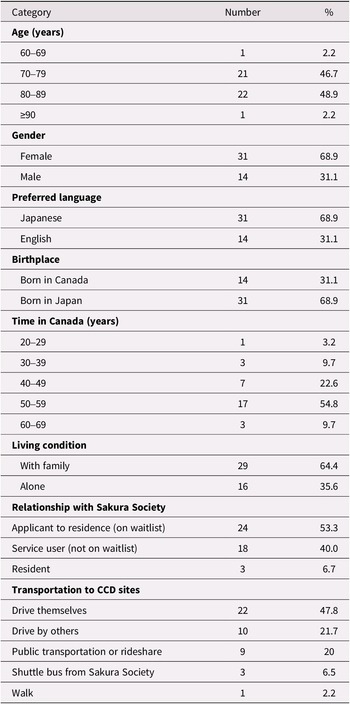
Table 1 presents the demographic characteristics of the 45 CCD participants who took part in our study. Their ages ranged from 62 to 90 years (mean = 80 years), with the majority in their 70s or 80s. Women comprised 68.9% of the group (n = 31), and 68.9% (n = 31) preferred Japanese as their primary language. Thirty-one participants (68.9%) were first-generation immigrants, most of whom had resided in Canada for 40 years or longer. The rest of the participants were born in Canada.
Study participant demographics (CCD participants) (n = 45)

In terms of living arrangements, 29 participants (64.4%) lived with at least one family member, whereas 16 participants (35.6%) lived alone. Participants’ connections to Sakura Society varied: 24 participants (53.3%) were on the residence waitlist, 18 participants (40%) used community services with no plans to apply for housing, and three participants (6.7%) were current residents.
Participants most commonly learned about the CCD program through word of mouth (n = 30, 66.7%), followed by Sakura Society staff (n = 11, 24.4%). A small number were informed by another Japanese-focused organization (n = 1, 2.2%) or were unsure of the source (n = 3, 6.7%). Transportation to CCD sites also showed variation. Twenty-two participants (47.8%) drove themselves, 10 people (21.7%) were driven by someone else, nine (20%) used public transit or rideshare services, three (6.5%) used Sakura Society transportation, and one person (2.2%) walked to the CCD program.
Thematic findings
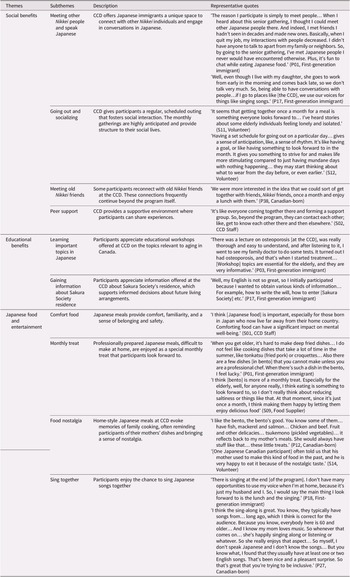
Our thematic analysis identified three key themes pertinent to perceived benefits of the CCD program to Nikkei seniors: social benefits, educational benefits, and Japanese food and entertainment. Together, these elements create a unique atmosphere of Japanese-ness, attracting Nikkei seniors with various linguistic, cultural, and social needs. We also identified challenges pertinent to program success that call for future improvements. Table 2 represents key themes, subthemes, and representative quotes.
Key themes on perceived program benefits and representative quotes

Social benefits
One notable benefit of the CCD program is that it provides Nikkei seniors with a unique space to meet other Nikkei people and speak Japanese. First-generation immigrants particularly appreciated this opportunity. One participant described how, despite living with her daughter, she spends most of the day alone while her daughter is at work. For her, having conversations in Japanese with others at the CCD helped reduce feelings of isolation. Several participants noted that their Canadian-born children do not speak Japanese, making it harder for their social needs to be met. Most of these immigrant seniors first learned about the CCD through Sakura Society’s staff members or other Japanese immigrants already attending the program.
Another recurring theme in the interviews was the program’s role in providing an opportunity for going out and socializing. Both program participants and volunteers described how the monthly gatherings created a sense of anticipation, with some attendees preparing their outfits and looking forward to meeting others well in advance. For those living alone or with limited daily interaction, the event offered a welcome change from the monotony of everyday life. Sharing a meal together was often mentioned as a highlight, bringing warmth and a sense of engagement. The regularity of having a set date each month was seen as adding rhythm and stimulus to participants’ lives.
For others, particularly among second- and third-generation Japanese immigrants, the CCD was valued less for making new friends and more for meeting old Nikkei friends. Interviews reflected how these participants appreciated the chance to get together with long-standing friends over lunch. The gatherings provided a comfortable space to reminisce, exchange updates, and strengthen bonds built over many years while having a Japanese meal together. For these participants, the CCD served as a means of sustaining and revitalizing existing social ties.
Interviews also highlighted the role of the CCD in fostering peer support. Some participants described meeting other Japanese immigrants in their local area for the first time through the program, while others spoke about reuniting with people they had met decades earlier without knowing they had been attending the CCD. These connections often developed into relationships that extended beyond the scheduled events, with participants contacting each other independently. Staff members observed that this informal support network strengthened the sense of belonging among participants and enhanced the overall community connection the CCD sought to build.
Educational benefits
A couple of first-generation immigrants reported an increase of knowledge through workshops offered at the CCD. Particularly those to whom English is not their first language, the workshops held in Japanese were helpful in learning important topics in Japanese. A few participants shared positive impressions of workshops on topics relevant to aging in Canada, including Power of Attorney, the process of making a will, and nutrition for seniors. One participant noted that she learned about the risk of osteoporosis during a health education workshop at a CCD session. After consulting with her family doctor, she discovered that she was at high risk for osteoporosis and was able to take preventive measures. Staff members also mentioned that a workshop featuring how to use the LINE app (a messaging app popular in Japan) was positively received by Japanese-speaking seniors, as it helped them start communicating with their families and friends in Japan.
Relatedly, CCD participants appreciated information about Sakura Society’s supportive housing residence, which supports informed decisions about future living arrangements. Given the long waitlist, some participants wanted to explore long-term care homes that may offer culturally appropriate care to Japanese older adults. A few Japanese immigrants also expressed their wishes to learn about palliative care and funeral arrangements in Canada at the CCD, while these topics were not popular among Japanese Canadians who already have relevant knowledge.
Atmosphere of Japanese-ness
Japanese food was not the sole reason many people joined the CCD, yet it consistently emerged as an important element connecting participants and sparking conversation. For many participants, first-generation immigrants and Canadian-born participants alike, Japanese meals served as comfort food, familiar dishes that evoked feelings of safety and cultural belonging. CCD staff and volunteers observed that the familiarity of these meals could be especially meaningful for those living far from their country of birth, offering not only nourishment but also a subtle form of mental and emotional support.
While many participants still prepared Japanese meals at home, the professionally made bentos at the CCD were described as a monthly treat. For some, these bentos offered dishes that would be difficult or time-consuming to prepare themselves, such as deep-fried items or specialties requiring professional skill. Food suppliers noted that they designed the menus with variety and enjoyment in mind, aiming to make the monthly meal something to savor. Even participants who placed greater value on the social aspects of the program expressed a preference for Japanese cuisine, appreciating its familiarity, perceived health benefits, and cultural resonance.
For several Canadian-born participants, the meals evoked food nostalgia, memories of home-cooked dishes and their childhood. Bentos containing food items like grilled fish or tsukemono (pickled vegetables) reminded them of meals their mothers used to prepare, distinct from Japanese meals available in restaurants. Volunteers observed that such moments of recognition often sparked fond recollections and emotional connections to family traditions, deepening the sense of cultural continuity.
Beyond food, the CCD incorporated entertainment that strengthened the atmosphere of cultural connection, particularly through opportunities to sing together. Two out of six CCD sites we observed had a sing-along time featuring popular Japanese songs from decades past, resonating with older participants. For some participants, this was one of the unique opportunities they used their vocal cords in a social setting, while others enjoyed listening and joining in when possible. CCD staff members also included occasional English-language songs, making the activity inclusive for non-Japanese-speaking attendees and creating a shared experience.
With these three themes altogether, the CCD created an atmosphere of ‘Japanese-ness’ connecting different generations of the Nikkei community. For first-generation immigrant seniors, the atmosphere offered a sense of comfort and safety, while for second- and third-generation Japanese Canadians, it served as a tangible reminder of their cultural roots, fostering a sense of nostalgia and belongingness.
Challenges to program success
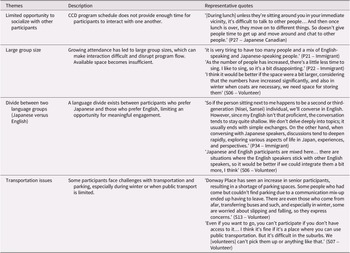
Despite the benefits, our analysis identified four challenges to the success of this program: Limited opportunities to socialize with other participants, large group sizes, a divide between two language groups, and transportation issues. Table 3 addresses key themes with representative quotes from participant interviews.
Key themes on challenges to program success and representative quotes

Several participants expressed there were limited opportunities to socialize with other participants during the program schedule. While mealtimes offered some interaction, the seating arrangement and quick transition to the next activity often meant conversations were confined to those sitting nearby. As a result, participants had little chance to mingle more widely or engage in extended discussions with people outside their immediate table group.
The program’s popularity has also led to large group sizes, which participants acknowledged having created new difficulties. Long-standing attendees sometimes felt that the increasingly crowded environment reduced opportunities for meaningful interaction and shortened time for certain activities they enjoyed such as group singing. Volunteers also noted practical challenges, such as limited space for seating and coat storage, which became especially pressing during the winter months. For some, the large number of attendees made the experience more tiring and less conducive to personal connection that they hoped to gain at the CCD.
Another recurring issue was a divide between two language groups. The CCD brings together first-generation Japanese immigrants, many of whom value the opportunity to converse in Japanese, and Canadian-born participants, who are generally more comfortable interacting in English. While there is mutual respect and a shared sense of community, differences in language preference sometimes result in a separation between these two groups. One Japanese-born participant noted that when communication occurs in English, a less fluent language for him, conversations tend to stay shallow. Both participants and volunteers observed that social interactions often happened within language groups, and some wished to have ways to better integrate Japanese- and English-speaking attendees to bridge this gap.
Finally, transportation issues were also a barrier for some participants, especially for those living in suburban areas or those no longer able to drive. While 47.8% of CCD participants interviewed reported driving themselves to the program sites, others struggled with parking shortages or had to navigate long and complicated public transit routes. In winter, concerns about slippery sidewalks and potential falls further discouraged travel. Staff members and volunteers explained that they were prohibited to provide rides to CCD participants, which meant some seniors missed sessions despite wanting to attend.
Together, these challenges highlight the need for thoughtful adjustments to scheduling, group management, language integration, and transportation support to ensure that all participants can fully benefit from the CCD’s programs and community connections.
Discussion
Although social dining programs have been shown to provide important social opportunities for older adults (Keller et al., Reference Keller, Schindel Martin, Dupuis, Genoe, Gayle Edward and Cassolato2010; Stehouwer, Reference Stehouwer2014), the cultural appropriateness of such programs has seldom been researched. Our case study explored a culturally tailored social dining program for Canadian seniors of Japanese descent and identified key strengths and challenges in its design and delivery. Our analysis provided a comprehensive and multifaceted picture of Sakura Society’s CCD program that has evolved over time to address unique community needs. The demographics and experiences of the CCD clients (Nikkei seniors) illustrate the program’s reach and popularity. We also identified key challenges CCD faces as it considers their future prospects.
Consistent with prior research on culturally-tailored senior programs (e.g., Kim & Kim, Reference Kim and Kim2021), our findings show that the Sakura Society’s CCD created a socially and culturally welcoming space where Nikkei seniors interact and share experiences. The integration of Japanese language, cuisine, and entertainment addressed both nutritional and psychosocial needs, reinforcing cultural identity and intergenerational connection among Nikkei seniors. Educational opportunities embedded in the CCD were particularly valuable for the first-generation Japanese immigrants who often have limited access to crucial information about healthy aging in Canada. The combination of language accessibility, relevant topics, and a trusted community setting enabled these participants to access information that might otherwise be difficult to obtain through mainstream services.
While participants valued the program for its social opportunities and educational benefits, Japanese meals emerged as a central component of its appeal. Culturally preferred food resonates with many participants’ food identity and cultural heritage, fostering a sense of belonging and cultural safety, regardless of their length of stay in Canada or their linguistic preferences. Even for those not primarily motivated by food, the presence of Japanese cuisine reinforced the program’s cultural atmosphere and provided a sense of comfort and belonging.
It is worth noting that through Japanese meals and entertainment activities, the CCD created a unique atmosphere of ‘Japanese-ness’ connecting different members of the Nikkei community. For Japanese-speaking immigrants, ‘Japanese-ness’ was anchored in language, shared life experiences, and culturally familiar food, serving as a protective factor against social isolation. For second- and third-generation participants, it evoked nostalgia and represented an opportunity to reconnect with cultural heritage, highlighting the role of such programs in sustaining cultural continuity within diasporic communities. Unlike previous studies that have focused primarily on the cultural needs and acculturation challenges of first-generation immigrants participating in CCD programs (e.g., Middleton et al., Reference Middleton, Velardo, Patterson and Coveney2024), our findings highlight that the culturally tailored social dining experience could also meet cultural needs of generational Japanese Canadians that are often overlooked in the literature. The Sakura Society’s CCD was distinctive in providing an intergenerational space that brought together first-generation Japanese immigrants and multi-generational Japanese Canadians, two groups that are typically separated socially and linguistically, thereby facilitating cultural transmission and mutual support across generations. This dual and intergenerational function aligns with diaspora studies emphasizing the role of culturally grounded community spaces in sustaining intergenerational ties and transmitting cultural knowledge (Sueyoshi, Reference Sueyoshi2017; Ullah, Reference Ullah2024).
Despite several benefits, the CCD faces challenges that warrant careful consideration. With the growing popularity of the CCD program, participants’ needs have been diverging, demanding a reassessment of the program’s scope and operation. During its initial phase, the CCD program focused primarily on first-generation Japanese-speaking immigrants whose needs were often unmet. Even though many of them were fluent in English and had been settled in Canada for a long time, as they age, they preferred to communicate and receive information in Japanese. Given the scarcity of social services provided in Japanese in the GTA, as well as the small size of the Japanese-speaking community, the CCD offered a unique educational and socialization opportunity to community-dwelling seniors. However, the program has evolved and expanded to attract a diverse range of Nikkei seniors from different generations and with different cultural, linguistic, and social needs. The CCD program participants now include not only the first-generation Japanese-speaking immigrants but also the second- and third-generation Japanese Canadians with different cultural experiences and linguistic preferences.
Transportation emerged as another critical barrier, consistent with evidence linking mobility constraints to food insecurity among older adults (Tohit et al., Reference Tohit, Ya and Haque2025). For seniors residing in suburban areas or those no longer driving, inaccessible locations and limited parking significantly curtailed attendance. Partnerships with community transport providers, volunteer drivers, or hosting CCD in more transit-accessible venues (e.g., pop-up CCDs) could help ensure equitable access.
This case study underscores the value of culturally tailored social dining programs for older adults from cultural minority backgrounds. Beyond providing meals, such programs must foster cultural safety, address linguistic diversity, and adapt to evolving participant demographics. For policymakers and service providers, the findings highlight that culturally appropriate senior services are not static. Rather, they require ongoing reassessment, resource mobilization, and creative program design to remain responsive to the changing needs. In a multicultural aging society like Toronto, ensuring that social programs reflect and respect seniors’ cultural identity is not only a matter of inclusion but also a determinant of their well-being.
Limitations and future research directions
This study was a small-scale case study. Although we interviewed 47% of the 97 CCD participants we met during site observations, which provides a reasonably representative snapshot of the group, the findings are not broadly generalizable. The perspectives of participants who did not take part in interviews may differ, and program-specific features may limit applicability to other contexts. Future research could extend this work to other ethnocultural minority groups to explore the transferability of culturally tailored social dining models. Additionally, examining other forms of culturally adapted meal provision programs for older adults such as Meals on Wheels or other home-delivered food programs would help identify effective strategies for reaching those unable to attend group-based settings.
Conclusion
The Sakura Society’s CCD program illustrates the potential of culturally tailored social dining initiatives to address social and educational needs among older adults from cultural minority backgrounds. By integrating Japanese meals, language, and culturally relevant activities, the program fostered comfort and heritage connection for heterogeneous Nikkei seniors across generations. Along with social and educational benefits, Japanese meals played a key role in the program, by evoking memories, affirming identity, and creating a culturally safe space for connection. While the program’s growth has expanded its reach, it has also introduced challenges, including managing diverse linguistic needs, maintaining opportunities for meaningful interaction, and ensuring transportation access. Addressing these issues will be essential for sustaining engagement and maximizing program benefits. Although the findings are context-specific, they highlight broader lessons for designing inclusive and culturally sensitive programs for aging populations in multicultural societies. Future work should explore how similar approaches can be adapted for other ethnocultural groups and through alternative service models, ensuring that older Canadians from diverse backgrounds have equitable access to culturally affirming social supports.
Acknowledgements
We wholeheartedly thank all research participants for generously sharing their experiences with us. Special thanks go to CCD staff members, volunteers, and food suppliers who facilitate the community congregate dining program, for collaborating with us in this research project. This project is funded by Social Science and Humanities Research Council of Canada’s Partnership Engage Grant (Principal Investigator: Yukari Seko, #892-2022-3000).