Adverse experiences during childhood (age 3–12) and adolescence (age 13–18) are a risk factor for developing post-traumatic stress disorder (PTSD) and other adverse mental health outcomes (Ehlert, Reference Ehlert2013; Heim & Nemeroff, Reference Heim and Nemeroff2001), including disruption of brain maturation and attachment as well as forming negative schemas (Eiland & Romeo, Reference Eiland and Romeo2013; O'Dougherty Wright, Crawford, & Del Castillo, Reference O'Dougherty Wright, Crawford and Del Castillo2009; Styron & Janoff-Bulman, Reference Styron and Janoff-Bulman1997). To prevent these negative outcomes effective PTSD treatment is essential.
PTSD is characterised by intrusive recollections of a traumatic event such as flashbacks and nightmares, avoidance of trauma-related stimuli, changes in affect and cognition, and hyperarousal symptoms such as hypervigilance (DSM-5, American Psychiatric Association [APA], 2013). Children and adolescents may also experience symptoms including developmental regression, trauma-specific re-enactment in play and changes in their arousal or reactivity, including externalising behaviour such as temper tantrums (APA, 2013). Interventions need to not only effectively treat these symptoms of PTSD but also need to be developmentally appropriate to be effective with this population (Baggerly & Exum, Reference Baggerly and Exum2008). This can include being flexible with the content of treatment sessions based on the participant's attention span and their developmental level or including caregivers where appropriate (Foa, Chestman, & Gilboa-Schechtman, Reference Foa, Chestman and Gilboa-Schechtman2008; Nevo & Manassis, Reference Nevo and Manassis2011).
Effectiveness of PTSD interventions in children and adolescents was previously summarised in a systematic review (Gillies, Taylor, Gray, O'Brien, & D'Abrew, Reference Gillies, Taylor, Gray, O'Brien and D'Abrew2012). This review demonstrated the effectiveness of psychological interventions, most notably CBT. However, this review only included a small number of studies (14) generally with low numbers of participants and was published in 2012, containing literature published up until 2011. We, therefore, aimed to update this review as well as expand it. Since the publication of the previous review, other studies have been carried out examining the effectiveness of psychological interventions for PTSD in children and adolescents. In one study, the effect sizes for PTSD symptom change ranged from large to small depending on the control condition of the study. Cognitive Behavioural Therapy (CBT) was found to be the most effective at reducing PTSD symptoms, particularly when parents were included (Gutermann et al., Reference Gutermann, Schreiber, Matulis, Schwartzkopff, Deppe and Steil2016). In another study, trauma focused (TF) –CBT, in particular, showed large effects at reducing PTSD symptoms after treatment compared to waitlist controls. Eye Movement Desensitisation and Reprocessing (EMDR) was also found to be effective but to a lesser extent (Mavranezouli et al., Reference Mavranezouli, Megnin- Viggars, Daly, Dias, Stockton, Meiser-Stedman and Pilling2020).
In addition to children and adolescents, the present review included interventions in young adults, up to 25 years of age. As brain maturation continues into the early twenties (Pfefferbaum et al., Reference Pfefferbaum, Mathalon, Sullivan, Rawles, Zipursky and Lim1994; Steinberg, Reference Steinberg2014) this systematic review and meta-analysis investigated the effectiveness of PTSD interventions in young adults, as well as children and adolescents.
The primary aim of the present review was, therefore, to evaluate the efficacy of psychological interventions for PTSD in children, adolescents and young adults and determine if any intervention is superior. A secondary aim was to evaluate the efficacy of psychological interventions in children compared with psychological interventions in adolescents and young adults.
Methods
Search strategy and selection criteria
This systematic review and meta-analysis followed Preferred Reporting Items for Systematic reviews and Meta-analysis (PRISMA) guidelines. Our protocol was registered with PROSPERO (CRD42019141619). We systematically searched Embase, Medline and PsycINFO as well as Open Grey and Google Scholar to find relevant grey literature. We manually searched biographies of included citations. The final search was run on 17 July 2019 and included free-text and Medical Subject Headings (MeSH) terms and was adapted for each database (see online Supplementary methods). The search was limited to studies carried out in humans and published in the English language between 2011 and 2019, to systematically evaluate studies published after the previous systematic review (Gillies et al., Reference Gillies, Taylor, Gray, O'Brien and D'Abrew2012).
PICOS criteria
Studies were considered eligible if they contained data from a randomised control trial (RCT) investigating the effectiveness of any psychological intervention in children (3–12 years of age), adolescents (13–18 years) or young adults (19–25 years) diagnosed with PTSD. Studies were included only if all participants were aged 3–25. Authors were contacted for confirmation if necessary. Our primary outcome was the reduction of PTSD symptoms on a validated scale. We included RCT as well as cluster RCT, but not matched control studies. We listed secondary outcomes investigated by the studies included in our systematic review but did not synthesise these. Included studies used various diagnostic classifications to assess PTSD including Diagnostic and Statistical Manual of Mental disorders (DSM) versions DSM-III, DSM-IV, DSM-IV-TR and DSM-5. We assumed sufficient commonalities to pool effect sizes. Studies with participants with comorbid conditions were included, as were studies with participants with subthreshold symptoms, as subthreshold PTSD can generate distressing symptoms requiring similar levels of treatment to full PTSD (Foa, Riggs, & Gershuny, Reference Foa, Riggs and Gershuny1995).
We included any study investigating a psychological therapy, including psychoeducation, as this has shown to be effective at reducing PTSD symptoms compared to those who did not receive psychoeducation (Oflaz, Hatipoglu, & Aydin, Reference Oflaz, Hatipoglu and Aydin2008). Included studies had to have a control group, including an alternative intervention, treatment as usual, waiting list control or no treatment.
Exclusion criteria
Studies were excluded if they included samples within 1 month of trauma exposure, as they are not able to meet diagnostic criterion F according to DSM-5 (APA, 2013) and research consistently shows that the majority of individuals will recover naturally within the first few weeks after a trauma (Friedman, Resick, Bryant, & Brewin, Reference Friedman, Resick, Bryant and Brewin2011). Conference papers and studies reporting data from other studies were excluded, as these did not include sufficient information to assess suitability. Studies with mixed participants who were young people and adults (i.e.: age range 15–40) were excluded.
Data extraction and analysis
Two authors (RJ-BB and MK) extracted data independently. Study-level data about study characteristics, rate-level data about treatment effects and meta-level data on study design and study quality were recorded in a standardised spreadsheet (see online Supplementary materials). Quality of yield was assessed using the Cochrane Risk of bias tool (Higgins et al., Reference Higgins, Sterne, Savovic, Page, Hróbjartsson, Boutron and Eldrige2016). Studies assessing the effectiveness of interventions through improvement from a diagnosis of PTSD ascertained via diagnostic interviews or via validated self-report PTSD scales were included in this review. Where available, we extracted summary-level data on effect sizes by age group (children, adolescents, young adults) and type of intervention used. We assessed small study effects (including publication bias) through visual inspection of a funnel plot and use of Egger's test where possible (Harbord, Harris, & Sterne, Reference Harbord, Harris, Sterne and Sterne2009).
Measures of treatment effect
Based on the previous meta-analysis, we anticipated a high level of heterogeneity and specified use of random-effects meta-analysis. We calculated Cohen's D effect size for each study using means and standard deviations of post-intervention PTSD symptoms. When no standard deviation was reported, we computed the standard error using 95% confidence intervals. We pooled Cohen's D effect sizes when three or more studies were available, grouping studies by the intervention.
We assessed statistical heterogeneity using the Q test and quantified using the I 2 statistic, which identifies the proportion of the observed variance that reflects real differences in effect size. We carried out a subgroup analysis by comparing the effectiveness of different psychological interventions to each other when more than two studies assessed the effectiveness of any particular intervention (Valentine, Pigott, & Rothstein, Reference Valentine, Pigott and Rothstein2010). We also carried out subgroup analysis comparing the effects of treatment on children (all participants under the age of 12) compared with the effects of the treatment on adolescents and young adults (participants between age 13 and 25) (Curtis, Reference Curtis2015; Jawroska & MacQueen, Reference Jawroska and MacQueen2015).
We checked for normality of data and conducted a sensitivity analysis with only those studies including normally distributed data.
Results
Characteristics of included studies
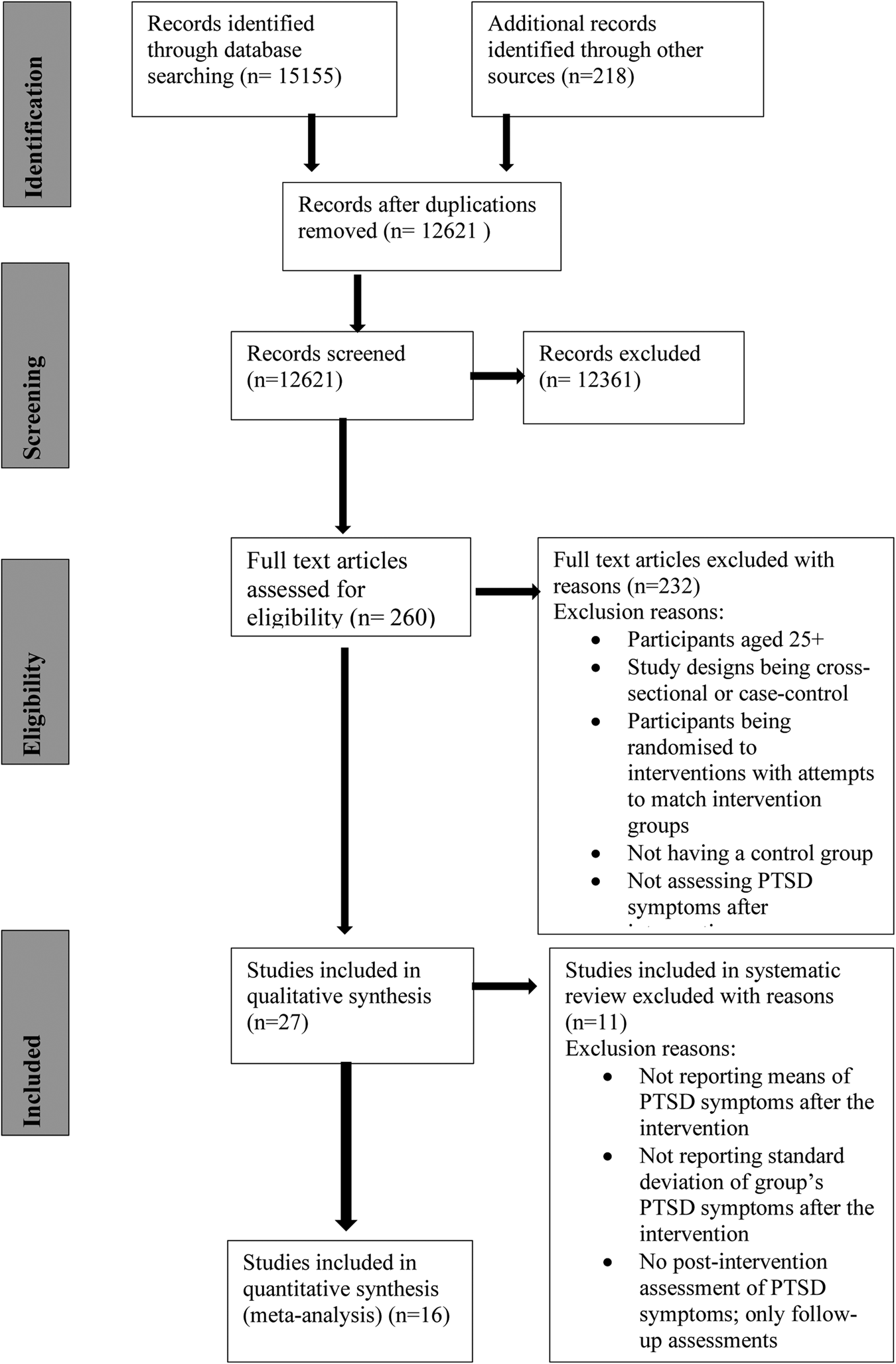
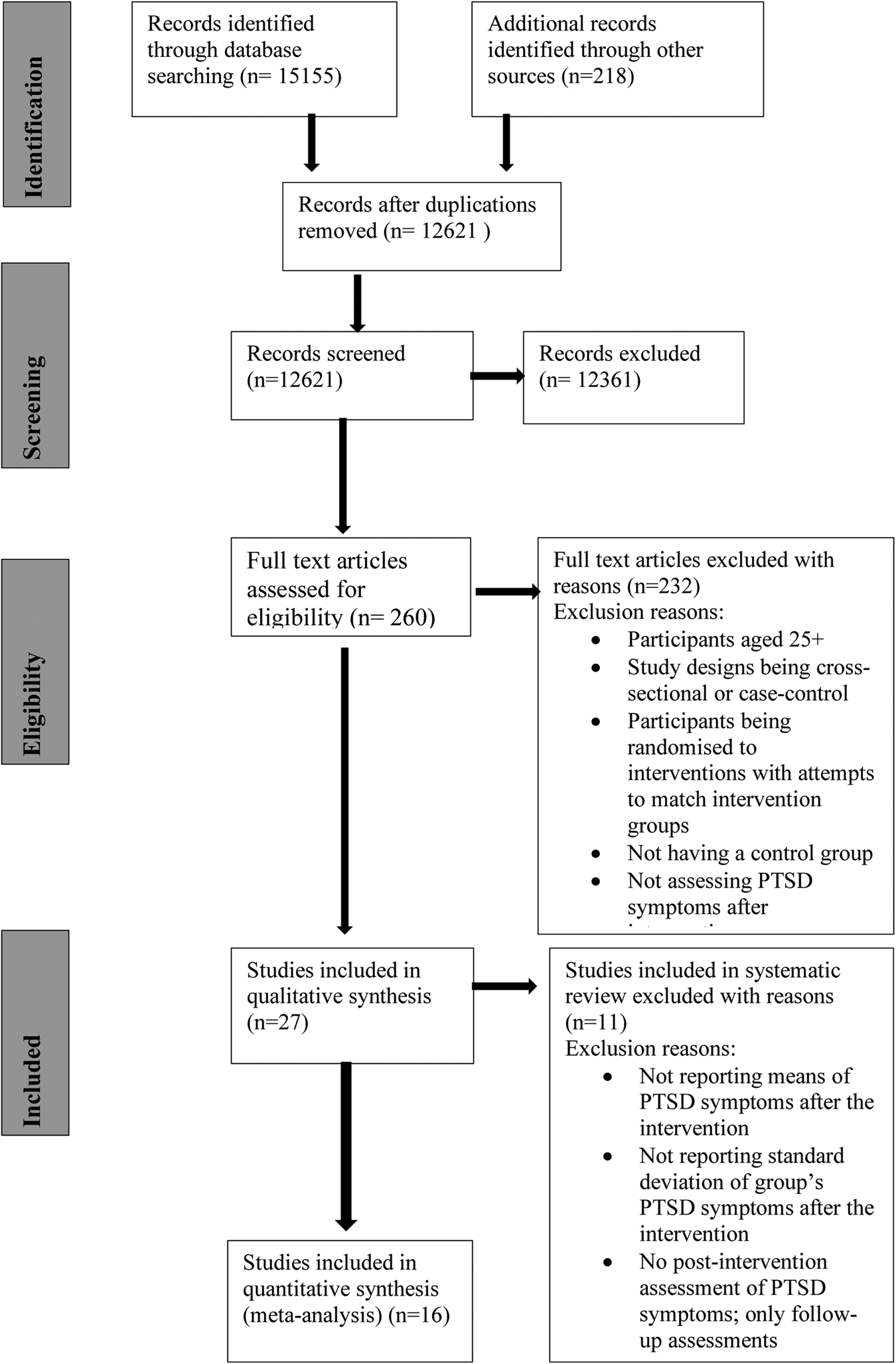
We retrieved 15 155 studies, of which 27 met our inclusion criteria (see Fig. 1). We achieved good inter-rater reliability between the two reviewers at ‘title and abstract’ and ‘full text’ screening stages (k = 0.714, p < 0.001; k = 1.000, p < 0.001).
PRISMA flow chart depicting study selection for systematic review and meta-analysis.
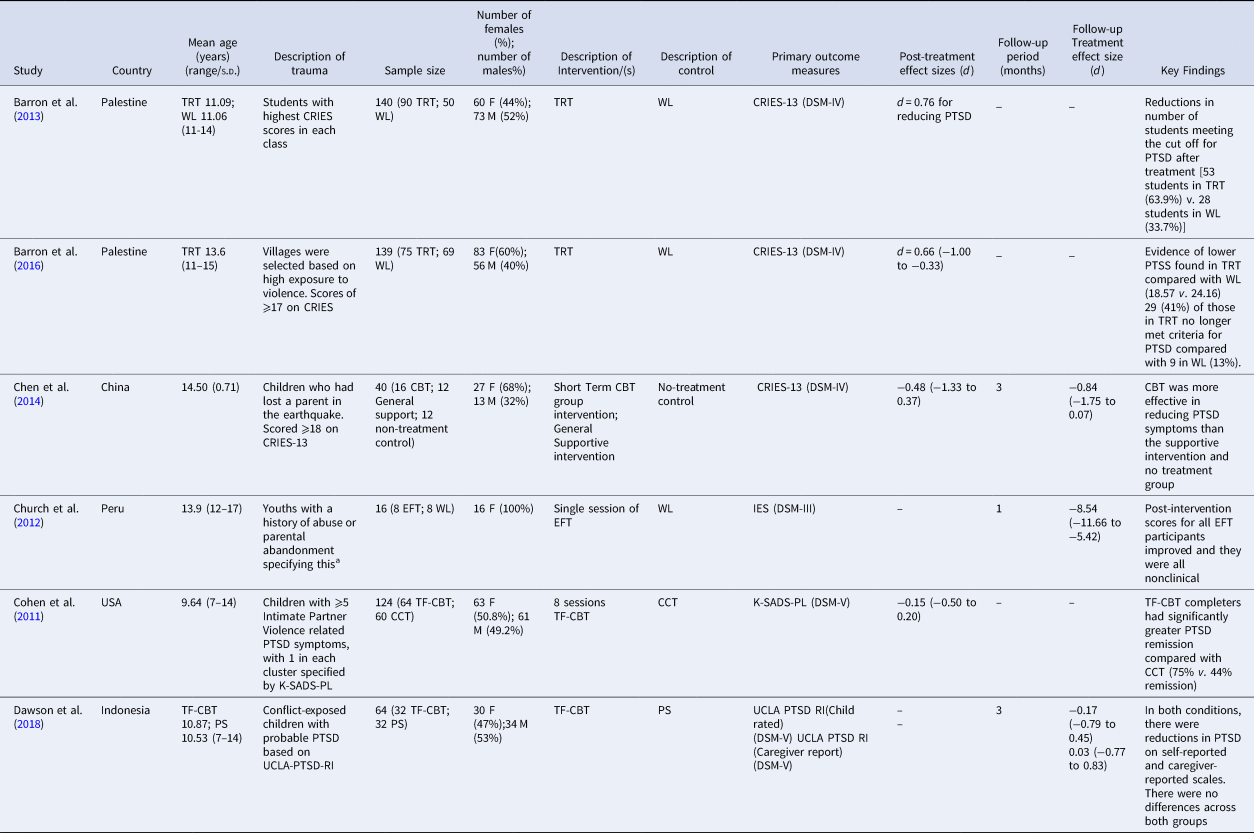
The 27 eligible studies included 2187 participants. Included studies had child populations (n = 3, 11%), adolescent and young adult populations (n = 7, 26%) and mixed populations (n = 17, 63%; Table 1). As indicated in Table 1, four studies (15%) included participants exposed to warfare (Barron et al., Reference Barron, Abdallah and Smith2016; Barron, Abdallah, & Smith, Reference Barron, Abdallah and Smith2013; Dawson et al., Reference Dawson, Joscelyne, Meijer, Steel, Silove and Bryant2018; Ertl, Pfeiffer, Elbert, & Neuner, Reference Ertl, Pfeiffer, Elbert and Neuner2011). In these studies, the most frequently reported traumas were witnessing someone being killed and being used as a human shield. Two studies (7%) included participants exposed to natural disasters (Chen et al., Reference Chen, Wu Shen, Gao, Lam, Chang and Deng2014; De Roos et al., Reference De Roos, Greenwald, Den Hollander-Gijsman, Noorthoorn, Van Burren and De Jongh2011). Chen et al. (Reference Chen, Wu Shen, Gao, Lam, Chang and Deng2014) did not report the types of trauma participants were exposed to except the inclusion criteria: losing a parent in the earthquake. In De Roos et al. (Reference De Roos, Greenwald, Den Hollander-Gijsman, Noorthoorn, Van Burren and De Jongh2011), the most frequently reported trauma was a thought they were going to die. Six studies (22%) included participants exposed to abuse (Church, Piña, Reategui, & Brooks, Reference Church, Piña, Reategui and Brooks2012; Cohen, Mannarino, & Iyengar, Reference Cohen, Mannarino and Iyengar2011; Deblinger, Mannarino, Cohen, Runyon, & Steer, Reference Deblinger, Mannarino, Cohen, Runyon and Steer2011; Dorsey et al., Reference Dorsey, Pullman, Berliner, Koschmann, McKay and Deblinger2014; Foa, McLean, Capaldi, & Rosenfield, Reference Foa, McLean, Capaldi and Rosenfield2013; Rosner et al., Reference Rosner, Rimane, Frick, Gutermann, Hagl, Renneberg and Steil2019). Two studies reported on sexual abuse (Deblinger et al., Reference Deblinger, Mannarino, Cohen, Runyon and Steer2011; Foa et al., Reference Foa, McLean, Capaldi and Rosenfield2013) and one study on exposure to intimate partner violence specifically (Cohen et al., Reference Cohen, Mannarino and Iyengar2011).
Characteristics, effect sizes and key findings of reviewed studies
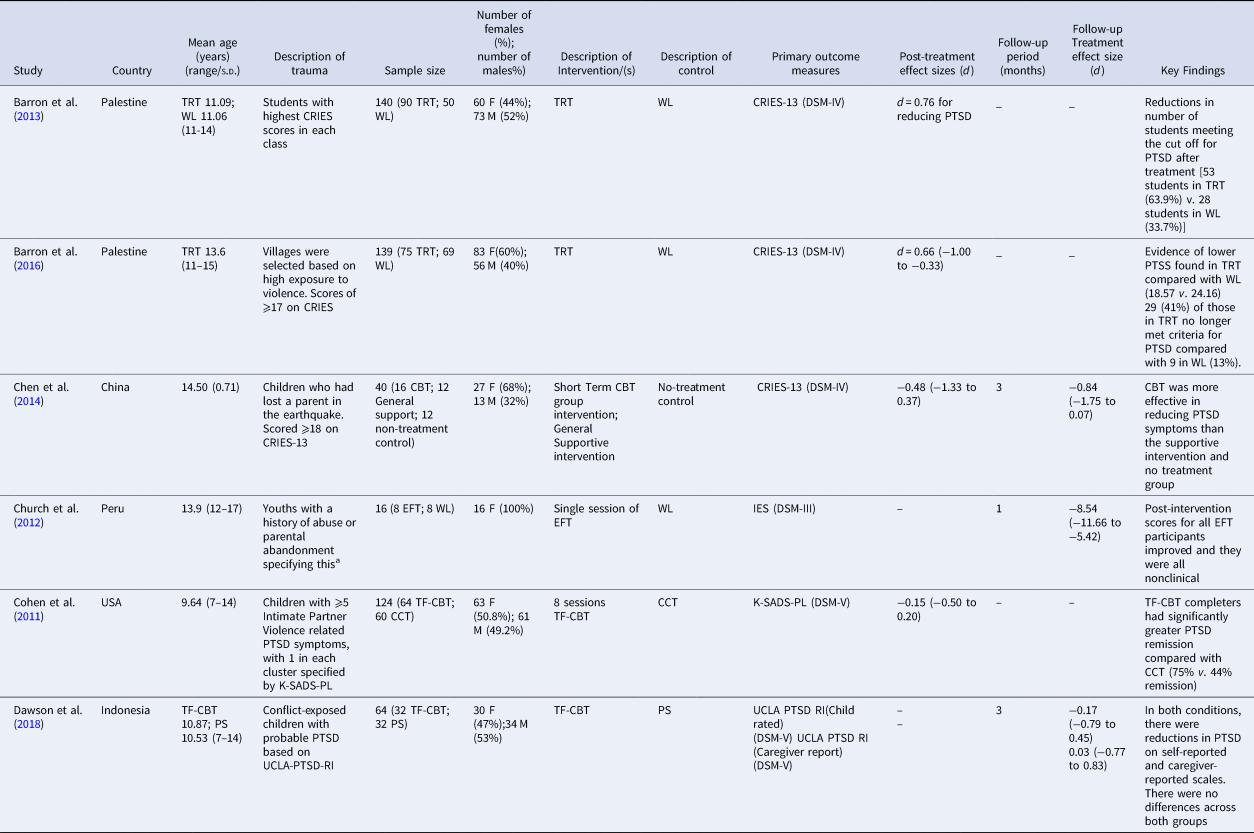
TRT, Teaching Recovery Techniques; WL, Waiting List; CRIES-13, Children's Revised Impact of Events Scale; PTSS, Post-traumatic stress symptoms; CBT, Cognitive Behavioural Therapy; EFT, Emotional Freedom techniques; IES, Impact of Events Scale; TF-CBT, Trauma-focused Cognitive Behavioural Therapy; CCT, Child-centred therapy; K-SADS-PL, Kiddie-Schedule for Affective Disorders and Schizophrenia-Present and Lifetime Version; PS, Problem Solving; UCLA PTSD RI, University of California at Lost Angeles Post-traumatic Stress Disorder Reaction Index; EMDR, Eye Movement Desensitive Reprocessing; CBWT, Cognitive Behaviour Writing Therapy; CRTI, Revised Children's Responses to Trauma Inventory; CSA, Child Sexual Abuse; TN, Trauma Narrative; CAPS-CA, Clinician-Administered PTSD Scale for Children and Adolescents; DSM, The Diagnostic and Statistical Manual of Mental Disorders; TF-CBT + E, Trauma-focused therapy with engagement strategies; NET, Narrative Exposure Therapy; CAPS, Clinician-Administered PTSD Scale; PE, Prolonged Exposure; CPSS−I, Child PTSD Symptom Scale-Interview; TARGET, Trauma Affect Regulation: Guide for Education and Therapy; ETAU, Enhanced Treatment as Usual; TLPT, Time-Limited Dynamic Therapy for Adolescents; CT, Trauma-Focused therapy without exposure; MW, Mein Weg Program – psychoeducation, narrative work and relaxation; CATS-S, Child-and Adolescent Trauma Screen- Self Report; CATS-C, Child and Adolescent Trauma Screen-Caregiver report; D-CPT, Developmentally Adapted Cognitive Processing Therapy; MINI-KID, Mini International Neuropsychiatric Interview for Children and Adolescents; PAPA, Preschool Age Psychiatric Assessment; CCPT, Child-centred play therapy; PROPS, Parent Report of Post-traumatic Stress Symptoms.
a Baseline characteristics indicate all participants had IES scores in moderate clinical range (27–42) despite no inclusion criteria specifying PTSD symptoms.
b Only 10 participants were assessed in each condition at 6 months in Nixon et al. (Reference Nixon, Sterk and Pearce2012).
Trauma Focused-Cognitive Behavioural therapy (TF-CBT) was the most commonly researched intervention with 13 studies (48%, see Table 1) evaluating its effectiveness. A further two studies (7%) investigated the effectiveness of Teaching Recovery Techniques (TRT), an intervention program based on cognitive behavioural principles and three studies (11%) investigated the effectiveness of standard (non-trauma-focused) CBT. In addition to TF-CBT, three studies investigated Prolonged Exposure (PE) (11%), three studies investigated Eye Movement Densistisation and Reprocessing (EMDR) (11%) and one study investigated Narrative Exposure Therapy (NET) (4%).
Twenty-four studies investigated the effectiveness of the intervention on additional outcomes besides PTSD symptoms or diagnosis (all except Church et al. Reference Church, Piña, Reategui and Brooks2012; Pityaratstian et al. Reference Pityaratstian, Piyasil, Ketumarn, Sitdhiraksa, Ularntinon and Pariwatcharakul2015; Schottelkorb, Doumas, & Garcia, Reference Schottelkorb, Doumas and Garcia2012). The most common secondary outcome assessed was depressive symptoms (n = 22). A table displaying key findings for the effectiveness of the psychological interventions for the additional outcomes can be seen in online Supplementary materials.
Quality of included studies
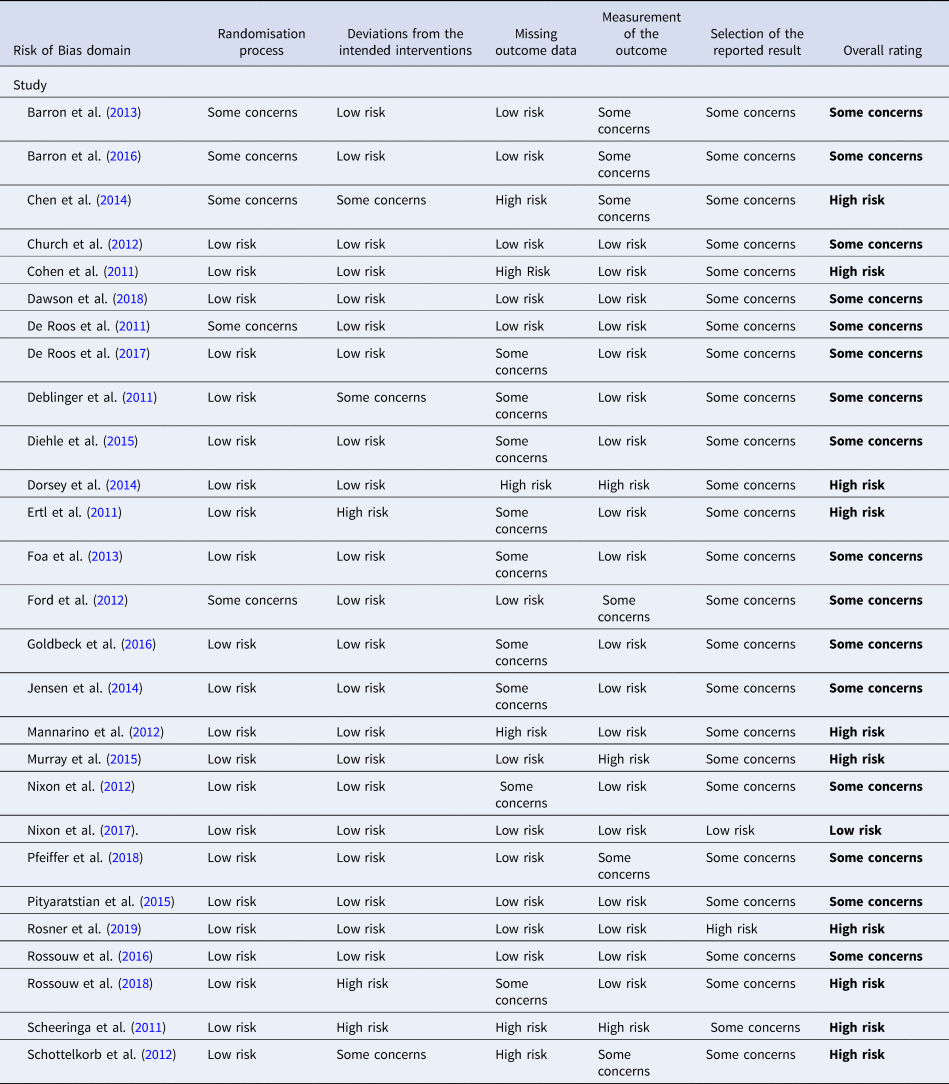
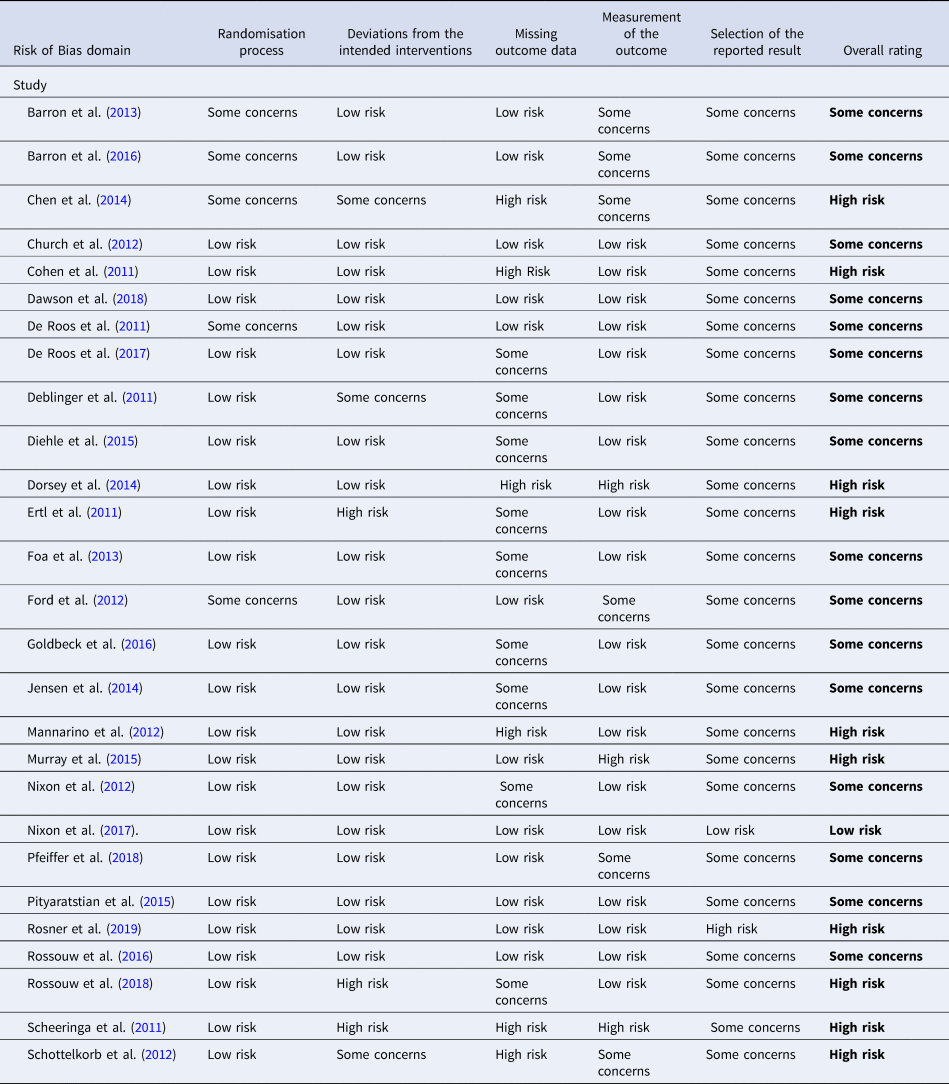
As indicated in Table 2, one study was rated as low risk of bias (4%), 16 studies were rated as having some concerns (59%) and 10 studies were rated as having a high risk of bias (37%). All studies used valid and reliable outcome measures, however, only 19 studies reported using blind assessors at follow up (70%). There was a high risk of bias in three studies (11%) regarding deviations from the intended interventions, six studies (22%) regarding missing outcome data and three studies (11%) regarding the risk of bias in the measurement of the outcome. One study (4%) had a risk of bias in the selection of the reported result (full results in Table 2).
Cochrane Risk of Bias assessment for included studies
Meta-analysis
The meta-analysis included 16 studies (59%) (Barron, Abdallah, & Heltne, Reference Barron, Abdallah and Heltne2016; Chen et al., Reference Chen, Wu Shen, Gao, Lam, Chang and Deng2014; Church et al., Reference Church, Piña, Reategui and Brooks2012; Cohen et al., Reference Cohen, Mannarino and Iyengar2011; De Roos et al., Reference De Roos, Greenwald, Den Hollander-Gijsman, Noorthoorn, Van Burren and De Jongh2011, Reference De Roos, Van der Oord, Zijlstra, Lucassen, Perrin, Emmelkamp and DE Jongh2017; Diehle, Opmeer, Boer, Mannarino, & Lindauer, Reference Diehle, Opmeer, Boer, Mannarino and Lindauer2015; Ertl et al., Reference Ertl, Pfeiffer, Elbert and Neuner2011; Foa et al., Reference Foa, McLean, Capaldi and Rosenfield2013; Ford, Steinberg, Hawke, Levine, & Zhang, Reference Ford, Steinberg, Hawke, Levine and Zhang2012; Goldbeck, Muche, Sachser, Tutus, & Rosner, Reference Goldbeck, Muche, Sachser, Tutus and Rosner2016; Jensen et al., Reference Jensen, Holt, Ormhaug, Egeland, Granly, Hoaas and Wentzel-Larsen2014; Nixon, Sterk, & Pearce, Reference Nixon, Sterk and Pearce2012; Pityaratstian et al., Reference Pityaratstian, Piyasil, Ketumarn, Sitdhiraksa, Ularntinon and Pariwatcharakul2015; Scheeringa, Weems, Cohen, Amaya-Jackson, & Guthrie, Reference Scheeringa, Weems, Cohen, Amaya-Jackson and Guthrie2011; Schottelkorb et al., Reference Schottelkorb, Doumas and Garcia2012). For the remaining 11 studies (39%), insufficient data were available to be able to include them (Barron et al., Reference Barron, Abdallah and Smith2013; Dawson et al., Reference Dawson, Joscelyne, Meijer, Steel, Silove and Bryant2018; Deblinger et al., Reference Deblinger, Mannarino, Cohen, Runyon and Steer2011; Dorsey et al., Reference Dorsey, Pullman, Berliner, Koschmann, McKay and Deblinger2014; Mannarino, Cohen, Deblinger, Runyon, & Steer, Reference Mannarino, Cohen, Deblinger, Runyon and Steer2012; Murray et al., Reference Murray, Skavenski, Kane, Mayeya, Dorsey, Cohen and Bolton2015; Nixon, Sterk, Pearce, & Weber, Reference Nixon, Sterk, Pearce and Weber2017; Pfeiffer, Sachser, Rohlmann, & Goldbeck, Reference Pfeiffer, Sachser, Rohlmann and Goldbeck2018; Rosner et al., Reference Rosner, Rimane, Frick, Gutermann, Hagl, Renneberg and Steil2019; Rossouw et al., Reference Rossouw, Yadin, Alexander and Seedat2016; Rossouw, Yadin, Alexander, & Seedat, Reference Rossouw, Yadin, Alexander and Seedat2018).
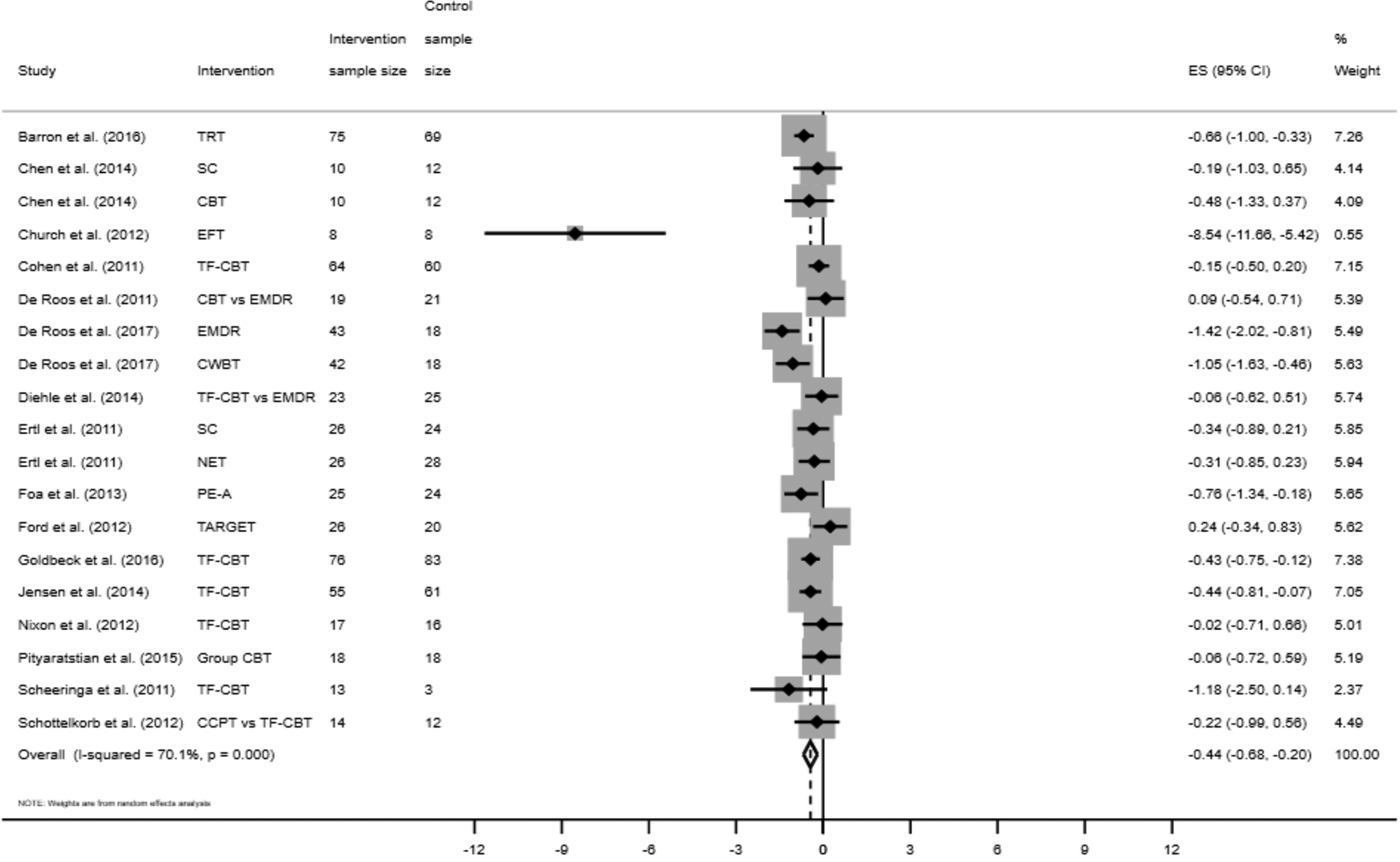
Negative effect sizes indicate the superiority of the intervention over the control condition at reducing PTSD symptoms, positive effect sizes the opposite. The individual effect sizes for the 16 eligible studies can be seen in online Supplementary materials.
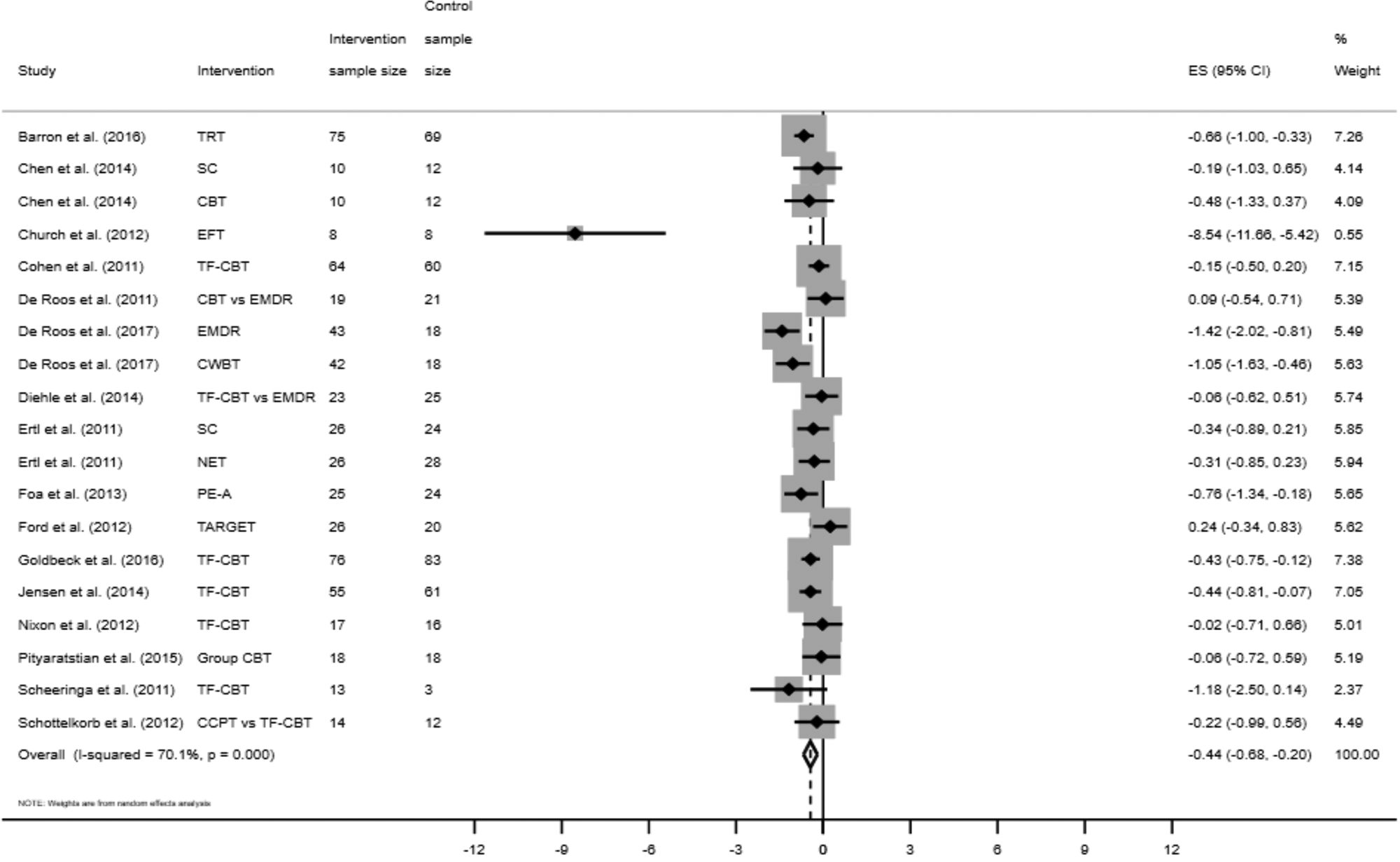
Pooling 19 effect sizes from 16 studies showed psychological interventions were better than control conditions at reducing PTSD symptoms (d = −0.44, 95% CI −0.68 to −0.20) (see Fig. 2). There was moderate heterogeneity between the studies (I 2 = 70.1%). This heterogeneity was anticipated given temporal, geographic and methodological differences and also justifies the use of a random-effects model.
Forest plot showing Cohen's D effect size for all included studies.
Subgroup analyses
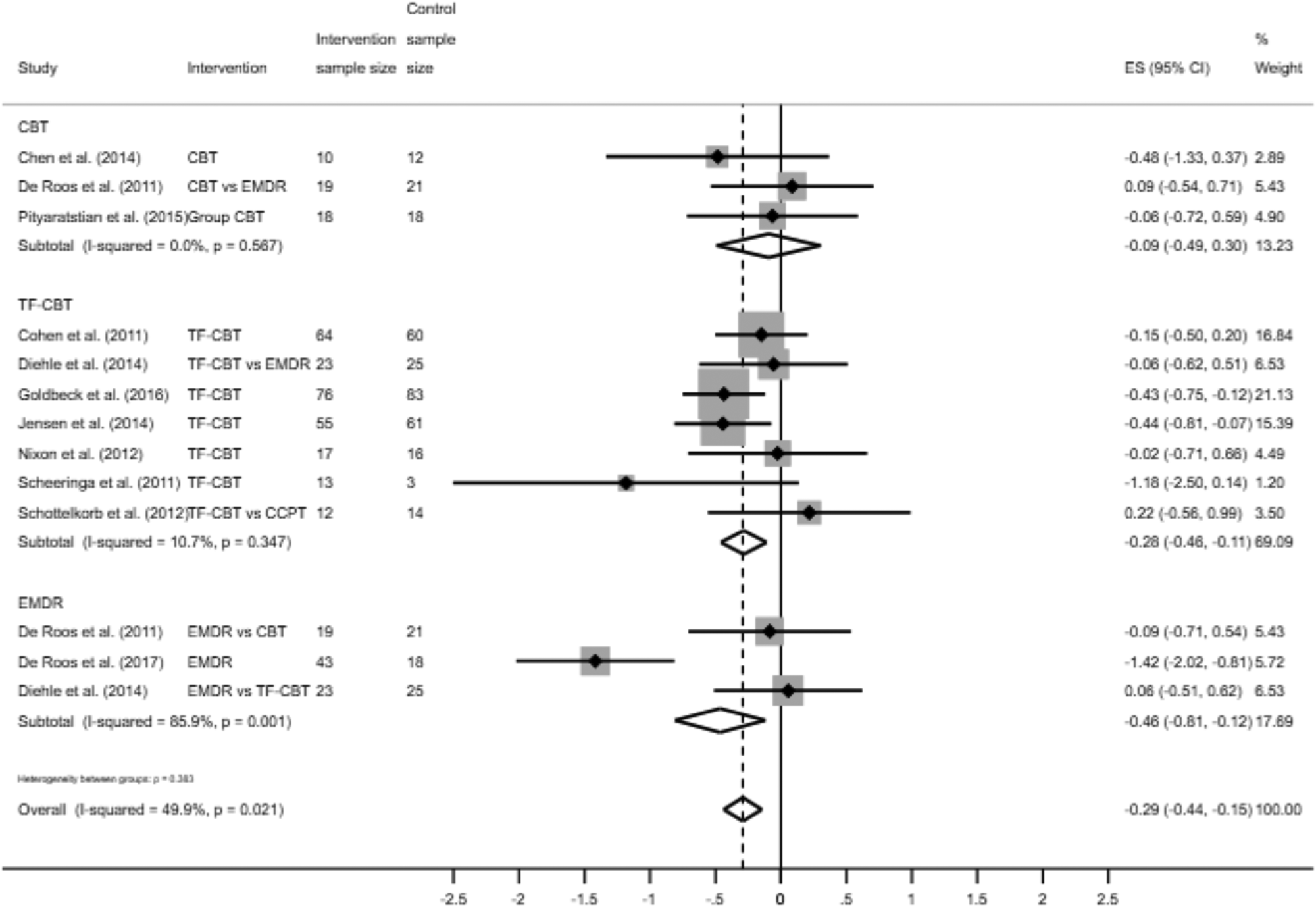
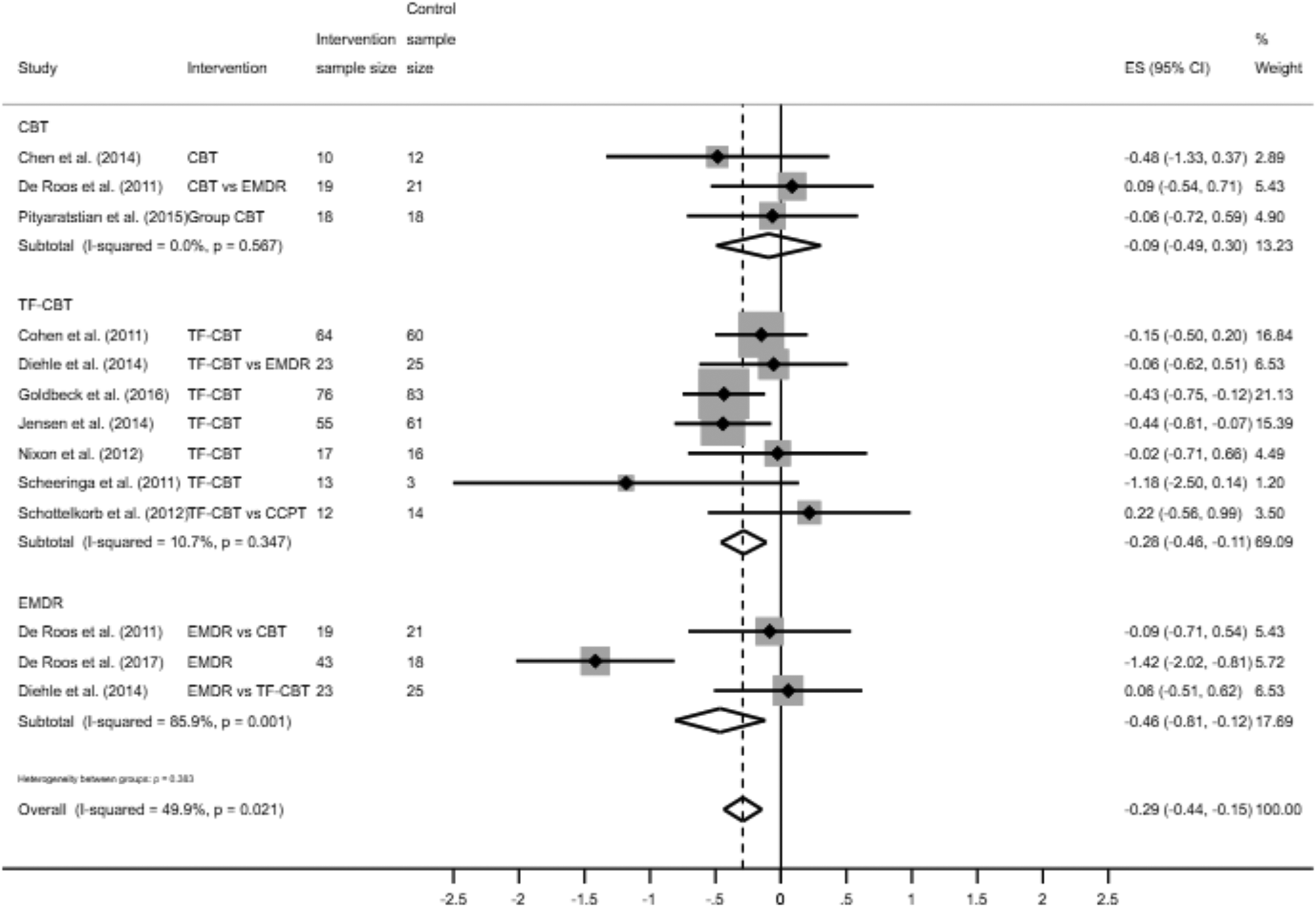
Thirteen studies were eligible for inclusion in the subgroup analysis investigating the effectiveness of specific interventions. Three studies investigated general (non-trauma-focused) CBT (Chen et al., Reference Chen, Wu Shen, Gao, Lam, Chang and Deng2014; De Roos et al., Reference De Roos, Greenwald, Den Hollander-Gijsman, Noorthoorn, Van Burren and De Jongh2011; Pityaratstian et al., Reference Pityaratstian, Piyasil, Ketumarn, Sitdhiraksa, Ularntinon and Pariwatcharakul2015) which was no more effective at reducing PTSD symptoms compared to the control conditions(d = −0.09, 95% CI −0.49 to 0.30). There was low heterogeneity between the studies (I 2 = 0%). Three studies investigated EMDR (De Roos et al., Reference De Roos, Greenwald, Den Hollander-Gijsman, Noorthoorn, Van Burren and De Jongh2011; De Roos et al., Reference De Roos, Van der Oord, Zijlstra, Lucassen, Perrin, Emmelkamp and DE Jongh2017; Diehle et al., Reference Diehle, Opmeer, Boer, Mannarino and Lindauer2015). Seven studies investigated TF-CBT (Cohen et al., Reference Cohen, Mannarino and Iyengar2011; Diehle et al., Reference Diehle, Opmeer, Boer, Mannarino and Lindauer2015; Goldbeck et al., Reference Goldbeck, Muche, Sachser, Tutus and Rosner2016; Jensen et al., Reference Jensen, Holt, Ormhaug, Egeland, Granly, Hoaas and Wentzel-Larsen2014; Nixon et al., Reference Nixon, Sterk and Pearce2012; Scheeringa et al., Reference Scheeringa, Weems, Cohen, Amaya-Jackson and Guthrie2011; Schottelkorb et al., Reference Schottelkorb, Doumas and Garcia2012). Both EMDR and TF-CBT were superior at reducing PTSD symptoms compared with general CBT. EMDR was superior at reducing PTSD symptoms compared with TF-CBT (d = −0.46, 95% CI −0.81 to −0.12 v. d = −0.30, 95% CI −0.58 to −0.02) (see Fig. 3). There was high heterogeneity between the EMDR studies (I 2 = 85.9%) and low heterogeneity between the TF-CBT studies (I 2 = 10.7%).
Forest plot for subgroup analysis showing the individual effect sizes of non-trauma focused CBT, trauma-focused CBT and EMDR.
The subgroup analysis, pertaining to our secondary aim of comparing psychological interventions in children with psychological interventions in adolescents and young adults, included five effect sizes from four studies. One effect size was evaluating interventions in children exclusively (Scheeringa et al., Reference Scheeringa, Weems, Cohen, Amaya-Jackson and Guthrie2011). Four effect sizes were evaluating interventions in adolescents and young adults exclusively (Ertl et al., Reference Ertl, Pfeiffer, Elbert and Neuner2011; Foa et al., Reference Foa, McLean, Capaldi and Rosenfield2013; Ford et al., Reference Ford, Steinberg, Hawke, Levine and Zhang2012). Pooling the four effect sizes in adolescents and young adults, showed interventions were better than control conditions in reducing PTSD symptoms in adolescents and young adults (d = −0.30, 95% CI −0.58 to −0.02) (see online Supplementary materials for forest plot). There was low heterogeneity between the studies included in this meta-analysis (I 2 = 47.6%). The effect size for the only eligible study investigating the effectiveness of psychological interventions in children was d = −1.18, 95% CI −2.50 to 0.14.
Sensitivity analyses
Eight effect sizes from five studies with normally distributed data (Barron et al., Reference Barron, Abdallah and Heltne2016; Chen et al., Reference Chen, Wu Shen, Gao, Lam, Chang and Deng2014; De Roos et al., Reference De Roos, Van der Oord, Zijlstra, Lucassen, Perrin, Emmelkamp and DE Jongh2017; Ertl et al., Reference Ertl, Pfeiffer, Elbert and Neuner2011; Pityaratstian et al., Reference Pityaratstian, Piyasil, Ketumarn, Sitdhiraksa, Ularntinon and Pariwatcharakul2015) were entered into a sensitivity analysis. The pooled effect size was d = −0.59, 95% CI −0.89 to −0.29 indicating a medium effect at reducing PTSD symptoms. There was moderate heterogeneity between these studies (I 2 = 53%) (see online Supplementary materials for forest plot).
A funnel plot was created to visually assess asymmetry and was plotted with negative effect sizes indicating the superiority of the intervention (see online Supplementary materials). There was evidence of asymmetry and evidence of small-study effects. The Egger's test demonstrated some evidence of small study effects (bias = 0.539 95% CI −0.134 to 1.21, p = 0.109). This was driven by one outlier (Church et al., Reference Church, Piña, Reategui and Brooks2012). This study had a large effect size (d = −8.54) and small sample size (n = 16). Once this study was removed there was no longer any evidence of small-study effects (bias = 0.299 95% CI −0.982 to 0.158, p = 0.627).
Discussion
Summary of main findings
This systematic review included 27 studies. The psychological intervention investigated most frequently was TF-CBT. Most studies had mixed populations spanning childhood, adolescents and young adulthood, although seven studies investigated the effectiveness of psychological interventions in adolescents and young adults exclusively and three studies investigated the effectiveness of interventions in children exclusively.
The meta-analysis included 16 eligible RCTs. There was a moderate effect of the included interventions at reducing PTSD symptoms in children, adolescents and young adults. TF-CBT and EMDR both had a moderate effect size and were superior to general (non-trauma-focused) CBT at reducing PTSD symptoms in this population. EMDR had the greatest effect at reducing PTSD symptoms. Interventions for adolescents and young adults exclusively had a low effect on PTSD symptoms. In the one study eligible for the meta-analysis investigating psychological interventions for children exclusively, TF-CBT was no more effective than the waiting list control.
Comparison with existing literature
This review showed psychological interventions were superior to controls at reducing PTSD symptoms. Similarly, in Gillies et al. (Reference Gillies, Taylor, Gray, O'Brien and D'Abrew2012) those receiving psychological therapies had a greater reduction in PTSD symptoms compared with the control interventions (SMD −1.05, 95% CI −1.52 to −0.58, I 2 = 62).
This review found EMDR to be most effective at reducing PTSD symptoms although with fewer studies investigating this intervention compared to TF-CBT. A previous meta-analysis looking at the effectiveness of EMDR for PTSD in children found EMDR had a medium effect at reducing PTSD symptoms when this intervention was compared with non-established treatments and no-treatment controls (d = 0.56; Rodenburg, Benjamin, De Roos, Meijer, and Stams, Reference Rodenburg, Benjamin, De Roos, Meijer and Stams2009). In contrast, in Gillies et al. (Reference Gillies, Taylor, Gray, O'Brien and D'Abrew2012) there was no difference in reduction in PTSD symptoms between those receiving EMDR and those receiving the control condition in the only study investigating EMDR (SMD −0.61, 95% CI −1.96 to 0.74, I 2 = 85%). This discrepancy may be due to inadequate power to detect differences between intervention groups; the only study in the Gillies et al. (Reference Gillies, Taylor, Gray, O'Brien and D'Abrew2012) review had 33 participants.
The present review supported the effectiveness of TF-CBT at reducing PTSD symptoms in children, adolescents and young adults. This has also been demonstrated to be effective in a systematic review by Cary and McMillen (Reference Cary and McMillen2012) looking at the effectiveness of TF-CBT specifically, where TF-CBT was superior at reducing PTSD symptoms in children and youth compared with control conditions (g = 0.671).
The sub-group analysis carried out in this systematic review found TF-CBT and EMDR both had a moderate effect at reducing PTSD symptoms, whilst general CBT was no more effective than the control interventions it was compared to. EMDR was the psychological intervention that had the greatest effect at reducing PTSD symptoms in children, adolescents and young adults. Similarly, in adults, trauma-focused psychological treatments including TF-CBT and EMDR have been found to be effective for PTSD in adults (Ehlers et al., Reference Ehlers, Bisson, Clark, Creamer, Pilling, Richards and Yule2010). Whereas, interventions not focusing on patients' trauma were less effective at reducing PTSD symptoms in adults or have not been sufficiently studied (Ehlers et al., Reference Ehlers, Bisson, Clark, Creamer, Pilling, Richards and Yule2010).
In contrast to the results of this review, in Gillies et al. (Reference Gillies, Taylor, Gray, O'Brien and D'Abrew2012), general CBT was found to be superior to control conditions at reducing PTSD symptoms (SMD −1.34, 95% CI −1.79 to −0.89). General CBT was also found to have a greater likelihood of recovery compared to EMDR in a systematic review looking at the effectiveness of PTSD interventions in adults (RR = 0.35, 95% CI 0.16–0.79, p = 0.01). Furthermore, the systematic review found trauma-focused CBT to be more effective than EMDR at reducing PTSD symptoms unlike previous meta-analyses (Gutermann et al., Reference Gutermann, Schreiber, Matulis, Schwartzkopff, Deppe and Steil2016; Mavranezouli et al., Reference Mavranezouli, Megnin- Viggars, Daly, Dias, Stockton, Meiser-Stedman and Pilling2020).
In the current systematic review, we found limited support for NET which is an established therapy for PTSD in adults (Mendes, Mello, Ventura, Passarela, & Mari, Reference Mendes, Mello, Ventura, Passarela and Mari2008).
The quality of studies in this review is similar to the quality of included studies in the Gillies et al. (Reference Gillies, Taylor, Gray, O'Brien and D'Abrew2012) systematic review where 59% of the included studies were rated as having some concerns for Risk of Bias.
Interpretation of findings
This review found a strong evidence base for the effectiveness of TF-CBT and some support for the effectiveness of EMDR, which provides further evidence and justification for the National Institute for Health and Care Excellence (NICE) guideline suggesting TF-CBT should be offered as the first line of treatment to children and adolescents who present with PTSD symptoms, with EMDR being offered if there is non-response. (NICE, 2018). The results of the subgroup analysis suggest that general (non-trauma-focused) CBT is no more effective at reducing PTSD symptoms than the interventions it was compared to. Previously, when comparing general CBT to non-active controls it was found to be effective for PTSD in children, adolescents and young adults. It may be that as CBT has previously been demonstrated to be effective at reducing PTSD symptoms compared to non-active controls, more recent studies included in this review have compared CBT to other active treatments, which may explain its lack of superiority to control conditions.
One included study provides evidence that group-based CBT is potentially effective at reducing PTSD symptoms in children, adolescents and young adults. In services with long waiting-lists or financial burden, group interventions may be time and cost-effective as several patients can be treated with a small number of therapists (Gauthier, Dalziel, & Gauthier, Reference Gauthier, Dalziel and Gauthier1987). This could be considered superior to patients remaining on waiting lists for individual treatment, but warrants further investigation, as group treatments for PTSD have not previously been recommended in NICE guidance.
The lack of clear evidence supporting the effectiveness of NET in children, adolescents and young adults suggests that for some interventions simply using established protocols for adults may not be sufficient for PTSD symptom reduction. In some studies, investigating PE therapy there were adaptations made for children and adolescents (Foa et al., Reference Foa, Chestman and Gilboa-Schechtman2008). The individual studies found greater PTSD symptom reduction in PE conditions compared to control conditions (Foa et al., Reference Foa, McLean, Capaldi and Rosenfield2013; Rossouw et al., Reference Rossouw, Yadin, Alexander, Mbanga, Jacobs and Seedat2016, Reference Rossouw, Yadin, Alexander and Seedat2018). It may be the case that adaptations, such as allowing flexibility for the counsellor to spend more time on modules depending on the adolescent's developmental level and attention span, helped improve the effectiveness of the psychological interventions.
However, it may also be the case that small sample sizes made it difficult to detect small differences between intervention groups in some studies. More and larger individual RCTs are needed to assess the effectiveness of non-TF-CBT interventions for PTSD in children, adolescents and young adults such as NET as we found mixed results regarding its effectiveness from the included studies. Whilst this intervention may be effective in this population, as it is in adults, more research is needed with larger sample sizes in order to detect small differences between intervention groups, before its introduction to the clinic. In addition, a mega-analysis could be conducted which involves aggregating individual-participant data from multiple studies and analysing this data jointly (Boedhoe et al., Reference Boedhoe, Heymans, Schmaal, Abe, Alonso, Ameis and Twisk2018). This overcomes some limitations of traditional meta-analysis research including low statistical power to detect effects (Boedhoe et al., Reference Boedhoe, Heymans, Schmaal, Abe, Alonso, Ameis and Twisk2018).
There needs to be more research assessing the effectiveness of interventions in children, defined as aged 12 and under only. In the one study which met our criteria for inclusion in the subgroup analysis: where all participants were children between 3 and 12, they defined their population as pre-school children. The majority of the included studies in this review included participants spanning childhood and adolescence. The effect of an intervention may be generalised across the whole sample in mixed population studies, when it may be more effective at particular developmental stages. This meant it was difficult to achieve the second aim of this review and to evaluate the efficacy of psychological interventions in children compared to adolescents and young adults. This research is necessary especially as PTSD manifests differently in children compared with adults (DSM-5, APA, 2013) and therefore by inference between children and young adults. PTSD symptoms may also manifest differently in pre-school children, as used in the study by Scheeringa et al. and children more generally.
In addition, further research investigating the effectiveness of psychological interventions at improving PTSD symptoms in children, adolescents and young adults could look at the young person in the broader context they are involved such as family systems and the school environment. Research has previously shown that including caregivers improves the effectiveness of psychological interventions in children and adolescents (Nevo & Manassis, Reference Nevo and Manassis2011). It may be the case that including school networks during psychological interventions also has a beneficial impact on PTSD symptoms.
Strengths and limitations
This is the most up-to-date, comprehensive and largest systematic review and meta-analysis of psychological interventions for PTSD in children, adolescents and young adults carried out to date. Furthermore, PRISMA guidelines were followed throughout and a completed PRISMA checklist can be viewed in online Supplementary materials. These guidelines ensure clarity, transparency and key information is properly reported (Liberati et al., Reference Liberati, Altman, Tetzlaff, Mulrow, Gøtzsche, Ioannidis and Moher2009) making the review, which provides up to date evidence, useful for both policy and clinical practice. Lastly, the sensitivity analysis also demonstrated a moderate effect of the interventions on PTSD symptoms. A sensitivity analysis, with similar results to the primary analysis, demonstrates the findings from this meta-analysis are not dependent on arbitrary decisions and indicates robust findings (Deeks, Higgins, & Altman, Reference Deeks, Higgins, Altman, Higgins, Thomas, Chandler, Cumpston, Li, Page and Welch2019).
This study should also be considered in light of its weaknesses. First, the inclusion criteria were limited to studies in English as it was not feasible to translate non-English studies. This could theoretically lead to an inflation of effect sizes due to negative results being more likely to be published in languages other than English (Grégoire, Derderian, & Le Lorier, Reference Grégoire, Derderian and Le Lorier1995). However, research examining this language bias has conflicting results and there are suggestions that the effect of studies published in the non-English language in a meta-analysis may be minimal (Deeks et al., Reference Deeks, Higgins, Altman, Higgins, Thomas, Chandler, Cumpston, Li, Page and Welch2019). Furthermore, the funnel plot and Egger's test indicated no evidence of small study effects after removal of a single outlier.
A further limitation is that not all included studies had participants with diagnosed PTSD; some had participants with subthreshold PTSD symptoms. This may reduce the external validity of this research as findings regarding the effectiveness of these interventions may not be applicable to clinical PTSD populations. However, it has been suggested subthreshold PTSD symptoms are often clinically significant and do require treatment (McLaughlin et al., Reference McLaughlin, Koenen, Friedman, Ruscio, Karam, Shahly and Kessler2015).
Third, the evidence base is still limited particularly for non-CBT interventions. A small number of studies (n = 14) investigated such interventions creating uncertainty regarding the precision with which their efficacy could be estimated. Furthermore, some studies had a small sample size which reduces the power to detect differences in PTSD symptoms between the groups following interventions (Donner, Reference Donner1984). Therefore, it is possible there were differences in PTSD symptoms between groups but due to inadequate power, these differences were missed. Nevertheless, this is still the largest systematic review and meta-analysis to date looking at the effectiveness of psychological interventions in children, adolescents and young adults. Therefore, this review had more statistical power to detect differences between intervention groups than other reviews carried out previously.
Conclusion
The primary aim of this review: to evaluate the efficacy of psychological interventions for PTSD in children, adolescents and young adults and determine if any intervention is superior, was met. Though hampered by a relatively small number of included studies and small sample sizes, this systematic review and meta-analysis provide evidence for the effectiveness of a range of psychological interventions for reducing PTSD symptoms in children, adolescents and young adults particularly TF-CBT and EMDR.
A secondary aim was to evaluate the efficacy of psychological interventions in children compared with psychological interventions in adolescents and young adults. As limited studies were assessing the effectiveness of psychological interventions in children, we were unable to meet this aim. This review did demonstrate that established treatments for adults should not be assumed to be effective in children, adolescents and young adults such as NET with no adaptions to the study protocol specifically targeted towards children. Furthermore, interventions that are not currently recommended for PTSD in adults such as group CBT might be effective in children, adolescents and young adults, however, only a small number of individual studies looked at these interventions so conclusions should be drawn in light of this.
Overall, the present review suggests that current NICE guidelines are appropriate (NICE, 2018), that interventions not currently recommended for use in children, adolescents and young adults might be suitable for this age group, and that there is a clear need for further research into the effectiveness of psychological treatments for PTSD in this age group.
Supplementary material
The supplementary material for this article can be found at https://doi.org/10.1017/S0033291720002007.