INTRODUCTION
The recent attention to environmental, economic and social problems has increased the need for alternatives to conventional high-input agriculture. Conventional agriculture involves intensive use of fertilizers and pesticides that can contaminate the environment and damage the soil structure, leading to soil erosion, organic matter loss and reduced soil fertility (Herencia et al. Reference Herencia, Ruiz, Melero, Garcia Galavis and Maqueda2008). Organic agriculture is a viable alternative to conventional farming. One of the key values is to maintain high yields and improve quality using farming practices with low environmental impacts and that are safe for consumers’ health (Murphy et al. Reference Murphy, Campbell, Lyon and Jones2007). It raises a great deal of interest that organic wheat represents an important raw material for healthy food production and special dietary uses. The overall health benefits of wheat grain have been largely attributed to their nutraceutical profile, which includes dietary fibre components (insoluble dietary fibre (IDF) and soluble dietary fibre (SDF), resistant starch (RS) and β-glucans (BGs)) and antioxidant compounds (polyphenols and flavonoids) (Di Silvestro et al. Reference Di Silvestro, Marotti, Bosi, Bregola, Segura-Carretero, Sedej, Mandic, Sakac, Benedettelli and Dinelli2012). Above all, the ancient KAMUT® khorasan wheat (Triticum turgidum ssp. turanicum (Jakubz.)) has attracted great attention due to its specific nutritional and nutraceutical properties (high antioxidant, anti-inflammatory and prebiotic activities) (Gianotti et al. Reference Gianotti, Danesi, Verardo, Serrazanetti, Valli, Russo, Riciputi, Tossani, Carboni, Guerzoni and Bordoni2011; Benedetti et al. Reference Benedetti, Primiterra, Tagliamonte, Carnevali, Gianotti, Bordoni and Canestrari2012; Marotti et al. Reference Marotti, Bregola, Aloisio, Di Gioia, Bosi, Di Silvestro, Quinn and Dinelli2012; Carnevali et al. Reference Carnevali, Gianotti, Benedetti, Tagliamonte, Primiterra, Laghi, Danesi, Valli, Ndaghijimana, Capozzi, Canestrari and Bordoni2014; Valerii et al. Reference Valerii, Ricci, Spisni, Di Silvestro, De Fazio, Cavazza, Lanzini, Campieri, Dalpiaz, Pavan, Volta and Dinelli2015; Valli et al. Reference Valli, Danesi, Gianotti, Di Nunzio, Taneyo Saa and Bordoni2016). In particular, KAMUT® khorasan wheat contains a higher protein content than common wheat, in addition to greater variability in the qualitative composition of amino acids and a greater quantity of lipids and fatty acids (Grausgruber et al. Reference Grausgruber, Oberforster, Ghambashidze and Ruckenbauer2005; Angioloni & Collar Reference Angioloni and Collar2011). Furthermore, other studies have recently revealed that in humans a replacement diet with KAMUT® khorasan products has positive effects on circulatory blood parameters in both a healthy population and in chronic disease populations (Sofi et al. Reference Sofi, Whittaker, Cesari, Gori, Fiorillo, Becatti, Marotti, Dinelli, Casini, Abbate, Gensini and Benedettelli2013; Whittaker et al. Reference Whittaker, Sofi, Luisi, Rafanelli, Fiorillo, Becatti, Abbate, Casini, Gensini and Benedettelli2015, Reference Whittaker, Dinu, Cesari, Gori, Fiorillo, Becatti, Casini, Marcucci, Benedettelli and Sofi2016). In a similar study, ancient grain significantly reduced symptoms of IBS (irritable bowel syndrome) (Sofi et al. Reference Sofi, Whittaker, Gori, Cesari, Surrenti, Abbate, Gensini, Benedettelli and Casini2014).
KAMUT® is a registered trademark used in marketing foodstuffs of the ancient cultivated khorasan wheat variety called ‘QK-77’, which was registered by the USDA in 1990. Cultivation of KAMUT® khorasan wheat is managed exclusively by a license agreement, which requires organic certification of the crop and several quality specifications related both to nutritional characteristics and growing conditions (Quinn Reference Quinn and Janick1999). For example, the grain must descend unmodified from the original seed stock first used under the KAMUT® brand. Additionally, the grain must have a protein content of between 12 and 18/100 g and must contain between 400 and 1000 ppb selenium. So far, these specific standards are consistently satisfied only in the growing region of North America and in particular in the Upper Great Plains of Alberta, Saskatchewan, Montana and North Dakota (Grausgruber et al. Reference Grausgruber, Oberforster, Ghambashidze and Ruckenbauer2005). Climate change is nowadays evident, particularly in terms of increasing temperature, increasing carbon dioxide (CO2) concentration, widespread melting of snow and ice and rising average global sea level (Ceccarelli et al. Reference Ceccarelli, Grando, Maatougui, Michael, Slash, Haghparast, Rahmanian, Taheri, Al-Yassin, Benbelkacem, Labdi, Mimoun and Nachit2010). In fact, over the past 60 years (1950–2010) there has been a significant alteration of climatic conditions. In particular, in Canada the temperature has increased and the warming is slightly more evident in the minimum temperature than in the maximum (Vincent et al. Reference Vincent, Wang, Milewska, Wan, Yang and Swail2012). It is known that wheat is a species adapted to different agricultural environments and end-uses and is exposed to variable environmental conditions, both within the same year and over several crop years (Graybosh et al. Reference Graybosh, Peterson, Baenziger and Shelton1995). The manifestation of those environmental conditions in the developing kernel affects the quality of the crop by influencing yield, grain characteristics and flour quality (Altenbach et al. Reference Altenbach, DuPont, Kothari, Chan, Johnson and Lieu2003). In particular, fibre components have been commonly considered as inherent characteristics, although climatic conditions may have a certain effect on grain fibre quantity and quality, by influencing grain size and the proportional amounts of each kernel tissue (endosperm, aleurone, germ) (Gebruers et al. Reference Gebruers, Dornez, Boros, Fras, Dynkowska, Bedo, Rakszegi, Delcour and Courtin2008; Shewry et al. Reference Shewry, Piironen, Lampi, Edelmann, Kariluoto, Nurmi, Fernandez-Orozco, Ravel, Charmet, Andersson, Aman, Boros, Gebruers, Dornez, Courtin, Delcour, Rakszegi, Bedo and Ward2010). Additionally, the growing conditions are known to strongly influence the expression levels of plant secondary metabolites such as polyphenols and, therefore, may affect the accumulation of phenolic compounds during kernel development (Mpofu et al. Reference Mpofu, Sapirstein and Beta2006; Shewry et al. Reference Shewry, Piironen, Lampi, Edelmann, Kariluoto, Nurmi, Fernandez-Orozco, Ravel, Charmet, Andersson, Aman, Boros, Gebruers, Dornez, Courtin, Delcour, Rakszegi, Bedo and Ward2010). Currently, few data about nutritional and functional composition of organically grown KAMUT® khorasan grains are available in the literature, especially regarding the changes as a function of cropping year and growing location.
The present study aims to provide a description of the quality of KAMUT® khorasan grains harvested in the last two decades (1989–2012) on a specific farm in Montana, thereby evaluating the environmental effects on phytochemical accumulation. The project includes the analysis of dietary fibre components (both insoluble and soluble fractions), starch composition (total and RS and amylose fraction) and the characterization of antioxidant properties through the determination of polyphenol and flavonoid content (both free and bound phenolic compounds). The characterization of a collection of KAMUT® khorasan wheat collected during 21 years of cultivation is a unique study and there appear to be few similar articles available in the literature.
MATERIAL AND METHODS
Grain samples
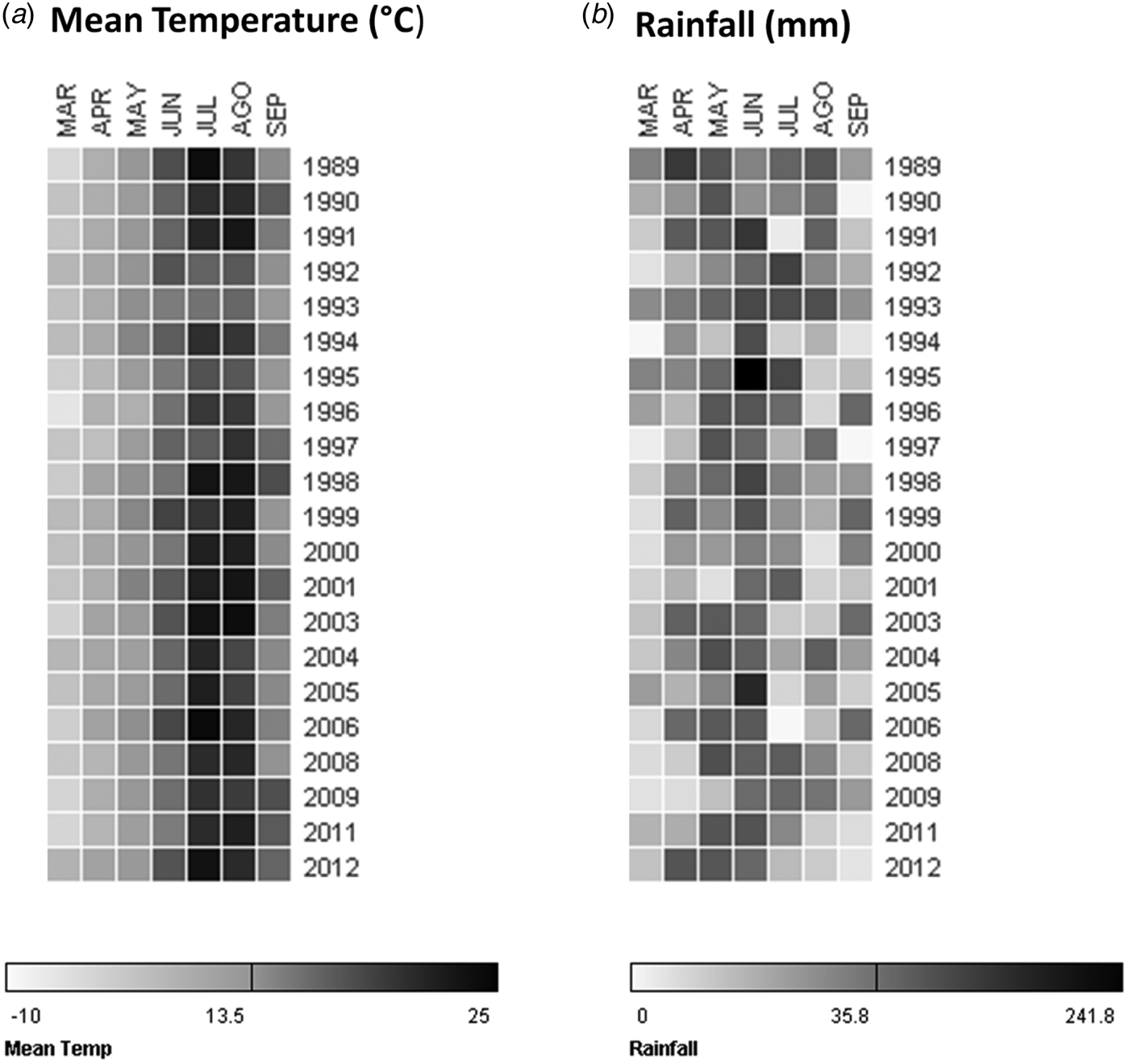
The study was carried out using the same genotype KAMUT® khorasan wheat (T. turgidum spp. turanicum) harvested in North America for 21 growing season (from 1989 to 2012). The wheat samples were cropped on the Quinn Organic Farm located near Big Sandy, Montana, USA (48°02′19″N, 110°00′55″W, 921 m a.s.l.) in accordance with the strict quality specifications required by Kamut International, Ltd. Mean temperatures and rainfall levels recorded at the experimental field are reported in Fig. 1. Whole-grain samples were ground to semolina using a domestic stone mill (100% flour extraction) (Billy 200, Hawos Mulini, Bad Homburg, Germany). All determinations were replicated three times and results expressed on a dry weight (DW) basis.
Heat maps showing the temperature (a) and precipitation (b) recorded for the trial site during the study. Values are the means (a) and totals (b) for each month.

Chemicals
Folin–Ciocalteu, gallic acid and catechin reagent were purchased from Sigma-Aldrich (St Louis, MO, USA). All other chemicals and solvents were of analytical grade.
Macronutrient analysis
The determination of the protein content was carried out according to the Kjeldahl procedure (N × 5·7) (AACC 1983, method 46-12). The determination of total starch content was carried out using the Megazyme assay kit (Megazyme Int. Ireland Ltd., Wicklow, Ireland) based on the use of glucose oxidase-peroxidase reagent (GOPOD) after hydrolytic digestion with α-amylase and amyloglucosidase. The amount of amylose was obtained using the Amylose/Amylopectin Megazyme assay kit (Megazyme Int. Ireland Ltd., Wicklow, Ireland). The method was based on the use of lectin concanavalin A (Con A) for precipitation and removal of the amylopectin-Con A complex. Afterwards, the amylose molecules were hydrolysed to D-glucose with α-amylase/amiloglucosidase and spectrophotometrically quantified using GOPOD reagent. According to McCleary & Monaghan (Reference McCleary and Monaghan2002), RS content was determined using a Megazyme assay kit. After overnight digestion with α-amylase and amyloglucosidase, soluble starch was removed with 95 and 50% ethanol consecutive washes. The pellet was then extracted with 2 m/l potassium hydroxide (KOH) to dissolve RS, hydrolysed with amyloglucosidase and quantified using a GOPOD reagent (Di Silvestro et al. Reference Di Silvestro, Marotti, Bosi, Bregola, Segura-Carretero, Sedej, Mandic, Sakac, Benedettelli and Dinelli2012).
Dietary fibre components
Insoluble (IDF), soluble (SDF) and total (TDF) dietary fibre contents were determined following the enzymatic/gravimetric procedure described by Prosky et al. (Reference Prosky, Asp, Schweizer, DeVries and Furda1988) using the Megazyme assay kit (Megazyme Int. Ireland Ltd, Bray, Ireland). The procedure was based on sequential enzymatic digestion using heat stable α-amylase, protease and amyloglucosidase, allowing the determination of IDF, SDF and TDF amounts as previously described (Di Silvestro et al. Reference Di Silvestro, Marotti, Bosi, Bregola, Segura-Carretero, Sedej, Mandic, Sakac, Benedettelli and Dinelli2012).
The arabinoxylan (AX) content was determined according to the procedure of the enzymatic assay kit D-Xylose (Megazyme International Ireland Ltd, Wicklow, Ireland) with some modifications. Wholegrain samples were subjected to acid hydrolysation in a boiling water bath, followed by re-equilibration of pH with sodium hydroxide (NaOH) 1·3 M. After hydrolysis, samples were clarified by treatment with solutions of hexacyanoferrate (II) and zinc sulphate. This assay kit allowed the indirect measurement of D-xylose amount, through the spectrophotometric determination of nicotinamide adenine dinucleotide (NADH) produced during the reaction of β-D-xylose with NAD + (the oxydated form of NADH) in the presence of β-xylose dehydrogenase. The AX concentration was calculated by considering the estimated D-xylose content of the sample, which for wheat flour was 62%.
The determination of BG content was carried out on the basis of the method described previously (Marotti et al. Reference Marotti, Bregola, Aloisio, Di Gioia, Bosi, Di Silvestro, Quinn and Dinelli2012) using the Megazyme assay kit (Megazyme International Ireland Ltd, Wicklow, Ireland).
Determination of phenolic compounds
Free and bound phenolic compounds were extracted as previously described by Dinelli et al. (Reference Dinelli, Segura-Carretero, Di Silvestro, Marotti, Arraez-Roman, Benedettelli, Ghiselli and Fernandez-Gutierrez2011). Whole-grain flours were extracted with cold 80% ethanol to dissolve the free soluble compounds, followed by acid and alkaline hydrolyses to release the bound forms. Extracts were analysed for polyphenol quantification following the colorimetric procedure based on the Folin–Ciocalteu reagent, as described by Singleton et al. (Reference Singleton, Orthofer and Lamuela-Raventos1999). Furthermore, extracts containing free and bound phenolic compounds were analysed for flavonoid content following the spectrophotometric method previously described (Dinelli et al. Reference Dinelli, Segura-Carretero, Di Silvestro, Marotti, Arraez-Roman, Benedettelli, Ghiselli and Fernandez-Gutierrez2011).
Statistical analysis
One-way analysis of variance (ANOVA, Tukey's honestly significant difference multiple comparison) was performed for comparing the flour samples.
Linear discriminate analysis (LDA) was performed on the standardized matrix of the nutrient and phytochemical content of grain samples, including a total of 16 variables (protein, starch, amylose, amylopectin, RS, IDF, SDF, TDF, AX, BG, free polyphenols (FP), bound polyphenols (BP), total polyphenols (TP), free flavonoids (FF), bound flavonoids (BF) and total flavonoids (TF)). It is a multivariate technique that allowed scoring of the cases as a function of the first two roots (canonical discriminant functions) to visualize similarities and differences among the wheat genotypes (Rodriguez-Delgado et al. Reference Rodriguez-Delgado, Gonzalez-Hernandez, Conde-Gonzalez and Perez-Trujillo2002). Linear discriminate analysis is also a statistical method used to find a linear combination of features (discriminant functions) that characterizes or separates two or more classes of objects or events (McLachlan Reference McLachlan2004). All statistical analyses were conducted using Statistica 6·0 software (2001, StatSoft, Tulsa, OK, USA).
RESULTS
Macronutrient composition
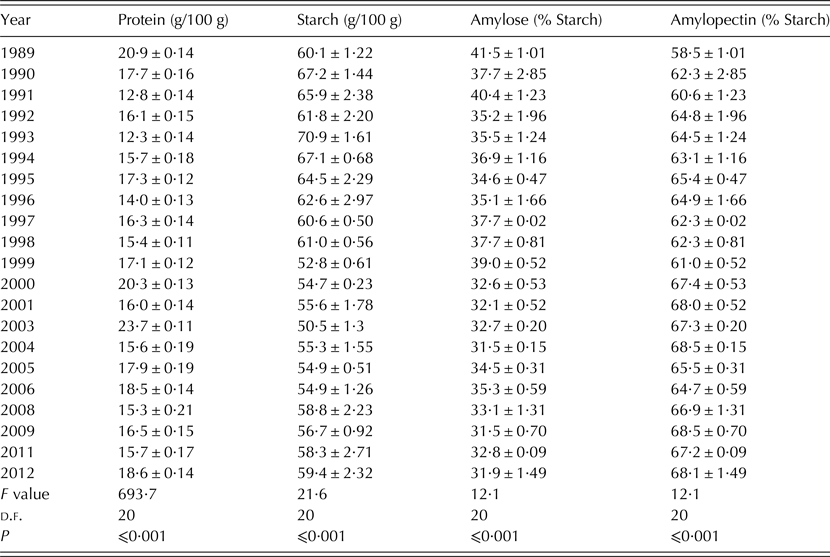
Protein, starch, amylose and amylopectin composition of the wheat grains analysed is presented in Table 1. Significant differences (P < 0·001) were observed among wheat samples: in particular, protein values ranged between 12·3 and 23·7 g/100 g, respectively, for samples collected in 1993 and 2003 with a mean value of 16·8/100 g (Table 1). Moreover, protein content was also positively correlated with air temperature (r = 0·536; P < 0·05). Total starch content also varied significantly (P < 0·001) among the samples analysed. KAMUT® khorasan grain harvested in 1993 had the highest amount of starch, while samples collected in 1999, 2003 and 2004 showed the lowest starch content (Table 1). An inverse correlation between protein and total starch content (r = −0·582; P < 0·01). In addition, a negative correlation (r = −0·450; P < 0·05) between mean temperature and the starch in the endosperm was observed. Besides total starch, statistically significant differences (P < 0·001) were observed in the amylose content. In particular, a reduction of the amylose percentage fraction was observed from 1989 to 2012 in KAMUT® khorasan grains.
Protein, starch, amylose and amylopectin composition of KAMUT® khorasan wheat grains
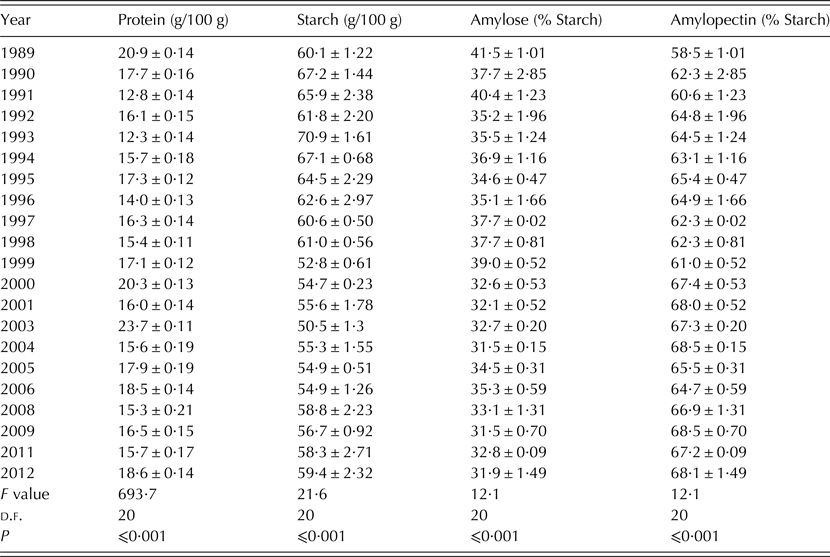
Values are means of three different replications ± s.d.
Dietary fibre and resistant starch content
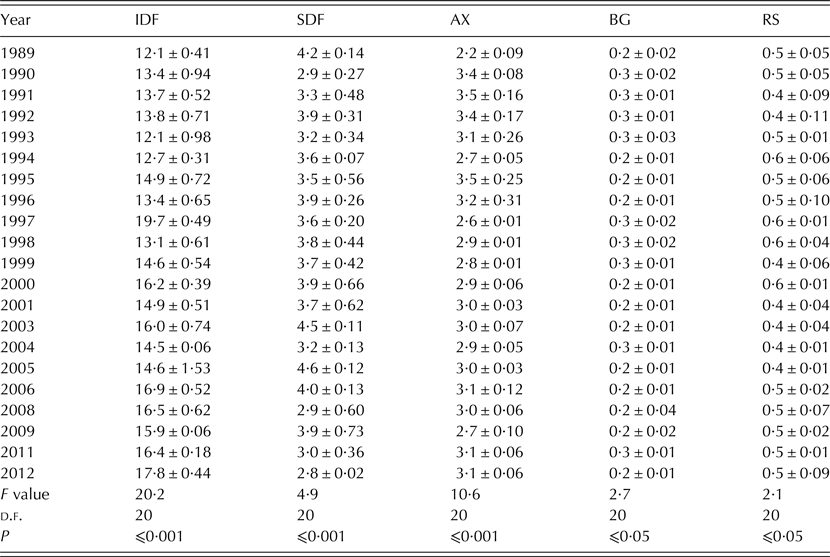
Whole grains are particularly rich in dietary fibre, including IDF, SDF and RS, which are distributed in the bran and starchy endosperm parts of the grain (Liu Reference Liu2007). Dietary fibre content varied greatly among the 21 KAMUT® khorasan samples (Table 2). The highest IDF amount was observed in the sample harvested in 1997, while the lowest was in samples collected in 1989, 1993, 1994 and 1998 (Table 2). In general, a positive trend for increasing IDF was observed in the past two decades. Regarding SDF, significant differences (P < 0·001) were observed among the different years of cultivation. KAMUT® khorasan wheat harvested in 1989, 2000, 2003, 2005, 2006 and 2009 had the highest levels, while samples collected in 1990, 1991, 1993, 1995, 2004, 2011 and 2012 showed the lowest amounts. However, the content of SDF has generally remained stable during the last 21 years, with some exceptions. KAMUT® khorasan wheat harvested in 1990, 1991 1992 and 1995 showed the highest content of AX, while the grain collected in 1989 had the lowest content (Table 2). Along with AX, BGs are one of the most important dietary fibre components. Significant differences (P < 0·01) in BG content were observed among samples from different cropping years. From 1989 to 2012 the content of BG remained constant (Table 2). Resistant starch represents the fraction of starch escaping digestion and not absorbed in the small intestine of healthy humans. The RS content did not change during the 21 years of the study.
Dietary fibre, AX, βG and RS composition (g/100g) of KAMUT® khorasan wheat grains
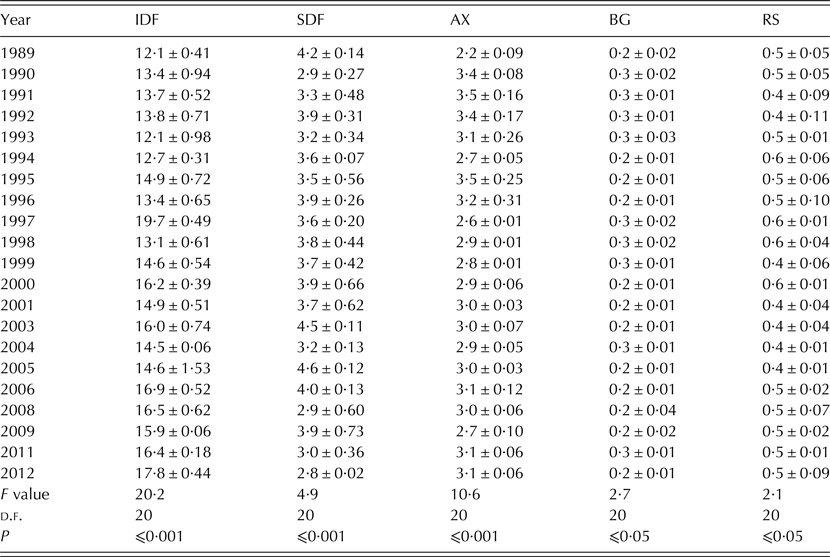
IDF, insoluble dietary fibre; SDF, soluble dietary fibre; AX, arabinoxylan; BG, β-glucan; RS, resistant starch.
Values are means of three different replications ± sd.
Antioxidant components
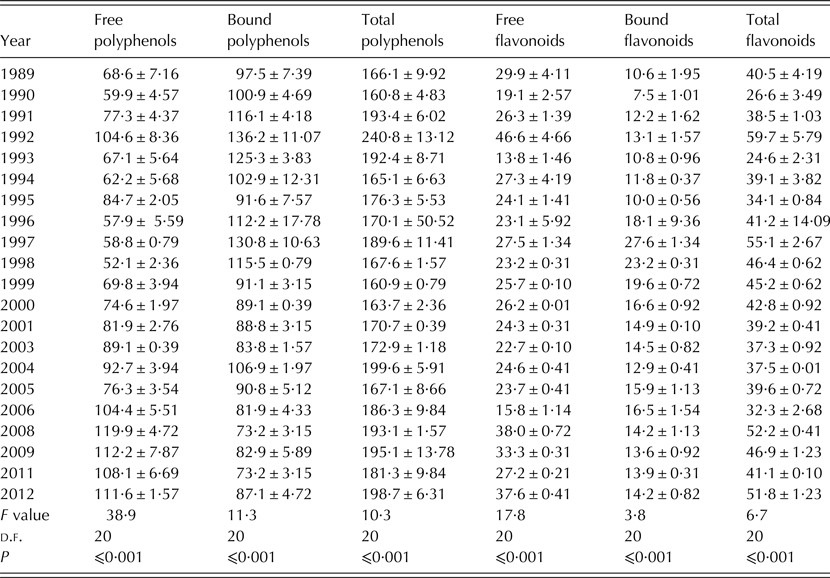
Polyphenols are the most representative class of antioxidant in wheat, mainly concentrated in the bran layer of the kernel. They are for the most part made up of phenolic acids and flavonoids (Dinelli et al. Reference Dinelli, Segura-Carretero, Di Silvestro, Marotti, Fu, Benedettelli, Ghiselli and Gutiérrez2009). In wheat, phenolic compounds exist in the soluble (free) and insoluble (bound) forms. Total polyphenol content was observed to be highly variable among the wheat samples investigated (Table 3), with the sample harvested in 1992 showing the highest amount. In addition, 1992 was characterized by the most abundant precipitation level, thus suggesting a strong correlation between phytochemical compounds and rainfall (Fig. 1). Regarding the free soluble fraction, higher amounts were also obtained for samples collected in years with higher rainfall values (2008, 2009 and 2012). On the other side, drought years were characterized by the lowest free phenolic accumulations (1990, 1994, 1996, 1997 and 1998) (Table 3). An inverse correlation between free and bound fractions of polyphenols was observed (r = −0·528 ; P < 0·05). Moreover, in the last 21 years the trend in the amount of the free fraction of polyphenols increased, while the opposite was revealed for the bound fraction. Regarding the accumulation of TF in KAMUT® khorasan kernels, samples collected in 1992, 1997, 2008 and 2012 showed the highest amounts, while those harvested in 1990, 1993, 1995 and 2006 were characterized by the lowest contents of TF (Table 3). As already observed for TP, the amounts of TF were positively correlated with rainfall level recorded during the 21 years. The highest free soluble flavonoid amount was recorded for the sample collected in 1992, whereas the highest bound flavonoid content was obtained from grains grown in 1997 and 1998 (Table 3). The only correlation observed was a positive correlation with total precipitation, which was recorded for free and TP and flavonoids (r = 0·576, P < 0·01; r = 0·747, P < 0·001; r = 0·775, P < 0·001; r = 0·729, P < 0·001)
Free, bound and total polyphenol and flavonoid contents (mg/100 g) of KAMUT® khorasan wheat grains
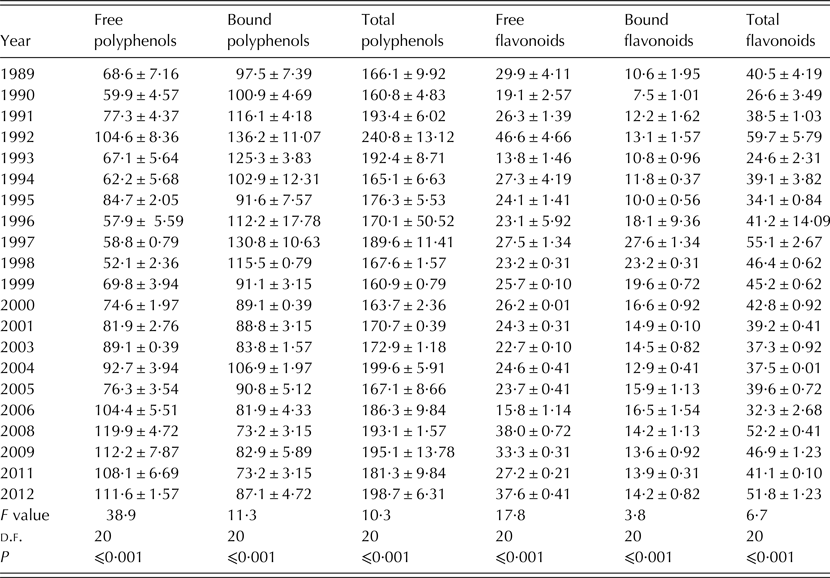
Values are means of three different replications ± sd.
Linear discriminant analysis
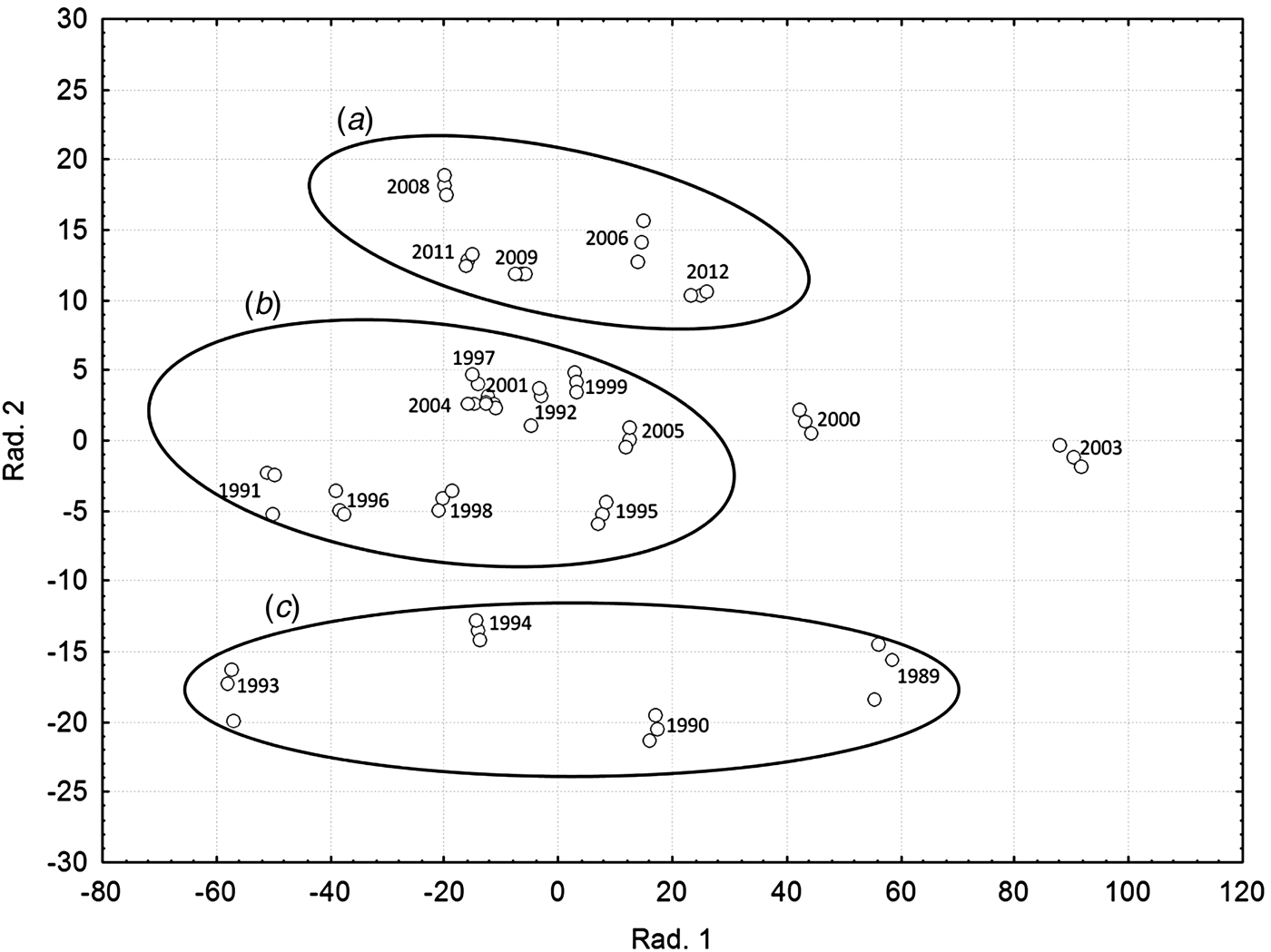
The multivariate technique of data analysis was used to explain the observed variability in nutrient and phytochemical content of wheat samples harvested in Montana (USA) from 1989 to 2012. Linear discriminant analysis allowed more information to be obtained with regards to the variables that mainly influenced sample similarities and differences (Rodriguez- Delgado et al. Reference Rodriguez-Delgado, Gonzalez-Hernandez, Conde-Gonzalez and Perez-Trujillo2002; Di Silvestro et al. Reference Di Silvestro, Marotti, Bosi, Bregola, Segura-Carretero, Sedej, Mandic, Sakac, Benedettelli and Dinelli2012). Figure 2 shows the scatterplot of the grain samples on the space defined by the first two canonical functions.
Scatterplot of the KAMUT khorasan grains collected during the 21 years of cultivation according to the nutrient and phytochemical content defined by the first two canonical functions (roots 1 and 2).
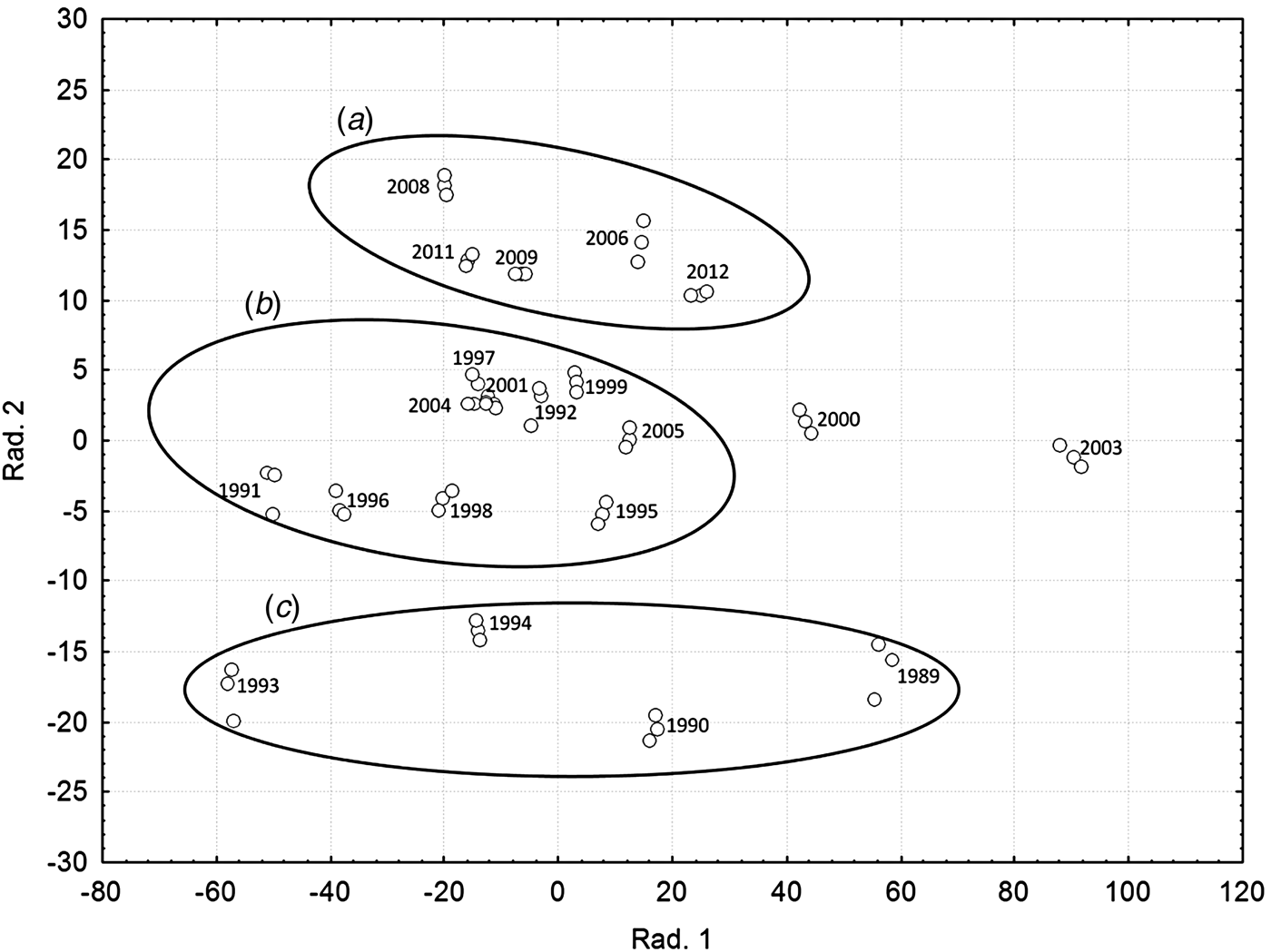
KAMUT® khorasan grains harvested in 2006, 2008, 2009, 2011 and 2012 are clustered together in a separate group. A second cluster is identified by samples collected in 1991, 1992, 1995, 1996, 1997, 1999, 2001, 2004 and 2005. A third but less homogeneous cluster is identified by KAMUT® khorasan wheat harvested in 1989, 1990, 1993 and 1994. As revealed from the values of canonical functions standardized within variances for each variable on Root 1, the described clusterization of cases was strongly influenced by protein, BGs, IDF and SDF and amylose content (values of first canonical discriminant function (Root 1) equal to 1·38, 0·57, −0·52, −0·72 and −0·69, respectively). The cluster of cases along the second canonical function (Root 2) was strongly influenced by amylose, FP, bound flavonoids, RS and total starch and BG amount (values of canonical discriminant function 2 equal to 1·62 1·23, 1·25, 0·72, −1·29 and −0·68, respectively). Indeed, cluster A included grain samples with the highest amounts of amylose, FP and bound flavonoids, whereas cluster C had the highest total starch content. Wheat samples grouped together in cluster B were characterized by the highest average content of SDF and by the lowest protein content. In addition, the three clusters obtained were also characterized by different environmental conditions. In particular, cluster A was characterized by the highest precipitation levels, while cluster B showed mean values and cluster C the lowest. Statistical differences among the three clusters were also observed for minimum and maximum temperatures. Cluster C showed a minimum temperature 1 °C lower than clusters A and B. The maximum temperature recorded in the years grouped in cluster A was lower than those recorded in clusters B and C (20·5, 21·1 and 22·3 °C, respectively).
DISCUSSION
According to the results obtained, year of cropping induced strong effects on kernel composition and induced large variation in the content of primary and secondary metabolites. Recently, reports in the literature have shown the effects of genotype and environment, as well as their interaction, on bioactive compound composition of wheat kernels (Mpofu et al. Reference Mpofu, Sapirstein and Beta2006; Shewry et al. Reference Shewry, Piironen, Lampi, Edelmann, Kariluoto, Nurmi, Fernandez-Orozco, Ravel, Charmet, Andersson, Aman, Boros, Gebruers, Dornez, Courtin, Delcour, Rakszegi, Bedo and Ward2010). However, available literature is scarce on this topic and it appears that the changes of fibre components and antioxidants of the ancient KAMUT® khorasan grains as a function of cropping year has never been investigated. The ancient grains may constitute a rich genetic resource for low-input and organic agriculture, as they show superior nitrogen (N) extraction in low-N environments, good competitiveness on weed control (due to taller plants) and a higher general resistance to biotic and abiotic stresses (Lammerts Van Bueren et al. Reference Lammerts Van Bueren, Jones, Tamm, Murphy, Myers, Leifert and Messmer2011; Ruisi et al. Reference Ruisi, Frangipane, Amato, Frenda, Plaia, Giambalvo and Saia2015). Several minor cereals and ancient crops constitute valuable nutritional grain ingredients for healthy food production, thanks to their better health-related composition. In organic wheat production, one of the most important considerations is grain quality, particularly with regard to protein content. Data obtained in the current study were in agreement with those reported by Merendino et al. (Reference Merendino, D'Aquino, Molinari, De Gara, D'Egidio, Paradiso, Cecchini, Corradini and Tomassi2006) regarding durum wheat (cvar Simeto) harvested in Italy, but were 5% higher than those recorded in the literature by Dinelli et al. (Reference Dinelli, Di Silvestro, Marotti, Bosi, Bregola, Di Loreto, Nipoti, Prodi and Catizone2014) in KAMUT® khorasan grains. The current results confirmed the good quality of KAMUT® khorasan wheat harvested in its original production area (North America). In particular, almost all the observed protein levels were higher than the minimum industry standard set at 12·5/100 g (De Vita et al. Reference De Vita, Di Paolo, Fecondo, Di Fonzo and Pisante2007). Protein content was positively correlated with temperature recorded during the grain-filling stage. As reported by Vaccari et al. (Reference Vaccari, Ranieri, Matese and Miglietta2007), air temperature during grain filling may affect translocation rates of carbon and N compounds; in particular temperatures higher than optimum determine an increase of final protein concentration (Dupont et al. Reference Dupont, Hurkman, Vensel, Chan, Lopez, Tanaka and Altenbach2006). Total starch content obtained in the current study was 7% higher than data reported in the literature by Merendino et al. (Reference Merendino, D'Aquino, Molinari, De Gara, D'Egidio, Paradiso, Cecchini, Corradini and Tomassi2006) while percentage fraction of amylose was higher (10%) than observed in two durum wheat cultivars cropped in Spain by Guzman et al. (Reference Guzman, Caballero, Alvare and Yamamori2011). As previously described by Hucl & Chibbar (Reference Hucl and Chibbar1996), a negative correlation exists between protein and starch content in wheat grain. This statement was confirmed by the presence of an inverse relationship between protein and starch levels. In addition, the effect of environmental conditions on macronutrient accumulation was observed comparing the amount of starch in wheat kernels. A decrease in the trend line for total starch content from 1989 to 2012 was recorded. At the same time a negative correlation between mean temperature during the grain-filling stage and the lower ratio of starch in the endosperm was observed. This is in accordance with Labuschagne et al. (Reference Labuschagne, Elago and Koen2009), who demonstrated the heat inactivation of starch synthase, the key enzyme in the starch biosynthesis pathway. Data from the literature report that durum wheat starch granules contain 25–30% amylose (BeMiller & Whistler Reference BeMiller, Whistler and Fennema1996; Hansen et al. Reference Hansen, Jackson, Wehling, Wilson and Graybosh2010), while in the present study a higher amylose percentage (with an average value of 35%) was observed. This divergence could be related to the influence of agronomic growing conditions (Singh et al. Reference Singh, Gupta, Gupta and Kaur2010) or to the limitation in comparing different amylose/amylopectin analytical techniques, as previously reported by Zhu et al. (Reference Zhu, Jackson, Wehling and Geera2008). No statistical correlation was observed among climatic parameters (rainfall and temperature) and the ratio of amylose:amylopectin; however, this ratio decreased during the past two decades (data not shown).
Resistant starch and SDF (as BGs, AXs) are characterized by high prebiotic activity; indeed they can resist digestion and reach the colon where they function as substrates for intestinal microbial flora (Marotti et al. Reference Marotti, Bregola, Aloisio, Di Gioia, Bosi, Di Silvestro, Quinn and Dinelli2012). Usually, a positive correlation between dietary fibres and mean temperature between heading and harvest is observed (Gebruers et al. Reference Gebruers, Dornez, Boros, Fras, Dynkowska, Bedo, Rakszegi, Delcour and Courtin2008; Shewry et al. Reference Shewry, Piironen, Lampi, Edelmann, Kariluoto, Nurmi, Fernandez-Orozco, Ravel, Charmet, Andersson, Aman, Boros, Gebruers, Dornez, Courtin, Delcour, Rakszegi, Bedo and Ward2010). In the present study, the content of dietary fibre was found to increase slightly from 1989 to 2012, suggesting a strong effect of environmental conditions on its accumulation in wheat kernels, as described previously. The amounts of dietary fibre component, except for SDF, β-BG and RS, observed in the present study were significantly higher than those previously reported for KAMUT® khorasan and closely related to durum wheat. However, for SDF, BG and RS the average amounts were lower than reported in the literature on durum wheat cultivars and KAMUT® khorasan harvested in Italy (Merendino et al. Reference Merendino, D'Aquino, Molinari, De Gara, D'Egidio, Paradiso, Cecchini, Corradini and Tomassi2006 and Marotti et al. Reference Marotti, Bregola, Aloisio, Di Gioia, Bosi, Di Silvestro, Quinn and Dinelli2012) and with respect to durum wheat varieties cropped in Hungary in 2004 (Gebruers et al. Reference Gebruers, Dornez, Boros, Fras, Dynkowska, Bedo, Rakszegi, Delcour and Courtin2008).
The bran layer of wheat grains is relatively rich in antioxidant compounds. Polyphenols are a large group of phytochemicals including flavonoids (the most representative in wheat kernels), phenolic acids, coumarins, tannins, lignans and stilbens. In wheat kernels, polyphenols exist in three forms: soluble, soluble conjugated (linked to low molecular weight sugars) and bound to cell wall components. All polyphenols present high antioxidant activity, arresting the damaging oxidative chain reaction caused by free radicals (peroxide, O2), thus preventing many degenerative human diseases (i.e. heart disease and cancer). In particular, BP possess strong anti-cancer properties as they survive the digestion process and reach the colon, where the endothelial cells may absorb phenolics and gain antioxidant protection (Kroon et al. Reference Kroon, Faulds, Ryden, Robertson and Williamson1997). The free phenolic contents observed in the present study were higher than those reported in the literature for soluble compounds in modern durum wheat varieties harvested in Italy during 1 year of cultivation (Bellato et al. Reference Bellato, Ciccoritti, Del Frate, Sgrulletta and Carbone2013; Ciccoritti et al. Reference Ciccoritti, Carbone, Bellato, Pogna and Sgrulletta2013), but were in line with those recorded by Fares et al. (Reference Fares, Platani, Baiano and Menga2010), taking into account the insoluble fractions. Great variability was observed in the amount of antioxidant compounds during the 21 cropping years of the present study. The observed positive correlations among total precipitation and free and TP and flavonoids were expected. In fact, phenolic biosynthesis can be induced by various biotic stress and therefore the observed variability among years of cultivation may also be related to fungal diseases present at different levels of severity (Dixon & Paiva Reference Dixon and Paiva1995). Moreover, no significant correlations between phenolic compounds and temperature were observed for the cropping years used in the present study.
The characterization of nutritional and nutraceutical properties of wheat grains harvested in Montana (USA) from 1989 to 2012 allowed investigation of the nutrient and phytochemical accumulation as a function of changing environmental conditions in a long-term experiment. The analysis showed great variability among samples collected in different years of cultivation. In particular, greater environmental effects were observed for polysaccharides (starch and some dietary fibre components) and for phenolic compounds. Due to the major exposure of the crop to climatic changes, lower nutrient availability and pests/diseases, the effects of environmental conditions in agricultural low-input systems may exert higher influence when compared with conventional ones (Bilsborrow et al. Reference Bilsborrow, Cooper, Tetard-Jones, Srednicka-Tober, Baranski, Eyre, Schmidt, Shotton, Volakakis, Cakmak, Ozturk, Leifert and Wilcockson2013). More research is needed to investigate the cause of location effects, the correlations with soil samples and previous crops planted in the rotation, with the potential to extend the study to include genotype, and determine the heritability of the antioxidant properties. The present study has a unique value, because in the literature little work is presented where the same genotype is cultivated during 21 cropping years in the same environment. The literature reports several works about the simulation of crop growth in order to provide useful tools for agricultural producers and policy makers to better quantify weather risk associated with crop production, as well as developing crop and soil management practices that reduce the risk to acceptable levels. However, these simulations refer only to the growth and production aspects of a specific crop and do not take into account nutritional and nutraceutical aspects. The knowledge-based systems approach offers great potential to expand the ability to make suitable agricultural management decisions, not only for the current climatic variability, but also for the anticipated climatic changes of the future. To the best of our knowledge the present study is the first work that allows a simulation model of nutritional and functional properties of a durum-type wheat based on climatic and environmental conditions to be obtained. However, the so-called ‘dilution effect’ in relation to crop yield (i.e. at high yield, protein and mineral content generally decrease) has not been take into account and so further research is needed to create a robust simulation model of crop growth to increase not only productivity but also the quality of the final production.
The current work was supported in part by a grant from the Kamut Enterprises of Europe (KEE) Oudenaarde, Belgium. KAMUT® is a registered trademark of Kamut International, Ltd. and Kamut Enterprises of Europe, bvba.