Introduction
The genus Lichina C. Agardh (Lichinaceae, Lichinomycetes) contains two groups of dwarf-fruticose cyanolichens which are well distinguished by their deviating ecology and ascoma ontogeny, the latter being a cardinal character for genus separation in the Lichinaceae. The Lichina pygmaea group consists of L. confinis (O. F. Müll.) C. Agardh and L. pygmaea (Lightf.) C. Agardh. Both are well-known species that occur along the European coasts and form apothecia from a web of generative hyphae. In contrast, members of the L. willeyi group are non-marine, temperate to tropical and subantarctic lichens mainly distributed in the Southern Hemisphere producing pycnoascocarps, a fundamentally different pathway of ascoma formation (Henssen Reference Henssen1969). Therefore, the monophyly of the genus Lichina is currently being evaluated as part of a comprehensive investigation of the phylogeny and character evolution in the Lichinomycetes (M. Schultz & M. Prieto, unpublished data). Not surprisingly, preliminary results suggest that the species of the L. pygmaea and L. willeyi groups are only distantly related. While L. confinis and L. pygmaea are closely related (Schultz & Büdel Reference Schultz and Büdel2003), the taxonomic status of the austral L. pygmaea var. intermedia C. Bab. remains uncertain due to its characters which partly overlap with those of the two European species. In fact, the original material collected by David Lyall (1817–1895) in Otago, New Zealand had been examined by various botanists including the prolific phycologist William Henry Harvey (1811–1866). Harvey was inclined to treat it as a new species. Babington (in Hooker Reference Hooker1855), however, discussed the subtle differences in detail and eventually saw more affinities with L. pygmaea. Later, Lichina samples from New Zealand and Australia were assigned to either of the two European species, undoubtedly due to their partly overlapping characters (Nylander Reference Nylander1888; Hue Reference Hue1890; Wilson Reference Wilson1891, Reference Wilson1893; Müller Argoviensis Reference Müller Argoviensis1894; Hellbom Reference Hellbom1896; Zahlbruckner Reference Zahlbruckner1941; Galloway Reference Galloway1985, Reference Galloway2007; Kantvilas Reference Kantvilas1989, Reference Kantvilas1994; Filson Reference Filson1996). Likewise, coastal Lichina specimens have been filed under both species names in Australian and New Zealand herbaria. The Atlas of Living Australia (www.ala.org.au/; searched 14 September 2016) lists 99 records of L. confinis and 49 records of L. pygmaea showing a very similar geographical distribution area. It ranges from SE Australia and Tasmania to New Zealand and the surrounding islands. All these records obviously represent the same taxon. Interestingly, none of the more recent references considered var. intermedia to be a distinct taxon and placed it in synonymy instead, usually with L. confinis (Galloway Reference Galloway1985, Reference Galloway2007). The present study aims to clarify the taxonomic status of L. pygmaea var. intermedia and to investigate the phylogenetic relationships within the L. pygmaea group.
Material and Methods
DNA extraction, amplification and sequencing
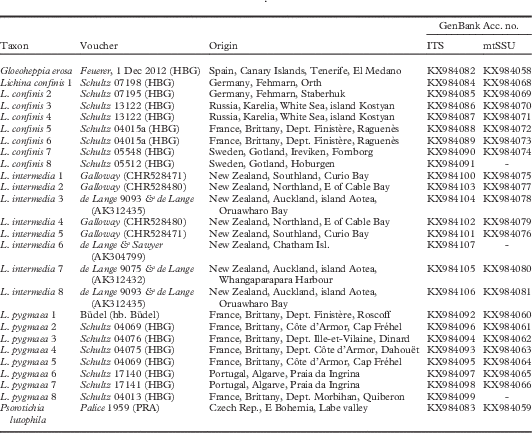
DNA was extracted using innuPREP Plant DNA Kit (Analytik Jena) according to the manufacturer’s instructions. Amplifications were performed using 1:10 diluted DNA. PCR amplifications for the nuITS 1 & 2 and 5.8S region were performed using a master mix containing 6·65 µl H2O, 1·25 µl buffer, 0·75 µl 10% DMSO, 0·15 µl hot start Taq, 0·35 µl of 10 mM primer ITS1 (White et al. Reference White, Bruns, Lee and Taylor1990) and ITS4 (Gardes & Bruns Reference Gardes and Bruns1993) and 1 µl template DNA, resulting in a final reaction volume of 12·5 µl. PCR amplifications of the mtSSU region were performed using IllustraTM Hot Start Mix RTG PCR beads (GE Healthcare, UK) according to the manufacturer’s instructions and using the primers mrSSU1 and mrSSU3 (Zoller et al. Reference Zoller, Scheidegger and Sperisen1999). PCR settings for ITS amplification were 15 min at 95 °C Taq activation followed by 35 cycles of 30 s denaturation at 95 °C, 30 s annealing at 50 °C, 1 min amplification at 72 °C and a final elongation step of 10 min at 72 °C. PCR settings for mtSSU amplification were 14 min at 99 °C Taq activation followed by 38 cycles of 30 s denaturation at 95 °C, 30 s annealing at 56 °C, 1 min amplification at 72 °C and a final elongation step of 5 min at 72 °C. PCR products were purified using spin columns (Geneaid Gel/PCR DNA Fragments Extraction Kit). The purified PCR products were sequenced using the primers ITS1 and ITS4 for forward and reverse strands. Sequence chromatograms were visualized using FinchTV 1.4.0 (Geospiza Inc.) and only minimally edited. Consensus sequences were produced using BioEdit (Hall Reference Hall1999). Vouchers and GenBank accession numbers of the sequences generated are given in Table 1.
Taxa, vouchers, origin and GenBank Accession numbers of newly obtained sequences

Alignment and phylogenetic analysis
Multiple sequence alignments for both gene regions of the Lichina species were calculated using MUSCLE online version implemented in the EMBL-EBI web pages (www.ebi.ac.uk./Tools/msa/muscle) including the outgoup taxa Gloeoheppia erosa Henssen and Psorotichia lutophila Arnold. The program Gblocks 0.91b (Castresana, Reference Castresana2002) was used to exclude ambiguously aligned regions employing less stringent settings according to Talavera & Castresana (Reference Talavera and Castresana2007). Mean genetic distances of sequences of each of the three taxa, as well as between the three taxa, were calculated using MEGA7 (Kumar et al. Reference Kumar, Stecher and Tamura2016). Uncorrected P-distances were corrected by maximizing the composite likelihood (i.e. the sum of pairwise log-likelihoods of a DNA distance matrix built of phylogenetically related sequences). Maximizing the composite likelihood has been shown to be an accurate estimate of the pairwise distances and the related substitution parameters under the Tamura-Nei model (Tamura & Nei Reference Tamura and Nei1993; Tamura et al. Reference Tamura, Nei and Kumar2004). In order to account for gapped alignment positions the option pairwise deletion was chosen from the MEGA7 menu (MEGA7 help files).
Individual phylogenetic analyses of each of the genes did not show any supported conflict and thus the nuITS and mtSSU alignments were combined. The final alignment consisted of 1440 sites divided into two partitions (637 ITS, 803 mtSSU). The program MrModeltest v.2.3 (Nylander Reference Nylander2004) was used to select a best-fit substitution model according to the Akaike Information Criterion (AIC) for each of the two partitions. The GTR+G model (Rodríguez et al. Reference Rodríguez, Oliver, Marín and Medina1990) was selected for both partitions and model parameters were set accordingly for phylogenetic inference in MrBayes 3.2 (Ronquist et al. Reference Ronquist, Teslenko, van der Mark, Ayres, Darling, Höhna, Larget, Liu, Suchard and Huelsenbeck2012): a gamma distributed rate variation across sites with four categories and an estimated proportion of invariable sites. All parameters were unlinked across partitions and rates allowed to vary under a flat Dirichlet prior. The Bayesian inference was set to two runs each with four chains starting from random trees and running for 5 million generations, saving a tree every 100th generation. The first 25% of the sampled trees were discarded as burn-in for each run after checking that stationarity and convergence of the two runs had been reached by plotting the log likelihoods of each saved tree against the number of generations and by checking that the average standard deviation of split frequencies fell below 0·01. A majority-rule consensus tree with branch lengths and posterior clade probabilities was calculated from the remaining 75 002 trees pooled from both runs using the sumt option of MrBayes. The consensus tree was visualized and edited using FigTree 1.4.2 (Rambaut Reference Rambaut2012).
Morphological techniques
Lichen material collected by the author and obtained from various herbaria was studied using standard techniques. External morphology was investigated using a Wild M5 stereomicroscope. Habit photographs were taken with a Canon EOS 400D digital camera and a Zeiss Luminar 40 mm lens mounted on bellows.
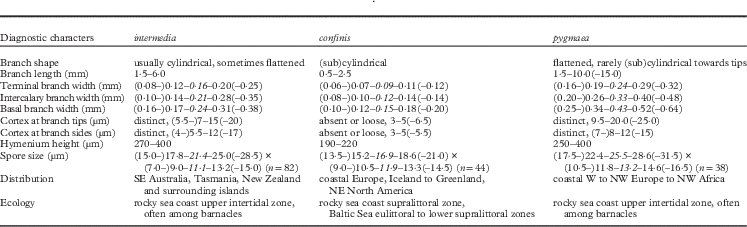
Anatomical details in fresh and semi-permanent cryotome sections stained with lactophenol cotton blue were studied using an Olympus BX51 compound microscope set to differential interference contrast (DIC). Images were taken with an Olympus XC50 digital camera. Anatomical measurements displayed in Table 2 were made using Olympus cellSens imaging software and are given as (minimum–)mean minus 1SD–mean–mean plus 1SD(–maximum).
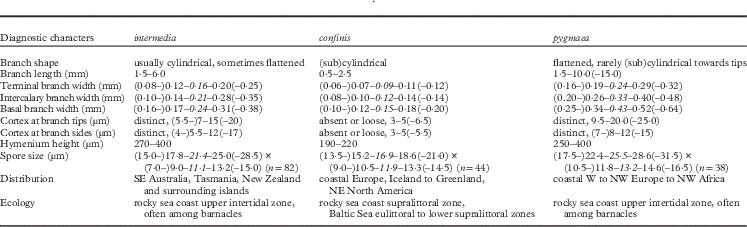
Main diagnostic characters of marine species of Lichina
Material studied
Selected additional specimens examined. Lichina antarctica Cromb.: France: French Southern and Antarctic Lands: Kerguelen Islands, Observatory Bay, ii 1875, A. E. Eaton (BM000022209-syntype).
Lichina confinis: Norway: Sogn og Fjordane: SW Voss, Lavik, 1986, G. Ernst 1425 (HBG-011530); Ortnevik, 1986, G. Ernst 1405 (HBG-011527).—Sweden: Bohuslän: Tjørn, 1884, P. J. Hellbom (Arnold, exs. 1137b) (HBG). Gotland: Ireviken, Fornborg, 2013, M. Schultz 05548 (HBG); Hoburgen, beach boulders, 2013, M. Schultz 05512 (HBG).—Russia: Karelia: Distr. Kandalakscha, White Sea Kandalakscha Bay, Kostyan Island, 1997, M. Schultz 13122 (HBG).—Ireland: Howth Coast, viii 1913, M. C. Knowles (HBG).—Great Britain: Scotland: V.C.97, Westerness: coastal rocks, 1 vi 2005, T. Feuerer (HBG).—France: Brittany: Dept. Finistère, S Raguenès, c. 500 m W of Île Raguenès, 1999, M. Schultz 04015a (HBG). Normandy: Cherbourg, S. R. Lenormand (HBG); Granville, S. R. Lenormand (HBG); Noirmoatier (Vendée), Viaud-Grand-Marais, ad scopulos marinos (Claudel & Harmand, Lich. Gall. Praec. no. 203) (HBG).—Denmark: Syddanmark: bei Kollund, 5 x 1909, C. F. E. Erichsen (HBG); (Aabenraa) Apenrade, an Strandblöcken bei Warnitzwik, 6 ix 1913, C. F. E. Erichsen (HBG).—Germany: Schleswig-Holstein: Friedrichsort b. Kiel, O. W. Sonder (HBG); Kielerhaven, Schrewenborn, 1827, E. F. Nolte (ex Kieler Provinzherbar) (HBG); Hohwacht, 30 viii 1933, C. F. E. Erichsen (HBG); Fehmarn, N of Staberhuk, 2010, M. Schultz 07195 (HBG); Orth, harbour basin, 2010, M. Schultz 07198 (HBG). Mecklenburg-Vorpommern: Rügen, Stubbenkammer, J. Münter (Rabenhorst, Lich. Europ. no. 782) (HBG); Rügen, F. K. L. Rudolphi (HBG).—Romania: Constanta: Caliacra, in saxosis calcareis maritimis indundatis ad Cap-Caliacra, 26 xii 1935, O. Klement & P. Cretziou (Lich. Romaniae Exs. no. 19) (HBG).—Italy: Liguria: ad rupes emersas in litore Liguriae occiduae, L. Dufour (Rabenhorst, Lich. europ. no. 225) (HBG). Latina: sugli scogli alle spiagge di Terracina, 1850, E. Fiorini-Mazzanti (Erbar. Crittogam. Ital. no. 279, Massal., Miscell. Lich. 52) (WU—type of L. elisabethae A. Massal.).—Canada: Newfoundland and Labrador: Newfoundland, Marysvale near Brigus, on marine rocks, 1953, I. M. Lamb 7579 (FH 00453035).
Lichina intermedia: New Zealand: Northland: Bay of Islands, south end of Poroporo Island, 7 i 1980, B. W. & G. C. Hayward (AK 165892); Moturoa Island, easternmost embayment on south coast, 1990, A. E. Wright 10360 (AK 200720). Auckland: Rodney Co., Leigh, on maritime rock, 1972, B. W. & G. C. Hayward H34.4 (AK 155063); Aotea (Great Barrier Island), Oruawharo Bay, Medlands Beach, Memory Island (Rock Stack), 2010, P. J. de Lange 9093 & T. J. de Lange (AK 312435); Whangaparapara Harbour, Whangaparapara Wharf, 2010, P. J. de Lange 9075 & T. J. de Lange (AK 312432); Rangitoto Island, viii 1933, H. H. Allan (W 1935-2393); Waiheke Island, i 1932, L. B. Moore (W 1935-2399). Marlborough: Ship Cove, 41°06'S, 174°14'E, 1 i 1992, B. W. Hayward (AK 205342). Dunedin: Dunedin, Saint Calan, 1934, J. S. Thomson ZA75 (W 1935-2393). Chatham Islands: Chatham (Rekohu) Island, Western Reef, 2006, P. J. de Lange CH2254 & J. W. D. Sawyer (AK 304799). Campbell Island: west shore of Garden Cove, 1970, R. C. Harris 5246 (MSC).—Australia: South Australia: Kangaroo Island, Cape St Albans, on intertidal rocks, 2015, G. Kantvilas 389/15 (HO 580954). Victoria: Waratah Bay, basalt, 1968, C. C. Bratt 68/1430 (HO 46489). Tasmania: Kingston Beach near Hobart, 1965, C. C. Bratt 2959 (HO 46531, MIN, SBBG); Lime Bay Nature Reserve, c. 1 km N of Plunkett Point, on subtidal basalt stone, 2016, G. Kantvilas 238/16 (HO 584310, dupl. HBG-024439).
Lichina pygmaea: Norway: Hordaland: Bömlo, Olvanda, 3 viii 1937, R. Santesson (Magnusson, Lich. Sel. Scand. Exs. no. 297) (HBG). Sogn og Fjordane: Askvoll hd., Smelvaer, 1951, K. Faegri (ex hb. Bergen Museum) (HBG).—Ireland: V.C. H39, coast of Co. Antrim at Ballycastle, ix 1922, M. C. Knowles (HBG).—Great Britain: England: V.C. 3, Devon, Torbay, M. Wyatt (Algae Damnon. no. 155) (HBG); A. W. Griffith, ded. W. H. Harvey 1835 (HBG). Jersey: viii 1875, L. King (HBG).—France: Brittany: Dept. Morbihan, Côte Sauvage, Quiberon Peninsula, S of Pointe du Percho, 1999, M. Schultz 04013 (HBG); Dept. Finistère, Raguenès, 1999, M. Schultz 04011 (HBG); S of Raguenès, c. 500 m W of Île Raguenès, 1999, M. Schultz 04019a (HBG); Roscoff, Perharidy, Enez Jacopin, 2 vi 2010, B. Büdel (dupl. HBG); Dept. Côtes d’Armor, Côte d’Emeraude, SE of Cap Fréhel, Point de la Guette, 12 vi 2007, D. & S. Schultz (hb. M. Schultz 04069, HBG); Dahouët, near Le Val-André, 3 vii 2012, D. & S. Schultz (hb. M. Schultz 04075, HBG); Dept. Ille-et-Vilaine, Dinard, 29 vi 2012, D. & S. Schultz (hb. M. Schultz 04076, HBG). Normandy: Cherbourg, S. R. Lenormand (HBG); Cherbourg (Hohenacker, Algae mar. sicc.) (HBG).—Portugal: sine loco, F. M. J. Welwitsch (BM). Faro: Algarve, Praia da Ingrina, 2013, M. Schultz 17140, 17141 (HBG).
Results
Phylogeny
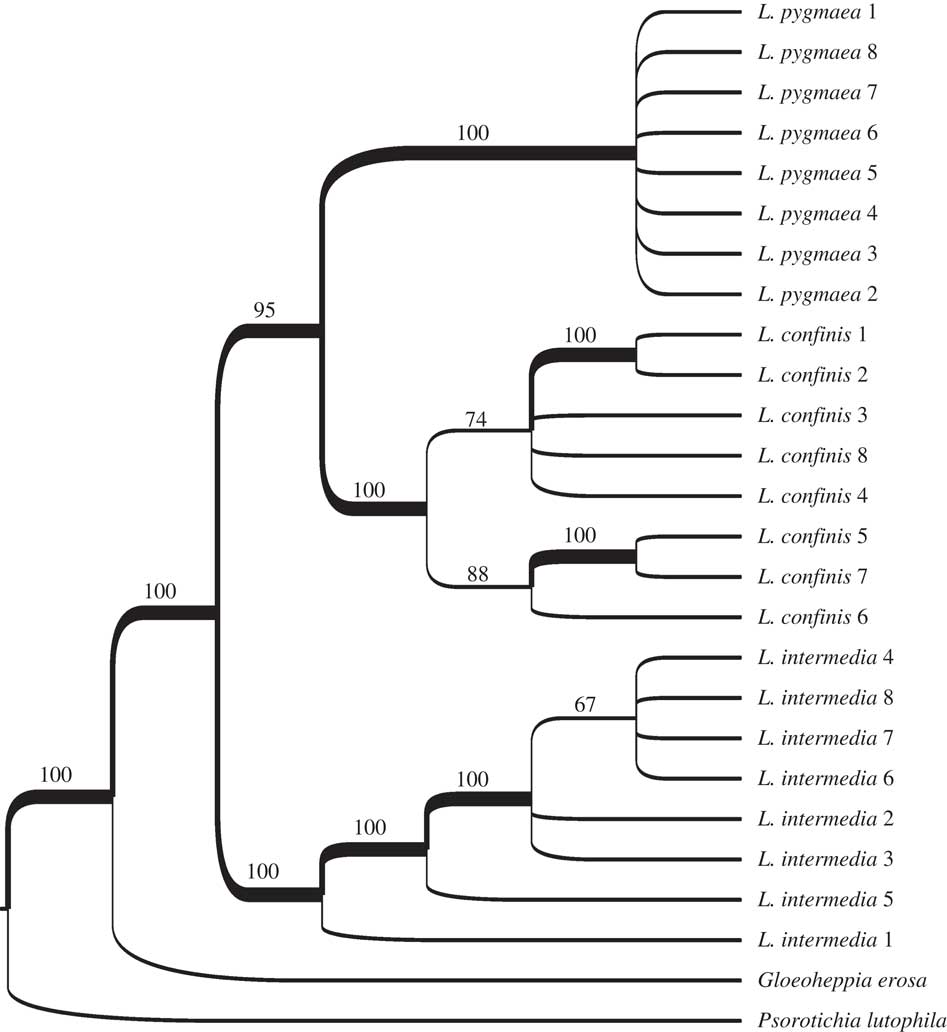
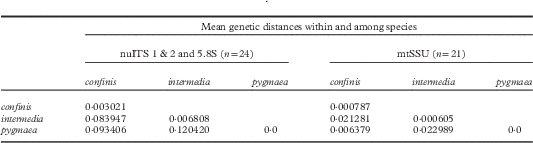
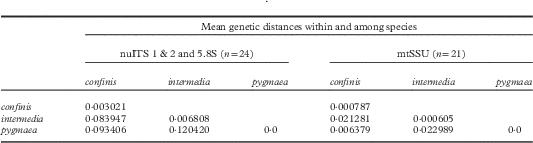
Forty-nine sequences have been produced for the present phylogenetic analysis (Table 1). The Lichina pygmaea-group forms a highly supported clade further divided into three subclades, each of which are likewise highly supported representing L. confinis, L. pygmaea and L. pygmaea var. intermedia (Fig. 1). Both L. confinis and L. pygmaea are closely related and form a sister clade with L. pygmaea var. intermedia. Mean distances in nuITS were highest within L. pygmaea var. intermedia when compared with the other two species (Table 3). However, the mean distance of L. pygmaea var. intermedia to L. confinis was 12 times greater than the intraspecific distance, and the distance to L. pygmaea was 18 times greater. Mean distances in mtSSU were similar within L. pygmaea var. intermedia and L. confinis. The mean distances, however, of L. pygmaea var. intermedia to L. confinis were 35 times greater than within L. pygmaea var. intermedia, and the distance to L. pygmaea was 38 times greater. Lichina pygmaea var. intermedia shows considerable genetic divergence from the other two species and hence should be recognized at species level.
Phylogeny of the Lichina pygmaea-group. 50% majority-rule consensus tree obtained from Bayesian phylogenetic analysis of ITS and mtSSU sequence data. Bold clades indicate significant posterior probability support. Outgroup taxa are Gloeoheppia erosa and Psorotichia lutophila.

ITS and mtSSU mean genetic distances within and among marine/maritime species of Lichina corrected by maximum composite likelihood
Taxonomy
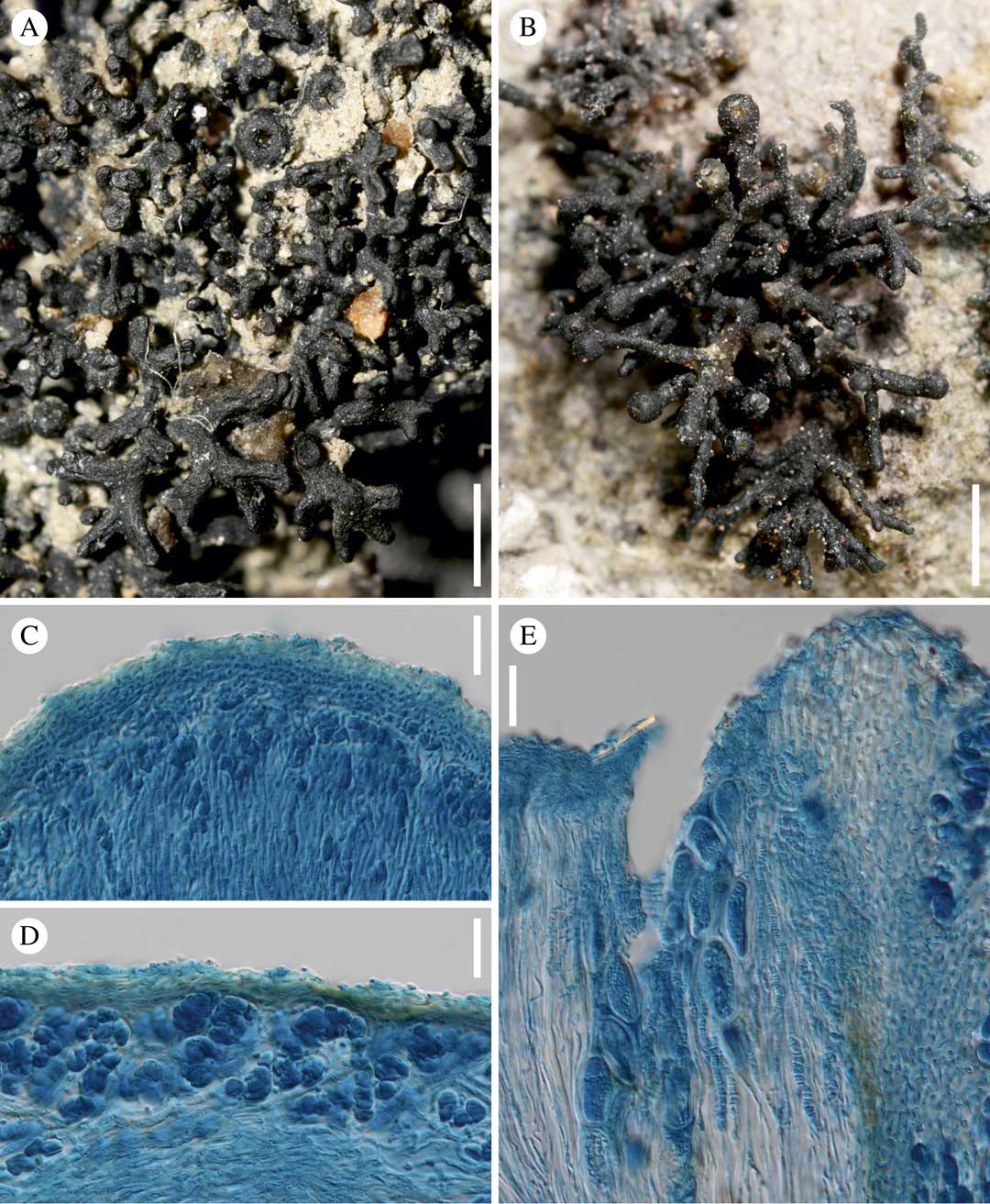
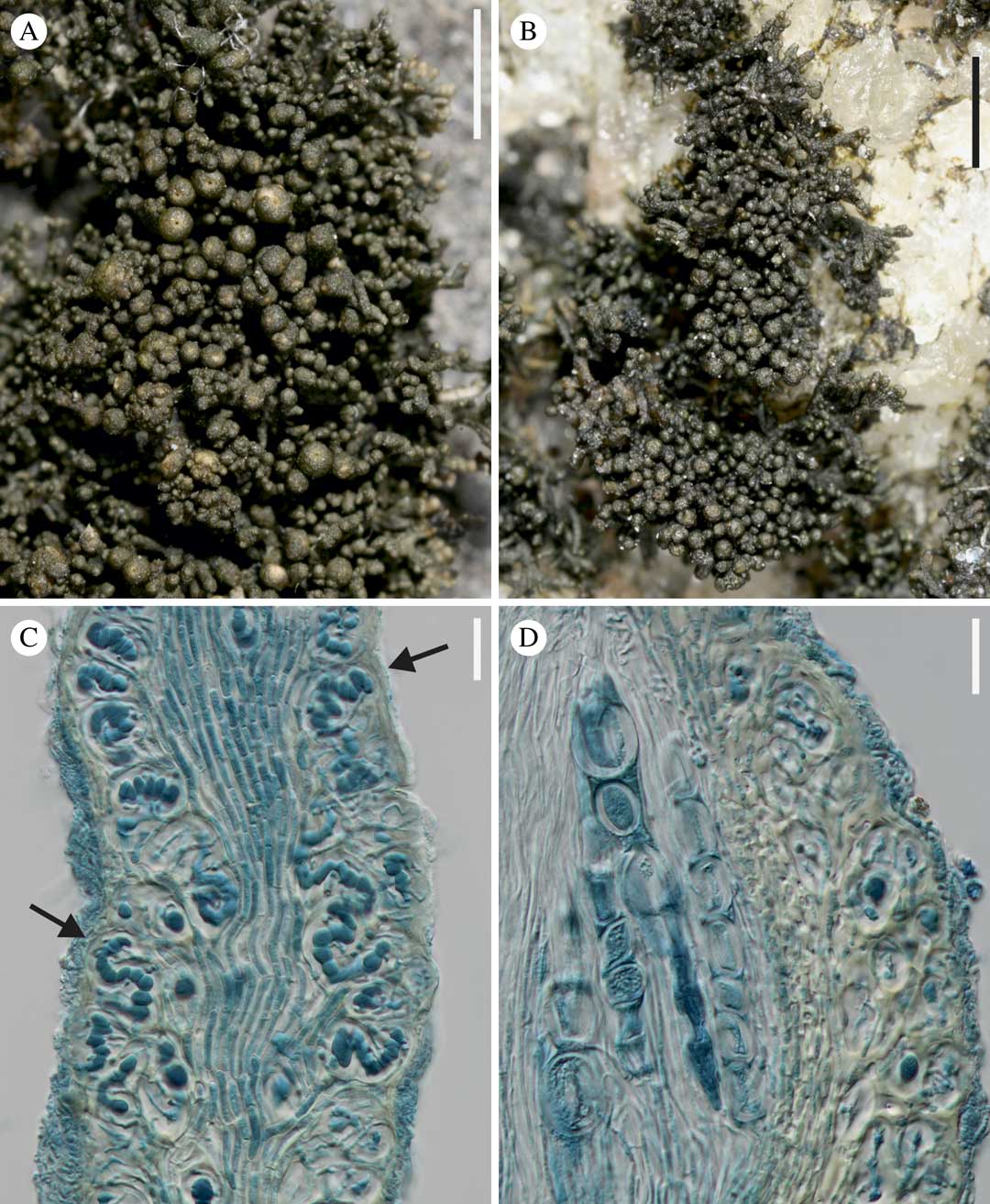
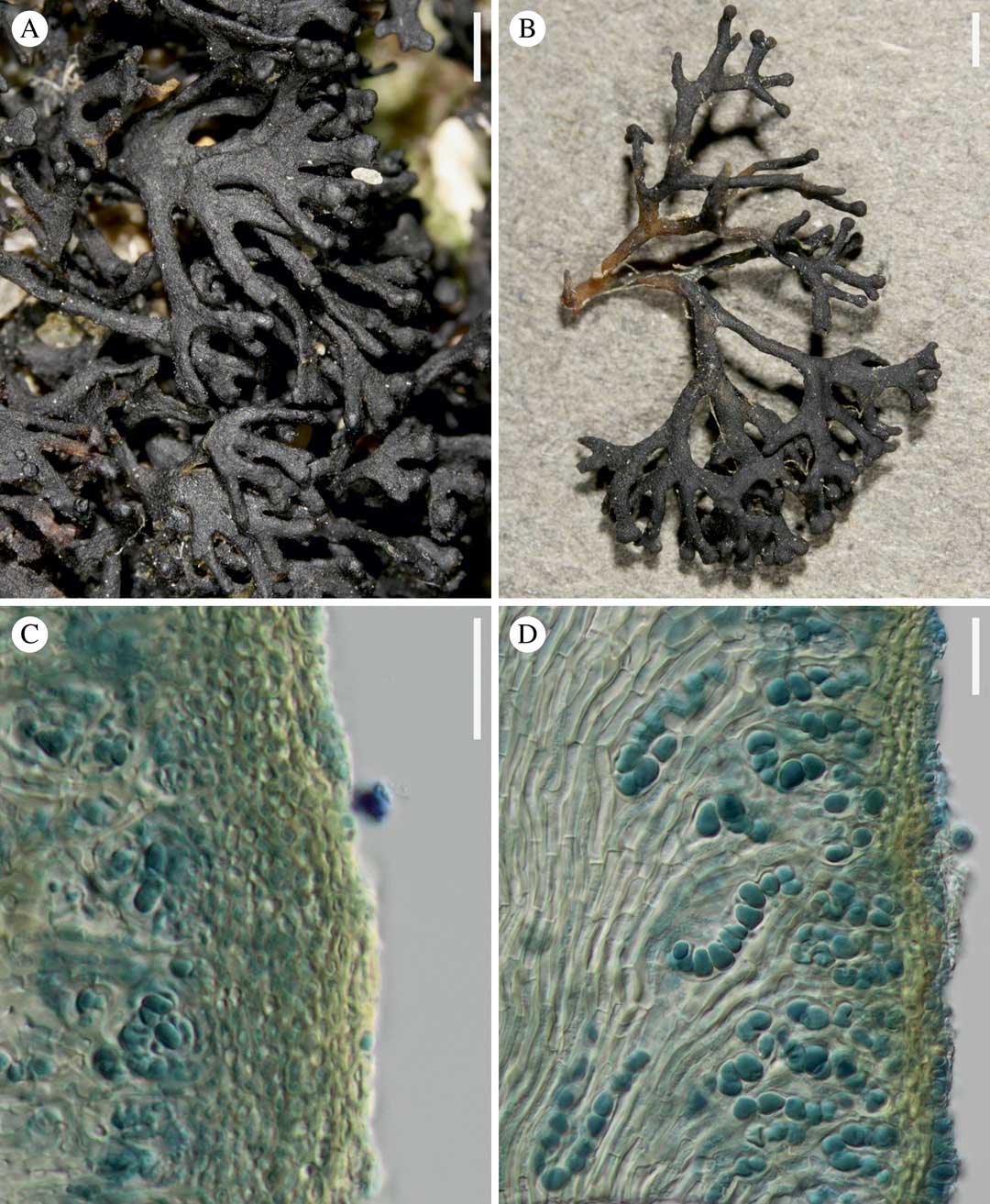
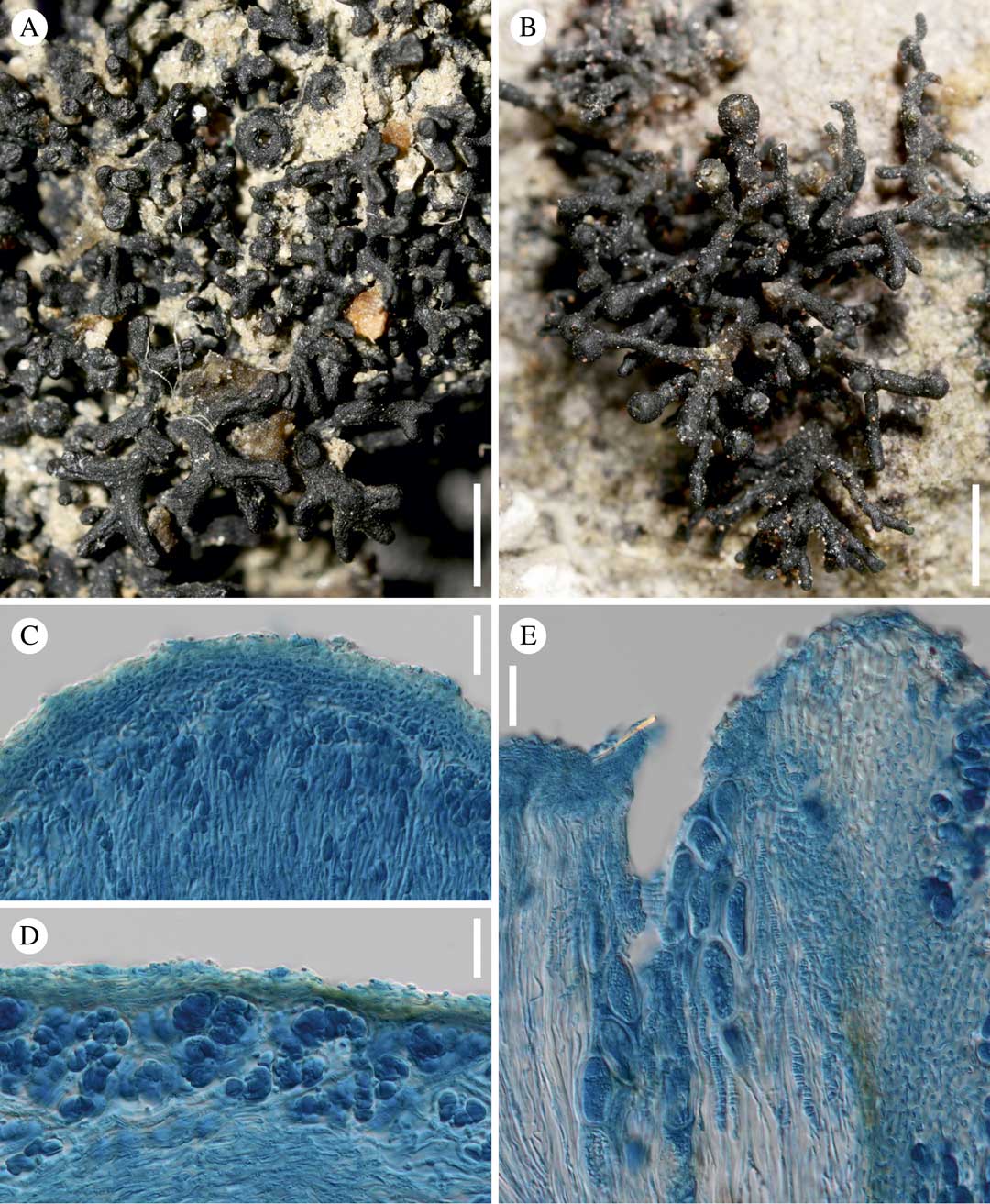
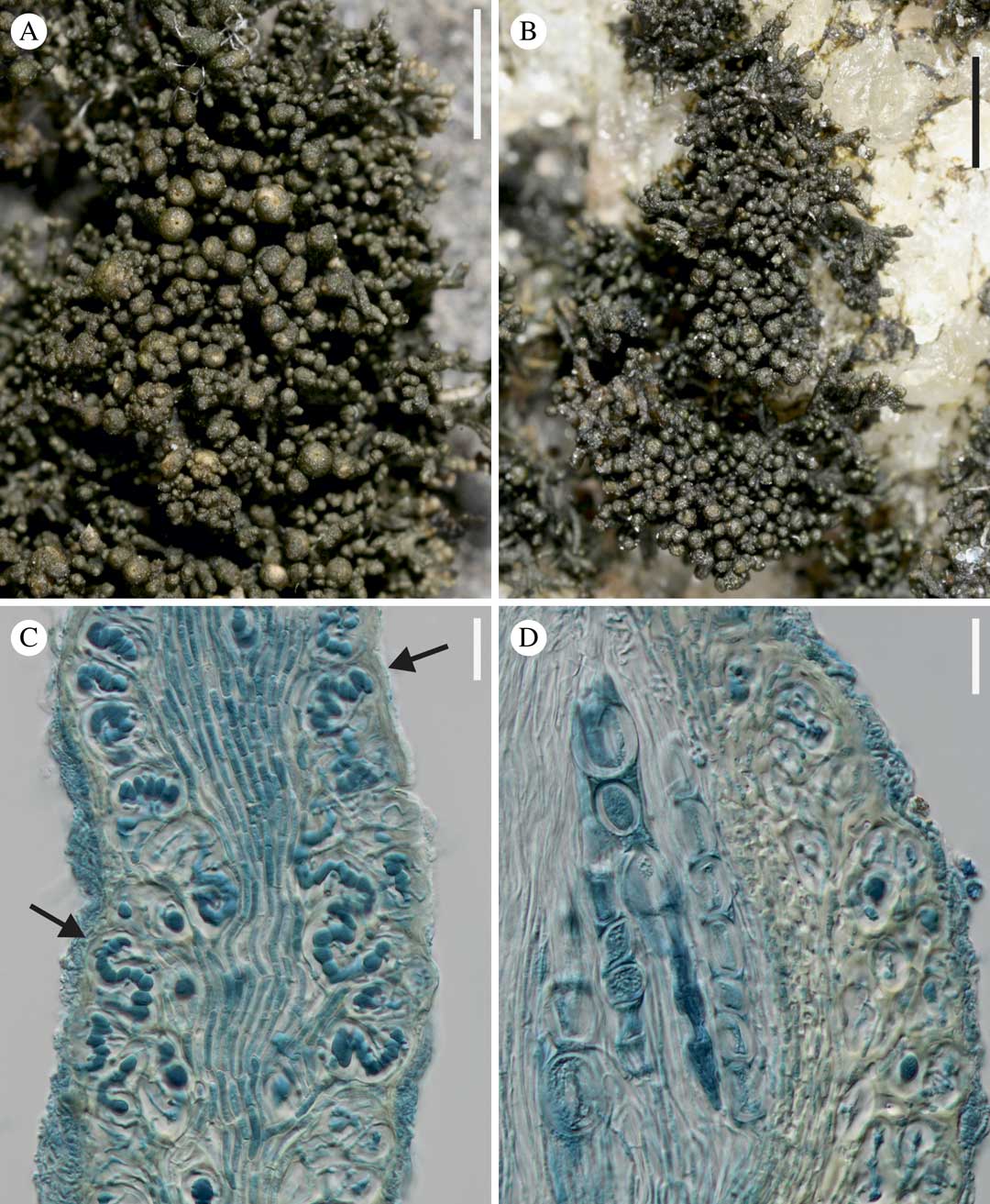
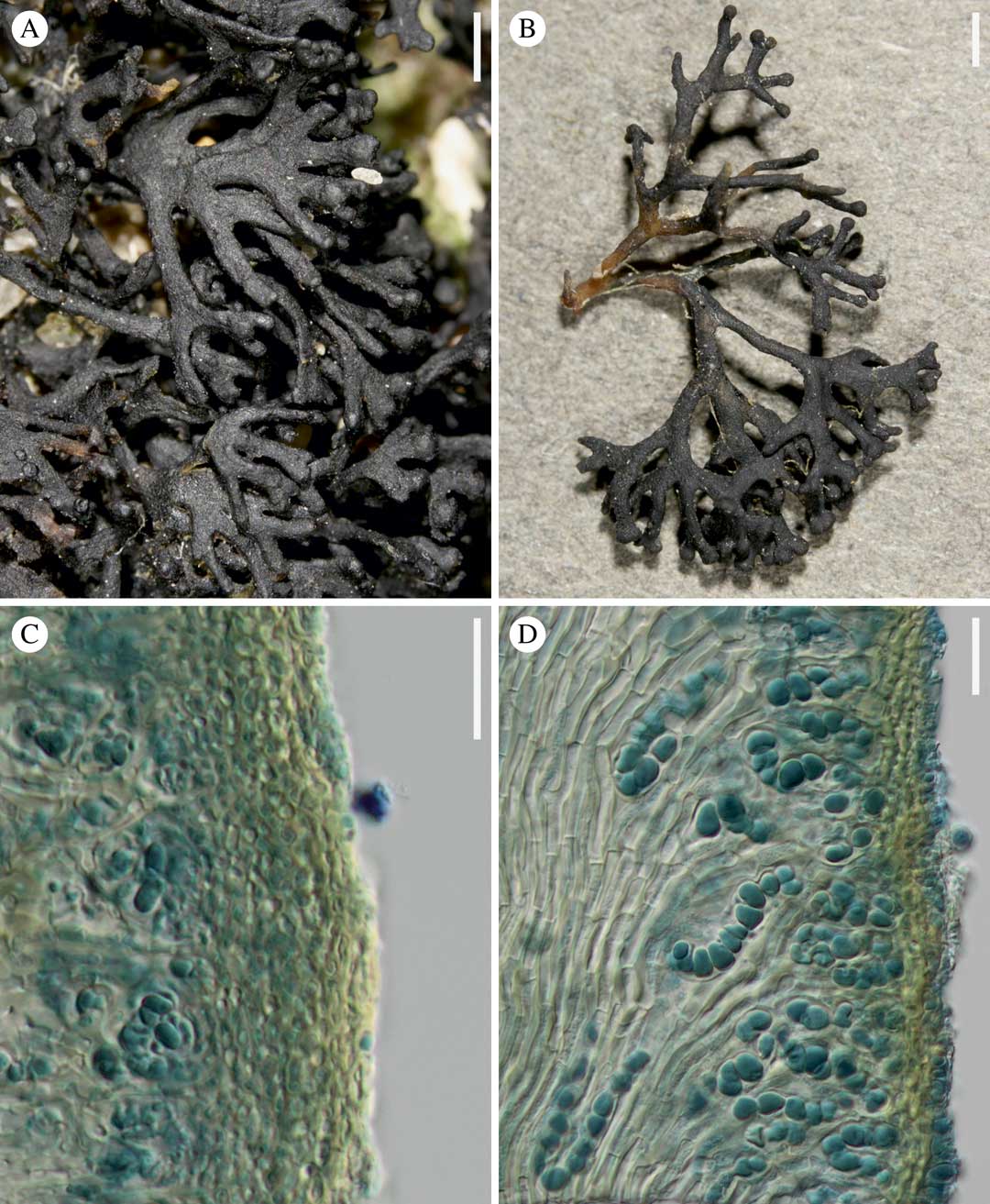
The main diagnostic characters distinguishing L. intermedia (Fig. 2) from L. confinis (Fig. 3) and L. pygmaea (Fig. 4) are summarized in Table 2. A full, updated description of L. intermedia is provided below. Descriptions of L. confinis and L. pygmaea follow Poelt (Reference Poelt1969), Blum et al. (Reference Blum, Dombrovskaya, Inashvili, Piterans, Roms and Savicz1975), Clauzade & Roux (Reference Clauzade and Roux1985), Jørgensen (Reference Jørgensen2007), Fletcher & Purvis (Reference Fletcher and Purvis2009) and Wirth et al. (Reference Wirth, Hauck and Schultz2013).
Lichina intermedia. A, thallus with short, mostly flattened branches and terminal apothecia (holotype); B, thallus with more elongated, cylindrical branches (AK 175212); C, section of lobe tip with distinct cortex (top), contorted Rivularia cyanobiont chains (middle) and compact hyphae of central strand (bottom) (holotype); D, as C but section of lobe side showing thinner cortex; E, section of apothecium with slender paraphyses (left), mature ascospores (middle) and proper exciple (right) (holotype). Scales: A & B=1 mm; C–E=20 µm.
Lichina confinis. A, thallus cushions with densely aggregated, cylindrical lobes and terminal pycnidia (Schultz 07198); B, central thallus branches densely packed, marginal branches prostrate, irregularly furcate to caespitose (Schultz 13122); C, median branch section with loose hyphae forming poor cortex (arrow), twisted Rivularia cyanobiont chains and compact, fountain-like central hyphal strand (Schultz 04015a); D, hymenium with paraphyses and thick-walled ascospores (left, centre), pale proper exciple (centre) and poorly corticated thalline exciple (right) (Schultz 04015a). Scales: A & B=1 mm; C & D=20 µm.
Lichina pygmaea. A, thallus branches distinctly flattened, repeatedly furcate to palmately divided (Schultz 17140); B, thallus branches regularly furcate, narrow and subcylindrical towards tips with terminal, globose pycnidia (Schultz 04079); C, median section of lobe tip with distinct cortex composed of densely packed, small-celled hyphae (Schultz 04011); D, section of lobe side showing compact, fountain-like central hyphal strand (left), contorted Rivularia cyanobiont chains (middle) and cortex of 3–5 rows of densely packed, small-celled hyphae (Schultz 04011). Scales: A & B=1 mm; C & D=20 µm.
Lichina intermedia (C. Bab.) M. Schultz stat. nov.
MycoBank No.: MB 819915
Basionym: Lichina pygmaea var. intermedia C. Bab. in Hook. f., Flora Nov.-Zeland., 2: 311 (1855).
Type: (New Zealand) On rocks, Otago [=Dunedin], fertile, March, Dr. Lyall (BM—holotype!); New Zealand, Southland, Curio Bay, 25 October 2009, D. J. Galloway (CHR-528471—epitype, designated here; HBG-024418—isoepitype).
(Fig. 2)
Thallus blackish, usually pale brownish-olivaceous at attachment point, dwarf-fruticose, forming carpets up to several cm in size, cushions intermediate between larger L. pygmaea and smaller L. confinis, branches cylindrical (Fig. 2B) to sometimes distinctly flattened (Fig. 2A), furcate, ascending to erect, 1·5–6·0 mm long, tips 0·08–0·25 mm thick, intercalary sections 0·07–0·35 mm thick, basal sections 0·07–0·38 mm thick. Cortex distinct, hyaline, small-celled paraplectenchymatous, 5·5–20·0 µm thick at branch tips, 4–17 µm thick at branch sides; photobiont layer 30–85(–100) µm thick with reticulate to fountain-like hyphal pattern and short, contorted cyanobiont chains belonging to Rivulariaceae (Fig. 2D); central hyphal strand (50–)90–150 µm thick, compact, hyphae parallel to interwoven, fountain-like towards photobiont layer, cells distinctly elongated (Fig. 2C & D).
Apothecia terminal, (sub)globose, 0·4–0·7 mm diam.; disc reddish to yellowish brown, punctiform to concave and somewhat opened, often empty (Fig. 2A); thalline margin smooth, persisting, 60–75 µm thick. Hymenium 270–400 µm high, KOH/IKI+ weakly bluish green; paraphyses slender, septate, branched, tips hardly thickened, pale; exciple distinct, hyaline, 25–75 µm thick, small-celled (sub) paraplectenchymatous. Asci prototunicate, narrowly clavate, 8-spored, wall thin, non-amyloid, apical structures absent. Ascospores hyaline, simple, broad ellipsoid, (15·0–)17·8–21·4–25·0(–28·5)×(7·0–)9·0–11·1–13·2(–15·0) µm (n=82), wall soon thickened.
Pycnidia terminal, (sub)globose, 175–200 µm diam., ostiolum pale brownish, wall hyaline, becoming convoluted with age; conidia terminally formed, ellipsoid, 3·0×1·5 µm; conidiophores simple, elongated.
Habitat and distribution. Grows on intertidal rocks often associated with barnacles and Hydropunctaria maura (Wahlenb.) C. Keller et al. s. lat., with a distribution from SE Australia, Tasmania to New Zealand and surrounding islands; potentially also elsewhere in the Southern Hemisphere along cold rocky seashores.
Discussion
Some morphological variation was observed among the more than 50 specimens of L. intermedia studied. Thalli with cylindrical branches were dominant and these samples appeared as somewhat larger forms of L. confinis from Europe. This might have been the reason for recent authors to synonymize var. intermedia under L. confinis. On the other hand, the rarely observed forms with flattened branches (including the holotype) superficially resembled small L. pygmaea. However, the variation in lobe shape observed in L. intermedia did not correlate with the geographical origin of the samples studied or with the phylogenetic relationships of the sequences observed. Yet the differences between the species in branch size, cortex structure and thickness, ascospore size and ecology fit very well with the phylogenetic tree topology showing three highly supported clades representing three distinct species. This is further illustrated by the mean genetic distances observed in both gene loci (Table 3). The mean genetic distances were considerably higher between the three species than within each of the species, suggesting sufficient genetic divergence between the species. The overall similar distances among the species in mtSSU compared with the nuITS also indicate a largely congruent evolution of both gene loci. Taking all the evidence into consideration, the three marine/maritime species of Lichina treated here are each well characterized, morphologically, genetically and geographically.
Various sources report L. confinis (explicitly or implicitly including L. pygmaea var. intermedia as a synonym) to be a cosmopolitan species (Ozenda & Clauzade Reference Ozenda and Clauzade1970; Blum et al. Reference Blum, Dombrovskaya, Inashvili, Piterans, Roms and Savicz1975; Galloway Reference Galloway1985, Reference Galloway2007; Litterski Reference Litterski1992; Nimis Reference Nimis1993; Fletcher & Purvis Reference Fletcher and Purvis2009). However, the results presented here clearly indicate that L. confinis occurs only in the Northern Hemisphere (chiefly Europe) whereas the Southern Hemisphere species, L. intermedia, is so far known only from SE Australia and New Zealand. These results have implications for species and habitat conservation. For example, the gene pools of both L. confinis and L. intermedia populations have to be considered much smaller and less diverse than previously thought. Such observations are relevant, for example, in national census recordings and endangered species assessments. In fact, L. confinis is already red-listed as highly threatened in Germany (Wirth et al. Reference Wirth, Hauck, von Brackel, Cezanne, de Bruyn, Dürhammer, Eichler, Gnüchtel, John and Litterski2011). It used to be very common along the German Baltic Sea coast but has declined significantly in recent times due to pollution of the shallow coastal waters. The status of L. intermedia in Australia and New Zealand also has to be re-evaluated now that the taxon is ranked at species level. It is an example of the taxonomic work needed to accurately describe species diversity, distribution and ecology. A further example is “L. canariensis ad int.” which has been reported recently by Ortiz-Álvarez et al. (Reference Ortiz-Álvarez, de los Ríos, Fernández-Mendoza, Torralba-Burrial and Pérez-Ortega2015), who found that populations of Lichina in the Canary Islands probably represent a distinct, undescribed taxon. Focusing on the eastern North Atlantic coasts they further showed that Lichina species use highly differentiated pools of Rivularia-cyanobionts specific to geographical origin and littoral zones, and suspected that ecological speciation has likely occurred.
The L. pygmaea group shows a peculiar global distribution pattern. The most striking observation is certainly the absence of Lichina in suitable habitats in coastal western North America, raising questions about speciation history. Lichina is also absent from Japan, the Russian Far East and apparently also coastal South Africa. Although L. confinis and L. pygmaea were reported from Chile and South America (Nylander Reference Nylander1858; Galloway & Quilhot Reference Galloway and Quilhot1999; Galloway Reference Galloway2007), the records seem somewhat dubious and should be validated by consulting herbarium material. However, another member of the L. pygmaea group was found on maritime rocks of Livingstone Island just north of the Antarctic Peninsula (Søchting 7850, dupl. HBG). This lichen is very close to L. confinis. It differs significantly in the smaller, globose to subglobose ascospores (and is hence called here “L. sphaerospora ad int.”). More material is needed to clarify if this is yet another austral Lichina species. Finally, it should be mentioned that Lichina antarctica described from the Kerguelen Islands does not belong to the L. pygmaea group. The ascomata in the BM syntype are pycnoascocarps and hence the species is a member of the L. willeyi group which falls outside the genus Lichina and is very closely related to Porocyphus instead (M. Schultz & M. Prieto, unpublished data). To conclude, the taxonomic diversity of the L. pygmaea group is still incompletely known and there seems to be at least one undescribed species occupying a similar ecological niche to L. confinis in the north. The geographical distribution of these species and their speciation history still remain to be studied in more detail.
I wish to dedicate this paper to D. J. Galloway (1942–2014), foremost New Zealand lichenologist. I approached him in an early phase of this study and he showed great interest. He generously collected fresh material, sent duplicates to me and offered help in arranging the loan of material from AK. We had occasional contact about the progress of my studies. Finally, I received an email from David a few weeks before he passed away. He asked about Lichina intermedia and offered further help. I am happy to have shared the essence of the results presented here with him.
I am further indebted to the curators of the following herbaria for handling loan requests and for their support during visits: AK, ASU, B, BM, CHR, H, FH, HO, MEL, MIN, MSC, S, SBBG, W and WU. Burkhard Büdel (Kaiserslautern), Tassilo Feuerer (Hamburg), Zdenek Palice (Prague) and Ulrik Søchting (Copenhagen) are thanked for supplying additional study material. Maria Prieto (Madrid, Stockholm) is thanked for organizing a field trip to Gotland. Scott LaGreca (New York) kindly provided literature on Lichina in North America. Andrew Lyall (Dublin) is thanked for providing itinerary details of the voyage of his distant relative David Lyall along the coasts of New Zealand. I am grateful to two anonymous reviewers for improving an earlier version of the manuscript. This study was partly supported by EU-SYNTHESYS grants (AT-TAF-4758, GB-TAF-2814).