Introduction
In seasonal climates, temperature is a most relevant germination cue as it regulates germination timing, which can determine plant success (Probert, Reference Probert and Fenner2000; Baskin and Baskin, Reference Baskin and Baskin2014). Temperature controls the germination process directly by affecting germination speed and percentage in non-dormant seeds, or indirectly by affecting the dormancy state of seeds with physiological dormancy. Physiological dormancy is common in angiosperms, and helps them to regulate the timing and rate of germination (Baskin and Baskin, Reference Baskin and Baskin2014). Physiological dormancy can be released after cold stratification, hence prompting seedling emergence in spring, past the more stressing conditions of winter (Murdoch, Reference Murdoch and Gallagher2014). However, in other species, cold temperatures can impose seed dormancy and/or delay germination until conditions are warm enough for seedling establishment (Bewley and Black, Reference Bewley and Black1994; Baskin and Baskin, Reference Baskin and Baskin2004). Species can differ in their temporal patterns of germination, a response that can in part be determined by the interaction between environmental temperature and physiological dormancy state.
The germination response to temperature in a given species may not be uniform across the geographical range it populates. It has been shown that populations across the distribution range of a species differ among themselves in their temperature requirements for germinating (Skordilis and Thanos, Reference Skordilis and Thanos1995; Tieu et al., Reference Tieu, Dixon, Meney and Sivasithamparam2001; Cochrane et al., Reference Cochrane, Daws and Hay2011; Chamorro et al., Reference Chamorro, Luna and Moreno2017a). This variability among populations within a species has been interpreted as an adaptation to the local climate (Schütz and Rave, Reference Schütz and Rave1999; Vandelook et al., Reference Vandelook, Van de Moer and Van Assche2008). However, the analysis of the relationship between germination and temperature conditions of the habitat of seed provenance often produces no consistent patterns. Different studies reveal contrasting cold requirements in relation to latitude. In some cases, the need for cold requirements to break physiological dormancy has been noted for populations from higher latitudes (Probert et al., Reference Probert, Smith and Birch1985; Skordilis and Thanos, Reference Skordilis and Thanos1995), but other studies show the opposite pattern (Bevington, Reference Bevington1986; Ren and Abbott, Reference Ren and Abbott1991) or lack of it (Ellison, Reference Ellison2001; Bischoff et al., Reference Bischoff, Vonlanthen, Steinger and Müller-Schärer2006). The relationship and type (positive, negative) between germination temperature and the local climate of the various populations across the distribution range of a species is also variable among species, as variable is which germination trait is sensitive to the local climate of the population (Chamorro et al., Reference Chamorro, Luna and Moreno2017a). This lack of consistent correlation across latitudinal gradients makes generalizations difficult, and does not permit anticipation of how species will respond to climate variability and climate change (Cochrane et al., Reference Cochrane, Yates, Hoyle and Nicotra2015). Thus, to increase our ability to predict species vulnerability to a changing climate is very important for understanding the germination niche breadth of a species, including the germination sensitivity to temperature of its various populations across the geographical gradients it populates.
Mediterranean ecosystems have a seasonal climate with two favourable growing seasons (autumn and spring) and two seasons that are more limiting for plant establishment (cool winters and, particularly, dry and hot summers). Fire is common, and germination thereafter occurs mainly in autumn, after the first rains (Moreno et al., Reference Moreno, Zuazua, Pérez, Luna, Velasco and de Dios2011; Céspedes et al., Reference Céspedes, Torres, Luna, Pérez and Moreno2012; Sánchez et al., Reference Sánchez, Luzuriaga, Peralta and Escudero2014). Cold stratification is often not required for germination (Luna et al., Reference Luna, Pérez, Céspedes and Moreno2008). Germination proceeds from autumn until the next spring, due to temperature and/or water limitations (Quintana et al., Reference Quintana, Cruz, Fernández-González and Moreno2004; Moreno et al., Reference Moreno, Zuazua, Pérez, Luna, Velasco and de Dios2011). Arguably, to avoid the limiting environmental conditions for seedling establishment, seasonal responses would be expected to vary among populations across latitudinal/altitudinal gradients due to variations in temperature and water availability. Hence, germination concentrated in autumn would be expected for populations at warmer latitudes and low elevations, where winters are less severe, thus with early germination ensuring appropriate root development to help plants withstand the earlier summer drought (Moreno and Oechel, Reference Moreno and Oechel1992). By contrast, populations from colder latitudes or at higher elevations would have germination more distributed in time, with spring germination being favoured to avoid the low temperatures of winter, while benefiting from the later onset of the summer drought and its lesser severity.
In fire-prone shrublands, many plant species regenerate after fire from seeds, and their germination strategies may have been selected under the pressure of fire. Consequently, many species tune their germination to the passage of fire, which releases them from dormancy. This is the case with hard-seeded species, whose germination is activated by the heat of fire by way of breaking their impermeable testa (Keeley et al., Reference Keeley, Pausas, Rundel, Bond and Bradstock2011). Indeed, much research has focused on this type of species. However, woody species with physiological dormancy are also present, and knowledge of their germination ecology and the role of fire has received less attention (Ooi et al., Reference Ooi, Auld and Whelan2006; MacKenzie et al., Reference Mackenzie, Auld, Keith, Hui and Ooi2016). For example, acidic and mesic shrublands in the Mediterranean region are dominated by highly flammable species of the genus Erica (Ericaceae). Some have physiological dormancy, which can be released in part after cold stratification (e.g. E. australis, E. umbellata) (González-Rabanal and Casal, Reference González-Rabanal and Casal1995; Trigueros-Vera et al., Reference Trigueros-Vera, Parra and Rossini-Oliva2010), although not all populations respond in this way (Valbuena and Vera, Reference Valbuena and Vera2002). Exposing the seeds of these species to a heat pulse or moderate temperatures for long periods has shown to significantly increase germination in some cases (González-Rabanal and Casal, Reference González-Rabanal and Casal1995; Cruz et al., Reference Cruz, Pérez, Velasco and Moreno2003; Trigueros-Vera et al., Reference Trigueros-Vera, Parra and Rossini-Oliva2010; Vasques et al., Reference Vasques, Maia, Pedro, Santos, Vallejo and Keizer2012), but, again, not all populations studied responded similarly, and other studies reported no such effect (Valbuena and Vera, Reference Valbuena and Vera2002; Moreira et al., Reference Moreira, Tormo, Estrelles and Pausas2010; Vasques et al., Reference Vasques, Maia, Pedro, Santos, Vallejo and Keizer2012). Erica australis is a resprouter species which forms a soil seed bank (Torres et al., Reference Torres, Urbieta and Moreno2012), but recruitment after fire is minimal (Céspedes et al., Reference Céspedes, Torres, Pérez, Luna and Moreno2014). By contrast, E. umbellata is an obligate seeder species, which germinates prolifically after fire, but their temporal germination patterns are complex. Much of the germination is often delayed until the second year after fire (Quintana et al., Reference Quintana, Cruz, Fernández-González and Moreno2004; Moreno et al., Reference Moreno, Zuazua, Pérez, Luna, Velasco and de Dios2011). Changes in fire season, from spring to autumn, can induce delays of over one year in the main germination pulse (Céspedes et al., Reference Céspedes, Torres, Pérez, Luna and Moreno2014). That is so despite the fact that laboratory experiments have shown that germination probability and rate are significantly enhanced by smoke (Moreira et al., Reference Moreira, Tormo, Estrelles and Pausas2010). This suggests that other factors are also controlling the germination process. Indeed, the focus on factors associated with fire as the germination cues has not always considered that other environment factors, like seasonal temperatures, might also be important (Ooi et al., Reference Ooi, Auld and Whelan2006; MacKenzie et al., Reference Mackenzie, Auld, Keith, Hui and Ooi2016). The role of fire-related cues can change across environmental gradients (Chamorro et al., Reference Chamorro, Luna and Moreno2017a), and different germination patterns can emerge, modulated by complex interactions across the geographical range of a species with seasonal temperature or fire cues, among other factors.
Climate change may affect the germination process in a complex way (Walck et al., Reference Walck, Hidayati, Dixon, Thompson and Poschlod2011). Rising temperatures and changing rainfall patterns may adversely affect the germination patterns of species with cold stratification requirements for germination and/or with optimum germination at lower temperatures, while it may favour species without cold requirements and optimal germination at warmer temperatures. That is, germination and dormancy break are distinctly different processes and, as such, climate change can affect them independently, with different effects on seasonal germination patterns (Vleeshouwers et al., Reference Vleeshouwers, Bouwmeester and Karssen1995; Thompson and Ooi, Reference Thompson and Ooi2010).
Here we analysed the germination response of two Erica species (E. australis and E. umbellata) to changes in temperature across a latitudinal gradient in western Iberia. They form extensive shrublands in mesic and acidic soils (Ojeda, Reference Ojeda2009). Both species are endemic to the western Mediterranean region and have seeds with physiological dormancy. We focused on the effects of seasonal temperatures by setting them to germinate under various temperatures during simulated autumn, winter and spring. Specifically, we asked: (1) is germination related to the local climate of the populations where the seeds were collected?; (2) to what extent is germination sensitive to changes in temperature from autumn to spring?; (3) does germination sensitivity to seasonal temperatures and temperature change vary along a latitudinal gradient across the Iberian Peninsula?; and (4) does this sensitivity change after exposing the seeds to a heat shock?
Methods
Species and site selection
The species selected were Erica australis L. and E. umbellata Loefl. ex L. (Ericaceae), both endemics from the Iberian Peninsula and northern Morocco. These species are abundant in abandoned areas or after fire in former pine forests, forming extensive shrublands that are frequently affected by fire. Nevertheless, they show different regenerative response to fire: E. australis is a facultative resprouter, that is, it resprouts but also germinates after fire, although not in prolific numbers. Erica umbellata is a seeder, that is, it regenerates after fire only from seeds.
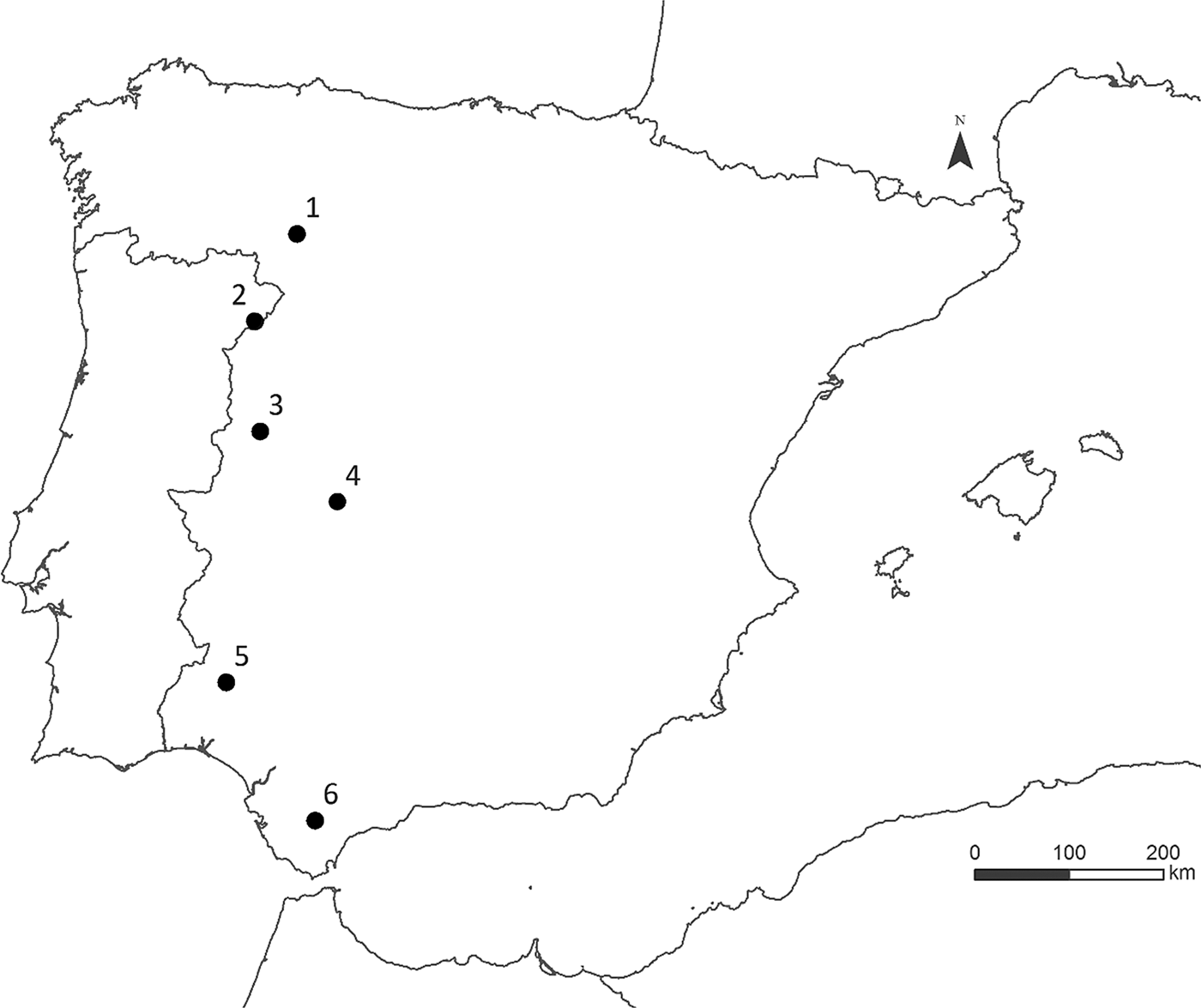
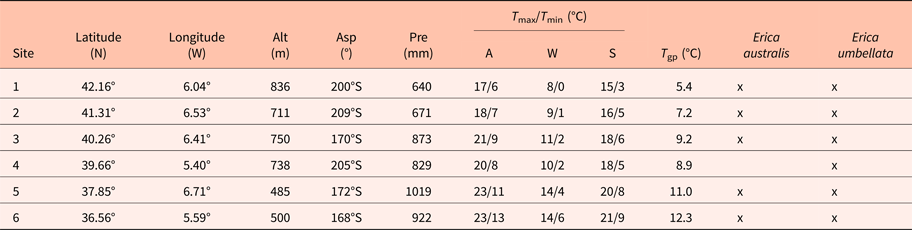
Six sites, with similar vegetation (homogeneous shrublands) and similar physical conditions (south aspect and moderate slope), were selected from north to south across the Iberian Peninsula. The latitudinal gradient extends for 620 km, with a distance between each site of approximately 70–170 km (Fig. 1; Table 1); and covers a difference of 6–7°C in mean maximum and minimum temperatures across the different seasons. Climate conditions at each location were characterized by the mean temperature of the germination period, T gp. This germination period was defined as the time during which the difference between precipitation and potential evapotranspiration (P – PET) was positive (i.e. wet period). We calculated the daily potential evapotranspiration following the FAO-56 Hargreaves equation (Allen et al., Reference Allen, Pereira and Raes1998), from the daily data (1961–1990) of the SPAIN 02 climate dataset (from http://www.meteo.unican.es/fume/). We then calculated the wet period by fitting a quadratic function to the daily evapotranspiration data series across the year. We considered the beginning and the end of the wet period at the dates when P – PET crossed the zero line. After obtaining the wet period, the mean temperature of this period was calculated for each site (Table 1).
Geographic location of each site (see Table 1) from which Erica seeds were collected.

Geographic coordinates, altitude, aspect, mean annual precipitation, mean maximum and minimum temperatures of autumn, winter and spring, mean temperature of germination period at each site, and species harvested at each site (see Figure 1)

Alt, altitude; Asp, aspect; Pre, mean annual precipitation; T max, maximum temperature; T min, minimum temperature; A, autumn; W, winter; S, spring; T gp, temperature of germination period. Climate data were extracted from Ninyerola et al. (Reference Ninyerola, Roure and Pons2005) and T gp from the SPAIN 02 climate dataset.
At the time of seed dispersal, mature fruits of each species were harvested from ten individuals at each site (Table 1). Fruits were taken to the laboratory, where seeds were removed from the capsules and cleaned. Seeds from the ten individuals were mixed and kept in paper bags at room temperature for 4 months until the beginning of the experiment.
Germination experiment
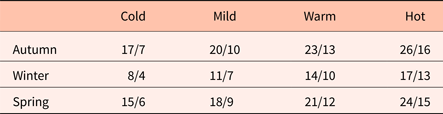
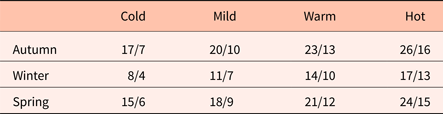
Seeds were exposed to heat (+H) or not (–H) prior to setting them to germinate. For that, seeds were heated at 80°C for 10 min in a forced-draft oven, which is comparable to the temperatures and time of exposure registered at the soil surface during fire shrublands (Bradstock and Auld, Reference Bradstock and Auld1995; Moreno et al., Reference Moreno, Zuazua, Pérez, Luna, Velasco and de Dios2011). Heated and unheated seeds were then set to germinate in germination chambers at four temperature treatments with a 12 h photoperiod (Table 1). Temperature treatments simulated the natural course of the seasons: autumn, winter and spring conditions; with 7 weeks duration each (Table 2). Two temperature treatments (hereafter referred to as cold and warm) were established using the temperatures of northernmost and southernmost sites, respectively. Two additional treatments were implemented by adding 3°C to the maximum and minimum temperatures of each of the cold and warm treatments, to obtain an intermediate (mild) and extreme (hot) treatment, respectively. The first three treatments represented the range of temperatures registered along the latitudinal gradient. The fourth, hot treatment simulated future conditions of climate change. In the southern Iberian Peninsula, by the end of the century, mean maximum/minimum temperatures during fall, winter and spring are projected to increase 3.6/2.9°C based on the A1B scenario (Agencia Estatal de Metereología, Regionalización dinámica ENSEMBLES, www.aemet.es). Six Petri dishes, each with 25 seeds, were used per species and site, each incubation temperature treatment and for unheated (–H) and heated (+H) seeds, respectively. Seeds were set to germinate on two layers of moistened filter paper (Whatman no. 1) in 5.5 cm Petri dishes, which were sealed with Parafilm to prevent them from desiccating. Filter papers were watered as required. Dishes were laid at random in temperature-controlled germination chambers. Two chambers were used per treatment (three dishes in each chamber). No significant differences in germination variables (see below) were obtained between pairs of chambers (data not shown), consequently chambers were pooled to have six dishes as replicates for each factor. Seeds were checked every 3 days and germinated seeds were removed. A seed was considered germinated when the radicle had emerged. After germination monitoring, the position of dishes was changed within the chamber, to avoid chamber position effects. Germination was monitored for 21 weeks; at the end of this period, the viability of the non-germinated seeds was checked by adding 100 p.p.m. solution of GA3 to germinate all viable seeds. Germination was corrected by viability, i.e. germination was calculated after discarding the non-viable seeds. Viability of the species was not significantly modified by the heat shock (Table 3; Supplementary Table 1).
Germination temperature treatments (maximum/minimum, °C) with a photoperiod of 12 h/12 h
Seed viability in percentages (mean ± SE) and results from the GLM statistical test for the effects of the heat shock for the studied species non-exposed (unheated) or exposed (heated) to a heat shock of 80°C for 10 min in a forced draft oven

Data analysis
The germination process was characterized by the time to onset of germination (T 0) and the cumulative germination (CG) at the end of each season in the different temperature treatments. T 0 was the number of days until the onset of germination; CG was calculated as the germinated seeds relative to the viable ones through the various simulated seasons. Generalized linear models (GLM) with maximum likelihood for T 0 were fitted to test differences across the four temperature treatments (T) and in relation to the mean temperature of the germination period (T gp) at each site. A gamma error distribution and log link function were used for fitting the model to the T 0 data. CG during different seasons was analysed using generalized estimating equations (GEE). GEE is a procedure that extends the GLM to allow analysis of repeated measurements for non-normal distributions. In our case, season was considered repeated measures. The effects of temperature treatments and mean T gp at the site of seed collection on germination across the different simulated seasons were modelled by fitting GEE. For this case, a binomial distribution was used and logit as link function. Each species was tested for the effects of temperature treatments (T, four levels, each corresponding to the four temperature treatments), T gp (continuous variable) being a covariate, and season (S, intra-subject factor with three levels, corresponding to the three simulated seasons in each temperature treatment). All analyses were performed for both unheated (–H) and heated (+H) seeds. Where the effects of the temperature treatments were significant, pairwise comparisons among treatments or seasons were performed using Bonferroni correction. For those cases in which T gp was a significant covariate and/or interacted with other factors, regressions and logit regressions were carried out to explore the relationship between the relevant germination variable and T gp. SPSS Statistics version 19.0 (SPSS, Chicago, IL, USA) was used for performing all statistical analyses.
Results
Time to onset of germination (T0)
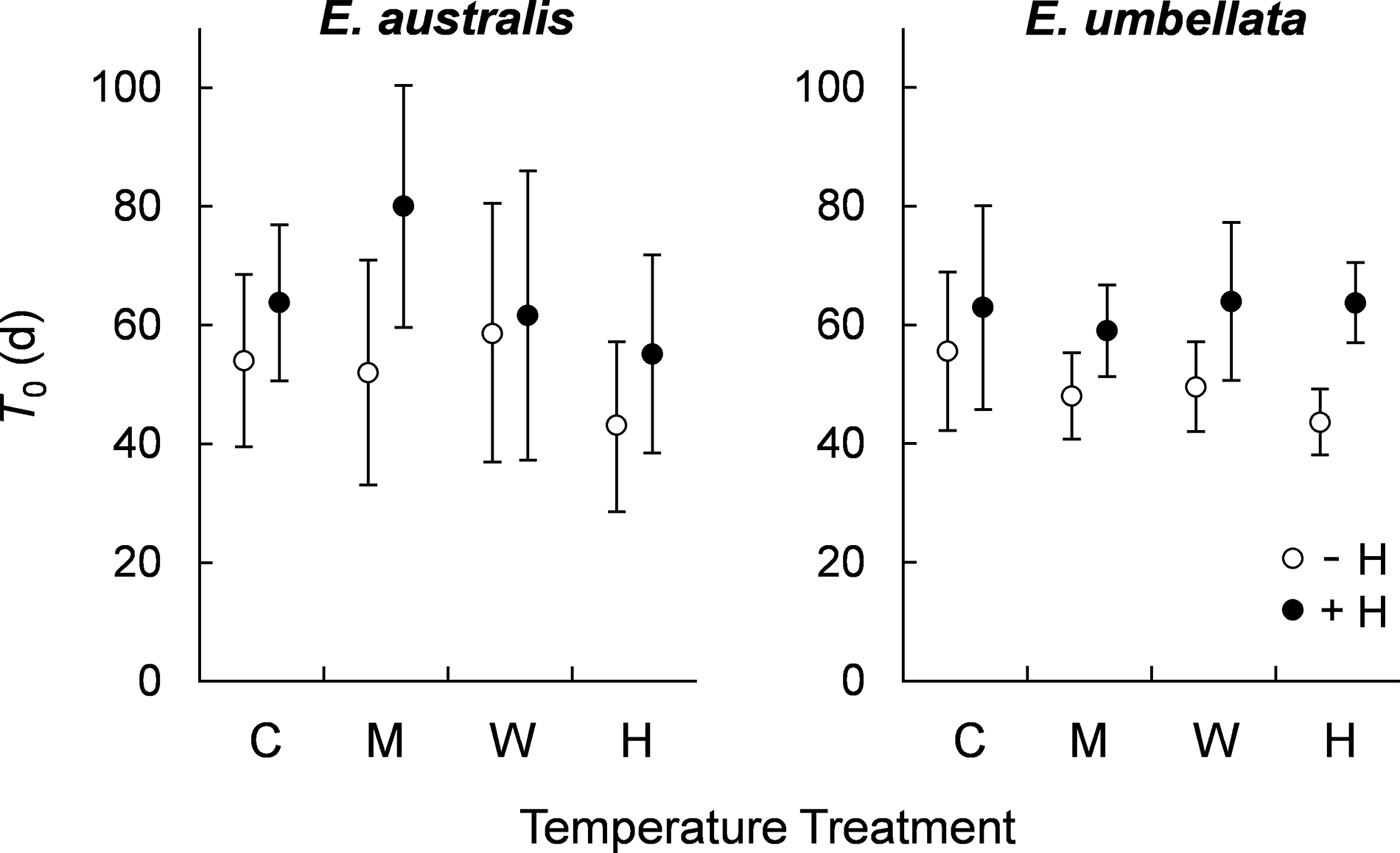
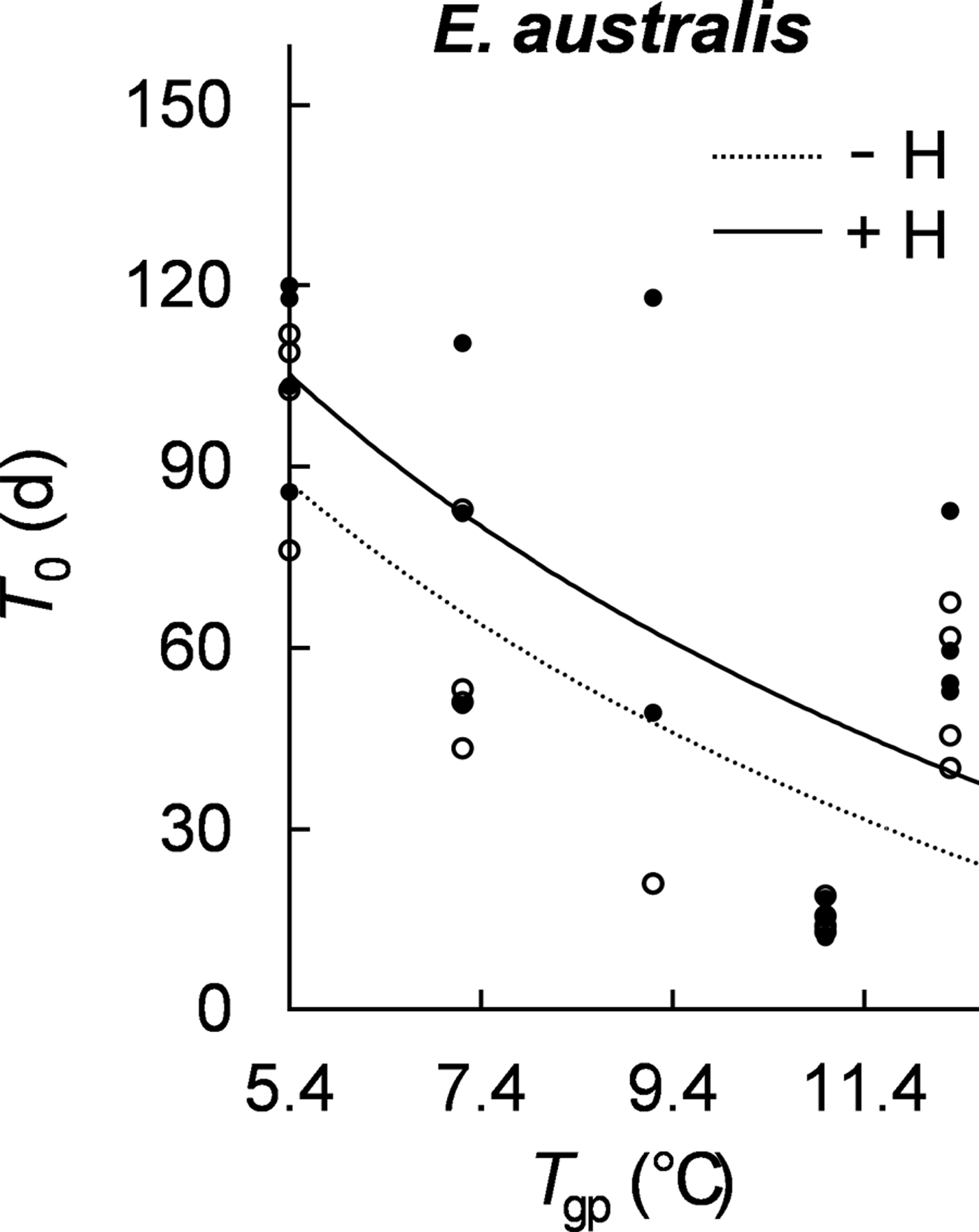
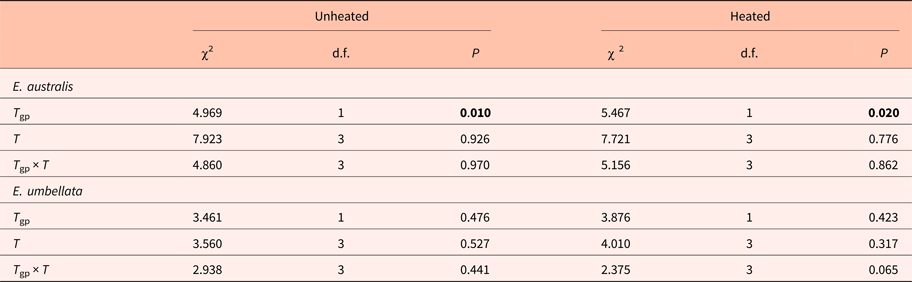
T 0 covaried with T gp in E. australis (Table 4; Fig. 3), the effect being so that the time to initiate germination increased with decreasing T gp (i.e. towards northern sites). No such effect was found for E. umbellata. In both Erica species, T 0 was not affected by germination temperature, and neither temperature treatment interacted with T gp (Table 4; Fig 2).
T 0 in days for each germination temperature treatment (C, cold; M, mild; W, warm; H, hot). Means and standard errors are presented for unheated (–H, open symbols) and heated seeds (+H, filled symbols).

Relationship, from GLM analysis, between onset of germination (T 0) and mean of temperature of the germination period (T gp) in unheated (–H, open symbols) and heated seeds (+H, filled symbols) of E. australis.

Results from GLM for main effects of temperature treatment (T), the covariate mean temperature of the period of germination at the site of seed collection (T gp) and their interactions on time to the onset of germination (T 0) for unheated and heated seeds
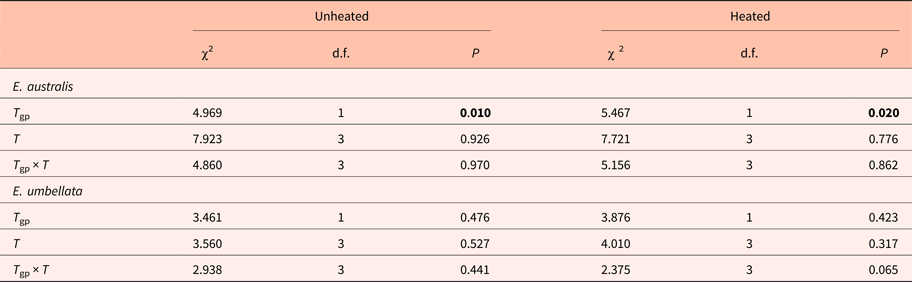
Significant P values are marked in bold (P ≤ 0.05).
Cumulative germination
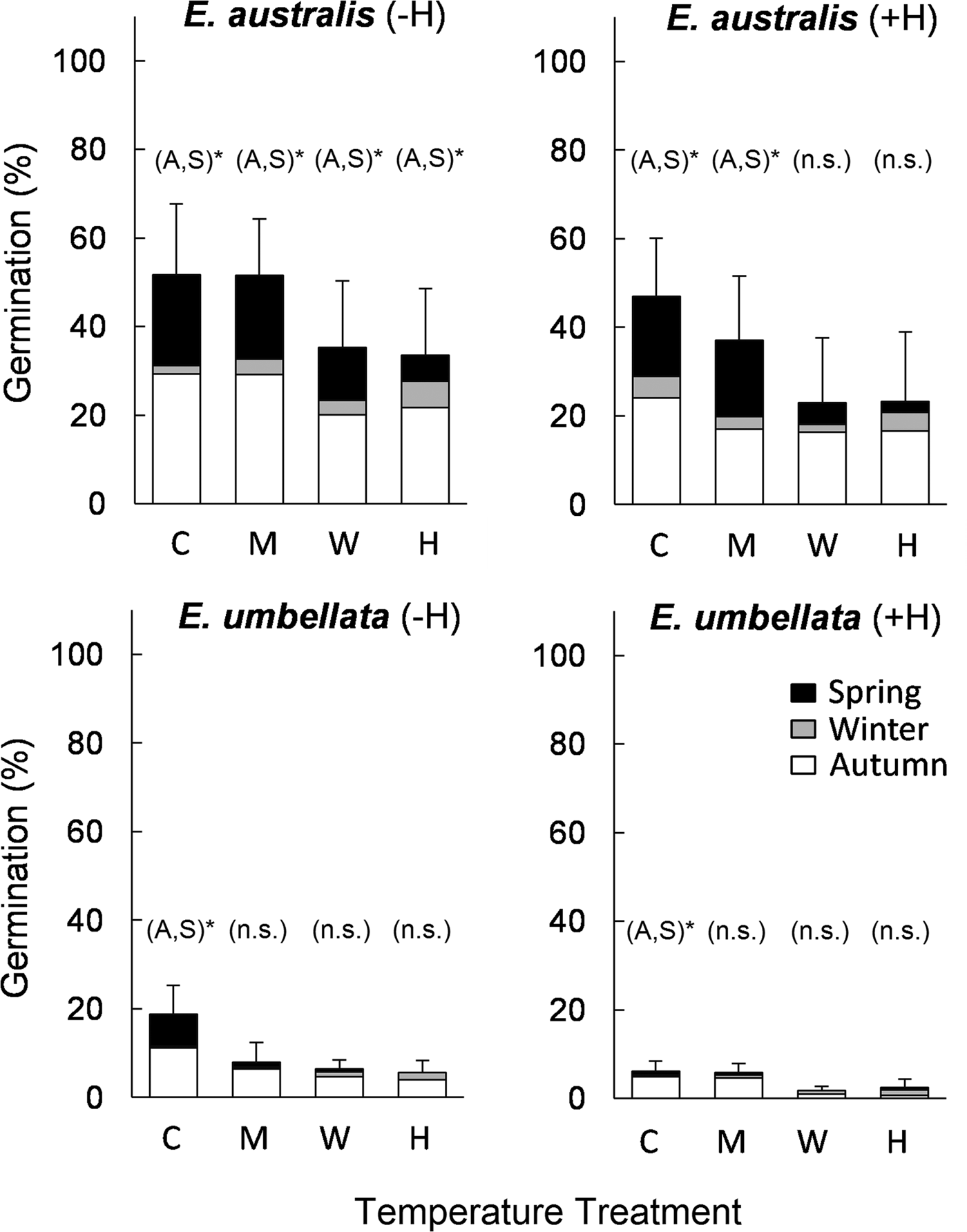
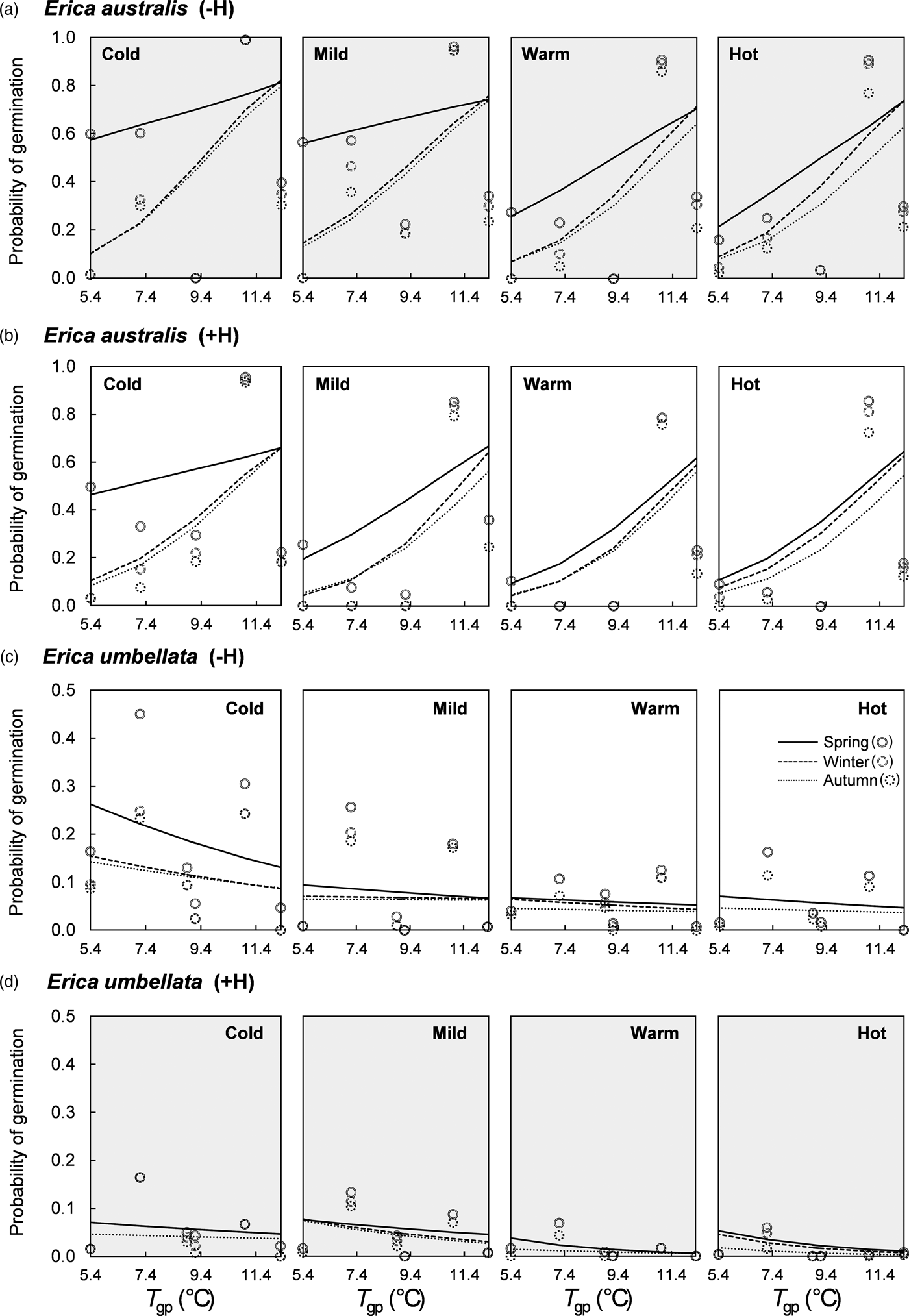
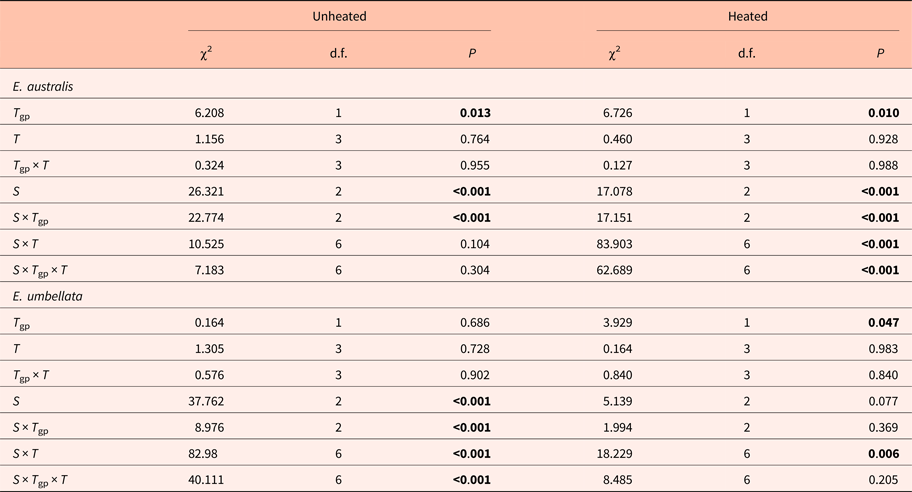
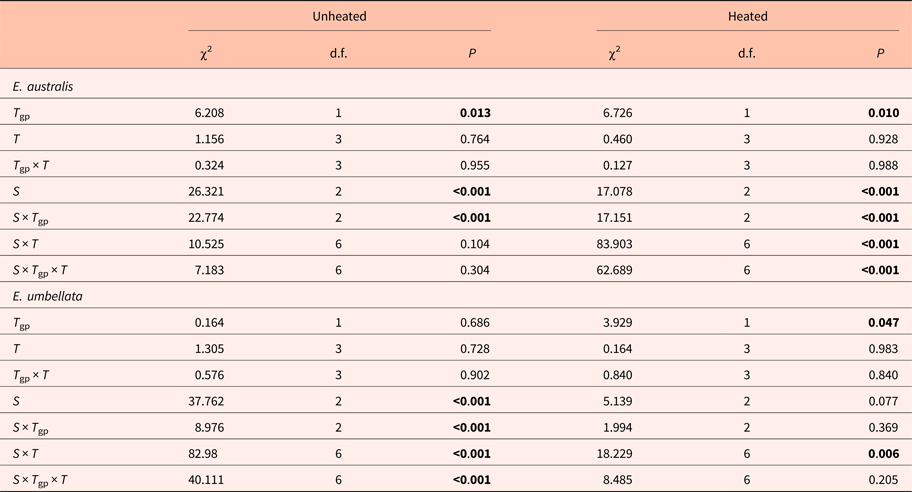
CG was significantly related to T gp in both species, but in the case of E. umbellata only in unheated seeds. In E. australis, CG was positively related to T gp, whereby seeds tended to have higher germination at sites with greater T gp (i.e. southern sites) (Fig 5). By contrast, in E. umbellata the opposite effect was found. After correcting for T gp, no main temperature treatment effects were found for CG in either E. australis or E. umbellata (Table 5; Fig 4), and neither temperature treatment interacted with T gp.
Cumulative germination for season at each germination temperature treatment (C, cold; M, mild; W, warm; H, hot). Means and standard errors are presented for unheated (–H) and heated (+H) seeds. Letters in parentheses (A,S) and asterisks denote significant differences between seasons in each treatment from pair-wise comparisons with Bonferroni correction (P < 0.05) after generalized estimating equation analysis; ‘n.s.’ denotes no significant difference between seasons (see Table 5).

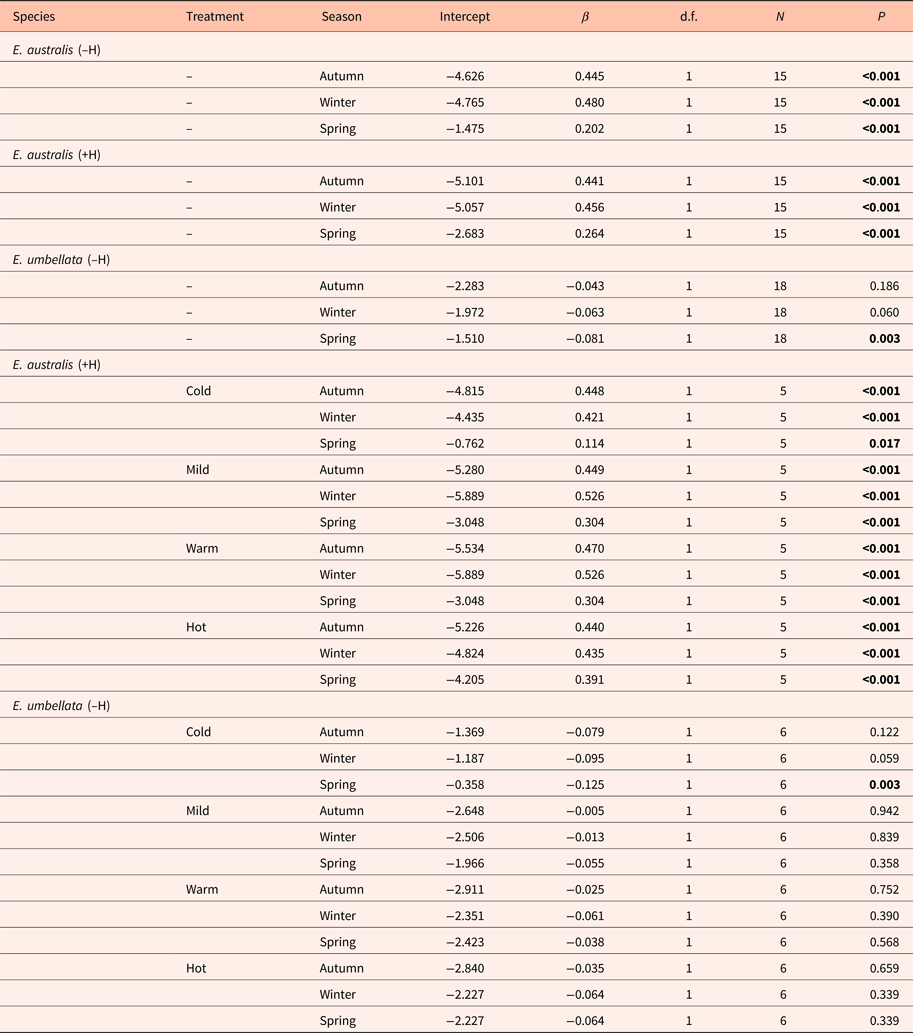
Logit regressions showing the relationship between probability of germination and mean temperature of the germination period (T gp) for each temperature treatment and season for: (a) unheated seeds of E. australis (–H); (b) heated seeds of E. australis (+H); (c) unheated seeds of E. umbellata (–H); and (d) heated seeds of E. umbellata (+H) (see Table 6). Graphs with a grey background indicate that the relationship between germination and T gp for season does not significantly change during the temperature treatments, while white graphs indicate that the relationship significantly changes during the temperature treatments (see GEE results of the triple interactions in Table 5). Different symbols show cumulative germination raw data for season.

Results from generalized estimating equations for temperature treatment (T), mean temperature of germination period at the collection site (T gp) and season (S) on mean of cumulative germination for unheated and heated seeds
Significant values are marked in bold (P ≤ 0.05).
Germination seasonality
Significant differences in CG among seasons were found in both species, except in heated seeds of E. umbellata, germination being greater in simulated autumn and spring. In E. australis, season interacted with T gp, the relationship being positive in the three seasons, although in autumn and winter the effect was much larger than in spring. The effects were similar in unheated or heated seeds (Table 6). This means that CG was higher in spring than in the other two seasons at lowest T gp values (i.e. northern sites). In the case of heated seeds of E. australis, germination in the cold and mild treatments proceeded in autumn and spring, with CG in these seasons being significantly different among them, but not so between autumn and winter (Fig 4). Conversely, in the warm and hot treatments, germination proceeded in autumn (Fig. 4). On the other hand, the effect of season varied with T gp and temperature treatment in heated seeds (Table 6). In heated seeds of E. australis, logit regressions showed that CG in spring differed from the other seasons along the T gp gradient in the two warmer temperature treatments, but in the two colder temperature treatments the relationship between spring cumulative germination and T gp was lower (Table 6; Fig. 5b; Supplementary Fig. 1). That means that at sites with lower T gp, CG in spring at the two warmer treatments was significantly lower than at the two colder treatments.
Logit regressions for the effects of T gp on each season of heated (+H) and unheated (–H) seeds of E. australis, and unheated seeds of E. umbellata

Significant P values are marked in bold (P ≤ 0.05).
In the case of E. umbellata, season interacted with T gp (Table 5), the relationship being negative in spring (Table 6). For heated and unheated seeds, season interacted with temperature treatments (Table 5). Season was only significant in cold treatment, whereas there were no differences between seasons in the other treatments (Fig. 4). Additionally, the effect of season varied with T gp and temperature treatment, but only in unheated seeds (Table 5). Logit regression for spring CG was only significant in the cold treatment, showing a negative effect (Table 6; Fig 5c; Supplementary Fig. 2). Thus, CG in each season of the temperature treatments varied along the T gp; seeds from colder sites germinated mainly during spring in the cold treatment in unheated seed (Fig. 5c; Supplementary Fig. 2).
Discussion
The local climate where the seeds had been collected, as measured by the mean temperature of the germination period (T gp), was closely related to the germination response (time to onset of germination or cumulative germination) of both investigated species, to temperature and to the simulated seasons. The net result was that understanding how these two species respond to varying temperatures is only possible if we considered the different responses that exist across the latitudinal gradient populated by them. The relationship between germination and the local climate across the latitudinal gradient found here confirms similar results along this same gradient, albeit with a set of hard-seeded species (Chamorro et al., Reference Chamorro, Luna and Moreno2017a). Not all studies searching for relationships across latitudinal or, in general, climatic gradients detect significant changes among populations (Neuffer and Hurka, Reference Neuffer and Hurka1988; Ellison, Reference Ellison2001; Bischoff et al., Reference Bischoff, Vonlanthen, Steinger and Müller-Schärer2006; Cochrane et al., Reference Cochrane, Hoyle, Yates, Wood and Nicotra2014), thus suggesting a lack of response across the gradient of the various populations to the local conditions (Cochrane et al., Reference Cochrane, Yates, Hoyle and Nicotra2015). The present study and the previous one along the same gradient by us suggest that identifying the proper variable to characterize the local conditions (T gp in our case) as well as the relevant germination response variable might be important for unravelling such relationships.
The germination sensitivity to temperature treatments of each species was different, as was also different the type of response found along the gradient. Differences among species of the same genus have been shown previously (Skordilis and Thanos et al., Reference Skordilis and Thanos1995; Cochrane et al., Reference Cochrane, Hoyle, Yates, Wood and Nicotra2014; Chamorro et al., Reference Chamorro, Luna and Moreno2017a). This indicates that what might apply to one species may not apply to other species across the same gradient, even if they are congeneric, and points to idiosyncrasy in the way populations within a species have adapted to their particular environmental conditions.
The results obtained for E. australis support the hypothesis that this species germinates in autumn at the southern sites (high T gp), and it does so with little sensitivity to temperature. Based on the response to cold stratification, this variation of the north–south germination patterns has been described in other species with physiological dormancy that experience severe winters (Seneca, Reference Seneca1972; Skordilis and Thanos, Reference Skordilis and Thanos1995; Pendleton and Meyer, Reference Pendleton and Meyer2004; Ronnenberg et al., Reference Ronnenberg, Wesche and Hensen2008). However, with populations further north, the response changed. Germination tended to decrease in autumn, thereby also changing the seasonal pattern, so that the spring peak gained more and more importance. This was more pronounced the colder the temperature of incubation. That means that as winter conditions became more severe at the localities where seeds were harvested, they delayed much of their germination towards spring, and this was particularly visible in the cold treatment, the one that had temperatures cold enough to be similar to a stratification treatment. The time to initiation of the germination process (T 0) followed this pattern, and decreased quite significantly in the southern populations. Previous studies showed that cold stratification may release seed dormancy in Erica species (Aparicio, Reference Aparicio1995; Rossini-Oliva et al., Reference Rossini-Oliva, Leidi and Valdes2009; Trigueros-Vera et al., Reference Trigueros-Vera, Parra and Rossini-Oliva2010). Yet we have found that some populations have a large proportion of their seeds that are non-dormant, and this is correlated with the local climate (i.e. seeds from sites with cold winters have a large proportion of dormant seeds, and seeds from sites with warm winters have a large proportion of non-dormant seeds). This result suggests a strong local adaptation to tune dormancy-breaking by the cold winter temperatures in this species. Seeds developed at warmer environments are less dormant than seeds from cold environments, a pattern that has been reported for other species as well (Meyer and Monsen, Reference Meyer and Monsen1991; Tieu et al., Reference Tieu, Dixon, Meney and Sivasithamparam2001). The local climate under which seeds develop might be a key driver in setting the level of physiological dormancy of the offspring through phenotypic plasticity and/or genetic differentiation. Studies in annual species show that both sources of variation can play a significant role in the variation in level of dormancy (Wagmann et al., Reference Wagmann, Hautekeete, Piquot, Meunier, Schmitt and Van Dijk2012; Fernández-Pascual et al., Reference Fernández-Pascual, Jiménez-Alfaro, Caujapé-Castells, Jaén-Molina and Díaz2013). How much of the geographic variation found here stems from phenotypic plasticity or genetic differentiation is unknown. Further work is required to unravel the role of the seed maturation environment or genetic inheritance in the germination response found here across the gradient investigated.
In contrast, the relationship between germination of E. umbellata and T gp was the opposite. Southern sites of E. umbellata had a large proportion of dormant seeds in comparison with northern sites. Likewise, for other Erica species along an altitudinal gradient, populations from warm environments showed a higher proportion of dormant seeds than those from cold environments (Vera, Reference Vera1997). Germination response to the treatments implemented here was highest at the northern sites, as has been described for other species with physiological dormancy (Mergen, Reference Mergen1963; Bevington, Reference Bevington1986; Tieu et al., Reference Tieu, Dixon, Meney and Sivasithamparam2001; Wagmann et al., Reference Wagmann, Hautekeete, Piquot, Meunier, Schmitt and Van Dijk2012). The seasonal temporal pattern also changed with temperature, and the highest peak was obtained in spring when seeds were set to germinate under cold temperatures. This is an indication of a physiological dormancy that was partially broken by the cold temperatures of the implemented treatment. Although the pattern along the gradient of E. umbellata seems to be inconsistent with that of E. australis, seeds from populations from cold environments showed a germination peak in spring, similar to that found for E. australis. Unlike E. australis, in which we obtained high germination in some treatments and sites, germination in E. umbellata was always low, which suggests that other controls are in place, and that seeds were not released from dormancy by our treatments. Whether releasing the seeds from such controls would alter the temperature–response patterns found is something that is not known. Other environmental cues can play significant roles in releasing dormancy (e.g. warm stratification) (Baskin and Baskin, Reference Baskin and Baskin2014). It appears that this species is highly sensitive to warm temperatures for germination. Consequently, we argue that this species will not fare well under a warmer climate, not in the southern sites, and neither in the northern sites that need cold to break seed dormancy.
Heat shock altered the germination sensitivity to temperature as well as the relationship with the local climate variable across the gradient. In the case of E. australis, the heat shock increased germination sensitivity to temperature, which was against our expectations. Fire generates open environments suitable for plant establishment, where earlier germination would be advantageous to increase fitness (Verdú and Traveset, Reference Verdú and Traveset2005; De Luis et al., Reference De Luis, Verdú and Raventós2008). According to this, after fire, species from fire-prone areas must germinate rapidly, and have a broader tolerance to environmental factors such as temperature, water or light, which should become less important as germination controls. However, while the germination seasonality of unheated seeds of E. australis only varied across the gradient independently of temperature, germination of heated seeds also varied in relation to incubation temperature. On the contrary, E. umbellata showed a different response; the germination of unheated seeds was determined by both season and incubation temperature along the gradient, but not so in heated seeds. Furthermore, germination was reduced in heated seeds, which would mean delaying seed germination for some time. Indeed, germination in this species has been shown to be delayed up to several years after fire (Quintana et al., Reference Quintana, Cruz, Fernández-González and Moreno2004; Moreno et al., Reference Moreno, Zuazua, Pérez, Luna, Velasco and de Dios2011; Céspedes et al., Reference Céspedes, Torres, Pérez, Luna and Moreno2014).
Heat shock generally decreased germination in both Erica species, an indication of high sensitivity to fire. Still, it is necessary to differentiate between fire as a responsible cue for breaking seed dormancy, and fire as a factor which increases germination of seeds with dormancy previously released by other factors (Ooi et al., Reference Ooi, Auld and Whelan2006). Therefore, in our work, as a high proportion of seeds did not germinate, the effect of heat on seed germination could have been underestimated. Actually, the role of heat in these species is controversial. Some studies have reported an increase of germination percentage with moderate heat shock in both species (González-Rabanal and Casal, Reference González-Rabanal and Casal1995; Cruz et al., Reference Cruz, Pérez, Velasco and Moreno2003; Trigueros-Vera et al., Reference Trigueros-Vera, Parra and Rossini-Oliva2010), but others did not find such effects (Valbuena and Vera, Reference Valbuena and Vera2002; Valbuena et al., Reference Valbuena, Luis-Calabuig, Tarrega, Trabaud and Prodon2002; Moreira et al., Reference Moreira, Tormo, Estrelles and Pausas2010; Vasques et al. Reference Vasques, Maia, Pedro, Santos, Vallejo and Keizer2012). The mechanism by which heat shock increases germination is unknown for species with permeable seed coats (Mackenzie et al., Reference Mackenzie, Auld, Keith, Hui and Ooi2016). Smoke has been reported to enhance germination in E. umbellata (Moreira et al., Reference Moreira, Tormo, Estrelles and Pausas2010), but the combined effects of heat and smoke are not known. Anyway, our study relates to the different germination response to temperatures of seeds that may have been exposed to heat, and supports the need to analyse fire cues in greater depth, by considering the interactions with other environmental factors (Mackenzie et al., Reference Mackenzie, Auld, Keith, Hui and Ooi2016).
In conclusion, we found that germination in E. australis and E. umbellata was sensitive to warmer temperatures. Although higher temperatures would not be detrimental per se for seed germination, a change in the seasonal patterns of germination, owing to changes in temperature and precipitation due to the projected regional warming (Morata-Gasca, Reference Morata-Gasca2014), may imperil these species. Studies in Banksia species have also shown that rising temperatures associated with anthropogenic climate warming will not affect germination, but changes in the temporal patterns will be altered, with consequent effects on species persistence (Cochrane et al., Reference Cochrane, Yates, Hoyle and Nicotra2015). Our results suggest that, in northern areas, both Erica species delay germination until past the winter so that seedlings would overcome the harsher conditions at this time of the year. This response in the northern sites to cold would not benefit these species in the case of warmer years and with regional climate warming. Clearly populations at such sites responded with little germination to such conditions. Our results support the idea that changes in winter temperatures will affect these species, and that in the case of warm winters many seeds will remain dormant although, again, this will depend on the population. This could affect to a greater extent E. umbellata, which relies on recruitment from seeds for population maintenance, and is more vulnerable than E. australis, owing to its resprouting nature.
Anticipating plant-community responses to climate change requires understanding the variation in germination response to temperatures across the distribution range of the species (Walck et al., Reference Walck, Hidayati, Dixon, Thompson and Poschlod2011; Cochrane et al., Reference Cochrane, Yates, Hoyle and Nicotra2015; Chamorro et al., Reference Chamorro, Luna and Moreno2017a). Climate gradients may be reliable predictors of variation among populations, and may help to improve the accuracy of predictions of vegetation shifts under climate change (Rosbakh and Poschlod, Reference Rosbakh and Poschlod2015; Jiménez-Alfaro et al., Reference Jiménez-Alfaro, Silveira, Fidelis, Poschlod and Commander2016). Our work provides evidence that rising temperatures will affect these species, particularly at their northern ranges. The main hazard for seedling establishment at these sites will be lack of low temperatures, that is, emergence will be the bottle neck. By contrast, in the southern populations other environmental factors, such as water stress, can control seedling establishment (Larcher, Reference Larcher2000; Moreno et al., Reference Moreno, Zuazua, Pérez, Luna, Velasco and de Dios2011; Chamorro et al., Reference Chamorro, Luna, Ourcival, Kavgaci, Sirca, Mouillot, Arianoutsou and Moreno2017b). Overall, we demonstrate that the variability of the responses among the species along the latitudinal gradient, together with the variability in their responses to exposure to heat, indicates that anticipating changes in these Erica shrublands along the Iberian Peninsula as the climate changes is rather complex. Changes will occur, but anticipating them is complicated. Clearly, population models that analyse the impact of climate change in plant species need to consider the species variability across its distribution range.
Supplementary materials
To view supplementary material for this article, please visit https://doi.org/10.1017/S0960258518000041
Supplementary Table 1. Seed viability mean (±SE) for unheated and heated seeds of studied species from populations collected in different sites along the latitudinal gradient.
Supplementary Fig. 1. Cumulative germination of E. australis for different temperature treatments and populations across the latitudinal gradient (as the mean temperature of the germinating period, T gp) (values increase from north to south) for unheated (–H) and heated (+H) seeds.
Supplementary Fig. 2. Cumulative germination of E. umbellata for different temperature treatments and populations across the latitudinal gradient (as the mean temperature of the germinating period, T gp) (values increase from north to south) for unheated (–H) and heated (+H) seeds.
Acknowledgements
We thank A. Fernandez, A Vázquez de Castro and A. Velasco for their technical assistance during germination experiments, and A. Parra for help with seed collection. We also thank two anonymous reviewers for useful comments and suggestions.
Financial support
This work was funded by the 7th FP of the European Commission (Project FUME, grant no. GA243888) and Ministerio de Ciencia e Inovación of Spain (Project SECCIA, grant no. CGL 2006-06914).