INTRODUCTION
Problematic, terminal, ritual, special, or peri-abandonment deposits are understood differently and their purpose debated widely by archaeologists. Identified as middens, feasting refuse, or associated with rituals (Clayton et al. Reference Clayton, David Driver and Kosakowsky2005; Garber Reference Garber1989; Stanton et al. Reference Stanton, Kathryn Brown and Pagliaro2008), these deposits exhibit different compositional patterns with regards to lithics, ceramics, and fauna. To discover their general purpose, we examine the anatomical, taxonomic, and natural or cultural taphonomic faunal patterns to assist with identifying the significance of these deposits in the Belize River Valley. Faunal analysis, when accompanied with analysis of other artifacts in a deposit, may be used to understand the nature of a particular ritual, though that is not within the scope of this paper.
In this paper, we examine faunal remains from peri-abandonment deposits in the Belize Valley sites of Baking Pot and Xunantunich. These deposits are diverse in artifact classes, with high quantities of ceramics (Hoggarth et al. Reference Hoggarth, Awe, Bednar, Lopez-Johnson, McKeown, Lonaker, Green, Moraza-Keeswood, Ray, Walden, Hoggarth and Awe2016), presence of lithics, and variable amounts of fauna (Wisner et al. Reference Wisner, Tappan, Wilson, Burke and Stanchly2017, Reference Wisner, Tappan, Alvarado, Laurich, Thomas and Burke2018). At Baking Pot, there is an abundance of polychrome and other symbolically significant ceramics, as well as chert and obsidian artifacts, cores, and broken blades (Davis Reference Davis2018; Hoggarth et al. Reference Hoggarth, Awe, Bednar, Lopez-Johnson, McKeown, Lonaker, Green, Moraza-Keeswood, Ray, Walden, Hoggarth and Awe2016; Lonaker et al. Reference Lonaker, Hoggarth, Awe, Ebert, Burke, Awe and Hoggarth2017). For Xunantunich, the ceramics are less impressive, with primarily nondiagnostic sherds, though lime water damage could explain the lack of preserved hieroglyphic texts. Other artifacts, such as chert bifaces and cores and an abundance of fragmentary obsidian blades, were also recovered (Alvarado Reference Alvarado2019; Sullivan et al. Reference Sullivan, Zanotto, Izzo, Burke, Awe, Ebert, Burke, Hoggarth and Awe2017). Taxa diversity, lack of cut marks, and low meat-utility skeletal elements suggest the deposits are nondomestic in nature, but are they middens, feasting refuse, or indicative of ritual activities? In this context, meat utility indicates skeletal elements that do not contribute large caloric returns from marrow or muscle. Ritual, while often disagreed upon in meaning or interpretation, is always suggested as the archaeological default for difficult to interpret contexts. Acknowledging this does not necessarily restrict our ability to identify as ritual deposits those that do not fall strictly within midden or feast. We argue this because it is necessary to exclude some interpretations to allow for more exploration of another. We argue that the deposits at the sites of Baking Pot and Xunantunich are primarily indicative of ritual activities at the two sites.
FAUNAL MATERIALS FROM ARCHAEOLOGICAL DEPOSITS
Previous reports on peri-abandonment deposits often mention fauna but rarely detail what was recovered (Clayton et al. Reference Clayton, David Driver and Kosakowsky2005; Garber et al. Reference Garber, Kathryn Brown, Awe, Hartman and Garber2004; Houk Reference Houk and Houk2000; Koenig Reference Koenig2014; Stanton et al. Reference Stanton, Kathryn Brown and Pagliaro2008). For example, at Blue Creek, presence or absence of fauna is mentioned, but no identification of taxa, elements, or taphonomic effects were reported (Clayton et al. Reference Clayton, David Driver and Kosakowsky2005). For Altun Ha, Stanton et al. (Reference Stanton, Kathryn Brown and Pagliaro2008:240) list artifact classes recovered in deposits and identify a large quantity of faunal remains, 2,982 specimens recovered, but do not identify taxa, element, or taphonomic effects. Even at Dos Hombres, Houk (Reference Houk and Houk2000:144) mentions fauna present, but states the deposits “lack substantial amounts.” At Blackman Eddy, there is more discussion on fauna recovered; the authors indicate jute and apple snails were identified, but do not engage beyond these limited data (Garber et al. Reference Garber, Kathryn Brown, Awe, Hartman and Garber2004:37–38). Finally, at Aguacate Uno, Koenig (Reference Koenig2014:8, 28–29, 34) reports more details by describing ratios of taxa present, but again lacks identification of elements or taphonomic effects. While only a brief overview of the peri-abandonment deposit literature, the pattern observed is their lack of detailed faunal analyses.
Peri-abandonment deposits are variable in composition across the Maya lowlands, making interpretations of these features as middens, feasting refuse, or ritual deposits difficult. A midden, for example is typically identified as a concentrated feature of accumulated domestic refuse and may consist of a variety of artifacts and ecofacts associated with the daily lives of individuals. Considering this, middens recovered in ancient Maya sites often possess a diversity of local fauna and flora representative of diet (Powis et al. Reference Powis, Stanchly, White, Healy, Awe and Longstaffe1999).
Feasts are specific communal events in which fauna and flora are consumed. According to Dietler (Reference Dietler, Dietler and Hayden2001:26), a feast is a diverse set of cultural and ritual practices “that involve the communal consumption of food and drink.” Given that feasting is a process, Dietler and Hayden (Reference Dietler, Hayden, Dietler and Hayden2001:7–8) argue archaeological identification of a feast must include a discussion of social roles for feasting and how the event is representative of the ideological and symbolic importance of fauna and flora to the community.
Rituals are wide-ranging and can include votive caches, sacrifices, materials associated with burials, ancestral veneration events, or petitions for rain, health, and good harvests. Ritual deposits are described as manifestations of religious and social beliefs and practices through material remains left behind (Flannery Reference Flannery1976). Animal remains in these deposits often suggest ideological significance for the ritual itself (Emery Reference Emery2003, Reference Emery2004; Pohl Reference Pohl1981, Reference Pohl, Leventhal and Kolata1983). Specific rituals performed by an indigenous population are often difficult to ascertain, however, to identify them as ritual is not.
Taphonomic Impacts to Faunal Remains from Deposits
Fundamentally, taphonomy is a dynamic and complex process leading to the decay and burial of organisms and has been adopted to reflect all archaeological site formation processes. Different agents cause taphonomic effects to skeletal elements, such as carnivores who consume, gnaw, accumulate, disarticulate, or distribute materials (Efremov Reference Efremov1940; Lyman Reference Lyman1994). One of the issues with interpreting deposits is identifying what taphonomic processes influenced the preservation of animal bones. While some deposits possess faunal remains, others do not. If faunal remains are not present or few are recovered, is this indicative of their lack of use or an indication of differential preservation and modification? To better support efforts in the interpretation of these deposits requires a thorough understanding of the taphonomic processes that would suggest cultural versus natural accumulations or modifications. The thoroughness of taphonomic analysis is the most crucial aspect of interpreting faunal remains. Unlike pottery and lithics, faunal remains can be more significantly and discernibly damaged by taphonomic agents. While many things can break ceramic vessels into sherds, it is not necessarily always clear if the breakage was caused by pressure from the overlying sediments or people smashing them to the ground. By providing more clarification of the taphonomic processes impacting the fauna in these deposits, a ceramicist or lithicist could reinvestigate the other artifacts in the deposit.
Natural Processes
Carnivore modification refers to the tooth marks left behind by carnivores actively gnawing on animal remains for subsistence (Burke Reference Burke2008, Reference Burke2013; Fisher Reference Fisher1995; Lyman Reference Lyman1994). If carnivores were gnawing at the materials, one could assume the deposit in question is one scavenging animals have regular access to, such as a midden. We do not mean to suggest an absence of carnivore-gnawing in feasting or ritual deposits but, given the potential importance of these types of deposits, it could be argued scavengers would have restricted access.
Rodent gnawing occurs for one of two reasons: one is pica or osteophagia, eating bone to acquire minerals (Fisher Reference Fisher1995; Hutson et al. Reference Hutson, Burke and Haynes2013; Lyman Reference Lyman1994). The second reason is tied to the rodent's hypselodont incisors, which are ever-growing, leading to behavioral adaptations in which rodents gnaw on bones to wear down their teeth. Since rodents are the prevalent invasive species in caves and other types of deposits, rodent gnawing is likely observable in all types of deposits.
Diagenesis, another taphonomic process, is more specifically the post-depositional effects of chemical exfoliation or erosion to bone surfaces (Lyman Reference Lyman1994). Hydrated lime, or calcium hydroxide, was often combined with other admixtures and aggregates to make cement for floors, stuccos, and other architectural constructions. Given the humidity and lack of upkeep over time, when calcium hydroxide becomes saturated, it becomes limewater, which erodes and exfoliates the bone surface. Often this damage obscures the surface of the bone, though it does not remove the general structure it may prevent zooarchaeologists from clearly identifying taphonomic processes or taxa.
Cultural Processes
Cut marks are common modifications made during the process of butchery. Potts and Shipman (Reference Shipman1981:577) defined the general term “cut mark” as the marks produced by stone tools—elongated grooves with v- to u-shaped cross sections. Several researchers have further described the shape of cut marks as having multiple, fine parallel striae on the vertical walls of the marks (Eickhoff and Herrmann Reference Eickhoff and Herrmann1985; Fisher Reference Fisher1995; Potts and Shipman Reference Potts and Shipman1981; Shipman Reference Shipman1981).
In addition to Pohl's (Reference Pohl1981, Reference Pohl, Leventhal and Kolata1983) detailed ethnozoology of the Maya region, Brady and Villagrán de Brady (Reference Brady and de Brady1989) proposed additional methods to differentiate nondietary use of fauna. First, a lack of butchering marks implies that the animals were not consumed. Second, the relative intactness of skeletal specimens with limited evidence for thorough processing suggests that, rather than being consumed, they were offered whole or functioned as tools. Finally, minimal evidence of cooking, especially burned bones, indicates that the faunal remains were not used for consumption.
Cultural modifications to produce bone tools, instruments, or personal adornments are important to describing deposits. Often these elements are described as cut-worked if they fall within the bone-working process, a separation from cut marks as defined by Potts and Shipman (Reference Potts and Shipman1981). Emery (Reference Emery2008:212–216, Reference Emery2009) identified five stages in the process of bone working based on the generalized sequence of bone artifact production. In Stage 1, debitage is removed, while Stage 2 reflects modifications made to the core of the object, leading to Stages 3 through 5, which represent the production and finishing of the blank production, and finally the creation of the artifact. Tools such as awls, pins, needles, beads, tubes, and rasps have been described through this bone-working process.
Modified shell is equally useful in understanding non-subsistence deposits. Marine shell is an exotic raw material commonly used as a prestige good across societies (Trubitt Reference Trubitt2003). Shells are often modified to form various ornaments including beads, bracelets, pendants, pins, rings, and gorgets (Emery and Aoyama Reference Emery and Aoyama2007). Freshwater shells such as Nephronaias sp., Pomacea flagellata, and jute (Pachychilus glaphyrus and P. indiorum) on the other hand, are typically unmodified in ritual deposits, except for some evidence of end removal to detach the mollusk (Emery Reference Emery1989; Halperin et al. Reference Halperin, Garza, Prufer and Brady2003; Healy et al. Reference Healy, Emery and Wright1990). Generally, though, intact jute found in some ritual deposits have been suggested as representation of the primordial sea (Halperin et al. Reference Halperin, Garza, Prufer and Brady2003).
Other cultural processes such as burning can discolor or modify the bone surface through the cooking process, other means such as wildfires, or by ritual activities such as the burning of incense near skeletal elements. Bone passes through a continuum of appearances while burned, such as unburned, non-incinerated or smoked with blackening along the edges, incompletely incinerated with blackened or dark brown color throughout, and, last, completely incinerated or calcined with bluish-white or grey color throughout (Buikstra and Goldstein Reference Buikstra and Goldstein1973; Stewart Reference Stewart1979; Ubelaker Reference Ubelaker1978).
USING FAUNA TO DESCRIBE TYPES OF DEPOSITS
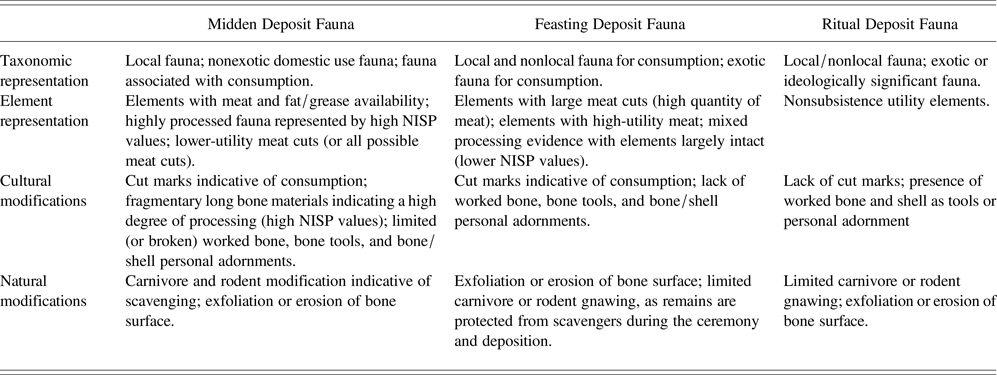
To investigate the significance of these deposits, we identified the faunal correlates for each of three types of human refuse or deposition behaviors. In describing these correlates, we separate fauna into three categories (Table 1): midden deposit fauna (Chase et al. Reference Chase, Chase and Teeter2004; Montero López Reference Montero López, Götz and Emery2013), feasting deposit fauna (Hayden Reference Hayden, Dietler and Hayden2001; Masson Reference Masson1999a, Reference Masson1999b; Montero López Reference Montero López2009; Pohl Reference Pohl1981; Russell Reference Russell2012:383–392), and ritual deposit fauna (Emery Reference Emery2004; Pohl Reference Pohl1981, Reference Pohl, Leventhal and Kolata1983; Stanton et al. Reference Stanton, Kathryn Brown and Pagliaro2008).
Faunal correlates for different peri-abandonment activities. NISP, number of identified specimens.

Fauna associated with daily or feasting consumption would exhibit cut marks. The quantity and location, however, of these marks will vary depending on how the animals are processed. Zooarchaeologists have identified the types of cut marks produced while butchering, including slicing, chopping, percussion impact, and scraping (Binford Reference Binford1981; Lyman Reference Lyman2008; Potts and Shipman Reference Potts and Shipman1981). Butchery processes can also be defined by the location of cut marks on skeletal materials. Skinning occurs typically around the shaft of the lower limbs, the lower portion of the mandible, and on the skull, while disarticulation marks are produced on the edges of articular surfaces (Binford Reference Binford1981:47).
In ritual deposits, the expectation is that a wider variety of species not serving a specific dietary purpose would be identified, whereas a midden deposit should exhibit remains from a few specific animals and body portions, those yielding a higher dietary reward, with the remains also exhibiting butchery marks and increased fragmentation (Emery Reference Emery2004). Additionally, less common or more difficult to procure, subadult fauna should be found more often in association with elite figures or ritual settings (Emery Reference Emery2003; Götz and Stanton Reference Götz, Stanton, Götz and Emery2013; Masson and Peraza Lope Reference Masson and Lope2008; Montero López Reference Montero López, Götz and Emery2013).
These deposit descriptions are not exhaustive, but restricting them as a foundation for our analysis assists with limiting variables while engaging with the data. Once identified to one of the three categories, the data could be further compared to the other artifact classes and ideological literature to provide a more holistic understanding of the activities leading to the formation of the deposits.
METHODS USED FOR ANALYSIS
Animal bones recovered from peri-abandonment deposits at Baking Pot and Xunantunich were exported to the Northern Arizona University Department of Anthropology Faunal Analysis Laboratory (NAUDAFAL) for analysis. Shell was analyzed in Belize over the summer of 2017 and not exported. Prior to and following export, the remains were dry-brushed and minimally identified to taxon or element. Dry-brushing minimizes damage to remains, as opposed to wet or water-washing, but still exposes natural and cultural taphonomic effects. All faunal materials were also re-bagged and organized according to structure and site.
All faunal remains were identified to skeletal element, portion of said element, body portion (such as exoskeleton, cranial, appendicular, axial, and side), age (generally subadult or adult), sex, and taphonomic modifications (either natural or cultural). Comparative osteological guides (Andrews Reference Andrews IV1969; Gilbert Reference Gilbert1985, Reference Gilbert1990; McKusick Reference McKusick2001; Olsen Reference Olsen1964, Reference Olsen1968, Reference Olsen1979, Reference Olsen1982) and comparative faunal collections from the NAUDAFAL, Museum of Northern Arizona, and Arizona State Museum were used for taxonomic identification. If confidence in taxonomic identification was not absolute, but the authors could identify some minor diagnostic features or measurements, specimens may be listed as “closely following” a taxon, though a conservative designation was always the default. In addition to taxonomic categories, skeletal materials were classified to size class—small, medium, or large—following Pendergast (Reference Pendergast1971:78).
The most fundamental unit of quantitative analysis, number of identified specimens (NISP), is defined as the total count of individual specimens (Lyman Reference Lyman2008). For this paper, the NISP refers to a specific skeletal element and taxon when identified.
RESULTS OF ANALYSIS
To examine our proposed faunal correlates, we analyzed materials from peri-abandonment deposits B6-6 and B7-100 at Baking Pot and deposits along the walls of structures B1, B4, and near the southern section of Courtyard 1 in Group B at Xunantunich (Awe Reference Awe2012; Hoggarth et al. Reference Hoggarth, Awe, Bednar, Lopez-Johnson, McKeown, Lonaker, Green, Moraza-Keeswood, Ray, Walden, Hoggarth and Awe2016; Sullivan et al. Reference Sullivan, Zanotto, Izzo, Burke, Awe, Ebert, Burke, Hoggarth and Awe2017).
Faunal Remains from Deposits at Baking Pot
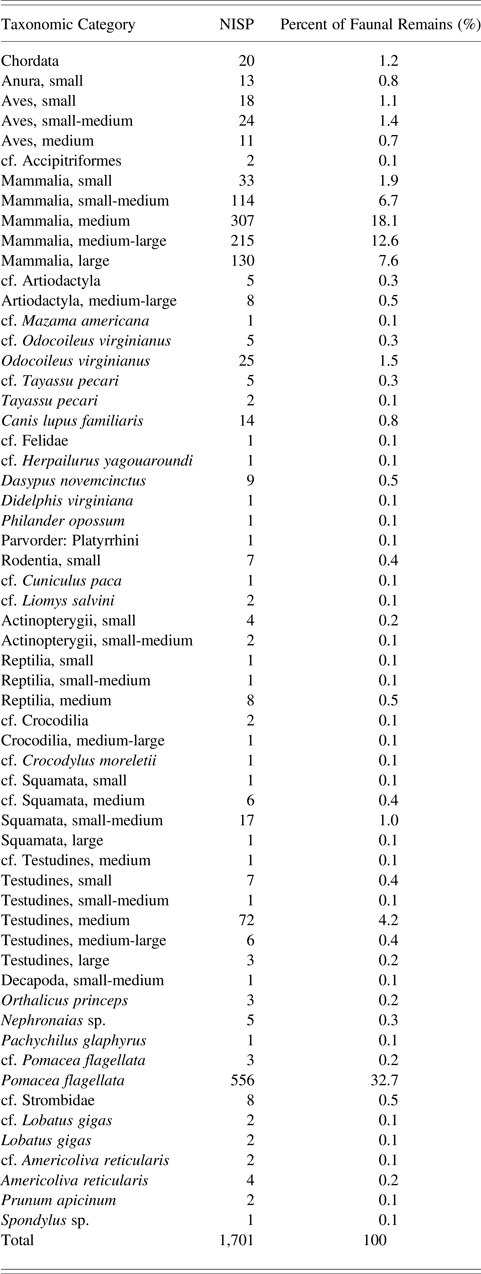
Deposit B6-6 at Baking Pot is very diverse in taxa, as well as natural and cultural processes. Approximately 47 percent of the assemblage is mammals and a variety of birds, turtles, frogs, snakes, crocodiles, and many other species (Table 2). Other than mammals, apple snails are prominent within the assemblage at 33 percent of the fauna recorded. Of the 556 apple snail specimens, 264 are complete to nearly complete shells. Due to heavy fragmentation of these specimens, the minimum number of individuals was based on the most frequently identified feature of the apple snails, the outer lip which usually remained attached with portions of the columella. While these are consumable products, Emery (Reference Emery1989) suggests they could also be ritually significant. Another key taxon found within deposit B6-6 are turtles, at over 4 percent of the fauna identified (Table 2). Of the 88 specimens recovered, 79 are fragments of carapaces, which lack any meat utility.
Faunal remains from the Baking Pot B6-6 deposit. NISP, number of identified specimens.

Of the 25 specimens identified as white-tailed deer, only two of them could be considered part of subsistence-processing meat utility, one distal humerus fragment (a generally dense and low meat-utility portion of the element) and one femur shaft fragment, neither with cut marks. Of the remaining white-tailed deer specimens, 13 are phalanges. Of the five specimens closely following white-tailed deer, three are sternal elements, one is an incisor, and one is a tibia, all low meat-utility elements.
Natural taphonomic signatures in deposit B6-6 are limited but include one carnivore gnawed element, one element with rodent gnawing, three with limestone exfoliation, and 22 exhibiting root etching. Even considering these taphonomic signatures, the elements are relatively well-preserved, suggesting the deposit as a whole did not move dramatically over time.
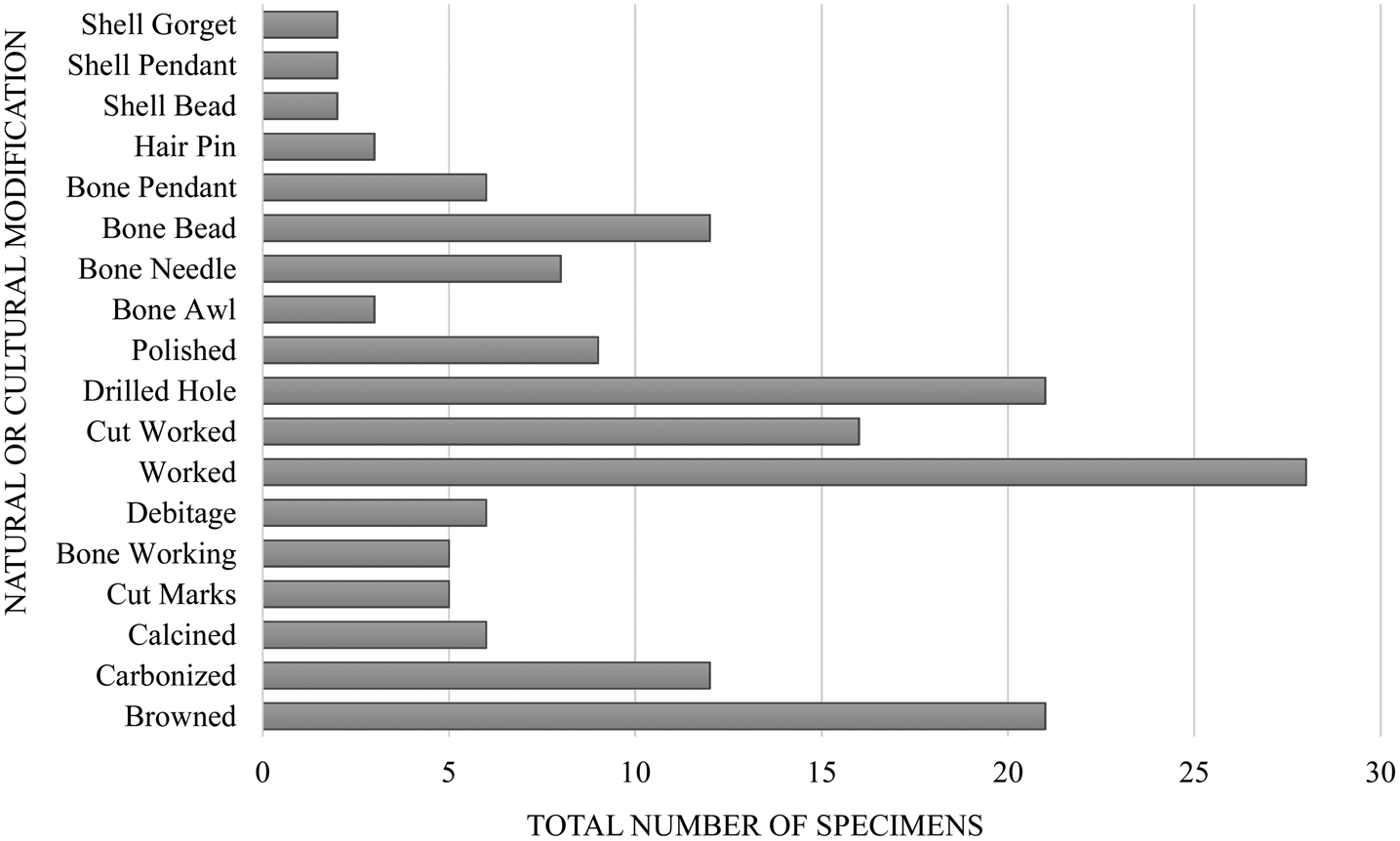
Culturally processed or worked bones and shells in deposit B6-6 include numerous items (Figure 1). Seven dog teeth pendants, including four canines, two incisors, and a premolar, were found in the deposit with drilled holes along the roots as well as a tooth pendant made from the canine of a medium-sized cat, closely following jaguarundi. Additionally, deposit B6-6 contains many bone needles, drilled bones, bone and shell beads, and bone awls. Given that deposit B6-6 lacks high-utility elements as well as evidence of butchering, contains ideologically significant fauna, such as deer, turtles, crocodiles, birds, and mollusks, and contains increased quantities of worked bone and shell, we concluded this deposit is ritual in nature.
Culturally modified elements from the Baking Pot B6-6 deposit. A total of 127 elements were culturally modified, 1,560 elements lacked any cultural or natural modification, and 14 exhibited natural taphonomic effects. Bone working includes elements in some stage of bone modification (though not identifiable to a more specific category), such as debitage, worked, cut-worked, and polished. Numbers of identified specimens in each category are reported in the figure. Image by Burke.

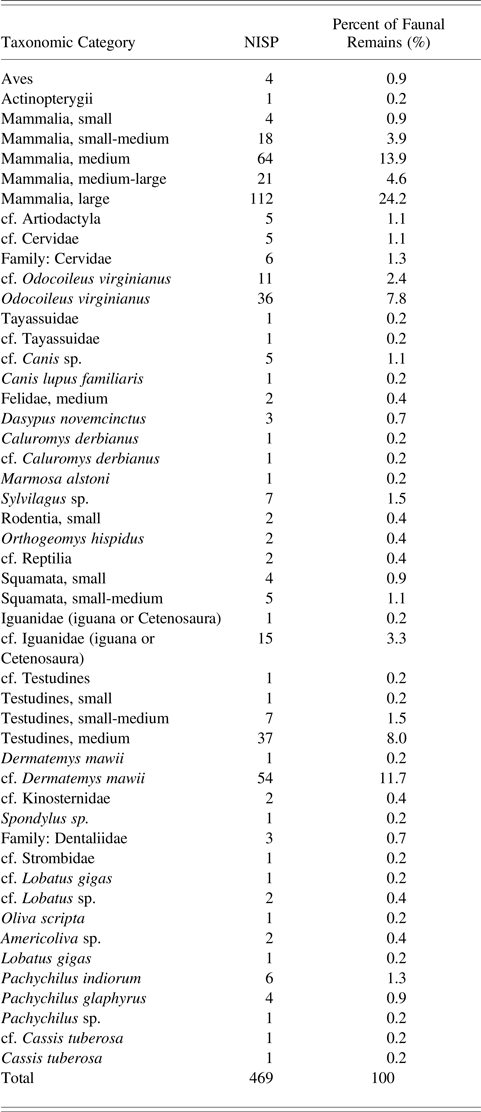
Deposit B7-100 at Baking Pot contains a unique assemblage of faunal remains including mammals, birds, turtles, fish, and freshwater and marine shells. The mammal remains were heavily fragmented, ranging in size classes, and accounting for over 45 percent of the assemblage (Table 3). Of those fragments, several were deer antlers, likely brocket or white-tailed. Any long bone shaft fragments or cranial fragments, unfortunately, were unidentifiable to more specific taxa. It is important to note, however, that all mammal fragments lacked cut marks. The final mammal element identified is the proximal portion of a left tibia, most likely that of an ocelot (Leopardus pardalis).
Faunal remains from the Baking Pot B7-100 deposit. NISP, number of identified specimens.

Birds represent around 14 percent of the assemblage, including one turkey carpometacarpus element. Additionally, turtles compose nearly 10 percent of the assemblage, the next largest portion. Even though both axial and appendicular turtle elements are represented, differential preservation issues led to inability to identify to specific taxon. Finally, all apple snails recovered are complete shells. Of the remaining material identified, one small calcined crayfish claw is the only evidence of burning in this deposit.
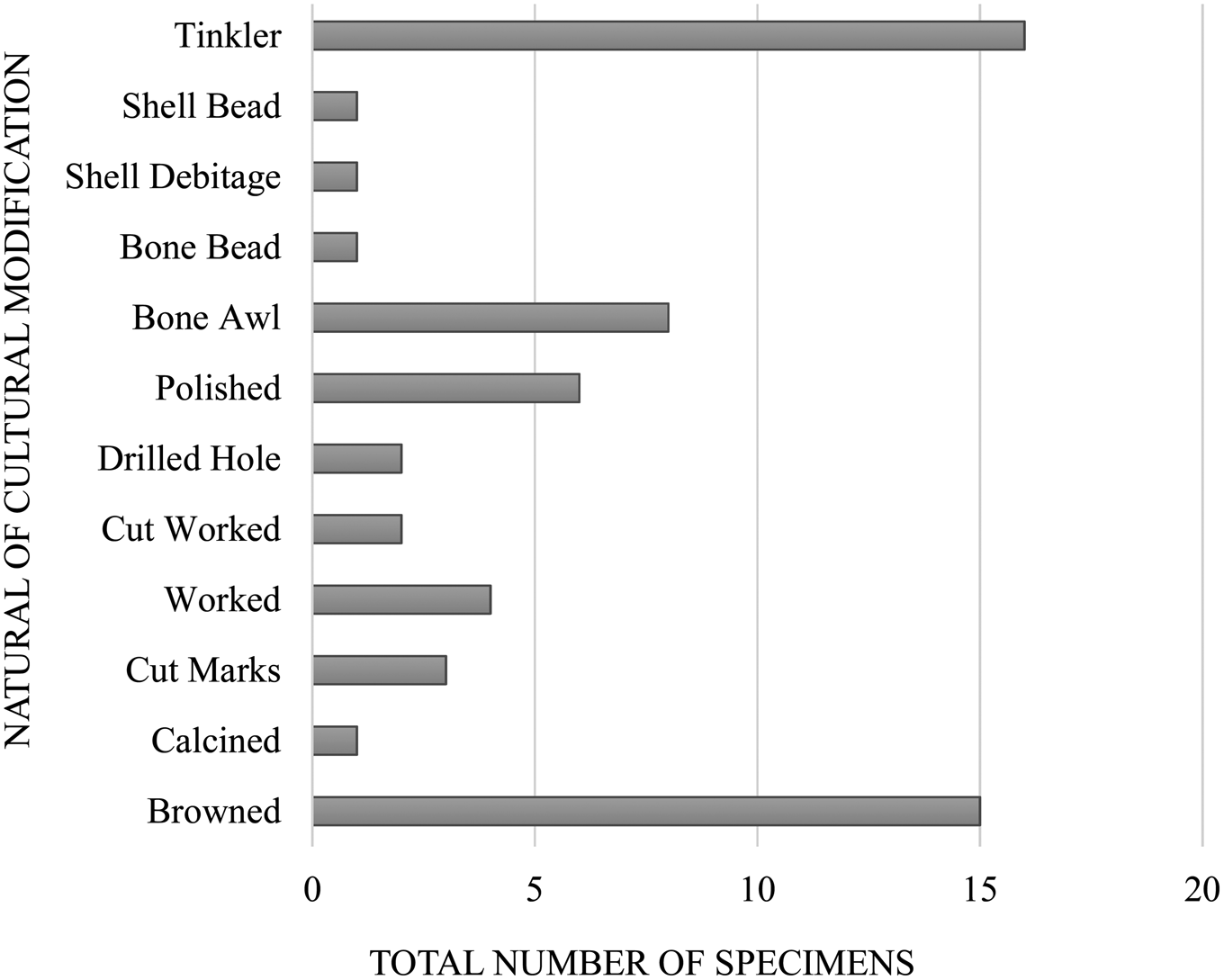
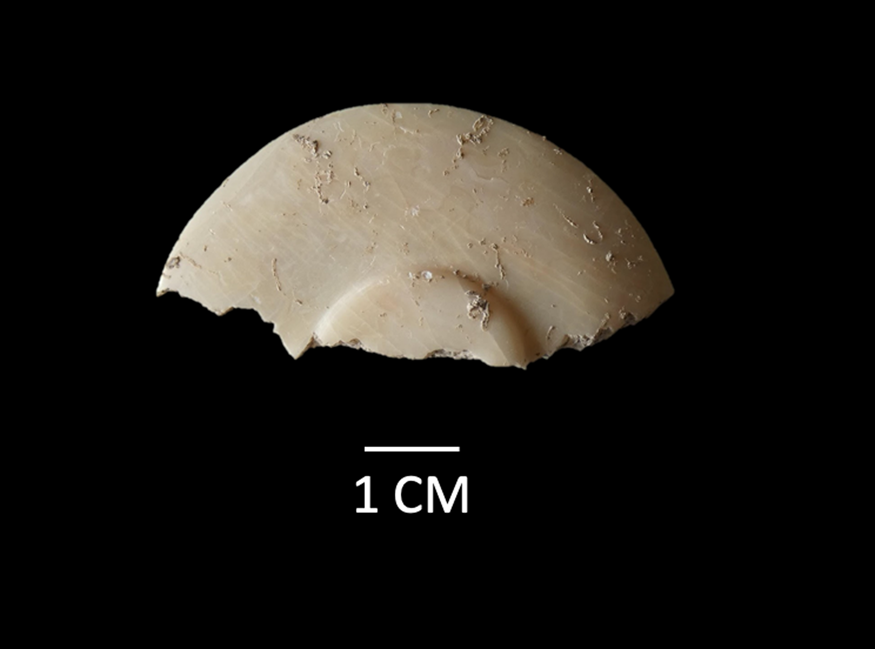
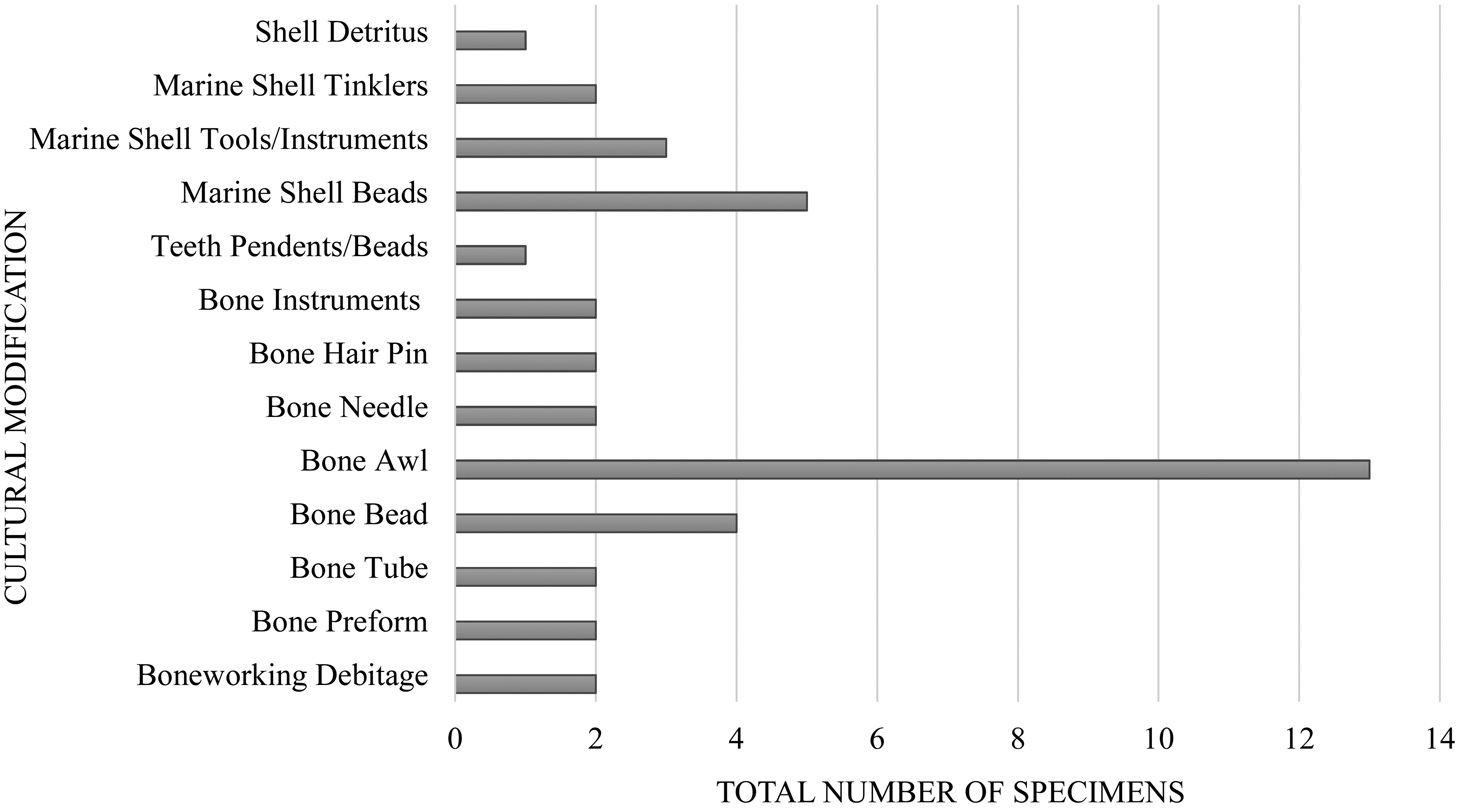
Worked shell materials in the B7-100 deposit include 16 Americoliva reticularis and Dibaphimitra florida shell tinklers, two Prunum apicinum shell beads, and one conch debitage fragment (Figures 2 and 3). Worked bone materials include three bone awl fragments from an indeterminate large mammal long bone, one bone awl from the proximal end of a white-tailed deer left ulna, a cut-worked left femur shaft fragment from a white-tailed deer, a needle created from unidentifiable antler, and a large mammal bone bead. Culturally modified shell and bone can be indicative of contexts other than ritual, though given the combination of a lack of cut marks, the presence of ideologically important species, and culturally modified bones this deposit is interpreted as the result of ritual activity, and not ritual feasting or refuse.
Culturally modified elements from the Baking Pot B7-100 deposit. A total of 34 elements were culturally modified, 333 elements lacked any cultural or natural modification, and 31 exhibited natural taphonomic effects. Bone working includes elements in some stage of bone modification (though not identifiable to a more specific category), such as debitage, worked, cut-worked, and polished. Numbers of identified specimens in each category are reported in the figure. Image by Burke.

Worked shell piece from the Baking Pot B7-100 deposit. Photograph by Burke.

Faunal Remains from Deposits at Xunantunich
B1 South contained two deposits separated by a vertical lens of sediments and labeled as Features 1 and 2. The fauna from Feature 1 were minimal, containing an overall NISP of 39. Mammalian remains of large animals include four long bone fragments, three metapodial fragments, and four fragments of a bone awl. Those elements closely following or identified to a deer species include two dentary and one vertebra fragments (cf. Artiodactyla), brocket deer incisor, two dentary fragments, one incisor, and a left tibia fragment from a white-tailed deer. Other elements include a medium-sized carnivore lumbar vertebra, a drilled dog canine, and two hispid pocket gopher incisors. Lastly, one burned, large, avian long bone fragment was identified.
Shells found in the assemblage include, one unmodified jute (Pachychilus indiorum), one jute (P. glaphyrus) with the apex removed, and a conch shell ear spool (cf. Lobatus gigas). The low NISP and high fragmentation in this deposit makes identifying the causal behavior associated with deposition difficult, though the lack of cut marks does suggest ritual. Regardless, we prefer to remain conservative and identify the deposit as ambiguous until other artifact classes are evaluated.
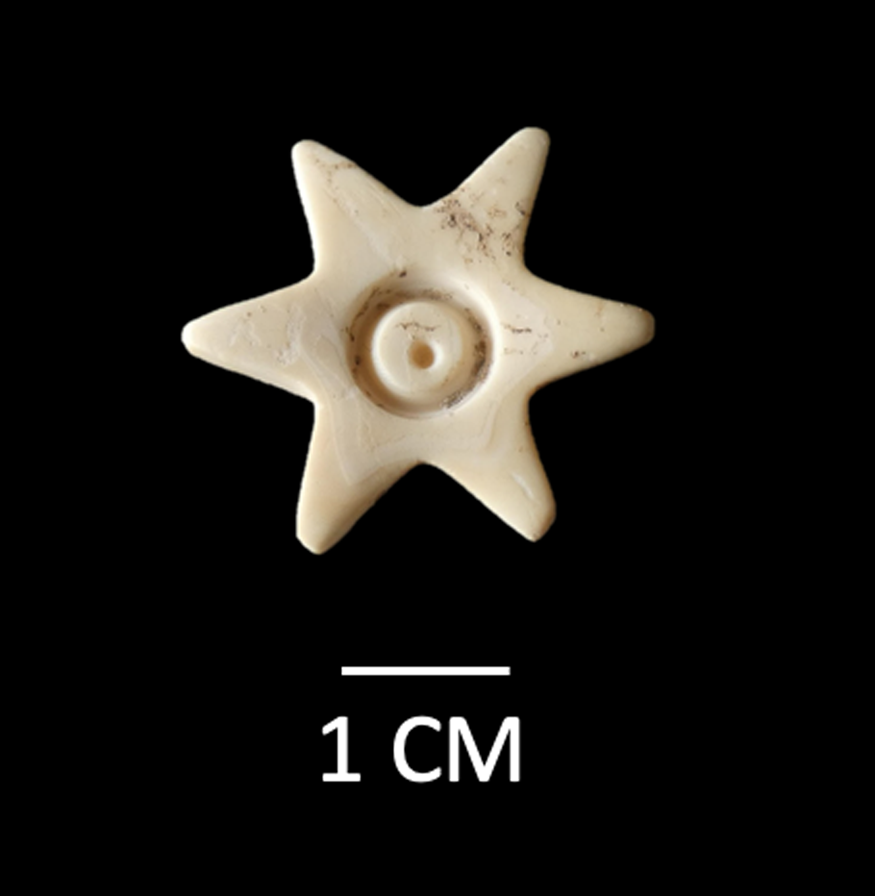
The B1 South Feature 2 deposit had a larger NISP of 86. One of the more ritually significant is the shell adornment piece (cf. Lobatus gigas) shaped into a six-pointed star (Figure 4). Additionally, three jute similarly identified as those from B1 South Feature 1 were recorded. Other nonmammalian fauna include reptile remains of a small- to medium-sized turtle, two intact plastron pieces, two long bone fragments, a femoral head of a medium turtle, and an iguanid nasal bone and vertebra.
Carved shell piece from the Xunantunich B1-South deposit. Photograph by Burke.

Mammalian bone artifacts include an exfoliated metacarpal bone tube (cf. Artiodactyla), with drilled holes in the center of the shaft, an unfinished bone rasp made from a white-tailed deer femur, and a bone needle. Unmodified, but identified to species fragments include a brocket deer molar, a large felid premolar, an armadillo metatarsal, and a rabbit femur proximal end. Medium to large mammal fragments include 12 long bone fragments, one metapodial, one proximal end of a metatarsal, one ulna, and a rib fragment. Finally, we identified three ribs and one long bone fragment of a small-medium mammal. Given the inclusion of turtles, lack of cut marks, green break fractures, evidence of bone working, and the predominance of personal adornment, we argue that this deposit is the result of a ritual.
Structure B4 contained two deposits labeled as Features 1 and 2 also separated by a thin lens of sediment. Feature 1 had a total NISP of 462, with mammals making up 67 percent of the specimens (Tables 4 and 5). Fragmented bone beads, bone awls, a needle fragment, a bone hair pin from a metapodial, a drilled dog tooth incisor, an artiodactyl bone whistle fragment, and a cut-worked lip from a Cassis tuberosa shell were the only worked remains identified. The only evidence of cut marks, not part of a bone artifact working process, were four artiodactyl ribs and one tibia, and one humerus cf. Odocoileus virginianus.
Faunal remains from the Xunantunich B4 Feature 1 Deposit. NISP, number of identified specimens.

Faunal remains from the Xunantunich B4 Feature 2 Deposit. NISP, number of identified specimens.

Root-etching erosion impacted most of the remains. Given the differential preservation, appendicular fragments dominated the assemblage, with most unidentifiable to element. The presence of rodent, iguana, and snake indicates the deposit was likely impacted by intrusive fauna. Given the taxa represented and the evidence of cut-worked and personal adornments, we argue this deposit is the result of ritual activity.
The B4 Feature 2 deposit contained an NISP of 139, of which mammals made up 67 percent and reptiles comprise 25 percent. Two freshwater shells were recovered from the deposit, including one jute (Pachychilus glaphyrus) with the end removed and a river clam (Nephronaias sp.) fragment. Worked marine shells include a netted olive (Americoliva reticularis) tinkler and worked large marine shell fragments. Bone artifact pieces include three bone awls, and an unfinished bone preform from a white-tailed deer radius. Three fragmentary mammal remains are browned and calcined, including one bone awl. No evidence of cut marks or carnivore gnawing was identified; however, one reptile vertebra displayed rodent gnawing.
White-tailed deer elements identified in the second B4 deposit include one left antler, which was heavily fragmented, a worked left radius (Figure 5), and one lumbar vertebra. Brocket deer (Mazama sp.) first phalanx and molar remains were also recovered. Deer elements of little to no meat yield suggest the deposit was not the remnants of a feast and instead is the remains of a ritual. Finally, turtle elements identified were primarily carapace pieces lacking green bone fractures, two femurs, a tibia, and a long bone fragment. Given the taxa present, lack of cut marks, and worked bone elements, this deposit is the result of a ritual.
Culturally modified elements from the Xunantunich B4 deposit (Features 1 and 2 are combined). A total of 41 elements were culturally modified, 234 elements lacked any cultural or natural modification, and 333 exhibited natural taphonomic effects. Bone working includes elements in some stage of bone modification (though not identifiable to a more specific category), such as debitage, worked, cut-worked, and polished. Numbers of identified specimens in each category are reported in the figure. Image by Burke.

Excavations at Courtyard 1, Unit 7 at Group B resulted in two separate layered deposits. The top deposit, Feature 1, had an NISP of 91 of which jute (Pachychilus indiorum) made up nearly 50 percent. Large and medium mammal remains are the remaining 50 percent with white-tailed deer and brocket deer the only taxa identified. Four of the white-tailed deer remains were distal and shaft fragments from at least two left femora and one left astragalus. A bone bead from the shaft of a left humerus was identified to closely following brocket deer (Mazama sp.). Thirteen medium and three large mammal long bone fragments were also identified. Forty-five jute (Pachychilus indiorum) were found without the end lopped off and with one or more holes on the side. This is often identified as a bead, however, as explained by Tappan et al. (Reference Tappan, Wisner, Roa, Gilmore and Burke2019) these holes are produced through natural instead of cultural processes. Feature 1, with the lack of cut marks and low utility deer elements, and presence of a bone bead is likely the result of a ritual.
The second deposit, Feature 2, located stratigraphically below the Feature 1 deposit, had a smaller NISP of 26. One jute (Pachychilus glaphyrus) had the apex lopped off, however, 17 other jute (P. indiorum) did not. We also identified two apple snail fragments and five large mammal long bone fragments. Two of the five long bone fragments had evidence of cut-working, carnivore gnawing, and root etching. Given the lack of cut marks, but evidence for cut-worked elements, and the unmodified jute, this deposit is likely the result of ritual activity.
DISCUSSION
As discussed above, many of the deposits at Baking Pot and Xunantunich contain an abundance of white-tailed deer, turtles, and jute. The deposits at Baking Pot also contain a larger than expected quantity of apple snails. Using the deposit descriptions put forward in this paper, and given the faunal correlates employed in our research, we argue that the deposits at both sites, overwhelmingly were associated with ritual activity. When considering these as rituals the analysis of other artifact classes, in the deposits at Baking Pot support this conclusion (Davis Reference Davis2018; Hoggarth et al. Reference Hoggarth, Britt Davis, Awe and Helmke2020).
Deer often represent the sun, and they are depicted in the Dresden Codex hanging from a skyband and holding torches (Pohl Reference Pohl, Leventhal and Kolata1983). Additionally, deer are depicted as ritual sacrifices, often with their antlers cut off (Pohl Reference Pohl1981, Reference Pohl, Leventhal and Kolata1983). As a common food among the elite, deer are often used in ritual offerings and in ritual feasting (Emery Reference Emery2004). For example, at Cueva de los Quetzales, the use of deer is tied to public exclusionary rituals, which is reflected in controlled access to the cave (Emery Reference Emery2004).
Pohl (Reference Pohl1981) discusses how the use of deer in ancient rituals were replaced after Spanish contact in the modern Cuch ritual performed in the Maya lowlands and in the highlands of Chiapas at Zinacantán today. In the Cuch ritual, a bull impersonator (deer substitute) is lassoed and tied to a pole, resembling ancient Maya depictions of a deer tied to a ceiba tree seen in the Postclassic period Madrid Codex (Pohl Reference Pohl1981). This contemporary ritual has three stages, raising the tree or the poll to represent agricultural fertility, the bull fight, possibly in place of a deer sacrifice, and the cargo transfer, therefore the final stage of the modern ritual is to transfer the responsibilities of well-being, particularly agricultural fertility, to the new individual (Pohl Reference Pohl1981). Considering the importance of deer, we argue that the deer remains, lacking cut marks and modified into artifacts, are evidence of their ideological significance and not their subsistence role.
Turtles, frequently used for ritual activities, are associated with water and abundance (Pohl Reference Pohl, Leventhal and Kolata1983). Ethnohistoric accounts during the fourteenth century detail the sacrifice of deer and turtles for rituals taking place in churches to represent the “ancient way” (Pohl Reference Pohl, Leventhal and Kolata1983; Scholes and Adams Reference Scholes and Adams1938). Turtles are associated with water due to their habitat, but it is also argued this association may be due to the use of turtle carapace drums as thundering sounds in rain rituals (Miller and Taube Reference Miller and Taube1993:174). These drums are depicted in the Late Preclassic murals from San Bartolo, which show a dancing maize god playing a turtle carapace drum, and on a Late Classic vessel (Kerr Reference Kerr2018:Kerr No. 530) depicting three rain gods playing a turtle carapace drum, along with a stout floor drum and deer antler rasp (Ishihara Reference Ishihara2008). These depictions again allow us to argue that turtle remains, also lacking cut marks, demonstrate ideological significance.
Pomacea flagellata, or apple snails, present in the Baking Pot deposits are often consumed, but Emery (Reference Emery1989) argues that their use may be ceremonial. These shells are associated with the winter solstice, water, death, and the moon goddess Ixchel, goddess of fertility and childbirth, and are commonly harvested in late December to early January at the end of the rainy season (Emery Reference Emery1989). Additionally, the energy needed to harvest them outside of this time is considered more costly than their actual subsistence returns (Emery Reference Emery1989). The use of apple snails could be significant to rain or agriculture rituals, especially if combined with other water related species.
CONCLUSION
We suggest here that simply mentioning the presence of faunal remains in peri-abandonment deposits limits the power of archaeological interpretation, especially when we consider not only the functional but also the ideological significance of animals in the Maya world. Typically thrown into waste material piles, faunal remains were considered of little use by archaeologists for understanding human behavior prior to the 1980s (Reitz and Wing Reference Reitz and Wing2008). The inclusion of fauna in archaeological analysis can broadly be attributed to zoologists who insisted that important zoological information could be gathered by looking at archaeological fauna (Gilmore Reference Gilmore1946, Reference Gilmore1949; Wintemberg Reference Wintemberg1919).
In Mesoamerican archaeology, faunal materials are sometimes overlooked unless they are used in stable isotope analyses, employed to identify domestication processes, or used to interpret rituals. Unfortunately, however, even these important types of data are not consistently included in our interpretations of the archaeological record (see Chase et al. [Reference Chase, Chase and Teeter2004] for a thorough discussion of the applications of zooarchaeology in Maya research). Therefore, if we are going to understand the purpose of these deposits, it is imperative to take a more holistic approach and consider all artifact classes in more and equal detail. As this research continues, building an understanding of the patterns of element distribution in faunal deposits, along with taxa will contribute to ideological evaluations of Maya rituals. As zooarchaeologists have noted, faunal materials in deposits can assist with identifying specific ritual practices (Russell Reference Russell2012:77) and contribute to our knowledge of past societies as people—instead of specimens.
Here we have provided a basic framework for understanding the importance of fauna in interpreting ancient Maya peri-abandonment deposits. We argue the deposits from Baking Pot and Xunantunich are predominantly ritual in nature. What ritual they represent will require more discussion and examination of the ideological importance of animals through epigraphic, iconographic ethnographic, and ethnohistoric data, along with a discussion of other artifact types in the deposits.
While our paper focuses on the faunal remains, we do not mean to suggest that interpreting the various artifact and ecofacts recovered from deposits independently is the method forward in research. Instead, archaeological specialists, such as lithic analysts, ceramicists, and zooarchaeologists, should analyze and interpret their data independently and then come together to evaluate the overlap between interpretations to explore the purpose behind a deposit.
Finally, assuming all deposits represent the exact same behavior is unreasonable. As archaeologists, we should be striving to consider all information available to interpret human behaviors. By incorporating zooarchaeological materials in our study, we can strengthen our understanding and further improve our knowledge of the past.
RESUMEN
La interpretación de basureros, rituales de banquete, o depósitos terminales en el mundo maya requiere una evaluación de los restos de fauna. Los arqueólogos mayistas constantemente evalúan otras clases de artefactos, pero a menudo simplemente ofrecen valores (NISP) por elementos esqueléticos recuperados de estos depósitos. Para entender aún más su importancia arqueológica, se analizaron los materiales fáunicos de depósitos en los sitios de Baking Pot y Xunantunich en el valle del río Belice. Identificamos las especies, elementos de hueso, artefactos de hueso o concha, firmas tafonómicas y proporciones cuantitativas recuperados para probar si un depósito se puede identificar como basurero, parte de un ritual de banquete, rito terminal u otros rituales importantes para los mayas. Nuestros análisis nos permiten empezar a desarrollar un sistema para el uso de los restos de fauna como un substituto de otras clases de datos para la interpretación del significado de estos depósitos. Presentamos nuestros resultados y esperamos abrir la conversación para futuras evaluaciones de los restos de fauna en depósitos similares.