INTRODUCTION
Water availability has been positively correlated with tree species diversity at global, continental and regional scales (Paine et al. Reference PAINE, HARMS and RAMOS2009). Within particular regions, water availability is modulated by rainfall seasonality and horizontal patterns of distribution. Consequently, niche differentiation with respect to soil water availability is a direct determinant of both regional- and local-scale distribution of tropical plants (Engelbrecht et al. Reference ENGELBRECHT, COMITA, CONDIT, KURSAR, TYREE, TURNER and HUBBELL2007). High hydraulic sufficiency ensures an adequate water supply to canopy-top leaves in tall trees, but xylem conduits are at risk of cavitations due the high xylem tension. Xylem embolisms resulting from cavitations of water columns reduce the functionality of xylem conduits, which increases tension in remaining conduits and decreases long-term water transport (Tyree & Sperry Reference TYREE and SPERRY1988). Thus, tree species face a trade-off between efficiency of water transport and protection of xylem conduits against cavitation. Reduced stomatal conductance to regulate water status aids in preventing the occurrence of xylem embolisms (Jones & Sutherland Reference JONES and SUTHERLAND1991). Leaf carbon isotopic composition (δ13C) provides useful information on time-integrated variation in leaf-level water use efficiency and leaf intercellular to ambient CO2 concentration (Ci/Ca) and stomatal function (Farquhar et al. Reference FARQUHAR, O'LEARY and BERRY1982). Under similar environmental conditions, Ci/Ca is controlled by stomatal function, and the δ13C tends to increase as stomatal conductance declines. It follows, that water transport may constrain leaf gas exchange which would result in high long-term water-use efficiency and high δ13C (less negative) as well (Magnani et al. Reference MAGNANI, DEBSADA, CINNIRELLA, RIPULLONE and BORGHETTI2008, Ponton et al. Reference PONTON, DUPOUEY, BRÉDA, FEUILLAT, BODÉNÈS and DEYER2001, Sobrado Reference SOBRADO2003).
In the upper Rio Negro region (Venezuela), within the same precipitation regime, the local topography consists of an extensive plain with laterite-covered gently rolling hills rising up to 50 m above the mean river level, while lowlands between hills are covered by quartz sands (Herrera Reference HERRERA and Brünig1977). On top of the hills, with concretionary oxisol soils and a sandy surface horizon underlain by clay with high Fe concentrations, grow mature stands of the mixed forests (Jordan Reference JORDAN1982). Here, soils are non-flooded, well drained and with the highest fertility. The lowland valleys with infertile bleached sandy podzols are occupied by the Amazon caatinga complex (Klinge Reference KLINGE1978). There is no ecotone between the mixed forest and the caatinga complex, but the latter is graded from the bottom of the valley up to the smooth slopes, and on top of the profile the sclerophyllous forest or bana is found (Breimer Reference BREIMER, Breimer, van Kekem and van Reuler1985). Thus, a clear topographic gradient is found within the caatinga, with the relatively more fertile valley which is waterlogged after heavy rains and the less fertile slopes where the water table fluctuates drastically. Under these highly contrasting nutritional and hydrological conditions, niche differentiation and specialization would be favoured under all soil conditions. The distribution of tropical forest species is shaped in concordance with their tolerance to low leaf water status as well as resistance to run-away xylem embolisms (Kursar et al. Reference KURSAR, ENGELBRECHT, BURKE, TYREE, EL OMARI and GIRALDO2009). However, the relationship between species distribution patterns and drought tolerance seems unlikely to be driven by variation in nutrient availability (Engelbrecht et al. Reference ENGELBRECHT, COMITA, CONDIT, KURSAR, TYREE, TURNER and HUBBELL2007). The ability of tree species to grow under particular water availability conditions would depend on mechanisms related to the trade-offs between efficiency and safety for water use as well. Thus, tree species would possess distinguishable leaf and xylem functional traits enabling to define patterns of habitat-specific use.
I hypothesized that leaf, xylem and hydraulic characteristics of tree species would be species-specific, and would explain spatial association between tree species and particular micro-environments defined by contrasting topographical, nutritional and hydrological conditions. To test this hypothesis, firstly, leaf blade physical and chemical characteristics were evaluated in selected species from the mixed forest on oxisol and the caatinga forest on podzol within upper Rio Negro. It was expected that as the fertility declines towards the caatinga habitats, leaf blade tissue would be thicker, and costly in terms of their higher carbon to nitrogen ratio. Secondly, the wood components and xylem anatomy, as well as the estimated long-term water-use efficiency and hydraulic characteristics were determined in the selected species. The subsequent analysis of the coordination between hydraulic sufficiency and long-term water-use efficiency would provide insights into stomata function to prevent cavitation risks. It was anticipated that hydraulic sufficiency and stomatal conductance would be larger in the mixed-forest species with more stable water availability as compared with caatinga species. These approaches provide an experimental set up towards understanding the tree species adaptations to natural differences in horizontal patterns within an area with high rainfall. The study was performed in leaf-bearing terminal branches from the upper crown of dominant tree species representing contrasting microhabitats within similar climatic conditions. The information obtained provides further insight into the physiological basis for water use within upper Rio Negro habitats in the Amazon region, as well as about the impact of rainfall shortage as a result of climate change.
METHODS
Study site
The study site is located near the confluence of the Rio Negro and the Casiquiare River in southern Venezuela, 4 km north of San Carlos de Rio Negro (1°54′N, 67°3′W, 119 m asl). The climate is typically equatorial with a mean annual temperature of 26 °C and mean annual rainfall of 3600 mm. Every month there is at least 200–300 mm of rainfall, and drought spells last fewer than 20 rainless days, occurring mostly during December to March. Within relatively short distances, well-defined areas with frequently flooded podzolized soils are covered by the Amazon caatinga complex and areas of never-flooded oxisol soils are covered by the mixed forest (tierra firme forest). The Amazonian caatinga seems to be the most common forest type in the Rio Negro–Casiquiare region of Venezuela (Jordan et al. Reference JORDAN, CASKEY, ESCALANTE, HERRERA, MONTAGNINI, TODD and UHL1982). Both soils and forest types have been described in great detail previously (Breimer Reference BREIMER, Breimer, van Kekem and van Reuler1985, Franco & Dezzeo Reference FRANCO and DEZZEO1994, Herrera et al. Reference HERRERA, JORDAN, KLINGE and MEDINA1978a, Jordan Reference JORDAN1982, Klinge Reference KLINGE1978, Uhl & Murphy Reference UHL and MURPHY1981).
Plant species
The study was carried out on species from the two (mixed and caatinga) forest types. Caryocar glabrum (Aubl.) Pers. (Caryocaraceae) and Ocotea aciphylla (Nees & Mart. ex Nees) Mez (Lauraceae) were selected from the mixed forest (oxisol soil). These two species are dominant on the hill tops occupied by mixed forest, where they coexist (Dezzeo et al. Reference DEZZEO, MAQUIRINO, BERRY and AYMARD2000). However, detailed characteristics of the microhabitat occupied differentially for each species have not been determined. Eperua leucanta Benth. (Caesalpiniaceae) and Micranda sprucei (Müll.Arg.) R. E. Schultes (Euphorbiaceae) were selected from the Amazon caatinga complex (podzol soil); both reach the top canopy and adult trees are 18–25 m tall. Eperua leucantha grows mostly in the bottom valley of the caatinga forest, where it is the dominant species (Klinge Reference KLINGE1978). By contrast, M. sprucei is the dominant species of the gentle slopes of the ecotone between the bottom valley and the sclerophyllous forest known locally as bana. Thus, fertility declines and water table fluctuation increases from the top (C. glabrum and O. aciphylla), towards the valley bottom (E. leucantha) and the extreme conditions on the slopes (M. sprucei) of the podzolized sands. For all measurements, three mature trees with fully exposed canopy were selected and tagged. All experiments were completed during November and December 2008.
Soil sampling
Samples were taken from soils in both forest types to analyse their isotope composition, to be used as reference values for the analyses of leaf tissue. An exhaustive study of the soil in these forests was not intended. Four samples from the soil surface (0–5 cm) were collected at each forest type for carbon (δ13C) and nitrogen (δ15N) isotopic determination. The soil samples were ground and homogenized to fine powder. Analysis was performed at the Stable Isotope Research Facility for Ecological Research (SIRFER), University of Utah (Salt Lake City, USA). A detailed description of procedures for isotope determinations has been presented by Ehleringer & Osmond (Reference EHLERINGER, OSMOND, Pearcy, Ehleringer, Mooney and Rundel1989).
Plant sampling
On any given day, only one of the tagged trees was sampled so as to be able to complete the measurements on the same day of collection. One sample branch of about 3 m in length was taken from the upper crown of each tagged tree. The branch was sectioned in three or four parts, wetted, wrapped in plastic bags and transported for indoor preparation. Two subsamples were separated for all the measurements. The first subsample consisted of eight stem segments of 10 cm in length and was used for determining wood characteristics. These segments were maintained in plastic bags with damp tissue paper. The second subsample consisted of 12 stem segments of 30 cm which were individually wrapped with parafilm for hydraulic measurements. The leaves attached to each of these stems were placed in plastic bags for physical and chemical leaf tissue analysis.
Leaf tissue physical and chemical characteristics
Harvested leaves of each stem segment (second subsample) were separated into two groups, one containing all healthy mature leaves, and another with all the other leaves. The leaf area of each group was measured separately and the total area of the leaves attached to every stem segment was obtained as the sum of both groups. The sample of mature healthy leaves was used for subsequent measurements and the other group discarded. Leaf blade thickness, excluding veins, was measured with a pocket thickness gauge (Model 7309, Mitutoyo, Japan). Afterwards, the leaves were dried at 60 °C to constant weight, and the dry mass per unit leaf area (Sw) calculated. Subsequently, all leaves, excluding major veins, from each tree were pooled and ground for measurement of δ13C and δ15N, nitrogen (N), crude fibre, ash and ash-free combustion heat (Hc). Similar to soil samples, the leaf δ13C and δ15N were analysed at the SIRFER facility at the University of Utah. From the value obtained for δ13C, the Ci/Ca ratio was calculated following the relationship of Farquhar et al. (Reference FARQUHAR, O'LEARY and BERRY1982):

where δ13Cleaf and δ13Cair (–8‰) are the δ13C ratios of leaf and air, constant a is the fractionation due to slower diffusion of 13CO2 in air (4.4‰), and constant b is the net fractionation associated with CO2 fixation (27‰).
Leaf N was determined independently by Kjeldahl analysis as well, and the protein fraction was estimated as N × 6.25. The values obtained were identical to those from isotopic analysis (r = 0.99, P < 0.001). Crude fibre was determined gravimetrically on the dried material after successive acid and alkaline digestions (William Reference WILLIAM1984). The C/N ratio was calculated, and the sclerophylly index was determined from the ratio between crude fibre and protein concentration on a leaf dry mass basis (Loveless Reference LOVELESS1962).The ash was obtained after samples were heated for 4 h at 550 °C in a muffle oven. The ash-free combustion heat Hc was determined with an adiabatic calorimeter Parr (Model 1241, Parr Instruments Co., Moline, IL, USA), correcting for nitric acid formation and ignition wire melting. The maximum and minimum construction cost (CC) of leaf tissue (CCMass; g glucose g−1) were calculated from the Hc (kJ g−1), N concentration (g g−1) and ash concentration (g g−1) of the dried leaves, following Williams et al. (Reference WILLIAMS, PERCIVAL, MERINO and MOONEY1987). Thus, CCMass = ((0.6968 (Hc – 0.065) (1 – Ash)) + ((KN/14) × (180/24))/0.89 where the first term corrects the glucose equivalent for the ash content of the sample, 14.0 is the atomic mass of N, K is the oxidation state for nitrogen substrates (+5 assuming that the leaf imports only nitrate and –3 assuming that the leaf imports ammonium), 180 is the molecular mass of glucose, 24 is the number of available electrons in a glucose molecule and 0.89 is the growth efficiency of leaves as deducted elsewhere (Williams et al. Reference WILLIAMS, PERCIVAL, MERINO and MOONEY1987). Maximum and minimum CC on the basis of leaf mass (CCMass), of leaf area (CCArea), and an average of the two values were used to establish relationships with other parameters.
Wood characteristics
The segments were debarked, their fresh mass (Wf) was determined and the fresh volume (Vf) was obtained as the mass of displaced water. Afterwards, the segments were oven-dried at 90–95 °C until constant weight to obtain the dry mass of each segment (Wd). Stem water content (Wc) and wood density (ρw) were calculated following the relationships: Wc = Wf − Wd and ρw = Wd/Vf (Siau Reference SIAU1984). Wood is composed of water, solids and gas, and the volumetric fraction of each of them termed Vw, Vs and Vg, respectively. These fractions were calculated as Vw = ((Wf – Wd)/(ρwater Vf)) × 100; Vs = (Wd/(ρsVf)) × 100; and Vg = 100 – Vw − Vs, where ρwater and ρs are the density of water and solids, respectively (Whitehead & Jarvis Reference WHITEHEAD, JARVIS and Kozlowski1981). ρs was assumed to be constant at 1.53 g cm−3 as proposed by Siau (Reference SIAU1971).
Hydraulic measurements
The length and diameter of each stem sample for hydraulic measurements were recorded in order to be used in further calculations. Hydraulic conductivity measurements were made by using an apparatus described elsewhere (Sperry et al. Reference SPERRY, DONNELLY and TYREE1988). In order to prevent microbial growth, the permeating liquid employed was a solution of 10 mmol KCl in pre-filtered (0.2 μm) water, as recommended by Sperry & Saliendra (Reference SPERRY and SALIENDRA1994). Hydraulic measurements were determined gravimetrically, the height of the water source was recorded for each measurement to determine the water gradient pressure and the ambient temperature was measured to determine water viscosity. The water flowing through each stem segment was collected in five or six pre-weighed vials that were subsequently re-weighed to estimate the water flow in 1–2 min. The mass of water that passes per unit of time (kg s−1) divided by the gradient pressure (MPa m−1) was expressed per stem xylem cross-sectional area to obtain the specific conductivity (Kx, kg m−1 s−1 MPa−1) or per distal leaf area to obtain leaf specific conductivity (Kl, kg m−1 s−1 MPa−1). Once the hydraulic measurement was completed, a section of 5 cm (third subsample) was excised from each segment and fixed in glycerol to be used for xylem anatomy.
Xylem anatomy
Xylem anatomy was studied in transverse sections of stem segments sliced by hand, stained with toluidine blue (0.5%) and mounted permanently in glycerol. Photographs were taken by means of a camera (Model MC80, Zeiss, Germany) attached to a microscope (Model Axioskop, Zeiss, Germany). The slides were photographed and all quantitative analysis was performed on photographic material. The area of the stem cross-section occupied by xylem tissue was determined for each sample. Vessel frequency and diameter of each vessel were measured for each stem. The diameter of each vessel (anatomical ratio; Da) was calculated as the equivalent circle diameter. The variables used to characterize the twig xylem anatomy were: vessel density (number of vessels mm−2), mean conduit diameter, predicted hydraulic conductance, and estimated mean hydraulic diameter. The sum of all vessel diameters to the fourth power (ΣDa4) was used as the predicted hydraulic conductance according to the Hagen–Poiseuille Law (Sperry & Saliendra Reference SPERRY and SALIENDRA1994). The frequency distribution by Da class was determined for each plant group. Similarly, the contribution to water conductance of each diameter class was expressed as a percentage of the total ΣDa4. The hydraulic diameter (Dh) was calculated by weighting each conduit to its contribution to ΣDa4 by using the relationship (ΣDa5/ΣDa4; Sperry & Saliendra Reference SPERRY and SALIENDRA1994). Huber values (Hv, m m−2) were calculated as the stem cross-sectional area of xylem tissue (m2) per leaf area (m2).
Statistical analysis
Measurements were performed on independent replicates taken randomly. For each parameter, the normal distribution was assessed by using the Kolmogorov–Smirnov test, and equal variance of the data by using Levene's test. Most of the data were normally distributed and equal variance and was measured by using a one-way ANOVA. Then, multiple comparisons among means were made by using the Holm–Sidak method. Conversely, if data normality and/or equal variance tests failed, an ANOVA-on-ranks test was used. Afterwards, statistical differences among means were determined by the Tukey or Dunn's tests for equal or different sample size, respectively. Significance level was set at P < 0.05. Soils samples of each forest were compared for both forests by using an independent t-test. All the analyses were performed using SigmaStats 3.1 software for Windows.
RESULTS
Soil and leaf isotopic composition
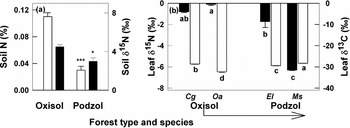
The more fertile oxisol soil of the mixed forest had a higher soil N concentration as compared with the podzol of the caatinga forest (Figure 1a). Consistent with this difference, soil isotopic composition showed that the podzol was depleted in δ15N by 1.5‰ as compared with the oxisol (Figure 1a). However, leaf δ15N was negative in all species of both forest types, which suggests leaf tissue depletion in 15N with respect to soils (Figure 1b). Extreme depletions were found in the oxisol species O. aciphylla (lowest) and in the podzol species M. sprucei (highest), respectively. Thus, tree species from the oxisol were depleted in 15N by 4.91‰ ± 0.14‰ relative to soil values. Leaves of the caatinga species on podzol were depleted in 15N by 7.45‰ ± 0.78‰ with respect to the soil.
Soil δ15N (black bars) and N (white bars) (a); leaf δ15N (black), δ13C (white) (b) of Caryocar glabrum (Cg) and Ocotea aciphylla (Oa) from the mixed forest growing on oxisol soil, and of Micranda sprucei (Ms) and Eperua leucantha (El) from the caatinga forest growing on podzol soil. Species are arranged following the direction of fertility declines and water table fluctuation increases as shown by the arrow. The bars are means of measurements taken from three soil samples, or in three trees per species, and SE. Statistical differences at P < 0.05 (*) and P < 0.001 (***) are shown for soil samples, and for leaf samples different letters indicate significant differences across all species (P < 0.05).

The soil δ13C was almost identical in the two forests: –29.2‰ ± 0.1‰ in the oxisol and -29.1‰ ± 0.02‰ in the podzol. In turn, leaf δ13C differed significantly among the species and values were species-specific (Figure 1b). The calculated Ci/Ca has been used as an estimate of long-term water-use efficiency. One-way ANOVA across species indicated that the calculated Ci/Ca value of each species was statistically different (P < 0.05) with respect to the others: 0.72 ± 0.01 and 0.88 ± 0.01 in C. glabrum and O. aciphylla from the mixed forest, and 0.75 ± 0.01 and 0.70 ± 0.01 in E. leucantha and M. sprucei from the caatinga forest. Thus, extreme values corresponded to the caatinga species M. sprucei (podzol) with the highest δ13C and lowest Ci/Ca, and the mixed forest species O. aciphylla (oxisol) with the lowest values.
Leaf tissue physical and chemical characteristics
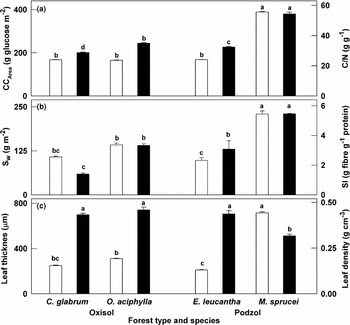
Across-species differences in CCMass were not significant and averaged 1.70 ± 0.02 g glucose g−1. By contrast, the CCArea of M. sprucei was over twice that in the other three species (Figure 2a). The CCArea is related to chemical composition such as carbon to nitrogen ratio (C/N; Figure 2a) and sclerophylly index (SI; Figure 2b), and to physical characteristics such as leaf dry mass to leaf area ratio (Sw) and thickness (Figure 2b). Furthermore, leaves with larger Sw possess significantly thicker leaf blades and lower leaf density (Figure 2c).
Leaf CCArea (white) and and C/N ratio (black) (a); Sw (white) and SI (black) (b); and leaf thickness (white) and density (black) (c) of Caryocar glabrum and Ocotea aciphylla from the mixed forest on oxisol soil and of Micranda sprucei and Eperua leucantha from the caatinga forest on podzol soil (c, d). Species are arranged following the direction of fertility declines and water table fluctuation increases. The bars are means of measurements taken three trees per species and SE, and different letters indicate significant differences across all species (P < 0.05).

Wood characteristics
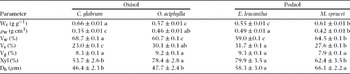
Table 1 shows the wood characteristics of terminal branches used for wood anatomical investigation and hydraulic measurements. Water constituted a considerable fraction of wood in all species as shown by a water content of fresh mass (Vw) over 0.55 g g−1 and a water volume (Vw) over 59%. Significant differences were found among species, up to 16–20% in both parameters (Table 1). Solids were the second largest fraction, as shown by a wood density (ρw) and a solid volume (Vs) over 0.35 g cm−3 and 23%, respectively. Differences of ρw and Vs among species were up to 40%. Finally, all the species had a comparable volumetric gas fraction (Vg), slightly less than 10% (Table 1).
Water content (Wc), wood density (ρw), wood volumetric fractions of water (Vw), solids (Vs) and gas (Vg), percentage of the transverse section occupied by xylem tissue (Xyl) and hydraulic ratios (Dh), measured in terminal branches from tree species from the mixed forest, on oxisol (Caryocar glabrum and Ocotea aciphylla) and from the caatinga, on podzol (Micranda sprucei and Eperua leucantha). Values are mean ± SE of samples taken in three trees per species. Means followed by different letters were statistically different at P < 0.05.

Xylem anatomy and hydraulic parameters
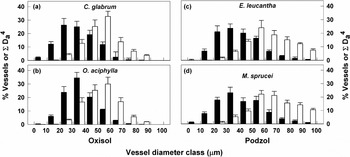
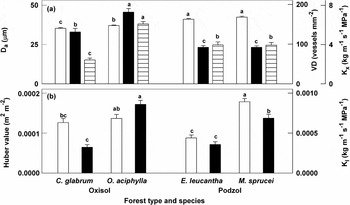
The stem cross-sectional areas occupied by xylem varied significantly among species, up to about 50% (Table 1). Vessel diameter frequency showed in all species a modal distribution, 0–90 μm in the mixed forest species and 10–100 μm in the caatinga species (Figure 3). In the mixed-forest species C. glabrum and O. aciphylla, 70–78% of the vessels were in the range of 20–40 μm. In the caatinga species M. sprucei and E. leucantha, 75–80% of the vessels were in the range of 20–50 μm. However, only 16–22% of the water transport takes place in those vessels. Mean anatomical diameters (Da) and hydraulic diameters (Dh) were significantly smaller in the mixed forest species than in the caatinga species (Figure 4a, Table 1). A reverse trend was found for vessel density (vessels mm−2), which was significantly higher in the mixed-forest species than in the caatinga species (Figure 4a). Hydraulic conductivity per xylem area (Kx) differed across species and the higher value corresponded to O. aciphylla, from the mixed forest, which had the largest xylem vessel density as well (Figure 4a). The lowest Kx corresponded to C. glabrum with the lowest Da as well. Intermediate Kx values were found in the two species at the podzol (M. sprucei and E. leucantha), with the largest Da and lowest density. Thus, xylem permeability depended not only on vessel diameter but also on vessel density. The trend followed by Kx was not paralleled by the hydraulic conductivity on leaf area basis (Kl) across species (Figure 4b). Values of Kl depended on Kx and on Huber Value (HV; Figure 4b). Ocotea aciphylla had both the largest Kx and Kl. The second highest Kl values were measured in M. sprucei, with relatively lower Kx but with comparable HV to O. aciphylla. In E. leucantha and C. glabrum differential Kx was compensated by HV resulting in a similar Kl in both species (Figure 4a, b).
Vessel diameter class in the stems of Caryocar glabrum (a) and Ocotea aciphylla (b) from the mixed forest on oxisol soil, and of Eperua leucantha (c) and Micranda sprucei (d) from the caatinga forest on podzol soil. Black bars represent percentages based on total vessel number and white bars are the conductance percentage based on the sum of all vessel diameters to the fourth power (ΣDa4). The latter reflect the relative hydraulic importance of each diameter class as estimated by the Hagen–Poiseuille Law. The bars are the means of measurements taken in three trees per species and SE.

Vessel anatomical diameter (Da, white), vessel density (VD; black), xylem hydraulic conductivity (Kx, horizontal striped) (a); Huber values (white) and leaf hydraulic conductivity (Kl, black) (b) of Caryocar glabrum and Ocotea aciphylla from the mixed forest on oxisol soil, and of Micranda sprucei and Eperua leucantha from the caatinga forest on podzol soil. Species are arranged following the direction of fertility declines and increasing water table fluctuation. The bars are means of measurements taken in three trees per species and SE, and different letters indicate significant differences across all species (P < 0.05).

DISCUSSION
Soil and leaf isotopic composition
The soils of the upper Rio Negro forests have been described as very oligotrophic, with N stocks of 1000 and 4000 kg ha−1 in podzol and oxisols, respectively (Bentley et al. Reference BENTLEY, HERRERA, ARNASON, MOLINA-BURK, CASTILLEJA, GARCIA-GARCIA, JORDAN, RUSSEL, SALATI and SANHUESA1982). Consistent with differences in soil N, podzol soil had its δ15N signature depleted, whereas that in the oxisol was enriched. Higher leaf δ15N signatures measured in the mixed-forest species were consistent with the high soil N. Comparison of leaf δ15N values obtained in five forests on oxisols across the Brazilian Amazon shows a tendency to decline from 7.9‰ to 3.4‰ as annual rainfall increases from 1900 to 3400 mm (Nardoto et al. Reference NARDOTO, OMETTO, EHLERINGER, HIGUCHI, BUSTAMANTE and MARTINELLI2008). We tested the linear tendency of their five data sets, and it was not statistically significant. However, the linear relationship between δ15N as a function of rainfall (mm) became statistically significant when the present results were included (δ15N = − (0.00342 × rainfall) +13.3; r = 0.886; P < 0.019). Thus, our values fit the regional trend across the Amazonian forests on oxisol soils. Micranda sprucei leaves from the caatinga on podzolized soils have the most depleted δ15N, whereas E. leucantha has significantly higher but negative leaf δ15N. We cannot discount the possibility that the legume E. leucantha may have N2-fixing symbionts but, definitively, atmospheric N is not the only input of plant N because in that case δ15N would be near zero. In extremely infertile soils occupied by the sclerophyllous forest, leaves are depleted in 15N by 10.7‰, considering that soil δ15N is about 2.8‰ (unpublished result) and that in leaves is −7.9 ± 0.6‰ (Sobrado Reference SOBRADO2008). The pattern of δ15N depletion in the caatinga species compares well with that of similar vegetation in Brazil (Mardegan et al. Reference MARDEGAN, NARDOTO, HIGUCHI, MOREIRA and MARTINELLI2009). Overall, leaf signature 15N depletion in both forest types with respect to the soil could be attributed to fractioning during N transference, such as denitrification (Houlton et al. Reference HOULTON, SIGMAN and HEDIN2006) as well as mycorrhizal association, as was found in these forests (Herrera et al. Reference HERRERA, MERIDA, STARK and JORDAN1978b).
The δ13C in the soil samples did not show differences among sites, whereas that of leaves showed species-specific variation. Micranda sprucei and O. aciphylla had the highest and lowest leaf δ13C, whereas the values for E. leucantha and C. glabrum were intermediate. Differences in δ13C could reflect distinct patterns of stomatal function (Farquhar et al. Reference FARQUHAR, O'LEARY and BERRY1982). Thus, calculated Ci/Ca represents a good predictor of long-term water-use efficiency. In agreement with this, M. sprucei and O. aciphylla were the species with the highest and lowest long-term water-use efficiencies, whereas E. leucantha and C. glabrum had intermediate efficiencies.
Leaf tissue physical and chemical characteristics
The leaf nutrient composition in species of both forest types has been analysed in several studies (Medina et al. Reference MEDINA, GARCIA and CUEVAS1990). For a thorough comparison across species, we used the leaf construction costs of leaf tissue on dry-mass basis (CCMass), which provides an integral assessment of the energy consumed in the biosynthetic pathways of the plant tissue components (Penning de Vries et al. Reference PENNING DE VRIES, BRUNSTING and VAN LAAR1974). The CCMass did not differ among species in the two forests, and values were comparable to those found in the adjacent sclerophyllous forest as well (Sobrado Reference SOBRADO2009a). Small variations in CCMass are mostly due to a negative correlation between expensive compounds related to rapid metabolic activity (protein and lipids) and those related to the persistence of leaf tissue such as lignin (Chapin Reference CHAPIN1989, Poorter et al. Reference POORTER, NIINEMETS, POORTER, WRIGHT and VILLAR2009). Conversely, leaf blade costs tend to show a wider range of variation across species as a result of contrasting Sw rather than CCMass (Sobrado Reference SOBRADO1991). Thus, CCArea of C. glabrum and O. aciphylla (mixed forest on oxisol) as well as E. leucantha (caatinga on podzol) had relatively less expensive leaf blades as compared with those of M. sprucei from the caatinga. Leaf blades of M. sprucei are sclerophyllous, and its related parameters, such as CCArea, Sw, thickness and densities as well as C/N are comparable to the values found in the adjacent sclerophyllous forests (Sobrado Reference SOBRADO2008, Reference SOBRADO2009a). This suggests that sharing some ecophysiological features may enable M. sprucei to occupy the ecotone area of the caatinga forest. Eperua leucantha, as well as the two species from the mixed forest, presented lower SI values. Across forest types, including the data from adjacent sclerophyllous forest (Sobrado Reference SOBRADO2009a), multiple linear regression analysis was performed to predict SI from Sw and leaf thickness values (SI = 2.40 − (0.021 × Sw) + (0.012 × thickness); r = 0.86; P < 0.01). This relationship reveals the local pattern of SI, and allows the correction of the improbably high values reported previously in these habitats (Medina et al. Reference MEDINA, GARCIA and CUEVAS1990). Overall, we found SI values within the range reported in other tropical areas (0.5–7.5 g crude fibre g−1 protein; Choong et al. Reference CHOONG, LUCAS, ONG, PEREIRA, TAN and TURNER1992). Leaf design features such as Sw and thickness correlate strongly and reflect the degree of sclerophylly in highly contrasting environments (Turner Reference TURNER1994a, Reference TURNER1994b).
Wood characteristics
The wood of terminal branches from trees of both forest types was composed mostly of water and solids. The mechanical strength of stems is positively associated with wood density (Lawton Reference LAWTON1984) and the proportion of xylem and supportive tissues in the wood has been associated with requirements for wood strength and may influence xylem permeability (Wang et al. Reference WANG, IVES and LECHOWICZ1992). Xylem density (ρx) and ρw are plastic and predictable traits reflecting both phylogenetic constraints and environmental conditions prevailing where the species grows (Patiño et al. Reference PATIÑO, LLOYD, PAIVA, BAKER, QUESADA, MERCADO, SCHMERIER, SCHWARZ, SANTOS, AGUILAR, CZIMCZIK, GALLO, HORNA, HOYOS, JIMÉNEZ, PALOMINO, PEACOCK, PEÑA-CRUZ, SARMIENTP, SOTA, TURRIAGO, VILLANUEVA, VITZTHUM, ALVAREZ, ARROYO, BARALOTO, BONAI, CAVE, COSTA, HERRERA, HIGUCHI, KILLEEN, LEAL, LUIZAO, MEIR, MONTEAGUDIO, NEIL, NUÑEZ-VARGAS, PEÑUELA, PITMAN, PRIANTE-FILHO, PRIETO, PANFIL, RUDAS, SALOMÃO, SILVA, SILVEIRA, SOARES DE ALMEIDA, TORRES-LEZAMA, VAZQUEZ-MARTINEZ, VIEIRA, MALHI and PHILLIPS2009, Sungpalee et al. Reference SUNGPALEE, ITOH, KANZAKI, SRI-NGERNYUANG, NOGUCHI, MIZUNO, TEEJUNTUK, HARA, CHAI-UDOM, OHKUBO, SAHUNALU, DHANMMANONDA, NANAMI, YAMAKURA and SORN-NGAI2009). Wood density and Vs suggest the growth-survival trade-off in tropical species: both parameters have a positive relationship with survival but a negative relationship with growth (Poorter Reference POORTER2008). Thus, lighter woods are cheap to construct and are related to a lower Sw in a number of tropical ecosystems (Poorter & Bongers Reference POORTER and BONGERS2006, Sobrado Reference SOBRADO2003). An increase in Vg instead of one in Vw has been argued as being advantageous in very tall trees, because it leads to more stem resistance against bending forces (Gartner et al. Reference GARTNER, MOORE and GARDINER2004). Vg was near 10%, despite the fact that trees were from the top canopy in both forest types. Bending forces, mostly represented by wind, may be reduced in these dense forests with a closed canopy, and a large loading stress would be a result of high mass per unit volume. Hence, mechanical safety for buckling may rely on height to diameter ratio instead of wood composition (King et al. Reference KING, DAVIES, SYLVESTER and NOOR2009, van Gelder et al. Reference VAN GELDER, POORTER and STERCK2006).
Xylem anatomy and hydraulic parameters
Stem hydraulic properties varied to some extent according to changes in xylem structure. Larger vessels allow high conductivity with lower investment in xylem tissue (Tyree et al. Reference TYREE, DAVIES and COCHARD1994), mainly due to a shift of predicted hydraulic conductivity per diameter class towards wider vessels. The caatinga species, with higher Da and Dh, would have a higher hydraulic transport compared with those of mixed forests, but this advantage is offset by vessel density patterns as well as Huber values. Thus, xylem permeability and leaf water supply are species-specific. Sunlit terminal branches showed some species-specific significant differences in Kx, Kl and Huber values of terminal branches in both forest types. However, overall hydraulic parameters are within the range reported for tropical angiosperm trees (Sperry Reference SPERRY2003). The Kx tended to be slightly higher than those found in the adjacent sclerophyllous forest with higher wood density and higher density of narrower vessels (Sobrado Reference SOBRADO2009b). In trees, terminal branches have the narrowest vessels and the lowest conductance for water flow as well (Tyree & Zimmermann Reference TYREE and ZIMMERMANN2002). However, trade-offs in hydraulic function are influenced by both conduit dimensions and pit membrane permeability, which account for up to 50% of xylem conductance and varies largely across species (Choat et al. Reference CHOAT, COBB and JANSEN2008). Kl contrasted across species independent of the forest type, although the highest values were found in O. aciphylla, from the mixed forest. A higher Kl would assure larger transpiration rates with a relatively low pressure gradient under these habitats with sufficient water, even though xylem vessels may be vulnerable to cavitation. In these forests, transpiration rate on sapwood-area basis was found to be about 7300 l d−1 m−2 across species and forest types (Jordan & Kline Reference JORDAN and KLINE1977). Our more detailed results preclude the possibility of identical xylem permeability being uniquely responsible for equivalent transpiration rates on sapwood basis across species and forest types. Stomatal regulation patterns were contrasting across species as suggested by leaf δ13C and implicit long-term water-use efficiency. The interplay between leaf hydraulic sufficiency, short-term water use and stomatal regulation patterns would influence water-use efficiency in these habitats with abundant rainfall.
CONCLUSIONS
The δ15N values revealed the existence of a closed N-cycle in both forest types as found in other N-poor areas (Martinelli et al. Reference MARTINELLI, PICCOLO, TOWNSEED, VITOUSEK, CUEVAS, McDOWELL, ROBERTSON, SANTOS and TRESEDER1999), and that tree species could withdraw N from a variety of N-pools in both forests. Leaf blade cost as well as leaf thickness, sclerophylly degree, physical characteristics, and construction costs on area basis were related to fertility and water table fluctuations of the specific sites: C. glabrum and O. aciphylla from the mixed forest on oxisol as well as E. leucantha from caatinga on podzol showed lower costs and also less sclerophyllous leaves. By contrast, M. sprucei, dominant in the slopes of the caatinga forests, had a high leaf blade cost and SI, comparable to those of the sclerophyllous forest occurring on top of sandy domes (Sobrado Reference SOBRADO2009a). Hydraulic parameters were species-specific and related to long-term water-use patterns as suggested by δ13C and calculated Ci/Ca values. Thus, leaves of O. aciphylla, a dominant species from the mixed forest, with a combination of low δ13C and high hydraulic sufficiency may maintain water loss without risk of xylem embolisms. Conversely, the coexisting species G. glabrum had a more conservative water transport as well as relatively high long-term water use efficiency, which may reduce water loss to avoid the risk of xylem cavitation. In the waterlogged valley of the caatinga, the dominant tree E. leucantha showed a conservative leaf water supply and long-term water use as well. In fact, tree species growing under waterlogged conditions show weak stomatal control, which results in high transpiration rates (Sellin Reference SELLIN2001).Thus, conservative water transport in E. leucantha may have an adaptive significance to prevent xylem cavitation in these waterlogged conditions. By contrast, leaves of M. sprucei, the dominant tree species in the sandy slopes of the caatinga, had a combination of relatively high hydraulic sufficiency and the highest long-term water-use efficiency. This suggested that this species occupying sandy slopes with severe fluctuations of the water table could be at risk of xylem embolisms, which would be avoided by reduced water loss and enhanced long-term water-use efficiency. Thus, under high rainfall conditions in these Amazonian forests, tree hydraulic architecture convergences and differences among species were related to the long-term water-use efficiency. Species-specific responses are linked to particular conditions of the habitat at local and regional scales (Engelbrecht et al. Reference ENGELBRECHT, COMITA, CONDIT, KURSAR, TYREE, TURNER and HUBBELL2007). Thus, stomatal conductance is tuned by the hydraulic sufficiency and xylem embolism risk, as previously found in the sclerophyllous forest in this area (Sobrado Reference SOBRADO2009b). In the future, assuming a warmer and drier climate, the species with more conservative water transport or with better stomatal control would be at lower risk of mortality. It would be anticipated that species like O. aciphylla, with high water transport and water loss capability, would be extremely vulnerable for xylem embolisms due to unusual droughts and/or rainfall pattern changes, in comparison to more conservative tree species.
ACKNOWLEDGEMENTS
Financial support was provided by DID-USB (Project S1-2008). Help during field work was provided by Pedro Maquirino. Dr Elena Raimundez allowed the use of the microscopic unit, and Ms Norbelys Garcés (UCV, Facultad de Agronomía) prepared the anatomical material. Criticisms and suggestions from anonymous referees were very helpful to improve the manuscript.