Introduction
On behalf of Highways England (now National Highways), between October 2016 and January 2022 MOLA-Headland Infrastructure undertook archaeological excavations in support of improvements to the A14 trunk road between Ellington and Milton Junction in southern Cambridgeshire, UK. Thirty ‘Targeted Excavation Areas’ (TEAs), grouped into eight ‘Landscape Blocks’ covering 232 hectares, were excavated. Archaeology dating from the Palaeolithic to the post-medieval period was investigated, including prehistoric monuments (TEAs 10, 16 and 32/33), Pleistocene vertebrate remains (TEA 28), and a deserted medieval village (Houghton: TEA 7C). In terms of numbers of finds and numbers of contexts, the most quantitatively significant were the Iron Age and Roman periods, when much of the western part of the A14 corridor was found to have been host to dense and interlinked rural settlement. The A14 sites and their sizeable finds and environmental assemblages were assessed during 2018 and 2019, with a programme of post-excavation analysis taking place between 2020 and 2023.Footnote 1
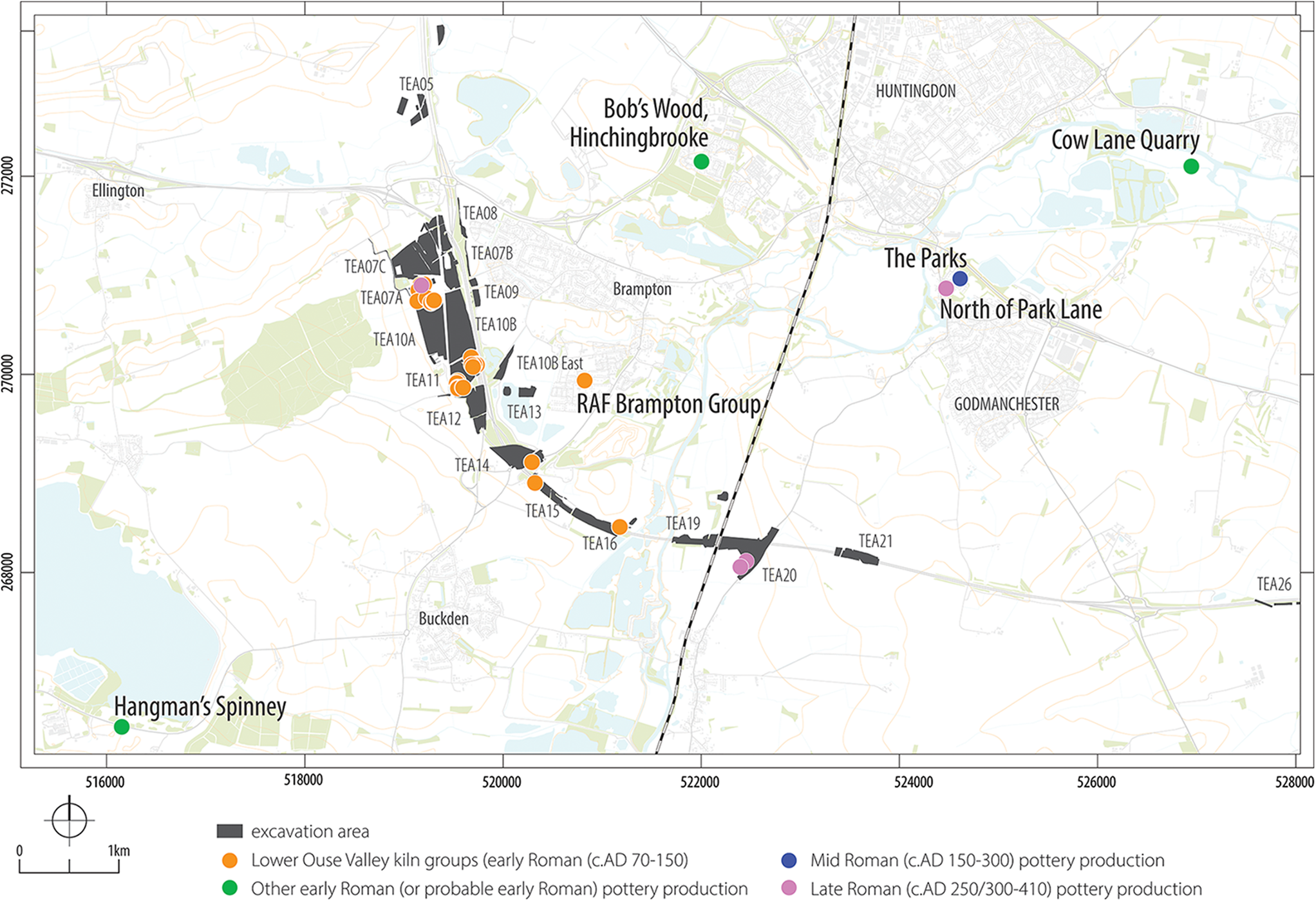
A significant feature of the Roman-period rural settlement present across much of the A14 corridor was the presence of pottery kilns. In total, 39 confirmed Roman pottery kilns were excavated. Of these, 33 were sufficiently similar in terms of their construction and the waste pottery recovered from their fills to justify the conclusion that they formed part of what might conventionally be called the same ‘industry’.Footnote 2 These 33 kilns were confined to the area around the modern parish of Brampton in the valley of the Great Ouse River, where they clustered in what have been defined as six discrete ‘pottery sites’ (Fig. 1). Typological analysis of the waste pottery recovered from these features, as well as several radiocarbon dates, has determined that the kilns were in use between c. a.d. 60 and c. 130/150 a.d., firing a limited range of greywares, mostly jars and dishes.Footnote 3 To these six potteries can be added a seventh, excavated by Oxford Archaeology East at nearby RAF Brampton in 2016, which produced comparable kilns and pottery.Footnote 4 Together, these sites and their associated assemblages have been defined as the Lower Ouse Valley pottery-making complex.
Locations of known Roman pottery sites in the Lower Ouse Valley, Cambridgeshire. (MOLA-Headland Infrastructure)

Crucial to the significance of the Lower Ouse Valley complex is not only the scale of the evidence in terms of raw numbers of kilns, but also their excavation on a landscape scale. The latter has meant that not only were kilns excavated, but also associated production-related emplacements (dryers, buildings, etc.) and other features. In particular, that many pottery-making features appear to have had close relationships with contemporary settlement is significant and potentially atypical for the period.Footnote 5
Southern Cambridgeshire provides an interesting setting for an investigation of ancient craft practices. The past 30 years have seen an enormous amount of fieldwork in the region, much of which has been conducted as a series of large-scale excavations (including the A14) which, up to 2023, cumulatively amount to a 10.6% sample of the region by area.Footnote 6 Fieldwork here has shown that Iron Age and Roman sites were distributed densely across the fen-edge landscape, with the large extent of many excavations permitting investigation of these interconnected settlements at different scales. Large-scale excavations at Love’s Farm, St Neots,Footnote 7 Little Paxton Quarry,Footnote 8 as well as on the A14 and elsewhere have shown the frequency and interconnectedness of Iron Age and Roman rural occupation in the Lower Ouse valley specifically. Evidence of latest Iron Age and Roman pottery-making has been encountered frequently in the region and has prompted interesting discussion of the integration of crafts into predominantly agricultural economiesFootnote 9 and the movement of novel technical ideas into the region.Footnote 10
Aggregate realisation of the dense nature of Iron Age and Roman settlement in southern Cambridgeshire, and the integration of craftworking into this landscape, challenge us to consider how technical knowledge circulated within communities at local and regional scales. Recent developments in archaeological theory around technology are diverse but include emphases on the sociality and distributed or ‘networked’Footnote 11 nature of technical practice and innovation. A traditional emphasis on formalist economics has meant that Roman pottery studies have rarely considered social themes and are thus yet to capitalise on these developments.Footnote 12 Nevertheless, the evidence-base provided by Romano-British craftworking sites is often formidable, and with the unified deployment of modern analytical and theoretical techniques can enable us to reconstruct past technical practice in extreme detail.
Furthermore, a series of recent discoveries have highlighted the geographically dispersed nature of many ceramic traditions within Roman Britain, tempting us to question the ways in which technical knowledge moved across the landscape and between groups of people (e.g. in the cases of Verulamium-type white wares and Lower Nene Valley-type wares).Footnote 13 At present, such interactions are normally described in formal terms: new discoveries are described as ‘satellite workshops’ or similar, and potteries with evidence for the employment of novel ideas interpreted as being the establishments of immigrants.Footnote 14 Overall, aside from via the physical movement of potters as can be posited on the basis of makers’ stamps, we have little understanding of how technical or stylistic knowledge moved between people and across space in Roman Britain.Footnote 15 The Lower Ouse Valley potteries also add significantly to narrative accounts of regional ceramic technological and material-cultural development.
Building on the idea of ‘dense pasts’, we will use the Lower Ouse Valley potteries as a case-study to investigate craftworking as a feature of social connectivity.Footnote 16 Rather than offering a single argument or model, we present this paper as an exploration of sociality within the context of one instance of Romano-British pottery-making, with the intention of demonstrating how revealing of past social interactions craftworking evidence can be. Acknowledging the entangled nature of ‘economy’ and ‘society’, the evidence of the Lower Ouse Valley potteries will be explored to reveal the distributed nature of technical practice between rural craftspeople at predominantly — though not exclusively — local scales. Effectively, these practices are a key part of the ‘grass roots’ of the Romano-British economy, even if crafts and light industry may not have been of particular interest to the Roman state.Footnote 17 The emphasis throughout is therefore on countering prevailing narratives which lean heavily on the notion of ‘economic rationality’, instead creating an account of a craftworking complex which was populated by creative, social people who lived and worked alongside neighbours, family members, colleagues, competitors and customers.
The Lower Ouse Valley potteries in context
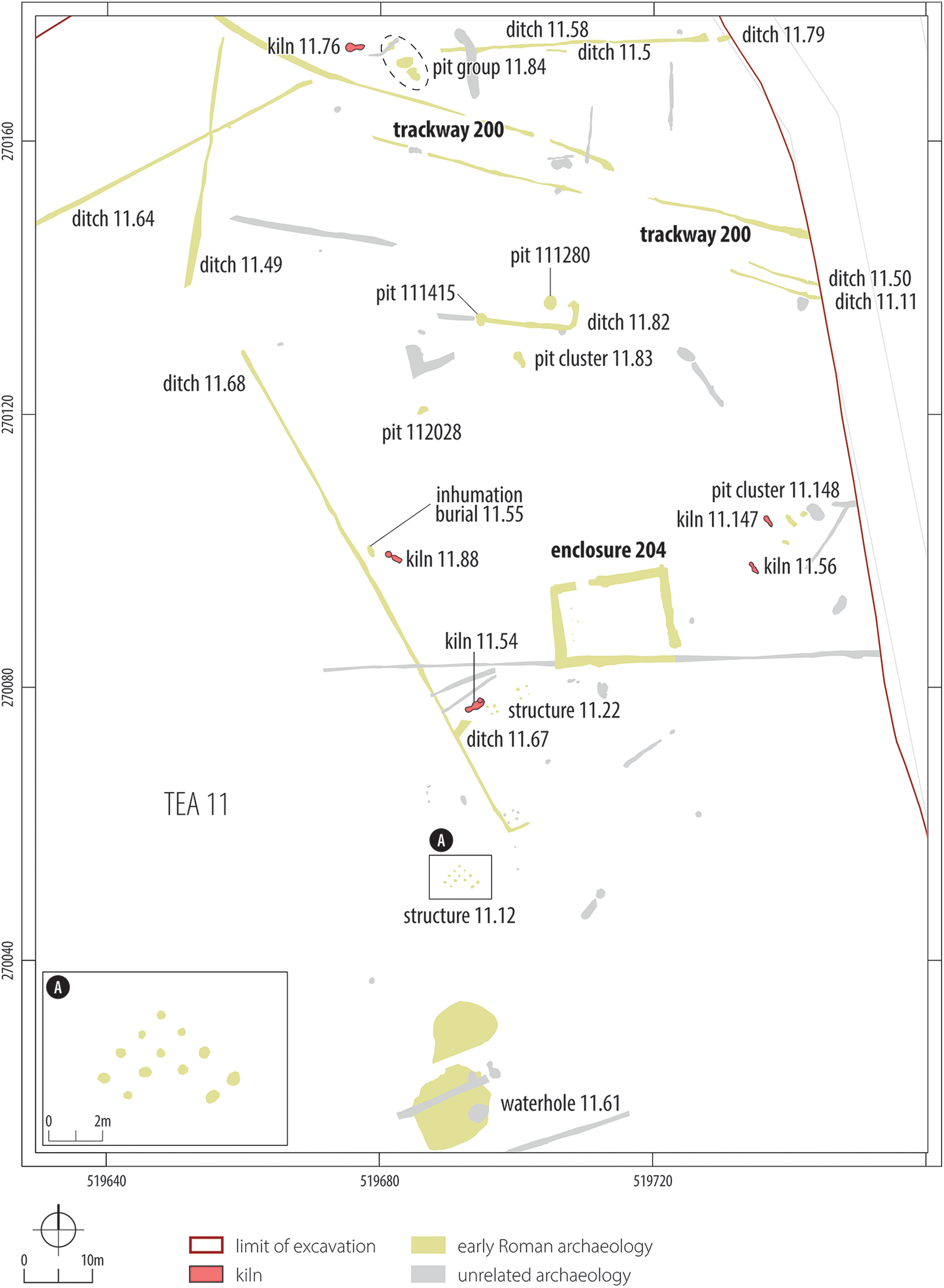
As mentioned above, the Lower Ouse Valley pottery-making complex is at present constituted by seven distinct ‘pottery sites’, each of which is accounted for by a spatially distinct cluster of production-related features. Six of these pottery sites are located within the early Roman rural landscape excavated as part of the A14 redevelopment and can be situated in relation to this wider settlement pattern in different ways. Perhaps the most ‘complete’ of the pottery sites is that described as the TEA 11 Eastern Group, part of Settlement 201 on the Brampton West landscape block just over a kilometre due west of the RAF Brampton site. The layout of the site is shown in Fig. 2. Five confirmed pottery kilns were associated with this settlement, four of which were found short distances away from a small rectilinear enclosure (E204). Several long, thin ditches criss-cross the area (ditches 11.68, 11.49, 11.64 and 11.58), while a small road (Trackway 200), a waterhole/well (11.61) and several scattered pits were also identified. Many of these features can be convincingly linked with pottery-making without the need to assume other forms of contemporary land-use. Located more-or-less centrally within the craftworking area, E204 and its internal structure may represent the remains of a small workshop or working area (perhaps little more than a shelter), and Waterhole 11.61 to the south may have served to provide the abundant water needed for making pottery. Trackway 200 seems likely to have facilitated the movement of raw materials into, and finished pots out of, the production site. The various long, thin ditches present around this settlement bear resemblance to similar ditches which characterised the contemporary pottery site at Highgate Wood, London, which were interpreted as part of the system of drainage channels involved in clay levigation.Footnote 18 It may be that the TEA 11 ditches were similar in function, though no obvious examples of levigation tanks/pits were excavated. This area of Brampton West was largely unoccupied before the establishment of the kilns and contemporary features. The impression is therefore of a pottery-making site set up on unused land designated for this purpose, away from contemporary settlement.
Plan of the TEA 11 Eastern Group pottery site. (MOLA-Headland Infrastructure)

A series of post-built structures in the southern part of the industrial area are particularly interesting. Clustering in the vicinity of Kiln 11.54, three of these (structures 11.22, 11.23 and 11.67) were formed of square arrangements of four post-holes each. A short distance to the south and outside of Ditch 11.68, Structure 11.12 was formed of a dense collection of twelve post-holes. The dense arrangement of posts in the latter is particularly suggestive of an elevated structure or floor. The four-post structures are comparable to those found on some Iron Age sites, which may imply a similar arrangement. Iron Age four-post structures are often interpreted as grain stores wherein produce was able to be kept dry and free of pests via placing it on an elevated platform.Footnote 19 It may be that these structures served a similar purpose here, providing an elevated floor on which pots could be placed to dry before firing, potentially under cover. The regular layout of twelve-post structure 11.12 appears particularly likely to have supported an elevated floor. Their function may have been analogous to that of stone-built drying ovens found on other Romano-British pottery-making sites, though without a pyrotechnic element.
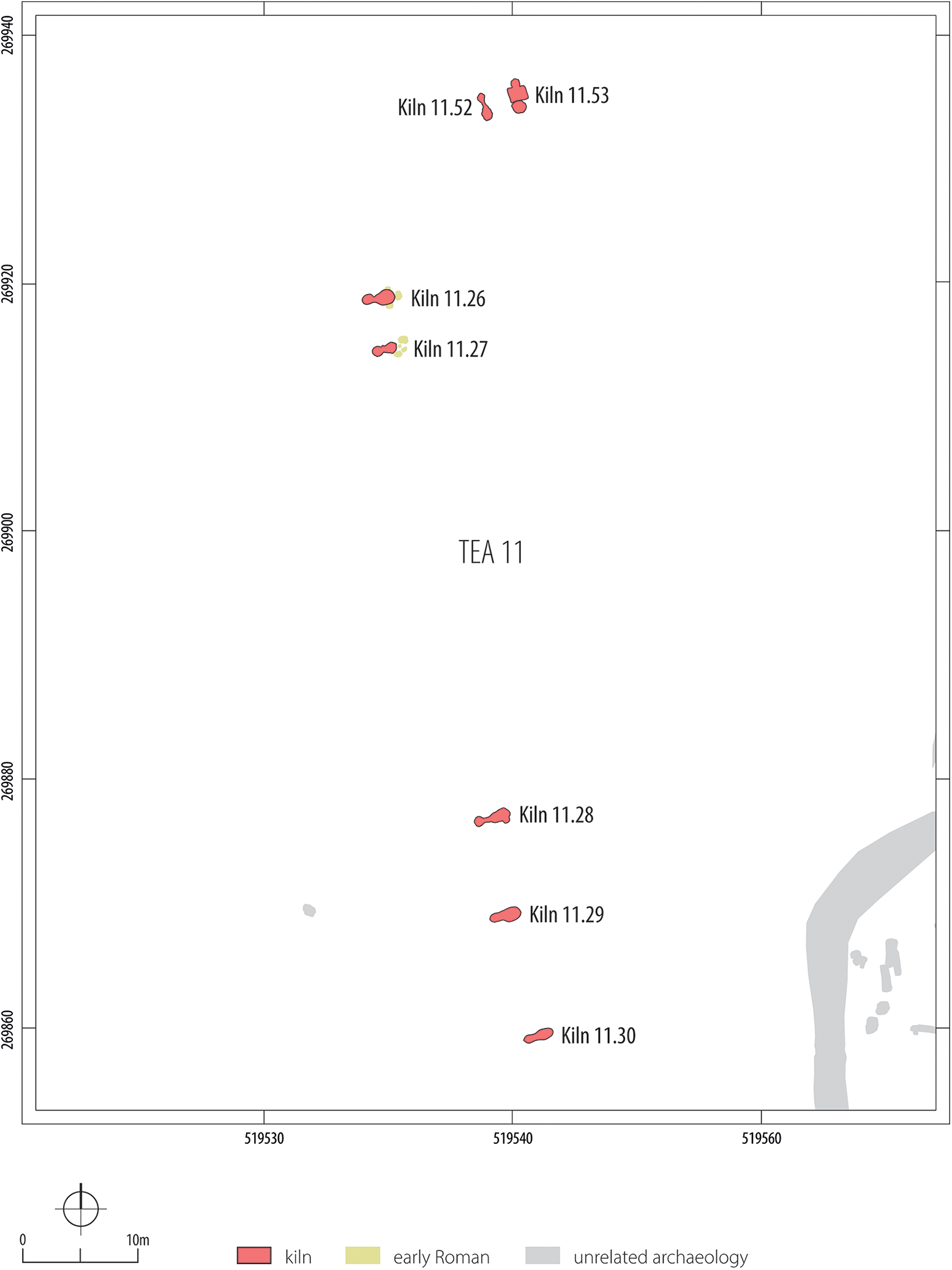
Also on the Brampton West landscape block, a short distance south-west of the TEA 11 Eastern Group, a set of seven kilns and associated features was excavated and constitutes the TEA 11 Southern Enclosure Group. In contrast to the apparently random siting and orientation of the TEA 11 Eastern Group kilns, the Southern Enclosure Group kilns give an impression of relative regularity (Fig. 3). It may be that the kilns were sited and oriented to respect some lost boundary feature (perhaps a hedge or fence), and that their layout traces the corner of this feature. Four of the kilns form what appear to be two pairs, and while there is no direct evidence for their chronological relationships it seems reasonable to suggest that they may have been in use contemporaneously, or that one in each pair was constructed to replace the other. Few contemporary other features were present in the immediate area, with these limited to two sets of large post-holes surrounding the stoking areas of kilns 11.26 and 11.27. These may have formed parts of structures erected over the stoking areas to shelter their occupants, or to protect the kiln during periods of disuse.
Plan of the TEA 11 Southern Enclosure Group pottery site. (MOLA-Headland Infrastructure)

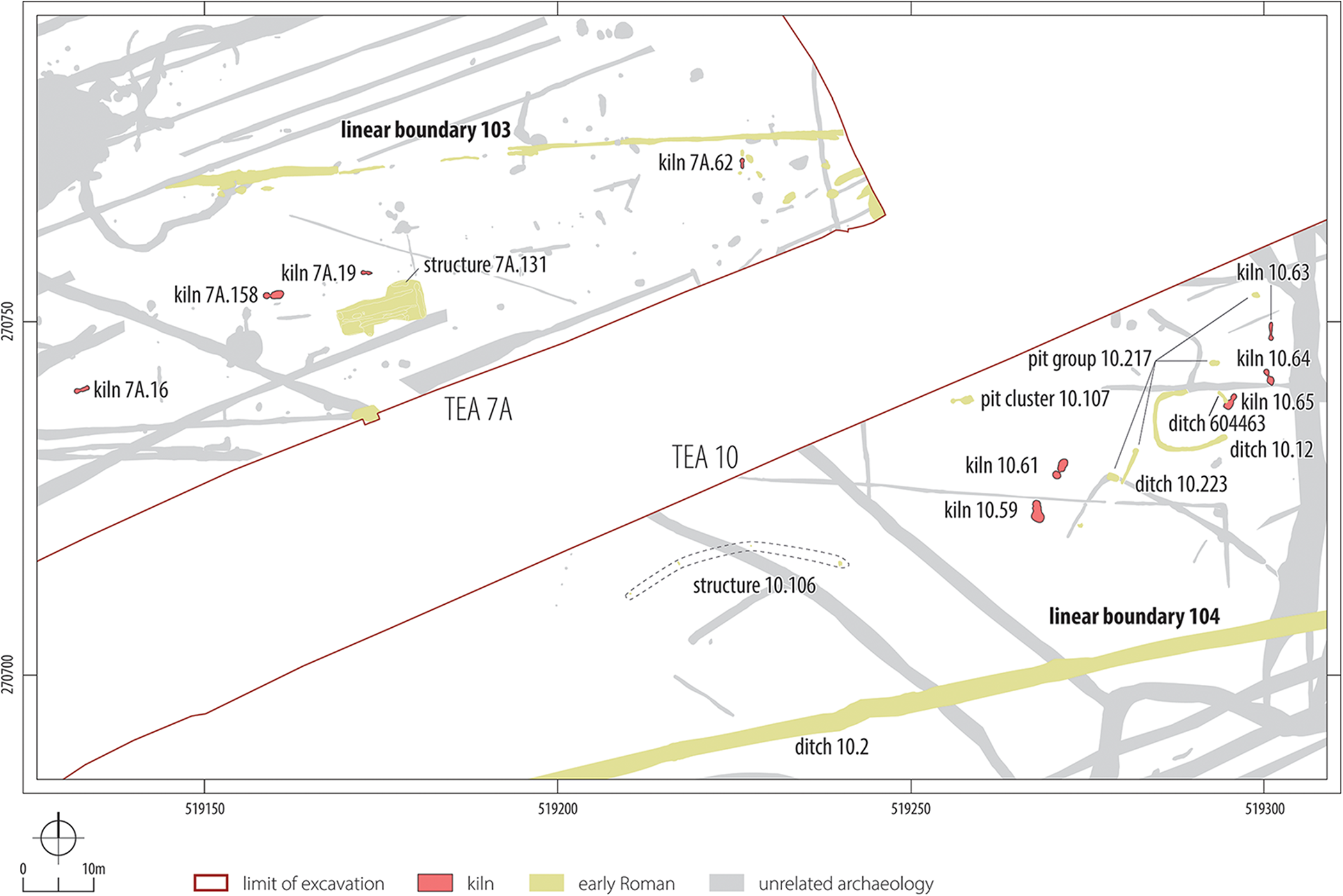
Around 1 km north, still on the Brampton West landscape block, nine kilns and associated features constitute the TEA 7A/10 Square Enclosure Group. It is conceivable that more kilns underly an unexcavated area marking the division between TEAs 7A and 10. The eponymous enclosure may have been formed by linear boundaries 103 and 104 defining the respective northern and southern extents of the industrial area (Fig. 4). The four kilns in TEA 7A formed a roughly north-east to south-west line. The beam-slot structure 7A.131 was near kilns 7A.19 and 7A.158. Respecting the kilns’ alignment, this structure may have served as a workshop or dwelling. The kilns in TEA 10 were arranged less regularly but were clustered in proximity to a small enclosure formed by Ditch 10.12 which may have served as a working area.
Plan of the TEA 7A/10 Enclosure Group pottery site. (MOLA-Headland Infrastructure)

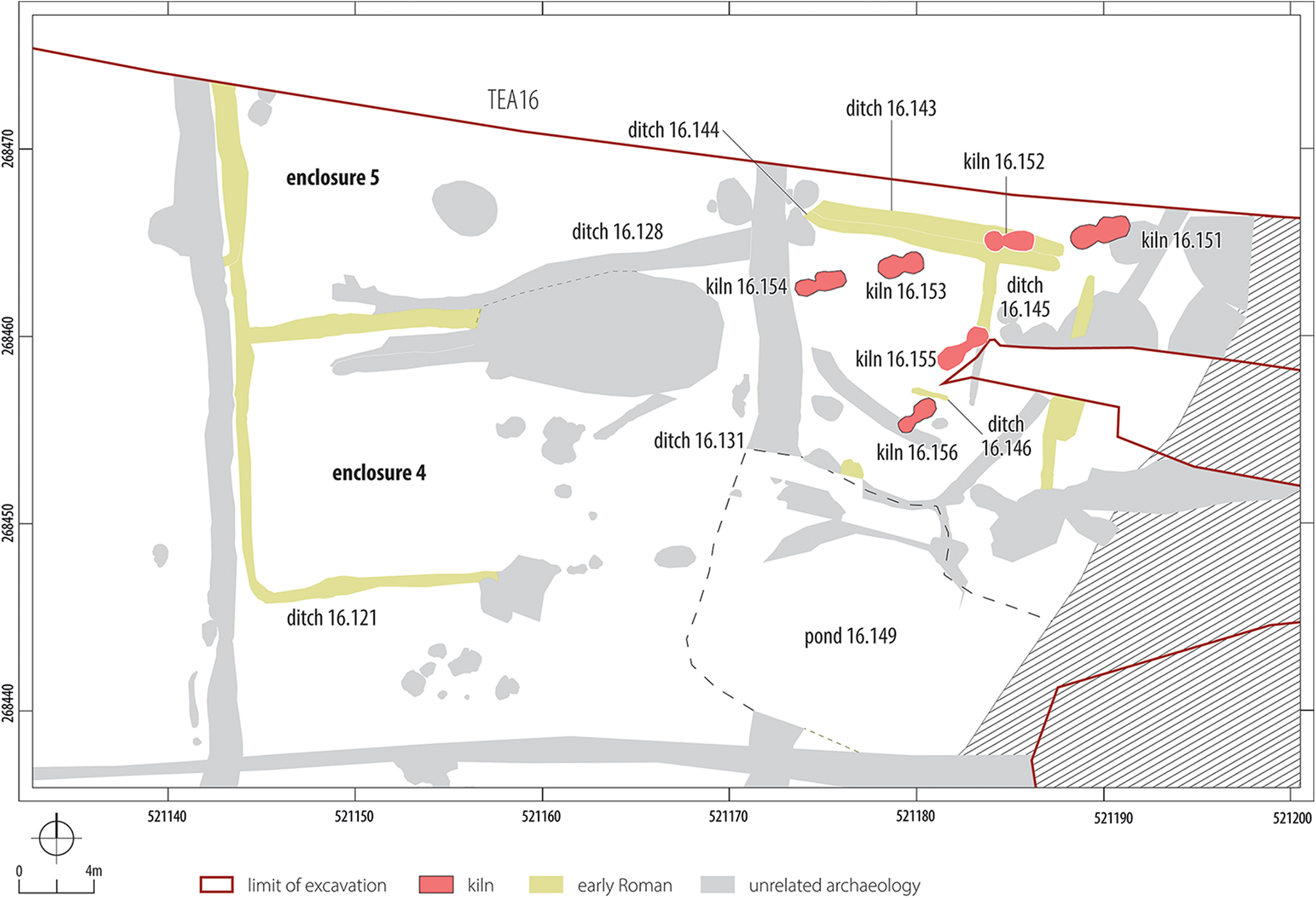
Also eliciting an impression of regularity are the six kilns excavated c. 2 km to the south-east of the TEA 11 Southern Enclosure Group on TEA 16, known as the TEA 16 Settlement 4 Group. Here, four kilns (Kilns 16.151-16.154) formed a tightly spaced line running east-north-east, again giving an impression of organisation, if not in the siting of contemporary kilns, in the siting of successive ones (Fig. 5). The remaining two kilns (16.155 and 16.156) were sited so as to face each other in the area immediately to the south. Three of the kilns (16.151, 16.152 and 16.155) cut parts of earlier (Roman) features, suggesting that this part of the landscape was turned over to pottery-making following some earlier use. Though parts of enclosure ditches to the west may have been contemporary with the kilns, these may have formed part of the earlier arrangement. No other features obviously associated with pottery-making were identified in this area, though the kilns may have been sited to take advantage of water sources (palaeochannels and ponds) here.
Plan of the TEA 16 Settlement 4 pottery site. (MOLA-Headland Infrastructure)

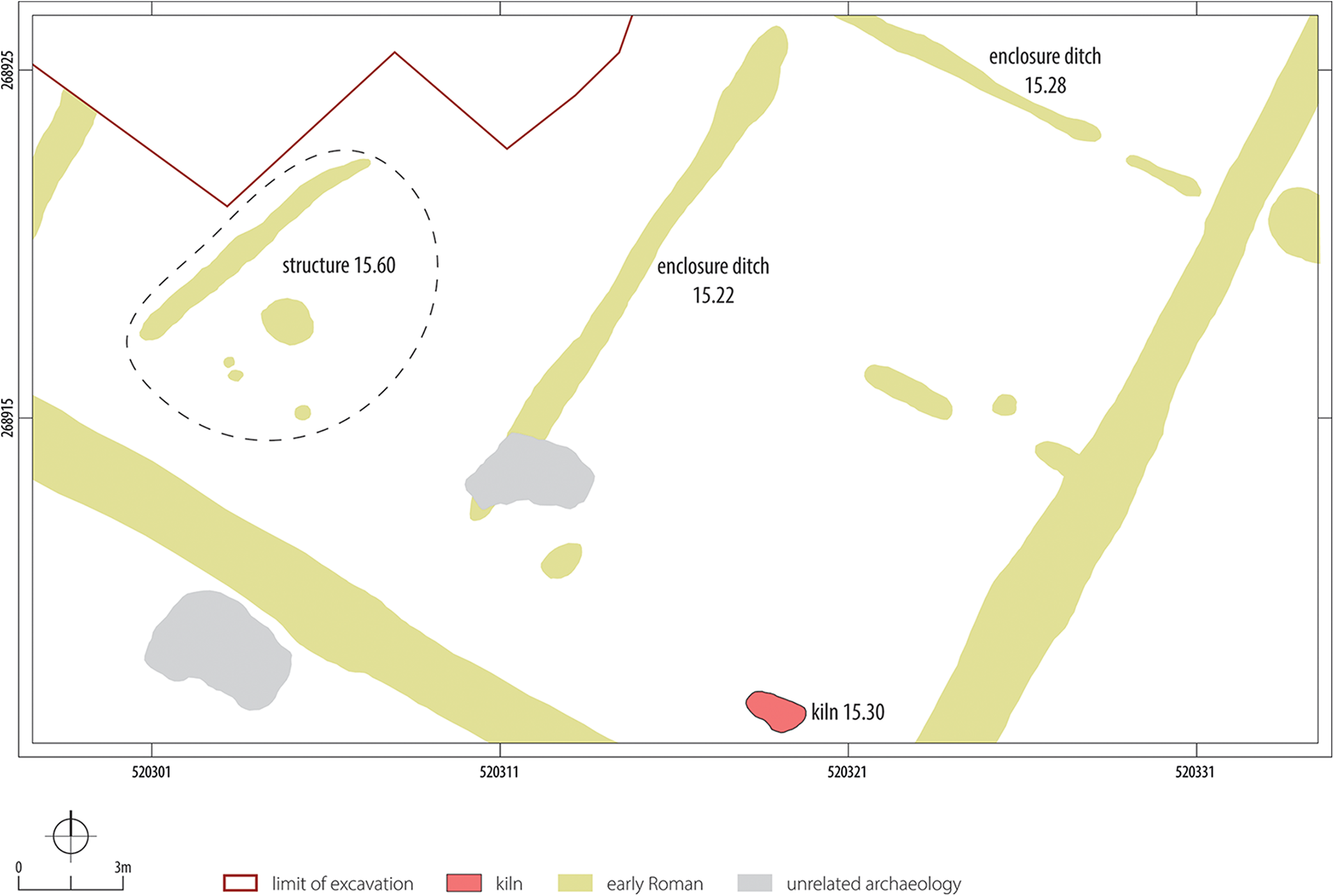
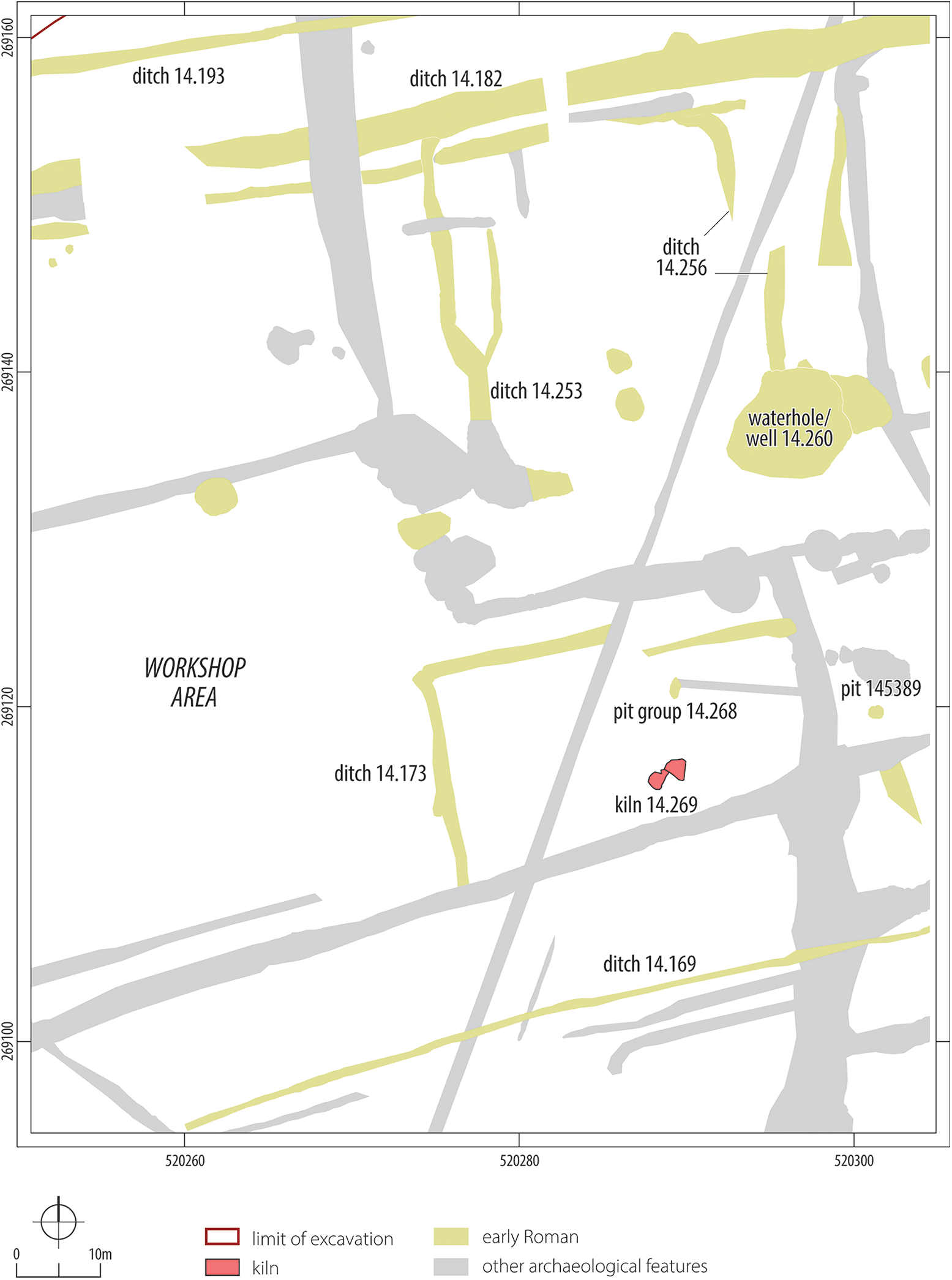
The TEA 14 and 15 Settlement 3 Group kilns (14.229, 14.269 and 15.30), found dispersed in the area between the TEA 16 and TEA 11 pottery sites, are distinctive in their isolation from other kilns, but closely associated with contemporary features which formed part of the wider agricultural landscape. Kiln 15.30 was found in the corner of a contemporary enclosure, with a possible structure (15.60) in the adjacent plot (Fig. 6). Kiln 14.269 was also situated within its own otherwise ‘empty’ enclosure, with further enclosures, linear boundaries, and a waterhole/well immediately to the north and field systems to the west (Fig. 7). In the latter case the kiln was situated within the putative ‘core’ of the wider settlement, highlighting the close relationship between pottery-making and rural occupation here.
Plan of Kiln 15.30 and environs, part of the TEA 14/15 Settlement 3 Group. (MOLA-Headland Infrastructure)

Plan of Kiln 14.269 and environs, part of the TEA 14/15 Settlement 3 Group. (MOLA-Headland Infrastructure)

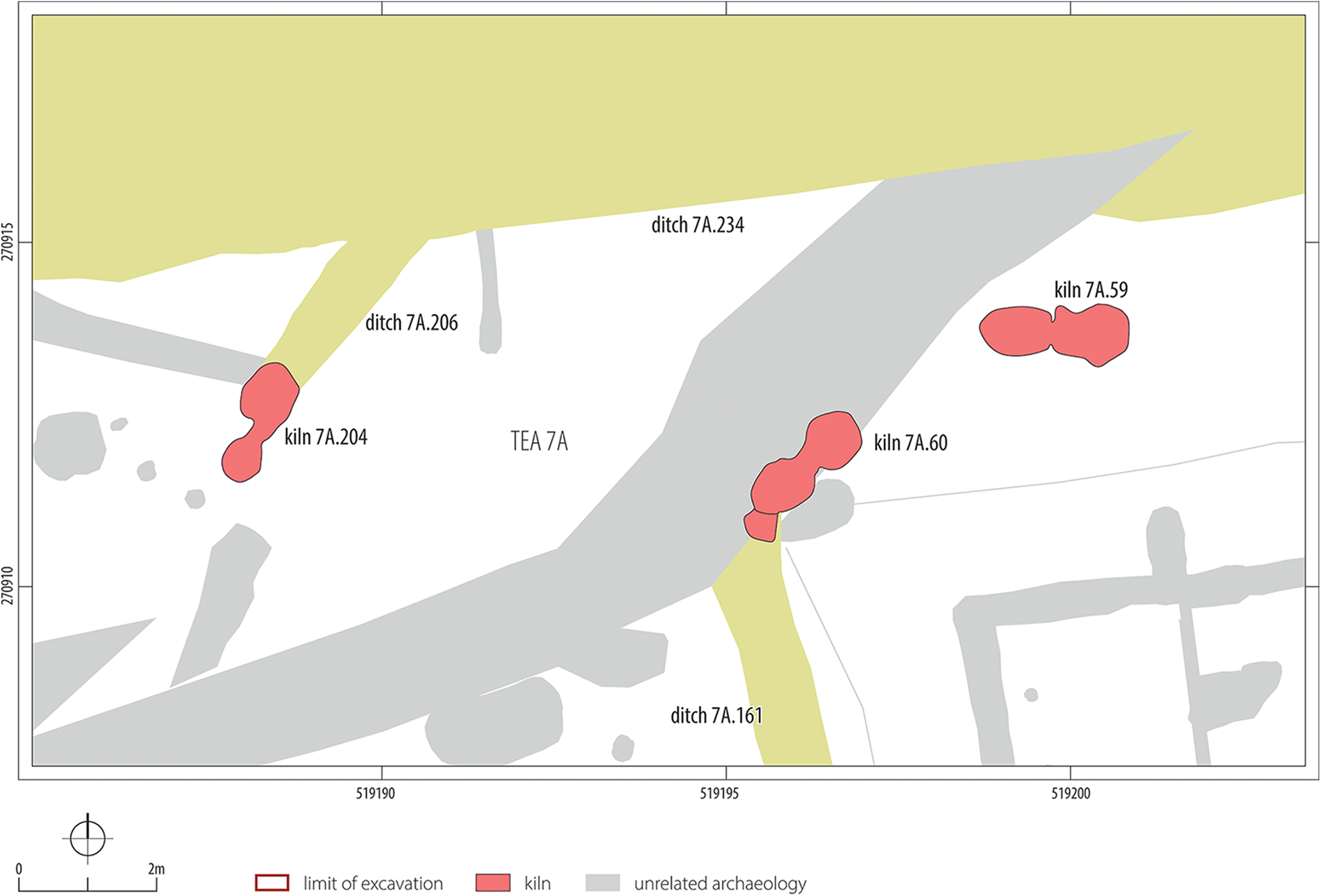
A similar situation may be apparent in the layout of the three kilns of the TEA 7A Northern Group, situated a short distance north of the TEA 7A/10 Enclosure Group. Here, kilns were sited close together within a set of rectilinear enclosures running alongside the southern ditch of a major trackway (Ditch 7A.234: Fig. 8). However, Kiln 7A.60 cuts one of the ditches associated with this complex, indicating that the kilns post-date at least some of the enclosure boundaries.
Plan of the TEA 7A Northern Group pottery site. (MOLA-Headland Infrastructure)

As can be seen, owing to the landscape scale of the archaeological interventions made on the A14 many of the Lower Ouse Valley potteries can be situated in their wider settlement contexts. The evidence suggests that the potteries took various forms, some being more highly organised than others. While some potters appear to have invested extensively in associated infrastructure such as workshops, drying sheds, and perhaps levigation architecture, and set up their premises on unoccupied land, others appear to have made do with small plots which were convenient in the wider layout of the landscape. The key distinction is arguably the land utilisation between the large, apparently infrastructure-heavy potteries on lands apparently turned over wholly to pottery making (which accounts for most of the pottery sites), and the plot-based potteries of pre-existing agricultural landscapes (as identified on TEAs 14 and 15). The large, new areas of potteries were sited well away from contemporary settlement cores and often involved setting up various structures and excavating land-divisions which appear likely to have been directly connected with craft activities. Multiple kilns were present on these larger sites, and as such multiple firings could have been run concurrently (though clearly this need not necessarily have been the case). The impression is therefore of substantial investment in the potting craft, and potentially of relatively intense production over the course of several years. The ‘plot-based’ kilns on TEAs 14 and 15, however, seem suggestive of small-scale craftworking closely physically associated with agricultural production and only undertaken over a short period of time (perhaps several years, until the kiln fell into disrepair).
While assigning these two distinct patterns of workshop organisation to the different production ‘modes’ as defined by PeacockFootnote 20 (both straddle the distinction between the ‘workshop’ and ‘nucleated workshop’ modes) is not particularly helpful, it seems fair to say that the distinction between these sites suggests that pottery-making was used to cater to different economic niches within the Lower Ouse Valley tradition. It seems likely that wider land-use dynamics and perhaps tenancy arrangements might have been operative in variously constraining or enabling potters’ choices, though different potters may equally have sought different benefits from their craft. Ethnographically, potters are rarely wealthy people, and it has been suggested that farmers might sometimes take up the potting craft in order to supplement their basic economic means during hard times.Footnote 21 It may be that the ‘small plot’ model evident on TEAs 14 and 15 is accounted for by farmers taking up the craft part-time in order to provide a separate source of income and thereby insulate themselves against economic hardship. Possibly these kilns were concerned with the individual and communal (including agricultural and other crafts requiring pottery vessels) needs of the immediate landscape. By contrast, the level of infrastructural investment at the larger potteries might have gone beyond these immediate needs to pursue more far-reaching economic opportunities.
Lower Ouse Valley ware
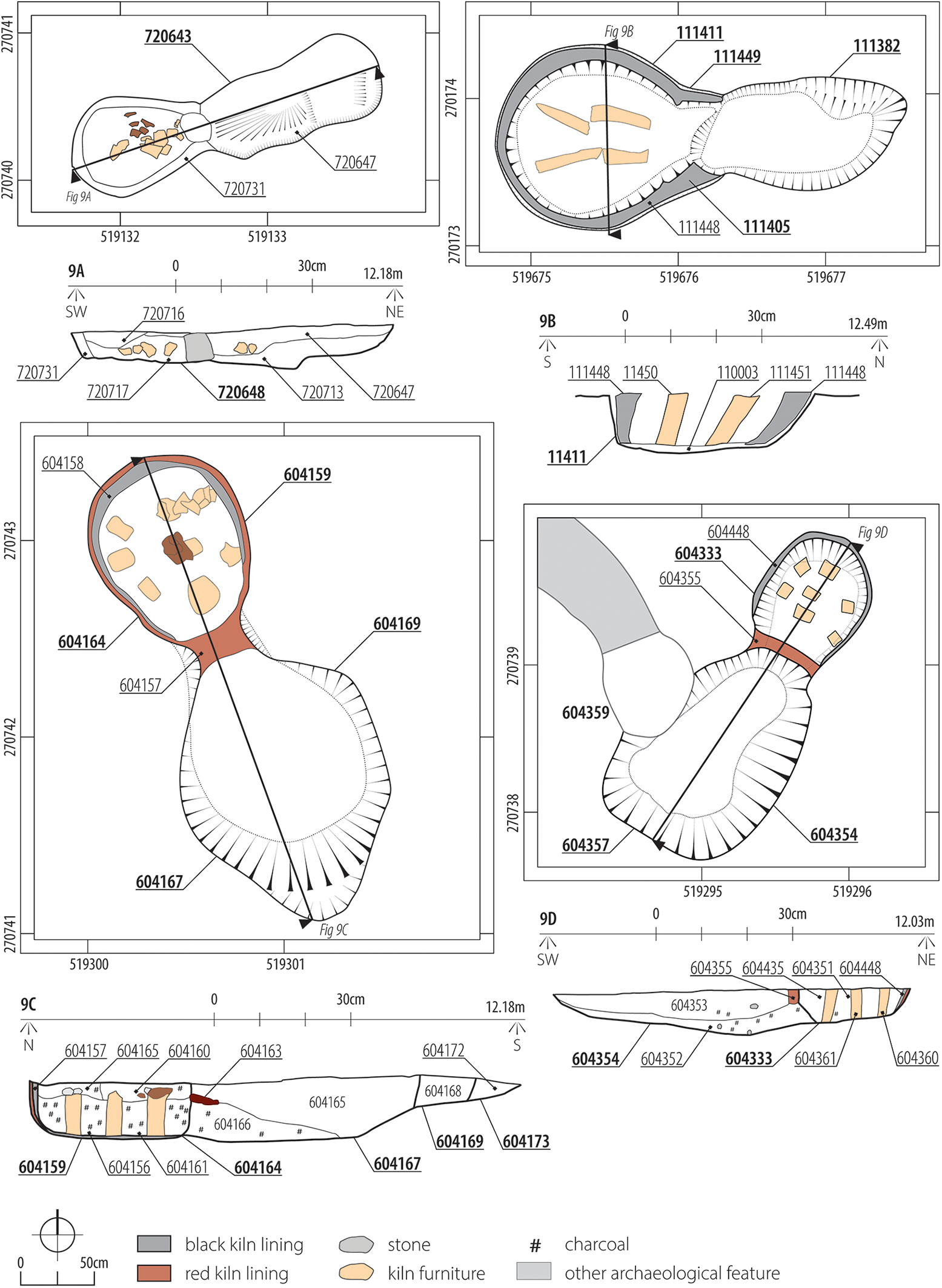
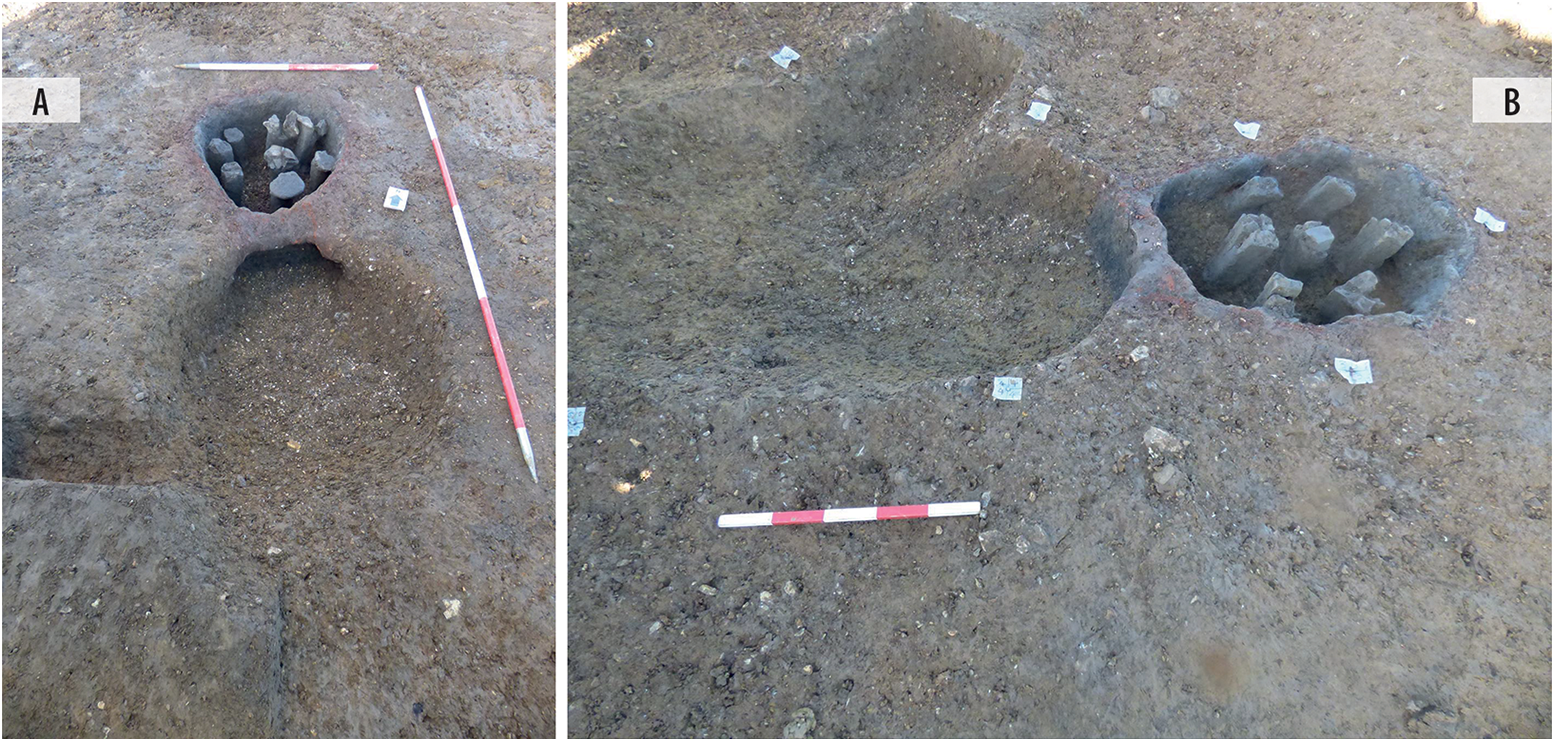
The available evidence suggests that Lower Ouse Valley kilns were broadly similar in structure and operation to classic early Romano-British pottery kilns. For the most part they are single-flued updraught kilns employing internal arrangements of portable kiln furniture to construct an elevated floor on which to stack the pottery load (Fig. 9). Some Lower Ouse Valley kilns were provided with integral pedestals facilitating a radial arrangement of kiln bars, but these were in a minority. Indeed, kiln bars were not common finds on the Lower Ouse Valley pottery sites, and where kilns produced in situ arrangements of kiln furniture these consisted of several closely spaced portable fired clay pedestals (Fig. 10). It may be that these arrangements were typical of these potters’ methods and provided a sufficiently stable floor on which to stack the pottery load, though it seems reasonable to suspect that the addition of kiln bars or other forms of prefabricated furniture might have produced a more stable floor. Finds of some fragmentary kiln bars, and the existence of an internal ledge around the interiors of some firing chambers, suggest that kiln bars were used, at least occasionally.
Illustrated examples of Lower Ouse Valley pottery kilns: (A) Kiln 7A.16; (B) Kiln 11.76; (C) Kiln10.64; (D) Kiln 10.65. (MOLA-Headland Infrastructure)

Post-excavation photographs of kilns 10.64 (A) and 10.65 (B), showing in situ arrangements of portable fired clay pedestals. (MOLA-Headland Infrastructure)

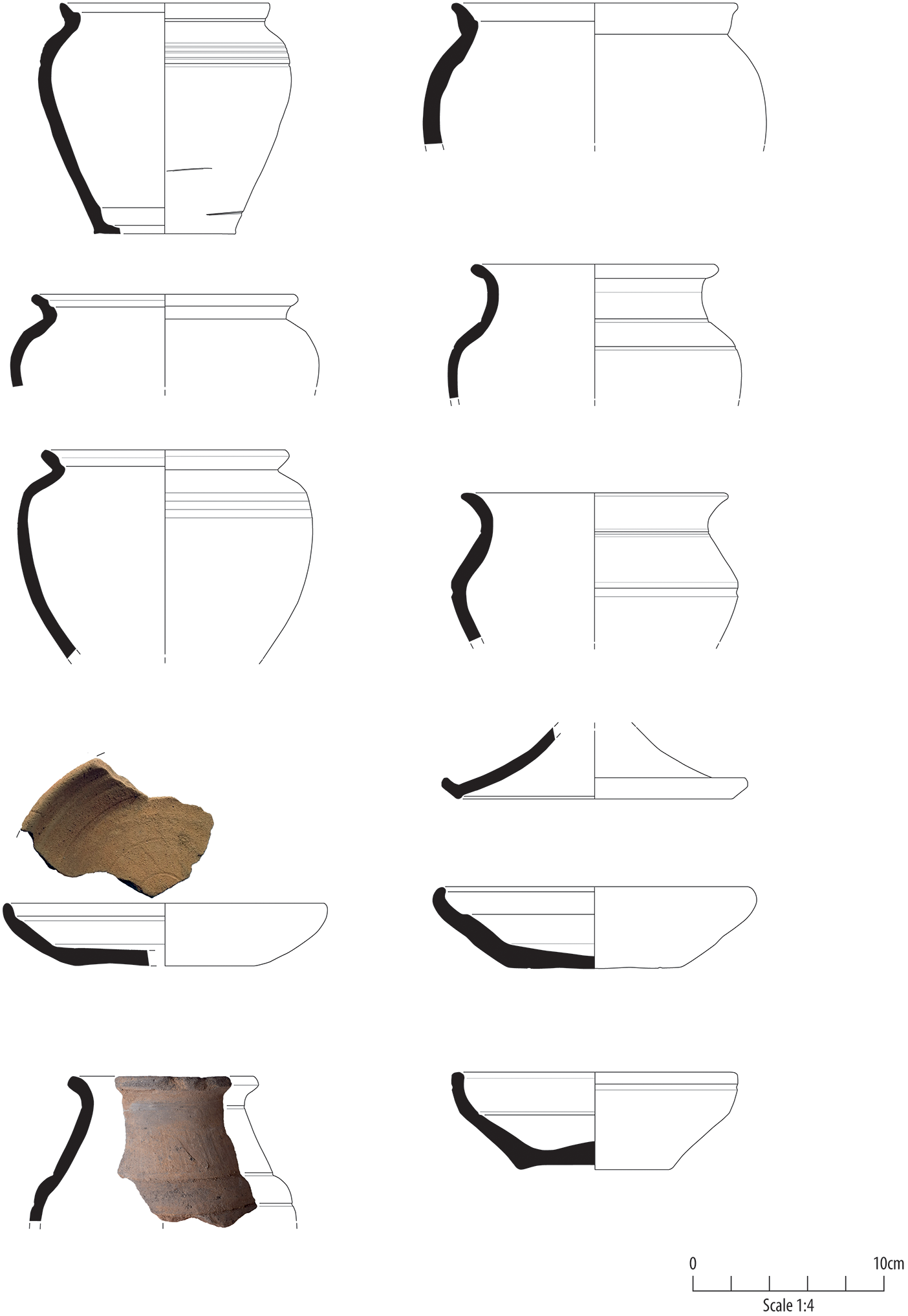
Lower Ouse Valley ware was predominantly made up of a greyware recently described with the code LOV GW.Footnote 22 Greyware is a ubiquitous component of early Roman ceramic assemblages regionally and across southern Britain and was a relative novelty at the time when the Lower Ouse Valley potteries were developing. Vessel forms made in LOV GW were mostly comprised of lid-seated ovoid jars, necked jars and small dishes based on Gallo-Belgic designs (Fig. 11). Rarer types included lids, butt beakers, carinated bowls, cheese presses and straight-walled dishes imitating BB1 originals. An oxidised ware (LOV OX) and a black ware (LOV BW) also produced in the Lower Ouse Valley kilns are macroscopically identical to LOV GW and were used to make a similar range of forms. Petrographic analysis suggests that these three fabrics are compositionally similar to one another, differing only in terms of their firing conditions. It appears likely that greyware was the primary intended product of the kilns, LOV OX and LOV BW being the result of experimentation and/or error. A grog-tempered ware (LOV GT) and a shelly ware (LOV SH) were rare products, accounting for small proportions of the waste pottery recovered.
Illustrations of a representative selection of Lower Ouse Valley pottery. (MOLA-Headland Infrastructure)

Petrographic analysis of Lower Ouse Valley wares suggests that different potteries utilised different clay sources, but that in all cases these sources are likely to have been immediately local.Footnote 23 Mineralogically, it was possible to divide the standard LOV GW/LOV OX/LOV BW ware into two broad categories, one characterised by calcareous inclusions (sandstone, limestone and clay pellets), the other by igneous or metamorphic inclusions (igneous rock fragments, feldspar, flint, mica and iron-rich clay pellets; diopside inclusions are present in a subset of the igneous/metamorphic sherds). In both cases these distinctive minerals were found alongside ubiquitous quartz sand, which is suggested to be natural to the clay rather than added as a deliberate ‘temper’. Both mineralogical groups can be easily provenanced in the local geological sequence. Igneous and metamorphic inclusions such as those identified can be found in the glacial tills of the Hemingford Member overlying much of the bedrock geology in the vicinity of the Lower Ouse Valley pottery sites, while the underlying Oxford Clay has been suggested as the source of calcareous potting clays. In some cases these clays could be seen in thin section to have been mixed together, showing that potters exploited various clay sources, potentially in order to create clay mixes deemed preferable in any given case. However, differences in the frequency of mineralogical fabric types between the pottery sites have been noted and suggest that potters working at each site may have preferred specific raw material sources, with this perhaps being dictated by the availability of convenient outcrops or established clay extraction pits. It therefore seems likely that clay will have been dug from near to each kiln site, though Levermore suggests that diverse fabrics in the RAF Brampton kilns hint that individual potters employed subtly different clay-preparation techniques, and sometimes fired their wares together.Footnote 24 These analyses also suggested that relatively elaborate clay-processing techniques were employed, including the mixing of clays to create materials with desired properties. Specifically, potters appear to have desired a sandy clay which was workable on the potter’s wheel. There may have been variable processes by which this was achieved, with some vessels from the TEA 11 Eastern Group pottery site producing evidence that clays were dried, crushed and levigated to remove inclusions prior to rehydration for use in potting.Footnote 25
This evidence may tie in with the presence of possible levigation architecture at this site (see above), indicating that more elaborate clay-preparation processes were being employed here than on the other pottery sites. Further, the addition of grog to some fabrics provides evidence for occasional employment of tempering.
Formalised learning and down-the-line transmission
The analysis conducted on Lower Ouse Valley pottery so far serves to highlight several important instances of technical variation within the chaîne opèratoire of this ware. In most cases there appears to have been a predominant method of achieving any given technical outcome. However, many instances exist of deviation away from these norms. These provide interesting diversity, minor in terms of the outward appearances and properties of the pottery but significant in terms of interpreting technical practice.
Pottery forming is a good example. Radiographic, petrographic and macroscopic optical observations have each independently shown that Lower Ouse Valley pots were variably produced using different techniques.Footnote 26 Wheel-throwing is well evidenced, as is the process of coil-building followed by finishing on the wheel (a process described as ‘wheel-coiling’).Footnote 27 Both techniques appear to have been used to create the full range of pots, suggesting that neither was specialised to the production of a given vessel category. Further, there is little obvious outward difference between pots which had been thrown and those which had been wheel-coiled. It therefore seems likely that the use of the potter’s wheel will essentially have been to create a specific aesthetic of regularity (wheel-coiled pots being essentially indistinguishable from wheel-thrown pots, from the perspective of the user), though it was also used in the selective creation of certain functional features, such as the delicate lid-seated rims which characterise most of the jars.
Pottery-forming techniques are good indicators of the sorts of intense, sustained interpersonal relationships which are required to learn complex motor skills. Such skills are difficult to impart casually or over a short period of time, and are resistant to change once learnt.Footnote 28 The apparent side-by-side existence of these techniques suggests that there may have been different social networks through which potters learned their skills. These may have involved distinct social networks of which individual craftspeople were part for extended periods of time, perhaps manifesting as families, kinship groups, or more formalised cooperative organisations (emergent collegia or their British equivalents?). The passing of knowledge between generations of craftspeople may have provided the background for the continued use of the wheel-coiling technique, which had been popular amongst preceding generations of Aylesford-Swarling potters.Footnote 29 Such intense forms of learning are a prerequisite to the acquisition of the sorts of high levels of skill as are evident in the production of much Romano-British pottery (including coarseware), and it has long been considered that the evidence of name-stamps found on wares such as samian and mortaria may in some cases provide evidence for the careers and familial associations of certain potters.Footnote 30 While a full review of the evidence for how various forms of Romano-British pottery-making apprenticeship may have worked (including consideration of the likelihood of working potters being enslaved people) is beyond the scope of this paper, the key point of significance here is that intense and potentially formalised apprenticeships will necessarily have been a part of small-scale potting such as that involved in the production of Lower Ouse Valley coarseware just as they were in the much more economically significant areas of, for instance, samian production.
Small worlds: creativity and distributed cognition
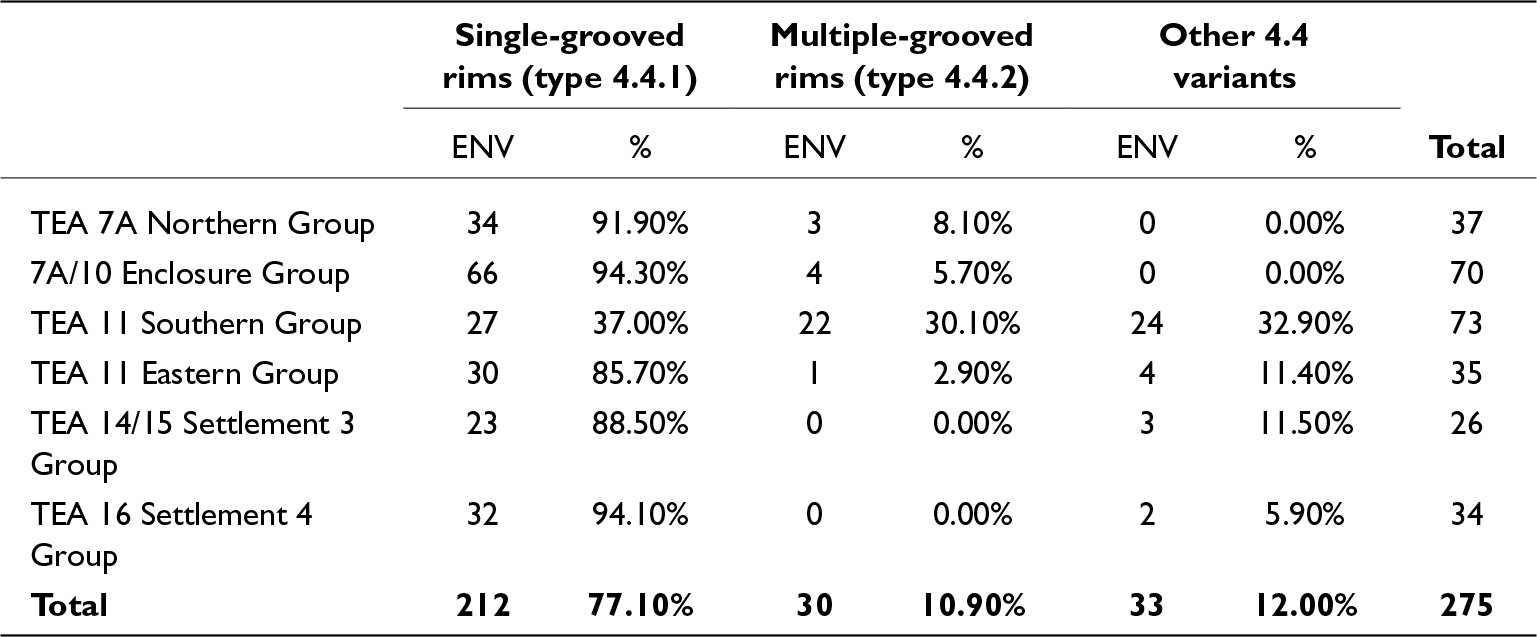
By contrast, post-forming finishing techniques tell stories of small-scale variation. Very small, ostensibly insignificant details are revealing in this regard. When considering operations such as the application of lid-seating grooves — so important in the production of the Lower Ouse Valley repertoire — variation at the level of the individual pottery site reveals further structure in the ways that technical knowledge was employed. Some lid-seated rims had been thrown to be triangular in section, with a small groove pressed into their upper surface. Others had evidently been rolled outwards as the pot turned, before a bold trough was impressed from above with a tool or template. Others had apparently been thrown into a cupped shape, a technique perhaps executed entirely by hand. Such traits are difficult to quantify without an extremely detailed typology such as is rarely employed in British pottery studies. However, one such trait was captured by the A14 pottery type-series: the distinction between jars with one lid-seating groove (type 4.4.1) and those with two or more grooves (type 4.4.2). Table 1 shows that while single-grooved vessels were the norm (among which much of the morphological variation mentioned above occurs), multiple grooves were found commonly among the kilns of the TEA 11 Southern Group and rarely elsewhere.
Representation of lid-seated jar rim types at the A14 pottery sites

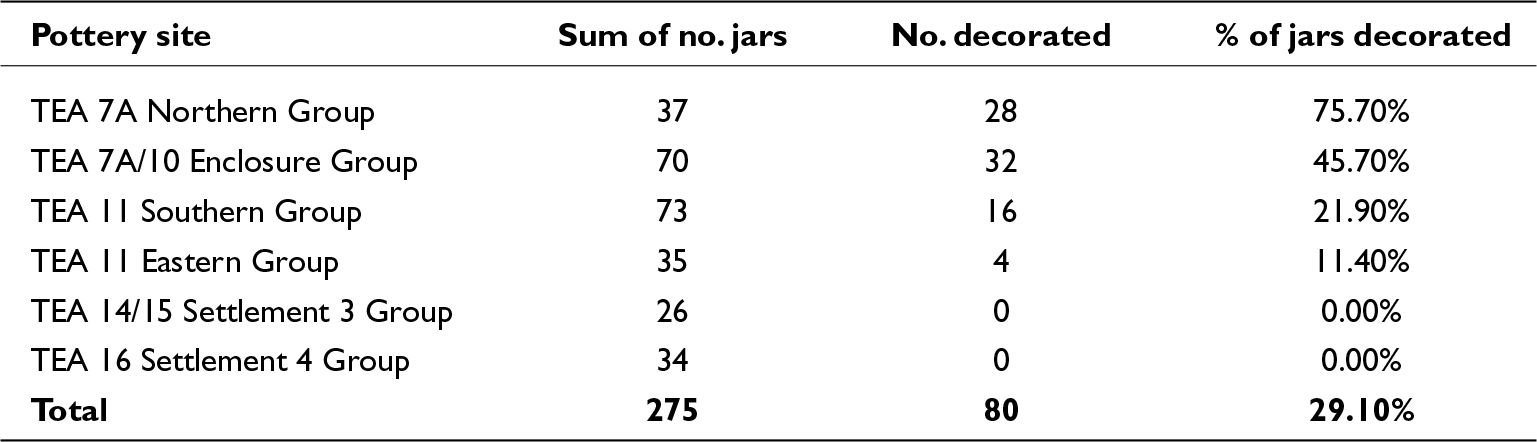
Decoration provides similar evidence of hyperlocal variation in technical practice. Pottery decoration was restricted to simple techniques, such as the application of basic geometric burnished motifs, or incising parallel lines onto the shoulders of jars as the pot turned on the wheel. Incised decoration of the latter type was found commonly on vessels associated with the TEA 7A Northern Group and TEA 7A/10 Enclosure Group, but rarely elsewhere (Table 2).
Representation of jars with shoulders decorated with combed or incised lines

It seems likely that these features reflect the practices or styles of small groups of craftspeople — potentially even individual potters — working at the various sites. Importantly, the techniques involved may have been sufficiently straightforward to be competently imitated following simple observation of a finished object, thereby implying weak or non-existent interpersonal relationships in their derivation. Effectively, certain techniques may have been evident from finished objects and thereby copied, while others might have been easily shared between potters who were physically close to one another as they worked.Footnote 31 These observations suggest the actions of small groups of potters on each pottery site, with particular stylistic ‘tricks’ possibly even assignable to individual craftspeople. In the case of the Lower Ouse Valley potteries, small numbers of, for instance, incised jars found on the TEA 7A/10 Enclosure Group and the TEA 11 Southern Group suggest that neighbouring potters were aware of each other’s tricks and may have occasionally partaken in them, evidencing very localised, if not necessarily substantial interactions between groups of potters. Neither form of variation has any obvious functional significance and it is thus difficult to read either as being of any perceived economic relevance. Similarly, neither is obviously of any observable significance as an identity marker, unless of course a feature like an incised shoulder was understood to mark the products of a given potter. This seems feasible but presents a difficult argument to make.
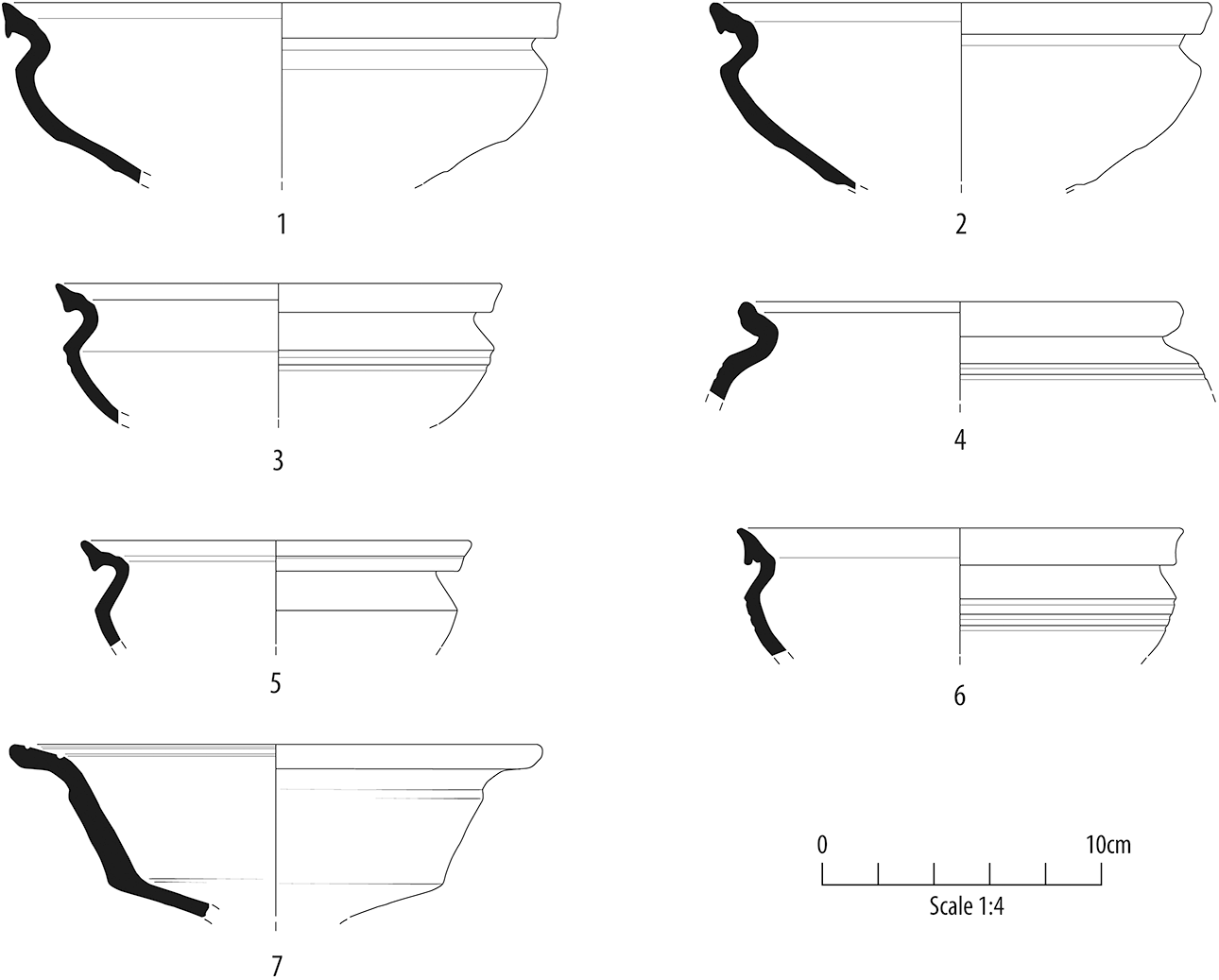
Rather, it seems conceivable that what has been captured here is a small set of ephemeral details that signify the sorts of basic everyday creative processes which Frieman warns are rare in the archaeological record.Footnote 32 While these instances are not of any obvious economic significance, there is evidence for creative processes which may have been. Form type 4.4.3 is a novelty, to the current authors’ knowledge not found anywhere other than at the A14 settlements. More precisely, this vessel type was found rarely other than in the fills of Kiln 11.26 on the TEA 11 Southern Enclosure Group site. In morphology, it is a shallow jar or bowl, carinated at the shoulder but with a slight belly, and an everted rim terminating in an angular collar (Fig. 12). Internally, the rims are lid-seated, and the shoulders of some examples bear incised decoration as found on some of the lid-seated jars. The type thus appears to be a modified rendering of the basic lid-seated jar type produced ubiquitously in the Lower Ouse Valley potteries. In type 4.4.3 the revised design appears to cater to a new intended function — as an open bowl rather than a closed jar. This all suggests that form 4.4.3 was the result of casual innovation on the part of a small group of potters (or an individual), intended to fill a gap in the existing repertoire. It may be that contemporary reed-rimmed carinated bowls acted as the inspiration for this new type (Fig. 12, no. 7), though the latter are not common types in contemporary assemblages locally, and based on this it may be that the form did not catch on owing to a lack of demand for it. In terms familiar from Biddulph’s study of the typological evolution of samian ware forms,Footnote 33 type 4.4.3 might be seen as a creative ‘mutation’, albeit one composed of ‘memetic’ material derived from the potter’s pre-existing repertoire and skills combined with external sources of inspiration and conditioned by wider socio-economic circumstances.
Illustrated examples of form 4.4.3 lid-seated jar/bowls (nos 1–6) and an example of a contemporary reed-rimmed bowl (no. 7). (MOLA-Headland Infrastructure)

Big ideas, long distances
While the sorts of small-scale variation discussed above provide intimate insights into the lived experiences of work and creativity within the Lower Ouse Valley potting tradition, there are also important examples of techniques which were evidently not confined to potters in this area, appearing at similar times in various locations across the wider region. The most obvious example is greyware pottery and the reduction firing techniques which were used to produce it. Greyware was a relative novelty in Flavian East Anglia, its Aylesford-Swarling predecessors having been fired in kilns but evidently not with the kind of atmospheric control which resulted in consistent reduction conditions. It is likely that in Roman greyware kilns a reduction atmosphere was created by plugging any vents in the kiln structure, including the entrance to the flue/firebox, while the kiln was at peak temperature in order to stifle the flow of oxygen into the firing chamber.Footnote 34 Several of the A14 kilns were found to have had large stones placed in the entrance to the flue/firebox, providing evidence for these processes here (Fig. 9A).
The emergence of Romano-British greyware is a topic which we have covered elsewhere.Footnote 35 It is sufficient to note here that greywares were commonly made and used at Colchester and London in the Claudio-Neronian period, but not in the wider region until the Flavian period.Footnote 36 This suggests that techniques involved in establishing reduction atmospheres were probably adopted from other areas of southern Britain around this time, rather than being developed locally, and the adoption of reduction firing techniques entangled, chicken-and-egg, with a change in consumption habits. A major economic shift may also have occurred in the Neronian/early Flavian period when a pottery-making tradition was developing in the Lower Ouse Valley, with the development of several major clusters of pottery-making sites occurring as part of this. If the identification of Horningsea ware in a small number of Flavian deposits is reliable, the innovation of reduction firing appears to have spread rapidly across Cambridgeshire as well as the Nene valley during this period.Footnote 37 It is tempting to consider this as part of much wider economic and administrative developments in the province.Footnote 38 While there is insufficient scope to consider this fully here, it is sufficient to note that numerous commentators have identified the Flavian period as a ‘watershed moment’ in the consumption of material culture in Britain, and that the widespread consumption of greyware seems to have been entangled with these dynamics.Footnote 39
The implication seems to be that some aspects of technical practice were able to be transmitted through extremely fluid regional social networks, and that these operated beyond the scale of the locally-agglomerated ‘industry’. Gosselain states that in operations such as pottery firing ‘the adoption of new techniques occurs infrequently, primarily when artisans relocate their homes or clay sources or both, or seek to produce a new type of pottery artifact [sic]. The distribution of these techniques should thus reflect local or regional networks of interaction’.Footnote 40 This broadly correlates with the observations made above for the emergence of greyware pottery among the practitioners of multiple craftworking districts in the Midlands and East Anglia.
From this it should also be clear that potters were involved in a variety of large-scale social networks. The speed with which reduction firing techniques took hold suggests that early Roman potters must have been remarkably good at building and maintaining connections with one another over substantial distances, as well as within localised communities. Alternatively, potters must have been highly mobile, though the evidence (presented below) for definable groupings of potters occupying specific enclaves within the physical landscape perhaps warns against the idea of itinerant craftspeople spreading ideas. Potters evidently found little difficulty communing across the boundaries of what we define as ‘industries’, proficiency in their craft likely providing a point of reference by which craftspeople of different origins could find common ground, exchange knowledge, and share an aspect of their identities. No doubt some found cause for competition, particularly if the development of pottery-making in some areas was a response to economic stress.Footnote 41 Importantly, though, it should be remembered that potters are never only potters — their identities will have always been multifaceted and may have involved roles as family members (parents, children, etc.); enslaved or free people; tenants or landowners; teachers or apprentices; and an infinite number of other affiliations, potentially also including with other occupations such as farming. Indeed, it is unclear whether early greyware potters such as those in the Lower Ouse Valley would even have regarded themselves as ‘potters’, in the sense of this being a profession. These other aspects of potters’ social lives may indeed have been more likely to prompt them to move large distances than their association with what was likely a part-time craft: intermarriage, apprenticeship, slave-tradingFootnote 42 and the pursuit of economic opportunity/solvency are all possible reasons for people who were also potters to have to move across the landscape and, potentially, to deploy their skills in a different social context to the one in which they developed them.
What’s in a name? ‘industries’ and ‘crafting districts’
During the assessment of the A14 pottery, the current authors (who were at the time assessing assemblages from different TEAs) remarked to each other how struck they were by the similarity of pottery coming from the kilns found in different parts of the scheme. Consisting of similar limited ranges of vessel types in closely similar fabrics, the pottery was near-identical stylistically and, on the face of it, technologically as well. Of course, it is not uncommon for technically and stylistically similar pottery to be found to have been produced at Romano-British sites close to one-another. Such ‘industrial agglomerations’Footnote 43 are well known in many areas, including examples producing basic coarsewares (e.g. in the Alice Holt forest or the Cam valley).Footnote 44 Indeed, the existence of such ‘industries’ contributes significantly towards the basic structure of Romano-British pottery studies, based as it is around the identification of what are effectively the products of different industrial agglomerations. What made this situation so different to the revealing of earlier-known ‘industries’ is that this one was largely discovered as part of a single piece of archaeological excavation, and identified by the same group of specialists who would go on to describe, interpret and publish it. There was no a priori assumption that we were dealing with the products of a new ‘industry’ and, along with the need to define and discuss this new group of pottery-making sites, this raised the inevitable question of what we mean by the term ‘industry’.
There is probably something to be gained by considering the use of this term in Roman pottery studies, though it is not our intention to do so at length here. Suffice it to say that, based on our experiences of defining greyware production in the Lower Ouse Valley, we have misgivings about the use of the term ‘industry’ in relation to localised clusters of pottery-making sites, or the producers of an archaeologically recognisable category of pottery. To us, the term ‘industry’ evokes ideas of industrial-scale production of much more modern type and does not accurately reflect the archaeological reality of sites such as those in the Lower Ouse Valley, where pottery-making appears to have been a small-scale craft entangled with rural society and the agricultural economy. We acknowledge that this may not be a universal perception, and this is not to say that some communities of Romano-British potters might not be better described as working on an ‘industrial’ scale: the potters working near early Roman Verulamium, for instance, were producing their wares on a substantially greater scale than any of the greyware potters in question, as were (obviously) the Gaulish samian potters. Such a term also does not easily accommodate the now-numerous examples of pottery-making sites which seem to be closely linked technologically and stylistically to others situated substantial distances away (the Verulamium potteries are also a good example of this). Further, some pottery-making sites also produce evidence of other industrial processes, such as the evidence for glass-working at Mancetter-Hartshill.Footnote 45 Such cross-craft links are important aspects of craft practice. Clearly it would not be appropriate to describe such processes as part of the Mancetter-Hartshill pottery industry, and yet they share the same space and landscape, as well as potentially resources, technologies and personnel. In these contexts, use of a common term to describe archaeologically defined sets of production sites regardless of their particularities does not help us to think through the significance of these often major differences.
As a primary point, based on the analysis reported in this paper so far it may seem unclear precisely how artefactual and technological variation allows us to perceive the collective Lower Ouse Valley pottery-making sites as a distinct entity among contemporary greyware producers. We have shown that important technological variations existed within the Lower Ouse Valley craft tradition which served to signify the existence of individuals and distinct social groups within it, and thereby to fragment the body of knowledge which we might outwardly assume that such a localised entity represents. There are also pan-regional features demonstrating the circulation of technical knowledge at broad scales and across sets of producers. Yet this intermediate and localised scale is precisely the level at which pottery studies have historically been structured, and archaeologically the relevance of localised patterns of production seems clear.
Based on all of this, we have consciously minimised our use of the term ‘industry’ throughout this paper. Nor do we employ related terms used for other forms of craft, such as ‘industrial agglomeration’,Footnote 46 a term alluded to above, which we consider are of equal convenience to us as archaeologists when dealing with certain, primarily economic, issues, but which do not fully express the past realities for which we believe there is evidence. Rather, we prefer the use of other terms which acknowledge the internal workings of craftworking communities and the distributed nature of technical practices. We argue below that an interplay of localised socio-economic and landscape factors was operative in the constitution of the collective Lower Ouse Valley potteries as distinctive among other groups of contemporary greyware producers, and on this basis it may be that these factors provide a starting point for more appropriate terminology. Recently popular terms such as ‘community of practice’ emphasise the social aspects of these interactions, but arguably equally fail to express the landscape context in which groups of practitioners found themselves, and with which they evidently interacted very extensively. Rather, we propose that a term such as ‘crafting district’ would express the role of the physical landscape in the constitution of these groupings, while also alluding to the population of these landscapes by groups of craftspeople who were networked with one another, their wider communities, and the natural and human-made landscape itself. We feel that this term also avoids necessarily expressing the existence of hard borders around craftworking communities, which are not in evidence in the current case-study. It may be that other terms better express more geographically distributed craft traditions or those occupying different socio-economic niches, and we leave it to the authors of studies of these to consider how best to express their workings.
Constituting crafting districts in the landscape
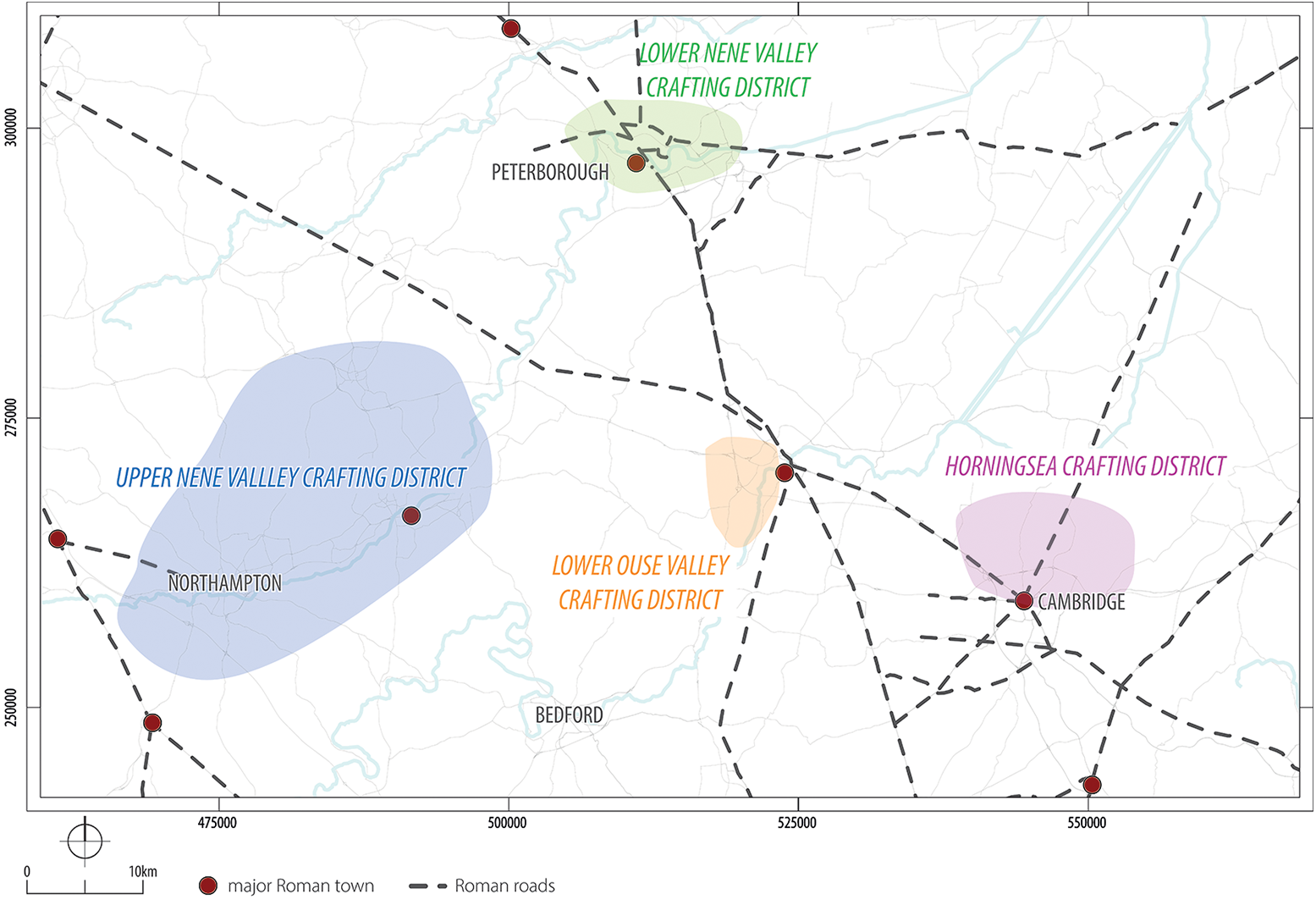
Perhaps the most logical starting point for an analysis of the geographical distribution of early greyware potters is to suggest that localised clusters of pottery-making sites simply reflect favourable geographical factors in some areas and not others. According to current understanding, Lower Ouse Valley ware was produced, as the name suggests, exclusively in the Lower Ouse Valley near modern Brampton. During the currency of Lower Ouse Valley production, groups living in the adjacent Cam valley c. 30 km to the east were beginning to produce typologically and technologically distinctive Horningsea greywares. The latter may have included a wide range of coarseware types, but predominantly the distinctive very large storage jar with internal combing: potentially a vessel with a specialised but hitherto unknown function. Between these two crafting districts, on the clay plateau bordering the fens, relatively little evidence of contemporary pottery-making has been identified. Similar can be said of the region to the north, where early iterations of Lower Nene Valley-type potting (including greyware production) were likely commencing in the area around modern Peterborough (also c. 30 km distant) around the point when the Lower Ouse Valley potteries were in decline. Again, aside from occasional evidence of small-scale production at e.g. Tort Hill West on the A1(M),Footnote 47 these patterns suggest that pottery-making communities in Roman Cambridgeshire were largely focused on the main river valleys (Fig. 13). Further west in the Northampton–Wellingborough region, potters in the Upper Nene Valley were also producing greyware from the early Flavian period onwards, comprising another emergent crafting district with its own distinct character, while early Roman pottery-making sites in Norfolk also appear to have been preferentially sited in river valleys.Footnote 48
Early Roman ‘crafting districts’ concerned with the production of pottery in the landscape of central England. (MOLA-Headland Infrastructure)

Close associations between early Roman pottery-making sites and major river valleys suggest that resource-led factors, such as the availability of raw materials (particularly water), were probably predominant in the decision to prefer certain places over others when setting up a pottery. Alice Lyons has also recently argued that in Norfolk early Roman potteries were established in major river valleys so as easily to utilise waterways as transport routes at a time before the road network was widely used, and this seems plausible.Footnote 49 Additionally, each of the Horningsea, Lower Ouse Valley, Upper and Lower Nene Valley traditions developed a short distance away from at least one developing or pre-existing population centre (Cambridge in the Cam Valley; Godmanchester in the Lower Ouse Valley; Durobrivae in the Lower Nene Valley; Duston and Irchester in the Upper Nene Valley). The proximity of population centres may conjure up the notion of the ‘consumer city’ at work here, i.e. the economic relationship between a larger settlement with a certain level of political power and its surrounding countryside. The nature of such a relationship is difficult to assess. A parasitic or exploitative model, where the city is almost wholly reliant on the countryside for its existence, has not been demonstrated for any of these small towns. A facilitative relationship, either through economic organisation, the provision of places of exchange and transformation of surplus into taxes, or asymmetric relationships between urban and rural populationsFootnote 50 is, again, difficult to demonstrate, but could have played a part in the siting of the pottery production areas. However, given the repeating pattern of the association between potteries and waterways, landscape factors appear to have been crucial in determining the location of many early Roman pottery-making sites regionally, perhaps more so than the locations of population-dense area or nodes in the road network.
However, while all the producers in question made similar greyware pottery, the distinctive nature of the Horningsea repertoire suggests that we should entertain the notion that practitioners in each crafting district dealt with specific and localised consumer needs. By ‘consumer’, we do not necessarily mean ‘those who gathered at market to purchase pots’, but rather the range of audiences who used the pottery in question, potentially including the potters themselves, their immediate kin, wider local communities (including those who may have had the opportunity to purchase pots in one way or another), and anyone among these groups or more widely who might have sought to use pottery in the storage or transport of other products of value. While the Upper Nene, Lower Ouse and Horningsea potters all appear to have produced a similar range of jars and dishes as parts of their repertoires, the distinctive Horningsea storage jar may have been a specialist vessel only required in the fen and fen-edge locations where Horningsea ware was distributed,Footnote 51 though its precise function and recipient audiences remain open to speculation. On a smaller scale, evidence for specialised production of certain forms at particular Lower Ouse Valley potteries is also suggestive of these processes, though these were not characteristic of the wider tradition here. The Horningsea repertoire may therefore have been weighted towards specialised demand, while the Lower Ouse Valley potters may have primarily been generalists, only occasionally catering to specific consumer needs.
Obviously, sociality will also have been a crucial underlying part of these patterns. Coordinated understanding of consumer needs within a given localised area signifies interaction between neighbouring potters as well as with nearby consumers. Similarly, crafts are not learned in social isolation, and so it is safe to assume that any evidence for unified decision-making (whether in the form of siting potteries close to certain raw material sources, or to make certain pot types for certain audiences) will have been part of a wider body of knowledge of which each individual potter in a craftworking community will have been a part.
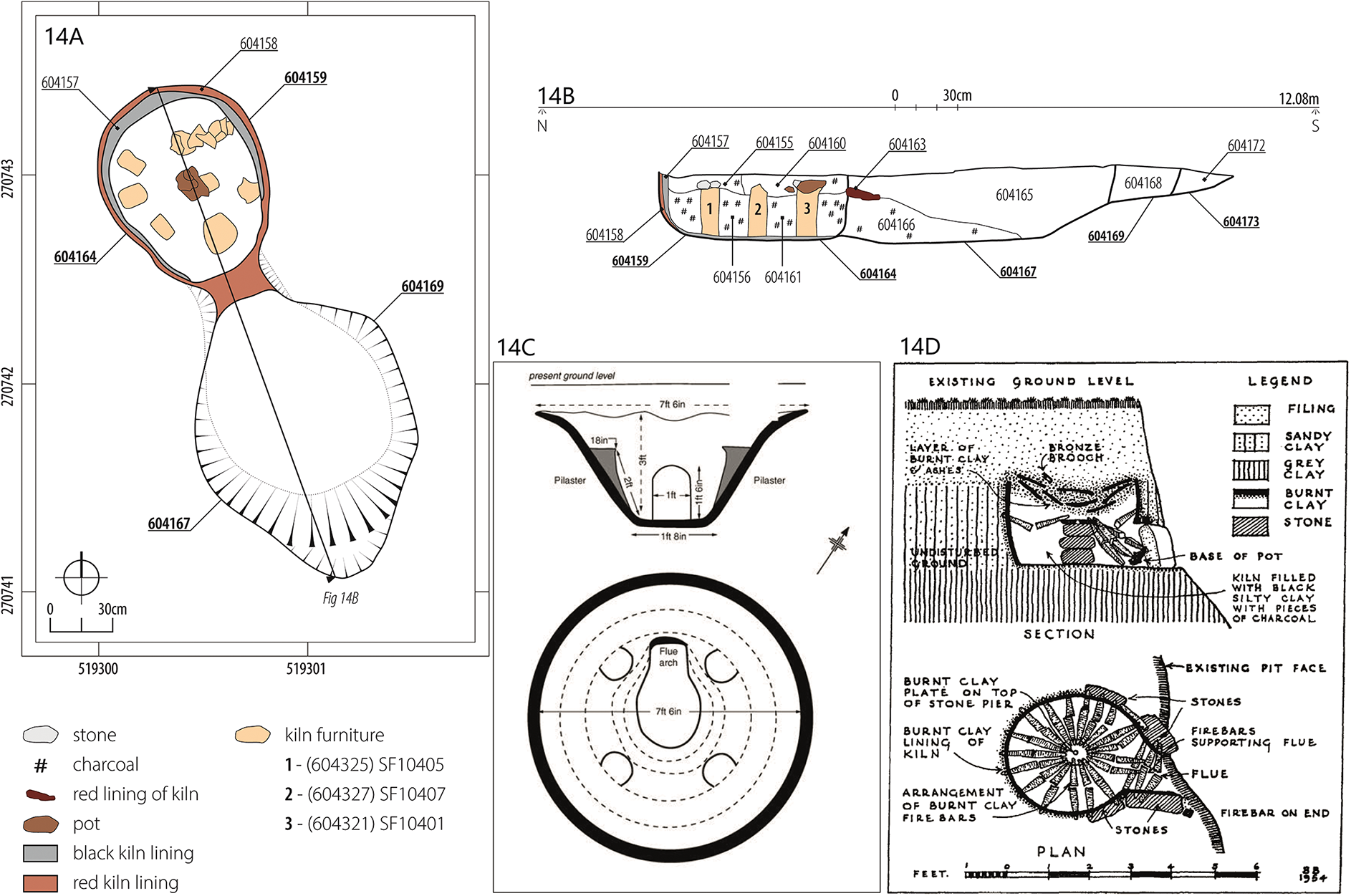
Perhaps the best direct evidence for the circulation of technical knowledge within these craftworking communities comes in the form of kiln design. While each crafting district has kilns with subtly varying design details, the evidence of coherent kiln designs within, but only occasionally between, crafting areas also demonstrates social connection between potters within a district. As described above, Lower Ouse Valley kilns can be characterised by their unusual reliance on numerous pedestals, potentially at the expense of the use of kiln bars, which are present but rare in assemblages of kiln furniture recovered from sites in the area (Figs 14A, 14B). In the Cam valley, Horningsea potters excavated bowl-shaped firing chambers, often with integral pilasters built out of the walls and sometimes with a single broad pedestal acting as the central prop for distinctively short kiln barsFootnote 52 (Fig. 14C). In the Upper Nene Valley, meanwhile, fired clay pedestals and long cigar-shaped kiln bars are the norm on both pottery-making sites and as stray finds.Footnote 53 Such bars are common on greyware production sites such as Brackmills and Ecton, while the Weston Favell kiln produced an in situ arrangement of bars around a central pedestalFootnote 54 (Fig. 14D). These long bars probably normally followed the template of the Weston Favell kiln, being arranged radially around a single portable or integral pedestal, either central on the firing chamber floor or extending from the back of it, to create an elevated floor, and this is a pattern of kiln design known much more widely across southern Britain. Frequently these kilns were lined, either partially or wholly, with prefabricated blocks made either of stone or of fired clay, while elsewhere the norm was to simply line a pit with a layer of wet clay which would be baked hard during the initial firing. The Ecton kilns were of distinctive pear shapes in plan and were constructed out of local ironstone blocks; one (Kiln 2) had an integral pedestal built out of the back wall of the firing chamber. The Ecton kilns were similar in form and construction to many Lower Nene Valley kilns, and it is not clear from the published report what the precise date of each of the Ecton kilns is proposed to have been: they may be late in the sequence of Upper Nene pottery-making sites.Footnote 55 In any case, based on finds of numerous cigar-shaped bars in their fills they appear to have relied extensively on kiln bar technology to construct elevated flooring. Based on radiocarbon and typological dating, the Brackmills kilns are certainly early in the lifespan of the Upper Nene Valley potteries, dating to the mid- to late first century a.d. The Brackmills kilns were probably contemporary with the earlier Lower Ouse Valley kilns and were of cruder construction than the Ecton examples: their firing chambers were round in plan and lined with either clay or prefabricated fired clay blocks, some of which bore sockets evidently designed to receive the ends of kiln bars, thereby differing again from the designs of Horningsea and Lower Ouse Valley kilns.
Typical examples of pottery kilns associated with the Lower Ouse Valley and contemporary greyware-producing craftworking districts: (14A and 14B) plan and section of a typical Lower Ouse Valley-type kiln with an elevated floor constructed of multiple portable pedestals (MOLA-Headland Infrastructure); (14C) plan and section of Kiln 5 from Eye Hall Farm, a typical Horningsea kiln (J. Evans et al. Reference Evans, Macaulay and Mills2017, fig. 3.2, after Walker Reference Wenger1912, © Oxford Archaeology Ltd); (14D) plan and section of the Weston Favell kiln, a well-preserved and typical Upper Nene Valley kiln with a central pedestal facilitating a radial arrangement of long, cigar-shaped kiln bars (Corder Reference Corder1957, fig. 9, © Royal Archaeological Institute, reprinted by permission of Taylor & Francis Ltd, https://www.tandfonline.com on behalf of Royal Archaeological Institute).

Clearly each region’s kilns are technically complex, and in no case does kiln design appear to have been strictly standardised; there is probably more to be gained from a more complete comparison of these features. Based on this cursory analysis it suffices to say that while the differences between the kilns of each greyware-producing district are of no obvious significance in terms of defining the capabilities of kilns of each type, they do serve to define localised groupings of kilns in more than simple locational terms. Specifically, certain ideas — particularly as regards the ways in which elevated floors were to be constructed — seem to have prevailed in one area and not the others.
Kiln design is therefore a sensitive gauge of the circulation of technical knowledge on local scales.Footnote 56 Unlike pottery itself, pottery kilns do not move. As such, at a time before records were being made of their construction and use it will have been difficult for craftspeople to pick up new understandings of the working of kilns without being physically present for their construction or for a firing. It therefore seems reasonable to suggest that kiln design was most significantly influenced by local social connections. While potters themselves may not have been aware of the wider significance of how they constructed a kiln, potters were most influenced by those from whom they learned their craft as well as craftspeople in their immediate neighbourhood, whom they probably knew and with whom they may have shared information. It may be in these most spatially anchored aspects of technical practice that the localised circulation of technical knowledge is best reflected in material culture.
Essentially, then, kiln-building was highly susceptible to ‘stylistic’ differences related to influences to which each kiln-building potter will have been exposed rather than specifically the technology of kiln operation. That such localised patterning existed seems to reveal — much like the hyperlocal variation observed in the crafting of lid-seated jar rims, discussed above — a pattern of predominantly localised circulation of stylistic traits, at least as far as these minor (and seemingly not commercially or functionally sensitive) details are concerned.
In the case of early greyware producers, economic variables may therefore be only part of the story. New potters arriving in an area may have been motivated or compelled to use kiln designs related to those in use locally so as to integrate themselves better with the local community,Footnote 57 and it may be that among potters unfamiliar with their new communities these technically insignificant details were particularly susceptible to such concessions. These examples illustrate the potential power of such localised practices as aspects of grouphood. They also provide background to how moving craftspeople may have been able to embed themselves in local communities and thereby gain the trust required to spread their own technical knowledge within these communities. The adoption of novelty may have been a negotiated process.
It may therefore have been that geographical, consumer-led and social-interactive factors largely dictated the extent of the Lower Ouse Valley and other contemporary craft traditions. The river valleys of southern Cambridgeshire and adjacent areas appear to have been host to vibrant communities of potters living short distances from one another (each of the known Lower Ouse Valley potteries was situated within 3 km of all of the others), between whom technical knowledge moved easily. In this context, the density of settlement in the Lower Ouse Valley may have played a part in facilitating social cohesion, providing a background in which technical knowledge was easy to come by and wherein skills were regularly displayed by people who were effectively neighbours. Meanwhile, it appears likely that a dearth of skilled practitioners (and therefore a lack of skills on display) in areas away from the main river valleys resulted in de facto landscape boundaries forming at the edges of the valleys. While appearing to be informal and highly permeable (particular irregular instances of technical innovation moving easily across them), it appears that these boundaries effectively define our crafting areas. It may have been that the 30 km or more distance between enclaves of potters — a distance perhaps walkable in a day, though this is a time likely shortened by the emerging road network — was simply too far for regular and intensive social interaction to occur. The transmission of some ideas, such as kiln design, may therefore have been constrained by these boundaries, limiting the movement of technical information owing to a lack of skilled craftspeople living outside the valleys through which complex craftworking information could be transmitted. Transient (though not necessarily itinerant) potters embedding themselves in new communities, and other forms of occasional long-distance social interaction, may have therefore played an important role in the long-distance movement of technical ideas.
Concluding thoughts
‘When, over much of this region, people could have effectively waved to their neighbours, there is no longer a de facto need to evoke modes of mobility — wandering smiths or migrant potters — to account for widely shared material culture traits.’Footnote 58
What does all this mean in the context of Evans et al.’s idea of ‘dense pasts’? The quote above makes the observation that, based on the density of Roman-period rural settlement, it should be expected that material cultural ideas would travel easily across the landscape. This analysis has identified multiple scales and formats via which technical ideas appear to have moved through and into the early Roman Lower Ouse Valley. Based on the distribution of ‘static’ technologies such as kiln designs, it appears likely that potters’ everyday spheres of experience were largely localised. It is curious that this appears to have been revealed through what is effectively an aspect of technical style, rather than a functional feature of kiln technology, as stylistic features can travel more easily between practitioners than complex technological practices can. We therefore take the evidence of geographical patterning of kiln design as good evidence of the predominantly localised spheres of experience that most coarseware potters will have known as, unlike the pots themselves, kilns do not move across the landscape. Many potters seem likely to have learned their skills from family members and/or immediate neighbours living short distances away. Their ideas of how to make pottery seem to have been rooted in these localised communities of practice, with surprisingly regular evidence for creativity taking place at the smallest scales (individuals or small groups). This includes instances in which creativity may have been of direct economic relevance, e.g. in designing novel vessel types to cater to changes in consumer needs. These creative processes suggest social interaction between producers and consumers, but in at least some cases creativity may equally have derived from potters’ experiences of their material-cultural environments.Footnote 59 Small-scale economic decision-making is also in evidence in the Lower Ouse Valley, with different forms and scales of pottery-making establishments apparently facilitating different economic strategies and the emergence of various technical styles.
The extent of technicians’ everyday social networks appears to have been dictated by practical factors, including the perceived appropriateness of river valleys as sites for potteries, and the simple distances between communities of potters living across the landscape. Despite the density and interconnectedness of the rural landscape of the period, technical knowledge was only able to move freely within discrete regions defined by geographical factors which enabled potters’ success. Based on the entangled socio-economic and landscape factors which appear to have been implicated in these enclaves, we have employed the term ‘crafting districts’ to express what may have been a situation particular to early Roman greyware-producing communities. Fewer potters practised outside of these crafting districts, the absence of skilled practitioners in some areas posing a barrier to the movement of technical knowledge through everyday channels of interaction. However, potting communities were evidently very open to interactions with outside craftspeople and to novel innovations when these were available, as evidenced by the speed with which innovations such as reduction firing took hold over large areas. Potters were thus evidently open to interactions with outsiders, though the embedding of newcomers into tight-knit local communities may have been a complex process in which the selective employment and adoption of technical behaviours was part of social integration.
It may therefore be too hasty to suggest, as Evans et al. do, that mobile craftspeople were not an important part of the spread of material-cultural ideas. The variable natures of techniques and stylistic features make each easier (or more difficult) to transmit between craftspeople through different means, with some being very difficult to impart without the physical movement of people. Crucially, this should not be taken as an argument in favour of the notion of ‘itinerant’ potters, i.e. wandering craftspeople regularly moving from place to place to make and sell ceramics. We strongly believe that the investment in infrastructure which is evident on several of the Lower Ouse Valley pottery sites indicates that these were fixed establishments turned over to seasonal craft activity. Further, if potters were itinerant, then the evidence for the localisation of technical practice presented here suggests that any given group of potters will have had a notional range of only a few square kilometres, and did not move between the major river valleys. On this basis we believe it more likely that potters were relatively static most of the time and were sufficiently well embedded within local communities that the archaeology mainly reflects localised forms of knowledge-sharing. Additionally, potteries appear to have been selected for their convenient access to raw materials and transport routes: their selection seems geared towards facilitating the movement of pottery away from the sites via rivers and trackways, rather than the positioning of the potters close to opportune markets.
Instead, we suggest that the processes by which techniques moved around the landscape were complex and ‘messy’. A wide variety of interactive processes variously involving family and kinship, producer–consumer relationships, localised grouphood and other forms of interpersonal bond all appear to have been in play in the production of Lower Ouse Valley ware, as well as connections between communities living far from one another. It seems likely that, at a point in the past when communities appear to have been rooted in specific areas, people will customarily have maintained relationships (expressed as kinship bonds, friendships, debts, patronage, obligations, etc.) over long distances and spans of time. These may have been important in facilitating knowledge of the wider world which it appears evident that local communities maintained. Intermarriage and slave-trading also seem near-certain to have been features of social life, while economic incentives may occasionally have prompted some to move from place to place. As members of wider communities, craftspeople will have been involved in these forms of sociality, and potters’ involvement in customary long-distance dynamics such as these might go some way to explaining how certain potting techniques were more mobile than others.
Indeed, if this were the case we might expect certain techniques to move between communities in ways that seem unrelated to economic activity, and this is arguably in evidence. For instance, while the innovations associated with reduction firing appear to have spread extremely easily between enclaves of potters living across East Anglia and the Midlands in the 60s or 70s a.d., the actual pottery made in each of these enclaves is only rarely found at sites in any of the others. For example, vanishingly small quantities of Horningsea and Upper Nene Valley wares were found at the A14 Brampton West settlements, situated in the Lower Ouse Valley, despite extensive occupation here during the early Roman period and the specialist’s familiarity with both categories of pottery.Footnote 60 This suggests that different forms of social connectivity were involved in the spread of technical knowledge as opposed to those involved in distributing and consuming pottery, and that these may have been the same as those which structured regular social interaction. In the latter case we may be seeing evidence for interactions between producers and consumers, while in the former we may be seeing the more nebulous movement of technical knowledge through various channels including those unrelated to potting. While acknowledging the imperfect nature of the evidence-base in acting as ‘proxy evidence’ for social interaction, confirming and further defining these links is potentially an extremely fertile avenue for research on the sociality of craftworking and rural community in the ancient world.
What also appears clear is that, despite a prevailing impression that major urban centres were the cosmopolitan hearts of Roman Britain, rural craftspeople in the Midlands and East Anglia were well networked and often engaged enthusiastically with novelty, making their own important contributions to Roman-period innovations. It is therefore interesting that local community appears to have remained an important feature of these dynamics, fitting well with recent ideas around ‘glocalisation’Footnote 61 and emphasising the oft-underplayed agencies of rural groups in the socioeconomic changes of the period. We also believe that the term ‘crafting district’, defined as it is in reference to the embedding of communities of practice in specific landscape contexts, facilitates integration with these wider theoretical themes.
Looking at this in aggregate, then, it should be clear that models of economic activity which are prefaced by reliance on the idea of ‘economic rationality’ — that is, that producers and consumers will, when all else is equal, act according to principles of rational logic, and that prevailing economic and material circumstances will have allowed them the necessarily objective perceptions of the world to do so— are missing a large part of the picture. The evidence presented in this paper shows that there was much more to economic interaction. A key implication of the evidence presented is that craftworking was tightly entangled with social interactions within densely interconnected landscapes. Sociality in these contexts appears to have been intense, forming a fundamental and inescapable part of how craftworking groups operated. Surely any action taken within these contexts must have been subject to relative, rather than absolute, rationalities, conditioned by the particulars of what was seen as appropriate, or by even by factors that were never questioned by actors. Such an idea runs counter to much of what has been written about the Romano-British economy to date and runs parallel to the evidence recently presented by Rippon for the ‘social embedding’ of aspects of pottery exchange.Footnote 62
This is not, of course, to argue for a situation of economic chaos. As has been shown, structure clearly existed to pattern the social interactions which formed the basis of decision-making within pottery production. Additionally, there is evidence for practicality and pragmatism within decision-making, e.g. in the predominant choice of riverine locations for the establishment of potteries. Rather, the challenge going forward is for us to integrate ideas of sociality better into our accounts of craftworking and economic activity. How can we go beyond the relatively simple idea of ‘social embeddedness’ to better approach the specifics of how social life and interactions with the material world affected the decision-making of producers, consumers, and all other economic actors?
Finally, it is worth reiterating that there are now numerous examples of crafting traditions and districts associated with the production of Romano-British pottery which are ripe for consideration as ‘socially networked’ entities. Clearly the examples discussed deal only with greyware: just one of many categories of ceramic produced and used in Roman Britain. Other potential case-studies, such as the Verulamium region and Lower Nene Valley districts — both of which have recently been found to have had ‘offshoots’ in areas distant from their eponymous heartlands — have already been mentioned above. Further examples exist, such as the production of Oxfordshire-type wares at the Harston Obelisk site near Cambridge.Footnote 63 What of other, potentially more distinct, wares, and their place in the ‘cognitive landscape’ of Roman Britain: for instance, south Midlands shelly wares, or Nar Valley oxidised wares, which stand out as technologically and typologically coherent? Some areas are characterised by heterogenous ceramic production traditions, such as in what Biddulph calls the ‘Thameside ceramic zone’.Footnote 64 And what of the movement of complex (and largely short-lived) ceramic technologies, such as British samian ware and the numerous instances of small-scale glazed ware production? How did all of this result in the emergence of several massive agglomerations of potters in the late Roman period (in the Lower Nene Valley, Oxfordshire, the New Forest, etc.), and what do these behemoths tell us about the social configuration of crafts in late Roman society? All of these examples provide the chance to investigate new avenues, including exploring different patterns of social connectivity, and the dynamic agencies of potters making their livings through the particular socio-economic structures of Roman Britain.