Introduction
Herbal plants and their products have gained great popularity and their importance is being realised throughout the world (Dhama et al., Reference DHAMA, KARTHIK, KHANDIA, MUNJAL, TIWARI, RANA, KHURANA, ULLAH, KHAN, ALAGAWANY, FARAG, DADAR and JOSHI2018; Shu et al., Reference SHU, HE, SHAHEN, GUO, SHU, WU, BIAN, SHAR, FARAG, ALAGAWANY and LIU2018). Increasing interest in these plants is due to their properties which can benefit the quality of final products from poultry, such as carcass and meat quality (Abdelnour et al., Reference ABDELNOUR, ALAGAWANY, EL-HACK, SHEIHA, SAADELDIN and SWELUM2018; Alagawany et al., Reference ALAGAWANY, ABD EL-HACK, FARAG, ELNESR, EL-KHOLY, SAADELDIN and SWELUM2018a; Reference ALAGAWANY, ABD EL-HACK, FARAG, SHAHEEN, ABDEL-LATIF, NORELDIN and PATRA2018b; Saeed et al., Reference SAEED, ARAIN, NAVEED, ALAGAWANY, ABD EL-HACK, BHUTTO, BEDNARCZYK, KAKAR, ABDEL-LATIF and CHAO2018; Velmurugan et al., Reference VELMURUGAN, KALPANA, CHO and LEE2018). This article focusses on liquorice (Glycyrrhiza glabra), which is a plant belonging to the Fabaceae (legume family). It has been used in traditional medicine for more than 4,000 years (Shebl et al., Reference SHEBL, AMIN, EMAD-ELDIN, BIN DAJEM, MOSTAFA, IBRAHIM and MOHAMED2012). Liquorice has been reported to have immunomodulatory, anti-helicobacter, antimicrobial, antioxidative, anti-atherosclerotic, antifungal, anti-inflammatory, oestrogen-like, antiviral, antinephritic, anti-infective and radical scavenging activities (Mukhopadhyay and Panja, Reference MUKHOPADHYAY and PANJA2008).
According to phytochemical analysis, the major components of liquorice extract consist of flavonoids (e.g., liquiritin, formononetin and isoflavonoids), triterpene saponins (glycyrrhetinic acid, glycyrrhizin and licorice acid), starch, sugars, amino acids, tannins, ascorbic acid, choline, phytosterols, coumarins and certain other bitter compounds (Shalaby et al., Reference SHALABY, IBRAHIM, MAHMOUD and MAHMOUD2004). Several pharmacological impacts have been reported for liquorice and its extracted active principles in livestock (Račková et al., Reference RAČKOVÁ, JANČINOVÁ, PETRÍKOVÁ, DRÁBIKOVÁ, NOSÁL, ŠTEFEK, KOŠŤÁLOVÁ, PRÓNAYOVÁ and KOVÁČOVÁ2007; Suchitra and Shakunthala, Reference SUCHITRA and SHAKUNTHALA2014; Parvaiz et al., Reference PARVAIZ, HUSSAIN, KHALID, HUSSNAIN, IRAM, HUSSAIN and ALI2014). Therefore, liquorice and its biologically active constituents represent various opportunities for the enhancement of poultry production through inclusion in the diet.
This review describes the chemical composition, health benefits and beneficial applications of liquorice herb and its effect on growth and productive performance, carcass and meat quality. This will allow a safe assessment and a new vision for further research on liquorice benefits in poultry nutrition.
Chemical composition and structure
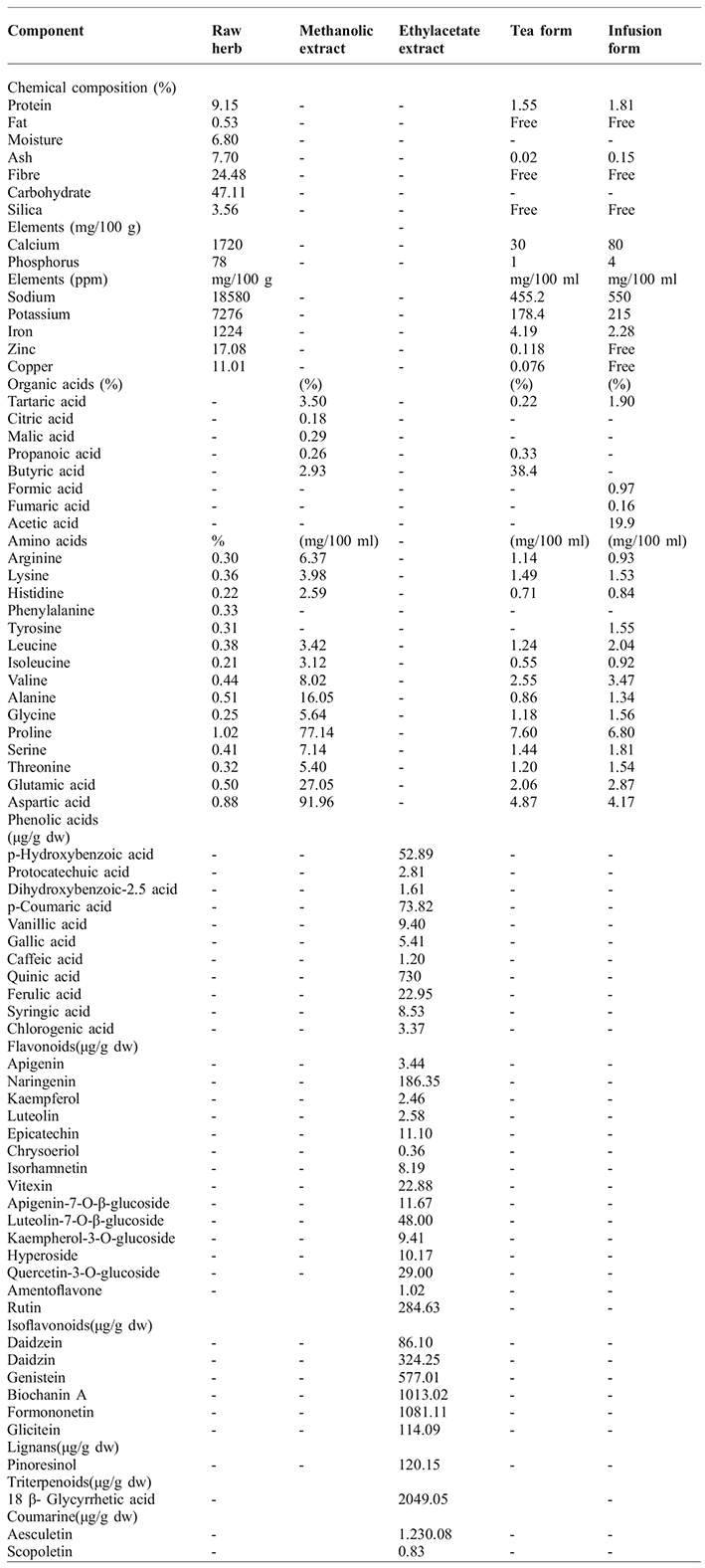
The chemical composition, minerals, organic acid, and amino acid profile of raw, methanolic extract, tea and infusion forms of liquorice is summarised in Table 1.
The results obtained by Badr et al. (Reference BADR, SAKR, MAHFOUZ and ABDELFATTAH2013) and showed that raw liquorice is rich in carbohydrate, protein, fibre and silica and low in fat. Ash and moisture content of the liquorice root were 7.7% and 6.8%, respectively. From the data in Table 1, proline was found to be the major amino acid in the raw herb, infusion form, and liquorice tea, with levels of 1.02%, 6.80 mg, and 7.60 mg/100 ml, respectively. The major amino acids in the methanolic extract of liquorice were aspartic acid followed by proline and glutamic acid. These data are in agreement with the results obtained by Fenwick et al. (Reference FENWICK, LUTOMSKI and NIEMAN1990).
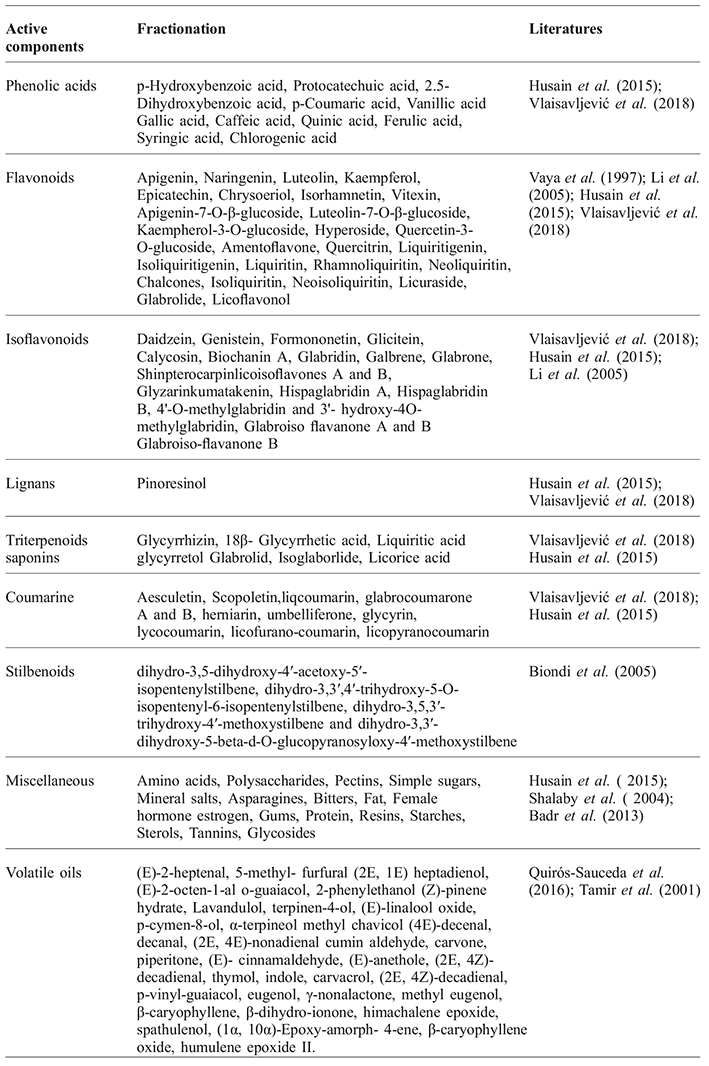
Liquorice root is widely used in preparing many pharmaceutical preparations. According to phytochemical analysis, it contains saponin triterpenes (glycyrrhizin and liquirtic acid), flavonoids (formononetin, isoflavonoids and liquiritin) and other components, like coumarins, sugars, starch, amino acids, phytosterols, tannins, choline and vitamins including ascorbic acid (Shalaby et al., Reference SHALABY, IBRAHIM, MAHMOUD and MAHMOUD2004). The roots of licorice contain 1-9% glycyrrhizin (Fiore et al., Reference FIORE, EISENHUT, KRAUSSE, RAGAZZI, PELLATI, ARMANINI and BIELENBERG2008), and Sohail et al. (Reference SOHAIL, RAKHA, BUTT and ASGHAR2018) found that glycyrrhizin represents about 10-25% of the root extract. Glycyrrhizin consists of glycyrrhetinic acid and glucuronic acid (Mao et al., Reference MAO, HOU, HE, ZHANG, WEI, BI and JIN2005). Liquorice root is yellow because of its flavonoid components; glabridin and hispaglabridins (Shabani et al., Reference SHABANI, EHSANPOUR, ASGHARI and EMAMI2009). In addition, the dried aqueous extracts of licorice contain 4-25% glycyrrhizinic acid (EFFA, 2001). The licorice herb is rich in flavonoids including syringic, 2,5-dihydroxy benzoic, trans ferulic, salicylic and abscisic acids (Shen et al., Reference SHEN, ZENG, SUN, CAI, BI and TANG2015; Erdoğan et al., Reference ERDOĞAN, ERDOĞAN, DOĞANLAR, DOĞANLAR and CANOĞULLARI2016). The main bioactive molecules of licorice are isoliquiritigenin, liquiritin, glycyrrhetinic acid and liquiritigenin (Asl and Hosseinzadeh, Reference ASL and HOSSEINZADEH2008; Ohno et al., Reference OHNO, ARAHO, UESAWA, KAGAYA, ISHIHARA, SAKAGAMI and YAMAMOTO2013). An example of the bioactive molecules extracted from licorice herb are summarised in Table 2.
Chemical composition, minerals, organic acid, amino acid profile and bioactive components of various liquorice forms1.

1Adopted by Badr et al. (Reference BADR, SAKR, MAHFOUZ and ABDELFATTAH2013) and Vlaisavljević et al. (Reference VLAISAVLJEVIĆ, ŠIBUL, IZABELLA, ZUPKOB, OCSOVSZKI and JOVANOVIĆ-ŠANTA2018).
Bioactive molecules extracted from the liquorice herb.

Effect of licorice on growth and productive performance
Terpenoids may improve productive performance and general health of poultry. Sedghi et al. (Reference SEDGHI, GOLIAN, KERMANSHAHI and AHMADI2010) stated that dietary licorice supplementation for broiler chickens did not have any harmful effects on body weight (BW). However, licorice flavonoids decreased BW through its fat reducing effects in the body (Armanini et al., Reference ARMANINI, PALO, MATTARELLO, SPINELLA, ZACCARIA, ERMOLAO, PALERMO, FIORE, SARTORATO, FRANCINI PESENTI and KARBOWIAK2003; Tominaga et al., Reference TOMINAGA, TATSUMASA, MITSUAKI, YOSHIRO, HIDEYUKI and NAKAGAWA2006). Previous studies reported that fatty acid (FA) oxidation enhancement and biosynthesis reduction are potential mechanisms for abdominal fat (AF) reduction and lower BW gain (Nakagawa et al., Reference NAKAGAWA, KISHIDA, ARAI, NISHIYAMA and MAE2004; Aoki et al., Reference AOKI, HONDA, KISHIDA, KITANO, ARAI, TANAKA, YOKATO and NAKAGAWA2007). Moreover, the development of organs is enhanced by the glycyrrhizin polysaccharide supplementation in the feed (Wang et al., Reference WANG, ZHANG, LIU, DONG, WANG, WANG, SHI and ZHANG2004). Inclusion of licorice in drinking water led to the greatest BW gain (Salary et al., Reference SALARY, KALANTAR, SAHEBI ALA, RANJBAR and HEMATI MATIN2014). Hosseini et al. (Reference HOSSEINI, GODARZI, ZAREI, MEIMANDIPOOR and SAFAEI2011) pointed that dietary licorice supplementation at level of 2.5 g/kg exhibited the best results of broiler chicken, and reported that licorice can be safely used in poultry diets. Lashin et al. (Reference LASHIN, IBORAHEM, OLA, TALKHAN and MOHAMED2017) clarified that the mortality rate of the chicks subjected to heat stress in a trial was 78%, however when the same chicks were provided by licorice extract at 1, 2 and 4 mg/kg body weight, mortality rates were reduced to 36%, 18% and 8%, respectively. Besides, addition of licorice up to 0.5% in diets before the sexual maturity enhanced the productive performance of laying hens (Awadein et al., Reference AWADEIN, EID and EL-GHANY2010). Ocampo et al. (Reference OCAMPO, GÓMEZ-VERDUZCO, TAPIA-PEREZ, GUTIERREZ and SUMANO2016) indicated that broiler chickens treated with glycyrrhizic acid had better body weight gain (BWG), final BW and lower mortality compared with the non-treated broiler chickens. Thus, they stated that the use of glycyrrhizic acid in the drinking water can be recommended to improve both animal health and production. Lashin et al. (Reference LASHIN, IBORAHEM, OLA, TALKHAN and MOHAMED2017) reported that BW improved with increasing licorice levels, whereby the unsupplemented control birds had the lowest BW. This may be due to chemical components in licorice, which act as immunomodulators and maintain the correct gastrointestinal status. Additionally, licorice root is beneficial due to the anti-viral properties of glycyrrhizin which have a protective influence against infectious bronchitis viruses in broiler chickens (Castanon, Reference CASTANON2007). Al-Zuhairy and Hashim (Reference AL-ZUHAIRY and HASHIM2014) similarly reported that inclusion of licorice in broiler diet improved the productive performance. However, not all feeding trials have been positive. Dietary supplementation of licorice significantly (P<0.05) decreased the BWG up to 42 days of age, according to the data produced by Kalantar et al. (Reference KALANTAR, HOSSEINI, YANG, RAZA, GUI, REZAIE, KHOJASTEKEY, WEI, KHAN, YASAR, SYED, KACHIWAL, ELKHAIREY, LEI, KALERI and ABD EL-AZIZ2017). Other studies showed no significant effects of licorice on BW and BWG, such as the study of Naser et al. (Reference NASER, SHAHAB and MAHMOOD2017) who illustrated that BW did not significantly differ between the control and licorice-treated groups of birds. No differences in BWG were observed when using different levels of licorice (0.1, 0.2, and 0.3%) in drinking water of broiler chickens (Khamisabadi et al., Reference KHAMISABADI, POURHESABI, CHAHARAEIN and NASERI2015), and Moradi et al. (Reference MORADI, GHAZI, AMJADIAN, KHAMISABADI and HABIBIAN2014) illustrated that there was no significant difference in BW among the birds received licorice in the diets or birds fed the unsupplemented control diet.
Al-Daraji (Reference AL-DARAJI2013) showed that Fawbro broiler chicks received drinking water with 450 mg/l licorice when reared under heat stress conditions significantly improved live BW, BWG, liveability and productive index compared with a control group. They attributed this improvement to properties similar to adrenocorticotropic hormone (ACTH) and corticosterone hormones, and hence its role in augmentation of resistance to stress (Shibata, Reference SHIBATA2000). In older studies, glycyrrhizic acid produced a similar mineral-corticoid influence on reversing stress related hypotension (Kageyama et al., Reference KAGEYAMA, SUZUKI and SARUTA1994). It induced the functions of the adrenal gland and supported the body against stress (Kato et al., Reference KATO, KANEKA and YANO1995). Additionally, Bernardi et al. (Reference BERNARDI, D'LNTINO and TREVISANI1994) stated that glycyrrhizin present in licorice root is 50 times sweeter than sucrose, which leads to the production of hydrocortisone hormone, and hence anti-inflammatory and anti-stress activities. These beneficial impacts of licorice could be associated with its role in improving the metabolism and the immune response under stress conditions.
Effect of licorice on feed efficiency and digestion
The use of functional plant extracts in poultry sector has increased due to their benefits on digestion and appetite enhancement, as well as various physiological functions which mitigate health problems and improve performance (Frankič et al., Reference FRANKIČ, VOLJČ, SALOBIR and REZAR2009). The addition of liquorice in poultry diets may improve performance via decreasing numbers of harmful microorganisms in the digestive tract of poultry (Khamisabadi et al., Reference KHAMISABADI, POURHESABI, CHAHARAEIN and NASERI2015). Karimi et al. (Reference KARIMI, RAHIMI and KARIMI TORSHIZI2015) reported that medicinal plants including Glycyrrhiza glabra can be successfully used in poultry diets as antibiotic alternatives. In areas where the plant is readily available, it may be economically beneficial in poultry diets. Sedghi et al. (Reference SEDGHI, GOLIAN, KERMANSHAHI and AHMADI2010) stated that dietary licorice supplementation of broiler chickens have no harmful effects on feed conversion ratio (FCR). Al-Daraji (Reference AL-DARAJI2013) illustrated that Fawbro broiler chicks received drinking water with 450 mg/l licorice under heat stress significantly improved FCR and economic efficiency compared with the control group. Ocampo et al. (Reference OCAMPO, GÓMEZ-VERDUZCO, TAPIA-PEREZ, GUTIERREZ and SUMANO2016) indicated that the treatment by glycyrrhizic acid had better FCR compared with the non-treated broiler chickens. Similarly, Kalantar et al. (Reference KALANTAR, HOSSEINI, YANG, RAZA, GUI, REZAIE, KHOJASTEKEY, WEI, KHAN, YASAR, SYED, KACHIWAL, ELKHAIREY, LEI, KALERI and ABD EL-AZIZ2017) stated that dietary inclusion of licorice significantly (P<0.05) improved FCR from 1-21 days of age. Inclusion of licorice in drinking water led to increase feed consumption due to the changes in palatability and encouraged appetite (Salary et al., Reference SALARY, KALANTAR, SAHEBI ALA, RANJBAR and HEMATI MATIN2014), attributed to its digestion and appetite stimulating factors (Windisch et al., Reference WINDISCH, SCHEDLE, PLITZNER and KROIS-MAYR2008). Additionally, feed passage rate in the gastrointestinal tract (GIT) was higher in birds fed diets containing licorice compared with the control birds, possibly due to the improvement in movement and function of the GIT (Sedghi et al., Reference SEDGHI, GOLIAN, KERMANSHAHI and AHMADI2010). Hernández et al. (Reference HERNÁNDEZ, MADRID, GARCIA, ORENGO and MEGIAS2004) elucidated that plant extracts improved digestibility of fat and overall dry matter. Otherwise, the glycyrrhizin found in Glycyrrhiza glabra is considered able to stimulate mechanisms of peripheral sensory innervation in the cavities of nose and mouth. It stimulates the GIT to receive feed, and motility of the GIT and secretions of the stomach for better digestion of diet ingredients (Vaya et al., Reference VAYA, BELINKY and AVIRAM1997). From these data, it could be observed that the beneficial impact of licorice in improving the feed efficiency and digestion could be through providing a better environment for absorption of nutrients.
Some studies have shown no significant effect of licorice addition on feed intake (FI) and FCR, such as the study of Moradi et al. (Reference MORADI, GHAZI, AMJADIAN, KHAMISABADI and HABIBIAN2014) and Naser et al. (Reference NASER, SHAHAB and MAHMOOD2017). No differences in FI and FCR were observed when using different levels of licorice (0.1, 0.2, and 0.3%) in drinking water for broiler chickens (Khamisabadi et al., Reference KHAMISABADI, POURHESABI, CHAHARAEIN and NASERI2015).
Effect of licorice on carcasses and meat quality
The available literature is limited concerning alterations due to the effect of feeding the licorice plant on carcasses and meat quality. Meat quality can be influenced by supplementing with certain plant extracts. Recently, many scientific reports have discussed the nutritional and composition quality of meat, and special interest has been given to feed additives that improve oxidative stability and nutritional characteristics, because of consumers concern regarding the use of chemical additives in poultry feedstuffs (Coronado et al., Reference CORONADO, TROUT, DUNSEA and SHAH2002). A number of plants, including licorice, have been studied regarding carcass effects in supplemented poultry (Zhang et al., Reference ZHANG, ZHAO, CAO, AHMAD, WANG and WANG2013).
Abdominal fat (AF) percentage was decreased when feeding high levels of licorice (2 g/kg) in broiler feed, as shown in the study of Sedghi et al. (Reference SEDGHI, GOLIAN, KERMANSHAHI and AHMADI2010). Aoki et al. (Reference AOKI, HONDA, KISHIDA, KITANO, ARAI, TANAKA, YOKATO and NAKAGAWA2007) clarified that dietary licorice flavonoid oil (LFO) reduced abdominal white adipose tissues. Naser et al. (Reference NASER, SHAHAB and MAHMOOD2017) reported that AF significantly decreased in broilers given water containing 0.3 g/l licorice, and the hydrophobic flavonoids were responsible for the decline in AF (Nakagawa et al., Reference NAKAGAWA, KISHIDA, ARAI, NISHIYAMA and MAE2004). Whilst AF decreased, carcass yield was not significantly changed for broilers given drinking water containing 0.45 g/l liquorice extract under heat stress (Al-Daraji, Reference AL-DARAJI2012). No differences in carcass yield were seen in quail fed a diet containing 0.2 g/kg licorice (Myandoab and Mansoub, Reference MYANDOAB and MANSOUB2012). However, some trials have shown otherwise, for example drinking water containing licorice supplementation had a positive and beneficial impact on carcass traits in broiler chickens (Naser et al., Reference NASER, SHAHAB and MAHMOOD2017), whereby carcass fat was reduced and subsequently body weight increased under high levels of licorice supplementation (Rezaei et al., Reference REZAEI, KALANTAR and NASR2014). Impact of licorice on the reduction of AF could be due to factors such as energy intake suppression, lipid absorption reduction, augmentation of fatty acids (FAs) oxidation or reduction in FAs biosynthesis (Tominaga et al., Reference TOMINAGA, TATSUMASA, MITSUAKI, YOSHIRO, HIDEYUKI and NAKAGAWA2006). Al-Daraji (Reference AL-DARAJI2013) illustrated that Fawbro broiler chicks receiving drinking water with 450 mg/l liquorice extract significantly increased the dressing percentage, when measured with or without giblets. Lashin et al. (Reference LASHIN, IBORAHEM, OLA, TALKHAN and MOHAMED2017) clarified that carcass organoleptic characteristics were improved in birds receiving drinking water containing licorice at levels of 1, 2 and 4 mg/kg BW. Dietary supplementation of licorice significantly reduced (P<0.05) indicators of lipogenesis rate, such as some organ weights (abdominal fat and liver) compared with the control (Kalantar et al., Reference KALANTAR, HOSSEINI, YANG, RAZA, GUI, REZAIE, KHOJASTEKEY, WEI, KHAN, YASAR, SYED, KACHIWAL, ELKHAIREY, LEI, KALERI and ABD EL-AZIZ2017). Liquorice has various pharmacological actions, including being an antioxidant (Michaelis et al., Reference MICHAELIS, GEILER, NACZK, SITHISARN, LEUTZ, DOERR and CINATL2011). Therefore, the improvement in carcass traits and meat quality of poultry may be related to the antioxidant effect of licorice, which improves fat and protein metabolism.
Conclusions
In this review, it has been hypothesised that supplementation of Glycyrrhiza glabra to poultry diets may play an important role in improving growth, production, feed efficiency, carcass traits and meat quality. Furthermore, the licorice herb may resolve some disorders and problems in poultry farms because of its effective role in enhancing the functions of digestive system. The application (via water or feed) of licorice needs to be standardised to obtain repeatable results and ensure effective, but safe inclusion levels. Thus, future investigations need to focus on this standardisation, which will allow optimal use of licorice in the poultry industry.