Introduction
In approximately, 6–9% of all people with dementia the first symptoms develop before the age of 65 (WHO, 2012). This so-called Young Onset Dementia (YOD) poses challenges that are specifically related to the particular life phase in which the dementia occurs, such as a delay in obtaining a diagnosis and a consequential delay in the initiation of appropriate care and support (Van Vliet et al., Reference Van Vliet2013; Draper et al., Reference Draper2016). Furthermore, People with YOD (PwYOD) have specific needs that are frequently unmet; these needs involve day-time activities, social interaction, and mobility (Bakker et al., Reference Bakker2014). In community-dwelling PwYOD these unmet care needs have been found to be related to the onset of, and increase in neuropsychiatric symptoms (NPS). This finding emphasizes the importance of addressing unmet care needs in care programs for NPS in order to improve the management of these behaviors in PwYOD (Bakker et al., Reference Bakker2014).
NPS such as agitation, apathy, or depression are common in PwYOD and can be burdensome for the person with dementia and/or the environment (e.g. nursing staff, informal caregivers, and other residents). A recent Dutch study found that 88% of the institutionalized PwYOD showed clinically relevant NPS, with agitation and apathy being the most prevalent symptoms (Mulders et al., Reference Mulders, Zuidema, Verhey and Koopmans2014; Mulders et al., Reference Mulders, Fick, Bor, Verhey, Zuidema and Koopmans2016). This prevalence rate could be related to the high proportion of people with frontotemporal dementia, in which NPS is the most predominant symptom (Rossor et al., Reference Rossor, Fox, Mummery, Schott and Warren2010; Mulders et al., Reference Mulders, Zuidema, Verhey and Koopmans2014; Mulders et al., Reference Mulders, Fick, Bor, Verhey, Zuidema and Koopmans2016). Furthermore, 50% of institutionalized PwYOD are men, and research shows that extremely NPS and agitated and aggressive behaviors are more likely to occur in men below the age of 70 (Brodaty et al., Reference Brodaty, Draper and Low2003).
NPS in late onset dementia (LOD) are associated with negative health outcomes for the person with dementia as well as for healthcare professionals. These outcomes include reduced quality of life (QoL), increased healthcare costs, and increased nursing staff burden (Murman et al., Reference Murman, Chen, Powell, Kuo, Bradley and Colenda2002; Gauthier et al., Reference Gauthier2010; Wetzels et al., Reference Wetzels, Zuidema, de Jonghe, Verhey and Koopmans2010; Zwijsen et al., Reference Zwijsen2014b). These negative health outcomes could also apply to YOD. Moreover, compared to LOD, nurses caring for PwYOD are presumably more often confronted with severe or extreme NPS, especially given the higher prevalence of aggressive behavior in PwYOD (Mulders et al., Reference Mulders, Fick, Bor, Verhey, Zuidema and Koopmans2016). In particular, agitated and aggressive behavior appears to be strongly related to perceived burden (Zwijsen et al., Reference Zwijsen2014b). It is likely that these behaviors will increase both the burden and workload of nurses caring for PwYOD and have a negative impact on their feelings of competence. Additionally, it is possible that the impact of NPS lowers the threshold for the use of psychotropic drugs for treatment. Indeed, Mulders et al. (Reference Mulders, Fick, Bor, Verhey, Zuidema and Koopmans2016) found that in YOD 87.6% of residents used one or more psychotropic drug(s). This is concerning because, even though psychotropic drugs can be effective in reducing NPS, they are also associated with negative health outcomes and reduced QoL (Ballard and Howard, Reference Ballard and Howard2006; Schneider et al., Reference Schneider, Dagerman and Insel2006; Wetzels et al., Reference Wetzels, Zuidema, de Jonghe, Verhey and Koopmans2010). Other studies have shown that non-pharmacological interventions with less adverse effects are also effective in the management of NPS (Livingston et al., Reference Livingston, Johnston, Katona, Paton and Lyketsos2005; Cohen-Mansfield et al., Reference Cohen-Mansfield, Libin and Marx2007; Davison et al., Reference Davison, Hudgson, McCabe, George and Buchanan2007). Therefore, the high prevalence rates of NPS and psychotropic drug use (PDU) in institutionalized PwYOD and the negative consequences for residents and nursing staff stresses the importance of the systematic non-pharmacological management of NPS.
The “Grip on challenging behavior” care program has shown effectiveness in the management of NPS in dementia (Zwijsen et al., Reference Zwijsen2011; Zwijsen et al., Reference Zwijsen, Gerritsen, Eefsting, Hertogh, Pot and Smalbrugge2014a). The Grip care program is based on the generic guidelines for the management of NPS in dementia for the professionals most involved in the care of institutionalized people with dementia: nursing staff, elderly care physicians, and psychologists (Verpleegkundigen & Verzorgenden Nederland (V&VN), 2005; Verenso, 2008; Koopmans et al., Reference Koopmans, Lavrijsen, Hoek, Went and Schols2010; Nederlands Instituut van Psychologen (NIP), 2013). The care program consists of a comprehensive educational program combined with a systematic intervention with the following four steps to manage NPS namely, the detection, analysis, treatment, and evaluation. However, this care program is mainly developed for LOD and does not specifically focus on YOD. Therefore, it does not address the possible factors related to a younger age in the management of NPS, such as the different care needs of these younger individuals and the high levels of PDU (Bakker et al., Reference Bakker2014; Mulders et al., Reference Mulders, Fick, Bor, Verhey, Zuidema and Koopmans2016). However, the Grip care program offers a promising starting point for the development of a care program to manage NPS in PwYOD. Furthermore, this care program has proven to be effective in decreasing the prevalence of NPS and PDU and in increasing job satisfaction of the nursing staff (Zwijsen et al., Reference Zwijsen2014c; Zwijsen et al., Reference Zwijsen, Gerritsen, Eefsting, Smalbrugge, Hertogh and Pot2015).
Aim and research questions
The Behavior and Evolution of Young ONset Dementia part 2 (BEYOND-II) intervention study aimed to improve the management of NPS in YOD by researching the effects of a newly developed multi-component care program in institutionalized PwYOD. The care program will be based on the “Grip on challenging behavior” care program. The current paper describes the design of a trial to investigate the effects of the care program, a process evaluation to investigate the implementation of the care program and a cost-consequence analysis to estimate the monetary value of the care program. Based on previous research on the management of NPS in people with LOD, we expect that the care program will result in a decline in NPS and a decrease in the use of psychotropic drugs.
The research questions are as follows:
1. What is the effect of the care program on the prevalence and severity of NPS, particularly agitation and aggression, compared to care as usual in YOD Special Care Units (SCUs)?
2. What is the effect of the care program on PDU and QoL of institutionalized PwYOD?
3. What is the effect of the care program on nursing staff in terms of workload, absenteeism, and job satisfaction?
4. Was the care program implemented as planned?
5. What are cost-consequences of the implementation of the care program?
Methods
Development of the care program
The care program in this study is based on the “Grip on challenging behavior” care program, which consists of an educational program followed by the implementation of four consecutive steps: detection, analysis, treatment, and evaluation of NPS. At the start of the implementation of the “Grip on challenging behavior” care program all staff (nurses, elderly care physicians, and psychologists) in the SCU received an educational program that consists of two training sessions in which causes and mechanisms of NPS were discussed and the use of the care program was explained. Six months after implementation all staff received a retraining to enhance implementation of the care program. The “Grip on challenging behavior” care program is described in detail elsewhere (Zwijsen et al., Reference Zwijsen, Gerritsen, Eefsting, Hertogh, Pot and Smalbrugge2014a).
The educational program was tailored by the researchers to the specific (clinical) characteristics and context of YOD. In the Netherlands, nurses are only generally educated in dementia care, which does not cover YOD specific issues. The educational program was adapted in consultation with health care psychologists and elderly care physicians working in YOD SCUs. The adapted educational program for the SCU staff covers YOD in general as well as factors influencing the occurrence and persistence of NPS in YOD and the (steps of the) care program.
The four steps of the “Grip on challenging behavior” care program remained the same. However, the evaluation of appropriateness of psychotropic drug prescription was added to the care program as a separate step and also a tool for the detection of unmet needs was added to the analysis step of the care program. The tool for the evaluation of appropriateness of psychotropic drug prescription is based on the Appropriateness of Psychotropic Drug Prescription In Dementia (APID)-instrument (van der Spek et al., Reference van der Spek2013; Reference van der Spek2015). The APID is a research tool for evaluating the appropriateness of psychotropic drug prescription prescribed for NPS in patients with dementia in nursing homes. The APID tool was transformed into a self-evaluation tool for use by the elderly care physician. This was done in consultation with the developers of the APID-instrument. A pilot was held in the LOD SCUs of two nursing homes. The results from the pilot were then discussed in a consensus meeting with the developers of the APID-instrument. The tool for the evaluation of appropriateness of the psychotropic drug prescription was adapted based on the results of this consensus meeting.
The tool for the detection of unmet needs is based on the Dutch version of the Camberwell Assessment of Need for the Elderly (CANE) (Reynolds et al., Reference Reynolds2000; Orrell and Hancock, Reference Orrell and Hancock2004). The CANE is a semi-structured interview that covers the needs of people with dementia. Panel group discussions with health care professionals and researchers with experience working with PwYOD were used to adapt the CANE to the specific areas of needs for institutionalized PwYOD. Additionally, the assessment of the CANE was adapted for observational use, allowing for use and interpretation by nurses as a part of the care program. A pilot study was held in a YOD SCU that did not participate in the overall study. The usability of the tool was evaluated using semi-structured qualitative interviews with nurses, PwYOD residing in the SCU, and informal caregivers. The tool for the detection of unmet needs was adapted based on the results of this pilot.
The “Grip on challenging behavior” care program was originally on paper. Currently, in most Dutch nursing homes electronic client files are used. Therefore, the care program is fully digitalized. All elements of the care program are integrated in a web-based environment, which makes it possible for the SCU team to have direct access to the care program. Also, automated notifications can be sent to all involved disciplines.
Intervention
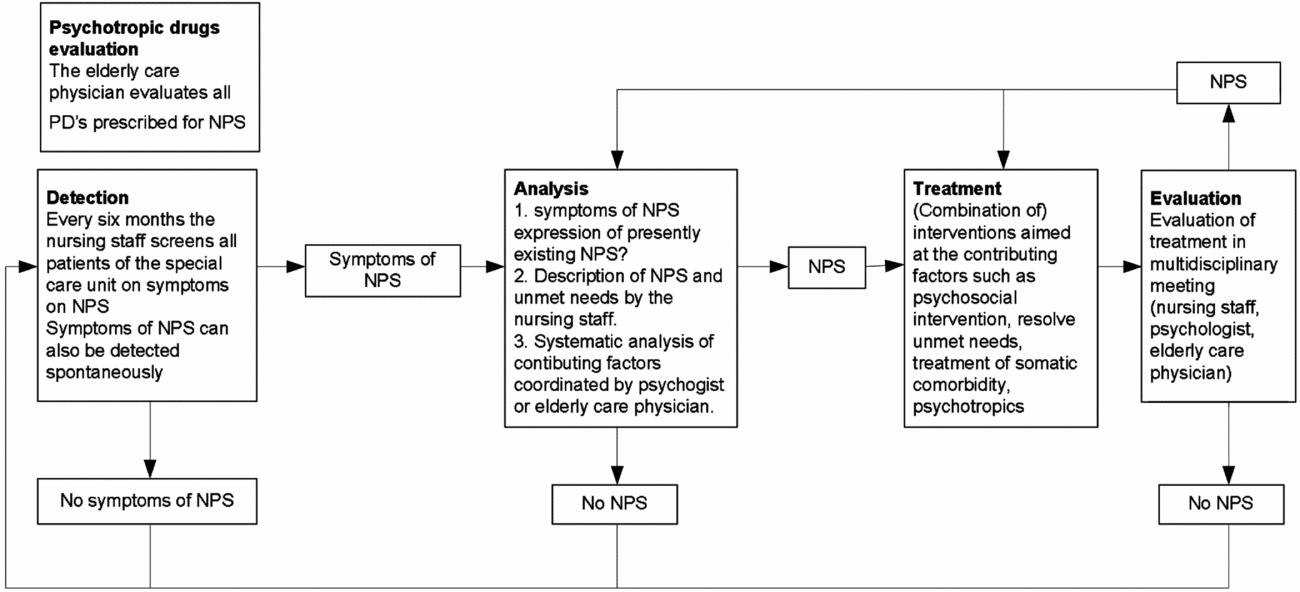
After the above mentioned adaptations, the intervention offered to the SCUs consists of an educational program followed by the implementation of the five-step care program on the management of NPS. The steps of the care program are described in Figure 1. The first step of the care program is the evaluation of appropriateness of psychotropic drug prescription. This is a separate step, the other four steps are consecutive and form a cycle. This step involves using the tool for the evaluation of appropriateness of psychotropic drug prescription. This will be completed for all residents by the elderly care physician in the first two months after the SCU is enrolled in the intervention condition. After the initial screening, the elderly care physician can consider psychotropic drug prescription monitoring with the self-evaluation tool at his own discretion. Detection of NPS, can occur in usual (daily) observations or with the screening tool for the detection of NPS. Residents are systematically screened every six months for NPS by the nurses with the screening tool as part of the care program. After detection, (symptoms of) NPS are analyzed by the nurses. The analysis contains questions about the behavior (e.g. describe the behavior, describe the frequency) and includes the tool for the detection of unmet needs in order to investigate whether unmet needs could be a cause of NPS. If necessary, the elderly care physician or psychologist continues the analysis. The outcome of the analysis is discussed in multidisciplinary meetings. After the analysis, the options for treatment are discussed, and the treatment plan is established. The treatment plan contains a specifically defined, measurable treatment goal. Psychosocial treatments are preferred; psychotropic drugs are prescribed only if psychological treatment has little or no effect. The last step is the evaluation of the treatment. The frequency and severity of NPS before and after treatment are compared. When treatment outcomes are unsatisfactory, other treatments are considered, or the analysis is performed again.
The five steps of the care program “Grip on NPS in institutionalized PwYOD.”
NPS = neuropsychiatric symptoms, PD's = Psychotropic Drugs.

Design
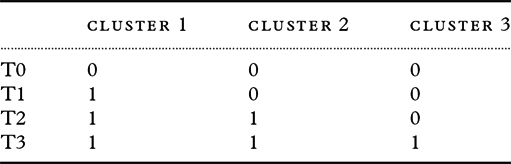
A stepped wedge design (Table 1) will be used to evaluate the effectiveness of the care program. This design allows clusters (in this case, YOD SCUs) to cross-over from a control to an intervention condition over time and assures that all clusters receive the care program and can benefit from the possible positive effects of the intervention (Brown and Lilford, Reference Brown and Lilford2006). This increases the motivation of care organizations to participate in the study. Also, a stepped wedge design is considered appropriate when there are practical and logistic constraints to implementing the intervention simultaneously to all participants in the intervention condition, which is applicable to this study (Brown and Lilford, Reference Brown and Lilford2006). Moreover, a stepped wedge design increases the study power by enabling analyses between and within groups (Hussey and Hughes, Reference Hussey and Hughes2007). In this study, YOD SCUs from nursing homes throughout the Netherlands will be included. The YOD-SCUs will be randomly assigned to one of three groups. There will be four assessments at six month intervals during a period of 18 months. After each assessment, a new group will enter the intervention condition. The control condition will consist of care as usual without the educational program and use of the care program.
Stepped wedge design

0 = control condition, 1 = intervention condition There are four, half yearly, assessments.
Each cluster consists of four or five YOD-SCUs.
Participants
Eligible YOD SCUs will be recruited through nursing homes that are affiliated with the Dutch YOD Knowledge Center (DKC). PwYOD, who have a diagnosis of dementia with symptom onset before the age of 65, and who have been residing in the SCU for at least one month will be included in the study. Diagnoses of dementia subtype will be made according to the regular criteria and retrieved from the medical file (Roman et al., Reference Roman1993; American Psychiatric Association, 2000; McKeith, Reference McKeith2006; Gorno-Tempini et al., Reference Gorno-Tempini2011; McKhann et al., Reference McKhann2011; Rascovsky et al., Reference Rascovsky2011). People with dementia caused by human immunodeficiency virus (HIV), traumatic brain injury, Down syndrome, Korsakov or Huntington's disease will be excluded. All nurses employed in the YOD SCU will be included in the study.
Power calculation
In the power calculation, a 6.8 decrease in NPS as measured with the Cohen-Mansfield Agitation Inventory (CMAI) is considered a clinically relevant effect of the care program. This value corresponds to the 0.4 SD of the CMAI (mean 48.8 (16.7)) of the Beyond-I study (Mulders et al., Reference Mulders, Zuidema, Verhey and Koopmans2014). We assume an ICC of 0.1, which is based on a Dutch study of institutionalized people with LOD (Zuidema et al., Reference Zuidema, de Jonghe, Verhey and Koopmans2010). Based on these assumptions, a significance level (alpha) of 0.05 and a power (beta) of 0.80, 10 YOD SCUs with 20 people each in three groups with four measurements are needed for this study. No further attrition is expected because newly admitted residents will replace those who are discharged or die during the study. However, it is possible that an SCU will drop out, for example, due to relocation or organizational problems. Therefore, 13 YOD SCUs will be recruited.
Outcome measures
Primary outcomes
Agitation and aggression will be assessed with the Dutch version of the Cohen-Mansfield Agitation Inventory (CMAI-D) (de Jonghe, Reference de Jonghe1996; Cohen-Mansfield et al., Reference Cohen-Mansfield, Marx and Rosenthal1989). The CMAI is the only instrument that specifically addresses agitation and aggression that has been translated into Dutch and has well-established validity and reliability (de Jonghe, Reference de Jonghe1996; Zuidema et al., Reference Zuidema2011). The CMAI-D assesses 29 agitated or aggressive behaviors. The frequency of each symptom is rated on a seven-point Likert-scale (1–7) ranging from never to several times a week. A total sum score (range 29–203) can be calculated as well as a score for the subscales of physically non-aggressive behavior, physically aggressive behavior and verbally agitated behavior (Zuidema et al., Reference Zuidema, de Jonghe, Verhey and Koopmans2007).
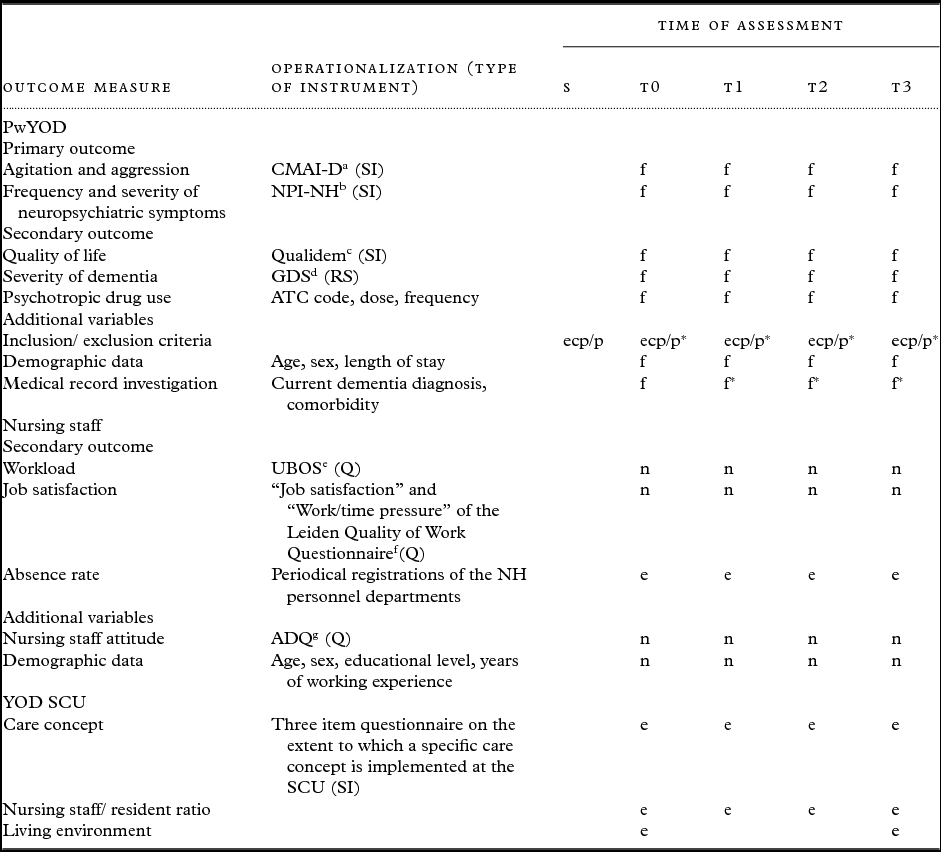
Other NPS will be assessed with the Dutch version of the Neuropsychiatric Inventory-Nursing Home version (NPI-NH) (Wood et al., Reference Wood2000; Kat et al., Reference Kat, de Jonghe, Aalten, Kalisvaart, Droes and Verhey2002). The NPI-NH has a high-interrater reliability and has been found to be a valid measure for NPS (Kat et al., Reference Kat, de Jonghe, Aalten, Kalisvaart, Droes and Verhey2002). The NPI-NH contains twelve NPS. For each symptom, a screening question will be used to determine whether the symptom is present. For each symptom, Severity (S) and Frequency (F) will be rated on three-point (1–3) and four-point (1-4) Likert-scales, respectively. Additionally, the occupational disruptiveness of symptoms will be assessed on a six-point Likert-scale ranging from no distress to extreme distress (0–5). Scores for each symptom are calculated as F multiplied by S (range 1–12), and a total score can be calculated by summing the F×S scores ranging from 0 (symptom was absent) to 144. A total score for occupational disruptiveness can be calculated by adding each score (range 0–60). For an overview of all measurements, see Table 2.
Flowchart of measures used during the assessments

S = Screening, T0-T3 = measurements 0–3, SI = Structured Interview, RS = Rating Scale Q = questionnaire, f = informant is first responsible nurse, ecp = informant is elderly care physician, p = informant is psychologist, n = informant is nurse, e = informant is manager or employee of personnel department of the nursing home, ∗ = only newly admitted residents.
a Cohen-Mansfield et al. (Reference Cohen-Mansfield, Marx and Rosenthal1989).
b Wood et al. (Reference Wood2000).
c Ettema et al. (Reference Ettema, Droes, de Lange, Mellenbergh and Ribbe2007a; b).
d Reisberg et al. (Reference Reisberg, Ferris, de Leon and Crook1982).
e Maslach and Reference Maslach and JacksonJackson (1986).
f Van der Doef and Maes (Reference Van der Doef and Maes1999).
g Lintern (Reference Lintern2001).
Secondary outcomes: institutionalized PwYOD
QoL will be assessed with the Quality of Life in Dementia (QUALIDEM) questionnaire (Ettema et al., Reference Ettema, Droes, de Lange, Mellenbergh and Ribbe2007a; Reference Ettema, Droes, de Lange, Mellenbergh and Ribbe2007b). The Qualidem is a 37-item behavior observation scale for people with dementia in residential care. Nursing staff rate the Qol for the PwYOD over the preceding week on a four-point scale, ranging from never to almost daily. The Qualidem has nine subscales: care relationship, positive affect, negative affect, restless tense behavior, positive self-image, social relations, social isolation, feeling at home, and having something to do.
Dementia severity will be assessed with the Global Deterioration Scale (GDS) (Reisberg et al., Reference Reisberg, Ferris, de Leon and Crook1982). The GDS is a validated seven-point scale that describes seven different stages of dementia ranging from “no impairment” to “very severe cognitive impairment.”
PDU will be derived from the nursing home pharmacist's electronic registration system and will be classified according to the Anatomical Therapeutic Chemical (ATC) classification system into groups of antipsychotics, anxiolytics, hypnotics, antidepressants, antiepileptic drugs and cholinesterase inhibitors (World Health Organisation Collaborating Centre for Drug Statistics Methodology, 1997).
Secondary outcomes: nursing staff
Workload will be assessed with the Dutch version of the Maslach Burnout Inventory, known as the Utrecht Burnout Scale (UBOS) (Maslach and Jackson, Reference Maslach and Jackson1986; Schaufeli and Van Dierendonck, Reference Schaufeli and Van Dierendonck2000). The UBOS is a 20-item questionnaire assessing three components of burnout: emotional exhaustion, depersonalization, and decreased personal accomplishment. Questions will be answered on a seven-point scale ranging from “never” to “always.”
Job satisfaction and job demands will be assessed with two subscales of the Leiden Quality of Work Questionnaire (LQWQ) (Van der Doef and Maes, Reference Van der Doef and Maes1999). The LQWQ assesses the nursing staff's perception on their quality of work. The two subscales assess “job satisfaction” and “job demands” with six and seven items, respectively. Questions are answered on a four-point Likert scale ranging from “totally disagree” to “totally agree.”
The staffs attitude toward dementia and dementia care will be assessed with the Approaches to Dementia Questionnaire (ADQ) (Lintern, Reference Lintern2001).
Other PwYOD and nursing staff characteristics
The sex, age, and length of stay of the resident will be obtained from the medical file. The age, sex, years of working experience, educational level, and weekly working hours of the nursing staff will also be assessed through a questionnaire. Additionally, staff absenteeism will be obtained from periodical registrations done by the Human Resources department of the nursing home.
Special care unit characteristics
Characteristics of the SCU will be registered, including the care concept used at the SCU, the living environment (small scale/ traditional long-term care) and the nursing staff-resident ratio. This will be completed through structured telephonic interviews with the site coordinator of the study.
Ethical considerations
The study protocol has been approved by the Medical Ethics Committee region Arnhem/Nijmegen (file nr: 2015–1558). This research project will be completed according to the principles of the Declaration of Helsinki (version November 2013, www.wma.net). Written informed consent will be obtained from the legal representative of each resident, and all data will be anonymized.
Procedures
Information on the inclusion and exclusion criteria will be sent to the participating YOD-SCUs. Only the legal representatives of institutionalized PwYOD, who meet the inclusion criteria will receive written information and will be asked for their informed consent to participate. Informed consent will be requested for information retrieval from the medical file and for proxy assessments. After written informed consent is received, the researchers will contact the nursing staff to arrange the assessment interview. All resident outcomes will be assessed through interviews with the nursing staff. Respondents will be considered reliable if they are the vocational nurse specifically assigned to the resident or have had regular contact with the resident in the past month. No interviews will be held with the PwYOD themselves. Trained researchers and research assistants will collect the data through structured interviews with the nursing staff and from the resident's medical files. The nurses from the participating SCUs will be aware that they are in the intervention condition, because that condition requires working with the care program. Therefore, it is not possible to blind the nurses, researchers or research assistants. No feedback will be given to the nurses during the assessments regarding the scores on the outcomes measures.
Data analysis
Data entry of the PwYOD and nursing staff outcomes will be performed in Project Manager Internet Server (ProMISe), a web-based data management system. All entered data will be checked to safeguard data entry. For the primary research question, the CMAI- score and the NPI-NH score will be used as outcomes. Age, sex, length of stay, dementia severity, and prescription of antipsychotics, and other psychotropic drugs will be used as covariates. QoL (Qualidem), burnout (UBOS), job satisfaction (LQWQ), and job demands (LQWQ) scores will be used as secondary outcomes. Nurses age, sex, years of working experience, educational level, and the nurse-resident ratio will be used as covariates. The primary and secondary outcomes will be analyzed using multilevel linear regression and multilevel logistic regression analyses. These analyses will calculate the effects of the care program on NPS, QoL, the prescription rate of psychotropic drugs, and the workload and job satisfaction of nursing staff.
Process evaluation
A process evaluation will be carried out during the study, using the framework of first- and second-order process data as described by Leontjevas et al. (Reference Leontjevas, Gerritsen, Koopmans, Smalbrugge and Vernooij-Dassen2012). First-order process data will be used for interpretation of the effect of the care program. This entails sampling quality (external validity) and intervention quality (internal validity). Sampling quality will be determined by (1) the recruitment and randomization procedure for the SCU, (2) the recruitment procedure of the PwYOD, and (3) the reach of the intervention (the proportion of SCU care staff participating in the care program). Intervention quality will be determined by (1) the relevance and feasibility of the care program and (2) the extent to which the program was performed. Second-order data will contain information about the delivered and received implementation components and the barriers and facilitators of the implementation process. These data will be evaluated using structured questionnaires and interviews with primary nurses, team leaders, psychologists, and elderly care physicians.
Economic evaluation
A cost-consequences approach (CCA) will be used to estimate the monetary value of the care program. This method provides the most comprehensive presentation of information describing the value of an intervention and is also conceptually the simplest (Mauskopf et al., Reference Mauskopf, Paul, Grant and Stergachis1998). The impact of the care program on resource use, costs, and health outcomes will be estimated on the SCU and resident levels using a balance-sheet approach. Costs will include the following direct costs: (1) costs on the SCU level (time allocated for implementation of the care program); (2) cost of care per resident; and (3) PDU costs. Costs will also include indirect costs associated with staff absenteeism. The time needed for the educational program will be registered separately. Effects of the care program will include: agitation and aggression (assessed with the CMAI), QoL (assessed with the Qualidem), PDU of the PwYOD, and occupational disruptiveness of NPS for the nursing staff.
Discussion
The current paper describes the study design of an interventional study that addresses the management of NPS in YOD, known as the Beyond-II study. To our knowledge, this is the first study that addresses the management of NPS in institutionalized PwYOD. The focus of this study is on the (process-) evaluation of the effectiveness and the costs and consequences of the implementation of a newly developed multi-component care program on the management of NPS in institutionalized PwYOD. We expect that the implementation of the care program will result in decreases in NPS and PDU. Implementation is also expected to result in higher job satisfaction among nursing staff.
This study will contribute to the knowledge of the management of NPS in YOD, the mechanisms involved in the management of NPS, and implementation knowledge of care programs in nursing homes. A stepped wedge design will be used in this study to ensure that all participating YOD SCUs can benefit from the care program. Despite the many positive aspects of this study, there are some limitations that have to be considered. Selection bias could be a factor in our study. Although our participating YOD SCUs are recruited from all geographical regions of the Netherlands and are likely to represent the Dutch YOD nursing home population, selection bias may occur because all participating nursing homes are affiliated with the Dutch YOD Knowledge Center. This may be a different group than the YOD nursing homes that are not affiliated with the Dutch YOD Knowledge Center. Another limitation is that informed consent will be obtained for all PwYOD and it is possible that the group for which consent is obtained will be different from the group for which consent cannot be obtained.
Despite these limitations, the stepped wedge design and assessment measures seem appropriate for this study and outweigh the few limitations. The described care program offers the YOD-SCU staff tools for the management of NPS in YOD.
Conflict of interest
None.
Description of authors’ roles
This study was designed by C. Bakker, R.T.C.M. Koopmans, M. Smalbrugge, and S.A. Zwijsen. J.C.L. van Duinen-van den IJssel wrote the paper and B. Appelhof assisted in writing the paper. S. A. Zwijsen, M. Smalbrugge, F. R. J. Verhey, M. E. de Vugt, S. U. Zuidema, C. Bakker and R.T.C.M. Koopmans critically reviewed the paper.
Acknowledgments
This study was funded by the Netherlands Organization for Health Research and Development (ZonMW, nr: 733050402), Archipel Care Group in the Netherlands, Florence Care Group in the Netherlands, and the Dutch Alzheimer Society.