INTRODUCTION
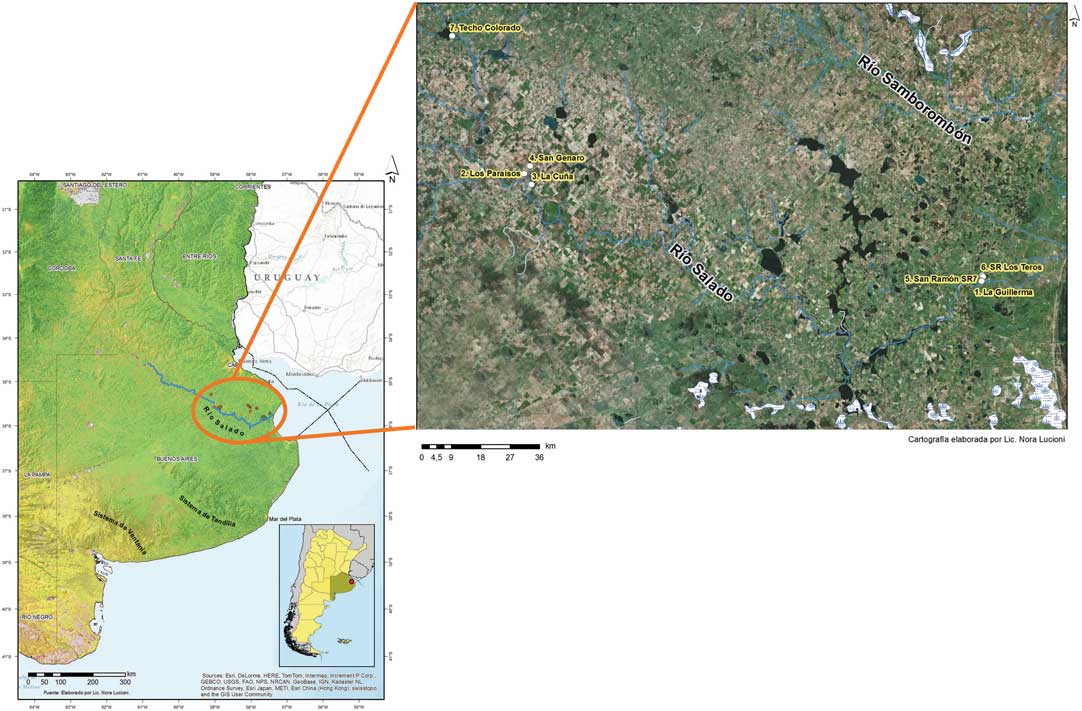
In archaeology, the durability of material culture enables us to understand the succession of events throughout a continuum, and also the length and intervals of human actions (Bailey Reference Bailey1983, Reference Bailey2007). This article discusses the beginning of the settlements in the microregion of the Salado River, Buenos Aires province (Figure 1). It also aims to analyze the continuity or discontinuity of the use of this space by hunter-gatherer-fisher groups.
Map of the Pampean region and Salado River microregion of Argentina

On a regional level, the peopling of the Pampean region started around 12,300 yr BP. Some sites show evidence of contact with extinct fauna occasionally exploited while the main resource was the guanaco (Lama guanicoe, modern South American wild camelid).
Signs of early occupations in the region are found in several caves and open-air sites in the plains and the Tandilia and Ventania ranges. There is great intersite variability, which reveals different periods of hunter-gatherer presence from the Late Pleistocene to the Early Holocene. The archaeological records are composed of lithic assemblages (mainly manufactured from regional orthoquartzites of the Sierras Bayas Group) characterized by a high bifacial tools ratio and “fishtail” projectile points in different stages of manufacture and maintenance (Mazzanti Reference Mazzanti2003; Politis et al. Reference Politis, Messineo and Kaufmann2004; Bayón et al. Reference Bayón, Flegenheimer and Pupio2006; Armentano et al. Reference Armentano, Martínez and Gutiérrez2007; Martínez et al. Reference Martínez, Prates, Flensborg, Stoessel, Alcaráz and Bayala2014).
The study area, the Salado River microregion, is in the Pampean region of present-day Argentina. So far, no archaeological evidence has been found of the presence of early human occupation before the late Holocene. However, for that period the evidence of human occupation in different areas of the Pampas is significant, showing intensification and diversification in the use of resources and the incorporation of new technologies such as the bow and arrow and pottery. The archaeological sites in this study are in the Salado River basin, in what is known as the Pampa Deprimida, a low plain with very low gradients, poor superficial drainage, and the presence of eolian landforms (Zárate Reference Zárate2009). The Pampa Deprimida is relatively lower than other areas in the Pampean region and is one of the wetlands of Argentina.
The wetlands in the Pampa Deprimida comprise rivers and also permanent and temporary lagoons (Canevari et al. Reference Canevari, Blanco, Bucher, Casero and Davidson1998). This vast plain is mainly covered with grass and, in the lower valley, by forests of talas (Celtis tala) and other tree species (González and Frère Reference González and Frère2009; Zárate Reference Zárate2009), so the human groups occupying this region had resources such as firewood, refuge, plants, and fauna. Furthermore, the topographic location of their living spaces, on high mounds, allowed them to see their prey as it stood drinking on the river or lagoon shores (Vigna et al. Reference Vigna, González and Weitzel2014). The lagoons are shallow, so they are sensitive to climate variation, which can affect their amount of water or salinity. These variations are reflected in the abundance of biotic communities.
HUNTER-GATHERER-FISHER GROUPS OF THE BUENOS AIRES SALADO RIVER MICROREGION
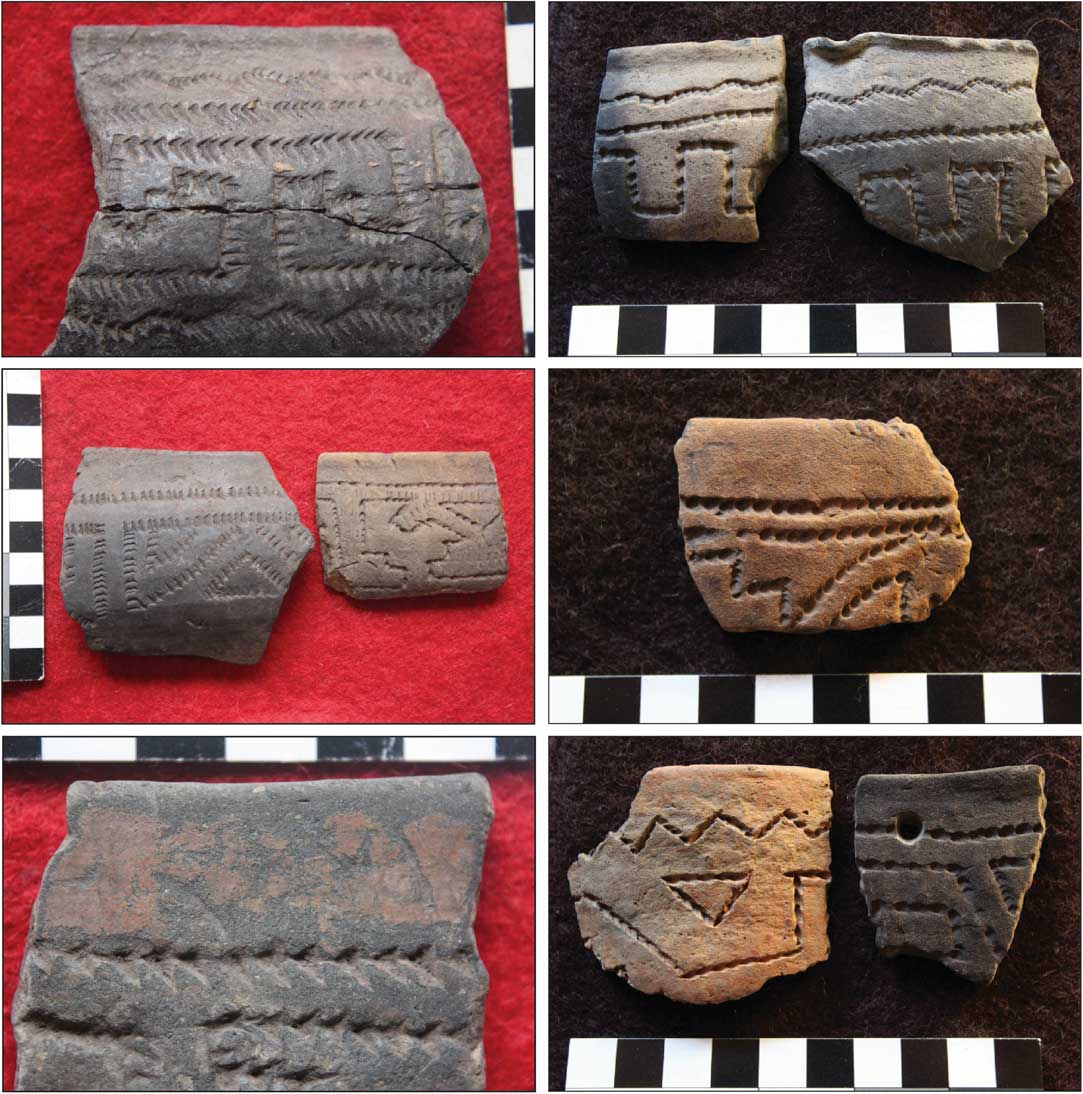
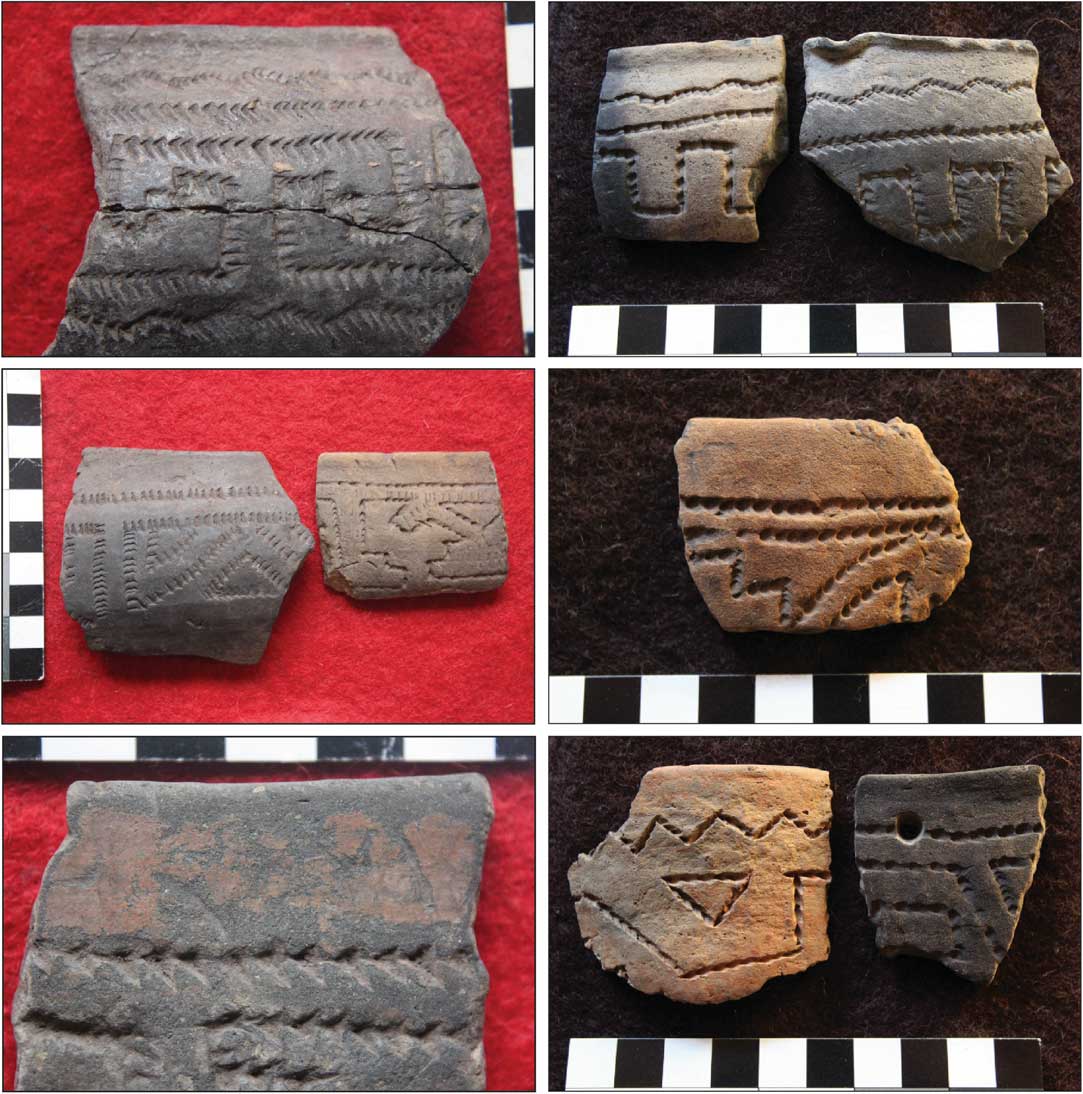
The sites presented in this study are as follows: La Guillerma archaeological locality (LG), with LG1, LG2, and LG5 sites; San Ramón archaeological locality (SR) with SR7 and Los Teros sites; other sites are La Cuña (LC), Techo Colorado, Los Paraísos (LP), and San Genaro (SG). All are open-air sites repeatedly occupied by groups of hunter-gatherer-fishers with low mobility, showing an intensive use of local resources and the development of extensive networks of interaction and exchange. These sites are located in temperate environments on the lower course of the Salado River and its adjacent lagoons. In these societies, potters had a distinctive role as they manufactured ceramic artifacts of very good quality. This manufacture was local, using clay and wood available in their immediate surroundings. The surfaces were finished by smoothing, polishing, and the addition of slip and/or paint. The decorative designs made by incisions are mostly geometric, although figurative designs have been found in a few cases (Figure 2). We have also found some fragments with technological characteristics that would be linked to the Guarani tradition: white or red on white painting, corrugated surface, and composite profiles. Subsistence was based on a variety of faunal resources linked to the aquatic and continental environments of the microregion (González de Bonaveri et al. Reference González de Bonaveri, Frère, Bayón and Flegenheimer1998; González de Bonaveri Reference González de Bonaveri2002; González et al. Reference González, Frère and Escosteguy2006; González and Frère Reference González and Frère2009, Reference González and Frère2010; Escosteguy Reference Escosteguy2007, Reference Escosteguy2011).
Fragments of decorated pottery
Tools, weapons, ornaments, and paints were made from rocks and mineral pigments that are not present in this microregion, so manufacturers had to travel at least 200 km to find them. Sierras Bayas Group orthoquartzites (SBGO), pthanites and ochres, as well as Balcarce Formation orthoquartzites (BFO) were transported from the Tandilia Ranges. Also, raw materials from the Atlantic coast are present. A silicified limestone was identified in this context. This raw material was identified in Early Holocene contexts (Politis et al. Reference Politis, Messineo and Kaufmann2004; Flegenheimer et al. Reference Flegenheimer, Mazzia and Weitzel2015) as well as in Late Holocene sites. For this last period, silicified limestone thin-section analysis revealed the presence of diagnostic elements related to Uruguayan deposits (González Reference González2005).
Site Formation in the Salado River Microregion
The sites are located on high mounds in open-air environments, sediments are eolic, and pedogenic processes are dominant in the Salado River microregion. Bioturbation and cracking of the soil are active processes observed in the profiles. These would promote burial without increasing the depositional rate of surface archaeological material. The characteristic alternation of dry and wet periods of the Pampean region causes the formation of cracks in the soil profiles in which archaeological material is eventually included (González de Bonaveri and Zárate Reference González de Bonaveri and Zárate1993–1994; Zárate et al. Reference Zárate, González de Bonaveri, Flegenheimer and Bayón2000–2002). These archaeological materials are found in the A horizon of the present soil. Because of this soil formation process, we cannot consider them as representing real stratigraphy or sealed sites, both because pedogenesis has reorganized the sedimentary context and because the sites present a low stratigraphic resolution. However, we cannot call them surface sites either because the material is not exposed to subaerial conditions. Therefore, those sites located in the A horizon of the present surface are designated shallow archaeological sites (Zárate et al. Reference Zárate, González de Bonaveri, Flegenheimer and Bayón2000–2002). The characteristics of these sites are similar to what Bailey (Reference Bailey2007) calls a cumulative palimpsest, where the successive episodes of activity overlap without loss of material evidence, although it is difficult to distinguish between events. In other words, the material evidence has remained with a low resolution level.
Owing to the limitations in temporal resolution for the archaeological record in these sites with very active rejuvenation contexts, the strategy was to carry out an analysis of tendencies on a microregional scale. So, instead of analyzing individual dates, we will consider the set of dates from sites associated with the river and the lagoons. Also, we dated different types of material to discuss the significance of each one in the microregion.
METHODS
The 24 radiocarbon dates listed herein were obtained from a range of materials: charcoal, animal bones (fish, coypu, and deer), human teeth and bones, and organic residues on fragments of pottery. The charcoal samples recovered in the excavations included fragments of up to 2 cm in size, found scattered a few centimeters from each other in the same level. The 14C dates were conventional and in one case with extended counting (Beta-53560). The charcoal comes from Celtis tala wood, and we will assess the possibility of an old-wood effect with the statistical analysis. Charcoal samples have traditionally been considered as highly reliable for 14C dating (Figini Reference Figini2005), but some studies show that charcoal, as well as charred organic matter, changes over time (Frink Reference Frink1992, Reference Frink1994). Both are subject to biochemical decomposition, which significantly changes previous concepts about the inert character of charred matter. The biochemical decomposition of charcoal is progressive over time, and it specially affects charcoal in open-air sites in the A horizon, which are exposed to the impact of the environment (Frink Reference Frink1995).
In the case of the samples from La Guillerma and Techo Colorado, the degree of change or diagenesis that the pieces of charcoal might have suffered was not considered. Nevertheless, their macroscopic aspects showed good preservation. Any contaminant humic acids resulting from pedogenesis and its transference in the horizon were eliminated in the laboratory by acid washing. For these reasons, the ages obtained are considered to be relatively reliable.
Four samples of human teeth and bones were dated by accelerator mass spectrometry (AMS) (LGÑ, LG1, and two LG5 samples). Fish bones were also dated. They were selected for their good preservation at the macroscopic level. Color was measured with the Munsell scale and it corresponded to variety 7.5 YR 6/6 and 7/6 reddish yellow. Bones that were not charred were chosen because: “It is apparent from these data that burning significantly reduces the protein content, making bone impractical to date. Burning also affects the N values of the bone even when protein still remains, possibly due to increased exposure to contamination or differential loss of amino acids in the collagen” (Petchey and Higham Reference Petchey and Higham2000: 141). The laboratory confirmed the presence of enough collagen in the samples (Alexander Cherkinsky, personal communication, 2016).
Regarding 14C dating of pottery, the advantages appeared to outweigh the disadvantages, since the fragments were associated with a clear cultural context, and in some sites there was limited or no other organic material available. The main problem in ceramic 14C dating is the possibility of the presence of carbon from different origins and ages. Among the possible contemporary carbon sources, we can consider organic tempers added by the potters, those originating from the soot produced during firing, or food remains from cooking or storage, in which case there would be inconsistencies between the carbon contents of samples taken from the same pot or fragment. Some studies show that the existence of carbon forms with different 14C ages in the pottery, indicating that it is not always possible to unmistakably isolate the fraction that contains the archaeological age. However, these difficulties can be detected much easier now, allowing us to evaluate the different origins of carbon and their influence in dating. Experimental models have shown that it is possible to distinguish between organic contents derived from the added load and the geologic contents derived from clay. Also, specialized laboratories carry out a pretreatment of the samples that eliminates all inorganic carbonates, and also the postdepositional contamination of the soil’s humic acids that could also disrupt them. A reliable date can be obtained by controlling these variables with routine procedures in the laboratories that processed our dates (Hedges et al. Reference Hedges, Tieme and Housley1992; Anderson et al. Reference Anderson, Chappell, Clark and Phear2005; Delqué Kolić Reference Delqué Kolić2005; Figini Reference Figini2005; Boaretto Reference Boaretto2009; Peacock and Feathers Reference Peacock and Feathers2009; Greco Reference Greco2014a; Greco and Palamarczuk Reference Greco and Palamarczuk2014).
CHRONOLOGICAL ANALYSIS
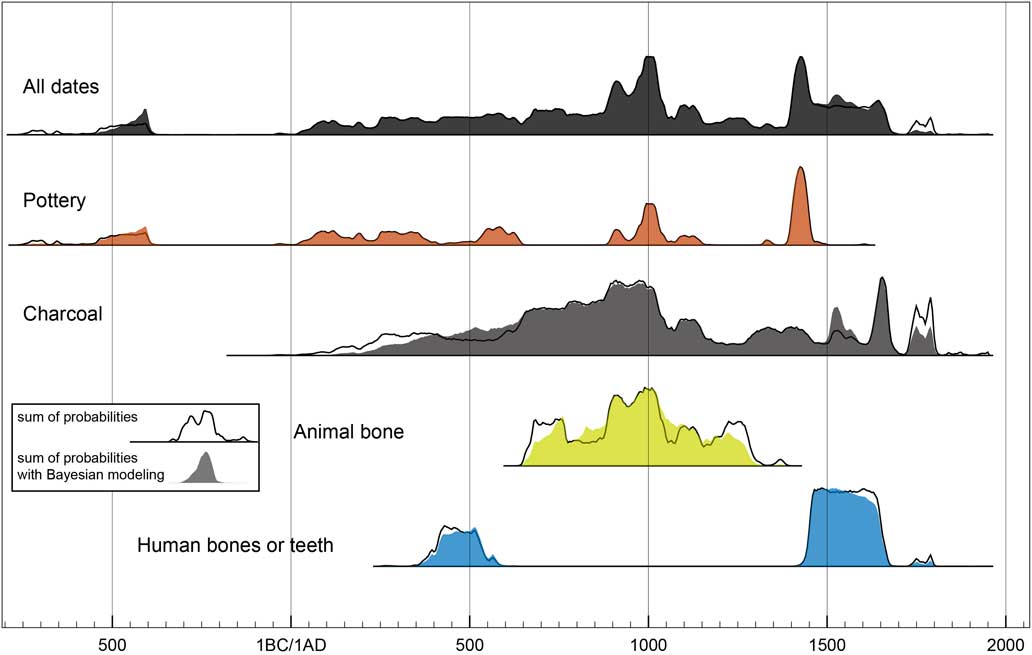
OxCal v 4.2 software (Bronk Ramsey Reference Bronk Ramsey2009a) and the SHCal13 Southern Hemisphere calibration curve (Hogg et al. Reference Hogg, Hua, Blackwell, Niu, Buck, Guilderson, Heaton, Palmer, Reimer, Reimer, Turney and Zimmerman2013) were used for the analysis herein. First, to evaluate the age differences between dated materials, the sum of probabilities was calculated in two ways: (1) the Sum function was used directly for the data set, resulting in an addition of the probabilities of every single date within the same distribution; and (2) the Sum function was defined in a Phase function, and in this way the resulting distribution is modeled by Bayesian statistics. This second option is statistically more significant (Bayliss Reference Bayliss2009), although from our perspective the observation of the two sums together is more useful. The first option involves the maximum range of possible years for the duration of the phenomena, even though this is distorted by the inaccuracy of the dates, while the second sum represents a highly probable range of years for that duration, which is derived from the simulation.
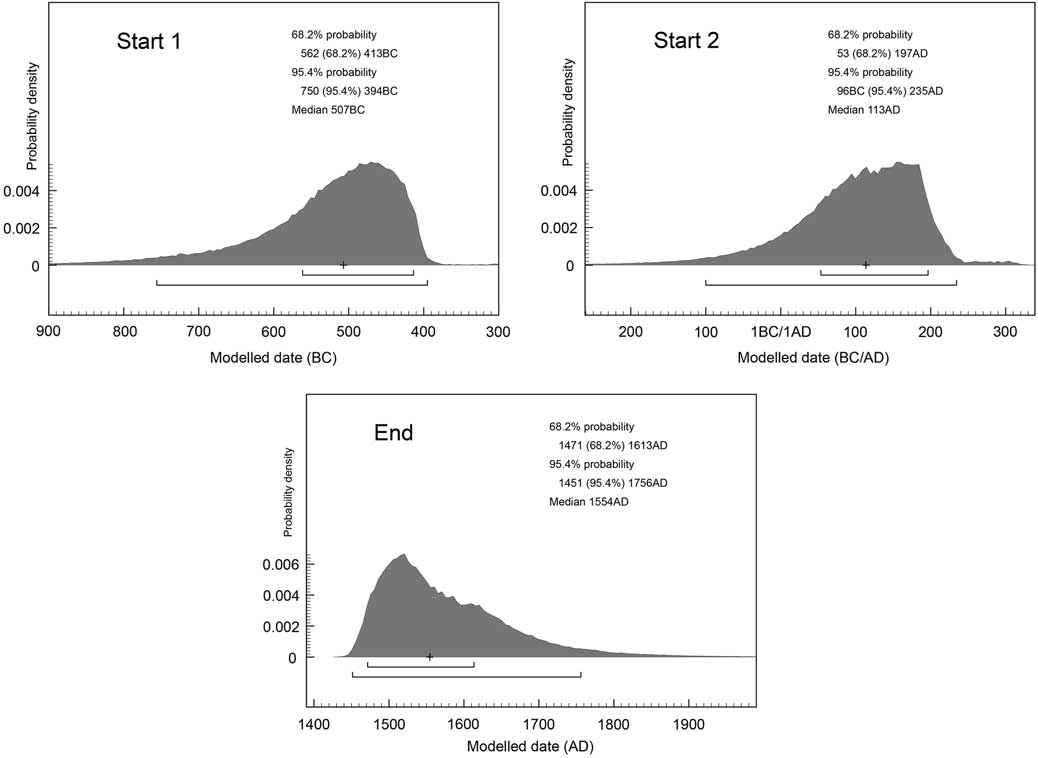
Second, to assess the overall chronology of the human activity in the study area, we calculated the start and end boundaries and duration of the processes using a uniform phase model of Bayesian statistical modeling (Buck et al. Reference Buck, Cavanagh and Litton1996). For this model, we assume that all of the events within a single phase are equally likely to occur anywhere between the start and the end. The use of Bayesian statistical modeling allowed parameters for the occupation of the Salado River microregion to be estimated (Figure 5). We also conducted an outlier analysis to weight charcoal samples and assess a possible offset (Bronk Ramsey Reference Bronk Ramsey2009b). As we stated before, we cannot be sure if the charcoal comes from short-lived species and we can expect the samples to be older than their context.
To discuss the calibrated dates and the statistical parameters, ranges of 95% confidence intervals were used, although to simplify the discussion, we sometimes refer to point estimates. Research has shown that there is no way to correctly estimate the true age of a 14C date with a mean (Michczyński Reference Michczyński2007), although several authors agree that the median or also the mode—the zone of maximum probability in the density function of the calibrated date—would be acceptable (Needham et al. Reference Needham, Bronk Ramsey, Coombs, Cartwright and Pettitt1997; Zeidler et al. Reference Zeidler, Buck and Litton1998; Michczyński Reference Michczyński2007; Alberti Reference Alberti2013).
RESULTS
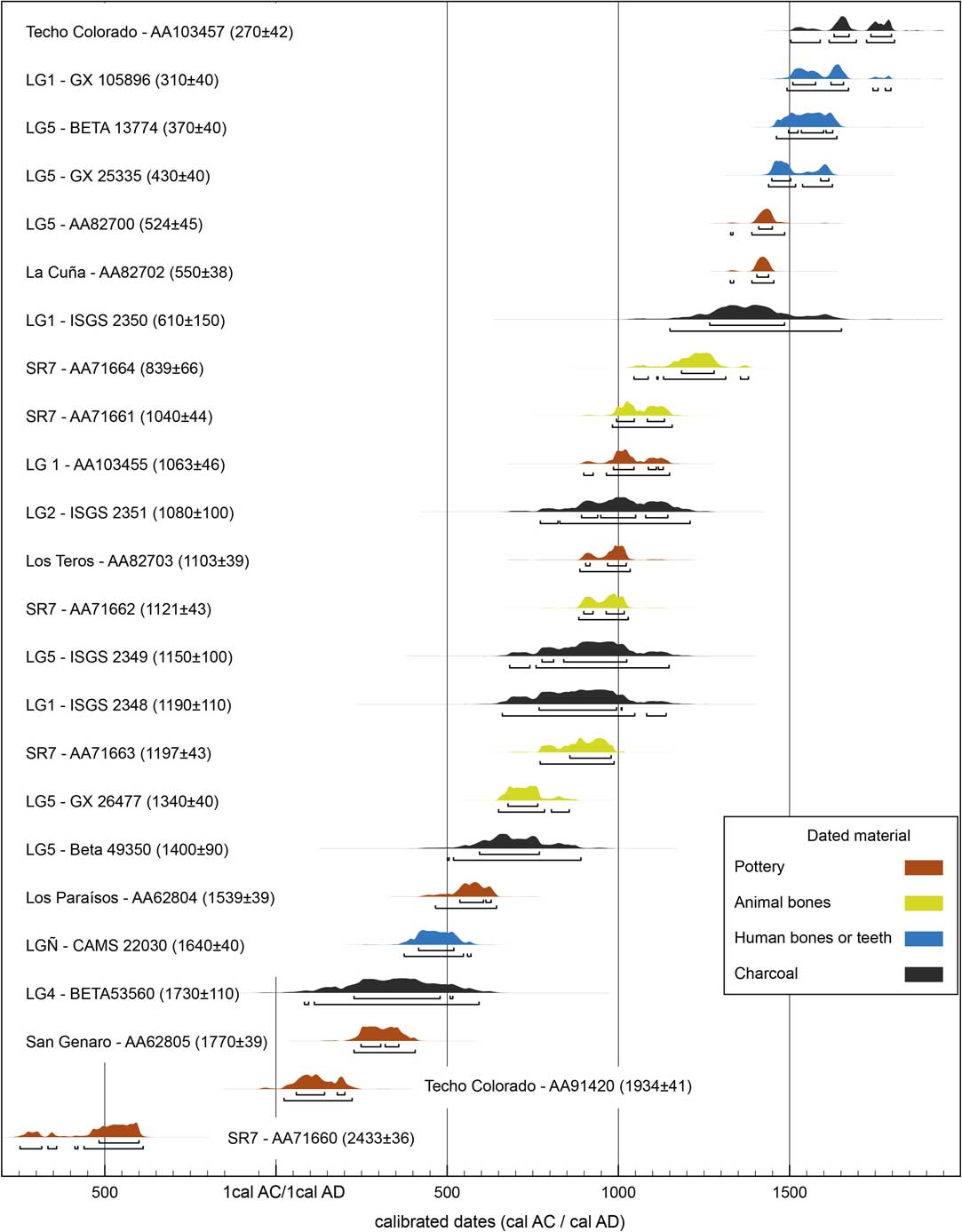
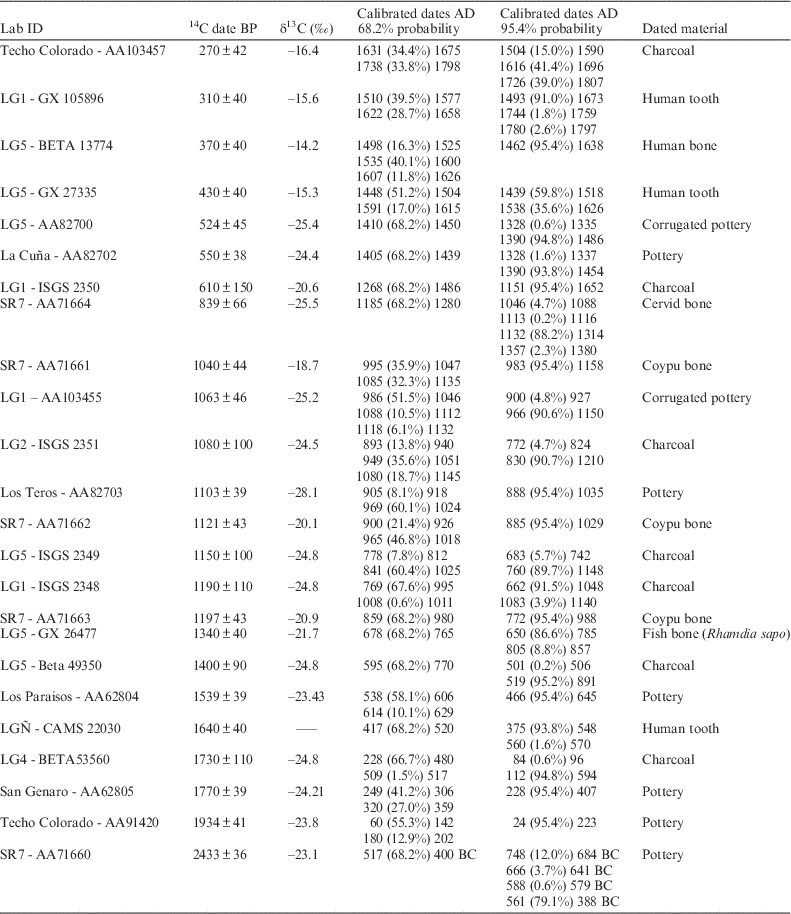
Table 1 presents 24 14C dates, some of which have already been published and discussed (González de Bonaveri Reference González de Bonaveri2002; González et al. Reference González, Frère and Escosteguy2006; Greco Reference Greco2014b; Frère Reference Frère2015) (see also Figure 3).
Calibration of 14C dates from the Salado River microregion; calibration as in Table 1
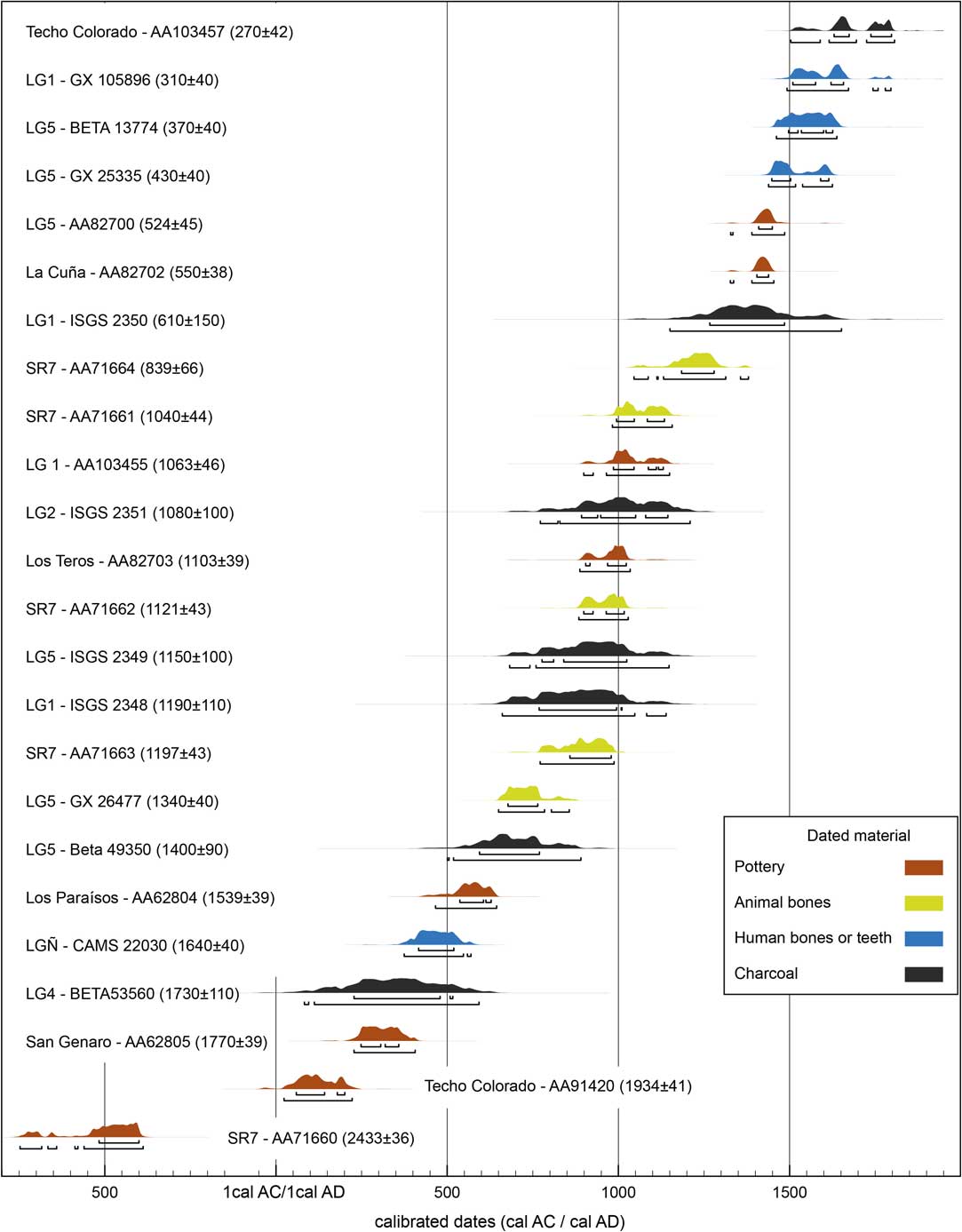
List of 14C dates from the Salado River microregion. Calibration was done using OxCal v 4.2 software (Bronk Ramsey Reference Bronk Ramsey2009a) and the SHCal13 calibration curve (Hogg et al. Reference Hogg, Hua, Blackwell, Niu, Buck, Guilderson, Heaton, Palmer, Reimer, Reimer, Turney and Zimmerman2013).

DISCUSSION
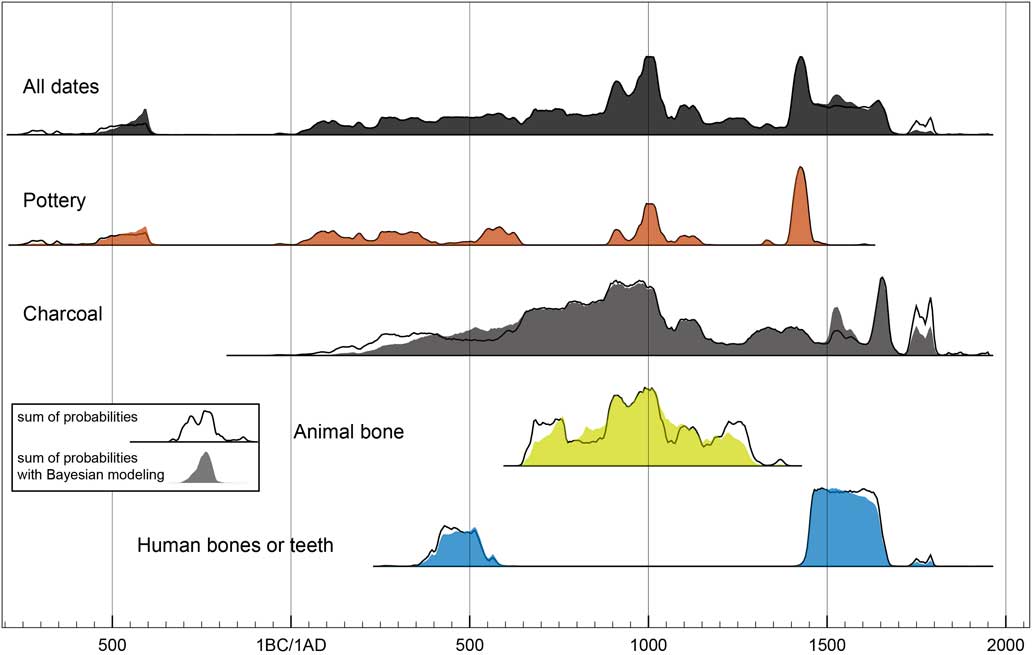
14C results for this data set indicate that the sum of probabilities does not show any substantial differences between the variants with and without Bayesian statistical modeling. In the first case, the ranges are a little compressed since the extreme values of the dates are omitted. The dates made on the different materials are consistent, although they present variations in the distribution of probabilities. The animal bone dates and charcoal dates are each arranged in a continuum, approximately AD 650 to 1400 and AD 150 to 1750, respectively (Figure 4). However, the dates corresponding to human teeth and bones fall in two periods: an early one between AD 350 and 600 and a late one around the 16th century AD. The pottery dates show a longer timespan, but there are three high-density periods: (1) between 600 BC and AD 50; (2) between AD 650 and 900; and (3) between AD 1150 and 1400. Also, when using charcoal outlier analysis, the model remains highly coherent (Amodel index = 99.1%); thus, we can state that charcoal measurements are consistent with those of other materials.
Sum of probabilities for each dated material
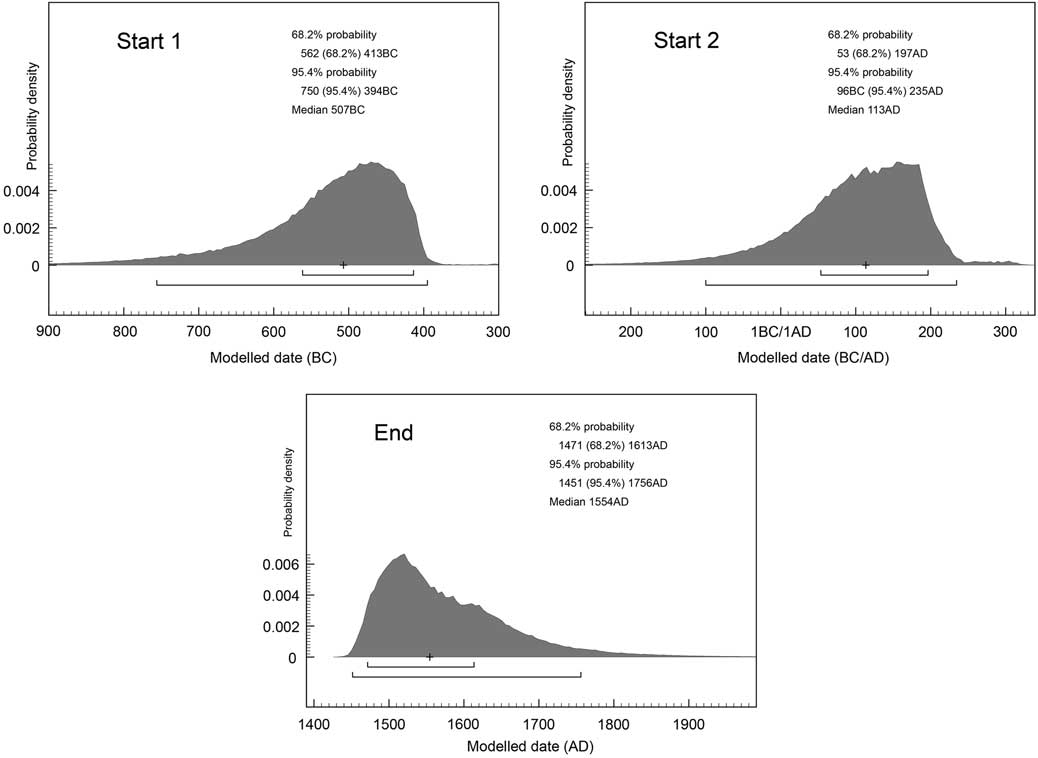
The use of Bayesian statistical modeling allowed parameters for the occupation of the Salado River microregion to be estimated (Figure 5). Considering the total range of dates, the beginning of the occupation can be dated sometime between 750 and 394 BC (95.4% probability), but the range is undefined owing to the paucity of early dates. Therefore, the median of 507 BC is a good estimate for the beginning of microrregional occupation. We must take into account that this datum arises from only one early dates, so we evaluated a new alternative that omits the outlier from the model and concentrates on the better-defined occupation period. Thus, Start 2 can be dated, with 95.4% probability, between 96 BC and AD 235, with a median of AD 113. The end of the occupation falls between AD 1451 and 1756, with the median being AD 1554.
Modeled probabilities for the beginning and end of regional occupation. Start 1 takes into account all the dates; Start 2 refers to the better-defined occupation period, leaving aside the oldest 14C date.
Regarding the earliest period of occupation of this microregion, the date of a pottery fragment from site SR7 (median 501 BC) suggests an early date for the presence of pottery. This early pottery date is similar to those found in sites in the Interserrana area in Buenos Aires. One of these is in context with pottery at the Zanjón Seco site with a chronology of ~3000 yr BP (Politis et al. Reference Politis, Martínez and Bonomo2001), and the other is Laguna Tres Reyes 1, also with a ceramic component dated to 2280±60 yr BP [404–145 BC] (Madrid et al. Reference Madrid, Salgán, Frankovic and Olivera1997).
Two dates were made on corrugated potsherds commonly assigned to the Guaraní tradition. What do these potsherds mean in the archaeological context of the Salado River microregion? Why should we discuss this type of pottery and its dates? Guaraní technological tradition is characterized by the presence of corrugated-unguiculated surfaces, polychrome paint, and complex profile shapes in pottery (Brochado Reference Brochado1973; La Salvia and Brochado Reference La Salvia and Brochado1989; Costa Angrizani Reference Costa Angrizani2011). One of the pottery fragments with a corrugated surface is dated between AD 966 and 1150 (LG1 AA103455), and the other between AD 1390 and 1486 (LG5 AA82700). The first date is consistent with the early phases of Guaraní southern expansion and would show the first contacts between these groups, while the second dating coincides with Guaraní settlements in the Río de la Plata region (Bonomo et al. Reference Bonomo, Costa Angrizani, Apolinaire and Silva Noelli2014). From the analysis of these dates in our region, we suggest the existence of early interactions between horticulturist groups and hunter-gatherer-fisher groups, which are reflected in the circulation of objects and people, or the imitation of techniques and designs using local raw materials. At this stage of our investigation, it cannot be identified which case it is.
Finally, the dates that show the final moments of occupation of the microregion slightly fall in posthispanic times. The Order command in OxCal allows us to state that there is 70% probability that the end of the occupation of the archaeological sites was after AD 1516—the oldest date for a Spanish explorer in the area—and before AD 1620, when some ephemeral indigenous reductions were established in nearby areas. That chronology for the last occupations is also supported by the absence of traces of this contact found in the archaeological sites (González de Bonaveri Reference González de Bonaveri2002; Frère Reference Frère2004; González Reference González2005).
CONCLUSIONS
This study defines a continuous occupation of the Salado River basin shallow sites. The evidence of the first occupations begins in 507 BC, considering the median of the estimated start, and the effective occupation stretched from the beginning of the era until the moment of initial contact with Europeans. The chronological evaluation of shallow archaeological sites is challenging. Here, the dating of an archaeological indicator such as corrugated pottery found together with white and red on white paint and composite profiles, traced to Guaraní indigenous populations, is significant. The results of these dates allow us to outline the periods of interaction between local hunter-gatherer-fisher groups and horticulturist groups. Our conclusions demonstrate that the limitations of temporal resolution of these shallow sites were in part offset by the microregional design strategy used, and also the consideration of dates as a whole with the sum of probabilities and the estimation the beginning and ending of regional occupation using Bayesian statistical modeling.
ACKNOWLEDGMENTS
This work was supported by UBACYT 2014-2017 (SECyT, UBA) y PICT 2010 01517 Agencia Nacional de Promoción Científica y Tecnológica (ANPCyT). We thank Marcelo Zárate for many valuable insights and Ann Grant for her kind revision of the English language. We also thank the referees and editors for their useful comments on the previous version of the article.