Introduction
Smoking remains the leading cause of preventable death in the United States, killing almost half a million adults every year (Centers for Disease Control and Prevention [CDC], 2014). Of the 40 million adult smokers in the United States, roughly 70% want to quit. However, less than 10% succeed (CDC, 2011; CDC, 2016). Amongst the newest approaches to improving quit rates are smoking cessation programmes that use mobile phone text messaging. Randomised controlled trials have demonstrated the efficacy of these interventions in increasing and, in some cases, even doubling cessation rates (Abroms, Boal, Simmens, Mendel, & Windsor, Reference Abroms, Boal, Simmens, Mendel and Windsor2014; Bock et al., Reference Bock, Heron, Jennings, Morrow, Cobb and Magee2013; Free et al., Reference Free, Whittaker, Knight, Abramsky, Rodgers and Roberts2009; Free et al., Reference Free, Knight, Robertson, Whittaker, Edwards and Zhou2011; Rodgers et al., Reference Rodgers, Corbett, Bramley, Riddell, Wills, Lin and Jones2005; Squiers et al., Reference Squiers, Augustson, Brown, Kelly, Southwell, Dever and Sanders2016; Whittaker et al., Reference Whittaker, McRobbie, Bullen, Borland, Rodgers and Gu2012).
In 2013, more than 90% of American adults owned a cell phone (Rainie, Reference Rainie2013). Using text messaging to deliver an evidence-informed cessation intervention is a cost-effective way to reach a large number of smokers in a convenient and timely manner (Guerriero et al., Reference Guerriero, Cairns, Roberts, Rodgers, Whittaker and Free2013). Although smoking cessation text messaging programmes have been found to be effective, they are multifaceted, and the exact mechanisms by which they lead to behaviour change are not fully understood. A behaviour change technique (BCT) is ‘a replicable component of an intervention designed to alter or redirect causal processes that regulate behaviour’ (Michie et al., Reference Michie, Johnston, Abraham, Francis, Hardeman and Eccles2014, p. 9). Characterising and mapping the BCTs within mobile health (mHealth) cessation interventions is the first step towards being able to explore the role of specific components in facilitating behaviour change. It also enables a systematic adjustment of the intervention's elements, which can be evaluated to assess the extent to which these modifications increase efficacy over the baseline intervention.
Various behaviour change taxonomies have been used to identify components of behavioural interventions and health education programmes that are implemented in a face-to-face format or by using technology (Bishop, Fenge-Davies, Kirby, & Geraghty, Reference Bishop, Fenge-Davies, Kirby and Geraghty2015; Dale, Raftery, & Locke, Reference Dale, Raftery and Locke2014; Direito et al., Reference Direito, Dale, Shields, Dobson, Whittaker and Maddison2014; Hynynen et al., Reference Hynynen, van Stralen, Sniehotta, Araújo-Soares, Hardeman and Chinapaw2014; Michie, Free, & West, Reference Michie, Free and West2012; Presseau et al., Reference Presseau, Knittle, Newham, Grimshaw, Danko and Ivers2014; West, Walia, Hyder, Shahab, & Michie, Reference West, Walia, Hyder, Shahab and Michie2010; Yang, Maher, & Conroy, Reference Yang, Maher and Conroy2015). Notably, Txt2Stop, a text messaging smoking cessation programme, was mapped to BCTs using an adapted version of a taxonomy designed for face-to-face smoking cessation interventions (Michie, Hyder, Walia, & West, Reference Michie, Hyder, Walia and West2011). The smoking-cessation-specific taxonomy included 43 BCTs organised into categories. Michie and colleagues found that seven BCTs represented 90% of the BCTs present in the Text2Stop intervention, i.e., provide information on the consequences of smoking and smoking cessation; boost motivation and self-efficacy; create or reinforce negative associations; promote use of relaxation techniques; promote behavioural substitution; provide behavioural substitution; and promote engagement with the programme (Michie et al., Reference Michie, Free and West2012). The authors concluded that text messaging programmes may also benefit from the inclusion of BCTs that were less frequently used in Text2Stop, such as strengthening ex-smoker identity, providing reassurance, and advising on the use of social support (Michie et al., Reference Michie, Free and West2012).
Whilst a variety of behaviour change taxonomies are available, behavioural interventions across domains must use a common taxonomy in order to support a common language of BCTs and compare programmes to each other. To facilitate the use of one taxonomy across behavioural domains, Michie and colleagues created a taxonomy that standardises the terms and definitions used to describe BCTs so that they can be applied consistently across behavioural interventions, namely the Behaviour Change Technique Taxonomy version 1 (BCTTv1).
The primary aim of this analysis was to apply the BCTTv1 to the SmokefreeTXT (SFTXT) adult text messaging programme in order to characterise the type and mix of BCTs in the programme over time, as well as highlight potential ‘active ingredients’.
Methods
SFTXT is the U.S. National Cancer Institute's (NCI) 6–8 week text messaging smoking cessation programme. It was developed by a team of digital strategists, mobile technology specialists, and clinical psychologists specialising in smoking cessation. The programme provides emotional and educational support to smokers who are trying to quit. Users of SFTXT sign up for the programme either online or via SMS short code and choose a target quit date that is within 2 weeks of their signup date. They receive messages for up to 2 weeks prior to their quit date and 6 weeks following their quit date, for a total of as many as 166 messages. Messages provide general motivational support, tips on preparing to quit, advice on managing cravings, suggestions for smokefree activities, relevant smoking facts, and recognition of cessation milestones. Scheduled throughout the programme are interactive messages that prompt users to assess their mood, smoking status, and craving level. Depending on the user's response, a reply message is sent to them. Users can also send specific keywords (e.g., crave, mood, slip) to receive immediate support messages. Smoking status is assessed via text message on the quit date and weekly thereafter for the 6 weeks of the programme. Follow-up cessation assessments are sent 1, 3, and 6 months after the programme has ended.
BCTTv1 is an internationally validated tool for mapping BCTs within interventions across behavioural domains. The tool was developed using an iterative process that included input from 54 experts in behavioural change interventions. The process included multiple rounds of feedback and reliability testing. The final version consists of 93 distinct BCTs hierarchically clustered into 16 groups (Michie et al., Reference Michie, Richardson, Johnston, Abraham, Francis and Hardeman2013). The BCT clusters represent groups of BCTs that share a common function in how they facilitate behaviour change (e.g., shaping knowledge, feedback & monitoring). The hierarchy was deemed to be important to help organise the tool conceptually and simplify its use.
The SFTXT programme was coded using the BCTTv1 by three members of the Smokefree.gov team. Coders 1 and 2 (Author 1 and Author 3) a health communication specialist and a digital strategist, have been directly involved in the development and evaluation of Smokefree's cessation programmes. The third coder, Author 6, was the research manager for Smokefree.gov. In addition to their respective expertise, all three coders reviewed the materials at the online BCTTv1 training website before the coding process began (http://www.bct-taxonomy.com includes the full list of BCTs and definitions). The coding guidelines were based on the definitions and examples in BCTTv1 (Michie et al., Reference Michie, Richardson, Johnston, Abraham, Francis and Hardeman2013).
After a review of several SFTXT messages and documentation of lessons learned from a similar project (Michie et al., Reference Michie, Free and West2012), the coders applied a maximum of three BCTs per message. After this decision was made, Author 1 and Author 3 independently coded 25 randomly selected messages to assess the level of inter-rater reliability. Initial agreement was at 45%. Next, Author 1, Author 3, and Author 6 discussed disagreements and concluded that the majority of discrepancies came from ambiguities arising from the brevity of the messages, an inability to assess users’ perceptions of the content of the messages, and difficulty in distinguishing subtle differences amongst BCTs with similar functions. These findings are similar to the conclusions of a previous analysis using an older version of the taxonomy (specific to smoking cessation) to analyse the text messaging programme Txt2Stop (Michie et al., Reference Michie, Free and West2012).
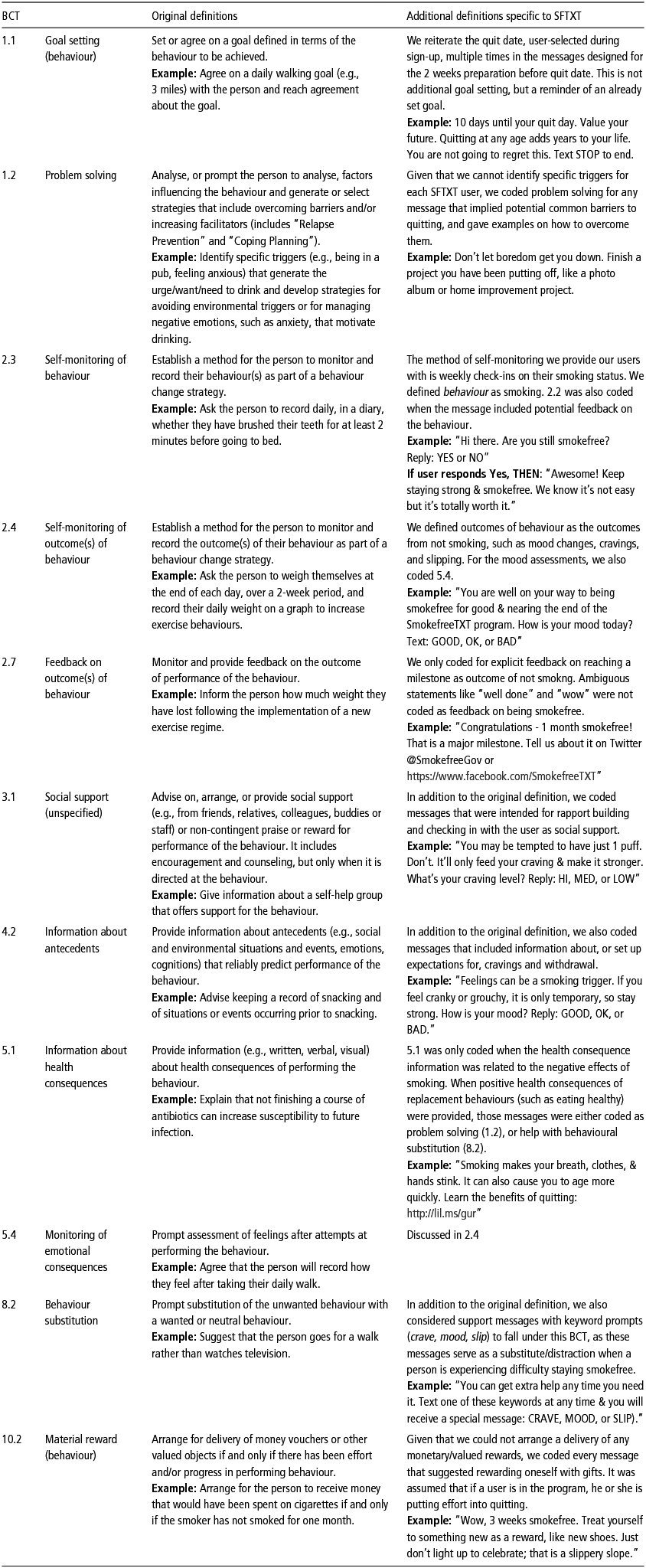
Given that the BCTTv1 was developed primarily to code face-to-face intervention manuals and reports, which contain more details about the nature of the interaction and the context in which it was delivered, we found it necessary to revise some definitions to reflect BCTs in text-based interactions more accurately. A full list of the modified BCTs, along with their original definitions, can be found in Table 1.
Additional definitions and clarifications used in the coding process of the analysis (notes and multiple examples from the original definitions were omitted)

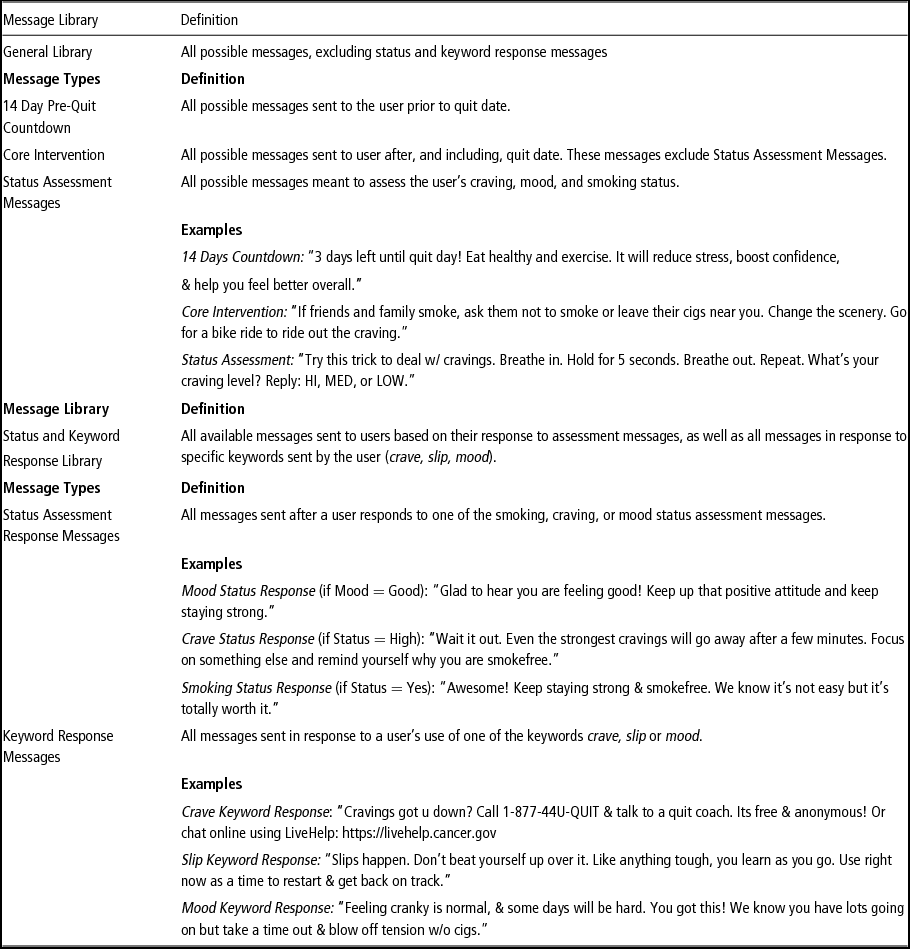
After discrepancies were resolved, Author 1 and Author 3 independently coded both the general library as well as the keyword and status response library. The general library includes all possible messages (N = 128) that may be sent to users depending on their choice of quit day. The messages are grouped into the following types: (1) 14-day pre-quit countdown, or messages sent for the 2 weeks leading up to one's quit date to provide support in preparing to quit; (2) core intervention, or all the messages sent during the 6-week post-quit intervention period (including quit day) except for status assessments; and (3) status assessments, or messages asking users to provide a response about their smoking status, craving level, or mood. The status and keyword response library (N = 38) includes messages the programme sends in response to the user's answer to an assessment question or if the user initiates an interaction through a keyword. This library was coded and reported on separately.
The percent agreement for the general library was 65%. The status and keyword response library contained more homogenous BCTs meant to provide support when the users respond to assessment status messages or voluntarily seek support by texting one of the keywords. There was 87% agreement for the status and keyword response library. All remaining discrepancies were resolved by Author 6.
Frequencies were calculated to assess the presence of BCT groups and distinct BCTs in the programme as a whole, as well as within particular content groups of the two libraries designed to perform different functions (Table 2). We also assessed the frequencies of BCTs by important temporal markers within the programme. Specifically, we assessed the distribution of distinct BCTs across each week after quit day and explored variations over time. We also profiled messages sent on the day before the quit date, during the quit date, and during the two days following the quit date. This allowed for a detailed assessment of distinct BCTs being delivered during the time when programme dropout rates are the highest (Cole-Lewis, et al., Reference Cole-Lewis, Augustson, Sanders, Schwarz, Geng, Coa and Hunt2016).
Library and message types definitions

Results
Of the 16 hierarchically clustered groups of BCTs, 14 were present in SFTXT (general content library and status and keyword response library). Of the 93 distinct BCTs, 41 were present across the SFTXT messages (Tables 3 and 4).
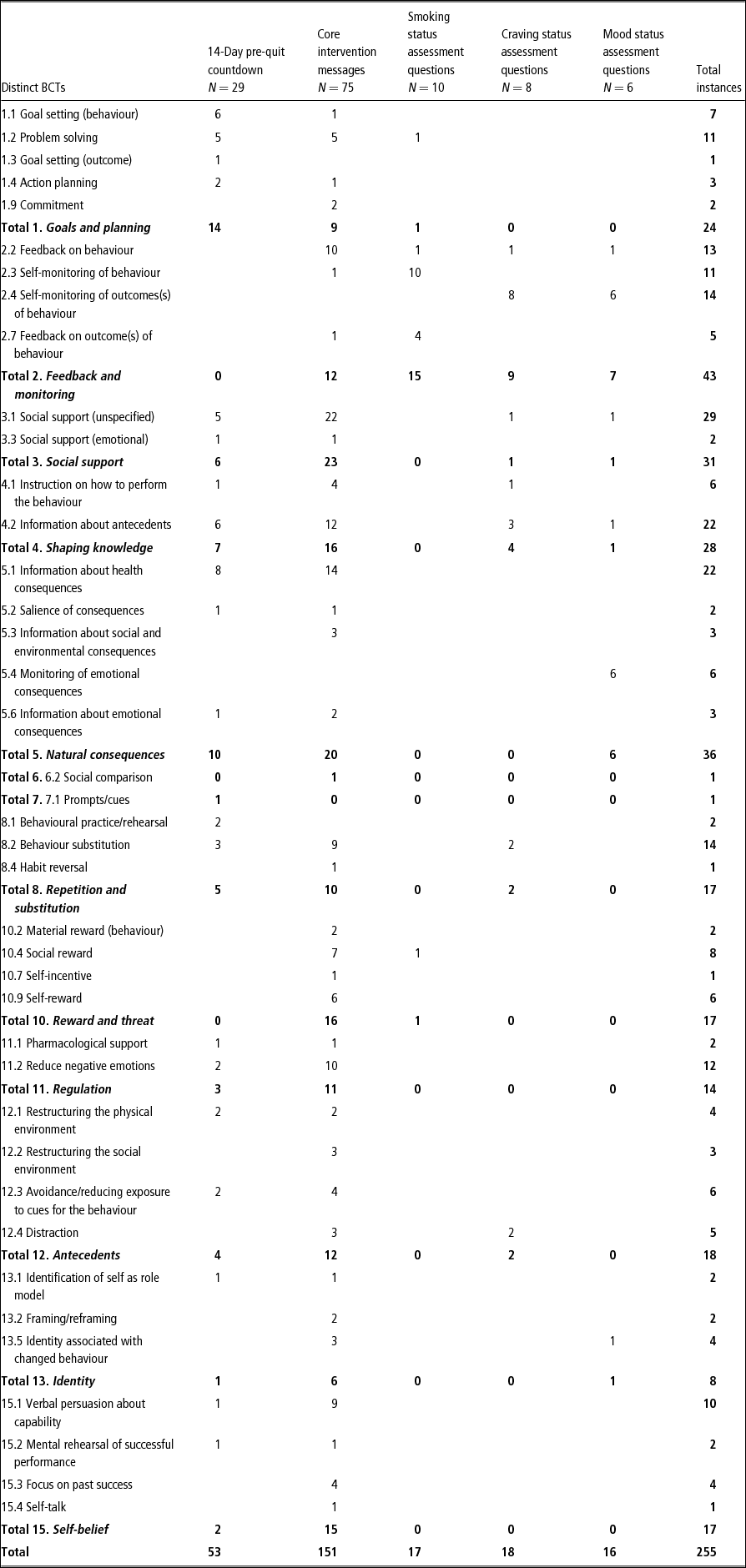
BCTs and BCT groups within the general library for smokefree.gov adult, where N refers to number of messages

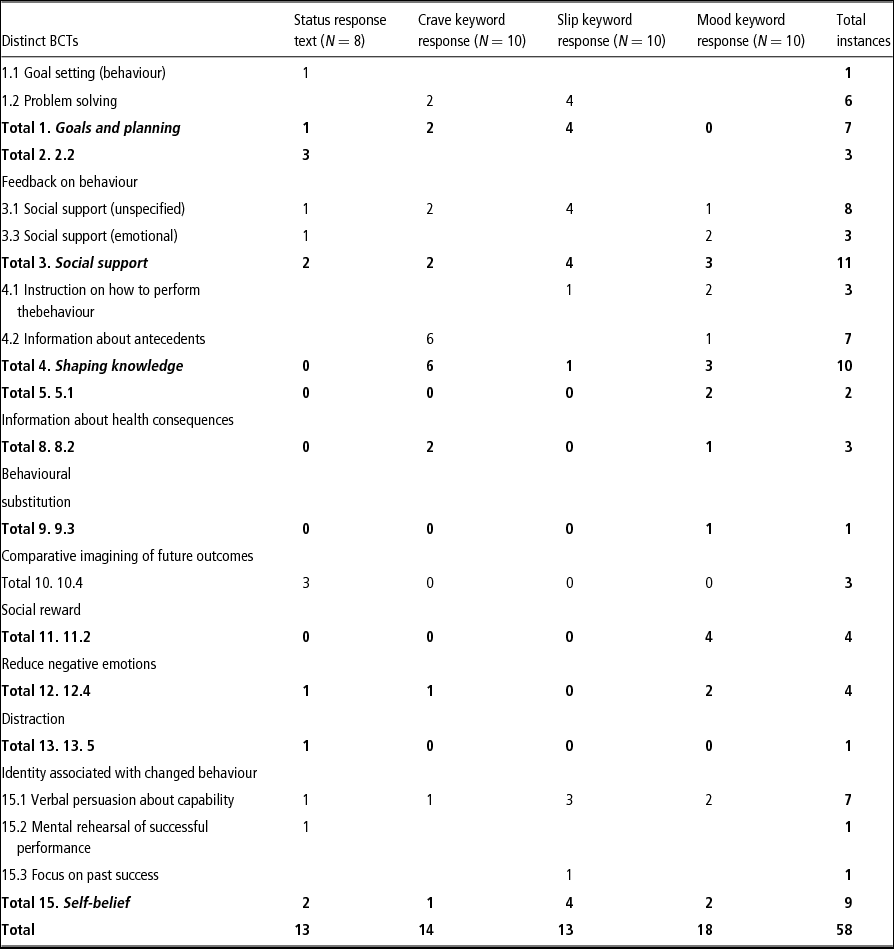
Distinct BCTs and BCT groups within the status and keyword response library

Note: The core Intervention category includes quit day.
General Library
In the general library (Table 3), there was a varied mix of BCT groups, with instances of Feedback and Monitoring (N = 43), Natural Consequences (N = 36), Social Support (N = 31), and Shaping Knowledge (N = 28) being the most common clusters. The most common distinct BCTs present were social support (unspecified) (N = 29), information about antecedents (N = 22), information about health consequences (N = 22), behavioural substitution (N = 14), self-monitoring of outcome(s) of behavior (N = 14), and feedback on behaviour (N = 13).
The 14-day pre-quit countdown messages and core intervention messages had a greater mix of BCT groups than the status assessment messages (Table 3). Goals and Planning (N = 14) and Natural Consequences (N = 10) were the most frequently represented distinct BCTs in the 14-day pre-quit countdown messages. The mix of BCT groups for core intervention messages was more evenly distributed, with Social Support (N = 23), Natural Consequences (N = 20), and Shaping Knowledge (N = 16), and Reward and Threat (N = 16) being the most common ones. The BCT groups within the assessment messages were more homogeneous, with Feedback and Monitoring (N = 31) being the most prevalent group. However, smoking assessment messages included additional Goals and Planning (N = 1) technique, craving assessment messages included Shaping Knowledge (N = 4) BCTs, and mood assessments often included Natural Consequences (N = 6) BCTs as well.
Status and Keyword Response Library
Amongst the status and keyword response messages, there were 12 BCT groups and 17 distinct BCTs (Table 4). Social Support (N = 11) was the most common BCT group, followed by Shaping Knowledge (N = 10) and Self-Belief (N = 9). Amongst the crave keyword response messages, Shaping Knowledge (N = 6) (information about antecedents in particular) was the most common BCT group. Amongst the slip keyword response messages, there was not a most common group, as the results were split evenly between Goals and Planning (N = 4), Social Support (N = 4), and Self-Belief (N = 4). In the mood keyword response messages, Regulation (N = 4) was the most common BCT group, represented by only one distinct BCT (reduce negative emotions).
BCT Groups and Distinct BCTs Within the Programme as They Relate to Key Temporal Markers
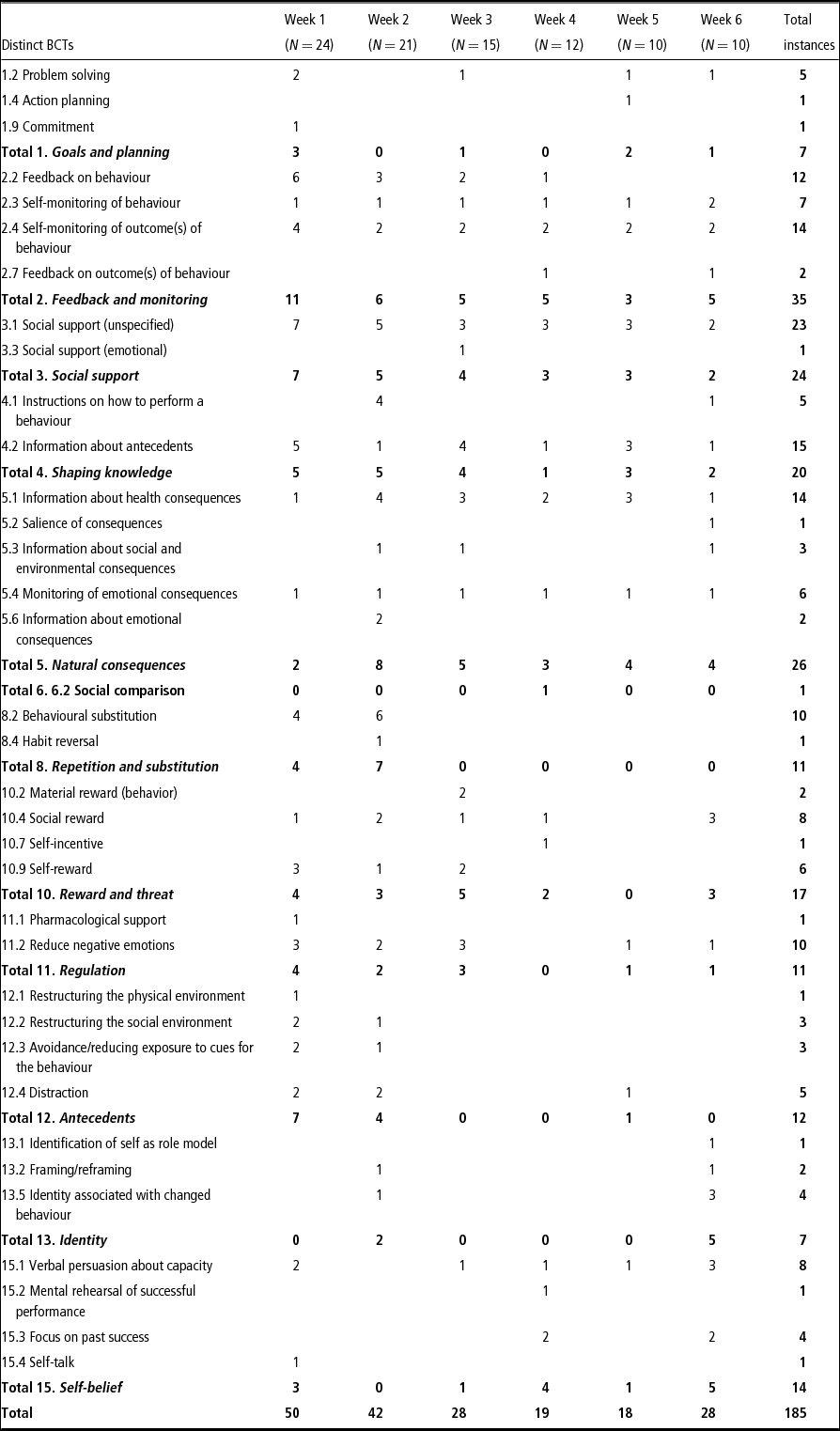
Mapping the presence of BCT groups within each of the 6 weeks of the core intervention (post-quit date) helped elucidate the distribution of BCTs throughout the programme over time (Table 5). Feedback and Monitoring (N = 35), Natural Consequences (n = 26) and Social Support (N = 24) were the most predominant BCT groups across the 6 weeks of the post-quit date intervention. There were temporal differences in the presence of all BCT groups. Specifically, in the first half of the intervention (weeks 1–3), Feedback and Monitoring (N = 22), Social Support (N = 16), Shaping Knowledge (N = 14), Reward and Threat (N = 12), Repetition and Substitution (N = 11), Antecedents (N = 11), and Regulation (N = 9) were more common. In the second half (weeks 4–6), Self-Belief (N = 10) and Identity (N = 5) BCTs were more noticeable. Natural Consequences was one of the most prevalent BCT groups and was also one of the most evenly distributed across the 6 weeks (first 3 weeks N = 15; second 3 weeks N = 11).
Distinct BCTs and BCT groups within each week of SFTXT, excluding quit day, including assessment questions

Note: The 6-week period does not include the quit date or the last three assessment messages at 1, 3, and 6 months.
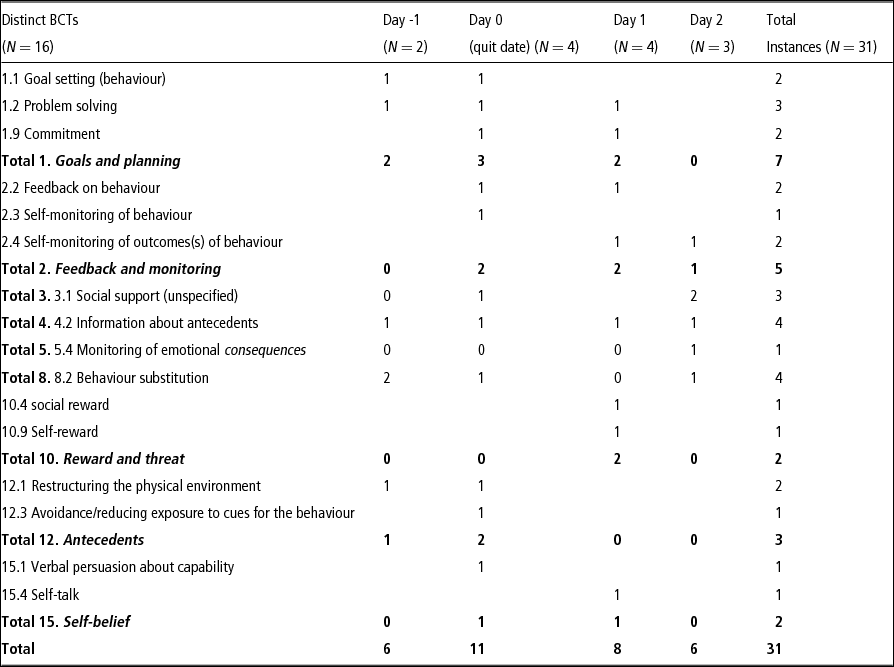
During the most vulnerable 4-day period for user dropout from the intervention (the day before quit day through day 2), Goals and Planning (N = 7) was the most common BCT group, followed by Feedback and Monitoring (N = 5), Repetition and Substitution (N = 4), and Shaping Knowledge (N = 4) (Table 6).
Distinct BCTs and BCT groups within day -1, quit day (0), day 1, and day 2 of SFTXT

Discussion
The SFTXT programme is composed of 14 BCT clusters and 41 distinct BCTs distributed with different frequencies. Some BCTs are more present than others, with Feedback and Monitoring, Natural Consequences, Social Support, and Shaping Knowledge being the most prevalent BCT clusters.
In our analysis of BCTs present in SFTXT for each week of the intervention (post-quit date), we found differences in the mix of BCTs over time, which may reflect the changing needs of individuals trying to quit. Quitting smoking is a process that consists of several phases, including preparation, quit day, sustained quitting, and potential slips or relapses. These phases require different mixes of BCTs.
There are some BCTs that are consistent throughout, such as Natural Consequences (which includes emotional, social, environmental, and health consequences, as well as anticipated regret), Feedback and Monitoring, and Social Support. However, there are others that are used more frequently at different points. For example, Goals and Planning and Natural Consequences BCTs have strong presence in the 14-day pre-quit messages when individuals are preparing to quit. After the quit date, in the first half of the intervention, Shaping Knowledge is an important part because it allows users to better understand the process they are going through and receive practical tips, such as understanding Antecedents (e.g., restricting the environment, reducing cues) as well as learning about Repetition & Substitution (e.g., behavioural substitution). Natural Consequences are important during this time as well, because they reinforce all the reasons for quitting. During the latter half, the emphasis shifts towards promoting a new Identity as a non-smoker and reinforcing Self-Belief by highlighting users’ success and confirming their ability to stay smoke-free. These BCTs help participants internalise their new identity and realise their success at accomplishing a difficult achievement such as quitting smoking.
Some techniques were underrepresented in the programme; specifically, distinct aspects of Identity (identification of self as model and incompatible beliefs) as well as Covert Learning (imaginary punishment and imaginary reward). Future mobile text messaging programmes should consider developing content that reflects these techniques as they can be well suited for text delivery.
Whilst we cannot make a direct comparison to the Text2Stop analysis because of the use of different BCT taxonomies, there were some similarities in terms of the BCTs that were most prevalent. For example, information about health consequences and behavioural substitution were some of the more prevalent techniques used in both interventions. Furthermore, use of social support, which was less prevalent in Text2Stop but highlighted as a technique that should be used more, was frequently present in the SFTXT programme.
In order to highlight potential active ingredients amongst all the BCTs in the programme, we compared techniques found in the SFTXT programme to an evidence-based resource, namely the recommendations for treatment of tobacco use and dependence for patients willing to quit (Fiore et al., Reference Fiore, Jaén, Baker, Bailey, Benowitz and Curry2008). Some of the clinical practices aimed at assisting individuals when quitting that directly tie into the BCT clusters present in SFTXT are as follows:
-
1. Help the participant to set a quit date (BCTs – Goals and Planning; message example: ‘The countdown begins! 2 weeks until you quit smoking. We are here to help you prepare & follow through. Visit http://lil.ms/gw1 to get more info’).
-
2. Encourage the participant to tell family and friends about his or her attempt (BCTs – Social Support; message example: ‘Tell your friends how they can help. They may not know how unless you tell them. For more info on social support: http://lil.ms/gw2’).
-
3. Help the participant to anticipate challenges to the upcoming quit attempt (BCTs – Shaping Knowledge; message example: ‘You may feel strange when you quit—this is withdrawal. You are addicted to nicotine & your body is used to smoking. These feelings will go away’).
-
4. Help the participant understand the importance of removing tobacco products from his or her environment (BCTs – Antecedents; message example: ‘Take everything that reminds you of smoking out of your home, car, and office. This includes your lighters, ashtrays, and matches. Everything!’).
-
5. Provide the participant with practical counseling (BCTs – Shaping Knowledge/Goals and Planning; message example: ‘Move your body. Exercise is good for you & can help you beat cravings. Walking up stairs burns 7 to 10 calories per minute. Take the stairs today!’).
-
6. Provide the participant with opportunities to seek social support delivered as part of the treatment (BCTs – Social Support; message example: ‘It's hard to fail, but worse to never have tried to succeed. If you need motivation, visit us on Facebook. https://www.facebook.com/SmokefreeUS’).
Characterising SFTXT by using the BCTTv1 enabled us to systematically assess the frequency and type of specific BCTs and BCT groups that make up the SFTXT intervention. Furthermore, mapping the frequency and type of BCT groups and distinct BCTs based on different temporal dimensions helped us better understand how we are addressing smokers’ needs over time, and in particular, key time points in which they might be most vulnerable (e.g., the first 24 hours or first 2 weeks). Having these insights, in addition to the individual-level performance metrics available through mHealth programmes like SFTXT, provides an opportunity to test important research questions such as ‘What are the optimal methods to decrease barriers and increase appeal and use of treatment?’; ‘How effective is tailoring of content to cessation?’ (Fiore et al., Reference Fiore, Jaén, Baker, Bailey, Benowitz and Curry2008).
Fractional factorial experiments can be conducted to identify the BCTs that play an active role in increasing engagement and cessation rates (Chakraborty, Collins, Strecher, & Murphy, Reference Chakraborty, Collins, Strecher and Murphy2009; Collins, Murphy, & Strecher, Reference Collins, Murphy and Strecher2007). Factorial experiments are well-suited for developing and evaluating multicomponent interventions because each component is a separate factor (e.g., in this case BCTs), and participants in the experiment are randomised to receive unique combinations of the factors so that the unique effects of each can be established. Candidate BCTs can be hypothesised using existing evidence, such as the clinical practice guidelines for treating tobacco use and dependence (Fiore et.al., Reference Fiore, Jaén, Baker, Bailey, Benowitz and Curry2008) and research examining how text messaging interventions facilitate behaviour change (Hall, Cole-Lewis, & Bernhardt, Reference Hall, Cole-Lewis and Bernhardt2015). We can then make evidence-informed decisions on how to optimise future iterations of the SFTXT programme. Overall, mapping the baseline intervention to BCTTv1 will enable us to test how changes in the use of specific BCTs, BCT groups, mix of BCTs per message, as well as their frequency of use over time, will impact (1) engagement with the programme (particularly during the days with high dropout rates), and (2) smoking cessation outcomes over time.
In this analysis, we applied the BCT taxonomy to SFTXT in a post-hoc analysis after it was developed and disseminated. Future programmes could benefit from using BCTs to guide the development of their intervention. Existing research can be used to help select BCTs that are likely to be effective in facilitating behaviour change. As the Number of interventions that specify their components using a BCT taxonomy grows, there will be opportunities to conduct meta-analyses to better understand the active ingredients of multifaceted behavioural interventions.
Acknowledgements
We would like to thank Erik Augustson, PhD, MPH and Ellen Beckjord, PhD, MPH for their valuable feedback and support on this project.
Financial Support
U.S. Department of Health and Human Services > National Institutes of Health > National Cancer Institute HHSN26100006, HHSN26100007, HHSN261201400002B.
Conflict of Interest
The authors declare no conflict of interest.
Ethical Standards
Not applicable.