


The question of how much apocryphal Gospels were rebutted, suppressed or even destroyed in antiquity is a question of perennial interest, both popular and scholarly. The present article makes no attempt at any sort of complete answer to this question, but has the rather more modest aim of analyzing the various testimonia—from antiquity into the middle ages—that make explicit reference to a “Gospel of Thomas.” This article will not touch on the numerous allusions to, or quotations of, the contents of this Gospel, but will be confined to treatments of the title (hence “named testimonia”). The impetus for this particular investigation is of course the presence, at the end of the second tractate of Nag Hammadi Codex II, of a colophon reading “The Gospel according to Thomas.”Footnote 1 Given the controversial contents of this Gospel, and the equally controversial place that it occupies in scholarly reconstructions of Christian origins, Thomas's reception in antiquity has been widely discussed since the discovery of the Nag Hammadi Codices (see n. 2 below).
A list of a number of possible testimonia to the Gospel of Thomas has already been available in Harold Attridge's edition of the Greek fragments, and this is usually referred to by scholars as the standard catalogue.Footnote 2 The present article, however, roughly doubles the number noted by Attridge, adding what are enumerated below as §§ 6, 15, 17–18, 20–21, 23, 25–36.Footnote 3Additionally, the present study attempts to analyze and assess the significance of the respective testimonia, and also appends some discussion of less explicit instances of books or writing activity associated with Thomas that may imply reference to a Gospel. In all, the quantity of references indicates just how persistent was curiosity or concern about works such as Thomas in late antiquity and beyond.Footnote 4 The following list shall proceed chronologically (§§ 1–36), leaving the uncertain cases to last (§§ 37–44). I shall discuss some of the threads running through these testimonia, as well as attending problems, at the end.
§ 1. (?Ps.-)Hippolytus, Refutatio omnium haeresium 5.7.20 (ca. 225 c.e.)Footnote 5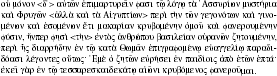

They (i.e., the Naassenes) say not only that the mysteries of the Assyrians and Phrygians support their own doctrine, but also that the same is the case with those of the Egyptians about the blessed nature—at the same time hidden and appearing—of those who have been, are, and are yet to come. This, they say, is the kingdom of heaven to be sought within man, about which they expressly pass on a statement in the Gospel entitled “according to Thomas,” as follows: “He who seeks me will find me in children from seven years old. For there, in the fourteenth aeon I am hidden and yet appear.”
But this is not from Christ but from Hippocrates, who said, “The child of seven years is half of his father.” From this they locate the original nature of all things in its original seed, having heard this Hippocratic doctrine that “the child of seven years is half of his father.” So they say that in four<teen> years, according to Thomas, he is revealed.
This is the only reference to Thomas accompanied by a quotation, in language that suggests that the Refutatio regards Thomas as originating with the Naassenes. One of the difficulties with the Refutatio comes in determining its date. It is generally dated to 222–235 c.e., but Brent has renewed the case against Hippolytan authorship, contending that the Refutatio was written by one of Hippolytus's predecessors during the lifetime of Callistus (i.e., before 222 c.e.).Footnote 6 In either event, the Refutatio employs a source that would have been roughly contemporaneous with, or even earlier than, its close parallel in the text of POxy 654.Footnote 7 The difference in wording may reflect different forms of the work in circulation. On the other hand, “it may well be that the citation in Hippolytus is but a garbled form of saying 4, distorted either by Naassene exegesis or by Hippolytus or perhaps by both.”Footnote 8 Knowledge of the Gospel of Thomas can also be seen elsewhere in the discussion of the Naassenes in Refutatio 5.8.Footnote 9 The purpose of the Refutatio here is to argue that this “mystery” does not come from secret revelation, but is in fact merely Hippocrates réchauffé.Footnote 10
§ 2. Origen, Homiliae in Lucam 1 (ca. 233–244 c.e.)Footnote 11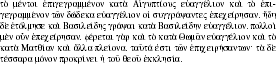
Those, however, who composed what is entitled the Gospel according to the Egyptians, and that entitled the Gospel of the Twelve—they “set their hands to it.” Basilides had already ventured to write the Gospel according to Basilides. Therefore “many have set their hands to it.” For also in circulation is the Gospel according to Thomas, as well as the Gospel according to Matthias and many others. These come from those who “set their hands to it”, but the church of God approves four alone.
Origen's use of the Gospel of Thomas has been a subject of renewed interest in recent times.Footnote 12 He is a case where we can speak without real hesitation about his actual knowledge of the Gospel in some form: He quotes variously Gos. Thom. 23, Gos. Thom. 69 and Gos. Thom. 82, attributing at least the first and last of these to written works he has read.Footnote 13 In the testimonium quoted above, Origen takes the opportunity in his interpretation of the third Greek word in Luke's Gospel ( ) to criticize those (
 ) who “set their hands to” composing a Gospel themselves, as opposed (
 ) to the four nt evangelists, who were inspired by God so to do.
 is being taken here in a negative sense of attempting on one's own initiative, as per the contrast in 2 Peter 1:21.Footnote 14 The Greek text of Origen's Homilies on Luke survives only in fragments preserved in Catenae, as well as in Jerome's Latin translation.Footnote 15 The passage is also attested in various scholia.Footnote 16 The fragment of Origen's Commentary on John discussed below (§ 37) is also relevant here.
§ 3. Eusebius, Hist. Eccl. 3.25.6 (ca. 311–323 c.e.)Footnote 17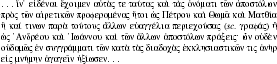
… so that we might be able to know both these, and those put forward in the names of the apostles by the heretics—whether writings consisting of Gospels as if of Peter, or Thomas, or Matthias, or of any others in addition to them; or Acts as if of Andrew or John or of other apostles. For of them, no man from among those churchmen of the successions has thought it appropriate to make any reference in a work at all…
Here, Eusebius has classified works into three categories: the “recognized books” of the New Testament (the four Gospels and Acts, Paul, 1 Peter, 1 John and perhaps Revelation); the “disputed books” or  (James, Jude, 2 Peter, 2 and 3 John); and those which are not genuine but novqa—“bastards,” or spurious or counterfeit (a category including the Acts of Paul and others).Footnote 18 However, the apocryphal Gospels such as those of Peter and Thomas require a fourth category: They are not even to be counted among the bastards, but are

 —to be rejected as completely wicked and impious (Hist. Eccl. 3.25.7). The passage also survives in Rufinus's Latin translation.Footnote 19
§ 4. Cyril of Jerusalem, Catechesis 4.36 (ca. 348 c.e.)Footnote 20
Of the New Testament, there are only four Gospels. The others are falsely attributed and harmful. The Manichees wrote the “Gospel according to Thomas,” which is dabbed on the surface with the fragrance of the title “Gospel,” but which destroys the souls of simpler folk.
This testimonium is the first to attach Thomas to the Manichees, a connection that will have a long history, as we shall see. Although the Manichees could not have written Thomas, there is certainly strong evidence for their use of it (see notes 92–94 below).
§ 5. Cyril of Jerusalem, Catechesis 6.31 (ca. 348 c.e.)Footnote 21
He (Mani) had three disciples, Thomas, Baddas and Hermas. Let no one read the Gospel according to Thomas. For it is not from one of the twelve apostles, but from one of the three evil disciples of Mani.
Here the strategy is interesting: Cyril does not say that some have falsely attributed the Gospel (as he did in Catechesis 4!) but rather that the Thomas in question is not the apostle Thomas.Footnote 22 There is also a Thomas who is credited with a block of Psalms in the Manichaean Psalmbook, though it is unknown whether this was thought to be the apostle or the disciple of Mani. Some consider the Manichaean disciple Thomas a fiction, since he does not appear in Manichaean sources. Tubach, for example avers that “Mani's disciple Thomas is a phantom, and never existed.” He was “a phantom of ancient heresiological literature, where it could not and would not be entertained that an apostle could be the author of a heretical writing.”Footnote 23 On the other side, however, the pagan Alexander of Lycopolis mentions him, and on this basis Lieu is much more sympathetic to the historical existence of a second Thomas.Footnote 24
§ 6. Didymus the Blind, Commentary on Ecclesiastes 8,3–7 (second half of fourth cent. c.e.)Footnote 25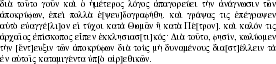
Therefore also our teaching forbids the reading of the apocrypha, since many have been written under false names. Someone writes and then calls his book a Gospel, whether it might be “according to Thomas” or “according to Peter”! But one ancient bishop of the church has put it well: “For this reason,” he says, “we prevent the study of the apocrypha: because of those who are not able to distinguish what has been combined in them by heretics.”
Here the verdict of Didymus and the unnamed authority might not be so harsh as, say, Eusebius. The problem with the apocrypha is perhaps not that they are wholly evil, but that they have a mixture of good and bad in them. The reference to there being “many” of these books perhaps recalls Origen and the interpretative tradition attached to Luke 1:1.
§ 7. Jerome, Commentarium in Mattheum Prologue (late fourth cent. c.e.)Footnote 26
… Et perseverantia usque ad praesens tempus monumenta declarant, quae a diversis auctoribus edita, diversarum hereseon fuere principia, ut est illud iuxta Aegyptios, et Thoman, et Matthian, et Bartholomeum, duodecim quoque apostolorum, et Basilidis atque Apellis, ac reliquorum quos enumerare longissimum est.
… And works surviving up to the present time, which were composed by various authors and have been the founts of diverse heresies, make it clear.Footnote 27 I am referring to that (Gospel) according to the Egyptians, and Thomas, and Matthias, and Bartholomew, as well as “of the Twelve Apostles,” and of Basilides, and of Apelles, and of others whom it would take too long to enumerate.
Although this extract comes from the Prologue to Jerome's commentary on Matthew, this Prologue begins with a note on Luke 1:1, along the lines that we have already seen in Origen: These others attempted to make orderly accounts, but did so without the Spirit of God. It is noteworthy that Jerome comments on the survival of these works up to his own time. For later use of Jerome's language here, see §§ 17 and 33 below.
§ 8. Ambrose, Expositio Evangelii secundum Lucam 1.2 (ca. 389 c.e.)Footnote 28
Et aliud quidem fertur euangelium, quod duodecim scripsisse dicuntur. ausus etiam Basilides euangelium scribere, quod dicitur secundum Basilidem. fertur etiam aliud euangelium, quod scribitur secundum Thoman. novi aliud scriptum secundum Matthian. legimus aliqua, ne legantur; legimus, ne ignoremus; legimus, non ut teneamus, sed ut repudiemus et ut sciamus qualia sint in quibus magnifici isti cor exaltant suum.
And indeed there is another Gospel in circulation, which the Twelve are said to have written. Basilides has also ventured to write a Gospel, which is called “According to Basilides.” There is also in circulation another Gospel, which is entitled “According to Thomas.” I know of another entitled “According to Matthias.” We have read some of them not so that they may be read; we have read them so that we may not be ignorant of them; we have read them not in order to hold to them, but to reject them and to know what the nature is of these books in which those prideful men have elevated their hearts.
Here again we have the juxtaposition of Thomas and Matthias, as in Origen and other examples so far (§§ 2, 3, 7). Interestingly, Ambrose seems to be indicating that he himself has read some of them. Although the Latin verb lego could mean “gather” in a sense here of “assemble a list,” or possibly “select,” it probably does mean “read” in each case: In the clause ne legantur, it certainly means “read,” and Ambrose talks of the goal of ascertaining the nature of these works. He has only read aliqua (“some,” “some such”), however, and so not necessarily his Gospel of Thomas. But clearly he thinks that getting acquainted with these apocryphal Gospels is important, in order to know their qualia.
§ 9. Philip of Side, Church History fragment (after 430 c.e.)Footnote 29
Most of the ancients did not accept the epistle of John, thinking it to be of a different John. But they completely rejected the Gospel according to the Hebrews and those called “of Peter,” and “of Thomas,” saying that they were the compositions of heretics.
In this instance we have the appeal to the authority of the ancients, as we have already seen in Eusebius and Didymus the Blind (§§ 3, 6). Indeed, Philip may be dependent on Eusebius here.
§ 10. Pseudo-Athanasius, Synopsis scripturae sacrae (ca. 550 c.e.?)Footnote 30
These are the disputed works of the New Testament:
The Journeys of Peter; the Journeys of John; the Journeys of Thomas; the Gospel according to Thomas; the Teaching of the Apostles; the Clementines. By these, quite true and divinely inspired matters have been selected and paraphrased. These are read.
This text initially sounds rather positive: These books are paraphrases of what is divinely inspired, and are called “disputed” (ajntilegovmena), rather than apocryphal or rejected. (With the list of ot books there are the antilegomena, such as Wisdom, in contrast to the more suspicious apocrypha, such as the books of Enoch.) The discussion proceeds more dismissively, however: Recalling Eusebius, these writings are described as completely superfluous—“bastards”—and to be discarded ( ).
If we are to believe this account, it is interesting evidence that a Gospel of Thomas was not only in circulation, but was actually used in worship: It is among books which are read ( ), even if the compiler of this list must be unhappy that such books are used. The list here corresponds very closely to that in Nicephorus's Stichometry (see below § 20).
§ 11. Decretum Gelasianum 5.3 (sixth cent. c.e.)Footnote 31
Euangelium nomine Mathiae, apocryphum.
Euangelium nomine Barnabae, apocryphum.
Euangelium nomine Iacobi minoris, apocryphum.
Euangelium nomine Petri apostoli, apocryphum.
Euangelium nomine Thomae quibus Manichaei utuntur, apocryphum.
Euangelia nomine Bartholomaei, apocrypha.
Euangelia nomine Andreae, apocrypha.
Euangelia quae falsavit Lucianus, apocrypha.
Euangelia quae falsavit Hesychius, apocrypha.
The Gospel with the name of Matthias, apocryphal.
The Gospel with the name of Barnabas, apocryphal.
The Gospel with the name of James the Less, apocryphal.
The Gospel with the name of the apostle Peter, apocryphal.
The Gospel with the name of Thomas, which the Manichees use, apocryphal.
Gospels with the name of Bartholomew, apocryphal.
Gospels with the name of Andrew, apocryphal.
Gospels which Lucianus has fabricated, apocryphal.
Gospels which Hesychius has fabricated, apocryphal.
This list rejects a number of Gospel accounts, including the Gospel of Thomas. As Dobschütz comments, in regard to the Manichaean connection, whether the author is relying on an older literary tradition or on his personal knowledge is an open question.Footnote 32 There is also a Revelatio Thomae later on in the Decree.Footnote 33
§ 12. Pseudo-Leontius of Byzantium, De sectis 3.2 (mid–late sixth cent. c.e.)Footnote 34
These people also invent various books for themselves. For they talk of a Gospel according to Thomas, and of that according to Philip, books which we do not recognise.
“These people” are the Manichees, and the author is perhaps Theodore of Raithu (fl. ca. 550 c.e.). The pairing of Thomas and Philip is an interesting one, because Pistis Sophia 1.43 has Philip, Thomas, and Matthew (see § 38 below). This is not the nt order,Footnote 35 although we do have the Thomas-Philip sequence in Nag Hammadi Codex II, where their Gospels are copied together.Footnote 36 See also the scholion to the Basilica below (§ 25).
§ 13. Timothy of Constantinople, De receptione haereticorum (late sixth cent. c.e.?)Footnote 37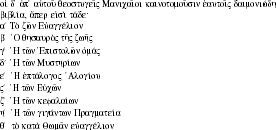
Those accursed Manichees after him (sc. Mani) invent devilish books for themselves, which are as follows:
1. The Living Gospel
2. The Treasure of Life
3. The Collection of Letters
4. The Collection of Mysteries
5. The Heptalogus of Alogius
6. The Collection of Prayers
7. The Collection of Kephalaia
8. The Deeds of the Giants
9. The Gospel according to Thomas
10. The Gospel according to Philip
11. The Acts of the Apostle Andrew
12. The Fifteenth Epistle: to the Laodiceans
13. The So-Called Childhood Deeds of the Lord …
The use here of the comparatively rare word kainotomousin (rare at least in connection with books) suggests a dependence of Timothy upon his predecessor, the author of the De sectis. As commonly the case in these lists, the author distinguishes the Gospel of Thomas from an infancy Gospel (number 13 in the list) that is not connected with Thomas at all.
§ 14. Bede, In Lucae evangelii expositio 1, Prologue (late seventh, early eighth cent. c.e.)Footnote 38
Denique nonnulli Thomae, alii Bartholomaei, quidam Matthiae, aliqui etiam duodecim apostolorum titulo reperiuntur falso sua scripta praenotasse.
Finally, a few “Thomases,” various “Bartholomews,” certain “Matthews,” even some “twelve apostles” are found to have named their writings with false titles.
As has become traditional, this reference to other Gospels comes in the discussion of the prologue of Luke. Bede goes on also to note the Gospels of Basilides and Apelles, and the Gospel according to the Hebrews—the latter of which should not be considered apocryphal, but as belonging with the ecclesiastical histories.
§ 15. John of Damascus, Orationes de imaginibus tres II 16 (ca. 730 c.e.)Footnote 39
The Manichees composed the Gospel according to Thomas. As for you—go and write the Gospel according to Leo!
Here, John of Damascus mentions the Gospel of Thomas in passing. He regards those who ban images as destroying the unwritten traditions of the church, and so draws a parallel with the Manichaeans who have done the same.Footnote 40
§ 16. Acts of the Second Council of Nicaea 6.5 (787 c.e.)Footnote 41
And the Manichees have introduced that Gospel according to Thomas, which the Catholic Church piously rejects as foreign.
Here, the Gospel of Thomas is mentioned just after the Epistle to the Laodiceans as another example of a false work.Footnote 42
§ 17. (Anon.) Quaestiones uel Glosae in euangelio nomine: Quaestiones euangelii 2 (late eighth cent. c.e.)Footnote 43
Sanctus Hieronimus dicit plures fuisse qui euangelia scripserunt, ut Lucas euangelista testatur dicens: quoniam quidem multi conati sunt ordinare narrationem rerum, quae in nobis conpletae sunt, sicut tradiderunt nobis qui ab initio ipsi uiderunt, quia multos hereses <et> eorum doctores inuenimus praesumptiuo spiritu euangelia conscripsisse <et> nomina non sua sed aliorum praenotasse, quos et Iohannis in epistola sua anticristos uocat, qui et in carne minime dominum confitebantur uenisse, et ideo ipsa falsa euangelia, quae scribebant, non sua sed aliorum nomina praenotauerunt, ut facilius in errore inducerent; ut est illud apud Aegiptios, euangelium Thoman, Mathian, Bartholomeum, duodecim quoque apostolorum nomina, Basilidis atque Apellis et reliquorum quos enumerare longissimum est.
Saint Jerome says that there have been many who have written Gospels, as Luke the Evangelist testifies: “Since many have undertaken to make an orderly account of the things which have been fulfilled among us, just as those who themselves saw from the beginning have passed down to us,” since we have found many heresies and their teachers, with prideful spirits, to have composed Gospels and called them not by their own names but by the names of others. These teachers John calls in his Epistle “antichrists,” those who do not really confess that the Lord has come in the flesh. And as such, they have not named these same false Gospels, which they have written, with their own names but with those of others, in order more easily to lead people into error. I am speaking of that according to the Egyptians, the Gospel according to Thomas, according to Mathias, Bartholomew, also the names of the twelve apostles, of Basilides, and of Apelles, and of others whom it would take too long to enumerate.
This is a fairly straightforward case of a recycling of Jerome's Prologue to his Commentary on Matthew (see § 7 above). It is interesting that the anonymous glossarist associates the apocryphal Gospels that he mentions as guilty of the christological error condemned in 1 John 4:2–3 and 2 John 7.
§ 18. Paul the Deacon, Homily 59: In natali Sancti Lucae evangelistae (end of eighth cent. c.e.)Footnote 44
et perseverantia usque ad praesens tempus monumenta declarant, quae diversis auctoribus edita, diversarum haeresum fuerunt principia, ut est illud quod appellatur Evangelium juxta Aegyptios, secundum Thomam et Matthiam, et Bartholomaeum, duodecim quoque apostolos, ac Basilidem atque Apellem, et caeteros quos enumerare longum est…
… And works surviving up to the present time, which were composed by various authors and have been the founts of diverse heresies, make it clear. I am referring to that which is called the Gospel according to the Egyptians, that according to Thomas, according to Matthias, and according to Bartholomew, as well as according to the Twelve Apostles, and according to Basilides, and according to Apelles, and others which it would take too long to list…
The present homily, in veneration of Luke, merely repeats the language of Jerome, with only minor changes, such as calling the work in question Evangelium … secundum Thomam rather than Evangelium Thomae.
§ 19. (Anon.) Commentariolus Byzantinus Scholion § 1 (no later than ninth cent. c.e.)Footnote 45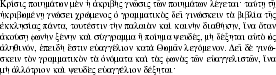
Judgment of works is said to be accurate knowledge of those works. In making use of this refined knowledge, the scholar must know all the books of the church, that is, the Old and New Testaments, so that when he hears a foreign phrase and a false book or work, he does not receive it as true—there is, after all, also a Gospel according to Thomas! It is necessary for the scholar to know the words and phrases of the Evangelists, so that he does not receive a different and false Gospel.
This is an interesting case, because it seems to imply that Thomas is a particularly well-known instance of a noncanonical work (note also § 15 above).
§ 20. Nicephorus, Chronographia brevis (ca. 850 c.e., perhaps earlier)Footnote 46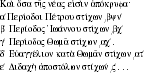
And these are the apocrypha of the New Testament:
1. The Journeys of Peter: 2750 lines.
2. The Journey of John: 2600 lines.
3. The Journey of Thomas: 1600 lines.
4. The Gospel according to Thomas: 1300 lines.
5. The Teaching of the Apostles: 200 lines…
Since Nicephorus records the length of the work he calls the Gospel according to Thomas, he clearly either knows a manuscript of it himself, or has access to a tradition that did. Might this indication of the length of the work provide a clue as to whether this is our Gospel of Thomas? Since the other works in this list are either fragmentary or difficult to identify exactly with an extant work, it might be more fruitful to compare Thomas with the lengths given for nt books, which were more or less stable by this time: Matthew (2500 lines); Mark (2000 lines); Luke (2600 lines), and John (2300 lines).Footnote 47Thomas, then, is on this count half the length of Luke's Gospel. Unfortunately, however, this does not correlate terribly well with our Gospel of Thomas; it would mean that Nicephorus's Thomas is much longer than ours.Footnote 48 (No other works, such as The Book of Thomas the Contender, or the versions of the Infancy Gospel, fit this size very well either.) To see the relative sizes of the works, one can compare the number of letters in the Coptic texts of our Thomas, and Matthew and Mark:
Approximate numbers of letters in extant Gospels Footnote 49
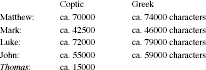
Clearly our Thomas is nowhere near half the length of the Gospel of Luke. If the length Nicephorus gives for the Gospel of Thomas is puzzling, however, then so to some extent are his lengths for Matthew and Mark: On his count, Matthew is only 25 percent longer than Mark; on my count of characters, the Greek text is 60 percent longer and the Coptic text 65 percent longer. We can present the relative lengths of the four nt Gospels along with Thomas as percentages (Luke = 100 percent) as follows:
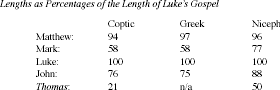
Essentially, Nicephorus's figures “bunch” together more closely than is really the case: On his reckoning, the Gospels are more comparable in length than they really are. Why this should be is difficult to understand—it may be mere coincidence. It is quite likely that we are dealing with line lengths that are different in each case, with enumerations that have come from different-sized manuscripts. In sum, despite initial promise, it is impossible to get any light from Nicephorus on whether he knew the same Gospel of Thomas as we do.
§ 21. George the Sinner, Chronicon breve 3.162 (ninth cent., after 842 c.e.)Footnote 50
He (Mani) had three disciples: Thomas, Bouddas and Hermas. Of these, this Thomas produced a book called the “Gospel according to Thomas.” As such, let no one read the Gospel according to Thomas. For it is not from one of the Twelve, but from one of the three evil disciples of Mani.
This follows what Cyril of Jerusalem says about the authorship of the Gospel of Thomas, namely that the author is not the apostle Thomas, with one fascinating development: One of Thomas's fellow-disciples is the Buddha! The Buddha does appear in Manichaean literature, though in a more appropriate historical time frame, as one of the precursors of Christ;Footnote 51 George also notes immediately previously to this discussion that Mani had a teacher called  as well.Footnote 52
§ 22. Peter of Sicily, Historia Manichaeorum seu Paulicianorum 67–68 (ca. 870 c.e.)Footnote 53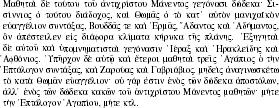
There were twelve disciples of this antichrist Mani: Sisinnius his successor; Thomas, who composed the Manichaean Gospel named according to him; Bouddas and Hermas; Adantus, and Ademantus whom he (Mani) sent to different regions as a herald of that deception. Hierax, Heracleides and Aphthonius were his interpreters and recorders. He had three other disciples: Agapius (who composed the Heptalogus),Footnote 54 Zarouas and Gabriabius. Let no one read the Gospel of Thomas. For it is not from one of the twelve disciples, but from one of the twelve evil disciples of the antichrist Mani. Neither should one read the Heptalogus of Agapius, nor …
The language here clearly recalls that of the notice of Cyril about Mani's disciples (as does a good deal of Peter's Historia), though Peter has additional material that he uses to expand the number to twelve.
§ 23. Synodicon Orthodoxiae, Anathemata synodica 10 (tenth–eleventh cent.)Footnote 55
To whomever accepts or has affection for the book called The Oracle, or the five Epistles composed by them, or the Alphabetical Book, or the Gospel according to Thomas, and does not abominate these and spit upon them as being worth only to be burned: Anathema.
For the first time readers of the Gospel of Thomas actually incur anathema. The surrounding context is difficult: We cannot easily identify any of the other works, nor is the antecedent of the  clear;Footnote 56 as such, we do not know with which group Thomas is being associated.Footnote 57 The previous anathema is interesting in that, as does Gos. Thom. 44, it replaces the reference to blaspheming the Son of Man in Mk 3.28–29/Matt 12.31–32/Luke 12.10 with a statement about blaspheming the Son (of God).Footnote 58
§ 24. Pseudo-Photius, On the Recent Reappearance of the Manichaeans 50 (eleventh cent.)Footnote 59
There were, however, twelve disciples of the disreputable Mani: Sisinius, who also succeeded to his rank in impious teaching, Footnote 60 and Thomas who composed the Gospel named according to him, and Boudas and Hermas and Adamantus, and Adimantus whom he also dispatched to various regions as a herald of their deception and apostasy …
The account attributed to Photius here closely parallels Peter of Sicily, and continues in very much the same vein as he does.
§ 25. Basilica (Scholia) Book 21, Title 1: Chapter 45.3 (eleventh cent.)Footnote 61
The disciples of the Persian Mani adduce two principles and two Gods, a good and an evil. They reject all piety, assigning it to the evil and blaspheming it as vain. They have some Gospels that they have written additionally, that “according to Philip” and that “according to Thomas.”
This reference comes in the enormous collection of Byzantine Law probably begun during the reign of Basil I (with the scholia coming about 150 years later).Footnote 62 As in the Ps.-Athanasius reference noted above (§ 10), the text uses the verb paragravfw (there paragegrammevna) in connection with extra-canonical Gospels. With Pseudo-Leontius of Byzantium (and Nag Hammadi Codex II and Pistis Sophia) the Basilica here shares the pairing of Thomas and Philip.
§ 26. MS 1006: Gloss on John 7:53–8:11 (eleventh cent.)Footnote 63
The cursive nt text numbered 1006 has a remarkable reference to the Gospel of Thomas. There are two scholia to the Pericope Adulterae in this manuscript. One is an interpretation of Jesus’ writing on the ground in John 8.6: “He wrote down the sins of each of them [presumably of the adulteress's accusers]” ( ). The other is a note on the origin of the
 (this chapter is from the Gospel according to Thomas). Because this is so unusual, Becker even wonders whether there might be a credible tradition behind it.Footnote 64 Eusebius, however, had already propounded the view that the pericope went back to the Gospel of the Hebrews (EH 3.39.17), and our gloss is perhaps a mistaken reminiscence of Eusebius's attribution.
§ 27. Euthymius of Constantinople, Epistula Invectiva (ca. mid-eleventh cent.)Footnote 65
In his attack on the Bogomils, or, as he also calls them, the “Phundagiagites,” Euthymius discusses the martyrdom of Mani. He makes it clear, however, that Mani was not a martyr of God but of the devil. Euthymius then paraphrases one of the passages of Cyril already discussed above (§ 5):

Saint Cyril of Jerusalem writes against the records of the heretics the following: “Be careful, brothers, not to read the Gospel according to Thomas, since it is not of the apostle of Christ our true God, but of another, heretical, Thomas, the disciple of Mani.”
Euthymius perhaps quotes from memory here: The wording is not exactly that of Cyril, though the sentiment is identical.
§ 28. Theophylact of Ohrid, Vita Clementis Ochridensis 28 (late eleventh–early twelfth cent.)Footnote 66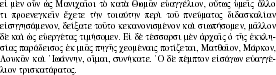
So if, like the Manichees with the Gospel according to Thomas, you likewise have something else to offer which has introduced this teaching about the Spirit, show us that it has been canonised, and we will be silent. More than that—we will even honour you as benefactors. But if the paradise of the church is watered by four principles (albeit flowing from a single spring), then understand them, as it were, to be Matthew, Mark, Luke and John. But he who introduces a fifth Gospel is thrice accursed.
Theophylact was bishop of Ohrid in Bulgaria, and so might very well express negative concerns about Manichaeism because of the local presence of Bogomils. His reference is intriguing because it suggests a particular subject matter of the Gospel of Thomas, namely the Spirit as understood by the Manichees, although there is no detail supplied on the matter. Theophylact also anticipates by a millennium the modern scholars who have designated Thomas as the fifth Gospel!Footnote 67
§ 29. Gratian, Decretum pars 1, distinctio 15, canon 3, § 35 (early mid–twelfth cent. c.e.)Footnote 68
Euangelium nomine Thaddei, apocrifum.
Euangelium nomine Thomae apostoli, quo utuntur Manichei, apocrifum.
Euangelium nomine Barnabae apostoli, apocrifum.
Euangelium nomine Bartolomaei apostoli, apocrifum.
Euangelium nomine Andreae apostoli, apocrifum.
Euangelia quae falsavit Lucianus, apocrifa.
Euangelia quae falsavit Hyrcius, apocrifa.
Gospel with the name of Thaddeus: apocryphal.
Gospel with the name of the Apostle Thomas, which the Manichees use: apocryphal.
Gospel with the name of Barnabas: apocryphal.
Gospel with the name of Bartholomew: apocryphal.
Gospel with the name of Andrew: apocryphal.
Gospels which Lucianus has fabricated: apocryphal.
Gospels which Hyrcius has fabricated: apocryphal.
This is clearly an extract from the Gelasian Decree (see above § 11). The items and the sequence, however, differ slightly; the content here is much closer to that of Ivo of Chartres and Peter Abelard (§§ 30, 31). The only minor difference from the Gelasian Decree in its reference to Thomas is in its identification of him as an apostle, which means that the “Thomas” is clearly not intended as Thomas the disciple of Mani here.
§ 30. Ivo of Chartres, Decretum IV 65 (ca. eleventh–twelfth cent. c.e.)Footnote 69
Evangelium nomine Thaddaei, apocryphum.
Evangelium nomine Barnabae, apocryphum.
Evangelium Thomae apostoli quo Manichaei utuntur, apocryphum.
Evangelium nomine Bartholomaei apostoli, apocryphum.
Evangelium nomine Andreae apostoli, apocryphum.
Evangelia quae falsavit Lucianus, apocrypha.
Evangelia quae falsavit Ysius, apocrypha.
The Gospel in the name of Thaddaeus: apocryphal.
The Gospel in the name of Barnabas: apocryphal.
The Gospel of the apostle Thomas, which the Manichees use: apocryphal.
The Gospel in the name of the apostle Bartholomew: apocryphal.
The Gospel in the name of Andrew the apostle: apocryphal.
The Gospels which Lucian fabricated: apocryphal.
The Gospels which Ysius fabricated: apocryphal.
Again, the Gelasian Decree (§ 11) forms the basis for this list of Gospels: Here the source indicates Thomas by the genitive construction Evangelium Thomae apostoli. The apostoli means furthermore that the work is not attributed to the disciple of Mani. As generally the case in traditions stemming from the Gelasian Decree, the list of Gospels here follows a reference to the Acts of Thomas, and is followed immediately after by the Liber de infantia Salvatoris, and later on by the Revelatio Thomae. As noted above, however, although the list of Gospels here is substantially the same as that in the Gelasian Decree, both Ivo and Abelard (see below) are closer to Gratian, and even closer to each other.
§ 31. Peter Abelard, Sic et Non: Ex decretis Gelasii papae de libris apocryphis (ca. 1122–1142)Footnote 70
Evangelia Taddei nomine, apocrifa.
Evangelia nomine Barnabae apostoli, apocrifa
Evangelia Thomae apostoli, quibus Manichaei utuntur, apocrifa.
Evangelia nomine Bartholomei apostoli, apocrifa.
Evangelia nomine Andreae apostoli, apocrifa.
Evangelia quae falsavit Lucianus, apocrifa.
Evangelia quae falsavit Ycius, apocrifa.
Gospels with the name of Thaddeus: apocryphal.
Gospels with the name of the apostle Barnabas: apocryphal.
Gospels with the name of the apostle Thomas, which the Manichees use: apocryphal.
Gospels with the name of the apostle Bartholomew: apocryphal.
Gospels with the name of the apostle Andrew: apocryphal.
Gospels which Lucianus has fabricated: apocryphal.
Gospels which Ycius has fabricated: apocryphal.
Here the ill-fated Abelard also includes the usual suspects in his Sic et Non. Curiously, all the Acts and Gospels are here put into the plural, though one is probably not to imagine multiple Gospels of Thaddeus, Thomas and Bartholomew. In his prologue to the Sic et Non, immediately preceding his extracts from the Gelasian Decree, Abelard cites Jerome's warning: caveat omnia apocrypha, expressing anxiety about the fact that these works have false titles affixed to them.Footnote 71
§ 32. Nicetas Seides, Conspectus librorum sacrorum 23 (twelfth cent.)Footnote 72
But those who composed the Gospel entitled “according to the Egyptians” and that entitled “Gospels (sic) of the twelve”—they “set their hands to” the task. There is also a “Gospel according to Thomas” in circulation. Basilides had already ventured to write his “Gospel according to Basilides.” Indeed, then, “many have set their hands to it”; there is also that according to Mathias, and many others …
This is clearly essentially the same text as that of the Origenist scholion, and has in common with ms Marc. 544 the curious plural eujaggelivwn.Footnote 73
§ 33. Thomas Aquinas, Catena aurea in Matthaeum, Preface (ca. 1264)Footnote 74
Hieronymus Super Matth. Circa numerum vero Evangelistarum sciendum est plures fuisse qui Evangelia scripserunt, sicut et Lucas Evangelista testatur dicens: Quoniam quidem multi conati sunt ordinare etc., et sicut perseverantia usque ad praesens tempus monumenta declarant, quae a diversis auctoribus edita, diversarum haereseum fuere principia, ut est illud iuxta Aegyptios, et Thomam et Matthiam et Bartholomaeum, duodecim quoque apostolorum, et Basilidis, atque Apellis, et reliquorum, quos enumerare longissimum est.
Jerome, on Matthew: Indeed, concerning the number of Evangelists, it is necessary to know that there are rather many who have who have written Gospels, just as Luke the Evangelist testifies: “Since indeed many have attempted to put in order, etc.” And works surviving up to the present time, which were composed by various authors and have been the founts of diverse heresies, make it clear. I am referring to that (Gospel) according to the Egyptians, and Thomas, and Mathias, and Bartholomew, as well as “of the Twelve Apostles,” and of Basilides and Apelles, and others whom it would take too long to enumerate.
Since Aquinas is simply quoting at length here (see § 7 above), one certainly need not assume that he knew anything about the Gospel of his namesake, or that it was still in circulation in his own day. The only very small variation of any relevance is the Latinization of Thomas's name, from Thoman in Jerome to Thomam in Aquinas.Footnote 75
§ 34. Thomas Aquinas, Catena aurea in Lucam 1.1 (between 1264 and 1274)Footnote 76
Ambrosius in prooem. in Lucam. Nam sicut multi in Iudaeorum populo divino infusi spiritu prophetaverunt, alii autem pseudoprophetae erant potius quam prophetae; sic et nunc in novo testamento multi Evangelia scribere conati sunt, quae boni nummularii non probarunt: et aliud quidem fertur Evangelium quod duodecim scripsisse dicuntur: ausus est etiam Basilides Evangelium scribere: fertur aliud secundum Thomam, et aliud secundum Matthiam.
Ambrose, in the Prologue to Luke. For just as many among the people of the Jews were inspired by the divine Spirit and prophesied while others were false prophets rather than prophets, so also now in the New Testament many have tried to write Gospels which good moneyers have not approved. There is indeed another Gospel in circulation which the Twelve are said to have written. Basilides also ventured to write a Gospel; there is another in circulation according to Thomas, and another according to Matthias.
Again, Aquinas is simply quoting a patristic authority (see §8 above).
§ 35. Mechitar of Ayrivank, Chronicle I, 33 (ca. 1285)Footnote 77
Then according to the New [Testament]:
The Book of the Infancy of the Lord
The Gospel of Thomas
The Revelation of Peter
Three Wanderings of Paul
The Catholic Epistles of Barnabas and Judas and Thomas.
Of St. Clement, “Which books are to be accepted?”
Acts, and
Apostolic Canons
The Revelation of John, which is called Pilalimsis
The Counsel of the Mother of God to the Apostles
The Books of Dionysius of Athens
The Epistle of Timothy
The Book of Crispos
The Words of Justos
The Orthodox Sermon
The Epistle of Barnabas.
This list of Apocrypha is relatively little known in recent discussion, and it contains various peculiarities.Footnote 78 In addition to a Gospel of Thomas, we have not only a work of “The Infancy of Jesus,” but also a “Catholic Epistle of Thomas”: in this list of Catholic Epistles, however, all three items are curious.Footnote 79 The list of the nt apocrypha is included as a subset under the larger heading of “Secret Books of the Jews.” The list comes in Mechitar of (the monastery of) Ayrivank's history, after a series of lists including ot prophets, priests and kings, as well as of kings and princes of Armenia and Georgia. Stone (following Burchard) notes that the original work of Mechitar is also later recycled in other manuscripts.Footnote 80 He comments, for example, that the list in Mechitar is also combined with another list of forbidden books in the eighteenth-century manuscript M9121, folio 73v.Footnote 81 Since this manuscript is so late, it will not add to the count here.
§ 36. Nicephorus Callistus, Historia ecclesiastica Book II, 46 (late thirteenth–early fourteenth cent.)Footnote 82
Let us take the writings of Peter, and of Thomas and of Matthias, perhaps also those which consist of some other Gospels and Acts of other Apostles, just as they put out those of Andrew and John: Of these none of the apostolic successors and generations of ecclesiastical writers have made any mention.
Here Nicephorus includes the Gospel of Thomas in the category of “bastards” and antilegomena: In this way, and in a number of other particulars, Nicephorus shows that he is heavily dependent on Eusebius. According to this list it appears alongside the Epistle of Barnabas, the Gospel of the Hebrews, as well as Gospels of Peter and of Matthias.
Possible Additional Instances
§ 37. Origen, Commentary on John fragment 106 (mid-third cent. c.e.)Footnote 83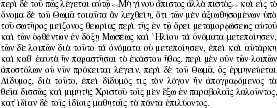
Concerning how it is said to him, “Do not be unbelieving, but believe!,” such things could be addressed to the name of “Thomas,” because he (the author John) altered the names of those to be counted worthy by the Savior of the greater vision of his transfiguration when Moses and Elijah also appeared in glory, but he did not change the names of the others, by reason of the fact that those (names) were sufficient in and of themselves for presenting the person of each. It is, therefore, not proposed at present to speak about the other apostles, but about Thomas, which means “Twin,” by reason of the fact that he was a twin with respect to the word, recording the divine things twice, and an imitator of the Christ who spoke to those outside in parables, but explained everything privately to his particular disciples.
Finally, we have eight cases that are possible instances, though not certain. Stephen Carlson has recently suggested this complicated passage as a possible testimonium.Footnote 84 The passage is a reflection on Thomas's name: He is one of the disciples who did not witness the Transfiguration, and therefore his name was kept, rather than changed by Jesus or John the evangelist.Footnote 85 The apparent, though very odd sense of this passage is that Origen understands Thomas to have written two accounts, one plain and one more expository. This is puzzling given what Origen says elsewhere about a “Gospel of Thomas” (see on § 2 above): The language about Thomas and his writing activity here is entirely positive.
§ 38. Pistis Sophia I, 42–43 (ca. third cent. c.e.)Footnote 86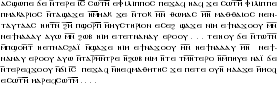
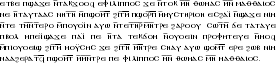
It happened that when Jesus heard Philip, he said to him: “Hear, Philip, thou blessed one, with whom I spoke; for thou and Thomas and Matthew are those to whom was given, through the first mystery, to write all the words I will say, and the things I will do, and everything you will see… . At this time now, it is you three who will write every word I will say, and the things I will do, and the things I will see. And I will bear witness to all things of the Kingdom of Heaven. When Jesus had said these things, he said to his disciples: “He who has ears to hear, let him hear.” ….
(Mary said:) Concerning the word which thou did say to Philip: “Thou and Thomas and Matthew are the three to whom it has been given through the First Mystery to write every word of the Kingdom of Light, and to bear witness to them,” hear now that I give the interpretation of these words. It is this which thy light power once prophesied through Moses: “Through two and three witnessess everything will be established.” The three witnesses are Philip and Thomas and Matthew.
Harnack appears to think this statement is a straightforward indication of a Gospel of Thomas (albeit the Infancy Gospel with which he was acquainted), and while we probably cannot be so confident, there is a possible allusion to the work here.Footnote 87 This passage assigns Thomas a role alongside Matthew and Philip, who are also established already as Gospel writers.Footnote 88 In addition to Thomas's responsibility to write down everything that Jesus says (compare Gos. Thom, incipit), there is the comment that Mary now provides the interpretation of these words (compare Gos. Thom. 1), and the use of the “ears to hear” formula (Gos. Thom. 8 et al.). There is thus a reasonable chance that the Pistis Sophia here is referring to Thomas, and consciously alluding to some of its opening sayings. There are several other possible allusions to Thomas in the work.Footnote 89
§ 39. P. Kell. Copt. 19, ll. 13–18 (mid–late fourth cent. c.e.)Footnote 90
Another intriguing possibility (which cannot be more than this) comes in a personal letter of Makarios to his son, found in House 3 in Kellis. It is a reference in a list of Manichaean works to “the Sayings”:

Study [your] Psalms, whether Greek or Coptic, <every> day (?) … Do not abandon your vow. Here, the Judgment of Peter is with you. [Do the] Apostolos; or else master the Great Prayers and the Greek Psalms. Here too, the Sayings are with you: Study them! Here are the Prostrations. Write a little from time to time, more and more …
Obviously given the character of the Gospel of Thomas, it is a candidate for what is here referred to as “the Sayings” ( ).Footnote 91 We have seen the strong sense of the Fathers of the Manichees’ use, even composition, of Thomas. This is also borne out in Manichaean literature, although no text mentions a Gospel of Thomas explicity.Footnote 92 Manichaean literature contains allusions to Thomas;Footnote 93 in the case of the Kephalaia, we even have a quotation.Footnote 94 If this is indeed a reference to Thomas, the company that it keeps is noteworthy, as is the instruction to study (
 ) the work.
§ 40. Faustus (late fourth cent.), apud Augustine, Contra Faustum 30.4 (397–398 c.e.)Footnote 95
mitto enim ceteros eiusdem domini nostri apostolos, Petrum et Andream, Thomam et illum inexpertum Ueneris inter ceteros beatum Iohannem, qui per diversa possessionem boni istius inter uirgines ac pueros diuino praeconio cecinerunt formam nobis atque adeo uobis ipsis faciundarum uirginum relinquentes. sed hos quidem, ut dixi, praetereo, quia eos vos exclusistis ex canone facileque mente sacrilega uestra daemoniorum his potestis inportare doctrinas.
I pass over the other apostles of our Lord—Peter, Andrew, Thomas, and that one unacquainted with Venus and blessed among the others, John. These in various ways gave to young men and maidens by divine proclamation the possession of that good, leaving to us, and to you too, the pattern for making virgins. But I pass over them, as I say, because you (pl.) have excluded them from the canon, and with your sacrilegious minds you are easily able to attribute to them doctrines of demons.
Augustine has quoted 1 Tim 4:1–3 against the Manichees, with its reference to those who attend to doctrines of demons also abstaining from meat and forbidding marriage. Faustus replies first by questioning whether Paul said such a thing at all (anticipating skepticism about the Pastoral epistles by 1400 years, perhaps!), and then defends abstinence from meat on the basis of the ot (especially the prohibition by Moses of certain meats, and the vegetarianism practiced by the Daniel and the three youths in Daniel 1). Faustus then moves on to defend chastity, noting the presence of virgins in the church, as well as the practice of Jesus himself and his teaching about the “eunuchs for the sake of the Kingdom of Heaven” in Matt 19:12. Then comes the statement above, with Faustus's “passing over.”Footnote 96 This example is taken by Schröter and Bethge to be a testimonium to the Gospel of Thomas, but it is not possible to be certain about it.Footnote 97 It may well be that the reference to Andrew, Peter and Thomas here is in connection with their Acts.
§ 41. Etheria, “Peregrinatio” 19 (ca. 400 c.e.)Footnote 98
Unde denuo proficiscens, peruenimus in nomine Christi dei nostri Edessam. Ubi cum peruenissemus, statim perreximus ad ecclesiam et ad martyrium sancti Thomae. Itaque ergo iuxta consuetudinem factis orationibus et cetera, quae consuetudo erat fieri in locis sanctis, nec non etiam et aliquanta ipsius sancti Thomae ibi legimus.
From there I set off again, and we arrived in the name of our God Jesus Christ at Edessa. When we had arrived, we immediately went to the church and the martyry of St Thomas. So then, after saying prayers according to custom, and doing everything else customary in holy places, we also read there a certain number of works of St. Thomas himself.
This interesting possibility, in Etheria's account of her pilgrimage, has been noted by Uwe-Karsten Plisch.Footnote 99 The construal of this passage is quite difficult. Pétré's Sources Chrétiennes edition takes the key phrase aliquanta ipsius sancti Thomae to mean “quelques textes relatifs à saint Thomas,” and in a note glosses this as a probable reference to the Acts of Thomas.Footnote 100 This is a cautious interpretation, however, and perhaps an over-cautious one. A more maximalist interpretation might stress the fact that aliquanta can also mean a large quantity or number, not just a certain number.Footnote 101 Additionally, her translation of the genitive phrase ipsius sancti Thomae as “relatifs à saint Thomas” neglects the intensive pronoun ipse, and so the phrase might well mean that Thomas himself wrote it.Footnote 102 It would be quite unremarkable for there to be works about Thomas at his own shrine; the emphatic ipsius, however, is more likely to be stressing works claiming to come from the hand of Thomas himself. The Acts of Thomas would be a very natural candidate for inclusion here, but the aliquanta may well imply more. It would be a further point in favor of seeing a reference to the Gospel of Thomas if there is truth in the various scholarly claims about Edessa as the provenance of the Gospel.Footnote 103
§ 42. Innocent I, Epistula 6.7 (405 c.e.)Footnote 104
Caetera autem, quae vel sub nomine Matthiae sive Jacobi minoris, vel sub nomine Petri et Joannis, quae a quodam Leucio scripta sunt [vel sub nomine Andreae, quae a Nexocharide et Leonida philosophis], vel sub nomine Thomae, et si qua sunt alia, non solum repudianda, verum etiam noveris esse damnanda.
Others, however, which appear either under the name of Matthias or James the Less, or under the name of Peter and John, which were written by a certain Leucius [or under the name of Andrew, written by the philosophers Nexocharis and Leonidas], or under the name of Thomas, and whatever others there may be: These are not merely to be rejected, but are actually (as you know) to be condemned.
This example, again, does not actually mention a Gospel of Thomas, but we should include it as a possible reference. The epistle first provides a list of canonical books, and then deals with the “others.” It is unclear whether the anathema here covers the Gospel, the Acts, or even the Revelatio of Thomas; perhaps Pope Innocent knows of more than one of these. Perhaps given the sequence Peter-John-(Andrew)-Thomas it is the Acts that are in view. As we have seen, Ps.-Athanasius and Nicephorus's Stichometry (§§ 10 and 20 above) record this same sequence of Apocryphal Acts, but also append the Gospel of Thomas ( ). As such, the Gospel may well be included as well.Footnote 105
§ 43. Severus, fragment (Cairo 8010a), Verso, col. 1 (early sixth cent. c.e.)Footnote 106
… the circus games and the horse races, when he forsook the books of divinely-inspired Scripture, and read from the things which the myth-makers —who are those of his abominable heresy—have spoken. I am speaking of Mani and Thomas his disciple and all that the heretics have said.
This comes from a fragmentary single leaf from a heresiological work by Severus. It mentions on the recto a heretic, whose name is lost, accused of drunkenness and sexual immorality; it is unclear whether he is connected with the other Manichaean heretic on the verso here. The interesting point for our purposes in this excerpt is the link between Thomas and heretical books. It is fairly clear that Severus is identifying Mani and Thomas as the “myth-makers” ( ) who have composed the heretical literature that the opponent here has embraced. Not explicit, however, is a reference to a “Gospel of Thomas.” This is likely, however, since we have seen that elsewhere in discussions of Mani and his disciples, the Gospel is attributed to him. The Patristic testimonia to do not associate any other works with him, though we of course have the Psalms of Thomas in the Manichees’ own literature.
§ 44. Second Council of Lyons: Synopsis of the Canons against the Latins 10 (1273–1277)Footnote 107
In truth, this dogma, this belief that the Spirit proceeds from the Son, comes from a certain heretic Thomas, a disciple of Mani, as Saint Cyril the Great along with other saints testifies.
This extract is preceded by a statement of the Damascene that the Spirit is of the Son but not from the Son, and that the heresy of the Son's procession from the Father is a Manichaean one, with its source in Thomas. It bears close comparison with the testimonium we have already seen above from Theophylact (§ 28 above) although he does not actually identify Thomas's particular pneumatological heresy. It may be, however, that the Council of Lyons here reflects the influence of Theophylact, or testifies independently to gossip about the contents of a Gospel of Thomas with dangerous understandings of the Spirit. It looks as though Thomas has, anachronistically, been credited with the western doctrine of the filioque. Cyril—of Jerusalem, not Cyril the Great as here—certainly did not specify this or any discussion of the Spirit in the Gospel of Thomas, although he did connect it with Thomas the disciple of Mani (see §§ 4–5 above).
Synthesis and Conclusions
After Hippolytus's first mention of the Gospel of Thomas (§ 1), we have no further direct quotation in the name of Thomas. There is also no further association of the work with the Naassenes, which is not surprising given the paucity of reference to them in the later heresiological tradition.Footnote 108 There is no reference in Irenaeus, and—perhaps surprisingly—nothing in Epiphanius, who is usually assiduous in referring to heretical books by name.
A large number of the references above, beginning with Cyril of Jerusalem, ca. 348, associate Thomas with Manichaean authorship and usage (§§ 4–5, 11–13, 15–16, 21–25, 27–31, 39–40?, 43–44?). Some of these are clearly dependent upon Cyril (§§ 4–5) and his decoupling of Thomas from the apostle Thomas (§§ 21–22, 24), with explicit references to Cyril in two cases (§§ 27, 44?); the Gelasian decree (§ 11) is more influential in other instances (§§ 29–31). The association with Manichaeism is no doubt part of the reason why mention of Thomas is preserved for so long. Some of the later notices about Thomas come not merely as the result of preservation of older material about Manichaeism, but in the context of real concern about groups such as the Bogomils (e.g., §§ 24, 27–28). There is no mention of the Gospel of Thomas by name, however, in Manichaean literature, although there is evidence of influence (see notes 92–94 above).
A number of the mentions of Thomas are, however, repetitions of older statements. In his exegesis of Luke 1:1, Origen (§ 2) sparks off an anxious tradition of there being “many” who tried to write Gospels under their own steam, without divine inspiration. This is followed by some Greek writers (§ 6?, § 32), and also enters the Latin tradition through Jerome's translation of Origen,Footnote 109 as well as in his own Matthew commentary (§ 7). Jerome's influence gives this exegetical tradition some staying power in the west. Some, such as Abelard, follow Origen's and Jerome's anxiety about the “many” (see comment on § 31). Others preserve this interpretation of Luke 1:1 more out of pietas to the earlier fathers: The anonymous commentator in § 17 quotes the Jerome reference (§ 7) at length; Aquinas's use of it comes because Pope Urban IV asked Aquinas for a Gospel commentary based on patristic interpretation, hence the incorporation of Jerome into his work on Matthew (§ 33) and a similar comment of Ambrose (§ 8) in his work on Luke (§ 34).Footnote 110
As mentioned already, the Gelasian decree exercised some influence on sub-sequent references. Some of the notices above, however, reflect a different list of “apocryphal works of the new covenant,” preserved in the Greek tradition (§§ 10, 20; compare § 35). Some other lists reflect not only anathematising concern but also a kind of antiquarian, scholarly interest. Timothy of Constantinople assembles an impressive list of what he calls Manichaean works, a number of which probably were Manichaean (§ 13). In the Stichometry, Nicephorus includes the line-lengths of the apocryphal books, as he does for the canonical books (§ 20). This case is noteworthy because it indicates actual knowledge of the work (or knowledge of a source that had knowledge of its length). Hippolytus clearly knows some of the content as well, as does Origen. In other instances, we cannot be so sure of any knowledge of the work's content, though there may be allusions in the references from the Pistis Sophia. Jerome shows knowledge of the circulation in his own day of Thomas and other Gospels, even if he is unaware of their content. The sixth-century compiler of the Synopsis scripturae sacrae (“Ps.-Athanasius”) is remarkable for expressing the view that in his day (or in the time of his source), a Gospel of Thomas was among antilegomena that are “read” aloud in churches ( ). The claim in Theophylact (§ 28) and possibly the Lyons Synopsis (§ 44) that the Gospel of Thomas evinced a heretical pneumatology is a very late connection, and probably the result of a muddle. The same is almost certainly true of the gloss on the Pericopae Adulterae in ms 1006 attributing the pericope to Thomas (§ 26).
The references in the Pistis Sophia, the Kellis letter, and Faustus would, if accepted, be distinctive as references by sympathetic authors (§§ 38–40). Otherwise, the statements are all negative, though there is perhaps some variegation. After 1) the canonical books, 2) the antilegomena, and 3) the “bastards” ( ), Eusebius has a fourth category that he reserves for works he regards as of irredeemable awful-ness: Thomas belongs in this fourth group. On the other hand, Pseudo-Athanasius includes Thomas in a list of antilegomena and notha (§ 10).
In these instances we have some consistency in the form of the title. The Greek form of the title appended to the Coptic version ( ) is found in almost all cases where an actual title is being noted. The exceptions on the Greek side are Eusebius and those following him (§§ 3, 9, 36), who use a genitive form (
 ), rather than the longer
 In the Latin tradition, the longer form is used, with variation in the preposition (iuxta, secundum or apud: §§ 7, 8, 17). There are more exceptions here: Abelard uses a genitive phrase, and the Decretum Gelasianum and some of its followers emphasize the pseudonymous character by referring to the euangelium (sub) nomine Thomae (§§ 11, 29, 42?).
It cannot be decisively ruled out that we may not always be dealing with references to the same work. It is possible that authors might indicate some other work such as the Book of Thomas the Contender, the Infancy Gospel of Thomas, or the Acts or Revelation of Thomas: As noted, the Armenian list (§ 35) even mentions an Epistle of (Judas) Thomas. Various factors make references to these various other candidates very improbable, however. The first and last of these are unlikely, since the do not appear to have been well known in antiquity. The Infancy Gospel of Thomas is an unlikely candidate because the attribution of that work to Thomas is late: The name does not appear, for example, in the early versions (the Syriac and the Old Latin).Footnote 111 Additionally, some of our authors above explicitly refer to a Gospel of Thomas and an Infancy Gospel or a Revelation under separate names (§§ 11, 13 and 35).Footnote 112
It is more probable that we are dealing with the same work, perhaps in different forms. Comparison of the Hippolytus citation with the extant texts might suggest that versions with diverging content may well have been in circulation. Similarly, comparison of the Greek and Coptic texts of Thomas reveals some, albeit minor, differences of content (e.g., Gos. Thom. 5, 36) and order (Gos. Thom. 30, 77).
Do these testimonia, however, contribute to the interpretation of the Gospel of Thomas? There are three possible lines of approach to the work that are suggested by the Fathers. First there is Hippolytus's suggestion of a Naassene-Gnostic origin for Thomas; the view that Thomas is in any conventional sense “Gnostic,” however, has now rightly been criticized.Footnote 113 Secondly, there is the claim of the anonymous glossarist (§ 17) of Thomas's dubious Christology. There is a potential link here with Gos. Thom. 28 and the statement of Jesus, “I appeared to them in flesh,” but this is at best ambiguous, and in fact not dissimilar from many conventional statements about Jesus.Footnote 114 Furthermore, the glossarist merely mentions Thomas in a list of other Gospels and is clearly intending to tar them all with the same brush indiscriminately. Thirdly, although Theophylact (§ 28 above) adopts the anachronistic view of Manichaean origin, it is interesting that he appears to identify the center of gravity of the Gospel of Thomas as pneumatological.Footnote 115 We have seen, though, that this is a questionable attribution as well.
One way in which these testimonia may contribute to our understanding of Thomas, however, is in their possible relevance to the investigation of Thomas's original language and provenance. The earliest instances here (up to the middle of the fourth century: §§ 1–6) are all Greek, which may be further support for a Greek original, given that—to my knowledge—there is no balancing evidence in Syriac.Footnote 116 On the other hand, the earliest evidence is very widely scattered geographically (and so perhaps not so useful for the discussion of provenance): First, in the third century, in Rome (?Ps.-Hippolytus: § 1) and Caesarea (Origen: § 2), then Jerusalem (Cyril: §§ 4–5) and Alexandria (Didymus: §6) in the fourth century, and so on. By the seventh and eighth centuries, Thomas is referred to as far west as the British Isles (§§ 14, 17), and by the thirteenth as far east as Armenia (§ 35).
Finally, how typical are these references to Thomas? Do they comport with references to other apocryphal Gospels? Part of the answer to this has already been seen, where Thomas appears in lists of other works that are treated in the same way. It is also evident, however, that Thomas is perhaps an especially notorious apocryphal Gospel: John of Damascus cites it as an apparently familiar exemplar of a perversion of church teaching (§ 15), as similarly does the Commentariolus Byzantinus (§ 19). Some of the apocryphal Gospels appear in the lists above nearly as regularly as Thomas, such as the Gospels of Philip and Peter. On the other hand, by comparison with many other Gospels, Thomas is much more frequently discussed. Some Gospels that are regarded as equally, or even more, sensational today, such as the Gospels of Judas and Mary, are in antiquity relatively insignificant by comparison. Judas, for example, is mentioned only by three fathers, and Mary never at all in extant literature.Footnote 117Thomas, then, clearly was a—perhaps even the most—prominent instance of a non-canonical Gospel.
Some bodies of literature investigated in the course of this research seem to have proven to be dead ends. As has just been mentioned, no references to a “Gospel of Thomas” in Syriac literature have been found. The same negative result was the case for Anglo-Saxon literature. Although traces of the Acts of Thomas survive in Ireland,Footnote 118 Martin McNamara and John Carey have informed me that they know of no Irish references to a Gospel of Thomas nor to the contents of what we know as the work under that title. Nevertheless, far from hoping that the present list is an exhaustive one, I expect that it will be expanded by others in future years.
Appended Note:
At the proofs stage, S. N. C. Lieu, ed. Greek and Latin Sources on Manichaean Cosmogony and Ethics (trans. Greg Fox and John Sheldon; Corpus fontium Manichaeorum Series subsidia 6; Turnhout: Brepols, 2010), came into my hands. There, an intriguing reference to a Manichaean biblos tøn apokruphøn appears (p. 118: attr. John of Caesarea, Capita VII contra Manichaeos), as does a reference, similar to §§ 22 and 24 above, to Mani's disciple Thomas writing a Gospel (p. 140 = Long Greek Anathematization Formula).
 . Aspetti della ricezione del Vangelo secondo Tommaso nel cristianesimo antico (Ph.D. diss., University of Turin, 2007) 24–38. For an early sketch of the evidence, see Henri-Charles Puech, “Une collection de paroles de Jésus récemment retrouvée: L’évangile selon Thomas,” Academie des Inscriptions et Belles Lettres. Comptes Rendus (1957) 146–66, esp. 149–52.

 , 65–139.
 . Compare also Joseph Sickenberger, Titus von Bostra: Studien zu dessen Lukashomilien (TU NF VI; Leipzig: Hinrichs, 1901) 143, who gives this text from
 . This sentence comes in a scholion to Luke attributed to Titus of Bostra and Origen, but clearly it closely resembles Origen.
 also has the sense of pseudonymity in the discussion of works falsely attributed to Plato in Platonic circles: see Diogenes Laertius, VP 3.62.
 in 4.36 may refer to the title “Gospel” being false, rather than being a reference to falsely attributed authorship.
 (1700 lines), the same length as the book of Proverbs! Harnack made the same judgment about the size, though about the Infancy Gospel. See Adolf von Harnack, Die Geschichte der altchristlichen Litteratur bis Eusebius (Leipzig: Hinrichs, 1897) 1:1, 16. The situation might be alleviated a little, if there was material from Thomas intended to go in the blank pages in Codex II; even this, however, would still not make Thomas nearly as long as Nicephorus reckons it.
 .
 (Analecta Vlatadon 42; Thessalonica: Patriarchal Institute for Patristic Studies, 1984) 270.
 , 277–304, and n.b. Grosso's list on 303, which expands considerably the number of possible influences of Gos. Thom. upon Manichaean literature.
 and Barn. 5.6:



