



Introduction
It is well established that organisms are exposed to a multitude of biotic and abiotic stressors in their natural environments (Sih et al., Reference Sih, Bell and Kerby2004; Holmstrup et al., Reference Holmstrup, Bindesbøl, Oostingh, Duschl, Scheil, Köhler, Loureiro, Soares, Ferreira, Kienle, Gerhard, Laskowski, Kramarz, Bayley, Svendsen and Spurgeon2010). There is a growing recognition that cumulative stressors are important, not only for the health and well-being of individual organisms, but also their populations (Relyea, Reference Relyea2003; Szuroczki and Richardson, Reference Szuroczki and Richardson2009; Blaustein et al., Reference Blaustein, Han, Relyea, Johnson, Buck, Gervasi and Kats2011). Knock on or cascading effects subsequently can be detrimental not only to biological communities but to food webs and ecosystems, either directly or indirectly (Relyea and Hoverman, Reference Relyea and Hoverman2008; Blaustein et al., Reference Blaustein, Han, Relyea, Johnson, Buck, Gervasi and Kats2011). Such combined effects are particularly relevant for anthropogenically impacted habitats. For example, wetlands in agricultural landscapes are affected by pesticides and other contaminants, eutrophication, fragmentation and landscape alteration, among others, in addition to any natural stressors which may exist there (Blaustein et al., Reference Blaustein, Han, Relyea, Johnson, Buck, Gervasi and Kats2011). Indeed, synergistic interactions between environmental contaminants and natural stressors were found in over half of more than 150 studies reviewed across invertebrate and vertebrate taxa (Holmstrup et al., Reference Holmstrup, Bindesbøl, Oostingh, Duschl, Scheil, Köhler, Loureiro, Soares, Ferreira, Kienle, Gerhard, Laskowski, Kramarz, Bayley, Svendsen and Spurgeon2010). One such natural stressor is parasitism. Parasitism can alter interactions with other stressors, either synergistically or antagonistically (Marcogliese and Pietrock, Reference Marcogliese and Pietrock2011; Sures et al., Reference Sures, Nachev, Selbach and Marcogliese2017), and exposure to one stressor may affect vulnerability to the other (Morley et al., Reference Morley, Lewis and Hoole2006).
There are numerous examples of combined effects of parasites and contaminants causing enhanced mortality in a multitude of phylogenetically diverse animals compared to those exposed only to a single stressor (Marcogliese and Pietrock, Reference Marcogliese and Pietrock2011). However, more commonly impacts will be sublethal, and thus more difficult to detect (Marcogliese and Pietrock, Reference Marcogliese and Pietrock2011). Most studies have been conducted on fish (see Marcogliese and Pietrock, Reference Marcogliese and Pietrock2011; Sures et al., Reference Sures, Nachev, Selbach and Marcogliese2017), with relatively fewer on amphibians. A few studies reported reduced growth and/or survival, and increased levels of malformations in anurans exposed to both pesticides and parasites compared to one or both stressors alone (Kiesecker, Reference Kiesecker2002; Koprivnikar, Reference Koprivnikar2010; Jayawardena et al., Reference Jayawardena, Rohr, Navaratne, Amerasinghe and Rajakaruna2016), although results were variable in other studies (Jayawardena et al., Reference Jayawardena, Rohr, Amerasinghe, Navaratne and Rajakaruna2017). However, it is difficult to measure growth and survival in the field, and often researchers rely on non-specific biomarkers of animal health to evaluate the sublethal effects of different stressors, including parasites, on organisms (Marcogliese et al., Reference Marcogliese, Dautremepuits, Gendron and Fournier2010; Marcogliese and Pietrock, Reference Marcogliese and Pietrock2011). For example, in a field study on bullfrogs (Lithobates catesbeianus), infection with >2 lungflukes (Haematoloechus sp.) affected acetylcholineserase activity, but the direction of the effect varied with the level of agricultural activity (Marcogliese et al., Reference Marcogliese, King, Salo, Fournier, Brousseau, Spear, Champoux, McLaughlin and Boily2009). Furthermore, not only differential blood cell counts were altered by the same parasite, but also in different directions, depending on agricultural activity.
For more than two decades, ecotoxicologists have used oxidative stress as an indicator of general animal health (Di Giulio et al., Reference Di Giulio, Washburn, Wenning, Winston and Jewell1989; Martínez-Álavarez et al., Reference Martínez-Álvarez, Morales and Sanz2005), and more recently, ecologists have adopted these methods to examine stress responses in their study organisms in the field (Costantini, Reference Costantini2008; Monaghan et al., Reference Monaghan, Metcalfe and Torres2009). Reactive oxygen species (ROS) are produced upon exposure to contaminants and inflammation. They are damaging to DNA, lipids and proteins when in excess (Storey, Reference Storey1996; Sorci and Faivre, Reference Sorci and Faivre2009). Organisms possess enzymatic mechanisms to deal with ROS, but oxidative stress occurs when redox signalling and control are disrupted and ROS production surpasses the organism's capacity to metabolize them (Winston and Di Giulio, Reference Winston and Di Giulio1991; Sies, Reference Sies1997; Monaghan et al., Reference Monaghan, Metcalfe and Torres2009). Oxidative stress can be evaluated by measuring substrates, enzymes and end-products involved in oxidative stress metabolism (Martínez-Álvarez et al., Reference Martínez-Álvarez, Morales and Sanz2005).
Oxidative stress responses can be induced by exposure to pesticides (Abdollahi et al., Reference Abdollahi, Ranjbar, Shadnia, Nikfar and Rezale2004; Oruc et al., Reference Oruc, Sevgiler and Uner2004; Zhang et al., Reference Zhang, Shen, Wang, Wu and Xue2004; Valavanidis et al., Reference Valavanidis, Vlahogianni, Dassenakis and Scoullos2006) in a variety of animals, including amphibians (Dornelles and Oliveira, Reference Dornelles and Oliveira2014; Glinski et al., Reference Glinski, Purucker, Van Meter, Black and Henderson2018). However, infection with a diverse array of parasites also is known to induce oxidative stress in a variety of freshwater, marine and terrestrial organisms (Belló et al., Reference Belló, Fortes, Belló-Klein, Belló, Llesuy, Robaldo and Bianchini2000; Neves et al., Reference Neves, Santos and Bainy2000; Dautremepuits et al., Reference Dautremepuits, Betoulle and Vernet2002a, Reference Dautremepuits, Betoulle and Vernet2002b, Reference Dautremepuits, Betoulle and Vernet2003; Marcogliese et al., Reference Marcogliese, Gagnon Brambilla, Gagné and Gendron2005, Reference Marcogliese, Dautremepuits, Gendron and Fournier2010; Gismondi et al., Reference Gismondi, Beisel and Cossu-Leguille2012a, Reference Gismondi, Rigaud, Beisel and Cossu-Leguille2012b; Orledge et al., Reference Orledge, Blount, Hoodless and Royle2012; Stumbo et al., Reference Stumbo, Goater and Hontela2012; Lilley et al., Reference Lilley, Stauffer, Kanerva and Eeva2014; Dallarés et al., Reference Dallarés, Moyá-Alcover, Padrós, Cartes, Solé, Castañeda and Carrassón2016; Lacaze et al., Reference Lacaze, Gendron, Miller, Colson, Giraudo, Sherry, Marcogliese and Houde2019; Akinsanya et al., Reference Akinsanya, Ayanda, Fadipe, Onwuka and Saliu2020a). Nevertheless, few studies examine oxidative stress in animals from contaminated habitats (but see Marcogliese et al., Reference Marcogliese, Gagnon Brambilla, Gagné and Gendron2005, Reference Marcogliese, Dautremepuits, Gendron and Fournier2010; Lacaze et al., Reference Lacaze, Gendron, Miller, Colson, Giraudo, Sherry, Marcogliese and Houde2019; Akinsanya et al., Reference Akinsanya, Ayanda, Fadipe, Onwuka and Saliu2020a).
Furthermore, contaminants such as pesticides also may modulate the immune response in amphibians and other organisms, causing immunosuppression (Carey and Bryant, Reference Carey and Bryant1995; Carey et al., Reference Carey, Cohen and Rollins-Smith1999; Fournier et al., Reference Fournier, Robert, Salo, Dautremepuits and Brousseau2005; Martin et al., Reference Martin, Hopkins, Mydlarz and Rohr2010; Rehberger et al., Reference Rehberger, Werner, Hitzfeld, Segner and Baumann2017). Such a reduction in immune capacity may increase susceptibility to disease and parasites (Carey and Bryant, Reference Carey and Bryant1995; Rollins-Smith and Woodhams, Reference Rollins-Smith, Woodhams, Demas and Nelson2012). Pesticides typically affect innate, non-specific immune responses (Rehberger et al., Reference Rehberger, Werner, Hitzfeld, Segner and Baumann2017) such as lysozymes, which disrupt bacterial cell walls and are considered an important index of innate immunity in fish (Tort et al., Reference Tort, Balasch and Mackenzie2003; Saurabh and Sahoo, Reference Saurabh and Sahoo2008; Uribe et al., Reference Uribe, Folch, Enriquez and Moran2011). Lysozyme activity responds to stress (Bols et al., Reference Bols, Brubacher, Ganassin and Lee2001; Fatima et al., Reference Fatima, Mandiki, Douxfils, Silvestre, Coppe and Kestemont2007) and often is suppressed following exposure to contaminants (Saurabh and Sahoo, Reference Saurabh and Sahoo2008). However, exposure to parasites may either increase or decrease lysozyme activity in fish (Álvarez-Pellitero et al., Reference Álvarez-Pellitero, Palenzuela and Sitjá-Bobadilla2008).
Among pesticides, atrazine is one of the most commonly used herbicides globally (Rohr and McCoy, Reference Rohr and McCoy2010). A meta-analysis of ecotoxicological studies on fish and amphibians demonstrated that atrazine consistently diminished immune capacity in fish and frogs at ecologically relevant concentrations, either alone or in mixtures (Rohr and McCoy, Reference Rohr and McCoy2010). The same synthesis linked exposure to atrazine at ecologically relevant concentrations to an increase in various measures of disease (Rohr and McCoy, Reference Rohr and McCoy2010).
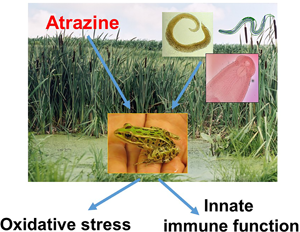
There exists widespread concern for declining populations, extirpations and extinctions of amphibians globally. Numerous causes have been put forward to explain these declines, including threats from pesticides and disease (Stuart et al., Reference Stuart, Chanson, Cox, Young, Rodrigues, Fischman and Waller2004; Blaustein et al., Reference Blaustein, Han, Relyea, Johnson, Buck, Gervasi and Kats2011), which, of course, may act in concert. Amphibians are known hosts for a wide diversity of parasites (Koprivnikar et al., Reference Koprivnikar, Marcogliese, Rohr, Orlofske, Raffel and Johnson2012; Bower et al., Reference Bower, Brannelly, McDonald, Webb, Greenspan, Vickers, Gardner and Greenlees2018), regardless of habitat. Given their susceptibility to environmental changes and disease, amphibians also make useful sentinels that can provide insight into overall ecosystem function and health (Hopkins, Reference Hopkins2007). Using different measures of oxidative stress in addition to a measure of the innate immune response, the effects of parasites and agricultural activity on the health of northern leopard frogs (Lithobates pipiens) were examined in agricultural wetlands. The following predictions were made: (1) exposure to high level of atrazine and/or certain parasites will induce an oxidative stress response, with potential interactive effects; and (2) exposure to high levels of atrazine and/or certain parasites will moderate lysozyme activity, with potential interactive effects.
Materials and methods
Sampling sites and frog collections
Sampling and subsequent analysis of parasites are described in King et al. (Reference King, McLaughlin, Gendron, Pauli, Giroux, Rondeau, Boily, Juneau and Marcogliese2007). There were seven sampling localities located in southwestern Quebec, Canada, which were categorized as low atrazine or high atrazine based on the highest atrazine concentration measured (means and ranges are presented in King et al., Reference King, McLaughlin, Gendron, Pauli, Giroux, Rondeau, Boily, Juneau and Marcogliese2007). Those with maximum measurements >0.10 μg L−1 in either 2004 or 2005 were considered as high atrazine localities, while those with measures <0.10 μg L−1 were considered as low atrazine localities (Table 1). The high atrazine localities were directly exposed to pesticide runoff, while the low atrazine localities were not. Atrazine use is relatively stable from 1 year to the next (Sass and Colangelo, Reference Sass and Colangelo2006). Furthermore, atrazine use was consistent between 2001 and 2004–2005 at our study localities (King et al., Reference King, McLaughlin, Gendron, Pauli, Giroux, Rondeau, Boily, Juneau and Marcogliese2007, Reference King, Gendron, McLaughlin, Giroux, Brousseau, Cyr, Ruby, Fournier and Marcogliese2008), with the exception of a single locality (Île de la Commune) located in a provincial park, where atrazine was applied illegally in 2001, after which its use was subsequently halted. Thus, low atrazine localities included Étang John Sauro, Parc Le Rocher and Île de la Commune. High atrazine localities were Rivière St-François, Baie St-François, Ruisseau Fairbanks and Rivière Chibouet (Table 1).
Geographic coordinates of sampling localities, maximum atrazine concentration (μg L−1), prevalence (%) of target parasite taxa and number of frogs used for each biomarker

Parasite prevalence based on the maximum number of frogs included in biomarker analysis for each locality.
The study species in our system was the northern leopard frog L. pipiens. Immature metamorph leopard frogs were collected by dip net or by hand from 26 July to 6 August 2004 (see King et al., Reference King, McLaughlin, Gendron, Pauli, Giroux, Rondeau, Boily, Juneau and Marcogliese2007). Collections were restricted to newly metamorphosed frogs ⩽45 mm snout-vent length (SVL) (Seburn and Seburn, Reference Seburn and Seburn1998). The restricted sampling period and size range accounted for potential confounding factors including season, age, size and reproductive status, which might affect biomarker analyses (Martinez-Álvarez et al., Reference Martínez-Álvarez, Morales and Sanz2005). Frogs were killed in buffered 0.8% tricaine methane sulphonate (MS 222), kept on ice, and returned to the laboratory within a few hours where they were frozen at −20°C. Frogs were partially thawed prior to parasitological examination and spleens were removed and frozen at −80°C for subsequent biomarker analysis. Handling and treatment of animals were in accordance with the guidelines of the Canada Council on Animal Care.
Parasite analyses
Each frog was thawed, weighed to the nearest 0.1 g and SVL measured to the nearest mm. The frogs were examined using a stereomicroscope for macroparasites using standard parasitological techniques (King et al., Reference King, McLaughlin, Gendron, Pauli, Giroux, Rondeau, Boily, Juneau and Marcogliese2007). First, the frogs were examined externally. Then their eyes were removed and dissected. The body cavity and viscera were examined. Organs (brain, liver, gall bladder, heart and urinary bladder) were removed, squashed between glass plates and examined. The stomach and intestine were opened longitudinally and examined. They were then squashed between glass plates to detect worms in the tissue. The skin was removed from the flesh, which was thin-sliced, squashed between glass plates, and examined. A total of 156 frogs were examined for parasites. Sample sizes for each locality are reported in Table 1. Helminth parasites were identified to genus and, if possible, species based on descriptions from the literature (Rau et al., Reference Rau, Doyle and Gordon1978; Prudhoe and Bray, Reference Prudhoe and Bray1982; McAlpine and Burt, Reference McAlpine and Burt1998).
Biomarker analyses
All analyses were performed at the INRS – Institut Armand Frappier, Pointe-Claire, Quebec. Originally, 30 spleen samples were collected from each locality, but a laboratory accident resulted in the loss of a large number of samples. The final sample sizes are given in Table 1. Consequently, the results of glutathione reductase (GRd) were not retained due to small sample sizes at two localities. Once thawed, all samples were kept on ice throughout the preparation and analyses. Samples were processed and analysed as described in Dautremepuits et al. (Reference Dautremepuits, Marcogliese, Gendron and Fournier2009). Frozen samples of spleen tissue were homogenized by suspending 0.2 g of tissue in 3 mL of phosphate buffer saline (PBS) (Dulbecco's, Sigma, USA) in a potter-pestle homogenizer (Sigma, USA). Homogenates were centrifuged at 4000 rpm for 30 min at 4°C. The supernatants were immediately analysed for antioxidant enzyme and immune activities. The total protein content (mg mL−1) of each sample was measured with a Bio-Rad DC protein assay kit (Bio-Rad Laboratories, Canada).
The thiol glutathione (GSH) is an important antioxidant that neutralizes hydroxyl radicals (Di Giulio et al., Reference Di Giulio, Washburn, Wenning, Winston and Jewell1989; Monaghan et al., Reference Monaghan, Metcalfe and Torres2009). Thiol (SH) groups were measured spectrophotometrically using the DTNB method. Four μL of the sample were added to 46 μL of phosphate buffer (0.2 ML, pH 6.8) and 50 μL of phosphate buffer containing 1 mm DTNB (5,5′-dithiobis-2-nitrobenzonic acid, Sigma, USA) in a 96-well tissue-culture plate. Absorbance was measured at 412 nm after 10 min of incubation at room temperature, using GSH (reduced glutathione) commercial solution (Sigma, USA) as a standard.
Glutathione S-transferase (GST) catalyzes reactions involving the GSH; measurement of GST activity was adapted from Habig et al. (Reference Habig, Pabst and Jakoky1974). The reaction mixture consisted of 100 μL PBS (0.1 m, pH 6.5), 50 μL reduced GSH (Sigma, CA.) (1 mm), 25 μL H2O, 10 μL 1-chloro-2,4-dinitro-benzene (CDNB) (Sigma, Ca.) (1 mm) and 15 μL of sample in a total volume of 200 μL. The change in absorbance was recorded at 340 nm during 5 min and the enzyme activity calculated as μmol of CDNB formed min−1 mg protein−1 using a molar extinction coefficient of 9.6 × 10³ m−1 cm−1.
Catalase breaks down H2O2, an endproduct of oxidative stress (Di Giulio et al., Reference Di Giulio, Washburn, Wenning, Winston and Jewell1989). Catalase activity was assayed according to Claiborne (Reference Claiborne and Greenwald1985) and Giri et al. (Reference Giri, Iqbal and Athar1996). The assay mixture consisted of 190 μL PBS (0.05 m, pH 7.0), 100 μL hydrogen peroxide (Prolabo, CA) (0.01 m) and 10 μL of the sample in a final volume of 300 μL. Change in absorbance was recorded at 240 nm. Catalase activity was calculated as nmol H2O2 consumed min−1 mg protein−1 using a molar extinction coefficient of 43.6 m−1 cm−1.
Lysozyme activity was measured by a turbidimetric assay (Studnicka et al., Reference Studnicka, Siwicki and Ryka1986). A 10 μL sample was added to 200 μL of Micrococcus lysodeikticus (0.2 g L−1 in 0.05 m, pH 6.2 phosphate buffer) suspension and the decrease in absorbance was recorded at 450 nm by spectrophotometry (PowerWave X, Bio-Tek Instruments, Vermont, USA) for 30 min in a 96-well tissue culture plate (Sarstedt, USA). One unit of lysozyme activity was defined as the amount of enzyme that catalysed a decrease in absorbance of 0.001 min−1. A commercial solution of lysozyme (Sigma, Canada) was used as a standard.
Statistical analyses
To determine if parasites or high/low atrazine exposure affected the expression of biomarkers in the spleen of leopard frogs and whether there was an interaction with the herbicide, criteria were established for further analyses. The same individual frogs were used for both parasites and biomarkers. To ensure an adequate sample size at each locality, only parasites present at six of the seven localities were considered further. These included the trematodes Echinostoma spp. (metacercariae) and Gorgorderidae gen. (adults and larval stages), and the adult nematodes Oswaldocruzia sp. and Rhabdias sp. Adult gorgorderids infect the urinary bladder, whilst metacercariae encyst in the kidneys and muscle tissues. It is unclear whether the different stages cause different or similar pathologies, or indeed, any pathology at all, so they were combined (Koprivnikar et al., Reference Koprivnikar, Marcogliese, Rohr, Orlofske, Raffel and Johnson2012). For the purposes of analyses, localities were combined into high atrazine (Rivière St-François, Baie St-François, Ruisseau Fairbanks, Rivière Chibouet) and low atrazine (étang John Sauro, Parc le Rocher, Île de la Commune), based on the maximal concentration of atrazine measured in each system (King et al., Reference King, McLaughlin, Gendron, Pauli, Giroux, Rondeau, Boily, Juneau and Marcogliese2007).
To determine the effects of atrazine exposure and parasite abundance on biomarker concentration/activity separate linear mixed effects models were performed for each biomarker using the lme4 package (Bates et al., Reference Bates, Machler, Bolker and Walker2015) in R version 3.6.0 (http://www.r-project.org/). We assessed the significance of parameters using the Satterthwaite method, implemented in the R package lmerTest (Kuznetsova et al., Reference Kuznetsova, Brockhoff and Christensen2017). Variables included high/low atrazine exposure, parasite abundance, pairwise interactions between high atrazine exposure and parasite abundance and pairwise interactions between each parasite as fixed effects. Host population was included as a random intercept term. Parasite abundance data were log10 + 1 transformed and protein, lysozyme and catalase concentration/activity were log10 transformed to improve normality and model fit. Two-way interactions were included in each model initially with non-significant interactions with the highest P value removed and the models re-run until only significant interaction terms remained (P < 0.05). Model fit was graphically assessed. Figures were produced using sjPlot (Lüdecke, Reference Lüdecke2021).
Terminology
The definitions of parasite population parameters are in accordance with Bush et al. (Reference Bush, Lafferty, Lotz and Shostak1997). Prevalence is the proportion of frogs infected with a particular species at a locality, expressed as a per cent. Abundance refers to the number of parasites in a host from a particular locality, be it infected or not. Intensity refers to the number of parasites of a given species in an infected host from a particular locality.
Results
Results of linear mixed effects models demonstrate that abundance of Echinostoma spp. was associated with a significant increase in protein concentration (F (1,26.67) = 6.68, P = 0.02, Fig. 1, Supporting Information Table 1). Abundance of Oswaldocruzia sp. was associated with increased thiol concentration (F (1,145.91) = 10.92, P = 0.001, Fig. 2, Supporting Information Table 2). However, the interactions of Oswaldocruzia sp.*High atrazine exposure and Oswaldocruzia sp.*Gorgorderidae gen. were associated with reduced thiol concentration (Oswaldocruzia sp.*High atrazine: F (1,145.96) = 7.96, P = 0.005, Fig. 2, Supporting Information Table 2; Oswaldocruzia sp.*Gorgorderidae: F (1,145.17) = 9.03, P = 0.003, Supporting Information Table 2). Lastly, abundance of Oswaldocruzia sp. was associated with increased catalase activity (F (1,91.01) = 10.35, P = 0.002, Fig. 3, Supporting Information Table 3). Models for GST and lysozyme were not statistically significant (Supporting Information Tables 4 and 5).
Plot of log10 abundance of Echinostoma spp. (log10 ECH + 1) against log10 total protein concentration (mg g−1 F.W.) in spleens of northern leopard frogs (Lithobates pipiens) collected from agricultural and non-agricultural wetlands in Quebec, Canada in 2004. Results show linear mixed effects model predictions showing 95% confidence interval (shaded area) of marginal effects and raw data points.

Plot of log10 abundance of Oswaldocruzia sp. (log10 OSW + 1) against thiol concentration (U.I. × 10−3 mg−1 protein) in spleens of northern leopard frogs (Lithobates pipiens) collected from (A) low-atrazine and (B) high-atrazine wetlands in Quebec, Canada in 2004 and its interaction with atrazine exposure. Results show linear mixed effects model predictions showing 95% confidence interval (shaded area) of marginal effects and raw data points.

Plot of log10 abundance of Oswaldocruzia sp. (log10 OSW + 1) against log10 catalase activity (nmol H2O2 min−1 mg protein−1) in northern leopard frogs (Lithobates pipiens) collected from agricultural and non-agricultural wetlands in Quebec, Canada in 2004. Results show linear mixed effects model predictions showing 95% confidence interval (shaded area) of marginal effects and raw data points.

Discussion
Our results failed to demonstrate an effect of herbicide exposure as a single predictor of oxidative stress, however we do demonstrate a clear interaction between high atrazine exposure and parasite abundance. Moreover, the abundance of certain parasites was associated with the levels of different biomarkers of oxidative stress. Thus, we fail to reject hypothesis one. We find no effect of atrazine levels or parasite exposure and their interaction on lysozyme, and therefore we reject hypothesis two. We show that frogs with high intensities of echinostomes possessed higher protein concentrations in spleen tissue. Frogs with high intensities of Oswaldocruzia sp. had greater catalase activity than those with lower infection intensities. Thiol levels were also associated with the abundance of Oswaldocruzia sp. However, the direction of the relationship differed between frogs exposed to high atrazine concentrations and those exposed to low levels. Interactions also were observed between the abundance of Oswaldocruzia sp. and gorgoderids on thiol concentration. While we did not measure growth or other related parameters, oxidative stress can lead to decreased growth rates in amphibians (Szuroczki et al., Reference Szuroczki, Koprivnikar and Baker2019) and thus reduced fitness. We caution that results should be interpreted with care, as there may be other unmeasured factors associated with the study system that could affect the biomarker responses.
Various parasites are known to induce oxidative stress in their host (see Introduction section for references). For example, parasites have been shown to induce higher catalase activity, a known biomarker of oxidative stress (Di Giulio et al., Reference Di Giulio, Washburn, Wenning, Winston and Jewell1989; Brodeur et al., Reference Brodeur, Suarez, Natale and Ronco2011), in fishes. These include carp (Cyprinus carpio) infected with the intestinal cestode Ptychobothrium sp. (Dautremepuits et al., Reference Dautremepuits, Betoulle and Vernet2002a, Reference Dautremepuits, Betoulle and Vernet2002b, Reference Dautremepuits, Betoulle and Vernet2003), Heterotis niloticus infected with the intestinal acanthocephalan Tenuisentis niloticus (Akinsanya et al., Reference Akinsanya, Ayanda, Fadipe, Onwuka and Saliu2020a), and yellow perch (Perca flavescens) infected with the larval trematode Diplostomum spp. (Marcogliese et al., Reference Marcogliese, Dautremepuits, Gendron and Fournier2010), although in the latter study effects were only observed in polluted waters, but not at reference localities. Infection with the parasitic isopod Anilocra frontalis increased catalase activity in the marine fish Pomatoschistus microps, but only at a higher acclimation temperature (Cereja et al., Reference Cereja, Mendonça, Dias, Vinagre, Gil and Diniz2018). In contrast, in amphibians, catalase activity was lower in African common toads (Amietophyrnus regularis) infected with the intestinal nematode Amplicaecum africanum from localities exposed to trace metal pollution but not those from a reference locality (Akinsanya et al., Reference Akinsanya, Isibor, Onadeko and Tinuade2020b). The later result was interpreted as depuration of metals in the anuran host due to bioaccumulation by the nematode (Akinsanya et al., Reference Akinsanya, Isibor, Onadeko and Tinuade2020b). Clearly, catalase activity depends not only on the host but varies with parasitic infection and environmental context.
Thiol levels in leopard frogs from reference localities were positively associated with the abundance of Oswaldocruzia sp., implying enhanced synthesis of antioxidants. This relationship was reversed in those frogs from high atrazine localities, suggesting potential environmental stress (Peña-Llopis et al., Reference Peña-Llopis, Ferrando and Peña2003). GSH was also higher in H. niloticus infected with T. niloticus in a polluted lagoon in Nigeria (Akinsanya et al., Reference Akinsanya, Ayanda, Fadipe, Onwuka and Saliu2020a). Curiously, there was a significant interaction between Oswaldocruzia sp. and gorgoderids, associated with a reduction in thiol concentration. This implies that the effects of one parasite species may be moderated by a second infection (Bordes and Morand, Reference Bordes and Morand2009; Blaustein et al., Reference Blaustein, Han, Relyea, Johnson, Buck, Gervasi and Kats2011, Reference Blaustein, Gervasi, Johnson, Hoverman, Belden, Bradley and Xie2012).
There are no studies on oxidative stress in amphibians or reptiles infected with Oswaldocruzia sp. However, infections with Oswaldocruzia sp. and other intestinal nematodes can lead to host starvation, peritonitis and mortality at high intensities (Reichenbach-Klinke and Elkan, Reference Reichenbach-Klinke and Elkan1965). Larval Oswaldocruzia filiformis cause necrosis and atrophy of the stomach mucosa and epithelium (Hendrikx and van Moppes, Reference Hendrikx and van Moppes1983). Other intestinal nematodes induce oxidative stress in their hosts. For example, ring-necked pheasants (Phasianus colchicus) experimentally infected with Heterakis gallinarum displayed higher levels of lipid peroxidation in plasma after 8 weeks (Orledge et al., Reference Orledge, Blount, Hoodless and Royle2012).
The abundance of echinostome trematodes was associated with higher protein levels. This result seems counterintuitive, as stress would be expected to lead to a decrease in proteins due to greater energy consumption in response (Dornelles and Oliveira, Reference Dornelles and Oliveira2014). However, an increase in protein may reflect the activation of biochemical processes (Dautremepuits et al., Reference Dautremepuits, Marcogliese, Gendron and Fournier2009). Larval echinostomes commonly infect the kidneys and are pathogenic in amphibians, especially at high intensities (Johnson and McKenzie, Reference Johnson, McKenzie, Fried and Toledo2008; Koprivnikar et al., Reference Koprivnikar, Marcogliese, Rohr, Orlofske, Raffel and Johnson2012). Effects include oedema, reduced growth, kidney malfunction, pathology and mortality (Johnson and McKenzie, Reference Johnson, McKenzie, Fried and Toledo2008). Thus, it is not surprising that they may affect oxidative stress. Other larval trematodes shown to induce oxidative stress in their hosts include the fish parasites Apophallus brevis, Diplostomum spp. and Ornithodiplostomum ptychocheilus (Marcogliese et al., Reference Marcogliese, Gagnon Brambilla, Gagné and Gendron2005, Reference Marcogliese, Dautremepuits, Gendron and Fournier2010; Stumbo et al., Reference Stumbo, Goater and Hontela2012; Lacaze et al., Reference Lacaze, Gendron, Miller, Colson, Giraudo, Sherry, Marcogliese and Houde2019).
Although we did not detect any direct effect of high atrazine exposure alone, pesticides, in general, are known to induce oxidative stress (Abdollahi et al., Reference Abdollahi, Ranjbar, Shadnia, Nikfar and Rezale2004; Dornelles and Oliveira, Reference Dornelles and Oliveira2014; Luschak, Reference Luschak2016). Bullfrog tadpoles experimentally exposed to atrazine experienced large increases in lipid peroxidation, a measure of damage resulting from oxidative stress, and a decrease in protein concentration, albeit at higher atrazine concentrations than at any of our sites (Dornelles and Oliveira, Reference Dornelles and Oliveira2014). In studies of exposure to other pesticides, catalase activity increased in some, but not all, anurans (Costa et al., Reference Costa, Monteiro, Oliveira-Neto, Rantin and Kalinin2008; Brodeur et al., Reference Brodeur, Suarez, Natale and Ronco2011; Li et al., Reference Li, Ma and Zhang2017). Notably, a recent synthesis suggests that results may vary with class of pesticides (Rumschlag et al., Reference Rumschlag, Halstead, Hoverman, Raffel, Carrick, Hudson and Rohr2019).
Contaminants can lead to a decrease in thiol concentration (van der Oost et al., Reference Van der Oost, Beyer and Vermeulen2003). GSH is considered to be a biomarker of oxidative or environmental stress (Peña-Llopis et al., Reference Peña-Llopis, Ferrando and Peña2003; Brodeur et al., Reference Brodeur, Suarez, Natale and Ronco2011; Hellou et al., Reference Hellou, Ross and Moon2012). We found no effect of high atrazine exposure alone on total thiols in leopard frogs. Nor was any effect observed on GSH from other amphibians in agricultural landscapes (Brodeur et al., Reference Brodeur, Suarez, Natale and Ronco2011), although levels were reduced in tadpoles of Bufo arenarum (Venturino et al., Reference Venturino, Rosenbaum, Caballero de Castro, Anguiano, Gauna, Fonovich de Schroeder and Pechen de D'Angelo2003). Curiously, high atrazine exposure changed the relationship between thiol concentration and abundance of Oswaldocruzia sp., demonstrating that effects of multiple stressors may be non-additive and unpredictable, rendering interpretation problematic (Sures et al., Reference Sures, Nachev, Selbach and Marcogliese2017).
Numerous studies have shown higher GST activity in amphibians from agricultural localities exposed to other pesticides (Venturino et al., Reference Venturino, Rosenbaum, Caballero de Castro, Anguiano, Gauna, Fonovich de Schroeder and Pechen de D'Angelo2003; Greulich and Pflugmacher, Reference Greulich and Pflugmacher2004; Attademo et al., Reference Attademo, Peltzer, Lajmanovich, Cabagna and Fiorenza2007), while others show reductions in GST activity (Brodeur et al., Reference Brodeur, Suarez, Natale and Ronco2011), and still, others show no effect (Brodeur et al., Reference Brodeur, Candioti, Soloneski, Larramendy and Ronco2012), as in our study. As stated above, effects may vary with pesticide class (Rumschlag et al., Reference Rumschlag, Halstead, Hoverman, Raffel, Carrick, Hudson and Rohr2019).
No evidence of additive or synergistic effects of pesticides and parasites on oxidative stress were observed in leopard frogs. In contrast, lipid peroxidation was induced in yellow perch from a polluted site, while it was higher still in those infected with the larval nematode Raphidascaris acus or high numbers of the larval trematode A. brevis at the same site suggesting additive effects (Marcogliese et al., Reference Marcogliese, Gagnon Brambilla, Gagné and Gendron2005). Similarly, GRd activity in gills, and catalase activity in the head kidney of yellow perch infected with A. brevis and Diplostomum spp. respectively, were intensity dependent at polluted localities, suggesting combined effects of pollution and parasitism on oxidative stress metabolism (Marcogliese et al., Reference Marcogliese, Dautremepuits, Gendron and Fournier2010). It is likely that the combined effects of multiple stressors depend on the relative intensity of the different stressors, their toxicity and/or their pathogenicity. Results herein suggest that parasitism should be considered in any studies of oxidative stress in amphibians from different habitats, whether polluted or not.
Lysozymes are considered an important index of innate immunity in fish (Tort et al., Reference Tort, Balasch and Mackenzie2003; Saurabh and Sahoo, Reference Saurabh and Sahoo2008; Uribe et al., Reference Uribe, Folch, Enriquez and Moran2011). Although infections with parasites can modify the immune response (Martin et al., Reference Martin, Hopkins, Mydlarz and Rohr2010), effects of parasites on lysozyme activity are equivocal (Alvarez-Pellitero, Reference Alvarez-Pellitero2008). Previous researchers have suggested that contaminants, and pesticides in particular, can decrease the immune response in amphibians (Carey and Bryant, Reference Carey and Bryant1995; Carey et al., Reference Carey, Cohen and Rollins-Smith1999; Fournier et al., Reference Fournier, Robert, Salo, Dautremepuits and Brousseau2005; Saurabh and Sahoo, Reference Saurabh and Sahoo2008; Mann et al., Reference Mann, Hyne, Choung and Wilson2009; Martin et al., Reference Martin, Hopkins, Mydlarz and Rohr2010; Rollins-Smith and Woodhams, Reference Rollins-Smith, Woodhams, Demas and Nelson2012; Rumschlag et al., Reference Rumschlag, Halstead, Hoverman, Raffel, Carrick, Hudson and Rohr2019). Pesticides typically affect innate, non-specific immune responses (Rehberger et al., Reference Rehberger, Werner, Hitzfeld, Segner and Baumann2017). However, while we did not detect any effects of exposure to atrazine on lysozyme activity, it represents only a small component of the innate immune response (Tort et al., Reference Tort, Balasch and Mackenzie2003; Magnadottir, Reference Magnadottir2010; Uribe et al., Reference Uribe, Folch, Enriquez and Moran2011). Indeed, northern leopard frogs collected from some of the same localities as in this study had reduced numbers of splenocytes and phagocytic response in the agricultural wetlands (Christin et al., Reference Christin, Ménard, Giroux, Marcogliese, Ruby, Cyr, Fournier and Brousseau2013).
In conclusion, infection with certain parasites is associated with oxidative stress in northern leopard frogs. Specifically, abundances of larval echinostomes and the nematode Oswaldocruzia sp. were associated with oxidative stress, regardless of the habitat's agricultural status. Furthermore, interactions were detected between the abundance of Oswaldocruzia sp. and the degree of atrazine exposure. Lastly, an effect of the parasite × parasite interaction was detected between Oswaldocruzia sp. and gorgoderid abundance. In contrast, no effect of any parasite, or high atrazine exposure, or their interaction was observed on lysozyme activity. Clearly, environmental studies on oxidative stress and other biomarkers of animal health in amphibians from agricultural habitats should account for parasitism. Indeed, parasitism may affect biomarkers of animal health in any environment (Marcogliese and Pietrock, Reference Marcogliese and Pietrock2011; Sures et al., Reference Sures, Nachev, Selbach and Marcogliese2017), but at this point in time it is difficult to predict with certainty which parasites will affect the biomarkers used in any particular host−parasite system, or how they will interact with different contaminants and other anthropogenic stressors.
Supplementary material
The supplementary material for this article can be found at https://doi.org/10.1017/S003118202100038X
Acknowledgements
We thank Claire Dautremepuits for conducting the biochemical analyses.
Author contribution
DJM conceived and designed the study. DJM and KCK collected samples. KCK conducted parasitological examinations. KAB performed statistical analyses. DJM, KCK, and KAB wrote the article.
Financial support
Funding from Environment and Climate Change Canada's Pesticide Science Fund and the St. Lawrence Action Plan to DJM, a Natural Sciences and Engineering Research Council of Canada Postgraduate Scholarship awarded to KCK at the time of data collection, and an EP Abraham Junior Research Fellow from St Hilda's College Oxford to KB all are gratefully acknowledged.
Conflict of interest
None.
Ethical standards
Handling and treatment of animals were in accordance with the guidelines of the Canada Council on Animal Care, and protocols were approved by Environment and Climate Change Canada's Animal Care Committee.
Data
Data are available from DJM upon request.



