INTRODUCTION
Caprellids, also known as skeleton shrimps, are small marine amphipods that are common in many littoral habitats, where they form an important trophic link between primary producers and higher trophic levels (Woods, Reference Woods2009). Around 400 species of caprellids (excluding cyamids) have been described around the world (Guerra-García, unpublished). They inhabit algae, hydroids, ascidians, anthozoans, bryozoans, sponges, seagrasses and sediments (McCain, Reference McCain1968; Guerra-García, Reference Guerra-García2001), and feed on suspended materials, prey on other organisms or graze on epibiotic fauna and flora (Guerra-García et al., Reference Guerra-García, Corzo and García-Gómez2002; Thiel et al., Reference Thiel, Guerra-García, Lancellotti and Vásquez2003). A recent study based on dietary analysis of 62 caprellid species has shown that caprellids are mainly detritivores (Guerra-García & Tierno de Figueroa, Reference Guerra-García and Tierno de Figueroa2009). Caprellids are also useful bioindicators of environmental quality in marine ecosystems (Guerra-García & García-Gomez, 2001; Ohji et al., Reference Ohji, Takeuchi, Takahashi, Tanabe and Miyazaki2002; Guerra-García et al., Reference Guerra-García, Baeza-Rojano, Cabezas, Díaz-Pavón, Pacios and García-Gómez2009a) and a potential marine finfish aquaculture resource (Woods, Reference Woods2009).
Knowledge of the ecology and taxonomy of amphipod species on the coasts of the Iberian Peninsula is still fragmentary (Jimeno & Turón, Reference Jimeno and Turón1995; Bellan-Santini & Ruffo, Reference Bellan-Santini, Ruffo and Ruffo1998). During the last decade, most of the caprellid studies have been focused on the Strait of Gibraltar (Guerra-García, Reference Guerra-García2001; Guerra-García & Takeuchi, Reference Guerra-García and Takeuchi2002; Guerra-García et al., Reference Guerra-García, Sánchez-Moyano and García-Gómez2000, Reference Guerra-García, Sánchez-Moyano and García-Gómez2001, Reference Guerra-García, Corzo and García-Gómez2002, Reference Guerra-García, Baeza-Rojano, Cabezas, Díaz-Pavón, Pacios and García-Gómez2009a,b) and very scarce research has been undertaken on the other Atlantic and Mediterranean coasts of the Iberian Peninsula apart from a few taxonomic and ecological studies: the new species Liropus cachuchoensis was recently described based on specimens collected from the Bay of Biscay (north of Spain) (Guerra-García et al., Reference Guerra-García, Sorbe and Frutos2008); González et al. (Reference González, Guerra-García, Maestre, Ruiz-Tabares, Espinosa, Gordillo, Sánchez-Moyano and García-Gómez2008) studied the community structure of caprellids on seagrasses from southern Spain and Vázquez-Luis et al. (Reference Vázquez-Luis, Guerra-García, Sánchez-Jerez and Bayle-Sempere2009) described the caprellid assemblages in shallow waters invaded by Caulerpa racemosa (Forsskål) J. Agardh from south-eastern Spain; Jimeno & Turón (Reference Jimeno and Turón1995) studied the ecological distribution of Gammaridea and Caprellidea from the north-east coast of Spain, and Pereira et al. (Reference Pereira, Lima, Queiroz, Ribeiro and Santos2006) studied the biogeographical patterns of intertidal peracarids, including caprellids, and their associations with macroalgal distribution along the Portuguese coast. However, information dealing with distribution, diversity and abundance patterns of caprellids along the whole Iberian Peninsula is lacking.
Stypocaulon scoparium (L.) Kützing is present in the Atlantic, Indian and Pacific Oceans and the Adriatic, Mediterranean and Black Seas (see Sánchez-Moyano, Reference Sánchez-Moyano1996). It occurs on rocky platforms and puddles on the coast a few metres deep. It is characterized by shrub-like thallus with a brown coloration and is about 20 cm high. It binds itself to the substrate with a fibrous and sponge-like basal disc. Its ramification is dense, irregularly alternate and distichous. Due to morphological features and environmental versatility S. scoparium is considered an excellent alga to host epiphytic communities of associated macrofauna (Sánchez-Moyano & García-Gómez, Reference Sánchez-Moyano and García-Gómez1998; Sánchez-Moyano et al., Reference Sánchez-Moyano, Estacio, García-Adiego and García-Gómez2000a, Reference Sánchez-Moyano, García-Adiego, Estacio and García-Gómezb, Reference Sánchez-Moyano, García-Adiego, Estacio and García-Gómez2002).
For the present study we selected Stypocaulon scoparium as a substrate to study the distribution and abundance patterns of the main caprellid species along the whole coast of the Iberian Peninsula and to explore their relationships with environmental variables such as water temperature, conductivity, pH, oxygen and turbidity.
MATERIALS AND METHODS
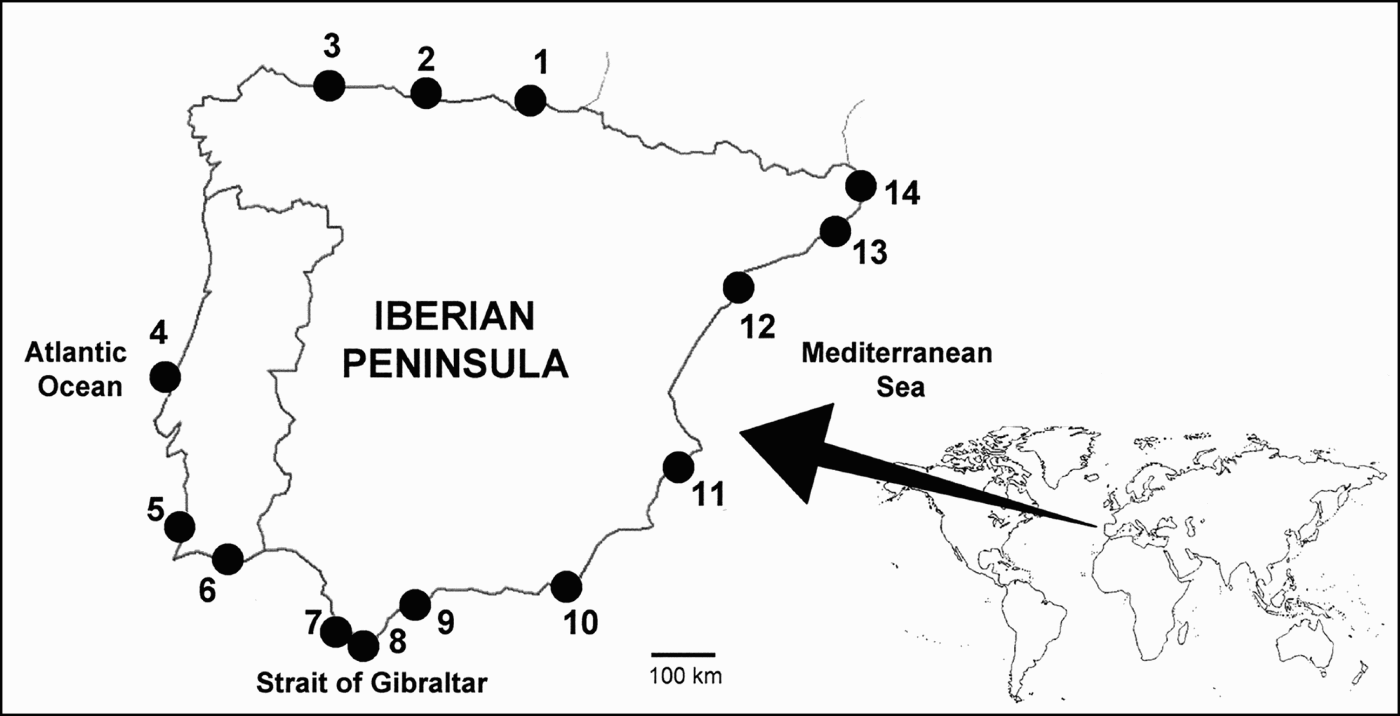
The study encompassed the whole Iberian Peninsula. Fourteen stations were selected along the Atlantic and Mediterranean coasts, including the Strait of Gibraltar (Figure 1). We selected relatively undisturbed enclaves with low human pressures to avoid the effect of anthropogenic influence on the natural biogeographical and ecological patterns of species.
Study area showing the sampling station. 1, Ogella; 2, Oyambre; 3, Cetarea; 4, Playa Azul; 5, Vale dos Homens; 6, Castelo; 7, Bolonia; 8, Isla de Tarifa; 9, Torreguadiaro; 10, Cabo de Gata; 11, Cala del tío Ximo; 12, Torrent del Pi; 13, Cala de Sant Françesc; 14, l'Estartit.

Sampling was conducted in the summer of 2008. The following environmental parameters were measured in situ at each sampling site: water temperature, pH, conductivity, dissolved oxygen and turbidity. Three measurements were made for each parameter and mean values and standard deviation were calculated. Conductivity and pH were measured using a conductivimeter–pHmeter CRISON MM40, temperature and oxygen concentration with an oxymeter CRISON OXI 45P, and turbidity in nephelometric turbidity units (ntu) using a turbidimeter WTW 335 IR.
To avoid problems caused by pooling data from diverse substrate types, sampling efforts were limited to a well-defined habitat (alga Stypocaulon scoparium in this case) (see Thiel, Reference Thiel2002). Algal samples were taken from shallow waters (1–3 m deep) by snorkelling. At each station, S. scoparium was collected by hand from different rocks to avoid effect of patchiness and to adequately sample caprellid diversity, until a volume of approximately 200 ml of seaweed was completed (see Thiel et al., Reference Thiel, Guerra-García, Lancellotti and Vásquez2003; Guerra-García et al., Reference Guerra-García, Cabezas, Baeza-Rojano, Espinosa and García-Gómez2009b). Samples were preserved in 70% ethanol. To estimate the cover of S. scoparium in each locality, we used five random quadrats of 50 × 50 cm subdivided into 25 square units of 10 × 10 cm with thick fishing line. The presence/absence of the species was recorded for each unit and data were expressed as cover percentage (mean ±SD of the 5 replicates).
In the laboratory, the samples were washed over a sieve with 0.5-mm mesh size, and all caprellids were sorted from the algae and identified to species level. Density of animals was expressed as number of individuals per volume of algae (see Guerra-García et al., Reference Guerra-García, Cabezas, Baeza-Rojano, Espinosa and García-Gómez2009b), which was estimated as the difference between the initial and final volume when placed into a graduated cylinder with a fixed amount of water (see Pereira et al., Reference Pereira, Lima, Queiroz, Ribeiro and Santos2006). Dry weight of each seaweed sample was also measured (after 24 hours at 70°C).
The total number of species and the Shannon–Wiener diversity index (Shannon & Weaver, Reference Shannon and Weaver1963) were calculated for each station. The affinities among stations based on the environmental parameters were established through cluster analysis using UPGMA (unweighted pair group method using arithmetic averages) and euclidean distances. The affinities based on caprellid data were also established through cluster analysis using UPGMA method, based on the Bray–Curtis similarity index. The relationships between environmental measures and caprellid assemblages were studied by canonical correspondence analysis (CCA). This analysis is a direct gradient technique in which the resulting ordination of stations is directly related to the values of the environmental factors. Multivariate analyses were carried out using the PRIMER package (Clarke & Gorley, Reference Clarke and Gorley2001) and the PC-ORD program (McCune & Mefford, Reference McCune and Mefford1997).
RESULTS AND DISCUSSION
Environmental measures and cover of Stypocaulon scoparium
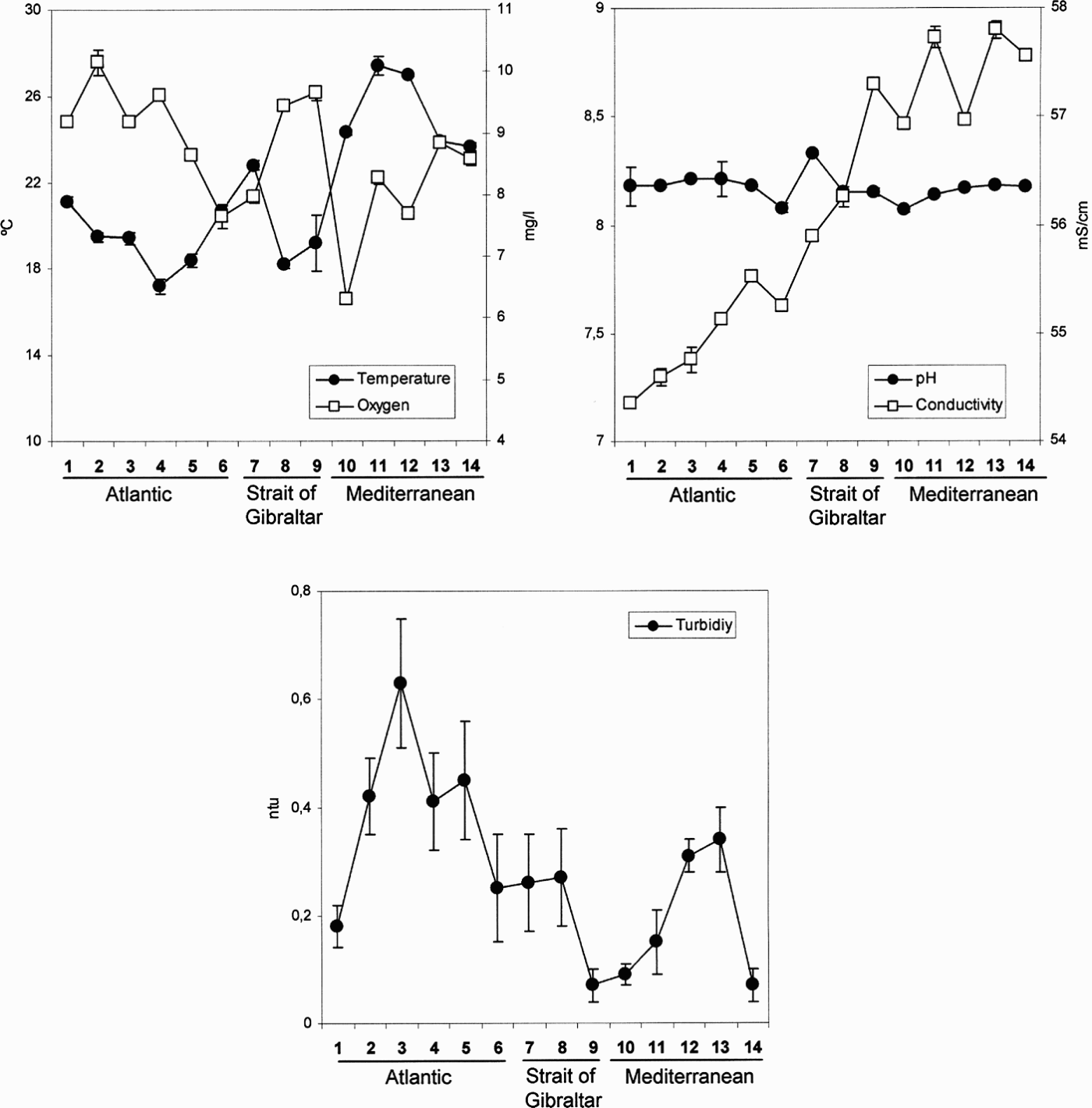
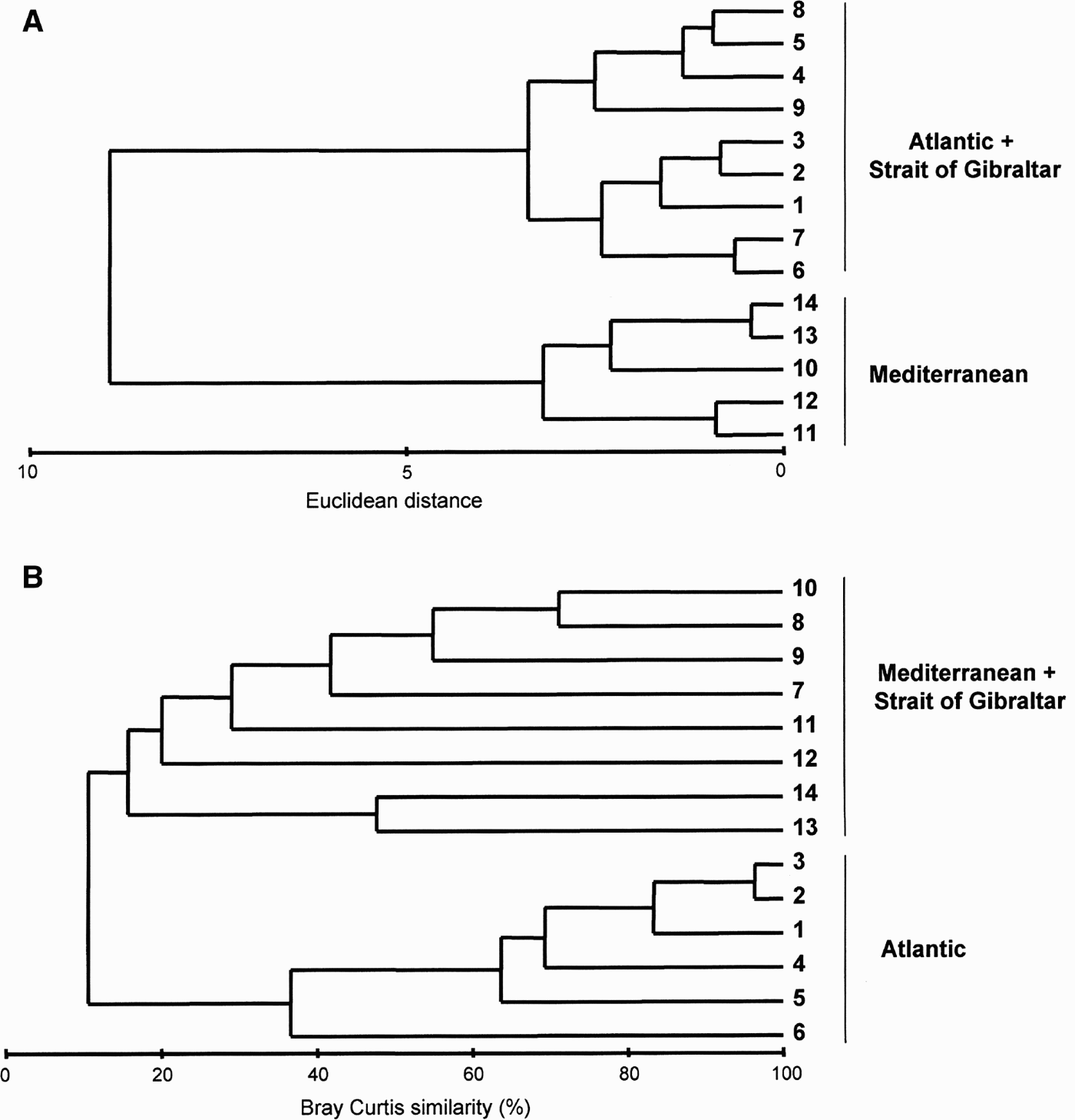
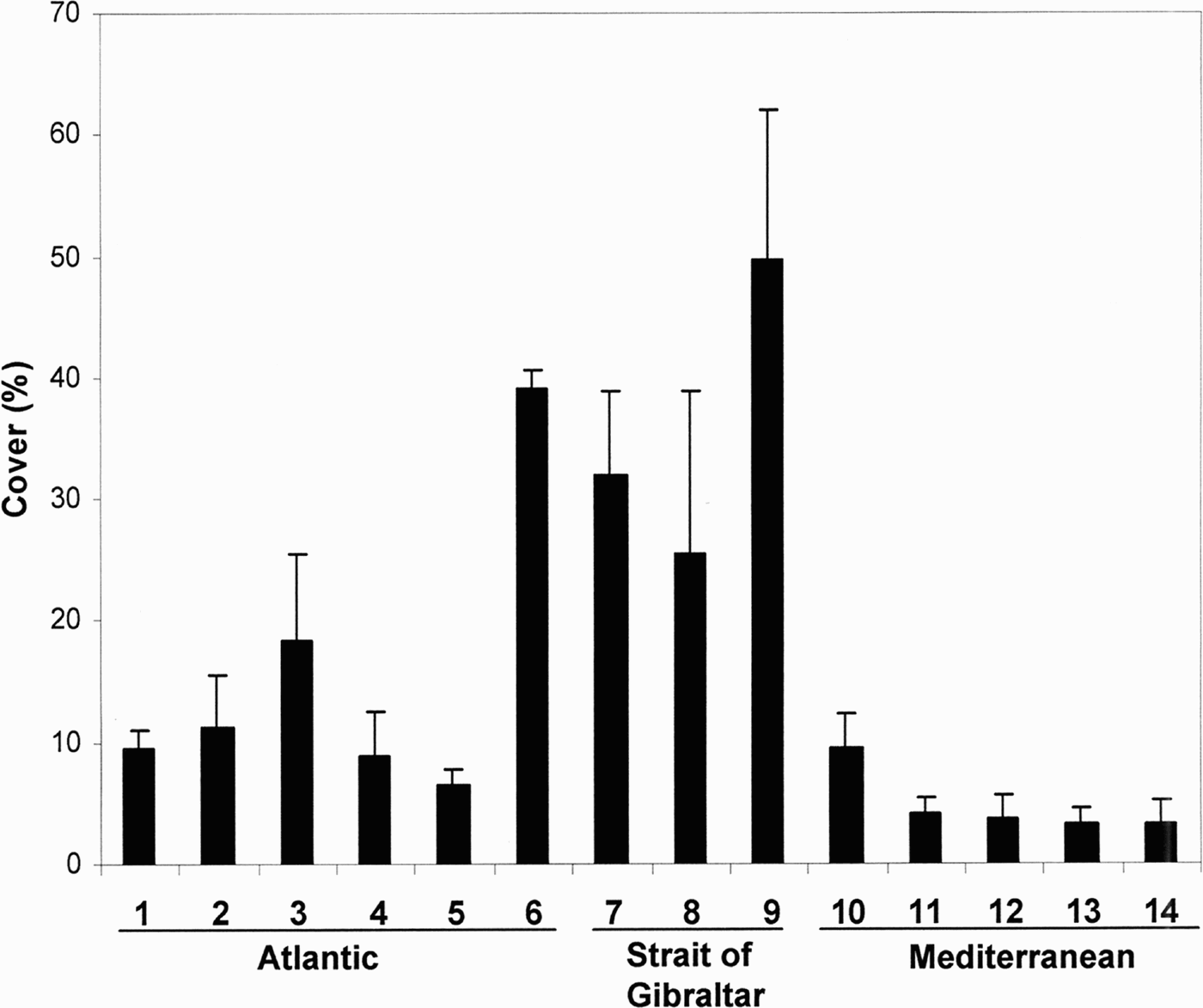
The Mediterranean coast was characterized by higher seawater temperature and conductivity and lower values of oxygen concentration and turbidity (Figure 2). Atlantic stations are much more exposed and this contributes to the increase in turbidity and oxygen due to the larger waves breaking on the seashore. Values of pH were rather similar at all stations, ranging between 8 and 8.5. Temperature was negatively correlated with oxygen (r = −0.63, P < 0.05) and turbidity (r = −0.44, P < 0.05), and positively with conductivity (r = 0.64, P < 0.05). The cluster carried out using all the physicochemical measures (Figure 3A) clearly separated two groups of stations: one group was formed by the Atlantic stations (1–6) together with the Strait of Gibraltar sites (7–9), and the other group clustered all the Mediterranean stations (10–14). According to the measured parameters, the Strait showed more similarity with the Atlantic than with the Mediterranean. However, cover of Stypocaulon scoparium showed the higher values in the Strait of Gibraltar (20–50%) than in the Atlantic (7–18%) and Mediterranean (<10%) (Figure 4). Consequently, other factors differing from temperature, oxygen, conductivity, pH and turbidity should explain the cover patterns. Probably the currents' dynamics around the Strait of Gibraltar could be involved. On the other hand, values of volume of S. scoparium were significantly correlated with dry weight (r = 0.95, P<0.01, N = 14).
Abiotic variables measured at each station (mean ±SD).

(A) Cluster analysis based on the abiotic data; (B) cluster analysis based on caprellid assemblages.

Cover percentage of Stypocaulon scoparium (mean ±SD) at each station.

Caprellid assemblages
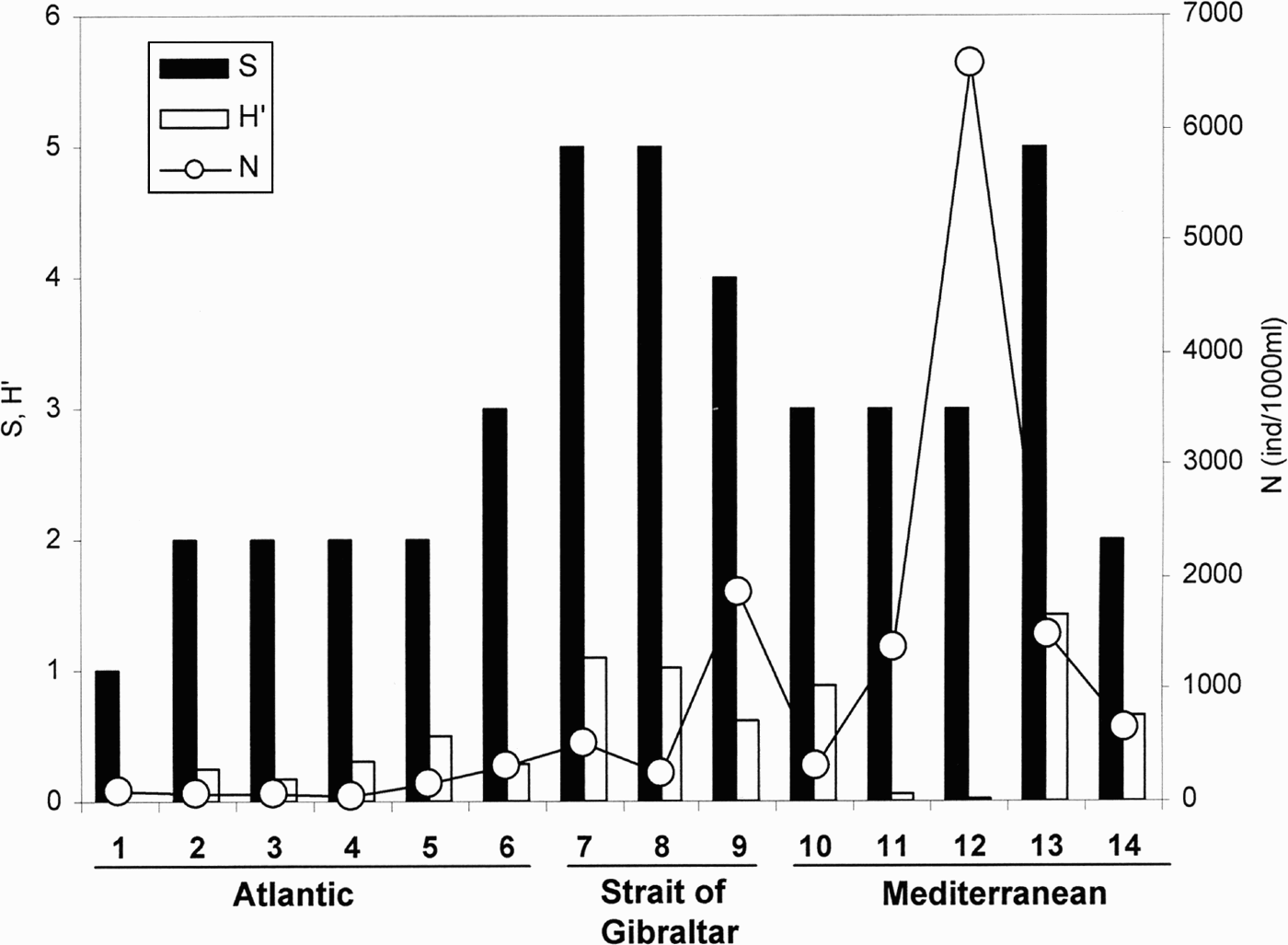
A total of 2981 specimens belonging to ten caprellid species were examined. The highest values of number of species and Shannon–Wiener diversity were registered in the Strait of Gibraltar, while the higher caprellid abundances (ind/1000 ml seaweed) were measured in Mediterranean stations (Figure 5). According to the species composition, the stations in the Strait of Gibraltar were more similar to the Mediterranean than to the Atlantic (Figure 3B), although the environmental measures clustered together the Atlantic stations and the Strait of Gibraltar (Figure 3A). In a similar study conducted with the caprellid fauna associated with the intertidal seaweed Corallina elongata in the same stations (Guerra-García, unpublished data), we obtained a clear separation among Atlantic + Strait of Gibraltar on the one hand, and Mediterranean on the other hand based on the caprellid abundances, being coincident with environmental measures. The explanation could probably be related to the fact that S. scoparium was collected from subtidal and C. elongata from the intertidal, and intertidal water conditions differs from subtidal conditions in which S. scoparium was collected (1–3 m deep). The ultimate reasons for these differences are unknown and the only clear pattern is that the Strait is a transitional area for species and that abundances and species composition change gradually from Mediterranean to Atlantic.
Number of caprellid species (S), Shannon–Wiener diversity (H′) and abundance (ind/1000 ml seaweed) at each station.

Ten caprellid species were found during the present study associated with S. scoparium: Caprella acanthifera Leach, 1814, Caprella acanthifera discrepans (waiting for description as a different species from C. acanthifera, see Krapp-Schickel & Vader, Reference Krapp-Schickel and Vader1998), Caprella danilevskii Czerniavski, 1868, Caprella grandimana Mayer, 1882, Caprella hirsuta Mayer, 1890, Caprella liparotensis Haller, 1879, Caprella penantis Leach, 1814, Deutella schieckei Cavedini, 1982, Phtisica marina Slabber, 1769 and Pseudoprotella phasma (Montagu, 1804) (Figure 6). Some caprellid species found in the present study have been reported as common species on many different substrata (see Guerra-García, Reference Guerra-García2001; Vázquez-Luis et al., Reference Vázquez-Luis, Guerra-García, Sánchez-Jerez and Bayle-Sempere2009): Phtisica marina, Pseudoprotella phasma and C. acanthifera can tolerate stressed habitats of low flow and high rates of sedimentation and organic matter, while C. penantis and C. danilevskii are associated with clean and oxygenated waters (Guerra-García & García-Gómez, Reference Guerra-García and García-Gómez2001). Although Phtisica marina and Pseudoprotella phasma have been reported as abundant in S. scoparium from shallow waters of the southern Iberian Peninsula (Sánchez-Moyano & García-Gómez, Reference Sánchez-Moyano and García-Gómez1998; Pereira et al., Reference Pereira, Lima, Queiroz, Ribeiro and Santos2006), in the present study, however, both species were not abundant and their presence was restricted to some Mediterranean stations. Deutella schieckei is a Mediterranean endemic described as interstitial (Krapp-Schickel, Reference Krapp-Schickel and Ruffo1993a), and along the Spanish coast, this species has only been reported from algae in shallow waters (Jimeno & Turón, Reference Jimeno and Turón1995; Box et al., Reference Box, Guerra-García and Deudero2006; Vázquez-Luis et al., Reference Vázquez-Luis, Guerra-García, Sánchez-Jerez and Bayle-Sempere2009). In the present study, high abundance was registered only at Station 13, so the species seems to be locally abundant, but not globally distributed along the whole Mediterranean because apart from the coast of Spain, the species has only been reported from Sardinia (Krapp-Schickel, Reference Krapp-Schickel and Ruffo1993a). Caprella liparotensis and C. acanthifera showed higher abundance in the Strait of Gibraltar, while C. acanthifera discrepans was restricted to northern Mediterranean stations and C. danilevskii was found at stations of Atlantic influence.
Abundance patterns of caprellid species found during the study. Scale bars: 1 mm.

The three dominant caprellid species in the present study, C. penantis, C. grandimana and C. hirsuta showed clear biogeographical patterns: C. penantis was restricted to Atlantic stations and the Strait of Gibraltar, while C. hirsuta and C. grandimana were very abundant only in Mediterranean stations (>100 ind/1000 ml seaweed). Although C. penantis has traditionally been reported in many sites of the Mediterranean (Krapp-Schickel, Reference Krapp-Schickel and Ruffo1993a), the pattern showed by the present study is very clear: the species disappears from Stations 11 to 14, coinciding with higher temperatures and lower levels of oxygen. This species has been considered one of the most sensitive species to environmental stress (Guerra-García & García-Gómez, Reference Guerra-García and García-Gómez2001) and, recently, has been proposed as an excellent tool for monitoring heavy metals (Guerra-García et al., Reference Guerra-García, Baeza-Rojano, Cabezas, Díaz-Pavón, Pacios and García-Gómez2009a). We cannot discard that this species is disappearing from the Mediterranean due to global warming; Francour et al. (Reference Francour, Boudouresque, Harmelin, Harmelin-Vivien and Quignard1994) have pointed out, based on the information from biological indicators, that Mediterranean waters are becoming warmer. In fact, based on our own observations, C. penantis is now much less abundant in the Mediterranean than some years ago and it is very difficult to find Mediterranean populations, while it is one of the dominant species in the intertidal and shallow-water ecosystems of the Strait of Gibraltar and Atlantic coasts of the Iberian Peninsula (Pereira et al., Reference Pereira, Lima, Queiroz, Ribeiro and Santos2006; present study). Caprella hirsuta and Caprella grandimana, considered as Mediterranean endemics in Krapp-Schickel (Reference Krapp-Schickel and Ruffo1993a), have recently been reported on the Atlantic African coast from Cape Spartel to Cape Blanc (Bellan-Santini & Ruffo, Reference Bellan-Santini, Ruffo and Ruffo1998; see also more details in Guerra-García et al., Reference Guerra-García, Sánchez-Moyano and García-Gómez2000). However, the present study clearly confirms that the presence of both species in the Atlantic is probably occasional and restricted to localities with influence from the Strait of Gibraltar, since the species are clearly endemic Mediterranean species. Specimens of C. grandimana from Station 11 were slightly smaller and provided with less setae than specimens from the Strait of Gibraltar. Further morphological and molecular studies should be conducted to explore intraspecific variation of the species. On the other hand, females of C. hirsuta and C. grandimana are almost undistinguishable, and we have found some males with intermediate characteristics of C. hirsuta and C. grandimana so we do not discard a possible interbreeding among populations of both species. Future studies focused on the life history of these species reared in laboratory conditions should be conducted to explore this possibility.
During a study of macrofaunal assemblages associated with S. scoparium in the Strait of Gibraltar, Sánchez-Moyano & García-Gómez (Reference Sánchez-Moyano and García-Gómez1998) also reported the presence of Pedoculina garciagomezi, Pariambus typicus and Caprella mitis, and Guerra-García (Reference Guerra-García2001) found also Caprella fretensis and Caprella dilatata associated with S. scoparium. Consequently, 15 caprellid species have been reported from this seaweed; this represents the highest diversity when compared with other abundant algae of intertidal and shallow waters in temperate ecosystems (10 species in Cladostephus spongiosus, 8 in Asparagopsis armata, 8 in Cystoseira usneoides, 6 in Corallina elongata, 5 in Sphaerococcus coronopifolius, 3 in Gelidium sesquipedale, 2 in Laurencia pinnatifida) (see Krapp-Schickel, Reference Krapp-Schickel1993b; Jimeno & Turón, Reference Jimeno and Turón1995; Guerra-García, Reference Guerra-García2001; Guerra-García et al., Reference Guerra-García, Cabezas, Baeza-Rojano, Espinosa and García-Gómez2009b). The morphological configuration of Stypocaulon scoparium is probably more adequate than other algae to host epifaunal caprellids clinging on the seaweed.
Relationships between caprellids associated with Stypocaulon scoparium and abiotic variables
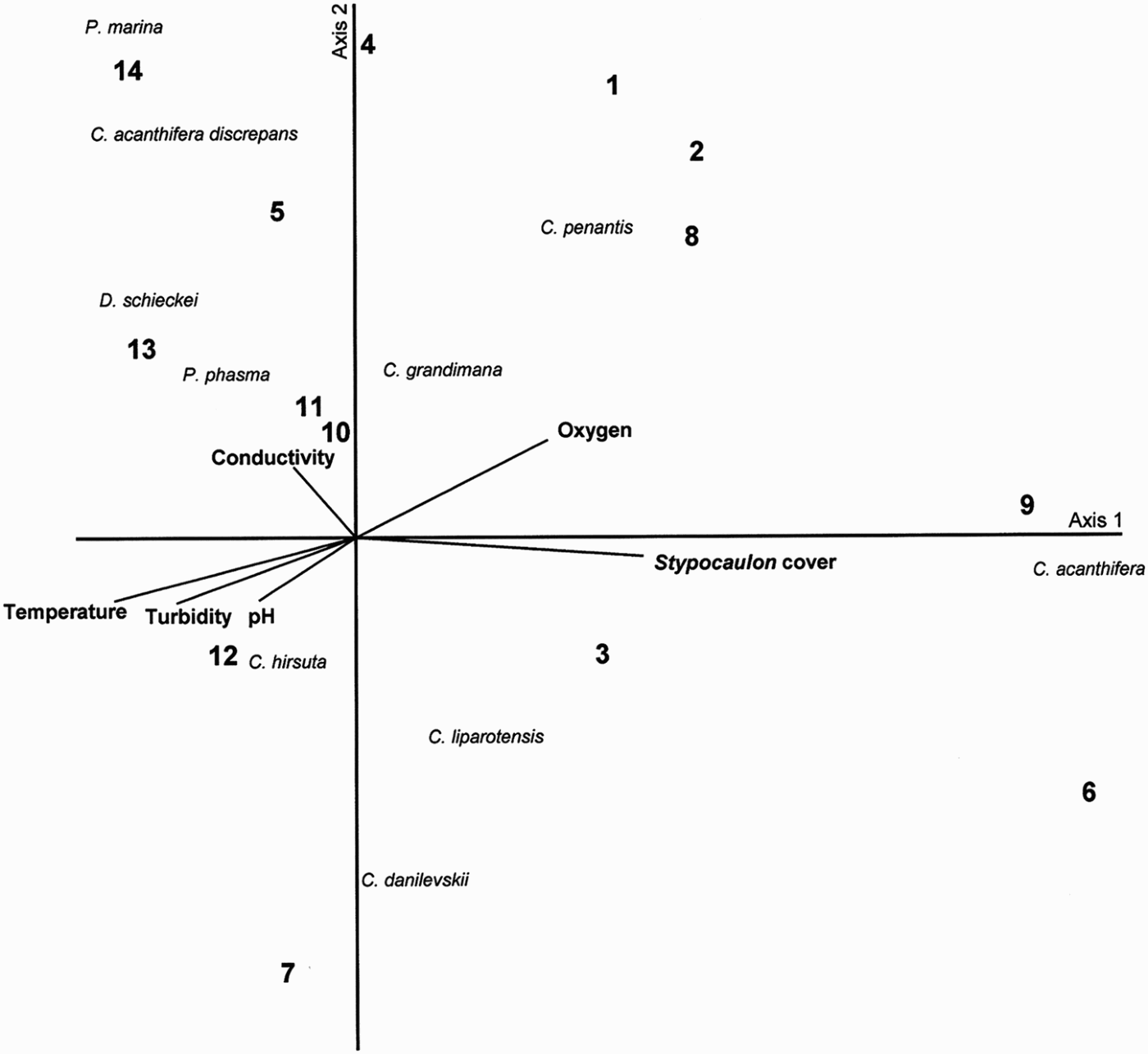
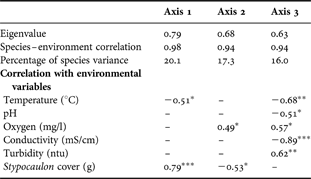
The number of caprellid species per station (Figure 5) was significantly correlated with the cover of S. scoparium in the locality (r = 0.42, P < 0.05). Figure 7 and Table 1 show the results of the CCA. First axis, which absorbed 20.1% of total variance, was significantly correlated with the cover of S. scoparium (positive) and temperature (negative). Species such as Caprella acanthifera were significantly favoured by a higher cover of the seaweed, while other species such as Phtisica marina or D. schieckei were not associated with higher values of seaweed cover. Caprella penantis was the species which best correlated with higher oxygen concentration. These results support the idea of this species as especially sensitive to a lack of oxygen and hydrodynamism (see Guerra-García & García-Gómez, Reference Guerra-García and García-Gómez2001; Guerra-García et al., Reference Guerra-García, Baeza-Rojano, Cabezas, Díaz-Pavón, Pacios and García-Gómez2009a). Other species such as P. marina, D. schieckei, Pseudoprotella phasma or C. hirsuta preferred locations with higher values of conductivity, temperature and turbidity.
Graph representation of the stations and caprellid species with respect to the first two axes of the Canonical Correspondence Analysis (CCA).

Summary of the results of the CCA analysis.

*, P<0.05, **, P < 0.01, ***, P < 0.001.
ACKNOWLEDGEMENTS
Financial support of this work was provided by the Ministerio de Educación y Ciencia (Project CGL2007-60044/BOS) co-financed by FEDER funds, and by the Consejería de Innovación, Ciencia y Empresa, Junta de Andalucía (Project P07-RNM-02524). Two anonymous referees provided helpful comments to improve the manuscript.