




No CrossRef data available.
Article contents
Economics is whatever the comparative advantage of economists is: a comment on Leeson (2020)
Published online by Cambridge University Press: 06 March 2020
Abstract
Leeson (2020) objects to the conflation of economics with applied econometrics, and argues that economics instead should be thought of as the implications of the assumption that individuals maximize, i.e. rational choice theory. But, narrowly defining economics in terms of method demands that we ignore alternative theoretical frameworks which potentially hold explanatory power about topics thought of as economics, all for the sake of a definition. I suggest that applying rational choice theory and applying econometrics became the comparative advantage for economists relative to other social scientists by accidents of history. These comparative advantages largely persist. It is reasonable to call applications of both rational choice theory and econometrics to topics outside conventional economic topics ‘economics’ simply because these applications remain the comparative advantage of economists.
Information
- Type
- Comment
- Information
- Copyright
- Copyright © Millennium Economics Ltd 2020
Footnotes
1 See Popper (Reference Popper1957: 26–34; Reference Popper1966: 1–26).
2 One way one could frame whether a potential definition is ‘correct’ or not is by framing it as an empirical question. In this case, one would ask whether all of what is commonly called ‘economics’ is encapsulated by a proposed definition. As we will see, Leeson's definition does not pass this empirical test. I state this parenthetically because it is not my intention to make this a focus of my argument, and would rather downplay the notion of a ‘correct’ definition.
3 Much of behavioral economics hews closer to orthodoxy than it may initially appear, with much of the theoretical superstructure of orthodoxy retained. My example of behavioral economics is rhetorical and I do not take a position necessarily on which side of the line it ‘should’ fall. On this point, see Hodgson (Reference Hodgson2019: 85–108); c.f. Earl (Reference Earl2010).
5 Theoretically, if not empirically – history of course is itself the empirical record.
6 Even if one wishes to argue that there is little role for behaviorism or other explanations, to argue that alternative explanations explain none of the variation is at odds with empirics. See, for instance, Caplan (Reference Caplan2003).
7 I do not wish to imply that rational choice theory and econometrics are altogether distinct; clearly, they are used together to great effect.
8 Excepting Law and Economics that pertains narrowly to ‘the economy’, such as antitrust.
References
Alan, S., Boneva, T. and Ertac, S. (2019), ‘Ever Failed, Try Again, Succeed Better: Results from a Randomization Educational Intervention on Grit’, Quarterly Journal of Economics, 134(3): 1121–1162.Google Scholar
Buchanan, J. (1964), ‘What Should Economists Do?’, Southern Economic Journal, 30(3): 213–222.CrossRefGoogle Scholar
Caplan, B. (2003), ‘Stigler-Becker versus Myers-Briggs: Why Preference-based Explanations are Scientifically Meaningful and Empirically Important’, Journal of Economic Behavior & Organization, 50(4): 391–405.10.1016/S0167-2681(02)00031-8CrossRefGoogle Scholar
Card, D, DellaVigna, S., Funk, P. and Iriberri, N.. (2020), ‘Are Referees and Editors in Economics Gender Neutral?’, Quarterly Journal of Economics, 135(1): 269–327.10.1093/qje/qjz035CrossRefGoogle Scholar
Carlana, M. (2019), ‘Implicit Stereotypes: Evidence from Teachers’ Gender Bias’, Quarterly Journal of Economics, 134(3): 1163–1224.CrossRefGoogle Scholar
Earl, P. E. (2010), ‘Economics Fit for a Queen: A Pessimistic Assessment of its Prospects’, Prometheus: Critical Studies in Innovation, 28(3): 209–225.CrossRefGoogle Scholar
Hodgson, G. (2019), Is There a Future for Heterodox Economics? Institutions, Ideology, and a Scientific Community. Northampton: Edward Elgar.10.4337/9781789901597CrossRefGoogle Scholar
Leeson, P. (2020a), ‘Economics is Not Statistics’, Journal of Institutional Economics.10.1017/S174413742000003XCrossRefGoogle Scholar
Leeson, P. (2020b), ‘Logic is a Harsh Mistress: Welfare Economics for Economists’, Journal of Institutional Economics, 16(2): 145–160.10.1017/S1744137419000109CrossRefGoogle Scholar
Popper, K. (1966), Open Society and Its Enemies, Volume II: The High Tide of Prophecy: Hegel, Marx, and the Aftermath. Revised Edition. Princeton: Princeton University Press.Google Scholar
Young, A. (2019), ‘Channeling Fisher: Randomization Tests and the Statistical Insignificance of Seemingly Significant Experimental Results’, Quarterly Journal of Economics, 134(2): 557–598.10.1093/qje/qjy029CrossRefGoogle Scholar
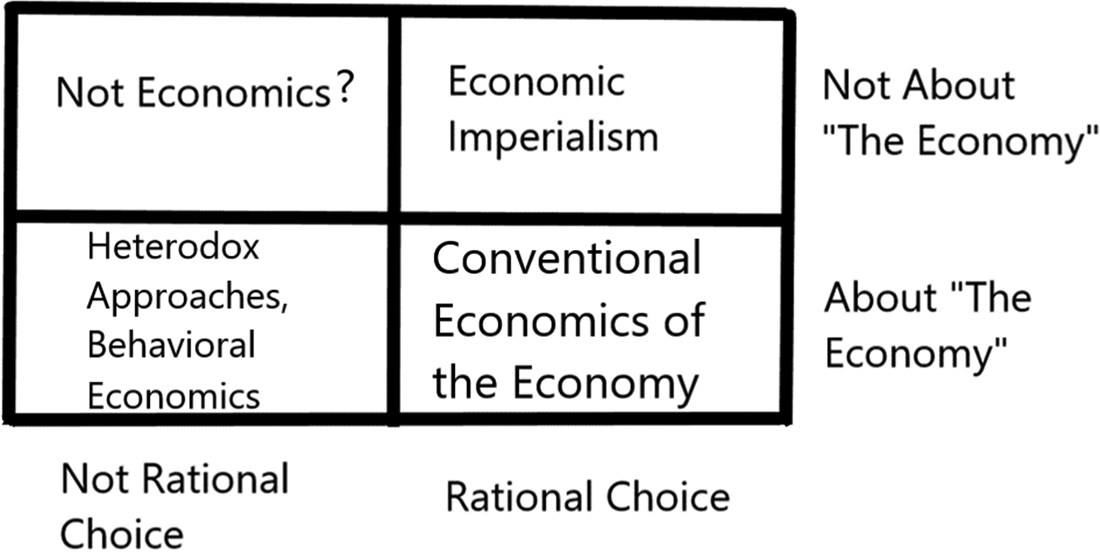
Figure 1. A provisional taxonomy of social science.
 You have
Access
- 3
- Cited by
Peter Leeson (Reference Leeson2020a; c.f. Reference Leeson2020b) in the pages of this journal argues against the recent conflation of economics with applied econometrics, a tendency which frequently leads to maligning the use of qualitative empirics to assess economic hypotheses. He highlights a particular encounter where an economist walked out of an academic presentation when told that the empirical support which Leeson would present would be limited to qualitative evidence. Contrary to the conflation of economics with econometrics, Leeson argues that economics is, by definition, teasing out the implications of the assumption that individuals maximize, or in other words, rational choice theory.
The present author does not take a position on what the ‘correct’ definition of economics is,Footnote 1 except to say that certain definitions obscure and certain definitions clarify.Footnote 2 The present author also agrees that it is inappropriate to ignore qualitative empirical evidence altogether. What I will ultimately conclude is that the most useful way of defining economics is that economics is whatever the comparative advantage of economists is. Since specializing in your comparative advantage(s) is economists' answer when asked what anyone else should do, for me this is the rather obvious answer to the question, ‘What Should Economists Do?’ (Buchanan, Reference Buchanan1964).
Provisionally – and rhetorically, please do not interpret this as how I wish to think of economics – I would suggest that one way of demarcating economics can be found in Figure 1, which is a 2 × 2 matrix taxonomy of social science. The lower right square of the matrix constitutes the core of economics that everyone agrees is economics: issues pertaining to ‘the economy’ (e.g. labor markets, inflation, and determinants of international trade) analyzed through the lens of maximizing agents. In contrast, the upper right square of the matrix is the domain of economic imperialism, where economists have controversially waded into topics that are not narrowly ‘about the economy’, such as law, politics, or crime.
A provisional taxonomy of social science.
The lower left square is the literature which is about ‘the economy’ but does not consist of applications of rational choice theory. This includes not only heterodox approaches (and at least arguably, behavioral economicsFootnote 3) but also data-heavy/theory-light empirics which address questions ‘about the economy’. It is, in fact, the editorial position of the Journal of Institutional Economics to study the institutions of the economy both from conventional economic perspectives as well as those in the lower left square, i.e. ‘anthropology, biology, geography, history, law, politics, psychology, philosophy, social theory and sociology’.Footnote 4
Leeson is in effect either claiming that fields such as these do not have anything theoreticallyFootnote 5 useful to say about ‘the economy’ that is not already contained in rational choice theory, or that there are true (but non-rational choice) explanations for what we observe in ‘the economy’ that economists should, for whatever reason, ignore. But at the very least, economists should be the ones who understand ‘the economy’. Suppose that conventional rational choice theory can explain three quarters of the variation in the data on what is typically thought of as ‘the economy’. What of the last quarter? Perhaps the most common theories found in the lower left square are ineffective in explaining that final quarter,Footnote 6 or perhaps we will never be able to assign a reason to what causes the final quarter of the variation. But, we as economists should not rule out alternative explanations ahead of time, for reasons of a definition.
It isn't just that ruling out certain hypotheses about the economy because they are not ‘economic’, on definitional grounds is, to put it mildly, limiting. Plenty of research that is in the upper-left hand corner of Figure 1 – that which is neither ‘about the economy’ nor really pertains to maximizing behavior – is regularly published in top economics journals. Just from recent issues of the Quarterly Journal of Economics, research which has, at most, a tenuous relationship with either ‘the economy’ or maximizing behavior would include Young (Reference Young2019), Carlana (Reference Carlana2019), Alan et al. (Reference Alan, Boneva and Ertac2019), and Card et al. (Reference Card, DellaVigna, Funk and Iriberri2020). To varying extents these articles are about issues adjacent to ‘the economy’ or maximizing behavior, and I am not claiming that this research should not have been published where it was published. But, even using a definition that is far more relaxed than Leeson's, we still end up casting aside a large swath of contemporary economics. For reasons we will get to momentarily, it is also not clear who is equipped to answer such questions if not economists.
Rather than demarcating economics as described in Figure 1, let me assert that there are two methods for which, by historical happenstance, economists have accumulated human capital in the process of studying ‘the economy’. These methods are rational choice theory and econometrics. We wander into other fields constantly because, for whatever reason, scholars in other fields are either unwilling or unable to apply rational choice theory and statistics when they are appropriate. I see a certain irony in Leeson's position, because I interpret the encroachment of econometrics and rational choice theory on other fields as parallel historical events.Footnote 7 That economists would have a lot to say about law or politics or crime wasn't because it was historically inevitable that virtually all rational choice theory (and a completely disproportionate amount of competently applied statistics) ought to fall under the purview of economists.
Economists have had a lot to say because scholars working in those fields refused to implement methodologies that rather obviously (at least in retrospect) have an awful lot to say about those fields. To give a specific example, if legal scholars immediately lifted rational choice theory from its early development in economics and began applying it to the law, I doubt that there would be very many economists today working on Law and Economics while situated in economics departments.Footnote 8 Although Posner (Reference Posner1973) was enormously influential on the field while working as a law professor, and plenty of legal scholars housed in law schools themselves contribute to the field, economists have had a disproportionate impact on the development of Law and Economics because, well, they were already endowed with the requisite human capital to tackle the questions the field posed. In our counterfactual history where economists were not endowed with a higher level of ‘rational choice theory human capital’ than were legal scholars, economists would have never seen a need to get involved with most (though not all) of the topics found in Law and Economics. The very existence of economic imperialism is effectively an accident of history. It was not inevitable.
Allow me to put a different spin on Viner's quotation (Boulding, Reference Boulding1941: 3), which Leeson cites – that economics is what economists do. As I stated in the beginning, a useful definition of economics is that economics is whatever the comparative advantage of economists is. I have no doubt that Leeson is working in a research program that is his comparative advantage. I have no doubt that all the aforementioned papers published in the Quarterly Journal of Economics are the comparative advantage of those economists. Economists are actually specializing in their comparative advantage both when they apply rational choice theory and when they apply econometrics, whatever the topic happens to be. Effectively, we've long ago knocked down any constraints preventing us from working on topics that don't pertain to ‘the economy’, and while we study these other topics, we still call what we are doing ‘economics’. Given all this, I suggest that instead of drawing lines of demarcation around rational choice theory or around applied econometrics, we just do good social science within the scope of our respective comparative advantages, whatever that is to entail.