Introduction
The modern ichthyofauna of the Southern Ocean is dominated by species belonging to a single perciform suborder, the Notothenioidei (Eastman Reference Eastman1993). Of 131 recognized species, ∼80% are restricted to Antarctic waters and belong to five families: Artedidraconidae, Bathydraconidae, Channichthyidae, Harpagiferidae, and Nototheniidae. The high degree of Antarctic endemism results from the adaptive radiation of the notothenioids to fill niches vacated by competing, temperate fish taxa, as they became locally extinct due to oceanic cooling during the past 24 million years (Near Reference Near2004). At the highest Antarctic latitudes, notothenioids represent 77% of species diversity and 90% of biomass, a level of dominance by a single taxonomic group that is unique among piscine shelf faunas of the world (Eastman Reference Eastman2005).
The hallmark of the notothenioid radiation is the evolutionary restructuring of morphology for life in the water column, termed secondary pelagicism (Eastman Reference Eastman1993). The ancestral notothenioid stock was a negatively buoyant, bottom-dwelling perciform that arose ∼ 40–60 m.y.a. (DeWitt Reference Dewitt1971, Eastman & Clarke Reference Eastman and Clarke1998, Eastman Reference Eastman2000). Lacking a swim bladder, the Notothenioidei evolved pelagic or partially pelagic lifestyles by reduction of skeletal mineralization and enhancement of lipid deposition (Eastman Reference Eastman1993). Secondary pelagicism has arisen independently several times in different notothenioid clades (Eastman Reference Eastman1997, Reference Eastman1999, Near et al. Reference Near, Kendrick, Detrich and Jones2007) and is based on the retention of traits in the adult that are larval characteristics in outgroups (paedomorphism) (Eastman Reference Eastman1997). Paedomorphic characters in pelagic notothenioids include partial or complete retention of the notochord (Eastman Reference Eastman1997) and persistence of a cartilage-rich skeleton (Albertson et al. Reference Albertson, Yan, Titus, Pisano, Vacchi, Yelick, Detrich and Postlethwait2010). Today, notothenioids occupy cryopelagic, pelagic, semipelagic and benthopelagic habitats in addition to their ancestral benthic habitat (Eastman Reference Eastman1993).
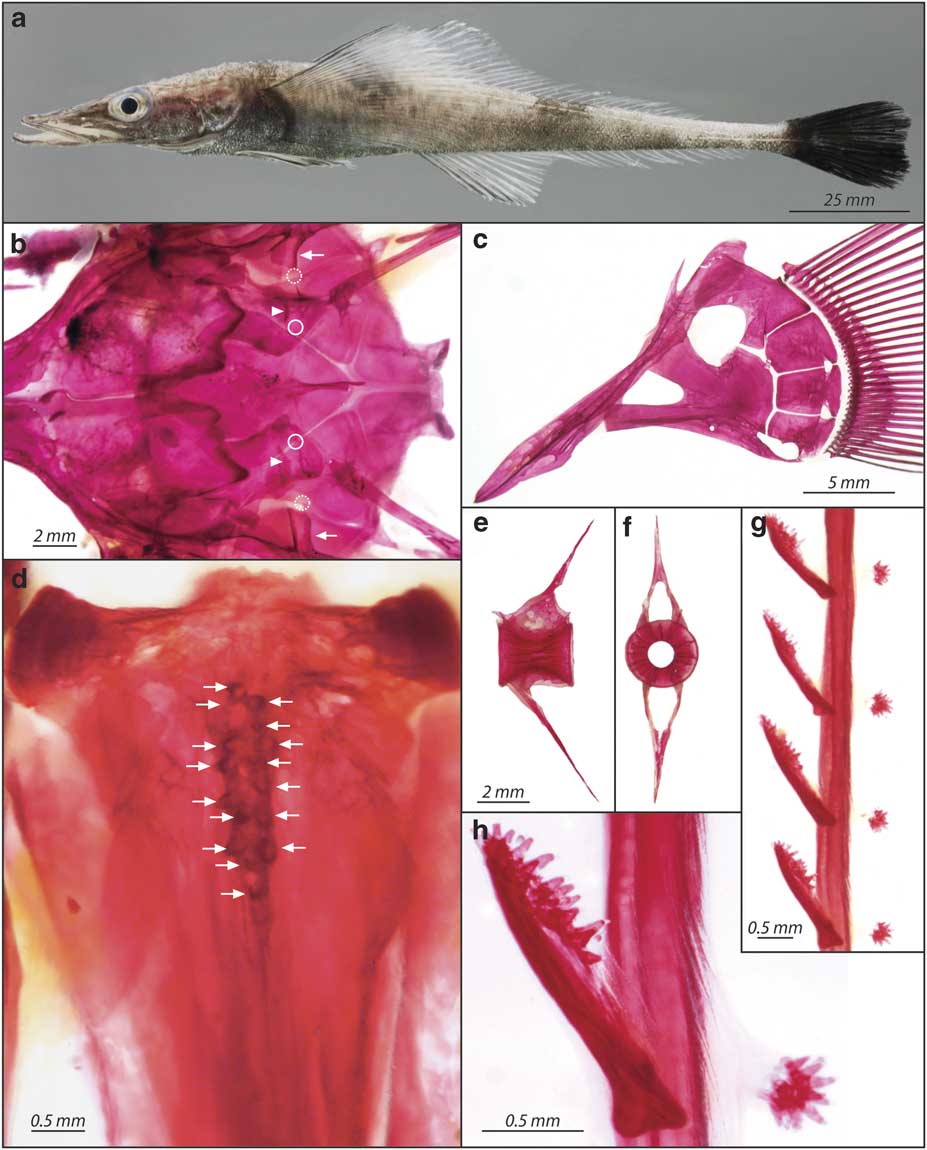
The family Bathydraconidae (dragonfishes) includes 16 species in 11 genera (Eastman & Eakin Reference Eastman and Eakin2000). Dragonfishes are most abundant and diverse in the deep shelf waters of high Antarctic latitudes (Schwarzbach Reference Schwarzbach1988, Ekau Reference Ekau1990, Eastman Reference Eastman1993, La Mesa et al. Reference La Mesa, Caputo and Eastman2007). They have an elongated body and show only modest diversification in form, which ranges from moderately robust and well muscled (Gymnodraco, Cygnodraco, Parachaenichthys spp., Psilodraco and Acanthodraco) to slender and gracile (most other genera; see Fig. 1a for Vomeridens infuscipinnis). Adults reach 13–59 cm SL, with a median of ∼ 25 cm (Gon Reference Gon1990). Molecular phylogenetic analyses of notothenioids have shown the Bathydraconidae to be paraphyletic, with some species in the clade (e.g. Gymnodraco acuticeps) appearing to be more closely related to the hemoglobinless icefishes (family Channichthyidae) than to other bathydraconids (Bargelloni et al. Reference Bargelloni, Ritchie, Patarnello, Battaglia, Lambert and Meyer1994, Derome et al. Reference Derome, Chen, Dettaï, Bonillo and Lecointre2002, Near et al. Reference Near, Pesavento and Cheng2004, Near & Cheng Reference Near and Cheng2008).
Osteology of Vomeridens. a. Live male specimen of V. infuscipinnis from the South Orkney Islands collected during US AMLR cruise in February–March, 2009, 162 mm SL. b-h. Alizarin-stained skeletal elements of Vomeridens. b. Dorsal view of posterior neurocranium (YPM 20008) showing arrangement of the segments and pores of supratemporal canal. Anterior is to the left. Arrows indicate complete lateral canal segments connected to temporal canal; arrowheads indicate dorsally unossified canal segments. Complete circles indicate approximate location of constant pores; dashed circles indicate variably present pores. c. Lateral view of left pectoral girdle (YPM 20008) of large adult with apparently complete ossification indicated by uniformly red staining. Histology (Fig. 3b) shows this is only a thin covering of bone over the mostly cartilaginous pectoral girdle. d. Ventral aspect of vomer (YPM 21189) with 16 anklyosed teeth (arrows) and four empty sockets. Teeth are 0.3–0.4 mm long. e. Left lateral view of eleventh caudal vertebra (or the 31st of 54 total) (YPM 20008) showing gracility of bone in the neural and hemal arches and centrum. f. Anterior view of same vertebrae in e revealing large size of persistent notochordal foramen in this adult specimen. g. Portion of first ceratobranchial (YPM 21189) bearing four pairs of anterior and posterior gill rakers. The anterior raker is 1.8 m long with teeth on the distal one-half. h. Detail of the anterior and posterior rakers in g showing about 20 teeth on anterior raker and that the teeth of the posterior raker are arranged as a tuft in the branchial mucosa.

Because bathydraconids have a reduced ascending process on the premaxilla, jaw protrusion is limited (Iwami Reference Iwami1985, Balushkin & Voskoboinikova Reference Balushkin and Voskoboinikova1995), and they are less reliant on benthic food sources than other notothenioid clades. Most species are thought to be benthic or epibenthic, and many feed in the water column on Antarctic krill (Euphausia superba Dana) (Gon Reference Gon1990). However, the life histories of the small, deep-living species of the clade that includes Prionodraco, Bathydraco, Akarotaxis, Racovitzia and Vomeridens are poorly known. Vomeridens infuscipinnis (DeWitt Reference DeWitt1964), a species in this group (Fig. 1a), is considered “rare” and its biology “unknown”, with the account in Fishes of the Southern Ocean based on five specimens (Gon Reference Gon1990, O. Gon, personal communication 2008). During recent trawling we obtained a collection of Vomeridens that provides insight into several aspects of its biology. In this paper we present: 1) meristic counts and morphometric measurements, 2) descriptions of the vomerine teeth and the supratemperal canal, 3) measurements of buoyancy, 4) anatomical and histological observations of bone, cartilage and lipid, 5) dietary information, and 6) data on reproduction.
Materials and methods
Collection of specimens
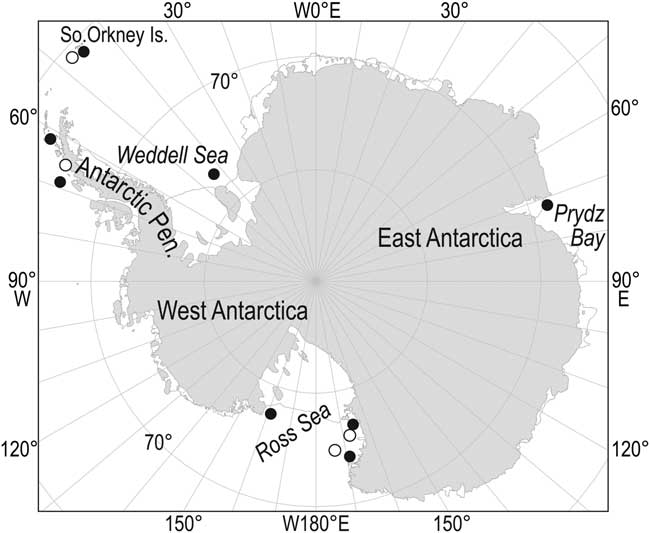
We obtained 14 specimens of Vomeridens infuscipinnis by bottom trawling with a 5.48 m Otter trawl deployed from the ARSV Laurence M. Gould. Specimens were collected on 16–17 May 2008 at five closely spaced stations (66.25–27°S, 66.55–58°W) in the Banana Trench located in Crystal Sound between Lavoisier Island (Biscoe Islands group) and the Antarctic Peninsula (Fig. 2). Depth of capture was 692–902 m. The specimens were frozen on board and then thawed and fixed in 10% formalin on arrival in the USA. We collected four additional specimens near the South Orkney Islands (66.51–61.60°S, 46.59–47.01°W) between 21–28 February 2009 on the US AMLR cruise of the RV Yuzhmorgeologiya. These specimens were captured at depth ranges of 457–629 m. On 19 May 2010 we caught five more specimens in the Banana Trench during another cruise aboard the ARSV Laurence M. Gould. The 2009 and 2010 specimens were fixed in 10% formalin at the time of capture. We also used three specimens collected at two localities (Fig. 2) in the south-western Ross Sea of East Antarctica by bottom trawling on two cruises of the RVIB Nathaniel B. Palmer (December–January, 1996–97 and 1997–98 (Eastman & Hubold Reference Eastman and Hubold1999)). The specimens collected at Lavoisier Island and the South Orkney Islands are deposited in the Yale University Peabody Museum of Natural History (YPM). Of the three Ross Sea specimens, we documented the occurrence by deposition of one (74.59°S, 172.33°E) at the Museum of Comparative Zoology, Harvard University (MCZ 152946), stained the second (76.30°S, 167.17°E) with alizarin (YPM 21189), and used the third (same coordinates as second specimen) for the histological component of this study. One of the Lavoisier Island specimens was also stained with alizarin (YPM 20008). Institutional abbreviations are listed at http://asih.org/codons.pdf.
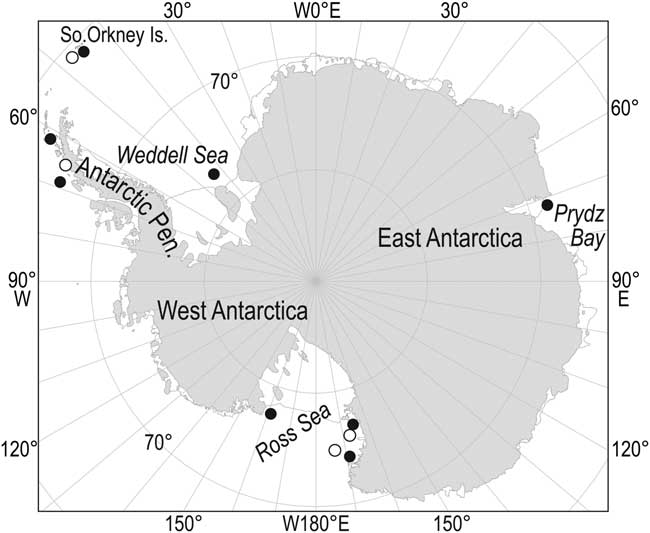
The distribution of Vomeridens infuscipinnis based on previous records (●) in Gon (Reference Gon1990) and new records (○) in this paper. The map is modified from one available in the Antarctic Digital Database, version 2.0. British Antarctic Survey 1998.
Meristic and morphometric techniques
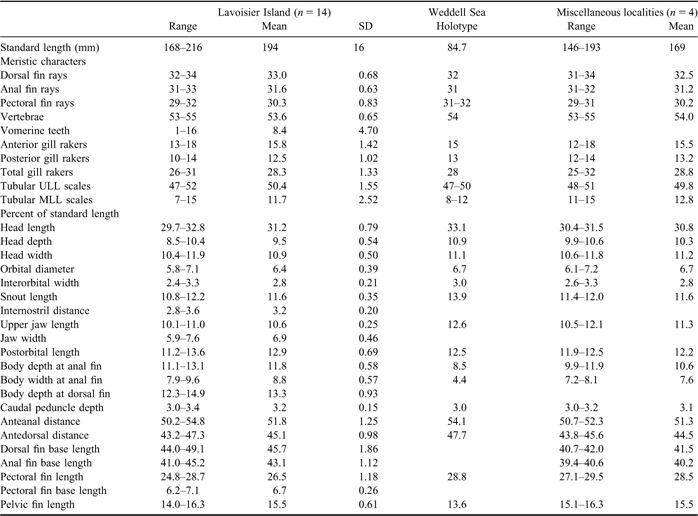
Following the methods of Hubbs & Lagler (Reference Hubbs and Lagler2004), we made ten meristic counts and 21 morphometric measurements on each of the Lavoisier Island specimens from 2008 (Table I). We followed standard practice for notothenioids and individually counted the last rays of the dorsal and anal fins (DeWitt Reference DeWitt1966). Counting was performed by visual examination of specimens using a dissecting microscope and using X-radiographs of lateral and dorsoventral perspectives.
Meristic counts and morphometric measurements for Vomeridens infuscipinnis from Lavoisier Island in comparison to the holotype (DeWitt Reference DeWitt1964) and to specimens in two other published records (DeWitt & Hureau Reference DeWitt and Hureau1979, Gon Reference Gon1990). SD = Standard deviation, ULL = upper lateral line, MLL = middle lateral line, n = number of specimens.

Measurements of buoyancy
Following previously published protocols (Eastman & DeVries Reference Eastman and DeVries1982, Eastman & Sidell Reference Eastman and Sidell2002, Near et al. Reference Near, Russo, Jones and DeVries2003, Reference Near, Jones and Eastman2009), we determined the buoyancy of Vomeridens by weighing seven specimens (two from the 2009 collection, five from the 2010 collection) in seawater of ambient temperature and in air. Measurements are expressed as percentage (or relative) buoyancy (%B), calculated as weight in air/weight in water x 100.
Anatomical and histological techniques
To assess skeletal ossification, we cleared and stained one Lavoisier Island specimen and one Ross Sea specimen with alizarin red S (Taylor Reference Taylor1967) dissolved in 75% ethanol (Springer & Johnson Reference Springer and Johnson2000). The head skin was left intact to preserve the lateral line pores and canals. We determined the location of pores in the supratemporal canal by cannulating the temporal canal on each side with PE-50 tubing and injecting 0.1% aqueous cresyl violet acetate dye via syringe.
One of the Ross Sea specimens was fixed onboard the ship by transcardial perfusion of Bouin’s fixative. This specimen was stored in 70% ethanol until we sampled cross-sections (head to caudal peduncle) for histological analysis of bone, cartilage and lipid. Briefly, the fish was embedded in paraffin according to standard procedures, and 7 μm sections were cut on a rotary microtome. Sections were mounted on slides, deparaffinized, and stained with Gomori’s one step trichrome, with Pollak’s trichrome, or with Bodian’s Protargol for 24 h at 50°C. We also embedded and sectioned three of the 2008 Lavoisier Island specimens. Although tissue preservation in these animals was poor due to their freezing before fixation, the stained sections did provide useful data.
The ovaries of female Lavoisier specimens (n = 7, 2008 collection) were excised and weighed to ± 0.1 g. Gonadal weights for the male Lavoisier specimens (n = 7, 2008 collection) could not be determined because the testes had been removed previously for preparation of DNA. However, portions of the testes remained in two specimens (YPM 20041 and 20049), and we processed these for histology. The gonadosomatic index (GSI) of the females was calculated as the percentage of gonad weight to total body weight. We also determined the absolute fecundity, defined as the total number of ripe eggs found in the gonads prior to spawning, and the relative fecundity, defined as the total number of eggs per g of body mass. We used an ocular micrometer to determine the mean size of ripe eggs by measuring the maximum diameter (to 0.1 mm) of 30 oocytes per female (West Reference West1990). We did not correct the measurements for shrinkage induced by freezing and fixation. We used the criteria in Kock & Kellermann (Reference Kock and Kellermann1991, table IX) for assessing macroscopic gonadal maturity.
Analysis of stomach contents
The stomach contents of each Lavoisier Island specimen were examined and sorted according to taxonomic groups. When possible, we identified prey items to the genus or species level, and we recorded the number of individuals in each prey category.
Results and discussion
Meristic counts and morphometric measurements
Figure 2 provides an update on the distribution of Vomeridens infuscipinnis. The 2008 samples from Lavoisier Island confirm the existing meristic counts (DeWitt Reference DeWitt1964, DeWitt & Hureau Reference DeWitt and Hureau1979, Gon Reference Gon1990) and expand the range for anal fin rays (Table I). Ranges for all but four of the morphometric measurements have been enlarged. Some of this variability may be attributable to undocumented ontogenetic change because the mean standard length of our specimens (194 mm) was considerably larger than those of previous samples (85 mm and 169 mm) (Table I).
Clarification of the status of two taxonomic characters
The arrangement of the canals and pores of the cephalic lateral line system is an important taxonomic character in some notothenioid taxa (DeWitt et al. Reference DeWitt, Heemstra and Gon1990, Iwami et al. Reference Iwami, Matsuo and Numanami1999). In most bathydraconids the supratemporal canal is complete across the dorsoposterior aspect of the head (Gon Reference Gon1990), but in Vomeridens it is interrupted (incomplete across the midline) and consists of a lateral canal segment and a single pore (the 1 + 1 pore arrangement) on each side (DeWitt Reference DeWitt1964, DeWitt & Hureau Reference DeWitt and Hureau1979). Gon (Reference Gon1990, p. 380), however, notes that two of his specimens had two pores in each segment (the 2 + 2 arrangement). To resolve this uncertainty, we examined the supratemporal canals and pores using alizarin-stained specimens and by injection of dye into the canal system of alcohol-stored specimens.
The Lavoisier specimens had a complete canal segment connected to the temporal canal and, medial to this, an incomplete canal segment lacking a roof (Fig. 1b). The typical or constant pore was at the medial end of the incomplete canal. Extra pores, when present, were situated between the two canal segments, were small, and opened posteriorly. The majority (54% = 7/13) of the specimens examined had one or two extra pores - four were bilateral symmetric (2 + 2) and three were found only on the right side (1 + 2) - whereas 46% (6/13) had a 1 + 1 pore arrangement. The structure of the supratemporal canal is therefore a variable character in Vomeridens, which may reflect the trend in notothenioids toward the interruption, reduction, and loss of canal segments with the evolution of pelagic and semi-pelagic life styles (DeWitt Reference DeWitt1962, Jakubowski Reference Jakubowski1970, Reference Jakubowski1971).
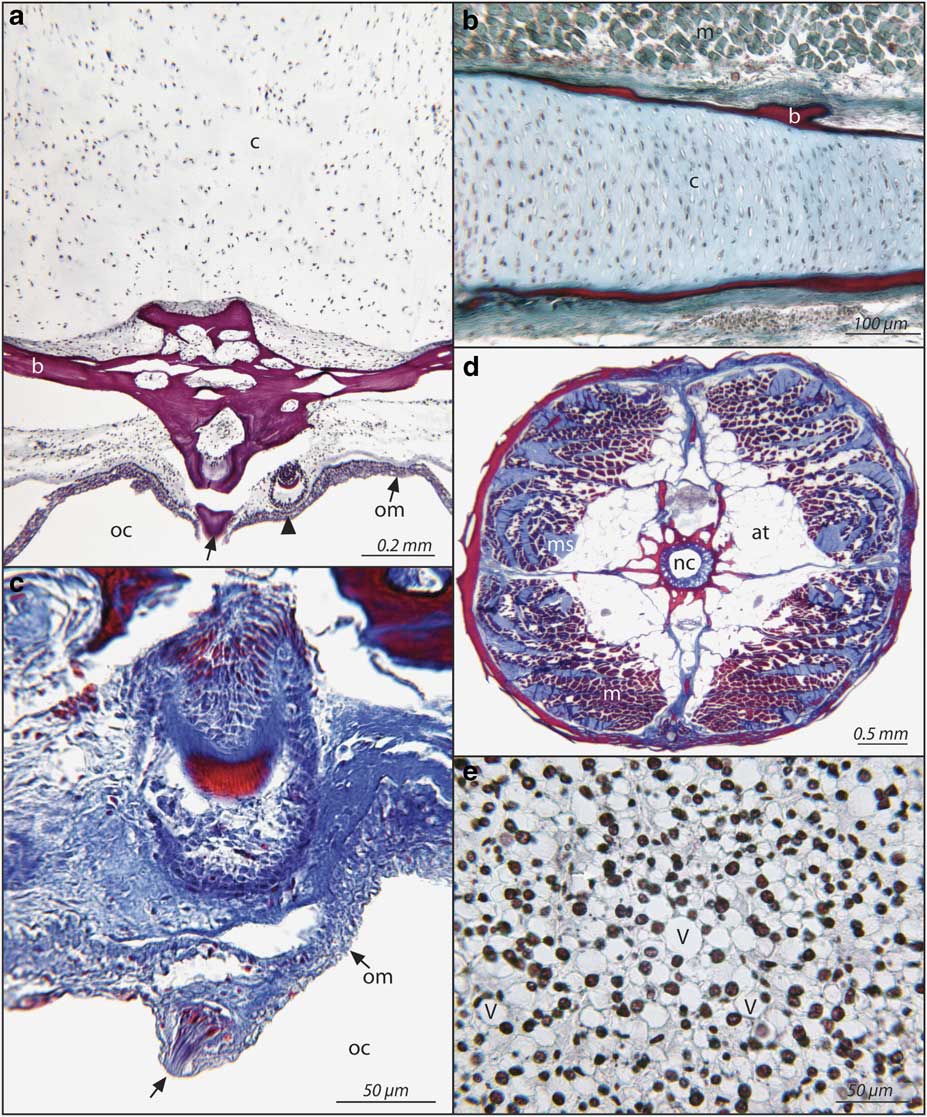
Vomeridens larger than 100 mm SL “usually” possess vomerine teeth in the midline roof of the oral cavity, a character unique among the notothenioids that is used in taxonomic keys to identify the genus (Gon Reference Gon1990). All of the 2008 Lavoisier specimens examined had vomerine teeth, but they were variable in number, extremely small, and projected only slightly through the oral mucosa. The number of teeth range from 1 to 16 (mean = 8.4), and they were arranged in one or two irregular longitudinal rows along the median axis of the vomer (Fig. 1d). The specimen in this figure had 16 ankylosed teeth and four empty sockets. The teeth measured 0.3–0.4 mm in length and required magnification and application of 0.1% aqueous cresyl violet acetate for definitive identification. The empty sockets reflected the replacement process shown in Fig. 3a, in which a tooth cap is in position to become ankylosed to the vomer. In this 165 mm SL specimen the tooth was 0.1 mm in length, as were early tooth buds in the same specimen (Fig. 3c). We agree with Iwami & Abe (Reference Iwami and Abe1981) who, on the basis of the variability in the number of teeth in their specimens of Vomeridens, concluded that this character is “highly variable” and that body length probably does not contribute to the variability. Thus, Vomeridens has a variable number of small vomerine teeth that undergo cycles of replacement. These teeth may be easily overlooked, and specimens, particularly those at early developmental stages, may lack ankylosed teeth.
Histological documentation of skeletal ossification, vomerine tooth development and lipid deposition in a perfused specimen of V. infuscipinnis (uncataloged). a. Cross-section showing predominance of cartilage (c) versus bone (b) in the vomer-ethmoid region of the anterior skull. The red stained vomer occupies the median roof of the oral cavity (oc). An unankylosed tooth (arrow) is present in the oral mucosa (om) adjacent to the vomer and a developing tooth bud (arrowhead) is to the right beneath the mucosa. Bodian’s Protargol stain. b. Cross-section of an adult pectoral girdle, similar to Fig. 1c, and associated musculature (m) showing that a thin layer of red stained bone (b) is confined to the surface and that most of the girdle consists of cartilage (c). Pollak’s trichrome stain. c. Close-up of a section similar to a showing detail of a slightly earlier tooth bud beneath the oral mucosa (om) and an adjacent taste bud (arrow) in the mucosa of the oral cavity (oc). Gomori’s trichrome stain. d. Cross-section of the caudal peduncle showing muscle (m), numerous myosepta (ms), and abundant adipose tissue (at) surrounding the vertebral column. The notochordal canal (nc) of vertebra is also evident. Gomori’s trichrome stain. e. Parenchyma of liver consists of hepatocytes with darkly stained nuclei and cytoplasm containing large numbers of empty-appearing lipid vacuoles (v). Bodian’s Protargol stain.

General body morphology and buoyancy
With a streamlined and spindle-like body, Vomeridens (Fig. 1a) departs from the external morphology of the typical benthic notothenioid. The fins were delicate, and the rays typically branched only once near their tips. Only the pelvic rays were segmented. At 27–29% SL (Table I), the pectoral fins were long for bathydraconids in particular and notothenioids in general. Thin skin covered all fins, which indicates that they are not continuously in contact with the substrate.
Seven specimens of Vomeridens yielded buoyancy values (%B) of 1.31–2.11% with a mean of 1.61% and standard deviation of 0.28%. Values for notothenioids range from 0% in neutrally buoyant, pelagic species to 6% in heavy, benthic species, with many species clustering in the range of 3–4% (Eastman Reference Eastman1993, Eastman & Sidell Reference Eastman and Sidell2002, Near et al. Reference Near, Jones and Eastman2009). Thus, Vomeridens joins a channichthyid (Dacodraco hunteri (%B = 1.28%; Eastman Reference Eastman1999)) as the only notothenioids characterized by near-neutral buoyancy. This phenotype has been achieved by morphological modifications in various body systems as detailed below.
Videography of a bathydraconid, possibly Bathydraco macrolepis (Eastman, unpublished data), belonging to the clade of small, slender species (Akarotaxis, Racovitzia, Bathydraco, and Vomeridens) shows that it holds station a few metres off the bottom, headed into the current with trunk horizontal and pectoral fins beating to maintain position in the water.
Degree of skeletal ossification - distribution of bone and cartilage
Based on the intense red staining of the bones (Fig. 1b–g), superficial examination of alizarin stained material from Vomeridens could lead to the erroneous conclusion that the skeleton was well ossified. Histological examination indicated, however, that Vomeridens actually had a poorly ossified skeleton. For example, most of the neurocranium (brain case; Fig. 1b) consisted of a thin layer of bone at the external and internal surfaces, with the remainder of the skeletal mass composed of cartilage as shown by the vomer-ethmoid region (Fig. 3a). The bone was acellular, lacking enclosed osteocytes, and the cartilage was typical hyaline cartilage based on the identification scheme of Witten et al. (Reference Witten, Huysseune and Hall2010). A similar morphology was also seen in the pectoral girdle, in which cartilage was sandwiched between thin layers of bone (Figs 1c & 3b). Cartilage was also present in the gill arches and smaller (≈ 2 mm) skeletal elements, such as the anterior gill rakers (Fig. 1g & h). The vertebral column was also characterized by low bone density; the vertebral centra were bony collars that surrounded a notochordal canal which constituted ∼ 40% of the total diameter of bone (Fig. 1e & f). The vertebrae, therefore, did not show the pronounced amphicoely of typical teleosts.
Heterochrony, and especially paedomorphy, has been important in the evolution of notothenioids in general (Balushkin Reference Balushkin1984, Iwami unpublished). Among notothenioids, delayed ossification of bones is most pronounced in channichthyids (Voskoboinikova Reference Voskoboinikova1997), and is “a mechanism of paedomorphic evolution” (Voskoboinikova Reference Voskoboinikova1994). Skeletal underdevelopment with the persistence of cartilage allows development of secondary pelagism (Voskoboinikova Reference Voskoboinikova2001), a lifestyle probably characteristic of Vomeridens.
Distribution of lipid
Vomeridens has large deposits of somatic and visceral lipid. Based on dissections and histology, subcutaneous deposits were present laterally in the anterior one-half of the trunk (and were especially thick in the lateral line area), over the pectoral fin musculature, over and between the pelvic fins, at the bases of the dorsal and anal fins, and in the ventral body wall. A layer of lipid around the vertebral column was especially prominent in the caudal peduncle between the axial musculature and the vertebrae where it occupied 25% of the cross-sectional area (Fig. 3d). There also was a large amount of mesenteric lipid among the viscera of the body cavity. All somatic and visceral lipid was contained in adipocytes measuring 100–150 μm in diameter.
Based on its histological appearance, the liver of Vomeridens was as fatty as any notothenioid studied to date (Eastman & DeVries Reference Eastman and DeVries1981). The cytoplasm of the hepatocytes was obscured by vacuoles of lipid (5–13 μm in diameter) that filled most cells (Fig. 3e). The visible nuclei were those of hepatocytes. Because the liver depicted in Fig. 3e was from a male, its lipid content was not being directed toward oogenesis, but rather reflected the importance of the liver in overall lipid metabolism and as a transitory store for lipid destined for the peripheral deposits that may provide buoyancy.
Dietary data and gill raker morphology
We examined the stomach contents of 14 of the Lavoisier Islands specimens collected in 2008. Of the seven males, only one had stomach contents - a small amount of unrecognizable material. Of the seven females, one individual had an empty stomach, whereas the stomachs of the remaining six contained Antarctic krill (Euphausia superba). Three of the stomachs contained large krill (one krill in each of two stomachs and two krill in the third), and three contained partially digested small krill. The total length of the carapace and abdomen of the large krill was 46–50 mm. In the only previous study of the diet of Vomeridens, Schwarzbach (Reference Schwarzbach1988), found that specimens from the Weddell Sea, of a range (106–229 mm SL) that included specimens smaller than ours, consumed primarily mysids, copepods, unidentified crustaceans, and occasionally polychaetes.
Although gill raker structure is not necessarily tightly coupled to function (Bornbusch & Lee Reference Bornbusch and Lee1992), we thought it of interest to ascertain the morphology of the “well developed” (Gon Reference Gon1990) rakers in Vomeridens, a species capable of feeding on microzooplankton as well as on large krill. All four gill arches had anterior and posterior rakers, but long anterior rakers (∼1.1–1.4% of SL) were found only on the ceratobranchials of the first arch (Fig. 1g). In general, rakers increased in length from anterior to posterior along the ceratobranchial. Each anterior raker bore 5–24 conical teeth (or denticles) arranged in one or two irregular rows on the distal one-half to two-thirds of the raker (Fig. 1h). Teeth were 0.2 mm long with replacement crowns in the surrounding mucosa. The posterior rakers were arranged as a round tuft of 4–18 teeth (Fig. 1h). The upper and lower pharyngeal tooth plates also had conical teeth, but they were larger and had tips that were recurved posteriorly. This raker morphology is apparently suitable for grasping and transporting both small and large items through the branchial cavity to the oesophagus.
Reproductive data
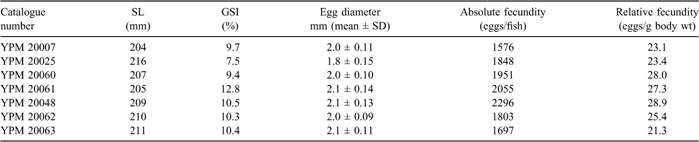
Table II provides reproductive data for seven female V. infuscipinnis from the 2008 Lavoisier Island sample. All were gravid, assigned to maturity stage 4 of Kock & Kellermann (Reference Kock and Kellermann1991), and had a gonadosomatic (GSI) index of 7.5–12.8% (mean 10.1%). The absolute and relative fecundities ranged from 1576–2296 oocytes (mean 1889) and 21.3–28.9 oocytes g-1 body weight (mean 25.3), respectively. The mean size of mature oocytes was 2.0 mm (range 1.5–2.4 mm). We could not assign a macroscopic maturity stage to the males because the testes had been previously removed. However, based on the histology of a few small remaining pieces from two specimens, we determined that the lumina of the seminiferous tubules were filled with late spermatocytes or mature spermatozoa (preserved detail was not sufficient to determine which), and it is therefore likely that these males were near or at ripeness (stage 4 of Kock & Kellermann Reference Kock and Kellermann1991). Because our gravid specimens were collected in mid May, it is probable that spawning takes place in late autumn or early winter in this region of the Antarctic Peninsula.
Reproductive characteristics for seven female specimens of Vomeridens infuscipinnis collected on 15 May 2008 from Lavoisier Island. GSI = Gonadosomatic index.

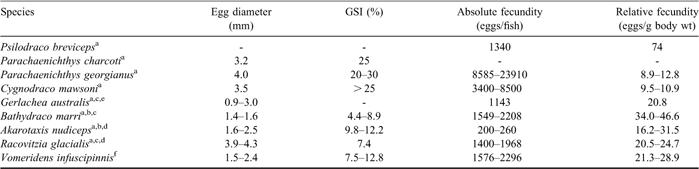
Comparing reproductive data available for nine bathydraconid species (Ekau Reference Ekau1991, Kock & Kellermann Reference Kock and Kellermann1991, Duhamel et al. Reference Duhamel, Kock, Balguerias and Hureau1993, La Mesa et al. Reference La Mesa, Caputo and Eastman2007), our values for egg diameter, GSI and absolute and relative fecundities in Vomeridens are most similar to those for Akarotaxis nudiceps, Gerlachea australis, Racovitzia glacialis and Bathydraco marri (Table III). This is understandable given the phylogenetic relatedness of three of the four aforementioned species (G. australis is the exception) (Derome et al. Reference Derome, Chen, Dettaï, Bonillo and Lecointre2002, Near et al. Reference Near, Pesavento and Cheng2004, Near & Cheng Reference Near and Cheng2008) and their similarly small size. In comparison to Vomeridens, noteworthy differences are seen in the order of magnitude lower absolute fecundity of Akarotaxis, the smaller GSI in Racovitzia, and the smaller egg size and larger relative fecundity in B. marri (Table III). We note, however, that the egg size and fecundity reported for B. marri (Kock & Kellermann Reference Kock and Kellermann1991) are for females at maturity stage 3, thus egg size may be underestimated and fecundity overestimated. The homogeneous size range of the mature bathydraconid oocytes suggests they are released as one batch (Duhamel et al. Reference Duhamel, Kock, Balguerias and Hureau1993). We consider it likely that oogenesis and ovarian maturation in Vomeridens, like in G. australis (Van der Molen & Matallanas Reference Van der Molen and Matallanas2003), follow the typical teleost patterns without specific evolutionary adaptations attributable to the Antarctic environment.
Comparison of reproductive data for nine bathydraconid species arranged phylogenetically.

aKock & Kellermann (Reference Kock and Kellermann1991).
bLa Mesa et al. (Reference La Mesa, Caputo and Eastman2007).
cDuhamel et al. (Reference Duhamel, Kock, Balguerias and Hureau1993).
dEkau (Reference Ekau1991).
eVan der Molen & Matallanas (Reference Van der Molen and Matallanas2003).
fThis work.
Conclusions
Possessing a body with little bone and considerable amounts of cartilage and lipid, Vomeridens has a reduced density that is reflected in a mean percentage buoyancy of 1.61% - low on the notothenioid spectrum of 0% (light and neutrally buoyant) to 6% (heavy and benthic). This is the first documented case of a nearly neutrally buoyant species in the family Bathydraconidae and another example of the repeated diversification of water column life styles in the High Antarctic clade of notothenioids. Because values for %B reflect habitat and Vomeridens possess large pectoral fins, we suggest that this bathydraconid lives pelagically in the epibenthic habitat at depths of 400–900 m. We propose that hovering in the water column, a behaviour facilitated by reduced body density, is a foraging strategy shared by the small slender bathydraconid species of the high latitude shelves of Antarctica.
Acknowledgements
We thank the personnel of the Office of Polar Programs of the National Science Foundation, of Raytheon Polar Services Company, and of the ARSV Laurence M. Gould, without whose support this work could not have been accomplished. We thank Ofer Gon for kindly allowing us to examine the data used for his description of Vomeridens in Fishes of the Southern Ocean. Dr Grant Ballard kindly provided the base map for Fig. 2. We are grateful to Danette Pratt for assembling the figures. We also thank the referees, Drs Esteban Barrera-Oro and Mario La Mesa, for their improvements to the manuscript. This work was supported by NSF grants ANT-0436190 (JTE), ANT-0839007 (TJN) and ANT-0635470 (HWD).